On Tuesday and Wednesday, NATO foreign ministers are meeting in Brussels on the pretext of “work(ing) on further measures to assure Turkey’s security,” and related issues, based on a nonexistent Russian threat.
It sounds like a bad joke, except issues at stake are deadly serious, Russia-bashing featured in all NATO meetings, Erdogan’s well-planned act of aggression complicit with Washington called self-defense, Secretary-General Stoltenberg saying:
NATO has “standing defense plans for (member country) Turkey (including) augmented… air defenses, (part of its) long-term commitment to an ally” – despite no nation threatening its security.
Washington “deployed aircraft to support Turkey’s air defenses” – Britain to follow suit along with Germany and Denmark. “(W)e have decided to address the need to support Turkey before the incident last week.”
Were NATO officials briefed about plans to down a Russian aircraft before the incident? All the fuss about Turkey reflects the latest way of bashing Russia. US-dominated NATO countries partnered with Israel and rogue Arab states alone threaten world peace and stability. Russia is the world’s leading anti-war nation – committed with its non-Western allies against the scourge of terrorism, what America fosters globally to serve its imperial interests.
False accusations of Russian aggression wore thin long ago, US state terrorism allied with its rogue allies entirely ignored.
Are plans to defend Turkish airspace code language for more anti-Russian provocations? Put nothing past neocon US policymakers, risking the unthinkable to further their agenda, possible nuclear war with Russia.
Turkey already has one of the world’s strongest militaries, waging terror war against regional Kurds, entering Syrian and Iraqi airspace lawlessly, killing its fighters battling ISIS, Erdogan lying about combating terrorism.
Aiding its military with US and other NATO member countries’ firepower increases the chance of direct confrontation with Russia. Is this what Washington intends, Erdogan recklessly going along, possibly getting embroiled with something way over his head, gravely risking Turkey’s security by playing America’s dirty game?
His heedless downing of Russia’s aircraft, compounded by Big Lies justifying the unjustifiable, forced Putin to deploy S-400s and air-to-air missiles to protect his nation’s aircraft and anti-terrorist operations throughout Syria.
Stoltenberg called enhanced Russian eastern Mediterranean and Baltic Sea region military capability a matter of “concern” – ignoring NATO’s hostile buildup and provocative military exercises near its borders, Russia responding responsibly to a confrontational US-led threat.
December 2, 2015
Posted by aletho |
Militarism, War Crimes | NATO, Russia, Turkiye, United States |
Leave a comment
NATO’s official invitation for Montenegro to join the alliance is not backed by the people of the country, most of whom are against the accession, according to social polls, a leader of the opposition Democratic Front coalition told Sputnik on Wednesday.
“It cannot be said that the official invitation by NATO is favorably accepted by the people of Montenegro because if you judge by social polls or just talking with the people, the majority is against membership in this alliance,” Andrija Mandic, the leader of the New Serbian Democracy party, said, adding that “NATO just wants Montenegro to join so it can control the country.”
Earlier on Wednesday, NATO alliance member states accepted Podgorica’s bid to join the alliance and invited the country to begin accession negotiations.
Mandic said that the current political regime in Podgorica would like to avoid holding a referendum on the country’s joining the alliance because if a referendum were to be held, the majority of Montenegrins would vote it down.
“As the opposition, we favor a referendum, but a just referendum so that the authorities don’t falsify the results as they did with the previous elections. I’m afraid that if the authorities try to bypass a referendum, the country will end up on the brink of a domestic conflict,” Mandic said.
He added that Montenegro should remain neutral and not join an alliance that is against Russia.
“We would become a member of an attacking bloc that is first and foremost directed at Russia,” he added.
December 2, 2015
Posted by aletho |
Militarism | NATO, Russia |
Leave a comment
The horrible Paris massacre allegedly committed by the Islamic State (IS) militants immediately rose to the top of the international agenda. Western powers, particularly the U.S. and France, declared that restriction of the Islamic State’s domain of operation and, subsequently, its overall destruction were their primary objects. Thus, immediately after the Paris massacre French warplanes bombed Al-Raqqah, the so-called capital of IS in Syria.
The first point of discussion, which came forward in the mainstream media concerning the war against IS was the following: “Is there a possibility that the international coalition against IS led by the U.S. could inflict serious blows to the terrorist organization merely by means of air raids?” Many commentators disagreed: The coalition members were not able to effectively harm IS in such residential areas as Al-Raqqah just by air bombardment unless they risk heavy civilian causalities.
I think that this line of discussion serves to cover up more fundamental realities on the ground by reducing the issue of the fight against IS to merely military tactics. Western powers, notably the U.S., have two “important” allies, which have been supporting IS since the beginning of the Syrian civil war: Turkey and Saudi Arabia. Strangely enough the indirect roles of these two countries in the massacres of Lebanon and Paris have not been questioned.
Saudi Arabia has assumed a major role in the promotion and popularization of Salafism throughout the Mideast and in sponsoring the Jihadist terrorist organizations. The fact that Saudi Arabia has been tolerated by the West despite its support for Salafism is because Saudi Arabia acted as a sort of “shield” in line with the Western interests against the proliferation of Iran-Shia influence in the region and has been one of the major customers of the U.S. arms industry.
Turkey is a perfect match for Saudi Arabia. The Turkish government has shown its best efforts to have the PYD/YPG included in the list of terrorist organizations before Paris massacre. One of the first moves of Turkey was to prevent YPG from extending its operations to the west of Euphrates River, when war policy was restored with an aim to limit the gains of Kurds. Thus Turkey prevented YPG/YPJ to repel ISIS out of Jarabulus. While the PYD controls most of the Turkish-Syrian border, Turkey supported IS to keep the 90-kilometer section of the border extending from Jarabulus to Afrin Canton under its control. Why? Of course, it aimed to help IS with maintaining its relationship with the world, allowing militant candidates to participate in IS, and probably for continuing ammunition supplies.
What is the meaning of the so-called ‘cleaning’ operation by US-Turkey to remove ISIS from the Jarabulus-Azez line?
Turkey’s pro-IS policy became unsustainable after the West established the anti-IS coalition and started to bomb IS targets. Shortly after the June 7 elections, the Turkish government aimed to kill two birds with one stone by participating in the anti-IS coalition. As a result, Turkey both secured Western support in ending the ceasefire period in the country, and gained a ‘legitimate’ ground for negotiating its plans to overthrow Assad and restrict Rojava by means of Salafist organizations.
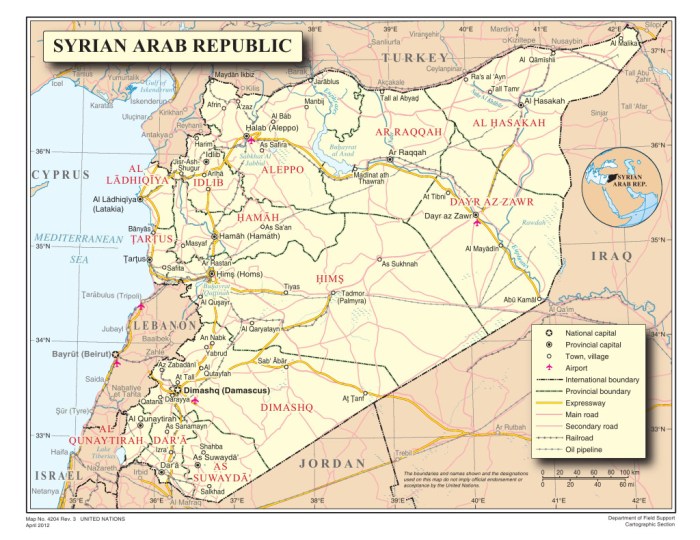
Turkey’s plan as offered to the U.S. and other Western allies was as follows: Establishment of a 90-kilometer wide and 50-kilometer deep ‘safe zone’ between Jarabulus and Azez, very close to the Afrin Canton, as secured by the warplanes of Turkey and allies; removal of IS from the zone by occupation of the Turkish Armed Forces either or not in cooperation with allied powers; and settlement of migrants that are currently located in the camps in Turkey or that would flee from Syria in the future. Therefore, Turkey would be liberated from the European pressure on the migration issue, prevent the physical connection between the Kurdish Cantons, and the demographics of the region would become Sunni-Arab dominated thanks to the migrants. There also was a more strategic goal: The Jaish al-Fatah coalition, which was promoted by Turkey, Qatar, and Saudi Arabia, proved to be successful in Aleppo and surroundings. Upon imposition of the safe zone, the Turkey-Aleppo line would be secured and the coalition, basically composed of al-Nusra Front, an associate of al-Qaeda, and Ahrar ash-Sham, would be allowed to further constrict the Assad government.
Russian military operations in Syria that started on September 30 substantially complicated the above plan. As a matter of fact, Russia was involved in the war to eliminate the threat on Latakia, the heart of the Assad government, and prevent the total loss of Aleppo. Idlib city, under control of the opponents, located in northern Syria has strategic importance for the control of Aleppo. Therefore, Russia shifted a part of its operations to Northern Syria and started to harass Turkish jets by occasionally entering the Turkish airspace. This was then described as establishment of the safe zone, yet it was now considered against Turkey.
It is safe to suggest that Obama’s clear rejection of Turkey’s ‘safe zone’ proposal during the G-20 summit was based among other things on refraining from any confrontation with Russia to the north of Aleppo.
The Paris massacre allowed a Russian-U.S. rapprochement as regards Syrian policies. Parties declared that their primary objective was to weaken IS, but not to overthrow the Assad government. These developments fostered hopes for the Geneva negotiations, which aimed to end the civil war in Syria.
Nevertheless, U.S. secretary of state Kerry announced immediately after the G-20 Summit that Turkey and the U.S. would take a joint operation to clean the Jarabulus-Azez line of IS.
What does this operation plan, which was announced after the ‘safe zone’ proposal was shelved, mean?
It means implementation of the ‘safe zone’ project at a more modest level. Ground forces will not be involved in the operation. Instead, Syrian opponents with the support of Turkish and U.S. jets would clean the said part of the Turkish border from IS. On the grounds that the Free Syrian Army ceases to exist in the field, the pro-al-Qaeda al-Nusra Front and its associate Ahrar ash-Sham would assume the ground operations, accompanied by the Syrian Turcoman forces.
In other words, IS would be replaced by other Salafist organizations. The involvement of YPG, the only secular force fighting against ISIS, and connection between the Kurdish Cantons would be prevented. Lastly, by leaving the Jarabulus-Azez line in the hands of such organizations as al-Nusra Front and Ahrar ash-Sham, which have a comparable record of civilian massacres, the pressure of the said Salafist organizations on the regime over northern Syria would be reinforced given that these organizations have Idlib and a large part of Aleppo under their control.
***
It seems very unlikely that IS is to be weakened and peace is to be restored in Syria, given that the U.S. continues to protect its allies, Turkey and Saudi Arabia, which deal with dirty business in Syria. Furthermore, the available data suggests that the West did not give up its goal to maintain continuous pressure on the Assad government and sustain controlled chaos in Syria, albeit the same has currently receded into background. The controlled chaos policy ultimately means protection of the power of IS and paving the way for likely massacres in the future.
December 1, 2015
Posted by aletho |
Ethnic Cleansing, Racism, Zionism, Militarism, Timeless or most popular, War Crimes | al-Nusra Front, al-Qaeda, Human rights, Qatar, Russia, Saudi Arabia, Syria, Turkiye, United States, YPG |
Leave a comment
In the wake of Turkey’s shoot down of the Russian Su-24, the Russian Foreign Minister Sergei Lavrov called the attack a planned provocation. He went further on to suggest the U.S. had given Turkey permission to shoot down the Jet. He explained that countries using US manufactured weapons must ask the U.S. for permission before using them in operations. The aircraft used to shoot down the Su-24 was a U.S.-made F-16. Indeed, there is evidence to suggest that not only did the U.S. give Turkey permission, but that it was moving the strings behind the entire operation.
Two Russian aircraft were attacked that day, but the second was a far less publicized incident. A Russian helicopter was destroyed by the CIA backed FSA using U.S. provided Anti-Tank TOW missiles. The helicopter was on a rescue mission to find the missing Su-24 pilots and the attack resulted in the death of a Russian Marine. Since the U.S. backs the FSA and provided the TOW missiles which were used in the attack, they are at least indirectly responsible, if not outright complicit in it. But instead of apologizing to Russia, U.S. state department spokesman Mark Toner defended the actions of the FSA. He also defended the actions of the Turkmen insurgents who shot at the parachuting Russian pilots, a war crime under the first Geneva convention. Such an antagonistic position reveals that the U.S. was not displeased by the attacks on Russia.
In the months leading up to the attack, there were several indicators the U.S. knew it would take place. On September 3rd, the families of U.S. staff members were urged to evacuated out of Incirlik air base in Turkey and were given until October 1st to do so. On November 3rd, the US deployed F-15 fighter Jets to Turkey which are specifically designed for air-to-air combat. Since ISIS has no planes, the target could only have been Russian aircraft. Most significantly, on October 21st, the U.S. and Russia signed a deconfliction protocol, in order to ‘avoid clashes in Syria’s skies’. This entailed giving the US information about where and when Russia will conduct sorties. Russian president Putin suggested this information was passed on to Turkey by the U.S. and used to shoot down the Sukhoi-24.
During the months leading up to the attack, US War hawks were increasingly calling for a direct confrontation with Russia, an act that could lead to a third world War. Several US Presidential candidates, including Hillary Clinton, were effectively calling for a shoot down of a Russian Jet. Some of the more direct comments included,
Chris Christie: “My first phone call would be to Vladimir, and I’d say to him, listen, we’re enforcing this no-fly zone,” adding that he would shoot down Russian warplanes that violate the no-fly zone.
Jeb Bush: “We need to have no fly zones. The argument is, well we’ll get into the conflict with Russia, maybe Russia shouldn’t want to be in conflict with us. I mean, this is a place where American leadership is desperately needed.”
The spokesman for the Zionist Israeli lobbying group AIPAC, Senator John McCain, suggested arming Al Qaeda Linked Rebels with Anti-Aircraft weapons to shoot down a Russian Jet. An idea which he himself admits was “what we did in Afghanistan many years ago”. The policy which resulted in the birth of Al Qaeda and the rise of the Taliban. Indeed Qatar had been making an effort towards this end. Documents leaked by Russian hackers ‘Cyber Berkut”, revealed that Qatar was negotiating with Ukraine to purchase Anti-Air weapons to help ISIS shoot down a Russian Jet over Syria. It is likely Ukraine refused to sell these weapons, since arming assets which are difficult to control could backfire. After all, US Jets are also using those skies. Flooding the region with hand held Anti-Air weapons could pose a threat to them in future. Turkey is a far more reliable and controllable proxy which is capable of shooting down Russian Jets.
Perhaps one of the most significant War hawk statements comes from the Former national security adviser Zbigniew Brzezinski. In an Op-ed for the Financial Times Brzezinski suggested that Obama should retaliate if Russia continues to attack U.S. assets in Syria, i.e the Al Qaeda linked rebels. Brzezinski, has experience using Al Qaeda as an asset, having been one of the masterminds behind its creation in Afghanistan. He maintains a great deal of influence and respect in US politics.
It is likely Brzezinski’s dangerous advice to attack Russia was taken on board by US decision makers. But instead of risking a direct conflict with two nuclear powers, Turkey was used as a proxy. Turkey has its own agenda in attacking Russian jets outside of the U.S.’s interests. Turkish president Erdogan has already committed himself to an anti-Assad position far beyond the point of no return. This was over a gas pipeline deal with Qatar that is now looking more like a pipe dream. Russia has been actively fighting not only ISIS, but Al Qaeda and its affiliates who are crucial for Turkey’s plans to overthrow the Syrian government. The Su-24 was bombing the Al Qaeda-linked Turkmen insurgents, before it was shot down.
On October 8, NATO made a statement that it would defend Turkey against Russia, after a Russian jet briefly passed through Turkish airspace on its way to bomb targets in Syria. Such statements may have encouraged Erdogan to take the exceptional risk of shooting down a Russian jet under the assumption that Turkey would be protected by NATO. On November 12th, EU countries committed to pay Turkey 3 billion dollars. Interestingly this is the same amount Turkey is estimated to lose, as a result of Russian sanctions put in place in the wake of the attack. This could have been Part of NATO’s assurance to Erdogan that he would lose nothing by going ahead with the attack.
Erdogan has become increasingly frustrated, even after four years of war, the Syrian state shows no sign of collapse. It might not have been too difficult for the U.S. to convince the desperate Turkish leader that attacking a super power was in his best interest.
Maram Susli also known as “Syrian Girl,” is an activist-journalist and social commentator covering Syria and the wider topic of geopolitics.
December 1, 2015
Posted by aletho |
Militarism, War Crimes | AIPAC, al-Qaeda, NATO, Qatar, Russia, Syria, Turkiye, United States, Zionism |
Leave a comment
Dozens of Russian ships have reportedly been waiting for hours near the Bosphorus Strait to get the go-ahead from Turkey to be able to pass through the waterway.
In a clear violation of international norms, Turkish authorities have created hurdles for Russian vessels passing through the Bosphorus Strait; as a result, dozens of Russian ships have been waiting for hours to obtain the green light from Turkey for passage, media reports said.
RIA Novosti quoted Viktor Kravchenko, former chief of staff of the Russian Navy, as saying that a possible unilateral closure by Turkey of the Bosphorus Strait for Russian ships would be out of line with international law.
“Turkey will not close the strait to Russian vessels en route to Syria because it would be a violation of international law and the Montreux Convention, in particular, — a document that was signed by most counties at the time”, he said.
The 1936 Montreux Convention on the Regime of the Straits regulates the passage of civilian and naval ships through the Bosphorus Strait and the Dardanelles. According to Article 2, “merchant vessels shall enjoy complete freedom of transit and navigation in the Straits, by day and by night, under any flag and with any kind of cargo, without any formalities.”
As for naval warships, in times of peace Turkey must permit the passage of small and medium-sized vessels belonging to all nations. The Black Sea powers (formerly including the USSR and now Russia) can navigate warships of any class through the Straits, “on condition that these vessels pass through the Straits singly, escorted by not more than two destroyers.”
In times of war, the passage of warships shall be left entirely to the discretion of the Turkish government, according to the document.
In December 1982, the UN elaborated the Convention on the Law of the Sea, but Turkey refused to join it and the Montreux convention remained in force. In 1994, Turkey unilaterally adopted new Maritime Traffic Regulations for the Straits, and included a number of restrictions for the passage of foreign vessels.
Meanwhile, it was reported that French fighter jets will use the Incirlik military base and that the French aircraft carrier Charles de Gaulle will receive logistical support in the Turkish port of Mersin.
UPDATE:
Sputnik – 01.12.2015
At the moment, Russian naval vessels are experiencing no problems passing through the Bosphorus Strait or the Dardanelles, RIA Novosti quoted a military-diplomatic source as saying on Tuesday. […]
Earlier on Monday, it was reported that dozens of Russian ships had reportedly been waiting for hours near the Bosphorus Strait to get the go-ahead from Turkey to be able to pass through the waterway. Meanwhile, a Russian naval transport ship had encountered a Turkish submarine in the Dardanelles. … Full article
December 1, 2015
Posted by aletho |
Aletho News | Montreux Convention, Russia, Turkiye |
Leave a comment
The Russian Prosecutor General’s Office has recognized George Soros’s Open Society Institute and another affiliated organization as undesirable groups, banning Russian citizens and organizations from participation in any of their projects.
In a statement released on Monday, prosecutors said the activities of the Open Society Institute and the Open Society Institute Assistance Foundation were a threat to the foundations of Russia’s Constitutional order and national security. They added that the Justice Ministry would be duly informed about these conclusions and would add the two groups to Russia’s list of undesirable foreign organizations.
Prosecutors launched a probe into the activities of the two organizations – both sponsored by the well-known US financier George Soros – in July this year, after Russian senators approved the so-called “patriotic stop-list” of 12 groups that required immediate attention over their supposed anti-Russian activities. Other groups on the list included the National Endowment for Democracy; the International Republican Institute; the National Democratic Institute; the MacArthur Foundation and Freedom House.
In late July, the Russian Justice Ministry recognized the US National Endowment for Democracy as an undesirable group after prosecutors discovered the US NGO had spent millions on attempts to question the legitimacy of Russian elections and tarnish the prestige of national military service.
The Law on Undesirable Foreign Organizations came into force in early June this year. It requires the Prosecutor General’s Office and the Foreign Ministry to draw up an official list of undesirable foreign organizations and outlaw their activities. Once a group is recognized as undesirable, its assets in Russia must be frozen, its offices closed and the distribution of any of its materials must be banned.
If the ban is violated, the personnel of the outlawed group and any Russian citizens who cooperate with them could face heavy fines, or even prison terms in the case of repeated or aggravated offences.
The Soros Foundation started working in Russia in the mid-1990s, but wrapped up its active operations in 2003.
READ MORE:
US National Endowment for Democracy labeled ‘undesirable’ group under new law
Foreign Ministry praises law banning undesirable foreign groups in Russia
November 30, 2015
Posted by aletho |
Corruption, Deception | Freedom House, International Republican Institute, MacArthur Foundation, National Democratic Institute, National Endowment for Democracy, Open Society Institute, Russia |
Leave a comment
Concern Radio-Electronic Technologies (KRET), a subsidiary of the state-owned Russian corporation Rostec, has developed a new type of electronic missile jamming unit for Russia’s Armed Forces, according to RIA Novosti.
“The jamming transmitter developed by KRET is a single-use device designed to be used by a plane or a helicopter. After the device is deployed via a standard countermeasure launching system, it begins emitting an aimed jamming signal. It is essentially a full-fledged electronic warfare complex compressed into a standard decoy cartridge,” the company’s press service told RIA Novosti.
Depending on the situation, the deployed countermeasure either imitates an aircraft, thus drawing away the incoming rocket, or emits a jamming signal powerful enough to prevent it from acquiring its target.
Last week President Vladimir Putin said that Russia might utilize electronic warfare systems to ensure the safety of its aircraft in Syria following the downing of a Su-24 bomber by Turkish forces.
KRET is the largest radio-electronic holding in Russia; it was created in 2009 and has more than 50,000 employees. It manufactures a wide range of products, including avionics, operational and tactical systems, electronic warfare and intelligence equipment, friend-or-foe identification systems, special measuring instrumentation, plugs, electric connectors, and cable products.
November 30, 2015
Posted by aletho |
Aletho News | NATO, Russia, Syria, Turkiye |
Leave a comment
US, Turkey, NATO Supporting ISIS and al-Qaeda – Supporting the Creation of Buffer Zones
Here is the situation in Syria as I see it : Russia is taking a long-range view and wants stability in post-ISIS Syria. France and the United States are taking the short-range view and really have no achievable plans for Syria’s future stability. Turkey appears to have given little thought to Syria’s future. Ankara may be willing to see indefinite chaos in Syria if it hurts the Assad regime on the one hand and the Kurds on the other.
Part I – Russia
The Russians may be the only party interested in the long-term political stability of Syria. There is certainly no doubt that President Putin is more determined than Western leaders to act on the fact that the various so-called moderate parties standing against the Assad regime cannot work together, and that this fault cannot be corrected by enticements from the United States. For the Russians, this fact makes the Damascus government the only source of future stability.
This understanding, and not Soviet-era nostalgia, has led Russia to support the Assad regime, which possesses a working government, a standing army, and the loyalty of every religious minority group in the country.
Some might object that both Assad and Putin are dictators and thugs (by the way, thugs in suits in the U.S. government are all too common). However, this cannot serve as a serious objection. The only alternative to Damascus’s victory is perennial civil war fragmenting the country into warlord zones. With the possible exception of Israel, this scenario is in no one’s interest, although it seems that the leaders of in Washington and Paris are too politically circumscribed to act on this fact.
Part II – U.S. and France
Thus, it would appear that neither the U.S. nor France really cares about Syria as a stable nation. Once the present military capacity of ISIS is eliminated, Washington and Paris may well clandestinely continue to support a low-level civil war against the Assad regime. In this effort they will have the help of Turkey, the Kurds and Israel. The result will be ongoing decimation of the Syrian population and fragmentation of its territory.
As if to justify U.S. strategy, President Obama, with French President Hollande by his side, recently boasted that the United States stood at the head of a “65-country coalition” fighting terrorism in Syria. However, this is a hollow claim. Most of these countries are coalition members in name only, and some of them, like Saudi Arabia and the Gulf state governments, play a double game. And then Obama dismissed Russia and Iran as “outliers” and “a coalition of two.” Yet those two countries are the Syrian nation’s best hope for future stability.
The fact is that U.S. policy in Syria has been a losing proposition from the beginning just because of its hostility to the Assad government. Despite its air campaign against ISIS, Washington has no ground component nor any answer to the political vacuum in Syria. Both missing parts are to be found in an alliance with Damascus.
Refusal to make that alliance has also opened Washington to building neoconservative political pressure to increase U.S. military presence in the area. However, American “boots on the ground” in Syria is both a dangerous option as well as an unnecessary one. Syrian government boots can do the job if they are properly supported. The support has come from Russia, Iran and Hezbollah. It is the United States and its coalition who are the “outliers.”
Part III – Turkey
It is not easy to explain Turkey’s animosity toward Damascus. Prior to the civil war in Syria, the two countries had good relations. Then something changed. It may have been something as foolish as President Erdogan’s taking personal offense against President Assad because the latter chose to heed the advice of Iran rather than Turkey at the beginning of the war. Whatever happened, it sent Ankara off on an anti-Assad crusade.
That anti-Assad mindset is probably the backstory to the recent reckless Turkish decision to shoot down a Russian warplane operating in support of Syrian government troops close to the Turkish border.
The Turks say that the Russian jet strayed into Turkish airspace. The Russians deny this. The Turks claim that they tried to communicate with the Russian plane to warn it away. When it did not respond, they destroyed it. Of late the Turkish Prime Minister, Ahmet Davutoglu, has said that Ankara “didn’t know the nationality of the plane that was brought down … until Moscow announced it was Russian.” This statement is frankly unbelievable given that Davutoglu followed it up with an admission that Turkey had complained to Russian about military flights in this exact border area. He also asserted that both Russian and Syrian operations in this region of northern Syria should stop because ISIS has no presence there. This assertion makes no sense, since Damascus’s aim is to reassert government authority by the defeat of armed rebels regardless of their organizational affiliation.
It is hard to say whether the Turks are telling the truth about an incursion into their airspace. Most of their evidence, such as recorded Turkish warnings to the Russian plane, is easily fabricated. However, in the end it does not really matter if the plane crossed the border. There was no need to shoot it down.
If the Russian jet strayed into Turkish airspace, there would have been a range of options. The Turks could be very sure that the Russian plane had no hostile intention toward their country, and they should have assumed, for the sake of minimizing any consequences, that no provocation was meant on the part of the Russia. In other words, they should have acted as if the alleged overflight was a mistake. The Turks could have then shadowed the Russian plane in a way that coaxed it back into Syrian airspace and followed the incident up with a formal protest to Moscow. Instead they made the worst possible choice and shot the plane down. Now both Ankara and Washington are shouting about Turkey’s right to defend its territory despite the fact that the Russian plane never posed any threat.
Part IV – Conclusion
In all of the bloodshed, population displacement and terror that has accompanied the Syrian civil war, the least-considered party has been the Syrian people and their future. ISIS, or at least its present infrastructure, will ultimately be destroyed. However, while that destruction is necessary, it is an insufficient outcome because it fails to provide long-term stability. Right now that vital ingredient can only be supplied by the reimposition of order by Damascus. The folks in Washington, Paris and Ankara might not like that, but they are not the ones facing a future of anarchy. And indeed, the more they stand in the way of Damascus, the more chaos they will help create.
November 30, 2015
Posted by aletho |
Wars for Israel | al-Qaeda, France, ISIS, Israel, NATO, Obama, Russia, Turkiye, United States, Zionism |
Leave a comment
Tensions escalate as Ukraine tries to regain international attention diverted by Syria
 Whilst all eyes are on Syria there has been a steady deterioration of the situation in Ukraine.
In violation of the ceasefire, shelling of the territories of the two people’s republics has resumed, and the OSCE has confirmed that the Ukrainian military has moved heavy weapons back to the contact line.
The Ukrainians meanwhile have extended their ban of commercial flights to and from Russia by also banning transit flights.
Ukraine has placed Crimea under a food blockade. To the intense embarrassment of its Western backers (see this editorial in the Financial Times, headlined “Kiev should act to end the blockade of Crimea”) it has enlarged this to an energy blockade.
Ukraine claims the power lines to Crimea were destroyed by Crimean Tatar “activists” backed by Right Sector.
Even if this were true, the Ukrainian authorities have done little or nothing to take control of the situation, arrest and punish those responsible for what was after all an act of criminal damage, or carry out the necessary repairs.
Characteristically most Western governments have said nothing, save that there has been some muted criticism from Germany.
Contrast this silence with the furious – and wrong – accusations regularly made in the West against Russia for its supposed use of energy as a political weapon.
All of this is happening to a drumbeat of demands in the Ukrainian media for the country to renounce the Minsk II agreement.
The Russians for their part have responded by stopping coal supplies to Ukraine. Since Ukraine is again failing to pay for its gas, it seems the Russians intend to stop supplying Ukraine with gas on Tuesday.
The two people’s republics have also announced they are stopping their own coal deliveries to Ukraine.
These steps increase the prospects of severe power shortages in Ukraine during what is predicted to be a harsh winter.
The Russians are also due in January to impose sanctions on Ukrainian food imports to Russia. This is in retaliation to Ukraine joining EU sanctions against Russia, and imposing sanctions of its own.
Bizarrely, this systematic severing of trade links with Russia is being hailed in parts of the Western media as proof Ukraine is “successfully reorienting” its trade to the EU and away from Russia, and is becoming “less dependent” on Russia. This of course takes no account of the damage these actions are doing to Ukraine’s economy.
There has also been an orchestrated attempt in recent weeks on the part of some sections of the Western media to talk up Ukraine’s economic situation, with claims that it is “stabilizing”. The US credit agency Moody’s has joined in the game by upgrading Ukraine’s credit rating.
To the very limited extent this is true, it is wholly the consequence of the August ceasefire, which stopped the drain of fighting the war on the civilian economy.
The actions the Ukrainian government and “activists” have been taking over the last few weeks puts this in jeopardy.
What is causing this sudden deterioration in the situation?
At its simplest, it is growing alarm in Ukraine that Western – especially European – support for Ukraine is flagging.
It is now widely accepted that Merkel and Obama are becoming increasingly isolated in their insistence that the sanctions against Russia be extended.
In France Nicholas Sarkozy, Hollande’s likely conservative opponent at the Presidential election, has clearly signaled his opposition to sanctions, aligning himself on this issue with Marine Le Pen.
More to the point, in Germany, Merkel’s coalition partners – the SPD and the CSU – are both becoming openly critical of a sanctions policy with which one senses they both privately always disagreed.
Russia Insider has already discussed the increasingly rebellious line being taken by Sigmar Gabriel, the SPD’s leader and Germany’s Vice Chancellor.
Possibly even more important is the call from Horst Seehofer, leader of the CSU – the CDU’s right wing coalition partner in Merkel’s coalition – for a rapprochement with Russia.
Whilst Seehofer’s comments seem to have been specifically triggered by the migrant crisis and the conflict in Syria, their tone suggests a wider rapprochement.
Interestingly, Seehofer has been forging increasingly close links in recent weeks with Hungarian Prime Minister Viktor Orban – a bete noir in Washington – who is known to be a strong advocate of good relations between Europe and Russia.
Back in September – as the migrant crisis was starting to spiral out of control – Orban made another call for a new relationship between Europe and Russia. Significantly he did this straight after a meeting with Seehofer.
The mounting opposition in Europe to the sanctions is being picked up by the “realists” in the US.
Russia Insider recently republished an article in The National Interest – the main publication in which the US foreign policy “realists” express their views – which should be read as a call to the Obama administration to take the lead in diplomatic discussions with Moscow before the sanctions regime collapses, leaving the US looking isolated and humiliated.
A number of our readers misunderstood this article, taking literally its ritual claims about the sanctions’ effectiveness and Putin’s supposedly “desperate situation”.
The sad truth about policy debate in the US today is that it cannot admit defeat, so that even when it retreats it has to claim “victory”.
The key point about the article in The National Interest is not what it says about Putin and Russia.
It is its call for the US to initiate diplomatic negotiations with Moscow to find a face-saving way to end the sanctions before Europe splits away and they fall apart.
The gradual shift towards an improvement in relations with Russia began before Russia’s intervention in Syria.
In fact it has been underway ever since the Minsk II agreement was reached in February. We have discussed the process at length in various articles here on Russia Insider.
However the Russian intervention in Syria and the Paris attacks have markedly accelerated the process, with Western public opinion showing increasing signs of backing Russia.
All of this is causing in Ukraine growing alarm. The Ukrainians must be seething as international attention is refocusing away from them, and as Russia shows signs of winning over Western public opinion to its side.
The consistent response of the Maidan movement whenever it senses it is losing is to double down and escalate and that is what we are now seeing.
A way to rationalise it would be to say that the Ukrainians are trying to provoke Russia into an overreaction, so as to reignite the conflict in order to shore up Western support and get the sanctions – due for renewal in December – extended.
Though this is at a certain level true, it seriously underestimates the purely visceral aspect in Ukrainian behaviour.
For the Maidan movement any sign Russia is gaining credit with the Western public is like a red rag to a bull. There is no need to look for calculation in Ukrainian behaviour in order to understand it.
The underlying problem – as we have said many times – is that the Maidan movement is inherently incapable of the sort of compromise that Minsk II envisages.
To see how that is so, consider what has happened since the October summit in Paris where the Europeans in effect ordered Poroshenko to implement Minsk II within a revised timetable.
The Ukrainians have done nothing of the sort, and the new timetable for carrying out the terms of Minsk II is already slipping.
Any discussion of the internal aspect of the Ukrainian conflict – as opposed to its external aspect – has to proceed from the fact that the present Ukrainian government is simply incapable of compromise unless overwhelming external pressure is brought upon it.
The Russians long ago grasped this. Over the last few weeks there are clear signs the Europeans belatedly are starting to grasp it as well.
The question that remains is for how much longer the Europeans will be prepared to go on making their relations with Russia hostage to the ideological obsessions of the Maidan movement and its neocon supporters.
The mounting evidence – judging from comments by people like Sigmar Gabriel and Horst Seehofer in Germany, Sarkozy in France, and from what happened during the summit in Paris – is that European patience is wearing thin.
November 29, 2015
Posted by aletho |
Economics, Mainstream Media, Warmongering | European Union, Minsk II, Russia, Ukraine |
Leave a comment
Western news media and governments are keeping hush about an economic blockade by Ukraine against Crimea that is starting to appear permanent.
TASS reports today that at least one of the electricity lines from Ukraine to Crimea that was sabotaged by right-wing extremists during the weekend of Nov 20-21 has been repaired. But no electricity is flowing to Crimea from Ukraine. The information comes from Russian Deputy Energy Minister Andrey Cherezov.
“We have information that the repair work on the Kakhovka-Titan power line has been completed,” he said. “Switching this line on would make it possible to supply about 150-200 megawatts from Ukraine to Crimea. But such hope is lost. Accordingly, all measures in Crimea are aimed at ensuring a minimum level of electricity supply to consumers.”
Kakhovka-Titan is a 220-volt line that supplies electricity to the Crimean border cities of Armyansk and Krasnoperekopsk. Much of its power goes to two districts of the Kherson region of Ukraine.
Kakhovka-Titan is one of four transmission lines that were sabotaged by rightist bombs. At the time of the sabotage, Ukraine’s electricity utility said it could restore one of the four lines in 24 hours and all four of them within days. But the Ukraine government is allowing a handful of extremists on the damaged sites to block repair crews.
On Thursday, Russian Emergency Situations Ministry sent an additional 300 mobile generators to Crimea to provide power for critical facilities.
Crimea consumes an average of 1,000 megawatts of electricity per day, according to the Russian Energy Ministry. Emergency power backups are meeting only 30 per cent of normal demand.
An electrical cable under the Kerch Strait from Russia to Crimea was already under construction before last weekend’s sabotage. The construction is now on emergency pace. The cable is being laid in two stages. The first stage will deliver app 400 MW of power before the end of December. The second stage will bring an equal amount by summer 2016.
Another energy project already on the drawing table is a natural gas pipeline under the Kerch Strait, due to open in 2018. It will power several natural gas electricity generating stations to be built in Crimea.
Western media and governments see nothing, say nothing
The Crimea emergency is going largely unreported in the West. Where it is mentioned, it is pictured as a tit-for-tat game between Ukraine and Russia.
The first report in Canada’s largest daily newspaper, the Toronto Star, was published on Nov 27, six days following the attacks that cut Crimea’s electricity supply from Ukraine. The Star report is taken from the New York Times.
The Times article is a shortened version of a longer article that appeared two days earlier, both written by the newspaper’s Moscow bureau journalist Neil MacFarquhar. He traveled to southern Ukraine.
MacFarquhar describes the terrorist action by the Ukrainian extremists as a “standoff between Moscow and Kiev, with each side finding new ways to increase the tension daily”.
Ukraine’s government has not lifted a finger against the vigilante road blockade of food shipments to Crimea which extreme-rightists began on September 20.
Following the latest outrageous attack, the regime in Kyiv began on November 23 to block all commercial transport to and from Crimea. This is described by the Times thusly: “Ukraine seeks to avoid further Russian aggression to stymie its political and economic stability, and an already unpopular government does not want to go against public sentiment.”
Interestingly, MacFarquhar provides an interpretation of the claim in most Western media that the vigilante actions against Crimea are being perpetrated by “Crimean Tatars”. He writes:
In Kiev, the main driver of the confrontation seems to be the leaders of the Tatar community who were exiled by Russia after it annexed the peninsula and who are now in Parliament as allies of President Petro O. Poroshenko… [1]
Here around Chongar, however, Tatar activists were not much in evidence. They seemed to have been assigned logistical tasks like providing food and housing for the men guarding road checkpoints and the fallen pylons. The fighters were mostly veterans from the east [Ukraine] who did not want to go back to civilian life.
MacFarquhar describes one of the Western media’s “Tatar activists”:
“The people of Crimea are not supposed to feel like they live in a resort while the country [Ukraine] is at war,” said Oleksiy Byk, 34, a chunky, bearded veteran who serves as the area spokesman for the Right Sector, a right-wing Ukrainian organization violently opposed to any accommodation with Russia.
Mr. Byk said he used to fight the separatists [sic] in the east, but after the ceasefire negotiated under the Minsk peace accords [in February 2015] finally took hold in September, he and many other hard-core fighters gravitated to the area just north of Crimea. They are spoiling for a fight, since Ukraine rejects Russia’s March 2014 annexation [sic] of the Black Sea peninsula as illegal.
Ukraine pours on the rhetoric
In its latest, self-destructive measure for the Ukrainian economy (and against the Ukrainian people), the government in Kyiv announced on November 25 that all air travel to and from Russia will be severed. Last month, Ukraine banned landing and takeoff rights for Russian airlines, prompting a move in kind by Russia.
Ukraine’s government has also announced that it wouldn’t buy gas anymore from Russia. But that statement is posturing which followed the decision by Russia’s Gazprom on Nov 25 to cease gas deliveries due to non-payment. The government is effectively bankrupt, living on borrowed money from the IMF. A declaration of default on the international loans it owes is expected.
The Donetsk People’s Republic has taken emergency measures to protect coal stocks and electricity infrastructure in the aftermath of the sabotage directed at Crimea, reports DAN news service. Prime Minister Aleksandr Zakharchenko has assumed direct responsibility over the measures.
The DPR has also halted coal shipments to Ukraine. This began in response to non-payment of bills, but has now also become a gesture of disapproval of Ukraine’s failure to restore electricity service to Crimea and of solidarity with the people of the peninsula.
(See a photo gallery on TASS of Crimea’s electricity situation , here. )
Notes:
[1] Tatar civil organizations in Crimea utterly deny the claims in Western media that the Tatar figureheads in Kyiv who have accepted appointments to the Rada by Petro Poroshenko’s political machine– Mustafa Djemilev and Refat Chubarov—are “leaders” of Crimean Tatars. They say the two represent the viewpoints of only a small section of Tatars. The two figures have been denied entry to Crimea since the secession referendum of March 2014 because they refused to renounce inciting civil war on the peninsula.
Read also:
State of emergency in Crimea after right-wing extremists in Ukraine blow up electricity lines to the peninsula, by Roger Annis, Nov 25, 2015
November 28, 2015
Posted by aletho |
Subjugation - Torture | Crimea, New York Times, Russia, Ukraine |
Leave a comment
The shooting down of a Russian fighter bomber by Turkish war planes this week throws into stark relief the complex multiple games being played by Turkey and its NATO allies. The incident further highlights the misuse and misquotation of international law by apologists for the US and its allies. It is also a further study on the highly selective nature of Australian mainstream media reporting and its invariable pro-US stance.
It is not in dispute that two F16 fighter aircraft of the Turkish air force attacked a Russian fighter-bomber. As a result the Russian plane was destroyed. The wreckage landed well inside Syrian territory. The pilot and navigator aboard the Russian plane ejected safely. Whilst parachuting to the ground they were fired upon by Turkmen militia members, killing the pilot. The navigator was able to avoid capture and was subsequently rescued.
None of that is in contention. There are however, some areas of dispute, most notably whether or not the Turkish military authorities warned the pilot to change direction while still in Syrian air space. The Turkish authorities have released what they say are recordings of multiple warnings. That is something that is capable of independent verification, including from Russian and American satellites. The Russians flatly deny such warnings were given.
The second major area of dispute is whether or not the Russian fighter-bomber did traverse Turkish territory. The territory in question is a very narrow (3km wide) finger of land that juts from Turkey into Syria. The Russian navigator on board the plane flatly denies that his aircraft was in Turkish air space. Again, that is something that is capable of independent verification.
On the Turkish account the Russian plane spent a total of 17 seconds in Turkish air space. That length of time would be broadly consistent with the plane’s reported speed and the width of territory traversed.
Both Turkey and the US have advanced the justification that Turkey was entitled to defend itself. As a general proposition that is true. The question however, is whether self-defence actually arose, and if it did was the Turkish response appropriate.
Article 51 of the UN Charter provides that a country may defend itself against armed attack. It has been held in multiple international law cases that the attack must be actual or imminent. Even then, the response must be proportionate to the threat.
Not even the Turks have claimed that they were being attacked by the Russian fighter-bomber, or that an attack was imminent. To shoot down a non-threatening plane, that even on the Turkish account was in Turkish air space for no more than a few seconds while heading elsewhere, cannot on any reasonable interpretation of international law be reasonable or justified.
The real reason for the shoot down therefore had nothing to do with self-defence. Some inferences as to the real motives may be drawn from the available evidence. Turkey was outspokenly angry about Russian military fighters and bombers attacking militias whom Turkey supported as part of the ambition to overthrow the Assad government. The Turkmen who killed the pilot and then another Marine in a helicopter coming to the rescue are just such a Turkish controlled militia.
The Turkish government is also one of the principal supporters, financiers and armorers of the ISIS terror group. At the recent G20 meeting President Putin made a presentation of satellite and other data showing that stolen Syrian oil was being transported to Turkey where its sale is a significant source of ISIS financing. Mr Putin referred specifically to members of the G20 being backers of ISIS. It is hardly a secret that he was alluding to Turkey, Saudi Arabia and the US among likely others.
The Russian intervention since 30 September 2015 at the invitation of the Syrian government has been devastatingly effective. For the first time in more than three years the Syrian Army has regained the initiative. It is to be contrasted with the pseudo efforts of the US and its erstwhile allies such as Australia who claim to have been attacking ISIS when manifestly they have not, or supporting so-called and non-existent “moderates.”
A further factor is that Turkey has for decades fought against the aspirations of its significant Kurdish minority for autonomy. Those aspirations, combining as they are with those of the Iraqi, Syrian and Iranian Kurds for similar autonomy, are bitterly opposed by President Erdogan. The failure of the Turkish backed militias to overthrow the Assad regime has given fresh impetus to hopes for Kurdish autonomy.
Turkey would not, as a member of the US controlled NATO, have risked a war with Russia unless it had the backing of the US government. American foreknowledge of the shoot down, which as a matter of timing alone must have been planned, is to be inferred from the ludicrous statements emanating from the White House.
One such ludicrous defence of the Turkmen militia came from a US government spokesman who when asked about the shooting of the pilot from the downed Russian jet said that the Turkmen militia “were entitled to defend themselves.”
This would be almost funny were it not for the alarming ignorance of international law that such a remark displays. Article 42 of the Geneva Conventions of 1949, which both Turkey and the US have signed and ratified, and Protocol 1 of the 1977 amendments to the Convention, specifically provides as follows:
- No person parachuting from an aircraft in distress shall be made the object of attack during his descent.
- Upon reaching the ground in territory controlled by an adverse Party, a person who has parachuted from an aircraft in distress shall be given the opportunity to surrender before being made the object of attack….
The Russian pilot in question, on the unqualified boasting of the militiamen who killed him, had no such opportunity. The killing of the pilot was therefore a war crime.
It is the latest illustration of where criminal acts carried out in pursuit of geo-political objectives are given the courtesy of not even being discussed in the mainstream media. Instead, prominence is given in the media to ludicrous and self-serving statements by politicians and their official spokespersons.
The silence of the Australian government in the face of these latest outrages is nothing less than shameful.
James O’Neill is an Australian-based Barrister at Law.
November 28, 2015
Posted by aletho |
Mainstream Media, Warmongering, War Crimes | Russia, Saudi Arabia, Turkiye, United States |
Leave a comment
Coming on the heels of the terrorist attack in Paris, the mass shooting and siege at the Radisson Blu Hotel in Bamako, the capital of the African nation of Mali, is still further evidence of the escalation of terrorism throughout the world. While there has already been much written about the incident in both western and non-western media, one critical angle on this story has been entirely ignored: the motive.
For although it is true that most people think of terrorism as entirely ideologically driven, with motives being religious or cultural, it is equally true that much of what gets defined as “terrorism” is in fact politically motivated violence that is intended to send a message to the targeted group or nation. So it seems that the attack in Mali could very well have been just such an action as news of the victims has raised very serious questions about just what the motive for this heinous crime might have been.
International media have now confirmed that at least nine of the 27 killed in the attack were Chinese and Russian. While this alone would indeed be curious, it is the identities and positions of those killed that is particularly striking. The three Chinese victims were important figures in China’s China Railway Construction Corporation (CRCC), while the Russians were employees of Russian airline Volga-Dnepr. That it was these individuals who were killed at the very outset of the attack suggests that they were the likely targets of what could perhaps rightly be called a terrorist assassination operation.
But why these men? And why now? To answer these questions, one must have an understanding of the roles of both these companies in Mali and, at the larger level, the activities of China and Russia in Mali. Moreover, the targeted killing should be seen in light of the growing assertiveness of both countries against terrorism in Syria and internationally. Considering the strategic partnership between the two countries – a partnership that is expanding seemingly every day – it seems that the fight against terrorism has become yet another point of convergence between Moscow and Beijing. In addition, it must be recalled that both countries have had their share of terror attacks in recent years, with each having made counter-terrorism a central element in their national security strategies, as well as their foreign policy.
And so, given these basic facts, it becomes clear that the attack in Mali was no random act of terrorism, but a carefully planned and executed operation designed to send a clear message to Russia and China.
The Attack, the Victims, and the Significance
On Friday November 20, 2015 a team of reportedly “heavily armed and well-trained gunmen” attacked a well known international hotel in Bamako, Mali. While the initial reports were somewhat sketchy and contradictory, in the days since the attack and siege that followed, new details have emerged that are undeniably worrying as they provide a potential motive for the terrorists.
It is has since been announced that three Chinese nationals were killed at the outset of the attack: Zhou Tianxiang, Wang Xuanshang, and Chang Xuehui. Aside from the obviously tragic fact that these men were murdered in cold blood, one must examine carefully who they were in order to get a full sense of the importance of their killings. Mr. Zhou was the General Manager of the China Railway Construction Corporation’s (CRCC) international group, Mr. Wang was the Deputy General Manager of CRCC’s international group, and Mr. Chang was General Manager of the CRCC’s West Africa division. The significance should become immediately apparent as these men were the principal liaisons between Beijing and the Malian government in the major railway investments that China has made in Mali. With railway construction being one of the key infrastructure and economic development programs in landlocked Mali, the deaths of these three Chinese nationals is clearly both a symbolic and very tangible attack on China’s partnership with Mali.
In late 2014, Mali’s President Ibrahim Boubacar Keita traveled to China to attend the World Economic Forum in Tianjin. On the sidelines of the forum the Malian president sealed a number of critical development deals with the Chinese government, the most high-profile of which were railway construction and improvement agreements. Chief among the projects is the construction of an $8 billion, 900km railway linking Mali’s capital of Bamako with the Atlantic port and capital of neighboring Guinea, Conakry. The project, seen by many experts as essential for bringing Malian mineral wealth to world markets, is critical to the economic development of the country. Additionally, CRCC was also tapped to renovate the railway connecting Bamako with Senegal’s capital of Dakar, with the project carrying a price tag of nearly $1.5 billion.
These two projects alone were worth nearly $10 billion, while a number of other projects, including road construction throughout the conflict-ridden north of the country, as well as construction of a much needed new bridge in gridlock-plagued Bamako, brought the cumulative worth of the Chinese investments to near (or above) the total GDP for Mali ($12 billion in 2014). Such massive investments in the country were obviously of great significance to the Malian government both because of their economically transformative qualities, and also because they had solidified China as perhaps the single most dominant investor in Mali, a country long since under the post-colonial economic yoke of France, and military yoke of the United States.
It seems highly implausible, to say the least, that a random terror attack solely interested in killing as many civilians as possible would have as its first three victims these three men, perhaps three of the most important men in the country at the time. But the implausible coincidences don’t stop there.
Among the dead are also six Russians, all of whom are said to have been employees of the Russian commercial cargo airline Volga-Dnepr. While at first glance it may seem irrelevant that the Russian victims worked for an airline, it is in fact very telling as it indicates a similar motive to the killing of the Chinese nationals; specifically, Volga-Dnepr is, according to its Wikipedia page, “a world leader in the global market for the movement of oversize, unique and heavy air cargo…[It] serves governmental and commercial organizations, including leading global businesses in the oil and gas, energy, aerospace, agriculture and telecommunications industries as well as the humanitarian and emergency services sectors.” The company has transported everything from gigantic excavators to airplanes, helicopters, mini-factories, and power plants, not to mention heavy machines used in energy extraction.
This fact is significant because it is quite likely, indeed probable, that the airline has been transporting much of the heavy, oversized equipment being used by the Chinese and other developers throughout the country. In effect, the Russian crew was part of the ongoing economic development and foreign investment in the country. And so, their killing, like that of the CRCC executives, is a symbolic strike against Chinese and Russian investment in the country. And perhaps even more importantly, the attack was a symbolic attack upon the very nature of Sino-Russian collaboration and partnership, especially in the context of economic development in Africa and the Global South.
It would be worthwhile to add that Volga-Dnepr has also been involved in military transport services for NATO and the US until at least the beginning of the Ukraine conflict and Crimea’s reunification with Russia. Whether this fact has any bearing on the employees being targeted, that would be pure conjecture. Suffice to say though that Volga-Dnepr was no ordinary airline, but one that was integral to the entire economic development initiative in Mali. And this is really the key point: China and Russia are development partners for the former French colonial possession and US puppet state.
China, Russia, and Mali’s Future
China and, to a lesser extent, Russia have become major trading and development partners for Mali in recent years. Aside from the lucrative railroad and road construction projects mentioned above, China has expanded its partnerships with Mali in many other areas. For instance, in 2014 China gifted Mali a grant of 18 billion CFA (nearly $30 million) and an interest-free loan of 8 billion CFA (nearly $13 million). Additionally, China established a program that offers 600 scholarships to Malian students over the 2015-2017 period. Also, the Chinese government announced the construction of a training and educational center focused on engineering and the construction industry, as well as the completion of the Agricultural Technical Center in the city of Baguineda in Southern Mali, not far from the capital and population center of Bamako.
Of course, these sorts of Chinese offerings are only the tip of the iceberg as Beijing has also expanded its contracts with Mali in the transportation, construction, energy, mining, and other important sectors, including an agreement for China to construct at least 24,000 affordable housing units, making ownership of a decent home possible for many who would otherwise never have such an opportunity. Going further, as African Leadership Magazine reported in 2014:
Mali also relies on China to invest in new power plants to break the electricity crisis that is affecting the country. This is supposed to make available cheaper electricity for the industrial development…A hydroelectric dam will be built in the area of Dire in the North of the country; a hybrid power plant in Kidal in the North-East and another one in Timbuktu, which is in the North as well. Solar power plants will also be created in other parts of the country and all those infrastructures will be connected to the national grid of electricity… A factory of medicine production that is being constructed in the outskirts of the capital will be enlarged to be the largest in West Africa… More than 95 percent of the factory has been completed and it will be operating on January, 2015…Chinese banks that are not yet present in Mali are supposed to contribute to create small-scaled companies and industries.
To be sure, China is not offering such deals to Mali solely out of altruism and in the spirit of generosity; naturally China expects to enrich itself and ensure access to raw materials, resources, and markets in Mali now and in the future. This is the sort of “win-win” partnership forever being touted by China as the cornerstone of its aid and investment throughout Africa. Indeed, in many ways, Mali is a prime example of just how China operates on the continent. Rather than a purely exploitative investment model (the IMF and World Bank examples come to mind), China is engaging in true partnership. And, contrary to what many have argued (that China is merely a rival imperialist power in Africa), China’s activities in Africa are by and large productive for the whole of the countries where China invests, a few egregious bad examples aside.
China is a friend of Africa, and it has demonstrated that repeatedly throughout the last decade. And perhaps it is just this sort of friendship that was under attack in the Radisson Blu Hotel in Bamako.
Likewise Russia has been engaged in Mali, though certainly nowhere near the extent that China has. Russia was one of the principal contributors to the humanitarian relief effort in Mali after the 2012 coup and subsequent war against terror groups affiliated with Al-Qaeda. Russia provided much needed food, clothing, and basic medical aid, while also supplying more advanced, and essential, medical equipment to Malian hospitals desperately trying to cope with the flood of wounded and displaced people.
Additionally, Moscow became one of the major suppliers of weapons and other military materiel to Mali’s government in its war against terrorism in 2013. According Business Insider in 2013, Anatoly Isaikin, head of Russia’s state-owned arms exporter Rosoboronexport, “revealed that Moscow had recent military contacts with the government of Mali… He said small amounts of light weapons were already being delivered to Mali and that new sales were under discussion. ‘We have delivered firearms. Literally two weeks ago another consignment was sent. These are completely legal deliveries… We are in talks about sending more, in small quantities.’”
Finally, Mali has a longstanding cultural connection with Russia through the Soviet Union’s sponsorship of thousands of Malian students who studied in Soviet universities from the early 1960s through the 1980s. As Yevgeny Korendyasov of the Center for Russian-African Relations at the Russian Academy of Sciences explained, “We have had very close ties to Mali throughout recent history… Though overall financial estimates of Soviet aid received by Mali are hard to come by, Moscow’s involvement with the country was all-encompassing.” Indeed, the Soviets educated Malian officials and intelligentsia, as well as their children, developed local infrastructure, and mapped the country’s abundant natural resources. Such long-standing ties, moribund though they may seem today, still have a lasting legacy in the country.
While the world has been transfixed by terrorism from the downing of the Russian airliner in Egypt, to the inhuman attacks in Paris and Beirut, not nearly enough attention has been paid to the attack in Mali. Perhaps one of the reasons the episode has not gotten the necessary scrutiny and investigation is the seemingly endless series of terror attacks that have transfixed news consumers worldwide. Perhaps it is simply good old fashioned racism that sees Africa as little more than a collection of chaotic states constantly in conflict, with violence and death being the norm.
Or maybe the real reason almost no one has shined a light on this episode is because of the global implications of the killings, and the obvious message they sent. While media organizations seem to have deliberately ignored the implication of the attacks of November 20th in Mali, one can rest assured that Beijing and Moscow got the message loud and clear. And one can also rest assured that the Chinese and Russians are well aware of the true motives of the attack. The question remains: how will these countries respond?
Eric Draitser, an independent geopolitical analyst based in New York City, is the founder of StopImperialism.org.
November 27, 2015
Posted by aletho |
Economics, False Flag Terrorism, Timeless or most popular | Africa, al-Qaeda, China, Mali, Russia |
Leave a comment