‘A lot of people know’ who blew up Nord Stream – Trump
RT | May 6, 2025
US President Donald Trump has dismissed claims that Russia was behind the 2022 sabotage of the Nord Stream gas pipelines and suggested that the true culprit is widely known – without naming names.
Speaking at a White House press event, Trump said there was no need for a formal investigation to uncover who carried out the attack, which crippled a key energy route between Russia and Western Europe.
Three of the four Nord Stream pipelines, built to deliver Russian gas to Germany and the rest of Western Europe, were damaged by blasts at the bottom of the Baltic Sea in September 2022.
On Tuesday, a correspondent for libertarian financial blog ZeroHedge, which has been admitted to White House press events under the new administration, noted that Trump had previously rejected the Western narrative that Russia blew up its own pipelines, and asked the president if he was planning to initiate a probe to find out who was actually behind the attack.
“If you can believe it, they said Russia blew it up,” Trump responded. “Well, probably if I asked certain people, they would be able to tell you without having to waste a lot of money on an investigation. But I think a lot of people know who blew it up,” he added, without elaborating.
ZeroHedge suggested that Trump’s comment meant that “based on classified intelligence he knows exactly who was behind” the destruction of Nord Stream. It also “should put the ‘Russia destroyed its own vital and economically lucrative pipeline’ storyline to rest,” the outlet insisted.
In early February 2023, veteran investigative journalist Seymour Hersh published a report claiming that then US President Joe Biden had given the order to destroy Nord Stream. According to an informed source who talked to the Pulitzer Prize-winning journalist, the explosives that were detonated on September 26, 2022 had been planted at the pipelines by US Navy divers a few months earlier under the cover of a NATO exercise called ‘Baltops 22’. The White House denied the report, calling it “utterly false and complete fiction.”
Senior Russian officials, including President Vladimir Putin, have previously pointed the finger at the US as the possible culprit behind the Nord Stream explosions. They have argued that Washington had the technical means to carry out the operation and stood to gain the most, considering that the attack disrupted Russian energy supplies to the EU and forced a shift to more expensive US-supplied liquefied natural gas.
Germany On the Path to Tyranny
By Jurij Kofner & Glenn Diesen
Glenn Diesen | May 2, 2025
AfD has polled as the most popular political party in Germany, and the political-media class has openly discussed banning the party. AfD as the main political opposition has now been designated as an “extremist organisation”, which opens up for the German intelligence service to surveil and crack down on the political opposition. This is reasonably interpreted as the first step to banning the main opposition party.
Both Marco Rubio and JD Vance have warned against Germany’s drift toward tyranny:

I discussed these issues with the economic advisor to AfD, Jurij Kofner.
Ukraine’s Air and Naval Drone and Cruise Missile Attack on Russia’s Novorossiysk: What We Know
Sputnik – 03.05.2025
Shortly after midnight on Saturday, a missile hazard signal rang out across the Russian Black Sea port city of Novorossiysk.
Russia’s military reported that it had repelled a large-scale aerial and naval drone and cruise missile attack targeting local infrastructure.
According to the MOD:
- 47 Ukrainian drones were shot down over Krasnodar Region during the night
- 14 unmanned boats were eliminated
- Eight Storm Shadow missiles and three Neptune-MD missiles were destroyed over the Black Sea
City and regional authorities indicated that five civilians, including two children, were injured after eight apartments in two multi-story buildings suffered damage. A state of emergency was declared.
Drone fragments also fell in the villages of Taman, Yurovka and Tsibanobalka, with private houses damaged, but no casualties reported.
The KSK grain terminal in Novorossiysk Sea Port, one of Russia’s main grain export terminals, reported a fire triggered by UAV debris, which damaged three tanks. The fire was extinguished with the help of Ministry of Emergency Situations firefighters.
No casualties were reported, and the terminals are operating as normal, the Delo Group of companies reported.
The Novorossiysk port is a key regional and global foodstuffs transit hub. Millions of tons of grains are exported through its terminals each year, including to food-insecure countries in the Global South. Later this month, a new logistical route to West Africa, the Novorossiysk-Lagos route, is set to be launched.
Zelensky should keep his original promise to voters – Moscow
RT | April 30, 2025
Moscow has urged Ukraine’s Vladimir Zelensky to finally fulfill the promises that led to his landslide victory in the 2019 presidential election.
The former actor rose to power pledging to bring peace between Ukraine and Russia, Vassily Nebenzia, Moscow’s envoy to the UN, reminded him.
During a UN Security Council session on Tuesday, which focused on the Ukraine conflict, Nebenzia urged Zelensky to “finally honor the pledge made to Ukrainian voters back in 2019, which is to pursue peace with Russia and respect for the rights of the Russian-speaking population of his country.”
Zelensky defeated the incumbent, President Pyotr Poroshenko, by vowing to ease tensions with ethnic Russian citizens who had rejected the government imposed after the 2014 armed coup in Kiev. However, his initial overtures for dialogue were met with threats of violence from radical nationalists, causing his administration to abandon its compromise agenda.
The Ukrainian leader, who claims presidential power despite the expiration of his term last year, “needs to act in the interests of his country rather than for the benefit of those seeking to use Ukraine purely as a pawn in the geopolitical struggle waged against Russia,” Nebenzia said.
The diplomat emphasized that Moscow’s demands include an end to anti-Russian discrimination. According to Nebenzia, Zelensky has repeatedly demonstrated unreliability while his nation now resorts to terrorist tactics in its military campaign against its neighbor, which are tacitly supported by Western nations.
Nebenzia asserted that Zelensky currently “is concerned solely with saving his own skin and covering up the crimes that he has committed against his own people,” suggesting that these interests necessitate the continuation of hostilities rather than a peaceful resolution.
The diplomat also accused Western nations of misrepresenting Kiev’s position as genuinely seeking a truce while falsely attributing warmongering motives to Moscow.
West ‘delirious with nuclear apocalypse scenarios’ – Putin aide
RT | April 29, 2025
European NATO members are risking nuclear war by escalating military tensions with Russia, according to Nikolay Patrushev, national security adviser to President Vladimir Putin.
Patrushev accused Western powers of “deploying their military machine against Russia and becoming delirious with nuclear apocalypse scenarios.” The destabilization is originating from Brussels, Berlin, Paris and London, the senior official told TASS in an interview published on Tuesday.
”For a second consecutive year, NATO is conducting exercises at our borders at a scale unseen in decades,” Patrushev said. “They are training for conducting a broad offensive from Vilnius to Odessa, seizing [the Russian exclave] Kaliningrad Region, imposing a naval blockade in the Baltic and the Black Seas, and executing preventive strikes on the staging locations of Russian nuclear deterrence forces.”
Patrushev, who formerly served as secretary of Russia’s Security Council, described the world as teetering on the brink, facing either a “new bloodbath” reminiscent of World War II or the emergence of “a fair world order where every nation enjoys sovereignty and security.” He attributed the actions of Western politicians to their refusal to accept the decline of a system centered around their nations.
The EU intends to borrow hundreds of billions of euros to fund a substantial militarization of its member states, justifying the move with claims of impending Russian aggression within the coming years.
Moscow has denied having any aggressive intentions towards the US-led military bloc, and has accused it of encroaching on Russian borders in violation of promises made to the USSR. Russian officials view the Ukraine conflict as a NATO proxy war aimed at undermining their nation’s development.
White House preparing for possible Trump-Kim talks – Axios
RT | April 28, 2025
US President Donald Trump’s team is considering a new strategy for North Korea, potentially mirroring the diplomatic engagement of his first term, according to sources cited by Axios.
Trump met with North Korean leader Kim Jong-un in person multiple times, including in Singapore in 2018, Hanoi in 2019, and within the demilitarized zone on the Korean Peninsula later that same year. He is the first sitting US president ever to sit down at the negotiating table with his North Korean counterpart.
Trump has told his team that he wants to reconnect with Kim, potentially face-to-face, Axios reported on Sunday. The administration is “convening agencies to understand where the North Koreans are today,” said a senior official speaking on condition of anonymity. “A lot has changed in the last four years. We are evaluating, diagnosing and talking about potential avenues, including engagement.”
Currently, this initiative is not among the White House’s top priorities and involves consultations with external experts, including former officials and think tanks, the outlet said. Axios suggested that Washington holds less leverage over Pyongyang now than it did in the late 2010s, as North Korea has bolstered its military capabilities, including nuclear forces, and forged stronger ties with China and Russia.
Last year, North Korea and Russia signed a bilateral treaty that includes mutual defense provisions. Shortly thereafter, Ukraine started an offensive into Russia’s Kursk Region, aiming to gain leverage over Moscow in future negotiations.
North Korean troops were deployed to Russian territory to assist Moscow in repelling Ukrainian forces, culminating in the complete liberation of the region last week, according to Moscow. Over the weekend, President Vladimir Putin acknowledged the contribution of North Korean troops, commending their bravery and referring to them as brothers in arms.
The Trump administration is seeking a compromise deal to end the Ukraine conflict. Trump has accused Ukraine’s Vladimir Zelensky of undermining his efforts by publicly challenging key aspects of what media outlets describe as his peace plan.
The two leaders met on the sidelines of Pope Francis’ funeral in the Vatican on Saturday, with Zelensky pleading for more US weapons, according to Trump.
Kiev has escalated attacks on civilians – Moscow
RT | April 28, 2025
Kiev has reacted to diplomatic reengagement between Moscow and Washington by intensifying attacks against civilians, a senior Russian diplomat has claimed.
American and Russian officials have held multiple rounds of discussions aimed at restoring bilateral relations and resolving the conflict between Moscow and Kiev since US President Donald Trump’s second term in office started in January.
Rodion Miroshnik, the Russian Foreign Ministry’s ambassador-at-large overseeing investigations of war crimes, has accused Kiev of trying to derail the dialogue through military provocations. Since late March, the number of Ukrainian attacks against civilian targets has significantly increased, he said during a briefing on Monday.
”That was Kiev’s reaction to the start of the negotiations between Moscow and Washington,” Miroshnik claimed, noting that the number of Ukrainian attacks has risen by a quarter, compared to January and February.
Miroshnik stated that during the first three months of 2025, Ukrainian forces had fired more than 22,000 munitions at Russia’s civilian infrastructure.
”In the period from January 1 to March 31, Ukrainian military action has hurt at least 1,489 civilians,” Miroshnik reported. The casualties included 292 deaths and 1,197 who were wounded, according to the official. Five children were killed in the three months and 63 others were injured, he added.
Kiev is deliberately targeting non-combatants in order to terrorize the Russian population, the diplomat alleged, citing statements by Ukrainian officials and interviews with troops captured in Kursk Region.
One Ukrainian soldier claimed he had been ordered to “shoot all encountered civilians,” Miroshnic said, adding that the “political regime in Kiev is relaying to its units guarantees of impunity for their crimes secretly offered by Western sponsors.”
The Trump administration has changed the US approach to handling the crisis, which previously promised Kiev unwavering military support. Moscow is concerned that Kiev will resort to provocations in an attempt to influence American policy, Miroshnik said.
Fyodor Lukyanov: Forget land – this is Russia’s main demand from the West
By Fyodor Lukyanov | RT | April 28, 2025
Everyone is expecting news on a Ukrainian settlement this week. The diplomatic activity is real and intense, and the visible signs suggest something significant is underway. There is little point in trying to guess which of the leaked plans are genuine and which are misinformation. What is clear is that Russia is being offered a choice between “a bird in the hand and two in the bush.” The trouble is, the elements necessary for any sustainable agreement are still scattered among the various birds.
Currently, discussions naturally revolve around territory. This is a sensitive subject, particularly since the territories under consideration are already under Russian control. The bird’s wings are clipped, however: legal recognition of Russia’s sovereignty over these lands seems unrealistic, at least in the near term. De facto recognition, with a pledge not to attempt to return them by force, could be the achievable result. In today’s global atmosphere, it is naive to view any legal agreement as genuinely final.
Yet territory was not the true cause of this conflict. The deeper issue was decades of unresolved security contradictions. ‘Demilitarization’ – so prominently featured in Russia’s original demands – encompasses both Ukraine’s neutral status and the broader limitation of its military capabilities, whether through curtailing domestic production, cutting off external supplies, or reducing existing forces.
This demand is far from cosmetic. Fulfillment would overturn the international order that has reigned since the end of the Cold War – an order based on NATO’s unchecked expansion across Europe and Eurasia, without regard for Moscow’s objections. The military campaign thus became a way of exercising a “veto” that the West had long denied Russia. True demilitarization of Ukraine would, in effect, force international recognition of that veto. But many in the West remain unwilling to accept such a precedent.
As discussions have moved toward territorial issues, the central problem of military security seems to have been relegated to the background. Perhaps US President Donald Trump’s administration – more skeptical of NATO itself – views it as less fundamental. Or perhaps it simply finds it easier to force Ukraine to cede territory than to make Western Europe recognize Russia’s security rights. Nevertheless, for Moscow, military security remains a matter of principle. Even if Washington offers major concessions – lifting sanctions, formalizing territorial changes – Russia cannot abandon this core demand.
This creates a divergence in diplomatic tempo. Washington wants a quick deal; the Kremlin believes that haste will not produce a reliable settlement. Yet Moscow also knows that the political stars – especially in Washington – have aligned in a uniquely favorable way, and it does not want to miss the moment.
The outcome will be known soon enough. However, some important lessons from history should be remembered.
First, achieving political goals often takes more than one campaign. A pause in fighting is not necessarily a resolution.
Second, there is no such thing as an open-ended, unchangeable agreement. If a deal does not truly satisfy all parties, it will eventually collapse. The struggle will resume – though not necessarily through military means.
Third, Ukraine is only one piece of a much larger process of global transformation in which Russia intends to play a central role. These changes are already underway, and will continue to deepen. Reaching some degree of understanding with the United States is important. Interestingly, the NATO issue might resolve itself over time, not because of Russian pressure but due to the alliance’s own growing irrelevance.
But for now, that remains a matter for the future. In the immediate term, Russia faces a choice between the imperfect birds on offer – and must weigh carefully which to catch and which to let fly.
Fyodor Lukyanov is the editor-in-chief of Russia in Global Affairs, chairman of the Presidium of the Council on Foreign and Defense Policy, and research director of the Valdai International Discussion Club.
North Korea and Russia Smash West’s Hopes
Sputnik – 28.04.2025
North Korean forces added significantly to liberating Russia’s Kursk region from Ukrainian units, Alexey Leonkov, a veteran Russian military analyst, tells Sputnik.
North Korea’s ground and special force troops acted in coordination with Russian command, tackling both Ukrainian militants and highly skilled foreign mercenaries who fought on Ukraine’s side.
Fighting in the Kursk region, North Korean soldiers received invaluable combat experience, which will contribute to the North Korean army’s defense capability.
North Korean forces were deployed to the Kursk region in line with the Russia-North Korea Comprehensive Strategic Partnership Treaty, which is seen by the North Korean side as a military alliance.
The document stipulates that if there are attempts by foreign countries to act against North Korea, Russia will help it with all its military might, including nuclear weapons.
The treaty will restrict the US’ push to expand its clout in the Asia-Pacific.
North Korean soldiers added to another defeat of the proxy army of Ukraine that the West uses to fight against Russia.
It also means a defeat for the West itself, which failed to achieve anything in the Kursk region except the destruction of Ukraine’s the most combat-ready units.
Russians ‘are not our enemy’ – Trump adviser
RT | April 28, 2025
The White House crypto tsar has rejected the notion that Ukraine is aiding the United States against its enemies by fighting Russia.
Kiev has consistently asserted that it is “defending” Western nations from Russia. Vladimir Zelensky reiterated the point in a recent interview with conservative journalist Ben Shapiro, where he urged the US to act as an arms supplier rather than a diplomatic mediator and stating that Ukrainians “are fighting against your enemies, the Russians.”
“Russians are not our enemy. We shouldn’t be helping to kill them,” countered David Sacks, a venture entrepreneur and White House advisor on crypto and artificial intelligence, who responded on social media on Sunday to a clip from the interview. Sacks has long criticized US support for Kiev, characterizing it as an attempt to transform the Ukraine conflict into a “forever war.”
Zelensky has argued that modern Russia shares the same agenda as the former USSR and considers the US its “main enemy.” He accused Moscow of collaborating with Tehran and Pyongyang to undermine American interests.
Conversely, he stated that Kiev views the US as a “strategic partner” and “friend.” However, he cautioned that any attempts to pressure Ukrainians could “turn them around very quickly.”
US President Donald Trump has claimed that Zelensky has undermined his efforts to negotiate a peace deal between Kiev and Moscow by publicly dismissing his proposals. In their latest meeting, held on the sidelines of Pope Francis’ funeral last Saturday, the Ukrainian leader requested more weapons, the US president told the media, adding that “he has been saying that for three years.”
Russian Foreign Minister Sergey Lavrov told CBS last week that Moscow is interested in a relationship with the US which is based on “an equal, mutually respectful dialogue heading to finding a balance of interest.” With that approach, “everything is possible,” he added.
The Kellogg framework is a disaster for Trump
By Alastair Crooke | Strategic Culture Foundation | April 28, 2025
Political warfare in Washington is endemic. But the body count at the Pentagon has started to rise precipitously. Three of Secretary of Defence Hegseth’s top advisors were placed on leave, and then fired. The war continues, with the Secretary now in the firing line.
Why this matters is that the Hegseth attrition comes amid fierce internal debates in the Trump administration about Iran policy. Hawks want an definitive elimination of all Iran’s nuclear and weapons capabilities, whilst many ‘restrainers’ warn against military escalation; Hegseth reportedly was amongst those warning against an intervention in Iran.
The recent Pentagon dismissals have all been identified as restrainers. One of the latter, Dan Caldwell, formerly Hegseth’s Top Adviser and an army veteran, wrote a post slamming the ‘Iran Hawks’ – and subsequently was fired. He was later interviewed by Tucker Carlson. Notably, Caldwell describes in scathing terms America’s wars in Iraq and Syria (“criminal”). This adverse sentiment concerning America’s earlier wars is a rising theme, it seems, amongst U.S. Vets today.
The three Pentagon staffers essentially were fired, not as ‘leakers’, but for talking Hegseth out of supporting war on Iran, it would appear; the Israeli-Firsters, have not given up on that war.
The inflamed fault lines between hawks and traditionalist ‘Republicans’ bleed across into the Ukraine issue, even if the faction membership may alter a tad. Israeli-Firsters and U.S. hawks more generally, are behind both the war on Russia and the maximalist demands on Iran.
Conservative commentator Fred Bauer observes that when it comes to Trump’s own war impulses, they are conflicted:
“Influenced by the Vietnam War of his youth … Trump seems deeply averse to long-term military conflicts, yet, at the same time, Trump admires a politics of strength and swagger. That means taking out Iranian generals, launching airstrikes on the Houthis, and boosting the defence budget to $1 trillion”.
Hegseth’s potential exit – should the campaign for his removal succeed – could cause the struggle to grow fiercer. Its first casualty is already apparent – Trump’s hope to bring a quick end to the Ukraine conflict is over.
This week, the Trump team (including both warring factions, Rubio, Witkoff and General Kellogg) met in Paris with various European and Ukrainian representatives. At the meeting, a Russian-Ukrainian unilateral ceasefire proposal was mooted by the U.S. delegation.
After the meeting, at the airport, Rubio plainly said that the ceasefire plan was ‘a take-it-or-leave-it’ U.S. initiative. The various sides – Russia, Kiev and the European members of the ‘coalition of the willing’ – had only days to accept it, or else the U.S. was ‘out’, and would wash its hands of the conflict.
The framework presented, as reported, is almost (maybe 95%) unadulteratedly that previously proposed by General Kellogg: i.e. it is his plan, first aired in April 2024. It appears that the ‘Kellogg formula’ was adopted then as the Trump platform (Trump was at the time in mid-campaign, and unlikely to have been following the complicated minutiae of the Ukraine war too closely).
General Kellogg is also the likely source for Trump’s optimism that the ending to the Ukraine war could come with a click of Trump’s fingers – through the limited application of asymmetric pressures and threats on both belligerents by Trump – and with the timing decided in Washington.
In short, the plan represented a Beltway consensus that the U.S. could implement a negotiated end-state with terms aligned to U.S. and Ukrainian interests.
Kellogg’s implicit assumptions were that Russia is highly vulnerable to a sanctions threat (its economy perceived as being fragile); that it had suffered unsustainably high casualties; and that the war was at a stalemate.
Thus, Kellogg persuaded Trump that Russia would readily agree to the ceasefire terms proposed – albeit terms that were constructed around patently flawed underlying assumptions about Russia and its presumed weaknesses.
Kellogg’s influence and false premises were all too evident when Trump, in January, having stated that Russia had lost one million men (in the war) then went on to say that “Putin is destroying Russia by not making a deal, adding (seemingly as an aside), that Putin may have already made up his mind ‘not to make a deal’”. He further claimed that Russia’s economy is in ‘ruins’, and most notably said that he would consider sanctioning or tariffing Russia. In a subsequent Truth Social post, Trump writes, “I’m going to do Russia – whose Economy is failing – and President Putin, a very big FAVOR”.
All of Kellogg’s underlying assumptions lacked any basis in reality. Yet Trump seemingly took them on trust. And despite Steve Witkoff’s subsequent three lengthy personal meetings with President Putin, in which Putin repeatedly stated that he would not accept any ceasefire until a political framework had been first agreed, the Kellogg contingent continued to blandly assume that Russia would be forced to accept Kellogg’s détente because of the claimed serious ‘setbacks’ Russia had suffered in Ukraine.
Given this history, unsurprisingly, the ceasefire framework terms outlined by Rubio this week in Paris reflected those more suited to a party at the point of capitulation, rather than that of a state anticipating achieving its objectives – by military means.
In essence, the Kellogg Plan looked to bring a U.S. ‘win’ on terms aligned to a desire to keep open the option for continuing attritional war on Russia.
So, what is the Kellogg Plan? At base, it seeks to establish a ‘frozen conflict’ – frozen along the ‘Line of Conflict’; with no definitive ban on NATO membership for Ukraine, (but rather, envisaging a NATO membership that is deferred well into the future); it places no limits on the size of a future Ukrainian army and no restrictions on the type or quantity of armaments held by the Ukrainian forces. (It foresees, contrarily, that after the ceasefire, the U.S. might re-arm, train and militarily support a future force) – i.e. back to the post-Maidan era of 2014.
In addition, no territory would be ceded by Ukraine to Russia, save for Crimea which alone would be recognised by the U.S. as Russian (the unique sop to Witkoff?), and Russia would only ‘exercise control’ over the four Oblasts that it currently claims, yet only up to the Line of Conflict; territory beyond this line would remain under Ukrainian control (see here for the ‘Kellogg map’). The Zaporozhye Nuclear Power Plant would be neutral territory to be held, and managed, by the U.S. There is no mention made of the cities of Zaporozhye and Kherson that have been constitutionally incorporated into Russia, but lie beyond the contact line.
Nothing about a political solution apparently was outlined in the plan, and the plan leaves Ukraine free to pursue its claim to all Ukraine’s former territories – save for only Crimea.
Ukrainian territory west of the Dnieper River however, would be divided into three zones of responsibility: British, French and German zones (i.e. which NATO forces would manage). Finally, no American security guarantees were offered.
Rubio subsequently passed details of the plan to Russian FM Lavrov, who calmly stated that any ceasefire plan should resolve the underlying causes to the conflict in Ukraine as its first task.
Witkoff flies to Moscow this week to present this ‘pig’s ear’ of a plan to Putin – seeking his consent. The Europeans and Ukrainians are set to meet next Wednesday in London to give their riposte to Trump.
What’s next? Most obviously, the Kellogg Plan will not ‘fly’. Russia will not accept it, and likely Zelensky will not either, (though the Europeans will work to persuade him – hoping to ‘wrong-foot Moscow’ by presenting Russia as the essential ‘spoiler’). Reportedly, Zelensky already has rejected the Crimea provision.
For the Europeans, the lack of security guarantees or backstop by the U.S. may prove to be a killer for their aspiration to deploy a tripwire troop deployment to Ukraine, in the context of a ceasefire.
Is Trump really going to wash his hands of Ukraine? Doubtful, given that the U.S. neo-conservative institutional leadership will tell Trump that to do so, would weaken America’s ‘peace through strength’ narrative. Trump may adopt supporting Ukraine ‘on a low flame’ posture, whilst declaring the ‘war was never his’ – as he seeks a ‘win’ on the business front with Russia.
The bottom line is that Kellogg has not well-served his patron. The U.S. needs effective working relations with Russia. The Kellogg contingent has contributed to Trump’s egregious misreading of Russia. Putin is a serious actor, who says what he means, and means what he says.
Colonel Macgregor sums it up thus:
“Trump tends to view the world through the lens of dealmaking. [Ending the Ukraine war] is not about dealmaking. This is about the life and death of nations and peoples. There’s no interest in some sort of short-fused deal that is going to elevate Trump or his administration to greatness. There will be no win for Donald Trump personally in any of this. That was never going to be the case”.
Featured Video
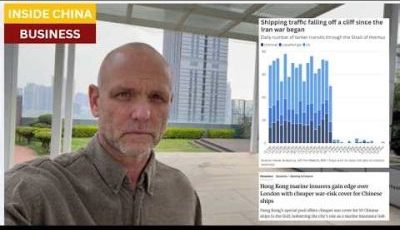
More Iran War fallout: Maritime insurance industry shifts from London to China
or go to
Aletho News Archives – Video-Images
From the Archives
Allies Don’t Need Lobbies
By Jay Knott | Dissident Voice | September 24, 2013
In a recent article on Counterpunch, Rob Urie defended the traditional Marxist analysis of US policy in the Middle East. He argues that support for Israel is driven primarily by economic interest, not the Jewish lobby.
He starts by paying tribute to the idea that Western societies are uniquely racist. He says that the “Western narrative” claims there is an “Arab character”, and that this is “antique racist blather”. He gives no definition of these terms. Further, he establishes his credentials as part of the dominant current in the American left by claiming that “over a million people in Iraq died so ‘we’ in the West can drive SUVs.”1
When he tries to criticize bourgeois economics, he makes it clear he doesn’t understand the developments it has made since Marx’s day, using the mathematical discipline known as “game theory”. He dismisses the basic abstraction of economic theory, the idea of the rational individual, on the grounds that it is “devoid of history, culture and political context”. But abstractions are always devoid of something.
He defends a more concrete economic theory, mostly Marxist, with some input from another theorist of capitalist crisis, Hyman Minsky. This concrete theory leads him to the view that US activity in the Middle East is primarily driven by rational capitalist motives, the need to secure a supply of oil.
“Taking the totality of circumstance — former oil company executives launching war on an oil rich nation on a pretext they publicly proclaimed they didn’t believe shortly before taking office — and that upon launching their war proved to be non-existent, requires a willingness to overlook the obvious — that the war on Iraq was for oil, that is difficult to support.”1
Perhaps I’ve misunderstood him, but based on what he says in the rest of the article, this convoluted sentence seems to argue that, because president Bush and vice-president Cheney attacked Iraq on false premises, and they also said it was all about oil, and they are former oil executives, and Iraq has a lot of oil, it’s difficult to deny US attacks on Iraq are all about oil.
In fact, it’s not hard at all. As Urie points out, at times Bush and co. said that attacking Iraq was “protecting the world’s supply of oil.”1 But, as he also points out, they are congenital liars. Why should we believe them when they say they are trying to “protect” the oil supply? Protect it against what? When politicians “admit” attacks on Middle Eastern countries are wars for oil, they are parroting the neo-con party line, feeding the public, both left and right, with a plausible-sounding pretext. For right-wingers, “it’s a war for oil” is a reason to support war, and for leftists, it’s a way to feel better by complaining impotently about corporate greed. Both approaches help the war drive. … continue
Blog Roll
 Aletho News
- More Iran War fallout: Maritime insurance industry shifts from London to China
- US-Israeli aggression on Iran triggers review of GCC countries’ investment pledges to Washington
- Russia slams UK plan to seize tankers suspected of carrying its oil
- Pakistan ramps up food exports to Persian Gulf nations as war deepens food insecurity
- Iran submits response to US plan, sets terms for war’s end: Tasnim
- US vs Iran: Kharg Island Talk — Bluff or Escalation? Ex-Military Officer Weighs In
- Zelensky unnecessarily involves Ukraine in the Middle East crisis
- Turkish tanker blacklisted by Ukraine hit in drone attack – media
- Canada, the U.S., and NATO: the inescapable trap
- Villains of Judea: Leonid Radvinsky
- If Americans Knew
- ‘No Innocent Children’: Far-right Israeli Lawmaker Defends Killing of Palestinian Family
- Mossad’s promises helped Netanyahu convince Trump that Iran could be toppled
- US Arms Control Official Refuses To Comment When Asked If Israel Has Nuclear Weapons
- Veterans warn US landing could be ‘more Gallipoli than Vietnam’
- Israel may be committing war crimes in Lebanon – Not a ceasefire Day 167
- In the West Bank, life is a constant battle – 3 articles
- Jacob Reses, one of the most powerful pro-Israel operatives in Trump’s Washington
- Israeli-US assaults kill or injure 87 children a day – Not a ceasefire Day 166
- ‘Forever live by the sword’: Understanding Israelis’ massive support for Iran war
- UN’s special rapporteur on human rights says Israel is systematically torturing Palestinians
- No Tricks Zone
- Devastating Assessment Of Comirnaty Vaccine By Former Senior Pfizer Europe Toxicologist
- New Study: CO2 Is ‘Effectively Negligible’ As An Explanatory Climate Change Factor Since 2000
- Former Pfizer Toxicologist Dr. Helmut Sterz Tells Bundestag Hearing Pfizer Vaccine Should Have Never Been Approved
- Energy Expert: Germany’s Nuclear Phaseout Was A “500 Billion Euro Mistake”
- New Research: South Australia’s Mid-Holocene Sea Surface Temperatures Were 4°C Warmer Than Today
- Storing Green Energy To Last Germany 10 Days Would Require A 60-Million Tonne Battery
- New Studies: UK Sea Levels Were 4 Meters Higher Than Today During The Mid-Holocene
- Destructive Green New Deal: German Energy And Metal Group Warns Of Drastic Crisis
- New Study Documents A 20-Year Pause In Arctic Sea Ice Decline – Driven By Internal Variability
- Wake-up Call: Survey Shows Majority Of Germans Now Favor Postponing Climate Targets!
 Aletho News