Iran to charge ships passing Strait of Hormuz in rial: Lawmaker
Press TV – April 27, 2026
A motion being prepared in the Iranian parliament to regulate future transit through the Strait of Hormuz in the Persian Gulf stipulates that ships allowed to pass through the key waterway must pay tolls in Iranian rial currency.
The chairman of the Iranian parliament’s National Security and Foreign Policy Committee, Ebrahim Azizi, said on Monday that charging tolls on ships passing through the Strait of Hormuz is part of an 11-article motion being prepared in the parliament.
Azizi told state TV that the motion has been discussed and finalized in his committee and will become law once ratified in a vote in the main chamber of the Iranian parliament.
He said the motion contains some smart and well-considered measures that are based on a decree by the Leader of the Islamic Revolution, Ayatollah Seyyed Mojtaba Khamenei, who said last month that Iran must introduce a new system of governance in the Strait of Hormuz.
Azizi said the measures include a total ban on transit for ships owned by or linked to the Israeli regime, as well as restrictions on passage for vessels connected to hostile countries and their affiliates.
He said that the motion also seeks to require all countries that have inflicted financial damage on Iran over the past years, including by imposing sanctions or blocking its funds in foreign banks, to compensate Iran, through tolls paid by their ships passing through the Strait of Hormuz.
“It has been stipulated in the motion that the financial proceeds obtained from the Strait should be (paid) in Iranian rial,” he said.
The motion comes amid Iran’s continued control over transit through the Strait of Hormuz, which it has enforced since the early days of the US-Israeli aggression against the country in late February.
Iran has maintained its control over the strait, although the aggression ceased in early April following a Pakistani-mediated ceasefire.
Iran defends limits on Strait of Hormuz passage
The Islamic Republic once again shut the strategic waterway due to what it described as US “piracy”
© Ruptly
RT | April 18, 2026
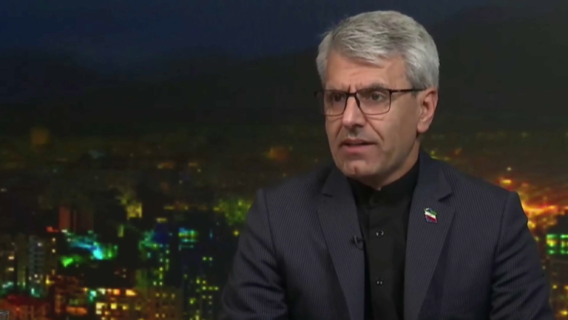
Iran said the renewed restrictions on maritime traffic through the Strait of Hormuz are justified under international law and necessary to counter hostile actions, Foreign Ministry spokesman Esmail Baqaei has said in an interview with RT.
Iranian military officials said on Saturday that Tehran had reasserted “strict control” over the strategic route, which carries about 20% of global oil, citing the continued US blockade of its ports, just a day after declaring it open. The Revolutionary Guard Navy Command later said the strait would remain under Iranian military control as long as US restrictions stay in place.
“There was no safe and secure passage in this waterway,” Baqaei told RT on Saturday, adding that as a coastal state Iran has the right under international law to take measures against what it sees as hostile actions.
“We cannot allow enemy vessels, especially military ones or those linked to countries involved in aggression, to pass through the strait normally, as they pose a direct threat,” the spokesman stated.
The US-Israeli bombing campaign prompted Iran to restrict passage through the strait for “enemy ships,” triggering a breakdown in supply chains and sending global crude oil prices soaring.
Oil prices eased during the first round of US-Iran talks in Islamabad last weekend on hopes of the Strait reopening. After the negotiations collapsed, US President Donald Trump ordered a naval blockade on Iranian ports and shipping, prompting tankers to turn back and pushing prices back toward $100 a barrel.
On Friday, Iranian authorities said the waterway was fully open to commercial vessels for the remainder of the ten-day Israel–Lebanon ceasefire, lowering crude oil prices on de-escalation hopes. Tehran later reversed the decision after Trump said the US blockade of Iranian ports would remain in full force until a peace deal is reached.
The disruption in the Strait of Hormuz has triggered broad global economic ripple effects, with Europe facing higher fuel and energy costs due to reduced oil flows. The International Energy Agency has warned of rising market volatility and possible jet fuel shortages within six weeks if disruptions continue. Humanitarian organizations have also flagged growing risks to global food security as fertilizer and agricultural supply chains are affected.
‘We warned you’: Hormuz Strait back to pervious state amid US blockade
Al Mayadeen | April 18, 2026
Iran’s military announced that the Strait of Hormuz has returned to its previous operational status, placing it under “strict management and control” by the country’s armed forces, following repeated violations of prior understandings by the United States.
In a statement, the spokesperson of the Khatam al-Anbiya Central Headquarters said Iran had earlier agreed, in good faith and within the framework of negotiations, to allow the managed passage of a limited number of oil tankers and commercial vessels through the strategic waterway.
However, the spokesperson stated, the United States had failed to uphold its commitments, amid Washington’s continued acts of “piracy and maritime robbery” under the guise of a naval blockade.
The statement added that, in response, Iran has reinstated full control measures over the strait, emphasizing that the passage of vessels will remain tightly regulated unless the US fully lifts restrictions on Iranian shipping routes, both inbound and outbound.
“As long as the United States does not completely lift the restrictions on the passage of vessels from Iran to destination and from destination to Iran, the situation in the Strait of Hormuz will be strictly controlled and remain as before,” the spokesperson said.
IRGC-N affirms change in Hormuz regime
Meanwhile, Iran’s Islamic Revolution Guard Corps Navy (IRGC-N) reaffirmed the change in the regime of the Strait of Hormuz, stressing that any breach of promise by the United States will receive a fitting response.
“As long as the passage of vessels from and to Iran is threatened, the status of the Strait of Hormuz will remain unchanged,” the IRGC-N said, according to the Iranian TV, IRIB.
Iranian official outlines ‘new maritime regime’
Separately, Ebrahim Azizi, head of the National Security Commission of the Iranian parliament, outlined a new framework governing maritime transit in the strait.
“It is time to submit to the new maritime regime of the Strait of Hormuz; this regime is determined by the Islamic Republic of Iran, not by virtual posts,” Azizi wrote in a post on X.
“In this regime, only commercial ships, and only with permission from the Armed Forces General Staff, particularly the Navy, are allowed to pass through designated routes after paying the rightful dues of the Iranian nation.”
He added that any US interference with Iranian vessels could prompt further escalation in restrictions.
“If the Americans want to create the slightest interference for Iranian ships, this decision can easily be changed!” Azizi said.
In a follow-up post, he added, “We warned you, but you didn’t pay attention! Now enjoy the return of the Strait of Hormuz situation to its previous state.”
The Iranian knot needs to be untangled, not cut – Lavrov
Israel’s erroneous belief that it can destroy Iran should not be supported by the US, the Russian foreign minister has said
RT | April 15, 2026
There is no quick fix to the crisis surrounding Iran, Russian Foreign Minister Sergey Lavrov has said. The US must recognize its underlying causes, including Israel’s goal of destroying the country, he added.
Speaking to reporters during a visit to China on Wednesday, Lavrov described the situation as “a crisis knot that will be extremely difficult to untangle.” He explained that “some parties are trying to cut it now – I don’t believe that would produce a [favorable] result.”
According to Lavrov, the current crisis stems directly from the US-Israeli attack on Iran in late February. The resulting disruption to global markets and the Iranian damage to Arab states hosting US military facilities were foreseeable consequences, he stressed.
“Israel appears totally convinced that Iran must be destroyed. I cannot understand how such a belief is possible,” Lavrov said, adding that remarks by US President Donald Trump about wiping out Iran’s civilization had sparked strong international backlash.
In addition to backing Israeli ideological motives, Washington is also pursuing dominance over global energy markets, as confirmed by Trump’s own messaging, Lavrov stated.
US and Israel hurting the Middle East
Commenting on recent US-Iran peace talks in Pakistan, Lavrov expressed hope that Washington would be “realistic, take the region’s interests into account and suspend its unprovoked aggression.”
He expressed solidarity with Gulf nations damaged in the conflict, but stressed that “those who started the war also have intentions not to allow normalization between the Arabs and Iran.”
Lavrov pointed to China’s quiet role in facilitating the 2023 agreement between Saudi Arabia and Tehran, which restored diplomatic ties after seven years and led to the reopening of embassies between the regional rivals.
Iran’s nuclear rights must be respected
Lavrov dismissed claims by the US and Israel that Iran is pursuing nuclear weapons, citing reports from international inspectors that found no evidence of such activities.
Concerns over Iran’s nuclear program were addressed under the 2019 multilateral agreement known as the JCPOA, Lavrov said, adding that “the United States destroying this initiative as Israel always wanted is a sad fact of modern history.”
He also criticized the European Union for acceding to Trump’s withdrawal from the agreement and playing “the most malicious role” in pushing snapback UN sanctions targeting Iran.
Russia, he said, remains ready to assist in finding a solution, provided that Iran’s right to develop a peaceful nuclear program is upheld.
US’s ‘Very Foolish’ Double Blockade of Hormuz Strait Makes Absolutely No Sense: Here’s Why
Sputnik – 13.04.2026
Every step Washington has taken in the conflict with Iran to date has worsened its own strategic position, and the blockade of Iranian oil exports is no exception, says Center for Contemporary Iranian Studies director Rajab Safarov.
“This is a very foolish move on the part of the United States. With each passing day and every step,” Washington is “worsening” its own position, and that of many countries around the world for whom Hormuz is the lifeline to their economic existence, Safarov told Sputnik.
Meanwhile, “the Iranian position grows stronger” over time relative to others, something “the Iranians understand perfectly well,” Safarov said. Therefore, Tehran has no incentive to agree to or be bullied into a peace deal on American terms.
Safarov doesn’t rule out that President Trump is being provided poor information on conditions on the ground by underlings like Secretary Hegseth, and making statements and decisions that have “no connection to reality.”
The observer pointed out, for example, that Trump claimed Iran’s Navy has been destroyed. But it’s this same Navy that’s now “ready to sink any ship that might move toward the Indian Ocean without Iran’s permission.”
“He says that Iran’s missile tech and launchers are exhausted or destroyed. But we see Iran launching more and more of its missiles – more modern, more powerful ones, etc,” Safarov said.
The US will ultimately be forced to fold, the observer argues, because while blocking Iranian oil exports will hurt its economy, Tehran is in a position to survive. The effects on the Gulf exporters and major energy-dependent economies in Asia and the developing world will be far more punishing. Oil prices could hit $150 by the end of the week.
With 20% of the world’s oil trapped in the Persian Gulf, “that means a fifth of the global economy will essentially grind to a halt.” Therefore, “America risks turning almost the entire world against itself,” Safarov summed up.
China issues rules on countermeasures against foreign states’ unlawful extraterritorial jurisdiction
Xinhua – April 13, 2026
Chinese Premier Li Qiang has signed a decree of the State Council to publish a new set of rules on countering foreign states’ unlawful extraterritorial jurisdiction measures.
The regulations, consisting of 20 articles, take effect upon publication.
According to the rules, such extraterritorial jurisdiction measures refer to actions taken by a foreign country that violate international law and the basic norms governing international relations and that harm China’s sovereignty, security and development interests, or the legitimate rights and interests of Chinese citizens and organizations.
The rules also stipulate that the Chinese government has the authority to take countermeasures in response to such actions.
They also state that the Chinese government has the authority to exercise extraterritorial jurisdiction over relevant conduct if a sufficient nexus exists.
The regulations establish a system of a malicious entity list targeting foreign organizations and individuals that promote or participate in the implementation of a foreign state’s unlawful extraterritorial jurisdiction measures.
The regulations also state that no organization or individual shall enforce or assist in enforcing such unlawful jurisdiction measures.
The regulations state that Chinese citizens and organizations affected by unlawful extraterritorial jurisdiction measures may file lawsuits against those enforcing them, and that government authorities will provide guidance and support for such legal actions.
Chinese authorities have repeatedly expressed firm opposition to the abuse of unilateral sanctions and long-arm jurisdiction.
China’s law on countering foreign sanctions was adopted in 2021. Key meetings of the Communist Party of China in recent years also pledged to strengthen mechanisms for countering foreign sanctions, interference, and long-arm jurisdiction.
Embarrassing Pivot: U.S. considers dropping Iran oil sanctions amid war
By Alan MACLEOD | MintPress News | March 22, 2026
Forced into a humiliating U-turn amid a potential global economic meltdown, the Trump administration announced today that it may remove sanctions on Iranian oil already at sea.
Treasury Secretary Scott Bessent told Fox News that the move to free up 140 million barrels of oil was aimed at preventing China gaining from the situation. “That’s about 10 days to two weeks of supply that the Iranians had been pushing out that would have all gone to China,” he said. “In essence, we will be using the Iranian barrels against the Iranians to keep the price down for the next 10 or 14 days as we continue this campaign.”
He also noted that the U.S. government was considering a unilateral release of its oil reserves, in order to calm the market, which has seen prices almost double from $53 per barrel in January to $97 today.
“When we go through, as we plan, to unsanction the Iranian oil, that oil will go up to a market price, and it will end up in places other than China. It can flow into Malaysia, Singapore, Indonesia, Japan, India, who have been good actors in this,” Bessent added.
No matter how the Trump administration spins their move, there is no doubt that this represents an embarrassing climb down – one which drew mockery on social media. “This is literally the dumbest war in human history. No hyperbole,” said Aaron Bastani of Novara Media. “Next up: US asks Iran to join anti-Iran coalition,” joked satirist Karl Sharro.
In response to U.S. and Israeli attacks that killed its supreme leader, Ayatollah Ali Khamenei, Iran closed the Strait of Hormuz on March 2. The narrow sea passage between the Islamic Republic and Arabia is a major choke point of global trade, through which around one-fifth of the world’s oil and gas supply flows.
The result has been economic and political pandemonium, which Trump administration officials appeared not to have anticipated. “Iran War Will Lower Energy Prices” ran the headline of a March 12 Wall Street Journal article penned by Peter Navarro, Trump’s Senior Counselor for Trade and Manufacturing.
Trump appears to have believed that his Iran attack could be completed within hours, and with little blowback or fallout. Instead, the Islamic Republic has been able to hit American bases across the region, spread panic throughout the Gulf States, and create shockwaves in the global economy.
In response, Trump demanded his NATO and Asian allies come to his aid, and send their armed forces to the region to forcibly open the strait. Declaring it a “very small endeavor,” he stated:
“I really am demanding that these countries come in and protect their own territory because it is the place from where they get their energy. And they should come and they should protect it. You could make the case that maybe we shouldn’t be here at all, because we don’t need it.”
Instead, however, his allies responded with a resounding “no.” “Canada is not participating in the offensive operations of Israel and the United States, and will not, ever,” Prime Minister Mark Carney said. German Defense Minister Boris Pistorius was equally adamant; “This is not our war. We have not started it. What does Donald Trump expect a handful or two handfuls of European frigates to do in the Strait of Hormuz that the powerful U.S. Navy cannot do?” he asked.
Most alarmingly for Trump, however, was the reaction from Belgian prime minister, Bart De Wever. In an interview with local newspaper, L’Echo, he stated that Washington’s Iran attacks will force Europe to come to a quick and independent agreement with Russia, in order to avoid financial ruin amid an impending energy crisis.
“We must normalize relations with Russia and regain access to cheap energy. That is common sense,” he said, adding, “In private, European leaders agree with me, but no one dares to say it out loud. We must end the conflict in the interest of Europe, without being naïve towards Putin.”
Trump has said that he is not worried that this war will turn into another Vietnam. Yet, with oil prices surging, public resentment mounting, a global economy potentially on the brink, and key allies openly rebelling against his dictates, it is quite possible that this conflict could spiral out of Washington’s control and do similar damage to the American empire.
Russia and China Are Expanding Their Cooperation to Counter US Efforts to Bully Iran and Cuba
By Larry C. Johnson | SONAR 21 | February 14, 2026
This will be a rather lengthy article, but you need to know what Russia and China are doing in a closely coordinated series of actions that show a serious commitment to counter US actions to punish and isolate Iran and Cuba. Let’s start with Iran… Since the June 2025 12-day Iran–Israel war (which ended with a US-brokered ceasefire on 24 June 2025), Russia and China have provided Iran with a combination of diplomatic, economic, military-technical, and strategic support. This has helped Tehran recover from strikes on its nuclear sites, air defenses, and missile infrastructure, while deepening their “axis” alignment against Western pressure. Support has been pragmatic rather than unconditional—neither offered direct intervention during the conflict, leading to some Iranian frustration—but has accelerated in the months since.
The biggest news — a development that has been largely ignored in the West — was the signing of the Trilateral Strategic Pact (signed 29 January 2026), which provides a comprehensive framework for diplomatic, economic, and security coordination (emphasizing sovereignty, sanctions resistance, and multipolarity; no formal defense alliance). The signing occurred through simultaneous ceremonies in Tehran, Beijing, and Moscow, as confirmed by state media in all three countries and reported across outlets like Middle East Monitor, GV Wire, and others. It represents a significant escalation in coordination among the three nations, building directly on their existing bilateral frameworks.
It formalizes a trilateral coordination mechanism for the first time, linking the three powers in a shared strategic framework. It builds on the bilateral agreements that Iran had signed previously with Russia and China:
The Iran-Russia 20-year Comprehensive Strategic Partnership Treaty (signed January 17, 2025, entered into force October 2025), focused on economic, political, defense, and sanctions-evasion ties.
The Iran-China 25-year Comprehensive Cooperation Agreement (signed 2021), emphasizing trade, infrastructure, energy, and Belt and Road Initiative projects.
While the full text has been released incrementally (with portions still emerging as of early February 2026), public descriptions and official statements highlight the following core elements:
- Diplomatic coordination — Unified stances on international issues, including opposition to Western sanctions, support for multipolarity, and mutual backing in forums like the UN.
- Economic resilience and cooperation — Enhanced trade (e.g., energy exports, yuan/ruble-based mechanisms), sanctions circumvention, and infrastructure projects (e.g., expanding Belt and Road ties, North-South Transport Corridor involvement).
- Strategic and security alignment — Military-technical cooperation, intelligence sharing, and joint exercises (e.g., building on annual “Maritime Security Belt” drills; a major joint naval exercise involving all three that will take place in the Gulf of Oman and northern Indian Ocean in the coming weeks).
- Nuclear sovereignty — Emphasis on Iran’s right to peaceful nuclear development and resistance to external interference.
- Trilateral nuclear and military talks — Including IAEA discussions and coordinated exercises.
- No mutual defense clause — It explicitly stops short of a formal military alliance (unlike NATO’s Article 5), focusing instead on coordination and mutual support without automatic defense obligations.
State media in Tehran, Beijing, and Moscow described it as a “cornerstone” for a new multipolar world order, with Chinese messaging highlighting opposition to “unilateral coercion” and Russian/Iranian outlets framing it as bolstering sovereignty against external threats. While I do not believe that Russia and China will join the fray if Iran is attacked, they are making a concerted, substantive effort to ensure that Iran can effectively defend itself and thwart US attempts at regime change.
Both Russia and China are providing important military assistance to Iran, but China appears to be playing a bigger role in supplying hardware while Russia is supplying Iran with critical intelligence. According to press reports and photographic evidence, Russia has deliveried Mi-28NE attack helicopters (confirmed in early 2026) and possible MiG-29 fighters. Russia also has sent a large number of military transport flights to Iran, but there are no reports about what was on board. The most likely case is that Russia is fulfilling supplies of weapons based on prior contracts and in defiance of reinstated UN/EU arms sanctions via the JCPOA “snapback” mechanism.
China has focused on upgrading Iran’s air defense system by supplying HQ-9B surface-to-air missile systems (a long-range SAMs comparable to Russia’s S-300; deliveries reported from July 2025 onward, with Iranian officials confirming integration to replace losses from Israeli strikes). In addition, China has deployed the YLC-8B long-range surveillance radars (for detecting stealth aircraft like the F-35), and shipped missile components (e.g., solid-fuel propellants, guidance systems) to rebuild ballistic missile production lines damaged in the war. Iran is in a much stronger position militarily than it was on June 13, 2025, when Israel launched its surprise attack.
CUBA
Russia and China also are providing significant political, economic, humanitarian, energy, and material support to Cuba, especially amid the island’s severe fuel/energy crisis, food shortages, and economic strains intensified by the longstanding US blockade and recent US actions under President Trump (e.g., pressure on Venezuelan/Mexican oil supplies and threats of tariffs on countries aiding Cuba).
Russia and China are coordinating rhetorically (both denounce US “inhumane” tactics and reaffirm support in bilateral calls and statements). They also are coordinating the kind of aid that each supplies to Cuba… Russia focuses on supplying direct oil/fuel while China is aiding Cuba with financial/renewables/food assistance. There is not a formal trilateral mechanism like the one they signed with Iran, but both countries frame their support as countering US pressure in the Western Hemisphere. This support is ongoing and responsive to Cuba’s acute needs (fuel rationing, blackouts, food scarcity). Deliveries and projects continue despite US threats, with both countries emphasizing it as humanitarian and sovereign cooperation.
Russia’s Support
Russia emphasizes solidarity, political backing, and practical material/energy assistance, framing it as opposition to “suffocating” US measures. Russia’s help consists of the following:
Energy Aid (Oil and Fuel): Russia is preparing to deliver crude oil and petroleum products to Cuba “in the near future” as humanitarian aid. The Russian Embassy in Havana confirmed this to Izvestia. Russia last sent a major shipment in February 2025 (100,000 metric tons of crude under a $60 million state-backed loan approved by Putin). The Kremlin (via spokesman Dmitry Peskov) states it is in active contact with Havana to discuss assistance options and has described Cuba’s fuel situation as “critical.” Deputy Foreign Minister Sergei Ryabkov (Feb 13, 2026) confirmed Russia is providing material assistance, including supplies already underway.
Political and Diplomatic Support: Foreign Minister Sergei Lavrov (phone call with Cuban FM Bruno Rodríguez Parrilla, Feb 2, 2026) reaffirmed Russia’s “principled position” that economic/military pressure on Cuba is unacceptable and committed to continued political and material/financial support. Russia repeatedly condemns the US blockade, opposes any military intervention, and expresses solidarity with Cuba (and Venezuela). Ambassador Viktor Koronelli has stated Russia “will not abandon Cuba.”
Historical/Longer-Term Ties: Russia wrote off ~90% of Cuba’s Soviet-era debt (~$32 billion) in 2014. Ongoing cooperation includes trade, scientific/academic exchanges, and past energy deals.
China’s Support
China has positioned itself as a major strategic partner, focusing on humanitarian aid, energy infrastructure, food security, and debt/investment cooperation (Cuba is a Belt and Road Initiative partner). The recent Emergency Aid Package (Approved by Xi Jinping, Jan 2026) provides $80 million in financial assistance (in euros equivalent) for purchasing electrical equipment and other urgent needs — specifically to help resolve the energy crisis (blackouts affecting >60% of the country). China also donated 60,000 tons of rice in emergency mode (first shipment of ~4,800 tons arrived Jan 2026; rest in coming months) for food security.
China also is expanding support that builds on prior commitments. Previously it was helping Cuba with a 200 MW photovoltaic (solar) energy projects and, recent days, has delivered 5,000 solar panel kits for isolated homes (new executing company established with Cuba’s Ministry of Foreign Trade). Shortly after Venezuelan President Maduro was abducted, China, acting under an emergency program, delivered 30,000 tons of rice (first shipments in Jan 2026)… This was in addition to prior donations of solar lamps, roofing materials, mattresses, and generator sets.
In the face of the US effort to crush Cuba economically, China is helping Cuba with debt restructuring negotiations (banking/financial/corporate debts). Cuba also is being Integrated into China’s CIPS payment system and increased use of yuan in trade (announced 2025). China is in effect helping wean Cuba off of the US dollar. China also is helping Cuba with biopharma (e.g., technology transfers for aspirin production), digital transformation (Phase 4 program), high-definition TV projects, mining, oil exploration, sugar industry recovery, and renewables (China investing in solar to help Cuba reach 25% renewables by 2030).
The support that Russia and China are providing to Iran and Cuba sends a clear message to Donald Trump and to the nations of the global south: i.e., Russia and China are building a new financial and security infrastructure designed to immunize countries against US coercion and threats. They are doing more than just offering words of solidarity… They are backing up their words with concrete economic, diplomatic and military actions. The foundation of the American hegemon is crumbling.
I started my vlogging day with Nima and Colonel Wilkerson:
Ray McGovern and I discussed the latest developments with Iran and the war in Ukraine with Judge Napolitano:
And here’s my interview with Alastair Crooke… we analyzed the impending attack on Iran and the prospects for a negotiated end to the war in Ukraine:
Jeffrey Epstein’s sinister shadow over West Asia
By Kit Klarenberg | Al Mayadeen | February 13, 2026
In late January, the US Department of Justice dumped millions of documents detailing the criminal activities of US oligarch and serial paedophile Jeffrey Epstein, including his vast rolodex of paedophilic celebrities, financiers, politicians and public figures. The tranche is so vast, independent journalists and researchers have barely scratched the surface yet. But preliminary investigations amply demonstrate Epstein was centrally enmeshed with multiple foreign spy agencies. First and foremost, the Zionist entity’s notorious Mossad. The horrors wrought on West Asia as a result are incalculable.
A recurrent phenomenon in the newly-released documents, emails and text messages is Epstein and his grand global nexus seeking to profit from Western-inflicted misery the world over. On March 18th 2014, in the Maidan coup’s immediate, violent aftermath, he emailed Ariane de Rothschild, a French banker and CEO of the Edmond de Rothschild Group since March 2023, due to her marrying into the famous, powerful Jewish family. Epstein was exhilarated. “Ukraine upheaval should provide many opportunites [sic],” he wrote.
De Rothschild was drained after a “very long day sitting on bank board,” but delighted to hear from her close friend. “Miss our talks and hope you’re well,” she gushed. “Will be at home tomorrow night, will you be free? And let’s discuss Ukraine.” The “opportunities” Epstein perceived in the shattered post-coup country, as it plunged into Western-sponsored civil war, ranged from an untapped reservoir of young girls and vulnerable women to pimp out to high-ranking ‘clients’, to pillaging the country’s vast resources.
In July 2011, Epstein emailed associate Greg Brown, declaring “the Libyans now are legit, but need real help,” adding “they must be careful there will be many claims on that money.” He was referring to Tripoli’s frozen overseas assets, seized by Western powers in March that year, after the country plunged into insurrectionary violence. Epstein fired off this missive right when NATO’s bombing of Libya graduated from striking government forces to actively supporting rebel advances, as foreign fighters closed in on the country’s capital.
Brown excitedly responded, “there are already $80 billion in frozen funds/assets internationally,” and perhaps “three to four times this number in sovereign, stolen and misappropriated assets.” He was working with MI6 and Mossad veterans to “identify stolen assets and get them recovered.” If they could “identify/recover 5% to 10% of these monies and receive 10% to 25% as compensation,” the Anglo-Israeli private spying network could reap “billions of dollars”.
However, this paled in comparison to gains to be had once the Western-sponsored National Transitional Council unseated Libya’s longtime leader Muammar Gaddafi. “The real carrot is if we can become their go-to guys because they plan to spend at least $100 billion next year to rebuild their country and jumpstart the economy,” Brown salivated. He reminded Epstein the country was “rich”, with a small population but “the ninth largest crude oil & natural gas reserves on the planet.” Gaddafi was murdered by rebel forces that October.
‘Secret Weapon’
Numerous declassified materials amply indicate Epstein was a journeyman intelligence asset, with connections to several ostensibly separate spying agencies. Tellingly, some heavily redacted communications contain references to Sensitive Compartmented Information Facilities (SCIF). These buildings are used by US intelligence and government agencies to exchange top secret information, and access requires the highest security clearance. In a secret January 2018 discussion with political strategist Steve Bannon, Epstein bragged that his sprawling New York mansion was “similar to a SCIF.”
Bannon was one of many right-wing figures Epstein courted. Another was Peter Thiel, the billionaire founder of shadowy data harvester Palantir. In June 2014, Epstein emailed to say he increasingly lent credence to Thiel’s “‘intentionality’ argument” – the proposal that the “mess” unfolding across the Arab and Muslim world over recent years was what then-US President Barack Obama “really wanted”. Epstein remarked, “we would have to admit a strategy brilliantly executed.” Thiel fired back:
“The ‘intentionality’ argument would center on making sure the US gets less involved with the rest of the world (I think that’s the ‘plan’). The more of a mess, with just lots of bad guys on different sides, the less we will do.”
Thiel was well-placed to know this was the Obama administration’s strategy. Birthed with seed funding from In-Q-Tel, the CIA’s venture capital arm, Palantir made vast sums serving as the War On Terror’s “Secret Weapon”. It was used to hunt “bad guys” at war with the US, and “Israel” – the key beneficiary of West Asia being set on fire during this period. Not coincidentally, the Zionist entity has for years employed a variety of Palantir products. Thiel commented in July 2024, the Gaza Holocaust well-underway:
“My bias is to defer to Israel.”
Accordingly, Epstein was clearly in the employ of both US and Israeli intelligence. In a February 2016 email exchange with Thiel, he declared, “as you probably know I represent the Rothschilds.” The banking dynasty was instrumental in “Israel’s” creation, funding construction of colonial settlements in Palestine from the late 1800s onwards. Epstein’s own ties to the Zionist entity were deep and coherent. From September 2010 to March 2019, he formally met with prominent Israeli politician and military veteran Ehud Barak over 60 times.
Barak was a repeat visitor to Epstein’s private island, Little St James. On at least one occasion, in January 2014, Barak visited with his wife, and specifically left his security detail behind. In June that year, Epstein arranged for Barak to meet Thiel. The Israeli politician was such a frequent guest at Epstein’s New York apartment on 301 East 66th Street, his staff referred to the lodgings internally as “301.”
‘Terrorism Financing’
In January, Barak sought to distance himself from Epstein, claiming he “deeply regret[s] having any association with him.” However, their bond was intimate, warm, and long-running. Epstein’s 2008 conviction for sex offences didn’t dim their connection, and come November 2018, Barak referred to Epstein as a “great friend” in discussions with Jabor Yousef Jassim Al Thani, a businessman and member of the Qatari royal family. An FBI investigation was opened into Epstein on June 12th 2018.
That same day, Epstein lodged an order for six 55 gallon drums of sulfuric acid, “with fuel and insurance charge for transport,” with now-defunct, Florida-based Gemini Seawater Systems. It would be unsurprising if he’d been tipped off about the Bureau probe. Someone within the FBI, or a foreign spying agency keeping a close eye on the agency, could’ve alerted him. Just as Epstein maintained ties between different foreign services, he enjoyed relations with high-ranking state figures the world over.
Jabor Yousef Jassim Al Thani was but one Gulf royal who the paedophile financier counted as a close confidante. Epstein was evidently considered a go-to figure when Qatar was seeking to communicate with “Israel”. In February 2010, Al Thani wrote to Epstein that the “Israeli operation… doesn’t help anyone.” He referred to the brazen assassination of Palestinian Resistance fighter Mahmoud al-Mabhouh in Dubai the previous month by Mossad. A day earlier, local authorities formally blamed Mossad for the killing, triggering a media firestorm.
In July 2017, following the UAE and Saudi Arabia leading Arab states in severing diplomatic relations with Qatar, and imposing a US-supported land, air and sea blockade on the monarchy in advance of a planned land invasion, Epstein wrote to Al Thani, offering him advice on how Dubai could rescue herself. “I think Qatar should stop kicking and arguing,” and make nice with the Zionist entity, he proposed. “Let the heat come down a bit.”
In reference to the monarchy’s support for Hamas, he suggested “Qatar needs to come out against terrorism,” as “the smell of terrorism financing will be around for years.” Epstein went on to reference Indian Prime Minister Modi’s recent international jaunt, where he’d met Trump in June, before becoming the first-ever Indian prime minister to visit the Zionist entity. Modi also snubbed the Palestinian Authority, eliciting condemnation from PA officials. Epstein reported:
“Modi took advice and danced and sang in Israel for the benefit of the US president [Donald Trump]. They had met a few weeks ago. IT WORKED!”
Troublingly, Epstein’s filial alliance with Ehud Barak overlapped with Barak serving as Tel Aviv’s security minister, raising the obvious question of whether Epstein in any way directly influenced Israeli policy during this time, or acted as an advocate and broker for the Zionist entity with other countries in West Asia and beyond. Barak solicited Epstein’s input with his public writing, including a draft of his book My Country, My Life: Fighting for Israel, Searching for Peace, which was released in May 2018.
That month, Barak’s wife emailed Epstein while visiting New York demanding an “urgent short meeting” between Epstein and her husband. One day later, Donald Trump withdrew from the Iranian nuclear agreement, in favour of a “maximum pressure” campaign. In July 2018, Barak’s private surveillance firm Toka broke cover publicly for the first time, announcing it had raised $12.5 million in seed funding from investors including venture capital firm Andreessen Horowitz.
Andreessen Horowitz invested in several ventures also backed by Jeffrey Epstein, including CoinBase. It is unknown whether Epstein invested in Toka, although his interest in such a company would be clear. The firm is stacked with former Israeli cyber spies, and has patented technology capable of locating security cameras and webcams, hacking into them, then altering their live feeds without trace. Such a resource removes any need for real-life individuals to oversee “honey trap” operations, and targets to take the bait.
US mulling new pressure tactic on Iran – WSJ
RT | February 11, 2026
The US is considering seizing tankers carrying Iranian oil in a bid to push Tehran toward a deal on its nuclear program, the Wall Street Journal has reported, citing American officials.
Washington has long accused Iran of seeking nuclear weapons, while Tehran has maintained that its program is strictly civilian. The US has seized several vessels transporting Iranian oil in recent months as part of a broader campaign targeting sanctioned tankers linked to Venezuela. The ships are part of an alleged ‘shadow fleet’ used to move crude from heavily sanctioned countries to China and other buyers.
Senior officials in the administration of US President Donald Trump have debated whether to confiscate Iranian vessels but have stopped short of acting, wary of retaliation from Tehran and potential disruption to global oil markets, the WSJ reported on Tuesday. The option, one of several under discussion at the White House to pressure Tehran into agreeing to limits on its nuclear program, faces significant hurdles, US officials told the outlet.
Iran would likely retaliate against any stepped-up US enforcement campaign by seizing tankers carrying oil from American allies in the region, which could send oil prices sharply higher, posing political risks for the White House, the WSJ said. The US Treasury Department has sanctioned more than 20 vessels allegedly involved in transporting Iranian oil this year, potentially making them candidates for seizure.
When asked about the possibility of the US boarding tankers linked to Iran, a White House official told the outlet that Trump favors diplomacy but has a range of options available if negotiations fail.
The report comes amid rising tensions between Tehran and Washington, with the US recently deploying additional naval and air assets to the region. Washington has demanded that Iran accept a “zero enrichment” policy and has repeatedly suggested it could resort to military action if diplomacy fails, while Tehran insists that enrichment is its legal right, grounded in sovereignty and national dignity.
Speaking to RT’s Rick Sanchez on Tuesday, Iranian Foreign Minister Abbas Araghchi said Tehran is fully committed to a diplomatic settlement with the US while simultaneously bracing for the possibility of renewed conflict. However, he argued that “there is no solution but a diplomatic solution,” stating that technology and progress cannot be destroyed through bombings and military threats.
Iran Willing to Dilute Enriched Uranium If US Lifts All Sanctions
By Kyle Anzalone | The Libertarian Institute | February 9, 2026
A top Iranian official said that Tehran would be willing to dilute its stockpile of highly enriched uranium if Washington agrees to remove sanctions completely.
Iran’s atomic energy chief, Mohammad Eslami, proposed that Tehran would dilute its 60% enriched uranium to a lower level if “all sanctions would be lifted in return.” Iran is estimated to have 400-600 kg of highly enriched uranium. Eslami explained that Tehran was unwilling to sell or transfer the nuclear material to a third country.
American and Iranian officials met for talks in Oman last week. Iranian Foreign Minister Abbas Araghchi said Iran is “very serious in negotiations” and is eager to “achieve results”. However, he said, “There is a wall of mistrust towards the United States, which stems from America’s own behaviour.”
Tehran says it is willing to agree to a deal with Washington that imposes restrictions and inspections on its civilian nuclear program in exchange for sanctions relief and the US abandoning its aggressive policy towards Iran.
Washington and Tel Aviv are seeking a far more expansive agreement that includes restrictions on Tehran’s nuclear and missile programs, as well as Iran cutting ties with its allies in the region. The White House has demanded that Tehran eliminate its nuclear enrichment program and limit the range of its ballistic missiles.
Israeli Prime Minister Benjamin Netanyahu is set to meet with President Donald Trump on Wednesday to ensure Washington does not sign a deal with Tehran that violates Tel Aviv’s redlines. Israeli officials have told the White House that Tel Aviv could launch a strike on Iran if the US agrees to a deal that does not include restricting Tehran’s missile program.
Iran has ruled out signing an agreement on the terms proposed by the US and Israel. President Donald Trump has threatened to attack Iran if Tehran does not sign a new deal with the US.
Featured Video
Elijah Magnier: Yemen’s strikes are shattering Saudi Arabia’s long-term strategy
or go to
Aletho News Archives – Video-Images
From the Archives
British weapons and personnel doing much of the killing in Yemen
Press TV – June 18, 2019
A detailed report published by the Guardian newspaper has shown how Britain is massively contributing to Saudi Arabia’s devastating war on Yemen as it suggests that London is not only supplying the bombs that fall on Yemenis, but it provides the personnel and expertise that keep the war going.
The comprehensive report by Arron Merat published on Tuesday showed that Britain was doing much of the killing in Yemen as the country continues to provide Saudi Arabia with everything it needs to turn its southern impoverished neighbor into a graveyard.
“Every day Yemen is hit by British bombs – dropped by British planes that are flown by British-trained pilots and maintained and prepared inside Saudi Arabia by thousands of British contractors,” said Merat in the report. … continue
Blog Roll
 Aletho News
- Netizens condemn Japanese drama for projecting Japan’s wartime atrocities onto Chinese characters
- Racist Seinfeld Dances for Joy as Bibi Unveils His New Map
- A West Bank War for Netanyahu’s Election Campaign, Could It Backfire?
- Yemen denounces European Parliament’s ‘hypocritical’ push to blacklist Ansarullah
- Qalibaf: UAE’s UN bid aims to ‘clear the runway’ for ‘Greater Israel’, whitewash genocide
- Pakistan reopens Iran border after boosting security: Report
- Why are so many Brazilians voting for Flávio Bolsonaro?
- Democrats Put Anti-Russia Agenda Ahead of American Workers
- Elijah Magnier: Yemen’s Strikes Are Shattering Saudi Arabia’s Long-Term Strategy
- Pentagon designates Chinese cultural centers national security threat
- If Americans Knew
- Latest updates from Israeli assault on West Bank
- Tourism Ministry launches free food truck tour in US
- “So Much Worse Than People Realize”: Never-Before-Seen Images Reveal Damage at U.S. Bases as Troops Describe Being Abandoned
- UK Bell Review Confirms Only Anti-Israel Attitudes Are Rising, Not Antisemitism
- DAILY UPDATE: Latest essential news on Palestine, Israel, & region
- DAILY UPDATE: Latest essential news on Palestine, Israel, & region
- Damning report shows the media must confront its failures on Gaza
- BBC senior broadcaster speaks out on Gaza coverage
- Netanyahu vows vast West Bank invasion in response to 20-minute skirmish that left 2 Israeli soldiers and 2 Palestinian fighters dead
- Tied up and tortured: Israel using US-made electroshock weapons on Palestinian detainees
- No Tricks Zone
- Sudden Stratospheric Warming, Powerful El Niño Combination May Lead To Extreme Europe Cold, Energy Crisis!
- Two New Studies Find Thwaites Glacier Melt Cannot Be Driven By Human Activity Or A Warming Ocean
- E-Cars Reduce CO2 Emissions By Only 41% Compared To Internal Combustion Engine Vehicles
- Predictions Made By Renowned Climate Professor Over Past Decades Have Been Proven To Be Poor
- New Study Suggests Large Regions Of The Pacific Ocean Have Been Cooling For The Last 80 Years
- Germany’s Green Energy Debacle: High Energy Costs Force Kahla Porzellan to Close After 182 Years!
- New Study: 50 Years Of The Most Aggressive ‘Net Zero’ Policies Can Only Affect The Global Climate By 0.03°C
- US September “Heat” Was No Record…Many Records Set Decades Ago
- Latest European Green Energy Debacle; Portugal’s Largest Flagship Solar Park Insolvent!
- Green Energy Debacle: German Expert Professor Fritz Vahrenholt Warns Of Severe Economic And Social Consequences

