US responsible for ‘unacceptable’ deadlock on JCPOA – Lavrov
RT | May 8, 2019
The irresponsible policies of the US have put the multilateral pact on Iran’s nuclear program at risk of failure, the Russian foreign minister said, adding that Washington should try diplomacy instead of threats for a change.
Sergey Lavrov criticized the US during a meeting with his Iranian counterpart Javad Zarif, who personally brought a letter from his government informing Russia about Tehran’s latest decision on the nuclear agreement. Russia is one of the signatories of the 2015 document, also known as JCPOA, which offered Iran relief from economic sanctions in exchange for accepting restriction on its nuclear industry.
“As I understand, our main task here is to discuss the unacceptable situation, which has unfolded around the JCPOA as a result of irresponsible behavior by the United States,” the Russian diplomat said before negotiations with the Iranians.
The Iranian minister said Tehran’s actions came in response to the US withdrawal from the deal, and were not meant to destroy the agreement. “[They] can be reversed. There is a 60-day windows of opportunity for diplomacy,” he said.
Later in the day, Lavrov lamented the current US administration’s habit of coercing other nations with threats of sanctions or direct use of military force, be it in the Middle East or Venezuela.
“The day before yesterday, I met US Secretary of State Mike Pompeo in Finland and called on him to use instruments of diplomacy instead of threats when dealing with all issues of contention, and to stick to international law and UN principles, which require the peaceful resolution of conflicts,” he said. “One has to have a taste for diplomacy, which probably not everyone has today.”
Iran on Wednesday announced that it will no longer observe the limits on reserves of enriched uranium and heavy water established by the deal, calling it a response to the US withdrawal from the JCPOA exactly a year ago. Unless European signatories of the agreement deliver on their promise to protect the Iranian economy from unilateral sanctions reimposed by the US over the last 12 months, Iran would take further action, President Hassan Rouhani said in a televised address.
All signatories were formally notified about Tehran’s decision, with Zarif using his coinciding visit to Moscow to offer personal explanations about why it was taken.
Lavrov stressed that Russia appreciated Iran’s continued compliance with the JCPOA even after the US broke its side of the bargain.
US to Sanction Implementation of UN Security Council Resolution
By Peter Jenkins | LobeLog | May 6, 2019
On May 3, the U.S. Department of State announced:
Starting May 4, assistance to expand Iran’s Bushehr Nuclear Power Plant beyond the existing reactor unit could be sanctionable. In addition, activities to transfer enriched uranium out of Iran in exchange for natural uranium could be sanctionable. Iran must stop all proliferation-sensitive activities, including uranium enrichment, and we will not accept actions that support the continuation of such enrichment. We will also no longer permit the storage for Iran of heavy water it has produced in excess of current limits; any such heavy water must no longer be available to Iran in any fashion.
This latest U.S. diktat amounts to a frontal assault on UN Security Council Resolution 2231 of July 20, 2015, which reads in part:
[The Security Council] Calls upon all member states…to take such actions as may be appropriate to support the implementation of the JCPOA, including by taking actions commensurate with the implementation plans set out in the JCPOA and this resolution, and by refraining from actions that undermine implementation of commitments under the JCPOA.
The Security Council adopted this resolution six days after Iran, the United States, the United Kingdom, France, Germany, Russia, China, and the European Union agreed to the Joint Comprehensive Plan of Action (JCPOA). This agreement was designed to restrict Iran’s nuclear activities while International Atomic Energy Agency (IAEA) inspectors look systematically into whether Iran’s nuclear program is “exclusively peaceful.”
Not content with ceasing to implement the JCPOA after the United States pulled out a year ago, the Trump administration is seeking to undermine the implementation of JCPOA commitments by threatening to punish others with sanctions.
The other state most clearly targeted by the diktat is Iran. Paragraph A.7 of the JCPOA stipulates:
During [a] 15 year period Iran will keep its uranium stockpile under 300 kg of enriched uranium hexafluoride…. The excess quantities are to be sold and delivered to [an] international buyer in return for natural uranium delivered to Iran.” And paragraph B.10 requires: “There will be no accumulation of heavy water in Iran for 15 years. All excess heavy water will be made available for export to the international market.
But the U.S. statement of May 3 leaves open the possibility that other states engaging in “activities to transfer enriched uranium” and activities that “support the continuation of enrichment” in Iran could be sanctionable, and that the storage of heavy water on Iran’s behalf will be punished. In other words, henceforth other states run the risk of attracting U.S. sanctions if they “support the implementation” of paragraphs A.7 and B.10 of the JCPOA.
It would be interesting to know whether this is a post-1945 “first.” On several occasions, the United States has turned a blind eye to a client state’s failure to implement the provisions of UN Security Council resolutions. But could this be the first time that the United States has threatened to sanction states for implementing such provisions?
On May 4, the EU High Representative and the Foreign Ministers of France, Germany, and the U.K. issued a statement:
We.…. take note with regret and concern of the decision by the United States not to extend waivers with regards to trade in oil with Iran. We also note with concern the decision by the United States not to fully renew waivers for nuclear non-proliferation projects in the framework of the JCPoA. The lifting of nuclear-related sanctions is an essential part of the JCPoA – it aims at having a positive impact not only on trade and economic relations with Iran, but most importantly on the lives of the Iranian people. We deeply regret the re-imposition of sanctions by the United States following their withdrawal from the JCPoA.
It may be that the reference to non-proliferation projects is intended to encompass the May 3 diktat. If so, this expression of concern is better than silence. But it is hardly commensurate with a frontal assault on the implementation of UN Security Council obligations.
What the situation requires is a Security Council debate and forthright condemnation of U.S. contravention of Resolution 2231.
Iran says not doing anything in breach of JCPOA
Press TV – May 7, 2019
Iran says the countermeasures it has vowed to unveil Wednesday are all within the framework of the 2015 nuclear deal, and the country is not leaving the Joint Comprehensive Plan of Action (JCPOA).
The remarks were made by Foreign Minister Mohammad Javad Zarif upon his arrival in the Russian capital Moscow, where he plans to hold talks with his Russian counterpart on the Iran nuclear deal, among others.
Speaking to reporters on Tuesday night, he said Iran’s “strategic patience” with the US’ violations of the nuclear accord during the past year is over.
“Unfortunately, the European Union and other members of the international community were not capable of standing up to the US’ pressures,” Zarif said.
Therefore, he added, Iran has decided to stop implementing some of the JCPOA commitments it used to fulfill voluntarily “for now”.
The Iranian top diplomat said the right to stop implementing commitments partially or in full in case of violation by other parties has been preserved for Iran in the JCPOA.
So Iran is not doing anything against JCPOA now; rather, it is acting totally within the framework of Articles 26 and 36 of the deal, Zarif noted.
He described the move as “an opportunity for other parties to the deal to take required measures, and not just issue statements.”
Zarif also noted that the decision has been passed by the Supreme National Security Council, and its details will be announced on Wednesday.
Iran said on Monday it seeks to unveil its countermeasures in response to the US’ 2018 withdraw from the landmark 2015 nuclear agreement signed between Tehran and six major world powers.
The plans will be announced on Wednesday, which marks the first anniversary of the US withdrawal from the nuclear deal.
US President Donald Trump withdrew Washington in May 2018 from the landmark Iran nuclear agreement, reached between Iran and the P5+1 group of countries — the US, Britain, France, Russia and China plus Germany — in July 2015. He also decided to re-impose unilateral sanctions against Tehran.
France threatens to re-impose bans
Sources at the French presidency said on Tuesday international sanctions could be re-imposed on Iran if it reneges on commitments under its nuclear deal.
A French presidential source said the European countries did not yet know precisely what steps Iran was now planning, but they could have to re-impose sanctions on Iran if those steps amount to reneging.
“We do not want Tehran to announce tomorrow actions that would violate the nuclear agreement, because in this case we Europeans would be obliged to re-impose sanctions as per the terms of the agreement,” the source said.
“We sent messages to Tehran to say that we were determined to implement the agreement, that we really wanted them to stay in this agreement even though we took into account the complexity of the situation and passed on the same messages to our American allies.”
A second French official later said that if Tehran failed to comply with the deal, the issue would be treated through a dispute mechanism under the accord itself, which could lead to the re-imposition of UN Security Council sanctions.
Letters to P4+1
Iranian President Hassan Rouhani is expected to write letters to the countries still signed up to the deal – Britain, France and Germany as well as Russia and China – on Wednesday to give them details about plans to “diminish its commitments” under the deal, ISNA quoted a source as saying.
The letters would be handed over to the ambassadors of the five countries by Deputy Foreign Minister Seyyed Abbas Araqchi. A separate letter would also be written to EU Foreign Policy Chief Federica Mogherini.
US sanctions against Iran, Cuba, Venezuela breach human rights: UN expert
Press TV – May 7, 2019
A UN rights expert has slammed unilateral US sanctions against Iran, Cuba and Venezuela, saying the use of economic measures for political purposes violates human rights and international law.
In a statement released on Monday, Idriss Jazairy, UN special rapporteur on the negative impact of the unilateral coercive measures, warned that the US bans against the trio might precipitate man-made humanitarian catastrophes.
“Regime change through economic measures likely to lead to the denial of basic human rights and indeed possibly to starvation has never been an accepted practice of international relations,” he said.
“Real concerns and serious political differences between governments must never be resolved by precipitating economic and humanitarian disasters, making ordinary people pawns and hostages thereof,” he added.
Jazairy also voiced worries about Washington’s termination of sanctions waivers for major Iranian crude buyers, saying the move harms not only the Iranian nation, but also their trade partners.
“The extraterritorial application of unilateral sanctions is clearly contrary to international law,” he said.
“I am deeply concerned that one State can use its dominant position in international finance to harm not only the Iranian people, who have followed their obligations under the UN-approved nuclear deal to this day, but also everyone in the world who trades with them,” he noted, referring to the landmark 2015 agreement — officially called the Joint Comprehensive Plan of Action (JCPOA).
Recently, the US ended six months of waivers which allowed Tehran’s eight largest customers to continue importing limited volumes. It also threatened the buyers of Iranian oil with sanctions if they fail to stop their purchases.
The anti-Iran American sanctions had been lifted under the JCPOA, but they returned in place last year when the US abandoned the multilateral accord.
Elsewhere in his statement, the UN rights expert denounced the economic hardship caused by the US sanctions in Cuba and questioned Washington’s claim that its sanctions against Venezuela were aimed at “helping” its people.
He further called on the international community to “challenge” Washington’s restrictive measures against sovereign countries which amount to “a threat to world peace and security.”
“I call on the international community to engage in constructive dialogue with Venezuela, Cuba, Iran and the United States to find a peaceful resolution in compliance with the spirit and letter of the Charter of the United Nations before the arbitrary use of economic starvation becomes the new ‘normal’,” Jazairy said.
Iran to even the nuclear score with US
By M. K. BHADRAKUMAR | Indian Punchline | May 7, 2019
It is going to be 30 years in another six months since the USS Abraham Lincoln, named in honour of the 16th US President, was commissioned on Nov. 11, 1989 as the 5th Nimitz-class aircraft carrier of the American Navy. Now, as it leaves Croatia and heads toward the Persian Gulf, the carrier would have mixed emotions.
Its finest moment in all of these thirty years came on a sunny day off the coast of San Diego on May 1, 2003, when the then commander-in-chief President George W. Bush landed on its deck in the co-pilot’s seat of a Navy fighter jet to give a “thumbs-up” sign and declare victory in the war in Iraq.
“Major combat operations in Iraq have ended,” Bush said, the infamous “Mission Accomplished” banner hovering over him. “In the battle of Iraq, the United States and our allies have prevailed,” the C-in-C declared.
Sixteen years later, USS Abraham Lincoln is going back to the Persian Gulf in atonement — to confront the real winner of the Iraq War and US’ number one enemy, Iran. The irony of this improbable moment cannot be lost on the 5,000-odd men and women on board the carrier when the US National Security Advisor John Bolton announced their new deployment at 9.30 pm on Sunday. The statement said,
“In response to a number of troubling and escalatory indications and warnings, the United States is deploying the USS Abraham Lincoln Carrier Strike Group and a bomber task force to the U.S. Central Command region to send a clear and unmistakable message to the Iranian regime that any attack on United States interests or on those of our allies will be met with unrelenting force. The United States is not seeking war with the Iranian regime, but we are fully prepared to respond to any attack, whether by proxy, the Islamic Revolutionary Guard Corps, or regular Iranian forces.”
Bolton didn’t go into specifics. To be sure, the sudden announcement — unusual for a Sunday and extraordinary for its timing at 9.30 pm — has triggered speculation. However, Tehran has taken Bolton’s words in its stride, dismissing them as “psywar”. One plausible explanation seems to be that 8th May happens to be the first anniversary of the announcement by President Trump on the US’ withdrawal from the Iran nuclear deal and the fact of the matter is that the anniversary highlights three things.
First, the US and a clutch of Middle Eastern allies aside, the international community has continued to support the Iran nuclear deal. The US’ stark isolation is visible. Second, the US’ punitive sanctions against Iran have taken a heavy toll on the latter’s economy. Growth has stagnated while people face numerous privations in day-to-day life. Three, notwithstanding the above, there are no signs of Tehran changing its policies to compromise with the US’ regional strategies.
Importantly, Tehran has also let it be known that on the anniversary date on May 8, President Hassan Rouhani will announce its retaliatory actions against the US withdrawal from the nuclear deal. The Tehran Times, which reflects establishment views, quoted “sources” to the effect Iran proposes to jettison some of the limitations on its nuclear activities (which had been suspended under the 2015) agreement. Specifically, the report goes to explain, that while Tehran as of now does not intend to quit the nuclear deal (although discarded by Washington), it will take measured steps within the ambit of articles 26 and 36 of the 2015 agreement.
Tehran has already notified the European Union (which, along with UK, France and Germany, is a signatory of the agreement) of its intention. An urgent meeting of the so-called Joint Commission (E3+EU3) is due to take place in Brussels today with Iran’s deputy foreign minister and chief negotiator Abbas Araghchi. This is as per article 36 of the nuclear deal, which prescribes the modalities of arbitration. (The Tehran Times report is here.)
Meanwhile, Tehran is mulling over the options available to it. An influential Iranian strategic thinker who is close to the power circles in Tehran and used to be a spokesman for Iran’s nuclear negotiators in the past, Seyed Hossein Mousavian, wrote in the Middle East Eye on Monday about the growing perception in Tehran that the White House is “laying siege to Iran in ways similar to the way the Bush administration did as it prepared to wage an illegal war against Iraq.
Mousavian warned, “With the US constantly increasing sanctions and pressures, with other world powers failing to provide assurances for the JCPOA’s (Iran nuclear deal) economic benefits, Iran’s patience is running out. It is left with two options: A gradual withdrawal from the JCPOA or an immediate departure from Non-proliferation Treaty and the JCPOA simultaneously.”
Mousavian concludes: “Both options are risky. The possibility of military confrontation exists in both options, but the latter is more effective because the United States will no longer be able to use the NPT as an instrument against Iran. In return, withdrawing from the NPT will bolster Iran’s position on the negotiation table more than ever by giving it more bargaining power.” (Ambassador Mousavian’s opinion piece is here.)
Significantly, there have also been reports recently that Iran’s Foreign Minister Javad Zarif is planning to visit North Korea.
Of course, with its back pushed against the wall, Trump administration is leaving Iran with no choice but to retaliate. (The question of capitulation to US bullying simply does not arise.)
Now, if Iran quits the NPT, it has nothing to lose in the prevailing circumstances where its integration into the international community is in any case blocked by US sanctions. On the other hand, without Iran’s inclusion, the roof over the nuclear non-proliferation architecture will collapse overnight.
Suffice to say, Tehran is forcing the international community to push back at the Trump administration and restore the status quo ante in regard of the 2015 deal. But the Europeans have neither the political will nor the capacity or grit to measure up to Iran’s expectations.
The US knows it. Thus, a flashpoint is arising. Clearly, Iran will not precipitate any military confrontation. But then, Israel is also waiting in the wings to cook up some dirty tricks that leads to a US-Iran conflict. Herein lies the risk.
Having said that, Tehran is betting that Trump himself doesn’t want war with Iran. Possibly, Bolton who works for Israeli interests is punching above his weight. But the brinkmanship itself is incredibly dangerous. A US-Iran war is unthinkable, as the consequences will be disastrous not only for both and regionally but also for the world economy and international security. Worse still, Iran does not even threaten US interests directly.
It is highly unlikely that Trump would ever contemplate a replay of the infamous George W. Bush moment aboard the USS Abraham Lincoln. Simply put, Iran is not Saddam’s Iraq. In Syria, Iraq and Afghanistan alone, there are 20,000 American troops deployed within Iran’s missile range.

Besides, Hezbollah has comprehensively targeted Israel. Israeli estimates put the number of Hezbollah rockets at anywhere up to 200,000. Read a thoughtful analysis by the Atlantic magazine entitled The Many Ways Iran Could Target the United States, here.
Iraq rebuffs US demand to stop Iran energy imports
Press TV – May 7, 2019
Iraq’s Electricity Minister Luay al-Khateeb says his country brushed aside US demands that Baghdad stop gas and power imports from neighboring Iran.
Khateeb, whose remarks were quoted by Iraqi media on Monday, did not say whether the Americans had made the demand after ending waivers for exports of crude oil from Iran this month.
US pressures on Iraq to wean itself off Iran has become a major point of conflict between Washington and Baghdad. A lightening rod in their spat is Iraq’s reliance on Iranian gas imports to generate electricity consumed daily in the country.
Washington is pressing Baghdad to source them from other countries or develop its own energy self-sufficiency. Iraqi leaders say the country cannot stop Iranian gas imports without serious electricity shortages.
In their latest back and forth, Iraq told the Americans that it needed Iran gas imports for at least three more years, Khateeb said.
“Iraq now imports nearly 1,200 megawatts of electricity from Iran. It also imports gas from Iran to produce another 2,800 megawatts of electricity,” the Iraqi minister said.
“If in the next two to three years, large projects are implemented in the field of electricity generation, we can reach self-sufficiency and need no more imports,” he added.
Iraq has signed agreements with General Electric and Siemens over potential deals to develop the country’s power infrastructure.
Siemens had been favorite to win a contract to supply 11 gigawatts of power-generation equipment in a possible $15 billion deal, but the German group has to share the work with US rival after pressure from the Trump administration.
Washington is also pushing for Saudi Arabian and Kuwaiti investment in Iraqi power infrastructure in order to reduce Iran’s trade share.
Without Iran, however, Iraq could lose around a third of its power overnight. The Arab country faces sweltering months ahead when the electricity shortage becomes acute.
The shortage sparked violent protests in southern Basra last September, which spread to other cities, including Baghdad.
Iran is also Iraq’s third-largest trading partner, with an estimated $12 billion in cross-border trade per year, and the countries share strong cultural, religious and geographic ties.
Last month, Iraqi Prime Minister Adel Abdul-Mahdi visited Iran for his first official visit since he took office and the two countries pledged to raise trade to $20 billion in two years.
Head of the National Iranian Gas Company (NIGC) Hassan Montazer Torbati said this month that Iran is about to raise gas exports to neighboring Iraq to 35 million cubic meters a day this year.
“Last year we exported gas to Turkey, Baghdad and Basra with an average of over 40 million cubic meters a day, and this year, gas exports to Iraq will reach more than 35 million cubic meters per day,” he told a news conference in Tehran.
US ends waiver on India’s Iran oil imports. What next?
By M. K. BHADRAKUMAR | Indian Punchline | May 3, 2019
China’s stance vis-a-vis the US sanctions against Iran’s oil exports is evolving. These are early days. Quite obviously, the Chinese assessment that Iran is not going to wilt under US pressure gives a realistic picture. But it means that there is a long haul ahead and India needs to do some creative thinking. In the improved climate of Sino-Indian relations, a window of opportunity is opening for New Delhi to take a coordinated approach with Beijing.
No sooner than the Trump administration announced in a statement on April 22 its decision that it will not extend the exemption period beyond May 2 for countries buying oil from Iran — so-called “waiver” — the Chinese Communist Party tabloid Global Times came out with an editorial acknowledging that the US decision poses a “tough choice.”
China is the biggest importer of Iranian oil. The Global Times editorial blasted Washington for this “typical manifestation of unilateralism and hegemony” and weighed in on China’s policy options. The editorial offered the following advice: “We think China should clarify its interests and principles surrounding the purchase of oil from the Middle East nation and strive to minimize the loss to China’s national interests.”
That is to say, first, China should no doubt “oppose the hegemonic approach of the US but it can’t take the lead in confronting the US on issues involving Iran.” China will push back at the US by rallying world opinion against its Iran sanctions, but will not take a confrontationist approach.
Second, “Beijing needs to coordinate with other major powers to respond to US sanctions against Iran… There is a need to strengthen coordination among countries. If the issue can be dragged, then let it drag. Otherwise, the issue can be modified. If it cannot be modified, let it be dealt with on a case-by-case basis.”
Third, “The operational safety of Chinese enterprises should be given priority and they have the right to continue to cooperate with Iran or withdraw, keeping in mind the situation on the ground.” The editorial sums up: “China does not want to have a showdown with the US over Iran, nor can Beijing just let Washington do what it wants… we cannot disregard principles or interests. This is a time to test wisdom.”
However, an editorial by the government-owned China Daily on April 23 was more forthright: “Major importers of Iranian oil, China included, have the legitimate right to have normal business ties and conduct trade with Iran, including importing oil from it, should they so choose. The Chinese government is committed to safeguarding the legitimate rights and interests of its enterprises and willing to play an active and constructive role in promoting the stability of the international energy market.”
Significantly, China Daily also hinted at willingness to make coordinated moves with other affected countries such as India.
China has skirted US sanctions against Iran before. This time around too, the likelihood of that happening is being discussed by western analysts. China will find the back door, inevitably. Apart from ship-to-ship transfers of oil, China also has the option to continue to buy some Iranian crude through the banks in China that are already under US sanctions.
The US-China trade talks do not complicate Beijing’s policy calculus on Iran oil. The trade negotiations envisage US exports of oil / LNG to China worth tens of billions of dollars. (The Wall Street Journal reported in March that in a move that would be announced as part of a broader US-China trade deal, China’s state-owned China Petroleum & Chemical Corp., known as Sinopec, will agree to a long-term contract to buy about $18 billion of liquefied natural gas from Cheniere,) This eases the US pressure on China.
On the contrary, the pressure is much higher on India, which meets 80% of its oil demand through imports. Iran used to be the third largest source of supply till the US butted in. The “waiver” allowed India to import 1.25 million tonnes of oil from Iran per month (which itself meant a 30% reduction in the level of imports).
Most important, India could avail of concessional terms, which meant a saving of around a quarter of combined costs due to favourable conditions such as prices, transportation and insurance. Equally, the rupee payment mechanism worked to India’s advantage.
India has to pay Iran in rupees for oil imports and money is deposited in a special account in India, which Iran uses to purchase humanitarian supplies such as rice and medicines from India. In essence, it was barter trade that committed Iran to buy Indian products, creating export earnings for Indian business.
President Trump is notoriously tight-fisted and will never compensate India for all this financial loss. On the other hand, he hopes to take the opportunity to expand US oil exports to India, which are not based on attractive trade terms. (Besides, why should India want Trump to navigate its energy security?)
Suffice to say, with the expiry of the “waiver” on May 2, India’s oil import costs (and its US dollar payouts) will rise, and its export revenue will decrease. India’s economic growth and exchange rate’s stability will come under great pressure. The expert opinion uniformly warns that the US sanctions against Iran will push up international oil prices, thereby increasing India’s overall oil import bills. Washington claims to be generous in leaving India-Iran cooperation over Chabahar port out of the purview of the sanctions. But the US sanctions will in due course severely stymie cooperation between India and Iran over Chabahar.
The question must be frontally asked: What are the US’ intentions toward India? New Delhi has reason to be worried about Washington’s real interests, long-term strategy and the uncertainty in ties with the US. The US’ interests and strategy appear to narrow down to using India to contain China.
Mike Pompeo has rushed to claim credit for the blacklisting by the UN of Masood Azhar. Sections of the Indian media are beside themselves with joy. But the same man went into hiding a couple of weeks ago when EAM Sushma Swaraj telephoned him in Washington seeking flexibility in the US sanctions against Iran oil.
According to media reports, EAM said India should be allowed to import Iranian crude for some more time without being impacted by US secondary sanctions, as the general election is underway in the country, and that the next government with a fresh mandate will take a final call on this issue.
But Pompeo ducked, pleading helplessness — only to resurface from hiding ten days later on May 1 with the astounding claim that his boys got China to lift the block on Azhar. What to make out of such friends?
Unfortunately, the government is waffling by claiming it is ready to deal with the impact of US sanctions against Iran by getting extra supplies from other oil producing countries to compensate for loss of Iranian oil. The matrix is not about the availability of oil — as explained above — but about the huge economic costs. Simply put, India is called upon to underwrite Trump’s maverick Iran policies.
From the Indian perspective, what matters most in the coming period will be the scope to create a trading bloc with China that would allow the two countries to buy Iranian oil without going through the US banking sector.
On the Run-up to Pakistani Prime Minister Imran Khan’s Visit to Iran
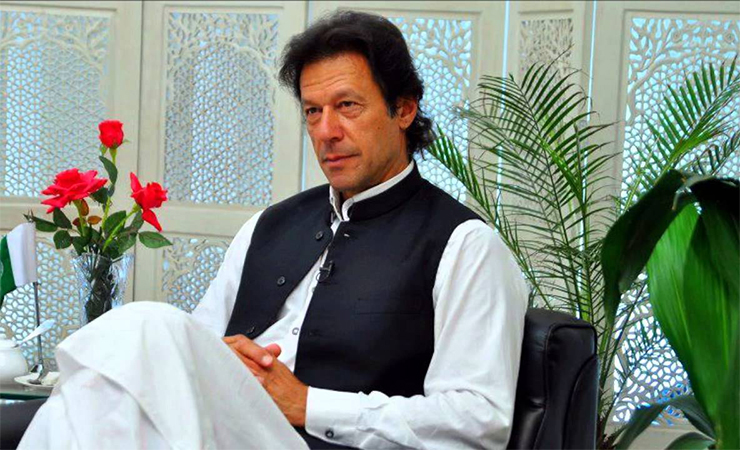
By Natalya Zamarayeva – New Eastern Outlook – 03.05.2019
Many firsts, much tradition and a great deal left out on the official agenda for the Iran-Pakistan talks. Pakistan’s Prime Minister Imran Khan, who took office in August 2018, paid his first visit to Tehran on April 21-22, 2019 after receiving an invitation from Iranian President Hassan Rouhani.
For the first time in history, the head of the Islamic Republic of Pakistan:
– voiced support for the ideals of Iran’s Islamic Revolution as the country marked its 40th anniversary, who assured Iran’s spiritual leader Ayatollah Ali Khamenei that Islamabad has set out on a path to revolution;
– publicly admitted that terrorists had used Pakistani soil in the past to carry out attacks against Iran, which has been met with sharp criticism from the Prime Minister’s opposition in Islamabad;
– avoided bringing up the failed negotiations on the Iran-Pakistan gas pipeline.
There were three challenges that the Prime Minister dealt with in a terrific manner, which took place in the background during his visit to Tehran:
– Washington’s steep step-up in anti-Iranian sanctions (Iran-US relations deteriorated in May 2018 following President Donald Trump’s announcement that the US was going to pull out of the Iran nuclear deal, JCPOA; in April 2019, the US declared the Islamic Revolution Guards Corps a terrorist organization; Washington will start imposing economic sanctions against countries importing Iranian crude oil since May 2, 2019; the US has been putting pressure on the EU to politically isolate Iran). Despite threats of economic sanctions, in April 2019, both Islamabad and Tehran called on Washington to fully implement the Iran nuclear deal as soon as possible;
– Saudi hostility towards Iran;
– a brutal terrorist attack in the Pakistan-Iran border area which took place in April 2019.
PM Imran Khan’s visit to Iran can be described as a breakthrough in bilateral relations. The historical, cultural, religious and civilizational ties between the two neighboring Muslim countries are now being recognized with respect for the principles of national sovereignty and territorial integrity. Imran Khan had shown how he is putting Pakistan’s new approach of strengthening relations with all neighboring states into action, which was put forward by the government of the Pakistan Justice Party (PSP/PTI) headed by Khan. Iran and Pakistan have stressed that “no third country” will be able to prevent Iran-Pakistan relations from developing (an obvious reference to the United States and its policy which aims to isolate the Islamic Republic). And given the current situation, countries in this region need to cooperate independently and directly promote their own interests. For Pakistan’s former government, friendship with Iran did not go beyond the diplomatic level.
Former Prime Minister Nawaz Sharif, who came to power in June 2013 with the victory of his party, the Pakistan Muslim League-Nawaz (PML-N), caved to pressure from the US and Saudi influence and tried to forget about the agreements signed in spring 2013 by Pakistani President Asif Ali Zardari and Iranian President Ahmadinejad for the construction of the Iran-Pakistan gas pipeline.Iran-Pakistan relations were frozen while Sharif was in power. Only in November 2017, with the Chief of Army Staff (COAS) General Qamar Javed Bajwa’s visit to Iran, their original defense partnership began to be restored to earlier levels, and bilateral relations intensified on a diplomatic and economic level at a later stage.
In July 2018, immediately after the results of the parliamentary elections were announced, Iran expressed a willingness to promote and expand its cooperation with Pakistan’s new government across all areas. Iran’s Minister of Foreign Affairs was one of the first high-ranking foreign diplomats to pay an official visit to Islamabad in autumn 2018, when he met with Imran Khan. It was during this visit, in response to the Naya Pakistan (New Pakistan) program of reforms announced by the Pakistan’s new government, when Iran’s Foreign Minister told Khan what had been achieved tanks to the 1979 Islamic Revolution, particularly in terms of health, with the greatest improvements seen in primary health care provision. The Iranian experience appealed to Pakistan, and the two states signed the Declaration for Cooperation in Healthcare Sector in 2019.
The current composition of bilateral relations is far more diverse and complicated, and involves security, trade, religious pilgrims, the status of Pakistani prisoners in Iran, the ports of Gwadar and Chabahar, cultural ties, humanitarian cooperation and joint participation in the Chinese Belt and Road Initiative.
Time and time again, terrorist attacks have challenged bilateral relations between these countries. In recent years, terrorist groups have intensified their activities on both Iranian and Pakistani soil. Therefore, Islamabad and Tehran have re-acknowledged the importance of regular cooperation between politicians, the military and security personnel to combat threats such as drug trafficking, kidnapping and human trafficking, hostage-taking, money laundering, bombings and arson. Following the talks, the countries signed a deal to cooperate in the fight against terrorism for the first time; agreed to form a Joint Rapid Reaction Force; and agreed to open new border crossings (in Gabd-ReemdanandMand-Pishin), as well as border markets. The countries plan to continue to build a fence along the border and synchronize the work of border patrol services.
The leaders of both countries expressed regret that Iran, with a population of 80 million people, and Pakistan, with a population of 210 million people, have not taken advantage of their trade potential for various different reasons, and the range of goods has remained limited over the past years. Nawaz Sharif’s government took up Washington’s anti-Iranian sanctions policy, and the volume of trade declined as a result. Since 2017 however, the countries have been gradually expanding the range of goods they produce and the volume of exports and imports using the means they have available. For example, they agreed to establish a barter committee for the exchange of goods with the aim of stepping up monetary, financial and commercial activities. Iran, for its part, is prepared to deliver a tenfold increase in the volume of electricity it exports to Pakistan.
Long-term plans include the construction of a railway line connecting the ports of Pakistani Gwadar and Iranian Chabahar, as well as completing the construction of the gas pipeline to Pakistan.
The process of brokering an internal Afghan political settlement remains a matter of concern for other countries in the region. Iran and Pakistan believe that the formula which would give this solution is in intra-Afghan and Afghan-led dialog.
Peace and harmony in the region remain a priority and provide the foundation for developing transport transit corridors, which are the engine for accelerating bilateral and regional partnerships and trade. Iran and Pakistan support the implementation of bilateral and multilateral agreements, including the Chinese Belt and Road Initiative –BRI; China-Pakistan Economic Corridor – CPEC; and agreements on establishing the North–South and East–West corridors in Iran.
During the visit, Iran acknowledged that a solution may only be found to the conflict in the Jammu region and Kashmir through dialog, which should take the will of the regional population into account and should adhere to the UN Security Council resolutions. The Pakistani Leader, in turn, spoke of injustice against the Palestinians. Both Iran and Pakistan view Israel’s illegal occupation of Golan Heights and the transfer of the Israeli capital from Tel Aviv to Jerusalem as a violation of international law, which will only lead to greater instability in the Middle East.
Natalia Zamarayeva, Ph.D (History) Senior Research Fellow, Pakistan section, Institute of Oriental Studies of the Russian Academy of Sciences.
Pompeo Lies, Cheats and Steals (But He’s Still a Good Christian)
By Philip Giraldi | Strategic Culture Foundation | May 2, 2019
Secretary of State Mike Pompeo recently recounted to an audience at Texas A&M University that when he was head of the Central Intelligence Agency he was responsible for “lying, cheating and stealing” to benefit the United States. “Like we had entire training courses. It reminds you of the glory of the American experiment.”
The Secretary made the comment with a grin, noting that when he was a cadet at West Point he subscribed to the Academy honor code, which stated that “You will not lie, cheat, or steal or tolerate those who do.” The largely student audience clearly appreciated and irony and laughed and applauded, though it is not clear what they made of the “glory of the American experiment.” The normally humorless Pompeo was suggesting ironically that yesterday’s Pompeo would be required to turn today’s Pompeo in to the appropriate authorities for lying and also conniving at high crimes and misdemeanors while at the Agency.
Certainly, some might find Pompeo’s admission a bit lame though perhaps understandable as he arrived at CIA without any experience in intelligence. Someone should have whispered in his ear, “That is what spy agencies do Mike.” And if he found the moral ambiguities vexing, he should have turned down the job. Equally lame has been the international media coverage of the comments (it was not reported in any major national news outlet in the US) which reflected both shock and vindication at finding a top-level official who would admit that Washington does all that sort of nasty stuff.
And Pompeo is not alone in his doing what would have hitherto been unthinkable as many senior figures in the Trump Administration who have sworn an oath to uphold the Constitution now find themselves conniving at starting various wars without the constitutionally required declaration of war from Congress. Pompeo has personally assured both the Venezuelans and Iranians that “all options are on the table,” while also arming the Ukrainians and warning the Russians to get out of Caracas or else face the consequences. And it is a good thing that he has now learned how to lie as he does so when he keeps insisting that the Iranians are the leading state sponsors of terrorism or that the Saudis are fighting a just war in Yemen.
And then there is the ethical dimension. The United States government is already involved in economic acts of war through use of its sanctions worldwide. It is currently dedicated to starving the Iranian and Venezuelan people to force them to change their governments. This week, a global boycott of Iranian oil sales to be enforced unilaterally by Washington kicks in with the objective, per Pompeo, of reducing “Iran’s oil exports to zero” to deny its government its “principal source of revenue.” The problem with the Pompeo objective is that attacking a foreign government normally rallies the people around their leadership. Also, denying a country income ultimately hurts ordinary people much more than it does those who make the decisions. One recalls the famous Madeleine Albright line about killing 500,000 Iraqi children through malnutrition and disease brought about by sanctions as “being worth it.”
Pompeo believes himself to be a good Christian. Indeed, a very good Christian in that he believes that the second coming of Jesus Christ is imminent and by virtue of his good deeds he will be saved and “raptured” directly to heaven. He, like Vice President Mike Pence, is referred to as a Dispensationalist, and he also believes that those who are not “born again” and accept Jesus will be doomed to hell. Most Dispensationalists think that the second coming will be preceded by a world war centered in the Middle East referred to as Armageddon, which will pit good against evil. How that shapes Pompeo’s thinking vis-à-vis encouraging a major armed conflict with Iran is certainly something that war-weary Americans should be considering.
One of the really interesting things about fanatics like Pompeo and his dos amigos Vice President Mike Pence and National Security Advisor John Bolton is how they are unable to figure out what comes next after the “lying, cheating, stealing” and shooting are over. After American air and naval power destroy Iran, what comes next? If Iraq and Afghanistan are anything to go by, “next” will be kind of figured out as one goes along. And as for an end game, fuggedaboutit.
Now let us suppose that with the crushing of the Mullahs all the requirements for Armageddon will be met and Jesus Christ makes his second appearance, what happens after that when the world as we know it ends? Presumably the rapture itself is painless but when Pompeo and Pence arrive at heaven what will they do all day? Play cards? There will be no television one presumes and no Muslims or Latinos to kick around as they will all be in hell. Drinking and smoking are probably not allowed and acquiring a girlfriend will likely be discouraged. One suspects that engaging in philosophical symposia to pass one’s time is not particularly favored by either gentleman.
Perhaps Pompeo and Pence look forward to something like the Mormon model, where they and their extended families going back genetically to the Pleistocene period will have their own planets where they can sit around and hobnob all day long. God, who, according to the Mormons, also has his own planet called Kolob, might just pop by for a visit every once in a while.
The point of all this is that we Americans are in the hands of a group of people who are adept at self- deception and who are also quite capable of doing some very dangerous things in light of their religious and personal views. It is one thing to have a strong foreign policy defending actual American interests but it is quite another to have a propensity to go to war to satisfy a personal predilection about how one goes about enabling a biblical prophecy. Equally, having a moral compass that is flexible depending who is on the receiving end is like having no real morals at all.
We have reached a point here in the United States where bad decisions and behavior best described as evil are masked by a certain kind of expressed piety and visions of national greatness. It is time to get rid of the Pompeos and Pences to end the charade and restore genuine morality unencumbered by the book of Revelations together with a national dignity that is not linked to threats or projection of military power.
Iran mission to UN slams US for violating Resolution 2231, pressuring others to do so
Press TV – May 2, 2019
Iran’s mission to the UN has blasted the US for violating Resolution 2231 — which endorsed a 2015 multilateral nuclear deal — and “shamelessly” threatening other UN members to do the same, saying such an approach is “destructive and hypocritical.”
In a press release on Wednesday night, the mission censured the US for attempting to portray Iran’s ballistic missile program as inconsistent with Resolution 2231, which was unanimously approved by the UN Security Council (UNSC) in 2015 and endorsed the multilateral Iran nuclear deal, officially called the Joint Comprehensive Plan of Action (JCPOA).
It added that the US abandoned the deal in a “serious and blatant” violation of Resolution 2231, which had been adopted with Washington’s own support, and is now “shamelessly” threatening other world countries into violating the international document.
After withdrawing from the JCPOA, the US reinstated the anti-Iran sanctions that had been lifted under the accord.
It has also been attempting to dissuade other signatories to the JCPOA from living up to the accord, threatening “secondary sanctions” against the firms that refuse to abide by Washington’s restrictive measures against Iran
The administration of President Donald Trump said in a statement on April 22 that, in a bid to reduce Iran’s oil exports to zero, that buyers of Iranian oil must stop purchases by May 1 or face sanctions, sending oil prices to their highest levels since last November.
The Iranian statement came after the US State Department said US Special Representative for Iran Brian Hook would be in New York on April 30 and May 1 to “underscore the importance of holding Iran accountable for its defiance of UN Security Council resolutions on the development and testing of ballistic missiles.”
Resolution 2231 terminated the provisions of previous UN resolutions against Iran, some of which had imposed restrictions on Iranian missile activities. It “calls on” Iran “not to undertake any activity related to ballistic missiles designed to be capable of delivering nuclear weapons, including launches using such ballistic missile technology.”
Tehran has always said it has no nuclear warheads and that none of its missiles have been designed to carry nuclear weapons.
The Iranian side’s compliance with the JCPOA has been repeatedly confirmed by the International Atomic Energy Agency (IAEA).
Iran’s UN mission once again highlighted that fact that Resolution 2231 is a substitute for all former Security Council resolutions on Iran’s peaceful nuclear program.
Consequently, such activities in Iran are not incompatible with the resolution, which the US has itself violated, it added.
Instead of abusing the UNSC and trying to spread fake allegations aimed at advancing its own malicious policies against Iran, American officials must act responsibly in accordance with their international obligations, the mission added.
The mission added that American officials need to explain at the Security Council why Washington has breached Resolution 2231 and why it has been coercing other UN member states into doing the same thing.
Washington has been under fire by the entire international community, including its own allies, for leaving the Iran deal and slapping Tehran with sanctions again.
Despite Washington’s withdrawal, Iran has not left the deal yet, but stressed that the remaining signatories to the agreement have to work to offset the negative impacts of the US pullout for Iran if they want Tehran to remain in it.
US, Iran tiptoeing toward engagement
By M. K. BHADRAKUMAR | Indian Punchline | April 26, 2019
Winston Churchill has been often quoted as saying that Russian politics is comparable to a bulldog fight under a rug. “An outsider only hears the growling, and when he sees the bones fly out from beneath it is obvious who won.” The metaphor comes handy while fathoming the vicissitudes of the US-Iranian temper tantrums.
The only difference is that the bones never fly out and the growling keeps going on and on. It’s four decades already. Succinctly put, while the detail might be hard to unravel, the general pattern is not so difficult to understand.
On the face of it, the Trump administration is growling ominously. The US has taken two major steps within the recent weeks to advance the “maximum pressure” strategy against Iran — first, by designating Iran’s elite Islamic Revolutionary Guards as a “foreign terrorist organisation” and, second, by deciding to end the so-called sanctions waivers for 8 countries that import Iranian oil.
Iran growled back. Tehran retaliated by declaring the US Central Command, headquartered in Doha, as a terrorist organisation. As for US sanctions on Iran’s oil exports, Tehran simply shrugged it off, with Ayatollah Khamenei saying that Iran will export “as much crude as it needs and wishes” in defiance of American sanctions. Foreign Minister Javad Zarif said Iran will be resilient in the face of US sanctions. As he put it, “there are always ways of going around the sanctions. We have a PhD in that area.”
Meanwhile, the Trump administration is already backtracking on the issue of IRGC designation. The US state department issued two notices on Wednesday in the nature of making exemptions to the earlier designation. According to these waivers, foreign governments and businesses that have dealings with the IRGC and its affiliates will not be subject to a ban on US travel. State Secretary Mike Pompeo clarified that he decided to waive the travel bans in the US foreign policy and national security interests.
The fact of the matter is that the US sees the folly of embargoing contacts with the IRGC in countries such as Iraq, Lebanon (or Afghanistan) where Iran has a compelling presence in the security sphere. Arguably, the US policies in these countries will suffer grievously if there are to be no dealings with the IRGC under American law. Washington is well aware that the IRGC played a pivotal role in the defeat of the Islamic State in both Iraq and Syria.
However, what is even more stunning is the report that the US might, after all, change its mind and grant waivers to those countries that import Iranian oil beyond May 2. A report by Associated Press quoting congressional aides and outside advisers familiar with the matter said Washington might still reconsider the decision to do away with waivers.
According to the AP report, one scenario being considered by the Trump administration is that “buyers of Iranian oil could be allowed to place and pay for future orders before May 2, essentially front-loading continued imports. Washington could then grant waivers from sanctions to transport and refine the oil under a 2012 law.” The US State Department declined to comment on the possibility that Iranian oil imports might continue without sanctions.
Increasingly, it seems that the growling sounds from Washington and Tehran may be deceptive. Zarif who is currently visiting the US ostensibly to attend a UN conference, made a proposal at the Asia Society on Wednesday that Iran is willing to have a “serious dialogue” with the US on a possible swap of prisoners held by both countries.
Trump is known to be exercised over the imprisonment of American citizens in Iranian jails who have been convicted of espionage charges. But Washington is insisting on the unilateral release of American prisoners by Iran.
Zarif has since disclosed that his proposal is that Tehran is “ready to take action on the exchange of individuals convicted and imprisoned in Iran by the country’s Judiciary on specific charges” reciprocally for the release the release of all Iranians jailed in the US and the granting of “nolle prosequis” (dropping prosecution) to all those detained in different countries on charges of violating American sanctions against Iran, often under pressure from Washington.
Interestingly, Zarif acknowledged today that he had received a letter from Robert C. O’Brien, US special presidential envoy for hostage affairs, asking for the release of detained US citizens. Zarif divulged in this connection that he had had his deputy write a letter to Secretary of State Mike Pompeo, apparently proposing a prisoner exchange, or raising the issue of Iranians arrested for alleged violations of US sanctions laws. Zarif’s comments about the limited correspondence between his office and the Trump administration comes after he publicly proposed a prisoner swap on Wednesday
Any longtime observer of US-Iran relations would know that a “serious dialogue” between Washington and Tehran on the swap of prisoners means a constructive engagement that would hold the potential to reduce the tensions in the overall relationship and might even open channels of communication leading to a better understanding of each other’s intentions on a host of other issues as well.
Significantly, Zarif has since used an exclusive interview with Reuters on Friday to convey some meaningful signals to the Trump administration. The interview was recorded in Iran’s Permanent Mission to the UN in New York. Zarif signalled that:
- In Iran’s assessment, Trump has no intentions to wage a war against Iran. But then, there is the ‘B Team’ — Israeli PM Benjamin Netanyahu and National Security Security Advisor John Bolton who are determined to scuttle peaceful resolution of US-Iran differences. These 2 hawks might precipitate some incident that may escalate into a crisis in which Trump may get entangled.
- Iran does not seek confrontation with the US but make no mistake that it will defend itself.
- Iran has been acting with great restraint as is evident from the fact that US Navy continues to operate in the Strait of Hormuz. The signal from the Pentagon commanders to Iran too is that the IRGC’s designation does not mean any change in the “rules of behaviour” involving the US and Iranian militaries. Tehran is satisfied with that understanding. However, Tehran will react to any change in the “rules of behaviour, or rules of engagement” (involving the two militaries).
- Put differently, Iran expects Washington to stick to the “rules of engagement (which have been) guiding how it interacts with Iran’s forces.”
Of course, Zarif is a seasoned diplomat who was educated in the US, assigned for long years to work in the Iranian mission in New York as a career diplomat and has extensive networking at personal level with the American elite. To be sure, his measured words in the Reuters interview are meant for Trump. Evidently, he is tamping down tensions, while testing the waters to commence a constructive engagement.
Iran has always been pragmatic. And it is entirely conceivable that back channels exist. As for Trump, most certainly, he’d know that the “maximum pressure” strategy has not resulted in any shift in the Iranian policies — in Syria, Iraq or Yemen. On the contrary, this week Zarif for the first time openly criticised the US-Taliban talks and voiced support for Afghan President Ashraf Ghani’s grievance that Washington bypasses him. It is a subtle hint that if push comes to shove, Tehran can make things very difficult for the US. But then, equally, it is a stark reminder that Tehran has been a responsible power through the period of the 18-year “endless war” and stakeholder in regional security and stability.
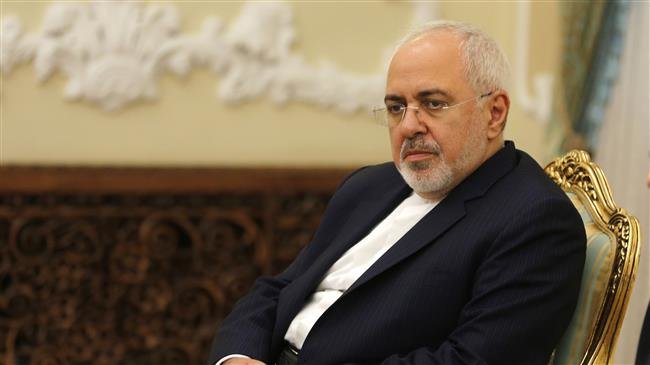
Iranian FM: Trump Doesn’t Want War, But Could Be ‘Lured Into One’
Sputnik – 25.04.2019
Iranian Foreign Minister Mohammad Zarif says that Iran is confident in its ability to evade US sanctions, noting that the country has a “Ph.D in that area.”
In an exclusive interview with Reuters, Zarif went on to say that he believes US President Donald Trump doesn’t want to go to war with Iran, but that he could be “lured into one.” In such an event, he noted that Iran would be ready to defend itself.
As for who might goad Trump into a conflict, Zarif named US National Security Adviser John Bolton and Israeli Prime Minister Benjamin Netanyahu, among others. He warned that certain individuals could try to “plot an accident” that would ultimately cause a broader crisis, Reuters reported.
The official also indicated that US Navy ships will be allowed to pass through the Strait of Hormuz, as the Iranian government is committed to allowing freedom of navigation operations in the area.
Earlier this month, the US formally designated Iran’s Islamic Revolutionary Guard Corps a terrorist organization. In turn, Iran designated the US military a terrorist organization. Zarif told the outlet that the US’ declaration was “absurd,” but that Iran would exercise “prudence.”
Regarding the Strait of Hormuz, Zarif previously stated that “it is our vital national security interest to keep the Persian Gulf open … We have done that in the past, and we will continue to do that in the future. But the United States should know that when they enter the Strait of Hormuz, they have to talk to those protecting the Strait of Hormuz — and that is the Iranian Revolutionary Guards.”
This week, the Trump administration announced that it would not be renewing sanctions exemptions on Iranian oil exports that were provided to various countries, including China, Japan and Turkey, among others. Tehran has stated that it will continue to export however much oil that it needs to.
The US in May 2018 withdrew from the 2015 Joint Comprehensive Plan of Action, reimposing a series of sanctions on Tehran that had been lifted by the Obama-era deal.
Featured Video
Iran FM Araghchi: “Hormuz Will No Longer Be the Same”
or go to
Aletho News Archives – Video-Images
From the Archives
Sam Husseini: The entire US establishment helped lie their way into the Iraq war
By Slava Zilber | American Herald Tribune | October 14, 2019
Sam Husseini is a senior analyst with the Institute for Public Accuracy, independent journalist and contributor to The Nation and FAIR.
Slava Zilber: Sam, three years ago, you appeared on Talk Nation Radio with David Swanson and spoke about the case of the GCHQ whistleblower Katharine Gun. You pointed out that the people involved in the spying on the UN and the people authorizing the Iraq War were not held accountable:
“Virtually everybody who went along with the war, whether it is Kerry or Clinton, of course, the Bush administration themselves has falsified their own records in terms of why, what they did, when they did, why they did it, to the extent that they’ve been scrutinised at all.”
You also address it in a recent article. And recently, Joe Biden has been lying about his position on the Iraq War. How can such an important issue escape meaningful scrutiny? … continue
Blog Roll
 Aletho News
- Barghouti: ‘Netanyahu has fallen,’ era of Smotrich, Ben-Gvir over
- China slams US policy on Iran as Russia rejects legality of nuclear meeting at UN
- The Mecca Pact Courts Iran: Containment Comes Full Circle
- Oman FM: Persian Gulf states, Iran, Iraq should form security pact excluding US
- Trump peddles fresh falsehoods, claims Iran ‘started the war’ as US aggression drags on
- Ukraine quagmire? Yes, but it’s for NATO, not Russia
- US intelligence hypes Chinese, Russian space threats while accelerating its own military buildup in orbit
- Iran FM Araghchi: “Hormuz Will No Longer Be the Same”
- EU facing trillion-euro debt hole while seeking more cash for Kiev
- How US, Europe, Persian Gulf states exhausted missile stockpiles, splurged billions to defend Israel
- If Americans Knew
- An error has occurred; the feed is probably down. Try again later.
- No Tricks Zone
- Sudden Stratospheric Warming, Powerful El Niño Combination May Lead To Extreme Europe Cold, Energy Crisis!
- Two New Studies Find Thwaites Glacier Melt Cannot Be Driven By Human Activity Or A Warming Ocean
- E-Cars Reduce CO2 Emissions By Only 41% Compared To Internal Combustion Engine Vehicles
- Predictions Made By Renowned Climate Professor Over Past Decades Have Been Proven To Be Poor
- New Study Suggests Large Regions Of The Pacific Ocean Have Been Cooling For The Last 80 Years
- Germany’s Green Energy Debacle: High Energy Costs Force Kahla Porzellan to Close After 182 Years!
- New Study: 50 Years Of The Most Aggressive ‘Net Zero’ Policies Can Only Affect The Global Climate By 0.03°C
- US September “Heat” Was No Record…Many Records Set Decades Ago
- Latest European Green Energy Debacle; Portugal’s Largest Flagship Solar Park Insolvent!
- Green Energy Debacle: German Expert Professor Fritz Vahrenholt Warns Of Severe Economic And Social Consequences

