Blocking Iran’s oil exports unattainable dream: Minister
Press TV – February 9, 2025
Iran’s Oil Minister Mohsen Paknejad has said that the United States will never achieve its dream of cutting Iran’s oil exports to zero as touted by its new president Donald Trump.
“Blocking Iran’s oil exports is an unattainable dream,” said Paknejad on Sunday while reacting to Trump’s recent signing of an executive order to impose maximum pressure on Iran’s oil industry.
He insisted that Iran will always come up with solutions to circumvent US bans on its oil exports.
“The more the restrictions increase, the more complicated our solutions will be,” said the minister, adding that the experts and staff working in the Iranian petroleum industry have the capacities to deal with problems caused by US sanctions to the country’s production and exports of oil.
He said the US once experienced the futility of its maximum pressure policy on Iran during Trump’s first term in office in 2016-2020.
“They want to test it one more time and they will fail again,” said the minister.
The comments came several days after Trump announced he would use Washington’s unilateral regime of sanctions to disrupt Iran’s oil flows to markets in Asia and elsewhere.
Trump enacted a first round of sanctions on Iran’s oil exports in 2018, causing the country’s oil exports to drop for a brief period in late 2019 and in early 2020.
However, Iranian oil exports have gradually returned to pre-sanctions levels in recent years with estimates suggesting that the country is shipping more than 1.8 million barrels per day (bpd) of oil, mostly to customers in China.
That comes as Iran’s oil exports had reached as low as 0.3 million bpd in 2019 when Trump removed sanction waivers granted to major Iranian oil customers.
Iran condemns ‘illegitimate’ US sanctions targeting oil exports
Press TV – February 7, 2025
Iran has strongly condemned new sanctions slapped by the administration of US President Donald Trump on the country’s oil industry, saying they run contrary to international rules and standards.
Foreign Ministry spokesman Esmaeil Baghaei denounced the bans as “completely unjustified” on Friday.
The remarks came a day after the US Treasury Department targeted more than a dozen individuals and companies, as well as vessels, claiming that they are facilitating the shipment of millions of barrels of Iranian oil to China.
The sanctions were the first on Iran after Trump restored his so-called “maximum pressure” campaign on the country.
“The decision of the new US administration to put pressure on the Iranian nation by preventing Iran’s legitimate trade with its economic partners is an illegitimate, illegal and wrongful act, whose responsibility lies on the US government,” Baghaei added.
“The Islamic Republic holds the US accountable for the consequences of such unilateral and bullying measures.”
On Tuesday, Trump signed the presidential memorandum reimposing a tough anti-Iran policy, which he practiced in his first presidential term after unilaterally withdrawing Washington from the historic 2015 nuclear deal.
In an X post, Iranian Foreign Minister Abbas Araghchi called Trump’s measure a failed experience.
He said the decision to restore maximum pressure policy will only compel “maximum resistance” on the part of Iran again, adding, “Smart people ought to choose ‘Maximum Wisdom’ instead.”
During his campaign trail for a second term, Trump had stated at an event in New York in September that, if re-elected, he would minimize the use of sanctions. He argued that employing sanctions excessively “kills your dollar and it kills everything the dollar represents.”
“Look, you’re losing Iran. You’re losing Russia. China is out there trying to get their currency to be the dominant currency, as you know better than anybody,” Trump remarked.
On Tuesday, The New York Times said Trump had also implemented a strategy of maximum pressure in 2018, following his decision to withdraw the US from the nuclear accord with Iran that had been established under the Obama administration three years earlier.
“Mr. Trump still claims that was a major victory, but most outside analysts say it backfired,” the newspaper wrote.
Khamenei: Negotiations with US have no effect on solving problems
Press TV – February 7, 2025
Leader of the Islamic Revolution Ayatollah Seyyed Ali Khamenei says experience has shown that negotiations with the US have no effect on solving Iran’s problems.
His remarks in a meeting with Air Force personnel in Tehran on Friday came hours after the US imposed its first sanctions in the wake of President Donald Trump’s signing of an order to reimpose his “maximum pressure” on Iran.
“Some people pretend that if we sit at the negotiating table, some problem will be solved, but the fact that we must understand correctly is that negotiating with the US has no effect on solving the country’s problems.”
He cited the experience of 2015 when Iran and six other countries, including the US, signed the now-dormant Joint Comprehensive of Plant of Action (JCPOA) after two years of negotiations, only to be discarded by President Trump in 2018.
Ayatollah Khamenei recalled the grueling back and forth, which included a 15-minute stroll by then-US Secretary of State John Kerry and Mohammad Javad Zarif in downtown Geneva and along the Rhone River which landed the former Iranian foreign minister in hot water.
“Our government at the time sat down and negotiated – they continued to come and go, they sat down and stood up and negotiated, they talked, laughed, shook hands, made friends, everyone worked, and a treaty was formed.
“In this treaty, the Iranian side was very generous, giving many concessions to the other side. But the Americans did not implement the same treaty,” the Leader said.
“The same person who is in office now tore up the treaty. He said he would tear it down and he did; they didn’t act upon” the agreement, he said, referring to Trump.
“Therefore, negotiating with such a government is unwise, unintelligent and dishonorable and there should be no negotiation with it.”
Before Trump, even the US administration which had accepted the agreement, did not comply with it, the Leader said, referring to the government of president Barack Obama which had signed it.
“The treaty was meant to lift US sanctions, but they were not lifted. Adding insult into injury, they had the UN to have a constant threat hanging over Iran. This treaty was the product of negotiations that lasted about two years.”
Iran is currently in the midst of celebrations marking the anniversary of the Islamic Revolution which sealed the fate of the US-backed Pahlavi regime in 1979.
Every year on February 8, Iranian Air Force personnel meet the Leader to relive the historic allegiance of Air Force officers with the late founder of the Islamic Republic Imam Khomeini in 1979. The event is viewed as a turning point which led to the victory of the Islamic Revolution three days later.
Ayatollah Khamenei said the Americans are busy working “on paper to change the map of the world”, with Iran also being the subject of their plans.
“Of course, it’s only on paper, it has no reality. They also talk about us, make comments, and threaten us,” the Leader said.
Ayatollah Khamenei said, “If they threaten us, we will threaten them. If they put their threat into practice, we will do the same. If they attack the security of our nation, we will attack their security without hesitation.”
“This is a lesson taken from the Qur’an and the teachings of Islam, and it is our duty to act as such. We hope that God Almighty will make us successful in carrying out our duties,” he added.
Iran to Trump: Another maximum pressure, another defeat for Washington
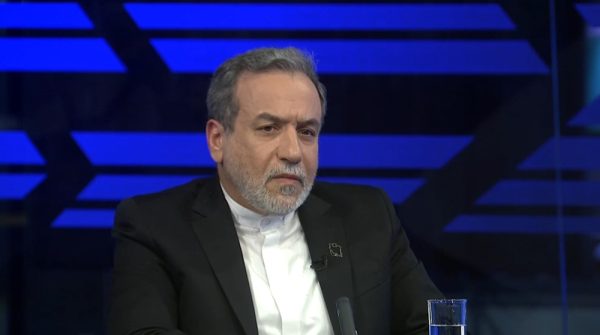
Press TV – February 5, 2025
Foreign Minister Abbas Araghchi has asserted that another round of deployment of the “maximum pressure” policy on the part of the United States against Iran will only lead to another defeat.
“The policy of maximum pressure has already proven to be a failure, and any attempt to revive it will only lead to another defeat,” the top diplomat told reporters on the sidelines of a cabinet meeting on Wednesday.
Araghchi was referring to the policy that the US adopted during Donald Trump’s former tenure, as part of which Washington quit a 2015 nuclear deal with Iran and world powers, returned the sanctions that the agreement had lifted, and piled up even more illegal and unilateral bans against the Islamic Republic.
Retaliating against the measures, Iran took legitimate nuclear steps that have featured its operationalizing advanced centrifuges among other things.
The country also explored various means to skirt the sanctions and boost its economy by fostering foreign trade and enhancing domestic production, causing Washington to suffer “maximum defeat” in adoption of such policy.
On Tuesday, Trump promoted new “tough” measures aimed at, what Washington has called, “deterring” Iran from obtaining a “nuclear weapon.”
Trump also signed a presidential memorandum, authorizing stricter illegal actions against Iran, while saying, “They can’t have a nuclear weapon, we’d be very tough if they insist on doing that.”
Washington’s adversarial stance comes despite Tehran’s repeated assurances that its nuclear activities remain in full compliance with international regulations, and the International Atomic Energy Agency (IAEA)’s invariable verification of the peaceful nature of the Islamic Republic’s nuclear energy program.
Reacting to Trump’s remarks, Araghchi said, “If the main issue is that Iran should not pursue nuclear weapons, this is achievable and not a difficult matter.”
“Iran’s stance is clear, and it is a member of the NPT (Nuclear Non-Proliferation Treaty), and there is also the fatwa (religious decree) of the Leader, which has clarified the matter for us,” he added.
Leader of the Islamic Revolution Ayatollah Seyyed Ali Khamenei’s has prohibited pursuance, attainment, and storage of such non-conventional arms through an official decree as per religious and moral grounds.
“The Leader’s fatwa has made Iran’s position crystal clear,” Araghchi concluded.
‘Iran has never had, will never have nuclear weapons program’
Also on Wednesday, Mohammad Eslami, head of the Atomic Energy Organization of Iran (AEOI), likewise reacted to Trump’s remarks, saying, “Iran has never had, does not have, and will not have a nuclear weapons program. Iran’s approach in this regard is absolutely clear.”
He added, “Iran’s peaceful nuclear program is being implemented within the framework of Safeguards [Agreement] and the NPT.”
Trump might defy policy to reach nuclear deal with Iran: Responsible Statecraft
Al Mayadeen | January 27, 2025
President Donald Trump has signaled an unexpected shift in the conventional US policy regarding Iran, revealing that the only issue his administration would face with the Islamic Republic is its development of a nuclear weapon.
Speaking on Fox News’ Hannity show on January 23, Trump did not address Iran’s regional policies, its defiance of the Israeli occupation, or the possibility of enforcing a regime change. Rather, his only focus was preventing Iran from acquiring nuclear weapons.
In this regard, a Responsible Statecraft report, written by Eldar Mamedov, recalled previous statements by Iranian officials, confirming that the nation does not seek nuclear weapons, adding that this could facilitate a political agreement between Washington and Tehran.
Tehran has also gestured its willingness to re-engage with the West, particularly following the election of Iranian President Masoud Pezeshkian and his government coming to power. However, despite the mutual political willingness, the path to a deal remains highly complex and is vastly different from 2015, when the JCPOA curtailed Iran’s nuclear program.
Is a nuclear deal possible?
Following Trump’s 2018 withdrawal from the JCPOA, his imposition of sanctions, and the EU’s failure to abide by the terms of the deal, Iran significantly advanced its program, including enriching uranium to 60%—a step away from weapon-grade levels (90%)—and deploying advanced centrifuges. Nuclear expert Kelsey Davenport notes that Iran could now produce enough material for five to six nuclear bombs in just two weeks, according to Mamedov.
The situation is further complicated by the limited access the IAEA has had to Iran since 2021, heightening concerns about unmonitored nuclear material potentially being moved to covert sites, as well as shifts in Iran’s nuclear rhetoric that suggest a potential rethinking of its doctrine.
While Tehran officially maintains it is not pursuing nuclear weapons, regional challenges could incentivize Iran to consider a nuclear deterrent, Mamedov explained.
Israeli Prime Minister Benjamin Netanyahu’s threats of a direct attack, possibly with US support and cover, could possibly motivate Iran to contemplate threshold weaponization as a defensive measure.
Mamedov writes that negotiations to achieve a potential deal would have to consider Iran’s extensive nuclear program, as well as the set of motivations it has to expand its nuclear manufacturing. In this context, concessions would have to be made, addressing the regional situation and Iran and its allies’ security concerns, which prompted nuclear development in the first place.
Although Iran’s Leader Sayyed Ali Khamenei approved re-engagement and Pezeshkian’s reformist government advocated for a more proactive approach, majorly to ease US sanctions on the Islamic Republic, some Iranian politicians still have reservations, citing the US decision to withdraw from the JCPOA. This makes the matter one of “how to engage”, rather than if engagement should be initiated.
Some Iranian officials see little benefit in trading their nuclear leverage for uncertain sanctions relief. They are also bolstered by a new strategic partnership with Russia, which includes military and security cooperation, providing deterrence against potential attacks by “Israel” or the US.
The time is now!
Currently, proponents of waiting for a US initiative hold sway in Tehran at the moment. Reformists, however, argue this approach wastes time, suggesting Trump may seek a quick deal to enhance his peace-making image, especially with the Ukraine conflict dragging on. A limited framework deal, similar to Trump’s DPRK agreement, could be quickly drafted if the political decision is made, according to Mamedov.
While doubts remain about achieving a substantive follow-up deal, even a symbolic agreement—such as a handshake between Trump and an Iranian leader—could de-escalate tensions, marginalize pro-Netanyahu factions, and create room for broader negotiations addressing nuclear issues, sanctions, and regional concerns, Mamedov wrote.
Diplomatically, Iran has engaged with the EU and E3 (Britain, France, Germany) to prevent them from undermining progress by invoking UN sanctions before the October 2025 deadline. While Tehran has no illusions about the EU’s ability to restore the JCPOA without US involvement, these talks signal Iran’s seriousness about a deal and aim to avoid the E3 acting as spoilers out of fear of being excluded from future US-Iran agreements.
The most viable path forward seems to be a limited bilateral deal between the US and Iran to ease tensions, followed by multilateral negotiations with the original JCPOA signatories. With political will apparent on all sides, the opportunity to advance diplomacy is now.
‘YOU’RE FIRED!’ Trump Dismisses Brian Hook in Truth Social Post
By Kyle Anzalone | The Libertarian Institute | January 22, 2025
President Donald Trump fired four presidential appointees that he said did not share his vision for America. Among those dismissed were Brian Hook, who served on the Trump transition team.
“My Presidential Personnel Office is actively in the process of identifying and removing over a thousand Presidential Appointees from the previous Administration, who are not aligned with our vision to Make America Great Again,” Trump wrote on Truth Social Monday.
“Let this serve as Official Notice of Dismissal for these 4 individuals, with many more, coming soon.” He continued, “Jose Andres from the President’s Council on Sports, Fitness and Nutrition, Mark Milley from the National Infrastructure Advisory Council, Brian Hook from the Wilson Center for Scholars, and Keisha Lance Bottoms from the President’s Export Council—YOU’RE FIRED!”
In 2018, Hook joined the administration shortly before Trump withdrew from the Iran nuclear deal. Hook was tasked with implementing a “maximum pressure” sanctions campaign against Tehran and overthrowing the Iranian government.
In 2020, Hook resigned from his post, after he was unable to achieve either objective.
Hook was a key official in helping to staff the incoming State Department on the transition team following Trump’s second election victory. In November, Hook said the second Trump administration “would isolate Iran diplomatically and weaken them economically.”
Hook also attacked the Biden administration’s “policy of appeasement and accommodation with Iran,” leading to a “failure of deterrence,” because “no one believes you have a credible threat of military force.”
However, Biden increased sanctions on Iran, refused to enter into serious negotiations with Tehran, and aided Israel in tit-for-tat strikes between Tel Aviv and Tehran.
Along with Hook, chef Jose Andres was fired from the President’s Council. Andres heads the World Food Kitchen (WFK), an international aid organization that often works with Washington.
Last year, seven WFK workers were killed by a series of Israeli strikes on their aid convoy in Gaza. While the White House did not punish or hold Tel Aviv to account for the murders, Andres accepted the Presidential Medal of Freedom from Biden earlier this year.
Trump One, Biden Nothing
By Ted Snider | The Libertarian Institute | January 21, 2025
Before the first day of Donald Trump’s second term in office, he already had more diplomatic achievements than Joe Biden did on the last day of his. The entrance of the Trump team into the negotiations was the difference in Gaza. Biden opened his administration with the promise of “a new era of relentless diplomacy.” But after four years of wasted opportunity, the Biden administration would struggle to name a single diplomatic accomplishment.
Secretary of State Antony Blinken’s inclusion in his January 2 exit interview with The New York Times of the Biden administration’s “core goal” of making “sure that the war [in Gaza] wouldn’t spread, the conflict wouldn’t spread to other fronts, to other countries” and that they have “been working” on that “every day since,” is risible because it spread to Lebanon, Syria, Yemen, and Iran.
Blinken was asked how he looks back on the decision “to support Ukraine’s military offensive without a parallel diplomatic track to try and end the conflict.” His answer, as America’s chief diplomat, is no less humiliating. He defined bringing fifty countries together, who waged war on Russia militarily and economically, as “extraordinary diplomacy,” while conceding that, since the war began, there was not one “opportunity to engage diplomatically in a way that could end the war on just and durable terms.”
Biden opened his presidency with the promise to “offer Tehran a credible path back to diplomacy,” to “promptly reverse the failed Trump policies that have inflicted harm on the Cuban people and done nothing to advance democracy and human rights,” to correct the course on Trump’s “abject failure” in Venezuela, and to bring in a new approach to North Korea that “is open to and will explore diplomacy.”
Biden failed on all four. Instead, he ushered in an era in which the State Department has been reduced to the hawkish arm of the Defense Department.
At the end of his term, far from reversing Trump’s policies, Biden’s Cuba policy looks more like Trump’s than like Barack Obama’s. Biden maintained, and even increased, sanctions. The United States continued to support dissident activists and to fund regime change. Most importantly, and most devastatingly, the Biden administration continued to uphold the illegal embargo of Cuba in every single vote at the United Nations. In October 2024, only one other country in the world joined the U.S. in support of its embargo with one other abstaining.
On January 14, with less than a week in his term, Biden announced that he would, at last, remove Cuba from the State Sponsors of Terrorism list. Four years ago, that would have counted as a diplomatic accomplishment. Now, it is an ineffectual gesture that will simply be erased. William LeoGrande, professor of Government at American University and a specialist in U.S. foreign policy toward Latin America, told me that “with just days left in his presidency, [Biden] relaxed sanctions he should have relaxed four years ago—sanctions that will almost certainly be reimposed by Donald Trump.” Mike Waltz, Trump’s pick for national security advisor, told Fox News that “anything they [the Biden Administration] are doing right now we can do back, and no one should be under any illusion in terms of a change in Cuba policy.”
LeoGrande summarized Biden’s diplomatic legacy in Cuba by telling me that “Joe Biden’s Cuba policy accomplished nothing—actually, worse than nothing, because it left both Cubans and the United States worse off. He reneged on his campaign promise to return to Obama’s policy of engagement, a policy that was enormously popular in Latin America, Europe, and in the United States—everywhere except south Florida. In a vain quest for votes in Miami, Biden left most of Donald Trump’s extreme sanctions in place, immiserating the Cuban people in the midst of the pandemic.”
Biden’s diplomatic legacy in Iran is no less disappointing. Biden promised a quick return to the JCPOA nuclear agreement. Instead, he refused to end sanctions—the flesh of the agreement—and refused to promise that the U.S. would not break the deal again even for the duration of Biden’s term—the soul of any agreement. Though it was the United States that illegally pulled out of the deal, Biden demanded additional concessions from Iran.
Instead of following Obama’s diplomacy with Iran, Biden followed Trump’s maximum pressure on Iran. In order “never to allow Iran to acquire a nuclear weapon,” Biden said the U.S. “is prepared to use all elements of its national power to ensure that outcome.”
But the United States does not believe Iran is trying to acquire a nuclear weapon. The 2022 U.S. Department of Defense’s Nuclear Posture Review concludes that “Iran does not today possess a nuclear weapon and we currently believe it is not pursuing one.” CIA Director William Burns has repeatedly said that there is no evidence Iran has decided to build a nuclear bomb. Most recently, Burns reiterated in a January 10 interview, “We do not see any sign today that any such decision has been made.”
The election of Dr. Masoud Pezeshkian brought a reformist back to the presidency of Iran. Pezeshkian has emphasized the need to mend relations with the U.S. and the West. He has called for bypassing intermediaries in favor of direct negotiations. But that did not influence the Biden administration in its stubbornness not to negotiate. When asked at a July 8 press briefing if “the U.S. now ready to resume nuclear talks, other talks, or make any diplomatic moves with Iran in light of this new president,” National Security Communications Advisor John Kirby responded, “No, we’re—we’re not in a position where we’re willing to get back to the negotiating table with Iran just based on the fact that they’ve elected a new president.” Another missed diplomatic opportunity.
Lack of willingness to engage with Iran diplomatically has, instead of the strategically important goal of mending relations between Iran and the West, pushed Iran closer to China and Russia. During the Biden years, Iran joined the Shanghai Cooperation Organization and BRICS, two China-Russia led international organizations. On January 17, 2025, Iran signed a comprehensive strategic partnership with Russia. The details are not yet public, but Russian President Vladimir Putin says it includes bilateral cooperation in “politics and security” and collaboration on “the development of nuclear power plants.”
During Biden’s presidency, diplomacy with China has been set aside in favor of increased confrontation. Biden has sullied the One China policy, declared Taiwan a critical strategic location for U.S. defense, said that the U.S. would send troops to Taiwan if China attacked and weaponized and militarized the conflict.
Perhaps most dangerously of all, Biden pursued the opposite of diplomacy in the Russia-Ukraine war. When diplomacy offered a real chance to avoid the war before it began and to end the war in the weeks after it did, the U.S. refused to negotiate with Russia in the first instance and discouraged and blocked Ukraine from negotiating with Russia in the second. Since then, Biden and Blinken have abdicated diplomacy. Secretary of State Antony Blinken has barely, if ever, officially spoken to Russia foreign minister Sergei Lavrov since the war began, and President Biden has not met with President Putin once. By the summer of 2024, Biden was still maintaining that “I have no good reason to talk to Putin right now.”
Relations with Russia and China are more dangerous as Biden leaves office. Relations have not improved in Cuba and Iran, despite Obama setting the platter to which Biden could have easily returned. Biden’s promise of “relentless diplomacy” devolved into the abdication of diplomacy and a tragically wasted opportunity.
Iran plans $120bn worth of investment in petroleum projects
Press TV – January 11, 2025
Iran is planning to invest up to $120 billion in petroleum projects as the country seeks to increase its oil and gas production to respond to a rising demand for energy.
Oil Minister Mohsen Paknejad said on Saturday that Iran will invest some $50 billion to increase its oil production to 4.6 million barrels per day (bpd) by 2028, from a current output of 3.3 million bpd.
Paknejad said that Iran’s natural gas production should also increase from 1 billion cubic meters (bcm) per day to 1.35 bcm per day in the next four years, adding that the country will need to invest more than $70 billion to hit the target.
He said investment in gas fields will also cover projects to boost pressure at South Pars, the world’s largest gas field which straddles the maritime border between Iran and Qatar in the Persian Gulf.
The minister said seven pressure-boosting projects with a total investment of $18 billion will be executed in South Pars to help stabilize the output from the giant reserve.
Paknejad said Iran also seeks to increase its refining capacity by 0.5 million bpd per day until 2028 while trying to raise the output capacity of its petrochemical sector.
He said the development projects will be funded partly through finances provided by Iran’s sovereign wealth fund and partly through investment from foreign companies.
Iran’s plans to expand its petroleum sector come as the country is still subject to an extensive regime of US sanctions that bans the provision of technology and investment from abroad.
Since the sanctions were imposed in 2018, the Iranian Oil Ministry has mostly relied on domestic resources to develop the oil and gas fields in the country.
Neocon Sanctions Architect Beats Drums of War With Iran Amid Trump’s Looming Return
By Ilya Tsukanov – Sputnik – 02.01.2025
Donald Trump will be back in the White House in less than three weeks. While he’s expressed opposition to regime change in Iran, and pride in being the first president in decades not to start any new wars during his first term, his adamant support for Israel, and the tapping of hawks for his new administration have sparked fears of US aggression.
The United States “should give diplomacy a final shot – while preparing to use military force” against Iran to destroy its nuclear program, prominent Iran sanctions cheerleader and former State Department deputy special envoy Richard Nephew has suggested.
In a new piece for Foreign Affairs magazine, Nephew argues that while there are plenty of “good reasons not to bomb Iran,” like engulfing the Middle East in even greater turmoil and “undermin[ing] US credibility if the attacks don’t succeed,” the “case against military action is not so neat,” given Washington’s paranoia about ‘Iranian nuclear weapons’, and the limited prospects for sanctioning Tehran into submission given its newfound economic and security partnerships with BRICS allies.
Unless the Trump administration is “prepared to live in the world that Iranian nuclear weapons would create, it may have little choice but to attack Iran – and soon,” Nephew claims, even while admitting that “Iranian nuclear weapons would not present a near-term existential threat” to the US as much as it would its regional “partners” (i.e. Israel).
Nephew isn’t the first to float an attack on Iran following Trump’s reelection in November, with DC Beltway media running opinion pieces like “Israel should strike Iran now, paving way for Trump 2.0,” and sources telling the Wall Street Journal that Trump’s transition team is weighing an attack on Iran’s nuclear program. In November, former CIA chief Leon Panetta warned that Trump could give Israel a “blank check” on Iran and ultimately spark a war between the regional powers.
The brainstorming about a direct attack on Iran comes in the wake of the abject failure of the US’s 40+ year strategy of crushing the Islamic Republic through sanctions, saber-rattling and attempts at regime change, which have pushed the country to strive for economic and military self-sufficiency, and to expand its strategic footprint regionally.
Will Trump Attack Iran?
Trump is a well-known Iran hawk, pulling the US out of the Joint Comprehensive Plan of Action nuclear deal in 2018 at Israel’s behest, and expressing full-throated support for Tel Aviv amid its conflict with the Iran-led Axis of Resistance over the past 15 months. He’s also staffed his new administration with a number of avowedly pro-Israel Iran hawks, including Marco Rubio and Mike Waltz.
At the same time, Trump’s past frustrations with Benjamin Netanyahu, who rushed to congratulate Joe Biden after the highly contentious 2020 election, combined with resistance to advice from aides to escalate militarily against Iran, and support for initiatives to scale back the US military footprint in the Middle East during his first term, make the future of US policy vis-a-vis Iran and the Middle East region uncertain.
US judge awards pro-regime change journo Shane Bauer $113 million seized from Iran
By Alexander Rubinstein and Max Blumenthal · The Grayzone · January 1, 2025
UPDATE: U.S. District Senior Judge Richard J. Leon has awarded pro-regime change journalist Shane Bauer a whopping $113 million in money seized from Iran by the US sanctions regime.
Together with his ex-wife, Sarah Shourd, and their friend, Joshua Fattal, Bauer sued the Iranian government for millions in damages they claim to have incurred during their two year-long imprisonment in Tehran. The three Americans were arrested by Iranian soldiers near the border of the Kurdistan region of Iraq in 2009. At the time, Bauer was studying in Damascus, Syria on a US Department of Defense-sponsored fellowship. Judge Leon ruled that “Iran is liable for false imprisonment,” and “for intentional infliction of severe emotional distress as to all plaintiffs.”
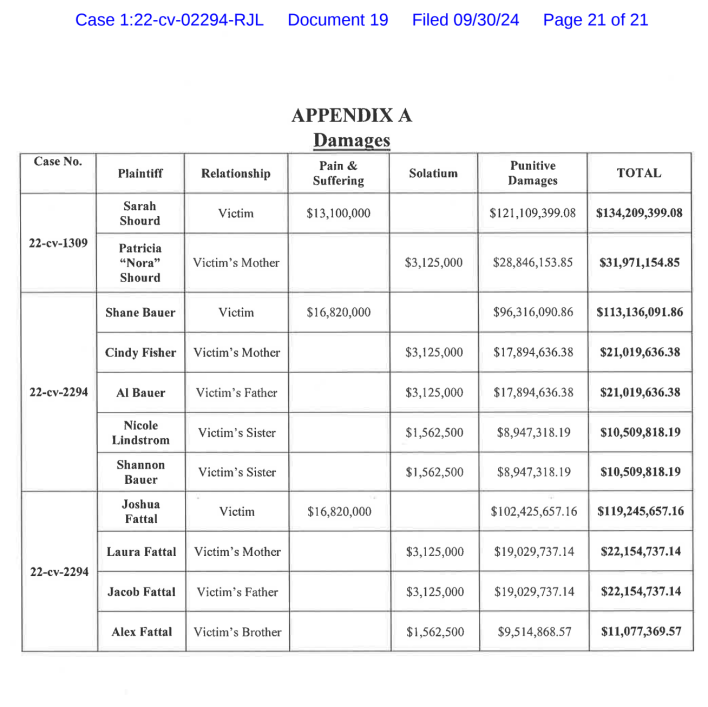
Leon has awarded Bauer, Fattal, Shourd and their families more than $500 million in seized Iranian state funds which could have been used to purchase medicine, sanitation equipment and food for citizens of the heavily sanctioned nation. As The Grayzone reported below, “Bauer and his ex-wife, Shourd, posed as staunch opponents of US sanctions against Iran and other nations. In 2016, for example, Bauer characterized Hillary Clinton’s call for Iran sanctions as ‘totally irresponsible.’ Shourd, for her part, condemned sanctions against Iran for ‘hitting the poorest of Iranians the hardest.’”
Bauer is currently reporting from Damascus, where the former Al Qaeda affiliate Hayat Tahrir al-Sham (HTS) has toppled the Syrian government and assumed power – a development he appeared to support. He and his fellow plaintiffs have not commented on the judgment they received against Iran.
Judge Leon’s full decision can be viewed here.
Below, in their initial August 30, 2022 report on Bauer’s lawsuit against Iran, Alexander Rubinstein and Max Blumenthal detail his history of agitation for Western-sponsored regime change operations across the globe, and his record of sordid attacks on The Grayzone, including his promotion of a failed frivolous lawsuit that aimed to destroy this publication.
Over a decade since he rose to prominence as a protagonist in an international drama of espionage and imprisonment, American journalist Shane Bauer and his family filed suit against Iran’s government in a Washington DC-based US District Court, seeking compensation for $10 million in damages resulting from his two year detention in Tehran.
Bauer’s ex-wife Sarah Shourd and their friend, Joshua Fattal, filed simultaneous lawsuits, seeking $10,000 and $10 million respectively.
The trio’s cases were filed in a Washington DC federal court with Judge Richard J. Leon – the same justice who ordered the Iranian government to pay the Washington Post’s Jason Rezaian $180 million in damages for his 18-month detention in the country.
In 2011, an Iranian court sentenced Bauer and Fattal to a total of eight years in prison each after they were convicted of illegally crossing the country’s border and spying for the United States. The two each served a total of two years, while Shourd was granted a compassionate release from Iranian prison after 13 months of detention.
Before his imprisonment, Bauer trekked throughout Africa and the Middle East while working as an English teacher and roaming reporter, racking up an impressive collection of passport stamps. Following his 2011 release, he established himself as a journalist specializing in undercover investigations, working a stint as a senior reporter for Mother Jones magazine in between various freelance gigs.
Bauer simultaneously emerged as a prolific apologist for US-backed regime change operations from Syria to Nicaragua, while justifying the US assassination of Iranian Maj. Gen. Qasem Soleimani. A relentless antagonist of anti-interventionist public figures, he has pushed for big tech platforms to censor media personalities that challenged Washington’s regime change agenda.
Bauer has even promoted a failed legal action against The Grayzone by a fellow journalist who had received a large sum of assets seized by the US government from Iran.
In 2018, Bauer’s book of undercover reporting, “American Prison,” which saw him take a job as a prison guard to gain inside access to a private prison, wound up on former President Barack Obama’s “Favorite Books of 2018.”
By the following year, as Bauer’s journalistic output declined, his attacks on anti-war media figures only escalated. Today, many of his most malicious tweets have been scrubbed, he is no longer employed by Mother Jones, and he says he is “working on a book about Americans in the Syrian war.” If Bauer scores a lucrative payout in US federal court, however, he may never need to worry about a freelance fee again.
And if successful, he and his former cellmates will ultimately be paid out with Iranian government assets seized by the United States through its international sanctions regime. In other words, the trio plans to benefit from looted public funds which Tehran could have otherwise used to purchase medicine, food, or fund social programs for its people.
Studies have found that the “Iranian economy and households are affected enormously” by sanctions targeting the country’s oil exports. In one particularly egregious instance of theft, the US government seized an Iranian oil tanker in 2021 and hauled it to Texas, where it sold the stolen crude for $110 million.
Before launching their lawsuits, Bauer and his ex-wife, Shourd, posed as staunch opponents of US sanctions against Iran and other nations. In 2016, for example, Bauer characterized Hillary Clinton’s call for Iran sanctions as “totally irresponsible.” Shourd, for her part, condemned sanctions against Iran for “hitting the poorest of Iranians the hardest.”
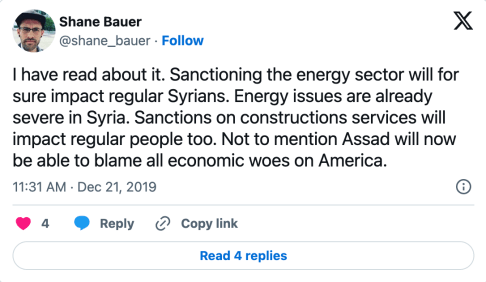
Bauer’s sudden bid for millions of dollars seized from the Iranian people by the US government raises new questions about a character whose journalistic career was shrouded in suspicion.
Long before his arrest in Iran, Bauer’s moves throughout Africa and the Middle East tracked closely with US foreign policy initiatives, and were sponsored by a US Department of Defense fellowship for several years.
To top it off, the lawyer Bauer enlisted to secure millions from Iran’s government counts one of Washington’s most infamous spies among her previous clients.
“the lack of coordination on the part of these hikers… indicates an intent to agitate”
The background to Bauer’s lawsuit originates in a July 2009 expedition he, his then-girlfriend Sarah Shourd, and their friend Joshua Fattal took to the Iranian border, where they were subsequently arrested.
The three Bay Area natives and self-described social justice activists insisted that their incursion into Iran was the result of an honest mistake. They claimed to have crossed the border unknowingly during a hiking trip near the Ahmad Awa waterfall in Iraq’s Sulaymaniyah Province, a region which fell under control of US-backed Kurdish militias following the US invasion of 2003.
According to Bauer’s legal complaint, when Iranian border guards arrested him and his companions, “Shane and Mr. Fattal instead became limp, as they would often do when protesting.”
While in Iranian custody, Bauer’s captors discovered photographs on Shourd’s camera showing they had visited Tel Aviv, Israel. The two said they traveled to Israel to visit an American friend, Tristan Anderson, who had been badly wounded and hospitalized by an Israeli teargas canister during a protest against Israel’s apartheid wall.
During Bauer’s trial, an Iranian judge listed each of the entry stamps on his second passport. They included Syria, Yemen, Iraq, Lebanon, Sudan and Israel.
Iran’s government was not the only party that rejected the trio’s excuses for their presence on the border. An Iraqi police officer claimed to the Iranian TV station Al-Alam the hikers were “working with the CIA.”
Meanwhile, a classified 2010 US military report stated that “the lack of coordination on the part of these hikers, particularly after being forewarned [of their proximity to the Iranian border], indicates an intent to agitate and create publicity regarding international policies on Iran.”
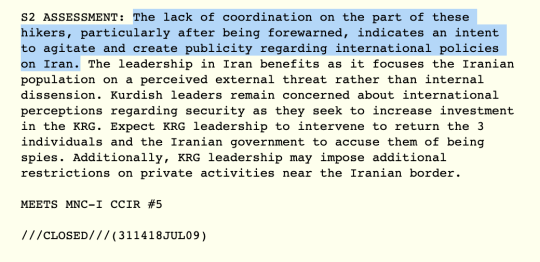
While Shourd denounced the US military assessment as “ridiculous,” her and her friends’ visit to the Iranian border came at a precarious time for the country’s government.
Indeed, their arrest occurred just weeks after President Mahmoud Ahmadinejad, a firebrand personality considered hostile to the West, secured reelection by a nearly 30 percent margin. The result sparked massive demonstrations in Tehran and gave way to the so-called “Green Movement,” a sustained protest campaign against Ahmadinejad’s mandate that eventually aided the 2014 electoral victory of Iran’s reformist bloc.
Throughout the summer of 2009, Western media granted the “Green Movement” wall to wall coverage, crediting it with drawing the largest protest crowds since Iran’s 1979 Islamic Revolution. In her memoir of captivity, Shourd recounted that during a trip to Sweden, “Stockholm’s sizable expatriate Iranian community protested in solidarity with the uprising in their home country.”
“My brother, Alex, and I documented the anti-Iran rally in Sweden,” she recalled.
Shourd later wrote that while imprisoned in Iran, the Green Movement “made me want to participate in undermining the regime that was causing me and my family so much pain.”
When the story of “Three American Hikers Held Hostage in Iran” emerged in July 2009, their tale was presented as further proof of the embattled government in Tehran’s anti-American sentiment and lack of regard for human rights. Shourd later expressed gratitude to the Iranian government “for using us to further deepen your own crisis of legitimacy around the world and with your own people.”
Their detention also corresponded with the launch of President Barack Obama’s economic assault on Tehran, a strategy which saw Washington levy hefty financial sanctions against Iran’s government in a bid to force it to negotiate limits on its domestic nuclear program.
Bauer’s lawyer represented top US spy jailed in Cuba
Bauer’s lawsuit accused the Iranian government of a slew of crimes against both himself and his family. Notably, it claims Bauer was subjected to torture, assault, and battery while in Iranian custody.
Bauer’s 2014 memoir, “A Sliver of Light,” which he co-authored with Shroud and Fattal, offers a strikingly different narrative, however. In the book, Bauer recalled taunting a prison guard to assault him and acknowledged that Iranian authorities were reluctant to do so.
“If he can’t frighten me, all he can do is hit me, and if he does that, he will be hurting himself,” Bauer explained.
“We are hostages, and hostages are currency, and currency is not to be damaged. Making him beat me is my only way to fight back,” he continued, after saying he repeatedly screamed at the guard: “Hit me!”
While Bauer’s lawsuit appeared to contradict the account offered in his memoir, it is far from an amateurish legal complaint. He and his family are represented by Emily P. Grim, a partner at the elite Gilbert, LLP law firm, which is located just blocks from the US Capitol.
Grim’s biography on Gilbert’s website boasts: “Her clients include Alan Gross, an American jailed in Cuba from 2009 to 2014 for his work on a U.S. Government project to increase Internet access in Cuba’s Jewish community, and Amir Hekmati, a former U.S. Marine imprisoned in Iran from 2011 to 2016 on false charges of espionage.”
Before he became Grim’s most famous client, Alan Gross was arrested by Cuban security officers in 2009. At the time, Gross was working for the United States Agency for International Development, or USAID, a soft power arm of American foreign policy that has overseen countless destabilization plots around the globe. The USAID program that sponsored Gross’ work in Cuba was funded through the 1996 Helms-Burton Act, a US law that explicitly called for regime change in Cuba.
When Cuban authorities apprehended Gross during his fifth trip to the country, they discovered his phone was linked to a SIM card that was distributed exclusively by the Pentagon and the CIA. The USAID employee had previously smuggled large amounts of illicit technology into Cuba, apparently as part of an effort to establish a network of covert internet access points throughout the country.
Amir Hekmati is the second-most notable client of Bauer’s lawyer, Emily Grim. A former marine, Hekmati helped develop a translation system financed by the Pentagon’s Defense Advanced Research Project Agency, or DARPA. Iran jailed Hekmati and sentenced him to death after convicting him on espionage charges. Following the diplomatic breakthrough of the Iran-US nuclear deal, he was released in 2016 as part of a prisoner swap.
Though Hekmati was initially rewarded a $20 million payout of seized Iranian assets, the Department of Justice eventually cut him off when the FBI became suspicious that the American had traveled to Iran to sell classified information about US operations in Afghanistan to the government, and not to visit his grandmother as he claimed.
Despite angry protestations, Grim’s firm has been unsuccessful in persuading the courts to complete her client’s payout.
Gilbert LLP has not responded to multiple emailed requests from The Grayzone regarding Bauer’s lawsuit. Bauer and Shourd have also ignored requests for comment delivered by Twitter and email.
Bauer sponsored by Pentagon grant that mandates “contributing to the national security of the United States”
Shane Bauer has lashed out at anyone who has accused him of having worked with the US government. However, his memoir raised more questions about his relationship with Washington than it has answered.
In one particularly revealing section, Bauer recalled an interrogation he experienced at the hands of an English-speaking Iranian he nicknamed “Weasel.”
“In our other sessions, you listed twenty-four countries that you have been to. Who funded those trips?” Weasel asked Bauer, who was 29 at the time.
“I know what he is getting at,” Bauer recalled, “and it is a legitimate question. If I can’t account for my funds, how can I prove that I am not being funded by the CIA? The problem is, I don’t think my honest answer is that believable.”
Bauer ultimately told Weasel that he saved money while “working as a welder” until he was 19 before traveling “through Europe and the Middle East.”
“Does this asshole believe a word I’m saying?” Bauer recalled wondering.
The line of questioning proceeded with Weasel asking whether the US government paid for any of Bauer’s trips.
“Shit! He knows about the grant…” wrote Bauer. ‘No,’ I say.”
Bauer was referring to the Boren Award, a Department of Defense sponsored grant that covered his Arabic studies in Yemen and Syria. When “Weasel” asked who funded the program, Bauer once again admitted to lying, telling him it was the State Department.
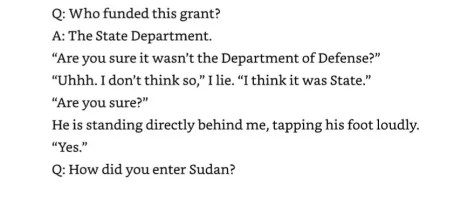
From Bauer’s co-authored account of captivity in Iran, “Sliver of Light”
Boren fellowship recipients are required to pay back their award through governmental service by “contributing to the national security of the United States in the Department of Defense, any element of the intelligence community, the Department of Homeland Security, or the Department of State.”

From the Boren Awards website
In less common instances, Boren recipients are allowed to fulfill their obligations to the US government in other departments. However, the overwhelming majority of grantees do so with the aforementioned agencies. Bauer never specified whether or not he fulfilled his obligation to the fellowship – or how he did it. He did claim, however, that the professor who encouraged him to apply for the grant stated none of their students actually went into government.
Yet when journalist David Ravicher inquired with a Boren representative about the program, he was informed “that 98 percent of its recipients fulfill this requirement and the rest receive deferments. Otherwise, the Treasury Department hunts them down.”
Before stepping into Iran, Bauer winds strange trail through the region
Shane Bauer entered journalism while enrolled at the University of California-Berkeley’s Peace and Conflict Studies program, which he graduated in 2007. It was at UC-Berkley where he met Shourd.
Bauer’s first dabbled in undercover journalism while in Yemen in 2005. At the time, the Houthi movement had just launched its insurgency against the Yemeni government. The civil conflict eventually triggered a brutal and ongoing military intervention by the US, Saudi Arabia, and the UAE to crush the Houthi advance.
According to the UC-Berkeley Alumni Association’s newsletter, Bauer was employed in Yemen by “a pro-government, English-language paper.” While the Alumni Association did not say which paper that was, Bauer earned a byline in 2005 from the Yemen Observer, a paper founded by the longtime press secretary to then-President Ali Abdullah Saleh.
Bauer eventually “decided to sneak into a city occupied by Houthi rebels which no Western journalist had visited,” the newsletter wrote. While disguised in local garb, Bauer and a British pal were detained by local authorities in the city of Saada and released a day later.
Bauer also spent two summers in the Darfur region of Sudan while enrolled at UC-Berkeley. At the time, between 2006-07, Darfur-based rebel groups from the Sudanese Liberation Army, or SLA, were facing international pressure to enact a peace deal with Sudanese President Omar Bashir, who was labeled a state sponsor of terror by the US.
In 2007, Bauer managed to score an interview with the vice intelligence director for SLA General Secretary Minni Minnawi, who had signed the deal. According to the Institute for International and Strategic Relations, a French think tank, Minnawi had been backed by the CIA as the only rebel faction leader to ink the agreement with Khartoum. He was later flown to Washington to meet with President George W. Bush. Today, he serves as the governor of Darfur while his forces fight in Libya under the command of Khalifa Haftar, another former CIA asset.
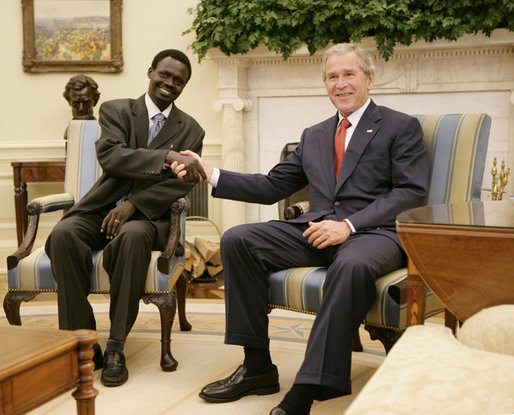
SLA General Secretary Minni Arko Minnawi and President George W. Bush
In his memoir of captivity in Iran, Bauer wrote that his interrogator demanded to know how he entered Sudan in 2007. The inquiry caused Bauer to worry that Iran may have been aware of his “history of government funding and my history of illegally crossing borders,” he recalled. Bauer told his interrogator that he “entered [Sudan] as a guest of the Sudanese Liberation Army.”
Not long after his jaunt into Darfur, Bauer arrived in Damascus, Syria with his then-girlfriend, Shourd, for several months. At the time, Washington was cultivating opposition to the government of President Bashar al-Assad through civil society networks around the country.
Bauer and Shourd said they studied Arabic at Damascus University, taught English to Iraqi refugees, and used the country as a base for reporting around the region. (On her personal webpage, Shourd says, “In 2007, I moved to Damascus, Syria…” In an interview with the Pulitzer Center, however, she states, “In 2008, I moved to Damascus, Syria…”)
A confidential November 2008 cable by Maura Connelly, then the Charges D’Affaires for the US Embassy in Damascus, identified English teachers and visiting Fulbright scholars in Syria as important cogs in US “public diplomacy” efforts against the government of President Bashar al-Assad.
The US embassy’s “English Language Fellow (ELF) for 2008-2009 remains in country and is using her numerous contacts among Syrian English teachers to conduct training in Damascus and country-wide,” Connelly noted.
Bauer and Shourd’s teacher in Damascus, Majid Rafizadeh, happened to have been on a Fulbright scholarship at the time. A Syrian-Iranian academic, Rafidzadeh has since emerged as a fervent supporter of Iranian regime change who has supplied testimony to Congress advancing the interventionist goals of hardline neoconservatives.
Bauer later reflected “how, back in 2009, my Syrian friends would fantasize about being rid of the dictator and his secret police, but no one could have imagined that the Arab Spring would come two years later.”
Bauer escalates online attacks, enters Syria under US occupation
Years after the so-called Arab Spring swept through the region like a hurricane, leaving unimaginable ruin in its wake, Bauer was still pumping out online attacks against prominent critics of US meddling.
By 2019, his attacks on opponents of the US-backed dirty war on Syria had grown so unhinged, his detractors began to taunt him with the refrain: “Take a hike.”
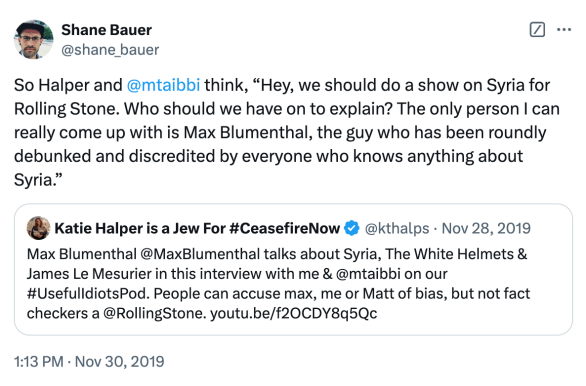
Bauer also took aim at former US Rep. Tulsi Gabbard for daring to criticize the US military occupation of northeastern Syria, insisting it was a noble anti-terrorist mission. In fact, Dana Stroul, a senior Biden Department of Defense official, has openly stated that the US military “owns” the “resource rich” region of Syria in order to exploit its wealth and starve Damascus into capitulating to the West’s agenda.
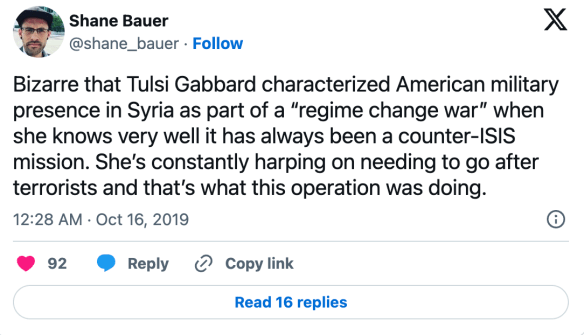
At the time, Bauer had recently returned from a visit to the US-occupied northeastern region of Syria for a series of field reports lamenting Washington’s refusal to remove Assad by force. Published in the May/June 2019 issue of Mother Jones, the series opened with a quote by a Kurdish border guard practically begging the US to plunder Syria’s natural wealth: “We have oil, so much oil. Let them stay and take the oil.”
Careful readers may be wondering whether Bauer entered the country legally or not. In fact, Syria’s government denied Bauer’s visa, prompting him to “sneak in” through the border controlled by the US military and its Kurdish allies.
Since Bauer’s reports from US-occupied Syria in 2019, he has produced only one article: a profile of a rogue local US police force for The New Yorker. That was nearly two years ago.
With no known sources of income apart from his two published books and the one apparently on the way, Bauer turned to the US government and the funds it seized from the Iranian people for a massive payday.
View the initial legal complaint, Shane Bauer v. the Government of the Islamic Republic of Iran, here.
US imposes sanctions on IRGC entity over alleged election interference
Press TV – December 31, 2024
The United States has announced sanctions on an entity it says is affiliated with the Islamic Revolution Guard Corps (IRGC) over its alleged interference in the 2024 US presidential elections.
The designation was announced by the US Treasury’s Office of Foreign Assets Control (OFAC) on Tuesday and targeted the IRGC subsidiary, which it identified as the Cognitive Design Production Center (CDPC).
A statement on the Treasury’s website claimed the CDPC had planned influence operations since at least 2023 to incite tensions among the US electorate on behalf of the IRGC.
Iran has repeatedly rejected accusations it has interfered in elections in other countries, including in the US.
Iran’s Permanent Mission to the United Nations issued a statement in late August to reject such allegations.
“Such allegations are unsubstantiated and devoid of any standing,” said the Mission after the US Federal Bureau of Investigation and several other American intelligence agencies claimed that Iran had been involved in the hacking of the campaigns of Trump and his Democratic rival Kamala Harris.
“As we have previously announced, the Islamic Republic of Iran harbors neither the intention nor the motive to interfere with the US presidential election,” said the statement.
Iranian authorities say that Washington’s policy of imposing numerous sanctions on the country is solely aimed at forcing the country into accepting political and military concessions.
Global Majority nations are de-dollarizing trade with Panda Bonds and African banks
Inside China Business | December 13, 2024
Top African banks are key in the BRICS push to do more trade outside the US Dollar, and especially outside Western systems. By setting up branches inside China, African banks are able to borrow and lend in renminbi, the Chinese currency. This allows for cross-border trades to be settled in local currencies and RMB, instead of through USD-denominated letters of credit or debt markets. Panda Bonds are another tool, rapidly gaining in popularity and usage. Pandas are RMB bonds, sold to investors in Mainland China who want to diversify their fixed income investments to global borrowers. To borrowers, Panda Bonds offer lower interest costs than USD- or Euro-denominated debt, while also allowing for repatriation and currency swaps that are common in USD loans. Africa’s biggest banks, including those owned by African governments themselves, have set up in Mainland China and are increasingly integrated into China’s financial and industrial sectors. And large Chinese banks are heading the other way, investing heavily in Africa’s raw materials industries, and providing liquidity for Africa’s rising consumer class.
Resources and links:
Substack, for video transcript and direct links https://open.substack.com/pub/kdwalms…
South China Morning Post, African banks set up shop in China as Beijing pushes for yuan to eclipse US dollar https://www.scmp.com/news/china/diplo…
Statista, China’s African Trade Takeover https://www.statista.com/chart/26668/…
Africa’s Top 100 Banks 2024: Going global https://african.business/2024/09/fina…
S&P Global, Three Minutes In Panda Bonds: Why Issuance Is Surging https://www.spglobal.com/ratings/en/r…
Featured Video
or go to
Aletho News Archives – Video-Images
From the Archives
Israel Would Have No Qualms About USS Liberty-Style FALSE FLAG If Iran Campaign Falters – Analysts
By Ilya Tsukanov – Sputnik – 18.06.2025
Donald Trump is mulling whether or not to join Israel’s aggression against Iran as Tel Aviv faces problems sustaining its defenses against growing counterstrikes, and apparently lacks a realistic game plan for an end to hostilities after failing to achieve its goals. Analysts told Sputnik how the US could be ‘nudged’ into the conflict.
“The US is already assisting Israel with supplies, intel, refueling support, etc. One of the many US posts in the region could be attacked for a casus belli,” former Pentagon analyst Karen Kwiatkowski explained.
“If Trump doesn’t comply with Israel’s demand” and join its aggression voluntarily, “a false flag may be needed” to drag the US in, Kwiatkowski, retired US Air Force Lt. Col.-turned Iraq War whistleblower, fears.
Netanyahu has a diverse array of options at his disposal, according to the observer, including:
- a false flag against US assets abroad blamed on Iran or one of its Axis of Resistance allies, like the Houthis
- a US domestic attack or assassination blamed on Iran
- Iranian air defenses ‘accidentally’ hitting a civilian jetliner carrying Americans
- use of a dirty bomb or nuclear contamination somewhere in the region blamed on Iran
- even blackmailing by threatening to use nukes against Iran if the US doesn’t join the fight
Kwiatkowski estimates that Israel probably has “enough blackmail power” against President Trump and Congress to avoid the necessity of a false flag operation, but a “USS Liberty-style” attack, targeting the soon-to-be-retired USS Nimitz supercarrier that’s heading to the Middle East, for example, nevertheless cannot be ruled out entirely, she says. … continue
Blog Roll
 Aletho News
- Embarrassing Pivot: U.S. considers dropping Iran oil sanctions amid war
- US has 2 months of rare earths left to replenish weapons amid Iran war: Report
- Strait Of Hormuz closure brings Empire to brink
- Iran controls Strait of Hormuz, dictates terms of war and peace as US excursion backfires
- Outlasting the Superpower: The Reasons Why Iran is Beating uhe US and Israel
- Top PMU commander, over a dozen fighters killed in new US strikes on Iraq
- Is Netanyahu’s war gamble threatening the future of ‘Israel’?: FT
- Smotrich calls for annexation of South Lebanon to Litani River
- Echos of Gallipoli? Hormuz and the Geography of Hubris
- Pakistan PM backs Iran’s right to self-defense amid tensions
- If Americans Knew
- UN’s special rapporteur on human rights says Israel is systematically torturing Palestinians
- Trump White House plagiarized Iran war manifesto from Israel-aligned think tank
- Gaza says 6–10 patients die daily waiting for treatment abroad as Israel blocks medical evacuations
- ‘Substantial evidence’ of double-tap strike in killing of Gaza’s Hind Rajab
- ‘Do Not Want To Die For Israel’: Doubts About Trump’s Iran Strategy Spread Among Troops
- Instead of taking Joe Kent’s claims seriously, the media is disregarding him as an antisemite
- Joe Kent’s Explosive Interviews about his Resignation over the Iran War
- Israel poised to take over southern Lebanon; settlers wreak havoc in West Bank – Not a ceasefire Day 165
- From Sde Teiman, the truth about Israel’s military justice system has been set free
- Child denied life-saving bone marrow transplant by Israel ‘because he is from Gaza’
- No Tricks Zone
- Devastating Assessment Of Comirnaty Vaccine By Former Senior Pfizer Europe Toxicologist
- New Study: CO2 Is ‘Effectively Negligible’ As An Explanatory Climate Change Factor Since 2000
- Former Pfizer Toxicologist Dr. Helmut Sterz Tells Bundestag Hearing Pfizer Vaccine Should Have Never Been Approved
- Energy Expert: Germany’s Nuclear Phaseout Was A “500 Billion Euro Mistake”
- New Research: South Australia’s Mid-Holocene Sea Surface Temperatures Were 4°C Warmer Than Today
- Storing Green Energy To Last Germany 10 Days Would Require A 60-Million Tonne Battery
- New Studies: UK Sea Levels Were 4 Meters Higher Than Today During The Mid-Holocene
- Destructive Green New Deal: German Energy And Metal Group Warns Of Drastic Crisis
- New Study Documents A 20-Year Pause In Arctic Sea Ice Decline – Driven By Internal Variability
- Wake-up Call: Survey Shows Majority Of Germans Now Favor Postponing Climate Targets!
 Aletho News
