Iran, Russia, China reject ‘unlawful’ US sanctions after tripartite meeting
The Cradle | March 14, 2025
China, Russia, and Iran released a joint statement on 14 March demanding an end to “unlawful” US sanctions against the Islamic Republic after meetings in Beijing between the three countries, which were aimed at jumpstarting stalled nuclear talks between Tehran and Washington.
The three countries “emphasized the necessity of terminating all unlawful unilateral sanctions” after talks hosted by Beijing on Friday morning, according to the joint statement read out by Chinese Vice Foreign Minister Ma Zhaxou.
“The three countries reiterated that political and diplomatic engagement and dialogue based on the principle of mutual respect remains the only viable and practical option in this regard,” read the joint statement.
Russia’s Deputy Foreign Minister Ryabkov Sergey Alexeevich and Iran’s Deputy Foreign Minister Kazem Gharibadi were also present.
The Chinese Foreign Ministry revealed on 12 March that Beijing would host the high-level talks regarding the nuclear issue with Russia and Iran this week, coinciding with growing tension between Washington and Tehran over the Iranian atomic energy program.
Russia also signaled earlier this month that it was willing to help facilitate negotiations between Iran and the US.
US President Donald Trump has been pushing for nuclear negotiations with the Islamic Republic while simultaneously issuing threats and imposing harsh economic sanctions against the country.
Iranian officials, including President Masoud Pezeshkian and Foreign Minister Abbas Araghchi, have announced their refusal to engage in negotiations under pressure, in line with the position taken by Iran’s Supreme Leader Ali Khamenei.
A letter written by Trump addressing the supreme leader, which has yet to be published, has reportedly been handed over to Araghchi by Anwar Gargash, the diplomatic advisor to UAE President Mohammed Bin Zayed (MbZ).
On 7 March, Trump said: “I’ve written them a letter, saying I hope you’re going to negotiate because if we have to go in militarily, it’s going to be a terrible thing for them. There are two ways in which Iran can be handled – militarily, or you make a deal.”
Khamenei said in response that “bully governments … insist on negotiations” which are “not aimed at solving problems; they aim at domination.”
The International Atomic Energy Agency (IAEA) reported last month that Iran significantly increased its stockpile of near-weapons-grade uranium by 92.5 kilograms (203.9 pounds) since its previous report in November.
A closed-door UN Security Council (UNSC) meeting attended by representatives of the US, UK, France, and other countries was held on Wednesday. After the meeting, the UK deputy ambassador to the UN, James Kariuki, accused Iran of “dramatically” enriching uranium towards weapons-grade level and said western countries will “take any diplomatic measures to prevent Iran acquiring a nuclear weapon,” including the reimposition of sanctions.
Tehran insists that its nuclear program is entirely peaceful, in line with a religious fatwa against weapons of mass destruction, as well as the fact that it is a signatory in the Nuclear Non-Proliferation Treaty (NPT).
Yet it faces constant threats of attack from Israel. Reports from last month cited US intelligence estimates as saying that Israel is strongly considering strikes on Iranian nuclear facilities, which could potentially come this year.
Trump’s ingenuity vis-à-vis Russia, Iran
By M. K. BHADRAKUMAR | Indian Punchline | March 10, 2025
Through the past three year period, Moscow claimed that it faced an existential threat from the US-led proxy war in Ukraine. But in the past six weeks, this threat perception has largely dissipated. The US President Donald Trump has made a heroic attempt to change his country’s image to a portmanteau of ‘friend’ and ‘enemy’ with whom Moscow can be friendly despite the backlog of a fundamental dislike or suspicion.
Last week, Trump turned to the Iran question for what could be a potentially similar leap of faith. There are similarities in the two situations. Both Russian President Vladimir Putin and Iranian president Masoud Pezeshkian are quintessential nationalists and modernisers who are open to westernism. Both Russia and Iran face US sanctions. Both seek a rollback of sanctions that may open up opportunities to integrate their economies with the world market.
The Russian and Iranian elites alike can be described as ‘westernists’. Through their history, both Russia and Iran have experienced the West as a source of modernity to ‘upgrade’ their civilisation states. In such a paradigm, Trump is holding a stick in one hand and a carrot on the other, offering reconciliation or retribution depending on their choice. Is that a wise approach? Isn’t a reset without coercion possible at all?
In the Russian perception, the threat from the US has significantly eased lately, as the Trump administration unambiguously signalled a strategy to engage with Russia and normalise the relationship — even holding out the prospects for a mutually beneficial economic cooperation.
So far, Russia has had a roller coaster ride with Trump (who even threatened Russia with more sanctions) whose prescriptions of a ceasefire to bring the conflict in Ukraine to an end creates unease in the Russian mind. However, Trump also slammed the door shut on Ukraine’s NATO membership; rejected altogether any US military deployment in Ukraine; absolved Russia of responsibility for triggering the Ukraine conflict and instead placed the blame squarely on the Biden administration; openly acknowledged Russia’s desire for an end to the conflict; and took note of Moscow’s willingness to enter into negotiations — even conceded that the conflict itself is indeed a proxy war.
At a practical level, Trump signalled readiness to restore the normal functioning of the Russian embassy. If reports are to be believed, the two countries have frozen their offensive intelligence activities in cyber space.
Again, during the recent voting on a UN Security Council resolution on Ukraine, the US and Russia found themselves arrayed against Washington’s European allies who joined hands with Kiev. Presumably, Russian and American diplomats in New York made coordinated moves.
It comes as no surprise that there is panic in the European capitals and Kiev that Washington and Moscow are directly in contact and they are not in the loop. Even as the comfort level in Moscow has perceptively risen, the gloom in the European mind is only thickening, embodying the confusion and foreboding that permeated significant moments of their struggle.
All in all, Trump has conceded the legitimacy of the Russian position even before negotiations have commenced. Is an out-of-the-box thinking conceivable with regard to Iran as well?
In substantive terms, from the Russian perspective, the remaining ‘loose ends’ are: first, a regime change in Kiev that ensures the emergence of a neutral friendly neighbour; second, removal of US sanctions; and, third, talks on arms control and disarmament attuned to present-day conditions for ensuring European and global balance and stability.
As regards Iran, these are early days but a far less demanding situation prevails. True, the two countries have been locked in an adversarial relationship for decades. But it can be attributed entirely to the American interference in Iran’s politics, economy, society and culture; an unremitting mutual hostility was never the lodestar, historically.
A constituency of ‘westernists’ exists within Iran who root for normalisation with the US as the pathway leading to the country’s economic recovery. Of course, like in Russia, super hawks and dogmatists in Iran also have vested interests in the status quo. The military-industrial complex in both countries are an influential voice.
The big difference today is that the external environment in Eurasia thrives on US-Russia tensions whereas, the intra-regional alignments in the Gulf region are conducive to US-Iran detente. The Saudi-Iranian rapprochement, a steady and largely mellowing of Iran’s politics of resistance, Saudi Arabia’s abandonment of of jihadi groups as geopolitical tool and its refocus on development and reform as national strategies — all these mould the zeitgeist, which abhors US-Iran confrontation.
This historic transformation renders the old US strategy to isolate and ‘contain’ Iran rather obsolete. Meanwhile, there is a growing realisation within the US itself that American interests in West Asia no longer overlap Israel’s. Trump cannot but be conscious of it.
Equally, Iran’s deterrence capability today is a compelling reality. By attacking Iran, the US can at best score a pyrrhic victory at the cost of Israel’s destruction. Trump will find it impossible to extricate the US from the ensuing quagmire during his presidency, which, in fact, may define his legacy.
The US-Russia negotiations are likely to be protracted. Having come this far, Russia is in no mood to freeze the conflict till it takes full control of Donbass region — and, possibly, the eastern side of Dniepr river (including Odessa, Kharkhov, etc.) But in Iran’s case, time is running out. Something has to give way in another six months when the hourglass empties and the October deadline arrives for the snapback mechanism of the 2015 JCPOA to reimpose UN resolutions to “suspend all reprocessing, heavy water-related, and enrichment-related activities” by Tehran.
Trump will be called upon to take a momentous decision on Iran. Make no mistake, if push comes to shove, Tehran may quit the NPT altogether. Trump said Wednesday that he sent a letter to Ali Khamenei, Iran’s supreme leader, calling for an agreement to replace the JCPOA. He suggested, without specifics, that the issue could quickly lead to conflict with Iran, but also signalled that a nuclear deal with Iran could emerge in the near future.
Later on Friday, Trump told reporters in the Oval Office that the US is “down to the final moments” negotiating with Iran, and he hoped military intervention would prove unnecessary. As he put it, “It’s an interesting time in the history of the world. But we have a situation with Iran that something is going to happen very soon, very, very soon.
“You’ll be talking about that pretty soon, I guess. Hopefully, we can have a peace deal. I’m not speaking out of strength or weakness, I’m just saying I’d rather see a peace deal than the other. But the other will solve the problem. We’re at final moments. We can’t let them have a nuclear weapon.”
Trump aims at generating peace dividends out of any normalisation with Russia and Iran, two energy superpowers, that could give momentum to his MAGA project. But cobwebs must be swept away first. Myths and misconceptions have shaped contemporary Western thinking on Russia and Iran. Trump should not fall for the phobia of Russia’s ‘imperialistic’ ambitions or Iran’s ‘clandestine’ nuclear programme.
If the first one was the narrative of the liberal-globalist neocon camp, the second one is a fabrication by the Israeli lobby. Both are self-serving narratives. In the process, the difference between westernisation and modernisation got lost. Westernisation is the adoption of western culture and society, whereas, modernisation is the development of one’s own culture and society. Westernisation can at best be only a subprocess of modernisation in countries such as Russia and Iran.
Trump’s ingenuity, therefore, lies in ending the US’ proxy wars with Russia and Iran by creating synergy out of the Russian-Iranian strategic partnership. If the US’ proxy wars only has drawn Russia and Iran closer than ever in their turbulent history as quasi-allies lately, their common interest today also lies in Trump’s ingenuity to take help from Putin to normalise the US-Iran ties. If anyone can pull off such an audacious, magical rope trick, it is only Trump who can,
Russia ready to facilitate US-Iran negotiations – Kremlin
RT | March 4, 2025
Russia is ready to broker talks between the US and Iran, including on Tehran’s nuclear program and its regional proxy network, Kremlin spokesman Dmitry Peskov told Bloomberg on Tuesday.
Trump expressed interest in talking to Iran about those issues, both in his phone call to Putin in February and via representatives at the high-level US-Russian meeting in Riyadh just days later, the news agency wrote, citing anonymous officials.
“Russia believes that the United States and Iran should resolve all problems through negotiations,” Peskov told Bloomberg when asked about such contact.
Moscow “is ready to do everything in its power to achieve this,” he added.
US President Donald Trump returned to his “maximum pressure” campaign on Iran last month, just weeks after Moscow and Tehran signed a landmark strategic partnership agreement. Trump’s executive order said that Washington would ramp up sanctions on Iran, aiming to disrupt its nuclear program, conventional missile deployment, and network of regional proxy groups.
The Iranian Foreign Ministry has said the country is building up its defenses, citing regular threats from US ally Israel.
“The Israeli regime’s FM and other officials keep threatening Iran with military action while the West continues to blame Iran for its defense capability. This is outrageous & irrational,” Iranian Foreign Ministry spokesman Esmaeil Baqaei said last week. Given that Israel is “addicted to aggression and lawless behavior,” it is “responsible and essential to maximize our defense capabilities,” he stressed.
The day before, Israeli Foreign Minister Gideon Saar warned that a “military option” should be on the table to stop the potential weaponization of Tehran’s nuclear program.
Israel and the West have long seen Iran’s uranium enrichment activities as a secret attempt to develop nuclear weapons – allegations that Tehran has repeatedly denied.
While Trump has touted harsher sanctions, he has also signaled that he is interested in signing a “verified nuclear peace agreement” with Tehran.
Iranian Supreme Leader Ayatollah Ali Khamenei has stressed that talks with the US are unlikely to bear fruit, citing the prior nuclear deal Trump unilaterally left during his first presidency.
Pro-Israel Think Tank WINEP Outed as ‘Dark Money’ Operation Driving US Wars
By Robert Inlakesh | MintPress News | February 26, 2025
The AIPAC-aligned Washington Institute for Near East Policy (WINEP), which often refers to itself simply as The Washington Institute, was recently outed as a “dark money” think tank for its lack of transparency on donors and is continuing to push the United States to engage in conflicts overseas to Israel’s benefit. Its case raises questions about how the Israel Lobby functions through think tanks across the board, shaping U.S. foreign policy behind closed doors.
WINEP has a long history of shaping U.S. foreign policy. It was deeply involved in the neoconservative push for regime change in Iraq, joining calls for the Clinton administration to topple Saddam Hussein as early as 1998. They also pushed for U.S. military intervention and helped justify the eventual invasion in 2003.
At the beginning of the year, the Quincy Institute for Responsible Statecraft unveiled the “Think Tank Funding Tracker,” a one-of-a-kind project that examined the funding sources of the top 50 U.S. think tanks since 2019 and rated their transparency from 0 to 5. WINEP and 16 others—including the neoconservative Foundation for Defense of Democracies (FDD)—received a zero transparency rating, exposing its reliance on “dark money” contributions.
While WINEP claims “to be funded exclusively by U.S. citizens” on its website, it does not publicly disclose its donor list. Its AIPAC roots were first exposed in 2006 by Stephen Walt and John Mearsheimer in The London Review of Books, where they described WINEP as an AIPAC cutout advancing Israel’s agenda under the guise of independent research. The pair wrote at the time that “The Lobby created its own think tank in 1985, when Martin Indyk helped found WINEP. Although WINEP plays down its links to Israel and claims instead that it provides a “balanced and realistic” perspective on Middle East issues, this is not the case. In fact, WINEP is funded and run by individuals who are deeply committed to advancing Israel’s agenda.”
This claim that AIPAC created WINEP was later corroborated by former AIPAC official MJ Rosenberg, who wrote in HuffPost : “How do I know? I was in the room when AIPAC decided to establish WINEP.” The now-deceased WINEP co-founder, Martin Indyk, was also the head of the Saban Center for Middle East Studies, funded by Israeli-American billionaire Haim Saban.
Recent U.S. foreign policy developments have only strengthened WINEP’s influence. The Biden administration’s unwavering support for Israel’s war on Gaza, including a $14 billion emergency military aid package, aligns with WINEP’s long-standing push to ensure that U.S. military assistance to Israel remains untouchable. WINEP actively shaped public discourse as the war progressed, with Executive Director Robert Satloff praising Biden’s refusal to support an early ceasefire, calling it “correct and courageous.”
When House lawmakers convened hearings in late 2023 to attack the administration’s Iran policy, their rhetoric mirrored WINEP’s narratives, particularly opposition to any sanctions relief. Witnesses from WINEP-adjacent institutions like FDD and JINSA were brought in to reinforce the case for a more aggressive posture toward Iran. Meanwhile, WINEP continues to push for U.S. military leverage in post-Assad Syria, another key policy area where the Biden administration has quietly followed its recommendations by maintaining a military foothold and targeting Iranian assets with airstrikes.
WINEP’s revolving-door relationship with the U.S. government does little to shed its reputation for shaping policy. In May 2023, National Security Advisor Jake Sullivan delivered a keynote address at WINEP’s annual Soref Symposium, praising Satloff’s “extraordinary work.” Sullivan’s participation wasn’t just symbolic—it reinforced WINEP’s position as an informal but essential policy hub. This is evident from the administration’s embrace of the Abraham Accords, another WINEP priority.
Former WINEP fellow Dan Shapiro was appointed the State Department’s senior advisor for regional integration, carrying out the think tank’s long-standing vision for Arab normalization with Israel. WINEP is currently led by Michael Singh, Robert Satloff, Dennis Ross, and Dana Stroul. Stroul, who serves as WINEP’s Research Director, returned to the position after serving as the Biden administration’s deputy assistant secretary of defense for the Middle East from 2021 to 2024. During her tenure, she played a central role in Washington’s anti-Iran initiatives, the response to the Gaza war, and shaping U.S. Syria policy.
Beyond WINEP, the broader issue of think tank influence is now facing increasing scrutiny. In 2023, lawmakers introduced the Think Tank Transparency Act, which requires policy organizations to disclose foreign government funding and contractual agreements. While WINEP does not receive direct funding from Israel, watchdogs have highlighted that its pro-Israel agenda is sustained through wealthy American donors closely linked to AIPAC. Using domestic contributions to advance a foreign policy agenda has enabled WINEP to operate without falling under the scrutiny of foreign lobbying laws, even as its “scholars” shape U.S. positions on Iran, Syria, and the Israel-Palestine conflict.
Currently, the two primary issues on WINEP’s agenda are how to best leverage American influence to shape outcomes in post-Assad Syria and how to assure regime change in Iran. Indicative of the think tank’s influence is that not only was its hardline Syria strategy the exact model used by the U.S. to aid regime change in Damascus, but its chief researcher was taken on as a senior official by the previous administration.
As demonstrated by the Quincy Institute’s new report, the lack of transparency over who exactly finances the AIPAC lobby’s “cutout” think tank presents serious questions about who is actually shaping U.S. foreign policy and to whose benefit.
Iran rules out nuclear talks with US amid ‘maximum pressure’ campaign
Press TV – February 25, 2025
Iran will not engage in negotiations with the United States on its nuclear program unless the White House steps back from a recently reinstated “maximum pressure” campaign, Foreign Minister Abbas Araghchi says.
Araghchi was addressing a press conference on Tuesday alongside his visiting Russian counterpart, Sergey Lavrov.
The foreign minister said Iran will address the nuclear issue in coordination with its allies – Russia and China.
“On nuclear negotiations, Iran’s stance is very clear: we will not negotiate under pressure, threat, and sanctions.”
“Therefore,” the Iranian foreign minister stated, “there is no possibility of direct negotiations between us and the United States on the nuclear issue as long as maximum pressure continues to be applied in its current form.”
Araghchi highlighted his “detailed and constructive” discussions with Lavrov on a broad range of topics, particularly concerning the Caucasus, Asia, and Eurasia.
The Iranian foreign minister praised the rapid progress in economic cooperation between Tehran and Moscow, citing collaborations in energy, railways, and agriculture.
On Palestine, Araghchi said they discussed Trump’s “unacceptable” forced displacement plan targeting Gaza residents.
Regarding Syria, he underlined the alignment of Iranian and Russian positions.
“Stability, peace, territorial integrity, and progress in Syria based on the will of its people are priorities for Iran. We support establishing peace and stability in this country.”
Room for diplomacy on nuclear issue
Lavrov also elaborated on his “detailed and constructive” discussions with Araghchi during the press conference.
The Russian foreign minister said both sides agreed to enhance cooperation within the framework of BRICS.
Lavrov drew attention to a notable increase in trade between Iran and Russia despite Western sanctions.
“Trade exchanges between Iran and Russia have increased by more than 13%, and we hope this trend will continue.”
The Russian minister also expressed satisfaction with the progress on the Rasht-Astara railway project.
“Construction has begun, supported by a Russian government loan, which is an important step toward establishing the North-South Corridor,” he stated, referring to a trade route connecting India to northern Europe.
Lavrov pointed to Tehran’s successful hosting of the Caspian Economic Forum and expressed optimism about convening a joint economic cooperation commission later this year.
Addressing Iran’s nuclear program, Lavrov put a premium on diplomacy.
“We believe there is still diplomatic capacity to resolve Iran’s nuclear issue, and we hope a solution can be found. This crisis was not created by Iran.”
Iran has long been subjected to Western sanctions over its nuclear activities, human rights issues, and other pretexts.
The administration of US President Donald Trump has escalated these measures since taking office, reinstating the so-called maximum pressure policy, a campaign of hybrid warfare targeting Iran.
Similarly facing sanctions over its military operations in Ukraine, Russia has deepened its cooperation with Iran in recent years.
In January, Iranian President Masoud Pezeshkian visited Moscow and signed a strategic partnership agreement with President Vladimir Putin to bolster economic and military collaboration.
FM: Iran won’t condone language of threats; maximum pressure doomed to fail
Press TV – February 18, 2025
Iran’s Foreign Minister Abbas Araghchi says the Islamic Republic does not condone threats, stressing that the US’s “maximum pressure” campaign will certainly fail.
Araghchi made the remarks at a meeting with Wolfgang Amadeus Bruelhart, the Swiss Special Envoy for the Middle East and North Africa, on the sidelines of the 8th Indian Ocean Conference in Oman on Monday.
During the meeting, Araghchi referred to the three rounds of negotiations held between Iran and the three European signatories to the 2015 Iran nuclear deal, formally known as the Joint Comprehensive Plan of Action (JCPOA) and expressed Tehran’s readiness to continue talks with the three European countries, namely the United Kingdom, France, and Germany (E3).
The minister stressed that the Islamic Republic “does not brook the language of threats or pressure”, asserting that the policy of maximum pressure led by the US “is bound to fail.”
That came as US President Donald Trump has signed a memorandum re-imposing his so-called “maximum economic pressure” on Iran.
Elsewhere in his remarks, the Iranian minister hailed the long-standing ties between Iran and Switzerland, stressing the importance of the “constructive” role played by the country, which acts as the protecting power for the US in Tehran, in promoting peace and stability in the region.
He also welcomed the upcoming round of political talks scheduled to take place between Tehran and Bern in the Iranian capital.
“We emphasize [the importance] of continuing dialogue and cooperation in this regard”.
For his part, Bruelhart stressed the “significant and influential” role played by Iran in the region.
He also underscored the importance of talks with Iran on bilateral and regional issues, and expressed his country’s keenness to continue dialogue with Tehran, especially during the upcoming meeting in Tehran.
Iran and the E3 have been conducting on-again, off-again talks since 2021, three years after the United States illegally and unilaterally left a historic nuclear accord between Iran and world powers under Donald Trump, returning Washington’s unlawful sanctions against the Islamic Republic.
The trio then failed to live up to their promise of bringing Washington back into the deal.
Reacting to the counter-party’s non-commitment to its obligations, Tehran initiated a set of retaliatory nuclear steps, including by activating more advanced centrifuges.
The country has been stepping up the measures in response to the other parties’ continued refusal to uphold their obligations.
Trump to ‘clean out’ and own Gaza?
Seyed Mohammad Marandi, Alexander Mercouris & Glenn Diesen
Glenn Diesen | February 9, 2025
I had a conversation with Alexander Mercouris and Prof. Seyed Mohammad Marandi (advisor to Iran’s nuclear negotiation team) about Trump’s recent comments about ethnically cleansing Gaza and the US seizing ownership over the territory. It is said that Trump should not be taken literally as much of his talk is either a negotiation tactic or he is simply improvising. Trump’s comments could have been aimed to ensure Israeli compliance with the ceasefire, to keep Netanyahu in power, or to have been part of a wider retrenchment strategy as the US must appear strong at a time when it is pulling back and shifting priorities.
Blocking Iran’s oil exports unattainable dream: Minister
Press TV – February 9, 2025
Iran’s Oil Minister Mohsen Paknejad has said that the United States will never achieve its dream of cutting Iran’s oil exports to zero as touted by its new president Donald Trump.
“Blocking Iran’s oil exports is an unattainable dream,” said Paknejad on Sunday while reacting to Trump’s recent signing of an executive order to impose maximum pressure on Iran’s oil industry.
He insisted that Iran will always come up with solutions to circumvent US bans on its oil exports.
“The more the restrictions increase, the more complicated our solutions will be,” said the minister, adding that the experts and staff working in the Iranian petroleum industry have the capacities to deal with problems caused by US sanctions to the country’s production and exports of oil.
He said the US once experienced the futility of its maximum pressure policy on Iran during Trump’s first term in office in 2016-2020.
“They want to test it one more time and they will fail again,” said the minister.
The comments came several days after Trump announced he would use Washington’s unilateral regime of sanctions to disrupt Iran’s oil flows to markets in Asia and elsewhere.
Trump enacted a first round of sanctions on Iran’s oil exports in 2018, causing the country’s oil exports to drop for a brief period in late 2019 and in early 2020.
However, Iranian oil exports have gradually returned to pre-sanctions levels in recent years with estimates suggesting that the country is shipping more than 1.8 million barrels per day (bpd) of oil, mostly to customers in China.
That comes as Iran’s oil exports had reached as low as 0.3 million bpd in 2019 when Trump removed sanction waivers granted to major Iranian oil customers.
Iran condemns ‘illegitimate’ US sanctions targeting oil exports
Press TV – February 7, 2025
Iran has strongly condemned new sanctions slapped by the administration of US President Donald Trump on the country’s oil industry, saying they run contrary to international rules and standards.
Foreign Ministry spokesman Esmaeil Baghaei denounced the bans as “completely unjustified” on Friday.
The remarks came a day after the US Treasury Department targeted more than a dozen individuals and companies, as well as vessels, claiming that they are facilitating the shipment of millions of barrels of Iranian oil to China.
The sanctions were the first on Iran after Trump restored his so-called “maximum pressure” campaign on the country.
“The decision of the new US administration to put pressure on the Iranian nation by preventing Iran’s legitimate trade with its economic partners is an illegitimate, illegal and wrongful act, whose responsibility lies on the US government,” Baghaei added.
“The Islamic Republic holds the US accountable for the consequences of such unilateral and bullying measures.”
On Tuesday, Trump signed the presidential memorandum reimposing a tough anti-Iran policy, which he practiced in his first presidential term after unilaterally withdrawing Washington from the historic 2015 nuclear deal.
In an X post, Iranian Foreign Minister Abbas Araghchi called Trump’s measure a failed experience.
He said the decision to restore maximum pressure policy will only compel “maximum resistance” on the part of Iran again, adding, “Smart people ought to choose ‘Maximum Wisdom’ instead.”
During his campaign trail for a second term, Trump had stated at an event in New York in September that, if re-elected, he would minimize the use of sanctions. He argued that employing sanctions excessively “kills your dollar and it kills everything the dollar represents.”
“Look, you’re losing Iran. You’re losing Russia. China is out there trying to get their currency to be the dominant currency, as you know better than anybody,” Trump remarked.
On Tuesday, The New York Times said Trump had also implemented a strategy of maximum pressure in 2018, following his decision to withdraw the US from the nuclear accord with Iran that had been established under the Obama administration three years earlier.
“Mr. Trump still claims that was a major victory, but most outside analysts say it backfired,” the newspaper wrote.
Khamenei: Negotiations with US have no effect on solving problems
Press TV – February 7, 2025
Leader of the Islamic Revolution Ayatollah Seyyed Ali Khamenei says experience has shown that negotiations with the US have no effect on solving Iran’s problems.
His remarks in a meeting with Air Force personnel in Tehran on Friday came hours after the US imposed its first sanctions in the wake of President Donald Trump’s signing of an order to reimpose his “maximum pressure” on Iran.
“Some people pretend that if we sit at the negotiating table, some problem will be solved, but the fact that we must understand correctly is that negotiating with the US has no effect on solving the country’s problems.”
He cited the experience of 2015 when Iran and six other countries, including the US, signed the now-dormant Joint Comprehensive of Plant of Action (JCPOA) after two years of negotiations, only to be discarded by President Trump in 2018.
Ayatollah Khamenei recalled the grueling back and forth, which included a 15-minute stroll by then-US Secretary of State John Kerry and Mohammad Javad Zarif in downtown Geneva and along the Rhone River which landed the former Iranian foreign minister in hot water.
“Our government at the time sat down and negotiated – they continued to come and go, they sat down and stood up and negotiated, they talked, laughed, shook hands, made friends, everyone worked, and a treaty was formed.
“In this treaty, the Iranian side was very generous, giving many concessions to the other side. But the Americans did not implement the same treaty,” the Leader said.
“The same person who is in office now tore up the treaty. He said he would tear it down and he did; they didn’t act upon” the agreement, he said, referring to Trump.
“Therefore, negotiating with such a government is unwise, unintelligent and dishonorable and there should be no negotiation with it.”
Before Trump, even the US administration which had accepted the agreement, did not comply with it, the Leader said, referring to the government of president Barack Obama which had signed it.
“The treaty was meant to lift US sanctions, but they were not lifted. Adding insult into injury, they had the UN to have a constant threat hanging over Iran. This treaty was the product of negotiations that lasted about two years.”
Iran is currently in the midst of celebrations marking the anniversary of the Islamic Revolution which sealed the fate of the US-backed Pahlavi regime in 1979.
Every year on February 8, Iranian Air Force personnel meet the Leader to relive the historic allegiance of Air Force officers with the late founder of the Islamic Republic Imam Khomeini in 1979. The event is viewed as a turning point which led to the victory of the Islamic Revolution three days later.
Ayatollah Khamenei said the Americans are busy working “on paper to change the map of the world”, with Iran also being the subject of their plans.
“Of course, it’s only on paper, it has no reality. They also talk about us, make comments, and threaten us,” the Leader said.
Ayatollah Khamenei said, “If they threaten us, we will threaten them. If they put their threat into practice, we will do the same. If they attack the security of our nation, we will attack their security without hesitation.”
“This is a lesson taken from the Qur’an and the teachings of Islam, and it is our duty to act as such. We hope that God Almighty will make us successful in carrying out our duties,” he added.
Iran to Trump: Another maximum pressure, another defeat for Washington
Press TV – February 5, 2025
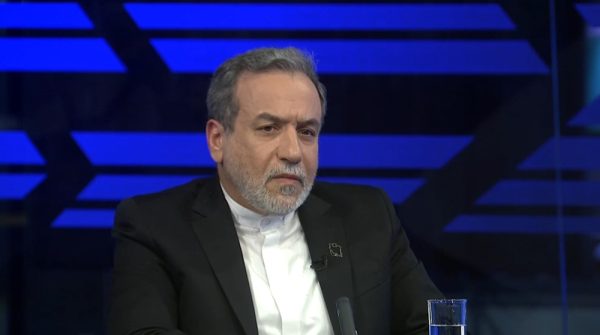
Foreign Minister Abbas Araghchi has asserted that another round of deployment of the “maximum pressure” policy on the part of the United States against Iran will only lead to another defeat.
“The policy of maximum pressure has already proven to be a failure, and any attempt to revive it will only lead to another defeat,” the top diplomat told reporters on the sidelines of a cabinet meeting on Wednesday.
Araghchi was referring to the policy that the US adopted during Donald Trump’s former tenure, as part of which Washington quit a 2015 nuclear deal with Iran and world powers, returned the sanctions that the agreement had lifted, and piled up even more illegal and unilateral bans against the Islamic Republic.
Retaliating against the measures, Iran took legitimate nuclear steps that have featured its operationalizing advanced centrifuges among other things.
The country also explored various means to skirt the sanctions and boost its economy by fostering foreign trade and enhancing domestic production, causing Washington to suffer “maximum defeat” in adoption of such policy.
On Tuesday, Trump promoted new “tough” measures aimed at, what Washington has called, “deterring” Iran from obtaining a “nuclear weapon.”
Trump also signed a presidential memorandum, authorizing stricter illegal actions against Iran, while saying, “They can’t have a nuclear weapon, we’d be very tough if they insist on doing that.”
Washington’s adversarial stance comes despite Tehran’s repeated assurances that its nuclear activities remain in full compliance with international regulations, and the International Atomic Energy Agency (IAEA)’s invariable verification of the peaceful nature of the Islamic Republic’s nuclear energy program.
Reacting to Trump’s remarks, Araghchi said, “If the main issue is that Iran should not pursue nuclear weapons, this is achievable and not a difficult matter.”
“Iran’s stance is clear, and it is a member of the NPT (Nuclear Non-Proliferation Treaty), and there is also the fatwa (religious decree) of the Leader, which has clarified the matter for us,” he added.
Leader of the Islamic Revolution Ayatollah Seyyed Ali Khamenei’s has prohibited pursuance, attainment, and storage of such non-conventional arms through an official decree as per religious and moral grounds.
“The Leader’s fatwa has made Iran’s position crystal clear,” Araghchi concluded.
‘Iran has never had, will never have nuclear weapons program’
Also on Wednesday, Mohammad Eslami, head of the Atomic Energy Organization of Iran (AEOI), likewise reacted to Trump’s remarks, saying, “Iran has never had, does not have, and will not have a nuclear weapons program. Iran’s approach in this regard is absolutely clear.”
He added, “Iran’s peaceful nuclear program is being implemented within the framework of Safeguards [Agreement] and the NPT.”
Trump might defy policy to reach nuclear deal with Iran: Responsible Statecraft
Al Mayadeen | January 27, 2025
President Donald Trump has signaled an unexpected shift in the conventional US policy regarding Iran, revealing that the only issue his administration would face with the Islamic Republic is its development of a nuclear weapon.
Speaking on Fox News’ Hannity show on January 23, Trump did not address Iran’s regional policies, its defiance of the Israeli occupation, or the possibility of enforcing a regime change. Rather, his only focus was preventing Iran from acquiring nuclear weapons.
In this regard, a Responsible Statecraft report, written by Eldar Mamedov, recalled previous statements by Iranian officials, confirming that the nation does not seek nuclear weapons, adding that this could facilitate a political agreement between Washington and Tehran.
Tehran has also gestured its willingness to re-engage with the West, particularly following the election of Iranian President Masoud Pezeshkian and his government coming to power. However, despite the mutual political willingness, the path to a deal remains highly complex and is vastly different from 2015, when the JCPOA curtailed Iran’s nuclear program.
Is a nuclear deal possible?
Following Trump’s 2018 withdrawal from the JCPOA, his imposition of sanctions, and the EU’s failure to abide by the terms of the deal, Iran significantly advanced its program, including enriching uranium to 60%—a step away from weapon-grade levels (90%)—and deploying advanced centrifuges. Nuclear expert Kelsey Davenport notes that Iran could now produce enough material for five to six nuclear bombs in just two weeks, according to Mamedov.
The situation is further complicated by the limited access the IAEA has had to Iran since 2021, heightening concerns about unmonitored nuclear material potentially being moved to covert sites, as well as shifts in Iran’s nuclear rhetoric that suggest a potential rethinking of its doctrine.
While Tehran officially maintains it is not pursuing nuclear weapons, regional challenges could incentivize Iran to consider a nuclear deterrent, Mamedov explained.
Israeli Prime Minister Benjamin Netanyahu’s threats of a direct attack, possibly with US support and cover, could possibly motivate Iran to contemplate threshold weaponization as a defensive measure.
Mamedov writes that negotiations to achieve a potential deal would have to consider Iran’s extensive nuclear program, as well as the set of motivations it has to expand its nuclear manufacturing. In this context, concessions would have to be made, addressing the regional situation and Iran and its allies’ security concerns, which prompted nuclear development in the first place.
Although Iran’s Leader Sayyed Ali Khamenei approved re-engagement and Pezeshkian’s reformist government advocated for a more proactive approach, majorly to ease US sanctions on the Islamic Republic, some Iranian politicians still have reservations, citing the US decision to withdraw from the JCPOA. This makes the matter one of “how to engage”, rather than if engagement should be initiated.
Some Iranian officials see little benefit in trading their nuclear leverage for uncertain sanctions relief. They are also bolstered by a new strategic partnership with Russia, which includes military and security cooperation, providing deterrence against potential attacks by “Israel” or the US.
The time is now!
Currently, proponents of waiting for a US initiative hold sway in Tehran at the moment. Reformists, however, argue this approach wastes time, suggesting Trump may seek a quick deal to enhance his peace-making image, especially with the Ukraine conflict dragging on. A limited framework deal, similar to Trump’s DPRK agreement, could be quickly drafted if the political decision is made, according to Mamedov.
While doubts remain about achieving a substantive follow-up deal, even a symbolic agreement—such as a handshake between Trump and an Iranian leader—could de-escalate tensions, marginalize pro-Netanyahu factions, and create room for broader negotiations addressing nuclear issues, sanctions, and regional concerns, Mamedov wrote.
Diplomatically, Iran has engaged with the EU and E3 (Britain, France, Germany) to prevent them from undermining progress by invoking UN sanctions before the October 2025 deadline. While Tehran has no illusions about the EU’s ability to restore the JCPOA without US involvement, these talks signal Iran’s seriousness about a deal and aim to avoid the E3 acting as spoilers out of fear of being excluded from future US-Iran agreements.
The most viable path forward seems to be a limited bilateral deal between the US and Iran to ease tensions, followed by multilateral negotiations with the original JCPOA signatories. With political will apparent on all sides, the opportunity to advance diplomacy is now.
Featured Video

Racist Seinfeld Dances for Joy as Bibi Unveils His New Map
or go to
Aletho News Archives – Video-Images
TV Drama Review
Japanese drama projects Japan’s wartime atrocities onto Chinese characters

Global Times | October 25, 2026
By portraying Chinese characters as perpetrators of ruthless violence while casting Japanese Self-Defense Forces (SDF) intelligence operatives as defenders, the season 2 of the Japanese drama Vivant has recently drawn criticism from Chinese netizens, who argue that its depiction turns historical reality on its head while ignoring Japan’s wartime atrocities.
The TBS drama series – a spy suspense story in which an alleged unofficial intelligence unit of the SDF operates across the globe — has attracted a passionate fanbase. Its currently airing season 2 opened with a household rating of 18.8 percent, the highest for a TV drama this year, according toa commentary article by Japanese media Toyo Keizai.
What draws attention is the portrayal of the enemies in the series, the article noted. Scenes in which the Chinese organization subjects kidnapped members of the SDF unit to brutal torture are repeated with unrelenting intensity.
It is rare for Japanese TV dramas to explicitly portray a real-life country as the enemy, the article noted.
Japanese Prime Minister Sanae Takaichi also made a reference to the drama, saying that she has been recording Vivant and hopes to binge-watch it over the year-end and New Year holidays, according to Japanese media outlets.
China’s CCTV News report on Sunday revealed that the drama features scenes in which Chinese personnel cut off the fingers of and stab Japanese intelligence operatives in the abdomen. Such acts bear striking similarities to the torture inflicted on Chinese nationals by invading Japanese troops during the World War II.
The drama distorts the truth by attributing these atrocities to modern Chinese characters. Beneath the surface, it subtly glorifies Japan’s cross-border overseas operations, blurs the functional boundaries of the SDF and implicitly promotes an expansionist narrative, per CCTV News. … continue
Blog Roll
 Aletho News
- EU facing trillion-euro debt hole while seeking more cash for Kiev
- How US, Europe, Persian Gulf states exhausted missile stockpiles, splurged billions to defend Israel
- Up in arms… Koreans reject U.S. empire’s plan to make South Korea the next Ukraine
- Iran, Turkey, Pakistan, Saudi Arabia could advance region-led security framework in Tehran: FM spox
- Netizens condemn Japanese drama for projecting Japan’s wartime atrocities onto Chinese characters
- Racist Seinfeld Dances for Joy as Bibi Unveils His New Map
- A West Bank War for Netanyahu’s Election Campaign, Could It Backfire?
- Yemen denounces European Parliament’s ‘hypocritical’ push to blacklist Ansarullah
- Qalibaf: UAE’s UN bid aims to ‘clear the runway’ for ‘Greater Israel’, whitewash genocide
- Pakistan reopens Iran border after boosting security: Report
- If Americans Knew
- Israel punishes Palestinian prisoners with solitary confinement for making a cake
- US midterms: Where do candidates in key Senate races stand on Israel, Gaza, and Iran?
- Israeli forces demolish Hebron homes, displace thousands of Palestinians as raids expand
- Their Son Died in Israeli Prison. No Answers. No Body
- Biden’s Israel Catastrophe
- Why Israel’s latest assault on Hebron is so significant for the West Bank
- Israel Used “Where’s Daddy?” AI to Relentlessly Murder Palestinian Journalists and Their Families in Their Homes from October to December 2023
- DAILY UPDATE: Latest essential news on Palestine, Israel, & region
- Netanyahu Says Israel Must Prepare for Banking Sanctions, Floats Crypto as a Possible Bypass
- Latest updates from Israeli assault on West Bank
- No Tricks Zone
- Sudden Stratospheric Warming, Powerful El Niño Combination May Lead To Extreme Europe Cold, Energy Crisis!
- Two New Studies Find Thwaites Glacier Melt Cannot Be Driven By Human Activity Or A Warming Ocean
- E-Cars Reduce CO2 Emissions By Only 41% Compared To Internal Combustion Engine Vehicles
- Predictions Made By Renowned Climate Professor Over Past Decades Have Been Proven To Be Poor
- New Study Suggests Large Regions Of The Pacific Ocean Have Been Cooling For The Last 80 Years
- Germany’s Green Energy Debacle: High Energy Costs Force Kahla Porzellan to Close After 182 Years!
- New Study: 50 Years Of The Most Aggressive ‘Net Zero’ Policies Can Only Affect The Global Climate By 0.03°C
- US September “Heat” Was No Record…Many Records Set Decades Ago
- Latest European Green Energy Debacle; Portugal’s Largest Flagship Solar Park Insolvent!
- Green Energy Debacle: German Expert Professor Fritz Vahrenholt Warns Of Severe Economic And Social Consequences

