UAE Joins US-led Maritime Coalition in Middle East
Al-Manar | September 19, 2019
Following in the footsteps of Saudi Arabia, the United Arab Emirates has joined a US-led naval mission purportedly aimed at protecting shipping lanes in Middle Eastern waterways.
The official Emirates News Agency (WAM) reported the UAE’s decision to become a member of the so-called International Maritime Security Construct on Thursday, a day after Riyadh said it was joining the alliance.
It quoted Salem al-Zaabi of the Emirati Foreign Ministry as claiming that Abu Dhabi’s accession to the US-led coalition is meant to “to secure the flow of energy supplies to the global economy and contribute to the maintenance of international peace and security.”
The United States has been trying to persuade its allies to join the international coalition with the declared aim of providing “security” for merchant shipping in the Strait of Hormuz and other strategic shipping lanes in the Middle East.
Washington moved to set up the coalition after pinning the blame on Tehran for two attacks on oil tankers in the Persian Gulf and the Sea of Oman in May and June. Tehran rejected the claims, saying the attacks seemed more to be false-flag operations meant to exert pressure on Iran.
Riyadh and Abu Dhabi — key members of a coalition waging war on Yemen — decided to join the coalition in the wake of the Yemeni army’s massive retaliatory attacks on key Saudi oil facilities.
Saudi Arabia and the US pointed the finger at Tehran again, a claim rejected by Iran and Yemen.
On Wednesday, Saudi Defense Ministry spokesman Colonel Turki al-Malki claimed that the strikes were “unquestionably sponsored by Iran.”
During a press briefing, Maliki showed off wreckage of drones and missiles, which he claimed proved “Iranian” involvement in weekend attacks on two oil facilities.
At another presser in Sana’a, Yemeni army spokesman Brigadier General Yahya Saree rejected the claims of Iranian role in the drone raids, which he described as “an outstanding example of the military prowess.”
Saree also sternly warned the UAE against keeping up its acts of aggression against the Yemeni nation.
“To the Emirati regime we say only one operation (of ours) would cost you dearly,” he said. “Today and for the first time we announce that we have dozens of targets within our range in the UAE, some are in Abu Dhabi and can be attacked at any time.”
Exhibition of Houthi military-industrial achievements
The Saker | July 8, 2019
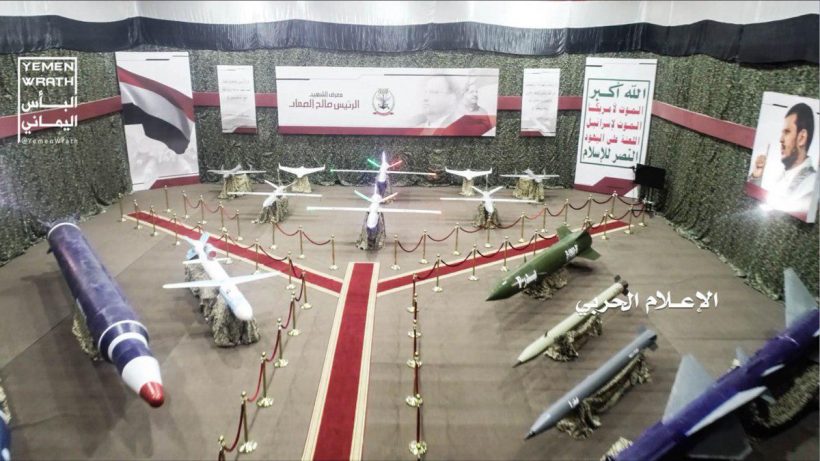
Exhibition of the achievements of the Houthi military industry (with a heavy Iranian accent).
New ballistic and cruise missiles, as well as new reconnaissance drones were presented.
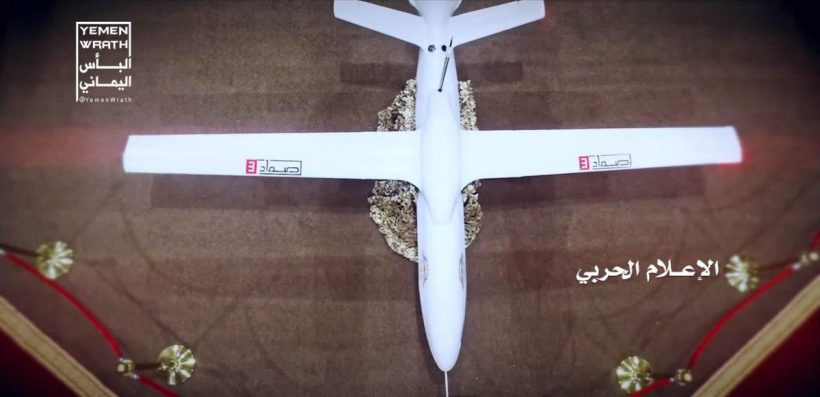
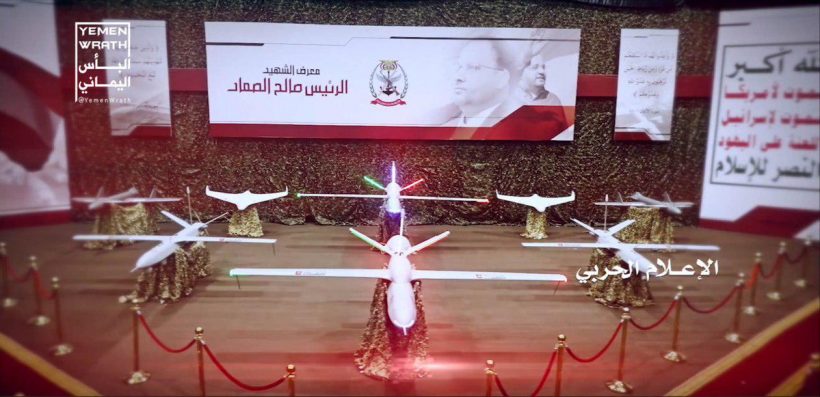
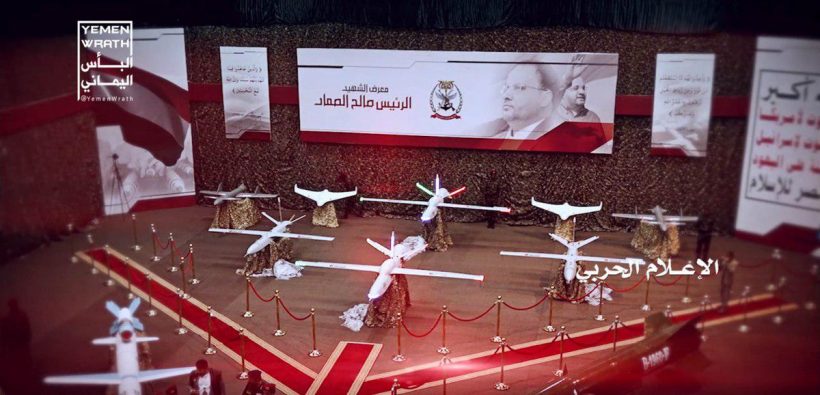
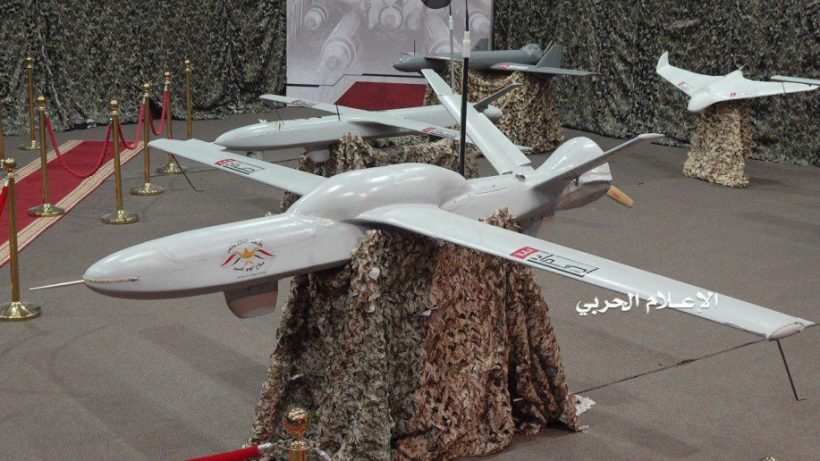
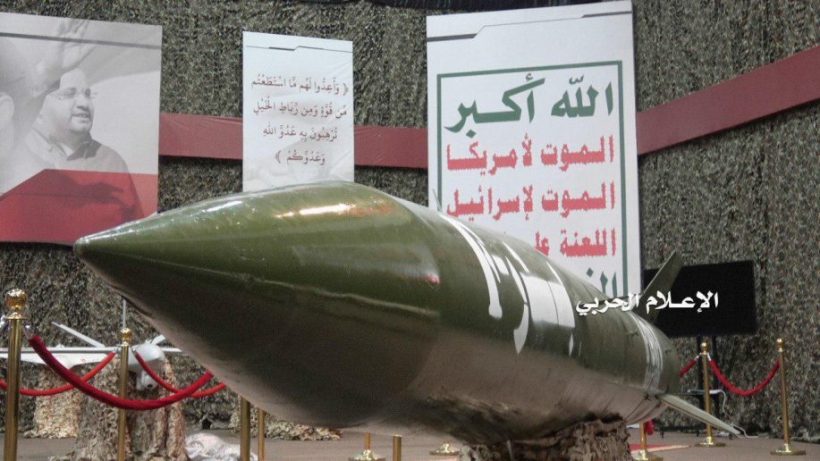
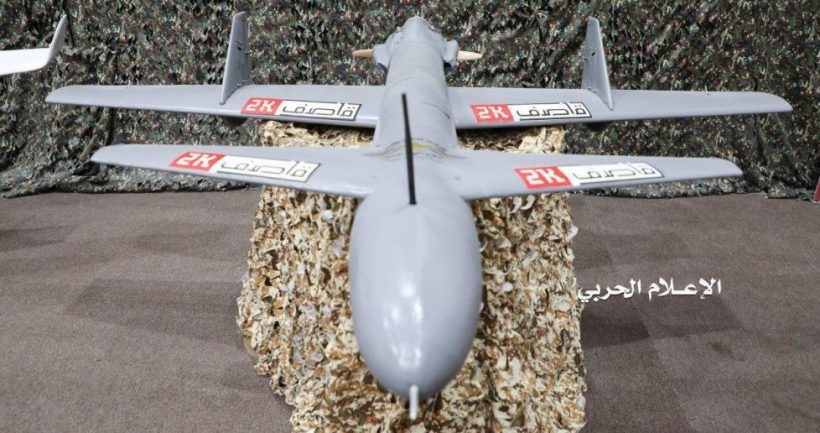
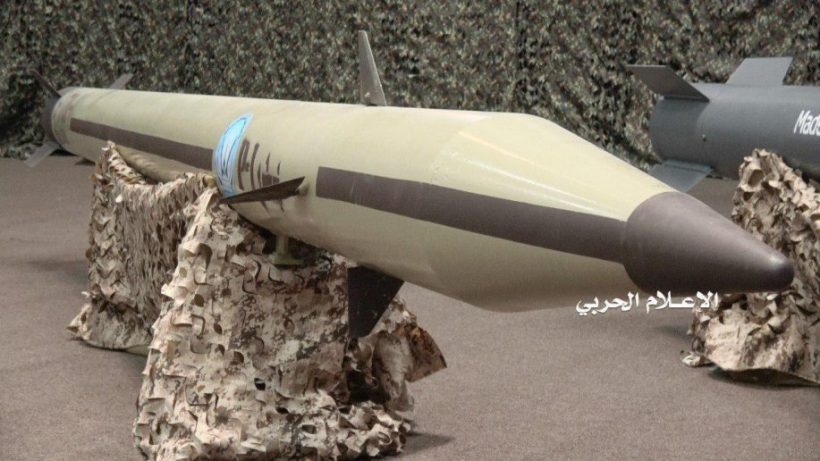
It is expected that these weapons, including new ones, will be used by the Houthis both on the territory of Yemen against the interventionist troops and local collaborators, as well as against infrastructure facilities in Saudi Arabia and the UAE (airports, military bases, ports, oil pipelines).
For Iran, the entire Yemeni war has become an excellent training ground, where in real combat conditions (via the hands of the Houthis) the latest samples of Iranian ballistic missiles, adjustable artillery shells, and reconnaissance and attack drone vehicles are being tested.
It is worth remembering that in the event of the start of a fully-fledged war against Iran, all of this can be used against tankers in the Red Sea in order to block oil exports through Jizan.
Translated by Ollie Richardson and Angelina Siard
Source: https://colonelcassad.livejournal.com/5118206.html
If Iran behind attack, ‘US military worthless’ – Tehran prof
RT America | September 18, 2019
Prof. Mohammed Marandi of the University of Tehran joins Michele Greenstein (in for Rick Sanchez) to discuss Washington’s claim that Iran is behind the recent Saudi oil attack. He said that if Iran is truly behind the attack then it means that the US military presence in the region is “worthless.” He also argues that Iran’s response to a US attack would cause the US to “lose its key client regimes.”
Trump says attacking Iran would be too ‘EASY,’ calls restraint a ‘sign of strength’ as others drum up WAR
RT | September 18, 2019
As American and Saudi Arabian officials blame Iran for attacking Saudi oil refineries, President Donald Trump has remained noncommittal about a US response, calling his prior restraint a “sign of strength.”
Speaking to reporters in Los Angeles on Wednesday, the US president said that he would outline new sanctions on Iran within 48 hours, after announcing them via Twitter earlier in the day. While it would be “very easy” to attack Iran, his reluctance to do so is “a sign of strength,” Trump added.
That statement echoed his reply on Tuesday to Senator Lindsey Graham (R-South Carolina), who called Trump’s cancelation of military strikes on Iran in June a “sign of weakness.”
Graham, the former wingman of the hawkish Senator John McCain, has emerged as one of the loudest proponents of retaliatory strikes in recent days, declaring the oil refinery attack an “act of war,” and calling for an “unequivocal” response. Secretary of State Mike Pompeo also described the attack as an “act of war,” while Vice President Mike Pence said on Tuesday that America is “locked and loaded” to defend her Saudi allies.
Trump, on the other hand, has been more ambivalent. Stopping short of outright pointing the finger at Iran the president said on Monday that it was “certainly looking” like Iran was behind the attack, adding that “we pretty much already know” Tehran is to blame.
Regarding a response, Trump has boasted of the US military’s readiness to strike, but said that he would “certainly like to avoid” war.
While Trump’s response may seem unduly measured, the president had signaled something of a softer attitude towards Iran in the days before the weekend’s attacks. After saying last week that he would have “no problem,” meeting Iranian President Hassan Rouhani, Trump even gave a “we’ll see what happens” when asked if he’d consider lifting sanctions to get Rouhani to the table. The attacks on Saudi oil facilities, however, seem to have put paid to that.
Houthi rebels in Yemen – against whom Saudi Arabia has been waging war since 2015 – claimed responsibility for the strike, and Iran denies all connection with it. However, Saudi officials claimed at a press conference on Wednesday that it was “unquestionably sponsored by Iran,” and presented the wreckage of Iranian missiles and drones as proof.
Yet the Saudis could not pinpoint a launch site, nor prove that the Houthis did not launch the supposed Iranian projectiles of their own accord. Likewise, Hesameddin Ashena, an adviser to Iranian President Hassan Rouhani, asked why the Saudis’ air defenses “failed to thwart the attack.”
Here is How China-US Trade War Impacts Iran
By Salman Rafi Sheikh – New Eastern Outlook – 18.09.2019
In the last week of August, China added crude oil imports from the US to its tariff list for the first time in a retaliatory decision against the US decision to impose fresh tariffs on Chinese products. China imports about 6 per cent of its crude oil from the US. For an economy that increasingly relies on crude oil imports, this decision carries a lot of significance. While China is also preparing to impose high tariffs on import of US cars and the trade-war is likely to continue in the days to come, the all-important question is: why would China impose tariffs on import of oil, the life-line of its economy? According to some latest figures, China’s reliance on imported crude oil has already jumped to 70 per cent and gas moving towards 50 per cent. Most certainly, China would never have taken such a decision unless its leadership had first secured an alternative source of supply of oil. Here is where Iran and cheap/tariff free Iranian oil comes into play and the larger geo-political chessboard becomes active, allowing China to counter the US on three levels.
First, in terms of trade war, Chinese tariffs on oil imports from the US will undermine the US position as the world’s ‘new champion oil producer.’ Second, in terms of regional geo-politics, import of oil from Iran will boost Iran’s economy in the face of US sanctions and help the Iranian economy keep afloat. Needless to say, Iran is a key territorial link for China’s Belt and Road Initiative to expand beyond Asia. Third, if the US and China fail to reach a compromise on trade disputes and their bi-lateral economic and political relations remain cold, China’s continuous reliance on US oil would become a big disadvantage. Therefore, by ridding itself of the US oil, China is preparing for a long-term war with the US, or at least doesn’t see the current dispute resolving any time soon; hence, the move towards diversification through defiance.
Although China has recently decided to increase its domestic production of gas in Sichuan province, increasing from roughly 20 per cent at present to about 33 per cent of the country’s needs, this isn’t going to be enough for a huge economy that China is; hence, China’s increasing investment in Iran’s huge and sanctioned energy sector.
According to reports, China is set to invest about 280 billion dollars in Iran’s oil, gas and petrochemical sectors. This investment will in turn allow China to buy energy products from Iran at discounted prices, certainly a lot cheaper than the US oil. Although there will be a risk of the US sanctioning Chinese companies involved in buying Iranian oil, China is ready to tackle this. Entering the deal with Iran, China announced that it is not intimidated by the `secondary sanctions` the US has threatened to impose on companies and countries which continue to have economic ties with Iran.
China’s decision has massive geo-political ramifications. China can expand the use of Turkmenistan-China gas pipeline to import oil and gas from Iran and can even build new pipelines, allowing it to not only conveniently meet its energy needs but also massively reduce its reliance on a number of US-friendly oil and gas suppliers from the Middle East i.e., UAE and Saudi Arabia.
China, accordingly, is also investing about 120 billion dollars in Iran’s transport and manufacturing infrastructure. Significantly enough, this Chinese-built infrastructure in Iran, which includes high-speed rail on several routes, will provide China with additional avenues for its overland trade through Iran and Turkey to and from Europe and maritime trade through Iranian ports to the Middle East, Africa and beyond. Interestingly enough, one of the ports that China is eyeing is the Indian built port of Chabahar. Due to India’s full compliance with the US directive to bring oil imports from Iran to zero, Iran’s relations with India have gone down massively, allowing China to move in and grab the space.
China’s investment also comes with Chinese troops on the ground in Iran. Sending a clear message to the US, about 5,000 Chinese security personnel will be placed in Iran to protect Chinese projects from possible sabotage attempts by rival countries through their sponsored non-state actors, or even directly. Importantly enough, this security presence in Iran will be as big as the US has in today’s Iraq or what the Pentagon aims to leave in Afghanistan in 2020. Also, it intends to deter any US adventurism (visible in Iraq and Afghanistan), inasmuch as any major US military strike on or action against Iran would risk hitting Chinese army personnel and spiking tensions with a nuclear power that has the ability to hit the US both militarily and economically; hence, the increasing emphasis on materialising a true strategic partnership between Iran and China. A binding force will, of course, be US sanctions on Iran and its trade war with China.
Emphasising the same point, Iran’s foreign minister wrote in an Op-Ed for Global Times and said, “China has become an indispensable economic partner of Iran and the two countries are strategic partners on many fronts…’” and that both China and Iran “ favor multilateralism in global affairs but that has come under attack now more than ever.” Hitting the US directly, Zarif noted, “China and Iran support fair and balanced commercial ties around the world and we both face overseas [US] hostility by populist unilateralist bigotry.”
A deep Chinese presence in Iran and a willingness to defy the US is a big boost to the countries, including Russia, Turkey, Syria, and Pakistan, which are trying to build an ‘Asian order’ around Chinese Belt and Road Initiative and other regional connectivity programs i.e., Eurasian Economic Union and even the SCO. As the saying goes, for a new order to emerge, the old must dismantle. Chinese defiance signifies a major step towards the new order.
Salman Rafi Sheikh is a research-analyst of International Relations and Pakistan’s foreign and domestic affairs.
Yemeni Killer Blow to House of Saud
By Finian Cunningham | Strategic Culture Foundation | September 18, 2019
The Yemeni rebels’ drone blitz on the “nerve center” of Saudi Arabia’s oil industry was a devastating counter-offensive which potentially could end the four-year war in short order. What is even more catastrophic for the Saudi monarchy – especially the ambitious Crown Prince – is that the Houthi rebels have wielded the ultimate power to crash the kingdom’s oil economy.
Crown Prince Mohammed bin Salman (MbS) was the main architect of the disastrous Saudi war on Yemen. His military hard-man display was meant to consolidate his rise to power as heir to the Saudi throne. It was a calculation based on the blood of the Yemeni people. But now the war has gone from a callous game to a far-more dangerous threat to the House of Saud’s seat of power. If the Saudi oil economy is put at severe risk, then the lifeline for the monarchy is liable to be cut.
After last weekend’s spectacular air strike on the main oil processing plant in Saudi Arabia – northeast of the capital Riyadh, some 1,000 kms from Yemen – the Houthi military leadership is warning that more deeply-penetrating aerial attacks are on the way. The Yemeni rebels have demonstrated that nowhere in Saudi Arabia is safe.
Saudi air defenses and their multi-billion-dollar US Patriot anti-missile systems have been rendered useless against an-ever increasing arsenal of more sophisticated unmanned aerial vehicles (UAVs) operated out of Yemen. UN experts reckon that the Houthis’ UAV-X drone has a range of up to 1,500 kms, which means that all of the Saudi oil infrastructure located in the Eastern Province near the Persian Gulf is a viable target.
Last weekend’s air strikes carried out with 10 drones, according to the Houthis, caused Saudi oil output to shut down by nearly half. The main target – the Abqaiq refinery – processes some 70 per cent of all Saudi crude destined for export. It is not clear when the processing plant can be restored to normal function. It may take weeks or even months. But if the Yemeni rebels can inflict that extent of damage in one air raid, it is not hard to foresee how the Saudi oil-dependent economy could conceivably be brought to a crippling standstill.
“The only option for the Saudi government is to stop attacking us,” said a Houthi military spokesman following the drone strikes. The rebels also warned foreign workers in Saudi Arabia associated with the country’s oil industry to vacate.
The Yemenis have a gun to the House of Saud’s head. It must give the rebels great satisfaction to finally have the Saudi monarchy in their cross-hairs after four years of Yemen suffering relentless aerial bombardment and siege by the US-backed Saudi military. The Saudi-led war on its southern neighbor – the poorest country in the Arab region – was always an outrageous aggression under the guise of supporting the return of a corrupt crony who had been ousted by the Yemenis in early 2015. Up to 100,000 people have been killed – most of them from the indiscriminate bombing campaign by Saudi (and Emirati) warplanes supplied and armed by the US, Britain and France. Millions face starvation in what the UN calls the worst humanitarian crisis for many years.
The Saudi rulers, Western governments and media have tried to obscure the genocidal war on Yemen as a “proxy war” involving Iran, as if Tehran is the instigator of subverting Saudi Arabia from the south. Iran backs the Houthis politically, and perhaps also militarily more recently, but any involvement by Tehran is a reaction to the initial Western-backed Saudi aggression against Yemen.
Claims by US and Saudi officials that Iran is responsible for the latest air strikes on Saudi Arabia’s vital oil industry are more of the same obfuscation. Such muddying of the waters is an attempt to distract from the central point that the Houthis are retaliating with the legitimate right of self-defense after years of merciless slaughter inflicted on their people by the Western-backed Saudi coalition.
There’s another urgent reason for why the Saudi rulers and the US are trying to blame Iran for the latest drone attacks on the Saudi oil industry. If admitted that the air raids were carried out primarily by the Houthis – perhaps even with Iranian drone technology – then that admission points to the complete vulnerability of the Saudi oil economy and the very power structure of the monarchic rulers.
A hint of the trepidation being felt in Riyadh are reports that the latest air strikes have rattled stock markets for Saudi petrochemical companies. Worse, it is also reported that the attacks may delay the planned stock market listing of Saudi Aramco, the state-owned oil company. Worse still, the valuation of the company may be slashed due to the perceived risk from further Yemeni air strikes.
The planned Initial Public Offering (IPO) of Aramco – whereby the Saudi state is selling a portion of the company to private investors – has been one of the most talked about events in recent years among international business. The IPO which is due to be launched next year has been called the “biggest-ever” stock market sell-off.
In an extensive interview with Bloomberg in October last year, the Saudi Crown Prince, MbS, boasted that it was the “biggest IPO in human history”. He claimed then that Aramco’s total valuation was worth $2 trillion. If the Saudis sell off a 5 per cent share in the company, they are expecting to raise $100 billion in cash. The Aramco IPO is central to MbS’ ambitious diversification master plan for the entire Saudi economy, known as Vision 2030. The capital raised from the Aramco sell-off is intended to catalyze private sector employment and technological innovation in the oil-dependent kingdom whose budget is unsustainably propping up government-sector jobs and welfare largesse to prevent the young population of Saudis rebelling against the sclerotic House of Saud.
After the Houthis’ devastating air attacks on the Saudi oil heartland – the crown jewels of the kingdom – potential investors are now reportedly looking warily at the future risk of Aramco. Valuation of the company in the aftermath of the Yemeni drone strikes has been slashed by some estimates to $300 billion – that’s down by 85 per cent from the previous aspired-for $2,000 billion. If that downgrade holds or worsens with future Houthi attacks on Saudi oil infrastructure, then the capital raised from an IPO could shrink from the $100 billion projected by the Crown Prince to $15 billion. In short, his Vision 2030 plan is down the pan.
It must be alarming to the young Saudi potentate that US President Donald Trump has begun to play down any retaliation against Iran, saying that he doesn’t want to be drawn into a war.
That means the Saudi monarchs are on their own and at the mercy of the Houthis and what they do next. The downfall of the scheming Crown Prince evokes a Shakespearian drama of treachery.
Saudi Arabia accuses Iran of sponsoring oil-plant attack, says it ‘couldn’t have originated in Yemen’

RT | September 18, 2019
Saudi Arabia has claimed that Iran was the sponsor of attacks on its oil treatment facilities, presenting wreckage of drones and missiles as “definitive proof” of Tehran’s involvement.
Speaking to the press on Wednesday, a spokesman for the Saudi Ministry of Defense displayed what he said was wreckage from the projectiles used in the strikes on petrol plants in Abqaiq and Khurais last weekend.
The type of weapons used proved that the assault “could not have originated in Yemen,” Colonel Turki al-Malki claimed. He said the capabilities of the drones and the cruise missiles have been known to Riyadh from previous attacks.
Accusing Iran of sponsoring the attack, the spokesman called on other countries to “acknowledge Iran’s malign activities in the region.”
“The attack was launched from the north and unquestionably sponsored by Iran.”
He also presented surveillance footage from one of the oil facilities, claiming it depicted a drone in flight, though the UAV was difficult to make out in the video.
It wasn’t clear where precisely the attack originated, al-Malki admitted. He said the government was “working to know exactly the launch point.”
The press conference came just as Secretary of State Mike Pompeo landed in Jeddah, where he is scheduled to meet with Saudi Crown Prince Mohammed bin Salman to discuss the attacks.
Yemen’s Houthi rebels claimed responsibility for the drone and missile strikes on Saturday, which caused a severe disruption in global oil markets and sent prices soaring upward by nearly 20 percent. The damaged refinery in Abqaiq was among the world’s largest oil processing facilities, while the Khurais plant sits on the country’s second largest oil field.
Does missile type prove anything?
The missile used in the attack could be a copy of the Soviet-designed cruise missile Kh-55, which Iran acquired from Ukraine and then developed into its own weapon, a military analyst and retired army officer Viktor Murakhovsky told RT.
However, this does not qualify as definitive proof that Iran launched such an attack, Murakhovsky said. It is “hardly a secret” that Iran sells weapons to the Yemeni Houthi rebels, he explained, adding that Tehran has spoken in support of Yemen’s right of self-defense.
Moreover, it is not difficult for Houthi forces to launch a cruise missile, so their responsibility cannot be ruled out.
“You do not need a narrow-focus specialist in order to use this missile. You need to input the launch mission data and carry out the launch, that’s all,” Murakhovsky said.
Iran issues sober warning to US: Action will be met with counteraction
Press TV – September 18, 2019
Iran has warned the United States via Switzerland that any action taken against the country over the false accusation that Tehran was behind the recent attacks on Saudi Arabian oil facilities will be met with an immediate response.
In an official note passed to the Swiss Embassy in Tehran, which represents American interests, Iran reiterated that it was not behind the Saturday attacks on Saudi Arabian oil facilities.
It condemned and rejected claims by US President Donald Trump and Secretary of State Mike Pompeo that Iran had been involved.
The note was handed to the Swiss Embassy on Monday evening, shortly after the US accused Iran of involvement in the attacks, IRNA reported on Wednesday.
In the note, Iran said that any action taken against the country would be met with immediate counteraction, which would not be limited to the source of the act of aggression.
Last Saturday, Yemeni armed forces conducted a large-scale operation against Saudi Arabia’s Aramco oil installations in response to the Saudi-led war on their country, causing a partial halt in crude and gas production from the world’s top oil exporter.
The Yemeni Houthi Ansarullah movement immediately took credit for the attacks.
Yet, Pompeo swiftly blamed Iran.
A short while later, Trump said the US was “locked and loaded” for a response at the behest of Saudi Arabia, although he later said that he wanted no conflict with any country. Still later, the Pentagon reportedly prepared “response” options for the US president.
Tensions have significantly risen as a result of the accusations, which Iran has denied, and there has been speculation that the US may take military or other forms of action against Iran or Iranian interests.
Iran’s defense minister warns of decisive response
In another development, Iran’s Defense Minister Brigadier General Amir Hatami on Wednesday also dismissed the US accusations about Iran’s involvement in the attacks in Saudi Arabia.
“If a threat is posed to Iran, there will be the same decisiveness with which we responded to the American drone’s minimal incursion [into Iranian skies],” he said, referring to the shooting down of a US drone that had intruded into Iranian airspace on June 20.
Hatami also reiterated Iran’s position that the Yemeni attacks on the Saudi oil facilities were a legitimate act of self-defense.
“It’s pretty clear: there has been a conflict between two countries (Yemen and Saudi Arabia). One party to the conflict is the Yemenis, who have said explicitly that they have done this.”
Riyadh doesn’t yet know who carried oil strikes or why: Saudi energy minister
Press TV – September 17, 2019
Saudi Energy Minister Prince Abdulaziz bin Salman says Riyadh does not yet know who were behind the highly disruptive drone attacks on Saudi Aramco petroleum and gas processing plants at Abqaiq and Khurais in the kingdom’s Eastern Province, which sent crude prices skyrocketing.
“We don’t know who is behind the attack,” he told reporters in the western Red Sea city of Jeddah on Tuesday, adding that Riyadh wants “proof based on professionalism and internationally recognized standards.”
Prince Abdulaziz, who was only appointed to the role earlier this month, went on to say that Saudi Arabia had dipped into its strategic reserves to maintain supply to clients.
He said stricter measures were needed to be taken to prevent further attacks, but did not provide any elaboration.
The Saudi energy minister then alleged that the kingdom would achieve 11 million barrels per day (bpd) capacity by the end of September, and 12 million bpd by the end of November.
“Restoring sustainable production capacity to 11 million bpd by the end of the month is an ambitious target, given the amount of repairs required” at the sites, Alex Schindelar, president of the Energy Intelligence group, told AFP though.
The remarks come as the United States has tried to build its case that Iran was behind the attacks. Iran has denied being behind the assaults, which knocked out half of Saudi Arabia’s oil production.
Yemen’s Houthi Ansarullah movement has claimed responsibility for the attacks, warning Saudi Arabia that their targets “will keep expanding.”
On Tuesday, Ansarullah censured support for the Saudi-led coalition of aggressors in the wake of Yemeni retaliatory drone attacks on Aramco oil facilities in eastern Saudi Arabia, stressing that those who have no reservations at all about the bloodletting in the war-ravaged country must bear the consequences of their actions.
“Peace in the region can be restored only through dialogue and understanding, and away from the clatter of weapons. Yemeni people hope to see security and peace prevail across the Arabian Peninsula. They will never surrender to oppression and others’ domination,” Mohammed Abdul-Salam, spokesman for the movement, said in a string of tweets.
He added, “Those condemning the September 14 operation have indeed denounced themselves as they have exposed their blatant bias in favor of the aggressor. In fact, their condemnation would embolden the criminal regime to continue its criminal acts against our people.”
The senior Houthi official noted that “Saudi oil is not more precious than Yemeni blood,” emphasizing that those who have no respect whatsoever for the Yemeni people’s lives must embrace all consequences of their actions.
Saudi Arabia and a number of its regional allies launched a devastating campaign against Yemen in March 2015, with the goal of bringing the government of former president Abd Rabbuh Mansur Hadi back to power and crushing Ansarullah movement.
The US-based Armed Conflict Location and Event Data Project (ACLED), a nonprofit conflict-research organization, estimates that the war has claimed more than 91,000 lives over the past four and a half years.
The war has also taken a heavy toll on the country’s infrastructure, destroying hospitals, schools, and factories. The UN says over 24 million Yemenis are in dire need of humanitarian aid, including 10 million suffering from extreme levels of hunger.
Trump is in no rush to jump into Saudi defence
By M. K. BHADRAKUMAR | Indian Punchline | September 17, 2019
The geopolitical faultlines of the drone attack on the Saudi Aramco plants on Saturday are surfacing. These are early days but three broad trends have appeared. One, Saudi investigators have begun pointing a finger at Iran, which is certain to exacerbate regional tensions. Two, the all-important US response to the event is unfolding on multiple templates, each interconnected but intrinsic at the same time in relations to US interests. Three, the extreme volatility in the world oil market and its likely impact on the world economy makes this an international issue.
The Saudi Foreign Ministry statement on Monday is notable for its affirmation that the “weapons used in the attack were Iranian weapons. Investigations are still ongoing to determine the source of the attack”; that the primary target of this attack is global energy supplies; that “this attack is in line with the previous attacks against Saudi Aramco pumping stations using Iranian weapons”; that Riyadh “will invite UN and International experts to view the situation on the ground and to participate in the investigations”; and, fifthly, that Saudi Arabia has the “capability and resolve to defend its land and people, and to forcefully respond to these aggressions.”
Riyadh’s lingering dilemma is that it is yet to substantiate Iran’s culpability and is looking for the proverbial needle in the haystack. The keenness to involve the UN in the investigations suggests that Saudis are reasonably confident of a definitive conclusion that helps isolate Iran completely in the world arena.
The Saudi Foreign Ministry statement is based on the initial finding by the investigators that “all operational evidences and indication as well as the weapons used… are Iranian weapons.” Importantly, the Joint Coalition Forces Command in Riyadh has alleged that “the terrorist attack was not launched from Yemeni territory as the Houthi militias claimed, whereas these militias are mere tools to implement the agenda of the Iranian Revolutionary Guards and its terrorist regime.”
It implies that the Saudi authorities have much more materials than they are willing to disclose. There is also a pointed reference to the Iranian Revolutionary Guards Corps.
On Monday, the US Defence Secretary Mark Esper telephoned the Saudi Crown Prince Mohammed bin Salman (MbS). The Saudi press release said Esper “affirmed his country’s full support for the Kingdom” and conveyed that Washington is “currently studying all possible options in addressing the attacks.” Esper commended the Saudi role in the US efforts to “confront the Iranian danger which threatens maritime navigation.” But neither Esper or MbS accused Iran.
It is against the above backdrop that President Trump waded into the topic on Monday at a press conference in the White House. (Trump spoke in the presence of the visiting Crown Prince of Bahrain.) The transcript is here. The main takeaways are as follows:
One, the US is inclined toward an estimation that Iran is responsible for Saturday’s attacks. But the Saudi investigation hasn’t yet come up with definitive evidence. The US does not propose to attack Iran.
Two, Saudi Arabia is a key ally, but the US cannot underwrite Saudi defence. While it can offer protection to Saudi Arabia, Riyadh will have to bankroll the effort. Top US officials will be traveling to Riyadh “at some point” for consultations.
Clearly, the Saudis “are going to have a lot of involvement in this if we [US] decide to do something. They’ll be very much involved, and that includes payment. And they understand that fully.”
Plainly put, “Saudis want very much for us to protect them, but I say, well, we have to work. That was an attack on Saudi Arabia, and that wasn’t an attack on us. But we would certainly help them… we will work something out with them. But they also know that — you know, I’m not looking to get into new conflict, but sometimes you have to.”
Four, Trump has an eye on Tehran, too. A meeting between Trump and Iranian President Hassan Rouhani in New York during the UNGA is not to be expected but the scope for diplomacy has not been “exhausted”. The Iranians want to make a deal “but they’d like to do it on certain terms and conditions, and we won’t do that. But at some point, it will work out, in my opinion.”
Depending on the actual finding by Saudi investigators, the US may toughen its stance toward Iran, but that depends on what Riyadh comes up with. “There’s plenty of time. You know, there’s no rush. We’ll all be here a long time. There’s no rush.”
The stunning thing is, Trump claims he is in no tearing hurry. Significantly, while addressing a group of seminary students in Tehran on Tuesday, Iran’s Supreme Leader Ali Khamenei seemed to acknowledge Trump’s remarks the previous day.
In a relatively conciliatory tone, Khamenei said: “If the US retracts its words, repents and returns to the nuclear accord that it has violated, it can then take part in sessions of other signatories to the deal and hold talks with Iran… Otherwise, no talks at any level will be held between Iranian and American authorities, neither in New York nor elsewhere.”
Equally, Trump admitted that he isn’t unduly perturbed about the cascading oil price.

US government satellite image showed that attacks on the infrastructure at Saudi Aramco’s Abaqaiq oil processing facility on September 14, 2019 were extremely surgical.
Separately, in a tweet Monday, Trump noted: “Because we have done so well with Energy over the last few years (thank you, Mr. President!), we are a net Energy Exporter, & now the Number One Energy Producer in the World. We don’t need Middle Eastern Oil & Gas, & in fact have very few tankers there, but will help our Allies!”
The point is, a high oil price isn’t such a bad thing for the US shale industry. Hydraulic fracturing, or fracking, opened up more natural gas for production in the US, but the technology added costs. Shale oil costs more than conventional oil to extract, ranging from a cost-per-barrel of production from as low as $40 to over $90 a barrel.
Now, Saudi Arabia can produce at under $10 per barrel, while worldwide costs range from $30 to $40 a barrel. The US shale industry becomes a wild card in the Saudi Aramco calculus.
Saudi Oil Attacks: Time to Back Off on the Threats
Saudi Arabia Feels Some Pain
By Philip Giraldi | American Herald Tribune | September 17, 2019
Attacks on two Saudi Arabian oil facilities on Saturday reportedly reduced the production of Aramco, the state oil company, by one half. It was a devastating demonstration of just how vulnerable the Kingdom’s oil economy actually is. Initial reports suggested that the damage had been caused by explosive drones launched by the Houthi rebels in Yemen, who claimed responsibility, but there has been considerable skepticism regarding whether the drones available to the Houthi could actually have carried out the attack.
Inevitably, the United States and the Saudis are blaming Iran, which has often been accused of being the Houthi’s sponsor. U.S. Secretary of State Mike Pompeo quickly claimed there was no evidence that the attacks emanated from Yemen and blamed Tehran, tweeting predictably that “amid all the calls for de-escalation, Iran has now launched an unprecedented attack on the world’s energy supply.”
As is often the case, Pompeo strung together some lies and half-truths. That Iran was the culprit was and still is unproven and the attack was on Saudi Arabia, which has been subjecting the Houthis to brutal bombardment that has produced famine and introduced cholera to Yemen, not on the “world’s energy supply.” Pompeo’s language is intentionally seeking to broaden the conflict by depicting Iran as a rogue nation seeking to do damage to everyone and preparing the audience for a possible counter-strike.
U.S. and Saudi officials have indeed been investigating whether the attacks involved cruise missiles fired from Iraq or Iran and would love to come to that conclusion, whatever the actual facts might be. The Iranians are believed to have a locally developed cruise missile that goes by the name Hoveyzeh, which is very mobile and can be fired from improvised sites. It is capable of flying at low altitudes to evade radar and has a five-hundred pound conventional warhead that would be more than capable of doing the reported damage to the oil facilities, much more so than would be possible using the missiles and drones that the Houthis are known to possess.
President Trump has also added his two cents, tweeting ominously on Sunday that “Saudi Arabia oil supply was attacked. There is reason to believe that we know the culprit, are locked and loaded depending on verification, but are waiting to hear from the Kingdom as to who they believe was the cause of this attack, and under what terms we would proceed!” Trump, who called Crown Prince Mohammed bin Salman to assure him of American support, also overreacted in his usual fashion, authorizing access to the United States’ Strategic Petroleum Reserve. The move has nothing to do with any real shortage of oil, particularly in the U.S., which imports little from the Middle East, and is clearly rather intended to stabilize oil prices during the two or more weeks it will take the Saudis to repair the damage to their facilities.
The attacks have forced Saudi Arabia to suspend production of 5.7 million barrels of oil a day, which is half of its normal output and over 5 percent of the global supply, so there will be considerable impact on global crude prices. The Saudi stock market felt the pain immediately, declining by 3 percent on Sunday with the expectation that crude prices will increase sharply over the next few days.
The damage to the facilities comes at a particularly bad time for the Saudis, perhaps by design by whoever carried out the attacks. Aramco will soon be floating an initial public offering (IPO) that could be one of the world’s largest. Potential foreign investors in particular will inevitably be concerned about the long-term security of the country’s reserves from future attacks by rebels or neighboring states, to include Iran.
Officials in Iran both and Iraq have denied allegations that the attacks had come from their respective territories, but that would be expected in any case. What is certain is that the success of the attack, from whatever source, has changed the calculus for what is taking place in the Middle East. Saudi Arabia has been waging a pitiless war in Yemen, but it now finds itself far more vulnerable than it deemed to be possible. Iran for its part, benefits from the Saudi knowledge that it’s oil production can be hit and hit hard, possibly even put out of business, meaning that Riyadh will now be much more careful in how it proceeds.
The United States and possibly even Israel will also be reading the tea leaves. In a recent interview Brigadier General Amir Ali Hajizadeh, commander of the aerospace unit of the Islamic Revolution Guards Corps (IRGC), said that Iran had been prepared to attack American bases in the Persian Gulf region if the U.S. had attempted to retaliate after Iranian forces recently shot down its intruding spy drone over the Straits of Hormuz. He said: “… if they wanted to attack, we would have attacked U.S. bases with missiles, and we were ready, and we would have targeted the U.S. base in al-Udeid in Qatar or al-Dhafra in the Emirates or their ships in the Gulf of Oman or Arabian Sea, and if they had hit us, we would have hit them back.”
Missile warfare has created a new reality. The presumed use by poorly armed Houthis of relatively cheap and available weapons to defeat multi-billion dollar defenses sends a message not only to the Saudis but also to Washington and Jerusalem, who have similar defensive configurations. The Saudis and Americans will be forced to rethink their options while Israel, for its part, has already clearly recognized that its air defenses would be overwhelmed by the sheer volume of missiles that opponents like Hezbollah would be able to send its way. It has called off several planned major attacks on Lebanon for that reason.
The final question has to be what will Washington and Riyadh do if they come to the conclusion, whether true or false, that Iran carried out the attack. President Donald Trump is, as usual, talking tough and threatening with his favorite “locked and loaded” metaphor, but he is basically unstable and this time he might actually be intending to pull the trigger. If he does, the Iranian response would undoubtedly be both serious and sustained. Many people on both sides would die.
The correct response would be for the Saudis, the U.S. and Israel to realize that more adventurism in the Persian Gulf region could easily spin out of control. Iran or its presumed proxies have sent the message that the consequences of continued provocations could be devastating for all involved. Time to back off on the threats and it is past time for the U.S. to stop knee-jerk support of the reckless actions undertaken by both the Kingdom and Israel.
Featured Video

U.S. General Caine Warns: STRIKING IRAN is a HUGE RISK
or go to
Aletho News Archives – Video-Images
From the Archives
Stealth Bombers and Bunker Busters
Analysis of the so-called 12-Day War, and the triumphantly celebrated Operation Midnight Thunder
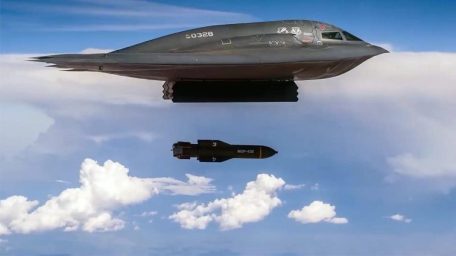
By William Schryver | imetatronink | November 28, 2025
The GBU-57 is a big fat gravity bomb with fins. To achieve effective precision, a B-2 bomber must drop it on its intended target from no further than about five nautical miles — essentially right on top of the target.
Its penetration depth is claimed to be 200 feet. But that capability has NEVER been tested against a seriously hardened deep-underground target encased in layers of high-performance concrete, and topped with a few dozen meters of solid rock. In that sort of real-world scenario, the GBU-57 would be lucky to drill down 50 feet, if that.
It was always ridiculous silly talk to suggest the GBU-57 was the wonder weapon it was made out to be. There is a good reason the US only produced a couple dozen of them and then stopped: they understood its acute limitations in a non-permissive combat environment.
And, notwithstanding the hyperbolic Israeli propaganda, there was never any credible evidence that Iranian medium- and long-range air defenses against fixed-wing aircraft were attrited to any significant degree. And Iranian short-range air defenses were increasingly effective against long-range Israeli drones with each passing day.
As for the B-2: it is a big fat subsonic aircraft. It flies at airliner speeds. A strike on Fordow would entail flying at least 500 miles in and out of Iran. … continue
Blog Roll
 Aletho News
- Drug traffickers trained in Ukraine attack state forces in Mexico
- The tragic reality of Brazilian mercenaries in the Ukrainian conflict
- Zelensky Refused to Discuss Druzhba Pipeline Issue – Fico
- U.S. General Caine Warns: STRIKING IRAN is a HUGE RISK /Glenn Diesen & Lt Col Daniel Davis
- Israel designates five Palestinian media outlets as ‘terrorist organizations’
- Israel, not America, first: Carlson’s Huckabee interview lays bare US foreign policy priorities
- Israeli troops executed Palestinian aid workers at ‘point blank range’: Report
- Iran war What if today’s Iran is resigned to a long, hellish war with the US?
- Why Israel Is Escalating Its War Crimes Against Lebanon
- Iran in the face of the armed diplomacy of imperialism
- If Americans Knew
- The NY Times on the “MAGA” Split Over Israel & USS Liberty
- In Gaza, Ramadan without mosques, imams – Not a ceasefire Day 137
- Footage Shows Israeli Troops Waiting in Ambush, Then Opening Fire on a Palestinian Teen
- The US is on the brink of a major new war that Trump has not even bothered explaining
- Latest Epstein document dump is one more cover-up
- No Protection, No Justice: US Citizens Killed with Impunity by Israel
- Maria Farmer: Epstein Victim Reveals Explosive Information Covered Up by Media
- Average of five Palestinians killed by Israel every day in Gaza since ceasefire – Not a ceasefire Day 136
- Palestinian church leaders admonish Christian Zionist Mike Huckabee – Not a ceasefire Day 135
- Ominous messaging from Trump’s “Board of Peace” – Not a ceasefire Day 134
- No Tricks Zone
- Surprising Discovery: Sahara Is Greening…Billions Of Trees Where Once Thought To Be Barren
- New Research Reaffirms Clouds, Aerosols, And Surface Solar Radiation Are ‘Driving The Climate System’
- Germany: Electric Car Catches Fire At Charging Station, Sets Off Local “Inferno”, Widespread Damage
- New Study: Canada’s New Brunswick Was 1°C Warmer Than Today During The Medieval Warm Period
- Coal Power Back In Trend As Globe Tries To Keep Pace With Growing Demand For Power
- New Study: A 4°C Warmer Beaufort Sea Had ‘No Sea Ice’ 11,700 – 8200 Years Ago
- Unfudging The Data: Dutch Meteorological Institute Reinstates Early 20th Centruy Heat Waves It Had Erased Earlier
- German Gas Crisis…Chancellor Merz Allegedly Bans Gas Debate Ahead of Elections!
- Pollen Reconstructions Show The Last Glacial’s Warming Events Were Global, 10x Greater Than Modern
- Germany’s Natural Gas Storage Level Dwindles To Just 28%… Increasingly Critical
 Aletho News