US commandoes attack Yemen’s Bayda, kill 57: Reports
Press TV – January 29, 2017
US forces have carried out a series of ground and air raids against a village in the Yemeni province of Bayda, killing a total of 57 people, among them civilians.
US paratroopers parachuted in Bayda’s Qifah district and raided the Yakla village there, with some 30 aircraft such as Apache helicopters and drones taking part in the operations.
Saudi media said 16 civilians, among them women and children, lost their lives in the US assault.
Reports said the rest of those killed were militants with the al-Qaeda terror group, including three of its ringleaders.
“The operation began at dawn when a drone bombed the home of Abdulraoof al-Dhahab and then helicopters flew up and unloaded paratroopers at his house and killed everyone inside,” an unnamed local told AFP.
The Lebanese al-Mayadeen television channel reported that a US soldier was also killed during clashes with militants.
Two years ago, US troopers conducted a similar operation in Yemen’s Hadhramaut Province to allegedly save an American reporter who was held captive by al-Qaeda. However, the operation was unsuccessful and left the correspondent dead.
Separately on Sunday, Saudi fighter jets mistakenly bombarded positions held by Riyadh’s own mercenaries in Bayda Province.
Arabic-language al-Masirah television network quoted an informed military source as saying that the Saudi warplanes had also targeted homes in Bayda’s al-Quraishyah and Sharyah neighborhoods.
Similar Saudi air raids were also carried out in the districts Harad and Nasim in Hajjah Province as well as the Sirwah neighborhood of Ma’rib Province.
The Saudi jets further targeted al-Amri district of Ta’izz Province with cluster bombs.
Elsewhere, in Shabwah Province, a large number of Saudi mercenaries were killed and injured in the Yemeni army’s rocket attacks.
Additionally, 50 Saudi mercenaries, among them foreign nationals, were killed and injured in clashes with the Yemeni army forces in the port city of Mokha and Dhubab district, both situated in Ta’izz Province.
Three rocket attacks also hit downtown Zanzibar in Abyan Province.
The Riyadh regime has been incessantly pounding Yemen since March 2015 in a bid to reinstall the country’s ex-government and crush the Houthi Ansarullah movement.
The Houthis and the Yemeni army have been defending Yemen against the Saudi offensive for almost two years.
The military aggression has claimed the lives of over 11,400 Yemenis, including women and children, according to the latest tally by a Yemeni monitoring group.
Trump’s Muslim ban is insulting but sheikhs will adapt
By M K Bhadrakumar | Indian Punchline | January 29, 2017
The US President Donald Trump has hit Pakistan and Saudi Arabia hard where it hurts most – making things difficult for their elites to travel to America or get a Green Card — by subjecting the visa applicants to ‘extreme vetting’.
To societies such as Pakistan (or India for that matter), the ultimate insult that Washington can give is to deny the elites the privilege to visit America. Pakistani elites were willing to eat grass if necessary for making atom bomb, but if restrictions are put on their travel to America, it hurts. The bottom line is seamless freedom to criticize America and alongside unhindered right to visit America. Unsurprisingly, the Pakistani elites are livid with anger. The reaction ranges from embarrassment to indignation. In an editorial comment, the Pakistani newspaper The Nation advised the government that “its attempts to befriend the Trump administration might be altogether pointless.”
But Trump won’t retract. He knows it is an immensely popular move, as the average American thinks that the Muslim is a troublemaker and best kept away at arm’s length.
How do the European countries see Trump’s move? Will they emulate him? The fact of the matter is that anti-Muslim feelings are widespread in the countries of western and central Europe too. However, Europe may dither, because it damages their self-esteem as the ‘civilized world’ if primeval passions mutate as state policies. Besides, western companies make a lot of money in the CGG markets.
How will India look at Trump’s Muslim ban? The government will probably find it expedient to take an evasive stance by keeping mum or choosing to take a stroll on the sidewalk. A ‘senior MEA official’ probably did that by observing,
- India is not really worried at the moment as the religious radicalization has not been a big problem in the country and it has not been a source of refugees. So far no Indians have been arrested abroad for being involved in acts of terror.
Will India’s political parties voice opinions? This is, after all, election time in Uttar Pradesh. Indeed, the hardliners among our elites may (quietly) draw some vicarious satisfaction. One of them has blamed Trump for being not hard enough on Pakistan and Saudi Arabia.
Trump’s detractors in America allege that he made an exception of those Muslim countries where he has business interests. Bloomberg illustrated the point with graphics. Take a look, here. In reality, though, it is a weak argument. With the solitary exception of the UAE, whose sheikhs have had a dismal record of promoting radical Islamist groups as instruments of foreign policies, Trump’s business empire overwhelmingly spans the non-Muslim world – Argentina, Brazil, Bermuda, Canada, China, Ireland, UK and US.
Will this sort of discriminatory attitude of viewing Muslim countries as plague-ridden regions colour Trump’s policies toward the Muslim Middle East? These are early days. Trump is courting Israel, but then, he could be calculating that it pays to keep the Jewish lobby in America (which controls the Congress, media and think tanks) happy. In Secretary of State Rex Tillerson, Trump has a cabinet minister who extensively cultivated Middle eastern elites. But the US has no more reason to covetously eye the Middle East’s oil. The US is not only energy self-sufficient but will likely be a major exporter in a conceivable future. Having said that, petrodollar recycling still continues to be of relevance to US industry and banking system.
Trump could be betting that the sheikhs have no option but to swallow the humiliation. A trace of contempt was probably discernible in his pugnacious remark calling for ‘safe zones’ for Syrian refugees, during a post-election thank-you trip in December:
- We’ll build safe zones in Syria. When I look at what’s going on in Syria, it’s so sad. It’s so sad. And we’ve got to help people. And we have the Gulf States. They have nothing but money. We don’t have money. We owe $20 trillion. I will get the Gulf States to give us lots of money, and we’ll build and help build safe zones in Syria, so people can have a chance. So they can have a chance.
So, in the mother of all ironies, Trump is bullish he’d get King Salman to cough up the money to put up Syrian refugees who have been rendered stateless in a bloody conflict that Saudi Arabia in the first instance promoted. And, furthermore, he now expects that Salman would counsel his princes and princesses to patiently queue up for ‘extreme vetting’ to get American visas. It’s no more possible for them to succumb to the sudden itch to board their private jets and head for America to do shopping or indulge in fun and frolic.
To add insult to injury, Saudi Arabia has been bracketed with Pakistan and Afghanistan. Trump promised: “We’re going to have extreme vetting in all cases. And I mean extreme. And we’re not letting people in if we think there’s even a little chance of some problem… we’re gonna have extreme vetting. It’s going to be very hard to come in. Right now it’s very easy to come in. It’s gonna be very, very hard. I don’t want terror in this country.” By the way, Trump’s Muslim ban is not applicable to any country other than Saudi Arabia within the Gulf Cooperation Council.
The wheel has come full circle since the Faustian deal between FDR and King Abdul Aziz at their fateful meeting in 1945 in Egypt whereby in lieu for secure access to supplies of Saudi oil, US guaranteed the military security of the Wahhabi regime.
German Academics Pen Open Letter Slamming Western Interpretation of Syria Crisis
Sputnik – 28.01.2017
In contrast to the West, which has been intent on destroying Syria and other Middle Eastern countries, Russia and Iran are playing a constructive role in preventing the overthrow of Assad and the formation of a fundamentalist Sunni government in the country, a group of German academics have written in an open letter.
A group of German university professors have penned a joint statement criticizing the mainstream media’s portrayal of the roles of Russia and Iran in regulation of the Syrian conflict, Sputnik Deutschland reported.
Called “a statement on the Syrian war,” the declaration was written by the scientific advisory board of the German branch of Attac, an international organization that campaigns for alternatives to globalization.
“Russia and Iran exhausted all the possibilities for a diplomatic and peaceful solution to the conflict; (although) such an attempt seemed be futile at first, they have for the time being ended military attacks and the war in Aleppo. Therefore, we think the attacks on Russia in the mainstream media are absurd,” they wrote.
The statement, written by 14 German university professors, recalls a 2011 interview with former NATO Secretary-General Wesley Clark, who revealed that just weeks after 9/11, the US had plans to not only invade Iraq, but five countries in the Middle East.
The Pentagon published a memo describing “how we’re going to take out seven countries in five years, starting with Iraq and then Syria, Lebanon, Libya, Somalia, Sudan and then finishing off (with) Iran,” Clark revealed.
With that aim in mind, the US has been preparing the conditions for regime change in Syria since 2005, including a media propaganda campaign against the Assad government.
The US also co-operated with Saudi Arabia, Qatar and Israel in the training and funding of an army of Sunni jihadists who were supposed to overthrow the governments in Damascus and then Tehran, as investigative journalist Seymour Hersh reported in 2007.
The researchers agree with the assessment of Professor Gunter Meyer, director of the Center for Research on the Arab World (CERAW) at the University of Mainz, who told Germany’s Heute news program last month that the US bears the “main responsibility” for the Syrian crisis, and that Russia’s operation in support of the Syrian government has thwarted the US plan to overthrow the Syrian government.
“The West, in particular the USA, has provided the rebel jihadists with weapons and also partially trained them. The equipment, personnel and logistics were mainly handled by Turkey, while the financial support came mainly from Saudi Arabia and Qatar. Saudi Arabia has helped Salafist extremists to establish a radical Islamist government in Syria. Here the conquest of Aleppo in 2012 was an important step for the jihadists,” Meyer said.
“Without the military intervention of Russia in September 2015, not only would Aleppo have been completely conquered by the jihadists, but the Assad regime would also have collapsed long ago. The Assad opponents under the leadership of the US would have achieved their goal of the regime change. However, the strongest military forces would have seized power, and this would be Islamic extremists such as the al-Nusra Front, which is part of the Al-Qaeda network, and the Islamic State (Daesh), which is being combated by the international alliance under US leadership. Putin can say to people like the Israeli politicians who declared that a terrorist regime is better than Assad, that he prevented that.”
The evacuation of Aleppo was completed in December after Turkey and Russia brokered a ceasefire deal between government forces and the rebels who had controlled parts of the city since 2012.
The researchers wrote that the efforts of Moscow and Tehran to reach a diplomatic settlement to the conflict in Syria are in contrast to the “regime change” philosophy of the West, where politicians and the media have failed to acknowledge their crucial involvement.”
A few days after the evacuation of Aleppo was declared to have ended, Russia, Turkey and Iran held a meeting where they offered a guarantee that from now on the Syrian conflict would be resolved through diplomatic channels and negotiations.”
“Here, too, we must realize with bitterness that not one Western politician has taken Vladimir Putin, Hassan Rouhani and Recep Tayyip Erdogan at their word and accepted their guarantee as important and constructive. Western politicians do not seem to be able to react to these kinds of peaceful political signals.”
Unfortunately, some civilians lost their lives in the course of the anti-terror operation in Aleppo. However, the Western media failed to provide any sense of balance to their coverage.
“It must be remembered that 40,000 Iraqi civilians — at least four times as many as in Aleppo — have died since August 2014 at the hands of the US-led coalition alone, of whom 15,000 were in the region of Mosul. Since 1980 the US has attacked, occupied or bombed 14 Muslim countries,” the academics wrote.
“We find it very disturbing that the Western media, including the signatories of the anti-Russian declaration, don’t say anything about the fatal US policy of regime change in the Middle East, let alone criticize it. So-called ‘failed states’ are the obvious result of this policy, which are breeding grounds for the further spread of terrorism and the main reason for persistent flows of refugees. We ask, how blind do you really have to be to overlook a reality that is so difficult to deny?”
Saudi dissident suspiciously dies in jail
Press TV – January 25, 2017
 A political prisoner has died under suspicious circumstances in a Saudi prison after four years of imprisonment without trial.
The suspicious death of opposition activist Mohammad Razi al-Hasawi was reported Wednesday by European human rights envoy for Saudi Arabian affairs, A’adel al-Saeed.
Saudi officials contacted the relatives of the Shia prisoner last week to summon them to the prosecutor’s office and hand over his personal belongings to them.
Hasawi, who had been held at the Dammam prison for four years, was never tried at a court.
Numerous dissidents have been jailed without trial or on vague charges in Saudi Arabia, where the regime has been cracking down on the Shia population in the country’s Eastern Province since 2011.
In recent days, Saudi forces have routinely raided the homes of people in the Awamiyah region of Eastern Province, taking activists into custody. Saudi police forces also recently placed the al-Masoura neighborhood of Awamiyah under siege. According to reports, they also engaged in aimless shooting while raiding the area in an apparent bid to generate fear among the locals.
On Sunday, it was reported that Saudi forces had, for a second consecutive day, gone on a shooting spree in Awamiyah. The forces targeted both residential and commercial centers, inflicting material damage.
The Last Days of Obama: Napoleonic Maneuvers at the Security Council
By Caleb Maupin | New Eastern Outlook | 23.01.2017
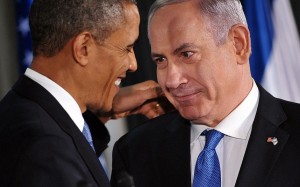 It seemed to come almost out of nowhere. The United States usually protects Israel from critical resolutions at the UN Security Council. However, in a dramatic move, the US abstained and a resolution criticizing recent settlement activity was passed by the 15-member body.
But this was not the end. John Kerry, Obama’s former Secretary of State, gave a lengthy address a few days later. Kerry’s speech was not so different from the statements of previous leaders, both Democrats and Republicans. He defended Israel’s existence, and denounced almost all forces actively opposing Israel.
However, Kerry harshly criticized specific Israeli policies. While Kerry’s speech defending the UN abstention uttered the standard, mildly critical, pro-Israeli talking points, it did contain some words that, taken out of context and spread throughout the internet, could and did indeed make a lot of Israelis and Zionists very angry. The most quoted one was: “If the choice is one state, Israel can either be Jewish or democratic, it cannot be both.”
Kerry was alluding to the fact that if Palestinians are absorbed into Israel in a “one state solution” but Israel remains a “Jewish State” this will not be democratic. According to Kerry, under such circumstances Palestinians would be second class citizens, i.e. non-Jews in a Jewish state.
Immediately, Kerry’s speech was decried by Israelis. Netanyahu fired back, as did the entire pro-Israeli blogosphere. The Republican and Likud Party aligned voices escalated the shrill accusations that Obama was a secret Muslim, a member of the Muslim brotherhood, a terrorist sympathizer, a Neo-Nazi, a Communist, and everything else he has been called for 8 years straight.
Meanwhile, Israel did not stop its settlement activity, and was not really affected at all by the resolution. The billions of dollars in US aid to Israel continued. Obama has left the office on January 20th, and is now replaced by Donald Trump, who claims to be more pro-Israel than Obama. The UN Security Council is not taking any specific action to halt the settlement activities condemned in its resolution.
Nothing really changed, but a lot of dramatic, heated words were exchanged between the USA and its closest Middle Eastern ally. Why did this happen?
Napoleon & Obama: “I Come to Restore Your Rights”
In 1798, the French militarist Napoleon Bonaparte, who seized power in the aftermath of the revolution and eventually became Emperor, set out to conquer Egypt. He issued a proclamation saying:
People of Egypt! You will be told by our enemies that I am come to destroy your religion. Believe them not. Tell them I am come to restore your rights, punish your usurpers, and revive the true worship of Mohammed. Tell them that I venerate, more than do the Mamelukes, God, his prophet, and the Koran.
Among the people of Egypt and Syria, as well as the entire Arab world, there was deep hatred for the British and Ottoman empires, who functioned as Napoleon’s rivals. Napoleon hoped that he could convince Muslims throughout the region to support him, and on this basis that he could defeat their hated colonial enemies, and conquer the region for France.
Napoleon was lying. He was not an adherent of the Islam faith. Some speculate that he may have been a freemason, and became familiar with the Koran and Islam due to their inclusion in Masonic rituals. Regardless, years later, Napoleon explained the proclamation to his fellow French Christians saying:
A change of religion, inexcusable for the sake of private interests, becomes comprehensible when immense political results are involved…. Do you think the Empire of the East and perhaps the subjugation of the whole of Asia was not worth a turban and some loose trouser? The state of feeling in the army was such that it would have undoubtedly lent itself to a joke.
Barack Obama, like Napoleon Bonaparte, is not a Muslim. As offensive and heretical as some evangelical Christians and Catholics may consider the teachings of the United Church of Christ and Reverend Jeremiah Wright, they are not Islamic in any conceivable way. Barack Obama was married in a church. He has been photographed drinking wine and eating hot dogs.
Obama’s middle name is “Hussein.” As a child, while living in Indonesia, he attended an Islamic elementary school. Obama apparently did meet with the Palestinian-American professor Edward Said. With all of this to cite as evidence, the allegation that he was a “secret Muslim” has not vanished.
The endless, semi-hysterical attacks on Obama for having alleged links to Islam certainly had an impact outside of US borders. This impact may not have been accidental. Writing in the Atlantic Monthly in 2007, the self-described conservative Andrew Sullivan considered the colorful background of the future president to be an asset:
What does he offer? First and foremost: his face. Think of it as the most effective potential re-branding of the United States since Reagan. Such a re-branding is not trivial—it’s central to an effective war strategy… The next president has to create a sophisticated and supple blend of soft and hard power to isolate the enemy, to fight where necessary, but also to create an ideological template that works to the West’s advantage over the long haul. There is simply no other candidate with the potential of Obama to do this.
Sullivan’s widely read and cited article said:
If you wanted the crudest but most effective weapon against the demonization of America that fuels Islamist ideology, Obama’s face gets close. It proves them wrong about what America is in ways no words can.
The USA certainly had a lot of credibility to regain as the Bush era came to an end. The unilateral invasion of Iraq had been widely opposed, not just in the Middle East, but even among NATO states. Bush had gone as far as to say “this crusade, this war on terrorism, is going to take a while.” The word “crusade” doesn’t exactly bring up pleasant feelings among Muslims around the world.
Meanwhile, the federal agencies of the United States flew into a very Islamophobic mode after the 9/11 attacks. The leaders of a religious charity known as the “Holy Land Foundation” were imprisoned for nothing other than running soup kitchens for Palestinian children. Mosques across the United States were then and continue to be widely surveilled.
His Middle Name is “Hussein”
Voices like Andrew Sullivan’s hoped that Obama’s background could restore the credibility of the USA in the eyes of Muslims. But this was just the tip of the iceberg. What came about in the first term of the Obama administration? In 2011 the world watched the “Arab Spring.” Across the Middle East, impoverished people rose up against their governments.
Analysts often argue that the Arab Spring was spawned by the global financial crisis and the regional drought. Throughout the Arab world, crops failed, water was scarce, and impoverished people piled into the cities facing dire economic conditions. The uprisings that eventually erupted were predictable. Such conditions are known to spark unrest.
But the world did not see a repeat of the 1979 Iranian Revolution, where the Persians toppled a western puppet dictator under the slogans of “Not Capitalism but Islam” and “War of Poverty Against Wealth.” The western capitalist apparatus was ready. The Arab Spring was immediately redirected to serve their ends. Social media outlets based in western countries, and the global apparatus of pro-American NGOs swung into action.
With a commander-in-chief who most people in the Middle East had a favorable opinion of, the forces of global power were able to ensure that the revolt did not become an uprising against western capitalism. No new anti-imperialist regimes were born. Rather, the opposite happened.
In Egypt, the pro-US regime of Hosni Mubarak fell, but what replaced it? First, Egypt elected Mohamed Morsi, a leader of the CIA-linked Muslim Brotherhood. Morsi was then toppled by a military coup d’etat. Now General Sisi, a top military leader under Mubarak, is in power.
The US backed Saudi regime was allowed to crush the uprisings within its own borders. Ayatollah Nimr Al-Nimr, a Shia cleric who led protests demanding civil liberties and religious freedom in the country was eventually beheaded for his role in the Arab spring. Saudi troops poured into Bahrain to keep the monarchy in power and crush the Shia majority that demanded their rights. In the aftermath of the revolt, Yemen staged a sham election in which Mansour Hadi, a Saudi puppet, was the only candidate on the ballot. Yemen is now torn apart by war, as many Yemenis reject Hadi’s pro-Saudi and Pro-US regime.
The energy and momentum of the Arab Spring, amplified and directed by the western TV networks along with Twitter and Facebook, went toward targeting two anti-imperialist, socialist governments. Gaddafi’s Libya had the highest life expectancy in Africa. Syria’s Bashar Assad presides over a centrally planned economy, supports Palestinian resistance, and is aligned with Iran, Russia and China.
In both Libya and Syria the United States began actively working to transform the Arab Spring into a successful regime change operation. Though the faces promoted on western television were often middle class, secular young people who dreamed of American consumerism while mouthing words about “democracy,” the brute force behind the Syrian and Libyan “revolutions” were religious extremists.
Based from the Syrian and Libyan countryside, forces linked to Al-Qaeda and the Muslim Brotherhood were joined by many foreign Jihadist fighters from throughout the region. The forces who toppled the Libyan government and continue to fight against the Syrian Arab Republic are dominated by those who adhere to Wahabbism, the ideology of Saudi Arabia and Osama Bin Laden. These deeply religious forces, working to topple anti-imperialist governments, happily took guns and funding from a country led by a man who went to a Muslim school, met with Edward Said, and whose middle name happened to be “Hussein.”
Imagine what could have happened in the region, if the wave of uprisings had taken place while George Bush “the crusader” was still in office. Obama’s presidency played a decisive role in manipulating and redirecting the events of 2011.
Netanyahu vs. Obama: A Made For TV Drama
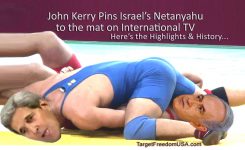 It is not uncommon for celebrities to clash with each other in the public arena. Often, these fights are not spontaneous, but intentionally provoked, or even planned, in order to generate publicity for both parties involved. For example, long before running for President, Donald Trump captured the attention of news headlines by having a spat with TV personality Rosie O’Donnell.
The perceived tension between Benjamin Netanyahu and Barack Obama has the looks of a “made for TV drama.” It is a prolonged public spat that is mutually beneficial to both parties. Do they actually dislike each other when the cameras are not rolling? Who knows.
While Obama and Netanyahu have butted heads, the US aid to Israel has not decreased or been cut off. Under Obama, the United States has worked to topple the Baathist Syrian government, one of Israel’s primary regional opponents. Israel has supported the regime change efforts with airstrikes in Syria targeting the anti-ISIS fighters of the Hezbollah organization.
The 2011 NATO intervention in Libya, championed loudly from the White House, toppled the Islamic Socialist government that had a long record of opposing Israel and arming Palestinian resistance.
Obama boasts that he has ended Iran’s peaceful nuclear energy program, and is making Israel safer from a supposed Iranian threat in the process. While there is occasionally criticism of Israel’s settlement activities, they continue unabated.
However, Obama’s clash with Netanyahu plays well for him, and the United States, in the Arab world. Throughout the Middle East, Netanyahu and Tel-Aviv are the most hated villains. Obama’s trading of nasty words with Israeli leaders raises the credibility of the United States. It gives the United States a kind of distance from Israel on the international stage, while US support remains key and keeps flowing in without pause. Obama’s Department of Justice has even conducted raids against pro-Palestinian activists.
Netanyahu benefits from the spat as well. Fear and hatred of Palestinians, Muslims, and Arabs has been key in securing the recent electoral victories of the Likud Party. If Netanyahu looked like he was friendly toward someone who attended an Islamic elementary school, or had the middle name “Hussein” this would discredit him in the eyes of his base.
Despite the fact that Israel receives billions of dollars from the United States, as well as weapons and other assistance, Netanyahu looks as if he is not afraid to bite the hand that feeds him. Fighting with Obama allows Netanyahu to look like a brave, fearless, true believer in the Zionist cause.
“Don’t Forget About Obama!”
Though many Israelis and supporters of Israel in the United States dislike Donald Trump, he has presented himself during the campaign as a pro-Israeli hardliner. His speech to the American Israeli Public Affairs Committee was a repetition of standard pro-Israeli talking points, saying:
“When you live in a society where the firefighters are the heroes, little kids want to be firefighters… In Palestinian society, the heroes are those who murder Jews.”
Trumps statements about banning Muslim immigration haven’t exactly been popular in the Arab world. Statements like “Islam hates us” don’t go over so well either.
The fear among certain forces in the United States is that Trump could alienate the many Muslim allies of the United States in the Arab world. Wall Street oil companies make lots of money from the various autocratic regimes in Qatar, Kuwait, Saudi Arab, UAE, and elsewhere. Pentagon weapons manufacturers also make lots of money from selling their hardware to these regimes.
Like Napoleon’s strategy in Egypt, efforts to portray Obama as sympathizer with Muslims and Arabs haven’t exactly worked out so well. While the elites within the US aligned Gulf States and some of extremists forces who have poured into Syria have bought into the idea Obama is a trustworthy ally, many people in the region have not. The Syrian government has not fallen. Iran has not really been weakened.
The economic problems and other factors that fueled the discontent of 2011 have not vanished. There is no guarantee that the oil bankers of the United States will keep their grip over this vastly important territory. Certain sectors harbor real fear that Trump’s brash tone could now ruin everything. [emphasis added]
The last minute moves at the UN Security Council, publicly invoking Israel’s wrath, was a message to the Arab world. It was a desperate, final attempt to say: “Whatever Trump does, don’t forget about Obama! Not all Americans are hardline supporters of Israel! Not everyone in Washington hates the Arabs! Muslims of the world, keep trusting us, don’t turn against America!”
Caleb Maupin is a political analyst and activist based in New York. He studied political science at Baldwin-Wallace College.
US drone strikes in Yemen, absolutely atrocious: Analyst
Press TV – January 22, 2017
Separate US drone attacks have killed four people in the southwestern Yemeni province of Bayda. The United States carries out drone attacks in Yemen and several other countries, claiming to be targeting al-Qaeda elements, but, local sources say civilians have been the main victims of the attacks. The drone strikes in Yemen continue alongside the Saudi military aggression against the impoverished conflict-ridden country.
A radio host and political commentator says US drone strikes are “absolutely atrocious,” adding that Washington is directly involved in Yemen’s war when it is “actively dropping bombs” on the war-torn country.
“I do not think a lot of the people in the United States even realize that United States is actually bombing Yemen. They think that the United States is simply supplying arms to Saudi Arabia, but the fact is United States is actually in there bombing people themselves with these drone strikes,” Max Igan told Press TV in an interview on Sunday.
He noted that it is “pretty outrageous” and “terrible” that the drone strikes are going on at the time of US presidential transition.
The commentator further argued that if US President Donald Trump wants to deescalate the war on terror and try to bring about stability and peace to the Middle East, he should stop the drone strikes.
Elsewhere in his remarks, Igan criticized the Western media for not reporting anything about the war and the dire humanitarian situation in Yemen.
“It is one of the most unreported wars that we have seen in modern history. Nobody really realizes what is going on there, we do not hear anything about it on the media … we are not hearing about this war and it is an ongoing human rights catastrophe. There are so many people suffering in Yemen, it is almost impossible to get aid to these people and the arms just keep getting poured in there and the bombs just keep getting dropped and the media is not reporting anything about it,” he said.
He concluded by saying that there needs to be some sort of an organization in the world that can do something to stop this ongoing onslaught of the Yemeni people.
Trump has Opportunity to End Obama/Clinton Weapons Sales to Anti-Woman Tyrants
I attended the women’s rights rally in Portland, Oregon, today to support women worldwide and urge Trump to end Obama and Hillary Clinton’s record weapons deals with the most repressive state for women in the world, the totalitarian dictatorship of Saudi Arabia.
In 2010, the Clinton state department organized the biggest weapons sale in US history. The sale was to strongman Abdullah Abdullaziz, who had women executed as punishment for being raped. The Kerry state department followed the deal with a sale of almost a billion dollars worth of illegal cluster bombs to the dictator. Obama approved both deals.
Bloomberg reports Clinton’s weapons sales to woman-oppressing dictators increased dramatically after the tyrants ‘donated’ to what Harper’s magazine calls the Clintons’ ‘slush fund’, the Clinton Foundation.
An unfortunate aspect of much of the current anti-Trump upheaval around the country is that similar actions were not undertaken when policies Democrats would or will oppose if Trump carries them out were not opposed by Democrats when Obama and Hillary Clinton performed them.
However, this is largely because the general public is kept ignorant of most of these policies. Such actions, Dr. Chalmers Johnson has noted, are “kept secret” from the US-American public.
Respected analysts this week highlighted the disparity between Obama’s treatment in the neoliberal press and his actual record.
John Pilger quotes a typically sycophantic example of a description of Obama, this one from The Guardian:
“But the grace. The all-encompassing grace: in manner and form, in argument and intellect, with humour and cool … [He] is a blazing tribute to what has been, and what can be again … He seems ready to keep fighting, and remains a formidable champion to have on our side … The grace … the almost surreal levels of grace …”
Nicolas J S Davies outlines the reality: Obama, whose political career has been sponsored by, among many other similar elements, lethal weapons manufacturer General Dynamics, “has increased U.S. military spending beyond the post-World War II record set by President George W. Bush. Now that Obama has signed the military budget for FY2017, the final record is that Obama has spent an average of $653.6 billion per year, outstripping Bush by an average of $18.7 billion per year (in 2016 dollars).
In historical terms, after adjusting for inflation, Obama’s military spending has been 56 percent higher than Clinton’s, 16 percent higher than Reagan’s, and 42 percent more than the U.S. Cold War average…”
Under Obama, “… the U.S. and its allies dropped 20,000 bombs and missiles in his first term. In his second term, they have dropped four times that number, bringing the total for Obama’s presidency to over 100,000 bombs and missiles striking seven countries, surpassing the 70,000 unleashed on five countries by George W. Bush.”
Pilger notes Obama ordered an average of 72 explosive devices to be planted and detonated every day in 2016.
Davies continues that Obama has used the US’s Central American model of favoring proxy-armies and death-squads over sending in US troops, and has thus provided arms and ignited and fueled conflicts that have killed hundreds of thousands around the world.
But the strategy has also included “a massive expansion of U.S. special operations forces, now deployed to 138 different countries, compared with only 60 when Obama took office.”
Pilger notes this “amounted to a full-scale invasion of Africa.”
Highlighting what these US operations and hegemonic expansion mysteriously achieve, Oxfam this week released a report noting that about 8 people now control as much wealth as half the world’s population. This is down from 16 people within the past year or so, and around 70 people before that.
Within the US, while thousands of the poorest people in places like Detroit had their water turned off in violation of the universal declaration of human rights, Obama allocated a trillion dollars to the nuclear arsenal, in violation of legal obligations and agreements.
And while he has refused to prosecute torturers and war criminals from the Bush Jr. regime (let alone his own), he has waged a campaign of persecution against those who have exposed torture and war crimes.
Amnesty International and other groups note a highlight of Obama’s presidency was his recent commutation of the sentence of US political prisoner Chelsea Manning, who released documents exposing some US war crimes. But the commutation came after an offer from another, higher-value whistle-blower and political prisoner, Julian Assange, to accept extradition to the US in exchange for clemency for Manning.
Others note Obama has deported millions of people and increased military aid to human rights violators like Israel and Saudi Arabia more than any other president.
While at least some Democrats would express opposition to these actions if they were performed by Trump, this cannot necessarily be called hypocrisy, since the US and Western propaganda model (corporations dumping billions into favored media outlets to overwhelm the market) prevents the vast majority of them from knowing Obama undertook the actions himself.
This is not new. Similar demonstrations expressing disgust were carried out by Democrats and others during the inauguration of Bush Jr., but not in opposition to policies carried out by Clinton such as his genocide in Iraq that killed some 500,000 children, his support for terrorist Paul Kagame in Rwanda, which has contributed to the deaths of millions, or Clinton’s aggression against Yugoslavia.
Continuing to illustrate how these and other crimes are “kept secret” from or distorted for the US and Western public, Reuters this week said the US/NATO aggression against Yugoslavia was carried out in response to Serbia “killing about 10,000 ethnic Albanian civilians there.”
But Noam Chomsky and other US/Western propaganda analysts note that according to the West’s own monitors, including the British Parliamentary inquiry into the matter, this is a reversal of the chronology.
In the year before the US/NATO attack, about 2,000 people were killed due the conflict in Yugoslavia, with more killings attributed to the KLA – the terrorist-integrated guerilla force backed by the US and Western countries – than to the Serbs. Before the US/NATO attack, the killings had mostly subsided, but the KLA continued to carry out provocations to, as it stated, try to instigate NATO intervention on its behalf.
Wesley Clarke, the NATO commander at the time, said bombing Yugoslavia would cause more deaths and atrocities than would occur without Western bombing. Others agreed, but, with Hillary Clinton’s urging, Bill Clinton began bombing the country, leading to the “about” 10,000 deaths Reuters this week says the bombing was a response to.
The Reuters article also mysteriously fails to mention that if the US had intervened to prevent atrocities, it would not have been supporting what Dr. Michael Parenti, in a book on the topic written under the supervision of Balkan experts, notes were worse atrocities carried out by Turkey (against the Kurds) and other regimes around the world.
Through countless similar distortions and omissions, the US/Western propaganda model thus continues to keep Democrats uninformed and thus complacent or supportive of politicians who carry out actions Democrats sometimes vehemently oppose when the same actions are planned or carried out by Republicans.
Comparable dynamics are also true in reverse.
Robert J. Barsocchini is an independent researcher and reporter whose interest in propaganda and global force dynamics arose from working as a cross-cultural intermediary for large corporations in the film and Television industry. His work has been cited, published, or followed by numerous professors, economists, lawyers, military and intelligence veterans, and journalists. Updates on Twitter.
France’s Self-Inflicted Refugee Crisis
By Ulson Gunnar – New Eastern Outlook – 22.01.2017
Following rhetoric regarding Europe’s refugee crisis, one might assume the refugees, through no fault of Europe’s governments, suddenly began appearing by the thousands at Europe’s borders. However, this simply is not true.
Before the 2011 wave of US-European engineered uprisings across the Middle East and North Africa (MENA) transformed into Western military interventions, geopolitical analysts warned that overthrowing the governments in nations like Libya and Syria, and Western interventions in nations like Mali and the Ivory Coast, would lead to predicable regional chaos that would manifest itself in both expanding terrorism across the European and MENA region, as well as a flood of refugees from destabilized, war-racked nations.
Libya in particular, was singled out as a nation, if destabilized, that would transform into a springboard for refugees not only fleeing chaos in Libya itself, but fleeing a variety of socioeconomic and military threats across the continent. Libya has served for decades as a safe haven for African refugees due to its relative stability and economic prosperity as well as the Libyan government’s policy of accepting and integrating African refugees within the Libyan population.
Because of NATO’s 2011 military intervention and the disintegration of Libya as a functioning nation state, refugees who would have otherwise settled in Libya are now left with no choice but to continue onward to Europe.
For France in particular, its politics have gravitated around what is essentially a false debate between those welcoming refugees and those opposed to their presence.
Absent from this false debate is any talk of French culpability for its military operations abroad which, along with the actions of the US and other NATO members, directly resulted in the current European refugee crisis.
France claims that its presence across Africa aims at fighting Al Qaeda. According to RAND Corporation commentary titled, “Mali’s Persistent Jihadist Problem,” it’s reported that:
Four years ago, French forces intervened in Mali, successfully averting an al Qaeda-backed thrust toward the capital of Bamako. The French operation went a long way toward reducing the threat that multiple jihadist groups posed to this West Africa nation. The situation in Mali today remains tenuous, however, and the last 18 months have seen a gradual erosion of France’s impressive, initial gains.
And of course, a French military presence in Mali will do nothing to stem Al Qaeda’s activities if the source of Al Qaeda’s weapons and financial support is not addressed. In order to do this, France and its American and European allies would need to isolate and impose serious sanctions on Saudi Arabia and Qatar, two nations which exist as the premier state sponsors of not only Al Qaeda, but a myriad of terrorist organizations sowing chaos worldwide.
Paradoxically, instead of seeking such sanctions, the French government instead sells the Saudi and Qatari governments billions of dollars worth of weaponry, proudly filling in any temporary gaps in the flow of weapons from the West as each nation attempts to posture as “concerned” about Saudi and Qatari human rights abuses and war crimes (and perhaps even state sponsorship of terrorism) only to gradually return to pre-sanction levels after public attention wanes.
The National Interest in an article titled, “France: Saudi Arabia’s New Arms Dealer,” would note:
France has waged a robust diplomatic engagement with Saudi Arabia for years. In June, Saudi Deputy Crown Prince Mohammed bin Salman visited France to sign deals worth $12 billion, which included $500 million for 23 Airbus H145 helicopters. Saudi and French officials also agreed to pursue feasibility studies to build two nuclear reactors in the kingdom. The remaining money will involve direct investment negotiated between Saudi and French officials.
The article would also note that Saudi Arabia’s junior partner in the state sponsorship of global terror, Qatar, would also benefit from French weapon deals:
Hollande’s address was delivered one day after he was in Doha, where he signed a $7 billion deal that included the sale of 24 French Rafale fighter jets to Qatar, along with the training of Qatari intelligence officers.
In order to truly fight terrorism, a nation must deal with it at its very source. Since France is not only ignoring the source of Al Qaeda’s military, financial and political strength, but is regularly bolstering it with billions in weapons deals, it is safe to say that whatever reason France is involved across MENA, it is not to “defeat” Al Qaeda.
The refugee crisis that has resulted from the chaos that both Western forces and terrorists funded and armed by the West’s closest regional allies, Saudi Arabia and Qatar, is a crisis that is entirely self-inflicted. The rhetoric surrounding the crisis, on both sides, ignoring this fundamental reality, exposes the manufactured and manipulative nature of French government and opposition agendas.
The chaos across MENA is so significant, and terrorism so deeply rooted in both Western and their Arab allies’ geopolitical equations that even a complete reversal of this destructive policy will leave years if not decades of social unrest in the wake of the current refugee crisis.
But for anyone genuinely committed to solving this ongoing crisis, they must start with the US, European, and Gulf monarchies’ culpability, and resist blaming the refugees or those manipulated into reacting negatively to them. While abuses carried out by refugees or locals are equally intolerable, those responsible for the conflicts and for manipulating both sides of this crisis are equally to blame.
Until that blame is properly and proportionately placed, and the root of the crisis addressed, it will only linger and cause further damage to regional and global security.
Trump brings optimism to Syrian peace talks
By M K Bhadrakumar | Indian Punchline | January 20, 2017
On Thursday, Moscow slipped in the formal invitation to Washington to attend the intra-Syria talks in Astana on coming Monday (January 23). It waited till the last ‘working day’ of the Barack Obama administration. A snub to the outgoing administration? But it could as well have been a pre-emptive measure to guard against any last-minute temper tantrum by the outgoing US administration.
No doubt, it is a thoughtful Russian move to engage the incoming Donald Trump administration on its very first day in the White House. Trump will now take the call. The Russian Foreign Minister Sergey Lavrov said:
- We hope the new US administration will accept this invitation and will be represented at this meeting at any expert level it considers appropriate. This could be the first official contact during which we will be able to discuss a more effective way to fight terrorism in Syria… Russia and the United States created and are co-chairing the International Syria Support Group… It has two task forces – a Humanitarian Task Force and a Ceasefire Task Force. There is a good chance we can invigorate these mechanisms.
Lavrov’s optimism must be based on considered assessment regarding Trump’s disposition to work with President Vladimir Putin in the fight against terrorism in Syria and elsewhere.
A novel feature of the Astana talks is that the field commanders of the Syrian opposition groups have been brought to the forefront as the Syrian government’s interlocutors. Previously, politicians living in exile who were proxies of Saudi Arabia and Qatar used to represent these groups. They were vulnerable to outside manipulation. Evidently, Turkish and Russian intelligence acted together, pooling resources, to wean the field commanders away from the orbit of Saudi and Qatari influence and entice them to agree to a ceasefire and get them to jettison their previous aversion to dealing with the Syrian government.
Of course, the field commanders too have little room to maneuver after the capture of Aleppo by the government forces. Besides, Trump’s win effectively shuts the door on any future US support for these rebel groups. There is bitterness among the residual rebel groups who remain within the Saudi orbit, but losers cannot be choosers. A commentary by Fox News brings this out.
In the final analysis, Moscow has shown almost seamless patience to get as many rebel groups as possible on board – with the exception of Islamic State and al-Qaeda affiliate Nusra Front. No ‘pre-conditions’ have been set except that the participants in the Astana talks must agree on ceasefire. What we see here is a total marginalization of regional states who played a negative role aimed at fragmenting Syria – principally, Saudi Arabia, Qatar and Israel.
Moscow would feel gratified that Turkey is using its clout with the rebel groups to persuade them to attend the Astana talks. In a dramatic turnaround, Russian jets are now providing air support for the Turkish ground operations in northern Syria, testifying to the phenomenal shift in the regional alignments over Syria. (Associated Press )
The bottom line is that the departure of the Obama administration has dramatically improved the prospects for a Syrian peace process taking off, finally. Moscow is pinning hopes that there will be a sea change in the US policies in Syria w.e.f January 20. Again, to quote Lavrov:
- When he (Trump) says that his key foreign policy priority will be the fight against terrorism, we are happy to welcome this intention. This is exactly what our American partners lacked before him. On paper, they (Obama administration) seemed to be cooperating with us…, but in fact, they were deceiving us… According to a recent leak about John Kerry’s meeting with Syrian opposition forces several years ago, the United States regarded ISIS as a suitable force for weakening Bashar al-Assad… What Donald Trump and his team are saying now shows that they have a different approach and will not apply double standards in the fight against terrorism in order to achieve unrelated goals.
The talks in Astana are expected to be substantial. Russia and Turkey hope to involve the field commanders in the drafting of a new constitution, holding of a referendum and fresh elections. Equally, a consolidation of the country-wide ceasefire can be expected as a tangible outcome of the Astana talks. (TASS )
Syria Rejects Qatar, Saudi Chairs in Astana Talks: No Place for Terrorism Sponsors
Al-Manar – January 18, 2017
Syrian deputy Foreign Ministry rejected on Wednesday the participation of Saudi Arabia and Qatar in the Astana peace talks on Syria next week, stressing that negotiations should not include every party that supports, arms and funds terrorism.
“Once Qatar and Saudi Arabia halt their support to terrorism, then we can discuss their participation in the talks,” he said.
Speaking to Al-Mayadeen TV, Moqdad said that Washington should prove its sincerity to deal with solutions for the Syrian crisis, prevent the support of armed terrorist groups, and exert pressure on Turkey to close its border with Syria.
On the participation of the United States in Astana negotiations, the Syrian official said “anyone who wants to work in good will to resolve the crisis in Syria can take part,” calling to “punish those who finance and arm terrorism, including Saudi Arabia and Qatar.”
‘US ending sanctions on Sudan as reward for shifting to West’
Press TV – January 14, 2017
The American government is ending some economic sanctions against Sudan as a reward for Khartoum’s closer ties with the West and Saudi Arabia, an African American journalist in Detroit says.
“The Sudanese government has shifted its foreign policy more towards Saudi Arabia,” said Abayomi Azikiwe, editor at the Pan-African News Wire.
“This is reflected in their participation in the war against Yemen… also they’ve broken diplomatic relations with the Islamic Republic of Iran,” Azikiwe said in a phone interview with Press TV on Friday.
“So I think this is a reward for Sudan in regard to moving closer to the West,” he added.
Obama signed an executive order on Friday to ease but not eliminate some trade and investment sanctions against Khartoum, arguing that the East African country has shown “a marked reduction in offensive military activity, culminating in a pledge to maintain a cessation of hostilities in conflict areas.”
The outgoing president expressed determination that the situation which led the US to impose and continue the 20-year-old sanctions had changed in light of Sudan’s “positive actions” over the last six months.
Sudan has been under US sanctions since 1997. Washington accuses Khartoum of supporting terrorist groups, and it has blacklisted the country as a state sponsor of terrorism since 1993.
The US has accused Sudanese President Omar al-Bashir of war crimes related to the conflict-torn Darfur region.
Violence broke out in Darfur in 2003 when ethnic minority rebels rose against the long-time ruler, accusing Bashir’s Arab-dominated government of marginalizing the region.
Featured Video
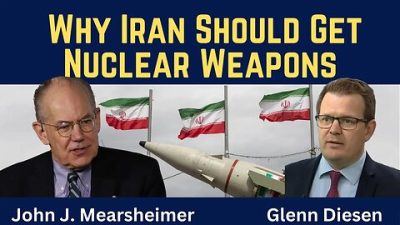
John Mearsheimer: The Case for a Nuclear Iran
or go to
Aletho News Archives – Video-Images
From the Archives
Ethnic Cleansing in a Zionist Fairyland
By Vacy Vlazna | Palestine Chronicle | February 10, 2012
‘De-Arabizing the history of Palestine is another crucial element of the ethnic cleansing. 1500 years of Arab and Muslim rule and culture in Palestine are trivialized, evidence of its existence is being destroyed and all this is done to make the absurd connection between the ancient Hebrew civilization and today’s Israel. The most glaring example of this today is in Silwan, (Wadi Hilwe) a town adjacent to the Old City of Jerusalem with some 50,000 residents. Israel is expelling families from Silwan and destroying their homes because it claims that king David built a city there some 3000 years ago. Thousands of families will be made homeless so that Israel can build a park to commemorate a king that may or may not have lived 3000 years ago. Not a shred of historical evidence exists that can prove King David ever lived yet Palestinian men, women, children and the elderly along with their schools and mosques, churches and ancient cemeteries and any evidence of their existence must be destroyed and then denied so that Zionist claims to exclusive rights to the land may be substantiated.’ — Miko Peled, Israeli dissident.
Indeed, archaeology has become a state apparatus for the ethnic cleansing of Palestinians in the Zionist fairyland aka the City of David Archaeological Park located in the Palestinian village of Silwan in East Jerusalem.
East Jerusalem is the proclaimed capital of the proposed Palestine state. It was illegally annexed by Israel in the 1967 war. Prohibiting annexation of territories gained by military conquest is one of the major principles of international law. The international community does not recognise Israel’s annexation of East Jerusalem nevertheless over 50,000 illegal premises have been built for 250,000 illegal Israeli colonists.
The goal of the archaeological judaisation of Jerusalem is to transform Jerusalem into the City of David, the capital of Greater Israel by eradicating the mixed ethnic composition of the Palestinian and Jewish population of East Jerusalem to a solely Jewish identity and unifying East and West Jerusalem under Israeli sovereignty. … continue
Blog Roll
 Aletho News
- Female Iranian academic sentenced to 4 years in prison in France over protesting Israel’s genocide in Gaza
- US university cancels Palestine conference citing sanctions concerns
- Senate Majority Leader: Any War with Iran Should Result in Regime Change
- Iraqi Resistance warns of action if US forces remain
- China, Russia slam US threat, force against Iran ahead of talks
- US fears Iran war will ‘deplete’ air defenses stretched thin by Ukraine, Israel: Report
- Top AIs deploy nukes in 95% of war game simulations – study
- Could Hungary’s fight over oil change course of Ukraine War?
- North Korea Open to Rapprochement If US Respects Its Nuclear Status – Kim Jong-un
- John Mearsheimer: The Case for a Nuclear Iran
- If Americans Knew
- Israel responsible for 2/3 of press killings worldwide – Not a ceasefire Day 139
- Are the Jews indigenous to Palestine?
- AIPAC Wants to Kill a Bill that would Ensure Israel Complies with Ceasefire
- Former Israeli PM, in Epstein Files, Dreamed of Israeli Eugenics and Pretty Converts
- Israeli settlers join ‘safari’ tour of Palestinian prisoners
- Flooding in Gaza amid rumors of war; fire in West Bank – Not a ceasefire Day 138
- Fourteen Countries Condemn Huckabee’s Support for Israel Taking Over Most of the Middle East
- Israeli Soldiers Killed Gaza Aid Workers at Point Blank Range in 2025 Massacre: Report
- Israel’s insidious network to propagandize American Christians
- Israel’s Best-Kept Secret: Palestinian Resistance Never Agreed to Disarm
- No Tricks Zone
- Surprising Discovery: Sahara Is Greening…Billions Of Trees Where Once Thought To Be Barren
- New Research Reaffirms Clouds, Aerosols, And Surface Solar Radiation Are ‘Driving The Climate System’
- Germany: Electric Car Catches Fire At Charging Station, Sets Off Local “Inferno”, Widespread Damage
- New Study: Canada’s New Brunswick Was 1°C Warmer Than Today During The Medieval Warm Period
- Coal Power Back In Trend As Globe Tries To Keep Pace With Growing Demand For Power
- New Study: A 4°C Warmer Beaufort Sea Had ‘No Sea Ice’ 11,700 – 8200 Years Ago
- Unfudging The Data: Dutch Meteorological Institute Reinstates Early 20th Centruy Heat Waves It Had Erased Earlier
- German Gas Crisis…Chancellor Merz Allegedly Bans Gas Debate Ahead of Elections!
- Pollen Reconstructions Show The Last Glacial’s Warming Events Were Global, 10x Greater Than Modern
- Germany’s Natural Gas Storage Level Dwindles To Just 28%… Increasingly Critical
 Aletho News