Court rules Britain’s arms sales to Saudi Arabia are ‘lawful’, despite destruction of Yemen
RT | July 10, 2017
London’s High Court has ruled that UK arms sales to the Saudi Arabian regime are “lawful” in response to a judicial review brought by the Campaign Against the Arms Trade (CAAT).
The case hinged on the question of whether the UK failed to suspend sales in line with legal obligations, given the Saudi’s current war in neighboring Yemen, which has been waged in part using British manufactured military equipment.
Documents cited in court showed that civil servants had, in fact, recommended that sales should no longer go ahead, but ministers had ignored the advice.
“This is a very disappointing verdict, and we are pursuing an appeal,” Andrew Smith of Campaign Against Arms Trade said.
“If this verdict is upheld then it will be seen as a green light for government to continue arming and supporting brutal dictatorships and human rights abusers like Saudi Arabia that have shown a blatant disregard for international humanitarian law.”
CAAT’s lawyer, Rosa Curling, said: “Nothing in the open evidence, presented by the UK government to the court, suggests this risk does not exist in relation to arms to Saudi Arabia.
“Indeed, all the evidence we have seen from Yemen suggests the opposite: the risk is very real. You need only look at the devastating reality of the situation there.”
CAAT, who have said they will appeal, had argued that the UK’s continued sales are a breach of international law while the EU’s common council also insists that sales to nations where violations of the law might occur must be halted.
In the last two years, the UK has licensed the sales of £3 billion (US$3.86 billion) worth of arms to the Saudi government, with which Britain is a longstanding ally.
Arm sales have included Typhoon and Tornado jets and the UK has had military personnel embedded in Saudi headquarters throughout the Yemen conflict, which has raged since 2015.
The British government maintains that the personnel are there to support adherence to international law and advice on rules of engagement.
Both Royal Air Force (RAF) and Royal Artillery (RA) personnel have been deployed to train the Saudi military during the war.
The conflict – which has been accompanied with a blockade of major ports – has drastically worsened the humanitarian situation in the already-impoverished gulf nation.
The UN says 17 million people in Yemen are at imminent risk of famine, while dwindling medical supplies and lack of trained medical personnel have led to epidemics.
Leading humanitarian organizations, including the Red Cross, have named the aerial bombing campaign and blockade as the main causes behind the ongoing cholera epidemic in the capital, Sanaa, that has already claimed some 200 lives, while over 11,000 cases of the disease have been registered.
Theresa May ‘sitting’ on UK terrorism funding report to protect Saudi allies
RT | July 4, 2017
Prime Minister Theresa May is withholding a Home Office report on foreign funding of British terrorist organizations because exposing the truth could sour relations with the UK’s major trading and security partner, Saudi Arabia.
The report, commissioned to investigate foreign states funding extremist groups in the UK, has yet to be made public despite being completed six months ago. The government’s reluctance to share it has left many concerned about how ethical Britain’s ongoing diplomatic relationship with the Gulf kingdom is.
Green Party co-leader Caroline Lucas branded the delay “astonishing.”
“The government is sitting on this report but refusing to publish it or give any reason for their continued secrecy,” the Brighton Pavilion MP said in a statement.
“To defeat terror it’s vital that politicians have full view of the facts, even if they are inconvenient for the government.”
She added that the secrecy surrounding the report “leaves question marks over whether their decision is influenced by our diplomatic ties.”
Home Office sources insist that, although the report does mention Saudi Arabia, the Gulf theocracy is not its main subject.
Prime Minister May has always made clear that Britain’s relationship with the Saudis lies at the core of her diplomatic agenda. She visited Riyadh to discuss strengthening trade ties mere days after triggering the Brexit process.
The report, which was commissioned by May’s predecessor, David Cameron, was due to be submitted by Easter last year. It was originally meant to study the origins and extent of funding received by British extremist groups that involve international forces.
Responding to parliamentary questions on the document and its delays, May argued that “ministers are considering advice on what is able to be published and will report to parliament with an update in due course.”
It is believed some government insiders think the material is too sensitive to be made public.
On Monday evening, outgoing Liberal Democrat leader Tim Farron said: “The government are covering up this report. It’s a scandal that this is sitting in Downing Street gathering dust. What has the prime minister got to hide?
“I believe this report will be deeply critical of Saudi and that is why it is being hidden from the public. The government seems too desperate to keep Saudi Arabia happy rather than stand up to them.”
Other party leaders, Jeremy Corbyn of the Labour Party and Nicola Sturgeon of the Scottish National Party (SNP), have also urged Downing Street to make the findings public.
Green Party leader Lucas said, in the light of the London Bridge and Manchester Arena attacks, the public was “quite rightly asking questions about routes to radicalization, and the funding of terror is central to this.
“I urge Theresa May to reveal immediately whose advice they are following as to whether or not to publish this report, and to do all they can to put the facts into the public domain if it is safe to do so,” she said.”
In response, Home Office minister Sarah Newton said: “The review has improved the government’s understanding of the nature, scale and sources of funding for Islamist extremism in the UK. Publication of the review is a decision for the prime minister.”
US faces historic setback in the Middle East
By M K Bhadrakumar | Indian Punchline | June 23, 2017
The bloc of four Arab countries led by Saudi Arabia that imposed an embargo against Qatar on June 5 has finally presented their charter of demands. An AP dispatch, lists the 13 demands. The most striking demands include Doha reducing ties with Iran, severing relationships with Hezbollah and the Muslim Brotherhood, closing a Turkish military base in the country, and shuttering state broadcaster Al Jazeera and several news outlets.
Interestingly, Qatar is also expected to “consent to monthly audits for the first year after agreeing to the demands, then once per quarter during the second year. For the following 10 years, Qatar would be monitored annually for compliance.” All this means that abject, unconditional capitulation by Qatar only will satisfy its ‘big brothers’ – nothing less. By the way, there is also a timeline to comply – within the next 10 days – or else the demands get ratcheted up.
To my mind, Qatar will have no difficulty to see this is nothing short of a thinly-veiled push for ‘regime change’. The regime’s response can only be that these Arab bigwigs can go and hang themselves.
What happens next? Simply put, the (Sunni) Muslim Middle East is about to split and the historic schism will have profound consequences for regional and international security.
Make no mistake, this latest development also signifies a slap on the face for the Trump administration. Only last Tuesday, US state department warned Saudi Arabia to resolve the standoff without any further delay lest direct US intervention became necessary, doubting the stance taken by Riyadh (which is widely regarded as carrying the imprimatur of the new Crown Prince Mohammed bin Salman) and showing broad empathy with Qatar (where the US Central Command is headquartered.) Curiously, the US spokesperson also had alluded to Saudi Arabia’s past involvement in terrorism “whether it’s through terror financing or other means”.
Evidently, Saudi pride has been touched to the quick and Riyadh has taken exception to the US censuring. Without doubt, these demands are a show of defiance at Washington, too. This is all now going to become a protracted crisis in all likelihood, which will seriously debilitate the US’ regional strategies – unless of course Qatar crawls on its knees — and weaken its war against the ISIS.
To be sure, Turkey will take great exception to the Saudi demand that its so-called military base in Doha should be shut down unceremoniously. President Recep Erdogan will see this demand as an intolerable affront to Ottoman legacy. The VOA reported on Thursday that Turkey has been moving food and troops to Qatar in a big way.
Quite obviously, the crux of the matter is that the virus of Arab Spring is hibernating in Qatar and it threatens to become an epidemic someday again, threatening the autocratic regimes in the Middle East. Only Turkey, Iran and Israel are immune to the virus of democratic empowerment. Evidently, Al Jazeera and the Muslim Brotherhood are driving the sheikhs crazy in Saudi Arabia, UAE and Bahrain and threaten the military dictatorship in Egypt.
The credibility of the US on the ‘Arab Street’ is now irreparably damaged. For President Donald Trump all this becomes a big political embarrassment domestically. (Bloomberg ) It remains to be seen how the US can afford to sustain its belligerent posturing in Syria and Iraq much longer without any regional allies from the Arab world.
The Trump administration’s containment strategy against Iran seems destined to collapse even before its launch and Trump’s pet project of the ‘Arab NATO’ looks a macabre joke. Can the US ever restore its hegemony over the Muslim Middle East? Doubtful. A big slice of modern history of the western hegemony over Arabs is breaking away and drifting toward the horizon. To be sure, Russians are coming!
A warrior prince rises in Arabia as the monarch of all he surveys
By M K Bhadrakumar | Indian Punchline | June 22, 2017
The royal decree of June 21 by Saudi Arabia’s King Salman appointing his son Mohammed bin Salman as the Crown Prince and next in line to the throne is a watershed event in Middle East politics. Such a development has been expected for some time, but when it actually happened, it still looks momentous and somewhat awesome.
For a start, 31-year old MbS, whom many tend to deride as the “warrior prince”, has earned a reputation for being rash in the use of force. The extremely brutal war in Yemen is his signature foreign-policy project. Saudi Arabia, famous for its caution and its glacial pace of decision-making, has changed remarkably since MbS trooped in alongside King Salman to the centre stage of the Saudi regime in January 2015.
Considering King Salman’s age and health condition, MbS is being positioned in advance so that there will be no succession struggle. MbS has been steadily tightening his grip on the key instruments of power through the past 2-year period – national security apparatus and intelligence, armed forces and oil industry – in a grim power struggle with the Crown Prince Mohammed bin Nayef, who has now lost the game and is retiring from the arena.
With the vast powers of patronage vested in MbS as the Crown Prince, make no mistake, the winner takes it all. In short, the Persian Gulf’s – nay, Middle East’s – power house is about to get a new ruler who is only 31 and he may lead Saudi Arabia for decades.
The timing of the shift in the power fulcrum cannot but be noted. It is exactly one month since US President Donald Trump visited Saudi Arabia. Trump’s visit revived the Saudi-American alliance, which was adrift during the second term of President Barack Obama. MbS has emerged as the Trump administration’s number one interlocutor in the Saudi regime, superseding Nayef who used to be the favorite of the Obama administration.
MbS has forged links at personal level with Trump’s son-in-law Jared Kushner. In a rare gesture, the Prince invited Kushner and wife Ivanka Trump to his residence for a private meal during father-in-law Trump’s visit to Riyadh. So, Saudi-US relations from now onward will be a cozy, exclusive, secretive family affair imbued with a “win-win” spirit – as it used to be in the halcyon days when the Bush family was holding power in the US.
Trump’s visit to Riyadh signalled that Saudi Arabia has regained its stature as the US’ number one partner in the Muslim Middle East. Trump has publicly endorsed the Saudi stance in their standoff with Qatar, which, incidentally, is widely attributed to MbS.
MbS is widely regarded as the mastermind of the tough policy policy to isolate Qatar to make it submissive and has personally identified with the virulently anti-Iran thrust in the Saudi regional strategies. Therefore, MbS’ ascendancy impacts Middle East politics along the following fault lines:
· The war in Yemen;
· The standoff with Qatar;
· The Saudi-Iranian tensions;
· The nascent Saudi-Israeli regional axis;
· Situation in Syria and Gaza and/or Lebanon; and,
· The crackdown in Bahrain.
It remains to be seen whether the unity of the Gulf Cooperation Council (GCC) can be preserved. MbS enjoys personal rapport with Sheikh Mohammed bin Zayed, the crown prince of Abu Dhabi in the United Arab Emirates. But other GCC states — Kuwait, Oman and Qatar — will have a profound sense of unease about the “warrior prince” and this may lead to some major realignments in the Persian Gulf.
On the one hand, MbS may advance a normalization of relations between Saudi Arabia and Israel. If that happens, Israel breaks out of isolation and the Arab-Israeli conflict can never be the same again. Again, it is conceivable that MbS may throw the Palestinians under the bus. On the other hand, Iran too may finally succeed in breaching the GCC cordon that Saudi Arabia had erected, which in turn, may somewhat blur the sectarian divide in the Muslim Middle East and bring about a convergence of interests with Qatar and Turkey as regards perceived Saudi hegemony.
MbS is a man in a hurry. He has radical ideas to transform Saudi society and its economy under the rubric of Vision 2030. He has brought in western-educated technocrats into the governmental apparatus, replacing the Old Guard. How the conservative religious establishment views these winds of change remains the big ‘unknown unknown’ — especially MbS’ management style such as his openness to out-of-the-box thinking, his uniquely public profile in a deeply conservative country, his risk-taking character and his willingness to break conventions.
There is indeed a lot of pent-up disaffection within Saudi Arabia, which makes the period of reform and transition very tricky. The example of Shah’s Iran readily comes to mind. In the ultimate analysis, therefore, the big question is Who is the real MbS?
Clearly, his conduct so far cannot be the yardstick to fathom his personality, since it was primarily a swift, decisive action plan to elbow out the incumbent Crown Prince and take his job. Now that MbS’ actual hold over the levers of power is going to be unchallenged, his priorities can also change. Indeed, there are intriguing sides to his personality – his personal role in forging Saudi Arabia’s working relationships with Moscow, his determination to reduce the economy’s dependence on oil, his appeal to the Saudi youth as the harbinger of “change” and so on. The bottom line is that social and political stability in the country is vital for the success of Vision 2030, in which MbS has staked his prestige, envisaging wide-ranging structural reforms, geo-economic restructuring and the infusion of massive investments.
King Salman’s recent visit to China underscored that MbS understands the potential linkage between his Vision 2030 and China’s Belt and Road Initiative. Of course, China is highly receptive to the idea, too. Deals worth $65 billion were signed in Beijing during King Salman’s visit. Similarly, MbS has been a frequent visitor to the Kremlin and enjoys some degree of personal rapport with President Vladimir Putin. The OPEC decision on cut in oil production has been a joint enterprise in which Putin had a “hands-on” role. Rosneft has signalled interest in acquiring shares in Aramco when its “privatisation” begins next year, and at the recent meet of the St. Petersburg International Economic Forum, the two countries agreed to set up a joint energy investment fund.
MbS, who is Saudi Defence Minister, has also intensified his country’s military cooperation with Russia and China. A notable project will be the Chinese drone factory to be set up in Saudi Arabia. Again, Russia is in talks currently for the sale of T-80 battle tanks to Saudi Arabia, among other weaponry.
Suffice to say, MbS is quite aware of the seamless possibilities that the multipolar world setting offers. It is useful to remember that MbS is a unique Saudi prince who never attended a western university. He is far from a greenhorn in the world of politics either, having begun as fulltime advisor to the council of ministers in 2007.
Indeed, his trademark is his assertiveness in foreign policies that stands in sharp contrast with the traditional Saudi style, and, which, therefore, looks aggressive. But then, it needs to be factored in that the war in Yemen and the strident anti-Iran outlook are immensely popular in the domestic opinion in terms of the surge of Saudi nationalism. The big question, therefore, will be how he deploys the surge of nationalism — amongst the youth, in particular — in his hugely ambitious plan to reform and modernise the country. Traditionally, Saudi rulers used to derive legitimacy from the approval of the Wahhabist religious establishment. (Read an Al Jazeera write-up on MbS’s profile here.)
Qatar: ‘Neighbors’ leading economic siege hacked our news agency
Press TV – June 21, 2017
Qatar says it has evidence showing the same “neighboring” countries that are leading a boycott campaign against Doha had a hand in the alleged hacking of its state news agency, an incident that triggered an unprecedented diplomatic crisis in the Persian Gulf region.
Attorney General Ali bin Fetais al-Marri Ali bin Fetais al-Marri told a press conference in Doha on Tuesday that the hacking incident originated in “neighboring countries,” without naming them.
“We have evidence to show that iPhones originating from the countries laying siege to us have been used in this hacking. We have enough evidence to point the finger of blame at these countries,” Marri said.
Last month, the Qatar News Agency (QNA) released comments attributed to Emir Sheikh Tamim bin Hamad Al Thani, describing Iran as an “Islamic power,” praising the Palestinian resistance movement Hamas and criticizing US President Donald Trump.
Qatar said hackers had broken into the QNA website and published the fake news, but the denial did not convince the Riyadh regime and its Persian Gulf Arab allies.
Elsewhere in his remarks, the Qatari attorney general said it was “very soon” to give specific phone numbers for those he said were responsible for the hacking.
He also noted that Qatari investigators had traced the internet service providers used to the Saudi-led allied countries.
“We have sent the information to the countries concerned and we are awaiting their response,” Marri pointed out, adding, “As far as we are concerned, the case is very clear.”
Following the hacking report, Saudi Arabia, the United Arab Emirates, Bahrain and Egypt severed diplomatic ties and cut off transport links with Qatar in early June, accusing Doha of supporting terrorism, an allegation rejected by the Qatari government.
They put 12 organizations and 59 people associated with Qatar on a terror sanctions list.
Marri said the blacklist was “baseless” and stressed that Qatar would legally pursue those who had done harm to it.
Qatar has long been at odds with other Arab countries about the Muslim Brotherhood, which the UAE and Egypt regard as a terrorist group.
Back in March, 2014, Saudi Arabia, the UAE and Bahrain temporarily recalled their ambassadors from Doha after alleging that it has been interfering in their domestic affairs. The diplomatic relations resumed eight months later when Qatar ordered some Muslim Brotherhood members to leave the country.
The recent dispute, however, is said to be the worst to hit the Persian Gulf since the formation of the Persian Gulf Cooperation Council (GCC) in 1981.
Observers say the fresh rift surfaced in the wake of Qatar’s break with past policies and its leaning toward Russia and Iran.
Qatar’s Foreign Minister Sheikh Mohammed bin Abdulrahman Al Thani said lately that Doha would not “surrender,” vowing to keep “the independence of our foreign policy.”
US, allies sponsor Daesh: Adviser to Syria’s Assad
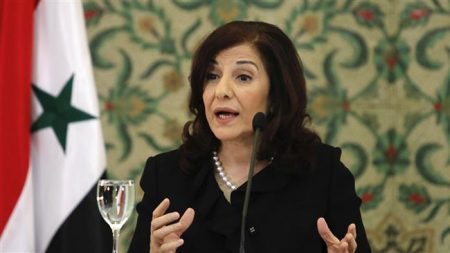
Bouthaina Shaaban, political and media adviser to Syrian President Bashar al-Assad
Press TV – June 18, 2017
A political and media adviser to Syrian President Bashar al-Assad has accused the US and its allies of financing and arming the Daesh Takfiri terrorist group in a bid to tear the region apart and deplete its resources.
Bouthaina Shaaban made the remarks in a statement to journalists after meeting with visiting China’s Special Envoy for Syria Xie Xiaoyan and the accompanying delegation in Damascus on Saturday.
While the US and its allies sponsor Daesh, the alliance supported by Russia and China stands against the expansion of terrorism in the Arab country, Shaaban said.
Russian and China, two of the five veto-wielding permanent members of the United Nations Security Council, have vetoed resolutions against the Syrian government that is battling foreign-sponsored terrorists since 2011.
There are UNSC resolutions, under which those responsible for committing, organizing and supporting terror acts as well as facilitating the movement of terrorists must be held accountable, but these motions have not been implemented at all, the Syrian official noted.
UNSC Resolution 2253, adopted unanimously in December 2015, covers asset freeze, travel ban, arms embargo and listing criteria for Daesh, al-Qaeda militants and “associated individuals, groups, undertaking and entities.”
Elsewhere in her remarks, Shaaban said that the Syrian army and its allies had recently managed to reach the Syria-Iraq border and “dealt a severe blow to the terrorists” through unified efforts, underlining the importance of strengthening communication between the two neighbors in that regard.
Washington’s agenda intersects with that of Daesh, which serves the interests of Israel, she added.
The Syrian official also denounced as unjustified the US deployment of rocket launchers to southern Syria and its attacks on the army positions.
Earlier this week, Russia said the US had deployed the M142 High Mobility Artillery Rocket System (HIMARS) launchers from Jordan to its base in the Syrian town of At-Tanf, warning that the equipment could be used against Syrian government forces.
Additionally, on two occasions in June and May, US warplanes attacked a Syrian military position near At-Tanf, killing an unspecified number of people and causing some material damage.
The US claimed that the Syrian forces who came under the attack posed a threat to its forces in Syria.
The Syrian army denounced the assaults, saying they demonstrated US support for terrorism, at a time when the Syrian army and its allies were making gains against Daesh militants.
UNSC liable for consequences of Saudi war on Yemen: Ansarullah
Press TV – June 17, 2017
Yemen’s Houthi Ansarullah movement has held the United Nations Security Council (UNSC) accountable for the consequences of the deadly Saudi aggression, stressing that the nation reserves the right to defend itself.
Mohammed Abdulsalam, the movement’s spokesman, said on Saturday that the UNSC issues statements that encourage the invader to continue its attacks and sieges, increasing the suffering of millions of Yemenis and dashing hope for a political resolution of the conflict, the al-Masirah television network reported.
The Yemeni army and allied popular forces would use all means to respond to Saudi assaults as Yemen, like other nations, reserves the right to defend itself against any invasion, Abdulsalam said.
The UNSC, which is in charge of preserving global peace, should know that the Saudi war supported by the US arms and financial aid, threatens international security, he added.
The Houthi official also stressed that the deterioration of the health situation in Yemen with the outbreak of Cholera is “a source of shame” for the body that claims to be promoting human rights.
He further held Saudi Arabia responsible for the stalemate in talks between Yemen’s warring sides, the siege on Yemen and Sana’a Airport activities.
In a lengthy statement on Thursday, the UNSC called on the Houthis and allies to cease all attacks at Saudi Arabia.
It also urged Yemen’s warring sides to reach a UN brokered deal on management of the strategic port city of Hudaydah at a time that the country slides closer to famine.
Saudi Arabia has been leading a brutal military campaign against Yemen for more than two years to eliminate the Houthi movement and reinstall a Riyadh-friendly former president, Abd Rabbuh Mansur Hadi.
The military campaign, however, has failed to achieve its goals and left over 12,000 Yemenis dead.
The country is also grappling with a Cholera epidemic.
Earlier this week, Save the Children charity said at least 942 people have been killed since the outbreak began in Yemen in April.
It further warned that the rate of infection is increasing and that one child is contracting the disease every 35 seconds.
“Disease, starvation and war are causing a perfect storm of disaster for Yemen’s people. The region’s poorest country is on the verge of total collapse, and children are dying because they’re not able to access basic healthcare,” said Grant Pritchard, Save the Children’s Yemen director.
Cholera is an acute diarrheal infection that is spread through contaminated food or water. It can be effectively treated with the immediate replacement of lost fluids and salts, but without treatment it can be fatal.
Oliver Stone: Israel is more dangerous than Russia
Do we have enough evidence which points to the idea that Israel has been meddling in U.S. elections and foreign affairs? Yes.

“You can’t mention Israel, Bro!”
By Jonas E. Alexis | Veterans Today | June 16, 2017
Oliver Stone probably didn’t know that he was attacking the Neoconservative hawks, warmongers, and ethnic cleansers in Washington when he told Stephen Colbert that “Israel had far more involvement in the US election than Russia.”[1]
That statement indeed was a political bomb, and it almost certainly took Colbert by surprise. In response to this claim, the Jewish Press declared:
“Stone was obviously pulling the old anti-Israel, leftist line about how AIPAC is controlling Washington (much the way the ‘Jews’ control Hollywood) – and in his haste to save face apparently forgot the difference between contributing to political campaigns and hacking DNC computers.”[2]
Well, obviously Stone stroke a nerve, for we all know by now that AIPAC has had and continues to have a tremendously powerful influence on U.S. foreign policy. Once again, this is not conspiracy stuff. The scholarly studies on this issue are just an embarrassment to riches:
Paul R. Pillar, Intelligence and U.S. Foreign Policy: Iraq, 9/11, and Misguided Reform (New York: Columbia University Pres, 2011).
Michael MacDonald, Overreach: Delusions of Regime Change in Iraq (Cambridge: Harvard University Press, 2014).
John M. Schuessler, Deceit on the Road to War: Presidents, Politics, and American Democracy (New York: Cornell University Press, 2015).
John J. Mearsheimer, Why Leaders Lie: The Truth About Lying in International Politics (New York: Oxford University Press, 2011).
Muhammad Idrees Ahmad, The Road to Iraq: The Making of a Neoconservative War (Edinburgh: Edinburgh University Press, 2014).
Stefan Halper and Jonathan Clarke, America Alone: The Neo-Conservatives and the Global Order (Cambridge: Cambridge University Press, 2004).
Murray Friedman, The Neoconservative Revolution: Jewish Intellectuals and the Shaping of Public Policy (Cambridge: Cambridge University Press, 2005).
John J. Mearsheimer and Stephen Walt, The Israel Lobby and US Foreign Policy (New York: Farrar & Straus, 2007).
Bob Woodward, Plan of Attack: The Definitive Account of the Decision to Invade Iraq (New York: Simon & Schuster, 2004).
Michael Isikoff and David Corn, Hubris: The Inside Story of Spin, Scandal, and the Selling of the Iraq War (New York: Random House, 2006).
But the simple question is this: do we have enough evidence which points to the idea that Israel has been meddling in U.S. elections and foreign affairs? Yes.
In 1987, Jewish American Jonathan Jay Pollard was sent to prison for life for spying for Israel. In 1995, Israel publicly denied that Pollard was a spy, but recanted that statement three years later. BBC News itself declared,
“Israel has officially acknowledged for the first time that an American Jew, Jonathan Pollard, who was arrested in the United States 13 years ago, was one of its spies. Pollard, a former intelligence analyst for the United States Navy, is serving a life sentence in North Carolina for passing classified military documents to Israel. Until now, the Israeli authorities had always denied that Pollard was working under their direction.”[3]
For years the Israelis “refused to tell the United States what Pollard gave them.”[4] Then in 2010 Netanyahu made it clear that Pollard was an Israeli spy who was working for the Israeli government, “for which Israel took full responsibility.” Yet even after this admission, Ambassador Michael Oren said he hoped for Pollard’s earliest release.[5]
In 2005, Steve J. Rosen and Keith Weissman, who served for twenty-three years as top officials for American Israel Public Affairs (AIPAC), were accused of similar charges. As the trial was nearing, both the Israel Lobby and the defense team “described the proceedings as a frame-up, the result of an intra-bureaucratic struggle within the government, and a plot by anti-Semites in Bush’s Justice Department to carry out a Washington pogrom.”[6]
Neither man was convicted, thanks again to their Jewish friends: “While most of the more cautious elements in the Jewish community are staying well away from this case, the radicals, such as Rabbi Avi Weiss and his AMCHA Coalition for Jewish Concerns, who have previously devoted their efforts to freeing Jonathan Pollard, have now turned their attention to Rosen and Weissman.”[7]
Neoconservative Daniel Pipes declared that “we worried about the ramifications for us [meaning Jews] if [Rosen] were found guilty.”[8] He ended the article by congratulating both Rosen and Weissman. Pulitzer winner Dorothy Rabinowitz also praised them, characterizing their actions as “activities that go on every day in Washington, and that are clearly protected under the First Amendment.”[9]
The implication seems to be that Americans spying for Israel are protected by the First Amendment. In fact, “several prominent Neocons have been investigated on credible charges of spying for Israel: Perle, Wolfowitz, Stephen Bryen, Douglas Feith, and Michael Ledeen.”[10]
“In 1970 Perle was recorded by the FBI discussing classified information with the Israeli embassy. In 1981 he was on the payroll of an Israeli defense contractor shortly before being appointed Assistant Secretary of Defense for International Security Policy…During his tenure in the Reagan administration, Perle recommended purchase of an artillery shell made by Soltan, an Israeli munitions manufacturer…
“At the present time, Perle is on the board of directors of Onset Technology, a technology company founded by Israelis Gadi Mazor and Ron Maor with research companies and investment funds. He was also a close personal friend of Israel Prime Minister Ariel Sharon.”[11]
Similarly, “Feith has been suspected of spying for Israel. In 1972 Feith was fired from a position with the National Security Council because of an investigation into whether he had provided documents to the Israeli embassy. Nevertheless, Perle, who was Assistant Secretary for International Security Policy, hired him as his ‘special counsel,’ and then as his deputy. Feith worked for Perle until 1986 when he left government service to form a law firm, Feith and Zell, which was originally based in Israel and best known for obtaining a pardon for the notorious Marc Rich during the final days of the Clinton administration.”[12]
In 1997, Army tank engineer David A. Tenenbaum “gave classified military information on Patriot missiles and armored military vehicles to Israeli officials,” which was sent “to every Israeli military liaison official posted to the command over the last 10 years.”[13]
The Israel government, of course, “denied that any inappropriate activity had taken place.”166 David Bar Illan, chief spokesman for Prime Minister Benjamin Netanyahu, put out a statement, saying, “There has been no improper contact between Tenenbaum and anybody or institution of the Israeli Government.” According to the affidavit, “Tenenbaum admitted to divulging non-releasable classified information to every Israeli liaison officer.”[14] So Tenenbaum admitted, but Israel denied.
Justin Raimondo writes that if Rabinowitz is right in saying that the actions of Jewish spies are covered by the First Amendment, then “we are all in big trouble,” since it would mean that organized Jewry is betraying the American people. In 2004, the FBI came to the same conclusion.[15] In fact, in 2003 the FBI decided not to hire Jews for Arabic translation jobs, since they tended to present an opposite story of the actual event.
In 2004, a former intelligence official who was familiar with the latest FBI probe and who had recently left government work told the Los Angeles Times, “There is a huge, aggressive, ongoing set of Israeli activities directed against the United States. Anybody who worked in counterintelligence in a professional capacity will tell you the Israelis are among the most aggressive and active countries targeting the United States.”[16]
The shocking fact is that “the FBI has investigated several incidents of suspected intelligence breaches involving Israel since the Pollard case, including a 1997 case in which the National Security Agency bugged two Israeli intelligence officials in Washington discussing efforts to obtain a sensitive U.S. diplomatic document. Israel denied wrongdoing in that case and all others, and no one has been prosecuted.”[17]
Yet World Net Daily, a thoroughly Zionist outlet, accused the FBI of fostering anti-Semitism.[18] Since the Pollard affair, the FBI has suspected Israel of espionage, gathering enough evidence that they had continuing reason for suspicion through to the Clinton administration.[19] Even the Washington Post declares that there were “possible espionage” cases in which Israel was of major concern, especially “among those who translate and oversee some of the FBI’s most sensitive, top-secret wiretaps in counterintelligence and counterterrorist investigations.”[20]
The FBI’s suspicions were firmly based on documentation, considering that they had formerly had historical confrontations with Israel and Jewish spies. Even in December of 2008, Israeli traitor Ben-Ami Kadish, then 85 years old, was arrested and pleaded guilty for passing classified documents to Israel in the 1980s. To Judge William H. Pauley III, this was a disgrace to our security, because Kadish should have been charged years ago for many more charges.[21]
Again, in 2009, scientist Stewart Nozette, who worked for years in NASA, was caught spying for Israel. The New York Times article was titled “The Scientist Who Mistook Himself for a Spy.”[22] These acts of disloyalty are quite embarrassing, yet pointing out serious cases in which the United States is being wounded from within by the Israeli regime is like finding yourself in the middle of World War III.
Even in Britain in 2010, senior officials (particularly a senior Mossad agent) in Israel were accused of forging British passports used in a plot to kill a Hamas leader in the United Arab Emirates. “Police in Dubai have already said they are ‘99% certain’ the Mossad was behind Mabhouh’s killing, and [David] Miliband’s remarks represented the first official endorsement of that view by a western government.”[23] Miliband is British Foreign Secretary.
But involvement in espionage is just the tip of the iceberg. Ludwig Fainberg was a notorious mobster; “according to the FBI, he was the middleman for an international drugs and weapons smuggling conspiracy linking Colombian drug lords with the Russian Mafia in Miami. Fainberg’s claim to fame was that in the mid-1990s, he ventured onto a high-security naval base in the far northern reaches of Russia. His mission was to negotiate the purchase of a Russian Cold War-era diesel submarine—complete with a retired naval captain and a twenty-five-men crew—for the Colombian cartel. The price tag: a cool $5.5 million…From 1990 until he was arrested and charged in Miami in February 1997 for smuggling and racketeering, Fainberg ran an infamous strip club called Spoky’s.”[24]
It has also been documented that the Mossad—the Israeli secret service—was responsible for the murder of Jewish media mogul Robert Maxwell. After Jewish journalist Seymour Hersh wrote The Sampson Option: Israel, America and the Bomb, which shows that Maxwell had secret ties with the Israeli secret service, which then decided to do away with Maxwell to prevent him from ever revealing those ties.[25]
In 2001, the FBI charged Irving D. Rubin, chairman of the Jewish Defense League—an organization “whose aim was to defend Jews with ‘all necessary means,’ including the use of violence”[26]—with conspiracy to bomb private and government property, particularly the King Fahd Mosque in Culver City, California, and the office of U.S. Representative Darrell Issa, an Arab-American.[27]
However, Neocon hawks and warmongers have never touched on these vitally crucial issues. Instead of discussing events like these, Neoconservatives prefer to highlight Islamic suicide bombings, keeping the average American’s focus on hating or fearing the Muslim world and away from their own subversive actions at home.
Michael Hoffman points out that “when a Jewish bus is bombed by a Palestinian, graphic photos of the carnage and interviews with survivors are immediately beamed around the world. But when Palestinians are massacred by the Israeli army, the killings are perpetrated in secret, behind the veil of a ‘closed military zone.’”[28] If the Israeli-Palestinian conflict is to be resolved, we cannot afford double standards.
Pointing out terrorism in other countries is one thing, and acting in the manner of terrorism is another issue altogether. Mearsheimer and Walt write:
“Zionists used terrorism when they were trying to drive the British out of Palestine and establish their own state—for example, by bombing the King David Hotel in Jerusalem in 1946 and assassinating UN mediator Folke Bernadotte in 1948, among other acts—and the United States has backed a number of “terrorist” organizations in the past…American presidents have also welcomed a number of former terrorists to the White House (including PLO chairman Yasser Arafat, and Israeli Prime Ministers Menachem Begin and Yitzhak Shamir, who played key roles in the main Zionist terror organizations), which merely underscores the fact that terrorism is a tactic and not a unified movement.”[29]
This brings us to our conclusion: it is really silly to say that Russia is an enemy of the United States when U.S. officials are still making diabolical pacts with the Israeli regime and even Saudi Arabia. It just doesn’t add up, and it is interesting to see that even a person like Oliver Stone is realizing that the press, the media and other news outlets are essentially shooting themselves in the toes when they are not reporting the real thing.
[1] Quoted in David Israel, “Oliver Stone Tells Colbert Israel Had More Influence than Russia on 2016 Election,” Jewish Press, June 14, 2017.
[2] Ibid.
[3] “Israel Admits It Spied on US,” BBC, May 12, 1998.
[4] “Netanyahu and Foe Tangle over Pollard,” Daily News, January 19, 1999.
[5] “Netanyahu: Pollard was an Israeli Spy,” Haaretz, June 26, 2010.
[6] Justin Raimondo, “AIPAC on Trial,” American Conservative, May 7, 2007.
[7] Ibid.
[8] Daniel Pipes, “Standing with Steven J. Rosen,” DanielPipes.org, May 5, 2009.
[9] Raimondo, “AIPAC on Trial,” American Conservative, May 7, 2007.
[10] MacDonald, Cultural Insurrections, 152.
[11] Ibid., 177.
[12] Ibid., 181.
[13] Keith Bradsher, “Army Engineer Gave Military Data to Israel,” NY Times, Feb. 20, 1997; “Civilian Engineer Gave Military Secrets to Israelis,” Washington Post, Feb. 20, 1997.
[14] Ibid.
[15] “FBI Suspects Israel Has Mole in Pentagon—CBS,” Washington Post, August 27, 2004; Curt Anderson, “Alleged Leak to Israel Probed for a Year,” Washington Post, August 28, 2004.
[16] Bob Drogin and Greg Miller, “Israel Has Long Spied on US, Says Officials,” LA Times, September 3, 2004.
[17] Ibid.
[18] Paul Sperry, “FBI: Jews Need Not Apply for Arabic Linguist Job,” WorldNetDaily.com, October 9, 2003.
[19] J. Michael Waller and Paul M. Rodriguez, “FBI Probes Espionage at Clinton White House,” Insight Magazine, May 6, 2000.
[20] James V. Grimaldi, “Two FBI Whistle-Blowers Allege Lax Security, Possible Espionage,” Washington Post, June 19, 2002.
[21] Benjamin Weiser, “Man, 85, Avoids Jail Time for Giving Military Secret,” NY Times, May 29, 2009.
[22] Robert Mackey, “The Scientist Who Mistook Himself for a Spy,” NY Times, October 21, 2009.
[23] Julian Borger, “Britain Expels Mossad Agent over Forged Passport Plot,” Guardian, March 23, 2010.
[24] See Victor Malarek, The Natashas: Inside the New Global Sex Trade.
[25] See Gordon Thomas and Martin Dillon, Robert Maxwell, Israel’s Superspy.
[26] Murray Friedman, Neoconservative Revolution: Jewish Intellectuals and the Shaping of Public Policy (Cambridge: Cambridge University Press, 2005), 102.
[27] Tom Tugen, “JDL Head Arrested,” JewishJournal.com, December 13, 2001.
[28] Hoffman and Lieberman, The Israeli Holocaust Against the Palestinians, 66.
[29] Mearsheimer and Walt, The Israel Lobby, 63.
The blockade of Qatar may have more to do with Palestine than we think
By Nasim Ahmed | MEMO | June 16, 2017
Israeli officials must have been tripping over each other in their rush to endorse the Saudi-led blockade on Qatar. “The Sunni Arab countries, apart from Qatar, are largely in the same boat with us since we all see a nuclear Iran as the number one threat against all of us,” said Israel’s former defence minister Moshe Ya’alon. The blockade represented a “new line drawn in the Middle Eastern sand,” tweeted US-born former Israeli ambassador Michael Oren, while revelling in the regional turmoil. “No longer [is it] Israel against Arabs but Israel and Arabs against Qatar-financed terror,” he added.
Defence minister Avigdor Lieberman described the crises as an opportunity for Israel and “certain” Gulf states. “It is clear to everyone, even in the Arab countries, that the real danger to the entire region is terrorism,” he insisted. The extreme right-winger added that the Saudi-led bloc had cut ties with Qatar “not because of Israel, not because of the Jews, not because of Zionism,” but “rather from fears of terrorism.”
Rejoicing over the punishment of a country which Israeli officials describe as a “pain in the ass” raises all sorts of questions, not least the connection between the siege imposed on Qatar and US legislation introduced by Republican Congressman Brian Mast to impose sanctions with respect to foreign support for “Palestinian terrorism”, and other purposes.
Introducing the bipartisan Bill (H.R. 2712 Palestinian International Terrorism Support Prevention Act of 2017) Representative Joshua Gottheimer said, “I’m proud to lead on this effort to weaken Hamas, a heinous terrorist network responsible for the death of far too many innocent civilians, both Israeli and American”. According to him, “Our bipartisan bill will ensure that anyone who provides assistance to this enemy of the United States and our vital ally Israel will face the strength and determination of our country.”
In their findings, the sponsors mentioned that Hamas had received significant financial and military support from Qatar. The sponsors cited the press conference at the Sheraton Doha in Qatar, where Hamas launched its new Document of General Principles and Policies, dubbed the movement’s new charter. “While this document was meant to convey a more moderate face to the world by referencing the 1967 borders,” the bill alleges that the “Hamas’ document, [which] neither abrogates nor replaces the founding charter… still calls for a continuation of terrorism to destroy Israel.”
The bill, which sets out to authorise sanctions on any foreign entity or government that provides support to Hamas, goes on to say that, “It shall be the policy of the United States to prevent Hamas, the Palestinian Islamic Jihad (PIJ), or any affiliate or successor thereof from accessing its international support networks.”
While noting the implications of the legislation, it is worth remembering that most of the proposals in this new bill are actually redundant, except for the section on Qatar. As the Arab Centre Washington DC – a research organisation furthering political, economic and social understanding between Arabs and the US — points out, the proposed law introduces sanctions already covered under existing legislation. Hamas and the PIJ are both designated as Foreign Terrorist Organisations (FTOs) and Specially Designated Global Terrorist entities (SDGTs) by the US State and Treasury Departments respectively. With that in mind, it is already illegal for US entities or institutions to support such groups. Thus, the sanctions proposed in this bill that pertain to US jurisdiction are superfluous.
Furthermore, the Arab Centre points out, formally targeting Iran is also unnecessary because Tehran has already been declared a state sponsor of terror by the State Department and prohibitions against arms export, financial and technical services and US aid to Iran are already in place. This only leaves Qatar, which would be the only new target under this legislation. The stealthy manner of the attack on Qatar did not hide the true intention of supporters of the Bill. “I am proud” said Gottheimer, “to support the Palestinian International Terrorism Support Prevention Act that will make countries like Qatar pay a price for their support for terrorism. In the fight against terrorists there is no middle ground. If you support terrorism, justice will eventually be served.”
So what has that got to do with Israel? While Israel has been unable to join the Saudi-led move to impose a blockade on Qatar directly, it hasn’t stopped it from taking part in substantial lobbying behind the scenes, with the UAE, to get what in reality is an anti-Qatar piece of legislation passed and carry out the necessary groundwork for a blockade of this magnitude.
It is alleged that the bill’s sponsors in the House include a number of lawmakers who have received substantial donations from pro-Israeli lobbyists as well as from those advocating on behalf of Saudi Arabia. Indeed, it is reported that ten US legislators sponsoring the anti-Qatar Bill have received more than $1m over the last 18 months from lobbyists and groups linked to Israel, Saudi Arabia and the United Arab Emirates.
Author and commentator Trita Parsi believes that the similarities between the US-allied Arab nations’ “terror list” and the H.R. 2712 bill show growing cooperation between Gulf Arab states and Israel. “The coordination between hawkish pro-Israel groups and the UAE and Saudi Arabia has been going on for quite some time,” Parsi told Al-Jazeera. What is new, he continued, is seeing pro-Israel groups such as the Foundation for Defence of Democracies “coming out with pro-Saudi [articles] and lobbying for them [the Saudis] on Capitol Hill.”
The cultivation of a political narrative to support the siege was also reported earlier this month by The Intercept. It said that emails released by a group called “Global Leaks” had shown that the UAE ambassador to the US, Yousef Al-Otaiba, and the foundation — a pro-Israel neoconservative think tank — have been working together on demonising Qatar. The emails obtained by The Intercept show FDD and UAE collaboration with journalists who published articles accusing Qatar and Kuwait of supporting “terrorism”.
It is no surprise then that the main reason given for this blockade makes little sense. For Saudi Arabia and the UAE to accuse Qatar of supporting terrorism is like the pot calling the kettle black. If there was any substance to the allegation, then the US would not have endorsed a recent arms deal with Qatar and nor would Washington maintain a major military base there. The stated reasons for the blockade have no merit whatsoever. Moreover, the blockade of Qatar cannot be examined in isolation from efforts that have been underway in the US to suppress Palestinian resistance in the name of fighting terrorism. Neither Qatar nor any of the Gulf countries benefit from this standoff whatsoever; for the main beneficiary, we must look to Israel.
Israel and the Trump Administration Use Saudis for the Next ‘Controlled Chaos’ Project
Sputnik – 14.06.2017
Amid the ongoing diplomatic row between Qatar and a number of Arab states and increased tensions in the Persian Gulf, Sputnik Turkiye talked to Hamide Yigit, a Turkish political analyst and an expert in Middle Eastern affairs, who explained what role the Trump administration will play in this conflict.
Hamide Yigit, a Turkish political analyst and expert in Middle Eastern affairs who has written a number of research papers on the Middle Eastern crises, commented to Sputnik Turkiye on the ongoing diplomatic row in between Qatar and Saudi Arabia and its impact on the region.
The expert stressed that the Trump administration is trying to fully re-carve the Middle Eastern strategy of the Obama administration, which was based on the support of the Muslim Brotherhood, by betting on the control over radical Islamist forces from a new unified center. That is why Trump has focused his new foreign policy line on Saudi Arabia, she said.
“We could say that Trump has signalled a new stage in American Middle Eastern policy after the failure of the Middle Eastern policy of the previous administration, which bet on the structures affiliated with the Muslim Brotherhood and left the legacy of a weakened US position in Syria against Russia’s strengthened influence in the region,” Hamide Yigit told Sputnik.
The new political line of President Trump, she further elaborated, is aimed at focusing on the Persian Gulf and pivoting towards Saudi Arabia. Such a strategy, however, poses certain difficulties for the US, as Saudi Arabia has suffered both political and economic defeats in Syria and Yemen.
However on the other hand, the polycracy among the jihadists in Syria has hampered US plans in that country. Thus the Trump administration decided to set up a unified control center for dealing with the radical Islamists but opted for the exclusion of Qatar from this system in favor of Saudi Arabia.
The dual power among jihadists, the expert explained, creates certain problems which could escalate into a confrontation. Hence the US has chosen Saudi Arabia to host a center which will incorporate all the levers of a hybrid war.
The crisis in the Persian Gulf, Hamide Yigit told Sputnik, is one of the latest US projects aimed at creating so-called “controlled chaos” in the region.
“At this particular moment it is hard to forecast how long this crisis will last. However if this US’ project, which provokes the escalation of tensions in the region, proves a success, it might hit a serious blow to Turkish positions in the region,” the expert explained.
In current conditions, she further said, Turkey should be aimed at maximum rapprochement with Iran and Russia, up to its accession into the Shanghai Cooperation Organization (SCO).
On the Iran’s example it is clearly seen how the project of the “controlled chaos” has been started in Syria and gradually embraced other countries of the region. Hence Hamide Yigit suggested that the relations between the Saudi Arabia, Persian Gulf monarchies and Iran will aggravate even further.
The warnings of a number of experts that the Syrian war will further spill over to Iran are visibly becoming a reality. Iran is being virtually dragged into this war, the expert said.
Earlier Israel repeatedly made certain steps aimed at drawing Iran into this war, but the US kept preventing it, the political analyst said.
Now Saudi Arabia is provoking the escalation of tensions. It might certainly want to incite a large-scale conflict as its mere existence is directly dependent on the US-backed project of a large-scale war in the Middle East, Hamide Yigit concluded.
Featured Video

ARE PATIENTS BEING PROPERLY INFORMED ABOUT OZEMPIC?
or go to
Aletho News Archives – Video-Images
From the Archives
Trans ‘milk’ as good as the real thing – NHS
RT | February 18, 2024
The drug-induced nipple secretions of trans women are as good as mothers’ breast milk for babies, the University of Sussex Hospitals NHS Trust claimed in a letter to campaigners made public in a report by British think tank the Policy Exchange on Sunday.
The healthcare trust’s medical director, Rachel James, argued that the off-label prescription drug cocktail men transitioning to female take in order to produce milk was “similar to the natural hormones which encourage lactation to develop when the baby is newly born.”
“The evidence which is available demonstrates that the milk is comparable to that produced following the birth of a baby,” James wrote in the letter, sent to Children of Transitioners last August.
Biological men who wish to lactate must first take hormones to grow milk glands and then take high doses of either domperidone or metoclopramide to stimulate milk production. Neither drug is approved for this use, though they are occasionally prescribed off-label to biological women who have trouble lactating.
However, domperidone’s own manufacturer, Janssen, warns patients the drug “may cause unwanted side effects affecting the heart in a breastfed baby” and “should be used during breastfeeding only if your physician considers this clearly necessary.” … continue
Blog Roll
 Aletho News
- How Real Is the Impact of Western Sanctions on Israel?
- France, You Are Guilty: How Paris Turned Western Sahara into the Maghreb’s Powder Keg
- 2025 Nature Paper Claiming Worsening Global Drought Gets RETRACTED …Heavily Flawed
- Your Milk Is Not the Problem
- The Truth About the Trump Shootings with Ken Silva
- ARE PATIENTS BEING PROPERLY INFORMED ABOUT OZEMPIC?
- US lawmaker blocks $2.8 billion weapons sale to Israel: Report
- Yemeni army claims responsibility for strikes on sensitive sites in Saudi capital, Aramco facilities in Yanbu
- Iran Judiciary issues indictments against 159 US, Israeli officials for assassination of Leader, commanders
- Turkiye revokes Iranian bank license under US sanctions campaign
- If Americans Knew
- Salah Sarsour’s Legal Team Says DHS Has Not Met Its Burden to Prove He Is Deportable
- An analysis of tax forms by The Intercept show Kraft’s charity and LLC have donated to Friends of the IDF and AIPAC’s super PAC.
- Israeli attacks kill four Palestinians in Gaza – Daily Update
- Inside Gaza’s death trap of collapsing, bombed-out buildings
- The everyday items Israel bans from Gaza every day
- Inside the siege, the ruined buildings of Gaza – Daily Update
- Debunking The Claim That Macklemore Has A “History Of Antisemitism”
- CPJ demands release of arrested Palestinian-US journalist near Bethlehem
- Robert Kraft: The Billionaire Friend of Netanyahu Pulling The Strings Behind the Macklemore/Ed Sheeran Blow Up
- Columbia Administered Fund Gives Big Money to Pro-Israel Groups
- No Tricks Zone
- 2025 Nature Paper Claiming Worsening Global Drought Gets RETRACTED …Heavily Flawed
- New Study: ‘Global Drought Shows No Detectable Recent Acceleration Under Climate Warming’
- Economic Masterminds: German Socialists Suggest Taxing Productivity Gains Stemming From Using AI
- The South China Sea Has Not Been Cooperating With The Climate Change Narrative
- Energy Crisis: Germany Enters Heating Season With Historically Low Gas Reserve Fill Levels
- New Study: The Antarctic Ice Sheet Gained Mass From 2020-2024 Due To Staggering Snow And Ice Accumulation
- Study: Ocean Heating Rates From Thousands Of Years Ago ‘Dwarf’ Modern Ocean Heating Rates
- Climate Extremists Target, Attack Large-Scale Power Grid Infrastructure In Germany!
- New Study: Antarctic Ice Melt Has Contributed Less Than 1 Centimeter To Sea Level Rise In The Last 30 Years
- Fear Of Debate: Alarmist German Climate Scientist Calls On Mainstream Media To Discredit Skeptic Voices
 Aletho News