Livni Hails Blacklisting Hezbollah, Urges Alliance with Gulf States
Al-Manar | March 14, 2016
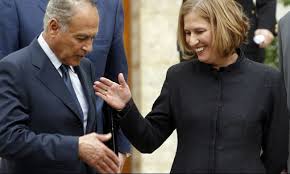 Israeli former Foreign Minister, Tsipi Livni, hailed Arab League decision to blacklist Hezbollah as a ‘terror group’, calling to conclude alliance between the Zionist entity and some Arab states.
“AL decision to adopt the Gulf Cooperation Council is rightful and represents a positive shift,” Israeli daily, Maariv quoted Livni as saying.
Livni meanwhile, called for concluding an alliance between Israel and “moderate Muslim countries” including Gulf states and some Arab countries which blacklisted Hezbollah, the Israeli paper said.
On the other hand, the Israeli politician called for preventing Hezbollah from taking part in the parliamentary elections in Lebanon, according to Maariv.
“Livni also urged not to make distinction between Hezbollah and ISIL,” the daily added referring to the Takfiri group operating in Iraq and Syria (so-called Islamic State in Iraq and Levant).
Severe penalties for anyone backing Hezbollah: Saudi Arabia
Press TV – March 13, 2016
Saudi Arabia says those linked to the Lebanese resistance movement Hezbollah will be punished in accordance to anti-terrorism laws.
According to an Interior Ministry statement published by the state-run SPA news agency on Sunday, Saudi nationals and foreigners living in the kingdom will face “severe penalties” if they sympathize with, financially support, or harbor any of the group’s members.
“Any citizen or resident who supports, shows membership in the so-called Hezbollah, sympathizes with it or promotes it, makes donations to it or communicates with it or harbors anyone belonging to it will be subject to the stiff punishments provided by the rules and orders, including the terrorism crimes and its financing,” read the statement, adding that expatriates would also be deported.
Riyadh’s move appears to be part of the monarchy’s anti-Shia campaign, including a severe crackdown on nationals residing in Eastern Province. Last year, the kingdom executed prominent Shia cleric Sheikh Nimr al-Nimr, which drew widespread condemnation from rights groups and various states.
The Sunday announcement also follows recent decisions by pro-Saudi Arab factions, the Arab League and the [Persian] Gulf Cooperation Council, to brand Hezbollah as a “terrorist” group.
On Saturday, Hezbollah described such measures as a “declaration of aggression” by Riyadh, which is “putting pressure on others at the Arab foreign ministers meeting to do the same,” said Sheikh Naim Qassem, the deputy secretary general of the resistance movement.
Discussions underway to end Yemen war
American Herald Tribune | March 12, 2016
A Yemeni delegation is apparently in Saudi Arabia at the moment, participating in talks with the Saudis to end the war against Yemen. This appears to be the most serious effort made so far in order to reach a ceasefire, following the talks that took place in Oman, and later in Switzerland.
The talks apparently coincide with a lull in the fighting on the border between the two countries, and in Saudi airstrikes on the embargoed Yemen.
The Yemeni delegation in Saudi Arabia is headed by Mohammad Abdel Salam, who also happens to be Ansarullah’s main spokesman and senior advisor to the leader of Ansarullah, Abdul-Malik al-Houthi. Abdel Salam previously also led the Yemeni delegation that took part in the Oman talks, which paved the way for the U.N. sponsored talks on Yemen in Switzerland.
Moreover, the invitation is said to be at the invitation of the Saudis, who have yet to comment on the matter, and neither has the Saudi foreign ministry. The development is somewhat surprising, as the Saudis previously indicated that they are unwilling to negotiate until the Yemeni capital Sanaa falls in the hands of its allies.
So far, this war has seen more than 6,000 civilians killed, thousands more injured, and hundreds of thousands displaced as homes, hospitals, schools, and other civilian buildings targeted in Yemen in a heavy bombing campaign in which Saudi Arabia has been accused of a number of war crimes and massacres.
Saudi Arabia’s war against Yemen, one of the Arab world’s poorest countries, began in March 2015. Its goals were to destroy the Ansarullah movement and restore Abed Rabbuh Mansour Hadi as president (keeping in mind that he had resigned from this position on January 21st, 2015), the two of which Saudi Arabia has failed to achieve a year into their heavy bombing campaign.
Gulf states to take legal action against Hezbollah affiliated TV channels
MEMO | March 9, 2016
Gulf Cooperation Council (GCC) information ministers agreed on Tuesday to take legal action against TV channels affiliated to Hezbollah, Anadolu reported.
This decision came as part of the conclusion statement of the 24th meeting of the GCC information ministers, which was held in the Saudi capital of Riyadh.
“The legal measures stipulated in the decision will apply to all production companies, producers and all matters related to media,” the statement said.
“They are based on the GCC laws and on international laws related to the fight against terrorism,” it said, noting that Hezbollah is considered a terrorist entity.
According to the statement, the GCC described Hezbollah as a group that “incited hatred, chaos and violence” in “blatant violation of the sovereignty, security and stability of GCC and Arab countries”.
On 2 March, the GCC and the council of Arab interior ministers designated Hezbollah a terrorist organisation.
Did the Saudis Just Win? 5 Signs That the Oil Glut Crisis May Be Over
Sputnik – March 8, 2016
Saudi Arabia’s alleged strategy of pushing high-cost oil producers off the market may have worked, as investors have shifted their focus away from high-cost shale oil operations and large multinationals are increasingly looking at short-term projects.
Although hedge funds such as Goldman Sachs are warning against thinking that commodities including oil are facing a long-term rally, there are several signs that oil prices may have already hit bottom.
1. OPEC Rebalance
News of a looming oil deal among OPEC countries may have helped oil prices begin a stable, nearly month-long rally on February 12. Days earlier, Igor Sechin, head of Rosneft, Russia’s biggest oil company, said it would be open to the idea of an output cut and OPEC’s Venezuela made the first concrete proposal the following day.
Unlike OPEC countries, Russia’s oil producers are predominantly private companies responsible to shareholders, although some, such as Rosneft, also have a significant share of government control. The new deal, however, may lead to a rebalance of OPEC influence by including Russia and Mexico, both of which held negotiations, while members such as Venezuela, which has the world’s largest oil reserves, could lose standing.
At the same time, Russian oil companies are starting to diversify internationally, with Lukoil looking into Iranian assets while Rosneft begins drilling off the coast of Vietnam to regain positions potentially lost as a result of US sanctions.
2. Shale Crash
Despite a rise in prices over the past few weeks, US shale oil companies announced that they would cut output as a result of major losses.
Companies such as Chevron and ConocoPhillips may actually compete against shale oil companies as they cut investments in deepwater oil extraction, giving domestic shale producers more opportunities to cut losses and liquidate their assets.
In the long term, however, the effect may be temporary, as the lifting of the US oil export ban could lead major US companies to increase exports.
3. Chinese Weather
Despite fears regarding China’s economy and predictions of an economic “perfect storm,” the fears did not materialize. As a result, volatility unseen since the 2008-2009 financial crisis began to fall, allowing oil prices to regain stability and head higher.
China’s troubles still prevail, but disruptions in the country’s stock market proved to not significantly impact economic fundamentals, in an economy which still suffers more from overinvestment as a result of government planning than from problems raising capital.
4. Iranian supplies
While Iran was ready to ship oil as soon as sanctions were lifted, with long-term supplies stored in tankers, the introduction of Iranian oil did not greatly impact the European oil market, as the country shipped less than a third of the oil it promised to export.
Low oil prices may have also been behind Iran’s less-than-spectacular results when it came to raising capital for new oil production, which the country plans to grow to pre-sanctions highs.
5. US Inventories May No Longer Matter
Although the oil glut prevails, in the United States, oil prices have continued steadily rising even after announcements that US inventories grew nearly three times more than expected. The country’s oil producers have actually begun eyeing oil exports to Europe, which faces supply disruptions as a result of an accident in Nigeria and financial trouble among offshore North Sea oil operations.
At the same time, major oil companies are increasingly wary of long-term investments which could be subject to future volatility.
The situation suggests that Saudi Arabia’s alleged strategy of forcing out high-cost operations for both shale and offshore projects may have actually worked, and while the US would face beneficial export conditions while the glut is ongoing, consolidation and liquidation in the shale sector could bring back the pre-shale world while scaring off investors from higher-cost projects.
Saudis, Turks Bid to Open Lebanon Front
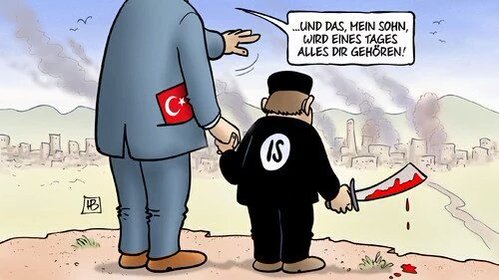
One day, my son, all this will be yours
By Finian CUNNINGHAM – Strategic Culture – 07.03.2016
With a series of blatant measures, Saudi Arabia and its regional allies are evidently trying to destabilize Lebanon. The development is apiece with how Saudi Arabia and Turkey have both sought to undermine the ceasefire in Syria and to escalate that conflict to a region-wide level.
A New York Times report this week poses a rather naive conundrum: «Diplomats and analysts have spent several weeks trying to understand why the Saudis would precipitously start penalizing Lebanon – and perhaps their own Lebanese allies – over the powerful influence of Hezbollah, which is nothing new».
Well, here’s a quick answer: Russia’s very effective squelching of the covert war for regime-change in Syria. That has sent Saudi Arabia and Turkey into a paroxysm of rage.
Russia’s military intervention in Syria to defend the Arab state from a foreign-backed covert war involving myriad terrorist proxy groups, has dealt a severe blow to the machinations of Washington, its NATO allies and regional client states.
While Washington and its Western partners seem resigned to pursue regime change by an alternative political track, Saudi Arabia and Turkey are stuck in the covert-war groove. They are betting that the terrorist proxy armies they have weaponized can somehow be salvaged from withering losses inflicted by Russian airpower in combination with the ground forces of the Syrian Arab Army, Iranian military advisors and the Lebanese Hezbollah militia.
Hence, the immediate breaches of the cessation called a week ago by Washington and Moscow in Syria. Turkish military shelling across the border into northern Syria is not just a breach. It is an outrageous provocation to Syrian sovereignty, as Moscow has pointed out.
Simultaneous Saudi military mobilization, including Turkish forces, on its northeast border with Iraq, as well as the reported deployment of Saudi fighter jets to Turkey’s Incirlik airbase opposite Syria’s northwest Latakia province can also be viewed as calculated moves to undermine the tentative ceasefire. The logical conclusion of this reckless aggression by both Saudi Arabia and Turkey is to precipitate a wider conflict, one which would draw in the US and Russia into open warfare.
The series of Saudi-led initiatives towards Lebanon should be interpreted in this context. In the past week, Saudi Arabia and its closely aligned Sunni monarchies in the Persian Gulf Cooperation Council (GCC) have declared Hezbollah a terrorist organization. The word «anachronistic» comes to mind, belying an ulterior motive.
The Saudi rulers, led by King Salman and his son Crown Prince Mohammad bin Salman, also announced that they were canceling plans to grant Lebanon $4 billion in aid. Most of the aid was to be in form of military grants, to be spent on upgrading the Lebanese national army with French weaponry and equipment.
Without providing any proof, the GCC states – Kuwait, Qatar, Bahrain, the United Arab Emirates and Oman in addition to Saudi Arabia – issued travel warnings to their nationals intending to visit Lebanon. The GCC also claimed that Hezbollah was interfering in their internal affairs and trying to recruit Gulf nationals into the organization to fight in Syria. The GCC has even threatened to deport Lebanese expatriate workers, some half a million of which work in the Gulf.
There were also regional media reports last week of a large cache of weapons having been seized by Greek authorities, stowed illicitly onboard a cargo ship sailing from Turkey to Lebanon.
The cumulative intent seems patent. The Saudis and their regional allies – who have been pushing for regime change for the past five years against the Russian, Iranian and Hezbollah-allied government of President Bashar al-Assad – see the escalation of regional instability as the best way to salvage their covert war in Syria.
Washington, London and Paris probably have sufficient cynical intelligence to realize that the covert war involving terrorist proxies is no longer a viable option – given the formidable forces arrayed in support of the Syrian state, not least Russian air power.
The Saudis and the Turkish regime of Recep Tayyip Erdogan appear to be inflexibly wedded to the covert war agenda. For these powers anything less than the outright removal of Assad would be seen as a grave blow to their despotic egos and, for them, an unbearable boost to their regional rival, Shia-dominated Iran.
The GCC criminalization of Shia-affiliated Hezbollah is obviously a fit of revenge-seeking given how the militia has ably helped the Syrian army retake major areas from the regime-change Sunni extremist insurgents, in conjunction with the Russian air strikes. The steady shutting down of border crossings in Latakia, Idlib and Aleppo has cut-off the terror brigades from their weapons supply routes via Turkey. This is partly why the Erdogan regime has responded by cross-border shelling in order to give re-supply efforts a modicum of artillery cover.
Moreover, the Saudi-led campaign to sanction Hezbollah is also aimed at destabilizing the sectarian fault lines inside Lebanon. Hezbollah may be denigrated by Washington and some other Western states as a «terrorist group» and of presiding over «a state within a state» due to its military wing which exists alongside the Lebanese national army.
Nevertheless, Hezbollah has constitutionally recognized legitimacy within Lebanon. This is partly due to the militia’s primary role in driving out the US-backed Israeli military occupation of the country in 2000 and again in 2006. For many Lebanese people, including Christians and Sunni Muslims, Hezbollah is held with pride as an honorable resistance force to US-led imperialism in the region.
The party – which Russia also recognizes as a legitimate national resistance movement – comprises about 10 per cent of the Lebanese parliament and holds two cabinet positions in the coalition Beirut government.
So the Saudi-led proposal to sanction Hezbollah seems nothing more than a gratuitous bid to open up sectarian fissures that have cleaved Lebanon in the recent past during its 1975-1990 civil war. The provocation of labeling a member of government in a foreign state as «terrorist» – seemingly out of the blue – has to be seen as a tendentious bid to destabilize. Hezbollah leader Hassan Nasrallah this week condemned the Saudi bid to inflame sedition in Lebanon, and it is hard to disagree with that assessment.
There are still pockets of extremist Sunni support within Lebanon that the Saudis and Turkey appear to be trying to incite. During the Syrian conflict, there have been sporadic outbreaks of violence in the cities of Sidon and Tripoli by Salafist elements with close links to Saudi Arabia and Turkey. Now those same elements are being incited to take to the streets again.
It is not clear if Lebanon can hold together. A government minister linked to a pro-Saudi faction has resigned in recent weeks over what he claims is «Hezbollah domination» in Lebanese politics.
Many Lebanese are discontented over social and economic problems dogging the country. A refuse-collection backlog over the past year has left large parts of the capital overflowing with putrid waste. The tiny country of four million is also feeling the strain of accommodating some one million Syrian refugees.
The thought of re-opening old wounds and re-igniting the horror of civil war is a heavy burden on most Lebanese citizens that may be enough to make them baulk at malign pressures.
But what can be said for sure is that the role of Turkey, Saudi Arabia and the other Arab monarchies is absolutely unconscionable and criminal. They seem fully prepared to plunge yet another neighboring country into a sectarian bloodbath in order to gratify their illicit regional ambitions.
Tunisian FM doesn’t support blacklisting Hezbollah, unidentified gunmen raid Tunisian town killing civilians
Israelis Welcome GCC Statement on Hezbollah: Reflects Rapprochement with Saudis
Al-Manar | March 3, 2016
As soon as the Gulf Cooperation Council blacklisted the Lebanese party of Resistance – Hezbollah – on Wednesday, Zionist mass media welcomed the resolution, considering it “critical and serious,” reflecting a great relief among Israelis who have been seeking to fight Hezbollah from the Arab gate.
Former Zionist foreign minister Tzipi Livni hailed the GCC resolution as “an important step, while Zionist daily Maariv stated that “blacklisting Hezbollah is an achievement that serves Israel.” … Full article
Tunisia: Hezbollah Liberated Lebanese Territories, Supported Palestine
Al-Manar | March 6, 2016
The Tunisian Foreign Ministry clarified on Friday that the closing statement of the meeting of the Arab Interior Ministry did not include blacklisting Hezbollah as a terrorist group.
In a statement, the Tunisia Foreign Ministry reiterated that Tunis rejects to interfere in the domestic issues of the other countries, noting that Hezbollah has contributed to liberating the Lebanese territories, supported Palestine’s cause and fought ISIL.
“Tunisia attempted to take into account the Arab consensus during the meeting of the Arab Interior Ministers through approving the decision that is not compulsory.”
Tunisians Ask Gov’t to Withdraw from Saudi Coalition over Blacklisting Hezbollah
Al-Manar | March 6, 2016
The leader of En-Nahda Islamic movement in Tunisia Rached Ghannouchi asserted on Saturday that it is impossible to label Hezbollah as a terrorist group because of the his historic achievements in liberating Lebanon and protecting it from the Zionist aggressions.
Although Hezbollah’s role in Syria is controversial, we cannot generalize any label against the party, Ghannouchi added.
Meanwhile, a number of political parties in Tunisia demanded that the government withdraw from the Saudi-led coalition in the region over the decision to blacklist Hezbollah.
In Egypt, the founder of the Popular Current Hamdeen Sabahi greeted Hezbollah and his Secretary General Sayyed Hasan Nasrallah for confronting the Zionist occupation, noting that who has blacklisted the Resistance aims at stirring the Shiite-Sunnite sedition in the region.
25 killed in militant raid in Tunisia
Press TV | March 7, 2016
At least 25 people, including four civilians, have been killed in Tunisia in an exchange of gunfire between security personnel and unidentified gunmen near the Libyan border.
Tunisia’s Defense and Interior Ministries announced in a joint statement that a group of gunmen targeted a police station and military facilities in the eastern border town of Ben Guerdane, situated approximately 600 kilometers (372 miles) southeast of the capital, Tunis, early on Monday.
Army units repelled the attack, killing 21 militants and capturing six others. Four civilians also died in the crossfire.
The Tunisian military has dispatched reinforcement forces and helicopters to Ben Guerdane. Local residents have been ordered to stay indoors.
The militant attack came amid rising international concern about the growth of the Takfiri Daesh terrorist group in neighboring Libya, which has been struggling with instability since 2011. Back then, the country’s former dictator Muammar Gaddafi was overthrown, and armed groups as well as regional factions engaged in armed clashes in a battle for power.
The capital, Tripoli, is controlled by a political faction that calls itself Libya Dawn and is allied with powerful armed forces based in the city of Misrata. The faction has reinstated the old parliament, known as the General National Congress, in the capital.
The internationally-recognized government of Prime Minister Abdullah al-Thinni is on the other hand based in the northeastern city of Bayda, with its elected House of Representatives being based in Tobruk.
Last week, Tunisian security forces killed five heavily armed men who had sneaked into the North African country from Libya.
‘Human rights abusers’ invited to ‘non-lethal’ weapons show, condemned by activists
RT | March 7, 2016
Activists have denounced a Home Office sponsored security fair, warning that Britain is selling tear gas and other crowd control tools to some of the world’s most oppressive regimes.
Among the governments invited to take part in the fair in Farnborough, Hampshire, 30 miles southwest of London, are Bahrain, Saudi Arabia, Israel, United Arab Emirates (UAE), Egypt and Turkey, the Guardian reported on Saturday.
Police and security officials from 79 countries are expected to participate in the fair later this week, according to the list, which was released under a Freedom of Information request.
Since Prime Minister David Cameron took office in 2010, the UK has approved 126 licenses connected with the sale of tear gas and other irritants, according to the Campaign Against the Arms Trade (CAAT).
Also approved were 75 licenses for crowd control ammunition such as rubber bullets, 79 for “acoustic” crowd control – known as sound grenades – and 259 licenses for riot shields.
CAAT spokesman Andrew Smith told the paper: “There are serious questions to be asked about the impact of the so-called ‘non-lethal’ arms industry. These risks become even more important when these weapons are being sold to human rights abusers and dictatorships.”
“A number of the countries in attendance routinely practice torture, arbitrary detention and other appalling acts of violence. The UK should not be arming these regimes and selling them the means to oppress and kill.”
“[The event] undermines the UK’s claims to be promoting human rights while strengthening the position of repressive regimes.”
Defending the trade show, the Home Office said: “A thriving security industry is vital to help cut crime and protect the public and so it is important these products and services can be showcased and expertise shared.”
Described by organizers as “the perfect place to see the latest security equipment and technology in a secure environment,” the Security and Policy fair will be held behind closed doors, with all visitors “pre vetted to strict Home Office criteria.”
GCC not after protecting Lebanon: Hezbollah chief
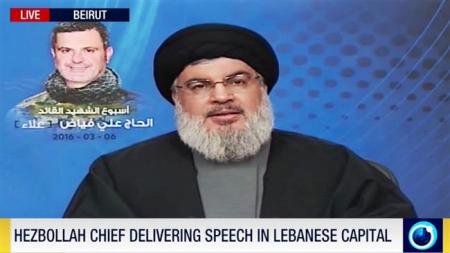
Press TV – March 6, 2016
Sayyed Hassan Nasrallah, the secretary general of the Lebanese resistance movement Hezbollah, says the Arab member states of the [Persian] Gulf Cooperation Council ([P]GCC), which recently listed the resistance group as terrorists, do not have the interests of Lebanon in mind.
During a live televised speech on Sunday, Nasrallah said those who assume that the Arab regimes will protect Lebanon have “pinned their hopes on a fantasy.”
Had Lebanon waited for a unified Arab strategy in the face of Israel instead of opting to resist against the occupying regime, “then the fate of this territory would have been the same as the fate of the territories Israel has taken control of,” he said.
On Wednesday, the six-nation Arab bloc issued a statement labeling Hezbollah a terrorist organization. The [P]GCC comprises Bahrain, Kuwait, Oman, Qatar, Saudi Arabia and the United Arab Emirates.
“Many of these Arab countries today, who designate us as terrorists, what do they have to do with this resistance and these victories and these achievements?” Nasrallah said.
Israel unleashed an all-out offensive on Lebanon 10 years ago under the pretext of releasing Israeli soldiers allegedly captured by Hezbollah in southern Lebanon. The invasion claimed the lives of nearly 1,200 Lebanese people, most of them civilians.
The Tel Aviv regime was, however, forced to retreat without achieving any of its objectives after Hezbollah fighters displayed heavy resistance against the Israeli military.
“Back then, we said to them (the Arab countries) ‘we don’t want anything from you… Today, we also say to them, to these regimes, ‘We don’t want anything from you. We don’t want money, nor do we want weapons, nor do we want support or blessing,” he said. “Just leave this resistance alone, leave this country alone, and leave this people alone.”
He blamed some Arab regimes for conspiring against anyone standing against Israel.
Nasrallah also underlined the assistance provided by the resistance group to the Iraqi government in its fight against the Takfiri terror group Daesh and reminded that Hezbollah did not wait for any orders to initiate its anti-terror fight in Syria and only fulfilled its religious commitment.
The secretary general of Hezbollah also addressed the tension that has been bubbling up between Saudi Arabia and Lebanon, causing the former to take a raft of hostile measures against the latter.
“If it’s angry with us, it has the right to. I understand Saudi Arabia’s anger. Why? Because when one fails, at the very least he will be angry,” Nasrallah said.
He went on to explain that the Saudi rage has emanated from the kingdom’s failures in Yemen and Syria.
“In Syria, there’s a very great Saudi anger because what they had calculated in Syria [was that] in two or three months, ‘Syria would fall into our hands,’” Nasrallah said.
Hezbollah has been successfully aiding the Syrian military against foreign-backed militant groups.
“He, who confronts Saudi Arabia in Syria is the real defender of the Lebanese national interests,” Nasrallah said.
“The same goes for Yemen. The estimations of the new Saudi leadership was that ‘we will decide the battle in Yemen. We will teach a lesson to all the Arab countries and the Arab world… and we will impose ourselves on the Arab world,’” he said.
Saudi Arabia launched a campaign of military aggression against Yemen in late March last year in a bid to bring fugitive former Yemeni President Abd Rabbuh Mansur Hadi, a Riyadh ally, back to power and undermine Yemen’s Houthi Ansarullah movement.
Riyadh has, however, failed in accomplishing either of the two objectives, and has become entangled in a prolonged expensive war, whose adverse economic impacts—along with economic mismanagement—have gradually been giving rise to domestic discontent inside Saudi Arabia.
Riyadh to receive French-made arms intended for Lebanon
Press TV – March 5, 2016
Saudi Arabia will take delivery of French-manufactured arms originally ordered for the Lebanese army, following Riyadh’s recent decision to retract USD four billion in military aid to Beirut.
Saudi Foreign Minister Adel al-Jubeir announced the plan on Saturday during a visit to France.
Last month, the Saudi regime said it had suspended USD three billion in military assistance to the Lebanese military and another USD one billion to the country’s internal security forces.
The aid was cut after Lebanon refrained from endorsing Saudi-crafted statements against Iran at separate meetings held in Cairo and Jeddah.
The move also followed victories by the Syrian army, which is backed by fighters of Lebanon’s resistance movement of Hezbollah, in its battle against Takfiri terrorists battling to topple the government in Damascus.
“We made the decision that we will stop the USD three billion from going to the Lebanese military and instead they will be re-diverted to the Saudi military,” Jubeir told journalists in Paris, adding, “So the contracts (with France) will be completed but the clients will be the Saudi military.”
The aid is vital as the Lebanese army is fighting Takfiri militants from the al-Qaeda-linked Nusra Front and Daesh near the country’s northeastern border with Syria.
France’s arms delivery to Saudi Arabia comes amid Riyadh’s ongoing military aggression against Yemen and its support for militant groups in Syria.
Several European countries including Germany, Britain and France have been engaged in major arms deals with the Saudi regime, turning a blind eye to calls by rights groups to cancel the agreements.
Back in February, the European Parliament passed a resolution calling for the imposition of an arms embargo against Saudi Arabia, and urging EU member states to stop selling weapons to Riyadh as it is accused of targeting civilians in Yemen.
According to a recent report by the Stockholm International Peace Research Institute (SIPRI), Saudi Arabia’s imports for 2011-15 increased by 275 percent compared with 2006–10. The British government has licensed USD 7.8 billion in sales of arms, fighter jets and other military hardware to Riyadh since Prime Minister David Cameron came to power in 2010. France also signed USD-12-billion contracts with Saudi Arabia in 2015 alone.
Yemen has been under military attacks by Saudi Arabia since late March 2015. More than 8,300 people, among them 2,236 children, have been killed. The strikes have taken a heavy toll on the impoverished country’s facilities and infrastructure, destroying many hospitals, schools and factories.
Israelis Welcome GCC Statement on Hezbollah: Reflects Rapprochement with Saudis
Al-Manar | March 3, 2016
As soon as the Gulf Cooperation Council blacklisted the Lebanese party of Resistance – Hezbollah – on Wednesday, Zionist mass media welcomed the resolution, considering it “critical and serious,” reflecting a great relief among Israelis who have been seeking to fight Hezbollah from the Arab gate.
Former Zionist foreign minister Tzipi Livni hailed the GCC resolution as “an important step, while Zionist daily Maariv stated that “blacklisting Hezbollah is an achievement that serves Israel.”
Moreover, the entity’s mass media correlated the GCC resolution against Hezbollah with “the ongoing coordination between Saudi Arabia, Israel” which has recently emerged to public through exchanging visits between both parties.
“Arab world is approaching closer to Israel’s stances, which has been revealed through the Saudi delegations’ visit to Israel, as well as when Saudi Arabia decided to blacklist Hezbollah as a terrorist organization,” the presenter of Tonight at Six talk show for Zionist Channel 1 said.
“It is very important and dramatic development,” he added.
For his part, Yoval King, an expert of Arab affairs, said that “it is an important resolution,” recalling that it is not the first time that Gulf states blacklist Hezbollah as a terrorist group.
“They had labeled him as ‘militia’, and announced that violence and provocations he is carrying out in Syria, Yemen and Iraq contradicts with the moral and humanitarian values,” King said.
The Saudi-Zionist coordination witnessed a major shift on the Syrian arena in the face of axis of Resistance, as Zionist sources revealed discussions took place between the armed groups operating in Syria on one hand, and Riyadh and Tel Aviv on the other, about the Syrian developments following the ongoing truce.
“Syrian opposition groups, funded by Qatar, Saudi Arabia and Israel are meeting with their sponsors and discussing with them whether they can make gains in the meantime,” Shmerit Maeir, a Zionist analyst of Arab affairs, said during an interview on the Jewish Channel 2.
“Israel needs a key chair on this table whether through the American players or others, because the bases will now determine whether Hezbollah is allowed to do what the ISIL and Al-Nusra Front are banned from doing. If this really is to happen, we will be facing a major catastrophe,” Maeir stressed.
The Zionist position was symmetrical to the Saudi’s, as it doesn’t rule out the possibility of communicating with the armed groups, like Al-Nusra Front and ISIL in order to coordinate for later steps in Syria.
The GCC, which has been committing a genocide in Yemen since March 2015, held a meeting on Monday during which it blacklisted all Hezbollah affiliated institutions.
GCC declares Hezbollah ‘terrorist group’
Press TV – March 2, 2016
The Arab monarchies of the Persian Gulf have declared Lebanon’s Hezbollah movement, which has been fighting terrorist groups in Syria and Israeli occupation, a “terrorist group.”
The six-nation Gulf Cooperation Council officially added Hezbollah and all groups affiliated to its so-called list of “terrorist” organizations on Wednesday.
In a statement, GCC’s Secretary General Abdullatif bin Rashid al-Zayan accused Hezbollah and associated groups of committing “acts of aggression”, recruiting “youth” inside the Persian Gulf littoral states, smuggling “weapons and explosives”, sowing “sedition” and instigating “chaos and violence.”
The bloc, however, did not provide any evidence for its allegations.
The GCC comprises Saudi Arabia, Qatar, the United Arab Emirates, Oman, Bahrain and Kuwait.
The move by the six-member bloc is the latest measure against Hezbollah, which is fighting terrorists in Syria.
In 2000 and 2006, when Israel launched two wars on Lebanon, Hezbollah fighters gave befitting responses to the Tel Aviv regime’s acts of aggression, forcing Israeli military to retreat without achieving any of its objectives.
The GCC have taken a series of measures against Hezbollah since Saudi Arabia last month halted a $4- billion aid pledge to Lebanon’s security forces.
The aid suspension came after Beirut did not follow Riyadh’s lead and refused to endorse joint anti-Iran statements at separate meetings held in Cairo and Jeddah.
On February 26, Saudi Arabia blacklisted four Lebanese firms and three individuals over alleged affiliation to Hezbollah, and imposed sanctions on them. The kingdom also ordered its citizens not to travel to Lebanon, and is poised to expel the Lebanese citizens working on its territory.
On Tuesday, Seyyed Hassan Nasrallah, the secretary general of Hezbollah said Saudi propaganda against Hezbollah has led to a political conflict in Lebanon, and advised the Lebanese youth against playing into the hands of Saudi Arabia, which he said spreads lies about Hezbollah and wrongly accuses the resistance movement of sowing sectarian strife between Shias and Sunnis.
He also denounced the Arab world’s silence in the face of Riyadh’s aggression on Yemen, where over 8,000 people have lost their lives since the Saudi onslaught began in late March last year.
Nasrallah warned that there are some Lebanese groups hoping to see a war in Lebanon just like the one Riyadh has waged against Yemen.
This comes as the Persian Gulf monarchies themselves stand accused of supporting extremists and terrorists in the region.
Featured Video

Daniel Davis: China & Russia Will Defend Iran
or go to
Aletho News Archives – Video-Images
From the Archives
Sugar: Killing us Sweetly
Staggering Health Consequences of Sugar on Health of Americans
By Dr. Gary Null | Global Research | February 3, 2014
In September 2013, a bombshell report from Credit Suisse’s Research Institute brought into sharp focus the staggering health consequences of sugar on the health of Americans. The group revealed that approximately “30%–40% of healthcare expenditures in the USA go to help address issues that are closely tied to the excess consumption of sugar.”[1]The figures suggest that our national addiction to sugar runs us an incredible $1 trillion in healthcare costs each year. The Credit Suisse report highlighted several health conditions including coronary heart diseases, type II diabetes and metabolic syndrome, which numerous studies have linked to excessive sugar intake.[2]
Just a year earlier in 2012, a report by Dr. Sanjay Gupta appearing on 60 Minutes featured the work of Dr. Robert Lustig, an endocrinologist from California who gained national attention after a lecture he gave titled “Sugar: The Bitter Truth” went viral in 2009. Lustig’s research has investigated the connection between sugar consumption and the poor health of the American people. He has published twelve articles in peer-reviewed journals identifying sugar as a major factor in the epidemic of degenerative disease that now afflicts our country. The data compiled by Lustig clearly show how excessive sugar consumption plays a key role in the development of many types of cancer, obesity, type II diabetes, hypertension, and heart disease. His research has led him to conclude that 75% of all diseases in America today are brought on by the American lifestyle and are entirely preventable.[3]
Until the airing of this program, no one in the “official” world acknowledged anything wrong with sugar, here is a sampling of some the latest research available to them if they chose to look… continue
Blog Roll
 Aletho News
- Daniel Davis: China & Russia Will Defend Iran
- The US’ self-directed ‘China nuclear threat’ will only be a waste of effort: Global Times editorial
- Female Iranian academic sentenced to 4 years in prison in France over protesting Israel’s genocide in Gaza
- US university cancels Palestine conference citing sanctions concerns
- Senate Majority Leader: Any War with Iran Should Result in Regime Change
- Iraqi Resistance warns of action if US forces remain
- China, Russia slam US threat, force against Iran ahead of talks
- US fears Iran war will ‘deplete’ air defenses stretched thin by Ukraine, Israel: Report
- Top AIs deploy nukes in 95% of war game simulations – study
- Could Hungary’s fight over oil change course of Ukraine War?
- If Americans Knew
- Israel warns of a Ramadan escalation — while doing everything to provoke one
- Democrats Should Release Their 2024 Election Autopsy – and Stop the Gaza Denial
- Israel responsible for 2/3 of press killings worldwide – Not a ceasefire Day 139
- Are the Jews indigenous to Palestine?
- AIPAC Wants to Kill a Bill that would Ensure Israel Complies with Ceasefire
- Former Israeli PM, in Epstein Files, Dreamed of Israeli Eugenics and Pretty Converts
- Israeli settlers join ‘safari’ tour of Palestinian prisoners
- Flooding in Gaza amid rumors of war; fire in West Bank – Not a ceasefire Day 138
- Fourteen Countries Condemn Huckabee’s Support for Israel Taking Over Most of the Middle East
- Israeli Soldiers Killed Gaza Aid Workers at Point Blank Range in 2025 Massacre: Report
- No Tricks Zone
- Surprising Discovery: Sahara Is Greening…Billions Of Trees Where Once Thought To Be Barren
- New Research Reaffirms Clouds, Aerosols, And Surface Solar Radiation Are ‘Driving The Climate System’
- Germany: Electric Car Catches Fire At Charging Station, Sets Off Local “Inferno”, Widespread Damage
- New Study: Canada’s New Brunswick Was 1°C Warmer Than Today During The Medieval Warm Period
- Coal Power Back In Trend As Globe Tries To Keep Pace With Growing Demand For Power
- New Study: A 4°C Warmer Beaufort Sea Had ‘No Sea Ice’ 11,700 – 8200 Years Ago
- Unfudging The Data: Dutch Meteorological Institute Reinstates Early 20th Centruy Heat Waves It Had Erased Earlier
- German Gas Crisis…Chancellor Merz Allegedly Bans Gas Debate Ahead of Elections!
- Pollen Reconstructions Show The Last Glacial’s Warming Events Were Global, 10x Greater Than Modern
- Germany’s Natural Gas Storage Level Dwindles To Just 28%… Increasingly Critical
 Aletho News