Al-Shabaab and Kenya: the Somali Factor
By JASON MUELLER | CounterPunch | April 6, 2015
On April 2, 2015, al-Shabaab carried out a major attack on Garissa University College, Kenya, killing nearly 150 people—almost entirely students [1]. In response to this attack, Kenyan President Uhuru Kenyatta immediately called for the training of 10,000 new police officers and “urged Kenyans abroad to help attract tourists back [to Kenya]” after countries began issuing travel advisories that cautioned visiting the region [2]. Predictably, al-Shabaab’s deadliest attack inside of Kenya since its September 2013 assault on the Westgate Mall—killing 67—has dredged up the fraught question: “Is [Kenya’s] nation’s security strong enough?”[3]
At this point, we might stop for a second to consider whether the “strength” of Kenya’s national security is truly in need of bolstering, or if it is already one laden with extreme might—perhaps too much so. In fact, any serious analyses of political violence require us to move beyond the immediacy of events and dig through the social-historical contexts under which these events may have founds their roots. It doesn’t take much effort to acknowledge that an assault on a University that kills nearly 150 people is a tragic and unjustifiable event, but we must not stop there—as most news outlets do. Appeals for emotional outrage, hollow tropes of “they hate us for our freedom,” and pointless/bellicose statements declaring “We will keep hitting them until their spine is completely broken… and we will relish that moment” have no place in a serious sociological analysis, past or present [4]. Rather, we should recognize that insights on the causes of current political violence can be gained by looking at past and current policies that may have enflamed a particular situation.
Taking a brief look at the recent history of Kenyan policies towards Somalis—both internally and across-borders—we encounter some grim revelations. The October 2011 decision by the Kenyan government to invade Southern Somalia (Operation Linda Nchi: “Protect the Country”) was a critical juncture in the relationship between Kenya and al-Shabaab, as thousands of Kenyan security forces romped through Somalia. In fact, al-Shabaab immediately declared that they planned to seek revenge for the Kenyan incursion. This was made explicit in the aftermath of the Westgate Mall assault, where al-Shabaab leader Ahmed Godane released a statement saying “The attack at Westgate Mall was to torment the Kenyan leaders who’ve impulsively invaded [Somalia]. It was also a retribution against the Western states that supported the Kenyan invasion and are spilling the blood of innocent Muslims in order to pave the way for their mineral companies… So make your choice today and withdraw all your forces [or] an abundance of blood will be spilt in your country” [5]. Somali blood was also spilled at the hands of Kenyan forces in the months following their invasion, confirmed by a ‘Human Rights Watch’ report released in 2013 showing that Kenya had indiscriminately bombed and shelled the population they were sent to protect [6].
In addition to these external factors, the treatment of Somalis within Kenya has been equally troublesome. The Kenyan government has been described as its “own worst enemy,” where it has cast a wide net on countless ethnic Somalis as potential al-Shabaab suspects to be rounded up and interrogated [7]. Moreover, it has recently come to light that Kenya’s Anti-Terrorism Police Unit (ATPU)—under direct command of Kenya’s National Security Council—is potentially responsible for nearly 500 extrajudicial executions, operating under the general pretext of: “If the law cannot work, there’s another option… eliminate [them]” [8]. This “elimination” strategy is believed to be directly supported by the West, as they provide the operational intelligence while the Kenyan forces carry out the kinetic operation.
Al-Shabaab has not only carried out numerous attacks in Kenya since the Post-October 2011 “Operation,” but they have had great luck with finding sympathies within Kenyan borders as well, for many of the reasons mentioned above. Like many social problems, it certainly becomes more difficult to ameliorate a conflict after you’ve continually taken steps to exacerbate the issue—giving greater fuel for grievance formation and a calcification of “us vs. the enemy” mentality. We only need to take a cursory examination of the recent verbal exchanges between the Kenyan president and al-Shabaab to understand the severity of issue at hand. Continuing the bombastic rhetoric, President Kenyatta declared that he plans to persist “unbowed” with the scorched-earth policy against al-Shabaab, looking to respond in the “severest way possible” against those he deems responsible. Coinciding with that, we saw al-Shabaab release a statement declaring that “Kenyan cities will run red with blood” until Somalia is “liberated from Kenyan occupation” [9].
To fully explore the current conflict between al-Shabaab, Somalia, Kenya, and all of its neighboring states requires much greater length and a different forum of discussion. However, there are a few thoughts and observations that should strike all those concerned with the situation. First, heavy-handed response by the state security apparatus’ rarely serve to quell violent and disenfranchised armed opposition. To expect al-shabaab to simply dissipate by means of state-sponsored extrajudicial executions and shelling of the civilian populations near which they are potentially operating is a failure on both humanitarian and moral levels. This must be acknowledged as an independent fact, regardless of the nature of violence doled out by al-Shabaab. This applies not only to the Kenyan security forces, but all other security forces involved in the conflagration as well (In particular, Ethiopia and the United States.) Furthermore, as we have seen through countless other recent conflicts in the “global war on terror,” military-interventionist policies are likely to promote hostilities not only within the country being occupied, but potentially the diaspora of that region as well. Viewing all Somali’s as potential suspects is an objectionable violation of the very principles that these countries claim to be fighting for in a “war against terrorism.” Lastly, at the very least, citizens around the globe should continue to be highly skeptical of their governments when a foreign incursion is suggested as a cure-all for “fighting terrorism.” As we’ve seen all too often, it is not just those engaged in the immediate conflict but also those shopping at the markets or attending University that pay the price.
Jason Mueller is a Research Fellow at the ‘Center for the Study of Democracy’ and Graduate (PhD) student in the department of Sociology at the University of California, Irvine. Research areas include: Social Movements, Political Violence, and State Repression, with a particular interest in Somali affairs. He can be reached at: jmueller018@gmail.com
References.
[1] Ellis, Ralph, Ben Brumfield, and Christian Purefoy. “Five arrested in deadly attack on Kenyan college.” CNN. April 3, 2015. http://www.cnn.com/2015/04/03/africa/kenya-garissa-university-attack/index.html
[2] Honan, Edith. “Al Shabaab Kills at Least 147 at Kenyan University; Siege Ends.” Reuters. April 3, 2015. http://uk.reuters.com/article/2015/04/02/uk-kenya-security-college-idUKKBN0MT0CS20150402 ; and, “Kenya Sees Biggest Al-Shabaab Attack Yet; 147 Dead.” Modern Ghana. April 3, 2015. http://www.modernghana.com/news/609071/1/kenya-sees-biggest-al-shabaab-attack-yet-147-dead.html
[3] Ellis, Ralph, Ben Brumfield, and Christian Purefoy. “Five arrested in deadly attack on Kenyan college.”
[4] “Kenyan Troops ‘kill 60 Al-Shabab Fighters’ in Somalia.” BBC News. January 7, 2012. http://www.bbc.co.uk/news/world-africa-16455039
[5] McConnell, Tristan. “Who Is Al Shabaab Leader Ahmed Godane?” GlobalPost. October 1, 2013. http://www.globalpost.com/dispatch/news/regions/africa/kenya/131001/who-al-shabaab-leader-ahmed-godane
[6] Human Rights Watch, “World Report 2013: Somalia.” http://www.hrw.org/world-report/2013/country-chapters/somalia
[7] Hidalgo, Paul. “Kenya’s Worst Enemy.” Hiiraan. April 24, 2014. http://hiiraan.com/op4/2014/apr/54256/kenya_s_worst_enemy.aspx
[8] “Exclusive: Kenyan Counterterrorism Police Admit to Extrajudicial Killings.” Al Jazeera. December 8, 2014. http://america.aljazeera.com/articles/2014/12/8/kenyan-counter-terrorismpoliceconfesstoextrajudicialkillings.html
[9] “Kenya to Respond to Shebab Attack in ‘severest Way’: President.” AFP/Modern Ghana. April 4, 2015. http://www.modernghana.com/news/609246/1/kenya-to-respond-to-shebab-attack-in-severest-way-.html
Civilians killed in US drone attacks: Rights group
Press TV – November 28, 2014
A rights group says many civilians have been targeted and killed in US drone attacks in Pakistan and other countries where such raids are carried out, Press TV reports.
The UK-based rights group Reprieve revealed that civilians have been killed in Pakistan and other places before militants were targeted by US assassination drones.
Reprieve has presented several cases on how ruthlessly the US Central Intelligence Agency (CIA) has killed civilians but declared them militants through dubious reports in the media, which regularly cite anonymous Pakistani and US officials.
In one such case, the CIA killed 221 people, including over 100 children, in Pakistan in search of just four militants. This is while three of the militants are reportedly still alive and the fourth one has died of natural causes.
In another example, the report pointed out that on average each militant was targeted and reported killed more than three times before they were actually killed.
To kill one militant, sometimes “more than 300 people have been killed,” said Mirza Shazad Akbar, Reprieve’s representative in Pakistan.
“A former US drone operator said that by looking at the monitor and looking at people’s movement, he could actually tell who is a bad person and who is a good person… This is the extent of… the [US] flawed intelligence,” Akbar added.
But this is just the tip of the iceberg of the scale of tragedy in Pakistan’s tribal areas, where more than 3,800 people have been killed with the same pattern of the so-called precise surgical drone strikes.
The US carries out targeted killings through drone strikes in several Muslim countries, such as Afghanistan, Yemen, Pakistan and Somalia. Washington claims the targets of the drone attacks are militants, but local officials and witnesses maintain that civilians have been the main victims of such raids over the past few years.
The United Nations and several human rights organizations have identified the US as the world’s number-one user of “targeted killings,” largely due to its drone attacks in Pakistan and Afghanistan.
Supporting ‘terror tourism’ to Israel gets Canadian tax credits
By Yves Engler | August 23, 2014
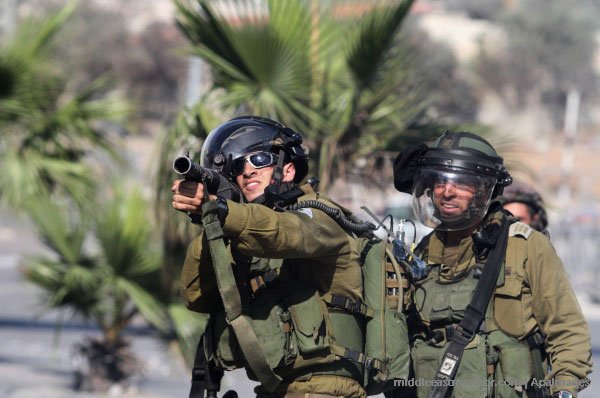
When is a Canadian who leaves this country to join a foreign military force and participate in the killing of innocent civilians, including children, called a “terror tourist” and sent to jail? The answer is: Only when that person joins a military force the Conservative government disagrees with.
Numerous ministers in the current federal government have loudly denounced the radicalization of Canadian youth in foreign wars. Last year, the Conservatives passed a law that sets a maximum fifteen year prison sentence for “leaving or attempting to leave Canada” to commit terrorism. Jason Kenney, the minister for multiculturalism, recently said the government is trying “to monitor networks that recruit and radicalize youth.”
Last month, Somali-Canadian Mohamed Hersi was sentenced to ten years in prison for attempting to join the al-Shabab militia in Somalia. Arrested at Toronto’s Pearson airport before leaving, Hersi was not found guilty of committing or plotting a specific act of violence, but according to the presiding judge, was “poised to become a terror tourist.”
Yet our government does nothing to hundreds of other Canadians who join a different foreign military force which daily terrorizes millions of people and often uses explosives to kill thousands — most of whom are civilians.
It’s unknown exactly how many Canadians are participating in Israel’s ongoing attacks on Gaza but an Israeli military spokesperson has said there were 139 Canadians in the Israeli military in 2013. The Nefesh B’Nefesh Lone Soldiers Program, an organization supporting the Israeli military, has referred to 145 Canadians in the Israeli military. That figure, however, only refers to what the organization calls Canadian “lone soldiers” — soldiers without family in Israel.
Breaking the stereotype of radicalized youth who join terror groups, recent media reports suggest that most of the Canadians joining the Israeli military are children of lawyers, doctors and other professionals. When thirty individuals attended the 2012 launch of a Toronto support group for Parents of Lone Soldiers, it took place at the home of Perla and Ron Riesenbach. The latter is a vice-president at the University of Toronto’s Baycrest Health Sciences Centre.
Earlier this month the French language website La Presse quoted a McGill University law student, Menachem Freedman, who recently completed a stint with the Israeli military and now does legal work for the British Columbia Civil Liberties Association.
A partner in a Toronto law firm, Audrey Shecter has two kids with Israeli military experience. According to the National Post, Shecter’s son completed 27 months with the Israeli military in February and her daughter, Orli Broer, currently serves on a base in the illegally occupied West Bank.
Broer, a 19-year-old Torontonian, who is in a unit that processes visas and other paperwork, helps to deny Palestinians freedom of movement in their own homeland. “It’s my home and I have to protect my home,” the Canadian born and raised Broer told the National Post.
While the Foreign Enlistment Act technically prohibits Canadians from recruiting for a foreign army, there are a number of organizations that help individuals enlist in the Israeli military. At its Toronto office, the Friends of Israeli Scouts’ Garin Tzabar program provides Hebrew lessons and support services, as well as help with transport and accommodation in Israel, for twenty-five to thirty Canadian “lone soldiers” each year.
According to a Garin Tzabar spokesperson who spoke to La Presse, the recent killing and destruction in Gaza has prompted a flood of inquiries about joining the Israeli military.
Part of the tab for lone soldier support services is picked up by Canadian taxpayers through tax credits for “charitable” donations. The Israel-based Lone Soldier Center has Canadian charitable status through the Ne’eman Foundation. So does the International Christian Embassy Jerusalem, which has, according to its website, sponsored “fun activities” for “lone soldiers.”
Financial backing for lone soldiers reaches the top echelons of the Canadian business world. Billionaire Toronto couple Gerry Schwartz and Heather Reisman created the Heseg Foundation for Lone Soldiers. Reisman and Schwartz provide up to $3 million per year for post-military scholarships for these non-Israeli soldiers.
Members of the Israeli high command — Heseg’s board has included a number of generals and a former head of the secret service Mossad — say “lone soldiers” are of value beyond their military capacities. Foreigners volunteering to fight for Israel are a powerful symbol to reassure Israelis weary of their country’s violent behavior. Schwartz and Reisman’s support for Heseg has spurred a campaign to boycott the Indigo, Chapters and Cole bookstore chain they own.
Canadians in the Israeli military benefit from various Canadian-financed support programs and may also find other Canadians stocking their equipment. Approximately 150 Canadians serve as volunteers on Israeli army supply bases each year through the Zionist organization Sar-El. That organization takes out ads in the Canadian Jewish News calling on individuals to “Express your Zionism by serving as a civilian volunteer on an Israeli army supply base.”
There are a number of other registered Canadian “charities” that aid the Israeli army. Money sent to Disabled Veterans of Israel or Beit Halochem (Canada) and Canadian Magen David Adom for Israel support the Israeli military in different ways. Established in 1971, the Association for the Soldiers of Israel – Canada, which gives tax receipts through the Canadian Zionist Cultural Association, provides financial and “moral” support to active duty soldiers.
Various Canadian organizations have long supported the Israeli military and individuals from this country have directly participated in its violence. At least 25 volunteers from the Greater Toronto Area fought in Gaza during Operation Cast Lead, the three-week assault in late 2008 and early 2009, which left some 1,400 Palestinians dead.
Canada’s military contribution to the conquest of Palestine predates the creation of Israel.
During the First World War, Québec City-born Lieutenant General Sir Charles MacPherson Dobell, fresh from leading the Anglo-French conquest of German West Africa, was given a command position in the 1917 Egyptian expeditionary force sent to seize Gaza from the Ottomans. Additionally, as many as four hundred Canadians (approximately half recruited specifically for the task) fought in British General Edmund Allenby’s Jewish Legion that helped conquer Palestine.
A number of Canadians, with at least tacit support from the Ottawa authorities, played a direct role in “de-Arabizing” Palestine in 1947 and 1948. Representatives from the Haganah, the primary Zionist military force behind the Nakba — the ethnic cleansing leading to Israel’s foundation — recruited three hundred experienced Canadian soldiers.
The heir to the menswear firm Tip Top Tailors, Ben Dunkelman, was Haganah’s main recruiter in Canada. He claimed that “about 1,000” Canadians “fought to establish Israel.” During the Nakba, Israel’s small air force was almost entirely foreign, with at least 53 Canadians, including 15 non-Jews, enlisted.
Given this country’s past, perhaps today’s double standard about “terror tourism” is not surprising. But those of us who want a just Canadian foreign policy must nonetheless expose our government’s hypocrisy.
While al-Shabab has committed many reprehensible acts and espouses a terribly repressive ideology, the group’s growth and radicalization is largely a response to the 2006 US-sponsored foreign invasion of Somalia that has left tens of thousands of Somalis dead and hundreds of thousands displaced.
On the other hand, it’s as if the Canadians fighting with Israel are unsatisfied with their and their ancestors’ dispossession of First Nations in North America and now want to help colonize yet another indigenous people.
The double standard is extreme. It is illegal for Somali Canadians to fight in that country but it is okay for Canadian Jews to kill Palestinians in Gaza. And the government will give you a charitable tax credit if you give money to support the latter.
Fortunately, activists in one country have made strides on this issue. A Palestine solidarity group in South Africa recently launched a case against citizens of that country who have served in the Israeli military.
Some have suggested another solution. Eminent Canadian historian Jack Granatstein recently said: “In my view, no one who is a Canadian should be able to enlist in some other country’s military and keep his Canadian citizenship.”
Canadians of good conscience must at least insist upon fairness and an end to an outrageous double standard.
Judge Finds Courts Cannot Protect US Citizens Tortured by US Government Officials Abroad
By Kevin Gosztola | Firedoglake | June 17, 2014
A federal district court dismissed a case that was brought by the American Civil Liberties Union on behalf of a United States citizen and against US government officials who allegedly tortured, abused and subjected him to rendition and incommunicado detention in Kenya, Somalia and Ethiopia. The dismissal was another stark example of how it is nearly impossible for torture victims to push for justice in an American court of law.
Amir Meshal was in the Horn of Africa when, on January 24, 2007, Kenyan soldiers captured and interrogated him. He was “hooded, handcuffed and flown to Nairobi, where he was taken to the Ruai Police Station and questioned by an officer of Kenya’s Criminal Investigation Department” and was told that the police had to “find out what the United States wanted to do with him before he could send him back to the United States.” He remained in detention without access to a telephone or his attorney for a week, according to the US District Court of the District of Columbia’s decision [PDF].
On February 3, “three Americans,” who turned out to be FBI agents, interrogated Meshal and told him he would be handed over to the Kenyans and remain stuck in a “lawless country” if he did not cooperate. The agents also accused him of “having received weapons and interrogation resistance training in an al Qaeda camp.” Supervising Special Agent Chris Higgenbotham, one of the officials sued, threatened Meshal with being transferred to Israel where the Israelis would “make him disappear.” Meshal was informed that another US citizen he had met in Kenya, Daniel Maldonado, who was also seized by Kenyan soldiers, “had a lot to say about” him and his story “would have to match.”
Meshal was flown by Kenyan officials to Somalia with twelve others on February 9. He was “detained in handcuffs in an underground room with no windows or toilets,” which was referred to as “the cave.” This was allegedly to prevent pressure from Kenyan courts to halt his detention and interrogation by FBI agents.
About a week later, Meshal was transported in handcuffs and a blindfold to Addis Ababa, Ethiopia. He was held there in incommunicado detention for a week before Ethiopian officials started \regularly transporting him to a villa with other prisoners where he could be interrogated by FBI agents. He remained in detention for three months and was moved into solitary confinement twice.
Finally, on May 24, he was taken to the US Embassy in Addis Ababa and flown back to the US. He was detained for four months and lost eighty pounds. US officials never charged him with a crime.
Judge Emmet G. Sullivan, who was appointed by President Bill Clinton, wrote in the decision, “The facts alleged in this case and the legal questions presented are deeply troubling.” But, he added, “Although Congress has legislated with respect to detainee rights, it has provided no civil remedies for US citizens subject to the appalling mistreatment Mr. Meshal has alleged against officials of his own government.”
In the past couple of years, Sullivan acknowledged, three federal appeals courts, including the appeals court for the DC Circuit, had rejected cases brought by citizens, including military contractors, who alleged they had been tortured or abused by US government officials. He claimed, “Only the legislative branch can provide United States citizens with a remedy for mistreatment by the United States government on foreign soil; this court cannot.”
ACLU National Security Project Director Hina Shamsi reacted, “While we appreciate the court’s outrage at the appalling mistreatment Mr. Meshal suffered at the hands of his own government, we are deeply disappointed at the court’s conclusion that it does not have the power to provide him a remedy.
“It is a sad day for Mr. Meshal and for all Americans, who have a right to expect better of their government and their courts than immunity for terrible government misconduct,” Shamsi added.
The judge’s decision “sends a deeply troubling and negative signal,” Shamsi told Firedoglake. “We’re considering our next steps in this case.”
Meshal was only seeking to hold particular US government officials responsible for the torture and abuse he had experienced. Nonetheless, Sullivan essentially accepted the government’s “national security” argument—that Meshal was “attacking the nation’s foreign policy, specifically joint operations in the Horn of Africa and executive policies which permit FBI agents to conduct and participate in investigations abroad.”
“As the government points out, these claims have the potential to implicate ‘national security threats in the Horn of Africa region; substance and sources of intelligence; the extent to which each government in the region participates in or cooperates with U.S. operations to identify, apprehend, detain, and question suspected terrorists on their soil; [and] the actions taken by each government as part of any participation or cooperation with U.S. operations.’”
In other words, allowing Meshal to sue US government officials would interfere with affairs that were entirely in the control of the Executive Branch and violate separation of powers. US government officials can engage in all manner of conduct against an individual so long as he or she is in the custody of a foreign government.
Jose Padilla, a US citizen who was detained as an enemy combatant and allegedly tortured for three years while he was in US military custody on the mainland, had his case dismissed. A US citizen and government contractor who alleged he had been “illegally detained, interrogated and tortured for nearly ten months on a US military base in Iraq” had his case dismissed. And US citizens Donald Vance and Nathan Ertel, who were US government contractors allegedly detained, arrested and tortured by the US military in Iraq, had their case dismissed.
These were the cases that Sullivan believed were “binding precedent” he had to follow yet he noted that a dissenting opinion in Vance’s case had warned that the judicial branch was “creating a doctrine of constitutional triviality where private actions are permitted only if they cannot possibly offend anyone anywhere.”
Judge Ann Claire Williams added, “That approach undermines our essential constitutional protections in the circumstances when they are often most necessary.” Sullivan added that the court feared this prediction was “arguably correct.”
FBI Supervising Special Agent Chris Higgenbotham forced Meshal to sign forms and told Meshal when he did not want to sign, “If you want to go home, this will help you get there. If you don’t cooperate with us, you’ll be in the hands of the Kenyans, and they don’t want you.”
Another Supervising Special Agent, Steve Hersem, told Meshal if he “confessed his connection to al Qaeda” only then would he be granted due process in a civilian court. Otherwise, if he didn’t “confess” he would be transferred to Somalia. Hersem also told Meshal he would “send him to Egypt, where he would be imprisoned and tortured if he did not cooperate and admit his connection with al Qaeda, and told him ‘you made it so that even your grand-kids are going to be affected by what you did.’”
While in Ethiopia, an unidentified FBI agent said he would only be sent home if he was “truthful.” Meshal repeatedly ask to speak to his lawyer but agents denied his requests.
The reality is that covert operations in America’s dirty wars are now more sacrosanct to the US government than the rights US citizens are supposed to enjoy.
US government officials deliberately refused to provide Meshal with a probable cause hearing or some form of due process. In fact, one of the only reasons the US Embassy got involved and he was eventually transported back to the US is because McClatchy Newspapers became aware of his detention and published a story under the headline, “American’s rendition may have broken international, US laws.”
If a US media organization had not found out about his mistreatment, how much longer would he have been held and interrogated by FBI agents who were threatening him daily?
Hillary Clinton and the Weaponization of the State Department
By JP Sottile | News Vandal | June 5, 2014
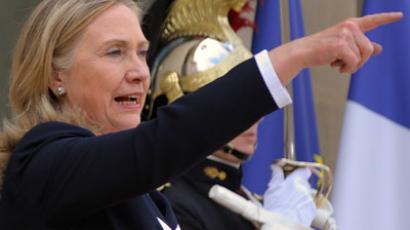
On May 23, 2012, then-Secretary of State Hillary Clinton went to the Special Operations Forces Industry Conference (SOFIC) trade show in Tampa, Florida to share her vision of “smart power” and to explain the State Department’s crucial role in extending the reach and efficacy of America’s growing “international counterterrorism network.”
First, there is such a thing as a “Special Operations Forces Industry Conference trade show.” Without some keen reporting by David Axe of Wired, that peculiar get-together might’ve flown completely under the radar—much like the shadowy “industry” it both supports and feeds off of like a sleek, camouflaged lamprey attached to a taxpayer-fattened shark.
Second, “special operations” have officially metastasized into a full-fledged industry. United States Special Operations Command (USSOCOM) is located at MacDill Air Force Base in Tampa and, therefore, conveniently located near the special operations trade show, which happened again this year at the Tampa Convention Center. The theme was “Strengthening the Global SOF Network” and the 600,000-square-foot facility was filled with targets of opportunity for well-connected and well-heeled defense contractors.
According to the SOFIC website, this year’s conference afforded attendees “the opportunity to engage with USSOCOM Program Executive Officers, Science and Technology Managers, Office of Small Business Programs and Technology & Industry Liaison Office representatives, and other acquisition experts who will identify top priorities, business opportunities, and interests as they relate to USSOCOM acquisition programs.”
Third, Hillary’s widely-ignored speech marked a radical departure from the widely-held perception that the State Department’s diplomatic mission endures as an institutional alternative to the Pentagon’s military planning. Instead, Secretary Clinton celebrated the transformation of Foggy Bottom into a full partner with the Pentagon’s ever-widening efforts around the globe, touting both the role of diplomats in paving the way for shadowy special ops in so-called “hot spots” and the State Department’s “hand-in-glove” coordination with Special Forces in places like Pakistan and Yemen.
Finally, with little fanfare or coverage, America’s lead diplomat stood before the shadow war industry and itemized the integration of the State Department’s planning and personnel with the Pentagon’s global counter-terrorism campaign which, she told the special operations industry, happen “in one form or another in more than 100 countries around the world.”
If this isn’t entirely unexpected, consider the fact that under then-Secretaries of State Colin Powell and Condoleezza Rice, the State Department fought attempts by the Pentagon to trump its authority around the globe and, as reported by the Washington Post, “repeatedly blocked Pentagon efforts to send Special Operations forces into countries surreptitiously and without ambassadors’ formal approval.”
But that was before Hillary brought her “fast and flexible” doctrine of “smart power” to Foggy Bottom and, according to her remarks, before she applied lessons learned from her time on the Senate Armed Services Committee to launch the first-ever Quadrennial Diplomacy and Development Review, which she modeled on the Pentagon’s Quadrennial Defense Review. That Pentagon-style review spurred the creation of the Bureau of Conflict and Stabilization Operations to “advance the U.S. government’s foreign policy goals in conflict areas.”
According to a Congressional Research Service analysis, the initial intent of the Conflict Bureau was to replace the ineffectual Office of the Coordinator of Reconstruction and Stabilization, which was created in 2004 to help manage “stabilization” efforts in two nations the U.S. was actively destabilizing—Afghanistan and Iraq.
But the new, improved bureau does more than just react to messes made by unlawful invasions or direct costly remediation efforts in war zones—it also collaborates with “relevant partners” in the Department of Defense and NATO “to harmonize civilian and military plans and operations pertaining to conflict prevention, crisis response, and stabilization.”
This integrated relationship between State and Defense was confirmed by U.S. Special Operations chief Admiral William McRaven shortly after Hillary’s speech. When asked about the “unlikely partnership,” McRaven assured DefenseNews that SOCOM has “an absolutely magnificent relationship with the State Department” and that SOCOM doesn’t “do anything that isn’t absolutely fully coordinated and approved by the U.S. ambassador and the geographic combatant commander.”
As David Axe aptly described it in Wired, “Together, Special Operations Forces and State’s new Conflict Bureau are the twin arms of an expanding institution for waging small, low-intensity shadow wars all over the world.”
In fact, during Hillary’s time as America’s chief diplomat, the State Department embraced the shadowy edge of U.S. foreign policy where decision-makers engage in activities that look like war, sound like war and, if you were to ask civilians in places like Yemen and Pakistan, feel a lot like war, but never quite have to meet the Constitutional requirement of being officially declared as war.
The Whole-of-Government Shift
Once upon a time, “low-intensity shadow wars” were the Congressionally-regulated bailiwick of the Central Intelligence Agency. But 9/11 changed everything. However, the excesses of the Bush Administration led many to hope that Obama could and would change everything back or, at least, relax America’s tense embrace of “the dark side.”
Although the new administration did officially re-brand “The War on Terror” as “Overseas Contingency Operations,” Team Obama employed an increasingly elastic interpretation of the 9/11-inspired Authorization for Use of Military Force and expanded covert ops, special ops, drone strikes and regime change to peoples and places well-beyond the law’s original intent, and certainly beyond the limited scope of CIA covert action.
Obama’s growing counter-terrorism campaign—involving, as Secretary Clinton said, “more than 100 countries”—took flight with a new, ecumenical approach called the “Whole-of-Government” strategy. Advanced by then-Secretary of Defense Bill Gates and quickly adopted by the new administration in early 2009, this strategy catalyzed an institutional shift toward inter-agency cooperation, particularly in the case of “state-building” (a.k.a. “nation building”).
During remarks to the Brookings Institution in 2010, Secretary Clinton explained the shift: “One of our goals coming into the administration was… to begin to make the case that defense, diplomacy and development were not separate entities, either in substance or process, but that indeed they had to be viewed as part of an integrated whole and that the whole of government then had to be enlisted in their pursuit.”
Essentially, the Whole-of-Government approach is a re-branded and expanded version of Pentagon’s doctrine of “Full-Spectrum Dominance.” Coincidentally, that strategy was featured in the Clinton Administration’s final Annual Report to the President and Congress in 2001. It defined “Full-Spectrum Dominance” as “an ability to conduct prompt, sustained, and synchronized operations with forces tailored to specific situations and possessing freedom to operate in all domains—space, sea, land, air, and information.”
In 2001, Full-Spectrum Dominance referred specifically to 20th Century notions of battlefield-style conflicts. But the “dark side” of the War on Terror stretched the idea of the battlefield well-beyond symmetrical military engagements. “Irregular warfare” became the catchphrase du jour, particularly as grinding campaigns in Afghanistan and Iraq exposed the reality that the full spectrum still wasn’t enough.
An assessment by the Congressional Research Service identified the primary impetus for the Whole-of-Government “reforms” embraced by Team Obama as the “perceived deficiencies of previous inter-agency missions” during the military campaigns in Afghanistan and Iraq. Those missions failed to address a myriad of problems created—culturally, economically and politically—by the wholesale bombing and occupation of those countries. The Full-Spectrum was half-baked. Lesson learned.
But the lesson wasn’t that the U.S. should avoid intervention, regime change or unleashing nascent civil, ethnic or religious conflicts. Instead, the lesson was that the “Whole-of-Government” must be marshaled to fight a worldwide array of Overseas Contingency Operations in “more than 100 countries.”
This Whole-of-Government shift signaled a renewed willingness to engage on variety of new fronts—particularly in Africa—but in a “fast and flexible” way. With other agencies—like the State Department—integrated and, in effect, fronting the counter-terrorism campaign, the military footprint becomes smaller and, therefore, easier to manage locally, domestically and internationally.
In some ways, the Whole-of-Government national security strategy is plausible deniability writ-large through the cover of interagency integration. By merging harder-to-justify military and covert actions into a larger, civilian-themed command structure, the impact of the national security policy overseas is hidden—or at least obfuscated—by the diplomatic “stabilization” efforts run through the State Department—whether it’s the Conflict Bureau working against Joseph Kony’s Lord’s Resistance Army in Central Africa, “stabilizing” post-Gaddafi Libya or spending $27 million to organize the opposition to Bashar al-Assad’s Syrian regime.
The Pass Key
The cover of diplomacy has traditionally been an effective way to slip covert operators into countries and the State Department’s vast network of embassies and consulates still offers an unparalleled “pass-key” into sovereign nations, emerging hot spots and potential targets for regime change. In 2001, the Annual Report to the President and Congress foresaw the need for more access: “Given the global nature of our interests and obligations, the United States must maintain the ability to rapidly project power worldwide in order to achieve full-spectrum dominance.”
Having the way “pre-paved” is, based on Hillary’s doctrinal shift at State, a key part of the new, fuller-spectrum, Whole-of-Government, mission-integrated version of diplomacy. At the SOFIC’s Special Operations Gala Dinner in 2012, Hillary celebrated the integration of diplomatic personnel and Special Operations military units at the State Department’s recently created Center for Strategic Counterterrorism Communications—a “nerve center in Washington” that coordinates “military and civilian teams around the world” and serves “as a force multiplier for our embassies’ communications efforts.”
As with most doors in Washington, that relationship swings both ways and mission-integrated embassies have served as an effective force multiplier for the Pentagon’s full spectrum of activities, particularly around Africa.
In his 2011 testimony before the House Foreign Affairs Committee Subcommittee on Africa, Deputy Assistant Secretary of State for African Affairs Don Yamamoto noted that State had “significantly expanded the number of DoD personnel who are integrated into embassies across the continent over the past three years,” and read a surprisingly long laundry list of collaborative efforts between State and the United States Africa Command (AFRICOM), including: “reduction of excess and poorly secured man-portable air defense systems (MANPADS); Defense Sector Reform in Liberia, DRC, and South Sudan; counterpiracy activities off the Somali coast; maritime safety and security capacity building; and civil-military cooperation.”
It seems that “civil-military cooperation” is a primary focus of the State Department in Africa. Most notably, Yamamoto told Congress that “embassies implement Department of State-funded Foreign Military Financing (FMF) and International Military Education and Training (IMET) programs, which further U.S. interests in Africa by helping to professionalize African militaries, while also assisting our African partners to be more equipped and trained to work toward common security goals.”
As the ever-vigilant Nick Turse recently reported, U.S. presence on the continent has only grown since that testimony was given in 2011. On TomDispatch.com, Turse identified the infamous attack on Benghazi on September 11, 2012 as the catalyst for “Operation New Normal”—the continent-wide response to, quite ironically, the political potboiler still simmering around Secretary Clinton. Whether or not Congressional Republicans find anything more than incompetence at the root of Benghazi, the U.S. military certainly finds itself in a “new normal” of increased activity in response to the forces—and the weaponry—unleashed by U.S.-led regime change in Libya. According to Turse, the U.S. is “now conducting operations alongside almost every African military in almost every African country and averaging more than a mission a day.”
Those missions are, of course, integrated with and augmented by the State Department’s Conflict Bureau which has used a variety of state-building programs and its diplomatic “pass key” in places like Libya, Nigeria, Kenya, South Sudan, Somalia, Democratic Republic of the Congo and six other African nations, all to develop a growing roster of “host country partners.”
Establishing “host country partners” is the nexus where the State Department, its Conflict Bureau and the AFRICOM meet—implementing the Whole-of-Government strategy in emerging or current conflict zones to fuse a mounting counter-terrorism campaign with stabilization, modernization and state-building initiatives, particularly in oil and resource-rich areas like the Niger River Delta, Central Africa and around AFRICOM’s military foothold on the Horn of Africa.
As Richard J. Wilhelm, a Senior Vice President with defense and intelligence contracting giant Booz Allen Hamilton, pointed out in a video talk about “mission integration,” AFRICOM’s coordination with the Departments of State and Commerce, USAID is the “most striking example of the Whole-of-Government approach.”
And this is exactly the type of “hand-in-glove” relationship Secretary Clinton fostered throughout her tenure at State, leveraging the resources of the department in a growing list of conflict areas where insurgents, terrorists, al-Qaeda affiliates, suspected militants or uncooperative regimes threaten to run afoul of so-called “U.S. interests”.
Ultimately, it became a hand-in-pocket relationship when Clinton and Defense Secretary Gates developed the Global Security Contingency Fund (GSCF) to “incentivize joint planning and to pool the resources of the Departments of State and Defense, along with the expertise of other departments, to provide security sector assistance for partner countries so they can address emergent challenges and opportunities important to U.S. national security.”
Although he’s been criticized as feckless and deemed less hawkish than Secretary Clinton, President Obama’s newly-proposed Counterterrorism Partnership Fund (CTPF) is the logical extension of the Clinton-Gates Global Security Contingency Fund and epitomizes the Whole-of-Government shift.
The $5 billion Obama wants will dwarf the $250 million pooled into the GSCF and will, the President said at West Point, “give us flexibility to fulfill different missions including training security forces in Yemen who have gone on the offensive against al Qaeda; supporting a multinational force to keep the peace in Somalia; working with European allies to train a functioning security force and border patrol in Libya; and facilitating French operations in Mali.”
That “flexibility” is exactly what Hillary Clinton instituted at State and touted at the SOFIC conference in 2012. It also portends a long-term shift to less invasive forms of regime change like those in Yemen, Libya, Syria and Ukraine, and an increased mission flexibility that will make the Authorization for the Use of Military Force functionally irrelevant.
Normalizing the War on Terror
The ultimate outcome of this shift is, to borrow from Nick Turse, yet another “new normal”—the new normalization of the War on Terror. What the adoption of the Whole-of-Government/mission integration approach has done is to normalize the implementation of the re-branded War on Terror (a.k.a. Overseas Contingency Operations) across key agencies of the government and masked it, for lack of the better term, under the rubric of stabilization, development and democracy building.
It is, in effect, the return of a key Cold War policy of “regime support” for clients and “regime change” for non-client states, particularly in strategically-located areas and resource-rich regions. Regimes—whether or not they actually “reflect American values”—can count on U.S. financial, military and mission-integrated diplomatic support so long as they can claim to be endangered… not by communists, but by terrorists.
And because terrorism is a tactic—not a political system or a regime—the shadowy, State Department-assisted Special Ops industry that fights them will, unlike the sullen enthusiasts of the Cold War, never be bereft of an enemy.
Bring Back Our Girls!

By Gary Corseri | Dissident Voice | May 25, 2014
From the droned villages of Pakistan and Afghanistan–
Bring back our girls!
From Nigeria, and the brothels of the Philippines–
Bring back our girls!
From the ruined cities of Detroit and Newark
And the ravished American Dream–
Bring back our girls!
From “Disaster Capitalism” and twerking jerks–
Bring back our girls!
From the “Occupied Territories” of Palestine
And from Israeli Porn Kings–
Bring back our girls!
From the “royal” slave-holders of Arabia,
And the crapulous monarchs of Britain–
Bring back our girls!
From our culture of destitution and prostitution–
Bring back our girls!
From “entrepreneurs” and exploiters
Of sex and violence and from those who confound and abuse–
Bring back our girls!
Restore them to their birthright dignity:
Co-creators; mothers; sisters; daughters; friends.
Bring back our girls
From the wars that have butchered them
(Restore them!);
From the silence that has answered their prayers
(Answer now…);
From the callous hypocrisy
Of scoffed-at dreams and snuffed-out hopes–
Bring back our girls!
Oppose Force to Save Starving Syrians
By David Swanson | FDL | February 27, 2014
I’ve been asked to debate Danny Postel on the question of Syria, and so have read the op-ed he co-authored with Nader Hashemi, “Use Force to Save Starving Syrians.”
Excellent responses have been published by Coleen Rowley and Rob Prince and probably others. And my basic thinking on Syria has not changed fundamentally since I wrote down my top 10 reasons not to attack Syria and lots and lots of other writing on Syria over the years. But replying to Postel’s op-ed might be helpful to people who’ve read it and found it convincing or at least disturbing. It might also allow Postel to most efficiently find out where I’m coming from prior to our debate.
So, here’s where I’m coming from. Postel’s op-ed proposes the use of force as if force hadn’t been tried yet, as if force were not in fact the very problem waiting to be solved. What he is proposing is increased force. The arming and funding and training of one side in Syria by the CIA, Saudi Arabia, et al, and the other side by Russia, et al, is not enough; more is needed, Postel believes. But “force” is a very non-descriptive term, as are all the other terms Postel uses to refer to what he wants: “air cover,” “coercive measures,” “Mr. Assad … [should] be left behind.”
I find it hard to imagine people on the ground while NATO dropped thousands of bombs on Libya pointing to the sky and remarking “Check out the air cover!”
Or this: “What happened to your children, Ma’am?” “They experienced some coercive measures.”
Or this: “What became of Gaddafi?” “Oh, him? He was left behind.”
When people who experience modern wars that wealthy nations launch against poor ones talk about them, they describe detailed horror, terror, and trauma. They recount what it’s like to try to hold a loved one’s guts into their mutilated body as they gasp their last. Even the accounts of recovering and regretful drone pilots in the US have much more humanity and reality in them than do Postel’s euphemisms.
I’m not questioning the sincerity of Postel’s belief that, despite it’s long record of abysmal failure, humanitarian war would find success in a nation as divided as Syria, of all unlikely places. But Postel should trust his readers to share his conclusion after being presented with the full facts of the case. If Postel believes that the people whose lives would be ended or devastated by “air cover” are out-weighed by the people who he believes would be thereby saved from starvation, he should say so. He should at the very least acknowledge that people would be killed in the process and guesstimate how many they would be.
Postel claims Somalia as a past example of a “humanitarian intervention,” without dwelling on the chaos and violence aggravated and ongoing there. This seems another shortcoming to me. If you are going to make a moral decision, not only should it include the negative side of the ledger, but it should include the likely medium-term and long-term results, good and bad. Looking at Somalia with a broader view hurts Postel’s case, but so does looking at Libya, Afghanistan, or Iraq. Studies by Erica Chenoweth and others have documented that violent solutions to oppression and tyranny are not only less likely to succeed, but if they succeed their success is shorter lived. Violence breeds violence. “Force,” translated into the reality of killing people’s loved ones, breeds resentment, not reconciliation.
So, I think Postel’s case for dropping tons of deadly “coercive measures” on Syria would be a weak one even if it were likely to resemble his outline. Sadly, it isn’t. The war on Libya three years ago was sold as an emergency use of “force” to protect supposedly threatened people in Benghazi. It was immediately, illegally, predictably, cynically, and disastrously turned into a campaign of bombing the nation to overthrow its government — a government that, like Syria’s, had long been on a Pentagon list to be overthrown for anything but humanitarian reasons. Postel presents a quick and antiseptic “leaving behind” operation to provide food to the starving, but surely he knows that is not what it would remain for any longer than it takes to say “R2P.” Why else does Postel refer so vaguely to leaving Assad behind?
It may be worth noting that it’s not aid workers advocating for “coercion” strikes on Syria. I spoke with a US government aid worker in Syria some months back who had this to say:
“Before we contemplate military strikes against the Syrian regime, we would do well to carefully consider what impact such strikes would have on our ongoing humanitarian programs, both those funded by the US and by other countries and international organizations. These programs currently reach hundreds of thousands of vulnerable people throughout Syria, in areas controlled both by the regime and the opposition. We know from past military interventions, such as in Yugoslavia and Iraq that airstrikes launched for humanitarian reasons often result in the unintended deaths of many civilians. The destruction of roads, bridges, and other infrastructure, which such airstrikes may entail, would significantly hamper the delivery of humanitarian aid in Syria.
“The provision of this assistance in regime controlled areas requires the agreement, and in many cases the cooperation, of the Assad government. Were the Assad regime, in response to US military operations, to suspend this cooperation, and prohibit the UN and nongovernmental organizations from operating in territory under its control, hundreds of thousands of Syrian civilians would be denied access to food, shelter, and medical care. In such a scenario, we would be sacrificing programs of proven effectiveness in helping the people of Syria, in favor of ill considered actions that may or may not prevent the future use of chemical weapons, or otherwise contribute to U.S. objectives in any meaningful way.”
Let’s grant that the crisis has continued for months and worsened. It remains the fact that it is advocates of war advocating war, not aid workers advocating war. The option of ceasing to arm both sides, and of pursuing a negotiated settlement, is simply ignored by the war advocates. The option of nonviolent efforts to deliver aid is avoided entirely. The failure to provide adequate aid to refugees who where that can be reached seems far less pressing than the failure to provide aid where that failure can become a justification for an escalated war.
“Humanitarian interventions,” Postel writes, “typically occur when moral principles overlap with political interests.” This seems to be an acknowledgment that political interests are something other than moral. So, there’s no cry for “humanitarian intervention” in Bahrain or Palestine or Egypt because it doesn’t fit “political interests.” That seems like an accurate analysis. And presumably some interventions that do fit political interests are not moral and humanitarian. The question is which are which. Postel believes there have been enough humanitarian interventions to describe something as being typical of them, but he doesn’t list them. In fact, the record of US military and CIA interventions is a unbroken string of anti-humanitarian horrors. And in most cases, if not every case, actual aid would have served humanity better than guns and bombs, and so would have ceasing pre-existing involvement rather than escalating it and calling that an intervention.
But once you’ve accepted that the tool of war should be encouraged in certain cases, even though it’s misused in other cases, then something else has to be added to your moral calculation, namely the propagation of war and preparations for war. Those of us who cannot find a single war worth supporting differ only slightly perhaps from those who find one war in a hundred worth backing. But it’s a difference that shifts opposition to support for an investment that costs the world some $2 trillion a year. The United Nations believes that $30 billion a year could end serious starvation around the world. Imagine what, say, $300 billion could do for food, water, medicine, education, and green energy. Imagine if the United States were to offer that kind of aid to every nation able to peacefully and democratically accept it. Would polls continue to find the US viewed as the greatest threat to peace on earth? Would the title of most beloved nation on earth begin to look plausible?
Members of the nonviolent peace force, Nobel Peace Prize Laureate Mairead Maguire, and other advocates of de-escalation in Syria traveled freely around Syria some months back. How were they able to do that? What might trainers in creative nonviolent action offer Syria that CIA and military trainers aren’t offering? The alternative is never even considered by advocates of war-or-nothing. Postel wants to back “democratically oriented” rebel groups, but is violence clearly democratically oriented? Turning our eyes back on ourselves suggests a rather disturbing answer. In September 2013, President Obama gave us the hard sell. Watch these videos of suffering children, he said, and support striking their nation with missiles or support their ongoing suffering. And a huge majority in the US rejected the idea that those were the only two choices. A majority opposed the strikes. An even larger majority opposed arming the rebels. And a large majority favored humanitarian aid. There is a case to be made that democracy would be better spread by example than by defying the will of the US people in order to bomb yet another nation in democracy’s name.
Postel, to his credit, calls the “Responsibility to Protect” a “principle.” Some have called it a “law.” But it cannot undo the UN Charter. War being illegal, its use damages the rule of law. That result must also be factored into a full moral calculation of how to act. Act we must, as Postel says repeatedly. The question is how. Rob Prince presents a useful plan of action in the article linked above.
Postel’s most persuasive argument is probably, for many readers, his contention that only threatening to act will save the day. He claims that Syria has responded positively to threats of force. But this is not true. Syria was always willing to give up its chemical weapons and had long since proposed a WMD-free Middle East — a proposal that ran up against the lack of “political interest” in eliminating Israel’s illegal weapons. Also false, of course, were claims by the Obama administration to know that Assad had used chemical weapons. See Coleen Rowley’s summary of how that case has collapsed in the article linked above.
Granted, there can be a good honest case for an action for which misguided, false, and fraudulent cases have been offered. But I haven’t seen such a case yet for taking an action in Syria that would, to be sure, dramatically declare that action was being taken, release a lot of pent-up tension, and enrich Raytheon’s owners, but almost certainly leave Syrians, Americans, and the world worse off.

U.K. University Takes Moral High Ground in Ending Its $2 Million Investment in U.S. Drones
By Noel Brinkerhoff | AllGov | October 5, 2013
Officials at a top university in the United Kingdom have bowed to public pressure and withdrawn the school’s investment in U.S. drones.
The University of Edinburgh had a $2 million (£1.2 million) stake in Ultra Electronics, a British firm that manufactures navigation controls for Predator and Reaper unmanned aerial vehicles and ground control stations.
Investing in drone development was deemed not “socially responsible” by the university as well as students and campaign groups that lobbied Edinburgh to pull out of the business.
“The covert US drone program has killed hundreds of civilians and traumatized populations in Pakistan and Yemen,” Catherine Gilfedder of the human rights group Reprieve told The Guardian. “In divesting from Ultra Electronics, Edinburgh University has demonstrated its disapproval of companies profiting from such killings, and the importance of socially responsible investment.”
American drones have been used on covert missions in Pakistan, Yemen, Somalia and other countries. The Bureau for Investigative Journalism says more than 430 strikes have occurred since 2002, killing at least 428 civilians, of whom 173 were children.
In Afghanistan, British drones have been more than three times as likely to lead to strikes as American drones, according to the Bureau’s analysis of drone data recently released by the British government.

Related article
Featured Video

What TURMERIC Really Does to Your BODY: 5 INCREDIBLE Studies
or go to
Aletho News Archives – Video-Images
From the Archives
Wikipedia 2122: The Great Covid Madness
By John Ellwood | TCW Defending Freedom | January 15, 2022
The period 2020-2022 is remembered as the Great Covid Madness.
History has witnessed many periods of mass hysteria including plagues of dancing, witch trials, alien invasion and ghostly apparitions, not to mention the Seattle Windscreen Pitting Epidemic. However, it is likely that the hysteria witnessed during the Great Covid Madness surpassed anything that had gone before or since.
The delusions included… continue
Blog Roll
 Aletho News
- US Envoy’s Logic: Asking ‘Israel’ to Stop Bombing S. Lebanon Is Asking It to “Do Everything”
- Iran vows response if US moves to seize its oil at sea
- US Looks to Revive ‘Prize Courts’ to Seize Iranian Oil Tankers — Reports
- Is Pennsylvania Gov. Josh Shapiro’s using measles scare to push Covid-era public health regulations?
- US accuses China of hacking NASA, Fed and critical infrastructure
- US statement lacks factual evidence and turns facts on their head: China rejects US allegations of cyberattack
- The Measles Message Was Ready Before the Deaths Were Announced
- What TURMERIC Really Does to Your BODY: 5 INCREDIBLE Studies
- What We Know About the Two “Measles Deaths” in Lancaster County, Pennsylvania
- The cult of Fauci cult shows no signs of cooling down
- If Americans Knew
- Gaza isn’t able to recover from famine as acute malnutrition soars across the Strip, new report finds
- Home Invasions and Abductions Across the West Bank
- As acute malnutrition ravages Gaza, Israeli leaders call for starvation policy – Daily Update
- ‘Israel Is Sending Armed Militias Into Gaza to Commit War Crimes – and the IDF Has to Protect Them’
- Fake US think-tank set up and funded by Israel sought to game AI for propaganda
- Schadenfreude: From hidden gas chambers to Israel’s viewing gallows
- How AIPAC keeps its name off candidates’ disclosure lists
- U.S. Treasury Secretary Scott Bessent, Ehud Barak, Soros Fund & Epstein’s corporate web
- Documents Reveal Trail of Unreported Millions From Israeli Military to U.S. Universities
- US military newspaper editor voices censorship fears after being fired
- No Tricks Zone
- 2025 Study: ‘There Exists No Unequivocal Experimental Evidence For The CO2 Greenhouse Effect’
- 2026 Atlantic Cyclone Energy Index Running At 85% Below Normal!
- New Research Shows Soil Respiration And Temperature Drive CO2 Change, Not Humans
- Comparison Of Two German Weather Forecasts: From 25 Years Ago And From Today
- Veteran Swiss Meteorologist On Germany’s Recent Heat Wave: “You’re A Really Crazy Country”
- New Research Documents The Lack Of Any Net Decline In GBR Coral Cover Since The 1980s
- New Study Details Massive Recent Sea Ice Expansion And Cooling In The Greenland Sea
- Germany Also Saw Extreme Drought Conditions In The 1940s…Worse Than Today
- Another New Study Links Modern And Past Global Warming To Natural Changes In Cloud Cover, Not CO2
- Uncertainty In Estimating Solar Forcing Across The Arctic Is 100-350x Larger Than CO2’s Alleged Climate Impact
 Aletho News