Almost 13 years on from the so-called ‘Operation Iraqi Freedom’, a new UN report has documented the continuing ‘staggering’ violence suffered by civilians in Iraq.
According to the report, at least 18,802 civilians were killed and another 36,245 wounded between January 2014 and October 2015, while another 3.2 million people were internally displaced due to violence.
The UN Commissioner for Human Rights has said the death toll in Iraq may even be considerably higher.
It is hard to get one’s head round the suffering the people of Iraq have endured since Bush and Blair’s illegal invasion of 2003. Hundreds of thousands of innocent civilians have been killed in the carnage that engulfed the country after Saddam Hussein was toppled.
“We’ve moved on from the Iraq war, but Iraqis don’t have that choice,” wrote the great John Pilger in 2013.
Yet the very obvious link between the invasion of 2003 and the ongoing violence in Iraq today is something we’re not really supposed to mention.
The reality is that Iraq did not see hundreds of thousands of people killed in the years before 2003, but it did in the years following. So it does seem quite reasonable to infer that something quite important happened in 2003 which led to the huge increase in violence. And that ‘something’ is unlikely to have been Arsenal’s 1-0 FA Cup Final win against Southampton.
John Pilger writes how three years before the invasion of Iraq he drove the length of the country ‘without fear’. “On the way I met people proud, above all, to be Iraqis, the heirs of a civilization that seemed, for them, a presence. Bush and Blair blew all this to bits. Iraq is now a nest of jihadism. Al-Qaeda – like Pol Pot’s “jihadists” – seized the opportunity provided by the onslaught of ‘Shock and Awe’ and the civil war that followed.”
It’s not only in Iraq that ‘staggering’ violence has been unleashed by the US and its allies’ regime change ops.
Libya six years ago enjoyed the highest standard of living in Africa. Education and medical treatment were free for all citizens. Electricity was free too. A bursary, worth $5,000 was given to all mums with new born babies. It was also a very safe country for tourists to visit. In 2005, with UN sanctions lifted, it returned to cruise ship itineraries.
In 2007, it received one million ‘same-day’ visitors.
In 2010, cruises along the coast of Libya were listed in the Daily Telegraph’s ‘Six of the Best’ Exotic Cruises feature.
A year later though, the NATO bombs started to fall in pursuit of ‘regime change’ and Libya’s days as a safe place to live, work and visit were over. Muammar Gaddafi’s warning that many of the so-called anti-government rebels were extremists linked to al-Qaeda was dismissed as the ravings of a madman.
But it wasn’t the ’mad’ Gaddafi who was telling lies in 2011, but the regime changers in suits.
Like Iraq, Libya post-regime change, is a country where violence has become a part of daily life.
Earlier this month, around 60 people were killed and over 200 injured in a bomb attack on a police training centre in Zliten. In November, UNICEF expressed concern over the impact that armed-conflict related violence was having on Libyan children- saying that 270,000 children in Benghazi alone needed some form of support.
The Foreign and Commonwealth Office (FCO) now advises British citizens against all travel to the country which was listed as one of the ‘Six of the Best’ places to cruise just six years ago.
“The situation throughout the country remains dangerous and unpredictable,” the FCO says. “Fighting continues in many parts of Libya. It can be unclear in some areas which faction has control….. There is a high threat from terrorism. There are continued attacks across Libya including in major cities, leaving significant numbers of people dead or injured. There is a high threat of kidnapping throughout Libya. There have been a number of kidnappings, including of British nationals….”
What a truly great job of ‘liberating’ Libya David Cameron and William Hague did!
Syria was also a safe place to live, work and visit before the West’s regime changers got going.
“Despite being depicted in the Western media as a land full of terrorists and similar nasties, Syria is really a safe country to travel in. It is quite safe to walk around at any time of the day or night, which is more than can be said for most Western countries”- these words come not from a SANA press release – but the Lonely Planet ‘travel survival kit’ to Jordan and Syria of 1987. As for being worried about crime, the guide told us “Theft, or more precisely the lack of it, has got to be one of the most refreshing things about travelling in Syria… Your bags will be quite safe left unattended virtually everywhere.”
I travelled around Syria in 1999 and never once felt threatened or in danger. I met some incredibly kind and hospitable people – but no terrorists. As for the lack of theft, I left a bag full of valuables on a table in a canteen at Tishreen University in Latakia, and as my friends assured me, it was still there, with all its contents intact, when I came back.
In 2006, Mary Wakefield, deputy editor of the Spectator magazine, travelled to Syria and like so many others, was pleasantly surprised with what she found. “Assad’s Ba’ath party is a long way from Saddam’s. It has lifted the ban on internet access and mobile phones, and ordinary Syrians seem free not just from fear, but from regular Western misanthropy as well,” she noted.
“Throughout Syria, passers-by paused to say ‘welcome’ and invite me in for mint tea – no furtive looks, no soviet-style reluctance to be singled out.”
A fascinating glimpse of everyday life in pre-war Syria was provided by the BBC/Open University series ‘Syrian School,’ which screened in 2010. “Syria is a country where, from poetry to politics, you can have an intellectual debate. You can re-imagine the world there in a way that we seem to have lost in the West, where even the credit crunch hasn’t dented the orthodoxy of Liberal Capitalism, where “The X-Factor” seems now to have become the cultural pinnacle,” wrote the BBC‘s Max Baring.
With its secular government Syria – like Iraq and Libya – was a bulwark against al-Qaeda and similar terrorist groups. In 2006 the Syrian authorities foiled an attack by Islamist militants on the US Embassy in Damascus.
The US expressed gratitude, but we know from WikiLeaks that secret plans for regime change in Syria were already being hatched.
Under the guise of the ’Arab Spring’, regime change in Damascus would be pursued by funding and arming violent rebels hell-bent on overthrowing President Assad.
The Syrian government did put forward a new constitution in 2012 which ended the Baath party’s forty year monopoly on political rule and genuine moderates embraced the political reform process. But the regime changers continued to pour petrol onto the fire. In 2013, Britain and France pushed other EU members to lift the arms embargo on the so-called Syrian ’rebels‘.
In 2015 the UN estimated that 250,000 people had died in Syria’s war – with more than 11 million people forced from their homes.
Today, travelling around Syria simply isn’t an option for Western tourists. The country where you could walk around safely ‘at any time of the day or night’, is now far too dangerous.
The FCO advises against ‘all travel’ to the country.
Meanwhile the Department of State “continues to warn US citizens against all travel to Syria and strongly recommends that US citizens remaining in Syria depart immediately.”
Syria, like Iraq and Libya, has been engulfed by ‘staggering’ violence directly attributable to the actions of the Western regime changers, and their regional allies.
If these countries had been left alone, it is inconceivable that violence of the scale we have witnessed would have occurred. The governments might have been authoritarian ones which were intolerant of dissent, but the reality is that daily life for the majority of the citizens in the countries concerned was better than it is today. Acknowledging that doesn’t make one an ‘apologist for dictatorship’- just someone who doesn’t try to spin chaos and carnage as ‘success’. In any case, there’s no doubt that some of the crimes of the governments that were targeted for ‘regime change’ were exaggerated, or in some cases even made up by the neocon war lobby. Amnesty International and other human rights organizations found no evidence to back up the NATO claims that Gaddafi ordered his forces to commit mass rapes in 2011.
Saddam’s notorious ’people shredder’ was never found and of course those WMDs which we were told could be assembled in 45 minutes didn’t show up either.
And here is Amnesty’s annual report on Syria from 2010.
It’s hardly impressive, but it’s interesting to compare it to the Amnesty report from the same year on Saudi Arabia, a strong western ally.
If you supported ‘regime change’ in Syria on human rights grounds then logically you would have to support the same in Saudi Arabia, whose record on human rights was worse. But the Western regime changers and ’democracy promoters’ weren’t calling for the toppling of the government in Riyadh, showing the hypocrisy of their position.
The foundation of Islamic State (IS, formerly ISIS/ISIL), which we’re now told is the biggest threat to Western civilization, was a direct consequence of the invasion of Iraq, and its growth was a direct result of the regime change plans for Syria.
In the words of John Pilger: “ISIS is the progeny of those in Washington and London who, in destroying Iraq as both a state and a society, conspired to commit an epic crime against humanity.”
WikiLeaks revealed how in 2010, the US rejected an offer from the secular Syrian government to work together against extremist groups like IS.
Far from wanting to defeat IS, the regime changers welcomed its rise.
In August 2012, a declassified secret US intelligence report discussed the “possibility of establishing a declared or undeclared Salafist principality in eastern Syria”, saying that “this is exactly what the supporting powers to the opposition want, in order to isolate the Syrian regime.”
The refugee crisis which hit Europe in 2015 was directly attributable to regime change ops too. If Iraq, Libya and Syria hadn’t been targeted, we’d still be able to visit those countries safely as tourists. Most important of all, the people in those countries would still be able to go about their everyday lives without the fear of being blown to kingdom come, or beheaded, for having the ‘wrong’ faith.
All things considered, the regime changers have an awful lot to answer for. So it’s hardly surprising, given the blood that’s on their hands, that the warmongers try and maintain the deceit that the ’staggering’ violence in Iraq, Libya and Syria is nothing to do with them.
Neil Clark tweets on politics and world affairs @NeilClark66
January 21, 2016
Posted by aletho |
Ethnic Cleansing, Racism, Zionism, Illegal Occupation, Timeless or most popular | Human rights, Iraq, Libya, Middle East, NATO, Syria, UK, United States |
Leave a comment
Terrorists have increased their activities ahead of the next week’s inter-Syrian talks, with terrorists in the Syrian province of Aleppo receiving reinforcements from Turkey, Russia’s Foreign Ministry said.
The much-anticipated talks between the Syrian government and different opposition groups are scheduled to take place in the Swiss city of Geneva on January 25.
“Unfortunately, in recent days, it’s especially noticeable that ahead of the planned start of the inter-Syrian negotiations in Geneva the activities of terrorist groups have intensified. Obviously, they’re trying to turn the tide in their favor on the battlefield,” Foreign Ministry spokeswoman Maria Zakharova said during a briefing in Moscow.
According to Zakharova, attempts to launch counter-attacks against the government forces were performed by Al-Nusra Front and Ahrar ash-Sham groups, which “got serious reinforcements from Turkey.”
The increased activity of the terrorists was witnessed in several suburbs of Damascus, Homs and Idleb provinces of Syria, she added.
Russia will continue providing humanitarian assistance to the civilian population in Syria, Zakharova stressed.
She reiterated that Russia’s Emergencies Ministry has performed 30 flights “not only to Syria, but also to Lebanon and Jordan” in January, delivering 600 tons of food and essentials for those affected by the conflict.
Besides humanitarian assistance, “Russia has also been involved in evacuation of citizens who want to leave dangerous areas,” she added.
Zakharova said that Moscow was “surprised” by recent comments from Washington, in which “representatives of the US State Department said that they don’t see Russia’s efforts in regard to providing humanitarian aid to Syria.”
“This is very strange, especially since the State Department allegedly sees everything, including Russian tanks that are being flown in or crawling into the territory of other states, but there’s no humanitarian aid in sight,” she said.
January 21, 2016
Posted by aletho |
Militarism, War Crimes | Syria, Turkiye |
Leave a comment
Tel Aviv top-level politicians have resurrected the idea of an independent Kurdish state, after years of direct and indirect support for the cause.
The Minister of Justice of the Jewish State, Ayelet Shaked, has stated that he strongly supports a Kurdish state, seen to be a way to weaken Israeli rivals in the Middle East, local media reported on Tuesday.
“We should promote steps that would correct the injustice that made Kurds the biggest nation without a state. We must call on nations to set up a [Kurdish] state,” Shaked announced, as quoted by BasNews.
The new country would be between Turkey and Iran, she suggested.
“We have cultural global ties and they are strategic partners on a mutual front,” Shaked explained, referring to the Kurdish standoff with Daesh and other jihadist groups.
Shaked showed sympathy toward the Kurdish people by appealing to them as “a peace seeking nation.”
“The Kurds have a perfect democracy and give equal rights to women,” she added.
In the past, Israeli Prime Minister Benyamin Netanyahu advocated the establishment of Kurdistan, but did not specify boundaries.
“We should… support the Kurdish aspiration for independence,” Netanyahu stated, calling the Kurds “a nation of fighters [who] have proved political commitment and are worthy of independence.”
Netanyahu’s statement was made when Daesh seized large parts of Iraq and Syria in a blitzkrieg 2014 campaign. Kurdish units were the only ground force that stopped the violent extremists.
Kurds in Iraq call loudly for independence. Kurds in the war-torn Syria constitute some 10% of the population and have formed what they call Rojava, a self-governing autonomous area. Turkey’s Kurds, who represent 20% of the population, have been immersed in bloody clashes with the current government. Kurds in Iran are seen to easily become a destabilizing factor within that country.
In light of the current state of affairs, Israel is thought to have chosen the right time to call for the creation of Kurdistan. A moderate Sunni Kurdish state in the heart of the Middle East could be seen to become the sole Muslim ally of the Jewish state of Israel.
The Kurdish autonomous region in Iraq has been reportedly supplying Israel with three quarters of its crude oil. Israeli special forces’ trainers have been present in the region for over a decade, advising the Kurdish military in Iraq, according to local media. Moreover, multiple reports suggest that there is a constant flow of arms from Tel Aviv to Erbil, the capital of Iraqi Kurdistan. Adding to this, Kurdish authorities have expressed religious freedom in their region, allowing Kurdish Jews to return to their homeland unmolested.
Kurdish animosities with the Arabs are well-known, and Israel will benefit from the diplomacy of “the enemy of my enemy is my friend.”
January 20, 2016
Posted by aletho |
Ethnic Cleansing, Racism, Zionism | Iraq, Israel, Middle East, Sanctions against Iran, Syria, Zionism |
Leave a comment
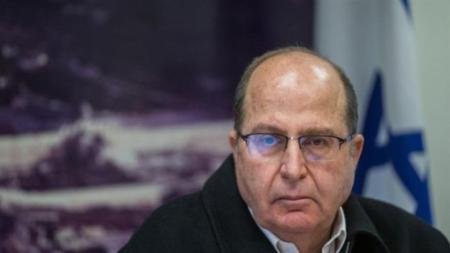
In one of his most controversial remarks yet, the Israeli Defense Minister Moshe Ya’alon said Tuesday he would rather see Syria falling in the hands of the Islamic State group than Iran and its allies defeating the group, ignoring the plight of the Syrian people who live and suffer under the Islamic State group.
“In Syria, if the choice is between Iran and the Islamic State [group], I choose the Islamic State. They don’t have the capabilities that Iran has,” Ya’alon told the audience at a conference organized by the Institute of National Security Studies in Tel Aviv. “Our greatest enemy is the Iranian regime that has declared war on us,” the defense minister said of the threats facing Israel.
The comments come three days after the Iran nuclear deal between Tehran and six world powers came into effect. Israel remains one of the few opponents to the deal. According to the Israeli minister through the nuclear deal and recent lifting of sanctions, Tehran “has escaped international isolation” and become a “central player” in Syria, he continued.
Ya’alon’s comments confirmed a long-standing policy of Israel: The Islamic State group is not a threat to Tel Aviv while Iran and the Iranian-backed Hezbollah group, which is fighting alongside President Bashar Assad in Syria, were a bigger threat to Israel.
This policy is clearly demonstrated through the non-Israeli involvement into the fight against the extremist group led by its ally the United States. However, throughout the five-year Syrian conflict, Israel has several times bombed Hezbollah and Syrian government targets.
In fact, last month an Israeli air strike killed Hezbollah leader Samir Qantar in the Syrian capital Damascus.
The Israeli policy and the comments by the head of its military Tuesday come to show how Israel remains disconnected from the suffering of the people in its neighboring country Syria. As long as the Islamic State group does not threaten Israel, Tel Aviv will see it as an event that does not concern it.
“Israel sees Islamic State as something that’s happening to other people — and the country will do its best to keep it so,” Mariam Karouny, Reuters Deputy Bureau Chief Lebanon, Syria and Jordan, wrote in a column in October last year.
In fact, according to Karouny, Israel has been using the “unfolding catastrophe” which is the rise of the Islamic State group to legitimize its crackdown on Palestinians calling for end of occupation.
“With the West again mobilizing against a radical Islamist group, Netanyahu finds himself on the familiar turf of the “war on terror.” He is capitalizing on this by trying to equate Palestinian nationalism — especially the religious wing of it — with Islamic State [group] at every conceivable opportunity.”
January 20, 2016
Posted by aletho |
Ethnic Cleansing, Racism, Zionism, Timeless or most popular | Da’esh, Israel, Syria, Zionism |
Leave a comment
On 16 November 2015 the present writer published an article in Australia’s New Matilda magazine. The article had two main objectives. The first was a discussion of the legal bases upon which one State could attack another State. The second purpose was to provide an outline of my attempts to obtain a copy of the legal advice that the Australian government said it would seek before announcing a decision on whether or not to join the United States bombing campaign in Syria.
The content of that advice was of considerable interest. The majority of international lawyers doubted that Australia had any legal basis to intervene militarily in Syria. If the government’s legal advisers had a different opinion, then that would represent a minority view and lawyers would have an interest in the basis of their legal reasoning.
The Australian government had announced on 24 August 2015 that it would be seeking that legal advice. The clear inference was that no decision would be made pending receipt of that advice.
The request under the Freedom of Information Act was refused, but the schedule of relevant documents that were provided (but I was not allowed to see the actual documents) showed that the legal advice had been given to the government on 24 September 2014, eleven months before the Foreign Minister Julie Bishop announced that the advice would be sought.
The decision that Australia was going to join the American bombing campaign was announced in early September 2015 and the first bombing was carried out over the weekend of 12 and 13 September 2015. No legal basis was advanced on which this decision had been made. There was no debate in Parliament, but even if there had been it is unlikely that the Labor Opposition would have opposed it given their supine position on all matters relating to “national security”.
The only opposition in Parliament came from Senator Richard di Natale, the Green Party leader, and Senator Scott Ludlum, also of the Greens.
On 16 November 2015, the day the New Matilda article was published, Ms Bishop appeared on ABC National Radio to announce that the decision to join the US bombing was made in response to a request from the Iraqi government pursuant to the collective self-defence provisions of Article 51 of the UN Charter. That it took two months to even proffer a reason was interesting in itself.
What Ms Bishop claimed was the reason for the military intervention, that it was at the request of the Iraqi government, contradicted what the government had itself said in August 2015. According to a report in the Sydney Morning Herald the government of then Prime Minister Tony Abbott had “pushed for Washington to request that Australia expand its air strikes against Islamic State from Iraq into Syria.”
In acknowledging in August 2015 that the “invitation” was solicited, there was no mention then of any legal considerations that the government would have to consider. The further issue of how it was legally possible, under international law, for the United States to have any basis of inviting any country to join its bombing campaign in Syria, was never mentioned.
It exemplifies the arrogance characteristic of western foreign policy that simply assumes the right to bomb countries, and invite others to do so.
Ms Bishop in her radio interview of 16 November 2015 never referred to any American request, or that her former leader had solicited such a request. She preferred instead to claim that the invitation had come from the Iraqi government. For the reasons given below, that claim was in all probability untrue.
Ms Bishop’s explanation in that radio interview might have answered the query about the claimed legal basis upon which Australia was going to bomb another sovereign nation put to her by the interviewer. But there were further problems for Ms Bishop and the Australian government.
On 20 November 2015 the UN Security Council unanimously passed Resolution 2249. Despite some ill-informed media comment in the mainstream press about this resolution, it was manifestly not an authorization to attack Syria.
The operative part of the Resolution required all Member States to “take all necessary measures, in compliance with international law, in particular the UN Charter… on the territory under the control of ISIL also known as Daesh, in Syria and Iraq.”
The Australian government’s first problem then, is that it purports to rely on international law, and in particular Article 51 of the UN Charter. UN Security Council Resolution 2249 did not authorise action outside the terms of the UN Charter. That means that any action would have to be either in self-defence or by resolution of the Security Council. Neither condition exists. That leaves only the notion of collective self-defence.
This is the lingering fig leaf of legal respectability that the government clung to, as set out by Ms Bishop in her interview of 16 November 2015. She claimed that Australia was acting at the purported request of the Iraqi government.
Confirmation of the Australian government’s reliance upon the alleged request by the Iraqi government is found in the letter sent by the Australian government to the Security Council on 9 September 2015. Such a letter of notification of military action against another sovereign State is required under the terms of the UN Charter.
The letter stated that the Syrian government was “unable or unwilling” to prevent attacks from its territory upon Iraq. This is a highly contentious claim, and one that has no foundation in international law. Only two States, The United States and the United Kingdom have officially endorsed the “unwilling or unable” doctrine and their self-interest in doing so is readily apparent.
Among the many reasons for its rejection as a doctrine in international law is that it would open the floodgates to the extraterritorial use of force against non-state actors. That it should appear in an official letter from the Australian government to the UN Security Council is surprising. In effect the doctrine is a back door route to avoiding the restrictions imposed by Article 51 of the UN Charter that force must be utilized only in legitimate self-defence or with the consent of the Security Council.
The letter went on to say “in response to the request for assistance by the government of Iraq, Australia is therefore undertaking necessary and proportionate military operations against ISIL in Syria in the exercise of the collective self-defence of Iraq.”
The further problem for the Australian government however, was that the Office of the Prime Minister of Iraq issued an official statement on 3 December 2015. That statement renewed the Iraqi government’s “emphasis on the lack of need for foreign troops in Iraq and that the Iraqi government is committed to not allowing the presence of any ground forces on the land of Iraq, and did not ask any side, whether regional or from an international coalition to send ground troops to Iraq.”
The Prime Minister of Iraq’s statement went on to repeat the Iraqi government’s position that it had asked for air support for Iraqi forces operating within Iraq. It further demanded that no activity be undertaken without the approval of the Iraqi government. It would appear that the Iraqi government has a firmer grasp of the limitations on military actions imposed by international law than does the Australian government.
That Iraqi government statement is a direct rebuttal of the claims made by Ms Bishop on behalf of the Australian government that the bombing of Syria was at the request of the Iraqi government. Thus, the Iraqi government demolished the remaining tiny element of potential legality for Australia’s actions.
This is not the end of the Australian government’s legal problems. The International Court of Justice has on at least two occasions in recent years pronounced that the concept of “collective self-defence” does not apply when the “defence” is against non-State actors.
ISIS is not a State in any meaningful sense of the word, so if Iraq had asked for such help against ISIS in Syria, (which as we have seen it did not) such a request would have had no legal basis.
The Australian mainstream media had given a small amount of space to Ms Bishop’s original announcement about Australia intending to bomb Syria. There was also some coverage of the fact that Australian warplanes had carried out operations in Syria when those operations commenced in September 2015.
Almost no coverage was given to the doubts about the legality of the air operations after they had commenced. There was no coverage given to the government’s letter to the Security Council and therefore on the contentious claims made in that letter. Neither was any coverage given to the statement from the Office of the Prime Minister of Iraq. To do so would of course have fatally undermined the editorial support for the government’s actions.
But there was a further significant development that should have been disclosed by the government and given extensive coverage by the media, and that is the extent of the actual bombing in Syria undertaken by the Australian Air Force.
The Department of Defence issues, via its website, the activities of the Air Task Group as it is known, in Iraq and Syria. These data reveal that the F/A-18 fighter-bomber used by the Australian Air Force flew 18 sorties in Syria in September 2015 for a total of 143 operational hours. This was the month the operations commenced.
It was also however, the month that the operations initially ended. The Department of Defence figures show that zero sorties were flown in Syria in the months of October and November and 10 in December.
Some obvious questions are posed by these data. The first question is why did the bombing cease after the same month it began? The second question is why, given the controversies that surrounds the bombing, were the government and the media totally silent on the fact that the bombing had ceased in October and November?
An obvious question is why did the Foreign Minister, in her interview on 16 November 2015, not mention the fact that the bombing she claimed was legally justified had in fact ceased more than six weeks previously? The impression that she strongly sought to convey was that the bombing was both legal and continuing pursuant to the various claims that she was making.
The answers to those questions are necessarily speculative, as the government does not see fit to announce to the people to whom it is accountable, what they are doing on such a vital issue. The mainstream media are doing what they always do, which is to avoid printing any material that does not accord with their pre-determined agenda.
We do know however, that the American bombing of Syria had been singularly ineffective in diminishing ISIL’s operational capacity. Some commentators have suggested that was precisely the point. Whether Australia wished to continue being a party to that charade is an interesting point, and one that an Opposition and a media interested in the truth should pursue.
There was another development at the end of September 2015 however, that has been a singular game-changer in the Syrian theatre of operations. The Russian military intervened in the Syrian conflict. Completely unlike the position of the US “coalition”, the Russians intervened at the specific request of the Syrian government. There was therefore no doubt in international law that the Russian intervention was legally permissible.
The Russian intervention, while on a relatively small scale, has been devastatingly effective. Not only were the ISIL forces obliged to seek cover from air attacks, having enjoyed apparent immunity from the Americans and their allies during the preceding 15 months, there was also major disruption of their supply lines.
As a result of Russian air reconnaissance and satellite images, it has been established beyond doubt that ISIL was transporting stolen Iraqi and Syrian oil across the Turkish border. That oil was sold on the black market through a company with close links to President Erdogan of Turkey. Military supplies were in turn being shipped back across the Turkish border into Iraq and Syria.
There is also good evidence that wounded ISIL fighters are being treated in Turkish and Israeli hospitals. They are also trained in Turkish and Jordanian camps among other places. Both President Putin and Foreign Minister Lavrov have pointed out the financial and other support ISIL receives from other countries in the region.
The Australian media have chosen to give only minimal coverage to some of these disclosures and certainly no analysis of their implications. Those interested in discovering what is actually happening in Syria and related theatres of war are obliged to seek that information elsewhere.
The Russians have also installed the sophisticated S400 air defence system in Syria. This gives them, and their Syrian allies, the capacity to shoot down any unauthorized aircraft in Syrian air space. Again it is purely speculative, but that may also be a reason why Australian Air Force bombing of Syria, which is manifestly unauthorized, ceased for two months after the Russian intervention.
There has now been another new development. The former Defence Minister, Kevin Andrews, sacked when Malcolm Turnbull became Prime Minister in September, complained that Australia should not have rejected a request from the Americans for a greater commitment of troops to Syria. It appears that the replacement Defence Minister, Marise Payne, had rejected such a request.
Typically, neither the fact of the request nor that it had been refused were known to the public until Mr Andrews complained. Equally typically, the issue of the legal right of the US to make such a request was never discussed.
The fact that it was the Americans who were driving the push for a greater military commitment by Australia did not form part of the letter to the Security Council, and neither was it mentioned by Ms Bishop on 16 November 2015 when she told the ABC why Australia was going to join the bombing of Syria.
To stop the illegal bombing was undoubtedly correct from many points of view, not least from the standpoint of international law that Australia has increasingly disregarded in recent years. The great pity is that the Australian government had neither the moral fortitude nor sufficient faith in the Australian people to inform them of the decision to even temporarily withdraw from a war they had no business in pursuing in the first place.
Neither have we been given an explanation as to why this manifestly illegal bombing has recommenced, whether it is intended to continue, and if so on what possible legal basis. The original purported justifications have been comprehensively demolished by the subsequent revelations. Whether Mr Turnbull can resist the inevitable pressure from the Americans at his forthcoming meeting with President Obama will be closely watched.
James O’Neill is an Australian-based Barrister at Law.
January 19, 2016
Posted by aletho |
Illegal Occupation, Mainstream Media, Warmongering, Militarism, Timeless or most popular, War Crimes | Australia, Da’esh, Iraq, Syria, United States |
Leave a comment
Why are we “over there?”
I had expected that there would be little in last week’s State of the Union address about foreign policy as it is not an Administration strength, but, to my surprise, President Barack Obama gave it about eight minutes, a little over 1000 words. Governor Nikki Haley was, however, more detached from the issue in her rebuttal speech, stating only that “… we are facing the most dangerous terrorist threat our nation has seen since September 11th, and this president appears either unwilling or unable to deal with it.”
Obama made a number of points which illustrate his own inclinations regarding how to deal with the rest of the world. He emphasized that America, the “most powerful nation on earth,” must be the global leader, “… when it comes to every important international issue, people of the world do not look to Beijing or Moscow to lead. They call us.”
Regarding the major conflict zones, he observed that “In today’s world, we’re threatened less by evil empires and more by failing states. The Middle East is going through a transformation that will play out for a generation, rooted in conflicts that date back millennia. Russia is pouring resources in to prop up Ukraine and Syria, client states that they saw slipping away from their orbit.”
Obama added that “Both Al Qaida and now ISIL pose a direct threat to our people… Our foreign policy has to be focused on the threat from ISIL and Al Qaida. We have to take them out. For more than a year, America has led a coalition of more than 60 countries… If this Congress is serious about winning this war and wants to send a message to our troops and the world, authorize the use of military force against ISIL.”
Concerning nation building, Obama opined that “We also can’t try to take over and rebuild every country that falls into crisis…even if it’s done with the best of intentions. That’s not leadership; that’s a recipe for quagmire, spilling American blood and treasure that ultimately will weaken us. It’s the lesson of Vietnam. It’s the lesson of Iraq, and we should have learned it by now.”
And how to lead effectively? “On issues of global concern, we will mobilize the world to work with us, and make sure other countries pull their own weight. That’s our approach to conflicts like Syria, where we’re partnering with local forces and leading international efforts to help that broken society pursue a lasting peace.”
A final State of the Union Address is more than most a political document, intended to establish a loose framework of success that will enable the president’s party to prevail in the next presidential election. This is why Obama, instead of addressing substantive issues in a serious way, gave time to the warm and fuzzy perspectives that will define the Democratic Party in national elections later this year. He touched on gay marriage, education reform, job growth, Obamacare, and on guns legislation, all of which are core issues for those who align with the Democrats. The reality of each of those alleged “successes” can, of course, be challenged as failures or even unconstitutional, but the highly structured and almost ritualistic annual presidential speech does not exactly present much of a debating society opportunity for the opposition party.
I have long thought that President Obama is basically a moderate politically speaking who is extremely cautious and disinclined to take any risks. He was, admittedly, elected president in spite of his having had no experience that qualified him for the office. His electoral success was due to a number of factors coming together, most notably a scary GOP candidate coupled with growing antiwar sentiment that was a reaction to the Bush regime’s muscular nationalism. Understanding that, Obama made some gestures that miscategorized him as a “peace” candidate and eventually earned him a Nobel Prize but he quickly surrendered his independence to the consensus driven advisers who were products of the groupthink that drives foreign policy in Washington. In short, he has received some very bad advice and the State of the Union Address inadvertently identifies just what is wrong with the way the Administration views itself within the context of the international community.
It is particularly odd to note the Obama contention that the United States must be the leader, which he cites several times. To a certain extent the claim is little more than self-satisfied preening, but it also goes along with the oft-stated contention that the U.S. President is “leader of the free world,” an expression that Obama frequently uses. Unfortunately, there is no such mandate and it is likely that if an election were held many so-called allies would be reluctant to concede leadership to Washington. The claim that other nations clamor for American leadership is hokum. Germans, in fact, believe that the United States role in world affairs is essentially negative.
And the assertion that Washington is leading a coalition of 60 countries to fight ISIS is clueless, as the coalition is basically inert and toothless, having only acquired some momentum after the Russians intervened on behalf of Syria. Leading coalition partners, to include Turkey, Qatar and Saudi Arabia, have all along been playing a double game, supporting ISIS more often than not while many other nominal allies have done little or nothing. And the moderate rebels that White House expects to one day raise the liberty cap over Damascus? They have disappeared.
Indeed, Obama’s view of the conflict zones appears to derive more from a cold war style Manichean mentality than from current realities. Russia is incorrectly seen as having “client states” while the ongoing violence in the Middle East is regarded as a process of going through “transformations” that are “rooted in conflicts that date back millennia.” That is a comment that could have been coined by George W. Bush’s Secretary of State Condoleezza Rice but it is self-serving misreading of reality intended to shift the blame for the anarchy in the region.
Ancient history does not explain the contemporary Middle East. Including the festering Israel and Palestine conflict, which has taken on its current form due to the connivance of Washington as Israel’s patron, all of the unrest in the region is quite plausibly a direct or indirect result of American missteps, starting with the invasion of Iraq in 2003 coupled with the attempts to destabilize and change regime in Syria that started in the same year, followed by the overthrow of the Libyan government in 2011.
And Obama in his speech appears to want to up the ante, asking congress for war powers to get more deeply into the Syrian civil war. It contradicts his call for learning from past mistakes in Vietnam and Iraq and makes clear that the White House has not benefitted from hindsight as it intends to again repeat using military intervention as a foreign policy tool. It is also telling that Obama did not mention learning anything from the disastrous intervention in Libya, which, of course, occurred on his watch and that of Secretary of State Hillary Clinton.
The fact is that the Arab world was relatively stable even if it was not very free before the U.S. sought fit to intervene in serial fashion after 9/11 and it would be nice if the president would just give that a nod, particularly as he went on to say that the United States should not seek to “take over and rebuild” every country that falls into “crisis.” As Obama has not hesitated to continue to do exactly that in Afghanistan with intentions to do likewise in Syria one has to question his perception of where the problem lies.
And finally, there is the question of what to do about terrorism. Describing ISIS and al Qaeda as major threats and the “focus” of U.S. foreign policy gives the groups way too much credit and also enhances their appeal to young Muslim men who will no doubt be volunteering in droves as a response to the Obama message. The reality is that they are not a major threat and never have been and if U.S. foreign policy is focused on them it is a bad misreading of what is important and what is not. Maintaining good working relations with adversaries Russia and China is far more important, as is increasing multilateral cooperation with friendly Asian rim nations and allies in Europe. Diplomacy is not just engaged in repressing bad guys, it is more so about building positive relations with friends and potential allies as well as bridges to opponents.
Foreign policy does not win or lose national elections but the diminished status of diplomacy over the past twenty years coupled with a basic incomprehension of what to do about the development of a multipolar world should be troubling for many Americans because the United States no longer operates in a vacuum. The perpetuation of myths that the U.S. must lead and should take steps to correct the policies of other nations, to include engineering regime change, must be once and for all explicitly discarded. Obama could have called for something like that but he didn’t.
The United States of America does just fine when it minds its own business and seeks friendship with everyone, as President George Washington recommended in his Farewell Address. Even the so-called terrorist problem would be much diminished because, as Ron Paul has correctly observed, “they are over here because we are over there.” Unfortunately, an undoubtedly intelligent and seemingly well-intentioned man like Barack Obama has chosen to go with the Washington consensus rather than heed his own instincts, which is something of a tragedy as whoever succeeds him in office is not likely to possess either of those virtues and will no doubt double down on “America the exceptional.”
January 19, 2016
Posted by aletho |
Illegal Occupation, Militarism, Progressive Hypocrite | Libya, Middle East, Obama, Syria, United States |
Leave a comment
Coercive Engineered Migration: Zionism’s War on Europe (Part 2 of an 11 Part Series)
During the 1920s General Secretary of the Communist Party of the Soviet Union Josef Stalin formulated what he considered to be the essential contribution of Lenin to Marxist political economy. Leninism, he wrote, is Marxism in the era of proletarian revolution. Since 1989 proletarian and national liberation revolutions throughout the world have been overturned by a general, global counter-revolutionary upsurge. It is a counter-revolutionary upsurge that has seen the onslaught of US colour revolutions, which seek to do away with the bourgeois nation-state itself, the last barrier to the total exploitation of the world by the global corporate and financial elite.
In this essay we have argued that the contemporary form of this counter-revolutionary ideology, of this imperial drive for global domination, is Zionism. One could therefore assert that Zionism is imperialism in the age of capitalist counter-revolution. In other words, Zionism is the very form of contemporary Western imperialism. Therefore, unlike Russian and Chinese imperialism, Western imperialism or Zionism has both a religious and ethnic dimension. Zionism is a Messianic and racist ideology based on Talmudic Judaism.
Zionism, through its control of Western finance capitalism, is striving for global governance. Lenin, writing in 1915, described as ‘indisputable’ the fact that ‘development is proceeding towards monopolies, hence, towards a single world monopoly, towards a single world trust’. But Lenin also pointed out that this drive towards unipolar global power would also intensify the contradictions in the global economy. A cogent example of this today is the low-intensity covert war currently being waged by the United States/Israel against Germany: The Western imperial alliance is turning on itself.
However, no people’s resistance to Zionism can be mounted if the empire continues to outsmart its opponents. The aforementioned General Barnett understands his enemies well. He used to teach Marxism in Harvard university and has written a book comparing the African policies of the German Democratic Republic and the Socialist Republic of Romania. In his book Blueprint For Action, he points out that the father of Fourth Generation Warfare is Mao Tse Tung. Imperial grand strategy is now waging war using techniques developed during the Chinese revolution, one of the greatest anti-colonial struggles in history. The key for anti-imperialist resistance today is, therefore, to understand how to turn the tools of imperialism against imperialism.
Marxism is a useful and indispensable tool but is insufficient for an full understanding of the complexities of the information age in the context of imperial strategy and tactics. Barnett and many other US and Israeli military strategists are keen students of social psychology, and in particular General Boyd’s OODA Loop Theory. The OODA stands for observation, orientation, decision, action. According to Boyd, decision-making occurs in a recurring cycle of observe-orient-decide-act. An entity (whether an individual or an organization) that can process this cycle quickly, observing and reacting to unfolding events more rapidly than an opponent, can thereby “get inside” the opponent’s decision cycle and gain the advantage.
One could see this psychology at work during the Arab Spring. The rigid ideological orientation of the average ‘leftist’ saw the uprisings in Tunisia as proof that people were rebelling against a US-backed dictator and his ‘neo-liberal’ regime. This interpretation was reinforced by strategically placed ‘critics’ of US-foreign policy in the news station of Zionism’s ancillary regime, Qatar, while the initial indifference of the Western press confirmed the interpretation of the Tunisian revolt as a genuine, grass roots uprising against US imperialism.
US and Israeli strategists were capable of doing this through their deep understanding of ‘leftist’ discourse. They also understood that the ‘anti-globalisation’ form of the protest movement would fool genuine critics of US imperialism, thereby impeding their ability to react to the US-orchestrated revolutions in a rational manner.
In the Arab Spring, inverted Marxian dialectics, Systems Theory, Psychology, Military Science and Utility Theory were waged against a feckless and discombobulated anti-war movement who would repeat the sound bites of ‘popular uprising’ and the ‘defeat of US imperialism in the Middle East’ implanted in their minds by one of the most impressive and successful US/Israeli geostrategic operations in modern history.
On the eve of NATO’s bombing of Libya, the BBC predictably called upon an old reliable ‘critic of US foreign-policy’ Noam Chomsky. The veteran American philosopher agreed that the West had a “duty” to “stop the massacres” in Libya thus ensuring there would be no moral outrage among the so-called anti-war movement. The invitation of Noam Chomsky by the Zionist-controlled BBC shows the importance for British intelligence of ideologically disarming potential ‘leftist’ opponents in the run-up to meticulously planned wars of aggression, disguised as ‘humanitarian interventions’.
Given Chomsky’s anarchist ideology, the very ideology instrumentalised by the CIA in colour revolutions, the BBC knew he would go along with their fake ‘popular uprising’ in Benghazi, thus providing justification to wage ‘humanitarian’ warfare in support of the ‘revolution’.
In 2013, a massive military destablisation of Brazil was undertaken by US NGOs, operating under the guidance of the CIA, in order to weaken the popularity of a government moving far too close to Russia and China in the eyes of Washington. Again, the CIA’s ‘Vinegar revolution‘ received full support from most ‘leftist’ quarters. Once again, military geostrategy had triumphed over anti-imperialist analysis.
The current refugee crisis proves that US/Israeli military geostrategy is running circles around its opponents, who, instead of identifying the culprits who are using human beings as weapons, are unwittingly collaborating with Zionism’s plan to inundate Europe with migrants for the purposes of fomenting civil war in the European peninsula, in a desperate effort to prevent Eurasian integration, a prospect inimical to what the Pentagon refers to as ‘full spectrum dominance’, US/Zionist global hegemony.
Those who have joined in the chorus of welcoming the refugees/migrants are unwitting participants in an extension of Zionism’s neo-colonial wars in Africa and the Middle East. They are also complicit in the endorsement and cover-up of a modern slave trade. Opposing imperialism requires study of the logic of its geostrategic operations. Imperialism’s deliberate flooding of Europe with a Wahhabised lumpen-proletariat from a war-torn Southern Hemisphere will not help the cause of labour, the cause of human freedom. Rather, it will contribute to prevent the unification of the European-peninsula with Russia and Asia. It will contribute towards the further colonisation and destruction of independent African and Middle Eastern nations such as Eritrea and Syria.
An example of Marxist Leninist parties’ inability to deal with imperialism’s weaponization of migrants comes from the Communist Party of Great Britain (Marxist Leninist). Their argument in favour of immigration is sound under normal circumstances but they fail to address the problem of when immigration becomes a tool of imperialism, a specific geopolitical strategy aimed at destabilizing both the country of origin and the destination of the migrant.
The recent resolution of the CPGBML is worth reproducing here in full:
This party firmly believes that immigration is not the cause of the ills of the working class in Britain, which are solely the result of the failings of the capitalist system.
Immigration and asylum legislation and controls under capitalism have only one real goal: the division of the working class along racial lines, thus fatally weakening that class’s ability to organise itself and to wage a revolutionary struggle for the overthrow of imperialism.
These controls have the further effect of creating an army of ‘illegal’ immigrant workers, prey to super exploitation and living in dire conditions as an underclass, outside the system, afraid to organise and exercising a downward pull on the wages and conditions of all workers.
The scourge of racism, along with all other ills of capitalism, will only be finally abolished after the successful overthrow of imperialism. But since immigration can no more be abolished under capitalism than can wage slavery, our call should not be for the further control and scapegoating of immigrants, but the abolition of all border controls, as part of the wider fight to uproot racism from the working-class movement and build unity among workers in Britain, so strengthening the fight for communism.
The problem here is that no distinction is made between immigration into imperialist countries and immigration into semi-colonial type countries. For example, Syria has been forced to close its borders due to the passage of terrorists in the service of imperialism. In such circumstances, it would be ludicrous to condemn the Syrian government for erecting fences to protect its borders. Similarly, Hungary, a small country which has just taken modest steps towards escaping from the clutches of US imperialism under the control of the IMF, has decided to erect fences to protect its borders from what it perceives as an attempt by US imperialism to destablize the country. Under these conditions, such a decision is entirely justified. The CPGBML argues correctly that “the scourge of racism, along with all other ills of capitalism, will only be finally abolished after the successful overthrow of imperialism.” The erection of fences in Hungary is part of that fight against imperialism, when migrants are clearly being used as weapons of imperialist strategy against recalcitrant nation-states.
The fact that Zionism is using the refugee crisis to further its imperialist agenda does not mean, however, that all refugees in the world are being used for this purpose. Rather, just as in the Arab Spring where the social inequalities of capitalism were used by imperialism to further the cause of capitalism, so are many refugees coming from the Middle East and Africa being used for the same purpose.
Throughout the world Homo sapiens is being supplanted by homo economicus: a vacuous, brain-washed, rootless cosmopolitan, a deterritorialised and acculturated nomad, hopelessly blown hither and thither by the exigencies of capital. Meanwhile, Zionism continues to stoke up the incessant and utterly fraudulent ‘War on Terror’, with omnipresent mass surveillance of the “nations” (goyim) while at the same time Jews are being encouraged by the Israeli regime to leave Europe for settlement on Arab lands, ruined and depopulated by Zionism’s wars.
The ‘refugee crisis’ is indubitably one more step towards the creation of a Greater Israel. Benjamin Netanyahu recently told the Israeli National News that Israel must become a “world power”.
To politically correct pundits, Victor Orban’s fence might appear inhumane and xenophobic, but at this moment in history the concrete choice presented to us is between temporary fences designed to protect nations from imperialism or Zionist walls built to imprison humanity.
Part I
January 17, 2016
Posted by aletho |
Deception, Ethnic Cleansing, Racism, Zionism, Timeless or most popular | Africa, BBC, Brazil, Central Intelligence Agency, CIA, Germany, Israel, Judaism, Libya, Middle East, Noam Chomsky, Syria, United States, Zionism |
Leave a comment
Last month, before the parliamentary vote on whether to bomb Syria, British Chancellor George Osborne publicly stated that the cost of extending air strikes against Islamic State into Syria would run in the “low tens of millions of pounds”.
Reuters (December 1st 2015 Osborne referring to the bombing of Syria) – “I think the estimate of extended air action over Syria would be in the low tens of millions of pounds. That’ll come out of the special reserve which we established for the purposes of military action like this.” Osborne told a committee of lawmakers.
Reuters (March 23 2011 Osborne referring to the bombing of Libya) – “The cost of Britain’s involvement in military operations in Libya is likely to be measured in tens of millions of pounds rather than hundreds of millions, Chancellor George Osborne said on Tuesday. Osborne said the cost would be less than recent conflicts and would be fully met from contingency reserves rather than the defence ministry’s main budget”.
Same thing, different bloodbath.
Documents released from Westminster show the final statistics of the bombing campaign in Libya amounted to £320m. This included £50m spent on replacing spent weapons and munitions. These figures were clearly designed to disguise the truth from the British public.
It has since transpired, contrary to Osborne’s “tens of millions” prediction, that the actual total to Britain of bombing Libya is now estimated conservatively to be somewhere between £900 million and £1.25 billion.
We have a Chancellor in Britain who ‘miscalculated’ this campaign by around 12,000%, give or take a few ‘tens of millions’. Any so-called ‘special monies’ set aside obliterated in days.
In the meantime, the UK’s actions in Libya has left the country awash with weapons and terrorists groups running amok, the government has collapsed, the country completely lawless. Africa’s richest nation per capita, where poverty was lower than The Netherlands and life expectancy the longest on the continent under Gadaffi has disintegrated. Libya is now just a failed state, a bloody anarchy with extremists hell bent on exporting its death doctrine to the streets of the West.
In September 2011, David Cameron, Speaking in Paris after he chaired a summit on Libya with France’s Nicolas Sarkozy, said early signs for its future were “incredibly impressive” and that the UK will “play its part in rebuilding the country.”
Cameron lied. Britain sent just £25 million ($36m) to rebuild the devastated nation. For context it cost $100 million to build one waste water treatment centre in Iraq after the invasion.
Carmeron, being asked questions by a BBC correspondent said “We stopped a genocide. Would you have rather we’d done nothing, let a genocide take place? Would you feel better as a British citizen?”
The Prime Minister continued to challenge his questioner: “You’re asking me lots of questions, why don’t you answer a question?”
He added: “What you’re suggesting is we should have stood aside and had a genocide take place in Libya, that’s what you’re suggesting. I profoundly disagree. Really disagree. I was prime minister at the time, I could see what was happening, I could see people were going to be slaughtered in their hundreds, possibly in their thousands. I had a choice: act and stop it or stand to one side? We acted and it was the right thing to do.”
But as Counterpunch reveals – David Cameron’s assertion of genocide was a myth. The NYT reported March 2011 – “the rebels feel no loyalty to the truth in shaping their propaganda, claiming nonexistent battlefield victories, asserting they were still fighting in a key city days after it fell to Qaddafi forces, and making vastly inflated claims of his barbaric behavior”. The “vastly inflated claims” are what became part of the imperial folklore surrounding events in Libya, that suited Western intervention.”
It has since been estimated that although David Cameron asserted that ‘hundreds, maybe thousands’ would be killed by Gaddafi – 60,000 civilians were killed by August 2011 as a result of the 26,000 bombing sorties and 9,600 strike missions.
British former MI5 agent Annie Machon went further, telling RT that NATO’s intervention was a total disaster on every front.
“They’ve had free education, free health, they could study abroad. When they got married they got a certain amount of money. So they were rather the envy of many other citizens of African countries. Now, of course, since NATO’s humanitarian intervention, the infrastructure of their country has been bombed back to the Stone Age.”
The World Food Programme stated in November 2015 that one third of Libyans now need humanitarian assistance just to survive and one in five are on the brink of starvation. The economy has utterly cratered.
In an interview with The Spectator, just three weeks ago, David Cameron, a man with blood on his hands for taking a fully active role in the destruction of Libya, lied again – “I would say that Libya is better off without Gaddafi. The coalition helped those on the ground to get rid of the Gaddafi regime. We did a lot to try and help it”.
Cameron went on in the interview to confirm he would do the same again under the same circumstances and unbelievably, given his own ‘dodgy dossier‘ moment confirmed that “you can’t drop democracy out of a box at 40,000 feet” – and proceeded to do exactly that in Syria.
In December, after the British parliament voted to engage in the bombing campaign in Syria, there were seventeen airstrikes in three weeks. As truepublica reported on the 8th December – “Each 6 hour Tornado mission costs around £210,000, adding to that cost is the use of four Paveway bombs at £22,000 each and two Brimstone missiles at £105,000 each. If all weapons are fired on an average mission the cost of each Tornado mission is therefore £508,000.”
It costs £400,000 a week for British fighters to use airbases alone, before they fuel the fighters – and this is a campaign set to go on for years according to David Cameron.
In the meantime, Britain has successfully lobbied the UN to send ground troops alongside special forces back into Libya to fight terrorists that Britain allowed to take a foothold and subsequent control in the first place. This will add to George Osborne’s “tens of millions” that turned into £1.2 billion.
Unofficially, Britain already has troops in Syria and Libya on the ground and fighting on multiple fronts.
Up to 2013, the cost of the conflicts in Afghanistan and Iraq cost the British taxpayer nearly £35 billion in addition to normal military funding, which left those countries devastated. Of course that doesn’t include the government’s silence over the£36 billion ‘black hole‘ that the taxpayer was facing in 2010 when the Conservatives came to power.
Gordon Brown, the Chancellor at the time of the Iraq invasion stated the cost of the Iraq war to Britain was £8bn – which was only £12 billion short of the actual cost.
January 17, 2016
Posted by aletho |
Economics, Militarism, Timeless or most popular, War Crimes | David Cameron, Libya, NATO, Syria, UK |
Leave a comment
Is Victor Orban the ‘Chavez of Europe? (Part 1 of 11)
If aggression against another foreign country means that it strains its social structure, that it ruins its finances, that is has to give up its territory for sheltering refugees, what is the difference between that kind of aggression and the other type, the more classical type, when someone declares war, or something of that sort.
— Sawer Sen, India’s Ambassador to the UN
In an EU press conference on September 3rd, 2015 Hungarian Prime Minister Victor Orban candidly referred to the current refugee crisis in Europe as “Germany’s problem”. Orban was referring to the fact that refugees amassing at the border of Hungary were heading, for the most part, to Germany. The Hungarian Prime Minister stressed that most of the refugees did not intend to stay in Hungary. Orban has come under criticism for his decision to erect a security fence on the Hungarian/Serbian border in order to stem the flow of migrants entering Hungarian territory illegally.
While most of the European media have portrayed Orban as a xenophobic, far right dictator, the decision to erect a fence was carried out in compliance with EU regulations, which require that all immigrants entering the Shengen zone be registered by the police at the border. Yet, paradoxically, Brussels is criticizing the Hungarian Prime Minister for attempting to comply with EU laws!
France’s daily Le Monde refers to the Hungarian Prime Minister as the man who is attempting to ‘criminalise‘ illegal immigrants. It is indeed a strange country that would criminalize those who break its laws!
So why is Orban coming under fire? Since coming to power in 2010 Victor Orban has implemented domestic, social and political policies that run counter to those dictated by the EU commission. In 2013 Hungary closed down the office of the International Monetary Fund, bringing the country’s finance under state control.
The International Monetary Fund is a key institution of US/Zionist global governance and there are few countries who have escaped its clutches of permanent debt. Therefore, the decision of the Hungarian government to show the IMF the door was nothing short than an act of bold insubordination to US imperialism.
Hungary has also come under criticism for media laws which ban foreign interference from US propaganda outlets such as Voice of America, which the Hungarian government deems to be contrary to the public interest. Consequently, the European Union, which is perfectly happy to ban Iranian television stations, has criticized Hungary for violations of ‘freedom of speech’.
Orban told an audience in Chatham House in 2013 that he believed there was a “leftist and green conspiracy” in Europe against “traditional values”. Orban is no doubt referring to the constant tirades made by war mongering ‘leftist’ zionists such as EU MP Daniel Cohen Bendit against Hungary. Bendit has ironically called Orban the “Chavez of Europe”. This example of ideological name-calling epitomises the meaninglessness of the left/right political paradigm in the post-Soviet era.
Orban’s ‘nationalism’ is not an imperial project. It is, rather, a national philosophy which goes against, and weakens, imperialism. It is nationalism in the sense of national liberation from neo-colonial oppression in the form of international financial institutions and the EU.
Orban’s defense of ‘traditional values’ has brought him ideologically closer to the foreign policy agenda of Russian President Vladimir Putin, who visited the country in 2014. During Putin’s visit to Hungary, Orban praised the Russian leader’s role in attempting to find a peaceful solution to the Syrian war. In 2014 Orban told Hungarian media that the Ukrainian war was caused by the desire of the United States to gain control of Eastern Europe. He also pointed out that the United States wanted to draw Hungary into the crisis.
The Hungarian Prime Minister has made no secret of his desire to pursue an independent domestic and foreign policy. Hungary also has close ties to China and Iran. Therefore, to attempt, as some analysts have done, to portray Victor Orban as part of the reactionary, imperialist, xenophobic right is to oversimplify the complex interplay of ideological and geopolitical forces in the current global political arena and, in particular, the deep forces determining the generation and management of the refugee/migrant crisis. Therefore, to compare Orban’s opposition to immigration to that of British Prime Minister David Cameron is to oversimplify the matter.
British Prime Minister David Cameron plays up his opposition to immigration. But this has nothing to do with the real agenda of the British government. Cameron’s anti-immigration policies are simply the appeal to xenophobia which the Tories require to maintain their electoral votes. Cameron’s regime serves international finance capitalism in its most brutal form and finance capitalism needs constant immigration. Orban’s objections are based more on his conflict with finance capitalism and his criticisms of the liberal ideology driving globalisation.
Victor Orban has proposed that the refugees/migrants be sent back to Turkey until the end of the war in Syria. This is a sensible proposal. The ‘Refugees are Welcome’ slogan and the subsequent marches in favour of immigration served US/Israeli geostrategic objectives. Currently, few people seem to realise that and, as in the Arab Spring of 2011, the bandwagon of US imperialism has no shortage of passengers.
In this sense, Victor Orban of Hungary is, in a very limited way, worthy of the epithet ‘Hugo Chavez of Europe’. While many of Victor Orban’s political policies are far from left-wing, (for example, the banning of communist symbols) his embrace of a traditionalist, dirigiste form of capitalism with strong pro-family social policies and a multi-vectored foreign policy brings his country closer to countries such as Venezuela, Belarus, Eritrea and other nation-states attempting to maintain their sovereignty in the face of imperialism.
A deeply biased and hostile article on Le Monde nevertheless accurately describes Orban’s politics as ‘economically left wing while culturally right wing’. However, qualification is needed here. His policies are ‘left-wing’ from the point of view of global corporate finance but Orban’s economic policies favour the national, patriotic bourgeoisie and are therefore right-wing from the perspective of the working class.
Hungary’s multi-vectored foreign policy has had benefits for the country and especially for other Southern Hemisphere partner countries such as Venezuela. For example, a photo-voltaic energy technology product developed in Hungary and financed by China, was exported to Venezuela in 2013. It is believed that the new Hungarian technology could not only enable Venezuela to become self-sufficient in electricity, it could turn the country into a major exporter of electricity. Venezuela’s cooperation with Hungary is vital to the country’s industrialisation.
What all the countries mentioned above have in common is an attempt to construct a national voluntarism in order to stem the tide of ‘globalisation’ and all its concomitant social and economic ills. This involves a national, patriotic bourgeoisie in alliance with the working class against the ‘internationalist’ compradore bourgeoisie and the ‘New World Order’. It is, in many respects, a reversal of the class dynamics of the Second World War when the Soviet Union led an organised international working class in alliance with the remnants of the democratic bourgeoisie against international fascism.
Hungarian Prime Minister Victor Orban came to power in a country that had been ravaged by the IMF and a deeply corrupt ‘socialist’ party that had emerged from decades of welfare state capitalism under Janos Kadar. Kadar, a liberal, replaced the communist Rakossi during the counter-revolution in Eastern Europe in the 1950s, when capitalism with ‘socialist ‘ characteristics replaced Cominform socialism. The process was euphemistically referred to as ‘de-Stalinisation’ but was, in fact, an attempt to restore capitalist modes of production.
Hungary’s ideological crisis culminated in the attempted coup of 1956, when the CIA, operating out of Vienna, attempted to overthrow the embattled regime with the help of former Nazi collaborators. The 1956 ‘Hungarian Revolution’ was, in many respects, an intelligence prototype for many US orchestrated regime change operations to follow decades later.
Although, Orban is said to have ‘fought against communism’ as a student, he was, like many others of his generation, a fighter against a particular type of capitalism which he perceived as a “leftist conspiracy” against the people. Marxist Leninists have always considered the triumph of Khrushchevite revisionism in the USSR in 1956 and the subsequent ‘de-stalinisation’ of the USSR and of the Popular Democracies of Eastern Europe to have constituted a counter-revolution against the dictatorship of the proletariat.
Khrushchev’s reforms involved abandoning state-centralised planning, the re-introduction of profit as the regulator of production, combined with a cynical and anti-Marxist foreign policy of ‘peaceful co-existence’ between capitalism and socialism. In order to justify these policies Khrushchev wrote a long mendacious speech slandering Stalin. Every claim against Stalin in Khrushchev’s speech has since been proven to have been a lie. Soviet revisionism killed not only socialism in the USSR but, with the notable exception of Albania, the hope of socialism throughout the world. This destruction of Marxism Leninism by the Soviet and later Chinese revisionists led to a revival of Trotskyism in Western imperial countries. And it is this ‘New Left’ that constitutes the vanguard of contemporary Western imperialism.
In this sense, Orban is correct in his analysis of a “leftist” conspiracy against civilization, for what we see today is the triumph of Trotskyist ideology in the form of Zionism and neo-conservativism, where proletarian internationalism has been subsumed by the ‘human rights’ international on the one hand and ‘islamist jihad’ on the other, a new ‘revolutionary’ alliance waging war against the working class.
One only has to observe the clenched fist of the US colour revolutions and the constant appeal to youthful rebellion to understand how capitalism is now deepening its grip on humanity through the appropriation of leftist, revolutionary symbology. Indeed, contemporary US capitalism is, to employ a phrase of Trotsky’s, ‘permanent revolution’. Or, in the words of US Grand Strategist General Thomas Barnett, “US-style globalisation is pure socio-economic revolution.”
But it is a revolution which wages war on the working class. One of the results of the ‘Arab Spring’ in Egypt was the abrogation of labour laws requiring companies to pay workers during periods of factory closure due to lack of product demand. Many of the strikes that resulted in the overthrow of Mubarak’s regime were led by US funded ‘independent’ labour organisations.
Given Orban’s intransigence on the refugee issue, he is likely to face a US/Israeli backed ‘popular protest movement’ in an attempt to effect regime change. Colour revolutions often involve the transportation of thousands of foreigners to the place of protest by US intelligence agencies operating through NGOS. This happened in Belarus in 2010. Many of the youths attempting to get into Hungary could be used as a battering ram to destablize the Hungarian nation-state.
Since the fomentation of the ‘Arab Spring’ by the CIA and its numerous NGOS in 2011, NATO’s total destruction of Libya and its proxy war against Syria, millions of people have been turned into refugees. That is why they are fleeing to Europe. But it is not the principal reason for the ‘current crisis’, or rather the current phase of an ongoing and deepening crisis.
NATO’s invasion and destruction of Libya in 2011 has led to millions of desperate people attempting to cross the Mediterranean sea. This ongoing crisis has received varying levels of coverage from the mass media. For example, the sinking of a boat in the Mediterranean in July 2015 only received a four line report in the French Le Figaro newspaper, in spite of the fact that a hundred people were drowned!
However, since the publication of a drowned boy washed up on the shores of Turkey in 2015, the refugee crisis has entered a new phase, with the photo of the boy in question being used as an excuse to drum up public support for NATO air-strikes against Syria in order to “stop the massacres”
While no one seems to know just how many Syrians are among the migrants fleeing to Europe, there has been a media fixation on these particular migrants, in spite of the fact that they only represent a minority of the current migrants amassing at the Hungarian border.
The debate about what should be done to manage the refugee/migrant crisis turns on whether or not they should be welcomed into European countries. However, this pro or anti migrant debate masks a new and highly destructive phase in US/NATO geopolitical strategy. Many of the migrants at the Hungarian border are coming from refugee camps in Turkey. Austrian intelligence has reportedly revealed that US government agencies are funding the transfer of these refugees to Europe in an attempt to destabilize the continent. This new geostrategic initiative involves using desperate refugees as weapons for the purposes of US/Zionist divide and rule of the European continent.
France’s Radio Internationale has revealed that over 95 percent of migrants in the current flow into Europe are young males between 20 and 35 years old. Many are said to be fleeing conscription in the Syrian army, which has lost thousands of brave men and women since the start of the Zionist war on their country. The preponderance of young, fit males among the so-called ‘refugees’ has also been confirmed to this author personally by researchers of Russian state television RT. When asked about the refugee issue on France’s BMTV, Russian Ambassador to France Alexandre Orlov said “All I can see are young men fleeing the war instead of defending their country”. So, why are there so few vulnerable women and children among the refugees escaping the war in Syria?
The journey across the Mediterranean to Europe can normally cost up to 11,000 dollars, more money than most European workers manage to save from years of hard labour, yet we are told that millions of war-ravaged Iraqis and Syrians are suddenly able to pay this colossal sum to make the journey to Europe. How is this possible?
The glorification of the young men fleeing conscription in Syria, coupled with the demonisation of the heroic men and women in Syria fighting for their country’s freedom, is deeply indicative of the moral turpitude of our own ruling class for whom disloyalty and cowardice are the principal characteristics.
In September a Hungarian camera woman was filmed tripping a refugee carrying a child at the Hungarian border. The video soon went viral. The camera woman is now taking legal action against the man she tripped as he has changed his story to the police. Petra Laszlo has claimed that she panicked as refugees began to charge towards her. There was much indignation in the politically correct corporate media. But Syrian patriots did some research on Laszlo’s ‘victim’. The man’s name is apparently Osama Abdel-Muhsen Alghadab and he is a member of Japhat Al-Nosra, the Al-Qaida affiliated terrorist group that has massacred thousands of innocents in Syria.
This is not to suggest by any means that all of the refugees attempting to enter Hungary are terrorists. But in the context of a global war involving complex international networks of terrorists operating under the aegis of American, Israeli and European intelligence agencies, this incident is another argument in favour of Orban’s policy of implementing normal immigration regulatory procedures.
In February 2011 Libyan leader Muammar Gaddafi warned Europe about the danger of an invasion by migrants and, in particular, Al- Qaeda terrorists if he were to be overthrown. Syria’s President Assad has also warned Europe of the danger of thousands of Al-Qaeda and Islamic State terrorists coming to Europe, disguised as refugees. It is quite possible that a similar scenario is now coming to pass.
January 17, 2016
Posted by aletho |
Deception, Economics, Ethnic Cleansing, Racism, Zionism, Timeless or most popular | European Union, Human rights, Hungary, NATO, Syria, Turkiye, United States, Victor Orban, Zionism |
Leave a comment
Last week, Siddharta Dhar, a Hindu-born Muslim convert, made front page news as the latest British citizen to turn up in Syria draped in ISIS imagery and toting an AK.
He may or may not be the masked Brit who starred in a recent ISIS snuff movie, but, like pretty much all those who preceded him, he was well known to the British security services.
A member of Al-Muhajiroun, a ‘proscribed organization’ under the 2000 Terrorism Act, he was on bail for terrorism offenses at the time he left the country, and had been asked to hand over his passport to the police (he didn’t bother, it turned out). Indeed, according to Andy Burnham, shadow British Home Secretary, “He was well-known to the authorities having been arrested six times on terrorism related offenses”.
Perhaps stating the obvious, Burnham added that “people will be shocked that a man detained on a series of counts of terrorism-related activity could be allowed to walk out of the country, unimpeded.”
Nor was his flight exactly unpredictable. Earlier in the year, he had declared – on the BBC’s ‘This Morning’ program, no less – that “now that we have this caliphate I think you’ll see many Muslims globally seeing it as an opportunity for the Koran to be realized”. Just to further clarify his intentions, he went on to tell Channel Four News: “I would love to live under the Islamic State”.
I’m no expert on decoding terrorist lingo, but to my untrained eye this statement appears fairly unambiguous. But perhaps no one in British intelligence has a telly.
Or perhaps there is another explanation. Once in Syria, Dhar tweeted: “My Lord (Allah) made a mockery of British intelligence and surveillance… What a shoddy security system Britain must have to allow me to breeze through Europe to the Islamic State.” Shoddy? Maybe. But as Nick Lowles, from the group Hope not Hate, put it, “With at least six prominent members of al-Muhajiroun (the banned extremist group) having been able to slip out of Britain whilst on bail or having been banned from leaving, questions need answering. One absconding is a worry, two appears careless, but six – well, that needs answering.” Indeed it does.
In fact, it seems that pretty much every time a British ISIS or Al Qaeda recruit is unearthed, they turn out to have deep ties to the intelligence services. The story of Michael Adebalajo is a case in point.
On May 22, 2013, Adebelajo and Michael Adebowale stabbed Fusilier Lee Rigby to death in London. It soon emerged that MI5 had been trying to recruit him at the time. But for what?
The parliamentary committee on intelligence and security conducted hearings on the murder later that year, and its report makes fascinating reading. It revealed that, prior to the murder, Adebolajo had been identified as a Subject of Interest (SoI) in no less five separate MI5 investigations, including one which was focused specifically on him.
This surveillance had revealed that he was in contact with “a high profile and senior AQAP [Al Qaeda in the Arabian Peninsula] extremist” as well as two “Tier 1 SoIs being investigated… due to their possible links with AQAP in Yemen”. At one point in 2011, this particular investigation was “MI5’s highest priority operation” and it led MI5 to conclude that “Adebolajo was a primary contact of BRAVO and CHARLIE”, code names for the two suspected AQAP members under investigation.
Of course, ‘guilt by association’ alone would not have been enough to arrest him. But his drug dealing would have been. In theory, MI5 are supposed to ‘disrupt’ the activity of extremists by, for example, facilitating their arrest if they are involved in criminality. In Adebolajo’s case, the ‘intrusive surveillance’ which he was under for a time revealed not only that he was “involved in drug dealing” but indeed that he was “spending most of his time” drug dealing.
This was the perfect opportunity for MI5 to ‘disrupt’ the activities of a man suspected of being a recruiter for Al Shabaab and known to be in contact with senior members of Al Qaeda. But MI5 seemed curiously uninterested in pursuing it. They did eventually pass some information onto the local police – but without passing on any actual evidence, and “accidentally omitting” his house number, with the result that “the police officer tasked to investigate concluded… that no further action could be taken”, an entirely predictable outcome.
Further opportunities for ‘disruption’ were also ignored. The report notes that in November 2012, Adebolajo was part of “a larger group of individuals who were [involved in] a violent confrontation”. Following the disruption, it was noted that “Adebolajo’s details will be passed to [another police unit]”. For some reason, however, this didn’t happen. Nor was Adebolajo prosecuted for his membership in a proscribed organization (Al Ghurabaa, aka Al Muhajiroon).
But most suspicious was the British response to his arrest in Kenya in 2010: “On 22 November 2010, the Kenyan police reported to the MPS officer based in Nairobi that they had arrested Adebolajo the previous day. He had been arrested with a group of five Kenyan youths and was assessed to have been attempting to travel into Somalia to join Al Shabaab (a Somalia-based terrorist group).”
Information apparently relating to Adebolajo’s involvement with terrorism – but redacted from the report – was known by MI6 at the time of his arrest according to the British counter-terrorist police officer stationed in Kenya at the time.
According to the Daily Mail, “The Kenyans believed Adebolajo, 28, had played a crucial role in recruiting his co-accused, including two secondary school-aged boys, after they were radicalised during weekly visits to a mosque in Mombasa.”
Kenyan government spokesman Muthui Kariuki said: “We handed him to British security agents in Kenya and he seems to have found his way to London and mutated to Michael Adebolajo. The Kenyan government cannot be held responsible for what happened to him after we handed him to British authorities.”
The security agents in question belonged to a highly secretive counter-terrorism unit in Kenya (referred to in the report as ARCTIC) with “a close working relationship” with the British government. Adebolajo alleged on several occasions that he had been tortured during his time in custody, leading the Committee to point out that “if Adebolajo’s allegations of mistreatment did refer to his interview by ARCTIC then HMG could be said to have had some involvement”.
MI6 consistently lied to the Committee about their involvement with Adebolajo in Kenya – a point noted (albeit somewhat apologetically) in their report. Of his detention, MI6 claimed “we did not know it was going on”; prompting the Committee report to “note that SIS [MI6] had been told that a British citizen was being held in detention: therefore, they did know that “it was going on”.
The Chief of MI6 then lied about their responsibility to investigate the allegations of abuse, claiming that this “is not an SIS responsibility”, directly contradicting emails written by an MI6 officer at the time which had stated that “We obviously need to investigate these allegations”. This, said the Committee, “clearly indicates that SIS officers believed that they had a responsibility to investigate the allegations”, adding that this is “not consistent with the evidence provided to the Committee by the Chief of SIS”, and going on to note their “concern that this email was not provided as part of the primary material initially offered in support of this Inquiry as it should have been [as] it was clearly relevant to the issues under consideration.”
Finally, a redacted piece of information referring to what the Committee called “relevant background knowledge” concerning Adebolajo was disowned by MI6, who claimed only to have heard it when told by the police. The police, however, had already explained that it was MI6 who passed it to them in the first place.
Exactly what MI6 were up to in Kenya with Adebolajo remains shrouded in mystery. However, the Committee was clearly unimpressed by what they were told: “SIS has told the Committee that they often take the operational lead when a British national is detained in a country such as Kenya on a terrorism-related matter.
They have also told the Committee that they have responsibility for disrupting the link between UK extremists and terrorist organizations overseas, and that in Kenya this is at the centre of their operational preoccupations. The Committee therefore finds SIS’s apparent lack of interest in Adebolajo’s arrest deeply unsatisfactory: on this occasion, SIS’s role in countering ‘jihadi tourism’ does not appear to have extended to any practical action being taken.”
What if, however, MI6’s work on the “link between UK extremists and terrorist organizations overseas” is not aimed at disruption after all? What if they have been charged with facilitating, rather than countering, “jihadi tourism”?
The SO15 (counter-terrorism) police officer who conducted an extensive interview with Adebolajo on his return to the UK from Kenya concluded that “It is… believed Adebolajo will attempt to travel again in the future…”
At the time, MI5 was running an investigation into “individuals who were radicalizing UK-based extremists and facilitating their travel overseas for extremist purposes”, referred to in the Committee’s report as Operation Holly. They wrote to an MI6 representative in East Africa to ask whether “one of Adebolajo’s contacts could have been a Kenya-based SoI known to MI5 and SIS” then under investigation, but MI6 never responded.
The following year, “surveillance deployments indicated that Adebolajo had met an SoI investigated for radicalizing UK-based individuals and facilitating their travel overseas.” This entry in the report’s timeline was preceded by four redacted items and followed by another.
The report also contains reference to a number of occasions in which investigating officers’ requests and recommendations for action against Adebolajo and Adebowale were not implemented, for reasons that were not recorded. This raises the issue of whether these requests had been over-ruled, and if so by whom.
Unfortunately, the committee seemed to accept at face value MI5’s explanations of such failures (new priorities taking away resources, etc), but their report did note, in somewhat exasperated tone, that “where actions were recommended, they should have been carried out. If the investigative team had good reason not to carry out a recommended action, then this should have been formally recorded, together with the basis for that decision”.
Adebolajo, then, had come up on the security services radar again and again as someone not just potentially involved in recruiting for overseas terrorism, but with prior form in actually doing so. And yet we are supposed to believe that MI6 – whose prime concern was supposedly to deal with such people – had no interest in him in Kenya, and that MI5 – who are supposed to disrupt the work of such figures – willfully passed up chance after chance to do so.
Fast forward to today, and we have an official figure of 800 – but with estimates of 1,500 and more – British citizens who have gone to fight in Syria. We have evidence from Moazzam Begg’s collapsed trial that MI5 gave the ‘green light’ to his trips to train fighters in Syria; we have the collapse of Bherlin Gildo’s trial for terrorist activities in Syria due to the embarrassment it was feared it would cause British security; we have Abu Muntasir’s testimony that “I inspired and recruited, I raised funds and bought weapons, not just a one-off but for 15 to 20 years. Why I have never been arrested I don’t know”; we have the US Senate hearings into the murder of US ambassador Christopher Stevens revealing that MI6 was involved in running a ‘ratline’ of weapons from Libya to Syria; we have case after case of families angry at the British authorities for allowing their children to go and fight despite repeated warnings, and on it goes.
Can we really still call it a conspiracy theory to believe that British intelligence has allowed this to happen?
A shoddy security system? Or a ruthlessly efficient one.
Dan Glazebrook is a freelance political writer who has written for RT, Counterpunch, Z magazine, the Morning Star, the Guardian, the New Statesman, the Independent and Middle East Eye, amongst others. His first book “Divide and Ruin: The West’s Imperial Strategy in an Age of Crisis” was published by Liberation Media in October 2013. It featured a collection of articles written from 2009 onwards examining the links between economic collapse, the rise of the BRICS, war on Libya and Syria and ‘austerity’. He is currently researching a book on US-British use of sectarian death squads against independent states and movements from Northern Ireland and Central America in the 1970s and 80s to the Middle East and Africa today.
January 16, 2016
Posted by aletho |
Deception, False Flag Terrorism, Timeless or most popular | Africa, al-Qaeda, Kenya, Libya, MI5, Middle East, Siddharta Dhar, Syria, UK |
Leave a comment
The purpose of this essay is to explain, not describe, the frantically belligerent behavior of the Saudi regime. The goal is not to delve into what the regime and its imperialist enablers have done, or are doing; that unsavory record of atrocities, both at home and abroad, is abundantly exposed by other writers/commentators [1]. It is, rather, to focus on why they have done or are doing what they do.
In the Throes of the Agony of Death
The Saudi rulers find themselves in a losing race against time, or history. Although in denial, they cannot but realize the historical reality that the days of ruling by birthright are long past, and that the House of Saud as the ruler of the kingdom by inheritance is obsolete.
This is the main reason for the Saudi’s frantically belligerent behavior. The hysteria is tantamount to the frenzy of the proverbial agony of a prolonged death. It explains why they react so harshly to any social or geopolitical development at home or in the region that they perceive as a threat to their rule.
It explains why, for example, they have been so intensely hostile to the Iranian revolution that terminated the rule of their dictatorial counterpart, the Shah of Iran, in that country. In the demise of the Shah they saw their own downfall.
It also explains their hostility to the Arab Spring uprisings in Egypt and Tunisia that ended the perpetual rule of Hosni Mubarak in Cairo and that of
Ben Ali in Tunis. Panicked by the specter of the spread of those revolutionary upheavals to other countries in the region, especially the kingdoms and sheikhdoms in the Persian Gulf area, the Saudi rules and their well-known patrons abroad promptly embarked on “damage control.” (The not-so-secret patrons of the House of Saud include mainly the military-industrial-security-intelligence complex, Neocon forces and the Israel lobby.)
The ensuing agenda of containment, derailment and preemption of similar revolutionary upheavals has been comprehensive and multi-prong. Among other schemes, the agenda has included the following:
(1) brutally cracking down on peaceful opposition at home, including summary executions and ferocious beheadings;
(2) pursuing destabilizing policies in places such as Syria, Iran, Lebanon, Iraq, and Yemen by funding and/or arming rabidly violent Wahhabi/Salafi jihadists and other mercenaries;
(3) trying to sabotage genuine international efforts to reduce tensions and bloodshed in Syria, Yemen and other places;
(4) trying to sabotage the nuclear agreement and other tension-reducing efforts between Iran and Western powers;
(5) pursuing policies that would promote tensions and divisions along ethnic, nationalist and religious lines in the region, such as the provocative beheading of the prominent and peaceful Shi’a critic Sheikh Nimr al-Nimr ; and
(6) seeking “chaos to cover terror tracks,” as the well-known expert in international affairs Finian Cunningham put it [2].
To the dismay of the Saudi regime, while these depraved policies have succeeded in causing enormous amounts of death and destruction in the region, they have failed in achieving their objectives: stability in the Saudi kingdom and security for its regime. On the contrary, the reckless policies of trying to eliminate its perceived opponents have backfired: the regime is now more vulnerable than four or five years ago when it embarked (in the immediate aftermath of the 2011 Arab Spring revolutions) on the vainly aggressive policy of trying to eliminate the supposed dangers to its rule.
The illegal war on Yemen, carried out with the support of the United States, has turned from what was supposed to be a cakewalk into a stalemate. Not only has it solidified and emboldened the sovereignty-aspiring Houthis resistance to the Saudi-led aggression, it has also considerably benefited al-Qaeda in the Arabian Peninsula (AQAP). Likewise, the War on Syria, largely funded by the Saudi regime, has fallen way short of its goal of unseating President Assad. Here too the aggression has handsomely benefited a motley array of mercenary and jihadi groups, especially those affiliated with Jabhat al-Nusra, known as al-Qaeda in Syria, and the so-called Islamic State.
In both of these countries the power and influence of the Saudi regime and its partners in crime is in decline while the resistance is gradually gaining the upper hand, especially in Syria—thanks largely to the support from Russia and Iran.
Perhaps more tragically for the Saudi regime, has been the failure of its “oil war” against Russia and Iran. Recklessly saturating global markets with unlimited supply of oil in the face of dwindling demand and increased production in the U.S. has reduced the price of oil by more than 60 percent. This has led to an officially-declared budget deficit of $98 billion for the current fiscal year, which has forced the regime to curb social spending and/or economic safety net programs. There are indications that the unprecedented belt-tightening economic policies are creating public discontent, which is bound to make the regime even more vulnerable.
A bigger blowback from the regime’s “oil war,” however, goes beyond economic problems at home. More importantly, it has led to an unintended consequence that tends to make the regime les secure by reducing its economic and geopolitical worth to its imperialist benefactors. Cheap and abundant energy in global markets is bound to undermine the indispensability of the House of Saud to its imperial patrons. In using oil as a weapon against their rivals, the spoiled big babies of Western powers in the Arabian Peninsula may have pushed their luck too far.
Combined, these blowbacks and ominous consequences of the Saudi regime’s belligerent policies have made the regime and its allies in the region more vulnerable while giving strength and credibility to the resisting forces in Syria, Iraq, Yemen, and Lebanon, supported by Iran and Russia. These unintended consequences of the Saudi rulers’ aggressions explain why they are panic-stricken and behave hysterically.
References
[1] See, for example, Finian Cunningham, “Saudis Seek Chaos to Cover Terror Tracks”; Jim Lobe, “Neocons Defend Saudi Arabia”; and Pepe Escobar, “Fear And Loathing in the House of Saud.”
[2] Ibid.
Ismael Hossein-zadeh is Professor Emeritus of Economics (Drake University). He is the author of Beyond Mainstream Explanations of the Financial Crisis (Routledge 2014), The Political Economy of U.S. Militarism (Palgrave–Macmillan 2007), and the Soviet Non-capitalist Development: The Case of Nasser’s Egypt (Praeger Publishers 1989). He is also a contributor to Hopeless: Barack Obama and the Politics of Illusion.
January 15, 2016
Posted by aletho |
Timeless or most popular, War Crimes | Saudi Arabia, Syria, Yemen |
Leave a comment
Turkey has established a strict blockade of the Kurdish regions in Syria surrounded by Islamic State (IS, formerly ISIS/ISIL), depriving Syrian Kurds of essential supplies and shooting people trying to enter Turkey from Syria, RT’s Murad Gazdiev reports.
The Turkish border with the Kurdish territories in the northern Syria, which stretches for 750 kilometers, has been fitted with two layers of barbed wire, a huge minefield, and sniper towers at regular intervals. It has only two border crossings that are closed most of the time.
“They [Turks] do not let anything across: neither food, nor humanitarian aid, nor medicine. They only let returning refugees cross,” Hadir Mustafa, the head of one of the border crossings on the Syrian side, told RT.
“The Turkish soldiers do not cooperate, they are aggressive and hostile. They push, hit people and tell them to never come back,” he added.
Murad Gazdiev reported from the border that Turkish border guards had refused to let an ambulance cross the border that was transporting a man critically injured in a terrorist act in a nearby Syrian Kurdish town, saying they needed to receive permission from Turkish provincial authorities first.
Apart from maintaining the blockade, Turkish snipers on towers also target civilians on the Syrian side. They recently shot and killed a Kurdish schoolboy, who was trying to cross the border in order to find work in Turkey.
“The Turks shot him 70 meters from the border, on the Syrian side. I saw the place myself,” the boy’s father told RT.
On Sunday, a 16-year-old girl was also shot dead as she was trying to get to Turkey from Kurdish territories in Syria, while others from her group were injured and had to be treated for gunshot wounds.
The Turkish blockade of Syrian Kurdistan is “total,” Gazdiev reports citing the locals.
“The large part of what we grow here we throw away because we can’t sell it outside,” a Kurdish fruit and vegetable seller named Beze told RT, adding that it is easier to smuggle goods through IS-controlled territories than to transport them through the Turkish border.
“Things that do not grow here also have to be smuggled in. By the time they get here they cost ten times as much,” Beze added.
At the same time, the Turkish border with jihadist-controlled territories in Syria remains open. Weapons, fighters and goods flow freely through checkpoints manned by Islamic militants.
January 13, 2016
Posted by aletho |
Subjugation - Torture, War Crimes | ISIL, ISIS, Syria, Turkiye |
Leave a comment

 Aletho News
