Turkey’s ‘Sunni-Only’ Refugee Camps Worsen Crisis
Sputnik – January 12, 2016
Part of the problem with Turkey’s refugee policy is the establishment of discriminatory policies for non-Sunnis in an attempt to craft a new Syrian state, according to Turkish human rights activist Ozturk Turkdogan.
Turkey’s attempts to use refugees as a political bargaining chip have hurt both the refugees and the situation in Syria, President of the Turkish Human Rights Association (IHD) Ozturk Turkdogan told Sputnik Turkiye.
Turkey recently made a 3 billion euro settlement with the European Union to keep refugees from leaving through smugglers.
“I must note that accepting refugees into ‘its’ camps, Turkey acts selectively, giving priority to Sunni Arabs. This discriminatory approach is part of Ankara’s erroneous Syrian strategy, the goal of which is to create a new state in Syria, propped up with Sunni Muslims.”
According to Turkdogan, the refugee agreement between Turkey and the EU does not solve the refugee problem, and Turkey should have appealed to the UN for aid instead.”Today’s refugee issues are the result of wrong-headed policy on Syria,” Turkdogan added.
Refugee smuggling in Turkey has previously been linked to organized crime groups, which make as much as 1 billion euros per year from smuggling.
MADAYA: LETTER OF COMPLAINT TO CBC OMBUDSMAN
wallwillfall | January 12, 2016
Letter written to the CBC ombdusman by an informed member of the public in Canada, enraged by the blatant anti Syrian stance in the CBC reporting of the Madaya “starvation” situation.
“Hello,
I have counted The Current and CBC news as among the most reliable sources of news and information we have. I consider myself an informed listener and I consult with many and diverse news sources to get the fullest and clearest understanding of world affairs possible.
That’s why it is disappointing, and sometimes infuriating when I hear the CBC reduced to an echo chamber and propaganda conveyance when it comes to news from the Middle East.
The CBC’s use of unreliable and unverified sources and information that presents and thus promotes only one side of events, and a distorted one at that, is shocking to me. Is it due to cutbacks that you are unable to have investigative reporting from conflict areas that reports on all sides of an event, or is there something more sinister going on exercising editorial control over what Canadians are allowed to hear from the Middle East via our national broadcaster?
Specifically, I was very upset to hear The Current’s Jan 8th report with Lyse Doucet on the situation in Madaya, Syria that gave a completely distorted and misinformed picture of the siege of this town (and several others that are getting zero news coverage).
The presenter relied on only one source, a citizen journalist named Rami Jarrah who works for the George Soros funded ANA Press, and is a self-avowed advocate and spokesperson for the terrorist factions, disingenuously called “the opposition” by uncritical media, that has the town of Madaya and several others in the West and North of Syria under militant siege. It is these Islamist militants–Ahrar al Sham and al Qaeda– that seized the food aid delivered by the ICRC last October–meant to last for 2 months–and is keeping the towns people on starvation rations, stockpiling the food then trying to sell it to the towns people for obscene prices.
Why isn’t that being reported on?
It is the militants that are refusing to let the townspeople leave to find refuge in safe zones. It is these militants who are starving and killing them. These Islamist militants, “the opposition” as propagandists call them, are using the starving people under their control to deceive the world, including the use of now exposed deceptive pictures of starving people stolen from the internet to foment outrage–pictures that are uncritically and irresponsibly used by media outlets like the CBC as some kind of “proof” that the Assad regime is responsible for this suffering.
While these areas of conflict are surrounded by government forces, it is the terrorists occupying the villages that are not surrendering and continue to use people as human shields ad for propaganda. Did The Current or is the CBC news desk presenting any of this balance at all to your stories on Syria? No. You are being played, and worse are a willing participant in a one-sided, anti-Syrian government, pro-Syria destruction campaign.
Why Madaya?
Why now?
Why fake pictures?
These are the questions you should be asking. The answer is because Jarrah and these “humanitarian interventionists” are using and abusing these civilians to enlist more western involvement.
You are not listening to any of the voices coming from inside Syria because you seem to value those minority voices outside Syria that are vying for overthrow of the government and seek to grasp power for themselves in lockstep with western hegemonic agendas.
Thus you are not doing your job.
What you are promoting, maybe inadvertently, maybe not, is for Syria to be devastated by NATO the way Iraq and Libya were, and not for the human rights of the people of Syria.
So shame on you.
This is despicable and my respect for the CBC has diminished significantly.
I urge the CBC to return to it’s roots of unbiased investigative journalism and be committed to the truth so that I can feel confidence again to tune into CBC news and trust we are getting the best information.
Balance your blatantly biased sources with “the other side”– the Syrian government that is backed by the vast majority of Syrian people, and the Syrian doctors and activists that are actually working to free their country from the terrorists!! Listen to the Syrians INSIDE SYRIA!
Why would you NOT do that?
Sincerely,
Annette Lengyel
~~~
Madaya hunger reports aim to demonize government: Syria
Press TV – January 12, 2016
Syria’s ambassador to the UN says media reports of starving civilians in the southwestern town of Madaya have been fabricated in an attempt to defame the government of President Bashar al-Assad.
“Actually, there was no starvation in Madaya,” Bashar Ja’afari told reporters at the UN headquarters in New York, where the UN Security Council met to discuss the humanitarian crisis in Syria.
Jaafari said journalists from the Qatari-owned al-Jazeera broadcaster and the Saudi-owned al-Arabiya TV network are “mainly responsible for fabricating these allegations and lies.”
He said false information about starvation deaths in the Syrian town are aimed at “demonizing” Damascus and “torpedoing” peace negotiations due in the Swiss city of Geneva on January 25.
The Syrian diplomat also said aid delivered to Madaya in October had been looted by terrorist groups and sold to civilians at high prices.
“The Syrian government is not and will not exert any policy of starvation on its own people,” he said, adding the “terrorists are stealing humanitarian assistance.”
On Monday, a convoy of 44 trucks loaded with food, baby formula, blankets and other supplies entered Madaya. An equivalent amount of aid would also arrive in two other besieged towns of Foua and Kefraya.
The Syrian government recently agreed to facilitate the flow of relief aid into Madaya, which has been the scene of fierce clashes between pro-government forces and Takfiri elements.
Locals told the Lebanese al-Manar TV on Sunday that terrorist groups had stored aid packages for Madaya and sold it to the locals at inflated prices.
According to the UN, up to 4.5 million people live in hard-to-reach areas of Syria which has witnessed a deadly conflict fueled by foreign-sponsored Takfiri terrorists since March 2011.
Over 260,000 people have reportedly lost their lives while millions of others have been forced to flee their homes due to the violence.
Nobel Peace Prize-Winner Obama Dropped 23,144 Bombs in 2015
Sputnik – January 11, 2016
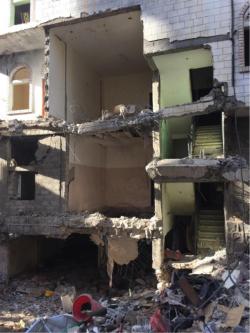 The United States in the past year dropped more than 20,000 bombs on Muslim-majority countries Iraq, Syria, Afghanistan, Pakistan, Yemen and Somalia, according to a study by the Council on Foreign Relations (CFR).
In an article published January 7, Micah Zenko, a senior fellow at CFR, states that since January 1, 2015, the United States has dropped an estimated 23,144 bombs in those six countries: 22,110 in Iraq and Syria; 947 in Afghanistan; 58 in Yemen; 18 in Somalia; and 11 in Pakistan.
“This estimate is based on the fact that the United States has conducted 77 percent of all airstrikes in Iraq and Syria, while there were 28,714 US-led coalition munitions dropped in 2015. This overall estimate is probably slightly low, because it also assumes one bomb dropped in each drone strike in Pakistan, Yemen, and Somalia, which is not always the case,” Zenko writes.
Despite dropping tens of thousands of bombs over the past 17 months, Washington’s strategy has failed to defeat Daesh and other Islamic militant groups, Zenko observed.
In Afghanistan, the Taliban control more territory than at any point since the 2001 US invasion, according to a recent analysis in Foreign Policy magazine.
Zenko notes that the primary focus of Washington’s counter-terrorism strategy is to kill extremists, and that far less attention is paid to prevent a moderate individual from becoming radicalized.
As a result, “the size of [Daesh] has remained wholly unchanged,” Zenko writes.
In 2014, the Central Intelligence Agency estimated the size of Daesh to be between 20,000-31,000 members. On Wednesday, Colonel Steve Warren, a spokesman for the US-led coalition, estimated the group at 30,000 members, despite Pentagon claims that 25,000 Daesh members have been killed in US air strikes.
At the same time, the Pentagon claims that only six civilians have “likely” been killed in the course of the bombing campaign.
Well-Armed, Well-Funded: Iraqi Leader Reveals Daesh’s Deep Pockets
Sputnik – 11.01.2016
Sheikh Akram Al-Kaabi, the leader of Hezbollah al-Nujaba, a major Iraqi Shiite resistance movement fighting Daesh (ISIL/ISIS) in the region, has revealed that the jihadist group receives lavish amounts of money from Saudi Arabia and Qatar and modern weaponry from 120 countries around the world, according to the Iranian news agency FARS.
“Saudi Arabia and Qatar are extensively supporting the Takfiri (Daesh and radical Islamist) terrorists financially but surely victory belongs to the resistance groups,” the agency quoted Sheikh Akram al-Kaabi as saying at a meeting with Iranian Shiite cleric Ayatollah Alavi Gorgani in the Iranian city of Qom (also known as Ghom) on Saturday night.
“In the Syria war, 120 countries throughout the world are supplying the terrorists with state-of-the-art equipment and weapons,” added the Iraqi leader.
He voiced concern about the dire humanitarian situation in the besieged towns of Kafria and Foua’a regions in Idlib province, and said sending aid to these two towns is difficult due to the presence of terrorist groups.
Kaabi said that the Takfiri terrorists are still attacking the two Shiite-populated towns and despite the resistance forces’ operations to break the siege of the two towns, they are still under the militants’ control.
Similar concerns have been earlier voiced by Leader of the Lebanese Orthodox Party Masarik Roderick Khoury, who named Turkey as the main sponsor of terrorist groups in Syria.
“Turkey is the first and main power which funds and supplies weapons to terrorist groups. We believe the fight against terrorism should begin with pressuring Turkey. Now Turkey is the main sponsor of terrorism in the region,” Khoury said at a press conference in Moscow in December.
“The name of the real leader of the terrorists is Tayyip Erdogan [Turkish President]. The others like Abu Bakr al-Baghdadi [Daesh/ISIL leader] and al-Qaeda are just his servants. Al-Nusra Front also carries out orders from Turkey,” he then pointed out.
The Lebanese politician said there was real exidence to the allegations: after the city of Kassab, near Latakia, was liberated from terrorists Turkish ambulance vehicles, clothes and weapons were found there.
Khoury also added that when the terrorists take Syrian or Lebanese hostages they only can be released after negotiations with Turkey.
Over 160 civilians, including unborn child, killed in Turkish crackdown on Kurds – report
RT | January 11, 2016
In five months of battling the Kurdish insurgency in southeastern Turkey, Ankara has killed over 160 civilians, according to a rights group report. Among them was an unborn child, whose mother was shot.
In August, Ankara launched a ground operation to crack down on Kurdish fighters linked to the Kurdistan Workers’ Party (PKK). The violence ended a two-year truce with the Kurdish militants, who have been fighting a guerrilla war for independence for decades. An estimated 10,000 Turkish troops armed with heavy weapons and armored vehicles, including tanks, were deployed.
Since August 16, Turkish troops have imposed at least 58 curfews in Kurdish regions, disrupting the lives of some 1.4 million people living in the affected provinces, Human Rights Foundation of Turkey (HRFT) said. Some lasted 10 hours or less, but others went on for days and weeks, and some are still ongoing. The curfews affected 19 districts in the provinces of Batman, Diyarbakır, Elazıg, Hakkari, Mardin, Mus and Sırnak.
While the curfews have been in place, at least 162 civilians have been killed. The death toll includes 29 women, 32 children, and 24 elderly people. One of the victims in the city of Cizre in Sırnak Province was an unborn child, who was killed by a gunshot to his mother’s womb, the group said. The mother, Guler Yanalak, was seven month’s pregnant at the time and reportedly survived the injury.
The HRFT said at least 22 people were killed in their homes, some of them from heavy weapons used by the fighting sides. Four people were reported to have been killed in areas where no curfews had been declared. The violence against civilians appears to have escalated since December 11, the group said, with 79 civilian deaths reported since then.
The PKK, founded in 1978, has been fighting the Turkish state for Kurdish self-determination since 1984. Kurds make up between 10 percent and 25 percent of Turkey’s population. In late December, a congress of Kurdish non-governmental organizations called for Turkey’s southeastern regions to be granted autonomy via constitutional reforms.
The escalation of violence in Turkey came two months after the Kurdish militia in Syria, known as the YPG, as well as the Turkish pro-Kurdish party, the HDP, accused Ankara of aiding Islamic State in their offensive on Kurdish territories in Syria. At the time, the terrorists were laying siege to the Kurdish border town of Kobani.
Ankara has been stepping up its military operations on the border with Syria and Iraq since December. The area is a stronghold of the PKK, which is considered a terrorist group by Turkey. Turkish President Recep Tayyip Erdogan has vowed to continue the operation until the area is cleansed of Kurdish militants.
Israeli official calls for occupying Damascus
MEMO – January 4, 2016
A senior Israeli official called on Saturday night for the occupation of the Syrian capital Damascus based on the teachings of the Jewish holy book the Torah, Felesteen newspaper reported.
During a TV show on the Israel’s Channel 2, Deputy Speaker of the Israeli Knesset Bezalel Smotrich said that Israeli borders are beyond the current borders and Jerusalem’s borders reach Damascus based on the Torah.
Smotrich, member of the extremist Israeli party Jewish Home, suggested that Israel temporarily accept the current borders, which include the Golan Heights and the occupied West Bank, stressing that it has to work to achieve what was dictated by the Torah.
Meanwhile, the MK reiterated that the extremist Israeli settlers who burnt the home of the Palestinian Dawabsheh family were not terrorists. He said such acts are only considered a kind of terror when they are carried out by the “enemies of the Jewish people who are Arabs”.
He also called for the settlers’ leaders to control all the lands of the occupied West Bank, considering it Israeli land.
In addition, he stressed that anyone who does not accept Israeli sovereignty over the West Bank “must be expelled from this land,” adding that there are 20 Arab countries which can be their destination.
He went on to stress the importance of building a Jewish temple in place of Al-Aqsa Mosque.
Saudi execution aimed at provoking regional bloodbath
By Finian Cunningham | RT | January 4, 2016
The furious reaction across the Middle East to the Saudi execution of a prominent Shiite cleric strongly suggests that the killing is a deliberate provocation by the ruling House of Saud.
That provocation would appear to be aimed at inflaming sectarian tensions and fomenting conflict in various regional countries – already near flashpoint – in order to further Saudi geopolitical interests. Central to those interests is, as always, the bitter rivalry with the region’s Shiite powerhouse, Iran.
Following the announcement at the weekend by the Saudi Interior Ministry that Shiite cleric Sheikh Nimr al-Nimr had been executed, along with 46 other prisoners, there was predictable outrage from across the region, especially among countries where there is a large Shiite following, such as Iran, Iraq, Lebanon and Bahrain. Iran denounced the radical Sunni Saudi rulers as “criminal” and accused them of carrying out an act that is “the depth of imprudence and irresponsibility.”
Iran’s Supreme Leader, Ayatollah Khamenei, compared the House of Saud with Daesh, the extremist terror group (also known as Islamic State, and previously ISIS/ISIL). Of note is the way that the kingdom executes opponents by beheading according to a similar stringent interpretation of Islamic Sharia law known as Wahhabism – shared by both the Saudi regime and the cadres of Daesh.
Former Iraqi Prime Minster Nouri al-Maliki said that the imposition of capital punishment would lead to the downfall of the Saudi rulers, with other Iraqi politicians saying that it would “open the gates of hell” across the volatile and religiously fraught region.
The United States and European Union also responded with alarm at the execution of al-Nimr, both warning of deepening sectarian tensions being exacerbated by the Saudi death penalty.
Sheikh al-Nimr was executed on Saturday, along with 46 other prisoners in what is believed to have been the biggest mass execution in Saudi Arabia for over three decades. The death sentences were carried out in 12 prison locations by decapitation or firing squad, according to reports. Most of those sentenced were alleged members of the Al-Qaeda terror group, who had been accused of carrying out deadly attacks against Western interests in Saudi Arabia between 2003 and 2006.
Nimr al-Nimr was among four Shiite activists who were executed at the weekend. They were convicted on several charges of subversion and terrorism in trials that were dismissed by international rights groups as a travesty of judicial process. Sheikh al-Nimr was arrested in 2012 and accused of inciting violent protests, but supporters point out that the respected cleric always publicly endorsed peaceful protest. One of his best-known statements was: “The power of the word is mightier than the roar of bullets.”
In October, al-Nimr lost a judicial appeal against his death sentence. There then followed several international appeals for clemency. The Iranian government in particular issued several statements calling for the cleric’s life to be spared.
The widely seen miscarriage of justice against al-Nimr and the chilling determination to carry out his execution in spite of appeals for clemency is what makes the case so incendiary.
Lebanese Shiite resistance movement Hezbollah condemned Saudi Arabia’s conduct as “an assassination,” while Iran’s Revolutionary Guards Corps vowed that the Saudi rulers would meet with “harsh vengeance.”
In Yemen, where Saudi Arabia and a coalition of other Sunni Arab states have been carrying out airstrikes for the past nine months, the mainly Shiite Houthi rebels also condemned the execution of al-Nimr and promised retribution for his death. At the weekend, it was reported that 24 Saudi troops were killed in a Houthi rocket attack on the Saudi border province of Jizan. It is not clear if the attack preceded the announced execution of al-Nimr.
The Saudi regime has previously accused Iran and Hezbollah of fueling the Houthi rebellion in Yemen. Tehran has rejected claims of militarily supporting the insurgents. But it would be a fair assumption that Iran and Hezbollah will henceforth step up military intervention in Yemen as a way of striking back at the Saudis.
The same response is envisaged for Iranian and Hezbollah involvement in Syria, where the Saudis have bankrolled and armed various anti-government militia, primarily so-called radical Islamist groups with a shared Wahhabi fundamentalist ideology. These groups include Jaish al Islam (Army of Islam), whose leader Zahran Alloush was killed in a Syrian airstrike near Damascus on December 25. The Saudi regime publicly rebuked the killing of Alloush, saying that it jeopardized the forthcoming UN-sponsored peace talks in Geneva on Syria.
The House of Saud, led by King Salman, is known to be not in favor of the Geneva talks, which Washington and Moscow have both endorsed. The Saudis are dismayed by the seeming compromise made by Washington towards the Russian position, which is that the political future of Syria must be decided by the Syrian people through elections. The erstwhile demand by Washington that Syria’s President Bashar Assad must stand down as a precondition for peace talks has been abandoned – leaving the Saudis, Turkey and the extremist militia groups in Syria as the only parties persisting with the call for Assad to go.
It is perhaps significant that Turkish President Recep Tayyip Erdogan held a “strategic summit” with Saudi King Salman in Riyadh only days before the execution of Nimr al-Nimr.
Russia’s military intervention in Syria, from the end of September, has been a resounding success in terms of stabilizing the Syrian government of Bashar Assad. Even the Obama administration has recently acknowledged the strategic success for Russian President Vladimir Putin in Syria.
That military success can also be attributed to Iran and Hezbollah, as well as to Iraq, which have all contributed to the gains made by the Syrian Arab Army on the ground.
The biggest loser is the axis for covert regime change in Syria, led by Washington, London and Paris, together with their regional allies in Saudi Arabia, Qatar and Turkey. While Washington and the other Western powers have the nous to switch tactics from backing a covert insurgency to belatedly trying a political process for eventual regime change in Syria, it would appear that the Saudis and Turks are still committed to the covert war agenda.
In that way, the Russian-backed military alliance in Syria is a particularly damaging broadside to Saudi Arabia and Turkey.
From the Saudi point of view, one way of trying to salvage their losses in Syria and ongoing setbacks in Yemen would be to blow up the region with an explosion in sectarian conflicts. For many people, of course, such a gambit is insane. But if the House of Saud can provoke a firestorm between Sunnis and Shiites, that would in turn polarize relations between Washington and Moscow, leading to a wider war across the region.
Having lost in their Machiavellian schemes for regime change in Syria, the House of Saud seems to want to inflict a plague of chaos and bloodshed on everyone else’s house.
The execution of renowned Shia cleric Nimr al-Nimr is such a gratuitous barbaric killing, one is left with the conclusion: the unadulterated madness of the slaying betrays an altogether pathological calculation aimed at inciting mayhem in the region.
Saudi Arabia is on such a losing streak over Syria, Yemen, Iraq, Lebanon and elsewhere that its autocratic rulers probably figure that they don’t have much else to lose by going for broke – and thus provoking a regional bloodbath.
Israel military launches artillery into Lebanon
Press TV – January 4, 2016
The Israeli military has fired a number of artillery rounds into Lebanon amid a pledge by the Lebanese resistance movement, Hezbollah, that it will not leave unanswered Israel’s assassination of its high-ranking member Samir Qantar.
On Sunday, Israeli forces shelled the Lebanese border fence for the fourth consecutive day. The Israeli military feared that Hezbollah forces might take advantage of the stormy weather and the poor visibility to launch a strike.
The Israeli shelling comes two weeks after Qantar was killed during the Israeli raid that targeted his home in the southern Syrian city of Jaramana, located 10 kilometers (6.2 miles) southeast of the Syrian capital, Damascus, early on December 20, 2015.
Following Qantar’s death, Hezbollah Secretary General Sayyed Hassan Nasrallah said, “We reserve the right to respond to this assassination at the time and place of our choosing. Those of us in Hezbollah will exercise that right.”
“We have no doubt or question that Israel is the one which assassinated Samir Qantar, its planes fired precise missiles on an apartment (he was in),” Nasrallah noted.
Senior Hezbollah official Hashem Safieddine also said that Tel Aviv will be held accountable for Qantar’s death.
“If the Israelis think by killing Samir Qantar they have closed an account then they are very mistaken because they know and will come to know that they have instead opened several more,” Safieddine added.
Israel launched two wars on Lebanon in 2000 and 2006. About 1,200 Lebanese, most of them civilians, lost their lives during the 33-day war in the summer of 2006.
On both occasions, Hezbollah fighters gave befitting responses to the Tel Aviv regime’s acts of aggression, forcing Israeli military to retreat without achieving any of its objectives.
The Tel Aviv regime has resorted to an intelligence and psychological campaign against Hezbollah to compensate for its fiascos in the two wars on Lebanon.
Israel violates Lebanon’s airspace on an almost daily basis through sending reconnaissance drones, claiming the flights serve surveillance purposes.
‘Saudis seek Muslim division by Nimr execution’
Press TV – January 3, 2016
Press TV has conducted an interview with political analyst Ibrahim Mousavi to talk about the Al Saud regime in Saudi Arabia’s execution of Shia cleric Sheikh Nimr Baqir al-Nimr.
Below is a rough transcription of that interview:
Press TV: Let’s start with one of the main points of [secretary general of Lebanon’s resistance movement Hezbollah] Seyyed Hassan Nasrallah’s speech which basically he is talking about how all Muslims should be diligent and not to basically play the game that the Saudis have initiated, trying to ignite division in the Muslim community and that everyone must remain united.
Mousavi: Indeed this is a very important message at this juncture of history and this sensitive moment when Seyyed Nasrallah talks we hear the voice of reason, we hear the voice of wisdom, we hear the voice of responsibility. Those who are responsible for the Ummah, for the nation, for the people, they should be very aware of what they say, when they say it, and to who they say. The message that should be sent is that this unjust ruling of the Saudi dynasty, those supporters of Takfiri groups, the oppression against the Saudis whether Shia Muslims or non-Shia Muslims—and we know very well that when we talk about the Saudis who are outside the country—you go to Europe, you see how many have applied for political asylum. So we are talking here about a national crisis that is taking place when the Saudi rulers are oppressing their own people.
They are trying at the same time to say that this is a conflict between the Shias and the Sunnis. The execution of Sheikh Nimr Baqir al-Nimr and the execution of every single Yemeni individual regardless of his age, regardless of his belonging on the factional and conventional level, tells you that this is a kind of attack against humanity.
That’s why it is very important to highlight the direction of the message. The message that we should not be misled by what they are trying to do. They are trying to sow the seeds of discord and sedition among the people, among the Arabs, among the Muslims. We should not be in any way under the pressure or under the impact of the Saudi propaganda.
Press TV: And Mr. Mousavi, another point, basically that Seyed Hasan Nasrallah also talked about the desperation of the Saudi regime and that with the spilling of the blood of Sheikh Nimr al-Nimr and other innocent people, it is the beginning of the end of the Saudi regime. Your perspective on that point sir.
Mousavi: This is again, a very clear point and a very evident point. We know very well that when you are strong enough you can handle your problems and go through. When a kingdom, when a dynasty that has tens and hundreds of billions of dollars that they spend in order to annihilate Yemen and the civilization in Yemen and the Yemeni people. When they have all these F-16s that are being supplied to them by the Americans. Why would they go and execute Sheikh Nimr if they are afraid of the voice of one man when they wage wars against their neighbors? When they go and invade Bahrain against the will of the Bahraini people, trying to support the regime of Al Khalifa? When they go and send booby-trapped cars to Iraq? When they interfere in here and there. When they try to topple the authorized and legitimate government in Syria by supporting Takfiri groups?
This all tells you that when they go to these wars and try to execute a man who had always been preaching for change, for political rights, via peaceful means, via political means, this tells you that they are very weak. And yes indeed this is a very important indicative, this is very important and evident reason that proves that they are very weak and they are accumulating more and more mistakes that is going to bring their end in a more hasty way than expected.
Featured Video

AIDS Inc. by Gary Null (2007)
or go to
Aletho News Archives – Video-Images
From the Archives
Clash of Civilization, Iran Part II
By Jamal Kanj – Intifada-Palestine.com – January 14, 2011
Israel’s survival kit is: perpetuate conflict, insecurity to rationalize collective hate and finally playing victim.
Devoid of conflict, Israel implodes internally; without hate, Zionism loses its justification; and playing eternal victim to continue blackmailing the West. Absence of this holy trinity, Israel ceases to exist.
From its inception, the house of Zion has mastered exploiting adversarial powers to advance Israel’s cause. For instance, their influence over the Democratic Party in the US began with President Truman’s bid for 2nd term election in 1948.
Responding to strong opposition from Secretary of State General George Marshall and Department experts urging against recognition of Israel, President Truman replied: “I’m sorry gentlemen but I have to answer to hundreds of thousands [Jewish voters] who are anxious for the success of Zionism. I do not have hundreds of thousands of [voting] Arabs among my constituents”
Zionists influence over liberal American politics was matched with the doctrinal school of Conservative theoreticians aligning the Republican Party’s platform with Israel’s objectives. The Neoconservative Zionists, coined Zioncons, invented the “Clash of Civilization” concept to fight Israel’s wars. … continue
Blog Roll
 Aletho News
- 12 Things Your Psychiatrist Was Trained Not to Tell You
- From Unipolar Universalism to Multipolar Civilizational Distinctiveness
- RSF military group defects, joins Sudanese army: State media
- Ireland goalkeeper refuses to play ‘Israel’ as squad weighs boycott
- China pushes back against US on Cuba, Iran
- Ukrainian Soldiers, Potential Mercenaries: Have Gun, Will Travel!
- Burnham’s UN debut… A masterclass in British disinformation
- Iran flights continue despite US aviation sanctions
- Global Tipping Points Lead the World Into a State of Entropy
- The day-after at the White House: USA and Xi Jinping
- If Americans Knew
- Israel forces Gazans to live in constant peril – Daily Update
- Deconstructing Netanyahu’s pants-on-fire UN rant – Daily Update
- Trump betrayed voters with his campaign lies and prioritized a foreign country once he took office
- Netanyahu calls Israel’s war in Gaza ‘opposite of genocide’ in UN speech to near-empty hall
- Settler Kidnappings: Torture, Sexual Abuse and Terrorisation of Palestinian Abductees as Israel Deepens Annexation of West Bank
- Gaza winter nears as 162,000 tents become unusable, raising fears of humanitarian crisis
- Netanyahu says, “It’s the opposite of genocide”; UN says Gaza economy is world’s ‘most severe crisis on record’ – Daily Update
- Israel’s US-Backed Assault on Gaza Has Created the ‘World’s Most Severe Economic Crisis on Record’: UN
- ‘Protecting U.S. Citizens’… From Israel
- ‘This is where I live now, the back of a truck’: a day in the life of a grandmother in Gaza
- No Tricks Zone
- New Study: Earth And Venus Surface Warmth Largely Explained By Convection And Lapse Rate, Not CO2 Or Radiation
- 2025 Nature Paper Claiming Worsening Global Drought Gets RETRACTED …Heavily Flawed
- New Study: ‘Global Drought Shows No Detectable Recent Acceleration Under Climate Warming’
- Economic Masterminds: German Socialists Suggest Taxing Productivity Gains Stemming From Using AI
- The South China Sea Has Not Been Cooperating With The Climate Change Narrative
- Energy Crisis: Germany Enters Heating Season With Historically Low Gas Reserve Fill Levels
- New Study: The Antarctic Ice Sheet Gained Mass From 2020-2024 Due To Staggering Snow And Ice Accumulation
- Study: Ocean Heating Rates From Thousands Of Years Ago ‘Dwarf’ Modern Ocean Heating Rates
- Climate Extremists Target, Attack Large-Scale Power Grid Infrastructure In Germany!
- New Study: Antarctic Ice Melt Has Contributed Less Than 1 Centimeter To Sea Level Rise In The Last 30 Years

