Daesh, Nusra Fighters Begin Turning in Heavy Arms Outside Syrian Capital
Sputnik – 25.12.2015
DAMASCUS – Fighters from the Daesh and the al-Nusra Front have begun giving up heavy weapons to the Syrian army south of the Arab republic’s capital of Damascus, a military source said Friday.
The source said engineer troops arrived with UN representatives near the Yarmouk Camp in southern Damascus on Thursday to accept heavy weapons from the militants.
“The militants who have given up their weapons will be taken toward Beer al-Qasab, an eastern suburb of Damascus, with their families,” the military source told RIA Novosti.
A total of over 3,500 fighters and their family members have so far agreed to leave the suburb of Al Hajar Al Aswad where the camp is located, the source added.
News emerged on Thursday that 5,000 militants and their families would be relocated from Al-Hajar Al-Aswad, Al-Qadam and Al-Asali under an agreement brokered by an unnamed third party starting this weekend.
According to media reports, the militants permitted to carry personal weapons, would be taken to the Daesh stronghold of Raqqah as part of the agreement.
About 18,000 people are estimated to live in Yarmouk, a Palestinian refugee camp established in 1957.
Daesh militants overran major portions of Yarmouk in early April.
Turkey sheltering Daesh militants: Iraqi cmdr.
Press TV – December 25, 2015
A high-ranking Iraqi military commander has accused Turkey of providing members of the Takfiri Daesh terrorist group, who are wreaking havoc in neighboring Iraq, with shelter.
Spokesman for Badr Organization Karim al-Nouri said on Thursday, “Turks are clearly helping Daesh,” adding that the process is “obvious” and “does not require additional evidence.”
“The problem of Daesh has not appeared out of nothing. It did not arise from the ground or fell from the sky. Someone lets them (Daesh militants) travel through different countries. They use the airports, hospitals. Where are the leaders of Daesh treated? They are treated in the hospitals of Turkey,” Nouri said.
He added that Deash extremists from Uzbekistan, Chechnya and other regions sneak into Iraq and Syria via Turkey.
“Turkey recruits and sends them to Iraq and Syria. It is clear as daylight and needs no proof. It is always hard to explain the obvious things.
“We have a lot of documents that prove that the greatest logistical support and supply routes are provided by Turks. The militants even return to their countries through Turkey,” Nouri said.
The senior Iraqi military figure said Daesh militants, who murdered between 560 and 770 captured Iraqi soldiers at Camp Speicher near the oil-rich northern city of Tikrit back in June, went to Turkey after the massacre.
“I have documents proving the connection of one person to the events in the Speicher. He was arrested because he participated in events in the Speicher. After the Speicher carnage, he went to Turkey and then came back again. This problem is obvious. It is known to everyone and does not require additional evidence,” Nouri said.
This is not the first time Ankara is being implicated in support for Daesh, whose militants have been committing vicious crimes against all ethnic and religious communities, including Shias, Sunnis, Kurds, Christians and others, in Iraq and Syria.
Apart from Turkey, Saudi Arabia, and Qatar also stand accused of contributing to the violence that has gripped the neighboring Arab states for the past two years.
Confessions of a Daesh Fighter: Target Practice in Turkey
Sputnik – 24.12.2015
A former Daesh militant now held captive by Kurdish forces has told of his experiences fighting for the terrorist organization, including the training he underwent in Turkey before returning to Syria.
A former member of Daesh has told Sputnik Turkey about his experiences as part of the terror group, including the time he spent with the organization in Turkey.
“In August 2014 I trained in Adana under a Daesh commander,” said 20-year-old Abdurrahman Adulhadi. He was captured by the Kurdish People’s Protection Units (YPG) earlier this month in the al-Hol region of eastern al-Hasakah Governorate, northeastern Syria.
“There were 60 of us, and we trained in a village not far from the airport. We got up in the morning and played sport. Once a week we had target practice, they taught us how to use Kalashnikovs, machine guns and other kinds of weaponry.”
“We were trained by Ahmet from Urfa (a city in the South Eastern Anatolia region of Turkey, close to the Syrian border), and a group member called Ibrahim was our interpreter.”
“The training took place in Turkey because the Daesh command thought that it was safer there than in Syria. It wasn’t possible to carry out training in Syria because of airstrikes.”
Adulhadi said that Daesh presented its training facility in Adana to local media as a camp of the Free Syrian Army (FSA), one of many opposition groups the Turkish government allows to have a base in Turkey; the FSA’s base is in the city of Hatay on the Turkish-Syrian border.
“In the media they wrote that we were training in an FSA military camp, but in fact, all 60 of us were members of Daesh. We were Syrian nationals, many of whom in the beginning moved to Turkey to earn some money, and then joined Daesh.”
Having undergone training, Adulhadi said his main responsibility was to persuade more Syrians to join the organization’s preparations in Turkey.
“I made contacts with Syrians on the internet, helped them to get to Turkey and begin training. After I undertook the training, for five months I lived together with a relative who was a Daesh commander in Adana. My task was to meet the new recruits arriving from Syria. After training we sent them to Urfa, and from there – to Raqqa. From Raqqa they distributed themselves across different regions of Syria.”
Daesh in Turkey was provided with arms from Iraq, which were transported across the border in ordinary cars under the pretense of carrying food and other humanitarian supplies.
“Heavy weapons were delivered from Ash-Shaddadi (a town in southern Al-Hasakah Governorate),” said Adulhadi. He explained that he had been sent by a Daesh commander to work for the group’s intelligence service in the town when he was captured by the YPG.
“I spent one night there, and the next night December 11 2015 YPG forces attacked our positions, and took both of us captive. In al-Hol the commander was a Frenchman called Abu Yahya.”
Adulhadi, whose brother is still fighting for the terrorist organization, added that he was left disillusioned by his time with the terrorist organization.
“What I read about Daesh, and what I was faced with in reality were absolutely different things,” he said.
The Free Syrian Army Myth
By Stephen Lendman | December 24, 2015
It’s a phantom army, virtually nonexistent, on paper only, a PR stunt, its so-called “moderates” allied with terrorist groups fighting Assad.
On Wednesday, Fars News (FN) said elements calling themselves the Free Syrian Army (FSA) continue supplying terrorists fighting Assad with weapons.
“The FSA is working side-by-side with al-Qaeda-affiliated groups and supplying them with US-made arms supplied to them by certain Persian Gulf countries like Saudi Arabia and Qatar in order to continue the fight against the Syrian Army,” FN explained.
“FSA worked hand-in-hand with Al-Qaeda affiliates, providing them with necessary supplies and logistics in order for them to continue their battle against the pro-government forces,” citing sources familiar with what’s going on, distinct from phony Western propaganda.
“Necessary supplies like the US-manufactured TOW anti-tank missiles are supplied to the Al-Qaeda groups, including the al-Nusra Front,” through individuals calling themselves FSA representatives, US imperial agents, FN added.
In early December, Syrian forces discovered large caches of weapons, munitions and food supplied by Qatar to terrorist groups – in liberated Lattakia province areas, items marked “A Gift of Qatar’s Government.”
Weapons, munitions and other supplies provided by Saudi Arabia and the UAE were found. The myth of moderate anti-Assad forces persists. Virtually all elements against him are terrorists, including ISIS – fully supported by US-led NATO and regional rogue states.
Separately, Amnesty International turned truth on its head, irresponsibly accusing Russia of killing civilians in Syria – with no verifiable evidence proving it, just pro-Western sources or unnamed ones, allying the group with Washington’s imperial enterprise.
Russian munitions strike terrorist targets with precision accuracy. Photographic evidence proves it, material US-led forces don’t provide.
AI disgracefully accused Russia of “massive(ly) destr(oying)” residential areas, alleging use of banned cluster munitions. A spokesman for UN Secretary-General Ban Ki-moon said “(t)he UN cannot independently confirm” AI’s allegations.
Without mincing words, they’re likely US-sponsored Big Lies, AI reading from the script it’s given. Russia’s Defense Ministry blasted its report, spokesman Igor Konashenkov saying:
“Once again, nothing concrete or new was published, only the same cliches and fakes that we have already debunked repeatedly.”
“The report constantly uses expressions such as ‘supposedly Russian strikes,’ ‘possible violations of international law’ – a lot of assumptions without any evidence.”
“The barrage of lies was aimed at accusing Russian forces of bombing Syrian hospitals. We immediately rejected these claims, presenting comprehensive photographic and video evidence to the public.”
“A characteristic feature of all these allegations is the lack of concrete evidence and references to anonymous witnesses. As for cluster munitions, Russian (aircraft don’t) us(e) them.”
No visual or other evidence proves it “because there are no such weapons at our base. We have a question for Amnesty International.”
“Why did this organization keep silent and turn a blind eye to material, undeniable, real evidence of the use of cluster munitions by the Ukrainian Armed Forces against cities in eastern Ukraine?”
Why does it feature fake reports instead of legitimate ones against criminal states like America and its rogue NATO partners? Why does it fail to denounce their imperial wars, including mass slaughter of civilians?
Why does it destroy what little credibility it may have left by joining the irresponsible Russia-bashing crowd – the one nation above all others doing more to restore peace and stability in war-torn Ukraine and Syria?
Why does it blame Russia for US-led coalition crimes, complicit with ISIS and other terrorist groups it supports?
On Thursday, Russian Foreign Ministry spokeswoman Maria Zakharova denounced AI’s accusations as “lack(ing) facts.”
“The material used in the report can’t be termed as factual data. All this adds to the miserable impression about the work led by human rights activists in Syria.”
“We see a politically motivated approach, constant misinformation on a large scale: some document photos which – it is obvious even without careful analysis – are fake,” likely supplied AI by Washington and/or its key NATO allies.
Russia scrupulously observes fundamental international laws, especially in its anti-terrorism military campaign in Syria, backing up its claims with hard evidence – polar opposite US-led dirty wars, direct or proxy using ISIS and other terrorists as imperial foot soldiers.
Stephen Lendman can be reached at lendmanstephen@sbcglobal.net.
His new book as editor and contributor is titled “Flashpoint in Ukraine: US Drive for Hegemony Risks WW III.”
UN can’t confirm Amnesty’s ‘remote investigation’ of Russia’s strikes in Syria
RT | December 24, 2015
The UN “cannot independently confirm” information presented in Amnesty International’s report on alleged civilian casualties of Russian airstrikes in Syria. The Russian defense ministry dismissed the paper’s findings as “cliches” lacking hard evidence.
The human rights watchdog’s latest report exposing “Russia’s shameful failure to acknowledge civilian killings” is focused on six attacks in Homs, Idlib and Aleppo provinces, which the NGO pinned on “suspected Russian airstrikes.” Amnesty researched the attacks “remotely”, going as far as to accuse Russia of war crimes by causing “massive destruction” of residential areas through the alleged use of internationally prohibited cluster munitions.
The information presented in the Amnesty International report was alarming, United Nations Secretary General Ban Ki-moon said, noting, however, that the UN cannot verify the NGO’s sources and findings.
“The Secretary General notes with concern Amnesty International report on alleged violations of international humanitarian law resulting of the Russian airstrikes in Syria. The UN cannot independently confirm the cases presented in the report,” Deputy Spokesman for the Secretary-General, Farhan Haq said.
Based on witness accounts gathered via phone interviews, information from local human rights defenders and after reviewing videos and pictures posted online, Amnesty came to the conclusion that at least 200 civilians had been killed in at least 25 Russian airstrikes since the air campaign began.
The Russian defense ministry dismissed the report for its failure to provide any concrete evidence or new factual information whatsoever, besides groundless assumptions and accusations.
“Once again, nothing concrete or new was published, only the same cliches and fakes that we have already debunked repeatedly,” Russian defense ministry spokesman, General-Major Igor Konashenkov, said after reviewing the report.
“The report constantly uses expressions such as ‘supposedly Russian strikes,’ ‘possible violations of international law’ – a lot of assumptions without any evidence,” he noted.
Furthermore Moscow doubts the authenticity of the aerial photos used by Amnesty International and called upon the NGO to at least name the sources of the information it had used in the report.
“The barrage of lies was aimed at accusing Russian forces of bombing Syrian hospitals. We immediately rejected these claims, presenting comprehensive photographic and video evidence to the public. A characteristic feature of all these allegations is the lack of concrete evidence and references to anonymous witnesses,” Konashenkov told reporters.
“As for cluster munitions allegations. Russian aviation are not using them,” the general-major added. He reminded that dozens of international journalists who visited Russia’s Kheimim base in Latakia filmed the jets preparing for sorties but “have never presented footage or asked questions about them because there are no such weapons at our base.”
The general in turn accused the NGO of not covering jihadist atrocities in Iraq and Syria or illegal activities of the Saudi-led coalition in Yemen. Konashenkov told reporters that Amnesty also failed to investigate the use of cluster munitions by Kiev’s troops in eastern Ukraine.
“We have a question for Amnesty International: why did this organization keep silent and turn a blind eye to material, undeniable, real evidence of the use of cluster munitions by the Ukrainian Armed Forces against cities in eastern Ukraine?”
The general-major concluded that such fake reports are manufactured to distract the international community from the four-year civil war in Syria and to divert public attention from real concerns on the ground.
There are indeed some “serious defects” in the credibility of Amnesty’s report, security analyst and former counter-terrorism intelligence officer Charles Shoebridge told RT, suggesting that was rather an emotional call to avoid civilian casualties, than an independent and impartial investigation.
“Of course nobody would say that it is not difficult in Syria’s circumstances to carry out such an [impartial] investigation, particularly since these areas, the targets of Russia’s attacks are of course under the control of rebel and in many cases extremist Islamist groups, which of course very much restricts what local members of the public are allowed to say,” Shoebridge explained.
Shoebridge insists that “some degree of civilian casualties” is almost inevitable from any aerial campaign even with the most precise weapons, but says that even people witnessing the attacks on the ground can’t point to the perpetrator with any degree of certainty.
“People on the ground, particularly doctors that have been interviewed or working inside hospitals dealing with injuries they of course can say these are blast injuries, shrapnel injuries, but they themselves cannot say with any certainty in most respects… It is certainly the case that I think people on the ground will have great difficulty to differentiate in between not only blast that was caused by perhaps the artillery or rocket, or even explosions from car bombs in some cases, but particularly who it is that is dropping bombs on them,” Shoebridge said.
Besides the questionable effectiveness of the “remote investigation technique”, Amnesty’s own credibility and impartiality should be looked at, Shoebridge added.
“It is important to look at the nature of Amnesty itself in terms of the credibility of its reporting. For a large part of this Syria conflict Amnesty, particularly here in its London office, has made no secret of its support for large part of Syria’s rebellion, even at some point a couple of years ago calling – which many people would find bizarre for human rights group – for the arming of Syria’s rebels, even though at the time Syrian rebels were known to be carrying out human rights abuses themselves of very serious nature.”
The Syrian opposition circus comes to town
By Sharmine Narwani | RT | December 22, 2015
In January, the Syrian government will – ostensibly – sit across the negotiating table from ‘the Syrian opposition’ to decide on the structure and make-up of a transitional government that promises to end the 5-year Syrian conflict.
The ‘Syrian opposition,’ we are told by US Secretary of State John Kerry, will be selected by ‘Syrians’ and will therefore be ‘representative.’
“This is not about imposing anything on anyone,” Kerry remarked about the Vienna process, convened to broker a Syrian peace – which was negotiated by 20 countries, but without the involvement of Syrians.
“I want to be clear: the Syrian people will be the validators of this whole effort,” says Kerry again – lest we forget. This is just before he instructs us that Syrian President Bashar al-Assad cannot hold any long-term position in Syria: “Asking the opposition to trust Assad or to accept Assad’s leadership is simply not a reasonable request, and it is literally therefore a non-starter,” explains Kerry from his non-Syrian perspective.
Incidentally, Kerry now also calls any Syrian demand for Assad to leave before the political transition “a non-starting position.” It appears that to be part of this ‘Syrian solution,’ you must first agree with Kerry’s many nuanced positions on Syria.
But back to the ‘Syrian opposition’ – those able negotiators who will represent the ‘Syrian people’ come January.
This is where it gets really confusing. The 20 non-Syrian countries participating in the Vienna process will ultimately decide 1. which Syrians will speak for the opposition at future talks, and 2. which Syrians will instead be labelled ‘terrorists’ to be slaughtered on the battlefield.
To whittle down the ‘Syrian opposition’ to a few dozen individuals that are ‘representative’ of Syrians, several meetings were held to fight it out – mostly in foreign countries.
The Saudis shrewdly tried to grab front-runner advantage for their favorite Syrians by hosting a highly-publicized meeting in Riyadh that cobbled together a 34-member opposition ‘turnkey solution.’
But several countries balked at some of the Riyadh-cooked opposition, which consists of groups or individuals they think should be on the ‘terrorist’ list instead of the negotiating table.
Others on the Saudi shortlist don’t appear to be ‘representative’ of anybody, let alone the ‘Syrian people.’ They include several former heads of the now widely-discredited Syrian National Coalition (SNC), once viewed by Syria’s foes as the country’s ‘legitimate’ government-in-exile.
These Riyadh-backed luminaries include ex-SNC President George Sabra, who gained his Syrian ‘legitimacy’ in 2012 from a whopping 28 votes cast by 41 Syrians – in Qatar.
They also include Khaled Khoja, who squeaked through as president of the now-rebranded ‘National Coalition for Syrian Revolutionary and Opposition Forces’ with 56 votes out of 109 cast – in Turkey.
They also include the likes of Saudi-based Ahmad Jarba, who won his second term at the helm of the National Council in 2014 with 65 votes – also cast in Turkey. Jarba beat his only rival Riad Hijab by 13 whole votes. Hijab turned the tables on Jarba in Riyadh last week, however, when 34 Syrians chose him instead to represent them at peace talks in Vienna.
Hijab, of course, is best known as the highest-ranking official to defect from the Syrian government during this crisis. He was prime minister of the country at the time – and I was in Damascus sitting in a roadside café when the news of his defection first broke. It created quite a stir in the café: Half of the Syrian customers were asking “who is the prime minister?” while the other half were asking “who is Riad Hijab?”
Representative of the Syrian people? Not so much.
The ‘Terrorists’
There are two lists being drawn up per the agreement reached in Vienna: the first list is to decide the ‘Syrian opposition’ negotiators. Since 22 million Syrians will not be voting for their own representatives, this list will basically be ‘manufactured’ by a handful of influential foreign states via some frenzied horse-trading.
The second list created by the Vienna-20 will determine which Syrian opposition militias are to be designated as ‘terrorist’ organizations. It is understood that those who make this list will not be participating in any ceasefires. It is also understood that the groups on this list will be mowed down by the Syrian army, its allies and foreign coalition airstrikes – unless they flee back across the Turkish border, of course.
For years, Washington has insisted there are armed ‘moderate’ groups in Syria, but have gone to great lengths to avoid naming these ‘moderates.’ Why? Because if moderates were named and identified, the US would have to be very, very certain that no past, present or future ‘atrocity video’ would surface to prove otherwise. And the US could not guarantee this with any of the groups they have armed, trained or financed in Syria over the past five years.
The twenty countries involved in Vienna talks have already agreed that ISIS and Jabhat al-Nusra (Al Qaeda’s Syrian franchise) are on this list. The big question now is who else makes the cut. And in everyone’s sights first and foremost is Ahrar al Sham, a Turkish, Qatari and Saudi-funded extremist group whose backbone is a mix of the Syrian Muslim Brotherhood and Al Qaeda.
Earlier last summer, when I queried the US State Department about how they viewed Ahrar, I was told: “The US has neither worked with nor provided any assistance to Ahrar al-Sham. The US supports moderate Syrian opposition groups.”
Put it this way, if Ahrar were ‘moderates,’ they would have already received direct US assistance, so desperate has Washington been to find Syrian fighters to do their bidding. And influential Americans have worked overtime to whitewash Ahrar – to distance it from Al Qaeda and other extremists, even though Ahrar’s closest primary ground force ally is none other than Jabhat al Nusra.
This strange western-Turkish-GCC determination to mainstream radical Salafist militants was seen again in Riyadh in December, when Ahrar reps were invited to join the opposition deliberations. The group is reported to have signed on to the final Riyadh declaration, but this was later hotly disputed by its leadership inside Syria. Either way, Ahrar is never going to be comfortable with Vienna’s terms today – to do so will be to turn its guns on its comrades in Nusra tomorrow, and to renounce many of its core beliefs.
The Ahrar challenge is mirrored by many of the hundreds of militias fighting inside Syria right now. These are mostly Sunni Islamist fighters, who over the course of this conflict have become overtly sectarian, violent and intolerant. Are they terrorists? The Syrian state says yes, and so do its allies Iran and Russia.
And this leads us to why they are right.
Armed and foreign-backed
Whatever this Syrian crisis has been, a ‘revolution’ it is not. No revolution, borne from the heart of a genuinely popular insurrection, is financed, armed and trained by the enemies of a state. What has transpired in Syria for the past five years is a long-planned foreign conspiracy – in coordination with a small sliver of its nationals – to create regime-change on the back of the narratives of the ‘Arab Spring.’
The US military’s ‘unconventional warfare’ manual contains the blueprint for exactly this kind of regime-change operation:

But this is not the first time this trick has been tried in Syria. In the late 1970s and early 1980s, the Syrian branch of the Muslim Brotherhood launched a similar operation from inside Hama and tried to replicate it nationwide. They failed and were wiped out by Bashar al Assad’s father, Hafez, who was not constrained by the threat of today’s foreign “humanitarian intervention” and “Responsibility To Protect” (R2P) doctrines.
The US Defense Intelligence Agency (DIA) in their now-declassified 1982 report on Hama called the Muslim Brotherhood’s actions “terrorism,” and rightly so.
You cannot pick up arms against a central government, impose your will with weapons on population centers, blow up police stations, public transportation, bread factories, pipelines, waterworks, target your national army, human-shield yourself in mosques and schools, assassinate public and private figures – and imagine yourself anything but a terrorist. You are not fighting an occupation, where your right to self-defense is enshrined in law. You are fighting your state, and your state has an internationally-mandated legal duty to protect its nationals – from you.
Furthermore, no state would shelter you from lawful consequence if you were doing all these things at the behest of, and with material support from, an enemy state.
Syria’s largest militant opposition groups are – one and all – financed, armed, trained, supported by the United States, Great Britain, Saudi Arabia, Turkey, Qatar, France and a smattering of other states and nationals.
None of these groups belong at a negotiating table across from the Syrian government – for one, they do not represent ‘Syrians,’ they represent foreign interests.
Can Washington name a single of its own anti-government, US-based, armed militias that it would term “moderate?” If an enemy state was financing and arming a group of American citizens, what would the consequence be if this group burned vehicles, killed police officers, set banks ablaze?
Moderate or extremist, secular or Islamist, why should Syria’s foreign-backed armed groups sit at the table in Vienna? And, for that matter, why should Syria’s foreign-backed unarmed politicos represent ‘Syrians’ at talks either?
Foreign states that spent five years ignoring the many non-violent Syrian dissidents based in Syria who have spent decades in opposition – in order to manufacture a thoroughly unrepresentative, subservient, malleable and repressive ‘Syrian opposition’ that will serve their interests – should not be rewarded for their deeds in Vienna.
None of their hand-picked ‘Syrian opposition’ will do – these mini-tyrants, warlords and militants will just prolong Syria’s tragedy indefinitely.
Think of Vienna as a stage. Right now, several western powers are seeking a political solution in Vienna as an exit from the Syrian theater – because it has become too costly. The extremism of ISIS, terror threats on the home front, a flood of migrants and refugees, and the promise of indefinite chaos in the Middle East has created a new-found bargaining spirit in the west. For the west, Assad, the Russians and Iranians suddenly look like worthy partners today – able, potentially, to help negotiate a face-saving exit from the Syrian quagmire. It is no coincidence that the US pushed through a nuclear deal with Iran this year – or that Kerry and Russian Foreign Minister Sergei Lavrov are co-chairing the Vienna talks.
But in the east – in Saudi Arabia, Turkey and Qatar – Vienna represents potential defeat unless Assad goes. These states either believe they are facing down existential threats, or at best, political humiliations from which they are unlikely to recover.
This brings another level of complexity to the Vienna stage. Allies in east and west find themselves with vastly diverging interests. All are still looking to stack their hands with cards which can improve their fortunes at the table, but their militants in the Syrian field have been losing ground since Russian jets took to Syria’s skies. Their own anti-terror Coalition is being outed and shamed for its complicity with the very terrorists it purports to fight. And they still, five years on, cannot construct a cohesive ‘Syrian opposition.’
Vienna is unlikely to ever see a genuine Syrian political solution. But it could still act as a springboard for some new thinking. Think ‘terror’ first. Disarm militants, halt weapons transfers, shut down borders, besiege them in their strongholds, cut off their financing, sanction their supporters.
Many of these components were in last week’s UN Security Council Resolution 2254, co-sponsored by Syria, in a new twist. An important start.
Cooperate with the Syrian state; coordinate airstrikes, ground battles; share intelligence. This stage may yet arrive.
Finally, acknowledge the reforms that the state tried to implement in the first few months of the Syrian crisis – Syria shut down its military court at the same time that Jordan was establishing a new security court. Why was one derided and the other lauded? Provide the time and space – reconciliation takes time – for Syrians to gear up for new elections under international observation.
If a ‘Syrian opposition’ is the desired outcome, this can only come organically from inside Syria, when Syrians are no longer under the threat of violent conflict.
The alternative, of course, is this Syrian opposition circus that is gearing up for a fall in Vienna. You can pay these clowns through the nose, but you will never get a performance out of them.
Sharmine Narwani is a commentator and analyst of Middle East geopolitics. She is a former senior associate at St. Antony’s College, Oxford University and has a master’s degree in International Relations from Columbia University. Sharmine has written commentary for a wide array of publications, including Al Akhbar English, the New York Times, the Guardian, Asia Times Online, Salon.com, USA Today, the Huffington Post, Al Jazeera English, BRICS Post and others. You can follow her on Twitter at @snarwani
A Call for Proof on Syria-Sarin Attack
Consortium News | December 22, 2015
One reason why Official Washington continues to insist that Syrian President Bashar al-Assad “must go” is that he supposedly “gassed his own people” with sarin on Aug. 21, 2013, but the truth of that allegation has never been established and is in growing doubt, U.S. intelligence veterans point out.
MEMORANDUM FOR: U.S. Secretary of State John Kerry, and Foreign Minister of Russia Sergey Lavrov
FROM: Veteran Intelligence Professionals for Sanity (VIPS)
SUBJECT: Sarin Attack at Ghouta on Aug. 21, 2013
In a Memorandum of Oct. 1, 2013, we asked each of you to make public the intelligence upon which you based your differing conclusions on who was responsible for the sarin chemical attack at Ghouta, outside Damascus on Aug. 21, 2013. On Dec. 10, 2015, Eren Erdem, a member of parliament in Turkey, citing official documents, blamed Turkey for facilitating the delivery of sarin to rebels in Syria.
Mr. Kerry, you had blamed the Syrian government. Mr. Lavrov, you had described the sarin as “homemade” and suggested anti-government rebels were responsible. Each of you claimed to have persuasive evidence to support your conclusion.
Neither of you responded directly to our appeal to make such evidence available to the public, although, Mr. Lavrov, you came close to doing so. In a speechat the UN on Sept. 26, 2013, you made reference to the views we presented in our VIPS Memorandum, Is Syria a Trap?, sent to President Obama three weeks earlier.
Pointing to strong doubt among chemical weapons experts regarding the evidence adduced to blame the government of Syria for the sarin attack, you also referred to the “open letter sent to President Obama by former operatives of the CIA and the Pentagon,” in which we expressed similar doubt.
Mr. Kerry, on Aug. 30, 2013, you blamed the Syrian government, publicly and repeatedly, for the sarin attack. But you failed to produce the kind of “Intelligence Assessment” customarily used to back up such claims.
We believe that this odd lack of a formal “Intelligence Assessment” is explained by the fact that our former colleagues did not believe the evidence justified your charges and that, accordingly, they resisted pressure to “fix the intelligence around the policy,” as was done to “justify” the attack on Iraq.
Intelligence analysts were telling us privately (and we told the President in our Memorandum of Sept. 6, 2013) that, contrary to what you claimed, “the most reliable intelligence shows that Bashar al-Assad was not responsible for the chemical incident that killed and injured Syrian civilians on August 21.”
This principled dissent from these analysts apparently led the White House to create a new art form, a “Government Assessment,” to convey claims that the government in Damascus was behind the sarin attack. It was equally odd that the newly minted genre of report offered not one item of verifiable evidence.
(We note that you used this new art form “Government (not Intelligence) Assessment” a second time – again apparently to circumvent intelligence analysts’ objections. On July 22, 2014, just five days after the shoot-down of Malaysia Airlines Flight 17, after the media asked you to come up with evidence supporting the charges you leveled against “pro-Russian separatists” on the July 20 Sunday talk shows, you came up with the second, of only two, “Government Assessment.” Like the one on the chemical attack in Syria, the assessment provided meager fare when it comes to verifiable evidence.)
Claims and Counterclaims
Speaking to the United Nations General Assembly on Sept. 24, 2013, President Obama asserted: “It’s an insult to human reason and to the legitimacy of this institution to suggest that anyone other than the [Syrian] regime carried out this attack [at Ghouta].”
Mr. Lavrov, that same day you publicly complained that U.S. officials kept claiming “’the Syrian regime,’ as they call it, is guilty of the use of chemical weapons, without providing comprehensive proof.” Two days later you told the U.N. General Assembly you had given Mr. Kerry “the latest compilation of evidence, which was an analysis of publicly available information.” You also told the Washington Post, “This evidence is not something revolutionary. It’s available on the Internet.”
On the Internet? Mr. Kerry, if your staff avoided calling your attention to Internet reports about Turkish complicity in the sarin attack of Aug. 21, 2013, because they lacked confirmation, we believe you can now consider them largely confirmed.
Documentary Evidence
Addressing fellow members of parliament on Dec. 10, 2015, Turkish MP Eren Erdem from the Republican People’s Party (a reasonably responsible opposition group) confronted the Turkish government on this key issue. Waving a copy of “Criminal Case Number 2013/120,” Erdem referred to official reports and electronic evidence documenting a smuggling operation with Turkish government complicity.
In an interview with RT four days later, Erdem said Turkish authorities had acquired evidence of sarin gas shipments to anti-government rebels in Syria, and did nothing to stop them.
The General Prosecutor in the Turkish city of Adana opened a criminal case, and an indictment stated “chemical weapons components” from Europe “were to be seamlessly shipped via a designated route through Turkey to militant labs in Syria.” Erdem cited evidence implicating the Turkish Minister of Justice and the Turkish Mechanical and Chemical Industry Corporation in the smuggling of sarin.
The Operation
According to Erdem, the 13 suspects arrested in raids carried out against the plotters were released just a week after they were indicted, and the case was closed — shut down by higher authority. Erdem told RT that the sarin attack at Ghouta took place shortly after the criminal case was closed and that the attack probably was carried out by jihadists with sarin gas smuggled through Turkey.
Small wonder President Erdogan has accused Erdem of “treason.” It was not Erdem’s first “offense.” Earlier, he exposed corruption by Erdogan family members, for which a government newspaper branded him an “American puppet, Israeli agent, a supporter of the terrorist PKK and the instigator of a coup.”
In our Sept. 6, 2013 Memorandum for the President, we reported that coordination meetings had taken place just weeks before the sarin attack at a Turkish military garrison in Antakya – just 15 miles from the Syrian border with Syria and 55 miles from its largest city, Aleppo.
In Antakya, senior Turkish, Qatari and U.S. intelligence officials were said to be coordinating plans with Western-sponsored rebels, who were told to expect an imminent escalation in the fighting due to “a war-changing development.” This, in turn, would lead to a U.S.-led bombing of Syria, and rebel commanders were ordered to prepare their forces quickly to exploit the bombing, march into Damascus, and remove the Assad government.
A year before, the New York Times reported that the Antakya area had become a “magnet for foreign jihadis, who are flocking into Turkey to fight holy war in Syria.” The Times quoted a Syrian opposition member based in Antakya, saying the Turkish police were patrolling this border area “with their eyes closed.”
And, Mr. Lavrov, while the account given by Eren Erdem before the Turkish Parliament puts his charges on the official record, a simple Google search including “Antakya” shows that you were correct in stating the Internet contains a wealth of contemporaneous detail supporting Erdem’s disclosures.
Mr. Kerry, while in Moscow on Dec. 15, you said to a Russian interviewer that Syrian President Assad “has gassed his people – I mean, gas hasn’t been used in warfare formally for years – for – and gas is outlawed, but Assad used it.”
Three days later The Washington Post dutifully repeated the charge about Assad’s supposed killing “his own people with chemical weapons.” U.S. media have made this the conventional wisdom. The American people are not fully informed. There has been no mainstream media reporting on Turkish MP Erdem’s disclosures.
Renewed Appeal
We ask you again, Secretary Kerry and Foreign Minister Lavrov, to set the record straight on this important issue. The two of you have demonstrated an ability to work together on important matters – the Iran nuclear deal, for example – and have acknowledged a shared interest in defeating ISIS, which clearly is not Turkish President Erdogan’s highest priority. Indeed, his aims are at cross-purposes to those wishing to tamp down the violence in Syria.
After the shoot-down of Russia’s bomber on Nov. 24, President Vladimir Putin put Russian forces in position to retaliate the next time, and told top defense officials, “Any targets threatening our [military] group or land infrastructure must be immediately destroyed.” We believe that warning should be taken seriously. What matters, though, is what Erdogan believes.
There is a good chance Erdogan will be dismissive of Putin’s warning, as long as the Turkish president believes he can depend on NATO always to react in the supportive way it did after the shoot-down.
One concrete way to disabuse him of the notion that he has carte blanche to create incidents that could put not only Turkey, but also the U.S., on the verge of armed conflict with Russia, would be for the U.S. Secretary of State and the Russian Foreign Minister to coordinate a statement on what we believe was a classic false-flag chemical attack on Aug. 21, 2013, facilitated by the Turks and aimed at mousetrapping President Obama into a major attack on Syria.
One of our colleagues, a seasoned analyst of Turkish affairs, put it this way: “Erdogan is even more dangerous if he thinks that he now has NATO license to bait Russia — as he did with the shoot-down. I don’t think NATO is willing to give him that broader license, but he is a loose cannon.”
FOR THE STEERING GROUP, VETERAN INTELLIGENCE PROFESSIONALS FOR SANITY
Philip Giraldi, CIA, Operations Officer (ret.)
Larry Johnson, CIA & State Department (ret.)
John Kiriakou, Former CIA Counterterrorism Officer
Edward Loomis, NSA, Cryptologic Computer Scientist (ret.)
David MacMichael, National Intelligence Council (ret.)
Ray McGovern, former US Army infantry/intelligence officer & CIA analyst (ret.)
Todd E. Pierce, MAJ, US Army Judge Advocate (Ret.)
Scott Ritter, former Maj., USMC, former UN Weapon Inspector, Iraq
Coleen Rowley, FBI Special Agent and former Minneapolis Division Legal Counsel (ret.)
Robert David Steele, former CIA Operations Officer
Peter Van Buren, U.S. Department of State, Foreign Service Officer (ret.) (associate VIPS)
Kirk Wiebe, former Senior Analyst, SIGINT Automation Research Center, NSA
Ann Wright, Col., US Army (ret.); Foreign Service Officer (resigned)
Sayyed Nasrallah Speech 21/12/2015
Regarding the assassination of the martyr Samir el-Kuntar
– After a few days, there will be the anniversary of the birth of Jesus Christ – and on this anniversary, we extend our greetings to all the Christians and Muslims. A few days later, is the anniversary of the birth of Prophet Mohammed, and we extend our greetings to all the Muslims on this occasion and we ask God for the blessings of both these two prophets to extend mercy and security and happiness to all the region and to open the hearts and minds of all to love and mercy that these two great leaders brought to the world.
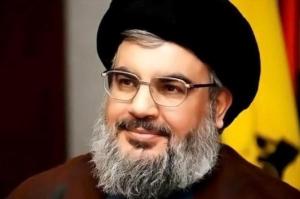 – Yesterday, we lost one of our brothers who shared in the birth of Hezbollah from its first hours and carried heavy responsibility for 33 years – el Sheikh Mohammed Khatoun. I shall speak more about him at the date of his funeral tomorrow. I extend condolences to his family and loved ones.
– Before I speak about the main event – I want to speak about what happened in Nigeria a few days ago – a massacre in Zariah. Hundreds were killed. Hundreds were injured. Hundreds were detained. We include our voice among the voices of all who condemned this massacre, and we condemn the silence of all those who chose to be silent – a horrific silence. There is talk of up to 1,000 killed. And we call on the Nigerian government and its political parties – to act with strength to hold those responsible and to have a national and humanitarian response. I worry that there are American or Israeli hands or Takfiri hands that are behind this horrific massacre – designed to create more bloodshed in Nigeria.
– Back to our main point of discussion
– The assassination of the General of the Political Prisoners in the Israeli Jails – the brother, the martyr, Samir el Quntar
– (1) The facts. We have no doubt that the Israeli enemy is the one behind the assassination. It was not a covert operation – but an open attack. The assassination was by Israeli jets – against a residential home, that specifically targeted Samir el Quntar and other fighters and civilians. Did the Israeli jets enter Syrian air space or the did the Israeli jets fly over occupied Golan Heights – that is a detail, one that does not change anything, unless the discussion is about Syria and Russia and today that is not our focus. What is clear is that it was an Israeli attack against a residential home in Geramana in the outskirts of Damascus. I extend condolences to all those martyred. Anyone who kills a man like Samir el Quntar does a service to Israel.
– (2) We know and Samir knew and the Israelis themselves did not hide – that Israel would not leave Samir el Quntar alive, from the first day of his release. The threat was alive throughout all the years, months, days. Israel was very open that it would not forgive him for his past nor on his strength and resilience in jail nor on his dedication to the resistance. Israel does not forgive – it is our governments that forgive the murderers of Deir Yassin to Qana. This talk by Israel was before the plan for building resistance in the occupied Golan Heights. We in Hezbollah hold the enemy Israel responsible for the assassination of Samir el Quntar
– (3) In this night I do not want to talk about the characteristics of this great martyr. I shall simply say tonight that Samir el Quntar was a lover of Palestine. Palestine was all his love and filled his heart and mind. Palestine’s destiny and the destiny of Palestine’s people and the future of the resistance was always his first and main focus. In our first visit upon liberation, he and I spoke – and we always leave options open – I told him that he has numerous options – politics, media, and military. He said then what he told others publicly: I left Palestine to return to Palestine. He told me that from this very moment I am ready to participate in any military operation, whether on the border with occupied Palestine or within occupied Palestine. I await my martyrdom, he said. It would be an honor to me to be a fighter, he said. That is Samir, that is his truth that we must say today. Does the enemy Israel imagine that by killing Samir and those like him that they can kill such love and passion and commitment and the vast sacrifice of the people of this nation? Many great leaders have been killed and tens of thousands of people have been martyred – in Palestine and Lebanon and Syria and Egypt and Jordan. And what was the result? Has this nation and these people and these generations given up on Palestine? NO. A generation grew up to inherit resistance and to give it to the next generation. The blood of Samir el Kuntar and those who passed before him – is that the resistance against Israel for liberation is a call that will not be broken, regardless of who will be killed and detained and tortured; this is a call that will not be broken. Look now at the people of occupied Palestine – this is a generation that is as old as Samir el Kuntar was when he went to occupied Palestine (i.e. 17). The youth of Palestine fight death with death. Tens of them have been martyred as they fight with knives – because that is their only option. They have entered terror in the hearts of the enemy. When we see a youth in her prime – such as (martyr) Ashraqat Tamami – and when I speak of her, I speak of all the youth of Palestine, I discovered that this youth (female) had a great deal of awareness and clarity and dedication and deep understanding to the cause that she wants to sacrifice for and to the understanding of the enemy and the friend, and for the calmness of her decision. Ashraqat is today a model for many of Palestine’s youth – who love with a passion the land and freedom. They carry the same passion that Samir el Quntar carried and it remained in his heart until a traitorous Israeli rocket killed him.
– (4) Our position. When Israel attacks, anywhere it chooses and how it chooses and in any time it does, it is the right of the resistance – anywhere, and any way, and in any place, and at any time. Today, I repeat: from now, any member of Hezbollah that is killed, we shall hold the responsibility to the Israelis and we shall consider it is our right to respond at any time, at any location, and in the manner we choose. We said this on the 30th of January 2015. Today, we say, to the enemy and to the friend, Samir el Quntar is one of us, and he is a leader in our resistance, and Israelis killed him, and it is our right to respond to his assassination in the time, place, and in the manner that we choose. That is our right. And I add – we, in Hezbollah, we shall fulfill this right.
– (5) In the same vein, the killing against Hezbollah and this resistance, comes the US actions that seek to target Hezbollah on a number of levels. Since the early 90s, we as a party have been on the terrorism list – as a political party and as individuals. And for decades, the Americans have tried to force this description on other countries; they were not successful. Such a description is not accepted by the UN, and the EU, only lately, considers the military wing on the terrorism list, and China and Russia do not consider us as such. What the Americans decided to do now – even though they support terrorism worldwide — is that they consider us a criminal organization and not terrorism, claiming that we are drug dealers and that we are money launderers and that the US Congress now seeks to investigate the accusation that we are human traffickers. These accusations are false and have no basis in truth. It is our duty to deny them. We are not due to show evidence of our innocence. It is their responsibility to show evidence – if they have any, although they have long made accusations without evidence. Clearly, these accusations are political – and it’s first objective is to show Hezbollah in a bad light. They are the ones who spent millions of dollars, as per their own Ambassador, to create propaganda against Hezbollah for the Arab youth. We have a strong example here: the international organization of nuclear energy presented a report about the Iranian nuclear energy – and they said that the Iranian nuclear energy is peaceful and at the very least, since 2009 until today, there is no evidence of anything military in the Iranian nuclear energy. They presented the evidence, and one of the panel of the international organization is an American and there was a consensus on the report! A full consensus. Let us remember that it was the Americans that accused Iran for years. Also the Europeans. And let’s not forget Netanyahu in many occasions, including his speech at the UN. Netanyahu should be a joke internationally and even for Israel – let’s remember his chart at UN when he said that Iran would have a nuclear bomb in a few months. And now we have this report – with consensus – that there is no evidence of military usage of Iran’s nuclear energy. Let’s remember that they were planning a war against Iran, and they enforced sanctions against more than 80 million people, and they threatened, unfortunately with some of their Arab collaborators. That is just one example of a political accusation. The accusations against us are small in comparison. With the battle against us, they won’t accuse us of getting nuclear weapons. This is what they have to say against – either terrorist or criminal. That is the end of their line. The line of their lie is short. The truth will eventually be exposed. We know, in front of God, in front of our people, in front of many people, this is not who we are. If they think their accusations are a propaganda war, it will fail. From a financial perspective, they have now forced upon international banks to freeze Hezbollah funds – well, this was closed a long time ago. We do not have funds in international banks. Now, they are also putting pressure on Lebanese banks and the Lebanese central bank – to put pressure on any organization that is claimed to be tied to Hezbollah. We also state today, and state it again, we have no funds in Lebanese banks, not in the past nor in the present, nor do we have funds that we put in any banks. Nor do we transfer our funds via Lebanese banks – so there is no need for either the Lebanese central bank or any Lebanese banks to feel fear of being chased by the Americans. Furthermore, as I have stated before and shall say again, we are not a business nor an investment. We do not have companies nor are we partners with any Lebanese merchants. Whatever funds we have, we give to our resistance and to the families of the injured and the martyrs. We do not have an extra penny that we invest or put in any fund.
– Based on this, we have to speak seriously about this – it is the responsibility of the Lebanese Central Bank and the Lebanese banks to protect the Lebanese consumers and merchants! It is enough that one sign come from the Americans for there to be an accusation against an individual, and these banks immediately follow. Does this country not have sovereignty? Not have its own courts? Its own state? There are Lebanese merchants and investors that are hurt. We are not hurt. But now if Americans want to target a particular political current or a particular community, all they do is give the names to the Lebanese banks! These are Lebanese who should be protected by the Lebanese State. I do not ask the Lebanese State to protect any member of Hezbollah – but at the very least, it is the responsibility of the State to protect the men and women of this country. No one is asking the State to declare war on the US, only to ask for evidence for these accusations and to take the evidence to the Lebanese courts. This has already begun — this subservience to the US!
– Furthermore, with regards to the media, whether it is part of our network (Manar and Nour) or accused of supporting us or even empathizing with us – they are being threatened! The US is accusing you and judging you in absentia and charging you and killing you and you are not allowed to speak and if you speak, your voice cannot reach anywhere in the world. That is the freedom and democracy of the United States. Your media is not allowed – and maybe it will reach the stage that any media that shows the truth will be accused of being pro-terrorism, while knowing of course that anyone with a Dish can see hundreds of channels that call for takfiri [intolerance] and for killing and raping and committing terrorism and destruction and occupation and violence; those channels are accepted. But you and your type of the resistance are targeted, and the real reason is Israel, and not our position in Yemen or otherwise, but the real reason is that you are a resistance! The intention is Resistance itself – the discourse, the culture, the knowledge base of Resistance!
– Media is part of the struggle. We will not surrender. We will look for all options and opportunities so that the voice of Resistance and the voice of all who reject the project of Israel and the US in the region – those voices will be heard. This is an ongoing struggle.
– What is more important about all these actions against us, is how we look upon all these actions. You can see the negative, but there is also the positive. The fact that Congress sits and meets and has consensus and continues to think about new ways to fight us – means that we are in the right place. They have given us more faith and strength. It shows that we are in the right struggle, the right battle, the right discourse. Who ever finds himself – knowingly or not – a partner with the US and Zionism, let him re-examine his nationalism and religion and ethics! These actions by the US are also a recognition of us, that we are not a small group with small consequences. It is a recognition that Hezbollah plays a large role in Lebanon and in the region in fighting the Israeli project and the hegemonic project. As part of the Resistance – and we don’t claim to fight alone, just as we didn’t fight alone in 1982 and since – there were many US projects of hegemony, we are part of this battle and not alone. That is why the US Congress needs to take these declarations with clear time lines — they take us seriously. We also say that we understand these actions, see how loving we are. We understand these actions. When we are enemies to each other, and this is a compliment to us – to be enemies to the US and to Israel and enemies to all who want to steal the riches of our people and to all who want to destroy our civilization, we understand that they would want to do all these things, and we also will not surrender in this battle. I say to the US and to Israel and to their allies in the region: all these actions against us, from sanctions and murders, you will not be able to erase us. All the actions against us and are planned against us – will only increase our commitment.
– May God have mercy on our great martyr Samir el Kuntar…
Translation by Rania Masri [not word for word]
Algeria calls for direct talks between Saudi and Iran
MEMO | December 21, 2015
An Algerian diplomat has revealed that his government has suggested that Saudi Arabia and Iran should hold direct talks to solve regional conflicts and regain stability in the Arab world, Anadolu reported on Sunday.
“Algerian President Abdelaziz Bouteflika offered an initiative to Eshaq Jahangiri, the first deputy of the Iranian president,” explained the anonymous official. Jahangiri visited Algeria last Wednesday and Thursday. The same suggestion was made to Saud Bin Mohamed Al-Saud, an aide of the Saudi monarch, who was also in Algiers last week.
The initiative apparently includes an invitation to both countries to sit for direct talks in order to solve the armed conflicts in the Arab region. Neither government has responded as yet.
Bouteflika met with Jahangiri on Thursday at the end of his two-day visit to Algeria, during which he attended a meeting of the High Cooperation Committee which discusses matters of direct relevance to Algiers and Tehran. According to Jahangiri, the situation in Syria and Iraq was on the agenda for the talks with the Algerian president.
Israeli Lies About Kuntar Murder Flow in Abundance

Samir Kuntar, before being released in Israeli prisoner exchange
By Richard Silverstein | Tikun Olam | December 20, 2015
Yesterday, Israel murdered Samir Kuntar, a Hezbollah militant involved with a terror attack that killed three Israeli civilians in 1979. Until he was freed in a prisoner exchange in 2008, he’d been the longest-serving security prisoner in Israeli jails.
In the years following the original attack, Kuntar became the embodiment of the bloodthirsty terrorist, supposedly personally bashing in the head of a little girl with a rifle butt. At least this is the story they told. But this narrative, like so many spun by Israeli military-intelligence circles, and lapped up so eagerly by an adoring Israeli media, is largely fiction.
According to Aviv Sela, a noted Israeli psychologist who served in that capacity for years with the police and Shabak, Kuntar did not kill the girl or her father. Instead, he claims he had left the boat to help his comrades who’d been attacked by Israeli security forces. The firing that killed the Israelis came via friendly (Israeli) fire and not the Palestinians. As with so many ugly facts Israel tries to conceal in such circumstances, it creates comfortable narratives that obscure the truth.
Something similar happened with the 300 Line bus hijacking in which the Israeli media initially dutifully reported that all the Palestinian hostage takers were killed in the bus assault. This concealed the fact that the Shabak chief personally approved the cold-blooded murder of the two surviving Palestinians. In this case, it was Israeli security forces who stove in their heads, this time with rocks instead of a rifle butt. The moral being: the only good Palestinian terrorist is a murdered one, the gorier the better.
Israel’s military is continuing the Kuntar charade to justify his execution in an Israeli air attack over Damascus, which destroyed the apartment building where he was living, killing eight others as well. He not only bashed a little girl’s head in way back. He continued his evil ways as a mastermind of terror in Assad’s regime. Read this fantasia:
Samir Kuntar, the notorious terrorist killed Saturday night near Damascus, was believed to be preparing a major terror attack against Israel from the Golan Heights, according to highly reliable Western sources.
According to these sources, last year Kuntar turned into a kind of independent terror entrepreneur and was considered by Israel and the West to be a “ticking bomb”. The sources said Kuntar had recently not been working on behalf of Hezbollah, but rather acting with increasing independence alongside pro-Assad militias in Syria.
The organization with which Kuntar was working was founded by the Syrian regime to replace the brutal Shabiha (an Alawite militia), which even the Syrian regime opted to reject. Assad’s regime therefore established a less vicious militia, the Syrian National Resistance Committee, which did not engage in the economic and criminal activities of the Shabiha. Farhan al-Shaalan, another senior leader killed Saturday night in the same building where Kuntar ran his secret operation, also belonged to the Syrian National Resistance Committee…
Western sources believe Kuntar was in the final stages of planning and carrying out another attack against Israel, which senior Hezbollah officials apparently did not know about…
Syria, Hezbollah, Iran and the Russians have no interest in a confrontation with Israel now, and certainly not a confrontation ignited by a “freelancer” such as Kuntar, driven by his hostility to Israel.
This suggests that Kuntar was eliminated because he was considered a ticking bomb by more than one entity in the Middle East.
One absolute trademark of Israeli disinformation is after such murders it always suggests the killing wasn’t necessarily Israel’s doing, but due to internal disputes within the ranks of the terrorists. It’s been used by Israel’s security apparatus from time immemorial (h/t to Joan Peters!).
I’ve often written about specific instances in which the Israeli security apparatus blatantly lies to cover up embarrassment or deflect from the truth of events. In the case of Kuntar, the IDF knows that I, and perhaps other journalists will begin calling this what it was, an extrajudicial execution. To pre-empt this inconvenient narrative, it puts forth yet another bubbeh meiseh portraying Kuntar as a revitalized terror mastermind. A man who had to die to save Israeli lives. He was a “ticking bomb.” Apparently, the ticking was in the ear of the beholder. What was he planning? A vague terror attack somewhere in the Golan. But it would’ve been big, trust me, or so they claim.
Note there is no proof whatsoever offered to support these claims. They are threads of narrative spun, not from gold, but from lead.
As I read the passage above, two possibilities struck me: one, the reporter really had a “western intelligence source” who offered this information. If that were the case, my money would be on the U.S. being the source. Since the Obama administration had placed Kuntar on a specially designated Global Terrorist list in September, it seemed entirely possible it would be monitoring his communications to keep track of him. It would be easy to share this information with the IDF thus enabling it to target him. If this were so, then the U.S. would be collaborating with Israeli targeted assassinations. Unlikely, but still possible.
Ronen Bergman claimed just such an intelligence collaboration enabled the Mossad to locate and track Imad Mugniyeh, who was similarly assassinated in Damascus in 2008.
But there was an even more probable scenario. Ron Ben Yishai, like most Israeli security reporters (and unlike most U.S. reporters covering the same beat) has only one set of sources: the military. Not only will he not question the veracity of these sources, he will not consult critics or skeptics in order to qualify the accuracy of his reports. So the chances were high that the story was entirely manufactured by Kuntar’s killers, the IDF.
Indeed, when I questioned an Israeli security source about the authenticity of the “western sources,” he replied “They are as western as Bogie!” In other words, the source of this story is most likely Defense Minister Bogie Yaalon.
Another media stenographer for the IDF is Roni Daniel. His report on this story had a different spin. Kuntar was a demon-mastermind. But not for Assad. Rather for Iran. In Daniel’s report it is not a western source who defines Kuntar as a ticking bomb but Israel itself. So either the two different sources miraculously came up with the same locution independently of each other; or the same source told two different journalists the same thing and told each to attribute them differently (or the journalists did so on their own). … Full article
Israeli Strike in Syria Kills Dean of Arab Detainees Samir Kuntar
Al-Manar | December 20, 2015
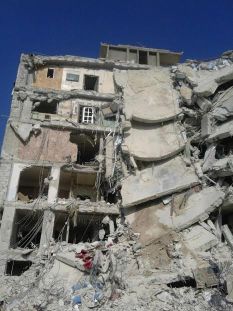 Israeli warplanes raided a residential building in the Syrian city of Jaramana late on Saturday, killing the Dean of liberated detainees from Israeli prisons, Samir Kuntar.
Al-Manar sources said the Israeli warplanes struck the building with four long-range missiles, causing complete destruction of the building and partial damage to the surrounding structures.
Hezbollah Media Relations released a statement on Sunday announcing the martyrdom of Kuntar who spent 29 years in the Israeli prisons.
“At 10:15 p.m. on Saturday December 19, Zionist warplanes struck a residential building in Jaramana city in Damascus countryside,” Hezbollah Media Relations said in the statement.
“The Dean of liberated detainees from Israeli prisons, brother Mujahid Samir Kuntar was martyred along with several Syrian citizens in the strike,” the statement added.
Al-Manar correspondent in Damascus reported that the Takfiri insurgents fighting the Syrian government have been operating in Jaramana, noting that they have been repeatedly coordinating with the Israeli enemy, in a clear indication that the latest strike could be coordinated by the Zionist forces and the terrorists.
Kuntar was detained by occupation forces in 1979, at the age of 16, for his involvement in a heroic operation against Zionists. He was released along with four other Lebanese prisoners in a 2008 swap deal with Hezbollah in exchange for the bodies of two Israeli soldiers killed during the 2006 war.
Featured Video

AIDS Inc. by Gary Null (2007)
or go to
Aletho News Archives – Video-Images
From the Archives
Clash of Civilization, Iran Part II
By Jamal Kanj – Intifada-Palestine.com – January 14, 2011
Israel’s survival kit is: perpetuate conflict, insecurity to rationalize collective hate and finally playing victim.
Devoid of conflict, Israel implodes internally; without hate, Zionism loses its justification; and playing eternal victim to continue blackmailing the West. Absence of this holy trinity, Israel ceases to exist.
From its inception, the house of Zion has mastered exploiting adversarial powers to advance Israel’s cause. For instance, their influence over the Democratic Party in the US began with President Truman’s bid for 2nd term election in 1948.
Responding to strong opposition from Secretary of State General George Marshall and Department experts urging against recognition of Israel, President Truman replied: “I’m sorry gentlemen but I have to answer to hundreds of thousands [Jewish voters] who are anxious for the success of Zionism. I do not have hundreds of thousands of [voting] Arabs among my constituents”
Zionists influence over liberal American politics was matched with the doctrinal school of Conservative theoreticians aligning the Republican Party’s platform with Israel’s objectives. The Neoconservative Zionists, coined Zioncons, invented the “Clash of Civilization” concept to fight Israel’s wars. … continue
Blog Roll
 Aletho News
- 12 Things Your Psychiatrist Was Trained Not to Tell You
- From Unipolar Universalism to Multipolar Civilizational Distinctiveness
- RSF military group defects, joins Sudanese army: State media
- Ireland goalkeeper refuses to play ‘Israel’ as squad weighs boycott
- China pushes back against US on Cuba, Iran
- Ukrainian Soldiers, Potential Mercenaries: Have Gun, Will Travel!
- Burnham’s UN debut… A masterclass in British disinformation
- Iran flights continue despite US aviation sanctions
- Global Tipping Points Lead the World Into a State of Entropy
- The day-after at the White House: USA and Xi Jinping
- If Americans Knew
- Israel forces Gazans to live in constant peril – Daily Update
- Deconstructing Netanyahu’s pants-on-fire UN rant – Daily Update
- Trump betrayed voters with his campaign lies and prioritized a foreign country once he took office
- Netanyahu calls Israel’s war in Gaza ‘opposite of genocide’ in UN speech to near-empty hall
- Settler Kidnappings: Torture, Sexual Abuse and Terrorisation of Palestinian Abductees as Israel Deepens Annexation of West Bank
- Gaza winter nears as 162,000 tents become unusable, raising fears of humanitarian crisis
- Netanyahu says, “It’s the opposite of genocide”; UN says Gaza economy is world’s ‘most severe crisis on record’ – Daily Update
- Israel’s US-Backed Assault on Gaza Has Created the ‘World’s Most Severe Economic Crisis on Record’: UN
- ‘Protecting U.S. Citizens’… From Israel
- ‘This is where I live now, the back of a truck’: a day in the life of a grandmother in Gaza
- No Tricks Zone
- New Study: Earth And Venus Surface Warmth Largely Explained By Convection And Lapse Rate, Not CO2 Or Radiation
- 2025 Nature Paper Claiming Worsening Global Drought Gets RETRACTED …Heavily Flawed
- New Study: ‘Global Drought Shows No Detectable Recent Acceleration Under Climate Warming’
- Economic Masterminds: German Socialists Suggest Taxing Productivity Gains Stemming From Using AI
- The South China Sea Has Not Been Cooperating With The Climate Change Narrative
- Energy Crisis: Germany Enters Heating Season With Historically Low Gas Reserve Fill Levels
- New Study: The Antarctic Ice Sheet Gained Mass From 2020-2024 Due To Staggering Snow And Ice Accumulation
- Study: Ocean Heating Rates From Thousands Of Years Ago ‘Dwarf’ Modern Ocean Heating Rates
- Climate Extremists Target, Attack Large-Scale Power Grid Infrastructure In Germany!
- New Study: Antarctic Ice Melt Has Contributed Less Than 1 Centimeter To Sea Level Rise In The Last 30 Years

