Russia remains convinced that the August 21 poison gas attack in Syria was a provocation by rebel forces and says a report by UN inspectors does not answer all of its questions about the attack, Foreign Minister Sergei Lavrov said on Tuesday.
Speaking at a press conference alongside French Foreign Minister Laurent Fabius a day after UN inspectors confirmed the use of the nerve agent sarin, Lavrov took a different view to France and other Western states which say they believe that Syrian government forces were behind the attack.
“We have the most serious basis to believe that this was a provocation,” Lavrov said.
The foreign ministers said that they had the same aim of ending the bloodshed, but disagreed on the methods to get there.
Fabius said there was a “difference in the approach on the methods.”
In significant remarks made by the president of the Zionist entity, Shimon Peres, he stated that what is happening in Syria today is punishment of the Arab state for refusing to compromise with ‘Israel’.
In statements published by the Zionist daily Yediot Ahronoth on Sunday, Peres said that “the 1973 war had brought peace in spite of its brutality.”
“One of the 1973 war outcomes was signing the Peace-Treaty with Egypt, through which Sadat could bring security and peace to his people, contrary to Assad, who refused to participate in Sadat’s settlement as he participated in his war,” the Zionist president elaborated.
“Today, Syria lives internal war and the Syrian people pay for it over Assad’s refusal to compromise. Today he is punished for his refusal,” he said.
Peres’s remarks came during his participation in the commemoration of Zionist soldiers who had been killed in the 1973 war. The ceremony was also attended by Zionist Prime Minister Benjamin Netanyahu and other military and security officials.
These statements made it clear that what is happening in Syria is not a revolution but a foreign scheme, analysts and observers say, noting that these statements indicate the beneficiary of the Syrian crisis and its maestro.
As soon as Kevin Drum at Mother Jones absolved the CIA of spewing poison gas as a provocation, many on the Liberal Left cautiously threw their weight behind Obama and the thrill of waging a punitive war on Syria.
“Perhaps regime change is a good idea,” Tom Hayden speculated in The Nation.
Left paterfamilias Noam Chomsky, who generally shows an appreciation for the subtleties of covert action, claimed that America is not supplying its Al Qaeda mercenary army with arms – even though Eric Schmidt at The New York Times reported over a year ago that CIA officers in Turkey were “helping allies decide which Syrian opposition fighters across the border will receive arm.”
As if Hayden fomenting war and Chomsky covering for the CIA isn’t irony enough, Drum cleared the CIA in response to allegations of a provocation made by Rush Limbaugh. Which raises the question, what are the facts about the CIA’s penchant for “provoked responses” like the one in the Tonkin Gulf that started the Vietnam War?
Simply stated, black propaganda is one of many criminal but legally deniable things the CIA does. It often involves committing a heinous crime and blaming it on an enemy by planting false evidence, and then getting a foreign newspaper to print the CIA’s scripted version of events, which sympathetic journalists in America broadcast to the gullible public.
In the case of Syria, the CIA is using cooked Israeli “intelligence” as a catalyst – which is why, as Johnstone and Bricmont explain, the “intelligence” is so “dubious.”
Black propaganda has other “intelligence” applications as well, and is often used to recruit informants, and create deserters and defectors.
In his autobiography Soldier, Anthony Herbert told how he reported for duty in 1965 in Saigon at the joint CIA-military Specials Operations Group. The spooks asked him to join a secret psywar program. “What they wanted me to do was to take charge of execution teams that wiped out entire families and tried to make it look as though the VC themselves had done the killing. The rationale was that other Vietnamese would see that the VC had killed another VC and would be frightened away from becoming VC themselves. Of course, the villagers would then be inclined to some sort of allegiance to our side.”
As counter-terror guru David Galula explained, “Pseudo insurgents are a way to get intelligence and sow suspicion at the same time between the real guerrillas and the population.”
In a similar case in 1964, a famous CIA propaganda officer organized three armed “survey teams” which operated in neighboring hamlets simultaneously. When Vietcong propaganda teams departed from a hamlet, his cut-throat cadre would move in and speak to one person from each household, so the VC “would have to punish everyone after we left.”
In other words the CIA’s mercenaries (like some the CIA’s mercenaries in Syria) were provocateurs, setting people up for recriminations, for intelligence and publicity purposes.
Here’s another example: in 1964, CIA officer Nelson Brickham worked in the Sino-Soviet Relations Branch, where he managed black propaganda operations designed to cause friction between the USSR and China. At the heart of these black ops were false flag recruitments, in which CIA case officers posed as Soviet intelligence officers and, using actual Soviet cipher systems and methodology, recruited Chinese diplomats, who believed they were working for the Russians. The CIA case officers used the Chinese dupes to create all manner of mischief.
Brickham in 1967 created the Phoenix program in South Vietnam. The Phoenix program’s operations chief in 1970, Colonel Thomas McGrevey, had a “penetration agent” inside COSVN – the Central Office of South Vietnam. COSVN’s deputy finance director was the penetration agent. The deputy alerted McGrevey when the finance director was going on vacation, enabling McGrevey to mount a black propaganda campaign which framed the finance director for running off with embezzled funds.
A circular about the Phoenix program issued by the revolutionary Security Service in 1970, described how the nationalists viewed the CIA. As stated in the circular, “the most wicked maneuvers” of the CIA “have been to seek out every means by which to terrorize revolutionary families and force the people to disclose the location of our agents and join the People’s Self-Defense Force. They also spread false rumors. Their main purpose is to jeopardize the prestige of the revolutionary families, create dissension between them and the people, and destroy the people’s confidence in the revolution. In addition, they also try to bribe poor and miserable revolutionary families into working for them.”
Forged letters are a CIA specialty. Former CIA officer Philip Agee told how he mounted a successful operation using forged letters against Ecuadoran Antonio Flores Benitez, a key member of the Communist revolutionary movement. “By bugging Flores’ phone, we found out a lot of what he was doing. His wife was a blabbermouth. He made a secret trip to Havana and we decided to do a job on him when he landed back in Ecuador. With another officer, I worked all one weekend to compose a “report” from Flores to the Cubans. It was a masterpiece. The report implied that Flores’ group had already received funds from Cuba and was now asking for more money in order to launch guerrilla operations in Ecuador. My Quito station chief loved it so much he just had to get into the act. So he dropped the report on the floor and walked on it awhile to make it look pocket-worn. Then he folded it and stuffed it into a toothpaste tube-from which he had spent three hours carefully squeezing out all the toothpaste. He was like a kid with a new toy. So then I took the tube out to the minister of the treasury, who gave it to his customs inspector. When Flores came through customs, the inspector pretended to go rummaging through one of his suitcases. What he really did, of course, was slip the toothpaste tube into the bag and then pretend to find it there. When he opened the tube, he of course “discovered” the report. Flores was arrested and there was a tremendous scandal. This was one of a series of sensational events that we had a hand in during the first six months of 1963. By late July of that year, the climate of anti-Communist fear was so great that the military seized a pretext and took over the government, jailed all the Communists it could find and outlawed the Communist Party.”
Likewise the catalyst for the 1973 coup in Chile was a forged document-detailing a leftist plot to start a reign of terror – which was discovered by the enemies of President Salvador Allende Gossens. The result was a violent military coup, which the CIA officers (who had set it in motion through disinformation in the Chilean press) sat back and watched from their hammocks in the shade.
And on and on it goes.
General Ed Lansdale formalized CIA black propaganda practices in the early 1950s in the Philippines. To vilify the Communists and win support of Americans, one of his Filipino commando units would dress as rebels and commit atrocities on civilians, and then another unit would magically arrive with cameras to record the staged scenes and chase the “terrorists” away. Cameras were the key.
The CIA also concocted lurid tales of Vietminh soldiers’ disemboweling pregnant Catholic women, castrating priests, and sticking bamboo slivers in the ears of children so they could not hear the Word of God. Lansdale’s henchman, CIA agent-cum-journalist Joseph Alsop, gleefully reported this black propaganda.
The American “press” is the vital, arrogant, fatal, dominant X in black propaganda. When it comes to the CIA and the American press, one black hand washes the other. To gain access to CIA officials, reporters suppress or distort stories. They sell their black souls for scoops. In return, CIA officials leak stories to them. At its most incestuous, reporters and CIA officers are blood relatives. At one point, The New York Times correspondent in Vietnam, James Lemoyne, just happened to be the brother of the CIA’s counter-terror team chief in the Delta, Navy Commander Charles Lemoyne.
In a democratic society the media ought to investigate and report objectively on the government, which is under no obligation to inform the public of its activities and which, when it does, puts a “spin” on the news. As part of the Faustian Pact, when government activities are conducted in secret, illegally, reporters look away rather than jeopardize profitable relationships. The intended result is that the unwitting public is robbed of its freedom of speech – for how can you speak freely if you don’t know what’s going on?
If Lansdale hadn’t had Alsop to print his black propaganda, there probably would have been no Vietnam War. Likewise, Judith Miller, disgraced facilitator of the war on Iraq and rehabilitated Fox KKK-TV correspondent, brought you the Iraq War through false documents provided by CIA analysts.
We rarely know who the Alsops and Millers are in our midst, until after the fact. The CIA has a strict policy of keeping its atrocities to itself. And it is aided, in its eternal quest to deceive the American public, by the fact that black propaganda validates the beliefs of the Kevin Dumbs among us, as it assures their imagined security and sense of being exceptional.
In fact, black propaganda operations, and the CIA itself, are antithetical to democratic institutions.
A big part of the CIA’s current success is its ability to deliver its message through Left publications, and the Left’s unstated policy of self-censorship in regard to CIA operations. Most insidious, perhaps, are the former CIA officers who claim to be anti-war, and seek a veil of immunity by claiming to have been “analysts.” This is akin to saying “I was a bookkeeper for the Mafia. I never killed anyone.”
Of course it’s the bookkeepers who tell the bosses the names and addresses of the delinquents who haven’t paid their extortion money this week. The Phoenix Directorate in Saigon had analysts performing the same assassination, kidnapping and torture function on an industrial scale.
Despite the popular portrayal of the CIA as patriotic guys and girls risking everything to do a dirty job, the typical CIA officer is a sociopath without the guts to go it alone in the underworld. They gravitate to the CIA because they are protected there by the all-powerful Cult of Death that rules America.
The most dangerous facet of having former CIA officers slithering around is their uniform message that the CIA is necessary. These are not Phil Agees, revealing the ugly truth and calling for the CIA’s abolition. Like all the CIA’s political and psychological warfare experts, they are at the forefront of the war on terror, using psywar to achieve the goals of the Cult of Death that rules America. The result is a theatre of the absurd, a world of illusion.
Now we are told that the CIA Syrian mercenaries may launch a chemical attack on Israel from government-controlled territories as a “major provocation.” What you can be sure of is that some provocation will be launched and that the press, including most of the Left, will cover it up.
Somewhere in the Lester B. Pearson Building, Canada’s foreign affairs headquarters, must be a meeting room with the inscription “The World Should Do as We Say, Not As We Do” or perhaps “Hypocrites ‘R Us.”
With the Obama administration beating the war drums, Canadian officials are demanding a response to the Syrian regime’s alleged use of the chemical weapon sarin.
Last week Prime Minister Stephen Harper claimed “if it is not countered, it will constitute a precedent that we think is very dangerous for humanity in the long term” while for his part Foreign Affairs Minister John Baird declared: “If it doesn’t get a response it’s an open invitation for people, for Assad in Syria, or elsewhere to use these types of weapons that they’ve by and large refrained from doing since the First World War.” The Conservatives also signed Canada onto a White House statement claiming: “The international norm against the use of chemical weapons is longstanding and universal.”
While one may wish this were the case, it’s not. In fact, Canada has repeatedly been complicit with the use of chemical weapons.
During the war in Afghanistan, Canadian troops used white phosphorus, which is a chemical agent that can cause deep tissue burning and death when inhaled or ingested in significant amounts. In an October 2008 letter to the Toronto Star, Corporal Paul Demetrick, a Canadian reservist, claimed Canadian forces used white phosphorus as a weapon against “enemy-occupied” vineyards. General Rick Hillier, former chief of the Canadian defence staff, confirmed the use of this defoliant. Discussing the difficulties of fighting the Taliban in areas with 10-foot tall marijuana plants, the general said: “We tried burning them with white phosphorous — it didn’t work.” After accusations surfaced of western forces (and the Taliban) harming civilians with white phosphorus munitions the Afghan government launched an investigation.
In a much more aggressive use of this chemical, Israeli forces fired white phosphorus shells during its January 2009 Operation Cast Lead that left some 1,400 Palestinians dead. Ottawa cheered on this 22-day onslaught against Gaza and the Conservatives have failed to criticize Israel for refusing to ratify the Chemical Weapons Convention and Biological Weapons Convention.
For decades the massive Suffield Base in Alberta was one of the largest chemical and biological weapons research centres in the world. A 1989 Peace Magazine article explained, “For almost 50 years, scientists from the Department of National Defence have been as busy as beavers expanding their knowledge of, and testing agents for, chemical and biological warfare (CBW) in southern Alberta.”
Initially led by Canadian and British scientists/soldiers, gradually the US military played a bigger role in the chemical weapons research at Suffield. A chemical warfare school began there in 1942 and it came to light that in 1966 US Air Force jets sprayed biological weapons simulants over Suffield to figure out how best to spray potentially fatal diseases on people. Until at least 1989 there were significant quantities of toxins, including sarin, stockpiled at the Alberta base. In 2006 former Canadian soldiers who claim to have been poisoned at Suffield launched a class action lawsuit against the Department of National Defense.
During the war in Vietnam, the US tested agents orange, blue, and purple at CFB Gagetown. A 1968 U.S. Army memorandum titled “defoliation tests in 1966 at base Gagetown, New Brunswick, Canada” explained: “The department of the army, Fort Detrick, Maryland, has been charged with finding effective chemical agents that will cause rapid defoliation of woody and Herbaceous vegetation. To further develop these objectives, large areas similar in density to those of interest in South East Asia were needed. In March 1965, the Canadian ministry of defense offered Crops Division large areas of densely forested land for experimental tests of defoliant chemicals. This land, located at Canadian forces base Gagetown, Oromocto, New Brunswick, was suitable in size and density and was free from hazards and adjacent cropland. The test site selected contained a mixture of conifers and deciduous broad leaf species in a dense undisturbed forest cover that would provide similar vegetation densities to those of temperate and tropical areas such as South East Asia.”
Between 1962 and 1971 US forces sprayed some 75,000,000 litres of material containing chemical herbicides and defoliants in Vietnam, Laos and Cambodia. One aim was to deprive the guerrillas of cover by defoliating forests and rural land. Another goal of these defoliation efforts was to drive peasants from the countryside to the US dominated cities, which would deprive the national resistance forces of their food supply and rural support.
In addition to assisting chemical warfare by testing Agent Orange, during the Vietnam war Canadian manufacturers sold the US military “polystyrene, a major component in napalm,” according to the book Snow Job. A chemical agent that can cause deadly burns, Napalm was widely deployed by US forces in their war against Southeast Asia.
This deadly chemical agent was also used during the Korean War, which saw 27,000 Canadian troops go to battle. A New York Times reporter, George Barrett, described the scene in a North Korean village after it was captured by US-led forces in February 1951: “A napalm raid hit the village three or four days ago when the Chinese were holding up the advance, and nowhere in the village have they buried the dead because there is nobody left to do so. This correspondent came across one old women, the only one who seemed to be left alive, dazedly hanging up some clothes in a blackened courtyard filled with the bodies of four members of her family.
“The inhabitants throughout the village and in the fields were caught and killed and kept the exact postures they had held when the napalm struck — a man about to get on his bicycle, fifty boys and girls playing in an orphanage, a housewife strangely unmarked, holding in her hand a page torn from a Sears Roebuck catalogue crayoned at Mail Order No. 3,811,294 for a $2.98 ‘bewitching bed jacket — coral.’ There must be almost two hundred dead in the tiny hamlet.”
This NYT story captured the attention of Canadian External Affairs Minister Lester Pearson. In a letter to the Canadian ambassador in Washington, Hume Wrong, he wondered how it might affect public opinion and complained about it passing US media censors. “[Nothing could more clearly indicate] the dangerous possibilities of United States and United Nations action in Korea on Asian opinion than a military episode of this kind, and the way it was reported. Such military action was possibly ‘inevitable’ but surely we do not have to give publicity to such things all over the world. Wouldn’t you think the censorship which is now in force could stop this kind of reporting?”
No one denies that tens of thousands of liters of napalm were employed by UN forces in Korea. The use of biological weapons is a different story.
After the outbreak of a series of diseases at the start of 1952, China and North Korea accused the US of using biological weapons. Though the claims have neither been conclusively substantiated or disproven — some internal documents are still restricted — in Orienting Canada, John Price details the Canadian external minister’s highly disingenuous and authoritarian response to the accusations, which were echoed by some Canadian peace groups. While publicly highlighting a report that exonerated the US, Pearson concealed a more informed External Affairs analysis suggesting biological weapons could have been used. Additionally, when the Ottawa Citizen revealed that British, Canadian, and US military scientists had recently met in Ottawa to discuss biological warfare, Pearson wrote the paper’s owner to complain. Invoking national security, External Affairs “had it [the story] killed in the Ottawa Journal and over the CP [Canadian Press] wires.”
Price summarizes: “Even without full documentation, it is clear that the Canadian government was deeply involved in developing offensive weapons of mass destruction, including biological warfare, and that Parliament was misled by Lester Pearson at the time the accusations of biological warfare in Korea were first raised. We know also that the US military was stepping up preparations for deployment and use of biological weapons in late 1951 and that Canadian officials were well aware of this and actively supported it. To avoid revealing the nature of the biological warfare program and Canadian collaboration, which would have lent credence to the charges leveled by the Chinese and Korean governments, the Canadian government attempted to discredit the peace movement.”
International efforts to ban chemical weapons and to draw a “red line” over their use are a step forward for humanity. But this effort must include an accounting and opposition to Canada and its allies’ use of these inhumane weapons.
To have any credibility a country preaching against the use of chemical weapons must be able to declare: “Do as I do.”
Three rockets launched by mercenaries deployed across the Lebanese border with Syria hit the Bekaa valley Saturday, the state-run National News Agency reported.
“Three Syrian 107 mm Grad Rockets hit Baalbek District without causing any injuries,” the Army Command said confirming the news in a released communiqué.
“A military expert has inspected the scene and the necessary security measures were adopted in the area,” it added.
The NNA said the rockets hit an area that lies between the villages of Labweh and Jabbureh, 30 kilometers (20 miles) north of the city of Baalbek.
“A huge fire erupted as a result in plains near Deir Jabbureh,” it stated, adding that two people were wounded when rockets landed on the Bekaa’s al-Labweh plains.
“Two people, Ali Hasan al-Mawla and a second whose family name is Khazaal, were injured in the attack,” it said, remarking that a rocket fell on an orchard that belongs to the Khazaal family while another landed in the outstrips of al-Labweh.
The third rocket landed on a road in Zboud, according to the same source.
Saturday’s is the latest in a string of cross-border rocket attacks that have recently escalated.
Since the eruption of the Syrian conflict in 2011, Lebanese towns in the North and the Bekaa regions have repeatedly witnessed shelling and gunfire coming from Syria, wounding many people and causing major material damage.
The just announced U.S.-Russia agreement in Geneva on a “joint determination to ensure the destruction of the Syrian chemical weapons (CW) program in the soonest and safest manner” sounds the death knell to an attempt by Israel, Turkey and Saudi Arabia to get the U.S. into the war in Syria.
Equally important, it greatly increases the prospect of further U.S.-Russia cooperation to tamp down escalating violence in Syria and elsewhere in the Middle East. That the two sides were able to hammer out in three days a detailed agreement on such highly delicate, complicated issues is little short of a miracle. I cannot remember seeing the likes of it in 50 years in Washington.
Just two short weeks ago, the prospect of a U.S. military strike against Syria looked like a done deal with Official Washington abuzz with excitement about cruise missiles being launched from American warships in the Mediterranean, flying low toward their targets and lighting up the night sky of Damascus like the “shock and awe” pyrotechnics did to Baghdad in 2003.
On Aug. 30, Secretary of State John Kerry seemed to seal the deal with an impassioned address that declared some 35 times that “we know” Syrian President Bashar al-Assad had crossed President Barack Obama’s “red line” against using chemical weapons with an Aug. 21 attack and needed to be punished.
Along with Kerry’s speech, the White House released a four-page “Government Assessment” declaring with “high confidence” that Assad’s regime was guilty of the attack on a Damascus suburb that killed precisely “1,429” people and “at least 426 children.” Though the white paper included not a single verifiable fact establishing Assad’s guilt – nor did it explain where its casualty figures came from – the assessment was accepted as true by most of the mainstream U.S. news media.
At that moment, Israel and its many backers had every reason to believe they had won the day and that at least the first stage of the retribution would be delivered before President Barack Obama flew off on Sept. 3 to Europe and to the G-20 summit. But then came a series of disappointments for them, beginning with Obama’s abrupt Aug. 31 decision to seek congressional authorization.
Still, the prevailing attitude was that the Israel Lobby would simply get to work whipping members of Congress into line with a variety of arguments (and a mix of threats and inducements) to ensure that a use-of-force resolution was passed and sent to the President’s desk.
The confidence was so high that there was no need to disguise what was afoot. Usually the mainstream media avoids mentioning the extraordinary influence of the Israel Lobby on Congress, but this time the New York Times displayed unusual candor describing who was egging on the march to war.
An 800-Pound Gorilla
In an article posted online Sept. 2, the Times reported, “Administration officials said the influential pro-Israel lobby group Aipac was already at work pressing for military action against the government of Mr. Assad. … One administration official, who, like others, declined to be identified discussing White House strategy, called Aipac ‘the 800-pound gorilla in the room,’ and said its allies in Congress had to be saying, ‘If the White House is not capable of enforcing this red line’ against the catastrophic use of chemical weapons, ‘we’re in trouble.’”
This warning about “loss of credibility” is a familiar one, artfully promoted in Saturday’s Wall Street Journal in an article by Leon Aron titled “America, Syria and the World.” Aron quotes a long list of Israel loyalists like Brookings Saban Center’s Kenneth M. Pollack, who warn that foreigners may come to view us as wimps if strong action is not taken against Syria.
A contrary point of view was expressed by former U.S. Ambassador Chas Freeman, who commented: “There is another possibility, however. And that is that they have come to see us as bullies, prone to resort to force rather than diplomacy when problems arise. The latter possibility puts a whole different face on Obama’s hesitation to go to war with Syria.”
In any case, to the surprise of many Washington insiders, the dreams of U.S. bombs raining down on another Mideast country began to slip away as many members of Congress listened to their constituents speaking out against war, and some even disbelieving the administration’s assessment because no hard, checkable evidence was being revealed to the American people.
Morose at CNN
As the march toward war began meandering off in unexpected directions, I was lucky enough to observe, up-close and personal, the angry reaction of some of Israel’s top American supporters on Monday evening. That was after Russia drew Obama a new map for how to reach the desired destination of removing chemical weapons from Assad’s arsenal without going to war.
After doing an interview on CNN International, I opened the studio door and almost knocked over a small fellow named Paul Wolfowitz, President George W. Bush’s former under-secretary of defense who in 2002-2003 had helped craft the fraudulent case for invading Iraq. And there standing next to him was former Sen. Joe Lieberman, the neocon from Connecticut who was a leading advocate for the Iraq War and pretty much every other potential war in the Middle East.
Finding myself in the same room with two gentlemen responsible for so much misery in the world, I fell back on my recent training in non-violence, as we watched Piers Morgan try earnestly to spin the day’s astounding events. On the tube earlier, Anderson Cooper sought counsel from Ari Fleischer, former spokesman for George W. Bush, and David Gergen, long-time White House PR guru.
Fleischer and Gergen were alternately downright furious over the Russian initiative to give peace a chance and disconsolate at seeing the prospect for U.S. military involvement in Syria disappear when we were oh so close. After some caustic and condescending outbursts, an almost surreally disconsolate mood set in. It looked like these fellas were not going to get their war.
Later remarks by Lieberman and Wolfowitz reflected a distinctly funereal atmosphere. I felt I had come to a wake with somberly dressed folks (no pastel ties this time) grieving for a recently, dearly-departed war.
Among Lieberman’s vapid comments was the hope-against-hope assertion that President Obama, of course, could still commit troops to war without congressional authorization. I thought to myself, wow, here’s a fellow who was a senator for 24 years and almost our vice president, and he does not remember that the Founders gave Congress the sole power to declare war in Article 1, Section 8 of the Constitution.
So I dug into my back pocket, pulled out my little copy of the Constitution, and carefully tore out Article 1. Then I lurked in the ornate elevator waiting area for Joe and Paul to come out. After the usual pleasantries (all politicians feel compelled to “remember” you once you say your name as though they should), I said, “Joe, I couldn’t believe what you said about the President not being required to get the approval of Congress before attacking a country like Syria. So, here; I tore out Article 1 of the Constitution for you; I have another copy, so you can keep it. Go home, read it, and see if what you just said is correct.”
It was a bad evening for war and for those pundits who like to joke about “giving war a chance.” For those of us who think war is not such a good idea – and truly should only be considered as an absolutely last resort – it was an uncommon day for rejoicing at the failure of the warmongers to again send young men and women to kill folks who pose no threat to us.
Salt in the Wounds
As sad as the war proponents were – including the cable news channels cheated out of some great video of flashing bombs illuminating the shattered buildings of ancient Damascus – they would face another humiliation in reading Thursday’s New York Times, which published an op-ed by Russian President Vladimir Putin. He made sensible points about the value of international law prohibiting one country from attacking another except in self-defense or with approval of the United Nations Security Council.
Sen. Bob Menendez, D-New Jersey, chair of the Foreign Relations Committee and an Israeli favorite, spoke for many Washington insiders by saying, “I was at dinner, and I almost wanted to vomit.” [For more on this topic, see Consortiumnews.com’s “Rewarding ‘Group Think’ on Syria.”]
Menendez had just cobbled together and forced through his committee a resolution, 10-to-7, to authorize the President to strike Syria with enough force to degrade Assad’s military. Now, at Obama’s request, the resolution was being put on the shelf.
Events were now moving swiftly away from a U.S. missile strike. Obama dispatched Kerry to Geneva to work out an agreement with Russian Foreign Minister Sergey Lavrov. But the hope for war still was not fully extinguished.
Sen. Carl Levin, D-Michigan, chair of the Senate Armed Services Committee, was still rooting for a chance to revive the military option and – like Lieberman – suggesting that the President didn’t really need congressional approval and shouldn’t be deterred by popular opposition either.
At a breakfast session with reporters on Sept. 11, Levin said, “I just don’t think you can be guided, when it comes to this kind of an issue, by public opinion polls. … It would not be a surprise at all to me, even if there were no congressional authority, that he [Obama] would use his Article 2 authority” as commander in chief. (Not incidentally, Levin has been the recipient of more money from AIPAC-related organizations than any other member of Congress.)
At this point, Israel and its lobby had every reason to be disappointed in another longtime close friend, John Kerry. He had succeeded in driving the war, which was to be fought over Obama’s “red line,” into what football fans might call the “red zone” but Kerry was unable to push the plan for missile strikes over the goal line.
Instead, Kerry clearly is under new orders from President Obama to figure out a way in cooperation with Minister Lavrov to defuse the crisis. Putin, Obama, Lavrov and Kerry have just won some laurels from the people around the world hoping to advance the cause of peace. But they won’t have the luxury of resting on them, while so many others in and around Syria have powerful incentives to reverse the progress made.
One still has to wonder what might revive prospects for U.S. missile strikes. Some in the Middle East are worried about the possibility that radical jihadists among the Syrian rebels might try to derail peace talks by launching a chemical weapons attack against Israeli targets with the hope that the provocation will be blamed on the Assad regime and set off a rush to retaliate.
Whether likely or not, it is a threat that the cooler heads in the Obama administration should anticipate and be ready to head off.
Ray McGovern works for Tell the Word, a publishing arm of the ecumenical Church of the Saviour in inner-city Washington. He served as an Army Infantry/Intelligence officer prior to working for 27 years as a CIA analyst. He is co-founder of Veteran Intelligence Professionals for Sanity (VIPS).
Note the reference to a “red line” on chemical weapons use in this May 27 interview by CNN’s former AIPAC staffer with the AIPAC-created WINEP/Fikra Forum contributor who organized the visit of AIPAC’s leading Senate mouthpiece to the so-called “Free Syrian Army.”
Providing this framework is fully implemented it can end the threat these weapons pose not only to the Syrian people but also their neighbors – John Kerry
Russia and the United States reached a deal on a framework that will see the destruction or removal of Syria’s chemical weapons by mid- 2014. Under the plan, the Assad government has one week to hand over an inventory of its chemical weapons arsenal.
Russian Foreign Minister Sergey Lavrov and his US counterpart John Kerry announced the plan on putting an end to Syria’s chemical weapons program following their third day of negotiations in Geneva, Switzerland.
Kerry outlined several points of the plan, which would see the “rapid assumption of control by the international community” of Syria’s chemical weapons. He further stressed US-Russia commitment to the complete destruction of not only of Syria’s chemical weapons arsenal, but also its production and refinement capabilities.
Syria will also become a party to the Organization for the Prohibition of Chemical Weapons (OPCW), which outlaws their production and use.
Damascus must submit within a week’s time – “and not 30 days” – a complete inventory of related arms, “including names, types, and quantities of its chemical weapons agents, types of munitions, and location and form of storage, production and research and development facilities.”
The Syrian government should provide the OPCW, the UN and other supporting personnel “with the immediate and unfettered right to inspect any and all sites in Syria.” Lavrov later said that security for all international inspectors on the ground should be provided for not only by the government, but opposition forces as well.
It remains undecided who will actually be tasked with destroying the stock, although their destruction “outside of Syria” and under “OPWC supervision” would prove to be optimal.
On the timetable, Kerry said UN inspectors must be on the ground no later than November, while the destruction of chemical weapons must be completed by the middle of 2014.
“Providing this framework is fully implemented it can end the threat these weapons pose not only to the Syrian people but also their neighbors,” Kerry said adding that Russian and US teams of experts had reached “a shared assessment” of the existing stockpile and that Syria must destroy all of its weapons. It was possible that the Syrian rebels have some chemical weapons, he acknowledged.
If Damascus fails to comply with the plan, a response in accordance with UN Charter Chapter 7 will follow, Kerry said, in a reference to the use of military force. The chapter provides for “action by air, sea, or land forces as may be necessary to maintain or restore international peace and security” in the event other measures fail.
But Russia’s Foreign Minister, Sergey Lavrov, said the agreement did not include any potential use of force against Syria. He however said that deviations from the plan, including attacks on UN inspectors, would be brought to the UN Security Council, which would decide on further action.
There is no prior agreement about what form the Security Council’s measures might take if Syria does not comply, Kerry said.
Kick starting Geneva II
Meanwhile, both sides reiterated previously stated intentions to meet with Lakhdar Brahimi, the United Nations and Arab League Special Envoy to Syria, on the margins of the UN General Assembly on September 28.
Speaking alongside Kerry and Lavrov in Geneva on Friday, Brahimi said ongoing work to put Syria’s chemical weapons under international control was a necessary step for convening the Geneva II conference. The conference, which is intended to hammer out a political solution to the brutal civil war which has embroiled Syria for over two years, could be held in October, Lavrov told reporters.
On Monday, UN Secretary-General Ban Ki-moon is expected to present a report to the Security Council which sources say contains overwhelming evidence that “chemical weapons were used” in an August 21 attack in a Damascus Suburb which killed between 355 and 1,729 people.
The government of Bashar Assad strongly denied government forces were responsible for the attack, while the West overwhelmingly blamed Damascus, prompting US Barack Obama’s threat of military action.
Obama has threatened to strike Syria unilaterally, prompting Russia’s Saturday’s joint proposal which will see Syria’s chemical weapons brought under international control.
Although President Assad immediately acquiesced to the Russian-backed plan, rebel forces have resisted efforts which have staved off Western intervention in the country.
On Saturday, the Free Syrian Army rejected a US-Russian deal as a stalling tactic and vowed to continue fighting to topple the Assad government.
“The Russian-American initiative does not concern us. It only seeks to gain time,” said Salim Idriss, the chief of the FSA command, said.
“We completely ignore this initiative and will continue to fight to bring down the regime,” he told a press conference Saturday in the Turkish city of Istanbul.
A court indictment by the Turkish prosecutors into the alleged use of chemical weapons by the Syrian rebels has once again highlighted fears this week that sarin toxic gas was used by the opposition and not the Assad government.
The prosecutor in the Turkish city of Adana has issued a 132-page indictment, alleging that six men of the al-Qaeda-linked al-Nusra Front and Ahrar ash-Sham tried to seek out chemicals with the intent to produce the nerve agent, sarin gas, a number of Turkish publications reported.
The main suspect in the case, 35-year-old Syrian-national Hytham Qassap has been charged with “being a member of a terrorist organization” and “attempting to acquire weapons for a terrorist organization.” The other 5, all Turkish nationals are being charged with “attempting to acquire weapons for a terrorist organization.”
The indictment alleges that Qassap tried to setup a network in Turkey in order to obtain chemical materials for the al-Nusra Front and Ahrar al-Sham Brigades. Citing telephone calls made by the cell, the prosecution believes that the group ordered at least ten tons of chemicals, Al-Alam News Network reports.
The prosecution also dismissed claims that the suspects were unaware of their wrong doing. “The claim that the suspects didn’t know about the possibility of producing sarin nerve gas from the chemicals they tried to buy is not true which was established when they were testifying,” the document reads.
Meanwhile all six suspects have pleaded not guilty. “The suspects have pleaded not guilty saying that they had not been aware the materials they had tried to obtain could have been used to make sarin gas. Suspects have been consistently providing conflicting and incoherent facts on this matter,” the indictment said.
If convicted, Qassab faces a 25 year prison sentence, while his accomplices face 15 years prison terms.
The six men were a part of a group of 11 people arrested in their safe house in Adana on May 23, 2013. Their apprehension came about after surveillance by Turkish police who’d received a tip that Syrian jihadists were trying to acquire two government-regulated military-grade chemical substances. Five of the detained were released from custody after questioning, background checks and after lab tests proved that chemicals seized during the arrest were not sarin gas.
The international community has long been ignoring worrying reports that the rebel fighters in Syria might be capable of carrying out a chemical attack. Russian President, Vladimir Putin also reiterated this week that while no one doubts that poison gas was indeed used in Syria, there is “every reason to believe it was used not by the Syrian Army, but by opposition forces, to provoke intervention by their powerful foreign patrons.”
Evidence that chemical weapons were used by the opposition was also highlighted by the two European hostages that were freed from Syrian rebel captivity last Sunday. In a phone conversation overheard by hostage Pierre Piccinin da Prata, he said it was clear the rebels used gas on civilians in an August 21 attack near Damascus.
“I don’t think that Bashar Al-Assad and the Syrian government are to blame for the chemical attack in Al-Ghouta,”Piccinin told RT. “It would have been absurd for the Syrian government to use chemical weapons.”
The Syrian government has always rejected any accusations of using chemical weapons. After one of the first alleged incidents in Aleppo in March, it was the government that called on the UN to send in chemical experts. Another alleged chemical weapons use was reported in Homs in December 2012.
Russian experts flew out to the site of the attack in March to collect samples from the incident. On 9 July 2013, Moscow submitted the results of its inquiry into the use of chemical weapons at Aleppo to the United Nations. Russian scientists analyzing the 19 March 2013 attack found that it was most likely launched by opposition forces, and not the Syrian government.
“It was determined that on March 19 the rebels fired an unguided missile Bashair-3 at the town of Khan al-Assal, which has been under government control. The results of the analysis clearly show that the shell used in Khan al-Assal was not factory made and that it contained sarin,” UN envoy Vitaly Churkin has said.
The United Nations independent commission of inquiry on Syria into the attack in March concluded that no evidence of the use of sarin by Syria’s government troops has so far been uncovered. The lead investigator, Carla Del Ponte, did hint that it was the rebels that most likely used the chemical weapons.
“The Independent International Commission of Inquiry on the Syrian Arab Republic wishes to clarify that it has not reached conclusive findings as to the use of chemical weapons in Syria by any parties to the conflict. As a result, the Commission is not in a position to further comment on the allegations at this time,” the statement read.
Meanwhile, the UN chemical weapons inspection team has completed the report on the latest chemical attack in Syria on August 21 and will deliver it to UN Secretary General Ban Ki-Moon over the weekend.
“I believe that the report will be an overwhelming report that chemical weapons (were) used, even though I cannot publicly say at this time before I receive this report,” Moon said.
Although the team was not authorized to draw any conclusions on who was the perpetrator of the attack, a number of US officials speaking to the media on condition of anonymity over the last couple of days indicated that the report would hint the Assad government was responsible.
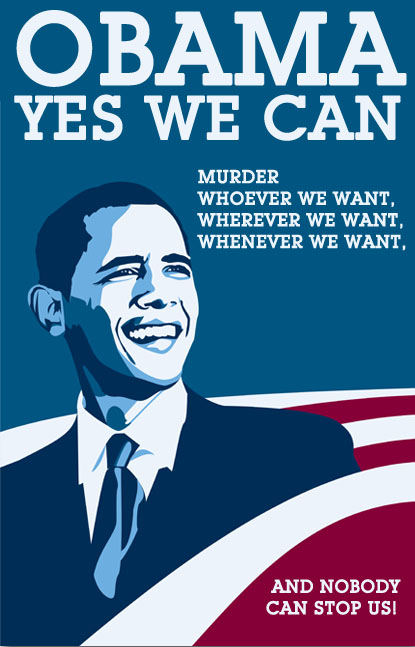
US President Barack Obama has said the US will continue to threaten Syria with the use of force as the government of Syrian President Bashar al-Assad has agreed to put its chemical weapons under the control of the United Nations.
“We need to see concrete actions to demonstrate that Assad is serious about giving up his chemical weapons … And since this plan emerged only with a credible threat of US military action, we will maintain our military posture in the region,” Obama said in his weekly address to Americans on Saturday.
The threat came after the Syrian ambassador to the UN said on Thursday that his country became a full member of the international treaty prohibiting chemical weapons.
After Russia offered a diplomatic proposal for putting Syria’s chemical weapons under international control on Monday, Obama called on Congress to delay a vote on his call for a military action against Syria.
Nevertheless, in his weekly address to Americans, Obama said, “If diplomacy fails, the United States and the international community must remain prepared to act.”
Obama’s talk of “the international community” comes as senior officials within his administration have said he would not push for a United Nations Security Council resolution threatening Syria with the use of force.
This comes as Russian President Vladimir Putin said in an op-ed published by The New York Times on Wednesday that a possible US attack on Syria “is unacceptable under the United Nations Charter and would constitute an act of aggression.”
Meanwhile, recent polls have revealed a growing opposition to military action against Syria both within the US military and America’s war-weary public.
The past ten days have seen what could be the start of an historic turning point away from endless war in the Middle East. Public opinion in the United States, in harmony with the majority of people in the world, has clearly rejected U.S. military intervention in Syria.
But for this turn away from war to be complete and lasting, greater awareness is needed of the forces that have been pushing the United States into these wars, and will surely continue to do so until they are clearly and openly rejected.
An American friend who knows Washington well recently told us that “everybody” there knows that, as far as the drive to war with Syria is concerned, it is Israel that directs U.S. policy. Why then, we replied, don’t opponents of war say it out loud, since, if the American public knew that, support for the war would collapse? Of course, we knew the answer to that question. They are afraid to say all they know, because if you blame the pro-Israel lobby, you are branded an anti-Semite in the media and your career is destroyed.
One who had that experience is James Abourezk, former Senator from South Dakota, who has testified: “I can tell you from personal experience that, at least in the Congress, the support Israel has in that body is based completely on political fear – fear of defeat by anyone who does not do what Israel wants done. I can also tell you that very few members of Congress–at least when I served there – have any affection for Israel or for its lobby. What they have is contempt, but it is silenced by fear of being found out exactly how they feel. I’ve heard too many cloakroom conversations in which members of the Senate will voice their bitter feelings about how they’re pushed around by the lobby to think otherwise. In private one hears the dislike of Israel and the tactics of the lobby, but not one of them is willing to risk the lobby’s animosity by making their feelings public.” Abourezk added : “The only exceptions to that rule are the feelings of Jewish members, who, I believe, are sincere in their efforts to keep U.S. money flowing to Israel. But that minority does not a U.S. imperial policy make.”[1]
Since we do not have to run for Congress, we feel free to take a close look at that highly delicate question. First, we’ll review the evidence for the crucial role of the pro-Israel lobby, then we’ll discuss some objections.
For evidence, it should be enough to quote some recent headlines from the American and Israeli press.
First, according to the Times of Israel (not exactly an anti-Zionist rag): “Israel intelligence seen as central to U.S. case against Syria.”[2] (Perhaps the fact that it is “central” also explains why it is so dubious[3].)
Then, in Haaretz[4]: “AIPAC to deploy hundreds of lobbyists to push for Syria action”. Or, in U.S. News and World Report[5]: “Pro-Israel lobby Seeks to Turn Tide on Syria Debate in Congress”. According to Bloomberg[6]: “Adelson New Obama Ally as Jewish Groups Back Syria Strike”. The worst enemies of Obama become his allies, provided he does what “Jewish groups” want. Even rabbis enter the dance: according to the Times of Israel[7], “U.S. rabbis urge Congress to back Obama on Syria”.
The New York Times explained some of the logic behind the pressure: “Administration officials said the influential pro-Israel lobby group AIPAC was already at work pressing for military action against the government of Mr. Assad, fearing that if Syria escapes American retribution for its use of chemical weapons, Iran might be emboldened in the future to attack Israel. … One administration official, who, like others, declined to be identified discussing White House strategy, called AIPAC ‘the 800-pound gorilla in the room,’ and said its allies in Congress had to be saying, ‘If the White House is not capable of enforcing this red line’ against the catastrophic use of chemical weapons, ‘we’re in trouble’.”
Even more interesting, this part of the story was deleted by the New York Times, according to M.J. Rosenberg[8], which is consistent with the fact that the lobby prefers to act discreetly.
Now, to the objections:
There are indeed forces other than the Israel lobby pushing for war. It is true that some neighboring countries like Saudi Arabia or Turkey also want to destroy Syria, for their own reasons. But they have nowhere near the political influence on the United States of the Israel lobby. If Saudi princes use their money to try to corrupt a few U.S. politicians, that can easily be denounced as interference by a foreign power in the internal affairs of the United States. But no similar charge can be raised against Israeli influence because of the golden gag rule: any mention of such influence can be immediately denounced as a typical anti-Semitic slur against a nonexistent “Jewish power”. Referring to the perfectly obvious, public activities of the Israel lobby may even be likened to peddling a “conspiracy theory”.
But many of our friends insist that every war is driven by economic interests. Isn’t this latest war to be waged because big bad capitalists want to exploit Syrian gas, or use Syrian territory for a gas pipeline, or open up the Syrian economy to foreign investments?
There is a widespread tendency, shared by much of the left, especially among people who think of themselves as Marxists (Marx himself was far more nuanced on this issue), to think that wars must be due to cynically rational calculations by capitalists. If this were so, these wars “for oil” might be seen as “in the national interest”. But this view sees “capitalism” as a unified actor issuing orders to obedient politicians on the basis of careful calculations. As Bertrand Russell put it, this putative rationality ignores “the ocean of human folly upon which the fragile barque of human reason insecurely floats”. Wars have been waged for all kinds of non-economic reasons, such as religion or revenge, or simply to display power.
People who think that capitalists want wars to make profits should spend time observing the board of directors of any big corporation: capitalists need stability, not chaos, and the recent wars only bring more chaos. American capitalists are making fortunes in China and Vietnam now that there is peace between the U.S. and those countries, which was not possible during hostilities. As for the argument that they need wars to loot resources, one may observe that the U.S. is buying oil from Iraq now, and so does China, but China did not have to ruin itself in a costly war. Like Iraq, Iran or Syria are perfectly willing to sell their resources, and it is the political embargoes imposed by the U.S. that prevent such trade. As for the “war for oil” thesis in the case of Libya, the Guardian recently reported that “Libya is facing its most critical moment since the ousting of Muammar Gaddafi with armed groups blockading oil fields and terminals, choking output to a 10th of normal levels and threatening economic disaster.”[9]As for Iraq, Stephen Sniegoski has shown, in The Transparent Cabal, The Neoconsevative Agenda, War in the Middle East, and the National Interest of Israel, that the war was only due to the neoconservatives and that the oil companies had no desire whatsoever to go to war. Indeed, there is no evidence of an “oil lobby” sending its agents to urge Members of Congress to vote for war, as AIPAC is doing.
And how does one explain that many of the most determined opponents of war are found on the right of the political spectrum? Do the Tea Party, Ron Paul, Pat Buchanan, Justin Raimundo and antiwar.com, Paul Craig Roberts, among others, fail to see the wonderful profits to be made by capitalists in a devastated Syria?
The fact is that in the post-colonial period, wherever profits can be made through war, they can be made much more reliably in peaceful conditions, and most capitalists seem to have understood that. There is no need to conquer countries in order to purchase their resources, invest in their economies or sell them our products. Most countries are in fact eager for legitimate trade.
On the other hand, it can be argued that the huge military-industrial complex (MIC) benefits from wars. Doesn’t the MIC need wars to maintain the lifeblood of military appropriations? Here the matter is complex. The MIC benefits above all from various hyped-up threats of war, most notably the Soviet threat during the Cold War, which kept the credits and contracts flowing through the Pentagon. But long, botched wars such as in Afghanistan or Iraq tend to give war a bad name, are economically ruinous and lead to questioning the need for the huge U.S. military. The MIC doesn’t need another one in Syria. Many military officers are openly hostile to mounting at attack against Syria.
The interests that profit directly from recent U.S. wars – and not from mere “threats” – are very few. They are above all the giant construction firms, Bechtel, Halliburton and their subsidiaries, which, through their connections with officials such as Dick Cheney, win contracts to build U.S. military bases abroad and sometimes to rebuild infrastructure destroyed by the U.S. Air Force. This amounts to a recycling of American taxpayers’ money, which in no way “profits” the United States, or American capitalism in general; besides, those construction firms are not big compared to major U.S. corporations. These profiteers could never pose as a “justification” for wars, but are the mere vultures feeding off conflicts.
The basic responsibility for war of the U.S. military-industrial complex is simply that it is there. And as Madeleine Albright famously said, “what is the use of having that splendid military if we don’t use it?” In fact, ever since the collapse of the Soviet Union (and indeed arguably ever since the end of World War II), there is no obviously good reason to use it, and it might well be dismantled and resources redirected toward modernizing U.S. infrastructure and other useful and profitable activities. However, an intellectual industry called “think tanks” has developed in Washington devoted to justifying the perpetuation of the MIC. It specializes in identifying potential “threats”. Over the years, these think tanks have increasingly come under the influence of billionaire benefactors of Israel such as Haim Saban (founder of the Saban Center at the Brookings Institution). Since there are in reality virtually no serious threats to the United States calling for such colossal military strength, alleged “threats to U.S. interests” in the Middle East are invented by adopting supposed threats to Israel as threats to the United States. Example number one: Iran.
People on the left are not wrong in supposing that Washington would want to defend “American geo-strategic interests”. Those certainly exist, and are a proper object of controversy. But the crucial question here is whether support for Israeli policy aims in the Middle East is among them. Indeed, there is a sector of the U.S. foreign policy establishment that promotes an aggressive global foreign policy that amounts to a sort of world conquest, with U.S. military bases and military exercises surrounding Russia and China, as if in preparation for some final showdown. But the fact is that the most active advocates of this aggressive policy are the pro-Israel neoconservatives of the Project for the New American Century that pushed the Bush II presidency into war against Iraq, and now, as the Foreign Policy Initiative, are pushing Obama toward war against Syria. Their general line is that U.S. and Israeli interests are identical, and that U.S. world domination is good, or even necessary, for Israel. Such close identification with Israel has caused the United States to be intensely hated throughout the Muslim world, which is not good for the United States in the long run.
Perhaps because genuine, material or economic U.S. interests in going to war are so hard to find, the emphasis has shifted in the past decade to alleged “moral” concerns, such as “the responsibility to protect”, packaged with a catchy brand name, “R2P”. Today, the strongest advocates of going to war are the various humanitarian imperialists or liberal interventionists, who argue on the basis of R2P, or “justice for victims”, or alleged “genocide prevention”.
There is a large overlap between humanitarian interventionism and support for Israel. In France, Bernard Kouchner, who first invented and promoted the concept of the “right to intervene”, stated in a recent interview that “Israel is like no other country. It is the result of the terrifying massacre of the Holocaust.” It is therefore “our duty” to protect it. Bernard-Henry Lévy prodded the French government to start the war against Libya, making no secret that he considered he was acting as a Jew for the interests of Israel; he is now the foremost and fiercest advocate of bombing Syria. In both France and the United States, advocates of “humanitarian” intervention justify bombing Syria by referring to the Holocaust in the past and to a hypothetical, and totally unsubstantiated, intention by Iran to risk national suicide by attacking Israel in the future.
In the United States, these concerns of the Israel lobby are given ideological and institutional expression by such influential advisors as Samantha Power, Madeleine Albright and the two Abramowitz’s (Morton the father and Michael the son, in charge of “genocide prevention efforts” at the U.S. Holocaust Memorial Museum). The argument is used repeatedly that because “we” did not intervene quickly enough against Auschwitz, we have an obligation to intervene militarily to prevent other possible slaughters.
On September 6, the Cleveland Jewish News published a letter from “leading rabbis” urging Congress to support President Obama’s plans to strike Syria. “We write you as descendants of Holocaust survivors and refugees, whose ancestors were gassed to death in concentration camps,” the letter said. By authorizing bombing raids, the rabbis said, “Congress has the capacity to save thousands of lives”…
Without such dramatization, obscuring the reality of each new crisis with images of the Holocaust, the whole notion that the best way to promote human rights and protect populations is to wage unilateral wars, destroy what is left of the international legal order and spread chaos would be seen for the absurdity it is. Only the fervor of the champions of Israel enables such emotional arguments to swamp reasonable discussion.
But one may reasonably ask what are the interests of Israel itself in inciting the United States to fight in Syria? Israelis seem to have frightened themselves into believing that the very existence of another power in the region, namely Iran, amounts to an existential threat. But the mere fact that a policy is pursued does not mean that it is necessarily in the interests of those who pursue it. That is again ignoring the “ocean of human folly”. Napoleon and Hitler had no interest or desire in bringing Russian troops to Paris or Berlin, but their policies led to precisely that. The emperors of Germany, Austria and Russia had no interest in launching the First World War, since, in the end, they all lost their thrones as a result of the war. But launch it they did. The future is unpredictable, and that is why it is difficult to deduce intentions from consequences. Israel’s hostile policy toward its neighbors can reasonably be seen as self-defeating in the long run.
Oddly enough, some observers deny the obvious, arguing that Bashar al Assad has allowed Israel to occupy Syrian territory on the Golan Heights and has kept the border quiet (without explaining what else he could have done, given the relationship of forces) and concluding that Israel has no interest in toppling him. But what matters is that Assad is allied with Hezbollah and with Iran. Israel hates Hezbollah for its successful resistance to Israeli occupation of Lebanon, and sees Iran as the only potential challenge to Israeli military supremacy in the region.
Even so, it is not certain that Israel’s war aim would be to overthrow Assad. A clue to Israel’s strategy is provided by a September 5 article in the New York Times[10]: “Israeli officials have consistently made the case that enforcing Mr. Obama’s narrow ‘red line’ on Syria is essential to halting the nuclear ambitions of Israel’s archenemy, Iran. More quietly, Israelis have increasingly argued that the best outcome for Syria’s two-and-a-half-year-old civil war, at least for the moment, is no outcome. For Jerusalem, the status quo, horrific as it may be from a humanitarian perspective, seems preferable to either a victory by Mr. Assad’s government and his Iranian backers or a strengthening of rebel groups, increasingly dominated by Sunni jihadis.”
“This is a playoff situation in which you need both teams to lose, but at least you don’t want one to win — we’ll settle for a tie,” said Alon Pinkas, a former Israeli consul general in New York. “Let them both bleed, hemorrhage to death: that’s the strategic thinking here. As long as this lingers, there’s no real threat from Syria.”
So, the real goal of the limited strikes (and the reason why they ought to be limited) would be to send a message to Iran, about its nonexistent nuclear arms program and, in Syria, let both sides “bleed to death”. How nice! Waging a war based on the flimsiest of evidence only to prolong a bloody conflict may not be a very moral endeavor for all those who claim to act out of passion for “our values” and for deep concern over the “suffering of the Syrian people”.
In its zeal to serve what it considers Israel’s interests, AIPAC and its affiliates practice deception concerning the issues at stake. The lobby misrepresents the interests of the United States, and even ignores the long term interests of the Jewish people whom it often claims to represent. It is pure folly for a minority, however powerful and respected, to try to impose an unpopular war on the majority. Since Israel often claims to represent the Jewish people as a whole, if the majority of Americans are forced to pay an unacceptable price for “defending Israel”, sooner or later voices will be raised blaming “the Jews”. Indeed, this can be seen by a brief look at what already gets written, anonymously of course, on social media, ranging from various conspiracy theories to outright Jew-bashing.
We, who are totally opposed to the notion of collective guilt, wish to avoid such an outcome. Far from being anti-Semitic, we deplore all forms of “identity politics” that ignore the diversity within every human group. We simply want to be able to say “no” openly to the pro-Israel lobby without being subjected to moral intimidation. This has nothing to do with Jewish religion or identity or culture: it is entirely political. We claim our right to refuse to be drawn into somebody else’s war. We believe that these endless wars are not “good for the Jews” – or for anyone else. We want to contribute to efforts at mutual understanding, diplomacy, compromise and disarmament. In short, to strengthen “the fragile barque of human reason” adrift on the ocean of human folly. Otherwise, that folly may drown us all.
For now, the threat of war has been avoided, or at least “postponed”. Let us not forget that Iraq and Libya also gave up their weapons of mass destruction, only to be attacked later. Syria is likely to abandon its chemical weapons, but without any guarantee that the rebels, much less Israel, won’t retain such weapons. The popular mobilization against the war, probably the first one in history to stop a war before it starts, has been intense but may be short-lived. Those whose war plans have been interrupted can be expected to come up with new maneuvers to regain the initiative. These past days have given a glimpse of what can be accomplished when people wake up and say no to war. This must be an inspiration for continued efforts to make diplomacy prevail over bullying, and mutual disarmament over endless war. If people really want peace, it can be possible.
MOSCOW – Syrian President Bashar Assad said Thursday that his government would put its chemical weapons under international supervision within a month after it signs the UN Chemical Weapons Convention, but only if the United States stops its “policy of threats.”
“Syria will send an appeal to the United Nations and the Organization for the Prohibition of Chemical Weapons in a few days. [The appeal] will have the technical documents necessary to sign the agreement,” Assad said in an interview with Rossiya-24 television.
“These are standard procedures, and we will follow them,” he added, speaking in Arabic with a Russian translation.
Assad emphasized, however, that Syria would not follow such procedures unilaterally while facing US threats and international support of rebel forces.
“When we see that the US genuinely stands for stability in our region, stops threatening us with military intervention and stops supplying terrorists with weapons, then we will consider it possible to finalize all necessary procedures and they will become legitimate and acceptable for Syria,” he said.
Assad warned that an attack on Syria would destroy the whole Middle East, and he called on other countries in the region, especially Israel, to destroy their stockpiles of weapons of mass destruction.
“I think any war against Syria will turn into a war that would destroy the whole region and the Middle East will enter the stretch of troubles and instability that would last for dozens of years, affecting future generations,” he said.
“If we really want stability in the Middle East, all the countries [in the region] must honor the agreements. And the first country to do so is Israel because it possesses nuclear, chemical and biological weapons – all types of weapons of mass destruction,” Assad stressed.
The Syrian president also praised Russia for its efforts aimed at finding a diplomatic solution for the Syrian crisis.
“Russia plays an extremely important role in this process because we do not trust Americans and we do not have contacts with the US,” he said, adding that Russia is the only country capable of ensuring the success of the Syrian peace settlement.
Assad’s interview comes as Russian and US chemical weapons experts and diplomats prepare to attend a series of bilateral meetings on the Syrian crisis later Thursday and Friday in Switzerland.
The hastily organized talks are meant to discuss Moscow’s plan, proposed Monday, to avert a US attack on Syria by placing Damascus’ chemical weapons under international control.
Beirut – During his visit with US Secretary of State, Mike Pompeo, Lebanese President Michael Aoun reportedly received a US-Israeli document detailing plans for creating a civil war in Lebanon with covert false flag operations and possible Israeli invasion.
Although the source of the document is Israeli and created in partnership with Washington, no one knows who presented it to Aoun. The Lebanese TV station, Al-Jadeed, initially reported the document on Lebanese TV and a video on its website. Geopolitics Alert translated the report for this article. … continue
This site is provided as a research and reference tool. Although we make every reasonable effort to ensure that the information and data provided at this site are useful, accurate, and current, we cannot guarantee that the information and data provided here will be error-free. By using this site, you assume all responsibility for and risk arising from your use of and reliance upon the contents of this site.
This site and the information available through it do not, and are not intended to constitute legal advice. Should you require legal advice, you should consult your own attorney.
Nothing within this site or linked to by this site constitutes investment advice or medical advice.
Materials accessible from or added to this site by third parties, such as comments posted, are strictly the responsibility of the third party who added such materials or made them accessible and we neither endorse nor undertake to control, monitor, edit or assume responsibility for any such third-party material.
The posting of stories, commentaries, reports, documents and links (embedded or otherwise) on this site does not in any way, shape or form, implied or otherwise, necessarily express or suggest endorsement or support of any of such posted material or parts therein.
The word “alleged” is deemed to occur before the word “fraud.” Since the rule of law still applies. To peasants, at least.
Fair Use
This site contains copyrighted material the use of which has not always been specifically authorized by the copyright owner. We are making such material available in our efforts to advance understanding of environmental, political, human rights, economic, democracy, scientific, and social justice issues, etc. We believe this constitutes a ‘fair use’ of any such copyrighted material as provided for in section 107 of the US Copyright Law. In accordance with Title 17 U.S.C. Section 107, the material on this site is distributed without profit to those who have expressed a prior interest in receiving the included information for research and educational purposes. For more info go to: http://www.law.cornell.edu/uscode/17/107.shtml. If you wish to use copyrighted material from this site for purposes of your own that go beyond ‘fair use’, you must obtain permission from the copyright owner.
DMCA Contact
This is information for anyone that wishes to challenge our “fair use” of copyrighted material.
If you are a legal copyright holder or a designated agent for such and you believe that content residing on or accessible through our website infringes a copyright and falls outside the boundaries of “Fair Use”, please send a notice of infringement by contacting atheonews@gmail.com.
We will respond and take necessary action immediately.
If notice is given of an alleged copyright violation we will act expeditiously to remove or disable access to the material(s) in question.
All 3rd party material posted on this website is copyright the respective owners / authors. Aletho News makes no claim of copyright on such material.
 US President Barack Obama has said the US will continue to threaten Syria with the use of force as the government of Syrian President Bashar al-Assad has agreed to put its chemical weapons under the control of the United Nations.
 Aletho News
