Bomb blast rocks Syrian TV station, three people reported injured
RT | August 6, 2012
A bomb has detonated at a state-run television and radio building in the capital of Damascus, Syrian TV reported.
The explosion occurred on the third floor of the building, which houses administrative offices including the station director’s, RT Damascus correspondent Oksana Boiko said.
The station’s studios were frequently used by foreign journalists for live broadcasts from the city, she said. Three people were injured in the blast.
“It is clear that the blast was caused by an explosive device,” Syrian Information Minister Omran al-Zoabi said. “Several of our colleagues were injured, but there were no serious injuries, and no dead.”
“Nothing can silence the voice of Syria or the voice of the Syrian people,” al-Zoubi added while inspecting the damage at the TV building. “We have a thousand locations to broadcast from.”
The station continued to broadcast in the wake of the bombing.
The pro-government private Syrian TV station Al-Ikhbariya broadcast pictures of employees inspecting damage in the building and tending to a wounded colleague, the AP reported. [Photos]
Opposition forces mounted an assault on Aleppo’s main television and radio station on Saturday, August 4. The rebel gunmen failed to capture the building.
Seven journalists and workers were killed in June when an armed group attacked the headquarters of Syria’s al-Ikhbaryia TV.
Related articles
- Casualties reported after Syrian TV center blast (english.ruvr.ru)
Insurgents Execute Pro-Assad Captives in Syria
Al-Manar | August 1, 2012
New graphic footage has emerged showing armed men killing their captives in the northwestern Syrian city of Aleppo simply for supporting President Bashar al-Assad.armed groups
The two-minute video, posted on YouTube and reported by the AFP, shows armed men killing elder members of the Syrian al-Berri tribe.
Amnesty International has already warned about reports of “summary executions” in Aleppo, calling them serious violations of international law.
This comes as the Syrian government earlier said that the armed rebel groups backed and funded by Saudi Arabia, Qatar and Turkey are committing “horrific crimes” against civilians in the capital, Damascus, and the city of Aleppo.
In two letters addressed to the head of the UN Security Council and the UN secretary general, the Syrian Foreign Ministry said the insurgents backed by Saudi Arabia, Qatar and Turkey are using civilians in Aleppo as human shields, and killing anyone who does not support their crimes.
The Syrian government says foreign-sponsored ‘outlaws, saboteurs, and armed terrorists’ are behind the unrest.
Turkey’s Hatay Province, Mossad, CIA spy hub: Turkish MP
Press TV – July 31, 2012
A member of Turkey’s parliament says the country’s Hatay Province on the border with Syria has become a hub for swarms of CIA and Mossad spies infiltrating into Syria freely.
The legislator of the Republican People’s Party, Refik Er-Yilmaz, said that thousands of CIA and Mossad agents are currently in the province and are moving freely in the area, Turkish media reported.
He noted that local people in the province are getting agitated over the presence of the strangers.
Turkish police remain mute spectators as the spies carry various types of identification, Er-Yimaz went on to say.
He also accused the authorities of allowing American and Israeli troopers on Turkish soil without any approval from the parliament.
Er-Yilmaz’s comments came after the deputy of the Republican People’s Party, Osman Faruk Logoglu, on Monday blamed Turkey’s ruling Justice and Development Party for fomenting the unrest in Syria.
Logoglu criticized the Turkish government for aggravating the situation by sending military forces and vehicles towards the Syrian border.
The former Turkish ambassador to the United States also criticized Turkey’s foreign policy towards its neighbor, saying it has been irrational and unsuccessful.
Syria has been the scene of unrest since March 2011. The violence has claimed the lives of many people, including large numbers of security forces.
Damascus blames “outlaws, saboteurs, and armed terrorist groups” for the unrest, asserting that it is being orchestrated from abroad.
Related articles
- Turkey could strike PKK terrorists in Syria: Premier Erdogan (alethonews.wordpress.com)
Turkey could strike PKK terrorists in Syria: Premier Erdogan
Press TV – July 26, 2012
Turkish Prime Minister Recep Tayyip Erdogan warns that Ankara could strike the Kurdistan Workers Party (PKK) terrorists inside Syria.
“In the north, it (the Syrian government) has allotted five provinces to the Kurds, to the terrorist organization,” Erdogan told the Turkish television on Wednesday.
He also stated that the strike is “not even a matter of discussion, it is a given,” in response to a question whether Ankara would strike fleeing rebels after an attack on Turkish soil.
“That is the objective. That is what must be done.”
Erdogan made the remarks on the same day when a security meeting of senior Turkish officials, chaired by the prime minister, was held in Ankara.
“The activities of the separatist terrorist organization (PKK) in our country and in neighboring countries have been discussed,” read a statement issued after the meeting, which was held following reports that the Democratic Union of Kurdistan (PYD), the PKK’s offshoot in Syria, had taken over three villages in the north of the country.
Turkish Foreign Minister Ahmet Davutoglu, Chief of General Staff General Necdet Ozel, Deputy Prime Minister Besir Atalay and several other high-ranking officials also attended the meeting on Wednesday.
Meanwhile, the Turkish military said on Wednesday that its forces killed at least 15 PKK members in a clash near the border with Iraq.
Also on Wednesday, a Turkish official, who spoke on condition of anonymity, said Ankara would close Turkey’s border crossings with Syria until further notice.
The PKK launched an armed campaign against Turkey in 1984 in a quest to gain independence for Kurds living in the southeast of the country.
Russia: US Supporting Terror in Syria, West Spurring Bloodshed
Al-Manar | July 25, 2012
Russia accused the US on Wednesday of justifying terror in Syria, as it said that the West was spurring further bloodshed in the crisis-hit country.
Foreign Minister Sergei Lavrov told reporters that Washington’s failure to condemn the July 18 blast that killed top security officials meant it was justifying terror.
“This is quite an awful position, I cannot even find the words to make clear how we feel,” Lavrov said, adding: “This is directly justifying terrorism. How can this be understood?
Lavrov expressed bewilderment at calls on Russia to clarify its position on Syria, saying Moscow’s policy was crystal-clear and it was the West whose actions were contradictory.
He criticized the US ambassador to the United Nations Susan Rice, saying she had argued that the attacks in Damascus meant the UN Security Council had to agree to a sanctions resolution against Syria last week that Russia later vetoed.
“In other words, to say it in plain Russian, this means ‘we (the United States) will continue to support such terrorist acts for as long as the UN Security Council has not done what we want’,” Lavrov said.
WEST SURRING BLOODSHED IN SYRIA
For his part, Russian Deputy Foreign Minister Gennady Gatilov said statements made by some Western leaders urging to end the conflict in Syria outside the UN Security Council framework were wrong and “a step aside from our common positions.”
During an interview with Itar-Tass news agency, Gatilov said: “We agreed that all foreign players will act in one direction – in the work with the government and with the opposition. We believe that viable decisions backing political settlement can be taken only in the UN Security Council.”
The international community would exert “proper influence” on both sides of the Syrian conflict only if it spoke with one voice and acted in coordination, Gatilov said, adding some Western partners’ intention to circumvent the UN would make no progress in the current difficult situation.
Meanwhile, Gatilov slammed those Western countries trying to spur “further bloodshed” from the opposition. “This upset us greatly, we take this as a step aside from the consensus obtained by the Geneva agreements,” the diplomat said.
Britain’s ex-army commandos train armed rebels in Syria: UK media
Press TV – July 24, 2012
Britain’s former Special Air Service (SAS) commandos are reportedly training armed opposition groups fighting against the government of Syrian President Bashar al-Assad, reports say.
The Daily Mail and Sunday Express have revealed that the mercenaries have set up training camps in Iraq and on the Syrian border for the armed rebels.
British army sources, speaking on condition of anonymity, have said the militants are receiving instructions in military tactics, weapons handling and communications systems.
Groups of 50 militants at a time are being trained by two Mideast-based private security firms which employ former SAS personnel.
More than 300 rebel forces have completed the commando training program, and are said to account for a number of the opposition’s combatant units fighting Syrian security forces in Damascus.
Britain has also placed more than 600 troops on standby over the unrest in Syria.
UK Foreign Secretary William Hague says London should be acting outside the UN Security Council and step up its support for militant groups in Syria.
Syria has been the scene of violence by armed groups since March 2011.
Damascus blames “outlaws, saboteurs, and armed terrorist groups” for the unrest, asserting that it is being orchestrated from abroad.
The ARAR model for toppling governments
Mehr News Agency | July 21, 2012
TEHRAN — The recent political and military turmoil in the region is following a predictable pattern, which starts with so-called activism and ends with military intervention to topple sovereign governments.
Following is a brief scenario of the chain of the events:
“A” phase: The pseudo-prodemocracy movement builds up steam and starts to develop. This development is either in the streets or in the media or both. The participants in the movement in this phase are called “activists” and the media starts to call the target government a “regime”.
“R” phase: After weeks and months of trying soft techniques to topple the government, the main approach is escalated to the militaristic stage and those once called “activists” are now called “rebels”. They usually receive assistance from regional military channels. The targeted government starts to react militarily, and the media starts labeling it a “brutal regime” or some other similar tag.
Second “A” phase: The usually decentralized rebel-guerrilla style movement upgrades to the “army” level. The “new army” receives intelligence and military support from extra-regional powers and/or their proxies, a massive amount of disinformation is disseminated, and military personnel are encouraged to defect or join the new army. The media starts comparing the opposition army to the conventional state army.
Second “R” phase: If the opposition army fails to topple the government by itself, plan B is put into effect, in which the media pushes the need for international intervention and the NATO/UN Security Council “raid” starts.
This ARAR formula — Activism/Rebelism/Army building/Multilateral Raid — was first implemented in Libya and is now in its final stages in Syria. The main players behind the game are the media — in this case, Qatari and Saudi media outlets in cooperation with Western media outlets — extra-regional powers such as the United States and Britain and their European allies, and finally, regional proxies such as Turkey, Qatar, and Saudi Arabia.
The key to foil the plan is both hard and simple: know the phase, inform public opinion about it, build up a coalition, discredit biased media outlets, cut and weaken regional procurement and logistics channels, balance the power, and “resist”.
How leftist “anti-Zionists” are allied with Israel against Syria
By Mimi Al Laham (aka “Syrian Girl”) and Lizzie Phelan | July 19, 2012
The Myth
There has been a ridiculous notion amongst numerous left groups and those opposed to the Syrian government, that the Israeli regime does not want to see Assad fall. As self-professed “anti-zionists”, many in these groups are content to delude themselves into believing that both their enemies are on the same side. In the case of several socialist groups, they believe that this forcing of the Syrian crisis into their blanket “anti-authoritarian” narrative (regardless of the state in which they are applying that narrative to) enables them to maintain a façade of anti-imperialism.
London based socialist newspaper The Socialist Review writes: “Israel, although hostile to Syria, could depend on the Baathist regime to keep the frontier quiet. Thus criticism of Bashar is more muted in Tel Aviv.”
And Simon Assaf of the SocialistWorker writes:
The notion that ordinary Syrians struggling to change their country are the pawns of a ‘Western plot’ is absurd… In fact the Arab League is attempting to throw the regime a lifeline.
This view is also pervasive amongst the Islamic opposition to the Syrian government. Rafiq A. Tschannen of the The Muslims Times writes:
Israel believes that it would be safer under Assad regime than the new government whose credentials are unknown or the new Islamic extremist regime that would open a new war front with the Jewish state.
Israeli state media has actively fuelled this manipulation, as it has been beneficial to the Israeli state to both discredit the Syrian government in the eyes of Syrians and Arabs amongst whom cooperation with Israel has historically been a red line. Therefore the goal of these reports has been to create the false perception that Israel is uninvolved in the insurgency against the Syrian government. Similarly to how the NATO powers were keen to portray the Libyan insurgency as a “home-grown revolution”.
In this early 2011 Haaretz article entitled Israel’s favourite dictator, great lengths are taken to paint the Syrian president as a weak stooge of the Israeli state. The article regurgitates common Syrian criticisms and sources of frustration about the Syrian government’s failure to take back the Golan Heights. It even goes as far as to chastise Assad for not attacking Israel. The irony that an Israeli paper would be critical of a president’s failure to attack Israel is apparently lost on many. All the more incredible that these anti-Zionist groups have chosen to believe the spin of Israeli state media.
The Turkish based Syrian opposition, the Syrian National Council (SNC), also jumped on this bandwagon. The now deposed leader of the SNC, Burghan Ghallion told the Israeli paper Ynetnews “We are convinced that the Syrian regime’s strongest ally is Israel”.
Debunking the Myth
However the following facts expose all of the above as merely a part of the psychological warfare machinery directed from Qatar, Saudi Arabia, Israel and the NATO countries, which is an essential part of the overall aggression against Syria, and that such leftists have willingly become a part of:
Israel’s most important ally, the US, has been amongst its other allies repeatedly calling for regime change in Syria
Israel’s strongest ally the United States has been pushing for regime change in Syria since before the first signs of insurrection began. Most famously in 2007, General Wesley Clarke, who served as NATO’s Supreme Allied Commander between 1997 and 2000 said he had received a memo from the US Secretary of Defense’s Office which read that the Syrian Government would be one of the seven governments the US would destroy in the subsequent five years.
The Guardian’s recent headline “Saudi Arabia plans to fund Syria rebel army” is in the typical style of the liberal media based in the NATO countries, a malignant manipulation. The text of that article is specifically about plans by the US’ and by extension Israel’s most important regional allies, Qatar and Saudi Arabia, to pay the salaries of insurgents. But, buried further down, the very same article also reports that such support began months before. A less misleading headline therefore would replace “plans to fund” with “increases support for”, however a truthful headline would suggest external control over Syria’s insurgency has existed since its onset.
Indeed both Qatar and Saudi Arabia have a long history of hostility to the Syrian Ba’ath Party and Syrian foreign policy, a fact which is reflected in both of their leading medias (Al Jazeera and Al Arabiya respectively) severely distorted coverage of events in Syria from the outset.
But to highlight this context would give too much weight to the Syrian government’s consistent analysis that the crisis within its borders is externally created. A fact which leftist groups also fall over themselves trying to downplay or dismiss with the result of boosting the opposing narrative which imperialism has made dominant through its media machinery.
Why did that same Guardian article, and western leftists who claim that Assad is good for Israel, fail to mention that for example in early April, the US openly pledged to double its assistance to the insurgents to the tune of an additional $12 million, under the cover of “humanitarian aid”? Or the recent US admission that it is actively arming the insurgency using Qatar as a proxy? Or that in February, solid Israeli ally British Foreign Minister William Hague pledged more equipment to the insurgents, insisting there was “no limit on what resources” Britain would provide?
It shouldn’t have to be explained to anti-Zionists that US and Israeli foreign policy is one and the same.
Axis of Resistance
Syria is a member of the Axis of Resistance, which is the only effective military resistance to Israel left. It is made up of Syria, Iran and the resistance inside Lebanon with Hizbullah at the helm. Far from being a ‘safe’ option for Israel, as Al Akhbar writer Amal Saad-Ghorayeb sets out in her three part critique of the third-way position that has seized much of the western left, Syria has consistently put itself on the front line, risking its own survival, and has been involved in every Arab-Israeli conflict since they took power. Syria has been the strongest supporter of the Lebanese resistance movements against Israeli occupation; Hizbullah has repeatedly unequivocally attributed its ability to effectively win the 2006 war against Israeli invasion of Lebanon to its support from Syria and Iran.
A year since the beginning of the insurrection in Syria, the ridiculous notion that Israel was not pursuing regime change in Syria began to crumble. Israeli Intelligence Minister, Dan Meridor was quoted on Israeli radio, pointing out what was obvious all along: Regime change in Syria would break the Iran-Syria mutual defence pact thereby isolating Iran and cutting the supply of arms to Hezbollah. Finally, Israel’s greatest adversary, Syria, would be crippled.
This was not reported in Israeli mass media, which ensured that the lid was kept on the obvious, clearly in the knowledge that it would make the position of the insurgent’s self-professed anti-Zionist cheerleaders in the west and Arab world more untenable. Yet those cheerleaders who maintain that Assad is good for Israel have been unable to reconcile then why Israel relentlessly beats the war drums against one of Syria’s most important allies, Iran.
Aside from wanting to get rid of Assad to secure military hegemony of the region, Israel also has an economic interest in scuppering the Syria, Iran, Iraq oil pipeline which would rival both Israel’s BTC pipeline and the eternally fledgling plans for Europe’s Nabucco pipeline.
Pro-Israel Opposition
With increasing momentum, the already tenuous facade of being pro-Assad in the Israeli media began to crumble and increasingly, voices within the Syrian opposition have been crossing the red line of sounding friendly towards Israel.
MK Yitzhak Herzog, who has previously held ministerial posts in the Israeli parliament, said that Syrian opposition leaders have told him they want peace with Israel after Syrian President Bashar al Assad falls.
Indeed, SNC member Bassma Kodmani attended the 2012 Bilderberg conference where regime change in Syria was on the agenda. Kodmani has previously called for friendly relations between Syria and Israel on a French talk show, going as far as to say: ‘We need Israel in the region’.
Another SNC member, Ammar Abdulhamid declared his support for friendly relations between Israel and Syria in an interview with Israeli news paper Ynetnews.
Earlier this year a telephone conversation between the SNC’s Radwan Ziyade and Mouhammad Abdallah emerged where they begged Israeli Defense Minister Ehud Barack for more support.
Outside the SNC the children of former leadership figures now in opposition have joined the pro-Israel rat race. Ribal al-Assad, the son of Bashar Assad’s uncle and exiled former vice-president Rifaat al-Asaad welcomed the possibility of Syria making peace with Israel. And son of former Syrian prime minister Nofal Al-Dawalibi, said in an interview on Israeli radio that the Syrian people want peace with Israel. Dawalibi formed the “Free Syrian Transitional National Government”, another external opposition group rivaling the SNC for power in a situation where the Syrian government falls. The sectarian infighting and disunity, that is a mirror of post-Gaddafi Libya, is now threatening to plague Syria.
Lower down the opposition hierarchy, pro-Israel voices are still to be found.
Syrian Danny Abdul-Dayem, the almost one-hit-wonder unofficial spokesman for the FSA, appeared on CNN begging Israel to Attack Syria.
And in an interview with Israel’s Channel 2, Sheikh Abdullah Tamimi, an exiled Imam from the Syrian city of Homs, said that the Syrian Opposition does not have any enmity towards Israel. Tamimi proceeded to request monetary and military support for Sunnis in Syria and Lebanon.
Anti-Assad Zionists and Israeli Leaders
Socialists have chosen to be blind to the fact that prominent Zionists have been backing the Syrian insurgency since its inception.
US Senator John McCain and Joe Lieberman, both well known to be close friends of the Zionist entity, met with the SNC and Syrian insurgents on the Turkish border, then called for the US to arm them. In fact Joe Lieberman has been calling for war against Syria since 2011.
Another well known Zionist Bernard Henri-Levy, who spear-headed the destruction of Libya by NATO aerial bombardment, has also called for an attack on Syria.
More recently voices within the Israeli government have been more vocal and demanding in their desire to see the Syrian government’s replacement with a more friendly puppet regime.
Israeli President Shimon Peres, upon receiving the ‘Medal of Freedom’ from US President Barack Obama, said that the world had to get rid of Assad. That he was receiving such a medal requires its own article dedicated to psychoanalyzing such an event, but that he could also claim, while being part of a system that is responsible for some of the gravest abuses to humankind in history, that from a “human” point of view Assad must go, should really get so-called anti-Zionists thinking.
Other members of the Israeli government, such as Israeli Vice Prime Minister, Shaul Mofaz, urged world powers to mount a Libya style regime change in Syria.
And Israeli defense minister Ehud Barack called for the ‘world to act’ to remove Assad.
Finally, Israeli Deputy Foreign Minister Danny Ayalon accused the ‘world’ of wrong doing for failing to act against the Syrian government and then offered Israeli ‘assistance’ for Syrian ‘refugees’. Thin euphemism for arming insurgents on the border.
Conclusion
In spite of the overt desire of the US government for regime change in Syria, which they have made clear time and time again, Israel has obvious economic and military interests for pursuing regime change in Syria, most notably the the break up of the Axis of Resistance and the destruction of plans for rival oil pipelines. Despite numerous public statements by Syrian opposition members that they are pro-Israel and the multitude of Israeli government officials calling for the fall of the Syrian government as well as Zionist lobbyists and key Zionist figures like Bernard Henri-Levy backing the insurgency, so called ‘anti-Zionist’ socialists and Islamic groups persist in their claim that Israel has no stake in regime change in Syria and that the insurgency inside Syria is from the grass roots. Though all information contrary to this delusion is in clear sight, it seems that the socialist and Islamic groups are willfully blind.
This position has become increasingly untenable however, most recently in light of the murder of Syria’s Deputy Defence Minister Asef Shawkat, which along with the simultaneous murder of Defence Minister Raoud Dajiha and Assistant to the Vice President Hassan Turkomani, which the Syrian government laid the responsibility for squarely at the doors of Israel, Saudi Arabia and Qatar, as new information has come to light as revealed by Al Akhbar editor-in-chief Ibrahim al-Amin.
In an article published today, Amin writes of Shawkat, that in spite of the incessant attempts by the US, Israel et al to demonise him, he in fact,
played a major role in resisting Israeli occupation in and around Palestine. Right to the end, he took practical charge of meeting the needs of the resistance forces in Palestine and Lebanon, and of their members and cadres in Syria. He oversaw everything from their accommodation and transportation, to their training camps and provisions, and arranging for cadres from inside Palestine to come to the country secretly for training.
For the resistance in Lebanon, Shawkat was a true partner, providing whatever assistance was needed without needing orders or approval from the leadership. He was a central player in the June 2006 war. He spent the entire time in the central operations room that was set up in line with a directive by Assad to supply the resistance with whatever weapons it wanted, notably missiles, from Syrian army stocks. Shawkat and other officers and men of the Syrian army – including Muhammad Suleiman who was assassinated by the Mossad on the Syrian coast in 2008 – spent weeks coordinating the supply operation which helped the resistance achieve the successes that led to the defeat of Israel.
Despite the accusations levelled against Asef Shawkat regarding security, political or other matters, for Imad Mughniyeh, the assassinated military leader of Hezbollah, he was just another comrade, a modest man who would bow when shaking hands with Hassan Nasrallah, and liked to hear the news from Palestine last thing at night.
However anti-Zionist one proclaims to be, there are few in this world that can claim to have done as much as the above for the Palestinian resistance to the Zionist entity. But having proven to willfully ignore all of the facts and history of Syria’s long history of resistance to Israel, it is a great tragedy that those who cling to the argument dealt with in this essay, would only perhaps be able to let go of it should Syria fall and then the reality of Palestine’s total military abandonment would be all too devastatingly clear to see.
Update by Aletho News:
The Ziocons promoting wars for Israel have been abetted by these self described “intellectuals” on 8 April 2013:
We, the undersigned, stand in solidarity with the millions of Syrians who have been struggling for dignity and freedom since March 2011. We call on people of the world to pressure the Syrian regime to end its oppression of and war on the Syrian people. We demand that Bashar al-Asad leave immediately without excuses so that Syria can begin a speedy recovery towards a democratic future.
Since March 2011, Asad’s regime has steadily escalated its violence against the Syrian people, launching Scud missiles, using weapons banned by the Geneva Convention such as cluster bombs and incendiary munitions, and using aerial bombardment. The regime has detained and tortured tens of thousands of people and committed untold massacres. It has refused political settlements that do not include Asad in power, and it has polarized the society through strategic acts of violence and by sowing seeds of division. The regime has also, since the early days of the uprising, sought to internationalize the crisis in order to place it within geopolitical battles that would only strengthen the regime. Staying true to the logics of an authoritarian regime, Asad could never accept the legitimate demands of the Syrian people for freedom and dignity. Thus, there is no hope for a free, unified, and independent Syria so long as his regime remains in power. … Full text
Frederic Jameson (Duke University, United States)
Tariq Ali (British Pakistani writer, journalist, and filmmaker, United Kingdom/ Pakistan)
Ilan Pappe (University of Exeter, United Kingdom)
Etienne Balibar (Columbia University, United States/ France)
Nigel Gibson (Emerson college, United States/ Britain)
Norman Finkelstein (American researcher and writer, United Sates)
John Holloway (Benemérita Universidad Autónoma de Puebla, United States/ Mexico)
Vijay Prashad (Trinity College, United States/ India)
Salameh Kaileh (Intellectual, Syria/Palestine)
Bill Ayers (University of Illinois at Chicago, United States)
Bernardine Dohrn (Northwestern University, United States)
Rashid Khalidi (Columbia University, United States/Palestine)
Lieven de Cuater (Philosopher, Belgium)
Jihane Sfeir (l’Université Libre de Bruxelles, Lebanon/ Belgium)
Jean-Pierre Filiu (Institut d’études politiques de Paris, France)
Farouk Mardam Bey (Intellectual, Syria)
Faraj Bayrakdar (Poet, Syria)
Ziad Majed (American University of Paris, Lebanon/ France)
Kamal Bandara (Intellectual, Tunisia)
Francois Burgat (CNRS, France)
Adam Shapiro (Activist, United States)
Razan Ghazzawi, (Activist, Syria)
Yassin el-Haj Saleh (Intellectual, Syria)
Thierry Boissière (Institut français du Proche-Orient, France)
Olivier Le Cour Grandmaison (universitaire, France)
Jens Hanssen (University of Tornoto, Canada/ Germany)
Ghassan Hage (The University of Melbourne, Australia/ Lebanon)
Hani al-Sayed (American University of Cairo, Syria/ Egypt)
Hazem al-Azmeh (Intellectual, Syria)
Sadri Khiari (Intellectual, Tunisia)
Oussama Mohamad (Film maker, Syria/ France)
Jihad Yazigi (Journalist, Syria)
Saad Hajo (Cartoonist, Syria)
Wendy Brown (UC Berkeley, United States)
R. Radhakrishnan (UC Irvine, United States/ India)
Ann Ferguson (Philosopher, United States)
Samir Aita (Le Monde Diplomatique editions arabes, Cercle des Economistes Arabes)
Santiago de Rico Alba (Philosopher, Spain)
Asef Bayat (University of Illinois, USA)
Chela Sandoval (University of California, Santa Barbara)

Related articles
- Israel Invents Syrian WMD Threat, IDF Commanders Threaten Intervention (alethonews.wordpress.com)
- Syria: FSA ziothugs murder 17 Palestinian fighters (alethonews.wordpress.com)
French journalist killed by Syrian opposition: Report
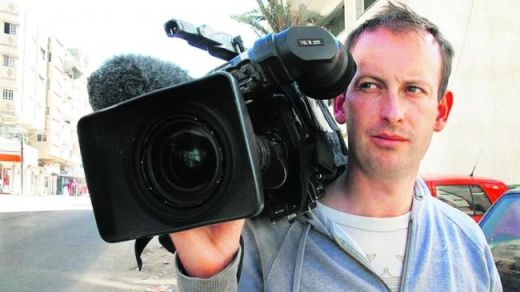
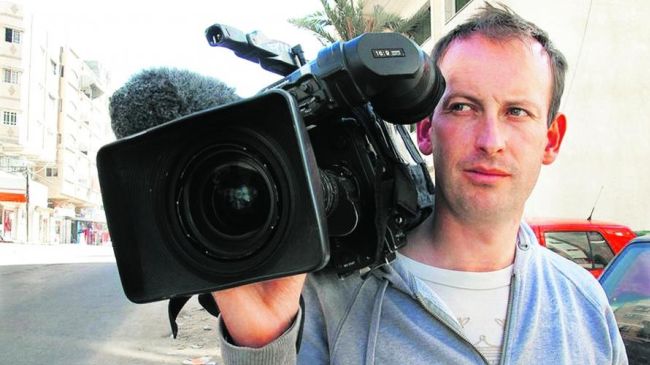
Slain French journalist Gilles Jacquier (file photo)
Press TV – July 19, 2012
French journalist Gilles Jacquier, who lost his life in central Syria earlier this year, was killed by the Syrian opposition’s mortar fire, a report says.
“This investigation was carried out by French intelligence and based on a ballistic study carried out in the area. According to my contact, the mortar fire came from the Sunni rebel zone,” wrote Georges Malbrunot, a member of the editorial board of Le Figero, in the French newspaper.
This is while Western reports have put the blame on Damascus, saying Jacquier was killed by a Syrian army shell.
On January 11, Jacquier, 43, was killed in the central Syrian city of Homs.
The Western journalists were on a government-authorized trip to the city at the time of the attack.
Gilles Jacquier, working for France 2 TV, was the first Western reporter to die since the beginning of the unrest in Syria in mid-March 2011. He had covered conflicts in Iraq, Afghanistan and Kosovo.
The Syrian government had previously blamed armed groups for the attack.
Syria has been experiencing unrest since mid-March 2011. Many people, including large numbers of security forces, have been killed in the turmoil.
While the West and the Syrian opposition accuse the government of killing protesters, Damascus blames ”outlaws, saboteurs and armed terrorist groups” for the unrest, insisting that it is being orchestrated from abroad.
Related articles
- Opposition offensive on Damascus a lie – Syrian gov’t (english.ruvr.ru)
- French Foreign Minister Accused of Falsifying Reports on Syria “To Provoke a War” (theuglytruth.wordpress.com)
Featured Video
No Vote, No Representation, No State: Democracy, Israeli Style
or go to
Aletho News Archives – Video-Images
From the Archives
Sanctions, War and the Policy of Dual Containment
By SASAN FAYAZMANESH | March 17, 2008
It is now nearly three decades since the Unites States adopted the policy of dual containment of Iran and Iraq. While much has been written about the containment of Iraq, there has been very little in-depth analysis of this policy when it comes to Iran. In a book that is going to be released on March 31, 2008, entitled The United States and Iran: Sanctions, Wars and the Policy of Dual Containment (Routledge), I attempt to address this shortcoming by investigating when and why the US policy of containment of Iran came about, how it evolved, and where it stands today.[1] To the extent that Israel has been involved in US policy making, the study will also include the role that Israel has played in the containment of Iran. Also, since the fate of Iran has been inextricably linked to that of Iraq, occasionally the investigation will overlap with the containment of Iraq.
The policy of dual containment of Iran and Iraq originated during the Carter Administration, but it was not until the Clinton Administration that the expression “dual containment” became popular. … continue
Blog Roll
 Aletho News
- Elmo Sold mRNA Jabs to Your Toddler. Now They Are “Off-Label.”
- British state targets Palestine Action with yet another crooked trial
- Americans are paying the price to preserve Israel’s nuclear hegemony
- Resistance factions are necessary to ensure a permanent US Iraq withdrawal
- How Israel destabilizes the Middle East: Denying sovereignty and the right to exist
- Europe’s Establishment Is Embracing War – and Losing Voters
- NATO chief advocates war of aggression
- No Vote, No Representation, No State: Democracy, Israeli Style
- Zionist Bought Senate Blocks Information About American Citizens Killed By Israel
- While Gaza dominates the UN, these are the people keeping it alive
- If Americans Knew
- Israeli Soldiers Abduct At Least 22 Across Occupied West Bank
- Eight Palestinians Killed in Israeli Attacks on Gaza
- Israeli former leaders and security chiefs threaten legal action over ‘Jewish terrorism’
- Israel map in LA Times ad includes all land from the river to the sea
- Inside Lebanon’s 200-page dossier on Israeli war crimes
- Flydubai, genocide, settler violence, Trump abuse of power to deport – Daily Update
- Counting Antisemitic Incidents: What the ADL Audit Reveals — and Obscures
- Mamdani releases plan to combat antisemitism and hate crimes in New York City
- Iran’s Revolutionary Guards Publish Letter to the American People
- DMFI launches $1 million ad campaign supporting Virginia’s Elaine Luria
- No Tricks Zone
- Green Energy Debacle: German Expert Professor Fritz Vahrenholt Warns Of Severe Economic And Social Consequences
- Two More Paleo Reconstructions Affirm Meters-Higher Sea Levels Across Ireland, Brazil 7000-6000 Years Ago
- New Study: Earth And Venus Surface Warmth Largely Explained By Convection And Lapse Rate, Not CO2 Or Radiation
- 2025 Nature Paper Claiming Worsening Global Drought Gets RETRACTED …Heavily Flawed
- New Study: ‘Global Drought Shows No Detectable Recent Acceleration Under Climate Warming’
- Economic Masterminds: German Socialists Suggest Taxing Productivity Gains Stemming From Using AI
- The South China Sea Has Not Been Cooperating With The Climate Change Narrative
- Energy Crisis: Germany Enters Heating Season With Historically Low Gas Reserve Fill Levels
- New Study: The Antarctic Ice Sheet Gained Mass From 2020-2024 Due To Staggering Snow And Ice Accumulation
- Study: Ocean Heating Rates From Thousands Of Years Ago ‘Dwarf’ Modern Ocean Heating Rates