Whose Interests Are Served by the US Occupation of East Syria: America’s or Israel’s?
By Mike Whitney • Unz Review • March 11, 2019
What is Israel’s stake in east Syria? Has Israel influenced Washington’s decision to maintain a long-term military presence in Syria? How does Israel benefit from the splintering of Syria into smaller statelets and from undermining the power of the central government in Damascus? Did Israel’s regional ambitions factor into Trump’s decision to shrug off Turkey’s national security concerns and create an independent Kurdish state on Syrian sovereign territory? What is the connection between the Kurdish independence movement and the state of Israel?
The Pentagon does everything in its power to conceal the number and location of US military bases in a war zone. That rule applies to east Syria as well, which means we cannot confirm with absolute certainty how many bases really exist. Even so, in 2017, a Turkish news agency, “Anadolu Agency published an infographic on Tuesday showing 10 locations in which US troops were stationed. Two airbases, eight military points in PKK/PYD-controlled areas.”
According to a report in Orient.Net : “The 8 military sites, according to the agency, host military personnel involved in coordinating the aerial and artillery bombardments of US forces, training Kurdish military personnel, planning special operations and participating in intensive combat operations.” (“AA’s map of US bases in Syria infuriates Pentagon”, orient.net )
The location of these bases is unimportant, what is important is that there has been no indication that Washington has any plan to close these bases down or to withdraw American troops. In fact, as the New York Times reported just weeks ago, the number of US troops has actually increased by roughly 1,000 since Trump made his withdrawal announcement in mid-December. We think that is especially significant in view of Trump’s surprising comments last week, that he now agrees “100%” with maintaining a military presence in Syria. His sudden reversal shows that the opponents of the “withdrawal plan” have prevailed and the US is not going to leave Syria after all. It’s also worth noting that Trump administration has made no effort to implement the “Manbij Roadmap” which requires the US to coordinate its withdrawal with the Turkish military in order to maintain security and avoid a vacuum that could be filled by hostile elements. Ankara and Washington agreed to this arrangement long ago in order to expel Kurdish militants (who Turkey identifies as “terrorists”) from the area along the border. It appears now that Trump will not honor that deal, mainly because Trump intends to be in Syria for the long-haul.
But, why? Why would Trump risk a confrontation with a critical NATO ally (Turkey) merely to hold a 20 mile-deep stretch of land that has no strategic value to the United States? It doesn’t make sense, does it?
Now in earlier articles we have argued that influential think tanks, like the Brookings Institute, have played a critical role in shaping Washington’s Syria policy, and that indeed is true. Just take a look at this short excerpt from a piece by Brookings Michael E. O’Hanlon titled “Deconstructing Syria: A new strategy for America’s most hopeless war”. Here’s an excerpt:
“… the only realistic path forward may be a plan that in effect deconstructs Syria…. the international community should work to create pockets with more viable security and governance within Syria over time… The idea would be to help moderate elements establish reliable safe zones within Syria once they were able…. Creation of these sanctuaries would produce autonomous zones that would never again have to face the prospect of rule by either Assad or ISIL….
The interim goal might be a confederal Syria, with several highly autonomous zones… The confederation would likely require support from an international peacekeeping force… to help provide relief for populations within them, and to train and equip more recruits so that the zones could be stabilized and then gradually expanded.” (“Deconstructing Syria: A new strategy for America’s most hopeless war”, Michael E. O’Hanlon, Brookings Institute)
Strategic planners and think-tank pundits have long sought to break up Syria, that’s old news. What’s new is the emergence of powerful neocons operating in the White House and State Department (John Bolton, Jared Kushner, Mike Pompeo) who, we suspect, are using their influence to shape policy in a way that is sympathetic to Israel’s regional ambitions. It’s worth noting, that Zionist plans to dismember surrounding Arab states to ensure Israeli superiority, date back more than 30 years. The so called Yinon plan was a fairly straightforward strategy to balkanize the Middle East’s geopolitical environment to enhance Israeli regional hegemony while “A Clean Break” was a more recent adaptation which emphasized “weakening, containing or even rolling back Syria” and “removing Saddam Hussein from power in Iraq.” In any event, many right-wing Israelis seem to think that chopping up sovereign Arab states into smaller bite-sized pieces, governed by tribal leaders or Washington’s puppets, will unavoidably boost Tel Aviv’s power across the Middle East.
But how does the US military occupation of east Syria fit in with all this?
Well, the US occupation effectively creates an independent Kurdish state in the heart of the Arab world which helps to weaken Israel’s rivals. That’s why some have referred to emerging Kurdistan as a “second Israel”. Here’s how Seth Frantzman, a research associate at the Rubin Center for Research in International Affairs in Herzliya, explains it:
“Israel would welcome another state in the region that shares its concerns about the rising power of Iran, including the threat of Iranian-backed Shia militias in Iraq,” says Frantzman. “Reports have also indicated that oil from Kurdistan is purchased by Israel.” (“Why Israel supports an independent Iraqi Kurdistan”, CNN)
While its true that Kurdish oil may provide an added incentive for long-term occupation, the real goal is to block a “land corridor” from opening (that would connect Beirut, to Damascus, to Baghdad to Tehran) and to further undermine Iran’s growing influence in the region. Those are the real objectives. In fact, US military operations in Syria are actually part of a broader campaign directed at Iran, a campaign that undoubtedly has the full support of neocons Pompeo and Bolton.
Check out this lengthy quote from a piece by Rauf Baker at The Begin-Sadat Center for Strategic Studies which helps to put the whole Israel-Kurdistan issue into perspective:
“Since declaring “Rojava” in northern and northeastern Syria in 2013, the Democratic Union Party (PYD) and its military arm, the People’s Protection Units (YPG), both of which are linked to the PKK, have built a uniquely viable entity amid the surrounding bedlam. (Note: The PKK, is on the State Departments list of terrorist organizations and has been conducting a war on Turkey for more than 3 decades.)
The ancient proverb “the enemy of my enemy is my friend” could be useful to Israel in this grim scenario. The Syrian regime continues to uphold its traditional anti-Israel stance, and is in any case largely dependent on Iran, Hezbollah, and the other Shiite militias, all of which want Israel destroyed….
The Syrian Kurdish parties opposing PYD are openly linked to Ankara, which is ruled by a president, Recep Tayyip Erdoğan, who is obsessed with power and whose ideology considers the entire State of Israel to be illegitimately occupied by Jews. Moreover, he has recently established a rapprochement with Tehran – a worrying development…
Iran is now closer than ever to securing a land corridor that will connect it to the Mediterranean through Iraq, Syria, and Lebanon. This corridor will expand its sphere of influence from the Strait of Hormuz in the east to the Mediterranean in the west, and will ensure that Israel is surrounded by land and sea…
Should Israel strengthen its relationship with the Syrian Kurds, its gains would extend beyond strategic, political, and security benefits. Rojava’s natural resources, especially its oil, can contribute to Israel’s energy supply and be invested in projects such as an oil pipeline through Jordan to Israel. US troops are stationed at several military bases in Rojava, which could offer an alternative to Incirlik Air Base in Turkey...
It appears abundantly clear that the Kurds are the most qualified, if not the only, candidate in Syria on which Israel can count for support… Israel should act swiftly to support the emerging Kurdish region in Syria...
It is very much in Israel’s interest to have a reliable and trustworthy friend in the new Syria. If Jerusalem hopes, together with its ally in Washington, to prevent Tehran from establishing its long-sought land corridor, it will need to strengthen its influence in the Syrian Kurdish region to serve as a wall blocking Iran’s ambitions.” (“The Syrian Kurds: Israel’s Forgotten Ally”, Rauf Baker, BESA Center)
So, the question is: Whose interests are really served by the US occupation of east Syria: America’s or Israel’s?
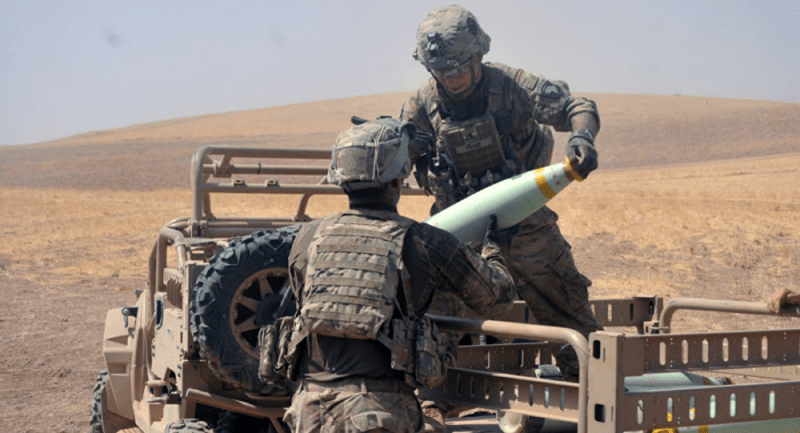
US-Led Coalition Used White Phosphorus in Attacks on Syria’s Baghouz – Reports
© Photo: 1st Lt. Daniel Johnson/U.S. Army
Sputnik – 02.03.2019
DAMASCUS – The US-led coalition has used shells with white phosphorus in its bombing attacks on the southwestern Syrian town of Baghouz, which remains the last stronghold of the Daesh terror group in the country, local media reported on Saturday, citing sources.
This came soon after the US-backed Syrian Democratic Forces (SDF) announced that it had resumed operations against Daesh militants in Baghouz, following a break for citizens evacuation. According to SDF claims, only Daesh militants currently remain in the town.
However, the battle for Baghuz is currently going slowly in order to protect hostages held by the Daesh terrorists, according to co-chair of the US mission of the Syrian Democratic Council (SDC), Bassam Ishak.
Over the recent months, the Kurdish-led SDF has been carrying out operations against Daesh militants in Syria, with support from the US-led coalition.
Numerous reports have been emerging in Syrian media about civilian casualties and use of white phosphorus, which is prohibited under international conventions.
The Syrian authorities, in particular, have repeatedly urged the United Nations to take measures targeting the perpetrators of the attacks and put an end to the coalition’s unauthorized presence in Syria.
The United States, in the meantime, denies using white phosphorus in its airstrikes.
The US-led coalition, which consists of over 70 countries, is conducting military operations against the Daesh in Syria and Iraq. The coalition’s operations in Syria are not authorized by the Syrian government or the UN Security Council.
Can Netanyahu Risk A “Battle Of Missiles” With Syria?
By Elijah J. Magnier | American Herald Tribune | March 2, 2019
It was the eleventh and the most important meeting between the Russian President Vladimir Putin and the Israeli Prime Minister Benjamin Netanyahu. The Israeli visitor heard clearly from his host that Moscow has no leverage to ask Iran to leave or to stop the flow of weapons to Damascus and that Iran will remain in Syria and that Russia has no say over the Syrian-Iranian relationship. Moscow informed Tel Aviv about “Damascus’s determination to respond to any future bombing and that Russia doesn’t see itself concerned”.
According to well-informed sources in Damascus, “the few hours of the visit of President Bashar al-Assad to Tehran were enough to send messages in all directions. The first message was the fact that the visit took place just before Netanyahu’s scheduled meeting with Putin. The second message was to display the robust cemented relationship between Iran and Syria, immune from any outside interference from the US or Russia and that Syria has the sovereign right to choose its strategic partners. The secretive nature of the visit – not even Russia was informed in advance – speaks volumes about the Syrian-Iranian relationship”.
“Russia exerted pressure on President Obama to prevent the US from bombing Damascus on the false flag pretext of chemical weapons and set up its military apparatus in Syria in 2015. Russia helped Syria to victory, imposed a political dialogue, and protected Syria in the international arena, speeding up the return of refugees (the US wanted to use the refugees in a failed attempt to gain concessions that it could not obtain by war). Moreover, Russia is putting pressure on many countries to contribute to the reconstruction of Syria and to resume diplomatic relations with Damascus. Russia is a strategic ally but exerts no power of control over the central government”, said the source.
The strategic relationship between Tehran and Damascus started – under the “Axis of the Resistance” – long before the war. In 2011, Iran rushed to support the central government to prevent the US-EU-Arab “regime-change” plan. It thwarted the transformation of Syria into Islamic Emirates ruled by Takfiri jihadists. Tehran offered oil, financial and military support to Syria throughout its seven years of war and rejected any proposition, even by Russia, to change President Assad for any other Syrian personality, as repeatedly proposed by the US.
Russia enjoys an excellent relationship with Israel and intends to maintain that relationship. Iran, on the other hand, is ready to wage war against Israel if Netanyahu ever decides to bomb significant strategic objectives in Syria. The head of Iran’s National Security Council, Admiral Ali Shamkhani, said Iran will respond by hitting Israeli targets if Israel bombs Syria. The same warning was delivered by Syria’s Ambassador to the UN, who recently warned that his country will retaliate if Damascus is bombed.
Since these last warnings, Israel has refrained from violating Syria sovereignty (except for one insignificant artillery bombing against an empty position in south Syria). Iranian officials in Syria had a curt response to their Russian counterparts who asked to have details on the locations of their military deployment in Syria. Iranians told the Russian military to inform Israel that the Iranian positions have been integrated with those of the Syrian army all over Syrian territory, and that any bombing of the Syrian army will hit Iranian advisors.
Iran in effect asked Russia to inform Israel that any future Israeli attack will trigger a retaliatory response, since the presence of Iranian advisors in the Levant is at the official request of the Syrian government. It is legitimate for all allied forces, if under attack, to respond with the similar firepower against any future aggression.
Netanyahu seems willing to bomb Syria. Nevertheless, if Iran and Syria stand by their promised response, he will not be able to stop the precision missiles ready to be launched against Israel. The Israeli Prime Minister is not aiming to dislodge Iran from Syria, an objective he knows to be impossible. Neither can he aspire to destroy Syria’s military capacity because Russia continues to supply Damascus with highly sophisticated weapons. His only plausible objective is an electoral one, with the goal of escaping imminent indictment for bribery charges related to corruption. A second term may postpone his indictment and prolong his immunity.
However, if the Israeli Prime Minister decides to bomb Syria, his decision will have a boomerang effect, especially if Syrian missiles hit deadly targets in the heart of Israel. Will Netanyahu take the risk and bomb his political future? It is his decision.
Chlorine ‘likely’ used in alleged Douma chemical attack, no nerve agent – OPCW‘s final report
RT | March 1, 2019
Chlorine was likely used in a chemical attack in Syria’s Douma last April, the OPCW said. The chemical arms watchdog refrained from identifying the party responsible for the incident, despite earlier being granted such powers.
There are “reasonable grounds” to believe that “the use of a toxic chemical as a weapon [took] place on 7 April 2018,” the Fact-Finding Mission (FFM) of the Organization for the Prohibition of Chemical Weapons (OPCW) said.
“This toxic chemical contained reactive chlorine. The toxic chemical was likely molecular chlorine,” according to the report.
The FMM also stated that it “did not observe any major key precursors for the synthesis of chemical weapons agents, particularly for nerve agents such as sarin, or vesicants such as sulphur or nitrogen mustard.”
The OPCW experts came to these conclusions after on-site visits to collect environmental samples, interviews with the witnesses, and analysis of other data.
The chemical incident in Douma just over a year ago was reported by the infamous Western-backed group, the White Helmets, which had been caught red-handed cooperating with terrorists on numerous occasions.
The activists blamed the Syrian government for the attack on its own people, as videos emerged online allegedly showing doctors trying to rescue those affected by toxic substances. Moscow had for weeks issued repeated warnings that the militants were preparing provocations with chemical weapons in the area.
The unverified claims were swiftly picked up by the mainstream media. The US, UK, and France used the alleged attack as a pretext to launch a large-scale missile attack on Syrian government targets, which they said were involved in the production of toxic agents.
They opted to act days before the OPCW was due to arrive in Douma for a fact-finding mission, just one week after the alleged chemical incident.
Chlorine containers from Germany that belonged to militants were later found by the Russian military in the liberated parts of Douma. This was followed by the discovery of a laboratory operated by terrorists, which contained all the equipment needed to produce deadly chemicals.
Hassan Nasrallah Warns Israel: All Options Are on the Table
Interview of Sayed Hassan Nasrallah, Hezbollah Secretary General, with Ghassan Ben Jeddou, founder of the pan-Arab and anti-imperialist Al-Mayadeen channel, January 26, 2019.
This live interview, much expected in Israel and the Arab world, lasted for more than 3 hours.
Transcript:
Journalist: […] Eminent Sayed, you often promised the Israeli enemy that if he invades or attacks (Lebanon), your retaliation will be overwhelming. And during your last speech, on November 10, you confirmed this, but you used a specific formula: “We will retaliate and you will regret it.” What did you mean by that?
Hassan Nasrallah: When this happens, everyone will clearly see the cause of these regrets. It is better (not to be precise) and let the Israelis think about it.
Journalist: Once again, Eminent Sayed, I do not ask you to reveal your military plans, but what do you mean when you say that Israel will regret it if he attacks, and that he will be struck as by lightning with an overwhelming retaliation?
Hassan Nasrallah: He will know that he must not repeat such aggression, because the price he will pay for this attack will be much larger than what he expected.
One of my remarks tonight will be precisely to call on Netanyahu and the new Chief of staff, and also on those around them within the enemy entity, not to make mistakes in their assessment as to what is happening in the region, especially on the issue of Syria.
But let us first finish with the issue of tunnels, and then we will discuss this point.
Journalist: Please, about the fact that Israel will regret it: will it be a global regret, a regret limited to some cities, to their companies, their institutions, their infrastructure… ? Or do you mean that Israel will regret their attack (in all respects) from Galilee to their southernmost border with Gaza?
Hassan Nasrallah: On this matter, you can let your imagination go as far as it can.
Journalist: Yes, but I’m not a military expert, so I can’t know how far your response can go.
Hassan Nasrallah: Ultimately, all options are open to us. The United States and Israel, in their arrogance and hubris, often use the formula “All options are on the table.” Today, the Resistance Axis, on all fronts, is in a position where it clearly says that “All options are on the table.” All options remain open for us.
Everything that is necessary, with reason, wisdom and also courage, because sometimes some try to hide their cowardice behind (so-called) wisdom. With reason, wisdom and also courage, all that is required for us to be steadfast, victorious and strengthen our deterrence capacity in this battle, we will do it without hesitation.
Journalist: With your permission, when you talk of steadfastness and victory, does steadfastness mean to deter the enemy from achieving his objectives, at least to evict you (from Syria) and to dissuade you definitively (from returning there)? And does victory mean that Israel stops all attacks (against the Resistance Axis)?
Hassan Nasrallah: We get lost in details. You speak sometimes of total aggression, of war, and you ask us what would be our goals faced with such a war (waged against us); and other times you do not speak of total war, but (Israeli) attempts to modify the rules of engagement, specific and limited strikes to amend the rules of engagement.
We will not allow… The first point (war) is a major issue that deserves to be treated apart at length, but as regards the second point, we will not allow the enemy to change the rules of engagement, nor impose on us (new) rules of engagement. The successive achievements of the Resistance have allowed us to establish a certain level of deterrence that we must at least maintain or even strengthen in our favor, whenever the enemy is trying to change the rules of engagement.
Journalist: How is it possible…
Hassan Nasrallah: I speak here about the Lebanese front. As for Gaza, it concerns our brothers in the Resistance, and as regards Syria, we will talk about it in detail when we get to this point. […]
Translation: unz.com/sayedhasan
Militants Continue to Prevent Refugees From Leaving Rukban Camp – Russian MoD
Sputnik – 26.02.2019
Militants are still preventing refugees and their families from leaving Syria’s Rukban camp, head of the Russian Defense Ministry’s Center for Syrian Reconciliation Lt. Gen. Sergei Solomatin said on Monday.
“Illegal armed groups operating in the area [spanning] 55 kilometers [34 miles] are preventing the civilians from leaving the Rukban camp”, Solomatin told a briefing.
According to earlier statements, two checkpoints were opened last Tuesday to facilitate the refugees’ withdrawal from the Rukban camp, which lies in the area controlled by the United States. Soldiers from the Russian Reconciliation Center in Syria and crews of the Syrian Arab Red Crescent are working at the checkpoints, and are prepared to provide assistance for those who want to leave the camp.
The Russian Defense Ministry’s Center for Syrian Reconciliation has called on the United States to put pressure on the leadership of opposition groups and prevent them from disrupting the evacuation of civilians from the camp.
Last week, Russian Foreign Minister Sergey Lavrov said refugees from the Rukban camp should have long been evacuated, but the United States and the militants under its control forbade them to leave. The US Department of State spokesman Robert Palladino has replied that the United States had not prevented people who live in the camp from leaving the facility and called on Russia to help facilitate deliveries of humanitarian aid.
The situation in the Rukban camp, which is situated within the US-controlled zone surrounding its military base in At-Tanf, has become increasingly dire as refugees residing there have not been regularly receiving sufficient amounts of humanitarian aid.
Meanwhile, the Russian Defense Ministry’s Center for Syrian Reconciliation also reported Monday that a number of ceasefire violations had been registered within the Idlib de-escalation zone in past 24 hours. According to Solomatin, more than 55,200 Syrians who evaded from military service were granted amnesty by Damascus. He added that as of Sunday, 224,424 Syrian refugees had returned home.
Syria has been in a state of civil war since 2011, with the government forces fighting against numerous opposition groups and militant and terrorist organizations. Russia, along with Turkey and Iran, is a guarantor of the ceasefire regime in Syria. Moscow has also been providing humanitarian aid to residents of the crisis-torn country.
Israel Burying ‘Nuclear Waste With Radioactive Content’ in Golan – UN Report
Sputnik – 25.02.2019
The UN has been adopting resolutions condemning the Israeli occupation of the Golan Heights for decades; however Tel Aviv hasn’t changed its policies and is continuing to exercise sovereignty over the disputed territory, including holding municipal elections.
Secretary-General of the UN Antonio Guterres has presented a report to the UN Human Rights Council based on Syrian accusations against Israel’s action in the Golan Heights, saying that Israel has been burying “nuclear waste with radioactive content in 20 different areas populated by Syrian citizens” in the occupied territory. Most of the waste has allegedly been dumped in the area near Al-Sheikh Mountain.
According to the report, this puts “the lives and health of Syrians in the occupied Syrian Golan in jeopardy” and violates the 4th Geneva Convention.
Israel is suspected of possessing nuclear weapons, but no evidence proving or disproving the suspicion has been presented so far. Tel Aviv has neither confirmed, nor denied possessing nuclear weapons.
The Golan Heights was seized by Israel from Syria during the Six-Day War in 1967. In 1981, Tel Aviv decided to extend its laws to the occupied territory and established a civil administration in a move that drew condemnation from the UN Security Council and was labelled illegal in terms of international law. Israel justified the decision by saying that it was aimed at safeguarding its borders from aggressive military acts by its neighbours.
In 2018, the UN General Assembly adopted a resolution urging Israel to immediately withdraw its forces from the Golan Heights after Tel Aviv organised local elections in the Golan Heights on 30 October.
UK to impose full ban Lebanon’s Hezbollah as terrorist group, Israel urges EU to follow move
Press TV – February 25, 2019
The British government is to impose a full ban on activities of the Lebanese Resistance Movement Hezbollah as London becomes increasingly irritated by the group’s political and military success in the Middle East.
UK Home Secretary (interior minister) Sajid Javid said on Monday that the government will designate the entire Hezbollah organization as a terrorist entity as of Friday subject to the approval of the parliament.
Javid, an extreme right-wing politician of the Pakistani origin, said the UK government was no longer able to maintain a distinction between Hezbollah’s political and military activities and thus will include the group’s political unit in its blacklist.
“Hezbollah is continuing in its attempts to destabilize the fragile situation in the Middle East – and we are no longer able to distinguish between their already banned military wing and the political party,” said Javid, adding, “Because of this, I have taken the decision to proscribe the group in its entirety,” he added in a statement.
Britain has become increasingly angered by Hezbollah’s role in an anti-militancy campaign in Syria, where London has for the past eight years supported terrorist groups opposed to the government of President Bashar al-Assad.
Hezbollah has played a major role in helping Assad purge the Syrian territory from terrorist groups. The intervention, once criticized inside Lebanon, has helped the resistance movement increase its political clout as the group now controls three ministries, a first on the history of the Lebanese government.
The Israeli regime swiftly welcomed Javid’s announcement with Israeli Security Minister Gilad Erdan saying in a tweet that the European Union, which unlike the United States has opposed designation of Hezbollah as terrorist entity, should follow suit.
There was no official reaction from Hezbollah although lawmakers representing the group in the Lebanese parliament said UK decision was a “violation of sovereignty”.
UK’s move to outlaw Hezbollah in its entirety would mean that anyone expressing support for the religiously-oriented organization could end up in UK jail for up to 10 year.
The International Criminal Complicity
On Intimidation, Cowardice & Corruption (at the International Criminal Court)
“Drill and uniforms impose an architecture on the crowd. An army’s beautiful. But that’s not all; it panders to lower instincts than the aesthetic. The spectacle of human beings reduced to automatism satisfies the lust for power. Looking at mechanized slaves, one fancies oneself a master” -Aldous Huxley
By Ronald Thomas West | February 22, 2019
The United Nations is an experiment in democracy founded on the Western principles of international law. Angela Merkel’s conflating globalism with multilateralism (these are NOT the same thing) notwithstanding, the United Nations is a global body established by multilateral treaties. This does not establish ‘globalism’ but serves as a platform for facilitating relationships between sovereign nations. The International Criminal Court is an example of this, where the ‘Rome Statute’ (the multilateral treaty establishing the court) had been ‘midwifed’ from within the UN but created a court (the ICC) that is ostensibly independent. However the UN Security Council may refer cases to the ICC, the UN has no authority over the court and no power to extend or curtail the courts jurisdiction, which is solely over those nations which had opted to enter into the treaty (Rome Statute) creating the court.
However, if the institutions of the United Nations are notoriously politicized and corrupt, and they most certainly are [1] it follows the UN’s closely aligned institutions might be expected to show similar symptoms.
We have recently seen these symptoms (read on) but it should be noted the ICC had been undermined from its inception, particularly by the USA in what appears on its face to have been a geo-strategic policy of fraudulent engagement of the Rome Statute process. In short, the USA participated in the setting up of the court but used its considerable influence to prevent the court adopting a principle of universal jurisdiction. With the court at its formation limited to jurisdiction over nations entering into the Rome Statute treaty, the USA would appear to have disingenuously joined the court (signed on) but never seriously pursued ratification (the legal necessity of a democratic nation’s parliamentary body affirming the state executive signature) and therefor never came under the court’s jurisdiction.
What had been created is a social oxymoron in actuality; a core body of nations (Europe, EU & NATO nations, particularly) determined never to self-prosecute but to use the prosecutorial vehicle provided by the Rome Statute as post-colonial geopolitical device aimed at African states in ongoing state of neocolonialism. Consequently the court has seen to the prosecutions of politicians from Congo, Kenya, Sudan and Ivory Coast but not the French role in Rwanda’s genocide or Paul Kagame, a USA darling:
“He’s [Kagame] actually gotten a free ride from the ICC despite all the evidence of his army creating, sponsoring militias in Congo since 2002. Militias sponsored by Kagame’s troops have plundered, killed civilians and recruited child soldiers in the Congo yet Kagame and his commanders have not been indicted by the ICC” [2], [3], [4]
Relevant to the French immunity (impunity), this raises a question concerning whether European states signatory to the Rome Statute, that is a “coalition of the willing” should have been liable for what amounts to a ‘crime against humanity’, or an estimated 500,000 to 1,000,000 dead civilians having resulted due to infrastructure destruction (e.g. disease via water contamination), when Iraq had been invaded despite the invading states’ leaders (notably Tony Blair) knowing that invasion’s premise was false. Are the EU & NATO states’ accountability waived by the ICC?
It hardly seems a ‘crime of aggression’ need be adopted to hold states responsible for their acts where existing statutory law should be adequate.
This brings us to a recent case filed by this reporter which points to corruption. For the purpose of defining corruption in the case at hand, identified by the court’s filing reference ICC OTP-CR-295/18 [5] it is asserted (by this reporter) any case of acquiesce in the face of intimidation is a form of corruption, where cases are shelved as opposed to pursued in good faith. A recent example of this is demonstrated in the resignation of an ICC judge citing two instances where the ICC had been subject to threats or subverted. [6]
In the first instance, Turkey arrested an ICC judge with Turk nationality under the pretext of ties to Gulen, an excuse often used by the current Salafi leadership of Turkey to rid itself of principled Sufi members of Turkey’s civil service. [7] The UN Secretary General, rather than confront Turkey with a principled stance no UN member state will unilaterally set precedent with the removal of ICC judges, allowed the precedent to stand.
The other instance causing his resignation (mentioned by Judge Flugge) is the well publicized (policy) threats against the ICC by USA National Security Advisor, John Bolton, in his speech to the Federalist Society. [8]
According to Christopher Black, a longtime barrister working the several international tribunals, including the ICC, the USA plays strongly:
“First of all through key personnel they have placed in the ICC, for example the prosecutors, some judges who are willing to do what they want…
“A judge in my case was threatened by Americans working there that if certain passages in the judgement acquitting the general I was defending were not removed he would face physical problems. This is the type of gangsterism they use to get their way in these tribunals”
Also specific to the USA, at a separate tribunal, according to Black:
“Not only was a judge in my case at the Rwanda tribunal pressured but I myself was threatened by the CIA while I was there to stop raising questions and presenting evidence they [the US side] did not like” [9]
The preceding suggests Turkey may have arrested the judge with Turkish nationality as a quid pro quo on behalf of a 3rd party to dispense with a judge perceived as a threat. In any case it’s clear the ICC is compromised.
Bearing the preceding in mind, in the case filed by this reporter, to begin it should be noted it was the ICC itself that invited my filing, when the Office of the Prosecutor had responded, on 3 July 2018, to a letter I’d emailed to a German international law attorney on, 30 June 2018, copied to the ICC.
In both the letter and the complaint a clear line of evidence had been provided pointing to Turkey had (false-flag attack, in league with al Qaida) arranged the indiscriminate murder of well over 1,000 civilians at Ghouta, Syria in August of 2013. According to a Turkish parliamentarian, Eren Erdem, citing Turkish state produced investigative files in his possession, the chemicals used to produce the Sarin gas in this attack had been sourced in Europe. Turkish MP Erdem is on record stating:
“All basic materials are purchased from Europe. Western institutions should question themselves about these relations. Western sources know very well who carried out the sarin gas attack in Syria. They know these people, they know who these people are working with, they know that these people are working for Al-Qaeda. [What] I think is Westerns are hypocrites about the situation”
In this regard it is noted the court’s Office of the Prosecutor takes on the responsibility of assembling evidence:
“At the ICC, most evidence is collected and secured by the Office of the Prosecutor (OTP)” [10]
In the present case (ICC OTP-CR-295/18) the filing party (Ronald Thomas West) had assembled ample evidence to justify initiating a preliminary investigation that should have triggered the court looking into whether there had been the associated crime of ‘aiding and abetting’ committed within ICC jurisdiction. To bolster this, the case had been made an additional, associated crime of aiding and abetting had been demonstrated where German intelligence had misinformed German politicians of the facts actually surrounding the Ghouta sarin attack, so far as to blame Assad.
This last (immediate preceding) would not necessarily constitute a prosecutable crime (depending on what the judges might be inclined to believe on a given day) but there is more. This reporter had provided the necessary evidence to the concerned politicians correcting the record; indisputable evidence Turkey’s intelligence agency was providing sarin to al-Qaida militants within a timeline consistent with the Ghouta attack. [11]
This evidence submitted to the German executive (office of the Federal Prosecutor) and oversight (parliamentary leadership of all parties represented in the federal parliament) was never acted on; the German political establishment closed ranks across the political spectrum to deny the government of Syria honest assessment of the Ghouta attack. The false-flag crime accordingly sustained as a successful political ploy in regime change endeavors by EU and NATO states where those very states have become complicit in aiding and abetting a war crime with the act of material concealment of the actual perpetrators identity (a NATO state.) [12]
The German politicians (and related institutions) had been provided with the evidence on 2 December 2015. By the time this (very same) evidence had been provided to the ICC in a formalized complaint on 4 July 2018, thirty one months had passed without action by the Germans, satisfying the requirement Germany should have had opportunity to redress the wrong.
On 6 February 2019, one week after the resignation of Judge Christoph Flugge, the ICC Office of the Prosecutor replied to this reporter with:
“The Office of the Prosecutor has examined your communication and has determined that more detailed information would be required in order to proceed with an analysis of whether the allegations could fall within the jurisdiction of the Court. The Prosecutor has determined that, in the absence of such information, there is not a basis at this time to proceed with further analysis”
Essentially what the ICC has done is, to shelve the case with a demand this reporter who’d made the filing (at their invitation) provide information beyond simple and clear evidence aiding and abetting of a war crime is ongoing by a state within the jurisdiction of the court. This general, non-specific language, in the common vernacular, are called ‘weasel words.’
Why? Clearly the ramifications of adopting the practice of prosecuting the politicians empowering false flag geopolitical engineering by intelligence agencies is frightening and no doubt opposed by politician & spy alike.
Were the ICC to proceed in this case (whether it were a successful prosecution or acquittal), not only would it likely topple Angela Merkel, but it likely brings into reach Davis Cameron and his spy chief Alex Younger, also Francois Hollande and his spy chief Bernard Bajolet… and so on.
In the case of Germany, there is a safe assumption: There will be no prosecution of these crimes due to a German constitutional loophole larger than the Brandenberg Gate … “for the good of the state.” Because at the end of the day, it is (a commonly used German expression) “just not possible” to rock the boat with Turkey or cross the USA.
Why the International Criminal Court matters (in the present moment) has little to do with justice and much to do with exposing the corruption of foundational principles across the spectrum of international institutions.
*
The ICC had been provided a nearly identical draft of this (preceding) with opportunity to comment. [13] Prior to releasing this for initial publication at the Ft Russ news website, two weeks have passed and no reply has been forthcoming. The ICC also declined to clarify the nature of “more detailed information [that] would be required” and has remained silent on my asking whether the German authorities had been contacted with request for information and if so, the nature of any reply.
Noteworthy is the ICC does not deny the “allegations” (the evidence is too strong) nor does the ICC altogether dismiss the possibility of jurisdiction (they have jurisdiction over complicit parties within the EU, only are either intimidated and afraid or too corrupted to exercise it, probably a combination) rather finds a ‘weasel words’ excuse to shelve a case that would call out the hypocrisy of the European signatories to the Rome Statute based on the criminality of the EU/NATO intelligence agencies.
The net result is, as of this moment the false-flag sarin attack at Ghouta, Syria (and murder of well over 1,000 innocents) during the month of August 2013 remains a successful sleight-of-hand attack blamed on the wrong party and the crime of aiding and abetting the perpetrators, it could be argued, extends to the International Criminal Court itself, in case where refusal to correct the public record protects the guilty parties. I would describe this as ‘international criminal complicity’ when a UN associated judicial body becomes aware of an easily rectified element of a major war crime, as simple as recognizing an evidence based false-flag, and instead chooses to sit on its hands.
The pity of it all is, if there were courage to pursue jurisdiction over those complicit parties within the Rome Statute’s signatory states, a precedent would be established perhaps leading (over time) to further precedent where anyone complicit in war crimes and crimes against humanity could be arrested when stepping on any Rome Statute nation’s soil and progress made in realizing accountability.
Ronald’s Maxim
In any democracy, ethics, self restraint, tolerance and honesty will always take a second seat to narcissism, avarice, bigotry & persecution, if only because people who play by the rules in any democracy are at a disadvantage to those who easily subvert the rules to their own advantage
References:
[1] http://www.innercitypress.com/index.html
[2] http://www.therwandan.com/the-icc-has-given-africas-most-prolific-genocidaire-a-free-ride/
[3] https://www.bbc.com/news/world-europe-41283362
[4] https://www.politico.com/magazine/story/2014/02/rwanda-paul-kagame-americas-darling-tyrant-103963
[7] https://www.dw.com/en/from-ally-to-scapegoat-fethullah-gulen-the-man-behind-the-myth/a-37055485
[9] https://www.rt.com/news/450611-us-icc-manipulation-experts/
[10] https://link.springer.com/content/pdf/10.1007%2F978-3-642-35076-4_4.pdf
[11] https://ronaldthomaswest.com/2018/04/15/what-can-be-known-vs-what-will-be-known/
[12] https://ronaldthomaswest.com/2018/10/12/a-breaking-point-in-geopolitical-torsion/
[13] copy of this post & relevant questions requesting information were sent to the ICC on 9 February 2019
Meet Pierre Omidyar, billionaire patron of US regime change operations, neocons & activist media
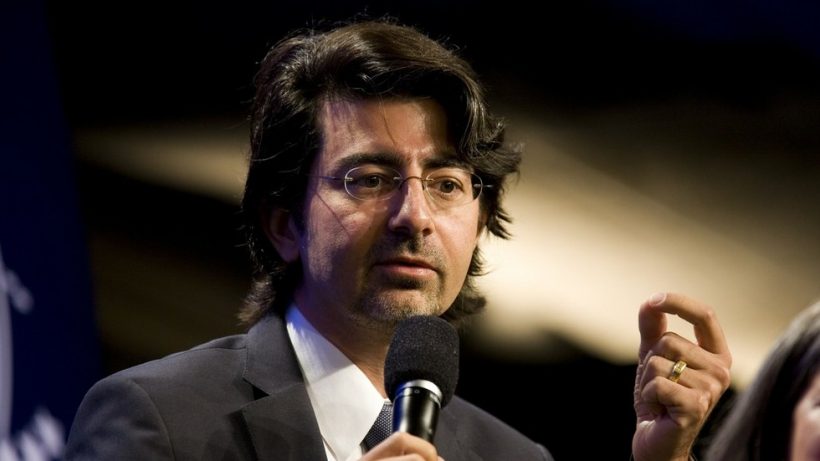
Pierre Omidyar speaks at a ‘Technology For Citizen Empowerment and Human Rights’ panel at the Clinton Global Initiative in New York, September 23, 2010 © AFP / Brian Harkin
RT | February 22, 2019
Amid the US push for regime change in Venezuela, RT speaks with investigative journalists who looked into the eBay founder and self-described “progressive” billionaire Pierre Omidyar, a major patron of regime-change operations.
An ongoing series in MintPress News, written by Alexander Rubinstein and Max Blumenthal, is a rare look into the projects undertaken by the “progressive philanthropreneur,” who has been praised by the liberal interventionist establishment for following in the footsteps of George Soros but attracts far less media attention.
“Part of the reason for doing this investigation was to inspire more scrutiny of Pierre Omidyar,” Rubinstein told RT. “There are mountains of newsworthy bits of information about many of the organizations he funds, but the sad reality is that it would require a team of at least half a dozen journalists working overtime to fully make sense of it all.”

Detail of a chart showing the connections between Pierre Omidyar and various media outlets, foundations, activists and outfits. © MintPress News
The second part in Blumenthal and Rubinstein’s series, published Wednesday, took a particular interest in Omidyar’s ties to organizations promoting “regime change.” In Ukraine, it was a TV station (Hromadske) that backed what turned into a violent 2014 coup against the government in Kiev. In Zimbabwe, Omidyar money funded a “cultural activist network” that campaigned for the ouster of President Robert Mugabe in 2017. And in the Philippines Omidyar is backing The Rappler, a news site opposed to President Rodrigo Duterte that is developing surveillance technologies like a “mood meter” of the audience to capture – and channel? – “non-rational reactions.”
Not progressivism but power
Omidyar is not doing this on his own, either, working hand in hand with US Agency for International Aid and Development (USAID) and the National Endowment for Democracy (NED).
“He has the money and – for one reason or another– the desire to participate in such destabilizing policies,” Rubinstein told RT, noting that the billionaire’s embrace of such projects makes him “the perfect private partner for the US government” in seeking regime change abroad.
How does a self-described progressive find himself riding the horse of regime change? This is one of the questions Rubinstein and Blumenthal hope further research will answer. Their digging has found Omidyar’s money behind the Alliance for Securing Democracy and The Bulwark – projects led by NeverTrump neoconservative Bill Kristol that push “Russiagate” and carry the torch of interventionism.
“If partnering with the neocon think tank guru who was a main conduit for US government messaging in the lead-up to the Iraq War is ‘progressive’ then I think it’s time we retire the term,” Rubinstein told RT.
He believes that Omidyar is not driving the regime-change agenda, but going along with it in “the perfect alliance of convenience.”
“If you’re looking for a coherent ideology that permeates through each of Omidyar’s investments, it’s not progressivism: it’s power… and power lies with empire,” Rubinstein said.
More specifically, Omidyar is looking to manage all areas of modern life, from journalism and transportation to banking and finance and government administration, journalist Yasha Levine, author of ‘Surveillance Valley: The Secret Military History of the Internet,’ told MintPress.
To him it’s not just about running a single service, but integrating things together to give technocrats, business executives and government officials a God’s-eye view of the world – to manage and control society more efficiently.
The role of Omidyar and other billionaires – who would be called ‘oligarchs’ if they were Russian but keep being presented as ‘philanthropists’ in the West – in influencing media and politics around the world is woefully under-examined, Rubinstein and Blumenthal argue.
Controlled or ‘responsible’ opposition?
Part of the problem is that Omidyar funds a wide range of media outlets through foundations, nonprofits and other cutouts, and many journalists who consider themselves independent or progressive aspire to work at Omidyar-backed Intercept, famous for publishing (some of) the documents leaked by NSA whistleblower Edward Snowden in 2013.
“All of the media ventures funded by Omidyar have one thing in common: their slickness,” Rubinstein said, noting that the “cutting edge design, high production values, and the esoteric portrayal of the process of reporting” all contribute to creating the image of Omidyar-backed outlets as the “responsible opposition” in contrast to outlets with a more shoestring budget.
While Intercept editor Glenn Greenwald has been sharply critical of US foreign policy and the ‘Russiagate’ conspiracy theory, other writers at the outlet have “carried water for al-Qaeda in Syria” and pushed Russiagate, said Rubinstein.
He described as “incredibly troubling” the fact that The Intercept has rolled out only a portion of the Snowden documents, de facto making them serve the agenda of Omidyar and his First Look Media rather than be responsibly released to the public, as Snowden intended.
Telling Only Part of the Story of Jihad
By Daniel LAZARE | Consortium News | February 21, 2019
A recent CNN report about U.S. military materiel finding its way into Al Qaeda hands in Yemen might have been a valuable addition to Americans’ knowledge of terrorism.
Entitled “Sold to an ally, lost to an enemy,” the 10-minute segment, broadcast on Feb. 4, featured rising CNN star Nima Elbagir cruising past sand-colored “Mine-Resistant Ambush Protected” armored vehicles, or MRAPs, lining a Yemeni highway.
“It’s absolutely incredible,” she says. “And this is not under the control of [Saudi-led] coalition forces. This is in the command of militias, which is expressly forbidden by the arms sales agreements with the U.S.”
“That’s just the tip of the iceberg,” she adds. “CNN was told by coalition sources that a deadlier U.S. weapons system, the TOW missile, was airdropped in 2015 by Saudi Arabia to Yemeni fighters, an air drop that was proudly proclaimed across Saudi backed media channels.” The TOWs were dropped into Al Qaeda-controlled territory, according to CNN. But when Elbagir tries to find out more, the local coalition-backed government chases her and her crew out of town.
U.S.-made TOWs in the hands of Al Qaeda? Elbagir is an effective on-screen presence. But this is an old story, which the cable network has long soft-pedaled.
In the early days of the Syrian War, Western media was reluctant to acknowledge that the forces arrayed against the Assad regime included Al Qaeda. In those days, the opposition was widely portrayed as a belated ripple effect of the Arab Spring pro-democracy uprisings elsewhere in the region.
However, in April-May 2015, right around the time that the Saudis were air-dropping TOWs into Yemen, they were also supplying the same optically-guided, high-tech missiles to pro-Al Qaeda forces in Syria’s northern Idlib province. Rebel leaders were exultant as they drove back Syrian government troops. TOWs “flipped the balance,” one said, while another declared: “I would put the advances down to one word – TOW.”
CNN reported that story very differently. From rebel-held territory, CNN’s Nick Paton Walsh described the missiles as a “possible game-changer … that may finally be wearing down the less popular side of the Shia-Sunni divide.” He conceded it wasn’t all good news: “A major downside for Washington at least, is that the often-victorious rebels, the Nusra Front, are Al Qaeda. But while the winners for now are America’s enemies, the fast-changing ground in Syria may cause to happen what the Obama administration has long sought and preached, and that’s changing the calculus of the Assad regime.”
Foreign Policy, The Washington Post, The Guardian, and The New York Times all reacted the same way, furrowing their brows at the news that Al Qaeda was gaining, but expressing measured relief that Syrian President Bashar al-Assad was at last on the ropes.
But now that Elbagir is sounding the alarm about TOWs in Yemen, CNN would do well to acknowledge that it has been distinctly more blasé in the past about TOWs in the hands of al Qaeda.
The network appears unwilling to go where Washington’s pro-war foreign-policy establishment doesn’t want it to go. Elbagir shouldn’t be shocked to learn that U.S. allies are consorting with Yemeni terrorists.
U.S. History with Holy Warriors
What CNN producers and correspondents either don’t know or fail to mention is that Washington has a long history of supporting jihad. As Ian Johnson notes in “A Mosque in Munich” (2010), the policy was mentioned by President Dwight Eisenhower, who was eager, according to White House memos, “to stress the ‘holy war’ aspect” in his talks with Muslim leaders about the Cold War Communist menace.” [See “How U.S. Allies Aid Al Qaeda in Syria,” Consortium News, Aug. 4, 2015.]
Britain had been involved with Islamists at least as far back as 1925 when it helped establish the Muslim Brotherhood in Egypt, and both the U.S. and Britain worked with Islamists in the 1953 coup in Iran, according to Robert Dreyfus in “Devil’s Game” (2006).
By the 1980s a growing Islamist revolt against a left-leaning, pro-Soviet government in Afghanistan brought U.S. support. In mid-1979, President Jimmy Carter and his national security adviser, Zbigniew Brzezinski, armed the Afghan mujahideen — not at first to drive the Soviets out, but to lure them in. Brzezinski intended to deal Moscow a Vietnam-sized blow, as he put it in a 1998 interview.
Meanwhile, a few months after the U.S. armed the mujahideen, the Saudis were deeply shaken when Islamist extremists seized the Grand Mosque in Mecca and called for the overthrow of the royal family. While Saudi Arabia has been keen to repress jihadism at home, it has been a major supporter of Sunni extremists in the region, particularly to battle the Shi‘ite regime that came to power in Tehran, also in 1979.
Since then, the U.S. has made use of jihad, either directly or indirectly, with the Gulf oil monarchies or Pakistan’s notoriously pro-Islamist Inter-Services Intelligence agency. U.S. backing for the Afghan mujahideen helped turn Osama bin Laden into a hero for some young Saudis and other Sunnis, while the training camp he established in the Afghan countryside drew jihadists from across the region.
U.S. backing for Alija Izetbegovic’s Islamist government in Bosnia-Herzegovina brought al-Qaeda to the Balkans, while U.S.-Saudi support for Islamist militants in the Second Chechen War of 1999-2000 enabled it to establish a base of operations there.
Downplaying Al Qaeda
Just six years after 9/11, according to investigative reporter Seymour Hersh, the U.S. downplayed the fight against Al Qaeda to rein in Iran – a policy, Hersh wrote, that had the effect of “bolstering … Sunni extremist groups that espouse a militant vision of Islam and are hostile to America and sympathetic to Al Qaeda.”
Under Secretary of State Hillary Clinton, policy toward Al-Qaeda turned even more curious. In March 2011, she devoted nearly two weeks to persuading Qatar, the UAE and Jordan to join the air war against Libya’s Muammar Gaddafi, only to stand by and watch as Qatar then poured hundreds of millions of dollars of aid into the hands of Islamist militias that were spreading anarchy from one end of the country to the other. The Obama administration thought of remonstrating with Qatar, but didn’t in the end.
Much the same happened in Syria where, by early 2012, Clinton was organizing a “Friends of Syria” group that soon began channeling military aid to Islamist forces waging war against Christians, Alawites, secularists and others backing Assad. By August 2012, the Defense Intelligence Agency reported that “the Salafist, the Muslim Brotherhood, and AQI [Al Qaeda in Iraq] are the major forces driving the [anti-Assad] insurgency”; that the West, Turkey, and the Gulf states supported it regardless; that the rebels’ goal was to establish “a declared or undeclared Salafist principality in eastern Syria,” and that “this is exactly what the supporting powers want in order to isolate the Syrian regime….”
Biden Speaks Out
Two years after that, Vice President Joe Biden declared at Harvard’s Kennedy School:
“Our allies in the region were our largest problem in Syria… The Saudis, the Emiratis, etc. what were they doing? They were so determined to take down Assad and essentially have a proxy Sunni-Shia war, what did they do? They poured hundreds of millions of dollars and tens of thousands of tons of military weapons into anyone who would fight against Assad, except the people who were being supplied were al Nusra and al Qaeda and the extremist elements of jihadis coming from other parts of the world.” (Quote starts at 53:25.)
The fact that Obama ordered the vice president to apologize to the Saudis, the UAE and Turkey for his comments provided back-handed confirmation that they were true. When TOWs turned up in the hands of pro-Qaeda rebels in Syria the following spring, all a senior administration official would say was: “It’s not something we would refrain from raising with our partners.”
It was obvious that Al Qaeda would be a prime beneficiary of Saudi intervention in Yemen from the start. Tying down the Houthis — “Al Qaeda’s most determined foe,” according to the Times — gave it space to blossom and grow. Where the State Department said it had up to 4,000 members as of 2015, a UN report put its membership at between 6,000 and 7,000 three years later, an increase of 50 to 75 percent or more.
In early 2017, the International Crisis Group found that Al Qaeda was “thriving in an environment of state collapse, growing sectarianism, shifting alliances, security vacuums and a burgeoning war economy.”
In Yemen, Al Qaeda “has regularly fought alongside Saudi-led coalition forces in … Aden and other parts of the south, including Taiz, indirectly obtaining weapons from them,” the ICG added. “… In northern Yemen … the [Saudi-led] coalition has engaged in tacit alliances with AQAP fighters, or at least turned a blind eye to them, as long as they have assisted in attacking the common enemy.”
In May 2016, a PBS documentary showed Al Qaeda members fighting side by side with UAE forces near Taiz. (See “The Secret Behind the Yemen War,” Consortium News, May 7, 2016.)
Last August, an Associated Press investigative team found that the Saudi-led coalition had cut secret deals with Al Qaeda fighters, “paying some to leave key cities and towns and letting others retreat with weapons, equipment, and wads of looted cash.” Saudi-backed militias “actively recruit Al Qaeda militants,” the AP team added, “… because they’re considered exceptional fighters” and also supply them with armored trucks.
If it’s not news that U.S. allies are providing pro-Al Qaeda forces with U.S.-made equipment, why is CNN pretending that it is? One reason is that it feels free to criticize the war and all that goes with it now that the growing human catastrophe in Yemen is turning into a major embarrassment for the U.S. Another is that criticizing the U.S. for failing to rein in its allies earns it points with viewers by making it seem tough and independent, even though the opposite is the case.
Then there’s Trump, with whom CNN has been at war since the moment he was elected. Trump’s Dec. 19 decision to withdraw U.S. troops from Syria thus presented the network with a double win because it allowed it to rail against the pullout as “bizarre” and a “win for Moscow” while complaining at the same time about administration policy in Yemen. Trump is at fault, it seems, when he pulls out and when he stays in.
In either instance, CNN gets to ride the high horse as it blasts away at the chief executive that corporate outlets most love to hate. Maybe Elbagir should have given her exposé a different title: “Why arming homicidal maniacs is bad news in one country but OK in another.”
Featured Video
The Truth About the Trump Shootings with Ken Silva
or go to
Aletho News Archives – Video-Images
From the Archives
The Geopolitics behind the War in Yemen (I)
By Mahdi Darius NAZEMROAYA | Strategic Culture Foundation | 30.03.2015
The United States and the Kingdom of Saudi Arabia became very uneasy when the Yemenese or Yemenite movement of the Houthi or Ansarallah (meaning the supporters of God in Arabic) gained control of Yemen’s capital, Sanaa/Sana, in September 2014. The US-supported Yemenite President Abd-Rabbuh Manṣour Al-Hadi was humiliatingly forced to share power with the Houthis and the coalition of northern Yemenese tribes that had helped them enter Sana. Al-Hadi declared that negotiations for a Yemeni national unity government would take place and his allies the US and Saudi Arabia tried to use a new national dialogue and mediated talks to co-opt and pacify the Houthis.
The truth has been turned on its head about the war in Yemen. The war and ousting of President Abd-Rabbuh Manṣour Al-Hadi in Yemen are not the results of «Houthi coup» in Yemen. It is the opposite. Al-Hadi was ousted, because with Saudi and US support he tried to backtrack on the power sharing agreements he had made and return Yemen to authoritarian rule. The ousting of President Al-Hadi by the Houthis and their political allies was an unexpected reaction to the takeover Al-Hadi was planning with Washington and the House of Saudi. … continue
Blog Roll
 Aletho News
- Pakistan-Iran talks secure LNG shipment to Islamabad through Hormuz
- Black Sea grain crisis puts global wheat supplies under pressure
- IRGC air defenses destroy another US MQ-1 drone over Strait of Hormuz
- Imran Khan’s entire immediate family detained in Pakistan ahead of mass protest demanding his release
- EU nation detains former presidential frontrunner
- Leaked: Britain’s Sham Conviction Of Hashim Thaci
- Seyed M. Marandi: U.S. Strike Imminent – Toward Total War in the Middle East
- Russia Voted Under Fire. Washington Is Loading the Tankers.
- 12 Things Your Oncologist Was Trained Not to Tell You
- Anthrax Attacks Paved Way for COVID-Era ‘Junk Drugs and Vaccines’
- If Americans Knew
- Huckabee aide solicited cash gifts from Israelis
- This isn’t sci-fi, AI is already killing people
- ‘The Most Brutal Thing’: Investigation Reveals Execution of Elderly Woman in Rafah
- Inside Israel’s ‘soft’ ethnic cleansing plan for Gaza through the eyes of its victims
- New online database tracks pro-Israel political donations in the United States
- Israeli president pardons soldier convicted for killing wounded Palestinian
- Singer Ed Sheeran says his ‘heart broken’ by Gaza devastation, addresses Macklemore controversy
- Israel Has Imprisoned Female Journalist Bushra Al-Tawil Without Trial Or Charge In Solitary Confinement For Past Month
- Israel poised to teach West Bank a lesson after one Israeli killed – Daily Update
- Salah Sarsour’s Legal Team Says DHS Has Not Met Its Burden to Prove He Is Deportable
- No Tricks Zone
- 2025 Nature Paper Claiming Worsening Global Drought Gets RETRACTED …Heavily Flawed
- New Study: ‘Global Drought Shows No Detectable Recent Acceleration Under Climate Warming’
- Economic Masterminds: German Socialists Suggest Taxing Productivity Gains Stemming From Using AI
- The South China Sea Has Not Been Cooperating With The Climate Change Narrative
- Energy Crisis: Germany Enters Heating Season With Historically Low Gas Reserve Fill Levels
- New Study: The Antarctic Ice Sheet Gained Mass From 2020-2024 Due To Staggering Snow And Ice Accumulation
- Study: Ocean Heating Rates From Thousands Of Years Ago ‘Dwarf’ Modern Ocean Heating Rates
- Climate Extremists Target, Attack Large-Scale Power Grid Infrastructure In Germany!
- New Study: Antarctic Ice Melt Has Contributed Less Than 1 Centimeter To Sea Level Rise In The Last 30 Years
- Fear Of Debate: Alarmist German Climate Scientist Calls On Mainstream Media To Discredit Skeptic Voices
 Aletho News