The Battle in the South of Syria Is Coming to an End: Israel Bowed To Russia’s Will
By Elijah J. Magnier | American Herald Tribune | July 4, 2018
After only two weeks since the beginning of the military operation, jihadists and militants in most of eastern rural Daraa in south Syria have either surrendered or were overwhelmed, the over 70 villages they occupied were liberated by the Syrian Army. Meanwhile, Israel has reduced its requests or conditions pronounced in the last two weeks: from launching threats against the approach of the Syrian Army towards the South, to menaces if Damascus pushes forces beyond the 1974 demarcation line and the disengagement agreement between Syria and Israel. This clearly means all players (the US, Israel, Jordan, Saudi Arabia) have dropped the jihadists and militants they were training and are turning their back on them: they are now on their own.
For over seven years, Israel has invested intelligence, finance, military and medical supplies in these jihadists and their allies. On many occasions, Israel has said it prefers the “Islamic State” to Iranian forces on the borders. Many times, Israel showed images of jihadists – including those fighting under the flag of al-Qaeda – in Israeli hospitals, recovering from wounds inflicted during their clashes with the forces of Damascus. Today, it is clear that Israel’s intentions have been defeated when it can announce that for the Syrian army to cross the 1974 disengagement line it means crossing red lines. Israel is crying in the wilderness because the Syrian army has the intention and means to defeat all jihadists and militants who received supplies from foreign countries. It has never crossed Syria’s mind to start a new war with Israel before the Syrian territory (in the north) is liberated.
The Syrian allies are participating in the battle of the south of Syria as advisors and with backup (small) units to fill gaps only if the battle becomes critical on this or that front. So far, jihadists and militants are easily defeated and represent little resistance. There is little doubt how ISIS (the “Islamic State”, aka Jaish Khaled Bin al-Waleed), deployed on the 1975 disengagement line, will react because neither the Syrian Army nor Russia are offering a relocation to the terrorist group. Therefore, the only choice ISIS have in south Syria is to fight, surrender or be allowed to cross into Israel, since for years the Israeli Army has been cohabiting with ISIS beautifully. The number of terrorists is estimated at between 1500 and 2000, a relatively small number when we consider that the Syrian Army faced tens of thousands in al-Yarmouk, rural Homs, al-Badiya, Deir-ezzour and Albukamal in the north and north east- and they wiped them out completely.
The Syrian President Bashar al-Assad has disregarded any Israeli threat related to the participation of Iranian advisors and Hezbollah Special forces in the battle of south of Syria. Actually, Russia understands the necessity of the presence of Damascus’ allies on the ground, so the operation is fully supported and success is guaranteed. Moreover, Moscow has seen Hezbollah and Iranian advisors pulling out from every single battle when the Syrian army prevails and whenever Damascus considered the area safe enough to take over completely. Therefore, President Putin can guarantee to his US counterpart Donald Trump (and he already did guarantee this to his Israeli visitors last month in Moscow) that no Iranian or Hezbollah advisors shall remain behind on Israeli borders (the wish of the Syrian central government). That was sufficient for Trump to inform Israel that the US has no reasons to believe it is facing any danger from the Syrian Army on its borders.
For almost 45 years, Damascus didn’t engage in any serious attack against Israel starting from the 1974 disengagement line bordering the occupied Golan Heights. There can be no comparison between the presence of the Syrian regular forces and the presence of the terrorist group, ISIS, on the Israeli occupied Golan Heights. In fact, it will be impossible for President Trump to defend Israel’s case to protect ISIS – regardless how close the terrorist group and Israel are following years of being “good neighbours” – and attack the Syrian army wishing to recover its own territory and totally eliminate the presence of ISIS from the south of Syria.
What is remaining in the south of Syria is only a tactical battle. It will intensify on one front and will be smooth on the other. The battle is reaching its first objective to clear eastern Daraa, in the coming days, and to secure the Nasib border crossing between Jordan and Syria that helps both countries to recover some hundreds of millions of dollars yearly from their trade and commerce.
In the second phase, the west of Daraa and Quneitra, the Syrian army will push its forces towards south-west Daraa to clear jihadists standing in the way between the Syrian army and where ISIS is located. There is no specific time allocated for the ending of the battle. Nevertheless, the result of the battle is easily predictable: the Syrian army will regain control of Syrian territory, particularly the city of Daraa where all countries involved in “regime change” (Saudi Arabia, Jordan, the US, the UK, Qatar) initiated their flow of weapons and finance for the south. They have managed to achieve only the destruction of the Levant ($300 billions are needed to rebuild Syria), the death of around 400,000 persons, and millions of displaced persons and refugees.
Damascus calls on citizens forced by war to leave Syria to return home
RT | July 3, 2018
The Syrian government has called on citizens, forced by war and terrorist attacks to leave the country, to return home after the liberation of most areas which were under terrorists’ control.
The situation has changed after the liberation of many areas from terrorists either by military operations by the Syrian Arab Army or due to reconciliation activities, a representative of the Foreign and Expatriates Ministry told SANA on Tuesday.
Many internally-displaced people have returned to their liberated villages and areas, the official said.
The government has affirmed its responsibility for citizens’ security and safety and providing their needs, according to the statement.
Damascus also stressed the need for humanitarian organizations and the international community to shoulder its responsibilities and render assistance for the voluntary return of Syrian citizens to their country.
Israeli Occupation Forces Appoint First Iran ‘Project Director’
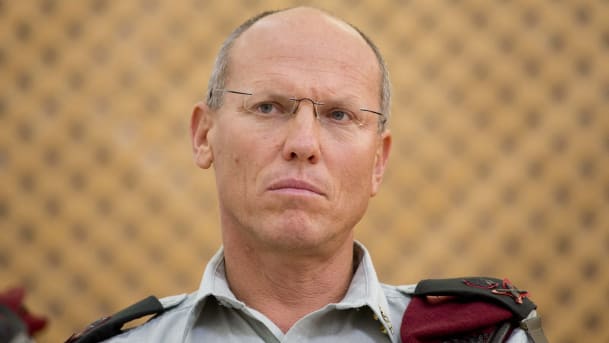
Israeli Maj.-Gen. Nitzan Alon
Al-Manar | July 3, 2018
Israeli Chief of Staff Lt.-Gen. Gadi Eisenkot has appointed Maj.-Gen. Nitzan Alon, who recently left his role as head of the military’s Operations Directorate, as the first director of a special project to coordinate all issues related to Israeli battle against Iran.
Alon accompanied Eisenkot on his recent trip to the United States last weekend and participated in meetings with American military leaders, including Chairman of the Joint Chiefs Gen. Joseph Dunford.
This is the first time that Israel has appointed a “project director for Iran issues,” who is meant to coordinate all areas of Israeli battle against the Islamic Republic: with respect to its nuclear program, coordinating intelligence gathering with other countries, and in countering Iran’s presence in Syria, the Jerusalem Post reported.
In the past, the head of the Mossad Meir Dagan was responsible for the “Iran file” under Prime Ministers Ariel Sharon and Ehud Olmert, but at that time the battle was restricted to intelligence spheres.
Now that the war between the Zionist entity and Iran has come into the open and includes military confrontation, the appointment of a “special project head” underscores the overwhelming importance that Tel Aviv sees for these developments, according to the Israeli paper.
UK Warplanes Bomb Pro-Government Forces in Syria After Attack by ‘Unidentified Force’
Sputnik – July 1, 2018
The Royal Air Force strike on Syrian troops is the first of its kind since April, when the US, UK and France launched missile strikes against multiple targets in the Arab republic after an alleged chemical attack in Douma.
A Ministry of Defense spokesman confirmed that the RAF attack had taken place, and said that a group of anti-Damascus Maghawir al-Thowra opposition militia and coalition “advisers” were attacked by an “unidentified force” outside the al-Tanf base on June 21, prompting the RAF response.
“As an act of collective self-defense, RAF Typhoons dropped a single Paveway IV on the position, which successfully removed the threat to our coalition partners,” the spokesman said. “There was no need to inform Parliament of this action… only in the event that civilian casualties have resulted from a RAF strike would the [defense secretary] inform parliament of events,” he added.
The MOD refused to comment on the identity of the force attacked, but called the bombing a “wholly proportionate response.” According to the Sunday Times, the airstrike killed one Syrian Army officer and wounded seven others. Damascus has yet to comment on the reported casualties.
British and US Special Forces troops and trainers deployed in southern Syria in 2016 and have been engaged in the training of anti-government militia. Damascus has repeatedly demanded that the coalition end its “illegal presence” in the country. Damascus and Moscow have also accused the coalition of “spewing Daesh mobile groups” from the region.
The US-led coalition has carried out a campaign of airstrikes ostensibly aimed against Daesh since 2014. The coalition has no UN mandate or authorization from Damascus, and the Syrian government has called its activities a violation of its sovereignty. The US and its allies have repeatedly targeted Syrian government troops, most recently in April, where in response to an alleged chemical attack in Douma, they launched over 100 cruise missiles at government-controlled cities and facilities. Syria and its Russian and Iranian partners called the Douma ‘attack’ a false-flag operation designed to justify new attacks on Syria.
Forced Recruitment by US-Backed SDF Reported Again in Deir Ezzur
Fars News Agency | June 30, 2018
The US-backed Syrian Democratic Forces (SDF) have detained and forcefully recruited a large number of civilians in Deir Ezzur.
Local sources in Eastern Deir Ezzur reported on Saturday that the SDF has detained tens of civilians during heavy attacks on the villages of al-Tiyanah, al-Shanan and al-Jarzi.
The Kurdish forces also arrested a number of civilians in the villages of Mahimideh and Haqayej al-Bomasa’h.
Meantime, reports said that they have attacked and beaten a number of civilians in the town of al-Kashisheh in Eastern Deir Ezzur.
Tensions have heightened between the civilians and the SDF in Deir Ezzur, Hasaka and other regions occupied by the US-backed Kurdish forces.
In a relevant development on Thursday, local sources in Eastern Deir Ezzur reported that tensions and uprising of civilians against the US-backed Syrian Democratic Forces have intensified, adding that assassination attempts by unknown assailants have also increased against the SDF in the region.
The sources said that residents of the town of al-Shahil have held protest rallies against the SDF and blocked the roads in Eastern Deir Ezzur.
They added that the SDF then detained nearly 70 local residents of the region, noting that several other people were also arrested in the town of Zabiyan and the village of al-Hawayej in Eastern Deir Ezzur.
Meantime, a number of SDF forces have been killed and wounded during repeated explosions and assassination attempts by unknown assailants in Eastern Deir Ezzur.
Syria Is Now Like the Balkans in 1914
By Jeremy Salt | American Herald Tribune | June 30, 2018
The war in Syria has returned to where it was started in 2011, in Dara’a, close to the Jordanian border and therefore easily accessible to takfiris and weapons shipped in to be used behind the façade of ‘peaceful protests.’ The template had been used in Latin America and the Middle East on many occasions and here it was being used again, with the enthusiastic support of the corporate media.
Having failed in its attempt to overthrow the Syrian government the US is now abandoning those groups described in the corporate media as its ‘allies.’ One such group is the takfiri collective fighting under the banner of the Free Syrian Army, which has been told to expect no help from the US in its collapsing attempt to hold ground in southwestern Syria. Another is the Kurdish SDF-YPG collective in the north, which the US betrayed when signing an agreement with Turkey over Manbij. The Kurds, as an administrative and military force, have been forced out. The town is now being patrolled by Turkish and US military units.
The Kurds can’t say they were not told to distrust the US. They have played their cards hopelessly just about everywhere. When Turkey invaded north-western Syria early this year the Kurds rejected an offer of military assistance from the Syrian government, apparently thinking they could hold their ground against the Turkish army, only to be routed by it and to be driven out of Afrin city.
The US had warned Turkey that Manbij was a red line. However, when the Turks insisted, the US gave in. The YPG is now reconciling with the Syrian government, just as some at least of the betrayed takfiris in the southwest, along the border with Jordan and the armistice line with the occupied Syrian Golan Heights, have been accepting an amnesty offer. Israel is still doing its best to throw the Syrian military off balance, by bombing near Damascus airport and striking at Syria’s Iraqi allies along the eastern border, but to no avail. The army is making a clean sweep and all the southwest will soon be back in the hands of the Syrian government.
Syria’s next target is likely to be the base the US has set up at Al Tanf on the Syrian-Iraqi border. At Al Tanf the US has been retraining and rebranding takfiris into its Maghawhir al Thawra (Commandos of the Revolution) proxy force. Backed by US air power, this force has been attacking Syrian forces outside the ‘deconfliction zone’ the US has unilaterally set up within a 50 km radius of Al Tanf.
The US is still arguing that its forces are needed in Syria to fight the Islamic State. In fact, if the Islamic State continues to exist, it is because of tacit support from the US. The heavy work in destroying the Islamic State was done by the Syrian military and the Syrian and Russian air forces, not the US and not the Kurds, as the corporate media would have its gullible consumers believe. The latest example of a helping hand is the helicoptering of two IS leaders from Twaimin on the Syrian-Iraqi border to the US base at Al Shaddadi, south of al Hasaka.
From Tanf the US continues to attack the Syrian and Iraqi militaries, with air support from Israel. The aim seems to be to control the border and prevent the war in Syria from ending. Donald Trump has blown hot and cold over Syria and even Americans should be asking what their forces are doing there. The US has reached none of its set goals. The Syrian government is still in power and the proxy forces armed and paid by outside governments are being routed. The Kurdish card was played, with the apparent intention of linking up the occupied northeast, predominantly Kurdish, with the Kurdish governorate in northern Iraq, in 2011 only a few steps short of statehood. That is now not going to happen, following the collapse of the independence movement in northern Iraq and the loss of all territory taken by the peshmerga since 2014. The US betrayal of the Kurds in favour of an agreement with Turkey puts the final nail in the coffin.
The US is now staying in Syria to prevent the war from ending. Its withdrawal would signify the complete and humiliating failure of the policy of intervention. The US would be signalling that Syria, Russia, Iran and Hezbollah have won and the tripartite axis of the US, Saudi Arabia and Israel have failed. The US is now isolated and vulnerable in Syria. It is opposed on both sides of the Iraq-Syrian border by military and tribal forces, whose resistance to foreign occupation is being coordinated/monitored by a joint command centre set up in Baghdad by Iraq, Syria and Russia.
If Trump does one of his familiar back flips and announces the withdrawal of US forces from Syria it will be Turkey’s turn to be left isolated and vulnerable not just in north-western Syria or Manbij where the government has repeatedly refused to withdraw its troops, but from Bashiqa, near Mosul, despite the repeated demands of the Iraqi government. Turkish occupation of north-western Syria extends to the town Al Bab, northeast of Aleppo, where an industrial zone is being created. Throughout the occupied region the Turkish flag is being flown, a police force trained and proxy town councils set up. Turkish forces are now present in Manbij, further to the west, and Idlib, where under the ‘deconfliction’ arrangements set up under the Astana negotiations Turkey has set up at least 12 ‘observation’ posts.
Bashar al Assad has said Syria intends to liberate the entire country, as is his constitutional duty, and that all occupying forces that do not voluntarily withdraw will be driven out by force. The Turkish government has said it will not return occupied territory to the Syrian government: to whom it would return this territory is not clear. Following his recent election victory Tayyip Erdogan said he would continue to take measures to ‘liberate’ Syria. As these completely polarized positions indicate, open armed conflict between Syria and Turkey would seem inevitable sooner or later. The main Turkish opposition party, the Republican People’s Party (CHP), strongly opposed to intervention in Syria, had said it intended to repair the relationship with the government in Damascus, a process that would inevitably have entailed the withdrawal of Turkish forces but that exit route has now been closed off.
Syria is now a cross between the Balkans in 1914 and Europe 1930-39. The combination of irresponsible outside powers and the violent groups they are backing inside Syria but cannot necessarily control have created a tinderbox. One more spark and the entire region could be blown sky high.
Jeremy Salt has taught at the University of Melbourne, Bosporus University (Istanbul) and Bilkent University (Ankara), specialising in the modern history of the Middle East. His most recent book is “The Unmaking of the Middle East. A History of Western Disorder in Arab Lands” (Berkeley: University of California Press, 2008.)
OPCW’s new power attempt to politicize its work: Syria
Press TV – June 29, 2018
The Syrian government has denounced a recent decision made by the Organization for the Prohibition of Chemical Weapons (OPCW), the world’s chemical watchdog, to empower itself to assign blame for alleged chemical attacks.
“Syria expresses its deep concern at the methods of blackmail and threat used by Western countries, especially the ones involved in the tripartite aggression against Syria — the US, UK and France — to pass a resolution at the OPCW emergency session,” Syria’s official news agency, SANA, quoted a source at the Syrian Ministry of Foreign Affairs and Expatriates as saying on Friday.
On Wednesday, the Hague-based organization passed by 82 votes to 24 a British-backed proposal, which enable the watchdog to hold responsible those who it thinks are behind alleged chemical attacks. Until then, the OPCW’s mandate was limited only to determining whether or not a chemical attack took place, not who was responsible.
Russia, which had strongly opposed granting extra powers to the OPCW, said it would not rule out leaving what it called a “sinking Titanic.”
The new decision would allow for the watchdog to be used as “vehicle to carry out violations against independent, sovereign states under the pretexts of chemical weapons use”, the source further said, adding, “The decision will only add new complications to the OPCW’s capacity to play its role, which will lead to its paralysis.”
Back in April, militants and activists linked to them, including the so-called civil defense group White Helmets, claimed that government forces on Saturday had dropped a barrel bomb containing poisonous chemicals in Douma, Eastern Ghouta’s largest town, killing and wounding dozens of civilians.
Damascus strongly rejected the allegation and said that the so-called Jaish al-Islam Takfiri terrorist group, which had dominant presence in the town at the time, was repeating the allegations of using chemical munitions “in order to accuse the Syrian Arab army, in a blatant attempt to hinder the Army’s advance.”
However, the US State Department issued a strongly-worded statement, blaming the Syrian government for purportedly conducting the attack.
The Hague-based OPCW is soon expected to publish the highly-anticipated results of its probe into the purported toxic gas attack in Douma.
The Syrian foreign ministry’s source further said that Wednesday’s decision “sets a dangerous precedent” by giving an “organization concerned with scientific and technical issues the authority to carry out criminal and legal investigations that are not its specialty.”
The source added that the Arab country reiterated its condemnation of the use of chemical munitions by “anyone, anywhere, under any circumstances.”
Militants belonging to a number of factions had held the Eastern Ghouta, an enclave in the vicinity of the capital Damascus, since 2012 and had practically held hostage its inhabitants, some 400,000 people.
Syrian troops and allied fighters from popular defense groups managed to fully liberate the enclave from the clutches of militants in April, after months of intense fighting with terror groups, which had used the area as a launch pad for deadly rocket attacks against residents and civilian infrastructure in the capital.
Since the beginning of the conflict in Syria in early 2011, the Western governments have on several occasions accused Syria of using chemical weapons against militants. Damascus has denied the allegation, saying it is meant to pile more pressure on government forces and delay their success in the fight against terrorists.
In April last year, the US and allies in Europe said Syria and Russia, an ally of Damascus in the fight against terror, used chemical weapons against militants in Khan Shaykhun in the province of Idlib. Moscow and Damascus strongly rejected the allegation. However, US warships in the eastern Mediterranean launched a barrage of 59 Tomahawk missiles against Shayrat Airfield in Syria’s Homs province, which Washington alleged was the origin of the suspected chemical attack.
The Syrian government surrendered its stockpiles of chemical weapons in 2014 to a joint mission led by the UN and the OPCW.
Hezbollah Accuses Int’l Organizations of Intimidating Syrian Refugees in Lebanon
Sputnik – 29.06.2018
BEIRUT – International organizations and some Lebanese actors have been intimidating Syrian refugees and asylum seekers displaced by war and who want to return to their country from Lebanon, Hassan Nasrallah, the leader of the Lebanese Shiite Hezbollah movement, said on Friday.
“According to our data, there are some international organizations, and certain local parties, which intimidate the refugees and provoke concerns about the return,” Nasrallah told the Al-Manar broadcaster.
The Hezbollah leader called for action to ensure a safe and comfortable return to Syria of those willing to go back to their homeland.
The Lebanese movement would take its own measures to help the refugees until the Lebanese and Syrian authorities establish cooperation in this area, Nasrallah added. Hezbollah has set up a special mechanism for these activities, and plans to open special centers where the refugees can call, and civil committees for interaction with the refugees, according to the group’s leader.
Since the beginning of the Syrian military conflict in 2011, millions of Syrians have fled the country to other states, including neighboring Lebanon. The situation around Syrian asylum seekers and refugees in Lebanon has recently exacerbated in a wake of the authorities’ claims that the UN Refugee Agency UNHCR had been discouraging those displaced by the Syrian war from returning to their home country.
Israeli occupation forces deliver ‘humanitarian aid’ to Syria
Al-Manar | June 29, 2018
Israeli occupation forces delivered about 60 tons of ‘humanitarian aid’ to the Syrian Golan Heights on Thursday night, in a new and this time clear attempt to support terrorists based in the country’s south who have been engaged in fierce battle with the Syrian government troops.
Israeli daily Yedioth Ahronoth reported a ‘special operation’ took place overnight Thursday in which “some 300 tents, 13 tons of food, 15 tons of baby food, three pallets of medical equipment and medicine and some 30 tons of clothes and shoes were transferred into Syria from four different spots on the border.”
As the occupation military delivered the aid, it made it clear it will not allow fleeing Syrians to enter occupied territories, the Israeli daily quoted a statement issued by occupation army.
IOF “was monitoring the events in southwest Syria and was prepared for a variety of different scenarios, including sending further humanitarian aid,” Ynet quoted occupation army spokesman as saying.
The Zionist occupation regime has repeatedly offered different forms of support to militants fighting the Syrian government. The Syrian army has repeatedly seized Israel-made weapons in areas controlled by terrorists.
CARLA ORTIZ explains Syria to OAN
HANDS OFF SYRIA | June 25, 2018
Bolivian-American movie star Carla Ortiz explains terrorism in Syria (including the White Helmets and its western sponsors) to Pearson Sharp of One American News. 22 June 2018
OPCW granted right to assign guilt for chemical attacks after divisive UK proposal
RT | June 27, 2018
The UK’s proposal to give the global chemical watchdog the right to assign blame has been passed despite deep divisions. Russia warns the move puts the future of the organization, and thus global security, at risk.
The British envoy to the Organization for the Prohibition of Chemical Weapons (OPCW), Peter Wilson, celebrated the outcome of the 82-24 vote on Twitter.
London called a special session of the UN chemical watchdog on Wednesday, arguing that the body should have the authority, not only to investigate whether any alleged chemical attack took place, but also to assign guilt. The British proposal was quickly supported by its Western allies.
Others, however, offered a sobering warning on the state of the international group in the wake of the vote. Moscow was quick to stress that several key OPCW contributors have been dead against the move.
“One can see a colossal split in the organization, both in the electoral groups and on the future of OPCW,” said the head of the Russian delegation, Georgy Kalamanov. “Russia and many of the countries that have spoken against the UK decision have been playing a serious role in the OPCW, starting from financing to the expert support.”
Earlier, Moscow warned that the changes in the OPCW mandate would turn it into a political tool as well as infringe upon the “exclusive prerogatives of the UN Security Council.” Today’s decision comes following a longstanding row between Russia and the West over the probes of the chemical incidents in Syria.
Moscow has repeatedly criticized the OPCW-UN Joint Investigative Mechanism (JIM) for mishandling its probes, cherry-picking evidence and using vague wording in its reports. It also argued that the OPCW experts abused their mandate on several occasions as they conducted their investigations “remotely” and in violation of the core principle of ‘chain of custody’ while relying on evidence provided by biased and unreliable sources.
The UK, as well as the US and their allies, accused Moscow of blocking the investigation of chemical incidents in Syria after the JIM’s mandate expired last November, following a number of failed attempts by the UNSC to extend it. London has been openly accusing the Syrian government of launching chemical attacks on civilians, despite no convincing evidence presented.
Israel to ‘Prolong Bloodshed’ in Syria as Media Pushes ‘Sensational’ Iran Claims
Sputnik – June 27, 2018
With two Israeli missile having struck targets near a Syrian airport on Tuesday, Rick Sterling, an investigative journalist and member of the Syria Solidarity Movement, told Sputnik that the likelihood of Israel backing down from its attacks are pretty slim.
As Sputnik previously reported, the Israeli Air Force was attempting a late night attack on an Iranian cargo plane that was unloading at Damascus International Airport. Footage has since emerged allegedly showing the aftermath of the Israeli strike.
The incident follows multiple strikes by Israel in recent months in what it calls “retaliatory” measures against Iran’s presence in Syria, which it sees as a threat to its safety. Iran has had a foothold in Syria since the conflict first began in 2011.
Sterling told Radio Sputnik’s Loud & Clear on Tuesday that the missile launch proved that Israel has no intention of helping solve the Syrian conflict, but instead hopes to keep the fight going.
“I think Israel is continuing to provoke the situation,” Sterling told show host Walter Smolarek. “They don’t want to see the conflict end, they want to prolong the bloodshed there and prevent the Syrian government from finally defeating terrorism there in Syria.”
“They’ve acted for many years now as a protectorate of the terrorist groups… they’ve been actively involved in the conflict from the get-go… they’ve medically treated terrorists inside Israel and with [Israeli Prime Minister] Benjamin Netanyahu going along bedsides, with videos showing him greeting medically treated extremists,” Sterling pointed out.
Highlighting Israel’s love of proclaiming Iran as a threat, the journalist stressed that the 70-year-old country has repeatedly cried wolf on the matter.
“Israel uses Iran as a pretext… they always claim that they’re attacking armaments headed for Hezbollah or armaments from Iran or Iranian contingents,” he told Smolarek. “They’ve exaggerated the Iranian participation in the conflict from the start.”
“It is a dangerous situation right now. We don’t know what the calculations in Israel are and it’s pretty hard to predict what the US is going to do — there’s competing wishes within the US military, CIA and the national security establishment,” Sterling noted.
Predicting the media coverage to come on the matter, Sterling suggested outlets would ultimately create “sensational claims and fears about civilians being attacked and civilians being targets and very horrible events about to happen.”
Featured Video

HE SAVED LIVES. NOW HE FACES PRISON.
or go to
Aletho News Archives – Video-Images
From the Archives
NATO Sanctions and the Coming Global Diesel Fuel Disaster
By F. William Engdahl – New Eastern Outlook – 11.04.2022
Amid the ongoing global inflation crisis, NATO heads of state and mainstream media repeat a mantra that high energy prices are a direct result of Putin’s actions in Ukraine since end of February. The reality is that it is the western sanctions that are responsible. Those sanctions including cutting SWIFT interbank access for key Russian banks and some of the most severe sanctions ever imposed, are hardly having an impact on the military actions in Ukraine. What many overlook is the fact that they are increasingly impacting the economies of the West, especially the EU and USA. A closer look at the state of the global supply of diesel fuel is alarming. But Western sanctions planners at the US Treasury and the EU know fully well what they are doing. And it bodes ill for the world economy.
While most of us rarely think about diesel fuel as anything other than a pollutant, in fact it is essential to the entire world economy in a way few energy sources are. The director general of Fuels Europe, part of the European Petroleum Refiners Association, stated recently, “… there is a clear link between diesel and GDP, because almost everything that goes into and out of a factory goes using diesel.” … continue
Blog Roll
 Aletho News
- Trita Parsi: Middle East Unraveling — Are We on the Path to World War?
- Iran FM meets with US envoy on UN meeting’s sidelines at American side’s insistence: Report
- Qatar PM calls for Gulf security framework with Iran, says war must be ‘wake-up call’
- China condemns US extortion of Iranian airlines, rejects Washington’s ‘illegal’ sanctions threats
- Italy to move military personnel from Taif base after missile strike
- Finland’s Stubb tells European leaders to calm down
- Defeating Russia on battlefield impossible – Fico
- Finland’s Gender Clinic Reversal
- Massachusetts Wants Mental Health Visits, Why Does Government Use ‘Health’ to Enter Our Homes & Families?
- US lawmaker admits American people footing bill for Trump’s failed aggression against Iran
- If Americans Knew
- Sanctions are collective punishment: immoral and self-defeating
- Phosphorus Munitions Fired by Israel Burn Groves, Orchards in Southern Lebanon
- Israel Carries Out New Ceasefire Violations Across Gaza
- AI – Emphasis on the ‘I’: Israel Is Funding AI Chatbot Propaganda
- Israel Blocking Hundreds of Wheelchairs for Injured Children From Entering Gaza
- Israel Is Expanding and Upgrading Compounds for Palestinian Militias in Gaza
- The Palestinian-American Residents of This West Bank Town Are Wondering: Where Is Trump?
- Gaza desperately needs tents, wheelchairs, fuel… and everything else (Israel blocks it all) – Daily Update
- Israeli Attacks in Gaza Kill at Least Seven Palestinians Over Three Days, including Woman and Child
- Trump’s militarization of Washington DC as he pursues Israel’s war against Iran
- No Tricks Zone
- New Study: Earth And Venus Surface Warmth Largely Explained By Convection And Lapse Rate, Not CO2 Or Radiation
- 2025 Nature Paper Claiming Worsening Global Drought Gets RETRACTED …Heavily Flawed
- New Study: ‘Global Drought Shows No Detectable Recent Acceleration Under Climate Warming’
- Economic Masterminds: German Socialists Suggest Taxing Productivity Gains Stemming From Using AI
- The South China Sea Has Not Been Cooperating With The Climate Change Narrative
- Energy Crisis: Germany Enters Heating Season With Historically Low Gas Reserve Fill Levels
- New Study: The Antarctic Ice Sheet Gained Mass From 2020-2024 Due To Staggering Snow And Ice Accumulation
- Study: Ocean Heating Rates From Thousands Of Years Ago ‘Dwarf’ Modern Ocean Heating Rates
- Climate Extremists Target, Attack Large-Scale Power Grid Infrastructure In Germany!
- New Study: Antarctic Ice Melt Has Contributed Less Than 1 Centimeter To Sea Level Rise In The Last 30 Years

