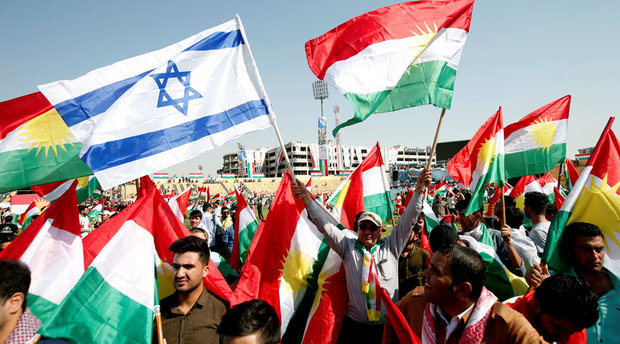
The Kurdish project in Syria would be a new Israel in the Middle East
By Eva Bartlett | RT | December 2, 2021
Syrians accuse the Western-backed Kurdish enclave in the country of using ethnic cleansing and child soldiers against them to form a new anti-Arab state. The parallels with Israel’s creation in the 1940s are striking.
Kurdish forces in Syria have been lauded by many in the West as being fighters for freedom and an autonomous society. But, unless you’ve been following independent researchers and the Syrian media, you might be unaware of the crimes the US-backed group have been committing over a number of years.
On November 25, the Daily Sabah (a website not sympathetic to the Syrian government) reported on one of their most sickening practices. It revealed, “YPG/PKK terrorists detained three more 15-year-old girls – Hediyye Abdurrahim Anter, Evin Jalal Halil and Ayana Idris Ibrahim – in Amuda in Hassakeh province on Nov. 21 to forcibly recruit them as ‘child fighters.’ The terror group detained two children, aged 13 and 16, in early August. And two children aged 16 and 13 were kidnapped Aug. 23.”
The piece went on to note that this practice of abducting children and forcing them to fight has been documented by the United Nations, with one report stating that the YPG/PKK used more than 400 children between July 2018 and June 2020.
Yet, the world has been led to believe that the self-declared autonomous region – known as Rojava and comprising areas of Hassakeh, Raqqa, Deir ez-Zor and Aleppo governorates – is a haven for liberals and feminists, with freedom-loving Kurdish fighters based there fighting ISIS and liberating Syria.
Indeed, the YPG Rojava page claims: “The YPG was set up to protect the legacy and values of the people of Rojava and is founded on the principles of the paradigm of a democratic society, ecology and woman’s liberation. Without preferring or discriminating any religion, language, nation, gender or political parties, the YPG is protecting the country against all attacks from outside. The YPG is the Democratic Nation’s defense force and is not related to any political party.”
It reads like a feelgood fairytale, but is not based in reality.
The utopian image of the so-called Syrian Democratic Forces (SDF), which includes the YPG and PKK, is betrayed by the kidnappings, which sadly are not a new development. Search for QSD – their Arabic acronym – on Syrian media and you’ll see regular updates on Kurdish forces kidnapping civilians and journalists.
This image is further betrayed by their ethnic cleansing of indigenous Syrians from the northeastern Syrian regions Kurdish forces occupy and collaboration with illegally occupying US forces.
But this won’t be highlighted in corporate media. Instead, you will still find odes romanticizing Kurdish fighters, with one such recent story deceptively saying that the areas controlled by Kurdish forces have a “predominantly Kurdish population” – a claim not backed up by the truth.
As author Stephen Gowans detailed in a 2017 article, Kurds in Syria comprise, “only a small percentage of the Syrian population… Estimates of the proportion of the total Kurd population living in Syria vary from two to seven percent based on population figures presented in the CIA World Factbook.”
And yet, Assyrians, Arameans, and other Syrians who have lived there for generations should accept being ruled, or expelled, by Kurds?
Gowans went on to note, “Kurdish fighters have used the campaign against ISIS as an opportunity to extend Kurdistan into traditionally Arab territories in which Kurds have never been in the majority.”
In 2018, Syrian journalist Sarah Abed wrote of the SDF’s kidnapping and ethnic cleansing, noting not only the abductions of men, but, again, children. She recorded how Eddie Gaboro Hanna, the founder of Patriarchal Relief Care Australia, a group providing assistance to Christian families impacted by wars in Syria and Iraq, had explained, “They are taking young Christian boys by force to sign them up for the Kurdish military and send them to the front line.”
And he added, “Christians are treated as second-class citizens [here] in their own land. Just like how ISIS has the Islamic tax they have their own Kurdish one. They’ve replaced ISIS.”
Although the BBC’s coverage of the Kurds’ activities in Syria is predictably pro-SDF, in 2015, even it reported on their ethnic cleansing and displacing of indigenous Syrians. Citing an Amnesty International report, it noted the YPG were accused of “razing entire villages after capturing them from Islamic State (IS),” in Hassakeh and Raqqa provinces.
The Kurds’ history in Syria
In January 2019, I spoke with geopolitical analyst and Sputnik contributor Laith Marouf about the Kurds in Syria. A descendant of eastern Syria’s Deir ez-Zor governorate, part of which is now occupied by Kurds, Marouf had a lot to say about the history of the Kurds in Syria and this 21st century land-usurpation project.
He told me, “There was a wave of Kurdish refugees coming down to Syria (from Turkey) in the 1940s, and the second wave of them in the 1960s when the PKK started the armed rebellion against the Turkish government in what was Arab lands.”
“They were given citizenship by the Syrian government. They were armed and given protection by the Syrian state to fight for their liberation in the Kurdistan mountains in Turkey, and the Syrian government housed the leadership of all the Kurdish resistance up until the early 90s.”
Marouf noted that Syria’s support for the Kurds saw Turkey threatening to invade in the 1990s and building numerous dams on the Euphrates, cutting the water flow. Yet, Syria refused to hand over PKK leader Abdullah Öcalan. Marouf emphasized: “Syria almost went to war with Turkey, and the Syrian people (in the northeast) went thirsty and the agricultural fields—the breadbasket of Syria—almost collapsed those couple of years, to protect Kurdish rights.”
“And then what happens now is some crazies are saying there’s something called Rojava and that they can secede and colonize and settle and steal parts of Syrian lands.”
He, too, spoke of the years of kidnappings and disappearances of those critical of Kurdish rule. “Even Kurdish Syrians that are critical of what the YPG is doing, even remotely critical professors in the universities in Hassakeh and Raqqa and Deir ez-Zor, were disappeared. And these were just critical Kurds.
“So you could imagine what happened to the Assyrian and the Arab leaders in the area, thinkers, tribal leaders, ex-military – huge amounts of disappearances and forced displacements.”
And as Abed’s article highlighted, formerly Assyrian villages in Hassakeh and Raqqa have been fully taken over by Kurdish forces. “They’re moving in the Kurdish militias and their family members into those villages and creating new ethnically pure towns and villages that are Kurdish. And this is expanding to the holdings of the Syrian churches and their Armenian churches, they confiscated all their land.”
So much, then, for the Rojava “legacy and values” that included “without preferring or discriminating any religion, language, nation, gender or political parties.”
Marouf also said, “They have enforced an educational curriculum on all the schools—including schools that are run by ethnic and/or religious groups – so all those that are run by the churches are being told that they have to teach a certain curriculum that specifically promotes and propagates falsehoods about the Kurdish control of the area.”
“When the Assyrians refused, because these are their own private schools that are controlled by the church, the YPG went ahead and shut down all the schools, with armed men making sure the kids cannot go to school.”
The ethnic cleansing and forced expulsion of indigenous people sounds horribly familiar, as Marouf pointed out. “So, the reality is that we have an ethno-nationalist settler colonial state being enforced by the empire, called Rojava – and it’s being sold the exact way that Israel was being sold in the 1940s. It’s like cut and paste propaganda saying that we’re creating a utopia of secular and socialist government in the ‘sea of barbaric Arabs.’”
Over the years, I’ve had Rojava supporters criticize me for respecting Syria’s sovereignty and speaking critically about the West’s attempt to overthrow the Syrian government. Instead, according to them, I should have been supporting this false utopia which has killed and displaced many. To them, I say you have been deluded, as much of the Western left has on Syria.
And you can rest assured that had it been Syria committing these crimes, the media would be reporting loudly and regularly. But because they are being carried out by puppets of the West, all is quiet on that front.
Eva Bartlett is a Canadian independent journalist and activist. She has spent years on the ground covering conflict zones in the Middle East, especially in Syria and Palestine (where she lived for nearly four years).
Bashar Assad getting accepted by Arab leaders. US and Israel losing their chance
By Robert Inlakesh | RT | November 12, 2021
In a significant move towards normalising Syria’s government, UAE Foreign Minister Sheikh Abdullah bin Zayed visited Damascus to discuss strengthening the ties between the two nations, sparking outrage from the US and Israel.
A surprise visit to the Syrian capital on Tuesday by Abu Dhabi’s foreign minister sparked condemnation from the United States, which seeks to encourage its Arab State allies to steer clear of President Assad. According to State Department spokesperson Ned Price, the US urges “states in the region to carefully consider the atrocities that this regime, that Bashar al-Assad himself has perpetrated on the Syrian people over the last decade, as well as the regime’s ongoing efforts to deny much of the country access to humanitarian aid and security.” That seems to have fallen on deaf ears over in Abu Dhabi.
However, despite the Biden administration having voiced its opposition to Assad’s government, behind the scenes, it may actually be working to create a temporary amendment to its 2019 “Caesar Act” sanctions, the mechanism it is speculated the US may implement to protect the likes of neighbouring Jordan. This would involve Amman liaising with the Syrian government to allow Egypt to send oil through to struggling Lebanon. Back in September, Jordanian, Egyptian and Lebanese representatives even met to discuss the logistics of managing such a transfer of oil, so as to provide Lebanon with the means to generate electricity.
Publicly, it seems the UAE – which reopened its embassy in Damascus three years ago – is leading the push to have Syria reinstated into the Arab League and enhance cooperation between the two. But, for Abu Dhabi, the so-called ‘brotherly’ nature of their relationship comes with strings attached. From an Emirati perspective, the relationship between the Syrian government and the UAE is threefold: first, Abu Dhabi sees Syria as a potential partner in the fight against the Muslim Brotherhood; second, it sees an opportunity to work towards facilitating the cooperation between Egypt and Jordan on the potential oil transfer to Lebanon; and last, it seeks to bring Syria closer to the Arab reactionary regimes and distance it from Iran. Both Egypt and Jordan have also taken strides to normalise relations with Damascus: in October, Jordan’s King Abdullah II participated in a phone call with President Assad and, on Tuesday, Egypt’s foreign minister made it clear he was open to the idea of Syria re-entering the Arab League.
Prior to the war in 2011, the Syrian government had embraced neo-liberal economics, but in terms of its foreign policy, it has always maintained a nationalist agenda. When the war in Syria began, the UAE jumped on the bandwagon of conspiring against Assad and financed armed groups to overthrow him. In and of itself, this makes it clear that Abu Dhabi is not acting in the interests of regular Syrians. It is easy to foresee the Syrian government developing its relationship with the UAE in order to strengthen its position in the region and secure investments to rebuild its war-torn nation in the future.
From a realist point of view, however, the decision-makers in the Emirates see that Assad is not going anywhere. They are seeking to combat Islamist forces regionally, so why not try to influence a nationalist nation while working alongside it to weaken the Muslim Brotherhood and erase Iran’s footprint in the country?
Given Turkey may imminently open up another offensive into northeastern Syria to combat the Kurds in areas controlled by the US and Kurdish SDF (Syrian Democratic Forces), the Emirati foreign minister may well have wished to discuss this issue during his visit to Damascus. Turkey, which currently controls two pockets in Syria’s north through its Syrian National Army mercenary militia, is aligned with the Muslim Brotherhood. To the UAE, Turkey and Qatar are its biggest regional rivals.
But Washington, which is surely well aware of the policy positions its Middle Eastern allies are taking on Syria, continues to not only economically restrain Damascus, but also occupies roughly a third of Syrian territory with its proxy forces. The US currently presides over 90% of that nation’s oil resources and is even looting its most fertile agricultural lands, which those Syrians who are suffering under an economic crisis are unable to access. The US not only blocks progress and has extirpated attempts to rebuild the country, but adopts a militaristic approach and views itself as maintaining the right to remain there, despite not having acquired any congressional approval to be operating in Syria.
The main role of the US occupation of Syrian lands, through its Kurdish proxy forces in northeastern Syria and its mercenary forces in the al-Tanf region of south Syria, is to combat Tehran. Until significant Iranian influence is cleared out of the land, they will not leave of their own free will.
Then we have Israel, which will also not leave the Syrian lands it illegally occupies unless it is forced out in a war between the two nations. In tandem with Islamic State (IS, formerly ISIS) terrorists who have crawled out from their caves and suddenly received anti-tank munitions and a spike in their numbers, Israel has picked up its attacks against Syria. In fact, it has carried out at least five in Syria over the past month, killing soldiers and assassinating an ex-member of parliament. Israel is also seeking to quadruple its settler population in the Golan Heights, with Israeli PM Naftali Bennett having announced new construction plans just last month. It’s clear that Israel is seeking to provoke a reaction from Damascus and test how far it can cross the line before drawing defensive fire.
Instead of the Syrian Arab Army responding to US and Israeli aggression, independent groups that align with Iran have been at the forefront of combating Tel Aviv and Washington. The reality is that Syria is so embroiled in this hostile situation between different foreign powers attempting to extract different things from it that it is difficult to tell where the government is currently headed, and whether it will continue to follow a nationalist path or eventually adopt a more business-minded rather than ideologically driven approach. Ultimately, it seems the UAE will play a limited role in Syria for now, but only time will tell who gets the better of the other in this ever-expanding relationship.
Robert Inlakesh is a political analyst, journalist and documentary filmmaker currently based in London, UK. He has reported from and lived in the occupied Palestinian territories and currently works with Quds News and Press TV. Director of ‘Steal of the Century: Trump’s Palestine-Israel Catastrophe’.
Rising tensions between Azerbaijan and Iran spark fears of an Israeli-US proxy war against Tehran
By Robert Inlakesh | RT | October 6, 2021
Tensions are running high as Iran holds war games along its northern border, warning it won’t tolerate its neighbour providing a safe haven for the “anti-security activities of the fake Zionist regime.”
Iranian war games held along its northern border with Azerbaijan, leading to Baku threatening military deployment in retaliation, has sparked fear of war between the two countries.
But any such war would not end up being won by Tehran or Baku, but rather the United States and Israel, who would likely seize such an opportunity to fuel a Syria-style proxy war against the Islamic Republic.
The tensions that have arisen between Azerbaijan and Iran, as of late September, have seemingly popped up out of nowhere, but such an escalation was only a matter of time. The recent political quarrel has come about as a product of last year’s war between Azerbaijan and Armenia, over the Nagorno-Karabakh area, which resulted in a victory for Baku and allowed it to take over Karabakh from Armenia.
Iran had previously used its access through Armenian-controlled Karabakh to reach West Asia and Russia, sending its trucks and other means of transportation through the area, often free of customs.
Since Azerbaijan established its sovereignty over Karabakh, it has cracked down harshly on Iranian trucking and sought to establish itself as the leader of the Caucasus, intending to make itself the primary connection hub between Europe and Asia.
In order to undermine Baku, Iran has now announced that it will help Armenia establish a new bypass road that will cut out Azerbaijan. Although Tehran denies it initiated the recent war games along the Iran-Azerbaijan border with the intent of escalation, Azerbaijani President Ilham Aliyev criticised the military drills, asking, “Why now, and why on our border?”
The commander of the Islamic Revolutionary Guard Corps Ground Force offered one answer when he said last week that Iran would not tolerate its neighbors becoming “a safe haven and a base for the presence and anti-security activities of the fake Zionist regime.”
In the event that a clash does occur between Iran and Azerbaijan, it is likely that the Islamic Republic has the upper hand, being a regional military powerhouse. Yet Azerbaijan has more potential for causing Iran trouble through its allies and potential proxies than it does through its military might. Iran’s military drills, named Fatehan-e Khaybar (Conquerors of Khaybar), are also clearly not just aimed at sending a message to Baku, but also to Israel.
Israel armed Azerbaijan with roughly $825 million in armaments between 2006-2019. Although it would seem strange to some that Iran claims an Israeli presence on its northwestern border, as Israel is not even close geographically and its relationship with Azerbaijan looks on the surface to be mainly business based, it does have a point when it claims this, as the relationship runs far deeper than weapons trade.
A WikiLeaks-released cable sent by Donald Lu, the deputy chief of mission for the US embassy in Baku, to the US State Department revealed the nature of Azerbaijan-Israel ties, stating: “The relationship also affects U.S. policy insofar as Azerbaijan tries, often successfully, to convince the U.S. pro-Israel lobby to advocate on its behalf,” indicating a much closer connection than publicly admitted between the two sides. The document also revealed that, “with some humor, the Israeli DCM told us that Israeli businessmen expressed to her that they prefer corruption in Kazakhstan to that of Azerbaijan because in Kazakhstan one can expect to pay exorbitant fees to do business but those are generally collected at once, up front, whereas in Azerbaijan the demands for bribes never cease.”
Foreign Policy Magazine published a piece in 2012 in which they claimed that a senior US official confirmed that Israel had secured an airfield in Azerbaijan and that Israel could be using the country for a staging ground against Iran, a charge that Baku denies. Beyond this, Tehran has accused Azerbaijan of encouraging separatists groups inside of Iran, many of which staged demonstrations last year during the war between Azerbaijan and Armenia, calling for the re-establishment of what they call “Southern Azerbaijan.”
If any war was to be initiated between Baku and Tehran, this would be the greatest opportunity for Israel and the US to back ethnic Azeri separatists in a similar way to how the Obama administration funded and trained Syrian militants to overthrow the government of Bashar Assad. Out of Iran’s 83 million citizens, between 10-15 million of them are believed to be ethnic Azeris, meaning that just a small portion of them are needed to form an extremely problematic military force that could fight in urban warfare settings.
The United States and Israel have for long been hesitant to launch direct strikes against Iran, likely for fear of the regional war which it could spark, along with Iranian retaliation, yet a proxy war would be much less costly. During any such war, they could also launch strikes against Iran, especially Israel, which constantly threatens Tehran.
Turkey has already pledged its support to Azerbaijan, and during the 2020 Nagorno-Karabakh war, even sent ex-Syrian Jihadist mercenaries to aid Baku’s forces; some of these ex-Syrian militants are reportedly present along the Iranian border now.
Iran may be able to handle such a proxy war, but it would certainly be a tough challenge, while Azerbaijan would likely suffer badly. The war would benefit no one but regional players and super powers seeking regime change in Tehran, which is unlikely to succeed, as was the case in Syria. Such a war would result in perhaps hundreds of thousands of deaths and cause any number of unforeseen consequences. Iran knows the strategy which the likes of Israel is attempting to employ against it, meaning that such a war could lead to retaliatory action committed against Tel Aviv.
Robert Inlakesh is a political analyst, journalist and documentary filmmaker currently based in London, UK. He has reported from and lived in the occupied Palestinian territories and currently works with Quds News and Press TV.
Iraqi politicians slam Turkey’s interventionist remarks, vow strong response
Press TV – July 22, 2021
A number of Iraqi politicians and lawmakers have reacted to recent interventionist remarks by Turkish Interior Minister Suleyman Soylu during his recent visit to the city of Sirnak in southeastern Turkey, vowing a strong response to any infringement of the Iraqi sovereignty and territorial integrity.
According to a report by Rudaw news agency on Thursday, during his visit to Sirnak, the Turkish minister claimed that establishing peace in Muslim countries, including Iraq and Syria, was Turkey’s responsibility.
Soylu’s comment reverberated widely through social media platforms, enraging Iraqi people and politicians.
Ra’ad Hussein, representative of Saairun Alliance affiliated with Iraq’s influential cleric Muqtada al-Sadr, said the sovereignty of Iraq is beyond all considerations and the positions of the Sadr movement in this regard are clear.
“The Sadr movement is totally Iraqi and has no links to foreign countries, and it prefers the interests of Iraq over all interests, and to this end, the head of al-Sadr’s bloc decided to withdraw from the elections,” Hussein said.
“Our position is firm, which means that we will sever ties with any of the neighboring or regional countries if they do not have a positive attitude towards Iraq,” he added.
Hussein underlined that such statements, whether made by Turkish or other officials, are unacceptable and no one will ever be able to encroach on a single inch of Iraqi soil.
Iraqi Shia cleric Ammar al-Hakim took to Twitter on Wednesday, calling on neighboring countries to respect Iraq’s sovereignty.
Hakim, who heads Iraq’s National Wisdom Movement political bloc, said, “Achieving peace in the region and the world comes through the interaction of states among themselves in accordance with international covenants and cooperation based on the foundations of mutual relations and common interest.”
He added, “It is not allowed to compromise the sovereignty of Iraq and for its land to be infringed,” without making any direct reference to Turkey.
Meanwhile, Iraqi MP and member of the Law Coalition, Kadhem Finjan al-Hamami, reacted to Turkish minister’s remarks, saying that the Turkish provocations were not the first of its kind in clear reference to Turkey’s deforestation of Kurdish areas and the continuous attacks on the Iraqi territory under the pretext of fighting Kurdish separatists.
“There have been no reactions from the Iraqi government or the Kurdistan Regional Government (KRG) towards all these attacks on Iraqi lands,” he said, adding that the Turkish government believes that “Iraq and the neighboring countries are a subject of the Ottoman Empire.”
Whither Afghanistan? Getting Out Is Harder Than Getting In
By Philip Giraldi | Strategic Culture Foundation | July 22, 2021
The inability of the United States to comprehend what it was becoming involved in when, in the wake of 9/11, it declared a Global War on Terror, has to be reckoned one of the singular failures of national security policy over the past twenty years. Not only did the wars in Afghanistan and Iraq make bad situations worse, but the fact that no one is Washington was able to define “victory” and think in terms of an exit strategy has meant that the wars and instability are still with us. In their wake has been hundreds of thousands of deaths and trillions of dollars spent to accomplish absolutely nothing.
As a result, Iraq is unstable and leans more heavily towards America’s adversary Iran than it does to Washington. The Iraqi Parliament has, in fact, asked U.S. forces to leave the country, a request that has been ignored both by Donald Trump and Joe Biden. Trump actually threatened to freeze Iraqi bank assets to pressure the Iraqis into accepting the continued U.S. occupation. At the same time, American troops illegally present in neighboring Syria, continue to occupy that country’s oil fields to deprive the government in Damascus of much needed resources. Neither Iraq nor Syria threatens the United States in any way.
Given that history, it should be no surprise that the withdrawal from the twenty year-long nation building project in Afghanistan, long overdue, is not quite going as smoothly as the Pentagon and White House apparently planned. U.S. forces pulled out of their principal base in the country, Bagram Air Base, in the middle of the night without informing the incoming Afghan base commander. A frenzy of looting of the left behind equipment followed.
The Taliban are racking up victory after victory against U.S. and NATO trained Afghan government forces who have the disadvantage of having to defend everywhere, making them vulnerable to attacks on an opportunity basis. The Taliban now plausibly claim to control 85% of the countryside, to include crossing points into Pakistan and several important towns and provinces. They recently shocked observers by executing 22 Afghan Army commandos who had run out of ammunition and surrendered. The U.S. government is quietly expecting a similar fate for the thousands of Afghans who collaborated with the regime installed by Washington and is hurriedly arranging for visas to get the most vulnerable out, eventually seeking to resettle them in friendly Middle Eastern countries as well as in the U.S..
By one estimate as many as 18,000 Afghans worked for U.S. forces and they also have families that will have to go with them. There is particular concern that former interpreters, who would have been privy to decision making by Washington, will be most particularly targeted. The Biden White House has responded finally to the urgency of the issue – lives are at stake – by approving special flights to remove the most vulnerable to a third country for processing before determining if they can be allowed to take up residence in the United States or elsewhere.
To be sure, the struggle to rid the world of the wrong kind of terrorists has left the United States weaker and more unfocused than it was in 2001. China, Russia and Iran are already maneuvering to fill the impending power vacuum in Central Asia by coming to terms with the likely Taliban takeover, which might come sooner than Joe Biden expects. If some kind of Afghan coalition government does emerge, it will belong to Russia and China, not the U.S..
Meanwhile, the U.S. military itself, under the Biden Administration, is weaker and more riven by controversy than ever before. A recent 23-page report suggests that since Defense Secretary Lloyd Austin’s February order to “stand down” the entire U.S. military for commanders to address “extremism” in its ranks morale has sunk and many top soldiers have either retired or quit in disgust. During his confirmation hearings, Austin pledged that he would “rid our ranks of racists and extremists” but the reality is quite different, with the witch hunt in the ranks and endless promotion of diversity even hurting normal military readiness training.
By next month the U.S. military presence in Afghanistan will be reduced to a battalion of infantry to guard the Embassy and CIA station in Kabul, which is itself not sustainable unless some kind of workable Afghan government coalition can be achieved. Given the recent Taliban successes, that outcome appears to be increasingly unlikely. Maintaining the Embassy will also require a viable lifeline to the city’s airport and talks are underway with Turkey to determine if Ankara will be willing to base a stay behind battalion to maintain the air link. The Taliban have already announced that a Turkish presence at the airport will be unacceptable and warned Turkey that there would be revenge attacks against any remaining NATO troops after the U.S. pulls out. Their spokesman issued a statement declaring that “The continuation of Turkey’s occupation will provoke feelings of hatred and enmity in our country towards Turkish officials, and will harm bilateral relations.”
The U.S. is also seeking an over the horizon offensive capability once the military has formally left Afghanistan. The intention would be to be able to strike targets in Afghanistan if a new government forms any alliances with terrorist groups that potentially threaten the United States, as unlikely as that might be. At the present time, there are few options as the U.S. would not be able to launch cruise missile or airstrikes through the neighboring countries that surround Afghanistan to the south, east and west, though a long-distance strike from warships in the Persian Gulf is technically possible.
To the north there are, however, former Soviet central Asian states, the so-called “‘Stans,” that might be suitable for hosting some arrangement to base American equipment, aircraft and a caretaker force. Tajikistan, Kazakhstan, or Uzbekistan might be amenable to such a development, but both Tajikistan and Kazakhstan are members of the Russian-led Collective Security Treaty Organization (CSTO). On Monday, Russian Foreign Minister Sergey Lavrov said that any U.S. presence in a CSTO country would need the approval of the alliance, which the Kremlin will veto. One might suggest that there is mistrust about the reliability of Joe Biden and company as a strategic partner, even though there is widespread concern that Afghanistan might become a rogue state. Nevertheless, Washington’s bullying in Iraq, Syria and also against Iran has failed to convince anyone that the U.S. Air Force would make a good neighbor.
So getting out of Afghanistan will be a lot trickier than going in. The U.S. clearly wants to have some ability to intervene using air resources if the Taliban take over and misbehave, but that just might be a fantasy as the door is closing on options while China is waiting for its own door to open to bring the Afghans into their New Silk Road. And there is no escaping the fact that the entire Afghan adventure was one hell of a waste of lives and resources. Next time, maybe Washington will hesitate to charge in, but given the lack of any deep thinking going on in the White House, I suspect we Americans could easily find ourselves in yet another Afghanistan.
Russia’s about-face on Syria’s Idlib is the opening gambit of a larger diplomatic chess game
By Scott Ritter | RT | July 17, 2021
The Russian vote at the UN Security Council in favor of extending a humanitarian air corridor into Syria has been touted by the US government as a victory of American diplomacy. Moscow might have other ideas.
In a rare display of diplomatic cooperation, the US and Russia agreed last week on a one-year extension of the UN Security Council authorization for humanitarian aid supplies to reach northern Syria through the Bab al-Hawa crossing on the border with Turkey.
The Biden administration had made the extension of this authorization its highest priority when it came to US-Syrian policy. For its part, Russia had long been hesitant to allow such an extension, insisting it should be replaced by cross-line humanitarian deliveries.
It’s been alleged that the Bab al-Hawa crossing point was being used to resupply Islamic militant groups opposed to the Syrian government of President Bashar Assad that are operating inside Idlib province, which borders Turkey.
Russia’s vote in favor of the extension for up to 12 months took many observers by surprise, given Moscow’s past objections.
The US media called it a victory for the Biden administration, underscoring the importance of the June summit meeting between the US president and his Russian counterpart, Vladimir Putin, in Geneva, Switzerland. The US made Syria, and in particular the issue of continued access by humanitarian organizations to refugee camps located in Idlib, a high priority at that meeting. The fact that Moscow and Washington have reached a compromise on the operation of the Bab al-Hawa crossing, from the perspective of Russia, was a clear sign regarding the efficacy of the Geneva process.
“We hope that it might be a turning point that is indeed in line with what Putin and Biden discussed in Geneva,” Russia’s UN Ambassador Vassily Nebenzia told reporters after the vote.
The situation, however, is far more complicated than the zero-sum diplomatic game being promoted in the US mainstream media. Idlib isn’t just a repository of internal refugees from the decade-long civil conflict that has wracked Syria since 2011 – it is the final redoubt of foreign-backed Islamic militants who have been waging a bloody fight against the Russian-backed Syrian government. The Islamic militant groups, many of which are allied with Al-Qaeda, once controlled much of the Syrian countryside and were operating in the suburbs of the Syrian capital of Damascus.
The decision by the Russian government to intervene militarily on the side of Assad in September 2015 helped turn the tide against the Islamic militant forces. Over the course of the next three years, the Syrian army, backed on the ground by Hezbollah and pro-Iranian militias, and in the air by the Russian Air Force, was able to recapture all of the militant-held territory save for the last remaining bastion in Idlib.
The situation inside Idlib is complex, with the various factions among the Islamic militants fighting among themselves to establish primacy. Many of these groups, including Al-Qaeda affiliate Hayat Tahrir al-Sham (HTS), are reportedly reliant upon foreign support for their survival and have been linked to both Turkey and the US in terms of serving as an anti-Assad proxy force. Recent claims by the exiled Turkish mafia leader Sedat Peker regarding the alleged shipment of “billions of dollars” worth of military equipment disguised as humanitarian aid to HTS and other anti-Assad groups operating inside Idlib only reinforced the concerns of the opponents to keeping the Bab al-Hawa crossing open.
There is a real humanitarian crisis ongoing inside Idlib, where millions of Syrian citizens remain housed in refugee camps that are little more than tent cities erected in open fields. The refugees are totally dependent upon international aid groups for the essentials of life, including food, water, shelter and medicine. With the restoration of central government control over much of Syria, however, and the willingness on the part of the Syrian government to resettle these refugees back in their original homes without any threat of retribution or retaliation, there is a growing sentiment among the Russian and Syrian government that the refugees have become little more than political pawns used by Syria’s many enemies, including Turkey and the US, to create the perception of a despotic regime while fostering continued instability inside Idlib that serves as an engine to motivate and recruit new anti-Assad fighters.
This reality served as the core argument underpinning the Russian objection to keeping the Bab al-Hawa crossing open. There is another reality, however, which also guided the Russian decision, namely the lack of a viable military solution to the problem of Idlib. Russia and the Syrian government are committed to a course of action that has the Syrian government asserting control over the totality of Syrian sovereign territory – including Idlib.
While Russia and Syria continue to conduct airstrikes against Islamic militant positions inside Idlib, and the Syrian army and its allies likewise exert pressure on Islamic militant forces on the ground, the feeling in both Moscow and Damascus is that the problem of Idlib cannot be resolved through force of arms unless one is willing to unleash a bloodbath that would cause more problems than it would solve.
The key to a solution in Idlib is for both Turkey and the US to recognize the futility of continuing to use it as a base of anti-Assad activity, and to finally give up on their dreams of regime change in Damascus. Such a policy change, however, will not happen overnight and will require considerable diplomatic cooperation on the part of all parties involved – including Russia. The Russian agreement to keep the Bab al-Hawa crossing open for another year, when seen in this light, represents the opening round of a lengthy diplomatic battle over the future of Idlib, Syria and the Middle East as a whole.
Scott Ritter is a former US Marine Corps intelligence officer and author of ‘SCORPION KING: America’s Suicidal Embrace of Nuclear Weapons from FDR to Trump.’ He served in the Soviet Union as an inspector implementing the INF Treaty, in General Schwarzkopf’s staff during the Gulf War, and from 1991-1998 as a UN weapons inspector.
US neocons Bolton & PNAC lay down weapons of war for protest signs with their new ‘Turkish Democracy Project’
By Helen Buyniski | RT | July 5, 2021
The aging neocons who have been practicing regime change ops in the Middle East for decades are now launching a project targeting Turkey – perhaps in honor of the deceased Don Rumsfeld.
Erdogan’s Turkey has long been something of a thorn in Washington’s paw, given its ongoing refusal to buy inferior US military equipment (it was booted from the US’ F-35 program for insisting on buying Russian S-400 missiles, making the Americans who still store their nukes at Incirlik somewhat nervous), its refusal to place the good of Israel above its own benefit, and its rumblings of discontent regarding the US’ pleas for support (or at least safe passage) to its Syrian ‘moderate rebel’ militant groups, which Ankara considers to be little more than terrorists.
Under the government of President Recep Tayyip Erdogan, Turkey has become quite recalcitrant indeed, far from the ideal domesticated state keen to babysit American nukes and stage American missiles in exchange for coveted membership in the deteriorating NATO structure (not long ago fetchingly described by French President Emmanuel Macron as “brain dead”). Clearly what it needs is a shot in the bottom from that great big needle marked ‘Democracy’ – and who better to deliver that than the good old boys from the Project for a New American Century, many of them the old same men who led and lied the US, blindfolded, into the chaos of Iraq.
Enter the Turkish Democracy Project, a non-profit organization which – it should be clear from the name – has nothing to do with democracy or, really, Turkishness. The group’s website is about as subtle as a nuclear bomb, blaming President Recep Tayyip Erdogan for “dramatically alter[ing] Turkey’s position in the international community and its status as a free and liberal democracy” and calling for “a nonprofit, non-partisan, international policy organization that opposes its destabilizing behavior, supports genuine democratic reform, and holds the forces of corruption and oppression within Turkey to account.” In other words: “We want a piece of your country. Resist and be annihilated.”
It’s not that the US thinks Turkey is stupid. But they believe, and are likely correct, that the US will never have as good a time as now to strike. With its military still feared by many parts of the world (even though its bark is at this point far worse than its bite, and its image still suitably ferocious to put much of the actual war-fighting business to fleeing instead of fighting), the main business must be – if the US expects to do something other than flee home with its tail between its legs – “shock and awe.”
But given that these shock and awe tactics will be taking place in the Middle East, an area which has seen the worst the US can throw at its enemies over the last 20 years of perpetual warfare and realizes all the money in the world can’t give even the largest military on Earth the stamina of the gods, it’s likely these dyed-in-the-wool bloodshed-artists will have to change with the times. To invade a militarily competent nation like Turkey – especially one which, inconveniently, happens to be backed by NATO – is unlikely to be a walk in the park, no matter how many phony war crimes the PNAC crew manage to cook up. Gas attacks have become cliche, and any talk of “weapons of mass destruction” will elicit a chortle at best.
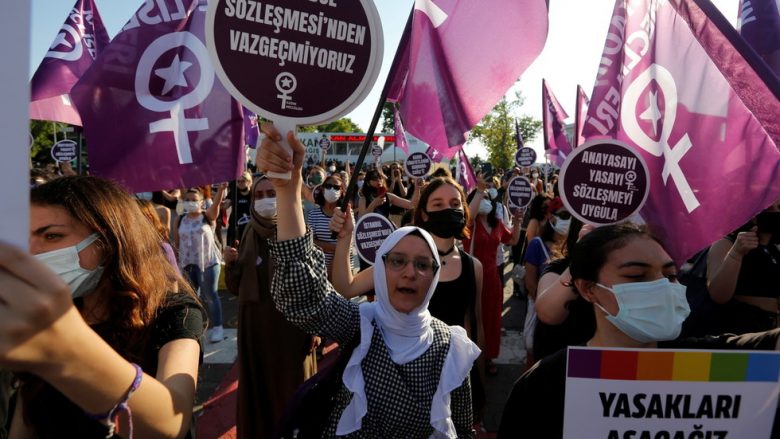
So the TDS, if recent events are any indication, has instead gotten to work with the kind of color revolution-style events that have largely replaced shock and awe in other regime-change hotspots. They’re cheap, they’re easy, and in this case – a protest in Istanbul against Turkey’s withdrawal from the Istanbul Convention? – they require exactly zero imagination. It’s much easier to con the rest of NATO if you don’t have to make them think.
Thousands of activists took to the streets on Thursday, either on their own or hailing from various NGOs, denouncing Turkey’s withdrawal from the European human rights treaty known as the Istanbul Convention. Erdogan’s executive order removing Turkey from the treaty, first adopted back in March, argued the country’s women are protected by domestic laws rather than the international human rights treaty – which he argued had been “hijacked” by the LGBTQ+ community.
The hoary old PNAC boys behind the TDS likely couldn’t believe their luck when something like this fell into their lap. But will they be able to modernize?
The group’s CEO is Mark Wallace, who’s also the CEO of United Against Nuclear Iran – another unsubtly named regime-change operation (and a regime change that has failed repeatedly). An old hand at overthrowing Middle Eastern nations the old-fashioned way, Wallace held several positions with the George W. Bush administration while the nation was attempting to crush Iraq (apparently shocked the children had run forward with IEDs instead of handfuls of wildflowers to welcome their new rulers).
Indeed, numerous fellow veterans of the Iraq regime change effort and abortive attempts to overthrow Iran have bubbled up in the swamp gas to give regime change in Turkey a go. Wallace is joined by other bottom-feeders like former Connecticut senator Joe Lieberman and UANI intel chief Norman Roule, as well as glorified mustache-carrier, would-be thug, and former Trump national security adviser John Bolton. Former Bush adviser Frances Townsend is there, as is former associate deputy director of operations for the CIA (and Blackwater vet) Robert Richer. At least a few members of the shadowy pro-Israel Foundation for the Defense of Democracies were listed and then memory-holed, and Bush’s brother Jeb is there, a speech bubble forever hovering above his head reading “please clap.”
Oddly enough, however, the only currently listed actual employee aside from CEO Wallace is a (presumably) former assistant English professor at Princeton University. No, that’s not suspicious at all. Carry on, I’m sure Turkey will welcome you (and your desired partitioning of the country) with open arms!
With Erdogan still trustingly paying his country’s NATO dues, Ankara is unlikely to expect any sort of real attack, though the leader is likely on guard, given former President Trump’s on-again, off-again announcement to clear out US soldiers from Syria. He is likely to be on the lookout for foreign meddlers among the protesters, however. And Erdogan’s allies with their ears to the ground both inside and outside Turkey have already pegged this absurd attempt at bringing back ‘democracy’ for what it really is. While some have linked it to the infamous Gulen movement, referring to the cleric who most recently was accused of trying to overthrow Erdogan in 2016, Gulen’s movement itself seems to have ties to the same ‘Greater Israel’ plan to redraw the lines on the map of the Middle East, a plan Israeli military strategist Oded Yinon devised decades ago (and which the neocons appear to have used as their foreign policy guide ever since). Former Turkish opposition lawmaker Aykan Erdemir, senior director for Turkey at the FDD, was accused of being connected to Gulen in 2017 and had his assets seized, strengthening the case for the connection between Gulen’s organization and the notoriously pro-Israel FDD.
But with all of NATO’s heads turned to this human rights drama, surely the other countries in the alliance also participating in the drawing-and-quartering of Syria won’t expect a military attack on Turkey as well – not without some warning. The map of Greater Israel shows Turkey losing a mere corner of their land compared to Syria, which takes quite a beating – one which Turkey clearly expects to be a part of, having already staked its claim effectively to certain border regions of Syria under the logic of keeping the Kurdistan Workers’ Party (PKK) away. But this is all temporary, and eventually the region must settle into its new form. An Israel-first arrangement will not go down well with any of the other combatants, and, unlike the US and its European partners, Turkey won’t just sit on its hands and sigh wistfully while its share of the Syrian pie is handed to the US by way of Tel Aviv.
Because that’s who the ultimate beneficiary of this mess is supposed to be. Named after the Israeli military strategist who devised it, the Yinon project hopes to balkanize the Middle East and assemble the shards into a single nation consisting of the choicest morsels of those countries in between the Euphrates and the Nile rivers. Iraq has already been cut in half, Syria has shrunk dramatically even as the war goes on, and Egypt is run by a pliant leader who will do what the US and Israel tell him – as General Wesley Clark said over a decade ago, the plan was to take out seven countries in five years. They’re running a bit behind, but never underestimate the abilities of a bunch of old war criminals with nothing to lose.
Helen Buyniski is an American journalist and political commentator at RT. Follow her on Telegram.
The Istanbul Canal opens the path for further NATO pressure against Russia
By Paul Antonopoulos | July 2, 2021
A new mega-project has been launched – the Istanbul Canal, connecting the Marmara and Black Seas. It will be an alternative to the Bosporus Strait, and thus challenges the Montreux Treaty and opens the path for further NATO pressure against Russia.
However, there is major opposition to the project, not only from local environmentalists who fear that harm will outweigh the benefits and local economists who do not see the feasibility of the project, but also foreign states. Regional countries are concerned that the 1936 Montreux Convention Regarding the Regime of the Straits and Turkey’s compliance with its obligations in the Black Sea will be undermined.
“Today we are opening a new page for Turkey’s development, laying the first stone by building a bridge over the Istanbul Canal,” said Turkish President Recep Tayyip Erdoğan at the bridge ground-breaking ceremony on June 26. “We see Canal Istanbul as a project to save the future of Istanbul … to ensure the safety of life and property of Istanbul’s Bosporus and the citizens around it.”
Erdoğan ensured that all the necessary studies, including the impact of construction on the environment, have already been carried out. Along with the canal, that Erdoğan admitted was a “crazy project,” there will be residential quarters, parks, tourist facilities and a technology development zone.
The Turkish president justified his “crazy project” because, as he claimed, “every year, 45,000 ships sail across the Bosporus. Every big ship poses a risk. They carry different cargoes, any accident will be a threat, which could lead to fires and destruction, including cultural property.”
It is planned to take six years and $15 billion, but the real figure was estimated at a recent developer’s conference in France to be $65 billion. It is the largest infrastructure initiative in Turkish history and is meant to be a part of Erdoğan’s legacy.
Istanbul Mayor Ekrem İmamoğlu has spoken out against the project and even called for a referendum. Environmentalists are worried that the Black Sea could become shallow and the Marmara Sea ecosystem disrupted. More importantly from a local perspective, Istanbul’s water supply is also under threat as the canal will absorb freshwater supplies.
However, the biggest issue surrounding the canal from an international perspective is the fate of the Montreux Treaty governing movements between the Black Sea via the Bosporus and Dardanelle Straits. According to the treaty, there is free movement for merchant shipping and Turkey cannot charge a toll. Turkey does control the movement of non-Black Sea warships though. According to the treaty, non-Black Sea warships cannot stay in the Black Sea for more than three weeks, and their total tonnage should not exceed 45,000 tons.
In April, admirals and former admirals of the Turkish Navy were arrested after writing an open letter urging the Turkish president to not go ahead with his “crazy project,” fearing how it would impact the Montreux Treaty. Erdoğan quickly assured that the treaty will remain valid, but fears remain that the Istanbul Canal will allow Ankara to bypass its positions, especially as Turkey is a serial violator of treaties, such as the Lausanne Treaty.
Turkey says that the project is not related to the treaty and does not comply with it in principle because the construction is artificial. The Istanbul canal is a completely different channel that may become an issue for the Montreux Treaty in the future. Black Sea countries are opposed to the canal, with the exception of Ukraine and Georgia. These two countries would actually like an increase in NATO participation in the Black Sea.
At the same time, Romania, Bulgaria and Greece object to any changes to the Montreux Treaty. Although Greece is not a Black Sea state, it is located at the mouth of the Dardanelle Strait. However, the three countries are NATO members and the country that would be most affected by any change in the treaty or status quo is Russia, especially in light of last week’s provocation by Britain near Crimea. Moscow does not want non-Black Sea countries, especially NATO members, to circumvent the treaty and increase the presence of their naval forces – but Turkey will open a path towards this with the opening of the canal. The U.S., Britain, and other leading NATO believe the Montreux Treaty is outdated as it restricts the number of ships in the Black Sea in their effort to maintain pressure against Russia.
Turkish Foreign Minister Mevlüt Çavuşoğlu said on Wednesday at a joint press conference with his Russian counterpart Sergey Lavrov that there will be no changes to the Montreux Treaty. However, it is of course easy to make such a claim before construction has ended. Turkey is quite capable of resorting to manipulation as the status of the new channel has not yet been indicated. The very fact of the debate shows that Ankara aims to become a more significant player, not only in the region but also on the world stage.
Paul Antonopoulos is an independent geopolitical analyst.
Russian forces block US military patrol in northeast Syria
Press TV – June 22, 2021
Russian forces have blocked an American military convoy, comprising four armored vehicles, in Syria’s northeastern Hasakah province.
Russia’s RT television network reported on Monday that Russian personnel had stopped the US military patrol along the M4 highway, some 10 kilometers west of the town of Tall Tamr.
Informed sources said the US convoy was forced to return because it had violated security protocols between Moscow and Washington.
Russia said the US had not given prior notice regarding its troops’ movements in Hasakah.
Hasakah is occupied by American soldiers and the so-called Syrian Democratic Forces (SDF), a US-backed anti-Damascus alliance of mainly Kurdish militants. Turkey also controls areas in the province and elsewhere following military operations in northern Syria.
Russia has been helping Syrian forces in ongoing battles across the conflict-plagued state, mainly providing aerial support to ground operations against foreign-backed terrorists.
The Russian military assistance, which began in September 2015 at the request of the Damascus government, has proved effective as Syrians continue to recapture key areas from Takfiri elements.
However, the United States has deployed forces and military equipment in Syria without any authorization from Damascus or the UN.
It has long been training militants and stealing Syria’s oil, ignoring repeated calls by Damascus to end its occupation of the country.
Russia: US exacerbated humanitarian situation in Syria
In another development on Monday, Russian Foreign Minister Sergei Lavrov complained that the humanitarian situation in Syria has been aggravated by the US through its illegal sanctions and occupation of the eastern bank of the Euphrates River.
“They are looting hydrocarbons and other mineral resources, and use the money they earn on that to finance projects that are seen by many as encouraging separatism and provoking dissolution of the Syrian state,” he said after talks with Helga Schmid, the secretary general of the Organization for Security and Cooperation in Europe (OSCE).
He also warned against attempts by the United States and some European countries to hamper the return of Syrian refugees, noting that the Western assistance goes to camps in Jordan, Turkey and Lebanon so as “to make the refugees stay there as long as possible.”
Lavrov further expressed Moscow’s readiness to discuss the humanitarian situation in Syria with the Western states if they recognize their responsibility in this regard.
“If the set of these factors is recognized as impacting the humanitarian situation in Syria, we are ready to discuss that as a whole. But our Western partners should categorically refuse from one-sided interpretations of these or those problems, and recognize their responsibility for the general situation in Syria’s humanitarian sphere,” he said.
Biden agreed to Turkey defending Kabul airport, says US official
MEMO | June 18, 2021
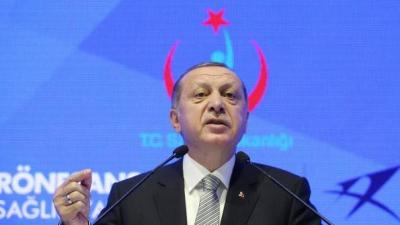
US President Joe Biden and Turkish President Recep Tayyip Erdogan have agreed on Turkey’s offer to take a leading role in the defence of Afghanistan’s Kabul Airport, the US National Security Advisor has revealed.
Speaking to reporters yesterday, Jake Sullivan said that the two leaders discussed the situation in Afghanistan during their meeting on the sidelines of the NATO summit on Monday. According to Sullivan, Erdogan sought certain unspecified US assistance for Turkey in return for the deployment of Turkish troops at the airport following the withdrawal of US and NATO forces from the country. Biden apparently accepted this.
“The clear commitment from the leaders was established that Turkey would play a lead role in securing Hamid Karzai International Airport,” explained Sullivan. “And we are now working through how to execute to get to that.”
The security of the airport in Kabul is seen as vital for the operation and continuation of diplomatic missions to Afghanistan. It would serve as the safest exit point for diplomats in the event of a potential security breakdown in the country, such as the Taliban’s defeat of Afghan government forces.
Last week, however, the Taliban also warned Turkey to withdraw its troops and said that its military presence at the airport would not be welcome. “Obviously we take seriously the concern that the Taliban or other elements in Afghanistan will attack the Western or the international presence,” said Sullivan. “We do not believe that what the Taliban has said publicly should or will deter the efforts underway right now to establish that security presence.”
The agreement between Ankara and Washington comes after years of strained relations between the two over a myriad of issues. A primary dispute remains Turkey’s purchase of the Russian S-400 air defence system, which the US and other NATO members condemned due to the system’s potential breach of the alliance’s security.
Sullivan addressed that issue, revealing that there was no progress and the two leaders maintained their respective positions. “They discussed it. There was not a resolution of the issue. There was a commitment to continue the dialogue on the S-400 and the two teams will be following up on that coming out of the meeting.”
The only Turkish boots on the ground in Palestine are on Israeli soldiers’ feet
By Omar Ahmed | MEMO | June 14, 2021
When last month’s ceasefire was agreed between Israel and Palestinian resistance factions in Gaza, the head of the Hamas political bureau, Ismail Haniyeh, thanked Iran for its support. “The Islamic Republic of Iran did not hold back with money, weapons, and technical support,” he said. Haniyeh also thanked Qatar for its pledge to rebuild Gaza after the latest devastating military offensive by Israel, which lasted eleven days and nights last month.
Similar sentiments were conveyed by the leader of Hamas in Gaza, Yahya Sinwar. “All our thanks go to the Islamic Republic of Iran for its consistent support over the years to Hamas and other resistance factions,” he explained. He also briefly recognised support from Qatar, Turkey, and Kuwait.
Apart from Sinwar’s passing reference to Turkey, expressions of gratitude to Ankara were noticeable by their absence. This was despite the frequent pro-Palestinian rhetoric and denunciations of Israel by President Recep Tayyip Erdogan. The last time that Haniyeh thanked Turkey publically was back in 2016 over its aid efforts in Gaza.
It was clear that, after the latest onslaught on the Palestinian people, the resistance chose to recognise Iran’s help where it matters most, in the field with the armed resistance and, to a lesser extent, Qatar’s assistance for the reconstruction of Gaza.
Why has Turkey been left out, despite being a friend of Palestine? It could be something to do with the uncomfortable truth that despite Ankara’s stance towards Palestinian national liberation, it maintains important diplomatic and trade ties with Israel. The Palestinian factions know this very well. National liberation, as I have written before, will ultimately rest on a military solution, which is why Iranian support has been singularly recognised by the factions.
The status quo of the secular Turkish republic is one that is supportive of Israel. It was the first Muslim-majority country to recognise the statehood of Israel a year after its creation in occupied Palestine in 1948. The rise of Erdogan and the Justice and Development Party (AK Party) over the past two decades has, admittedly, coincided with diplomatic tensions between Ankara and Tel Aviv, especially after the Gaza flotilla attack in 2010.
While political ties have unquestionably deteriorated over the years and reached a new low with Israel’s desecration of Al-Aqsa Mosque last month, business ties haven’t. According to the Turkey-based, pro-Kurdish news agency Mezopotamya Ajansi, “When the AK Party came to power, the trade volume between Israel and Turkey was 1.4 billion dollars, today it is 6.5 billion dollars.”
The report cites data from the Turkish Statistical Institute (TUIK) and says that Israel was ranked as the third-highest importer of Turkish goods last year, for a total value of $4.7 billion.
Political ties between the two countries are served by their respective embassies, which remain open. Turkey appointed a new ambassador to Israel after the downgrade in ties and withdrawal of its envoy in 2018 in protest of the deadly attacks on Gaza that year. At the end of last year, Erdogan said that Turkey would like better relations with Israel but claimed that Palestine is the “red line”. The latest and ongoing aggression, however, suggests that this is not the case.
An interesting development last month, though, was the Turkish proposal to establish an international force to protect Palestinians from future Israeli attacks. This was followed by the signing of a security agreement between Turkey and the Palestinian Authority earlier this month, modelled on a similar pact made with Libya’s Government of National Accord (GNA). Some have questioned what support Turkey can offer the Palestinian people beyond charitable donations, and to what extent such a hypothetical international force could really protect them. Hence, it remains to be seen if and how this security agreement will be implemented.
What is clear, is that Turkey won’t risk political, military, and economic consequences in any moves that directly affect the security of Israel. Iran knows only too well that its flagrant support of non-state actors opposed to Israeli and Western interests comes at a hefty price in terms of sanctions and attempts to isolate it. Faced with its own economic problems, Turkey will be reluctant to go down such a lonely route, even if both regional powers are arguably supporting Palestine out of ulterior motives.
In any case, the trade will continue as usual, and the only Turkish boots on the ground in occupied Palestine will be worn by Israeli soldiers. As media outlets in Turkey have reported in the past, Turkish-made military boots have been supplied to the Israeli army: “YDS is a leading supplier of boots, assault vests, and bags to armies across the world. Israeli soldiers are among those who use Yakupoğlu garments.” Tension between Israel and Turkey, said one CEO, does not affect business.
The next Palestinian uprising will inevitably involve more support from Iran, and only Arab states and non-state groups aligned with Tehran are vehemently opposed to the occupation state. Reinforcing this, Haniyeh is reportedly planning visits to both Iran and Lebanon, which will include meetings with Supreme Leader Ayatollah Sayyid Ali Khamenei in Tehran and Hezbollah’s Secretary-General, Sayyid Hassan Nasrallah in Beirut. He is expected to travel after his meetings in Cairo over stalled prisoner exchange negotiations with Israel, owing to the latter’s political uncertainty. With a new Israeli government now in place, though, that may change.
Featured Video

Your Enslavement Begins in Gaza: The ‘Board of Peace’
or go to
Aletho News Archives – Video-Images
From the Archives
The US: The Century of Lost Wars
By James Petras | Global Research | September 12, 2018
Introduction
Despite having the biggest military budget in the world, five times larger than the next six countries, the largest number of military bases – over 180 – in the world and the most expensive military industrial complex, the US has failed to win a single war in the 21st century.
In this paper we will enumerate the wars and proceed to analyze why, despite the powerful material basis for wars, it has led to failures. … continue
Blog Roll
 Aletho News
- Israel designates five Palestinian media outlets as ‘terrorist organizations’
- Israel, not America, first: Carlson’s Huckabee interview lays bare US foreign policy priorities
- Israeli troops executed Palestinian aid workers at ‘point blank range’: Report
- Iran war What if today’s Iran is resigned to a long, hellish war with the US?
- Why Israel Is Escalating Its War Crimes Against Lebanon
- Iran in the face of the armed diplomacy of imperialism
- The US build-up around Iran constitutes strategic war option, not ‘deterrence’
- Iran to US: Sanctions and war failed; try diplomacy and respect
- China supplies Iran with radar, surveillance tech to track US stealth aircraft: Report
- Zelensky rejects territorial concessions to Russia
- If Americans Knew
- Footage Shows Israeli Troops Waiting in Ambush, Then Opening Fire on a Palestinian Teen
- The US is on the brink of a major new war that Trump has not even bothered explaining
- Latest Epstein document dump is one more cover-up
- No Protection, No Justice: US Citizens Killed with Impunity by Israel
- Maria Farmer: Epstein Victim Reveals Explosive Information Covered Up by Media
- Average of five Palestinians killed by Israel every day in Gaza since ceasefire – Not a ceasefire Day 136
- Palestinian church leaders admonish Christian Zionist Mike Huckabee – Not a ceasefire Day 135
- Ominous messaging from Trump’s “Board of Peace” – Not a ceasefire Day 134
- ‘Christians Out’: Jerusalem Church Tagged With Hate Graffiti, Police Investigating
- Israeli Settlers Kill American Teen
- No Tricks Zone
- New Research Reaffirms Clouds, Aerosols, And Surface Solar Radiation Are ‘Driving The Climate System’
- Germany: Electric Car Catches Fire At Charging Station, Sets Off Local “Inferno”, Widespread Damage
- New Study: Canada’s New Brunswick Was 1°C Warmer Than Today During The Medieval Warm Period
- Coal Power Back In Trend As Globe Tries To Keep Pace With Growing Demand For Power
- New Study: A 4°C Warmer Beaufort Sea Had ‘No Sea Ice’ 11,700 – 8200 Years Ago
- Unfudging The Data: Dutch Meteorological Institute Reinstates Early 20th Centruy Heat Waves It Had Erased Earlier
- German Gas Crisis…Chancellor Merz Allegedly Bans Gas Debate Ahead of Elections!
- Pollen Reconstructions Show The Last Glacial’s Warming Events Were Global, 10x Greater Than Modern
- Germany’s Natural Gas Storage Level Dwindles To Just 28%… Increasingly Critical
- New Study Rebuts The Assumption That Anthropogenic CO2 Molecules Have ‘Special’ Properties
 Aletho News