Trump, Erdogan seek reset of US-Turkey ties
By M. K. BHADRAKUMAR | Indian Punchline | April 21, 2019
Even as the countdown has begun before the first batch of Russian-made S-400 missiles will arrive in Turkey — expected in coming ten weeks from now — a crisis situation envelops the Turkish-American relationship. No doubt, this crisis, unless resolved in the coming days or weeks, could have profound consequences for the future of the western alliance system as a whole and the geopolitics of Eurasia and the Middle East.
What distinguishes the crisis from the run-of-the-mill spats that keep frequenting the Turkey-US relationship every now and then is that at issue here is Turkey’s vulnerability, if it proceeds with the S-400 deal, to US retribution under the 2017 law known as the Countering America’s Adversaries Through Sanctions Act, or CAATSA, which is directed against Russian arms industry but becomes applicable to third parties that enter into arms deals with Moscow.
If CAATSA sanctions click in, Turkey, which is mired in recession due to the US pressure tactic on its economy, may descend into a free fall of its currency. Incipient signs are already available. Even minor US sanctions could trigger another sharp sell-off in the Turkish lira that deepens the recession. Last year, Turkish lira shed 30 percent of its value, and the currency is down another 10 percent recently, and markets remain on edge.
Simply put, Turkey is so much integrated into the western economies and banking system that any US sanctions would inevitably have a crippling effect. And if there is one message out of Turkey’s recent local elections, it is that the state of the domestic economy could directly impact President Recep Erdogan’s political standing. The point is, despite all the brave chatter about dethroning the dollar, the hard reality is that the US is in a position to “weaponise” the dollar for the foreseeable future and all the King’s men and all the King’s horses — in Moscow and Beijing or Tehran and Caracas or wherever — have to live with that reality.
Besides, in Turkey’s case, a life outside the Western system is simply unthinkable. The Turkish elite are acutely conscious of Ataturk’s legacy that the modernisation of the country demands integration with the West. True, Turkey under President Recep Erdogan is redefining its identity but reclaiming Ottoman legacies in the Muslim Middle East does not and will not mean turning the back on Europe. Paradoxically, Turkey’s strategic autonomy is best preserved by being part of the western alliance system, considering the country’s tough neighbourhood.
No doubt, the stakes are high for Turkey. Unsurprisingly, soon after the visit to Moscow on April 8, Erdogan decided to depute a high-powered team of officials to Washington. The indications are that Erdogan came away from Moscow not quite convinced of the Kremlin’s assiduous wooing of him with an alternative non-western road map for Turkey’s future. At any rate, a team of senior Turkish ministers visited Washington last week for talks aimed at easing the crisis, which included the powerful Finance Minister Berat Albayrak, son-in-law of Erdogan.
The hugely consequential mission of Turkish ministers (which also included Defence Minister Hulusi Akar and Erdogan’s key advisor Ibrahim Kalin) culminated in an unexpected Oval Office meeting for Albayrak with President Donald Trump, with only son-in-law and top aide Jared Kushner and US Treasury Secretary Steven Mnuchin present.
Turkish officials have since exuded optimism that Trump has a “more positive attitude” to Turkey’s pleas than the US Congress where Turkey has almost no cheerleaders.
The catch, however, is that CAATSA, which was legislated in the backdrop of Trump’s alleged “Russia collusion”, has been written precisely with the idea that Trump will have no loopholes to bypass it or dilute the sanctions legislation against Russian arms industry. In fact, for granting a waiver to Turkey in the present case, Trump by law would have to show that the S-400 purchase was not a “significant transaction”, and that it would not endanger the integrity of NATO or adversely affect US military operations.
Again, Trump would also need to show in a letter to congressional committees that the S-400 missile deal would not lead to a “significant negative impact” on US-Turkish cooperation, and that Turkey is taking, or will take, steps over a specific period to reduce its Russian-made defence equipment and weapons. It is a difficult proposition, but doable — provided there is political will.
Trump’s decision to receive Albayrak — it is absolutely unprecedented for POTUS to hold talks with a visiting finance minister — signals that the great dealmaker is on the prowl and would have some formula under his sleeve. Significantly, Trump has not weighed in on Turkey in recent weeks. A senior Turkish official told Reuters that the talks in Washington were “more positive than expected” and the Americans expressed “a softer tone” than they take in public. Another Turkish official added, “There might certainly be some steps to be taken but the search for common ground will continue.”
The Acting US Defense Secretary Patrick Shanahan told reporters on Thursday: “We’re closer” to a final decision on the S-400s after a meeting with his Turkish counterpart. “It’s like: ‘OK, where are we stuck? How do we get unstuck?” he said of the talks, adding he was optimistic and hopeful of visiting Turkey for the formal transfer of F-35 stealth aircraft, which Turkey plans to buy and Washington is threatening to block if Turkey pressed ahead with the S-400 deal with Russia.
Of course, the Turkish-American relationship is littered with several other disputes too — military strategy in the Syrian conflict, Iran sanctions, Turkey’s extradition request to Washington in regard of the Muslim cleric Fetullah Gulen (whom Ankara blames for a failed 2016 military coup) and so on. But the crisis over the S-400 missile deal is the mother of all disputes, since it is directly linked to the viability of the 7-decades old Turkish-American alliance, the Russian strategies in the Black Sea and Eastern Mediterranean, US-Russia tensions and the US’ capacity to influence the Middle East politics as a whole.
What is happening is that after a brinkmanship played out through months at different levels, the crisis over the S-400 affair is reaching a nail-biting finish, with Turkey and the US having reached the edge of the precipice, peering into the abyss and not liking what they see in the darkness and groping for a way to pull back somehow. If they succeed, it will have to be on a “win-win” basis. Read a commentary in the pro-government Turkish daily Sabah entitled This picture gives us hope.
Understanding Saudi Arabia’s Role in Post-Coup Sudan
By Adam Garrie | EurasiaFuture | April 18, 2019
In previous times, when Saudi Arabia sought to intervene in the affairs of foreign nations, it did so overtly. Whether funding foreign masjids to advance Saudi Arabia’s Wahhabi school of Sunni Islam or sponsoring militant groups with unambiguous links to Riyadh, it used to be that when Saudi Arabia wanted change in a foreign nation, there was no real attempt to hide such developments.
Under the de facto leadership of Crown Prince Muhammad bin Salman, this has partly changed. While western media has struggled to form a cohesive narrative through which to portray military strongman and US citizen Khalifa Haftar’s ongoing attempt to take Tripoli, Haftar’s own movements make it clear just how much Saudi Arabia is backing the renegade military man who once fled Libya as a traitor in the late 1980s.
Haftar was in Riyadh where he met the Saudi monarch just days before he began his assault on Tripoli. It has further been reported that Haftar has received millions of dollars from Riyadh. Thus, it is clear that in spite of Riyadh’s US partner’s support of the fledgling and endlessly corrupt Tripoli regime, Saudi Arabia along with its Egyptian and Emirati allies are firmly behind Haftar.
Recent events in Sudan have served as a reminder to the world that whilst long serving and recently ousted President Omar al-Bashir came to power in 1989 with the backing of the Muslim Brotherhood, since then, Bashir had become something of a post-ideological/poly-ideological political survivor. At various times Bashir has been friendly with and had disputes with countries as diverse as Iran, the United States, Saudi Arabia, Gaddafi’s Libya, Assad’s Syria, Egypt, Qatar and Turkey. In many ways, the only two nations with whom Bashir has had consistently good relations were China and Russia. In respect of just about every other country that seeks strategic relations with Khartoum, Bashir’s career was something of a geopolitical game of ping-pong.
Recent years however had seen Bashir’s Sudan greatly improve relations with Turkey and also Turkey’s closest Arab ally Qatar. To this end, Turkey has signed an agreement with Khartoum to construct a modern port at the location of a once prominent Ottoman Port at Suakin. Yet whilst this apparently win-win project did not immediately radiate political overtones, there were in fact many to be found. Suakin was a traditional Ottoman port of call for those on the Hajj to the Holy City of Mecca. From Suakin, pilgrims would take a short maritime journey to Jeddah before moving on to Mecca. For Saudi Arabia, this was seen as a Turkish attempt to influence what could once again become a major route for those on the Hajj. As Turkey and Saudi Arabia continue to compete for influence among the region’s millions of Sunni Muslims, Riyadh certainly took notice of the Turkey-Sudan port deal.
Although Sudan continues to provide mercenaries to the Saudi coalition in nearby Yemen, Bashir’s juggling act between Saudi Arabia on the one hand and the Turkey-Qatari partnership on the other, proved to be one that has self-evidently been a source of consternation in Riyadh.
To be sure, issues of poverty, corruption, genuine human rights concerns and a general political fatigue in the face of Bashir’s lengthy rule were in fact sources of the protests which led to the former President’s ouster. That being said, the rapidity with which Sudan’s new military rulers have moved against Bashir suggests that there is more to the situation than meets the eye.
Reports have now emerged that Bashir is under arrest whilst the country’s new self-proclaimed rulers issue frequent statements of extreme disapprobation against their former boss. This combined with the fact that Turkeys’ calls for calm and moderation are becoming increasingly vocal whilst Saudi state media is celebrating the fact that Sudan’s new regime has refused to receive Qatar’s foreign minister, makes it clear that the new forces in Khartoum are acting in a manner that leans heavily towards Riyadh and away from the Turkey-Qatar partnership that Bashir had been drawing ever closer to in his final years in power.
Although the situation in Khartoum remains fluid to the point of being chaotic, it is already becoming clear that while the origins of the coup where in many ways organic, the management of events since the ouster of Omar al-Bashir has been one that is incredibly favourable towards Saudi Arabia whilst being notably less so to Turkey and Qatar.
This likewise proves that in the age of Muhammad bin Salman, direct intervention into foreign nations via religious groups and militants has been replaced by using Riyadh’s economic influence to force rulers of poorer nations to do as Saudi Arabia wishes.
Turkey Confirms Interest in Russian Su-35, Su-57 If US Denies It the F-35
By Andrei Martyanov | Reminiscence of the Future | April 10, 2019
It is really fascinating to observe the whole process but Turks seem to be in full reactive armor mode and refuse to yield to US pressure on the issue of F-35, which is, by default, the issue of S-400.
Turkey warned on Wednesday that it could buy jets and additional air defense systems from Russia if it cannot get Patriot missile shields and F-35 jets from Washington, raising the prospect of ever deeper defense ties between Moscow and a NATO member.
President Tayyip Erdogan’s existing plans to buy Russian S-400 missile defenses have already alarmed the United States, which says they are not compatible with NATO systems and would compromise the security of F-35 jets Turkey is due to receive.
Washington has offered Ankara both carrot and stick in response, proposing to sell it the Raytheon Co. Patriot systems instead of the S-400s, while at the same time warning of sanctions and a halt in the F-35 fighter jet sales if the Russian deal goes ahead.
Turkey has shown no sign of giving ground and Erdogan, who held talks with President Vladimir Putin in Moscow this week, was quoted on Wednesday as saying the July date for delivery of the first S-400s could even be brought forward.
Foreign Minister Mevlut Cavusoglu also reiterated Turkey’s stance that the S-400 purchase was a done deal and that it would meet its defense needs from elsewhere if necessary.
“If the United States is willing to sell, then we’ll buy Patriots. However, if the United States doesn’t want to sell, we may buy more S-400s or other systems,” Cavusoglu told Turkish broadcaster NTV.
“If the F-35s don’t work out, I will again have to procure the jets I need from elsewhere … There are (Russian) SU-34, SU-57 and others. I will absolutely meet my needs from somewhere until I can produce it myself,” he said.
My main question here is if Turkey knows that F-35 is a…. turkey? I am pretty sure Turks do. Of course, behind all this back-and-forth on S-400 are things much more substantial than even top-notch air defense for Turkey—namely massive economic developments in Eurasia.
It is also obvious that Turks are now in the bargain mode with Russia across the whole spectrum of issues — gas, nuclear power, military, tourism, agriculture, to name a few — and that could be indicative of a tectonic shift in Turkey’s geopolitical orientation but we cannot be sure 100% yet.
On F-35 issue, however, one should not discount the possibility of Turks getting off at the last opportunity from this program in order for a bigger, better thing. This thing are Su-35 of latest modifications and Su-57 which is hitting serial production in 2020 and China expressing interest in this aircraft while already operating full Russian versions of Su-35.
And so the drama is being played out in a front of our very own eyes (and ears). Turkey is getting S-400 (for warm-up), now what will Greece do? Who knows, but implications are enormous for Turkey, NATO and, of course, the United States.
The US knows that this could be bad, very bad but with Trump being surrounded with neocons and Israel having very serious issues with Turkey, who said that the White House will not continue with self-defeating policies in general, and towards Turkey in particular because of Israel— you may see it for yourself.
Most likely Trump and his “court” of Israeli-firsters, aided by US Congress fully corrupted and bought by Israeli lobby, will continue to self-destruct to make Israeli masters feel better, and situation with Turkey is one such example.
So, here is the news of today and for now, at least, it seems the contract will go ahead but, again, knowing that in this region words mean very little we just have to wait to see how it will play out to the very end. Fascinating!
Hypocrisy Inc: Washington’s Selective Sanctions
By Brian CLOUGHLEY | Strategic Culture Foundation | 08.04.2019
On April 3 US Vice President Pence told Germany and Turkey to stop dealing with Russia. In a speech in Washington marking the 70th Anniversary of the US-NATO military alliance he declared that “If Germany persists in building the Nord Stream 2 pipeline, as President Trump said, it could turn Germany’s economy into literally a captive of Russia,” while Turkey is being “reckless” and “must choose — does it want to remain a critical partner of the most successful military alliance in the history of the world, or does it want to risk the security of that partnership by making reckless decisions that undermine our alliance?”
(We’ll pass over the fact that “the most successful military alliance in the history of the world” bombed and rocketed Libya in a nine-month blitz in 2011 and claimed a “model intervention” in a country it reduced to anarchy, as reported on April 5.)
Radio Free Europe noted that Pence “voiced US opposition to Turkey’s purchase of a Russian air-defense system… which he said ‘poses great danger to NATO’.” He also threatened that “we will not stand idly by while NATO allies purchase weapons from our adversaries”.
The weapons system to which Washington so violently objects is the S-400 Triumf surface-to-air missile which Army Technology describes as “capable of firing three types of missiles to create a layered defence [and] engaging all types of aerial targets including aircraft, unmanned aerial vehicles, and ballistic and cruise missiles within the range of 400 km, at an altitude of up to 30 km. The system can simultaneously engage 36 targets.” In other words it’s a world-beater with a real punch, as is evidenced by the fact that so many other countries have either got it or want it.
The first sanctions Washington imposed against Turkey concern supply of the 100 Lockheed Martin F-35 combat aircraft ordered at a cost of 16 billion dollars. According to CNN a US spokesman said “Pending an unequivocal Turkish decision to forgo delivery of the S-400, deliveries and activities associated with the stand-up of Turkey’s F-35 operational capability have been suspended.” This is harsh action against a longtime partner and military ally, but it doesn’t stop there, because Washington objects to Russia providing military equipment to other nations.
China is an example. In September 2018 sanctions were imposed on China by Washington because it had engaged in “significant transactions” with Russia’s Rosoboronexport by purchasing SU-35 combat aircraft and S-400 systems.
A US official told reporters “The ultimate target of these sanctions is Russia… [sanctions are] aimed at imposing costs upon Russia in response to its malign activities.” This is effected by US Public Law 115-44, the ‘Countering America’s Adversaries Through Sanctions Act’ (CAATSA) which is intended to “provide congressional review and to counter aggression by the Governments of Iran, the Russian Federation, and North Korea, and for other purposes.”
“Other purposes” is quite a large sphere of implied threat, but the ruling of US legislators in this case is clear, in that any country that acquires S-400 air defence missile systems (for example) from Russia is going to be penalised because Washington is determined to continue “imposing costs upon Russia” for providing such equipment. And it is inevitable that the imposed penalties will impact on the country that has dared to engage with Russia. The Diplomat summed it up by observing that the policy “decrees the imposition of mandatory economic sanctions on countries importing Russian military hardware.”
Except when it doesn’t.
It is apparent that the anti-Russia “Countering Adversaries” legislation directed by Congress is being selectively ignored by Washington, because India is being provided with the S-400 system, and no sanctions have been imposed by America. An agreement for supply of S-400s was signed on October 5, 2018 in Delhi during an India-Russia summit meeting attended by Indian Prime Minister Modi and President Putin. The Economic Times reported that India and Russia “have formally inked the $ 5.2 billion deal for S-400 system. The air defence system is expected to be delivered by the year 2020.”
Following the summit, Outlook India noted approvingly that “Other areas of collaboration, which figured prominently in the joint statement between the two sides, are nuclear reactors, investments by Indian diamond companies in Russian Far East, and ‘joint collaboration in precious metals, minerals, natural resources and forest produce, including timber, through joint investments, production processing and skilled labour’. The review of priority investment projects in the spheres of mining, metallurgy, power, oil, and gas, railways, pharmaceuticals, information technology, chemicals, infrastructure, automobiles, space, shipbuilding and manufacturing of different equipment reflects a focus on the desire for diversification. PM Modi has invited Russian companies to set up industrial parks in India for defence manufacturing.”
It might be thought that such bilateral collaboration in defence matters, especially in regard to provision of the S-400 system, would attract instant action by Washington, designed to penalise India for flagrant contravention of US directives.
But no.
In some fashion, India is different from Turkey and China when it comes to acquiring S-400 missile systems, and an explanation of sorts was offered by the Pentagon’s Assistant Defence Secretary Randall Schriver in testimony to the House of Representatives Armed Forces Committee on March 27. He declared that the US-India “Major Defence Partnership” was prospering by “moving toward deeper security cooperation by increasing operational cooperation and availing key maritime security capabilities.” But then there was mention of the purchase for over five billon dollars by India from Russia of a world-beating air defence system, and Mr Schriver wasn’t comfortable with that.
He was asked by Congressman Seth Moulton how India’s purchase of S-400 systems and the lease of Russian nuclear submarines would impact India-US relations and avoided any reply concerning the submarine lease while stating that purchase of S-400s has “not gone to contract or completed”, which, like so many official statements in Washington, was only half true. Certainly, delivery of the S-400s has not been completed; but for Mr Schriver to claim that the matter “has not gone to contract” is a downright lie.
The effects of Washington’s sanctions on its adversaries have been wide as well as selective. In the case of Turkey, what Pence calls the “reckless decision” to acquire S-400s has shown Ankara that America is not an ally and cannot be trusted, while encouraging it to further examine the dubious benefits of belonging to the US-NATO military alliance. China reacted by saying “We strongly urge the US side to immediately correct the mistake and rescind the so-called sanctions, otherwise the US side will necessarily bear responsibility for the consequences,” while reinforcing China-Russia cooperation and strengthening resistance to US policy of global dominance.
In the case of India, US sanctions’ policy was highlighted on April 2 when the Pentagon announced that India would be provided with 24 US Seahawk maritime attack helicopters for use against China and Pakistan, at a cost of 2.6 billion dollars. India is content that it can do whatever it wants, and New Delhi will continue to benefit from Washington’s total lack of principles and ethical consistency. Selective sanctions are the name of the game.
Turkey Says US Failed to Report True Content of Pompeo Talk
Al-Manar | April 4, 2019
Turkey on Thursday accused the US State Department of making false claims after a meeting between top US and Turkish diplomats to discuss tense ties between the NATO allies.
Washington and Ankara are at odds over issues including US support for a Syrian Kurdish militia and Turkey’s purchase of a Russian missile system over US objections.
Turkish Foreign Minister Mevlut Cavusoglu and US Secretary of State Mike Pompeo held talks on Wednesday during the Turkish official’s visit to Washington as part of 70th anniversary celebrations of the NATO alliance.
The US State Department said Pompeo had warned Ankara of “devastating consequences” if Turkey launches an offensive in Syria and urged the “swift resolution” of legal cases involving US citizens and US mission employees under investigation in Turkey.
Pompeo also pressed Cavusoglu about Turkey’s plans to buy the S-400 missile defense system from Russia, which Washington has warned could put Ankara at risk of US sanctions, the State Department said in a statement.
But Turkish foreign ministry spokesman Hami Aksoy said on Thursday that the readout “not only fails to reflect the content of the meeting, but also contains matters that were not even raised during said meeting”.
It was not clear what “matters” Aksoy was referring to in his statement and foreign ministry officials were not immediately available for comment.
Aksoy said similar problems had arisen after previous talks, and urged statements to be prepared with “greater care”.
Venezuela FM takes Middle East tour, set to meet Nasrallah
Press TV – April 3, 2019
Venezuela’s foreign minister has embarked on a Middle East tour taking him through Turkey, Lebanon, and Syria, amid US measures to prop up the Latin American country’s opposition figure and self-proclaimed “interim president” Juan Guaido against President Nicolas Maduro.
Jorge Arreaza arrived in Turkey on Monday and was assured by his Turkish counterpart Mevlut Cavusoglu of Ankara’s support for the Latin American nation in the face of US pressure. “It should not be in a way that ‘I am a big country and I can determine entire rules,’” Cavusoglu said, referring to Washington’s sanctions against Venezuela and its efforts to oust Maduro, Turkish paper Hurriyet reported.
On Tuesday, the top Venezuelan diplomat traveled to Lebanon on a two-day visit. Lebanese President Michel Aoun received him at the presidential Baabda Palace in Beirut. Arreaza, who conveyed a message from Maduro to Aoun, also met with his Lebanese counterpart Gebran Bassil.
He was also slated to meet with Lebanese Prime Minister Sa’ad Hariri, Lebanese news portal Naharnet reported. According to Lebanese daily al-Joumhouria, he will also be holding a meeting with the Hezbollah resistance movement’s Secretary General Seyyed Hassan Nasrallah.
Back in January, Hezbollah conveyed its support for Maduro amid mounting US pressure for him to resign and hand over power to Washington-backed Guaido. Hezbollah-associated lawmaker Mohammad Raad was cited by Lebanese TV channel Al Manar as saying at the time that “Nasrallah stands with the Venezuelan people and with its free leadership.”
The Venezuelan foreign minister, meanwhile, expressed satisfaction with the visits to the countries in remarks to Prensa Latina. “They are two countries that respect international law and with which there are friendly and fraternal relations,” the Cuban news agency cited him as saying.
The visit to Lebanon “opens a new stage in bilateral ties with the possibility to expand economic cooperation, especially Venezuela’s advisory in the country’s energy sector,” the agency added, citing the top diplomat.
Also in January, the US took the lead in recognizing Guaido as Venezuela’s president after the head of the opposition-ruled Congress named himself the country’s interim chief executive. Washington has been pressuring other countries into following suit and has not ruled out using the military option to oust Maduro’s government.
Many countries, including Iran, Russia, China, and Cuba, however, back Maduro, spurning the subversive American efforts targeting Venezuela’s sovereignty.
Arreaza is next to travel to Syria, with which Caracas has similarly warm relations.
The US Idea the Russians Need Turkey to Figure Out How to Shoot Down a F-35 Is Beyond Silly
By Andrei Martyanov | Reminiscence of the Future | April 1, 2019
US halts deliveries of F-35 “equipment” to Turkey over S-400 contract. This is how F-35 soap saga is justified:
The United States and other NATO allies that own F-35s fear the radar on the Russian S-400 missile system will learn how to spot and track the jet, making it less able to evade Russian weapons in the future.
In an attempt to persuade Turkey to drop its plans to buy the S-400, the United States offered the pricier American-made Patriot anti-missile system in a discounted deal that expired at the end of March.
Turkey has shown interest in the Patriot system, but not at the expense of abandoning the S-400.
There is one problem, actually two, with this “justification”. I’ll start with a lesser one.
1. Patriot is not a peer to S-400. Nothing personal, but US air defense systems are not “quite there” despite massive propaganda campaigns extolling their combat virtues. Turkey knows this. Turks have a good idea about how its own Air Force was grounded after shooting down Russian Su-24 in November 2015, and who and what actually provided targeting to Syrian air defenses on April 13, 2018 against Trump’s “very smart missiles”. Plus, in general, Russian record in this field speaks for itself.
2. The most laughable in all that, however, is the fact that people still use this beaten to death argument about Turkey magically learning about how to shoot down allegedly super-pooper-duper invisible F-35 and then, of course, giving desperate Russians this information.
Well, I have some news for those people who still reside in this bubble–to shoot down F-35 one has to have two different bands radar, good sensor-fusion algorithms and decent signal processing protocols and voila’. S-300 PMU2 Favorit can do this, certainly S-400, and its inevitably coming iterations for which there is literally a line of customers, can.
In general, this whole BS about “stealth” should end at some point of time–it was a good propaganda while it lasted. Reality is, with modern processing power and radar design F-35 is not survivable against modern cutting edge air-defense and air-forces.
I can totally understand the irritation Washington feels about this whole situation, after all Turkey is a key NATO member with an actual army, and seeing a NATO member going for such a weapon systems from Washington’s prime time arch enemy–this is a no-no. But then comes this question: so, the United States will stop (will it?) F-35 and associated technology deliveries to Turkey, then what?
Do we really want to open this can of worms? Turks are not idiots, by far–they can calculate and while Erdogan might still do rapid 180 degrees maneuver, he also can not fail to consider the fact that instead of F-35 Turkey may get her hands on, say, some decent version of Su-35. Possible? Possible! How probable? I don’t know. But Obama should have thought twice when unleashing, or pretending that he didn’t know, a coup against Erdogan in 2016. Or, for that matter, a bloody overthrow of government in Ukraine in 2014. But current American elites have no concept of own actions having consequences.
Meanwhile India also signed $5 billion contact for S-400, also against the background of Washington’s pressure not to buy things from those pesky Russians. But behind all those maneuvers one fact remains unchanged and I was writing about this for years–Russian weapons systems are created to kill and do that very effectively. Unlike American military-industrial complex Russian military-industrial complex is not jobs program or corporate welfare system, it never was. Allow me to quote myself:
For a nation with such a military history as Russia’s the issue of military technology is an issue of survival. As such, weapons in Russia are sacralized because behind them are generations of Russians who shed blood to make those weapons what they are.
They have become a part of the culture to such a degree that commercial considerations take a very distant second place to a main purpose of these weapons—to actually defend the nation.
This is absolutely not the case in the United States, with some exception for its Navy, with Americans having no knowledge or recollection of what real war is and what instruments forfighting and winning it are needed. Those things cannot be paid for in money, they are paid for in blood.
I guess this should help explain why Russia is so successful on the international market with her weapons. They are simply good, in fact, the best and people know that.
Understanding Israel’s Role in The F-35 Dispute Between the US and Turkey
By Adam Garrie | EurasiaFuture | 2019-04-02
The United States has just cut off its nose to spite its face by announcing that Washington will halt delivery of equipment related to the F-35 fighter jet to Turkey. This makes life more difficult for both Turkey and the US as Turkey played a key role in the development of the F-35.
Is this about Russia or is it about Israel?
Throughout 2018, the US threatened to halt delivery of the F-35s to Turkey due to Ankara’s insistence that it will purchase the Russian made S-400 missile defence system. But while on the surface, the row between Turkey and the US appears to be one stemming from a reality in which Turkey has warm relations with Moscow whilst the US does not, there is an Israeli factor at hand that may be the overriding factor at play. The fact that Israel’s ally India has more or less received a green light from the US to purchase S-400s makes this reality all the more clear.
In May of last year, Russian media outlet Sputnik reporting the following:
“According to a top Israeli defence official, the Jewish state seeks to remain the only country in the region with F-35 jets to maintain its military’s qualitative edge. The discussions between Israel and the United States have also reportedly touched upon the jet’s performance-enhancing software; unnamed sources confirmed to Haaretz that the matter is ‘part of the negotiations,’ while Israel has denied having talks over the F-35 deal, under which Turkey is expected to obtain 100 stealth fighter jets”.
Whilst anti-Turkish forces do exist in the US owing to Turkey’s increasingly warm relations to countries as diverse as Russia, Iran and China, the fact that recent years and months have seen a dramatic decline in Turkey-Israel relations has clearly played a part in America’s move to effectively remove Turkey from the F-35 project that it had been a part of from the earliest stages of the jet’s development.
While the Pentagon had previously expressed its willingness to follow through with its pledged delivery of US made F-35 fighter jets to Turkey, Congressional opposition fuelled by a unique alliance of the US based Armenian, Hellenic and Jewish lobbies continues to oppose the US delivery of the jets to NATO member Turkey.
What one is witnessing in the United States is a perfect storm of geopolitical brinkmanship which has allied with domestic ethno-religious agitation groups in a malaise of open Turkophobia. From the perspective of many in Congress from both major US parties, delivering the F-35s to Turkey would violate the Countering America’s Adversaries Through Sanctions Act (CAATSA) which allows for US sanctions on otherwise neutral or even allied countries who purchase weapons from nations being directly sanctioned by Washington. The directly sanctioned nations in question are Russia, Iran and the DPRK (North Korea).
Because of Turkey’s agreement to purchase Russia’s S-400 missile defence systems, Ankara is now being targeted by members of the US Congress keen to exert what amounts to a blackmail clause in CAATSA which would threaten any nation with sanctions for the “offence” of purchasing Russian weapons.
From healthy relations to the ultimate strain
Turkey was the first Muslim majority nation to recognise Israel and prior to recent decades, Ankara and Tel Aviv have had a generally healthy relationship. This dramatically changed in 2010 when Israeli commandos illegally boarded the MV Mavi Marmara in international waters. The MV Mavi Marmara was a privately chartered Turkish flagged ship carrying mostly Turkish activists on their way to Gaza in order to deliver much needed humanitarian supplies to besieged Palestinians. The gruesome raid killed ten Turks and resulted in the lowest ebb in Ankara-Tel Aviv relations until now.
A new anti-Turkish alliance in the eastern Mediterranean and among US based pressure groups
For much of the 20th and 21st centuries, the large American based Hellenic and Armenian lobbies have agitated for a less friendly US approach to Turkey. For the Armenian lobby, the main goal is to convince the US Federal government to recognise the tragic events of 1915 as “The Armenian Genocide” while the Hellenic lobby has sought to persuade Washington to pressure Ankara into acknowledging the early 20th century conflict in western Anatolia as the “Pontic Genocide”. Additionally, the US Hellenic lobby has for years attempted to persuade NATO to take a tougher line on the status of Northern Cyprus. Thus far, none of these lobbying attempts have met with the desired success of the respective lobbies at a Federal level.
While the US based Jewish lobby is traditionally more powerful than either the Hellenic or Armenian lobbies, the US Jewish lobby has generally had little negative to say about Turkey in-line with the fact that of all of the Muslim majority governments in the region Tel Aviv had its best relations with Ankara, as well as the overriding reality that Turkey never passed any antisemitic legislation as most of the powers of Europe did prior to the mid-20th century.
But with Turkish President Erdoğan openly calling for a wider pan-Islamic movement for Palestine, all the while calling Israel a terrorist state, the US Jewish lobby like Israeli politicians, have joined traditional foes of Turkey in openly agitating for a more anti-Turkish position form the US government.
This has expressed itself both domestically in the US and geopolitically in terms of Israel’s new regional partnerships. Against this background, it is perhaps not surprising that Gilad Erdan, a member of Benjamin Netanyahu’s Likud faction has called for Tel Aviv to recognise the events of 1915 as an “Armenian Genocide”. If Israel were to officially to do this, it would represent a clear break between Tel Aviv and Ankara and quite possibly a point of no return. The more Turkey stands up for Palestine, the more voices like those of Erdan will become amplified in arguing for a move that is less about Armenia (a traditionally anti-Zionist nation) than about sending a clear message to Turkey that the partnership has run its course.
Israel and The Craiova Group
Formed in 2015, the fledgling Craiova Group is a partnership between Greece, Serbia, Bulgaria and Romania aimed at fostering deeper cooperation between the four south-eastern European nations. While the group has generally been far less notable in terms of its aims and accomplishments vis-a-vis the Three Seas Initiative linking Baltic eastern and central Europe with the European nations of south-east, this month the Craiova Group came into its own as the official organisation which will carry out Israel’s attempt to isolate Turkey in the wider eastern Mediterranean region.
On the 2nd of November, 2018, Israeli leader Benjamin Netanyahu took part in a Craiova Group summit in Varna, Bulgaria. There, Netanyahu said,
“I am here at the summit of four countries – Bulgaria, Greece, Serbia and Romania.This is the first time that they have invited a leader outside these four countries to participate in their summit. This is a great honor for Israel and reflects Israel’s rising status in the world.
Each one of the leaders has individually told me that they will try to improve their consideration of Israel in relevant votes both at the EU and the UN. They all want to promote the gas pipeline from Leviathan to Europe and the Balkans.They are also very interested in Israeli gas and Israeli technology, and they would very much like Israel’s friendship. This is a good sign”.
Netanyahu also discussed making the Craiova Group integral to Tel Aviv’s plans to construct the East Med Pipeline, a joint Israeli-Hellenic project that will see a gas pipeline travelling from disputed Israeli waters through to disputed Cypriot waters and finally into mainland Europe via The Hellenic Republic. But while Netanyahu’s speech talked about unity against the supposed threat of Islam which clearly played to the sentiments of many in Greece, Bulgaria, Serbia and Romania where the racist anti-Turkish/anti-Muslim hashtag “#nokebab” has become a cultural phenomenon, the pipeline alliance that Israel is trying to secure is clearly aimed at boxing Turkey into a corner in its own territorial waters.
At present, Ankara and Nicosia are in the midst of a heated row regarding rights to offshore gas fields in the waters off the island of Cyprus. At present, while there is no realistic plan for Nicosia to militarily enter the Turkish North of the divided island, Nicosia is opposed to Turkish plans to begin extracting gas in the waters off of the disputed territory of the Turkish Republic of Northern Cyprus (aka Northern Cyprus). To put it another way, in spite of rhetoric to the contrary, the government in Nicosia clearly cares about controlling the waters off of Cyprus more than it cares about controlling the island’s total landmass.
But far from being just a new chapter in the age old Hellenic-Turkish disputes of the region, this particular conflict is also being driven by Israel whose government is keen to see Tel Aviv, Nicosia and Athens work jointly on an East Med pipeline that excludes Turkey while at the same time impinging on offshore territory that Turkey claims it has an inalienable right to exploit. Now, Israel looks to bolster these plans which have already seen Egypt pivoting ever closer to Tel Aviv and Nicosia by also drawing Bulgaria, Serbia and Romania into the project.
When one remembers that during the ultimately brief Turkish-Israeli rapprochement of 2016, there were talks of a joint gas project between Tel Aviv and Ankara, the underpinnings of the present conflict become all the more clear.
To further understand the background of the severe downgrade in Turko-Israeli relations that has now become a rivalry for energy supremacy in the eastern Mediterranean, it is important to understand the following that was originally published in Eurasia Future in May of last year:
“The Turkish government has just announced the effective expulsion of Eitan Na’eh, Israel’s Ambassador to Ankara. According to the Daily Sabah,
‘Na’eh was asked to leave Turkey indefinitely by the Turkish ministry of foreign affairs following the Israeli bloodshed and his tweets’.
Pipeline politics no more
Against this background, erstwhile plans for a Turkey to Israel East Mediterranean pipeline have stalled. As a result, Tel Aviv has pivoted closer to Turkey’s regional rival Egypt (which has said next to nothing about Palestine in recent days), while most importantly there is now talk of an EU sponsored East Mediterranean pipeline between Israel, Cyprus, Greece and Italy.
According to a report from New Europe,
“The EastMed gas pipeline would circumvent Turkey, which has increased tensions with Cyprus, Greece and Israel recently, providing a way to transport newly discovered gas supplies from the East Mediterranean to Europe. The talks in Nicosia in May[2018] follow a memorandum of understanding regarding the EastMed pipeline, which was signed in December.
According to the Public Gas Corporation of Greece (DEPA), the EastMed will connect the recently discovered gas fields in the Levantine Basin, in the southeast Mediterranean, with mainland Greece and is projected to carry 8-14 billion cubic meters per year of natural gas to Greece and Europe.
According to DEPA, the approximately 1900 kilometer long pipeline (700 kilometers on-shore, 1200 off-shore) consists of the three following main sections, as well as compressor stations located in Cyprus and Crete: a pipeline from the fields to Cyprus, a pipeline connecting Cyprus to Crete, and a pipeline from Crete crossing mainland Greece up to the Ionian coast.
From there the EastMed can link up with the offshore Poseidon pipeline enabling the delivery of additional diversified sources from the Levantine to Italy and beyond. The EastMed pipeline is preliminarily designed to have exit points in Cyprus, Crete, and mainland Greece as well as the connection point with the Poseidon pipeline”.
The deal to create such a pipeline was sealed in December of 2017 while glowing reports from pro-EU media touted the deal as a means of allowing Europe to decrease its dependence on Russian gas while also offering Israel a chance to swap Turkey for EU partners. As Turkey’s long paralytic bid to join the EU is now de-facto over, both Europe and Israel’s cooperation over a new East Mediterranean gas pipeline has the effect of drawing Russia and Turkey into an even closer partnership than the one they are currently in.
At the moment the Turkstream pipeline designed to bring Russian gas into Europe via Turkey is a major joint project between Moscow and Ankara. Now, both the EU and Israel are looking to challenge this route with a pipeline of their own in a similar region. In reality, there is enough demand for gas in Europe and Israel to mean that both pipelines can coexist, but the geopolitical optics are clear enough. Tel Aviv has joined forces with the most anti-Ankara states in the EU in order to cut Turkey out of Israel’s future.
The importance of Turkey’s Soft Power in the Sunni Muslim world
President Erdoğan has already proved himself to be the ‘Sultan of Soft Power’ in the wider Sunni Muslim world. Without clear leadership from Egypt, Saudi Arabia or Qatar and with Saddam’s always controversial Iraqi government long out of power, Erdoğan has positioned himself as a champion for Palestine not only in Turkey and the Sunni Arab world but beyond. Because of this, one should never underestimate how far Turkey will take its support of Palestine vis-a-vis Tel Aviv, not least because the more Erdoğan voices his opinions in support of Palestine, the more he is respected and supported both in Turkey and far beyond.
Israel supporting Turkey’s main rivals
Because Israel has taken clear moves away from Turkey and towards its hated Hellenic rivals, officials in Ankara who in the past may have been hesitant to sever ties with Tel Aviv because of economic considerations may now be much closer to doing so. Israel’s intensifying military cooperation with both Greece and Cyprus are a further sign that when it comes to Turkey, Tel Aviv is doing everything in its power to replace its once healthy Turkish partnership with that of countries with notoriously poor and always heated relations with Ankara.
Then there is the issue of Kurdish ethno-nationalism in both Syria and Iraq. Uniquely in the world, the United States and Israel are supporters of Kurdish separatism both in northern Syria and northern Iraq. President Erdoğan has already made it clear that this is one of several red lines that Israel can cross in respect of maintaining even semi-normal relations. During the attempted illegal Kurdish succession from Iraq in the autumn of 2017, Erdoğan posed the following rhetorical statements to Kurdish secessionists in Iraq,
“Who will recognize your independence? Israel. The world is not about Israel?…
…“You should know that the waving of Israeli flags there will not save you!”
Conclusion
In order to connect these dots, one must ask some vital questions:
1. Why is the US treating its longstanding NATO partner Turkey much worse than it is treating its new Indian partner over the purchase of the same Russian made S-400 defensive weapons?
2. With Turkey and Israel competing for regional soft power influence, regional influence in respect of gas pipelines and competing in respect of building new diplomatic alliances in the Eastern Mediterranean, could Israel be preparing options to lead military assaults on Turkish assets (perhaps in Cyprus) and as such fears Turkey’s ownership of F-35 as well as S-400s?
3. As Russia is both an Israel and Turkish ally, is Tel Aviv attempting to use the US to pressure Turkey to choose between its Russian and American partners knowing that Moscow will not do so?
4. As Israel owns F-35s but not S-4000s, is Tel Aviv worried that if Turkey had both, it would be able to seriously counter possible Israeli aerial bombardments against Turkish assets in the wider region?
When one looks at the overall state of Turkey-Israel relations and what Israeli officials have themselves said about Turkey and the F-35s, it begins to become ever more apparent that the F-35/S-400 issue is as much if not more about Tel Aviv than it is about the neo-Cold War between Washington and Moscow.
US, Israel punish Turkey’s Erdogan
By M. K. BHADRAKUMAR | Indian Punchline | April 2, 2019
“Turkey is a global “swing state.” It has a large and growing economy, a strategic location, a democratic government, and mixed views about prevailing international arrangements. Like the other three global swing states — Brazil, India, and Indonesia — Turkey’s choices will influence whether today’s international order evolves and endures or fragments and fails.”
The above passage is reproduced from a policy brief titled Turkey: A Global Swing State by the German Marshall Fund of the United States, the American think tank. Indeed, from the US perspective, several fault lines in regional politics are affected by Turkish policies. At least half a dozen major templates can be readily identified: Syrian conflict, Kurdish autonomy, Palestinian problem and Israel’s security, US sanctions against Russia and Iran, Turkey’s entente with Russia, Qatar, Iran, etc., NATO presence in the Black Sea and Mediterranean and the alliance’s base in Incirlik and so on.
It is no big secret that the US and its European allies and Israel view Turkish President Recep Erdogan’s regional policies with growing disquiet. Erdogan’s independent foreign policies weaken western regional strategies and his support for Hamas (and his visceral dislike of Netanyahu) isolates Israel in the region.
On the other hand, the US’ containment strategies against Russia and Iran are undermined by Erdogan’s policies. The Turkish-Russian-Iranian troika created new facts on the ground in Syria and rendered untenable the US military presence in Syria. Turkey frontally challenges the US’ alliance with Syrian Kurds. The deepening Turkish-Russian partnership challenges the cohesion of NATO. The so-called Middle Eastern Entente between Turkey, Qatar and Iran creates much-needed strategic depth for Tehran.
Suffice to say, Erdogan has become a thorn in the flesh for the US and Israel. All this goes to explain the unusually high level of western interest in Turkey’s local elections, which concluded on Sunday. The big question is how far the election results affect Erdogan’s hold on power. Put differently, do the election results show any signs of this charismatic politician losing his grip?
The turnout of voters has been appreciably high — 84.67%. Overall, AK Party (Erdogan’s party) and its ultra-nationalist ally MHP (under the banner People’s Alliance) polled 51.62% votes as against the secular ‘Kemalist’ and liberal opposition (known as National Alliance) which secured 37.56% votes.
The AKP is leading the race securing 16 metropolitan municipalities (out of 30) and taken control of 24 cities, with the main opposition winning in 10 municipalities. But the opposition has wrested control of Ankara and may have scraped through in Istanbul, the country’s main centre of business and industry.
On the whole, there has been no significant shift in the established pattern of social and political polarisation — the southern (Mediterranean) and western (Aegean) provinces supporting the opposition parties with liberal, ‘westernist’, secular outlook, while the Islamist AK Party retains its vast power base in the deeply conservative Anatolian heartland.
Simply put, the AK Party emerges as the winner for the 15th consecutive election under Erdogan’s stewardship. Erdogan said in an address to the nation, “There will be no elections for four and a half years. What will we do? We will focus on national and international issues, and hopefully raise our country above the level of our contemporaries.” Erdogan prioritised the strengthening of the economy, development and job creation.
A pall of gloom would have descended on the western capitals as the realisation sinks in that Erdogan will be around as Turkey’s helmsman for the foreseeable future. Turkey’s presidential and parliamentary elections are due only in 2023.
It is a sign of the times that Russian President Vladimir Putin telephoned Erdogan on Monday to congratulate him. Erdogan is due to travel to Russia next week to co-chair with Putin the eighth meeting of the High-Level Russian-Turkish Cooperation Council scheduled for April 8 in Moscow.
Erdogan’s meeting with Putin will be crucial as both sides are conscious that stormy days lie ahead in Turkish-American relations. Turkish Foreign Minister Mevlut Cavusoglu is due to travel to the US even as Washington is ratcheting up pressure on Ankara to pull out of the S-400 missile deal with Russia and to comply with the US sanctions on Iran.
Things may come to a head between the two NATO allies in the coming weeks since Russia is due to deliver to Turkey in July the first batch of the missile system. Turkey is buying four batteries of the S-400 air defence system for $2.5 billion.
On Thursday, a bipartisan bill was introduced in the US senate to block the transfer of F-35 stealth fighter jets to Turkey unless Ankara scrapped the S-400 deal. The US is also reportedly considering removing Ankara from the joint production program on F-35s. But the Turkish Foreign Minister Cavusoglu reiterated on Friday that Ankara will go ahead with the missile deal with Russia. He scotched the rumours that Ankara might resell the missiles to a third country.
More importantly, last Tuesday, the US introduced sanctions on 25 individuals and firms on grounds of violation of sanctions on Iran, including firms and persons based in Turkey. On Wednesday, Sigal Mandelker, undersecretary for terrorism and financial intelligence in the US Treasury, called on Turkey to strictly observe the sanctions against Iran.
Without doubt, the Israeli lobby in Washington is pulling all stops to punish Erdogan. His support for Iran and Hamas infuriate Israel. Erdogan said last week that Turkey will never accept Israel’s illegal occupation of Golan Heights and intends to raise the issue in the UN. The US media which is heavily under Jewish influence has been harshly critical of Erdogan. Sunday’s election results are being displayed as ‘setback’ for Erdogan. Given the Jewish influence on Wall Street, the game plan would be to create difficulties for the Turkish economy so that mass discontent rises to threaten Erdogan’s popularity.
At such a sensitive juncture when an escalation of tension in ties between Ankara and Washington looks possible in the days ahead and Turkey is hard-pressed to strike a balance between the US and Moscow, the results of the local elections on Sunday would relieve the pressure on Erdogan. But the loss of control of Ankara and Istanbul creates new headaches.
The head of the Nationalist Movement Party (MHP) Devlet Bahçeli, ally and coalition partner of Erdogan, said on Monday that “external forces seeking to implement shady machinations over Turkey have failed” in the local elections. Bahceli said that the “economic hitmen, currency gangs, terrorist groups and intentions” lost hope thanks to the will of the nation and “got the answer they deserved.”
However, looking ahead, Bahceli added, “Elections are now past and Turkey has replenished its hope. It is of crucial importance to focus on worsening social and economic issues along with international challenges.”
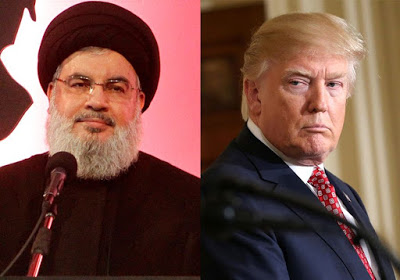
Nasrallah on the End of US Hegemony: Trump will Leave the Middle East, Region Already Reshaping – PART II
Interview of Sayed Hassan Nasrallah, Hezbollah Secretary General, with Ghassan Ben Jeddou, founder of the pan-Arab and anti-imperialist Al-Mayadeen channel, January 26, 2019.
Transcript:
Ghassan Ben Jeddou: (The US forces withdrawal from Syria announced by Trump) is therefore not a mere tactical maneuver. You say he is serious and sincere in his desire to withdraw, but this reflects a failure, if not a defeat, not for Trump especially but for the American (hegemony) project in general.
Hassan Nasrallah: Obviously this is all at once a failure, a dead end and a defeat. Currently, the cause of his hesitation is that (his advisers) tell him that the Kurds are their allies (and that they should not abandon them). I’ll explain why we saw these hesitations recently (as regards the US withdrawal from Syria).
When Trump said that US troops would withdraw and that there was only sand and death in Syria, he also said something even more important: “Does the USA want to be the Policeman of the Middle East? Do we want to be there forever?” With this statement, he hinted, and even more than hinted (this is an explicit indication), that all these US forces in the Middle East were not to stay, and that in time he would conduct (a full) withdrawal. What effect did this statement produce in the region, Professor Ghassan? Let us leave the question of Israel for later.
This statement caused, within the Saudi regime, in a number of Gulf countries enemies of Syria, and among all the allies of the United States in the region, – be they organizations, parties or personalities, not to mention the States – an immense feeling of fear and despair. And Trump knows them well (and he knew the effect that his statement would cause). When he says (to Saudi Arabia and the Gulf countries) that “You would not last two weeks (in power) without American (military) support”, or “Without us, your planes would get off the ground but couldn’t land”, “Without us, you Saudis would speak Persian.” He tells them all this, and adds “We will not remain the (Middle East’s) policeman, we will leave the region.” This caused a state of confusion, despair and fear in the region. That’s the first point.
That is why all the countries and groups (who rely on the US), starting with the Kurdish parties, came to Beirut and asked to meet with Hezbollah. We met them. Then they went…
Ghassan Ben Jeddou: Who are you talking about ?
Hassan Nasrallah: Kurdish parties, who are responsible for negotiating on behalf of the Kurdish units. They came to talk to us, and from there they went to Moscow and then to Iraq to request that Iraq serves as an intermediary with President Bashar al-Assad. Today, the Kurds and the Kurdish movements are (hopelessly) seeking…
Ghassan Ben Jeddou: Who are you talking about exactly? The Syrian Democratic Forces?
Hassan Nasrallah: Yes, the Syrian Democratic Forces, Kurd bodies and representatives in charge of negotiating. Very quickly, they rushed to Moscow, to Iraq, to Lebanon. Why? Because Trump has abandoned them, he forsake them, he betrayed them. This is regarding the East of the Euphrates.
Regarding the (US-aligned) countries, (they panicked at the idea of being abandoned), and they all began to think (intensely and reconsider their positions). They review their stances and try to strengthen their relations with Russia, they reconsider their relations with Iran. Even in Syria, the priorities of some countries are not the same anymore. And now we can talk about the issue (of the relations between) Arab (countries) and Syria. You want me to tell you this story now, or later?
Ghassan Ben Jeddou: Please, go ahead.
Hassan Nasrallah: According to my information, all that we saw in recent weeks, namely the Emirates reopening their embassy in Syria…
Ghassan Ben Jeddou: And before that, the President (of Sudan) al-Bashir (coming to Syria).
Hassan Nasrallah: Indeed. The President al-Bashir came to Syria. Did he come on his own?
Ghassan Ben Jeddou: What is your information?
Hassan Nasrallah: He got a green light from Saudi Arabia.
Ghassan Ben Jeddou: This is your information?
Hassan Nasrallah: Yes. A green light from Saudi Arabia and the Gulf countries.
At the end, lately, President al-Bashir rallied them. And the fact that (an Arab President) meets Bashar al-Assad is something of vital importance to (Saudi Arabia and the Emirates).
Ghassan Ben Jeddou: So this visit was not an arrangement of Russia that would have angered Saudi Arabia and the UAE (as some media have claimed)?
Hassan Nasrallah: No, under no circumstances. The current problem between President al-Bashir and Saudi Arabia has nothing to do with his visit to Syria. It concerns the fact that Saudi Arabia has not kept its promises and financial commitments made to President al-Bashir in return for his sending brigades of the Sudanese army to fight in Yemen – and Sudan’s involvement in this war is very unfortunate. This issue has nothing to do with Syria.
Anyway, the visit of President al-Bashir (to Syria), the reopening of the UAE embassy, the announcement of the Foreign Minister of Bahrain – and by the way, his statement was false, he was lying – who claimed that their embassy in Syria had always remained open, etc. But this is not true. Anyway, we started to see an Arab atmosphere (different with regard to Syria), we see Saudi advances, (Syrian) delegations visited Cairo, and there is talk about the coming of President al-Sissi and others to Damascus, etc. What is the reason ? And here I also speak basing myself on sound information that come from more than one (trustworthy) source.
In light of the decision of Trump to withdraw, and after the resignation of Mattis, who was seen as a guarantee by many, and because of the visible concern within the US administration, there was a great wave of panic in Saudi Arabia and the UAE – and with all their allies and instruments, but especially these two countries in particular. They met in Abu Dhabi to assess the situation – and their options – at a very high level. They assessed their situation in Syria and said:
“The battle against President Bashar al-Assad is over, and our groups have failed. All the movements we financed are now with Erdogan, isn’t it? All those who fought in Syria, in southern Syria, which were financed by Saudi Arabia, the UAE and Israel, have gradually retreated (following their consecutive defeats) and are now all in the North, that is to say (in the hands of) Erdogan. The battle against President Assad is over as regards the armed factions, groups and parties that we supported, as well as our various networks of influence: our whole project collapsed. Assad will certainly remain in office, the Syrian State won, the opposing Axis triumphed in Syria. There remains (only) one danger (that we can prevent): Erdogan –sorry, I mean Trump– made the decision to withdraw (his troops from Syria), and therefore, the only refuge of the Kurds is Assad and Damascus, (to avoid) the invasion of the East of the Euphrates by Turkey.”
Trump told Erdogan that Syria is his. If Syria is (abandoned to) Erdogan, if Turkey wants to invade Syria, it is a very dangerous project for Saudi Arabia and the Emirates. Imagine that their analysis reached this conclusion: the main danger in Syria is not Iran…
Ghassan Ben Jeddou: This is the conclusion reached by the UAE and Saudi Arabia?
Hassan Nasrallah: Yes. (The main danger in their eyes) is not Iran. The main danger (today) is Turkey. Iran comes in second position. President Assad, whose position is fully consolidated in Syria, is third, and (Saudi Arabia and the UAE) are even willing to have relations with him. They may also agree with Russia and get some guarantees from her, etc. Russia is less problematic in their eyes. They consider that the main danger is Turkey.
You know, (Saudi Arabia and the UAE) always think in sectarian terms. Ultimately, (in their eyes), Iran – and do not blame me for my frankness – is a Shiite country, and therefore may only have limited influence in Syria, etc. On the other hand, Turkey is a Sunni country, which has a certain presence in Syria, historical relations with that country, is a neighboring country and has a common border, so if Turkey enters (permanently) in Syria, it will be the end and no one will be able to get them out. (That’s how they see things).
Is it because their heart burns for Syria (that they fear a Turkish invasion)? Certainly not. Never. They couldn’t care less about the fate of Syria (and Syrians). But they believe that the advance of the Turkish project in Syria would be the advance of the (opponent) Axis, namely Turkey, Qatar and the Muslim Brotherhood. And that would revive this project, which targets, according to them, the Saudi regime, the UAE regime, the Egyptian regime, etc.
Ghassan Ben Jeddou: And this is the reason of their opening (towards the Syrian regime)?
Hassan Nasrallah: That is why they decided to get closer to Syria and to restore relations with President Assad and the Syrian State, while remaining in their hostility towards Iran, but trying to agree with Russia in order to put obstacles in the way of any progress of Erdogan’s (neo-Ottoman) project in Syria and therefore in the region.
Ghassan Ben Jeddou: But what happened to them so that they’d interrupt their rapprochement with Damascus?
Hassan Nasrallah: The opening (towards Syria) began, and they started talking about the return of Syria in the Arab League. President al-Bashir visited President Assad and told him about it. And Assad’s position did not surprise me.
Ghassan Ben Jeddou: What have they offered? What is your information?
Hassan Nasrallah: They asked Syria to submit a written request indicating that given the new circumstances in the region (end of the war in Syria, etc.) and their concern for the Arab States and Arab Unity & Cooperation, they wanted to regain their statute of member of the Arab League.
Ghassan Ben Jeddou: This is the message they gave him?
Hassan Nasrallah: Yes. Of course, I refer to the substance of their proposal, and I do not quote it by heart.
Ghassan Ben Jeddou: And then?
Hassan Nasrallah: (Assad’s) answer (was as follows): “Syria has never walked out of the Arab League (voluntarily), so we cannot request to come back to it. We never submitted a resignation that we should now withdraw. It is up to those who have kicked us out to ask us to come back.” And this is a noble and dignified position, and perfectly predictable. It is not a surprise. If Arab regimes think that they merely have to tell President Assad that their doors are open and that Syria can come back (to the Arab League), to see him feel a huge relief and run with joy in their arms, they are deluded. Syria will resume its place in the Arab world, and it is in its interest. But she will come back with all her dignity (and not slavishly).
What is new is that the US has made an assessment of Trump’s accomplishments, “But what have you done? Where are our allies?” So-and-so is (getting closer to) Russia, so-and-so is with President Bashar al-Assad, so-and-so considers that now, the main danger in Syria is Turkey (major NATO member) and not Iran, while the US want their (main) enemy to remain Iran. What to do (in this situation of dramatic decline of US influence in the Middle East)?
Allow me to say, about Lebanon and all the Lebanese political forces that were betting on the fall of the Syrian State and regime, that you can imagine in what state they found themselves when they heard Mr. Trump declare that he would withdraw from Syria.
Therefore, the US decided to ask Mr. Pompeo to tour the region to boost the morale of all States and groups who are devastated by the announcement of the US withdrawal from Syria (and the Middle East), and began to reconsider their choices, their relationships and their future and to grab on to their thrones (in a fit of panic). (This Pompeo visit aimed to) try to put them back on their feet, to boost their morale and to assure them that the US supports them and won’t give up on them, that they do not intend to leave the region, and as a proof, he invited them to participate with the United States to a conference in Warsaw meant to deal with Iran, its influence and its threat, (in an attempt) to put them back in confrontation with Iran, at least in terms of appearances.
(Pompeo) sent David Hill to Lebanon – for Pompeo (feels) too important to come himself to Lebanon – with the same message, to reassure those who felt frightened, demoralized, anxious and lost by the US policy in the Middle-East.
But since we have arrived at this point of our discussion, I want to conclude this presentation with this statement: the United States will not manage to do more than they have already done. I declare to the governments of the region, to their leaders, to their peoples, to their movements and to Israel – because we will finally come to Israel –, that the US are deserting our region. They will flee Syria – it may take several months, but the decision is taken.
O my brothers, they are fleeing from Afghanistan. And do you know who they leave (in charge of) Afghanistan? They leave the Taliban! Because in the agreement, Trump won the Taliban’s commitment not to allow Al Qaeda and ISIS (to settle) back in Afghanistan. Trump considers that the Taliban represent the government of tomorrow, who can (already) provide guarantees to the US government. Isn’t it a humiliating defeat for the US in Afghanistan? Especially since the Taliban are officially considered as a terrorist organization (by the US), and Washington claims to never negotiate with terrorists.
The United States will flee. There will be no more US forces waging war in our region. Trump won’t launch a war for the eyes of Mohammad Bin Salman (Crown Prince of Saudi Arabia), nor for the eyes of Mohammed bin Zayed (UAE Crown Prince), not even for Netanyahu’s eyes – and clearly, Netanyahu’s eyes are much more valuable to Trump. Not even for the eyes of Netanyahu! Trump, the US and the situation of the United States, either inside at the level of the economy, etc., etc., etc., do not allow them to launch a new war in our region. There will be no US war in the region.
What does Trump want then? (For him), it is from their own pocket that States, regimes and forces (allied to the US in the Middle East must fight), with their own money, their own media, their own blood… Trump wants to bring them together again to put them (alone) against Iran. And if, against Iran, for 40 years – we are at the 40th anniversary (of the Islamic Revolution) –, the United States and all the tyrants on Earth have been unable to do anything to bring down this regime and this blessed Islamic Republic, then (what could the Arab States do by themselves)?
Ghassan Ben Jeddou: But Eminent Sayed, relatively, (the United States), haven’t they won? You just revealed a very important information, namely that the Saudis and Emiratis gathered and concluded that the major strategic change that you just presented will occur (inevitably). But it seems that Trump still won. First, he slowed down the rush of Arab countries to Damascus, and secondly, today, we hear a new discourse from the Arab countries, namely that…
Hassan Nasrallah: The fact that he stopped the momentum of the Arab countries is natural. He can keep them in check easily. Do you think that these countries are courageous, independent, that they have an independent process of decision, and may rebel against their American master? Never. That is why…
Ghassan Ben Jeddou: What I mean is that the US managed to put all their allies –Saudi Arabia, the UAE and all others– into line.
Hassan Nasrallah: Yes, but this is not a success. Trump only prevented that everything collapses quickly. But (it is mere damage control and) the collapse process is still ongoing.
Ghassan Ben Jeddou: Has he stopped or only slowed down the process of opening the Arab countries towards Syria?
Hassan Nasrallah: What we have heard and what was reported to us is that they are undecided. There is no clear choice to maintain the absence (of relations with Damascus) or stay in a completely negative attitude (against Syria). I give you a proof of that. Two days ago, there was a meeting between a UAE economic delegation and a Syrian delegation. I do not remember if it was held in Damascus or in the Emirates. This means that at least, at an intermediate level, these relations will continue. (Sooner or later), it will be revealed that very important people in Arab countries secretly came to Damascus, although these meetings were not made public. But it is for the Syrian leadership (to reveal this issue). And I speak of meetings at the highest level.
 Ghassan Ben Jeddou: At the political or security level?
Hassan Nasrallah: At least at the security level.
Ghassan Ben Jeddou: For example heads of intelligence services?
Hassan Nasrallah: For example.
Ghassan Ben Jeddou: Policymakers?
Hassan Nasrallah: Yes.
Ghassan Ben Jeddou: From these (most) influential Gulf countries (Saudi Arabia and UAE)?
Hassan Nasrallah: Let’s just say from Arab countries, (don’t try to force me) to reveal more about their identity or titles – whether Sheikh or Sayed, Professor or Hajj, Doctor or Engineer, etc. What I have revealed is enough (I will say no more).
Ghassan Ben Jeddou: Influential and active Arab countries?
Hassan Nasrallah: Currently, the United States wants and strives to retain forcefully these Arab countries back (to prevent them from making a step towards Damascus, Moscow, etc.) But of course, so far, they haven’t brought anything substantial to convince them and reassure them (that this is the right choice), and that the United States have not abandoned Syria to Turkey. For this is what Saudi Arabia, the Emirates, President al-Sissi and Egypt, and all the others, want to hear clearly.
That is why we will perhaps see, on the Arab question, a slowdown or coldness in the momentum towards Syria, but I exclude that this movement can be completely stopped. Therefore I conclude this point by saying that the United States failed in Syria. Of course, after this fiasco, the one who loses the most and who is in the greatest distress is Netanyahu.
Ghassan Ben Jeddou: Yes. […]
Israel, Greece to Build Radar on Crete Amid Rapprochement– Reports
Sputnik – March 19, 2019
The Long Horizon marine radar system will be built by Israel and Greece in eastern Crete, the Greek newspaper Kathimerini reports. The enhanced coverage of the radar will allow both countries to monitor the Eastern Mediterranean basin. The daily has not disclosed the cost of the project, saying only that it is “not insignificant,” especially taking into account Greece’s reduced military budget.
According to the outlet, Athens and Tel Aviv have been drifting together recently, boosting their military ties among other things. Greece has recently agreed with Israel to share know-how for its navy, which has begun to develop. According to the outlet, 40 Israeli probationers will be carried by a Greek transporter from Haifa to Crete, without any stops in Cyprus, by the end of the month. The Israelis will join the Greek forces during upcoming drills and then return to Haifa after a stop in Milos and Rhodes.
On the other hand, Athens has been open to the possibility of bolstering its arms gaps with the help of Israel, as Kathimerini noted. Among other things, Greece has rented seven drones from Israel for search and rescue operations.
Israel’s Haaretz reports that Cyprus also shares the Israeli interests in the region. The list of common interests includes a stance on the situation in Syria and Lebanon as well as uneasy relations with Turkey.
Apart from military and political cooperation, which is to be confirmed during an upcoming trilateral Greek-Israeli-Cypriot summit with US Secretary of State Mike Pompeo, the three countries are developing a major economic project — the undersea East Med pipeline, designed to deliver natural gas from the Eastern Mediterranean to Europe via Greece and Cyprus. Greek Prime Minister Alexis Tsipras, Israeli PM Benjamin Netanyahu and Cyprus President Nicos Anastasiades are expected to sign the grand deal, agreed upon in 2018, within the month, as the Greek media earlier reported.
The 2,000-kilometre underwater pipeline is intended to have a capacity of 12 billion cubic metres of gas annually, delivering fuel from Israel’s Leviathan, named one of the largest young gas reserves in the world, and the Aphrodite offshore gas fields. Additionally, the venture was boosted in February when it was announced that large gas deposits had been discovered in Cyprus.
The line, which is almost twice as long as Russia’s Turk Stream pipeline, is estimated to cost $8 billion and is said to be the world’s deepest underwater gas pipeline. Egypt, the only Muslim nation besides Jordan that has a peace treaty with Israel, is also seeking to export its newly discovered gas reserves, and has expressed interest in joining the project.
Featured Video

U.S. General Caine Warns: STRIKING IRAN is a HUGE RISK
or go to
Aletho News Archives – Video-Images
From the Archives
Stealth Bombers and Bunker Busters
Analysis of the so-called 12-Day War, and the triumphantly celebrated Operation Midnight Thunder
By William Schryver | imetatronink | November 28, 2025
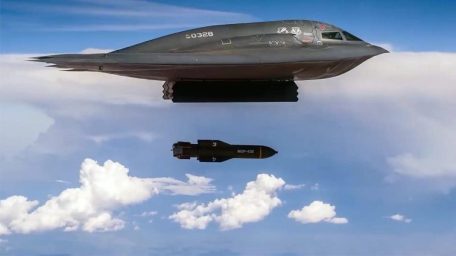
The GBU-57 is a big fat gravity bomb with fins. To achieve effective precision, a B-2 bomber must drop it on its intended target from no further than about five nautical miles — essentially right on top of the target.
Its penetration depth is claimed to be 200 feet. But that capability has NEVER been tested against a seriously hardened deep-underground target encased in layers of high-performance concrete, and topped with a few dozen meters of solid rock. In that sort of real-world scenario, the GBU-57 would be lucky to drill down 50 feet, if that.
It was always ridiculous silly talk to suggest the GBU-57 was the wonder weapon it was made out to be. There is a good reason the US only produced a couple dozen of them and then stopped: they understood its acute limitations in a non-permissive combat environment.
And, notwithstanding the hyperbolic Israeli propaganda, there was never any credible evidence that Iranian medium- and long-range air defenses against fixed-wing aircraft were attrited to any significant degree. And Iranian short-range air defenses were increasingly effective against long-range Israeli drones with each passing day.
As for the B-2: it is a big fat subsonic aircraft. It flies at airliner speeds. A strike on Fordow would entail flying at least 500 miles in and out of Iran. … continue
Blog Roll
 Aletho News
- Project Artichoke: 70 Years Ago, CIA Discussed Hiding Mind-Control Drugs in Vaccines
- Drug traffickers trained in Ukraine attack state forces in Mexico
- The tragic reality of Brazilian mercenaries in the Ukrainian conflict
- Zelensky Refused to Discuss Druzhba Pipeline Issue – Fico
- U.S. General Caine Warns: STRIKING IRAN is a HUGE RISK /Glenn Diesen & Lt Col Daniel Davis
- Israel designates five Palestinian media outlets as ‘terrorist organizations’
- Israel, not America, first: Carlson’s Huckabee interview lays bare US foreign policy priorities
- Israeli troops executed Palestinian aid workers at ‘point blank range’: Report
- Iran war What if today’s Iran is resigned to a long, hellish war with the US?
- Why Israel Is Escalating Its War Crimes Against Lebanon
- If Americans Knew
- Fourteen Countries Condemn Huckabee’s Support for Israel Taking Over Most of the Middle East
- Israeli Soldiers Killed Gaza Aid Workers at Point Blank Range in 2025 Massacre: Report
- Israel’s insidious network to propagandize American Christians
- Israel’s Best-Kept Secret: Palestinian Resistance Never Agreed to Disarm
- Trump officials plan to build 5,000-person military base in Gaza, files show
- Are MAGA restrainers pulling their punches this time on Iran?
- The NY Times on the “MAGA” Split Over Israel & USS Liberty
- In Gaza, Ramadan without mosques, imams – Not a ceasefire Day 137
- Footage Shows Israeli Troops Waiting in Ambush, Then Opening Fire on a Palestinian Teen
- The US is on the brink of a major new war that Trump has not even bothered explaining
- No Tricks Zone
- Surprising Discovery: Sahara Is Greening…Billions Of Trees Where Once Thought To Be Barren
- New Research Reaffirms Clouds, Aerosols, And Surface Solar Radiation Are ‘Driving The Climate System’
- Germany: Electric Car Catches Fire At Charging Station, Sets Off Local “Inferno”, Widespread Damage
- New Study: Canada’s New Brunswick Was 1°C Warmer Than Today During The Medieval Warm Period
- Coal Power Back In Trend As Globe Tries To Keep Pace With Growing Demand For Power
- New Study: A 4°C Warmer Beaufort Sea Had ‘No Sea Ice’ 11,700 – 8200 Years Ago
- Unfudging The Data: Dutch Meteorological Institute Reinstates Early 20th Centruy Heat Waves It Had Erased Earlier
- German Gas Crisis…Chancellor Merz Allegedly Bans Gas Debate Ahead of Elections!
- Pollen Reconstructions Show The Last Glacial’s Warming Events Were Global, 10x Greater Than Modern
- Germany’s Natural Gas Storage Level Dwindles To Just 28%… Increasingly Critical
 Aletho News