U.S. Continues to Draw Lines in Eastern Mediterranean
By Paul Antonopoulos | November 19, 2019
From November 3 to November 14, Israeli, U.S., German, Italian and Greek war jets participated in the “Blue Flag 2019” military exercises out of the Ovda Air Base in Israel’s Negev Desert. The timing of these exercises corresponds with Turkey and a whole host of other countries conducting their own naval exercises in the Aegean and Mediterranean Seas.
Lines are certainly being drawn in the Eastern Mediterranean between pro-U.S. forces and states seeking their own sovereignty away from U.S. hegemony, especially Turkey. Greece proves to be a curious country at the moment, since one of its warships participated in the Turkish-led naval exercises, even though Pakistan twice violated Greek airspace during these exercises and a war of words continues to ensue between Turkish and Greek political leaders over the maritime waters of Cyprus and the Eastern Aegean.
Although Greece was involved in both exercises, there can be no doubt that the Blue Flag 2019 exercises were aimed against Russia, Turkey and Iran. Part of the Blue Flag 2019 was the process and execution of aerial scripts to neutralize Russia’s S-400 Triumph missile defense system. However, since none of the participating countries have an S-400, the Israeli military had deployed U.S.-made Patriot missiles in specific locations to try to simulate the capabilities of the Russian-made systems during the military exercises that occurred near the Gaza Strip.
The simulation of the S-400 rocket launcher demonstrates for the first time that Israel is actively preparing to deal with such a system that exists only in Syrian and Turkish territory. In Syria, the powerful Russian defense system was deployed to protect Russian forces exactly four years ago, ironically because Turkey blew out a Russian jet from Syrian airspace in November 2015.
Meanwhile, the S-300V4 missiles will also be deployed in Egypt. The S-300V4 uses almost similar technology to the S-400 and has great capabilities in handling stealth aircraft. The S-400 has recently been shipped to Turkey, but is not yet operational, while Iran and Saudi Arabia have also shown interest in these systems.
The oldest and least capable S-300PMU-2 was deployed by the Syrian armed forces in late 2018, reducing the frequency of Israeli attacks in the country, but not stopping them. It is unclear what exact development led to Israel’s implementation of the S-400 neutralization training, however it is likely that these systems will also begin appearing elsewhere in the Middle East, putting Israel in a compromised military position.
Whatever the case, a big game is being played in the area with the possession and potential use of strategic weapons, such as Russian missiles and 5th generation American fighter jets.
Turkey, Greece, Israel, the U.S. and Syria have been embroiled in a meltdown of developments over who will eventually have the upper hand in the Eastern Mediterranean, but it is also seen that alliances are forming in the region. Although Greece was involved in both exercises taking place in the Eastern Mediterranean, its warship participating in the Turkish-led exercises took a more observatory position ensuring that its maritime waters were not violated, while it took a very active role in Israel, even winning the war games against the other participants of the exercises, which is unsurprising since Greece has the best pilots in NATO.
While Greece also participated in the Turkish-led naval exercises, it was actively training its pilots alongside the U.S. and conducting drills with Patriot missile batteries modified to imitate the Russian-made systems. However, the Russian systems hit targets twice as fast as the Patriots, and at a longer distance and higher altitude – essentially, attempting to use Patriots to simulate the S-400 would not have been very accurate.
It cannot be forgotten that Saudi Arabia, the world’s largest exporter of oil in the world, on September 14 had its daily supply cut by nearly 50 percent because of drone and missile attacks against state-owned oil company by the Yemeni Houthi-led Ansarullah resistance movement. With Saudi Arabia investing billions of dollars into the Patriot system, it would have been expected that they would have a near 100% success rate in hitting all the missiles launched by the Ansarullah Movement.
It is for this reason that Russian Senate Security and Defense Committee member Franz Klintsevich, in a comedic manner, stated that “if Saudi Arabia had installed the Russian anti-aircraft systems, this would not have happened. The S-300 and S-400 missile systems, supported by the Pantsir S-1 would not have allowed any of the drones and missiles to hit their target. The Saudis should think about it.” Therefore, there is a huge doubt that the modified Patriots could successfully mimic the S-400.
Whether the training against “the S-400” in Israel was successful for the participating countries, it more importantly demonstrates an intent by these countries to be able to overcome the Russian missile defense system. For Israel, it is crucial so that it knows how to respond to any hypothetical war with Iran or Turkey, while for the U.S. it would also be against Russia.
With Russia selling the S-400 system, announcing its intent to also sell fighter jets, and conducting patrols with Turkey in Syria, their ties are becoming much more integrated. It also appears that the U.S., Greece and Israel are strengthening their military coordination in the Eastern Mediterranean. Although Israel is not against Russia, it certainly has an adversarial political and military relationship with Turkey despite their close economic ties, just as Greece does with Turkey. And although Greece might not be against Russia, they certainly are against Turkey. The U.S. intentions for the Blue Flag 2019 exercise are to coordinate an alliance against Russia, and potentially Turkey, while training against the S-400.
Paul Antonopoulos is a Research Fellow at the Center for Syncretic Studies.
The Sad Death of James Le Mesurier
By Craig Murray | November 12, 2019
We should never forget that all human deaths are tragedies. No human is perfect and none is completely evil. Even the most wretched, snivelling excuse of a human being you can possibly imagine – say Ian Austin – has known a mother’s love. Le Mesurier leaves a wife and children who will be mourning. We should not forget that.
Unfortunately he worked in a profession where you can very quickly move from an asset to a liability. Le Mesurier’s usefulness to Western security services, Israel and their Gulf allies came to an end when the jihadist headchoppers to whom Le Mesurier had been providing logistic support and invaluable propaganda, lost their last secure footing in Syria. That the White Helmets worked hand in glove with the extreme jihadists, and moved out wherever they moved out, is beyond dispute as a matter of fact, whatever the state of denial of the mainstream media. That there is now nowhere in Syria that people can go around executing Christians with impunity, and simultaneously now nowhere that the White Helmets can operate, is not the coincidence the mainstream media affect to believe. Some of them possibly do believe it. As a wise man once observed, it is amazing what people can believe when their job depends on it.
Having stopped being useful, Le Mesurier became much more of a liability after Turkey took over further control of former jihadist controlled areas in Northern Syria. The chances of Turkey obtaining both documentary and first person testamentary evidence of the relationship between the White Helmets, the jihadists, and western and allied intelligence services increased substantially. Indeed I have reason to believe Turkey may already have done so. His potential liability to his former employers ratcheted up. This resulted in his death. Whether he was killed or took his own life from the resultant stress, I have no information at present.
As regular readers know I have excellent contacts in Turkey of precisely the right kind. Leading a life a great deal more complicated than just being a blogger, I regret that I have been unable to date to tell you the full truth of what I was doing in Ankara in December 2017, and probably will not be able to tell you for a year or two yet. I will now try to get further information from my contacts on Le Mesurier, but please understand it may not be instant.
Washington’s Armenian Genocide Recognition Is Politically Motivated, But Does That Matter?
U.S. Deals Another Blow To Washington-Ankara Relations
By Paul Antonopoulos | October 31, 2019
A historical moment was achieved on October 29 for the Armenian lobby in the U.S. after the House of Representatives recognized the Armenian genocide, with 405 votes in favor and 11 against the Resolution. This timely move was certainly aimed at provoking Turkey, who has consistently denied that the foundation of the modern Republic of Turkey was built on the ethnic cleansing of the Christian minorities in the country, particularly the Armenians, Greeks and Assyrians. There is little doubt that this belated recognition by the U.S. was chosen to be announced on Republic Day, a public holiday in Turkey commemorating the proclamation of the Republic of Turkey on 29 October 1923.
Although the resolution focuses primarily on the Armenian genocide, it also recognizes the genocide against “Greeks, Assyrians, Chaldeans, Syriacs, Arameans, Maronites, and other Christians.” The resolution also makes mention of U.S. Ambassador to the Ottoman Empire from 1913 to 1916, Henry Morgenthau, who described the empire’s “campaign of race extermination,” and was instructed on July 16, 1915, by U.S. Secretary of State Robert Lansing “to stop Armenian persecution.”
The resolution also highlights other instances in history where the U.S. recognized the genocide, but of course makes no mention of why the recognition has occurred now? The Armenian lobby in the U.S. has been pushing for genocide recognition for decades, but recognition was only achieved on Tuesday. With over 400 votes in favor, President Donald Trump cannot veto the resolution even if he wanted.
Normally at odds with each, Turkey’s ruling Justice and Development Party (AKP) and opposition Republican People’s Party (CHP), along with all other sectors of Turkish society and political establishment, denounced the U.S. recognition. There is little doubt that the recognition is politically motivated, with Turkish Foreign Minister Mevlüt Çavuşoğlu claiming the U.S. are wanting “to take revenge” over their differences in Syria and CHP leader Kemal Kılıçdaroğlu stating that “You cannot use the events of history to take revenge politically.”
With Washington-Ankara becoming increasingly distant because of Turkey’s insistence on buying the Russian S-400 and conducting an operation against the Syrian branch of the Kurdistan Worker’s Party (PKK), the People’s Protection Units (YPG), that the U.S. has financially and military supported despite Ankara’s insistence that they’re a terrorist organization, Washington’s move to recognize the Armenian genocide is in conjunction to sanctions and bitter rhetoric between the two countries.
Rather, this proves that the Armenian genocide recognition should have been a moral imperative for the U.S., but Washington never did so to appease Turkey. As the U.S. and Turkey are members of the anti-Russian NATO, the issue of genocide recognition, despite significant pressures from the Armenian lobby, found no success in Washington. Turkey controls the Dardanelles and the Bosporus straits, Russia’s only access to its only warm water ports in their country. Although international law guarantees freedom of navigation through the waterways, in any hypothetical war between NATO and Russia, blocking Russia in the Black Sea would be a priority.
With Turkey continually defying the U.S. and improving its relations with Russia, Washington is now finding alternatives to Turkey. It is for this reason that the U.S. has opened three new military bases in Greece and made the Mediterranean country a Plan B option against Russia in case of Turkey’s continued insubordination. With a bolstered American presence in Greece, the U.S. feels it is in a comfortable position to potentially blockade Russia and/or Turkey if it ever had to do so, making it a well-timed moment to recognize the genocide.
Çavuşoğlu and Kılıçdaroğlu are justified in their claims that the U.S. recognition of the Armenian genocide is politically motivated, but also the very fact that the recognition was not made decades ago was also politically motivated to appease Turkey and ensure their loyalty to NATO. With Turkish President Recep Tayyip Erdoğan claiming that the resolution has “no legal force” as only “historians […] and not politicians, should decide on this issue,” he does not build a strong case for Turkey as it is nearly unanimous by genocide historians and scholars that the ethnic cleansing of the Armenians, Greeks, Assyrians and other Christians in the late Ottoman period definitely occurred with organization and structure.
More curious is the fact that several Kurdish organizations and political parties have not only recognized the Armenian genocide, but also apologized for their ancestor’s role in following orders from Turkish authorities in Constantinople to massacre and ethnically cleanse Armenians and Assyrians. Included in recognizing and apologizing for the genocide are the PKK, the Turkey-based Peoples’ Democratic Party and the Iraqi-based Kurdistan Democratic Party.
With the modern Republic of Turkey built on a Turkification process, with some of my own family members forced to change their surname into a more Turkish-sounding name in living memory, coupled with Turkish national hero Mustafa Kemal Atatürk’s slogan of “Ne mutlu Türküm diyene!” (How happy is the one who calls himself a Turk!) that had to be recited by every student in Turkey as an Oath until it was annulled by the AKP government in 2013, the Armenian genocide recognition by the U.S. is a step in restoring Armenian, Greek and Assyrian ethnic and religious identity in Turkey.
Justice Minister Abdulhamit Gul is justified to say that the U.S. should look at its own history before accusing others of genocide. This argument though does not absolve Turkey from facing its dark history, apologize and try and create more friendly relations with Greece, Armenia and the Christian minorities who remain in Turkey.
Russia has recognized the Armenian genocide since 1995 and today it has little impact on Russian-Turkish relations. Rather, this latest provocation by the U.S. against Turkey is likely to just push Ankara closer to Moscow because of the motive and timing of the Armenian recognition.
There is little doubt that the U.S. recognizing the Armenian genocide is politically motivated. However, this does not negate the fact that the decades of non-recognition was also politically motivated. Although late in recognizing the genocide compared to other European countries, it is likely that Washington’s recognition will have a far greater impact then the Russian, French or German recognition. It is likely we will begin seeing extremely pro-U.S. states like the United Kingdom, and perhaps even Israel, following this move.
Therefore, does it matter why the U.S. has decided to now recognize the genocide when it did?
Paul Antonopoulos is a Research Fellow at the Center for Syncretic Studies.
Clashes in northeastern Syria put Turkish-Russian Memorandum at risk
By Sarah Abed | October 25, 2019
On Tuesday, exactly two weeks after Ankara launched its cross border military operation “Operation Peace Spring”, in northern Syria east of the Euphrates River, Russian President Vladimir Putin and his Turkish counterpart President Recep Tayyip Erdogan met in Sochi for what proved to be a lengthy diplomatic discussion that resulted in an agreement that sets the stage for de-escalating tensions in that region.
The Russian-Turkish memorandum published by the Kremlin covers ten mutually agreed upon points. Many of the same issues that were addressed but not resolved by the United States and Turkey during their recent agreements were mentioned.
The agreement begins with reiterating the importance of maintaining Syria’s political unity and territorial integrity and the protection of Turkey’s national security as well.
Both parties also confirmed their commitment and emphasized their determination to combating all forms of terrorism and to not allow separatist agendas to prosper, this of course is referring to the US-backed Kurdish militia’s and their so-called self-administration policies which are illegitimate.
The importance of the 1998 Adana Agreement which was created as a security pact between Ankara and Damascus and ensures the PKK will not be allowed to regain momentum in Syria and if it does Turkey reserves the right to carry cross border military operations against them. Although Syria never denounced the pact, diplomatic relations during the conflict were severely damaged and after the PKK was squashed it re-emerged as the PYD, and Turkey views the PYD, YPG, and the newest US created rebranding the SDF all to be Syrian offshoots of the PKK.
Wednesday at noon a new deadline for the Kurdish militias to leave with their weapons started, giving them 150 hours to leave from the 30km Turkish-Syrian border. Syrian border guards along with Russian military police will enter to facilitate the removal of YPG members. After the deadline Russian and Turkish patrols will start in a 10km deep area in the west and the east of the area surrounding the area covered by “Operation Peace Spring” except for Qamishli.
In addition to the YPG elements in the previously stated areas, all Kurdish fighters and their weapons must be removed from Manbij and Tal Rifat. Measures will be taken to prevent infiltrations of terrorist elements.
As for the refugees, joint efforts will be launched to safely and voluntarily return them. Joint monitoring and verification mechanisms will also be established to coordinate and oversee that all parts of this memorandum are effectively implemented.
Both Russia and Turkey will continue to work on finding a lasting political solution to the Syrian conflict within Astana Mechanism and will support the activity of the Constitutional Committee taking place next week.
The issue of ISIS prisoners was also brought up, and the importance of preventing detainees from escaping.
Turkey is accomplishing its goal of removing Kurdish militias from its border by stating they are a threat to its national security. Regardless, it’s operation and support for terrorist factions is illegal and NATO’s pretentious concern is unavailing.
However, there’s another incentive to discontinuing its cross-border military operation, the US lifted sanctions which were imposed on October 14th and this will drastically improve Turkey’s aching economy.
President Trump was up against bipartisan disapproval for his decision to withdrawal US troops and end military support for the Kurdish factions, and he stood his ground. And lest we forget, America’s number one ally in the region, Israel, is the biggest supporter of separatist Kurdish factions in Iraq and Syria, the independent Kurdistan project is conveniently aligned with the Greater Israel project. Standing up to both Capital Hill and Israel is a bold move.
As for the Israeli-Kurdish relationship, not much has changed since I originally reported on their mutually beneficial dealings a few years ago. Israel’s selfish interests in supporting Kurdish independence remain two-fold, oil and to counter supposed “increased Iranian influence” in the region.
President Trump is trying to end what the Obama administration began with their failed “regime change” efforts in Syria. As Trump mentioned, Washington has wasted 8 Trillion dollars in Middle Eastern wars, which brought forth nothing but death and destruction to the region, killing millions and displacing many more millions of innocent people.
Immediately following his lengthy meeting with Erdogan, Putin spoke with his Syrian counterpart Bashar al Assad who expressed support for the memorandum and confirmed Syrian border guards were ready to work with the Russian military police.
The Kremlin reiterated the need for all illegal foreign military presence to leave Syria. Also, the Syrian government needs to regain control of all the oil facilities in northeastern Syria.
Russia wants a broad dialogue to take place between the Syrian government and the Kurds living in northeastern Syria. The constitutional committee in cooperation with the United Nations will also work towards peaceful political process in Syria.
With the Syrian army establishing 15 observation posts on the Turkish Syrian border east of the Euphrates and the Kurdish militias being forced to move south outside of the “safe zone” and Syrian refugees returning to northern Syria, it’s only a matter of time before the US/Kurdish militias lose their grip on these oil fields. US troops are currently guarding some of them, Trump even insinuated on Thursday that Kurds should move into these oil rich areas.
President Erdogan needs to immediately rein in the so-called Turkish-backed Syrian National Army (SNA) militants which consist mostly of Free Syrian Army terrorists and other factions that merged immediately prior to the “Peace Spring Operation”. Even with the ongoing Turkish-Russian “safe zone” agreement in place, the SNA has launched several attacks south and southeast of Ras al-Ayn while attempting to expand their presence in the area.
Trump seeks grand bargain with Erdogan
By M. K. BHADRAKUMAR | Indian Punchline | October 24, 2019
The morning after a summit meeting often holds surprises. Turkey lost no time to follow up on President Recep Erdogan’s hugely successful but “difficult” talks with his Russian counterpart Vladimir Putin in Sochi on Tuesday.
On Wednesday itself, Ankara formally conveyed to Washington Erdogan’s decision that the Turkish military is stopping combat and is ending the offensive in Syria, codenamed Peace Spring, and making the ceasefire agreed with the United States last week during the visit by Vice-President Mike Pence to be permanent.
President Trump promptly reciprocated by lifting the US sanctions against Turkey imposed on October 14 in response to Peace Spring. Trump, characteristically enough, claimed credit for “an outcome created by us, the United States, and nobody else, no other nation.”
The Turkish intimation comes handy for Trump to scatter critics who predicted apocalypse now in Syria. Trump sounded confident that the ceasefire will hold.
Enter General Mazloum. Trump disclosed that he spoke to the general who is the military supremo of the YPG (Syrian Kurdish militia), before making his announcement on the lifting of sanctions against Turkey.
Trump hailed the Kurdish chieftain’s “understanding and for his great strength and for his incredible words today to me.” The optics works just perfect for Trump to push back at critics who allege that he’s thrown the Kurds under the bus.
But Trump also disclosed that he is on to something bigger. One, that Gen. Mazloum has assured him that “ISIS is under very, very strict lock and key, and the detention facilities are being strongly maintained.” The Kurdish-held regions have detention camps holding thousands of ISIS cadres and their families.
Two, Trump recalled, “We also expect Turkey to abide by its commitment regarding ISIS. As a backup to the Kurds watching over them, should something happen, Turkey is there to grab them.” Interestingly, Trump also called on European countries to accept the ISIS prisoners.
In the infamous “undiplomatic” letter to Erdogan a few days ago, Trump had voiced an audacious idea that Gen. Mazloum could be a potential negotiator with Erdogan. To quote Trump, “General Mazloum is willing to negotiate with you (Erdogan), and he is willing to make concessions that they would never have made in the past. I am confidentially enclosing a copy of his letter to me, just received.”
Yet, General Mazloum is Turkey’s most wanted terrorist who worked in the ranks of the separatist PKK for nearly 3 decades and it is necessary to connect some dots at this point.
Looking back, when Erdogan came to power as prime minister in 2003, he had unfolded a bold vision on the Kurdish problem via a negotiated political reconciliation. His approach was encouraged by the US. But he ran into headwinds and eventually lost his sense of direction.
To recap further, in late 2012 Erdogan went public with a dramatic announcement that top Turkish officials had begun negotiations with the PKK leader Abdullah Öcalan who was captured in 1998 and is undergoing life imprisonment on Imrali island in the Sea of Marmara off Istanbul.
Öcalan responded in March 2013 to Erdogan’s overture by calling for a cease-fire, and PKK guerrillas actually began to withdraw from Turkey. As peace talks faltered, however, the cease-fire collapsed in July 2015.
But, significantly, Öcalan has continued to advocate for a negotiated agreement to bring about Kurdish autonomy within Turkey. Now, isn’t it an interesting coincidence that Gen. Mazloum, Trump’s interlocutor among the Syrian Kurdish leadership, also happens to be the adopted son of Öcalan?
Gen. Mazloum is likely to visit Washington in a near future; so is Erdogan. Trump is promoting Kurdish reconciliation with Turkey. The last fortnight’s developments on the diplomatic front have removed the single biggest source of tension in the US-Turkey relations — US’ alliance with YPG and the presence of Kurdish fighters along Syria’s border with Turkey.
Curiously, Trump also said in his announcement yesterday, “We’ve secured the oil, and, therefore, a small number of U.S. troops will remain in the area where they have the oil. And we’re going to be protecting it, and we’ll be deciding what we’re going to do with it in the future.”
Most of Syria’s oil comes from Eastern Syria, which is now under the control of the US-backed Kurdish militia or YPG. (Before the war, Syria produced 387,000 barrels per day of which 140,000 bpd were exported.)
In February last year, Syrian forces backed by Russian mercenaries made a serious incursion in the area but retreated in disarray after suffering heavy casualties following merciless US air strikes. Relative calm prevailed in the region since then.
Evidently, in the geopolitics of Syrian oil, US, Turkey and the Kurds can have “win-win” partnership, which in turn can also provide underpinning for an enduring political reconciliation between Turks and Kurds.
Trump said Washington is mulling over Syria’s oil reserves. Meanwhile, he’s put across a tantalising proposition for Erdogan to ponder over. It demands a leap of faith on Erdogan’s part, but it could be rewarding.
Erdogan has allowed Öcalan access to his family and lawyers and even to relay messages to Kurdish activists. Erdogan knows that if ever he is to solve the 30-year-long conflict with the PKK, he may have to do so with the involvement of Öcalan.
In December 2017, Erdogan had deputed Turkey’s spy chief and trusted aide Hakan Fidan to Imrali island for talks with Öcalan. Two Kurdish MPs were also allowed to visit the PKK leader.
No doubt, Öcalan is a bridge between the Kurds and Turks. And in today’s circumstances, Öcalan can as well become a bridge between his adopted son Gen. Mazloum and Erdogan.
While accompanying Pence to Ankara last week, state secretary Mike Pompeo had hinted that the US is looking for an expanded regional partnership with Turkey and if Erdogan works “alongside” Trump, it “will benefit Turkey a great deal.”
Countering Iran’s influence / presence in Syria and Iraq is the US policy. The decision to transfer the US troops from Syria to Iraq and the continued stationing of troops in Al-Tanf base highlights that cutting off Iran’s land route to Syria and Lebanon continues to be a priority.
Broadly, many challenges lie ahead in Syria and the US realises that Turkey is irreplaceable as regional partner. Trump always thought of Erdogan as someone he can do business with.
Ankara will welcome a grand bargain between Erdogan and Trump and regards the US’ backing for a Turkey-led “safe zone” on Syrian territory as a step in the right direction. In the final analysis, however, for all of this to happen, one way or another, Turkey’s tensions with Kurds should ease.
Kurdish-led SDF militant group thanks Russia for defusing Turkey’s Syria incursion
Press TV – October 24, 2019
The Kurdish-led Syrian Democratic Forces (SDF) militant group has thanked Moscow for striking a deal with Ankara, which ended a Turkish offensive against Kurdish militants in northern Syria, welcoming the deployment of Russian and Syrian troops to the border regions as part of the agreement.
During talks with Russian Defense Minister Sergei Shoigu and Chief of General Staff Valery Gerasimov via video-link on Wednesday, SDF head Mazloum Abdi said Moscow had saved the Kurds from the “scourge” of war through the recent agreement with Ankara.
According to a SDF statement, Abdi “expressed his thanks to President Vladimir Putin and the Russian Federation for their keenness on defusing the war in our region and sparing civilians its scourge.”
“Currently, units of the Russian military police and regular Syrian troops are being deployed into many locations. We are providing them with all kind of help and assistance,” Abdi said.
Abdi, however, expressed “reservations about some points of the agreement,” which he said need to be put to further discussions.
The Ankara-Moscow deal put an end to the Turkish offensive, which had been launched on October 9 with the aim of cleansing the regions near its border of US-backed Kurdish militias — whom it views as terrorists linked to local autonomy-seeking Kurdistan Workers’ Party (PKK) militants — and establishing a “safe zone” there.
The 10-point memorandum of understanding was unveiled following lengthy talks between Putin and Turkish President Recep Tayyip Erdogan in Sochi.
Under the deal, which took effect at noon on Wednesday, Russian military police and Syrian border guards entered the northern border regions to facilitate the removal of YPG militants and their weapons to a depth of 30 kilometers (19 miles) from Syria’s frontier with Turkey.
Once the process is complete, within 150 hours, Turkish and Russian soldiers will begin joint patrols of the entire border area to a depth of 10 kilometers (six miles) with the exception of the border city of Qamishli in Hasakah Province.
The Turkish invasion of Syria came with the green light of the US, which was once a staunch supporter of the Kurdish militants. Prior to the incursion, Washington abruptly pulled its forces out of Syria’s northern regions, effectively moving aside for NATO ally Ankara to attack the Kurds.
Feeling betrayed by the US, the Kurdish militants turned to Damascus for help, inking a Russia-brokered deal with the Syrian government, under which the Kurds allowed army troops to deploy along the Turkish border to stave off Ankara’s offensive.
Ankara says ‘no need to start new Syria offensive’ after Erdogan-Putin talks
RT | October 22, 2019
Turkey will not be launching a new offensive against Kurdish militias in northern Syria, following a five-day pause in hostilities and high-level talks in Moscow, Ankara’s Defense Ministry said.
Following lengthy talks on Tuesday, Russian President Vladimir Putin and Turkish President Recep Tayyip Erdogan agreed that Russian military police and Syrian servicemen will be deployed to northeastern Syria, targeted by Turkey in their ‘Operation Peace Spring.’
The Turkish Defense Ministry then said in a statement that there was “no need to carry out a new operation at this stage,” adding that the creation of a “peace corridor” in the border area would ensure the safe return of millions of displaced Syrians.
Turkey’s latest incursion into the north began earlier this month, directed at Kurdish militias it says are linked to terrorism and its own domestic Kurdish separatist movement.
Until recently, around 1,000 American soldiers were stationed with the Kurdish fighters near the border, insulating them from a Turkish offensive, but a sudden US withdrawal last week cleared the way for Ankara’s operation, which it had threatened for months. Washington’s retreat paved the way for a deal between the Kurds and Damascus, allowing Syrian forces to regain control of territories in the northeast after over 7 years of war.
Even on Tuesday Ankara questioned if the US held its end of the deal and facilitated the withdrawal of Kurdish forces, but the Turkish ministry then said Washington told Ankara the Kurdish groups had all left the area by the end of the 120-hour ceasefire pause.
US President Donald Trump also weighed in on the development, calling it “good news” in a tweet on Monday night.
The deal struck between Ankara and Moscow on Tuesday will ensure the territorial integrity of Syria; allow the government to regain control over towns and cities in the northeast; establish Turkish-Russian patrols along the border; and revitalize the Adana Accord, a security pact struck between Damascus and Ankara in 1998. Dealing with captured Islamic State militants was also addressed in Tuesday’s agreement, which the Syrian government has endorsed.
The agreement underscores Washington’s waning sway in the region and represents a positive step toward winding down a bloody years-long conflict, independent political analyst Ali Demidras told RT.
“The Sochi agreement has cemented the Russian-Turkish cooperation in Syria also effectively reducing the American influence in the country,” Demidras said. “United Syria has been secured.”
Ceasefire ends, talks on Syria between Erdogan and Putin begin
By Sarah Abed | October 21, 2019
Monday marks the thirteenth day since Turkey began its third cross border military operation in Syria ironically named “Operation Peace Spring”. In the past two weeks civilian and militant lives on both sides have been lost, a large exodus has taken place, the House of Representatives overwhelmingly approved a resolution that opposes US troop withdrawal, a five-day ceasefire was brokered between Turkey and the United States, and Kurdish militias have withdrawn from the “safe-zone”.
On Wednesday, there was overwhelming bipartisan approval for a measure that opposes President Trump’s U.S. forces withdrawal from Syria. The resolution was introduced by Reps. Michael McCaul, Republican from Texas and Eliot Engel, Democrat from NY and it calls on the White House to put forth a plan for the “enduring defeat” of Daesh and demand that Turkey cease its military operations in Syria.
The measure which passed 354-60 with four members voting present and all sixty of the nays coming from Republican’s stated, “An abrupt withdrawal of United States military personnel from certain parts of Northeast Syria is beneficial to adversaries of the United States government, including Syria, Iran and Russia.”
It’s absurd that there’s outrage about ending a war and allowing Syria to handle its own domestic affairs. However, nothing of the sort happened when Nobel Peace Prize winner and former US President Barack Obama was bombing seven countries and creating some of the wars that President Trump has inherited including Syria. Bipartisan support for carrying on with endless wars is mindboggling.
On Thursday, a ceasefire was brokered between the United States and Turkey. This pause was meant to for the Kurdish militias to dismantle their posts and retreat from the 32km “safe zone” and in response the US would not impose any new sanctions on Turkey. However, there’s a lesser mentioned point that prompted the ceasefire and that’s the entrapment of US/UK Coalition Joint Special Operations Task forces in northern Syria. It was necessary for hostilities to cease long enough for them to withdrawal out of harm’s way.
Washington and Turkey do not want the Kurdish militias to work in conjunction with the Syrian Arab Army, but for different reasons. The US would rather see them stay independent from the SAA and keep them as an ally in case US troops return. Remember northeast Syria is advantageous to the US because they can keep an eye on Iran and protect Israel plus there’s oil. Turkey would like to see the Kurdish militias dissolved along with any separatist Kurdish hopes and dreams of establishing an independent Kurdistan on its border.
Ankara has made it clear that if the Syrian Arab Army (SAA) plans on protecting the YPG/SDF that this will be considered an “act of war”. The Turkish administration is worried that the SAA will enter Manbij, Ayn al-Arab, and Qamishli to protect the Kurdish militias, but that wouldn’t be in the Syrian governments best interest.
There’s been some disagreement among the Kurdish militias as to where they need to be withdrawing from, Turkey is demanding that they entirely vacate the 32km border, and not just some of their posts. If the Kurdish militias withdraw entirely from Turkey’s “safe zone” by the ceasefire deadline, what excuse will Ankara have to continue their military operation? None.
In the past week or so Syrian troops have made significant progress in regaining territory previously occupied by Kurdish militias in northern Syria, and Russia tried to broker negotiations between the Kurdish militias and the Syrian government.
Turkey’s stated goals are to fight the terrorist organizations on their southern border, create a safe-zone, and a “peace corridor” for the resettlement of 1-2 million Syrian refugees. They have stated that they are not looking to land grab or encroach but if we know anything about Turkey’s politics it’s that surprises lie behind every corner, much like the United States.
It’s no coincidence that the 120-hour ceasefire ends on Tuesday, and that’s precisely when President Erdogan will be going to Russia to meet with President Vladimir Putin. President Putin has taken on the role of negotiator and is usually the most level-headed adult in the room when it comes to the Syria conflict and dealing with Turkey, Syria, the Kurdish militias, and yes even the United States, Israel and Saudi Arabia along with other players.
I assume the seasoned politician serving his fourth term in office will handle the Sochi meeting on Tuesday with Turkey, in the same polite and diplomatic manner we’ve grown accustomed to.
There were some questions as to whether the ceasefire will continue till then, due to violations on both sides. Turkey’s defense ministry stated on Sunday that one of their soldiers was killed and that the Kurdish militias violated the ceasefire over 20 times in the past three days. The SDF is stating that 16 of their fighters have been killed. Also, as part of the agreement between the US and Turkey, an 86- vehicle Kurdish convoy left Ras al-Ayn toward the town of Tal Tamr this weekend.
On Sunday, hundreds of trucks carrying almost 500 US personnel were seen withdrawing troops near Al Hasakah to Iraq’s border. It’s also been noted that US troops are destroying their own airfields and equipment before fleeing.
It appears that out of the supposed 1,000 US troops that about 500-700 will be sent to Iraq and about 200-300 will remain in Syria to perform what a senior US official referred to as a “counter Daesh mission”. Back in December President Trump had said he wanted to bring all 2,000 troops back home, and now it doesn’t seem like any of them will be coming back home anytime soon.
Turkish Army Surrounded by Syrian One in Ras al-Ain, Soon to Leave – Syrian Lawmaker
Sputnik – 21.10.2019
DAMASCUS – The Syrian Army has surrounded the Turkish one in the border town of Ras al-Ain in north Syria, where Ankara has launched a military operation, and the Turkish forces are soon to withdraw from that area, member of the Syrian parliament, Jansit Kazan, said on Sunday.
Earlier in the day, the Syrian state-run broadcaster said that the Turkish troops entered Ras al-Ain after the Kurdish-led Syrian Democratic Forces (SDF) had left it. Shortly after, the SDF and Ankara confirmed the report.
“The Turkish Army might possibly be inside Ras al-Ain, but it will not last for long, it [the army] will retreat … the Turkish Army is already surrounded by the Syrian one. So we are not afraid,” Kazan said when asked whether the towns of Ras al-Ain and Tal Abyad had completely gone under the Turkish control.
The lawmaker stressed that even though the priority is now given to the diplomatic front of settling the conflict in Syria, Damascus will not tolerate any foreign occupation of the Syrian territory.
“There will be no Turks. Even if there are Kurds, they will be within the Syrian state and under the protection of the Syrian Army. Under no circumstance we accept occupation of any kind – neither by Turkey, nor by anybody else after nine years of war,” Kazan said.
She claimed that Syria’s north would be subject to “certain agreements in the interests of the Syrian government,” and added that Damascus highly appreciated the help of its allies, especially Moscow, in countering the terrorist threat.
On October 9, Turkish President Recep Tayyip Erdogan announced the launch of Operation Peace Spring in north Syria. The offensive is part of Ankara’s goal to clear its Syria-facing border area of terrorists and Kurdish militia, which Ankara sees interchangeable, and create a safe zone where Turkey could relocate part of some 3.6 million Syrian refugees it currently hosts. Ras al-Ain was the town where the air component of the operation began.
Operation Peace Spring is currently on hold for 120 hours as per the agreement between Ankara and Washington.
Last Sunday, the administration of the Kurdish authority in north Syria announced striking a deal with the Syrian government under which the latter committed to send troops to the border with Turkey to help the Kurds repel Ankara’s offensive.
US forces transferring Daesh terrorists from Syria to Iraq: Report
Press TV – October 20, 2019
US military forces are transporting to safe sanctuaries hundreds of members of the Daesh Takfiri terrorist group from the desert region of al-Jazirah in Syria’s northeastern province of Hasakah to neighboring Iraq, a report says.
Syria’s official news agency SANA, citing media and local sources, reported that American forces had recently transported the terrorists to an unknown location. The Daesh members were being kept at al-Hol refugee camp, which lies close to the Syria-Iraq border and is run by the Kurdish-dominated Syrian Democratic Forces (SDF).
The report said that less than a day before, 230 foreign terrorists from Daesh were transferred from al-Malikiyah prison to a detention center in al-Shaddadi town in southern Hasakah.
Since October 9, SANA said, US forces have transported hundreds of Daesh extremists and their relatives from Syrian territories to Iraq in six batches. The date is when Turkey and its allied militants launched a ground offensive against Kurdish forces in northeastern Syria.
American forces have also turned their illegal base in Shaddadi into a place of accommodation for Daesh terrorists and their families, who are being brought from al-Hol camp and prisons across Syria to the base in order to be transported on board military helicopters to Iraq.
US forces have until recently been airlifting Daesh terrorists from one place in Syria to another, under the cover of darkness, in order to save them in the face of advancement and territorial gains by Syrian government forces, and prevent revelation of their alliance with the Takfiri extremists.
Syrians celebrate army deployment in border towns amid Turkish incursion
In Syria’s eastern province of Dayr al-Zawr, dozens of people gathered to express support for the deployment of government forces in the Kurdish-populated border towns in the wake of Turkey’s offensive.
On Sunday, the residents of the provincial capital city of Dayr al-Zawr gathered at al-Intisar roundabout to denounce the Turkish aggression, and demand the full withdrawal of US troops from Syrian territories, SANA reported.
The participants waved the national Syrian flag and lifted pictures of President Bashar al-Assad. They described the Turkish aggression on Syrian soil a criminal act, vowing that the sons of Syria will all confront the offensive, dubbed Peace Spring Operation.
They also called for the complete withdrawal of illegal foreign forces, whether Turkish or American, from Syrian soil.
“All Syrians reject the Turkish operation, because it constitutes an act of aggression against a sovereign state. This is contrary to international law and regulations. We are here today to tell (Turkey’s President Recep Tayyip) Erdogan, his American masters and their proxies that Syria is strong with its army, its people, its leader. History has shown that this land is insurmountable to aggressors,” said Mudhi al-Muhaimid, a member of the executive office of Dayr al-Zawr provincial council.
Director of Education in Dayr al-Zawr Khalil Haj Ubaid said, “Syria’s civilization, history and originality will remain impervious to the greediness of enemies. The Syrian government and the Syrian Arab Army are the only forces that can protect Syrian people. The entire world is now witnessing how President Assad has triumphed over all forces of injustice and tyranny.”
Turkish military forces and Ankara-backed militants launched the long-threatened cross-border invasion of northeast Syria in a declared attempt to push Kurdish fighters from the People’s Protection Units (YPG) away from border areas.
Ankara views the US-backed YPG as a terrorist organization tied to the homegrown Kurdistan Workers’ Party (PKK), which has been seeking an autonomous Kurdish region in Turkey since 1984. The YPG constitutes the backbone of the SDF.
The Kurdish-led administration in northeastern Syria says the Turkish offensive has killed 218 civilians, including 18 children, since its outset. The fighting has also wounded more than 650 people.
Turkish authorities say 20 people have been killed in Turkey by bombardment from Syria, including eight people who were killed in a mortar attack on the town of Nusaybin by YPG militants on October 11.
SANA tours US base in al-Saidiyah area southwest of Manbij
In another development, SANA journalists entered the abandoned US base in the al-Saidiyah area southwest of Manbij, only a few days after American forces evacuated the site.
The heavily fortified base contains a big open field, service stations for the maintenance of vehicles, training fields, communication towers and a number of military posts. US forces burned documents, communication devices, laptops, computers, monitors and medical supplies just before their withdrawal from the base.
Featured Video
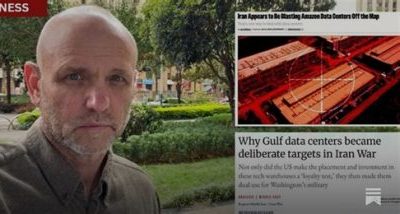
Iran spent $1 million to wipe out $30 billion in data center plans, and take down Amazon in the ME
or go to
Aletho News Archives – Video-Images
From the Archives
What Exactly Was Bin Laden’s Role in 911?
By Tim King | American Herald tribune | March 20, 2017
Osama bin Laden, it’s a name every American knows and loves to hate. After the horrific terrorist attacks on 11 September 2011, former US President George W Bush told his countrymen that this terrorist bin Laden orchestrated the 911 attacks in New York City, Washington DC and Shanksville, Pa. and people believed it. They envisioned his face with a target on it and blamed him for the deaths of thousands of Americans. Why shouldn’t they? No president would lie about something so serious, right?
The real truth may never be known, the Central Intelligence Agency will see to that. But here is what we do know… in the simplest terms: GW Bush told the nation almost immediately that bin Laden was responsible, but Osama bin Laden denied having any involvement in 9/11. Americans are widely familiar with the first part, but almost nobody knows the latter. … continue
Blog Roll
 Aletho News
- Houthis Keep Advancing as the Red Sea Crisis Deepens
- Iran spent $1 million to wipe out $30 billion in data center plans, and take down Amazon in the ME
- Zionist billionaire pressure to silence Macklemore sparks exodus from Ed Sheeran tour
- House Votes to End Iran War for Third Time
- North Korea Slams US Plan for ‘AUKUS 2.0’ with South Korea and Japan
- Prolonging US-Iran Conflict Not Meeting Interests of Int’l Community – China’s Wang Yi
- EU bans former Zelensky aide from parliament
- NATO-backed Kosovo separatist ‘responsible for war crimes’
- US destroying international space law
- SCO Calls for Binding Global Deal to Prevent Arms Race in Space
- If Americans Knew
- U.S. Makes, Israel Takes: The Real Story of U.S.-Israeli Military Cooperation
- Night raids rise in Palestine
- Tucker Carlson interviews Norman Finkelstein about Gaza
- Groups urge Americans to support Van Hollen legislation on Israel’s killing of Americans & Palestinians
- Trump administration plans to send 40,000 tons of bombs to Israel: report
- Sanctions Target Iran’s Government, But Kill Hospitalized 23-Year-Old Woman
- An alternative view on the book “Israel’s Lobby: America in the Grip of a Foreign Power”
- Ed Sheeran’s band Beoga, other opening acts quit tour after Macklemore was dropped over his pro-Palestinian comments
- The assassination attempt on President Trump in Butler and the various Israeli connections to it
- “We Want That the Whole Land Be Jewish”
- No Tricks Zone
- New Study: ‘Global Drought Shows No Detectable Recent Acceleration Under Climate Warming’
- Economic Masterminds: German Socialists Suggest Taxing Productivity Gains Stemming From Using AI
- The South China Sea Has Not Been Cooperating With The Climate Change Narrative
- Energy Crisis: Germany Enters Heating Season With Historically Low Gas Reserve Fill Levels
- New Study: The Antarctic Ice Sheet Gained Mass From 2020-2024 Due To Staggering Snow And Ice Accumulation
- Study: Ocean Heating Rates From Thousands Of Years Ago ‘Dwarf’ Modern Ocean Heating Rates
- Climate Extremists Target, Attack Large-Scale Power Grid Infrastructure In Germany!
- New Study: Antarctic Ice Melt Has Contributed Less Than 1 Centimeter To Sea Level Rise In The Last 30 Years
- Fear Of Debate: Alarmist German Climate Scientist Calls On Mainstream Media To Discredit Skeptic Voices
- End-Of-August Arctic Sea Ice Extent Hasn’t Fallen In 20 Years, Official Data Show!
 Aletho News