Turkey has warned that the United States’ decision to end a decades-old arms embargo on Cyprus would be a “dangerous escalation.”
In a statement issued late Tuesday, the Turkish Foreign Ministry said the US decision “will have no outcome other than hampering efforts toward a settlement on the island and creating a dangerous escalation.”
The US Congress voted Tuesday to lift the arms embargo on Cyprus, which has been in place since 1987. The measure has passed both chambers of Congress as part of a massive defense spending bill, with President Donald Trump likely to sign it.
The bill comes at a time of tensions between Turkey and the US over such issues as Ankara’s purchase of the Russian S-400 system and Washington’s support for Kurdish-led militants in Syria.
Cyprus has been divided into Turkish Cypriot-controlled northern and Greek Cypriot-controlled southern territories since a brief war in 1974, which saw Turkey intervene militarily in response to a military coup on the island sponsored by the Greek military junta of the time.
Greek Cypriots run the island’s internationally recognized government, while Turkish Cypriots have the breakaway territory in the north — only recognized as a “state” by Turkey.
Turkey and the Greek Cyprus, which do not have diplomatic ties, are also involved in a dispute over offshore resources. Ankara says some areas of Cyprus’s offshore maritime zone fall under what it calls the territory of the Turkish Cyprus.
Turkey already has two drilling vessels in the Eastern Mediterranean despite the threat of European Union sanctions.
Turkish President Recep Tayyip Erdoğan has dropped a bombshell by announcing that he could shut down the NATO-controlled Incirlik airbase that hosts U.S. nuclear bombs and the U.S. missile warning radar at Kurecik military base, in response to Washington’s threats of sanctions against Turkey. These nuclear bombs are of course placed purposefully close to Russia. The Incirlik air base in the southern Turkish province of Adana is used by the U.S. Air Force while the U.S. military also maintains a missile warning radar in the Kurecik district in Turkey’s southeastern Malatya province, which is part of NATO’s missile defense system in Europe.
“If it is necessary for us to take such a step, of course, we have the authority… We will close down Incirlik if necessary,” Erdoğan said on A Haber TV on Sunday.
Last week, the Committee on Foreign Affairs of the Senate of the United States Congress approved the “Promoting American National Security and Preventing the Resurgence of ISIS Act” bill that directly targets Turkey’s military and economic apparatus. According to the draft bill, the Turkish acquisition of the powerful Russian S-400 missile defense system gives grounds to impose sanctions against this country, under the Countering America’s Adversaries Through Sanctions Act (CAATSA), including against the Minister of National Defense of Turkey, the Chief of the General Staff of the Turkish Armed Forces, the Commander of the 2nd Army of the Turkish Armed Forces, the Minister of Treasury and Finance of Turkey, the Halkbank and a whole host of other senior officials.
This action could further isolate Turkey from NATO, especially after the latest blow against the Eurasian country came last Thursday when the U.S. Senate finally passed S.Res.150 that recognizes the Turkish perpetrated genocide(1915-1923) against Turkey’s Christian minority that saw millions of Greeks, Armenians, and Assyrians exterminated. There is no doubt the long-awaited U.S. recognition of the genocide is politically motivated, and Erdoğan understands this, threatening to recognize the U.S. genocide against Native Americans.
However, there are key differences between a potential Turkish recognition of the U.S. genocide against the Native Americans and the Turkish genocide against the Christians of Anatolia. There are hundreds of thousands, if not over a million, Greeks, Armenians and Assyrians living in the U.S. who have direct ancestry to genocide survivors who lost their entire lives including houses, farms, shops and other associated wealth. These descendants could pressure Washington to seek compensation from Ankara and could intensify sanctions against Turkey if they refuse too. Although the likelihood of compensation is extremely low, it could be used as a justification to strengthen sanctions against Turkey, which in turn will only push Turkey further away from the U.S./NATO and potentially closer to Russia.
On the other side, although Turkey may acknowledge the genocide against Native Americans, I would imagine there are no Native Americans, or maybe just a few, living in Turkey. Ankara could reciprocate sanctions against the U.S., but they would be virtually ineffectual as the world’s monetary system is still overwhelmingly dominated by the U.S. Dollar, despite efforts by Russia and China to de-Dollarize the international economy.
Turkey’s potential closure of the Incirlik and Kurecik bases from the U.S. military would effectively mean freezing relations with NATO. Even a Turkish reclamation of its military bases poses problems however – the obvious being political, but also the military and budgetary costs. However, discussions of Turkey closing the bases are not new. Ankara believes the Incirlik base was a staging point for the 2016 coup attempt against Erdoğan and has already contemplated kicking NATO out of there.
Despite the threat from Erdoğan, Washington will likely not be fazed by the threat for a number of reasons:
1) Washington has already turned Greece into its Plan B option in case Turkey leaves NATO.
2) Turkey leaving NATO could mean the U.S. backing a number of issues that have been frozen because of Washington’s policy of appeasing Turkey for geostrategic reasons, such as the unresolved status of Cyprus.
3) The Incirlik base is also used by other NATO states at times such as the United Kingdom, Germany, France and Italy, and a Turkish reclamation of the base could see Turkey further souring its relations with the European Union.
Although removing the U.S. military from the Incirlik Airbase would be a huge blow to NATO, Erdoğan is unlikely to do this despite Ankara’s strengthening relations with Moscow. Even if this were the case, the most important question still remains, would U.S. President Donald Trump accept this? It is highly unlikely that Trump will want to surrender the base that is critical for U.S. interests and aggression in the Middle East. Although Greece is a Plan B, it is a Plan B for a reason – it is not as strategically placed as Turkey towards the Middle East, and therefore the U.S. will not surrender such a great advantage it has so easily.
Paul Antonopoulos is a Research Fellow at the Center for Syncretic Studies.
The Kuala Lumpur Summit 2019 hosted by Prime Minister Mahathir Mohamad in the Malaysian capital Kuala Lumpur on December 18-21 was originally conceived as a landmark event in the politics of the Muslim world. It still is, albeit on a wet wicket struggling to tackle a nasty googly that Pakistan Prime Minister Imran Khan threw at the event at the last minute.
To recap, the idea of the KL Summit was born out of a trilateral pow-vow between Turkish President Recep Erdogan, Malaysian Prime Minister Mahathir Mohammed and Pakistan’s Imran Khan in September on the sidelines of the UN GA session in New York.
The common perception of the three countries was that the Muslim World failed to react forcefully enough to the emergent situation affecting the Kashmiri Muslims. Pakistan actively promoted the perception that the leadership of the ummah was not reacting forcefully enough over Muslim issues such as Kashmir.
On November 23, while announcing his decision to host the KL Summit, Mahathir said that the new platform hoped to bring together Islamic leaders, scholars and clerics who would propose solutions to the many problems facing the world’s 1.7 billion Muslims. He disclosed that dignitaries attending the KL Summit would include Erdogan, the Qatari Emir Sheikh Tamim bin Hamad al-Thani, and Imran Khan.
The role of politics in development, food security, preserving national identity, and redistributing wealth were listed as other topics to be discussed, alongside the expulsion of Muslims from their homelands and the categorisation of Islam as the “religion of terrorism”.
In poignant remarks, Mahathir bemoaned that no Muslim country was fully developed, and that some Islamic nations were “failed states”. He said,
“Why is there this problem? There must be a reason behind this. We can only know the reason if we get the thinkers, the scholars, and the leaders to give their observations and viewpoints.
“Perhaps we can take that first step … to help Muslims recover their past glories, or at least to help them avoid the kind of humiliation and oppression that we see around the world today.”
Importantly, Mahathir described the summit as a meeting of minds that had the “same perception of Islam and the problems faced by the Muslims”.
From among the list of invitees, it now turns out that Iranian President Hassan Rouhani will be attending tomorrow’s summit, but King Salman of Saudi Arabia has regretted that the Organisation of Islamic Conference (OIC) is being bypassed.
Mahathir disclosed that King Salman conveyed to him in a phone conversation that it was better that the Muslim issues were discussed in a full-fledged OIC meeting. Mahathir said laconically,
“He (King Salman) wanted to tell me the reasons why he couldn’t make it. He’s afraid that something not good will happen to the Muslims. He has a different opinion from us. He feels that matters like these (Muslim issues) shouldn’t just be discussed by two or three countries, and there should be an OIC meeting and I agreed with him.”
The testy exchange signalled that the Saudi regime sees the KL Summit as a calculated challenge to its leadership of the ummah and as an initiative about laying the foundations for an Islamic alliance.
Mahathir is outspoken but what is less noticed is that his positions actually align closely with those of Turkey and Pakistan. These include the Palestinian question, the situation in Jammu & Kashmir and the persecution of the Rohingya community in Myanmar.
According to the Malaysian news agency Bernama, the KL Summit “aims to revive Islamic civilization, deliberate (over) and find new and workable solutions for problems afflicting the Muslim world, contribute (to) the improvement of the state of affairs among Muslims and Muslim nations, and form a global network between Islamic leaders, intellectuals, scholars, and thinkers.”
In sheer brain power, Saudi Arabia cannot match such an agenda. A sense of frustration has been building up over the past decade or so among the Muslim countries that the OIC is reduced to an appendage of the Saudi foreign policies. Saudi Arabia’s rift with Qatar, its rivalries with Iran, the brutal war in Yemen, the killing of Jamal Khashoggi, etc. also seriously dented Riyadh’s image in the most recent years.
Of course, Saudis hold a big purse and that still translates as influence but the new Islamic forum is poised to move in a direction that is progressive and far more inspiring, with plans to pursue joint projects, including, eventually, the introduction of a common currency.
Mahathir is on record that this mini-Islamic conference could turn into a much grander initiative down the road. Such optimism cannot be disregarded since a growing number of Muslim-majority countries harbour great unease over the near-term prospect of the ascendancy of Crown Prince Mohammed bin Salman as the Saudi king and the next Custodian of the Two Holy Mosques.
Saudi Arabia, anticipating the gambit being thrown down by Mahathir has reacted viciously to undercut the KL Summit. It tore into the summit’s ‘soft underbelly’ by reading the riot act to Imran Khan, which put the fear of god into Imran Khan and how it happened we do not know, but the great cricketer panicked and has since called Mahathir to regret that he cannot attend the KL Summit.
No doubt, it is a big insult to Mahathir’s personal prestige but as the old adage says, beggars cannot be choosers and Imran Khan is left with no choice but to obey the Saudi diktat like a vassal.
With Imran Khan staying away, Mahathir is left to host his counterparts from Turkey, Iran, Qatar and Indonesia. The fizz has gone out of the KL Summit. Nonetheless, Mahathir is not the type of person to forget and forgive. His initial reaction to Imran Khan’s cowardly behaviour shows studied indifference, betraying his sense of hurt.
Pakistan is ultimately the loser here, as its credibility has been seriously dented. Imran Khan was the original promoter of the idea of the three-way axis of Turkey-Pakistan-Malaysia. But to be fair, his modest agenda was to create an exclusive India-baiting regional forum that he can use at will, whereas Mahathir turned it into an unprecedented Islamic forum that is independent of Saudi influence. Perhaps, Mahathir can only blame himself for the overreach.
Turkish navy ships have intercepted an Israeli research vessel in Cypriot waters, over which Ankara claims jurisdiction, forcing it to leave the area in a move that could negatively impact an ambitious Israeli project to pipe natural gas to Europe.
Quoting unnamed senior Israeli officials, Israel’s channel 13 news reported Saturday that the rare incident occurred two weeks ago when Turkish vessels approached Bat Galim.
Turkish navy officers radioed the Israeli ship and demanded to know its business in the area, and then ordered it to leave. The Israeli vessel had no choice but to comply and depart, said the report.
According to the report, the Israeli ship was conducting research in coordination with Cypriot officials and the Cypriot government.
Over the past year, Turkey has sent military ships as well as drilling ships to search for crude oil in the waters.
Recently, tensions have risen between Turkey, Greece, and Cyprus regarding gas fields discovered in the eastern Mediterranean.
In an interview with Reuters in September, Turkish President Tayyip Erdogan accused Greek Cypriots of trying to deprive Northern Cyprus of its rights.
EU member Cyprus and Turkey have argued for years regarding the ownership of fossil fuels in the eastern Mediterranean, where Ankara says Turkish Cypriots are entitled to a share of the resources.
Tensions rose again last month when Turkey signed agreements with Libya on maritime boundaries and military cooperation in the Mediterranean.
Erdogan said the maritime deal with Libya — which maps out a boundary between the two countries in the energy-rich eastern Mediterranean close to the Greek island of Crete — was in line with international law.
Israel’s Channel 13 said tensions could negatively affect an Israeli project to pipe natural gas to Europe. The pipeline is set to pass through Cyprus and Greece’s territorial waters.
According to the report, an Israeli embassy official in Ankara was summoned last week to be warned that the pipeline would require Turkey’s approval since it has to pass through Turkey’s economic waters.
“The Turks are trying to establish themselves as the ones running the show, and that is very worrying,” an Israeli official told Channel 13.
The media in Tel Aviv have reported that the UAE has invested as much as $100 million in an ambitious Israeli project to pipe natural gas to Europe.
Turkey, which does not have diplomatic ties with the Greek Cyprus, has vowed to prevent what it sees as a unilateral move by Greek Cypriots to claim offshore resources. It says some areas of Cyprus’s offshore maritime zone fall under what Ankara calls the territory of the Turkish Cyprus.
The island has been divided into Turkish Cypriot-controlled northern and Greek Cypriot-controlled southern territories since a brief war in 1974, which saw Turkey intervene militarily in response to a Greek-backed military coup on the island to annex Cyprus to Greece.
Greek Cypriots run the island’s government in the south, while Turkish Cypriots have a breakaway state in the north and say offshore resources belong to them, too.
Israel has signed a multilateral deal for the Eastern Mediterranean Pipeline Project with Greece, Italy and Cyprus. The European Union also supports the project.
Israel is already locked in a bitter dispute with Lebanon over tapping Mediterranean energy resources.
Last February, Israel described as “very provocative” a Lebanese tender for projects in two of the Arab country’s 10 offshore blocks in the Mediterranean Sea.
Israel itself has long been developing a number of disputed offshore gas deposits in the Mediterranean Sea, with the Tamar gas field with proven reserves of 200 billion cubic meters already producing gas, while the larger Leviathan field is expected to go online in the coming months.
With the world fixated on Turkish actions against Syria, Greece and Libya at the moment, the Committee on Foreign Affairs of the Senate of the United States Congress approved a bill, “Promoting American National Security and Preventing the Resurgence of ISIS Act,” spearheaded and thoroughly promoted by staunch anti-Syria/Venezuela/Iran/Russia Democratic Senator Robert Menendez who celebrated the bills passing on his Twitter. The Republican-led Senate Foreign Relations Committee voted 18-4 to send the bill for a vote in the full Senate.
The approval of the bill was widely reported in the mainstream media as an “anti-Turkey bill.” Senator Jim Risch, the panel’s Republican chairman, a fellow endorser of the bill with Menendez, said that the approval of this bill is because of the “drift by this country, Turkey, to go in an entirely different direction than what they have in the past. They’ve thumbed their nose at us, and they’ve thumbed their nose at their other NATO allies.”
According to the draft bill, the Turkish acquisition of the powerful S-400 missile defense system gives grounds to impose sanctions against this country, under the Countering America’s Adversaries Through Sanctions Act (CAATSA). In particular, the document restricts the sale of U.S. weapons to Turkey and imposes sanctions on Turkish officials responsible for supplying weapons towards their illegal military operation in Syria.
Turkey signed in December 2017 the first contract with Russia for the purchase of the S-400 for a value of $2.5 billion, which caused tension in relations between Ankara and Washington. The U.S. demanded that Ankara renounce that transaction and buy U.S. Patriot systems, and threatened to delay or cancel the sale of the F-35 fighters to Turkey. Ankara refused to make concessions and assured that its purpose of acquiring Russian systems remains firm.
What was missed, perhaps intentionally by the majority of the mainstream media is that this bill has a heavy anti-Russian/Syrian component to it. Although not as detailed and expansive as the Turkish section of the bill, it claims that “the Russian Federation and Iran continue to exploit a security vacuum in Syria and continue to pose a threat to vital United States national security interests,” without explaining what these security interests are, exactly as we have become accustomed to.
According to the bill, there will be a “list of each Russian person that, on or after such date of enactment, knowingly exports, transfers, or otherwise provides to Syria significant financial, material, or technological support that contributes materially to the ability of the Government of Syria to acquire defense articles, defense services, and related information.” Although the bill has not said which specific Russians, the nature of the bill means that there will be inevitable sanctions against Russia as it is a top weapon exporter to Syria, which will unlikely change despite of the new sanctions. Those in the eventual sanction list will face an American blacklist, which means a ban on entry, freezing of assets in the United States, a ban on doing business with this person for American citizens or companies. At the same time, the bill allows that the US President can consider each case separately and refuse to impose sanctions.
These proposed new sanctions that will have to pass the House of Representatives, which passed its own anti-Turkish sanctions bill by an overwhelming 403-16 vote in October, is part of a wider effort for the U.S. to keep pressurizing Russia’s economy. On December 9, the committees of both chambers of the U.S. Congress previously agreed on the military budget for 2020, which includes restrictions against the Nord Stream 2 and Turk Stream pipelines to bring Russian energy to Europe, infrastructures designed to raise Europe’s energy security. The U.S. bill that provides sanctions against companies participating in the laying of the Nord Stream 2 gas pipeline aims to obtain unilateral advantages in the gas area to the detriment of the interests of the countries of Europe. This prompted the chairman of the Board of Directors of the Russian-German Foreign Chamber of Commerce, Matthias Schepp, to explain that the new measures against Nord Stream 2 affect not only Russia, but, above all, European companies and Germany’s energy interests.
Washington is frustrated that European energy policy is decided in Europe, not in the U.S., which calls into question the cooperation between the U.S. and Europe. It is a very risky measure and Europe would need to have a blunt attitude of rejection of these measures imposed by the U.S., because its own economy is at risk.
Effectively, the “Promoting American National Security and Preventing the Resurgence of ISIS Act,” which strangely targets Russia who had a greater role than the U.S. in defeating ISIS terrorists, is just another way for Washington to warn other countries not to buy the S-400 or Russian military equipment or engage in energy diplomacy with Moscow. It is unlikely that this will deter states from conducting arms and energy deals with Russia as Moscow has been pioneering anti-sanction measures to protect financial transactions without punishment, and rather it demonstrates a Washington that is becoming increasingly desperate in the Era of Multipolarity.
Paul Antonopoulos is a Research Fellow at the Center for Syncretic Studies.
Damascus – President Bashar al-Assad said that Syria is going to come out of the war stronger and the future of Syria is promising and the situation is much better, pointing out to the achievements of the Syrian Arab army in the war against terrorism.
The President, in an interview given to Italian Rai News 24 TV on November 26,2019 and was expected to be broadcast on December 2nd and the Italian TV refrained from broadcasting it for non-understandable reasons, added that Europe was the main player in creating chaos in Syria and the problem of refugees in it was because of its direct support to terrorism along with the US, Turkey and many other countries.
President al-Assad stressed that since the beginning of the narrative regarding the chemical weapons, Syria has affirmed it didn’t use them.
The President affirmed that what the OPCW organization did was to fake and falsify the report about using chemical weapons, just because the Americans wanted them to do so. So, fortunately, this report proved that everything we said during the last few years, since 2013, is correct.
Following is the full text of the interview;
Question 1: Mr. President, thanks for having us here. Let us know please, what’s the situation in Syria now, what’s the situation on the ground, what is happening in the country?
President Assad: If we want to talk about Syrian society: the situation is much, much better, as we learned so many lessons from this war and I think the future of Syria is promising; we are going to come out of this war stronger.
Talking about the situation on the ground: The Syrian Army has been advancing for the last few years and has liberated many areas from the terrorists, there still remains Idleb where you have al-Nusra that’s being supported by the Turks, and you have the northern part of Syria where the Turks have invaded our territory last month.
So, regarding the political situation, you can say it’s becoming much more complicated, because you have many more players that are involved in the Syrian conflict in order to make it drag on and to turn it into a war of attrition.
Question 2: When you speak about liberating, we know that there is a military vision on that, but the point is: how is the situation now for the people that decided to be back in society? The process of reconciliation, now at what point? Is it working or not?
President Assad: Actually, the methodology that we adopted when we wanted to create let’s say, a good atmosphere – we called it reconciliation, for the people to live together, and for those people who lived outside the control of government areas to go back to the order of law and institutions. It was to give amnesty to anyone, who gives up his armament and obey the law. The situation is not complicated regarding this issue, if you have the chance to visit any area, you’ll see that life is getting back to normal.
The problem wasn’t people fighting with each other; it wasn’t like the Western narrative may have tried to show – as Syrians fighting with each other, or as they call it a “civil war,” which is misleading. The situation was terrorists taking control of areas, and implementing their rules. When you don’t have those terrorists, people will go back to their normal life and live with each other. There was no sectarian war, there was no ethnic war, there was no political war; it was terrorists supported by outside powers, they have money and armaments, and they occupy those areas.
Question 3: Aren’t you afraid that this kind of ideology that took place and, you know, was the basis of everyday life for people for so many years, in some ways can stay in the society and sooner or later will be back?
President Assad: This is one of the main challenges that we’ve been facing. What you’re asking about is very correct. You have two problems. Those areas that were out of the control of government were ruled by two things: chaos, because there is no law, so people – especially the younger generation – know nothing about the state and law and institutions.
The second thing, which is deeply rooted in the minds, is the ideology, the dark ideology, the Wahabi ideology – ISIS or al-Nusra or Ahrar al-Cham, or whatever kind of these Islamist terrorist extremist ideologies.
Now we have started dealing with this reality, because when you liberate an area you have to solve this problem otherwise what’s the meaning of liberating? The first part of the solution is religious, because this ideology is a religious ideology, and the Syrian religious clerics, or let’s say the religious institution in Syria, is making a very strong effort in this regard, and they have succeeded; they succeeded at helping those people understanding the real religion, not the religion that they’ve been taught by al-Nusra or ISIS or other factions.
Question 4: So basically, clerics and mosques are part of this reconciliation process?
President Assad: This is the most important part. The second part is the schools. In schools, you have teachers, you have education, and you have the national curriculum, and this curriculum is very important to change the minds of those young generations. Third, you have the culture, you have the role of arts, intellectuals, and so on. In some areas, it’s still difficult to play that role, so it was much easier for us to start with the religion, second with the schools.
Question 5: Mr. President, let me just go back to politics for an instant. You mentioned Turkey, okay? Russia has been your best ally these years, it’s not a secret, but now Russia is compromising with Turkey on some areas that are part of Syrian area, so how do you assess this?
President Assad: To understand the Russian role, we have to understand the Russian principles. For Russia, they believe that international law – and international order based on that law – is in the interest of Russia and in the interest of everybody in the world. So, for them, by supporting Syria they are supporting international law; this is one point. Secondly, being against the terrorists is in the interest of the Russian people and the rest of the world.
So, being with Turkey and making this compromise doesn’t mean they support the Turkish invasion; rather they wanted to play a role in order to convince the Turks that you have to leave Syria. They are not supporting the Turks, they don’t say “this is a good reality, we accept it and Syria must accept it.” No, they don’t. But because of the American negative role and the Western negative role regarding Turkey and the Kurds, the Russians stepped in, in order to balance that role, to make the situation… I wouldn’t say better, but less bad if you want to be more precise. So, in the meantime, that’s their role. In the future, their position is very clear: Syrian integrity and Syrian sovereignty. Syrian integrity and sovereignty are in contradiction with the Turkish invasion, that is very obvious and clear.
Question 6: So, you’re telling me that the Russians could compromise, but Syria is not going to compromise with Turkey. I mean, the relation is still quite tense.
President Assad No, even the Russians didn’t make a compromise regarding the sovereignty. No, they deal with reality. Now, you have a bad reality, you have to be involved to make some… I wouldn’t say compromise because it’s not a final solution. It could be a compromise regarding the short-term situation, but in the long-term or the mid-term, Turkey should leave. There is no question about it.
Question 7: And in the long-term, any plan of discussions between you and Mr. Erdogan?
President Assad: I wouldn’t feel proud if I have to someday. I would feel disgusted to deal with those kinds of opportunistic Islamists, not Muslims, Islamists – it’s another term, it’s a political term. But again, I always say: my job is not to be happy with what I’m doing or not happy or whatever. It’s not about my feelings, it’s about the interests of Syria, so wherever our interests go, I will go.
Question 8: In this moment, when Europe looks at Syria, apart from the considerations about the country, there are two major issues: one is refugees, and the other one is the Jihadists or foreign fighters coming back to Europe. How do you see these European worries?
President Assad: We have to start with a simple question: who created this problem? Why do you have refugees in Europe? It’s a simple question: because of terrorism that’s being supported by Europe – and of course the United States and Turkey and others – but Europe was the main player in creating chaos in Syria. So, what goes around comes around.
Question 9: Why do you say it was the main player?
President Assad: Because they publicly supported, the EU supported the terrorists in Syria from day one, week one or from the very beginning. They blamed the Syrian government, and some regimes like the French regime sent armaments, they said – one of their officials – I think their Minister of Foreign Affairs, maybe Fabius said “we send.” They sent armaments; they created this chaos. That’s why a lot of people find it difficult to stay in Syria; millions of people couldn’t live here so they had to get out of Syria.
Question 10: In this moment, in the region, there are turmoil, and there is a certain chaos. One of the other allies of Syria is Iran, and the situation there is getting complicated. Does it have any reflection on the situation in Syria?
President Assad: Definitely, whenever you have chaos, it’s going to be bad for everyone, it’s going to have side-effects and repercussions, especially when there is external interference. If it’s spontaneous, if you talk about demonstrations and people asking for reform or for a better situation economically or any other rights, that’s positive. But when it’s for vandalism and destroying and killing and interfering from outside powers, then no – it’s definitely nothing but negative, nothing but bad, and a danger on everyone in this region.
Question 11: Are you worried about what’s happening in Lebanon, which is really the real neighbor?
President Assad: Yes, in the same way. Of course, Lebanon would affect Syria more than any other country because it is our direct neighbor. But again, if it’s spontaneous and it’s about reform and getting rid of the sectarian political system, that would be good for Lebanon. Again, that depends on the awareness of the Lebanese people in order not to allow anyone from the outside to try to manipulate the spontaneous movement or demonstrations in Lebanon.
Question 12: Let’s go back to what is happening in Syria. In June, Pope Francis wrote you a letter asking you to pay attention and to respect the population, especially in Idleb where the situation is still very tense, because there is fighting there, and when it comes even to the way prisoners are treated in jails. Did you answer him, and what did you answer?
President Assad: The letter of the Pope was about his worry for civilians in Syria and I had the impression that maybe the picture in the Vatican is not complete. That’s to be expected, since the mainstream narrative in the West is about this “bad government” killing the “good people;” as you see and hear in the same media – every bullet of the Syrian Army and every bomb only kills civilians and only hospitals! they don’t kill terrorists as they target those civilians! which is not correct.
So, I responded with a letter explaining to the Pope the reality in Syria – as we are the most, or the first to be concerned about civilian lives, because you cannot liberate an area while the people are against you. You cannot talk about liberation while the civilians are against you or the society. The most crucial part in liberating any area militarily is to have the support of the public in that area or in the region in general. That has been clear for the last nine years and that’s against our interests.
Question 13: But that kind of call, in some ways, made you also think again about the importance of protecting civilians and people of your country.
President Assad: No, this is something we think about every day, not only as morals, principles and values but as interests. As I just mentioned, without this support – without public support, you cannot achieve anything… you cannot advance politically, militarily, economically and in every aspect. We couldn’t withstand this war for nine years without the public support and you cannot have public support while you’re killing civilians. This is an equation, this is a self-evident equation, nobody can refute it. So, that’s why I said, regardless of this letter, this is our concern.
But again, the Vatican is a state, and we think that the role of any state – if they worry about those civilians, is to go to the main reason. The main reason is the Western role in supporting the terrorists, and it is the sanctions on the Syrian people that have made the situation much worse – and this is another reason for the refugees that you have in Europe now. You don’t want refugees but at the same time you create the situation or the atmosphere that will tell them “go outside Syria, somewhere else,” and of course they will go to Europe. So, this state, or any state, should deal with the reasons and we hope the Vatican can play that role within Europe and around the world; to convince many states that you should stop meddling in the Syrian issue, stop breaching international law. That’s enough, we only need people to follow international law. The civilians will be safe, the order will be back, everything will be fine. Nothing else.
Question 14: Mr. President, you’ve been accused several times of using chemical weapons, and this has been the instrument of many decisions and a key point, the red line, for many decisions. One year ago, more than one year ago, there has been the Douma event that has been considered another red line. After that, there has been bombings, and it could it have been even worse, but something stopped. These days, through WikiLeaks, it’s coming out that something wrong in the report could have taken place. So, nobody yet is be able to say what has happened, but something wrong in reporting what has happened could have taken place.
President Assad: We have always – since the beginning of this narrative regarding the chemical weapons – we have said that we didn’t use it; we cannot use it, it’s impossible to be used in our situation for many reasons, let’s say – logistical reasons.
Intervention: Give me one.
President Assad: One reason, a very simple one: when you’re advancing, why would you use chemical weapons?! We are advancing, why do we need to use it?! We are in a very good situation so why use it, especially in 2018? This is one reason.
Second, very concrete evidence that refutes this narrative: when you use chemical weapons – this is a weapon of mass destruction, you talk about thousands of dead or at least hundreds. That never happened, never – you only have these videos of staged chemical weapons attacks. In the recent report that you’ve mentioned, there’s a mismatch between what we saw in the video and what they saw as technicians or as experts. The amount of chlorine that they’ve been talking about: first of all, chlorine is not a mass destruction material, second, the amount that they found is the same amount that you can have in your house, it exists in many households and used maybe for cleaning and whatever. The same amount exactly. That’s what the OPCW organisation did – they faked and falsified the report, just because the Americans wanted them to do so. So, fortunately, this report proved that everything we said during the last few years, since 2013, is correct. We were right, they were wrong. This is proof, this is concrete proof regarding this issue. So, again, the OPCW is biased, is being politicized and is being immoral, and those organisations that should work in parallel with the United Nations to create more stability around the world – they’ve been used as American arms and Western arms to create more chaos.
Question 15: Mr. President, after nine years of war, you are speaking about the mistakes of the others. I would like you to speak about your own mistakes, if any. Is there something you would have done in a different way, and which is the lesson learned that can help your country?
President Assad: Definitely, for when you talk about doing anything, you always find mistakes; this is human nature. But when you talk about political practice, you have two things: you have strategies or big decisions, and you have tactics – or in this context, the implementation. So, our strategic decisions or main decisions were to stand against terrorism, to make reconciliation and to stand against the external meddling in our affairs. Today, after nine years, we still adopt the same policy; we are more adherent to this policy. If we thought it was wrong, we would have changed it; actually no, we don’t think there is anything wrong in this policy. We did our mission; we implemented the constitution by protecting the people.
Now, if you talk about mistakes in implementation, of course you have so many mistakes. I think if you want to talk about the mistakes regarding this war, we shouldn’t talk about the decisions taken during the war because the war – or part of it, is a result of something before.
Two things we faced during this war: the first one was extremism. The extremism started in this region in the late 60s and accelerated in the 80s, especially the Wahabi ideology. If you want to talk about mistakes in dealing with this issue: then yes, I will say we were very tolerant of something very dangerous. This is a big mistake we committed over decades; I’m talking about different governments, including myself before this war.
The second one, when you have people who are ready to revolt against the order, to destroy public properties, to commit vandalism and so on, they work against their country, they are ready to go and work for foreign powers – foreign intelligence, they ask for external military interference against their country. So, this is another question: how did we have those? If you ask me how, I would tell you that before the war we had more than 50,000 outlaws that weren’t captured by the police for example; for those outlaws, their natural enemy is the government because they don’t want to go to prison.
Question 16: And how about also the economic situation? Because part of it – I don’t know if it was a big or small part of it – but part of it has also been the discontent and the problems of population in certain areas in which economy was not working. Is it a lesson learned somewhere?
President Assad: It could be a factor, but definitely not a main factor. Some people talk about the four years of drought that pushed the people to leave their land in the rural areas to go to the city… it could be a problem, but this is not the main problem. They talked about the liberal policy… we didn’t have a liberal policy, we’re still socialist, we still have a public sector – a very big public sector in government. You cannot talk about liberal policy while you have a big public sector. We had growth, good growth.
Of course, in the implementation of our policy, again, you have mistakes. How can you create equal opportunities between people? Between rural areas and between the cities? When you open up the economy, the cities will benefit more, that will create more immigration from rural areas to the cities… these are factors, that could play some role, but this is not the issue. In the rural areas where you have more poverty, the money of the Qataris played a more actual role than in the cities, that’s natural. You pay them in half an hour what they get in one week; that’s very good for them.
Question 17: We are almost there, but there are two more questions that I want to ask you. One is about reconstruction, and reconstruction is going to be very costly. How can you imagine to afford this reconstruction, who could be your allies in reconstruction?
President Assad: We don’t have a big problem with that. Talking that Syria has no money… no, actually Syrians have a lot of money; the Syrian people around the world have a lot of money, and they want to come and build their country. Because when you talk about building the country, it is not giving money to the people, it’s about getting benefit – it’s a business. So, many people, not only Syrians, want to do business in Syria. So, talking about where you can have funds for this reconstruction, we already have, but the problem is that these sanctions prevent those businessmen or companies from coming and working in Syria. In spite of that, we started and in spite of that, some foreign companies have started finding ways to evade these sanctions and we have started planning. It’s going to be slow, without the sanctions we wouldn’t have a problem with funding.
Question 18: Ending on a very personal note, Mr. President; do you feel like a survivor?
President Assad: If you want to talk about a national war like this, where nearly every city has been harmed by terrorism or external bombardment and other things, then you can talk about all the Syrians as survivors. I think this is human nature: to be a survivor.
Intervention: And you yourself?
President Assad: I’m a part of those Syrians. I cannot be disconnected from them; I have the same feeling. Again, it’s not about being a strong person who is a survivor. If you don’t have this atmosphere, this society, or this incubator to survive, you cannot survive. It’s collective; it’s not a single person, it’s not a one-man show.
Tensions in the Eastern Mediterranean are rapidly rising after Turkish President Recep Tayyip Erdoğan met with a Libyan official of the internationally recognized Government of National Accord (GNA), based in the Libyan capital of Tripoli, in Ankara last week. They agreed on their own Economic Exclusive Zone that penetrates into Greek and Cypriot waters, in violation of the United Nations Convention Law of the Sea (UNCLOS) that favors Cypriot and Greek claims, a major reason why Turkey is only one of 15 UN members, out of 193, that has not signed it. Although Turkey claims it is acting within international law to enter the oil and gas-rich Greek and Cypriot waters, it never references which international law. This leads to the simple question of why Turkey has not signed UNCLOS if international law supposedly favors their claim?
The Turkish-GNA provocation against Greece comes as only last month Pakistan and Turkey conducted naval exercises where Pakistan violated Greek and Cypriot air and maritime space several times and harassed Cypriot merchant ships. This demonstrates that Turkey is bolstering its alliances to force its complete hegemony over the Eastern Mediterranean. This is to expand their maritime space in violation of international law to exploit the rich deposits of gas and oil in the region.
However, Turkey has once again defied international law, remembering the illegal invasion of northern Cyprus and Syria among many. This has now opened up a new quagmire that Erdoğan has probably not expected. With the NATO destruction of Libya in 2011, in which both Greece and Turkey took a minor part, the country has been plagued by tribalism, feudalism and Islamic radicalism, with two major forces emerging from the mess – the GNA in coalition with the Muslim Brotherhood, and the Libyan National Army (LNA) led by General Khalifa Haftar and based in eastern Libya. This is unsurprising since Turkey has a long history of supporting the Muslim Brotherhood.
Erdoğan has opened up a pandora’s box in Libya that will now surely backfire on him and see the dismantlement of the GNA. The GNA is now becoming increasingly isolated since Saudi Arabia, the United Arab Emirates and Egypt have sworn to back General Haftar with weapons and money. It is expected that with the arrival of new funds and weapons, Haftar will continue his assault to take Tripoli which he began in March. One major reason for this new support for the LNA is that Greece, Cyprus and Egypt are in a strategic regional alliance to protect their respective EEZ against Turkish aggression.
Haftar has also controversially announced that he wants relations with Israel. His desires for relations with Israel, a rarity among Muslim-majority countries, will surely bring Haftar more international recognition and legitimacy as a “reward,” especially crucial as the majority of the world recognizes the Tripoli government.
A delegation of U.S. diplomats recently asked Haftar to halt military operations, citing that it will supposedly allow Russia’s military invasion of Libya. Haftar refused. Haftar’s Secretary of State said that the United States is completely wrong, as Libya has become a huge arena for settling accounts among regional powers – and this is true if we consider that the Saudis, Emirates and Egyptians are backing the LNA, while the Turks and Qataris backs the GNA.
Rather than being in compliance with international law, Erdoğan signed with the GNA an illegal agreement to carve out the Eastern Mediterranean for its own plans. Greece has given the GNA time until today to retract their deal with Turkey. Although Greece on the international scene is a minor player, it does wield significant influence in the Eastern Mediterranean and will use NATO and EU mechanisms to convince member states to retract their recognition of the GNA, which will only further isolate Turkey as it has attempted to build an alliance to counter the Greek-Cypriot-Egyptian military partnership.
In a rare occurrence, both the U.S. and Russia have criticized Turkey’s aggression and escalation in the Eastern Mediterranean, with the US State Department describing the Turkish and GNA move as “unhelpful” and “provocative.”
It is unlikely this will make a difference as it is expected that the GNA will adamantly refuse to renounce its agreement with Turkey, which will push Greece to back the LNA and encourage NATO and EU members to do the same. At the very minimum, the Saudi-Emirati-Egyptian tripartite has used Turkey’s aggression in the Eastern Mediterranean as an excuse to back the LNA, providing him with the money, weapons, intelligence and other resources to overcome the Turkish-backed GNA.
With Saif Gaddafi, the second son of Muammar Gaddafi, also announcing his support for Haftar, there is every potential that the internationally recognized GNA will have a multitude of pressure from NATO, the EU, the Saudi-Emirati-Egyptian alliance, and from Haftar and Gaddafi supporters. Erdoğan’s desperate pursuit for regional hegemony was first received with applause domestically, but it appears he has now opened a pandora’s box in Libya that is now likely to backfire on him.
Paul Antonopoulos is a Research Fellow at the Center for Syncretic Studies.
Father Hovsep Bedoyan, the head of the Armenian Catholic community in Qamishli, and the priest’s father, Abraham Bedoyan, were killed November 11, on the road leading from Qamishli to Deir Ez Zor, where they were headed to check on the rebuilding of the Forty Martyr’s Armenian Apostolic Church in Deir Ezzor, which was destroyed in 2014 by terrorists who targeted Christians and churches. Deacon Fati Sano of the Al-Hasakeh church was injured in the attack when the car was ambushed at a checkpoint by masked gunmen on motorcycles, which shot at point-blank range. The car they drove was inscribed with the Armenian Church’s logo. The same day, a series of bomb blasts in Qamishli occurred, targeting the Armenian Catholic church, an Assyrian Christian-owned business, and a Catholic school, killing at least 6 people and wounded 22 others. More than 100,000 ethnic Armenians lived in Syria, mainly in the province of Aleppo prior to 2011; however, after the constant targeting of Christians by the Free Syrian Army (FSA) beginning in 2011, thousands have fled and many hundreds went to Armenia, who offered the Syrians a visa, when most of the world had shut its doors to them.
Tens of thousands of Christians from the Assyrian minority fled attacks in 2015, and have not returned. Christians in Homs were targeted very early in 2011 by the FSA, with churches attacked, burned and priests killed. Christians in Damascus were dodging missiles fired into Bab Touma by terrorists, in East Ghouta, until the Syrian Arab Army defeated them and they could walk again safely on the street called straight, from Bible passages about Saint Paul.
In September 2012, the large Christian neighborhood in Aleppo, Azizia, fought the FSA, with Christian civilians holding arms to defend their homes and churches. George, an Armenian Christian of Aleppo said, “The Armenians are fighting because they believe the FSA are sent by their Turkish oppressors to attack them, the Christians want to defend their neighborhoods.”
“FSA snipers were on the rooftops and they were attacking the Maronite church and Armenian residents there,” said a former clergyman calling himself John. A Syrian Armenian mother said, “They are shouting ‘the Alawites to the graves and the Christians to Beirut.”
While many Syrian Christians have resisted leaving Syria, for the life of a refugee abroad. Many have gone even though they were living in safe areas, such as the coast. They saw their Christian countrymen leaving in large numbers, and they feared that the FSA terrorists that the Obama administration was supporting would win, and in that case, they could never live safely in Syria.
Father Hovsep Bedoyan had been visiting Deir Ez Zor every 2 weeks while overseeing the rebuilding of the church there. The France-based association, L’Oeuvre d’Orient, is a Catholic charity aimed at reconstructing infrastructure for the return of the Christian community. Monseigneur Pascal Gollnisch, the group’s head, pointed at Turkey’s recent invasion of Northern Syria: “It is the responsibility of all occupying forces to protect the safety of the local Christian minority,” he insisted.
The United Nations (UN) estimates that almost 200,000 people have been displaced by the Turkish invasion, dubbed “Operation Peace Spring”, during which there have been eyewitness accounts of summary executions, beatings, and torture, unlawful detention, and kidnappings by the Turkish military and the FSA, who are Radical Islamic terrorists, employed as mercenaries.
The FSA is the Turkish backed terrorists/mercenaries
“It was sadly learned that a cleric from the Syrian Armenian community was killed in a vicious attack in the area under the control of the terrorist organization PYD/YPG/PKK,” the Turkish Foreign Ministry said in a written statement, which deflected responsibility, and blamed the Syrian Kurds who had been allied to the US, and denying their own FSA mercenaries were the actual killers. ISIS has claimed responsibility for the killings, but the FSA and ISIS are allies, and sources close to the events on the ground have said it was the FSA who killed them, and ISIS only issued the claim of responsibility to shield the blame from the FSA.
FSA history in Syria and sectarianism
The FSA and its political wing, the SNC, have never been secular or moderate. The founding members of the SNC and FSA were members of the Muslim Brotherhood. Their goal for Syria has always been to establish an Islamic government, thus abolishing the secular Ba’ath Party as well as the Syrian Social Nationalist Party (SSNP).
“The Free Syrian Army practically doesn’t exist,” Kamal Sido, a Mideast expert at the human rights group Society for Threatened Peoples (GfbV) told Germany’s Deutschlandfunk broadcaster. “The Free Syrian Army is a smokescreen hiding various names, and if you look at the names, at these groups’ videos, you’ll find they are radical Islamist, Jihadist groups.”
The FSA was not only fighting the Syrian government but they were also killing, raping, maiming and kidnapping unarmed Syrian civilians, most of whom were Sunni Muslims, like themselves. On July 20, 2017, President Trump cut the CIA’s covert program to equip and train the FSA.
The CIA program began in 2013 by Obama to overthrow President Assad; however, CIA officials observed that many FSA had joined ISIS and other radical groups, and feared the weapons they gave the group might end up with ISIS.
The Marmarita massacre
On August 17, 2013, in Marmarita, Amin Nakour, Maya Barshini, Atalla Aboud, and Ibrahim Saadi were attending a Christian celebration to honor the annual commemoration of “Mother Mary’s Day”. The small village of Marmarita sits in the historic “Valley of the Christians” which is near Homs. It was a hot August night, and Christian party-goers were suddenly attacked the FSA and their allies. The four were killed when they attempted to flee the party in a car. The FSA and their allies, have vowed to make Syria a Sunni Muslim State, and have targeted Christians and minorities for 8 years.
The invasion, occupation, and destruction of Kessab
On March 21, 2014, Kessab was attacked when shelling from the Turkish side of the border rained down on the undefended Armenian village, sending its 2,000 residents into panic. Over 20,000 fanatics from the FSA and its allies came pouring over the border. They desecrated all 3 churches, and looted the village’s graves, before scattering the bones of the deceased around the town. The FSA held 26 elderly Armenians against their will for forty days in Turkey, where the FSA kidnappers brought the US Ambassador to Turkey, Francis J. Riccardone, Jr., to visit the elderly captives, but offered no help or release.
Samuel Poladian, who stayed in Kessab for the 3-month occupation, claims he heard Turkish military helicopters overhead on the morning of the invasion, and that Turkey assisted in the invasion.
Monseigneur Ayvazian said, ”They burned all my books and documents, many of them very old, and left my library with nothing but 60cm of ash on the floor.” He has a photo of the church altar, which was desecrated by the FSA before the Syrian Arab Army liberated Kessab on June 15, 2014. The Armenians claim the Kessab attack, which was directed solely against Armenian Christians, was Turkey’s brutal way of showing the Armenians and the Syrian government that they can attack at any time.
Armenian Church in Deir Ez Zor destroyed
On November 10, 2014, terrorists blew up the Armenian Church in Deir el-Zour, which is dedicated to the 1.5 million Armenians slaughtered by the Turks during the 1915 genocide, when many hundreds of thousands of victims died in death camps around Deir el-Zour. Because the FSA has received arms from Turkey, the destruction of the church is regarded by Armenians as crimes carried out by Turks, harkening back to the genocide. “During the Armenian genocide, the Turks entered the church and killed its priest, Father Petrus Terzibashian, in front of the congregation,” Monseigneur Ayvazian said, adding “Then they threw his body into the Euphrates. This time when the Islamists came, our priest there fled for his life.”
The Turkish hatred of Armenians
The 19th century Armenian Surp Asdvadzadzin Church in Gurun district of Sivas (Sebastia), Turkey, will reopen as a museum. At different times the church has been used as a prison, movie theater, storeroom, and wedding hall. The local mayor hopes it will boost the development of tourism in the region. That is the stark reality in Turkey, where Muslims account for 98% of the population, compared to the large Christian minority in Syria. In Turkey, they have tried to erase their Christian history, and have used the old Armenian churches as museums, or locked up or ruined them.
The Armenian Genocide, Turkish denial, the US House recognition
The Armenian Genocide was the systematic mass extermination and expulsion of 1.5 million ethnic Armenians within the Ottoman Empire, from approximately 1914 to 1923. Other ethnic groups were similarly targeted for extermination; such as Assyrians and the Greeks, also strictly Christians. Mass executions were followed by the deportation of women, children, the elderly, and the infirm on death marches leading to Deir Ez Zor, which were driven forward by military escorts, as the deportees were deprived of food and water and subjected to periodic robbery, rape, and massacre.
On Oct. 29, 2019, the US House voted overwhelmingly to formally recognize the Armenian genocide and denounce it. Lawmakers had previously failed to support such a resolution to preserve the United States’ relationship with Turkey, a NATO ally that has steadfastly denied that the atrocities amounted to genocide. Livid at Turkey’s recent bloody military invasion in Syria, lawmakers saw a possible tie to the Armenian genocide, as many feared the withdrawal of American forces would lead to ethnic cleansing in northeast Syria.
The “Syrian regime” and chemical weapons has become a constant mantra in the Western World and has become synonymous with the Syrian War since it began in 2011. One of the most famous cases was the April 2018 chemical weapon attack in the Damascene satellite city of Douma that led to the U.S., UK and France conducting airstrikes against Syrian Army positions, despite the lack of evidence that the Syrian government was responsible for the incident.
The April 7, 2018 chemical incident killed between 40 and 50 people and was followed up by the Western Powers attack against Syria exactly a week later. Strangely though, the attack took place just mere hours before the Organization for the Prohibition of Chemical Weapons (OPCW) inspectors arrived in Syria to investigate the attack. The U.S., UK and France knew that the eventual OPCW report would not match their claims and allegations against the Syrian government, and were quick to act in wasting their people’s tax dollars by dropping bombs on the Arab country.
The final OPCW report would not match the first report made by the Fact-Finding mission that were actually on the ground in Syria. An email released by whistleblowing Wikileaks on the weekend found that the final OPCW report on the Douma incident had been manipulated and changed by the Office of the Director-General of the OPCW, then held by Turkish diplomat Ahmet Üzümcü. This is an extremely disturbing discovery as the OPCW claims to have a “neutral role” by not assigning blame for chemical weapon use, but to find out the details of how the attack was conducted. This however was reversed last year with the OPCW being given permission to investigate perpetrators – but they still kept the mythology that they are “neutral.”
Although the report did not assign blame, the e-mail claims that the report “morphed into something quite different to what was originally drafted” and that “a bias has been introduced into the report, undermining its credibility” and that it “is disingenuous.” This was of course to bring the illusion that Syria was responsible for the attack, despite no tangible evidence.
In March, the OPCW report claimed that chlorine was the likely agent used in last year’s attack, but the newly released email explains that this claim “is highly misleading and not supported by the facts.”
“Omitting this section of the report has a serious negative impact on the report as this section is inextricably linked to the chemical agent identified… In this case, the confidence in the identity of chlorine or any other choking agent is drawn into question precisely because of the inconsistency with the reported and observed symptoms. The inconsistency was not only noted by the fact-finding mission team, but strongly supported by three toxicologists with expertise in exposure to chemical warfare agents”, the e-mail revealed.
The email then makes a final request that the original report be released in “its entirety” as the author fears that the manipulated report does not “reflect the work of the team” and “would negatively impact on the perceived credibility of the report, and by extension that of the Organisation.”
It must be remembered that when the OPCW report was released in March 2019, nearly a whole year after the incident. The released report ignored evidence provided by the Russian Foreign Ministry that the Al-Qaeda affiliated White Helmets were responsible for the attack, and that rather the report was attempting to justify the U.S.-led attack against Syria.
However, the release by WikiLeaks was only the final nail in the coffin confirming that the OPCW is not “neutral” and rather highly politicized. It was revealed only last week by the Grayzone that a second whistleblower from the OPCW came forward to accuse the top leadership of the organisation of suppressing critical evidence because of pressure from the U.S.
This demonstrates that there is a major rift between the actual inspectors on the ground and the higher-level officials of the organization who are willingly submitting to U.S. pressures despite trying to maintain their credibility of being neutral. The very appointment of Üzümcü, a former Turkish ambassador to Israel and a former Permanent Representative of Turkey to NATO, demonstrates that his very appointment had political motivations knowing Ankara’s aggressive foreign policy towards Syria since the beginning of the war.
There can be little doubt now that the claim of neutrality is far from reality and rather the top leadership of the OPCW are willing to omit, manipulate and change facts that were on the ground and discovered by their own Mission at the behest of the U.S. so it could pressure Syria and legitimize the illegal U.S.-led attack. This can only bring into question now the legitimacy of all the other chemical weapon attacks blamed on the Syrian government over the course of many years.
In addition, the OPCW should be the center of wide condemnation from the international community and the United Nations, who once shared a Joint Mission with the OPCW to remove Syria’s chemical weapons from October 2013 to September 2014. The OPCW has now lost all credibility and should be replaced by a new organization that does not appoint controversial Director-Generals or submit to pressure from external forces, like the U.S., and perhaps even Turkey.
However, the most telling of the politicization of the OPCW occurred at yesterday’s annual OPCW forum in the Hague, where the organization vehemently defended themselves against the well-timed Wikileaks expose. Fernando Arias, the current OPCW Director-General, defended the manipulated report, saying: “the nature of any thorough inquiry for individuals in a team is to express subjective views. While some of these diverse views continue to circulate in some public discussion forums, I would like to reiterate that I stand by the independent, professional conclusion [of the investigation].”
Simply put, WikiLeaks has helped prove that the OPCW can no longer be trusted and certainly is not neutral. Britain and France unsurprisingly at yesterday’s OPCW forum also defended the initial report and rejected the allegations of doctoring. But this of course was always to be expected.
Paul Antonopoulos is a Research Fellow at the Center for Syncretic Studies.
Washington officials are reportedly demanding that Turkey “destroy or return” its Russian-made S-400 air defense systems to get back in the good books and rejoin the F-35 fighter program – but Ankara has no intention of complying.
After a meeting between President Donald Trump and Turkish President Recep Tayyip Erdogan at the White House last week, Erdogan noted that Trump’s attitude to resolving the F-35 standoff was “positive,” but offered no specifics. An unnamed State Department official, however, told Reuters on Thursday that ditching the S-400 is a precondition for rejoining the F-35 program.
“There is room for Turkey to come back to the table,” the official said at a briefing. “They know that to make this work they need to either destroy or return or somehow get rid of the S-400.”
However, far from scrapping the Russian missiles, Turkey is pressing ahead and activating them as planned, the country’s defense minister, Hulusi Akar, told lawmakers in parliament on Thursday. Akar said that the relevant personnel are still undergoing training, after which “we will conduct our planned activities” with the new missiles.
Akar’s comment’s build on Erdogan’s promise last week not to ditch the S-400, and Foreign Minister Mevlut Cavusoglu’s earlier statement that “we didn’t buy these systems as a prop.”
Though itself a NATO country, Turkey’s purchase earlier this year of the Russian-made S-400 air defense system made it the black sheep of the alliance. After taking delivery of the missile launchers, Turkey was swiftly booted from the F-35 jet fighter program – a big deal considering Ankara was both a buyer and a producer of the fifth-generation warplane.
Washington maintains that by operating the S-400 alongside the F-35, Turkey will give Russia a chance to learn the stealthy jet’s secrets. This strategic worry means that the US is unlikely to give in and sell the planes to Ankara any time soon. Erdogan has meanwhile teased the possibility of buying Russian-made Sukhoi jet fighters if the F-35 deal cannot be revived, a move that would likely further inflame tension between the NATO allies.
An ‘internal memo’ that was intentionally leaked has blasted U.S. President Donald Trump’s decision for the U.S. military to withdraw from Syria, or more accurately, relocate from northern Syria to the oilfields in the east, as well as his complacency as Turkey commits “war crimes and ethnic cleansing” against the Kurdish minority.
The author of the memo, diplomat and former ambassador to Bahrain, William V. Roebuck, took every opportunity to lambast Trump as he faces impeachment 12 months before the next U.S. presidential elections. Roebuck questioned whether the U.S. could have prevented the Turkish military operation in northern Syria by increasing military patrols, sanctions and threats, but conceded that “the answer is probably not,” citing Turkey’s membership in NATO and its large army against the small American presence in the region. “But we won’t know because we didn’t try,” Roebuck added.
The New York Times claims that Roebuck’s memo was delivered to the State Department’s special envoy on Syria, James F. Jeffrey, and to dozens of officials focusing on Syria in the State Department, White House and Pentagon. However, the entirety of the 3,200-word memo failed to mention Ankara’s motivation in conducting this operation.
The Syrian perspective is that this is part of a project for a Greater Turkey. Turkish Foreign Minister Mevlüt Çavuşoğlu emphasized in an October interview that Turkey is not interested in territorial expansionism, stating “Russia is concerned about some sensitive issues, such as territorial integrity and the unity of the country [Syria]. We are also worried. If we look at all the joint statements of Turkey, Russia and Iran, we emphasize it.”
Although it may sound conspiratorial, this statement would have done little to alleviate this fear as Turkey has controlled large swathes of northern Syria since 2016 without any process to negotiate the return of these regions to Syrian government administration. In conjunction, Damascus would also remember the 1939 Turkish annexation of its Hatay province, Turkey’s invasion of neighboring Cyprus in 1974, and Turkish President Recep Tayyip Erdoğan invoking an early 20th-century irredentist document that claims northern Syria, northern Iraq, most of Armenia, the entirety of Cyprus, much of Bulgaria and Greece’s northern and eastern Aegean islands as under Turkish sovereignty.
Although territorial expansionism may be a motivating factor for many in the Turkish political and military leadership, it would be a secondary motivating factor. What Roebuck’s memo failed to mention is that Turkey’s Syria policy today is motivated by security concerns.
In an academic article titled “Turkey’s interests in the Syrian war: from neo-Ottomanism to counterinsurgency,” I first made the argument that Turkey’s initial interests in Syria was to expand its influence, and perhaps territory. What was not envisioned by the Turkish leadership was the re-emergence of the Kurdistan Workers Party (PKK) in Syria, recognized as a terrorist organization by Turkey, Syria and the U.S., but not by Russia. The PKK in Syria fight under the banner of the People’s Protection Units (YPG), who comprise the majority of the Syrian Democratic Forces (SDF).
Washington confusingly recognizes the PKK as a terrorist organization, but has directly funded, armed and supported the YPG in Syria. Ankara makes no distinction between the PKK and the YPG, and this has been a primary source of recent hostilities between Turkey and the U.S. Although Syria once supported the PKK against Turkey, it has recognized the group as a terrorist organization since 1998, initially easing the tense relations between Damascus and Ankara, with Erdoğan even describing his Syrian counterpart Bashar al-Assad as his “brother.”
Former Turkish Foreign Minister (2009–2014), Ahmet Davutoglu, adopted a “zero problems with neighbors” policy that saw his country strengthen economic and political ties with the Islamic World by lifting visa restrictions and taking a larger active role in critical Islamic issues like the fallout between the Palestinian Hamas and Fatah groups, Afghanistan and Pakistan, and Syria and Israel. However, this new doctrine was taken to the test when the Syrian war began in 2011, with Ankara immediately contradicting the “zero problems with the neighbours” policy by supporting terrorist organizations and getting itself into disputes and hostilities with not only Syria, but also Iraq, Greece, Cyprus and Armenia.
The Arab Spring changed the status quo in the Middle East and provided an opportunity for Turkey to engage in power projections within a new regional order where Ankara would be the center of power. However, what Ankara had not calculated is that by abandoning the “zero problems with neighbors” policy and flooding Syria with tens thousands of terrorists, it was creating the very conditions for the PKK to return to Syria after a more than 20-year hiatus under the guise of protecting Syria’s Kurds.
Essentially, the project for a Greater Turkey has become secondary in the case of Syria, with Ankara’s current focus on what it calls a counterterrorist operation against the PKK/YPG, after they created the very conditions for them to return to Syria. Although Trump has whole teams dedicated to Syria, it appears that Washington refuses to acknowledge Turkey’s security concerns, just as Roebuck’s memo demonstrates.
The rise of the YPG brought questions of Kurdish independence or autonomy in northern Syria, which can also find justification for an autonomous or independent Kurdish state in eastern Turkey as the PKK, militarily and politically, has struggled for decades to achieve this. A Kurdish push for independence or autonomy in northern Syria not only threatens Turkey’s desire to illegally annex this region, but destabilizes Turkey as the Kurds can make a greater push for independence or autonomy in eastern Anatolia.
As Turkey strengthens its relations with Russia, the question remains whether the country will formally leave NATO or not. It is unlikely that the U.S. will push for Turkey’s expulsion from NATO as it has the second largest military in the alliance and occupies one of the most strategic spots on the planet.
Although the U.S. has turned to Greece as its Plan B to contain Russia in the Black Sea in any hypothetical war, Washington would know there is a great possibility that the next general election in Turkey could see Erdoğan out of power and replaced by a more Washington-friendly leader. Not only is Erdoğan’s popularity diminishing because of the economic crisis and his unpopular Syria policy, but the highly popular ex-economy minister Ali Babacan and ex-Prime Minister Ahmet Davutoğlu have both recently left Erdoğan’s Justice and Development Party (AKP) to establish their own respective political parties, which will only further weaken AKP who have lost over 840,000 members in one year alone.
The U.S. would be hoping that by continuing to apply military, diplomatic and economic pressure against Turkey, the tense situation in Turkey will see Erdoğan’s popularity diminish, and the return of a pro-U.S. leader. The difficult economic situation, the millions of refugees and the increased terror attacks in Turkey can all be directly attributed to Erdoğan’s Syria policy, and the U.S. will continue to use these means to pressure Turkey until it conforms to Washington’s desires and reverse its strengthened ties with Russia.
Many within Washington are unsatisfied with Trump’s Turkey policy and feel that they are not utilizing their advantages to pressure Erdoğan. Roebuck’s memo however appears to be a potential gamechanger as it has critically expressed opposition to Trump’s policy at a formal, and now public, level.
Roebuck publicly revealed that Turkey’s military operation in northern Syria is “spearheaded by armed Islamist groups on its payroll” who are committing what can “only be described as war crimes and ethnic cleansing.” The same jihadist forces utilized by Turkey are no different to the ones the U.S. supported against Assad, who not only ethnically cleansed Kurds, but also Shi’ites, Alawites, Antiochian Greeks, Assyrians and Armenians.
Roebuck also suggested that the U.S. must maintain relations with Turkey. As Turkey is at a crossroads with its political leadership, Washington knows there is a strong possibility that Erdoğan might not be around by the time the next general election is scheduled in 2023, although it appears likely that these elections will take place years earlier. With Roebuck’s ‘leak,’ it is likely that Trump will start receiving stronger domestic political pressure to deal with Turkey in a much tougher way and continue to make every destabilizing effort to remove Erdoğan and have him replaced with a pro-U.S. leader.
Paul Antonopoulos is a Research Fellow at the Center for Syncretic Studies.
Turkish President Erdogan’s visit to the US last week didn’t visibly seem to have accomplished much in repairing the unprecedentedly damaged relationship between these two nominal NATO “allies”, although the very fact that it occurred despite Washington’s CAATSA sanctions threats, their earlier sharp disagreements over Ankara’s latest military operation in Northeastern Syria, and Congress’ provocative passing of a motion recognizing what some countries including Russia regard as the “Armenian Genocide” showed that there’s the political will on both sides to improve their ties even if only at the leadership level at this moment in time. As it stands, the main stumbling block is Turkey’s purchase of Russia’s S-400s, seeing as how the two countries have more or less reached a pragmatic understanding on Northern Syria and Ankara realizes that Trump’s “deep state” foes are politicizing historical events from a century ago in order in order to undermine his foreign policy in an attempt to weaken him ahead of next year’s elections.
President Erdogan reaffirmed to his American counterpart that his country won’t completely abandon its military deal with Russia like Washington wants but that Ankara would buy the US’ Patriots as well if an offer was made “under suitable conditions”, suggesting that one or the other air-defense system would become a ‘white elephant’ under that scenario. The odds, however, are likely that it would be the Patriots which would fulfill this expensive but useless role and not the S-400s. This is because the very intent in diversifying from NATO defense systems in the first place was to ensure that they couldn’t be sabotaged in the event of an intra-NATO conflict such as one between Turkey and Greece or between Turkey and the US. These concerns have been at the forefront of Turkish strategic military thought following the US’ indirect role in orchestrating the failed coup attempt against President Erdogan in 2016, during which time rogue pilots even attempted to assassinate the country’s leader. The S-400s give Turkey the reassurance that it could confidently thwart such scenarios in the future, while the Patriots would always leave it wary that they might prove “unreliable” at the worst moment.
The question then becomes one of why Turkey would even want to fork over what might potentially amount to billions of dollars for an air-defense system that it doesn’t even really plan to use, but the answer rests in the global geostrategic trend of “balancing” that’s increasingly come to define the emerging Multipolar World Order. Turkey acknowledges the threat that the Obama-era “deep state” that Trump inherited poses to it, but it also wisely understands that strategies can always change, hence why it’s important not to do anything that could make a more permanent enemy out of the US. The S-400 purchase is a strong step in the direction of increasing Turkey’s sovereignty at the expense of the US’ proxy control over this rising Great Power, but it’s precisely because of this outcome that even the pro-Trump factions of the US “deep state” are opposed to it. So as to not unnecessarily “provoke” America even more than it already has in recent years through its independent policies, the decision evidently has been made to seek some sort of a “compromise” with it through the potential purchase of Patriots “under suitable conditions”.
The aforesaid likely refer to these systems being offered at a competitive price and not made conditional on Turkey abandoning the S-400s. For as much as the US’ “deep state” factions are uniting in their perception of Turkey as a so-called “threat” to American interests in the Mideast and elsewhere, they also don’t want to completely cut it off and risk the country enacting a full-fledged pivot towards Russia and China in response, hence why they might be interested in reaching a deal that could avoid the imposition of CAATSA sanctions. That same pragmatic logic holds true for India as well, which plans to begin receiving S-400s next year after also signing a deal with Russia to this effect. A formula is therefore being formed for how countries that purchase the S-400s could potentially avoid CAATSA sanctions without abandoning those systems wherein they’d simply purchase some Patriots to complement their air defenses instead, though only so long as the US agrees to allow this to happen by “compromising” on its previously maximalist position that they don’t buy the S-400s at all.
The US might have an interest in making some extra money for its military-industrial complex in parallel with keeping those countries’ multipolar-friendly policies in check by not completely cutting them off from the Western orbit by imposing sanctions against them. From the Indian perspective, its armed forces could still find a use for the Patriots since it’s extremely unlikely that the US would ever sabotage them in the event that the South Asian state enters into a conventional conflict with either China or Pakistan, though the Turks would probably have to be content with accepting that they’re basically paying “protection money” to America by purchasing those “white elephants”. That said, Turkey might possibly find some minor use for these systems such as along the Syrian border for instance, though it’s unlikely that they’ll ever occupy any premier position of strategic importance in defending the country since they can’t ever be relied upon in that respect like the S-400s could. All told, if there’s any positive outcome of President Erdogan’s latest trip to Washington, it’s that Turkey and the US might be coming closer to a deal for avoiding CAATSA sanctions, though lots of work still remains to be done before that happens.
By Tim King | American Herald tribune | March 20, 2017
Osama bin Laden, it’s a name every American knows and loves to hate. After the horrific terrorist attacks on 11 September 2011, former US President George W Bush told his countrymen that this terrorist bin Laden orchestrated the 911 attacks in New York City, Washington DC and Shanksville, Pa. and people believed it. They envisioned his face with a target on it and blamed him for the deaths of thousands of Americans. Why shouldn’t they? No president would lie about something so serious, right?
The real truth may never be known, the Central Intelligence Agency will see to that. But here is what we do know… in the simplest terms: GW Bush told the nation almost immediately that bin Laden was responsible, but Osama bin Laden denied having any involvement in 9/11. Americans are widely familiar with the first part, but almost nobody knows the latter. … continue
This site is provided as a research and reference tool. Although we make every reasonable effort to ensure that the information and data provided at this site are useful, accurate, and current, we cannot guarantee that the information and data provided here will be error-free. By using this site, you assume all responsibility for and risk arising from your use of and reliance upon the contents of this site.
This site and the information available through it do not, and are not intended to constitute legal advice. Should you require legal advice, you should consult your own attorney.
Nothing within this site or linked to by this site constitutes investment advice or medical advice.
Materials accessible from or added to this site by third parties, such as comments posted, are strictly the responsibility of the third party who added such materials or made them accessible and we neither endorse nor undertake to control, monitor, edit or assume responsibility for any such third-party material.
The posting of stories, commentaries, reports, documents and links (embedded or otherwise) on this site does not in any way, shape or form, implied or otherwise, necessarily express or suggest endorsement or support of any of such posted material or parts therein.
The word “alleged” is deemed to occur before the word “fraud.” Since the rule of law still applies. To peasants, at least.
Fair Use
This site contains copyrighted material the use of which has not always been specifically authorized by the copyright owner. We are making such material available in our efforts to advance understanding of environmental, political, human rights, economic, democracy, scientific, and social justice issues, etc. We believe this constitutes a ‘fair use’ of any such copyrighted material as provided for in section 107 of the US Copyright Law. In accordance with Title 17 U.S.C. Section 107, the material on this site is distributed without profit to those who have expressed a prior interest in receiving the included information for research and educational purposes. For more info go to: http://www.law.cornell.edu/uscode/17/107.shtml. If you wish to use copyrighted material from this site for purposes of your own that go beyond ‘fair use’, you must obtain permission from the copyright owner.
DMCA Contact
This is information for anyone that wishes to challenge our “fair use” of copyrighted material.
If you are a legal copyright holder or a designated agent for such and you believe that content residing on or accessible through our website infringes a copyright and falls outside the boundaries of “Fair Use”, please send a notice of infringement by contacting atheonews@gmail.com.
We will respond and take necessary action immediately.
If notice is given of an alleged copyright violation we will act expeditiously to remove or disable access to the material(s) in question.
All 3rd party material posted on this website is copyright the respective owners / authors. Aletho News makes no claim of copyright on such material.

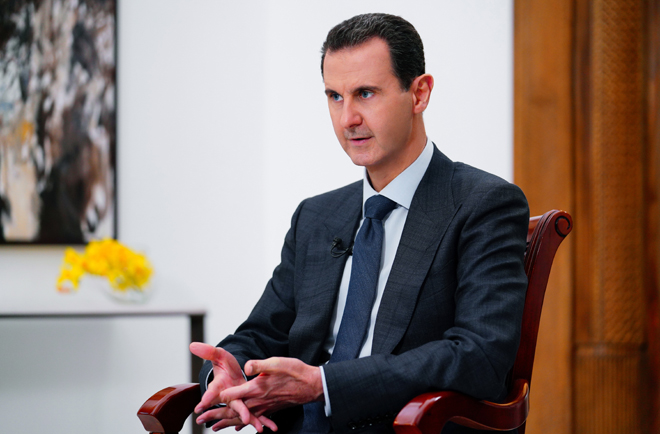

 Aletho News