Turkey failed to notify of convoy movements in Syria’s Idlib before getting shelled by Damascus troops – Russian military
RT | February 3, 2020
A shelling incident in Syria in which Ankara said six of its soldiers were killed may have been caused by the failure of the Turkish side to warn about the movement of their convoy, the Russian military said.
“Units of the Turkish military conducted movement within the Idlib de-escalation zone during the nighttime from February 2 to February 3 without informing the Russian side and came under fire by the Syrian government troops, which were targeting terrorists west of Saraqib,” the Russian center for Syrian reconciliation said on Monday.
The statement stressed that there are established lines of communications between Russian forces in Syria and the Turkish command. It added that Turkish aircraft did not enter the Syrian airspace after the incident, contrary to some reports in the Turkish media, which said Ankara ordered airstrikes at Syrian positions in retaliation for the shelling.
The Turkish Defense Ministry earlier reported that four soldiers were killed and nine others injured in the shelling incident. The death toll rose to six later in the day.
President Recep Tayyip Erdogan responded quickly, promising to continue retaliating heavily to any attacks against Turkish forces in Syria’s Idlib Province.
Omer Celik, spokesman for Turkey’s ruling party, rejected the words of the Russian ministry, saying it was “not correct.”
“Turkey is providing regular and instant information to Russia. It also informed them of this latest event,” he tweeted. “It is not true to say information was not shared. The mechanisms in place were utilized as always.”
Kremlin spokesman Dmitry Peskov responded to the incident by stressing that Turkish and Russian military commanders are “in a constant contact” over Idlib, reiterating the military’s remarks.
Idlib governorate is a designated “de-escalation zone” under agreements between Russia, Turkey and Iran. Ankara is expected to use its influence among anti-government fighters controlling it to prevent hostilities with Damascus troops, eventually leading to a peaceful resolution. In practice, some jihadists in Idlib continue attacks at government-held parts of Syria and on several occasions launched drone attacks on the Russian air base in Latakia, ensuring continued fighting.
The previous major incident of similar nature happened in Idlib in August 2019. Three people traveling with a Turkish military convoy were reported killed and a dozen more injured by a Syrian airstrike, infuriating Ankara. Damascus said at the time that it believed the convoy was transporting weapons and ammo to jihadist forces in Khan Sheikhoun, which has since been captured by the Syrian government forces. The incident was made more confusing by Turkey’s insistence that the people hurt in it were all civilians.
Why Turkey won’t hitch Syrian wagon with US
By M. K. BHADRAKUMAR | Indian Punchline | February 1, 2020
The remark by President Recep Erdogan on Friday that Turkey might militarily intervene in Syria’s northwestern Idlib province fuelled speculation that tensions between Ankara and Moscow have reached a point of no return.
However, this is nothing but wishful thinking. The calm rebuttal by the Kremlin spokesman Dmitry Peskov signalled a measure of confidence that Moscow’s ties with Turkey are in no such danger. Peskov said in measured tone, “We don’t agree with this view [of Erdogan]. Russia is in full compliance with the Sochi agreements on the Idlib zone. At the same time, we regret to say that the situation is far from perfect.”
He added that “a large number of terrorists remain in the area and continue aggressive attacks on the Syrian army and Russia’s Hmeymim air base. It causes us huge concern.”
Moscow is on strong ground. Turkey failed to honour its commitment under Sochi agreements to separate the ‘moderate’ groups supported by it from the al-Qaeda affiliates ensconced in Idlib (also with covert support from outside.) Besides, the Sochi agreements on Idlib do allow operations against extremist / terrorist groups.
Peskov’s ‘reasonableness’ suggests that Moscow is seeking Erdogan’s understanding and wouldn’t want the US to exploit the Turkish disquiet over any refugee influx from Idlib. The US is already fishing in troubled waters, as evident from the sudden visit to Ankara on Friday by Gen. Tod Wolters, commander of the US European Command and NATO Supreme Allied Commander-Europe.
The US doesn’t want the Russian-Syrian operation in Idlib (with the participation of the Iran-trained militia groups) to make headway and wrest control of the sole remaining preserve of the al-Qaeda affiliates armed and equipped by western powers.
Wolters’ mission to Ankara also aimed at persuading Turkey to help eject the Russian military presence in northeast Syria, which the US regards as its exclusive zone. The Pentagon wants to revive its deal with Turkey establishing a ‘safe zone’ 145 kilometers in length and 30 km in depth in northern Syria, with the US undertaking that its Kurdish allies would be withdrawn from that area. (The US didn’t keep its word and Turkey eventually struck a deal with Russia on similar lines.)
Interestingly, on the eve of Wolters’ arrival in Ankara, Russian and Turkish forces conducted yet another joint patrol in the countryside of Al-Darbasiyah and Ras Al-Ain in the northeast extreme of the Turkish-Syrian border. Despite the US provocations to make life difficult for the Russian military presence in that remote Kurdish region near Iraq, Russian forces have dug in, which of course is also in Turkish interests.
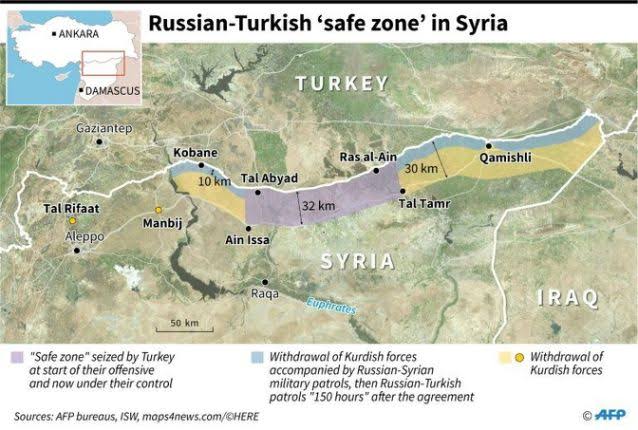
The Russian objective is to steadily expand the Syrian government control of the border regions with Turkey, which would incrementally lead to direct dealings between Ankara and Damascus on issues of border security. In sum, Moscow doesn’t seem to be unduly perturbed that the US is about to get back into bed with Turkey.
Turkey harbours serious misgivings about the US intentions regarding Kurds. Ankara has failed to break the nexus between the US and the Kurdish militant groups and if anything, the Pentagon commanders are lately rather blasé about the axis. Therefore, Turkey cannot afford to put its eggs in the American basket when it comes to northeast Syria.
Importantly, the suspicion is deep-rooted in the Turkish mind that the 2016 coup attempt against Erdogan by the movement led by Islamist preacher Fethullah Gülen (who lives in exile in the US since 1998) was supported by the US military and intelligence circles.
Meanwhile, US-Turkey relations may become toxic what with the US prosecutors in New York asking a federal judge on January 21 to impose escalating fines on Turkey’s state-owned Halkbank for failing to respond in court to criminal charges that it helped Iran evade US sanctions. The proposed fine on the bank is a $1 million-per-day fine – a penalty that would double for each week of further non-compliance. It could total $1.8 billion after eight weeks.
The case against Halkbank has been a longstanding point of tension in the increasingly fraught relationship between Ankara and Washington. Some analysts estimate that it is the single most explosive issue that could blow up the Turkish-American relationship.
If Halkbank decides to acquiesce and appear in court, the case will tarnish the reputation of the Erdogan government. The case implicates senior Turkish ministers, top Halkbank executives and even Erdogan and his family members as beneficiaries of the sanctions-busting efforts.
On the other hand, if the Halkbank insists on its civil contempt of court, that might ultimately severe its ties with the US financial system, hurting not only the bank but also Turkey’s financial sector, and send Turkish-American relations into a free fall.
Can the Trump administration intervene in the Halkbank case and rescue Erdogan? That likelihood can also be ruled out in the downstream of the reported allegation by former NSA in the White House John Bolton in his upcoming memoirs that Trump who has a property in Turkey was inclined to grant favours to Erdogan.
In such a sombre backdrop, it is highly improbable that Erdogan can afford to hitch Turkish wagons with the US. Having said that, Erdogan is under pressure from Turkish public opinion on the refugee problem. He may have to be seen doing ‘something’ to stall the Syrian offensive in Idlib.
No doubt, Ankara has sharpened its messaging but there is no clear Turkish strategy in view. The only viable option will be to accept the new facts on the ground. Possibly, as happened so often before, President Vladimir Putin will step in at some point to hold Erdogan’s hand.
France sends warships to Mediterranean to deter Turkey
MEMO | January 30, 2020
French President Emmanuel Macron has sent warships to the Eastern Mediterranean to give support to Greece against Turkey’s quest for energy reserves in the region.
Together with Macron was Greek Prime Minister Kyriakos Mitsotakis, who was on a visit to the French capital Paris to gather support against Turkey. Mitsotakis welcomed the decision and described the warships as “guarantors of peace.”
“The only way to end differences in the eastern Mediterranean is through international justice,” he told reporters after holding talks with Macron. “Greece and France are pursuing a new framework of strategic defence.”
Tensions have increased significantly over the past year in the Eastern Mediterranean due to Turkey’s dispute with Southern Cyprus over the distribution of energy resources in the waters off the island of Cyprus.
In June last year, Turkey deployed drilling vessels to search for natural gas in retaliation to a deal struck by Greece, Southern Cyprus and Israel earlier that month, in which the three states agreed to build a pipeline harnessing the reserves of natural gas off the southern shores of the island. This pipeline – named EastMed – which is estimated to produce a profit of $9 billion over 18 years of the reserve’s exploitation, would be supplying gas from the Eastern Mediterranean region all the way to countries in Europe.
Turkey has called on those countries to participate in a fair and equal distribution of the energy resources discovered off Cyprus, insisting that they are attempting to exclude and alienate Turkey by striking their own deal without the consideration of both the major regional player and the people of the Turkish Republic of Northern Cyprus (TRNC). Therefore, it stresses that the drilling activities that Turkey is carrying out is legal and within territorial waters.
The EU, however, has repeatedly called on Turkey to give up its claim on having a share in the energy resources, claiming that its activities are “illegal”, leading to the Union to impose sanctions on the Republic in July last year over the issue, as well as due to Turkey’s military incursion – Operation Peace Spring – into northern Syria in October.
As France is one of the most prominent supporters of Greece in the dispute, Macron accused Turkey of being the one responsible for raising tensions as well as causing trouble in war torn Libya. “I want to express my concerns with regard to the behaviour of Turkey at the moment,” said Macron. “We have seen during these last days Turkish warships accompanied by Syrian mercenaries arrive on Libyan soil. This is an explicit and serious infringement of what was agreed in Berlin [conference]. It’s a broken promise.”
Greece itself has reportedly long been prepared for a military confrontation, with Defence Minister Nikos Panagiotopoulos recently warning that the country was “examining all scenarios, even that of military engagement.” This was shown with Greece’s arming of 16 Aegean islands last week, in violation of international law which stipulates that they remain demilitarised. When Turkey called on Greece to disarmed them and uphold international law, Greece refused.
Americans Keep Putting Up Roadblocks Against Russian Troops on Key Syrian Highway
By Marko Marjanović | Anti-Empire | January 29, 2020
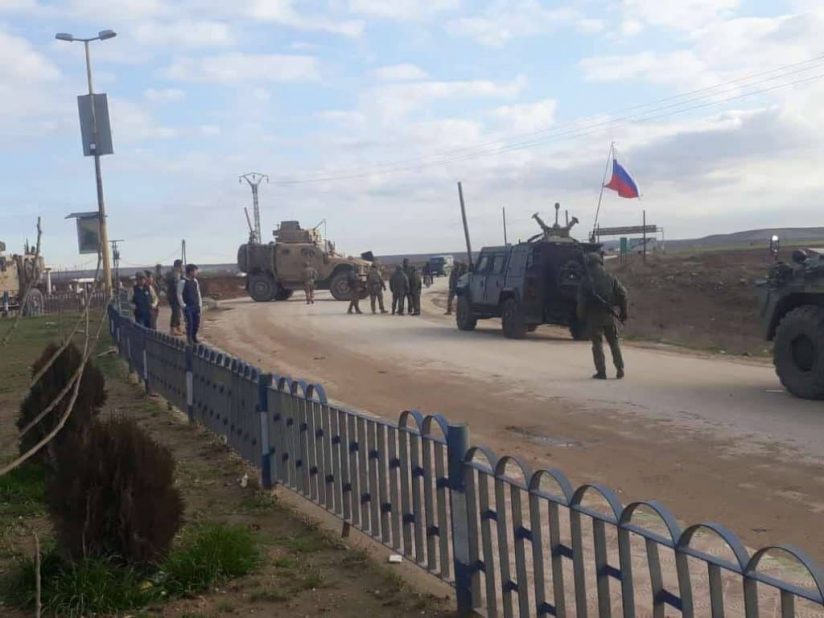
This is now the fourth time this has happened that we know of. US troops in northeastern Syria keep blockading the M4 highway to prevent Russian troops from moving on it.
In fall of 2019, to prevent a Turkish invasion of the Kurdish-held northeastern Syria, the Pentagon hammered out a deal with the Turks for joint US-Turkish patrols on the Syrian side of the Syrian-Turkish border.
As soon as that happened however Trump, after a talk with Erdogan, declared and ordered a US military withdrawal from Syria. At this moment Russia jumped in and took over the US role in the formerly US-Turkish agreement. To minimally appease Erdogan and limit his invasion it would now be Russians who patrolled together with the Turks, which was welcomed by the Kurdish leadership.
In separate negotiations with the Kurds the Russians also gained a number of bases in the northeast to make the patrols possible, and thousands of Syrian army troops also poured in to reinforce the Kurds against the Turkish invasion in the limited sector it was taking place in.
At this point Trump reversed himself, saying US forces would stay in Syria, but only in the oil-rich parts. But the withdrawal from the Syrian-Turkish border, where US presence had hampered US-Turkish relations, would be permanent.
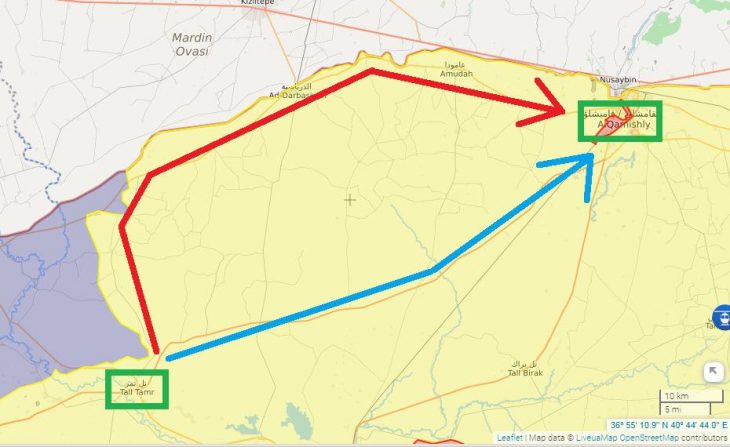
Blue is the obvious path, but the Americans insist the Russians must hug the border along the red path
What is happening now is that when the Russians coming from the west want to take the direct and obvious route to their facilities in the city of Qamishli they periodically encounter US troops near the town of Tell Tamr standing in their way.
The Americans block the road with their vehicles and demand the Russians take the longer, indirect way to Qamishli along inferior roads hugging the Syrian-Turkish border.
Libyan leaders Sarraj & Haftar to hold talks in Moscow on Monday – Russian Foreign Ministry
RT | January 13, 2020
Libya’s two key political figures – Fayez al-Sarraj, the prime minister of the Government of National Accord (GNA), and Commander of the Libyan National Army (LNA) Khalifa Haftar will take part in talks held under the auspices of the Russian and Turkish Foreign and Defense Ministries in Moscow on Monday, the Russian Foreign Ministry told TASS.
“In [the] context of implementing the initiative of the Russian and Turkish presidents announced following a summit in Istanbul, inter-Libyan contacts will be held today in Moscow,” the diplomats said. “The contacts are expected to be attended by Sarraj, Haftar and representatives of other Libyan parties.”
Moscow will host talks between Russian Foreign Minister Sergey Lavrov and Defense Minister Sergey Shoigu with their Turkish counterparts, Mevlut Cavusoglu and Hulusi Akar. The main topics on the agenda are settlement in Libya, cooperation in Syria, and developments in the Middle East.
On January 12, a ceasefire entered into force between the conflicting sides in Libya.
Libya’s warring parties vow to observe ceasefire without preconditions, stop all offensive military actions – draft agreement
RT | January 13, 2020
The Libyan National Army (LNA) and the internationally recognized Government of National Accord (GNA) in Tripoli have pledged to observe the ceasefire suggested by Russia and Turkey after negotiations in Moscow.
The draft document suggests that all parties would stop military actions and observe the ceasefire conditions. Meanwhile, a commission is to be established to determine a contact line between the warring sides. Russia and Turkey promised to support all sides in the conflict to help them implement the agreement.
Libya has been plunged into chaos for years after its longtime ruler Muammar Gaddafi was ousted and killed during a NATO-led bombing campaign. Following the years of devastation and chaos, the country became engulfed in a civil war.
Previous lengthy UN-backed talks on reconciliation, which led to the establishment of the GNA, eventually failed to bring peace to the war-ravaged land.
Haftar began an offensive against Tripoli last year and over the last few months the two sides were engaged in intense fighting. LNA controls most of Libya’s territory, but it is the GNA which is recognized by the international community.
Ankara became involved in the conflict in December promising to send troops to help the government in Tripoli as the international community called on all sides to enter negotiations.
Iraqi Foreign Minister stresses need for withdrawal of foreign troops
Press TV – January 9, 2020
Iraqi Foreign Minister Mohammad Ali al-Hakim has stressed the need for US and other foreign troops to leave Iraq as a backlash grows over the recent American assassination of a top Iranian general in Baghdad.
The top Iraqi diplomat made the appeal during a joint press briefing with his Turkish counterpart Mevlut Cavusoglu in Baghdad on Thursday.
Hakim and Cavusoglu strongly condemned the US assassination of Iran’s Lt. Gen. Qassem Soleimani and senior Iraqi commander of the Popular Mobilization Units Abu Mahdi al-Muhandis, both key figures in the fight against Daesh and other Takfiri terrorists in the Middle East.
“Iraq insists on maintaining its sovereignty and territorial integrity and the complete withdrawal of foreign forces,” the top Iraqi diplomat said.
He added that talks with his Turkish counterpart focused on the need to respect Iraq’s sovereignty from all sides.
“Iraq condemns the attacks on Iraqi land, which harms the sovereignty of our country as well the security of Iraqi people. They are against the international law,” the Iraqi minister said.
Hakim added, “”We have discussed with the minister that Iraq wants all foreign forces are removed out of the country through dialogue. We also discussed with the minister on cooperation areas. We have agreed to alleviate the Iran-US tension in the region.”
The two sides also discussed bilateral relations at all levels, including cooperation on fighting terrorism, al-Hakim said.
The top Iraqi diplomat said any escalation of tensions in the region could result in the re-emergence of Takiri terrorist groups.
The Turkish foreign minister, for his part, said Ankara does not want Iraq to become a battleground for foreign forces.
Cavusoglu added that Iraq was not alone and Turkey was there to overcome difficult days together.
Turkish foreign minister also spoke with his Iranian counterpart Mohammad Javad Zarif Wednesday after Tehran fired dozens of missiles at two military bases hosting US troops in Iraq. The missiles were fired at the Ain al-Asad base in Anbar province and another base in Erbil.
PMU leader denies role in rocket attacks
In another development, Qais al-Khazali, the leader of Asa’ib Ahl al-Haq movement, a subdivision of Iraq’s Popular Mobilization Units, known by its Arabic name as Hashd al-Sha’abi, denied any involvement in the recent firing of rockets at Baghdad’s Green Zone where the US embassy is located.
Two Katyusha rockets struck Baghdad’s heavily fortified Green Zone on Wednesday, landing near the US embassy but causing no casualties, according to the Iraqi military.
Al-Khazali also said it was time for an Iraqi response to the recent US assassination, adding the reaction will be “no less in size” than Tehran’s missile strikes on two American bases in Iraq.
On Sunday, Iraqi Prime Minister Adel Abdul Mahdi called the US airstrike “a political assassination”. He also underlined the need for a timetable to withdraw all foreign troops “for the sake of our national sovereignty.”
Turkey, Russia, Iran officials discuss latest developments in region
![Russian Defence Minister Sergey Shoygu [Wikipedia]](https://i0.wp.com/www.middleeastmonitor.com/wp-content/uploads/2017/11/2015_5-24-ergey-Shoigu-Official_portrait_of_Sergey_Shoigu_19.jpg?resize=1200%2C800&quality=85&strip=all&ssl=1)
Russian Defence Minister Sergey Shoygu [Wikipedia]
MEMO | January 7, 2020
Senior officials from Turkey, Russia and Iran discussed the latest developments in the Middle East and North Africa region yesterday.
The Russian Ministry of Defence said the country’s Defence Minister Sergey Shoygu discussed the developments in the Middle East and Libya during a telephone conversation with the head of the Turkish intelligence organisation, Hakan Fidan. The two officials also discussed joint actions to reduce tensions in the region.
The statement added that Shoygu also spoke to Iranian Chief of Staff, Mohammad Bagheri, during which they discussed steps to reduce tensions in the region following Friday’s assassination of Iran’s Commander of the Quds Force, Qassem Soleimani, in a US drone attack near Baghdad airport.
Tensions between Washington and Tehran escalated following Soleimani’s assassination, while, Tehran announced that it would respond “harshly” to the assassination.
How the Pro-War “Left” Fell for the Kurds in Syria
By Max Parry • Unz Review • December 22, 2019
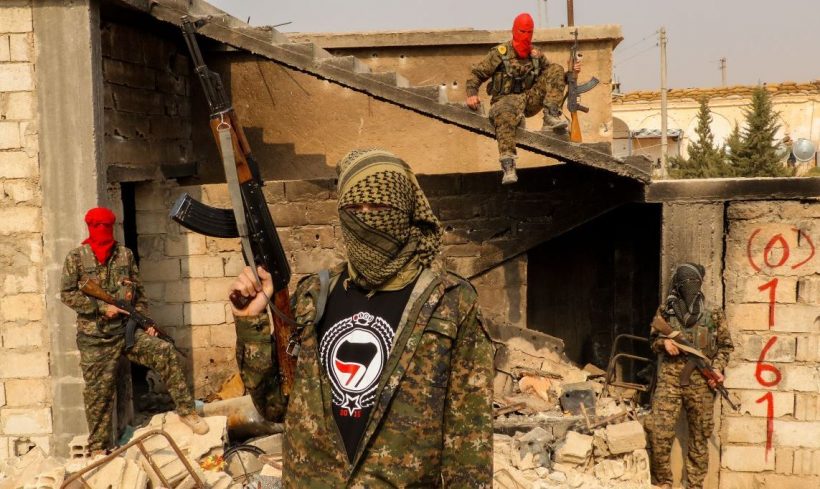
The October decision by U.S. President Donald Trump to withdraw American troops from northeastern Syria did not only precipitate the Turkish offensive, codenamed ‘Operation Peace Spring’, into Kurdish-held territory which followed. It also sparked an outcry of hysteria from much of the so-called “left” that has been deeply divided during the 8-year long conflict over its Kurdish question. Despite the fact that the Syrian Democratic Forces (SDF) were objectively a U.S. proxy army before they were “abandoned” by Washington to face an assault by its NATO ally, the ostensibly “progressive” politics of the mostly-Kurdish militants duped many self-identified people on the left into supporting them as the best option between terrorists and a “regime.” Apparently, everyone on earth except for the Kurds and their ‘humanitarian interventionist’ supporters saw this “betrayal” coming, which speaks to the essential naiveté of such amateurish politics. However, there is a historical basis to this political tendency that should be interrogated if a lesson is to be learned by those misguided by it.
Turkey initially went all-in with the West, Israel, and Gulf states in a joint effort to depose Syrian President Bashar al-Assad by stoking the flames of the country’s Arab Spring in 2011 into a full blown uprising. With Istanbul serving as the base for the opposition, Kurdish nationalists hoping to participate were not at all pleased that the alliance had based its government-in-exile in Turkey and naturally considered Ankara’s role to be detrimental to their own interests in establishing an autonomous ethnonationalist state. Likewise, Turkish President Recep Tayyip Erdoğan did not bargain on the conflict facilitating such a scenario, with the forty year war with the Kurdistan Workers Party (PKK) in southeastern Turkey still ongoing. When the PKK-linked People’s Protection Units (YPG) militias took control of northern Syrian towns and established a self-governing territory after boycotting the opposition, it was done only after negotiations between Damascus and Kurdish leaders. The Syrian government willingly and peacefully ceded the territory to them, just as we were told that the Baathists were among their oppressors.
The Rojava front opened up when the Kurds came under attack from the most radical jihadist militants in the opposition, some of which would later merge with the Islamist insurgency in western Iraq to form ISIS. Yet we now know for a fact that the rise of Islamic State was something actually desired by the U.S.-led coalition in the hopes of bringing down Assad, as revealed in a declassified 2012 Defense Intelligence Agency report. Shortly after clarifying that the opposition is “backed by the West, Gulf countries and Turkey”, the memo states:
“If the situation unravels there is the possibility of establishing a declared or undeclared Salafist principality in eastern Syria (Hasaka and Der Zor), and this is exactly what the supporting powers to the opposition want, in order to isolate the Syrian regime, which is considered the strategic depth of the Shia expansion (Iraq and Iran).”
Meanwhile, it was the Kurds themselves who divulged Ankara’s support for Daesh, frequently retrieving Turkish-issued passports from captured ISIS fighters. Even Emmanuel Macron said as much at the recent NATO summit in London, prompting a row between France and Turkey that took a backseat to the more ‘newsworthy’ Trump tantrum over a hot mic exchange between the French President and his Canadian and British counterparts. Then there was the disclosure that the late Senator John McCain had crossed the border from Turkey into Syria in mid-2013 to meet with leaders of the short-lived Free Syrian Army (FSA), dubbed as “moderate rebels”, which just a short time later would decline after its members joined better armed, more radical groups and the ISIS caliphate was proclaimed. One of the rebel leaders pictured with McCain in his visit is widely suspected to be the eventual chosen leader of ISIS, Abu Bakr al-Baghdadi, who was allegedly killed in a U.S. raid in Idlib this October. Ironically, many of the Turkish-backed FSA militias are now assisting Ankara in its assault on the Kurds while those who supported arming them feign outrage over the US troop removal.
Henry Kissinger reportedly once remarked, “America has no permanent friends or enemies, only interests.” Given that the U.S. was at the very least still using Daesh as a strategic asset, it seems inexplicable that the Kurdish leadership could trust Washington. The SDF had only a few skirmishes with the Syrian army during the entire war— if they wanted to defeat ISIS, why not partner with Damascus and Moscow? To say nothing of the U.S.’s long history of backing their oppression, from its support of Saddam Hussein during the Iran-Iraq War in the 1980s to the arming of Turkey’s brutal crackdown against the PKK which ended with the capture of its cultish leader, Abdullah Öcalan, in 1999. Did they really think after enlisting them for its cosmetic ‘fight’ against ISIS that the U.S. would continue to side with them against Ankara? Even so, Kurdish gains against Daesh would pale in comparison to those by the Syrian army with Russian air support. More perplexing is why anyone on the left would choose to back a group being used as a cat’s paw for imperialism, regardless of whatever ideals they claim to hold.
Perhaps the U.S. would not have reneged on its implicit pledge to help with the foundation of a Kurdish state had their “Assad must go” policy been successful, but the U.S. pullout appears to be the final nail in the coffin for both Washington’s regime change plans in Syria and an independent Kurdistan. The YPG’s makeover as the SDF was done at the behest of the U.S. but this did nothing to to diminish the objections of Ankara (or many ‘leftists’ from supporting them), who insisted the YPG was already an extension and rebranding of the PKK, a group Washington itself designates as a terrorist organization. Any effort to create a buffer state in the enclave was never going to be tolerated by Turkey but it nonetheless enabled the U.S. to illegally occupy northern Syria and facilitate the ongoing looting of its oil. Unfortunately for Washington, the consequence was that it eventually pushed Ankara closer toward the Kremlin, as Turkey went from shooting down Russian jets one year to purchasing the S-400 weapon system from Moscow the next. After backing a botched coup d’etat attempt against Erdoğan in 2016, any hope of Washington bringing Turkey back into its fold would be to discard the Kurds as soon as their usefulness ran out, if it wasn’t too late to repair the damage already.
Why would the U.S. risk losing its geo-strategic alliance with Turkey? To put it simply, it’s ‘special relationship’ with Israel took greater precedence. Any way you slice it, Washington’s foray into the region has been as much about Zionism as imperialism and its backing of the Kurds is no exception. Despite the blowback, the invasion of Iraq and destruction of Libya took two enormous sources of support for the Palestinian resistance off the chessboard. It may have strengthened Iran in the process, but that is all the more reason for the U.S. to sell a regime change attempt in Tehran in the future. Regrettably for Washington, when it tried to do the same in Syria, Russia intervened and emerged as the new peace broker in the Middle East. It comes as no surprise that following the Turkish invasion of northern Syria amid the U.S. withdrawal, the Kurds have finally struck a deal with Damascus and Moscow, a welcome and inevitable development that should have occurred years ago.
One of the main reasons for the Kurds joining the SDF so willingly has the same explanation as to why Washington was prepared to put its relationship with Ankara in jeopardy by supporting them: Israel. The cozy relationship between the Zionist state and the various Kurdish groups centered at the intersection of Turkey, Iran, Iraq and Syria goes back as far as the 1960s, as Jerusalem has consistently used them to undermine its enemies. It is not by chance that their respective interests overlap to a near tee, between the founding of a Kurdish protectorate and the Zionist plan for a ‘Greater Israel’ in the Middle East which includes a balkanization of Syria. Mossad has openly provided the Kurds with training and they have learned much in the ways of the ethnic cleansing of Arabs from the Jewish state in order to carve out a Syrian Kurdistan. One can certainly have sympathy for the Kurds as the largest ethnic group in the world at 40 million people without a state, but the Israel connection runs much deeper than geopolitical interests to the very ideological basis of their militancy which calls all of their stated ideals into question.
The ties between the YPG and the PKK are undeniable, as both groups follow jailed leader Abdullah Öcalan’s teachings which merge Kurdish nationalism with the theories of ‘democratic confederalism’ from the influential Jewish-American anarchist philosopher, Murray Bookchin. While the PKK may have been initially founded as a ‘Marxist-Leninist’ organization in the early 70s, a widespread misconception is that it still follows that aim when its ideology long-ago shifted to that of a self-professed and contradictory ‘libertarian socialism’ theorized by Bookchin who was actually a zealous anti-communist. Not coincidentally, the Western anarchist icon was also an avowed Zionist who often defended Israel’s war crimes and genocide of Palestinians while demonizing its Arab state opponents as the aggressors, including Syria. Scratch an anarchist and a neo-conservative will bleed, every time.
Many on the pseudo-left who have pledged solidarity with the Kurds have attempted to base their reasoning on a historically inaccurate analogy comparing the Syrian conflict with the Spanish Civil War of the 1930s. You would think ISIS would be the obvious first choice for the fascists in the Syrian war, but journalist Robert Mackey of popular “progressive” news site The Intercept even tried to cast the Syrian government as Francisco Franco’s Nationalists in an article comparing the 1937 bombing of Guernica by the Condor Legion to the 2018 chemical attack in Douma which remains in dispute regarding its perpetrator. One wonders if Mackey will retract his absurd comparison now that dozens of inspectors from the Organization for the Prohibition of Chemical Weapons (OPCW) have dissented in emails published by WikiLeaks showing that the OPCW engaged in a cover-up with the Trump administration to pin blame for the attacks on the Syrian government instead of the opposition, but don’t hold your breath.
In this retelling of the Spanish Civil War, the Kurds are generally seen in the role of the Trotskyite Workers’ Party of Marxist Unification (POUM) and the anarchist trade union National Confederation of Labour (CNT). In the midst of the conflict between the Nazi-supported Nationalists and Soviet-backed Republicans that was a prelude to World War II, the mobilization effort of all anti-fascist forces into a unified Popular Front was obstructed by the ultra-left and intransigent POUM and CNT who were then expelled from the coalition for their sectarianism. While the government was still fighting the Francoists, the POUM and CNT then attacked the Republicans but were put down in a failed insurrection. Although this revolt did not directly cause the loyalist defeat, it nevertheless sapped the strength from the Popular Front and smoothed the path for the generalissimo’s victory.
In the years since, Trotskyists have attempted to rewrite history by alleging that a primary historical text documenting the POUM’s sabotage of the Republicans — a 1938 pamphlet by journalist Georges Soria, the Spanish correspondent for the French Communist Party newspaper L’Humanite — is a forgery. On the Marxists Internet Archive website, an ‘editor’s note’ is provided as a preface to the text citing a single quote from Soria with the claim he admitted the work in its entirety was “no more than a fabrication”, but his words are selectively cropped to give that impression. While the author did admit accusations that the POUM‘s leadership were literal agents of Franco were a sensationalized exaggeration, the source of the full quote states the following:
“On the one hand, the charge that the leaders of POUM, among them Andrés Nin, ‘were agents of the Gestapo and Franco’, was no more than a fabrication because it was impossible to adduce the slightest evidence. On the other hand, although the leaders of POUM were neither agents of Franco or agents of the Gestapo, it is true that their relentless struggle against the Popular Front played the game nolens volens (like it or not/willingly or unwillingly) of the Caudillo (General Franco).”
In other words, Soria did not say the whole work was counterfeit like the editor’s note misleadingly suggests and reiterated that the POUM’s subversion helped Franco. (The Marxists Internet Archive does not hide its pro-Trotsky bias in its FAQ section.)
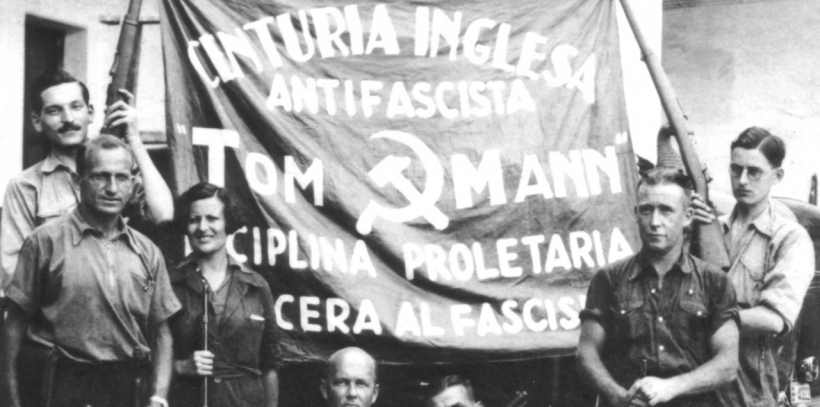
Marxist historian Eric Hobsbawm summarized the inherent contradictions of the Spanish Civil War and the role ultra-leftism played in the demise of the Republic in one of his later essays:
“Of course, the posthumous polemics about the Spanish war are legitimate, and indeed essential — but only if we separate out debate on real issues from the parti pris of political sectarianism, cold-war propaganda and pure ignorance of a forgotten past. The major question at issue in the Spanish civil war was, and remains, how social revolution and war were related on the republican side. The Spanish civil war was, or began as, both. It was a war born of the resistance of a legitimate government, with the help of a popular mobilisation, against a partially successful military coup; and, in important parts of Spain, the spontaneous transformation of the mobilisation into a social revolution. A serious war conducted by a government requires structure, discipline and a degree of centralisation. What characterises social revolutions like that of 1936 is local initiative, spontaneity, independence of, or even resistance to, higher authority — this was especially so given the unique strength of anarchism in Spain.”
Murray Bookchin also wrote at length about the Spanish Civil War but celebrated the decentralized anarchist tactics which incapacitated the Popular Front. The anarcho-syndicalist theorist championed the ‘civil war within the civil war’ as a successful example of his antithetical vision of ‘libertarian socialism’, while his emphasis on the individualist aspects of the former half of his oxymoronic and anti-statist theory often bears a striking resemblance to neoliberal talking points about self-regulating free markets. This would explain why he actually regarded right-wing libertarians to be his natural allies over the the socialist left, whom he considered ‘totalitarian’ as he told the libertarian publication Reason magazine in an interview in 1979. His reactionary demonization of the Soviet Union and dismissal of the accomplishments of all other socialist revolutions was recalled by Michael Parenti in Blackshirts and Reds:
“Left anticommunists remained studiously unimpressed by the dramatic gains won by masses of previously impoverished people under communism. Some were even scornful of such accomplishments. I recall how in Burlington Vermont, in 1971, the noted anticommunist anarchist, Murray Bookchin, derisively referred to my concern for “the poor little children who got fed under communism” (his words).”
Like the International Brigades consisting of foreign volunteers to assist the Spanish Republic in the 1930s, there is an ‘International Freedom Battalion’ currently fighting with the Kurds in Syria. Unfortunately, its live-action role playing ‘leftist’ mercenaries missed the part about the original International Brigades having been backed by the Comintern, not the U.S. military.
Meanwhile, Western media usually hostile to any semblance of radical politics have heavily promoted the Rojava federation as a feminist ‘direct democracy’ utopia, particularly giving excessive attention to the all-female Women’s Protection Units (YPJ) militia while ignoring the female regiments fighting for the secular Syrian government. As a result of the media’s exoticized portrayal of the Kurds and their endorsement by prominent misleaders on the left, from Slavoj Žižek to Noam Chomsky, many have been fooled into supporting them.
If the Spanish Civil War was a dress rehearsal for WWII, it remains to be seen if Syria proves to be a run-through for another global conflict. Then again, what has emerged from its climax is an increasingly multipolar world with the resurgence of Moscow as a deterrent to the mutually assured destruction between the U.S. and China.
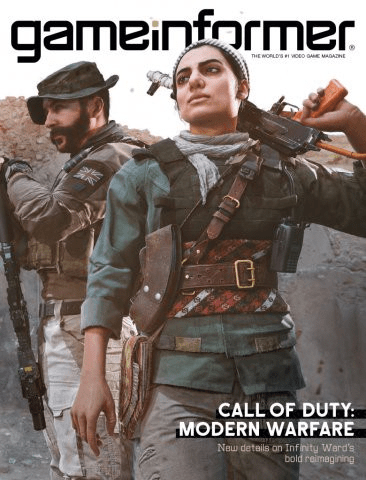
Leftists today wishing to continue the legacy of those who fought for the Spanish Republic should have thrown their support behind the Syrian patriots bravely defending their country from terrorism and imperialism, not left opportunism. Thankfully, this time the good guys have prevailed while the Kurds have paid the price for betraying their fellow countrymen. Liberals shedding crocodile tears about Rojava should take comfort in the fact that they can always play the latest Call of Duty: Modern Warfare video game featuring the YPG fighting alongside the U.S. military if they need to fulfill their imperial fantasies.
Yes, that’s right, the latest installment of the popular first-person shooter franchise features a storyline inspired by the SDF. It’s too bad for them that in real life all of Syria will be returned to where it rightfully belongs under the Syrian Arab Republic.
Max Parry is an independent journalist and geopolitical analyst. His writing has appeared widely in alternative media. Max may be reached at maxrparry@live.com
Turkey vows to retaliate if US imposes sanctions on Russian gas pipeline
RT | December 20, 2019
Turkish President Recep Tayyip Erdogan has hit back against US threats to impose sanctions on the TurkStream pipeline that is set to deliver Russian gas to Turkey and further to southern and southeastern Europe starting next year.
“Now they [the US] say ‘we will impose sanctions on TurkStream,’” Erdogan told reporters on Friday in Malaysia. “This is a complete violation of our rights,” he said, adding that Ankara would retaliate against such a step.
The TurkStream project was created as an alternative to the South Stream pipeline. The project to deliver Russian gas to southern Europe was blocked by Bulgaria in 2014 under pressure from the US.
TurkStream is a two-string pipeline that will go from Russia along the bottom of the Black Sea to the European part of Turkey and will have a throughput capacity of 31.5 billion cubic meters. The official launch of the pipeline is scheduled for January 8, when Russian President Vladimir Putin comes to Turkey to met Erdogan.
Earlier this week, the US Senate adopted the 2020 National Defense Authorization Act, which stipulates sanctioning vessels that engaged in pipe-laying for the TurkStream project as well as punitive measures against companies working to complete the Nord Stream 2 natural gas pipeline from Russia to Germany. The bill is now on the way to the White House where President Donald Trump is set to sign it into law.
The bill also sanctions Turkey for its acquisition of the Russian-made S-400 air defense system and implies prohibiting the transfer of F-35 jets to the country. Addressing the matter, the Turkish leader said these issues are “closed” and warned against treating Ankara as a “tribal nation.”
Turkey denies UK news report attacks against Israel planned on its soil
![Hamas chief Ismail Haniyeh informs Hanna Nasser, head of the Palestinian Central Election Commission, that Hamas agrees to the plan for holding Palestinian elections [Mohammed Asad/Middle East Monitor]](https://i0.wp.com/www.middleeastmonitor.com/wp-content/uploads/2019/11/30-016-8-2019mo-asad-hamas-electionsIMG_0122.jpg?resize=1200%2C800&quality=85&strip=all&ssl=1)
Hamas chief Ismail Haniyeh informs Palestinian Central Election Commission head Hanna Nasser that Hamas agrees to Palestinian election plans [Mohammed Asad/Middle East Monitor]
MEMO | December 18, 2019
The British newspaper the Telegraph has accused Turkey of allowing Hamas to conduct terror attacks on Israel from Istanbul, claims Ankara has denied.
In a report published today, which cited information allegedly gained by Israeli police and security sources from interrogations of the group’s detained suspects, the paper claimed that Hamas’ operations in Jerusalem and the West Bank are being plotted from Turkish soil with authorities there turning a blind eye.
One such operation was a plot to assassinate the mayor of Jerusalem and the national police commissioner.
The report was released only days after Turkish President Recep Tayyip Erdogan hosted Hamas chief Ismail Haniyeh in Istanbul as part of the latter’s foreign tour.
Turkish President Recep Tayyip Erdogan is reported to have reassured the Hamas official that “We will keep on supporting our brothers in Palestine.” Haniyeh and his party then praised the president for his continued support and “positions vis-a-vis the Palestinian people and their just cause”.
The report also cited accusations by Israeli officials that Turkey has broken a commitment made in 2015 between it and the US, which forbade the country from allowing Hamas to plan operations against Israel as a result of the latter’s continued occupation of Palestinian territories.
According to the report, Israel’s Foreign Ministry stated that “Israel is extremely concerned that Turkey is allowing Hamas terrorists to operate from its territory, in planning and engaging in terrorist attacks against Israeli civilians.”
The accusations levelled at Turkey and Erdogan add to the Jewish State’s long-time criticism of the Republic’s hosting of figures associated with Hamas, the political party which runs the besieged Gaza Strip, and its ties to the Palestinian cause as a whole. While Turkey perceives talking with Hamas as a viable option to provide solutions to end the Israeli-Palestinian conflict and further the establishment of an independent Palestinian state, Israel sees it as accommodating a “terrorist group” which fights against its continued occupation of Palestinian territories.
The accusations by the Telegraph and its report have been strongly denied and refuted by Turkey, with a diplomatic source saying that Hamas is “not a terrorist organisation”.
The Palestinian movement has slammed the report as “baseless” due to the fact that “Hamas’ resistance activities are conducted only in the land of occupied Palestine.”
Featured Video
Iran spent $1 million to wipe out $30 billion in data center plans, and take down Amazon in the ME
or go to
Aletho News Archives – Video-Images
From the Archives
A short history of British torture
ICC | December 2005
When the House of Commons was debating how much to increase the time limit for detention without trial the question of torture came up. Officially this was limited to the nice considerations of whether it was all right to send people to places where torture is used and whether Britain can use information collected by the use of torture in other countries. This discussion gave an impression of democratic Britain as the home of civilised behaviour where the very idea of torture is repugnant to our legislators – unlike, say, the US with its secret CIA jails… In reality, the British state has a long history of using and developing a whole range of torture techniques. … continue
Blog Roll
 Aletho News
- Houthis Keep Advancing as the Red Sea Crisis Deepens
- Iran spent $1 million to wipe out $30 billion in data center plans, and take down Amazon in the ME
- Zionist billionaire pressure to silence Macklemore sparks exodus from Ed Sheeran tour
- House Votes to End Iran War for Third Time
- North Korea Slams US Plan for ‘AUKUS 2.0’ with South Korea and Japan
- Prolonging US-Iran Conflict Not Meeting Interests of Int’l Community – China’s Wang Yi
- EU bans former Zelensky aide from parliament
- NATO-backed Kosovo separatist ‘responsible for war crimes’
- US destroying international space law
- SCO Calls for Binding Global Deal to Prevent Arms Race in Space
- If Americans Knew
- U.S. Makes, Israel Takes: The Real Story of U.S.-Israeli Military Cooperation
- Night raids rise in Palestine
- Tucker Carlson interviews Norman Finkelstein about Gaza
- Groups urge Americans to support Van Hollen legislation on Israel’s killing of Americans & Palestinians
- Trump administration plans to send 40,000 tons of bombs to Israel: report
- Sanctions Target Iran’s Government, But Kill Hospitalized 23-Year-Old Woman
- An alternative view on the book “Israel’s Lobby: America in the Grip of a Foreign Power”
- Ed Sheeran’s band Beoga, other opening acts quit tour after Macklemore was dropped over his pro-Palestinian comments
- The assassination attempt on President Trump in Butler and the various Israeli connections to it
- “We Want That the Whole Land Be Jewish”
- No Tricks Zone
- New Study: ‘Global Drought Shows No Detectable Recent Acceleration Under Climate Warming’
- Economic Masterminds: German Socialists Suggest Taxing Productivity Gains Stemming From Using AI
- The South China Sea Has Not Been Cooperating With The Climate Change Narrative
- Energy Crisis: Germany Enters Heating Season With Historically Low Gas Reserve Fill Levels
- New Study: The Antarctic Ice Sheet Gained Mass From 2020-2024 Due To Staggering Snow And Ice Accumulation
- Study: Ocean Heating Rates From Thousands Of Years Ago ‘Dwarf’ Modern Ocean Heating Rates
- Climate Extremists Target, Attack Large-Scale Power Grid Infrastructure In Germany!
- New Study: Antarctic Ice Melt Has Contributed Less Than 1 Centimeter To Sea Level Rise In The Last 30 Years
- Fear Of Debate: Alarmist German Climate Scientist Calls On Mainstream Media To Discredit Skeptic Voices
- End-Of-August Arctic Sea Ice Extent Hasn’t Fallen In 20 Years, Official Data Show!
 Aletho News