Interview with Serena Shim’s Sister
See also, Press TV Reporter Killed in Car Accident Following Threats by Turkish Intelligence, which includes videos of Shim, including one of her last reports before her death.
The Endgame of the US ‘Islamic State’ Strategy
By Nicola Nasser | alarabi | November 11, 2014
Dismantling what the former US President George W. Bush once described as the Syria – Iran component of the “axis of evil,” or interrupting in Iraq the geographical contiguity of what King Abdullah II of Jordan once described as the “Shiite crescent,” was and remains the strategic goal of the US – Israeli allies in the Middle East unless they succeed first in “changing the regime” in either Damascus or Tehran.
The US, Israel and their regional allies have been on the record that the final target of their “regime change” campaign in the Middle East was to dismantle the Syria – Iran alliance.
With the obvious failure of Plan A to dismantle the self-proclaimed anti-Israel and anti-US Syrian – Iranian “Resistance Axis” by a forcible “regime change” in Damascus, a US – led regional alliance has turned recently to its Plan B to interrupt in Iraq the geographical contiguity of that axis.
This is the endgame of President Barack Obama’s strategy, which he declared on last September 10 as ostensibly against the Islamic State (IS).
This would at least halt for the foreseeable future all the signed and projected trilateral or bilateral Iranian, Iraqi and Syrian pipeline networks to carry oil and gas from Iran and Iraq to the Syrian coast at the Mediterranean.
Israeli Col. (res.) Shaul Shay, a research associate at the Begin-Sadat Center for Strategic Studies and a former Deputy Head of the Israel National Security Council anticipated in writing on last January 21 what he called the “Salafi Crescent” that is dangerously emerging to challenge the “Shia Crescent.”
“The growing involvement of Sunni Salafi jihadis in Iraq (since 2003), among the rebels in Syria (since 2011), and in Lebanon has created a ‘Salafi Crescent’ … from Diyala [in eastern Iraq] to Beirut,” he wrote.
“A positive outcome” of this Salafi Crescent “will be the decline in Iranian influence in the region,” Shay concluded.
Conspiracy theories aside, the eventual outcome is a sectarian Sunni military and political wedge driven into the Iraqi geographical connection of the Iran-Syria alliance in a triangle bordering Turkey in the north, Iran in the east, Jordan in the west and Saudi Arabia in the south and extending from north eastern Syria to the Iraqi province of Diyala which borders Iran.
Iraqi Kurdistan is already effectively an independent state and cut off from the central government in Baghdad, but separating Iran and Syria as well and supported by the same US – led anti – IS coalition.
Amid the misinformation and disinformation, the fact is that the IS threat is being used as a smokescreen to confuse and blur this reality.
The IS was conceived and delivered in an American womb. The US – drafted and enforced current constitution produced the sectarian government that is still trying to rule in Iraq. Sectarian cleansing and exclusion of Sunnis could not but inevitably create its antithesis.
The IS was the illegitimate fetus born and nurtured inside the uterus of the US – engineered political process based on a constitution legalizing a federal system based in turn on sectarian and ethnic sharing of power and wealth.
This horrible illegitimate creature is the “legacy” of the US war on Iraq, which was “conceived” in the “sin” of the US invasion of the country in 2003, in the words of the president of the Arab American Institute, James J. Zogbi, writing in the Jordan Times on last June 16.
US Senator John McCain, quoted by The Atlantic on last June 23, thanked “God,” the “Saudis and Prince Bandar” and “our Qatari friends” for creating the “monster.”
The pro-Iran government of former Prime Minister Noori al-Maliki was squeezed by the IS military advances to “request” the US help, which Washington preconditioned on the removal of al-Maliki to which Iran succumbed. The IS gave Obama’s IS strategy its first success.
However, al-Maliki’s replacement by Haider al-Abadi in August has changed nothing so far in the sectarian component of the Iraqi government and army. The US support of Iraq under his premiership boils down only to supporting continued sectarianism in the country, which is the incubator of the survival of its IS antithesis.
Moreover, the destruction of the Iraqi state infrastructure, especially the dismantling of Iraq’s national army and security agencies and the Iraqi Baath party that held them intact, following the US invasion, has created a power vacuum which neither the US occupation forces nor the sectarian Shiite militias could fill. The IS was not powerful per se. They just stepped in on a no-man land.
Similarly, some four years of a US – led “regime change” effort, which was initially spearheaded by the Muslim Brotherhood and which is still financed, armed and logistically facilitated by the US regional allies in Turkey, Qatar, Saudi Arabia as well as by allied western intelligence services, has created another power vacuum in Syria, especially on border areas and in particular in the northern and eastern areas bordering Turkey and Iraq.
US Senator Rand Paul in an interview with CNN on last June 22 was more direct, accusing the Obama administration of “arming” and creating an IS “safe haven” in Syria, which “created a vacuum” filled by the IS.
“We have been fighting alongside al Qaeda, fighting alongside ISIS. ISIS is now emboldened and in two countries. But here’s the anomaly. We’re with ISIS in Syria. We’re on the same side of the war. So, those who want to get involved to stop ISIS in Iraq are allied with ISIS in Syria. That is the real contradiction to this whole policy,” he said.
The former 16 – year member of the US Congress and two – time US presidential candidate Dennis Kucinich, writing in the Huffington Post on last September 24, summed it up: The IS “was born of Western intervention in Iraq and covert action in Syria.”
The IS could have considered playing the role of a US “Frankenstein,” but in fact it is serving as the US “Trojan horse” into Syria and Iraq. Fighting the IS was the US tactic, not the US strategy.
On record, Iranian deputy foreign minister Hossein Amir-Abdollahian said that “the best way of fighting ISIS and terrorism in the region is to help and strengthen the Iraqi and Syrian governments, which have been engaged in a serious struggle” against the IS. But this would not serve the endgame of Obama’s strategy, which targets both governments instead.
Beneficiaries of the IS “Trojan horse” leave no doubts about the credibility of the Syrian, Iranian and Russian doubts about the real endgame of the US – led declared war on the IS.
The United States was able finally to bring about its long awaited and promoted “front of moderates” against Iran and Syria into an active and “air-striking” alliance, ostensibly against the IS.
In Iraq, the IS served the US strategy in wrestling back the so called “political process” from the Iranian influence by proxy of the former premier al-Maliki. Depriving al-Maliki of a third term had proved that there is no unified Iran – backed “Shia house” in Iraq. The US has its own influence inside that “house.”
Installing a US Iraqi satellite was the strategic goal of the US – led invasion and occupation of Iraq in 2003. Instead, according to Doug Bandow, writing in Forbes on October 14, “Bush’s legacy was a corrupt, authoritarian, and sectarian state, friendly with Iran and Syria, Washington’s prime adversaries in the Middle East. Even worse was the emergence of the Islamic State.”
This counterproductive outcome of the US invasion, which saw Iran wielding the reigns of power in Baghdad and edging Iraq closer to Syria and Iran during the eight years of al-Maliki’s premiership, turned the red lights on in the White House and the capitals of its regional allies.
Al-Maliki, whom Bush had designated as “our guy” in Baghdad when his administration facilitated his premiership in 2006, turned against his mentors.
He edged Iraq closer to the Syrian and Iranian poles of the “axis of evil.” Consequently he opposed western or Israeli military attack on Iran, at least from or via Iraqi territory. In Syria, he opposed regime change in Damascus, rejected direct military “foreign intervention” and indirect proxy intervention and insisted that a “political solution” is the only way forward in Iraq’s western Arab neighbor.
Worse still was his opening Iraq up to rival Chinese and Russian hydrocarbon investments, turning Iraq a part of an Iran-Iraq-Syria oil and gas pipeline network and buying weapons from the Russian Federation.
Al-Maliki had to go. He was backed by Iran to assume his second term as prime minister in spite of the US, which backed the winner of the 2010 elections for the post, Ayad Allawi. The US had its revenge in the 2014 elections. Al-Maliki won the elections, but was denied a third term thanks to US pressure.
The IS was the US instrument to exert that pressure. US Secretary of State John Kerry during his visit to Baghdad on last June 23 warned that Iraq was facing “an existential threat.”
It was a US brinkmanship diplomacy to force al-Maliki to choose between two bad options: Either to accept a de facto secession of western and northern Iraq on the lines of Iraqi Kurdistan or accept the US conditional military support. Al-Maliki rejected both options, but he had paid the price already.
The turning point came with the fall of Iraq’s second largest city of Mosul to the IS on last June 10. Iraqi Kurdistan inclusive, the northern and western Iraq, including most of the crossing points into Syria and Jordan in the west, were clinched out of the control of Baghdad, i.e. some two thirds of the area of Iraq. Al-Maliki was left to fight this sectarian Sunni insurgency by his sectarian Iran-backed Shiite government. This was a non-starter and was only to exacerbate the already deteriorating situation.
Al-Maliki and Iran were made to understand that no US support was forthcoming to reign in the IS until he quits and a less pro-Iran and a more “inclusive” government is formed in Iraq.
The creation of the IS as the sectarian Sunni alternative against Iran’s ruling allies in Baghdad and Damascus was and is still the US tactic towards its strategic endgame. Until the time the US strategy succeeds in wrestling Baghdad from Iran influence back into its fold as a separating wedge between Iran and Syria, the IS will continue to serve US strategy and so far Obama’s strategy is working.
“America is using ISIS in three ways: to attack its enemies in the Middle East, to serve as a pretext for U.S. military intervention abroad, and at home to foment a manufactured domestic threat, used to justify the unprecedented expansion of invasive domestic surveillance,” Garikai Chengu, a research scholar at Harvard University, wrote in CounterPunch on September 19.
As a doctrine, since the collapse of the Ottoman caliphate early in the twentieth century, western powers did their best to keep Arabs separated from their strategic depth in their immediate Islamic proximity. The Syria – Iran alliance continues to challenge this doctrine.
Nicola Nasser is a veteran Arab journalist based in Birzeit, West Bank of the Israeli-occupied Palestinian territories (nassernicola@ymail.com).
The Silence of the Israelis on ISIS
By Stephen J. Sniegoski | Consortium News | November 5, 2014
In the war on the Islamic State, the alleged scourge of humanity, little is heard about the position of America’s much-ballyhooed greatest ally in the Middle East, if not the world, Israel. Now the Islamic State has been conquering territory in very close proximity to the border of Israel. But Israel does not seem to be fearful and it is not taking any action.
And the Obama administration and American media pundits do not seem to be the least bit disturbed. This is quite in contrast to the complaints about other Middle East countries such as Turkey that are being harshly criticized for their failure to become actively involved in fighting the Islamic State.
For example, a New York Times editorial, “Mr. Erdogan’s Dangerous Game,” begins, “Turkey’s president, Recep Tayyip Erdogan, once aspired to lead the Muslim world. At this time of regional crisis, he has been anything but a leader. Turkish troops and tanks have been standing passively behind a chicken-wire border fence while a mile away in Syria, Islamic extremists are besieging the town of Kobani and its Kurdish population.”
An article in the Boston Globe read “Turkey has failed Kobani, Kurds.” An editorial in the USA Today was titled “Turkey waits as ISIL crushes Kobani.”
Neocon Charles Krauthammer in “Erdogan’s Double Game” compared Turkey’s failure to come to the defense of the Kurds in the surrounded border town of Kobani to Stalin’s unwillingness to aid the uprising of Polish nationalist forces in Warsaw in 1944, thus allowing the latter’s destruction at the hands of the Nazis.
“For almost a month, Kobani Kurds have been trying to hold off Islamic State fighters,” Krauthammer wrote. “Outgunned, outmanned, and surrounded on three sides, the defending Kurds have begged Turkey to allow weapons and reinforcements through the border. Erdogan has refused even that, let alone intervening directly.”
Even the normally antiwar Noam Chomsky expressed support for protecting the Kurds. “With regard to Kobani, it is a shocking situation,” Chomsky opined. “This morning’s newspaper described Turkish military operation against Kurds in Turkey, not against ISIS, a couple of kilometers across the border where they are in danger of being slaughtered. I think something should be done at the UN in terms of a strong resolution to call for a ceasefire.”
“It is hard to impose the use of force,” Chomsky continued, “but to the extent that it can be done try and protect Kobani from destruction at the hands of ISIS, which could be a major massacre with enormous consequences.” Chomsky added that “the strategic significance of the town in the Kurdish region is pretty obvious, and the Turkish role is critical in this.”
Israel’s Reticence
Returning to the issue of Israel, the fact of the matter is that Israel acts to protect its own national interests. At the current time, the primary goal of the Islamic State is to purify Islam rather than attack non-Muslims.
In response to Internet queries as to why the militant group wasn’t fighting Israel instead of killing Muslims in Iraq and Syria, its representatives responded: “We haven’t given orders to kill the Israelis and the Jews. The war against the nearer enemy, those who rebel against the faith, is more important. Allah commands us in the Koran to fight the hypocrites, because they are much more dangerous than those who are fundamentally heretics.”
As justification for this stance, the group cited the position of the first caliph, Abu Bakr, who began his caliphate by fighting against those he deemed apostates who still professed to be followers of Islam. (Shiites hold a negative view of Abu Bakr and his policies). Also cited was Saladin, who fought the Shiites in Egypt before conquering Christian-controlled Jerusalem.
Considering the Islamic State is targeting Muslims, the Israeli government does not see it as a significant enemy at this time. And it is reasonable for Israeli leaders to believe that the Islamic State would never move on to attack their country because it will never be able to conquer its major Islamic foes, though American military involvement would further secure Israel from any possible threat from the Islamic State.
Moreover, the fact of the matter is that the Islamic State actually benefits Israel by causing problems for those very states that do actively oppose Israel and support the Palestinians, such as Syria. What the Islamic State is causing in the Middle East is perfectly attuned with the view of the Israeli Right — as best articulated by Oded Yinon in 1982 — which sought to have Israel’s Middle East enemies fragmented and fighting among themselves in order to weaken the external threat to Israel.
Currently, these divisions are not only plaguing Syria and Iraq, but also Turkey, where ethnic Kurds are rioting because of the government’s unwillingness to help their brethren in Syria, and Lebanon, where the Shiite group Hezbollah — allied with Iran, Israel’s foremost enemy — is being assailed by the radical jihadist Nusra Front, which has the support of many Lebanese Sunnis. [See Jonathan Spyer, “The Shia-Sunni War Reaches Lebanon,” Jerusalem Post, Middle East Forum, Oct. 17, 2014.]
More than this, the Netanyahu government is trying to take advantage of the Islamic State’s aggression by falsely claiming that Hamas is its equivalent. In an address to the UN General Assembly on Sept. 29, Netanyahu asserted that “Hamas’s immediate goal is to destroy Israel. But Hamas has a broader objective. They also want a caliphate. Hamas shares the global ambitions of its fellow militant Islamists.”
Thus, Netanyahu claimed that it is wrong for countries to criticize Israel’s brutal treatment of the Palestinians in its conflict with Hamas, pointing out that “the same countries that now support confronting ISIS, opposed Israel for confronting Hamas. They evidently don’t understand that ISIS and Hamas are branches of the same poisonous tree. ISIS and Hamas share a fanatical creed, which they both seek to impose well beyond the territory under their control.”
In short, Netanyahu maintained that the Islamic State and Hamas were essentially identical, “when it comes to their ultimate goals, Hamas is ISIS and ISIS is Hamas.”
National Interest
Now there is nothing strange about Israel’s position here. It is simply acting in its own national interest. There is no reason to fight a group that doesn’t threaten it. Furthermore, it is in Israel’s interest to try to make it appear that it is acting for the good of all humanity when attacking Hamas, and though these arguments are unlikely to sway any UN members, the prime minister did provide ammunition to the Israel lobby and its supporters that could be used to persuade some gullible Americans.
It can be argued that if Israel openly entered the fray as a member of the anti-Islamic State coalition, it would be counterproductive. Since many Arabs see Israel as their major enemy, Israel’s involvement in the war would turn them against fighting the Islamic State and maybe even cause some of them to support that militant jihadist group as an enemy of Israel.
So it might be understandable that the United States would not demand that Israel participate in the war against the Islamic State, just as it did not expect Israel to fight against Saddam Hussein. Although this might be understandable, if true it would mean that Israel could not really be an ally of the United States in the Middle East because it could not participate in America’s wars in the region, which is the very raison d’état of an ally.
Conceivably, Israel could covertly support the enemies of Islamic State. Israel has been doing just that in regard to Syria. During the past two years it has launched airstrikes against Assad’s forces which has helped the rebels. Israel takes the position that any attacks on its territory from Syria are the responsibility of the Assad government even if they are made by the rebels.
Moreover, just like the United States, Israel has provided training for Syrian rebels. For example, Abdul-Ilah al-Bashir al-Noeimi, currently the Chief of Staff of the Supreme Military Council (SMC) of the Free Syrian Army, secretly trained in Israel in 2013 after being admitted into the country for medical treatment. [See “Report: Commander of Syrian Rebels Trained in Israel, Jewish Press News Briefs,” Feb. 24, 2014. In regard to Israeli participation in training Syrian rebels, see: Jason Ditz, “Report Claims US, Israeli Trained Rebels Moving Toward Damascus,” Antiwar.com, Aug. 25, 2013,; Jinan Mantash, “Israeli analyst confirms link between Israel, ‘moderate’ Syrian rebels,” Alakbar English, Oct. 17, 2014.]
Staying Out of the Fray
Israel’s pro-rebel activities in the Syrian conflict have not been counterproductive in that they have not caused any of Assad’s many Arab enemies to abandon their effort to remove his regime. But it is not apparent that Israel is taking any steps like this regarding the Islamic State, and the United States does not seem to be pressuring it to do so.
What this means is that Israel is not really any type of ally of the United States. It does not bend its foreign policy to aid the United States but only acts in its own interest. It takes actions against the Assad regime because the latter is an ally of Iran and provides a conduit for weapons being sent to Israeli’s enemy Hezbollah.
Israel’s inaction toward the Islamic State, despite its close proximity, should actually provide a model for the United States to emulate. It shows that the Islamic State should not be regarded as a threat to the faraway United States. And this lesson is further confirmed by the fact that the nearby Islamic countries, which should be far more endangered than the United States, do not seem to be fighting hard against it. It would seem that the fundamental way for the United States to face significant attacks from the Islamic State is to attack it first, which is exactly what it is now doing.
Considering Israel’s inactivity, it is ironic that in the United States it is the supporters of Israel, such as the neoconservatives, who have taken the lead in pushing for a hard-line American military position against the Islamic State. [See Jim Lobe, “Project for a New American Imbroglio,” LobeLog Foreign Policy, Aug. 28, 2014.]
Neocon Max Boot, for example, wrote about the need for “a politico-military strategy to annihilate ISIS rather than simply chip around the edges of its burgeoning empire,” which would “require a commitment of some 10,000 U.S. advisors and Special Operators, along with enhanced air power, to work with moderate elements in both Iraq and Syria.”
Fred and Kimberly Kagan have developed a strategic plan involving up to 25,000 American ground troops to combat the Islamic State, which I have already discussed at length. Some of the other noted members of the neocon war-on-the-Islamic-State chorus include Bill Kristol, John Podhoretz, Dan Senor, David Brooks, John Bolton, Richard Perle, Danielle Pletka (vice president for foreign and defense policy studies at the American Enterprise Institute), and, as noted earlier, Charles Krauthammer.
Needless to say, neither the neocons, nor any other mainstream commentators for that matter, have uttered a word about Israel’s inaction. As Scott McConnell wrote in August in The American Conservative, “over the past two generations thousands of articles have been written proclaiming that Israel is a ‘vital strategic ally’ of the United States, our best and only friend in the ‘volatile’ Middle East. The claim is a commonplace among serving and aspiring Congressmen. I may have missed it, but has anyone seen a hint that our vital regional ally could be of any assistance at all in the supposedly civilizational battle against ISIS?”
However, it would be far wiser for the United States to follow the example of Israel here — and, in fact, always follow the example of Israel by adhering to national interest (that of the United States, of course, not Israel) — than to follow the advice of those American supporters of Israel who have, because of their influence on American Middle East policy, involved the United States in endless wars creating a regional environment beneficial to Israel from the perspective of the Israeli Right.
Press TV reporter killed in Turkey car crash after ‘spying accusations’

RT | October 20, 2014
A Lebanese-American reporter working for Iranian channel, Press TV, Serena Shim has been killed in a car crash in Turkey, following her reports of accusations from Turkey’s intelligence agency that she had been “spying.”
“Our correspondent Serena Shim has been killed near the Turkey-Syria border. Serena was killed in a reported car accident when she was returning from a report scene…their car collided with a heavy vehicle,” a Press TV broadcast stated on Monday. Shim had also been the mother of two young children.
The driver of the vehicle was subsequently arrested, according to Turkish news agency Hurriyet, citing the Turkish Doğan News Agency. Press TV disputed this, alleging that both driver and vehicle have disappeared.
Press TV has additionally expressed suspicion, implying that it may not have been an accident. “Just a couple of days ago she had been threatened by Turkish intelligence,” the broadcast said.
Shim had been returning to her hotel after reporting from Suruç – a rural district near the Syrian border, where a many foreign journalists are based. They are covering news from the Syrian northeastern border town of Kobani, under siege by Islamic State militants for the past month due to its strategic importance.
She had expressed fears for her own safety; her death came a day after she reported receiving threats from the Turkish intelligence agency (MİT), saying they had accused her of spying.
“The Turkish intelligence agency has now accused our correspondent Serena Shim of being a spy,” said a Press TV report on Saturday.
“I’m very surprised at this accusation – I even thought of approaching Turkish intelligence because I have nothing to hide,” Shim said in the broadcast on Saturday.
“I am a bit worried, because… Turkey has been labeled by Reporters Without Borders as the largest prison for journalists…so I am frightened about what they might use against me,” she said.
Shim had been reporting that IS militants had crossed the border from Turkey into Syria in trucks apparently affiliated with NGOs, some of which allegedly bore World Food Organization symbols. She claimed that she had received images from Islamic militants crossing the Turkish border and was one of the few reporters focusing on the matter.
“We were some of the first people on the ground –if not the first people – to get that story of… militants going in through the Turkish border… I’ve got images of them in World Food Organization trucks. It was very apparent that they were militants by their beards, by the clothes they wore, and they were going in there with NGO trucks,” she said.
Syrian Kurds Refuse To Fight Assad Army: Kurdish Leader
RIA Novosti | October 13, 2014
ANKARA – Kurds are not going to fight alongside Turkey against Syrian President Bashar Assad in Syria, Syrian Kurds leader Salih Muslim said in an interview with the Hurriyet newspaper Monday.
“Do you want us to fight against them in Damascus and be a soldier there instead of you? We will not do that. We have stopped being soldiers for others, which Kurds have done throughout history,” he said as quoted by Hurriyet.
Salih Muslim also commented on the situation in the Syrian border town of Kobani, which has been under attack by Islamic State (IS) militants for weeks now. Kurds living in the city have repeatedly asked Turkey for help, however Ankara has refused to intervene in the conflict.
“They [Turkish authorities] do not need to give anything else but anti-tank weapons if they really want to help our people in the region,” he stated.
The Kurdish leader added that he will see a single-sided establishment of buffer zones in northern Syria proposed by Turkey as an occupation. However, he stated that if the zone is established in accordance with international agreements, then he would not raise any objections.
For the past several weeks, the IS militants have besieged Kobani, one of the largest towns in the Kurdish region of Syria bordering Turkey. More than 400 people have died in clashes between the IS and Kurdish fighters in Kobani, according to the UK-based Syrian Observatory for Human Rights. Some 200,000 refugees have crossed into Turkey to flee the IS threat.
The Islamic State is a Sunni jihadist group that has been fighting the Syrian government since 2012. In June 2014, it launched an offensive in Iraq, seizing vast areas in both countries and announcing the establishment of an Islamic caliphate on the territories under its control.
Turkey allows US to use its bases for anti-ISIS operations – officials
RT | October 13, 2014
Turkey’s authorities have allowed the US to use its airbases in the fight against Islamic State militants in Iraq and Syria, said US officials , adding that Washington can also use a key Turkish installation near the Syrian border.
“Details of usage are still being worked out,” the US official told AFP on condition of anonymity.
Turkey has come under increased pressure from the US and its coalition partners in the fight against IS (also known as ISIS, or ISIL) to help combat the jihadist militia.
US military units have long been stationed in southern Turkey’s Incirlik Air Base, 8 kilometers east of Adana, the fifth-largest city in the country. At least 1,500 US airmen operate out of the base.
Now Ankara agreed that it will provide its bases, including Incirlik Air Base, to the US-led coalition against Islamic State, the officials said on condition of anonymity as they had no authorization to discuss private negotiation between the US and Turkish officials, AP reported.
US Defense Secretary Chuck Hagel held a telephone call with his Turkish counterpart Ismet Yilmaz. He thanked Ankara for its “willingness to contribute to coalition efforts, to include hosting and conducting training for Syrian opposition members,” Rear Admiral John Kirby, the chief spokesman for the Department of Defense, said.
Hagel “noted Turkey’s expertise in this area and the responsible manner in which Turkey is handling the other challenges this struggle has placed upon the country, in terms of refugees and border security,” Kirby added.
During the telephone call, Yilmaz agreed that Turkey could also host the US Central Command-European Command planning team, scheduled next week to “further develop a training regimen,” Hagel’s spokesman said.
“Both leaders stressed the need to continue taking a comprehensive, strategic approach to the threat posed by ISIL and other extremist groups.”
However, sources close to the Turkish authorities told Reuters that Ankara has not reached any agreement with the US to use its Incirlik Air Base in the fight against Islamic State militants.
But Turkey agreed with the US to train Syrian rebels to combat the militants, the sources added.
Turkey hasn’t officially joined the US-led anti-IS alliance, despite pressure from the US and the UK for Ankara to play a larger role in military operations.
Internationally, focus has turned to the majority Kurdish town of Kobani in northern Syria, on the Turkish border, where Kurdish peshmerga forces have been losing ground against IS militants following a September 16 surge to take the city. More than 550 people have been killed since the siege began, with IS militants controlling just over a third of the town.
In the meantime, Claudia Roth, deputy speaker of the German parliament, said Sunday that NATO must force Ankara to stop supporting IS, reported Rudaw Media Network, a Kurdish media group in Erbil in Iraq’s Kurdistan.
“What we have learned is that [the country’s President Recep Tayyip] Erdogan wouldn’t mind if Kurds were weakened and then annihilated,” she said, adding that Erdogan’s “dealings with the IS are unacceptable. I could not believe that Turkey harbors an IS militant camp in Istanbul.”
Turkish authorities have denied any dealings with the IS militants.
Erdogan’s expansionist dreams in Syria
Press TV – October 9, 2014
The policies of the Turkish government and President Recep Tayyip Erdogan are becoming more and more dangerous both in Syria and the whole Middle East.
Ankara has not only been promoting terrorist and extremist groups, alongside its sole ally in the region, Qatar, but it is now preparing an invasion of northern Syria.
Erdogan thinks that he has the right to invade and occupy territories of Turkey’s neighbors and ignore and violate the sovereignty of these Arab countries. He has supported terrorist organizations in Syria and allowed illegal oil trading by these groups, ignored Baghdad’s sovereignty over the Iraqi Kurdistan and its resources and insulted the Egyptian president in the United Nations.
The Erdogan government has long been a key supporter of ISIL, al-Nusra Front and some other terrorist organizations. However, Ankara is now trying to use ISIL advances towards its border as a pretext to illegally send troops to occupy a part of the northern Syrian territory without the authorization of the Syrian government. This is clearly a war act.
Turkish propaganda is invoking a false excuse, the humanitarian protection for Kurds fleeing the advance of ISIL, to promote the creation of a buffer zone and a no-fly zone in Syria.
The objective of this strategy is to weaken the Syrian state and give the Ankara-backed opposition armed groups a sanctuary from which they can launch attacks on the Syrian army and where the Turkish forces can train them.
On his return from New York, Erdogan unveiled some of the plans of the Turkish leadership, which explain the situation prevailing in northern Syria. “We must look to the events in Syria, not only from the angle of terrorism, but also from the angle of the Syrian regime”, he said.
He openly called for the creation of a buffer zone and a no-fly zone in northern Syria, while criticizing Germany’s decision to provide Peshmerga Kurdish forces fighting against ISIL in Iraq with arms, claiming that they could end up in the hands of terrorist organizations, according to the Turkish classification, such as PKK.
That is, from Erdogan’s point of view, the main enemy is not ISIL but the Syrian government and PKK, which are both fighting the ISIL terrorists.
It is noteworthy to point out that the Turkish foreign minister, Mevlut Cavusoglu, has also claimed that Turkey opposes supplying the Iraqi army with weapons, because “95 percent” of the soldiers are Shiites, according to him.
Recently, Abdulkadir Selvi, journalist in the newspaper Yeni Safak, which is considered a leading pro-Erdogan outlet, said that Turkey will not take part in any air war or ground war with the coalition against ISIL in order to press the US to establish a buffer zone in Syria or allow Turkey to do so with its own warplanes and troops.
Erdogan is now using the events in the Kurdish town of Kobani to increase this pressure: If you do not allow me to send troops to Syria, Kobani will fall. This is Erdogan’s new strategy.
According to several media, Syrian Kurds are denouncing Erdogan’s plans. One of them, Binici Ibrahim, member of the Popular Democratic Party (HDP), has blamed Ankara for the situation in northern Syria due to its support for ISIL “The Turkish authorities are partly responsible for this situation. They protect ISIL, which is a terrorist organization”, Binici said, “Today they prevent young Kurds from returning to Syria to defend their territory.” “The Turkish government does not want to defend our city”, accused Mehmet Eminakma, another young HDP activist. “It crazily supports ISIL and not the Syrian people.”
Therefore, Ankara is trying to prevent young Syrian Kurds living in Turkey from returning and fighting against ISIL in order to create a humanitarian crisis and press ahead with its plans.
Facing this blackmail, the strategy of the Obama Administration is not clear. US Secretary of State, John Kerry, has said that stopping ISIL terrorists in Kobani is not a priority because “the strategic objective of the US war is to attack ISIS infrastructure”.
This could mean that Washington understands the Turkish game and is unwilling to fall into the trap.
Nevertheless, on October 8, US Secretary of State John Kerry claimed that the UK and the US were “ready to examine the Turkish idea of setting up a buffer zone in Syria to protect refugees fleeing ISIL violence.” Kerry made the announcement in a joint press conference with British Foreign Secretary Philip Hammond in Washington DC.
“The buffer zone is an idea that is out there. It is worth examining. It is worth looking at very, very closely,” said Kerry. The US Secretary of State added that creating a buffer zone will be one of the issues General John Allen, President Barack Obama’s anti-ISIL envoy, will be discussing with Turkish officials during an upcoming meeting in Turkey.
Some months ago, Turkey sent some troops to protect the Tomb of Suleiman Shah, located 33 km from the border. According to Turkish media, the convoy entered the Syrian territory without asking permission of Damascus. The excuse was some alleged links between the site and the Ottoman history. If such an argument was acceptable, dozens of countries could use a similar pretext to invade other neighbouring states.
Obstacles for a Turkish intervention
However, there are some obstacles for a possible Turkish intervention. First of all, Syrian and Arab peoples remember the Ottoman occupation and they do not want to see the Turks return. Erdogan’s policies have outraged not only Syria and Iraq but also other states of the region. In fact, Jordan’s alleged decision to suspend its participation in the airstrikes in Syria has been linked by some Arab media to Turkish actions in this country.
Other countries, such as Egypt and United Arab Emirates, do not want a Turkish intervention in Syria either. They think that Turkish government, alongside with Qatar, is trying to mobilize its allies of the Muslim Brotherhood in northern Syria and this is a clear threat for these countries, which are battling this group in their territories.
Even Saudi Arabia, despite its hostility towards the Syrian government, will not likely be happy either, as the Saudi regime does not want a more powerful Brotherhood-supporting Turkey in the region.
Secondly, Syria and Iraq have rejected any military Turkish interference. Iraqi Prime Minister Haydar Abadi reiterated on October 7 to his Turkish counterpart, Ahmed Davutoglu, that Iraq rejects any ground intervention of foreign forces in his country under the pretext of fighting ISIL. Syria has also warned that any Turkish military deployment in its territory would be an “act of aggression”.
Thirdly, Iran and Russia have clearly stated that Syria is a red line and any aggression against Syria would violate their principles and interests. Russia will certainly block any project in the UN Security Council to create a buffer or a no-fly zone. Both countries would also respond to such a Turkish action. Russia has recently sent a new warship to the Mediterranean and has held military maneuvers in the Caspian Sea alongside with Iran in order to send a signal to Turkey.
In Turkey, a large part of the population strongly rejects Erdogan’s policies in the Middle East. Major Turkish opposition parties opposed a motion by AKP (Erdogan’s party) aimed at authorizing a military intervention in Syria and Iraq. The Republican People’s Party and Freedom and Democracy Party said that such a step would be “unacceptable”.
There have also been demonstrations in Istanbul and other cities against the government’s interference in Syria and its support for ISIL. On October 5th, 10,000 people marched in Istanbul behind banners proclaiming “ISIL killer; AKP accomplice”.
For the West, Erdogan’s Turkey is becoming a serious problem too. Turkey, a NATO member, is one of the main supporters of extremism in the Middle East, and its imperialist “neo-Otoman” dreams are endangering the whole region and feeding terrorism everywhere. Thus, it is not surprising that Erdogan has become the new hero of the extremist sites and forums in Internet.
However, a Turkish intervention in Syria would have dire consequences for both Erdogan and Turkey. He will soon discover everyone is against him and such a step would renew the fear of “the Otoman resurgence” among the Arab peoples. Therefore, it would become the last nail of the coffin of the Turkish leadership’s ambitions in the Middle East.
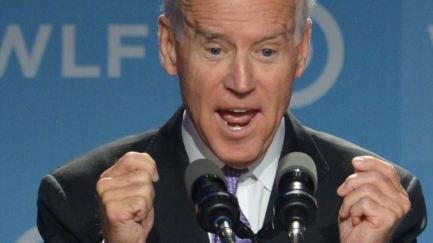
Biden shoots Washington in both feet
By Finian Cunningham | Press TV | October 6, 2014
“Bazooka Joe”, as the American vice president Joe Biden is affectionately nicknamed, has managed to shoot Washington in both feet, with a couple of startling admissions.
The first shot was his blunt assessment of the US-led anti-terror coalition currently bombing Iraq and Syria. While the second blast from Bazooka Joe was his candid remarks about how Western sanctions against Russia are all down to American bullying.
Biden was speaking at Harvard University at the end of last week, and in his apparently impromptu responses to public questions he revealed more about Washington than he perhaps intended. That’s why Biden is known as a loose cannon. He tends to shoot his mouth off before aiming his thoughts.
First of all, the vice president spoke about Syria, and he stated plainly that America’s regional allies are the sponsors behind the IS terror network. Biden named names. He accused Saudi Arabia, Turkey and the United Arab Emirates of pouring money and weapons into the creation of IS, al-Nusra Front and various other al-Qaeda-type terror groups.
“Our biggest problem is our allies – our allies in the region were our largest problem in Syria,” said Biden.
Referring to Saudi Arabia, Turkey and the UAE, Biden said: “They were so determined to take down [Syrian President] Assad and essentially have a proxy Sunni-Shia war, what did they do? They poured hundreds of millions of dollars and tens, thousands of tons of weapons into anyone who would fight against Assad, except that the people who were being supplied were al-Nusra and al-Qaeda and the extremist elements of jihadis coming from other parts of the world.”
Of course, many informed observers have known this terror background already. Certainly the Syrian and Iraqi governments have been accusing these same US regional allies of doing just that – sponsoring terrorism. Nevertheless, America’s second-in-command has, in his own words, made a damning assessment of the cause behind the rise of terrorism threatening the region. This anti-terror coalition that Washington has dragooned has therefore no credibility. Just ask Biden.
Since Biden made this stupendous admission, he has been forced over the weekend to make an apology to Turkey’s President Recep Tayyip Erdogan. The latter furiously denied his country’s involvement with terror groups in Syria. But many people won’t be convinced otherwise and they will rightly see Biden’s prior candid viewpoint as closer to the truth.
Also on Syria, Biden made a second injurious disclosure: namely, that there is no such thing as a “moderate opposition” fighting the Syrian government.
The American VP said “the idea of identifying a moderate middle has been a chase America has been engaged in for a long time… there was no moderate middle because the moderate middle are made up of shopkeepers, not soldiers”.
The notion of “moderate” Syrian rebels is central to US President Barack Obama’s strategy of supposedly defeating the IS network. Along with the US-led aerial bombing campaign – costing $10 million a day, according to the Pentagon – the next phase is to allegedly train “vetted rebels” who will displace the extremists and take up the fight against the Damascus government of Bashar al-Assad. These “moderates”, if we believe Washington, are to be trained in Saudi Arabia – the terror sponsor – with $500 million of American taxpayer money, approved by the US congress.
But thanks to Joe Biden’s big mouth, we have confirmation that the notion of “moderates” is a charade, as many observers have been saying all along. What’s more, Washington knows it too.
The second damaging disclosure from Bazooka Joe was in connection to the crisis over Ukraine. Relations between Washington and Europe on the one hand and Russia on the other have sunk to their worse level since the end of the Cold War more than two decades ago. A major reason for the tensions is the slapping of economic sanctions on Russia, which in turn has responded with bans on Western imports.
Moscow’s retaliatory sanctions on agricultural products are going to hit Europe very painfully – much more than the US – as will any moves by Russia to reduce crucial gas supplies to EU countries.
What Joe Biden revealed is that the EU countries were reluctant to apply trade sanctions on Russia in the first place. Biden said that they “were embarrassed” into adopting the aggressive American agenda because Obama personally hectored European leaders.
What Biden is saying is that the crisis between Russia and the rest of Europe has been greatly exacerbated by American bullying. If it weren’t for Washington’s hostile attitude, then the crisis over Ukraine would likely be resolved diplomatically, without the provocative backdrop of a damaging trade war.
As winter approaches and hard-pressed European citizens find that they are paying dearly for American intransigence towards Russia, Biden’s words will come back to haunt with a vengeance.
It is known that many of the EU 28 member states have already deep misgivings about following the US-led sanctions. As the crisis takes more and more of an economic and social toll on Europe, the Americans will incur bitter resentment from ordinary citizens across the EU, which will in turn fragment the apparent Washington-Brussels coalition against Russia.
All in all, we owe Joe Biden a measure of gratitude for his big mouth.
It spares us a lot of time-wasting from speculation and conjecture.
All we have to do is recall his words from last week when he spelled out the fallacy of the US-led war on terror in the Middle East and the US-led new Cold War against Russia.
Coalition of the Clueless
By Sharmine Narwani | RT | September 25, 2014
This US-engineered Coalition is in for some surprises. With few common goals, it has thrust itself into battle against the most determined players in the region and beyond.
The airwaves are still heaving with spin two days after US airstrikes against Syria.
Undoubtedly the attacks were timed to occur on the eve of the annual gathering of world leaders at the United Nations, so ‘Coalition’ partners could cluster behind the decision to bomb a sovereign state, uninvited.
The irony, of course, is that they are doing so at the UN – the global political body that pledges to uphold international law, peace and stability, and the sanctity of the nation-state unit.
The goal this week will be to keep the ‘momentum’ on a ‘narrative’ until it sinks in.
On day one, heads of state from Turkey, Jordan, Qatar, the UK and France were paraded onto the podium to drum in the urgency of American strikes against the Islamic State of Iraq and the Levant (ISIL), Jabhat al-Nusra and other militant groups inside Syria.
Every American official – past and present – in the White House rolodex was hooked up to a microphone to deliver canned sound bites and drive home those ‘messages.’ In between, video-game-quality footage of US strikes hitting their targets was aired on the hour; clips of sleek fighter jets refueling midair and the lone Arab female fighter pilot were dropped calculatingly into social media networks.
The global crew of journalists that descends annually on the UN for this star-studded political event, enthused over US President Barak Obama’s ability to forge a coalition that included five Arab Sunni states – Saudi Arabia, Qatar, Jordan, Bahrain and the UAE.
Few mentioned that these partners are a mere fig leaf for Obama, providing his Syria campaign with Arab and Muslim legitimacy where he otherwise would have none. Not that any of these five monarchies enjoy ‘legitimacy’ in their own kingdoms – kings and emirs aren’t elected after all – and two of these Wahhabi states are directly responsible for the growth and proliferation of the Wahhabi-style extremism targeted by US missiles.
Even fewer spent time dissecting the legality of US attacks on Syria or on details of the US ‘mission’ – as in, “what next?”
But with a mission this crippled at the outset, it didn’t take long for an alternative view to peek through the thick media fog.
On the ground in Syria, dead civilians – some of them children killed by US bombs – muddied the perfect script. Confused Syrian rebels – many who had called for foreign intervention to help crush the government of Syrian President Bashar al-Assad – demanded to know how these airstrikes were meant to help them.
Sunni Arabs would be radicalized by these strikes, they warned, as ideologically sympathetic citizens of the Arab coalition states took to their information channels and swore revenge for airstrikes against ISIL and al-Nusra.
The Syrian government, for the most part, remained mute – whether to save face or because they could ‘smell’ the gains coming. Contrary to Washington’s prevailing narrative, privately the story was that the US had informed the Assad government of both the timing and targets of the attacks in advance.
Sources say that the US even provided ‘guarantees’ that no Syrian military or government interests would be targeted. A Reuters exclusive claiming that the US went so far as to provide assurances to Iran, suggests this version is closer to the truth. When US airstrikes against Syria were on the table a year ago, the various parties went through a similar game of footsies. Last September, the Americans backed off – allegedly because of communications from their adversaries that even a single US missile would trigger a warfront against Israel. This time, Washington needed to know that scenario was not going to be activated, and this week they offered the necessary guarantees to ensure it.
Although the Russians and Iranians have publicly lashed out at the illegality of US strikes, they do not seem too worried. Both know – like the Syrian government – that these air attacks could be a net gain for their ‘Axis.’
Firstly, the United States is now doing some useful heavy-lifting for Assad, at no real cost to him. The Syrian armed forces have spent little time on the ISIL threat because their focus has traditionally been on protecting their interests in Aleppo, Damascus, Homs, Hama – and the countryside in these areas – as well as towns and cities around the Lebanese and Jordanian borders. That changed when ISIL staged successful attacks on Mosul and created new geopolitical urgency for Assad’s allies – which triggered some major Syrian strikes against ISIL targets.
But to continue along this path, the Syrians would have to divert energy and resources from key battles, and so the American strikes have provided a convenient solution for the time being.
Secondly, the Syrians have spent three years unsuccessfully pushing their narrative that the terrorism threat they face internally is going to become a regional and global problem. The US campaign is a Godsend in this respect – Obama has managed to get the whole world singing from the same hymn sheet in just two months, including, and this is important, the three states – Saudi Arabia, Qatar and Turkey – most instrumental in financing, weaponizing and assisting ISIL and other extremist militias inside Syria.
Syria, Iran, Russia, Hezbollah and a host of like-minded emerging powers are pleased about this new laser focus on jihadi terror and for the accompanying resource shift to address the problem.
Thirdly, the US has now been placed in the hot seat and will be expected to match words with action. For three years, Washington has overlooked and even encouraged illegal and dangerous behaviors from its regional Sunni allies – all in service of defeating Assad. With all eyes on America and expectations that Obama will fail in his War on Terror just like his predecessors, the US is going to have to pull some impressive tricks from its sleeves.
Ideally, these would include the shutting down of key border crossings (Turkey, Jordan, Lebanon); punishing financiers of terror and inhibiting the flow of funds and assistance from Washington’s regional allies; cutting off key revenue streams; tightening immigration policies to stem the flow of foreign fighters; disrupting communications networks of targeted terrorist groups; broader intelligence sharing with all regional players; and empowering existing armies and allied militias inside the ‘chaos zone’ to lead and execute ground operations.
Thus far, there are signs that some of these things are already happening, with possibly more to come.
Now for the fun part. The Syrians, Iranians and Russians do not fundamentally trust Washington or its intentions. The suspicion is that the US is on another one of its regime-change missions, displaying its usual rogue-state behavior by violating the territorial integrity of a sovereign state under false pretenses, and that it will shortly revert to targeting the Syrian government.
While they can see clear gains from the current level of US intervention – as distasteful as they find it – they are watching carefully as events unfold.
If there is the slightest deviation from the ‘guarantees’ provided by the US, this trio has plenty of room to maneuver. Iran, for one, has dallied with the Americans in both Iraq and Afghanistan and they know how to cause some pain where it counts. The Russians, for that matter, have many playgrounds in which to thwart US ambitions – most urgently in Ukraine and in Afghanistan, from which the US hopes to withdraw billions of dollars’ worth of military equipment by the end of 2014.
All understand that Washington has just assumed a risky public posture and that many, many things can go wrong. The Sunni Arab fig leaf can disappear in a nano-second if domestic pressures mount or revenge attacks take place internally. Information could leak about continued assistance to terrorist militias from one or more of its coalition partners – a huge embarrassment for Washington and its wobbly Coalition. ISIL will almost certainly act against coalition partner soft-targets, like carrying out further kidnappings and executions. Continued airstrikes will almost definitely result in a growing civilian casualty count, turning those ‘hearts and minds’ to stone. Syrian rebels could swiftly turn against the US intervention and radicalize further. Massive displacement caused by airstrikes could exacerbate the humanitarian crisis. And as in all other past US military War-on-Terror adventures, terrorism could thrive and proliferate in quantum leaps.
As Moscow-based political analyst Vladimir Frolov noted to the Washington Post : “The United States has underestimated the complexity of the situation before, so let’s just wait until they run into problems.”
The idea that US military engagement could continue for the long-term is unlikely given the myriad things that can go wrong fast. Obama is going to be reluctant to have his last two years in office defined by the hazardous Syrian conflict – after all, he was to be the president who extracted America from unessential wars.
But the most compelling reason that this Coalition will not pass the first hurdle is that its key members have entirely different ambitions and strategic targets.
Over a decade ago, these US-engineered coalitions were wealthier, less-burdened and shared common goals. Today, many of the coalition members face domestic economic and political uncertainties – and several states are directly responsible for giving rise to ISIL. How can the Coalition fight ISIL and support it, all at once?
What’s missing is a formula, a strategy, a unified worldview that can be equally as determined as the ideological adversary it faces.
Down the road, we will discover that the only coalition able and willing to fight extremism does indeed come from inside the region, but importantly, from within the conflict zone itself: Lebanon, Syria, Iraq and Iran. For starters, they are utterly vested in the outcome of their efforts – and would lead with political solutions alongside military ones. Those elusive boots-on-the-ground that everyone is seeking? They live it. Pit that group against Obama’s Coalition-of-the-Clueless any day and you know which side would win handily.
The question is, can this Coalition stomach a solution it is working so hard to avoid? Will it partner with vital regional players that were foes only a few months ago? It is doubtful. That would require a worldview shift that Washington is still too irrational to embrace.
Follow @snarwani on Twitter
Syria slams Israel support for ISIL
Press TV – September 23, 2014
Syria has once again slammed the Israeli regime’s support for the Takfiri ISIL militants operating inside the Arab country.
A Syrian military official, whose name was not mentioned in the reports, made the comments on Tuesday after Tel Aviv said earlier in the day that it had shot down a Syrian warplane as it attempted to fly over the ceasefire line into the Israeli-occupied Golan Heights.
The official confirmed the shooting down and underlined that the move was based on Tel Aviv’s policy of supporting ISIL Takfiris.
The aircraft was apparently a MiG-21 fighter jet which was downed by a surface-to-air Patriot missile, the Army radio said, adding that the wreckage landed on the Syrian side of the plateau.
However, an unnamed Israeli military official identified the downed aircraft as a Sukhoi Su-24 Russian fighter plane.
The development comes amid heavy clashes on the Syrian side of the Golan Heights. The Syrian government has been hitting back at the foreign-backed militants there with frequent airstrikes.
Syria has been gripped by deadly violence since March 2011.
According to reports, the Western powers and their regional allies — especially Qatar, Saudi Arabia and Turkey — are supporting the Takfiris fighting against the Syrian government.
Golan Heights have been under the Israeli occupation since the 1960s. The Tel Aviv regime captured 1,200 square kilometers (460 square miles) of the Golan Heights during the Six-Day War of 1967 and annexed the region in 1981.
US war on ISIL: Barrel of volatile lies
By Finian Cunningham | Press TV | September 13, 2014
There’s nothing like a war and the bombing of a foreign bogeyman to unite Americans. Since President Barack Obama made his nationwide announcement last week of open-ended war to destroy the militant ISIS network in Iraq and Syria – a terror network covertly set up by the US in the first place – the polls show a majority of American public now supporting the call for all-out air strikes.
And American politicians on both sides of Congress are also united in their support for the president’s burnished war effort. House Republican leader John Boehner has opposed Obama on all manners of domestic policies, but when it comes to going on a foreign blitzkrieg, well, that’s a “compelling case.”
Republicans and Democrats can’t seem to finalize on how much budget cuts to slash ordinary American citizens with, but they sure can close ranks on drumming up an extra $500 million to pour more weapons into war-torn Syria. It must be the “smell of napalm in the morning” that stimulates their erogenous zones.
Beyond the US, however, the newly formed “international coalition” for the American-led fight against ISIS, also known as IS or ISIL, is far from united. Indeed, early signs are that Anti-Terror Team USA is self-imploding from its own internal contradictions and dubious criminal nature.
Earlier this week, on the day before Obama’s 9/11 reminder speech for expanding the fraudulent war on terror, his secretary of state John Kerry was scouring the Middle East soliciting allies to bomb extremists in Iraq and Syria. On Wednesday, Kerry was telling CNN that such a coalition would involve “40 participating nations.”
After tours of Iraq, Jordan, Saudi Arabia and Turkey, Kerry was able to dragoon just 10 Arab states into joining the US bombing manifest.
‘Arab States Give Tepid Support To US Fight Against ISIS,’ reported the New York Times on September 12. These states include Saudi Arabia and the other Persian Gulf medieval oil sheikhdoms of Bahrain, Kuwait, Qatar, United Arab Emirates and Oman, plus Iraq, Egypt, Jordan and Lebanon. That’s hardly a constellation of legal probity and virtue; more like a rogue’s gallery of serial human rights violators.
A joint communiqué signed in the Saudi Red Sea port city of Jeddah stated a “shared commitment to stand united against the threat posed by all terrorism”. But the NYT noted: “The underlying tone was one of reluctance.” Even two of the signatories, Egypt and Jordan, expressed uneasy reservations about US plans to bomb ISIS into oblivion, despite signing up to the communiqué.
The Magnificent Ten in Jeddah vowed to: end financing of extremist groups; prevent the flow of weapons to such groups; halt the supply of fighters; curb the spread of extremist ideology; and increase humanitarian aid to Syria and Iraq. Saudi Arabia also promised to set up training camps for “moderate rebels” who would allegedly counteract the extremist ISIS network.
That chore list sounds rather more like a confession of past crimes that some of these US allies have been up to over the past three years: financing, arming, manning and promoting ISIS and its ilk to create a humanitarian catastrophe in Syria and Iraq. As for Wahhabi head-chopping Saudi Arabia setting up training camps to counteract its very own Wahhabi-sponsored head-chopping extremists in ISIS that’s just a risible joke.
Kerry tried to put a brave face on his dysfunctional regional posse. “Arab nations play a critical role, indeed a leading role,” he said in Jeddah, with a bravado that belied the fact that this proposed bombing campaign against ISIS is a US-led operation to give itself a license to bomb Syria for its long-held regime-change objective; the only critical role that these Arab puppets have is to give the covert campaign a veneer of Arab consent so that it doesn’t look like American imperialism on another criminal, murderous rampage – which it is.
NATO member Turkey, although non-Arab, dealt a blow from the outset to the US coalition by refusing to sign up. The Ankara government said it would not allow American warplanes to use its territory for air strikes against ISIS either in Iraq or Syria. Turkey has nearly 50 of its citizens currently held in captivity by the extremist groups in Syria and said that its “hands were tied.”
Ankara has also been a covert arms supplier of ISIS and other extremists, such as Jabhat al Nusra, along with the US and other NATO members, in a bid to oust the Syrian government of President Bashar al-Assad since mid-March 2011. That regime-change plan in Syria has failed miserably, with Assad winning overwhelmingly a presidential election last June, thus disproving the Western propaganda campaign of a popular revolution rising up against a tyrant.
Where the covert Western-backed terrorist campaign has failed on the ground, now Washington wants to add air power under the guise of “destroying” the ISIS terror network – a network that it in fact has spawned for the purpose of regime change in Syria. What are the bets that any US-led bombing of ISIS in Iraq and Syria will soon morph into US air strikes on Assad government forces, which is the main target for Washington, not its CIA-sponsored mercenaries in ISIS?
Turkey is mindful of blowback terrorism if it were to publicly join in US-led air strikes against ISIS. All of the Arab bombing coalition are no doubt mindful of the same treacherous contradiction, hence their reported reluctance to sign up to the scheme, as the New York Times noted.
Meanwhile, Russia, Syria and Iran immediately warned of the legal consequences of Obama’s bombing strategy. The Iraqi government has approved, so that gives Washington a claim on legality for continuing its strikes against ISIS in the north of that country. But not so the Syrian government.
Russia’s foreign ministry spokesman Alexander Lukashevich said that without the consent of the Syrian government in Damascus or a UN Security Council mandate, any US-led air strikes on ISIS inside Syrian territory would amount to “a gross violation of international law”. The Syrian authorities added that any such US intervention would be “an act of aggression on a sovereign country.”
Obama claims that he has “executive war powers” to bomb and kill whomever he wants, under the fascistic post-9/11 Authorization to Use Military Force (AUMF). But this White House Murder Inc. policy is increasingly threadbare and morally abhorrent. All the more so because Washington is exhorting the European Union to slap tougher economic sanctions on Russia for allegedly intervening militarily in Ukraine – which Moscow adamantly says it is not and moreover points out that there is no evidence of.
The dubious legality, not to mention logistical viability, of Washington’s latest bomb-first-ask-questions-later proposals to defeat the Frankenstein monster of its own creation in Iraq and Syria is cause for pause among even America’s pathetic European lackeys.
The French are balking at the prospect of bombing its former Syrian colony. French President Francois Hollande said: “France is ready to act, but once the political accord is there and in respect of international law.” That’s French diplomacy-speak for: “Don’t count on us being caught complicit in American war crimes.”
Germany’s Foreign Minister Frank-Walter Steinmeier was even more categorical in spurning the US-led coalition. Speaking in Berlin the day after Obama’s bravura televised speech to his nation, Germany’s top diplomat said of possible air strikes: “To be quite clear, we have not been asked to do so and neither will we do so.”
Britain’s Foreign Minister Philip Hammond also ruled out British involvement in US-led air strikes inside Syria. Hammond said his government supported the US-led coalition – placating the megalomaniac Yanks – but he told Reuters : “Let me be clear: Britain will not be taking part in any air strikes in Syria. We have already had that discussion in our parliament last year and we won’t be revisiting that position.”
British Prime Minister David Cameron appeared to quickly snub Hammond later on Friday when he said that “nothing was being ruled out” as far as British warplanes are concerned in possible Syria operations with the Americans.
Nevertheless, despite Cameron’s obviously compensatory bluster, it seems clear that the US-led campaign to “destroy ISIS” is already running out of commitment, even among Washington’s most dutiful, pathetically servile allies; and no wonder, too. This US-led anti-terror bombing coalition is such a barrel of volatile lies, unstable contradictions and inflammatory expediency it is bound to implode before it even starts to roll.
Syrian media slams Arab support for new US war in the region
Al-Akhbar | September 9, 2014
Syrian media accused Arab governments Tuesday of giving Washington prior agreement for military action against jihadists, with one daily calling for Damascus to form an alternative alliance with Moscow and Tehran.
The commentary comes ahead of talks in Saudi Arabia on Thursday between Secretary of State John Kerry and US regional allies on joint action to tackle the threat posed by the Islamic State group in both Syria and Iraq.
“Washington, which used the false pretext of weapons of mass destruction to enter the region militarily in 2003 and draw new geopolitical lines… is returning today under a new false pretext, the fight against terrorism,” said the Al-Baath newspaper.
“The Arabs meanwhile, are absent from every decision and are playing secondary roles,” it added.
The Baath party daily was referring to the US-led invasion of Iraq in 2003 in which notoriously the alleged chemical and biological weapons that were used to justify the overthrow of Saddam Hussein’s regime were never found.
Kerry is set to meet foreign ministers from Egypt, Jordan, Iraq, Lebanon, Turkey and the six Gulf Arab states in Saudi Arabia on Thursday.
The talks are part of US efforts to build a coalition to tackle ISIS, which has seized large tracts of territory in both Syria and Iraq, and carried out abuses including the decapitation of Syrians, Iraqis, Lebanese and two American journalists.
On Sunday, the Arab League pledged to take “necessary measures” to confront ISIS, and said it was ready for “international cooperation on all fronts.”
But Syria, and its ally Iran, will not be present at the talks in Saudi Arabia, and Damascus fears efforts to tackle ISIS will involve air strikes on its territory without its permission.
State-run newspaper Al-Thawra warned: “The United States is setting the stage to bring new wars to the region.
“Its local partners are ready to carry out its orders without even knowing the details of the American plan,” it added.
Government daily Tishrin questioned why Kerry and US Defence Secretary Chuck Hagel were coming to the region “when the Arab League has already given its prior agreement for a new war in the region organized by the United States.”
A newspaper called for the formation of an alternative “Russian-Iranian-Syrian coalition” against the jihadists to that being put together by Washington.
“Western and regional governments are excluding the nations that really want to fight terrorism,” it said, charging that the US-led coalition included nations that “support terrorism financially, military and logistically.”
Damascus considers all rebel groups fighting to overthrow President Bashar al-Assad “terrorists” and has long accused the rebels’ supporters, particularly Qatar, Saudi Arabia and Turkey, of funding “terror.”
Similarly, critics opposed to US involvement in the conflict with ISIS have pointed out that Washington in partnership with its Gulf allies, including Saudi Arabia, played a role in the formation and expansion of extremist groups like ISIS by arming, financing and politically empowering armed opposition groups in Syria.
On Monday, a study by the London-based small-arms research organization Conflict Armament Research revealed that ISIS jihadists appear to be using US military issue arms and weapons supplied to the so-called moderate rebels in Syria by Saudi Arabia.
(AFP, Al-Akhbar)
Featured Video

Fat Fiction
or go to
Aletho News Archives – Video-Images
From the Archives
Anti-science
The infinite list
The Naked Emperor’s Newsletter | October 12, 2022
Almost three years ago science entered a new dark age.
Jay Bhattacharya, a professor of medicine at Stanford University and co-author of the Great Barrington Declaration, seems to agree. He has been compiling a list of the examples of anti-science we have unfortunately become used to.
I have listed his thoughts so far but the list is continually expanding... continue
Blog Roll
 Aletho News
- Palantir touts record expansion and ‘battlefield’ AI value
- Israeli telecom networks used for mass surveillance across countries
- US claim of sinking Iranian boats ‘a lie’, senior military official tells IRIB
- New KC-46 Supertankers Promise Israel Conventional Samson Option Strike Сapability
- No, New York Times, We Don’t Need to Dam the Bering Strait
- Gates-Funded ‘Big Catch-Up’ Delivers 100 Million Vaccine Doses — Including High-Risk DTP Vaccine Not Used in U.S.
- No commercial ship or oil tanker transited Strait of Hormuz in past hours: IRGC
- Russia warns of escalating NATO military activity in Baltic region
- Government Kills the Spirit
- How ‘Israel’s’ Iran regime change plot failed – again
- If Americans Knew
- As in Gaza, Israel is targeting rescue workers in South Lebanon, killing more than 100 since March
- Israel’s Obliteration Ecocide from Gaza to Lebanon and Beyond
- Israel Said It’s Applying the Gaza Model in Lebanon. This Is What the Devastation Looks Like.
- New Member of Trump’s Iran Negotiating Team Comes From Notoriously Pro-Israel Think Tank
- Israeli army demolishes Christian monastery, nuns’ school in southern Lebanon
- Tokenizing Christians In Israel
- One Gaza is not enough: Israel is turning southern Lebanon into another Gaza – Daily Update
- As Palestinians die, Ben-Gvir celebrates birthday with golden noose cake – Daily Update
- Israel’s New Ambassador to the ‘Christian World’ Served as Envoy to Azerbaijan During the Ethnic Cleansing of Christians from Nagorno-Karabakh
- US set to sell $1B “Advanced Precision Kill Weapon System” to Israel – Daily Update
- No Tricks Zone
- 46 IPCC Scientists Break Rank, Publicly Challenge Long-Standing Dogmatic Climate Claims
- Another Study Links Warming To Cloud Forcing, Shortwave Radiation, Natural Atmospheric Circulation
- Wind Energy Is Toxic, Hazardous To Human Health, Scientific Review Shows
- Oversupply Of Volatile Solar Energy Leads To Record NEGATIVE Prices!
- New Study: Extreme Heat Records, Heatwaves, Extreme Cold Records Declining Across US Since 1899
- It’s The Cold, Stupid! Cold 20 Times More Lethal Than Heat, Multiple Studies Show
- European Institute For Climate And Energy: “Climate Debate is Seldom About Science”
- New Study: The Climate May Be 5 Times More Sensitive To Solar Forcing Than Commonly Assumed
- EV Industry Reached $70 Billion In Losses In 2024 Due To Delusional Green Ideologies
- Reality Check: Maldives Have Actually Grown In Size Or Remained Stable Over Recent Decades
 Aletho News