US racks up billions in losses during first four days of war as Iran pummels key Pentagon assets: Report
The Cradle | March 4, 2026
Iran’s retaliatory strikes on US assets in the Persian Gulf have caused at least $2 billion in losses for Washington since the start of the war against the Islamic Republic, Anadolu Agency reported on 4 March.
Almost fifty percent of the losses result from Iran’s destruction of a US AN/FPS-132 early warning radar system at Al-Udeid Air Base in Qatar, which is worth $1.1 billion.
The Islamic Republic also took responsibility for shooting down three F-15E Strike Eagles over Kuwait on Sunday, an incident US Central Command (CENTCOM) claims was caused by “friendly fire” from Kuwaiti forces. The estimated cost to replace the jets is $282 million.
Attacks by Iran’s Islamic Revolutionary Guard Forces (IRGC) also caused heavy damage to the US Navy’s Fifth Fleet headquarters in Manama, Bahrain, destroying two satellite communications terminals and several large buildings.
“Using open-source intelligence reports, the targeted SATCOM terminals were identified as AN/GSC-52Bs, which approximately cost $20 million, factoring in deployment and installation costs,” Anadolu Agency reports.
Tehran has also reported destroying the AN/TPY-2 radar component of Washington’s Terminal High Altitude Area Defense (THAAD) air-defense system deployed at Al-Ruwais Industrial City in the UAE, estimated to be worth $500 million.
“Combining these costs, Iran has damaged $1.902 billion worth of US military assets in the region,” the Turkish news agency says.
On top of these losses, Washington spent at least $2.3 billion during the first four days of the war, which was launched without congressional approval by using post-9/11 emergency laws.
The first 24 hours of the so-called “Operation Epic Fury” alone cost around $779 million, including pre-strike mobilization expenses of $630 million.
“At the current scale of operations, a three-week war could easily exceed tens of billions of dollars in expenses,” the Center for American Progress (CAP) estimated on Tuesday.
The US public policy research and advocacy organization also emphasized that “a conservative estimate for the initial costs of Operation Epic Fury is more than $5 billion as of March 2—and the campaign is just getting started.”
More losses still need to be accounted for, as the IRGC and its regional allies have targeted at least seven US military sites across West Asia since the start of the war, destroying several US diplomatic missions and intelligence sites belonging to the CIA and Mossad.
US ‘stonewalls’ Gulf calls for more interceptors as supplies quickly run out: Report
The Cradle | March 3, 2026
Washington has been “stonewalling” its Gulf allies’ requests for a replenishment of air defense missiles, Middle East Eye (MEE) reported, coinciding with intensifying Iranian attacks on US bases and assets across the region.
“At least one Gulf state that has come under attack from Iran asked US officials about replenishing supplies that have been depleted since the joint US-Israeli attack on Iran, but was brushed off,” a former US official familiar with the matter told MEE.
The former official said a separate Gulf state “responded to US requests to use air bases in their country with enquiries about the US’s commitment to their air defense systems,” and added that Washington’s Arab allies will “be left wanting if they expect new supplies of interceptors.”
“Whatever munitions were produced in the last couple of months, we have shot several years’ worth of production in the last few days,” the source went on to say.
The report also says pressure is growing on Arab states to join Israel and the US in their war against Iran.
Kelly Grieco at the Stimson Center think tank said, “The UAE has now burned through a significant chunk of an interceptor stockpile that took years to build.”
“US defenses focus on Israel … There is a sense of disappointment in the Gulf with our ally and partner, if we are describing that correctly, which focuses on Israel security and stability of Israel without attention to defending the Gulf states which are being subjected to Iranian attacks,” Saudi political analyst Suleiman al-Aqili told Al Jazeera.
Iranian missile and drone attacks against Israel, US military bases across the region, and major energy assets in the Gulf and Iraqi Kurdistan have not stopped since the start of the US-Israeli war. The Strait of Hormuz has also been closed.
The US Navy’s Fifth Fleet base, in particular, is among the targets being relentlessly pounded. Six US soldiers have been killed over the past few days [as per US sources].
Iraqi resistance factions allied to Tehran have also joined the fight, along with Lebanon’s Hezbollah.
Despite the mass buildup of US defenses and Israel’s sophisticated network of interceptor systems, Iranian missiles continue to make direct hits on Israeli targets.
The Hidden Map: US and Israel May Use Unexpected Neighbors to Attack Iran
By Robert Inlakesh | The Palestine Chronicle | February 15, 2026
Amidst heightened tensions between the US-Israeli alliance and Iran, an enormous amount of focus has been placed in the media on Iran’s missile program and how this will impact any upcoming war. What is often ignored are the origins of the regional threats to Tehran and its stability.
While covering each and every threat to the Islamic Republic of Iran would be beyond the scope of such an article, there are a number of hostile nations surrounding the country that can be used to destabilize the nation. The United Arab Emirates (UAE) and, to a lesser extent, Azerbaijan, are often cited as pro-Israeli, but there is another nation that flies under the corporate media’s radar.
Iran shares its second-largest land border with the nation of Turkmenistan, a country that is rarely mentioned as a regional player. What many don’t know is that the nation, long characterized as a neutral player, has strong ties with both the US and Israel.
Turkmenistan: Neutral State or Strategic Corridor?
Unlike many Muslim-majority nations, Turkmenistan has long recognized and maintained ties with the Israelis, their relationship beginning in 1993. Then, in April of 2023, these ties were further cemented with the inauguration of a permanent Israeli embassy in Ashgabat for the first time.
It should therefore be no surprise that Tel Aviv and Ashbagat’s relationship is closest in the intelligence sharing and security cooperation spheres. Afterall, the Israeli embassy – opened back in 2023 – was strategically placed only 17 kilometers away from Iran’s border, marking a major symbolic achievement for Israel, especially as it operates through what are suspected to be thousands of Mossad recruited agents inside the Islamic Republic.
Although Israel has no official military bases inside Turkmenistan, there have been a number of reports indicating that it has set up attack drone bases inside the country. This would make sense, considering that Ashbagat has been purchasing Israeli drone technology since the 2010s, more recently acquiring the SkyStriker tactical loiter munition (suicide drone), developed by Elbit Systems.
Ashgabat has long been in alignment with the West. In May of 1994, it became the first country to join NATO’s Partnership for Peace (PfP) program. However, the following year, the UN approved granting Turkmenistan the status of a neutral country, meaning it would not join military blocs.
In 2001, following the September 11 attacks, this neutral stance suddenly began to change. While other Central Asian nations – Kyrgyzstan, Tajikistan, and Uzbekistan – all immediately offered their military bases to the United States, due in large part to their concerns over the advancements of the Taliban, Turkmenistan only publicly admitted to allowing the US to use its airspace for military cargo aircraft to travel in transit.
In reality, the US airforce were operating a team on the ground in Ashgabat in order to coordinate refueling operations. In 2004, the Russian State protested the growing US-Turkmenistan military relationship, after reports emerged stating that American forces had “gained access to use almost all the military airfields of Turkmenistan, including the airport in Nebit-Dag near the Iranian border.”
Reports, which are not possible to independently verify but nonetheless have appeared consistent throughout the years, indicate that the US military has even established remote desert bases throughout different locations inside Turkmenistan.
Clinging to its neutral status on the public stage, Ashgabat rejects any mention of cooperation of this kind, including the denial of a 2015 statement by then US Central Command chief Lloyd Austin that the Turkmens had expressed their interest in acquiring US military equipment.
Signals of Military Activity
Perhaps the most concerning developments are the more recent revelations, revealed through OSINIT channels and Turkmen media, citing flight trackers to monitor the movement of US aircraft in the region. These reports indicate the confirmation that US Air Force transport aircraft C-17A Globemaster III and MC-130 Super Hercules have landed at undisclosed locations in Turkmenistan.
The significance of this, opposed to the rest of the military buildup that has been occurring in potential preparation for an attack on Iran, is that of the MC-130 Super Hercules, which is used specifically for transporting special forces teams, running night operations, as well as performing unconventional takeoffs and landings.
Paired with a recent report issued by the New York Times, indicating that the US’ options not only include an air campaign against Iranian nuclear and missile sites, but ground raids using special forces, it could be concluded that Turkmenistan is the location from which the US may seek to inject special forces units into Iran.
The Wider Ring around Iran
The Turkmenistan factor clearly cannot be ignored here, despite it often being dismissed as a neutral power that maintains friendly relations with both Russia and China. In fact, because of these relationships, with Moscow in particular, Tehran has refrained from attempting to expand its reach into the Central Asian country.
To Iran’s benefit is that Chinese and, to a lesser extent, Russian influence can reduce the extent to which the US and Israel can use Iran’s neighbors to threaten it. In Pakistan, for example, it is clear that both Islamabad’s joint security concerns – largely over Balochi militant groups – along its border, in addition to Beijing’s influence, make it highly unlikely that Pakistan would remain neutral and is instead inclined to help support Iran; within its limits, it should be added.
Azerbaijan is another potential threat to the stability of the Islamic Republic, due in large part to the large Azeri population in Iran’s own Azerbaijan Province. However, the vast majority of Azeri citizens are in fact loyal to the State and no major separatist movement exists at this time. The Iranian President Masoud Pezeshkian and Ayatollah Khamenei himself are both ethnically part Azeri.
Meanwhile, many supporters of the Israeli puppet Reza Pahlavi openly express their intention to crack down on the Azeri ethnic minority inside Iran. During the reign of the CIA-MI6-installed Shah of Iran, minority groups suffered immensely, due to a clear tradition of ethno-nationalism that exists amongst the current supporters of the deposed monarchy.
Baku, for its part, is the top gas supplier to Israel, maintaining close military, diplomatic and intelligence ties with them. Azerbaijan even made Hebrew media headlines for its use of Israeli suicide drones and other military equipment during its war with Armenia.
On the other hand, Iran is militarily superior to Azerbaijan and has a considerable base of support amongst the nation’s population, of which the majority belong to the Shia branch of the Islamic faith. Therefore, Tehran has major leverage and could not only paralyze its oil and gas infrastructure, but perhaps has the potential of organic movements forming within Azerbaijan that will owe allegiance to Iran.
There is also the threat that the Israelis, in particular, will attempt to use Kurdish militant groups in Iraqi Kurdistan in order to carry out attacks on the Islamic Republic. Israel does not publicly acknowledge its presence in northern Iraq, yet Iran has directly struck its bases housing Mossad operatives in the past, while Kurdish separatist groups have been utilized countless times in attempts to destabilize the country. During the June 12-day-war last year, Israel also weaponized these proxies.
For those also concerned about Afghanistan’s role in threatening Iranian security, this has always historically been a precarious situation, yet Tehran has not only been improving its ties with Kabul, it officially recognized the Islamic Emirate during the past week. Again, this does not mean there is no potential threat there, but an alliance that holds with the Taliban government may prove important.
Gulf States, Jordan and the Regional Balance
Then there are the more obvious players, the UAE and Bahrain, which are not only partners of the Israelis as part of the so-called “Abraham Accords” but are overtly aligned with Tel Aviv’s regional agenda.
The Emiratis are speculated to hold some cards regarding trade, but their leverage is negligible. Both the Bahraini and Emirati leaderships are clearly anxious, because Iran’s responses to the use of their territory to attack the Islamic Republic could quickly collapse their regimes.
Jordan, meanwhile, is where the US appears to be focusing much of its military buildup, even withdrawing forces previously stationed in Syria’s al-Tanf region into the Hashemite Kingdom’s territory.
The Jordanian leadership is evidently permitting its territory to become a key battleground, which will likely be subjected to attacks if the US chooses to use it to aid the Israeli-US offensive, but it is simply powerless in such a scenario.
Jordan has become a Western-Israeli intelligence and military hub in the region, meaning that if King Abdullah II objects to the demands of its allies, he understands well that his rule could be ended in a matter of hours. Therefore, he must risk his country being caught in the crossfire and just hope that an internal uprising doesn’t take shape, which is one of the reasons why he has been so hostile to the Muslim Brotherhood, fearing they could end up leading any revolt as the organization did in Egypt.
Turkiye, on the other hand, which is also a major regional player, is likely to play both sides behind the scenes, attempting to stay out of such a fight. If it takes either side, it will suffer the repercussions. Perhaps the most important role it could play is to prevent its bases or airspace from being used by the US.
Saudi Arabia and Qatar both maintain cordial relations with Iran, clearly favoring a scenario where no war occurs at all, because they are home to US bases. As we saw last June, the US used its CENTCOM headquarters in Doha to direct its attack on Iran’s nuclear sites, and as a result, Iran’s Islamic Revolutionary Guard Corps (IRGC) struck US facilities there.
Riyadh and Doha do not want to get dragged into such a scenario. It is also of note that they have a vested interest in neither side winning the war conclusively, because it is in their interests for there to be a multi-polar West Asia, not an Israeli-dominated region that will inevitably consume them.
A Conflict with Wider Consequences
Some have also speculated about Syria’s role in any war. Damascus is clearly in the US-Israeli sphere of influence, but it will have a negligible impact in its current form. If Syria’s military forces assault Lebanon or Iraq, they will suffer enormous blows and fail tremendously. The only wildcard with Syria is whether armed groups there will choose to use the opportunity to attack Israel, although as a military power, the Syrians are a relative non-factor at the current time.
For now, the US-Israeli plot to stir civil war inside Iran and to follow through with an air campaign that aids their proxies has failed. Given the readiness of Iran’s allies in Iraq, Lebanon, Yemen, and even Palestine, perhaps beyond, the US would be entering a point of no return scenario if it were to attempt a regime change operation.
– Robert Inlakesh is a journalist, writer, and documentary filmmaker. He focuses on the Middle East, specializing in Palestine.
Grooming the Gulf: How Epstein Forged Emirati Elites Into Tools for Israel
By Freddie Ponton | 21st Century Wire | February 10, 2026
In the last 48 hours, the U.S. Department of Justice has begun dumping what officials say amounts to more than three million pages of material tied to Jeffrey Epstein—an archive so vast it includes thousands of videos and hundreds of thousands of images. The tranche is only a fraction of what exists. Officials acknowledge that millions of additional documents remain under review, meaning the public has seen just a sliver of the government’s total Epstein archive. What is being unloaded into the public domain is not just evidence of private depravity; it is an inadvertent blueprint of how power really works when no one is supposed to be watching, an industrial‑scale influence machine whose files casually braid together billionaires, cabinet‑level officials, and strategic infrastructure from New York to the Horn of Africa. And even now, the public is being allowed to see only what officials deem manageable, with redactions still shielding some of the most sensitive names and millions of pages kept out of sight.
Hidden within those documents, leaks, screenshots, and email excerpts now circulating online, are connections that stretch far beyond Manhattan, Palm Beach, or even Paris. They reach deep into the Persian Gulf, into Dubai’s executive suites, and into the personal inboxes of officials in the United Arab Emirates.
These emails offer a unique glimpse behind the opulent shadows of Dubai’s towers, where untraceable billions flow like oil. In that world, a convicted pedophile whispers ministerial appointments to a UAE diplomat while discussing port deals that could move cargo and secrets across continents. According to persistent intelligence‑linked information surrounding his operations, Jeffrey Epstein was not acting alone or merely chasing thrills; he was allegedly operating as a geopolitical asset, cultivating leverage over Gulf elites, with places like Somaliland emerging as potential pawns in a larger strategic game. It is in such an environment that figures like Epstein thrive the best, because their private perversions double as statecraft.
Hind Al Owais and the Epstein Emails That Stain a Nation
Emails unearthed from the DOJ Epstein library reveal troubling facts about Jeffrey Epstein’s exchanges with Hind Al Owais, a young, ambitious Emirati woman navigating the opulent halls of UAE diplomacy. With her polished LinkedIn profile and lofty titles, she appears at first glance to be a symbol of progress. As director of the UAE’s Permanent Committee for Human Rights and a UN adviser since 2015, she has publicly championed women’s empowerment, declaring it both a moral and strategic imperative. On paper, Hind Al Owais is the face of a “modern” UAE: a diplomat, UN adviser, and later a senior human‑rights official fronting panels on women’s rights and regional mechanisms.
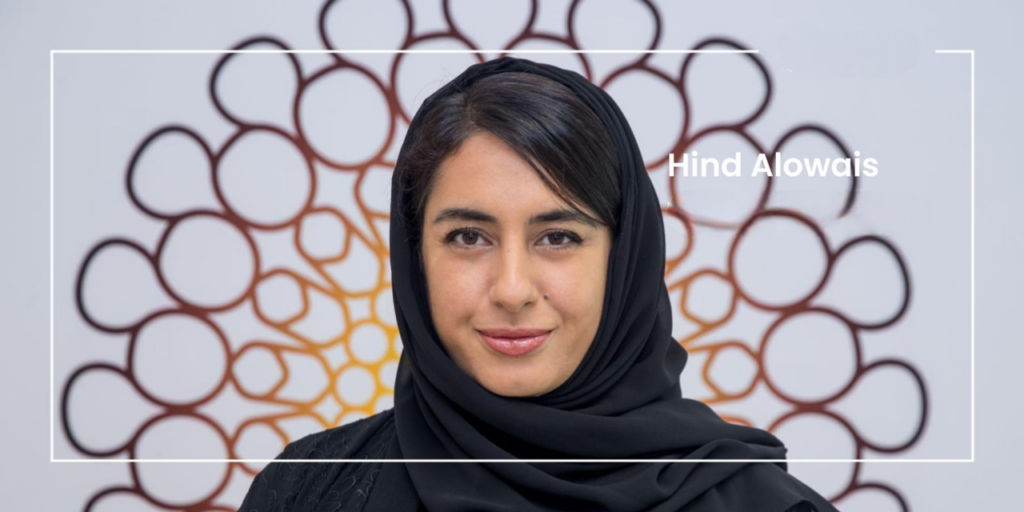
Hind Al Owais, UAE’s Permanent Committee for Human Rights and a UN adviser since 2015 (Source: YourStory.com)
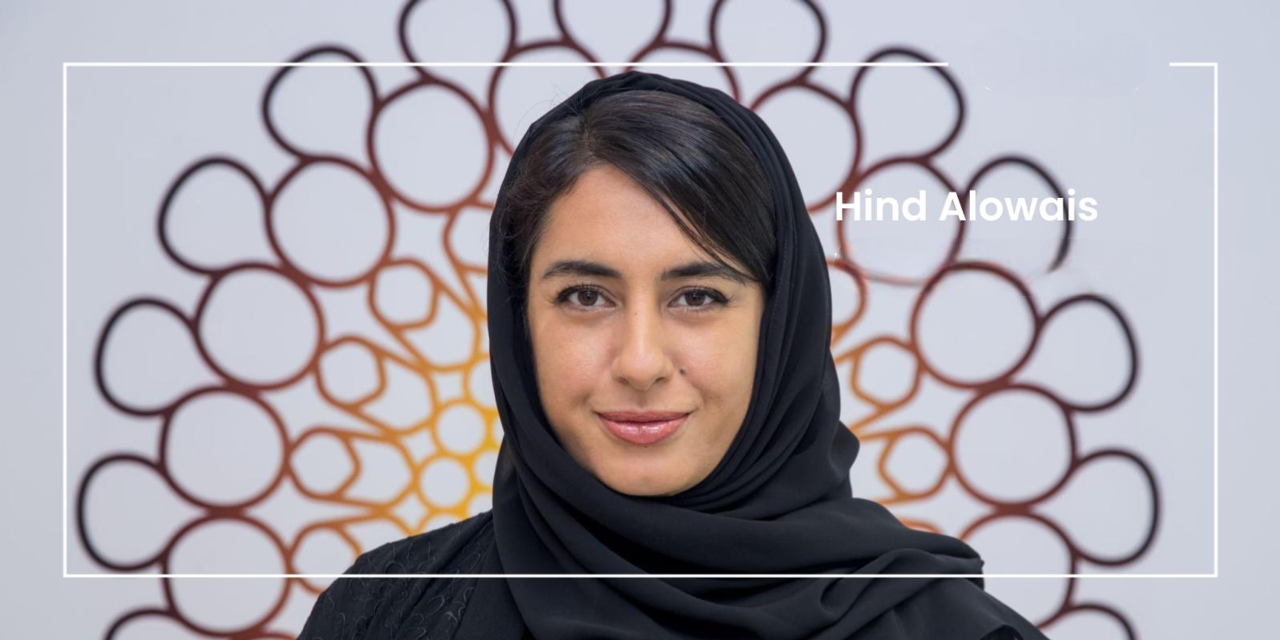
In press releases, she speaks of “dignity” and “gender equality” while chairing events under the banner of the Permanent Committee for Human Rights in Abu Dhabi. In the emails, the tone is very different. The same woman who would later open high‑level human‑rights dialogues is trading easy banter with a convicted sex offender, eagerly accepting his career advice, and bringing family into his orbit. The contrast is not just personal hypocrisy; it looks like the textbook use of a polished, progressive female diplomat as a shield for an authoritarian system willing to outsource leverage work to a man like Epstein while selling the world a sanitised narrative at the UN.
The correspondence begins in 2011, during Epstein’s post‑prison resurgence. Al Owais, then a rising figure in UAE foreign affairs, began emailing the financier. Their communications suggest the exchanges were part of a broader effort to compromise UAE elites for Israeli leverage. Numerous emails linked to Hind Al Owais and Jeffrey Epstein from January 2012 are currently the subject of extensive scrutiny, prompting unsettling questions regarding the nature of their relationship. One email (EFTA01844869) states: “Getting one girl ready is difficult enough; two girls, you can certainly call a challenge.” Another conversation is said to mention introducing her sister to Epstein. In one message, Epstein positioned her as a future UAE Minister of Culture, declaring there would be “no competition.” (EFTA00909346)
One email (EFTA01845739) from January 26, 2012, stands out. Al Owais expresses excitement about introducing her sister, Hala, allegedly just 13 at the time, to Epstein, a man infamous for preying on underage girls. Epstein’s reply is suggestive, promising more time with both. Another message jokes about the challenge of preparing “two girls.” Critics online have seized on these exchanges, arguing that Al Owais was not just a passive contact but an active facilitator, a kind of soft‑power handler who normalised Epstein’s access to young Emirati women.
The DOJ emails that have surfaced so far do not explicitly spell out sexual transactions or list ages, which conveniently allows defenders to hide behind literalism. But in the real world, context matters: a senior diplomat, working in New York, repeatedly arranging access for “girls” to a man already notorious for abusing minors is not a neutral act; it is complicity dressed up as networking.
Online backlash was immediate. Critics claimed Al Owais worked as a procurer, supplying minors, including her own sister, to Epstein. Viral posts branded her a “pimp” and “Satan worshipper,” drawing thousands of retweets amid outrage over her UN role. Although no direct proof of underage involvement appears in the emails themselves, it can be argued that the pattern fits Epstein’s methods, which rest on compromising officials feeding a machine designed not only for pleasure but for leverage. Emails from 2017 show him lobbying against Qatar, accusing Doha of terrorism financing in line with UAE‑Israel strategies, underscoring that his communications with Gulf elites were deeply political, not merely social.
Photos circulating online show Al Owais beside Epstein, her diplomatic poise clashing with his predatory grin. Critics highlight the contradiction: how can someone linked to Epstein lead human‑rights initiatives in a country notorious for the kafala system? The kafala regime has long been described by rights groups as a system of modern servitude, binding migrant workers to employers in conditions ripe for abuse; placing an Epstein‑linked diplomat at the helm of “human rights” in such a state is less reform than reputation‑laundering.
Adding another layer, discussions online claim Ghislaine Maxwell received girls supplied through the same network. Ex‑spy Ari Ben‑Menashe alleges the pair ran Mossad honeytraps together, building on older reports that Maxwell’s father, Robert Maxwell, had served as a Mossad asset. These accounts are contested and not fully documented, but the emerging patterns in the Epstein–UAE files sit uncomfortably close to what one would expect from an intelligence‑linked kompromat operation targeting Gulf elites.
Even as these revelations spread across social media, Abu Dhabi appears to have kept Al Owais anchored in its human‑rights machinery, letting her continue to front events and initiatives in the UAE’s name. The message is unmistakable: whatever passed between her and Epstein does not disqualify her from helping launder the regime’s image on the international stage.
Timeline of Epstein’s UAE–Israel Web
Year – Event
- 2009 – Bin Sulayem sends Epstein a torture video; Epstein replies, “I loved the torture video.”
- 2010 – Epstein allegedly linked in commentary to the Mossad hit on Hamas leader Mahmoud al‑Mabhouh in Dubai, fitting the broader narrative of an Israeli intelligence‑adjacent operator moving through Gulf territory.
- 2011–2012 – Al Owais emails Epstein about her sister and career boosts; Epstein dangles ministerial suggestions, positioning her as a future UAE Minister of Culture.
- 2013 – Epstein brokers Ehud Barak–bin Sulayem meetings for port investments, cementing a triangle linking an ex‑Israeli prime minister, a Dubai port magnate, and a convicted predator.
- 2017 – Epstein lobbies anti‑Qatar pressure in line with UAE and Israeli strategies, echoing the blockade politics that would reshape Gulf alliances.
- 2018 – Bin Sulayem shares Somaliland history; Epstein touts equity in the port and boasts of being basically in charge of nearby Djibouti facilities.
- 2020 – Abraham Accords normalize UAE–Israel ties, formalising a relationship that had already been woven in through years of quiet cooperation and shared interests.
- 2026 – Files and commentary claim Epstein trained under Barak for global blackmail operations, merging personal depravity with strategic utility.
If a diplomat could allegedly facilitate such access, the question becomes unavoidable: what might a billionaire port magnate do?
The Sultan’s Sordid Secrets — Bin Sulayem’s Torture Videos and Port Empires
From the intimate whispers of diplomatic emails, the narrative expands into the world of Sultan Ahmed bin Sulayem, the CEO of DP World—a state‑linked giant controlling a significant share of global container traffic. According to the files, bin Sulayem exchanged thousands of emails with Epstein over more than a decade. The correspondence blends lewd banter, elite introductions, and geopolitical scheming.
Sultan Ahmed bin Sulayem does not run a boutique firm; he sits atop a state‑linked conglomerate that touches roughly one in ten containers moved on the planet, with stakes in more than 80 ports and terminals from London to Dakar to Berbera. In other words, when he jokes with Epstein about torture videos and shares “gifts” like a fragment of the Kaaba’s covering, he is not just another vulgar rich man; he is the point where a sovereign logistics empire meets a blackmail broker.
One revelation stands out (EFTA00749241): the torture‑video exchange. Unredacted after scrutiny by Rep. Thomas Massie in February 2026, it identifies bin Sulayem as the sender. This echoes the accusations from a 2009 scandal involving Sheikh Issa bin Zayed Al Nahyan torturing an Afghan grain merchant with cattle prods, sand, and fire—and another 25 victims, according to American businessman Bassam Nabulsi. The old torture tape was once treated as an embarrassing aberration; in light of the Epstein emails, it looks more like a symptom of a system where sadism and impunity are bonding rituals among the elite.
Online backlash was swift. Critics labelled bin Sulayem part of the UAE’s “filthiest scum.” Theories spread that the video served as kompromat—leverage collected by Epstein to secure cooperation. Whether or not that specific file was ever brandished as blackmail, the logic is clear: a regime that records torture and a fixer who monetises secrets are natural partners.
Meanwhile, bin Sulayem gifted Epstein a sacred Kaaba Kiswa cloth intended for Islam’s holiest site. Emails (EFTA01051761) show UAE businesswoman Aziza Al‑Ahmadi arranging the shipment. Epstein reportedly used it as a carpet, prompting outrage and accusations of desecration. This is what impunity looks like when religion is instrumentalised for power. A cloth destined for the Kaaba is rerouted through a UAE billionaire to a US sex offender, laid out on the floor as a decorative prop in his private den of exploitation. For many Muslims, the outrage is not just about sacrilege; it is about the casual way a state‑backed executive treated the sacred as one more chip in a game of influence with a man whose entire business model revolved around defilement.
The correspondence contains further lewd exchanges, including jokes about sexual exploits and discussions of foreign students. Bin Sulayem facilitated introductions to Emirati royals and even pitched ideas to Elon Musk through Epstein in 2015 EFTA02716369), using the predator as a networking hub into Western tech and political circles.
But the ports are the real story. DP World’s infrastructure controls intercontinental traffic. For a trafficker, critics argue, such systems offer anonymity and reach: containers are counted, not souls. Some theories cast bin Sulayem as Epstein’s logistics partner, someone whose empire could provide the plausible deniability that only large‑scale shipping can offer. Since 2006, Epstein acted as a go‑between, linking former Israeli Prime Minister and Defense Minister Ehud Barak with bin Sulayem. This triangular relationship—Barak, bin Sulayem, and Epstein—shows in Epstein file EFTA02600899, enabling discreet communications that certainly contributed to the foundation of later economic and political alignments, including the 2020 Abraham Accords, which normalised relations between the UAE and Israel. From here, the story shifts naturally to Somaliland.
The Somaliland Gambit — UAE Ports, Epstein’s Equity, and the Israeli Shadow
The bin Sulayem scandal converges in the dusty ports of Somaliland, a self‑declared republic clinging to independence from war‑torn Somalia. Here, the narrative escalates from personal perversions to geopolitical machinations, and Epstein’s fingerprints appear on deals that could turn strategic harbours into conduits for exploitation—all within the UAE’s ecosystem that has harboured money launderers and opaque fortunes for years, providing Epstein a fertile ground to operate.
Recently published articles and DOJ‑linked emails (EFTA01885124) show Epstein’s circle eyeing Somaliland as early as 2012 for water and finance ventures. One message describes “huge water reserves, untapped (and clean) near the port city of Berbera. providing direct access to the Saudi market. Easy to ship. Minimal transport.” The language is chilling in its simplicity: a territory reduced to a resource node on someone else’s spreadsheet, its water turned into a line item in a private equity‑style pitch.
Here, the UAE, through DP World and bin Sulayem, has poured billions into Berbera port, signing controversial agreements that bypass Somalia’s central government. DP World and its partners have committed up to 1 billion USD to logistics infrastructure along the Berbera corridor, tying the port into Ethiopian trade routes and Gulf markets, all under a legal framework that treats Somaliland as a quasi‑sovereign partner despite its lack of international recognition. For Mogadishu, this is a direct challenge to its sovereignty; for Dubai, it is a lucrative wedge into the Red Sea; for actors like Epstein, it is an ideal gray zone, where jurisdiction is murky, and oversight is thin.
Epstein’s role appears in multiple 2018 emails: bin Sulayem shares a brief history of Somaliland’s recognition push with Epstein, including a document (EFTA00842536) titled along the lines of “The recognition of Somaliland – a brief history,” inviting him into the conversation not as a bystander but as a broker. Epstein, in turn, claims equity in the port and boasts of being basically in charge of nearby Djibouti facilities, casting himself as a shadow stakeholder in the region’s maritime chokepoints. Whether that equity was real or inflated bravado, the intent is clear: he wanted to position himself at the junction of finance, infrastructure, and political recognition in one of the world’s most strategically sensitive corridors.
Recently uncovered emails from the DOJ Epstein library (EFTA01876256) reveal his enduring fascination with Somaliland, discussing strange projects like “building a small studio in Somaliland and calling it SOMALIWOOD STUDIOS, to produce shows like Sesame Street type, including children’s programming, etc. for African kids.” The proposed “Somaliwood” studio reads like black comedy until you remember who is talking. Here is a man accused of systemically abusing minors, now sketching out soft‑power projects aimed at African children in a territory whose legal status is deliberately ambiguous and whose poverty makes scrutiny difficult. It is the colonial mission civilisatrice updated for the age of offshore finance and private jets: entertain the children, harvest the elite.
These emails include conversations from the years prior to Epstein’s “death” with DP World chief Sultan bin Sulayem regarding proposals aimed at recognising the territory as an independent state. (EFTA00842536) For Somaliland’s people, the stakes are immediate. Poverty and instability persist while foreign powers carve up their coastline. Critics describe the deals as neo‑colonial projects. Some claim the UAE lobbied for Somaliland’s separation ahead of the Abraham Accords, with Epstein acting as an intermediary promoting Israeli technology, turning the territory into a bargaining chip in a three‑way game between Abu Dhabi, Tel Aviv, and Western security planners.
DP World handles roughly 80 million containers annually. To those who suspect trafficking behind the trade routes, that scale offers perfect cover. Israel was among the earliest nations to acknowledge the brief five‑day independence of British Somaliland in 1960, but it was on December 26, 2025, that Israel officially declared it would be the first nation to fully recognise Somaliland, sparking new developments in the Red Sea Basin. As part of this agreement, Israel plans to set up a diplomatic and potentially security presence in the region for the first time since its relations with Eritrea soured in 2020.
The human consequences are stark. Somali migrants fleeing famine risk falling into trafficking routes. Epstein’s proposed cultural projects in Somaliland echo the recruitment tactics used elsewhere in his network: philanthropy as bait, media as camouflage, and vulnerable populations as raw material.
Epstein, Mossad, and the Israeli Interest
For years, former intelligence officials, investigative journalists, and independent researchers have argued that Epstein was not simply a freelance blackmailer but an asset embedded in Israeli intelligence networks. Ari Ben‑Menashe, a self‑described former Israeli intelligence officer, has claimed that Epstein and Ghislaine Maxwell ran a Mossad “honeytrap” operation, seeded by her father Robert Maxwell—himself long reported as a Mossad asset. These accounts are disputed and not yet backed by a full documentary record, but they sketch a plausible frame: private vice harnessed for state leverage, with Epstein as the smiling frontman.
What the DOJ files now reveal is a pattern that fits uncomfortably well with that hypothesis. You have an Israeli‑aligned fixer cultivating leverage over Gulf elites, moving seamlessly between private jets, UN corridors, and port concessions, just as Israel sought to break its regional isolation, secure new security corridors, and reposition itself along the Red Sea. Look at the map.
The same years in which Epstein is emailing bin Sulayem about “recognition of Somaliland” and boasting of influence around Djibouti are the years in which Israel is quietly repositioning itself on the Red Sea, negotiating normalisation with Gulf monarchies, and searching for ways to project power near Bab el‑Mandeb without provoking domestic backlash.
A privatised network of ports, logistics corridors, and pliable elites, facilitated by someone who holds their secrets, solves several problems at once. It offers deniable access, commercial cover, and a ready‑made human‑intelligence pipeline into regimes that officially still have to perform outrage for the Arab street. In that light, the Abraham Accords no longer look like a sudden breakthrough of “peace” but the public codification of relationships that had already been wired in through years of backchannel deals, port concessions, and blackmail‑ready kompromat.
Was Epstein’s network decisive in sealing those agreements? The evidence is not yet complete. But the architecture is visible: Emirati royals and executives enjoying the services of a man whose alleged handlers, according to multiple intelligence veterans, sat in Tel Aviv; strategic infrastructure in places like Berbera and Djibouti drifting quietly into Emirati hands; and, finally, a ribbon‑cutting ceremony in Washington where everyone pretends this was all about tourism and flights.
The Geopolitical Knot — Theories, Implications, and the Call for Justice
Viewed together, the Epstein–UAE saga becomes, in the eyes of its critics, more than a criminal case. It becomes a portrait of how global power allegedly weaponises personal vice. From Al Owais’s alleged facilitation to bin Sulayem’s torture‑video exchange and the port deals in Somaliland, the narrative paints Epstein as a fixer for Israeli strategic interests, operating in the gray zones where intelligence services, corporate empires, and royal courts overlap. His activities reportedly included brokering Qatari‑Israeli meetings and backchannels involving Russia and Syria, further blurring the line between private financier and unofficial envoy.
Some theories suggest the Abraham Accords were sealed with kompromat, transforming ports into surveillance nodes and trafficking corridors. Online outrage reflects broader anger at perceived hypocrisy. The victims, underage girls, abused labourers, displaced Somalis, remain central to the story, even as elites evade accountability and rebrand themselves as champions of reform.
Ghislaine Maxwell’s refusal to testify before Congress adds to the sense of impunity. Rep. Thomas Massie’s push for unredacted files hints at further revelations, including six redacted names—one reportedly a senior foreign official. His posts have already identified figures like Leslie Wexner as co‑conspirators and bin Sulayem as the sender of the torture video. Theories of intelligence‑agency cover‑ups persist, fueled by Epstein’s highly convenient death in custody. Some speculate unreleased files may map deeper links to Israeli intelligence operations financed through the UAE’s untraceable wealth, routed through free zones, shell companies, and sovereign funds that answer to no electorate.
If you strip away the PR gloss, the pattern is brutally simple. Israel secures new corridors and listening posts along the Red Sea, marketed as “normalisation”; the UAE entrenches itself as a logistics empire and financial safe haven, its human‑rights abuses airbrushed by friendly diplomats at the UN; Western elites enjoy access, contracts, and plausible deniability. Somaliland, meanwhile, becomes another bargaining promise land in a game it did not design, its coastline sliced into concessions, its sovereignty traded in PDFs and email attachments between a Dubai tycoon and a US sex offender.
The DOJ archive does not just expose individual monsters. It sketches the contours of a system in which the abuse of girls, the torture of workers, and the carving up of fragile states are all part of the same circuitry of power. And as long as that circuitry continues to serve the strategic interests of states like Israel and their Gulf partners, there is every incentive to let Epstein die on camera, redact a few names, and insist the machine is gone—when, in reality, only the frontman has changed.
Somalia president warns against Israeli interference, vows to prevent any military base in Somaliland
Press TV – February 8, 2026
The president of Somalia has strongly denounced the Israeli regime’s interference in his country’s internal affairs and vowed to “confront” any Israeli military presence in the breakaway region of Somaliland.
In an interview on Saturday, Hassan Sheikh Mohamud said Israel’s recognition of Somaliland as an independent state is a “reckless, fundamentally wrong and illegal action under international law.”
Somaliland is a breakaway region in northwestern Somalia, covering territory that was once part of the British Protectorate. Despite its unilateral separation, it remains internationally recognized as part of Somalia.
The region occupies a strategic position along one of the world’s most vital maritime choke points, an area already surrounded by overlapping conflicts in the Horn of Africa and West Asia.
In recent years, Somaliland has sought foreign support by developing ties with the United Arab Emirates (UAE), a signatory to the Abraham Accords with Israel, as well as Taiwan, in an effort to gain international acceptance outside Mogadishu’s authority.
Israel’s move followed reports that the regime had contacted actors in Somaliland to discuss using the territory for the forced displacement of Palestinians during its genocidal war on Gaza, which has killed more than 72,000 Palestinians and wounded another 172,000, most of them women and children.
While Israeli and Somaliland authorities rejected those reports, a Somaliland official told Israel’s Channel 12 in January that an Israeli military base is “on the table and being discussed,” with its establishment tied to specific conditions.
Somalia has described Israel’s recognition of Somaliland as a direct assault on its territorial integrity and national unity, a position endorsed by most African and Arab countries, and has demanded that Prime Minister Benjamin Netanyahu reverse the decision.
Mohamud also made clear that Mogadishu will resist any Israeli military presence on Somali soil: “We will fight in our capacity. Of course, we will defend ourselves … And that means that we will confront any Israeli forces coming in, because we are against that and we will never allow that.”
He said Israel’s actions, which are “interfering with Somalia’s sovereign and territorial integrity,” also “undermine stability, security and trade in a way that affects the whole of Africa, the Red Sea and the wider world.”
Mohamud stressed that Israel’s deadly use of force against Palestinians in Gaza cannot be separated from developments in Somaliland, saying both reflect the erosion of global norms and restraints.
“Key among the global concerns is the weakening of the established rules-based international order. That order is not intact anymore,” he said.
He warned that institutions created after World War II “are under grave threat,” as the idea that “the mighty is right” increasingly replaces respect for international law.
The administration of US President Donald Trump, meanwhile, has yet to signal a significant change in its position on Somaliland.
Newly surfaced Epstein email ties him to Israel–UAE strategy targeting Qatar
MEMO | February 3, 2026
Newly uncovered emails dated July 2017 reveal disgraced sex trafficker Jeffrey Epstein, long accused of acting on behalf of Israeli intelligence, lobbying for political and financial pressure to be applied against Qatar at the height of the Gulf diplomatic crisis.
The email exchange, dated 6th July 2017, sees Epstein accusing Qatar of “terrorism financing,” describing its leadership as “dangerous,” and demanding that it be made to “come out against terrorism and not just say it.” He proposes creating a billion-dollar “victim fund” for terrorism survivors to be administered by the US, UK and UN, while calling on Qatar to either contribute financially or recognise Israel—framing both as tests of its sincerity in opposing terrorism.
Epstein outlines a strategy of reputational damage and financial pressure, proposing a Western-administered fund that would publicly test Qatar’s stance on terrorism. His language reflects the broader Israel–UAE effort at the time to isolate Qatar over its support for Palestinian rights and refusal to normalise relations with Israel.
The message was sent just weeks after the blockade on Qatar was launched by the UAE, Saudi Arabia and Bahrain in June 2017. Though publicly framed as a crackdown on terrorism and the Muslim Brotherhood, the blockade was seen as part of a broader effort to force Qatar to abandon its support for Palestine, close Al Jazeera, cut ties with Iran, and expel Turkish forces, demands that aligned directly with Israeli priorities.
As MEMO first reported in 2017, leaked emails from the UAE Ambassador Yousef Al-Otaiba revealed coordination with staunch pro-Israel figures in Washington, including Elliott Abrams and Dennis Ross, on strategies to “punish” Qatar. At one point, Abrams suggested that conquering Qatar would “solve everyone’s problems.” Al-Otaiba responded: “It would be an easy lift”.
Former German Foreign Minister Sigmar Gabriel later confirmed that the UAE had drawn up plans for a military invasion of Qatar. What prevented the assault was not US President Donald Trump, who publicly backed the blockade initially and called Qatar a “terrorism funder,” but then-Secretary of State Rex Tillerson, who intervened after being tipped off by Qatari intelligence, making over 20 calls in a frantic attempt to stop the invasion.
Throughout the crisis, Israeli and Emirati lobbyists jointly pressured US lawmakers to label Qatar a state sponsor of terrorism. The Foundation for Defense of Democracies, a pro-Israel neo-conservative outfit backed by billionaire and Benjamin Netanyahu ally Sheldon Adelson, worked closely with UAE officials to frame the narrative in Washington. Netanyahu himself met with UAE and Bahraini diplomats to coordinate efforts behind the scenes.
The email places Epstein—widely considered to have been a Mossad asset involved in sophisticated blackmail operations—squarely within the broader effort to isolate Qatar during the 2017 blockade. His proposals echo the strategy pursued by Israel and the UAE to punish Doha for its support of Palestinian rights and refusal to normalise relations with Israel
Turkiye pulls out from defense pact with Saudi Arabia, Pakistan: Report
The Cradle | February 3, 2026
Turkiye will not be joining the new defense pact between Saudi Arabia and Pakistan, a source close to the Saudi army revealed to western media, after reports said the three countries would be entering into a trilateral agreement.
“Turkiye won’t join the defense pact with Pakistan,” the source told AFP. “It’s a bilateral pact with Pakistan and will remain a bilateral pact.”
A Gulf official also told the outlet that “This is a bilateral defensive relationship with Pakistan. We have common agreements with Turkiye, but the one with Pakistan will stay bilateral.”
Last month, Turkiye’s foreign minister said discussions were taking place regarding Ankara’s involvement.
Since the agreement came to light, there has been heavy speculation about the three countries forming a strong alliance.
The deal was initially reported as a trilateral pact.
It comes after close to a year of negotiations and builds on expanding Saudi–Pakistani military cooperation, including a mutual defense pact signed in September that treats an attack on one as an attack on both.
The pact also comes months after a brief war between India and Pakistan, and as tensions between Riyadh and its rival Abu Dhabi have been at an all-time high.
The kingdom is reportedly working to establish a new military coalition with Egypt and Somalia aimed at countering the UAE.
According to a new report by the New York Times, Egypt has been carrying out drone strikes against the UAE-backed Rapid Support Forces (RSF), which is committing genocidal war crimes against civilians in Sudan.
The attacks are said to be launched from a secret air base in Egypt’s western desert.
Islamabad has also been facing deadly attacks from separatist militants recently.
Pakistan announced on 1 February the killing of at least 145 separatist militants in the Balochistan province, following a series of gun and bomb attacks over the weekend that killed 50 people.
Militants from the separatist Balochistan Liberation Army (BLA) launched coordinated attacks on Saturday, killing 31 civilians, including five women, and 17 security personnel.
Saudi media takes an anti-‘Israel’ turn: WSJ
Al Mayadeen | February 2, 2026
Saudi Arabia’s state-backed media has adopted an increasingly hostile tone toward “Israel,” signaling diminishing prospects for diplomatic normalization between the two regional powers as the war on Gaza continues to reshape political calculations across West Asia.
The Wall Street Journal (WSJ) wrote on Monday that the shift has been reflected in official and semi-official outlets. In a January editorial, the daily Al-Riyadh accused “Israel” of disregarding international law and state sovereignty, stating that “wherever Israel is present, there is ruin and destruction.”
According to WSJ, religious figures have echoed the rhetoric. In a December sermon at the Grand Mosque in Mecca, Sheikh Saleh bin Humaid declared, “Oh God, deal with the Jews who have seized and occupied, for they cannot escape your power.”
Saudi officials say the increasingly sharp messaging is partly driven by the kingdom’s escalating rivalry with the United Arab Emirates, a regional competitor for economic leadership that has taken opposing positions to Riyadh in multiple West Asian conflicts. The UAE is also the most prominent Arab signatory of the series of US-backed normalization agreements with “Israel.”
Saudi officials acknowledged that the media campaign, while directed by the kingdom’s leadership, has also served as a means to sway public opinion against those normalization deals, which they described as an easy target amid widespread anger over the Gaza war.
UAE: The Israeli Trojan horse
In a recent online editorial for the Saudi publication Al-Jazirah, columnist Ahmed bin Othman Al-Tuwaijri accused Abu Dhabi of embracing Zionism to settle regional rivalries, writing that the Emirates had positioned itself as an “Israeli Trojan horse in the Arab world.”
Saudi Arabia disputes claims that the coverage is centrally coordinated but has nonetheless taken note of the tone, viewing it as a reflection of growing public anger toward “Israel” and the political pressure this creates for the leadership.
Bringing Saudi Arabia into the normalization agreements has long been a central objective for Washington and “Israel.” However, Saudi and Israeli officials say Riyadh’s calculations shifted sharply following the Gaza war, whose toll has hardened public and elite attitudes alike. While Saudi Arabia maintains that it remains open to normalization if it includes a credible pathway to a Palestinian state, officials say the urgency surrounding such a deal has diminished, allowing other foreign-policy priorities to take precedence.
Saudi media’s criticism of “Israel” is not unprecedented. Crown Prince Mohammed bin Salman previously referred to Israeli actions in Gaza as a genocide in November 2024. However, the current campaign marks a sharp reversal from years of quieter efforts aimed at softening public opinion and preparing Saudi society for possible diplomatic ties.
KSA-UAE dispute shaping stance on ‘Israel’
On that note, former US official Daniel Shapiro questioned whether the shift reflected a wavering commitment by Crown Prince Mohammed bin Salman to regional moderation, warning that abrupt policy changes in response to rivalry could undermine confidence in Saudi leadership.
According to the WSJ, Saudi Arabia’s embassy in Washington said the kingdom rejects antisemitism and remains open to normalization provided there is a firm commitment to Palestinian statehood. Defense Minister Khalid bin Salman recently traveled to Washington, meeting Jewish groups and emphasizing Saudi Arabia’s commitment to regional integration.
Washington-based analyst Mark Dubowitz said Saudi officials privately acknowledged that their dispute with the Emirates had crossed into an anti-“Israel” posture that was creating political difficulties in the United States, prompting efforts to lower tensions.
Israeli Prime Minister Benjamin Netanyahu said this week that “Israel” is monitoring Saudi developments closely, warning that normalization requires partners to refrain from aligning with forces opposed to peace, while reiterating his interest in ties with a “strong and secure Israel.”
Saudi Arabia and the UAE remain deeply divided over regional influence, economic leadership, and conflicts, including Yemen, where recent territorial shifts near the Saudi border have intensified tensions. Although relations between Riyadh and Abu Dhabi are at their lowest point in decades, analysts note that both countries share long-term security and economic interests, suggesting that a thaw between the two Gulf rivals is more likely to precede any normalization between Saudi Arabia and “Israel”.
How Trump’s Iran Gambit Could Blow Up the Entire Persian Gulf
By Viktor Mikhin – New Eastern Outlook – February 1, 2026
Washington’s aggressive preparations under Donald Trump’s leadership will not bring victory but are guaranteed to result in a humanitarian and economic catastrophe for every single country in the region. This would turn the Gulf’s vital waters into the epicenter of an uncontrollable fire.
The Persian Gulf region is once again teetering on the brink of an abyss. Under the pretext of “promoting regional security,” the United States, led by its unpredictable administration, is engaging in blatantly provocative military escalation. The arrival of the USS Abraham Lincoln carrier strike group and large-scale Air Force exercises are not steps toward stability but classic intimidation tactics. In the current climate of extreme tension, such moves risk a catastrophic blowback.
Tehran has made it clear: this time, any attack, even a “surgical” one, will be considered a declaration of full-scale war. The consequences of this decision, born of desperation and confidence after repelling aggression in June 2025, will fall not on Washington but on Iran’s neighbors across the Gulf. The US, acting as an irresponsible arbiter, is ready to set fire to a house where others live.
Iran as the Cornered Victim: Why Deterrence No Longer Works
The Trump administration seems stuck in the past decade, believing the language of ultimatums and muscle-flexing can still force Tehran to capitulate. Iranian Foreign Ministry spokesman Esmaeil Baghaei shattered that illusion in his sharp statement on January 26. Iran, he said, is “fully prepared to deliver a large-scale and regrettable response.” A key doctrinal change was articulated by a senior Iranian official to Reuters: “This time, we will consider any attack—limited, surgical, or kinetic—as a full-scale war.”
What does this mean in practice? It means Trump’s calculation of a precise strike with no serious consequences is a dangerous fantasy. Iran will no longer tie its hands by responding proportionally to a local incident. A strike on a nuclear facility? The retaliation will target American bases in Qatar, the UAE, and Bahrain, housing thousands of US troops and costly infrastructure. An attempt to eliminate a senior leader? As Brigadier General Abolfazl Shekarchi stated, it would mean Iran “sets their world on fire and deprives them of any peace”—referring to asymmetric warfare by all means. Thus, the US is creating a situation where any spark, any miscalculation, will inevitably escalate into a high-intensity regional conflict.
Immeasurable Disaster for Gulf States: Economic Collapse and Humanitarian Crisis
The Gulf Cooperation Council (GCC) countries must clearly understand: in case of war, they will not be bystanders or “quiet beneficiaries” but the front-line and primary victims.
– Blocking the Strait of Hormuz. This is not a threat but an inevitability in a full-scale conflict. Iran has repeatedly demonstrated the capabilities of its navy and coastal defense missile systems. Shutting down this narrow chokepoint, through which about 30% of the world’s seaborne oil trade passes, would send global prices into chaotic turmoil. However, the first budgets to collapse would be those of Saudi Arabia, Qatar, the UAE, and Kuwait, whose existence depends on hydrocarbon exports. Global economies would withstand the shock, but the Gulf economies would plunge into a deep crisis.
– Strikes on Critical Infrastructure. Oil refineries and petrochemical complexes in Al-Jubail (Saudi Arabia) or Ras Laffan (Qatar), desalination plants, ports, airports —a ll these facilities are within range of Iranian missiles and drones. The result would be not only economic disaster but a humanitarian one: lack of fresh water, halted logistics, collapsed life-support systems in cities.
– Escalation Across All Fronts. The war would not be limited to exchanges between the US and Iran. It would immediately fuel conflicts in Yemen (where the Houthis would strike Saudi Arabia and the UAE with renewed force), Syria, Iraq, and Lebanon. The US, with an ocean ensuring its security, can wage a “projection war.” The Gulf states have nowhere to retreat—the fire will rage at their doorstep and then spread inside.
Trump’s Irresponsibility and “Big Lie” Tactics
Donald Trump, whose foreign policy has always balanced between populism and rash aggression, is displaying glaring irresponsibility in this situation. His administration, instead of seeking diplomatic solutions, is deliberately ratcheting up tension, believing in its own impunity. However, as Baghaei rightly noted, “instability in the region is contagious,” and “any miscalculation by Washington will inevitably lead to the destabilization of the entire Middle East.”
The information warfare tactics employed deserve particular condemnation. As the Iranian Foreign Ministry pointed out, “the Zionist regime is the main source of fake news.” This refers to a targeted campaign of lies and disinformation, compared by Tehran to hysterical propaganda. False reports about secret diplomatic guarantees or mass executions in Tehran aim to create an image of Iran as an irrational and bloody regime in the eyes of the American public and the international community, justifying a “preemptive” strike. Trump, known for his fondness for loud but unverified statements, becomes the perfect conduit for this “big lie,” drowning out voices of reason.
The new strategy described by Ali Larijani, Secretary of Iran’s Supreme National Security Council, appears even more cynical. He stated explicitly that the US has moved to provoking social crises within Iran to create a pretext for military intervention under the guise of “protecting human rights.” Funding and supporting “semi-terrorist urban groups” and attacks on national symbols — all are part of a hybrid war aimed at destroying internal solidarity.
What does this mean for the Gulf monarchies? It is a direct warning. If the US uses such methods against Iran today, tomorrow they could be applied to pressure any country in the region whose policy ceases to suit Washington. Supporting the American gamble today is buying a ticket into tomorrow’s turbulence, where internal stability becomes a bargaining chip in a grand geopolitical game.
Diplomacy: The Only Path to Saving the Region
Against this grim backdrop, the position of the United Arab Emirates provided a hopeful signal. They clearly stated that their territory, airspace, and waters would not be used for hostile actions against Iran. This step reflects a growing, though not always openly expressed, understanding in GCC capitals: the path to their own security lies not through war with Iran but through complex yet essential dialogue and mutual respect for sovereignty.
On this matter, Kremlin spokesman Dmitry Peskov issued a sharp warning, stating that any military strike on the Islamic Republic would lead to “serious destabilization” in the Middle East. Addressing journalists, Peskov called the prospect of an attack “another step towards serious destabilization of the situation in the region,” emphasizing that Moscow expects all international parties to show restraint and resolve differences exclusively through “peaceful negotiations.”
History has repeatedly shown that US military interventions in the Middle East brought only chaos, increased terrorism, and instability (Iraq, Libya, Syria). A new Trump adventure, if realized, would surpass all previous ones in its destructive consequences. It would not “bring order” but would blow up an already fragile region, burying the economic prosperity of the Persian Gulf states under the rubble and setting back their development for decades. Responsibility will lie not only with the reckless US leadership but also with those regional players who, blinded by short-term enmity, failed to prevent the catastrophe. There is still time for sober calculation and urgent diplomacy, but the clock is ticking down by the day.
Riyadh and Hezbollah: A rapprochement forged in fire
As Lebanon becomes an unlikely stage for a slow Saudi pivot toward pragmatism, regional rifts with allies and foes alike compel Riyadh to recalculate its hard lines.
By Tamjid Kobaissy | The Cradle | January 29, 2026
Lebanon, once more, reflects the fault lines tearing through the Arab world. But this time, the ground is moving. The era of blockades and isolation is ceding to a colder, more calculated politics – and at its core lies an unlikely dialogue: between Hezbollah and the Kingdom of Saudi Arabia.
As The Cradle observed last month on ‘Hezbollah and Saudi Arabia’s uneasy détente,’ behind-the-scenes communication between the two has laid groundwork for a quiet thaw. Recent developments have accelerated this shift, compelling the kingdom to reassess both threats and alliances. The signals are no longer limited to backchannels.
They are becoming visible across Lebanon’s political, economic, and media fronts. This suggests that rapprochement is no longer a theoretical discussion but an unfolding process reshaping both the Lebanese and regional scene.
Economic tremors, political signals
Saudi repositioning on Lebanon and Hezbollah has taken shape across multiple fronts. Economic pressures are easing, political language is softening, and discourse on the resistance movement’s disarmament is adapting to new realities. These changes track with the Saudi–Hezbollah talks and reflect broader drivers such as domestic demands in Lebanon, urgent regional recalculations, and Hezbollah’s calibrated outreach.
Sources tell The Cradle the talks have already produced results, with Riyadh stepping away from its previous economic blockade. That shift is becoming tangible across Lebanon.
The economic front offers the clearest evidence. During a visit to Beirut by Iranian Foreign Minister Abbas Araghchi, flanked by a senior economic team, Lebanese President Joseph Aoun signaled readiness to deepen Beirut–Tehran ties. In Lebanon, such moves usually require nods from Riyadh or Washington.
Lebanese Prime Minister Nawaf Salam, known for his Saudi ties, announced the launch of reconstruction in southern Lebanon within two weeks, with plans to accelerate rebuilding efforts. This follows parliamentary approval of a World Bank loan – an indication of intent to harness regional momentum. Salam also flagged upcoming agreements with Riyadh.
Simultaneously, the long-dormant file of Lebanese depositors was revived in cabinet through a proposed financial reorganization and deposit recovery law. This legislation lays the groundwork for closing the financial gap and gradually repaying deposits.
The reopening of this file after years of stagnation reflects not only domestic pressure but also a new political and financial environment shaped by waning external pressure and the rollback of the economic suffocation policy previously imposed on Lebanon.
Changing tones in Beirut
Political and media rhetoric in Lebanon is also adjusting, particularly among factions with Saudi leanings. The Lebanese Forces (LF) offer a striking example. Lebanon’s Foreign Minister Youssef Raji’s tone during Araghchi’s visit was notably tempered compared to previous Iranian delegations. While his broader stance may still reflect internal party lines, it is important to note that the LF is not entirely Saudi-aligned and intersects with Washington’s foreign policy.
Equally notable is the near absence of the usual Saudi-linked media campaigns. Outlets and figures typically vocal during such visits stayed quiet. That silence reflects a broader repositioning.
Media sources also say Saudi Ambassador to Lebanon Waleed Bukhari has privately conveyed Riyadh’s interest in engaging Lebanon’s Shia leaders, moving beyond the image of a sectarian boycott.
The weapons file: A vocabulary shift
A recalibration is also visible in official discourse around Hezbollah’s arms. Where previous rhetoric focused on “disarmament” or exclusive control south of the Litani River, a new phrase has emerged: weapons “containment” north of the Litani. This lexical shift reflects a more tempered and strategic approach.
On one level, it indicates closer coordination – both internally and with external stakeholders – and a move away from maximalist demands. On another, it aligns with a broader political posture from Riyadh to reduce friction and avoid escalation.
During a recent visit to Beirut, Saudi envoy Yazid bin Farhan told Lebanese officials that while Riyadh supports arms being under state authority, the process must proceed with reason and avoid internal disruption. This was widely read as a message tailored to Hezbollah.
His remark that Saudi Arabia has “no problem … with any of the Lebanese components,” mirrored Hezbollah’s framing of a national defense dialogue. More pointedly, his call for calm in the process echoed the group’s insistence that change must come through consensus, not coercion.
Wariness of war, new parliamentary cues
Another clear signal of Saudi recalibration is its growing resistance to military escalation in Lebanon. Once expressed obliquely, this position is now surfacing in both private meetings and public statements from Saudi-aligned figures.
Reports from Israel’s Channel 12, citing unnamed Saudi royals, pointed to Riyadh’s refusal to countenance any military operation against Lebanon. Such red lines bolster Hezbollah’s messaging and complicate Tel Aviv’s threat matrix.
This shift was also evident in the 18 January parliamentary session, where quorum battles pitted Hezbollah and the Amal Movement – referred to in Lebanon as the Shia Duo – against the LF. Samir Geagea, the long-standing LF leader and vocal advocate for Hezbollah’s disarmament, reportedly urged the Saudi envoy to discourage Sunni MPs from attending. The attempt fell flat. Sunni MPs aligned with Riyadh showed up anyway.
In this context, Hezbollah Political Council member Ghaleb Abu Zainab tells The Cradle:
“In principle, we want our relations with Arab states to be positive – built on mutual respect and shared interests in Lebanon and the Arab world. This, of course, includes the Kingdom of Saudi Arabia, which holds significant Arab and Islamic weight in the region.”
Riyadh’s Persian Gulf equation is shifting
The Hezbollah track is one part of a larger Saudi recalibration, driven by new regional pressures. Yemen, Sudan, the Red Sea, and Lebanon are all areas where Riyadh now sees mounting friction with longtime Gulf ally, the UAE.
In Yemen, Saudi Arabia remains uneasy. While it sought to contain Emirati actions in the south, Abu Dhabi’s moves – including a controlled pullback from certain zones – have sparked concern. The fugitive leader of the now-dissolved Southern Transitional Council (STC), Aidarus al-Zubaidi’s remarks from Abu Dhabi about pursuing southern independence, coupled with the assassination attempt on Giants Brigade commander Hamdi Shukri al-Subaihi and subsequent protests, have raised alarms in Riyadh.
In Sudan, Saudi Arabia is backing the official government in Khartoum, preparing for a potential confrontation with the UAE-supported Rapid Support Forces (RSF). Riyadh facilitated a $1.5-billion deal with Pakistan to supply weapons, air defense systems, and drones to the Sudanese army, signaling its intent to push back on Emirati encroachment – part of a broader regional re-ordering described as a response to Abu Dhabi’s growing alignment with Tel Aviv.
Meanwhile, Israel’s recognition of Somaliland and reports of a possible military presence there have added another layer of anxiety – a new Israeli footprint near the Red Sea.
Confronting Emirati ambitions
Lebanon is not exempt. Saudi officials now suspect that Abu Dhabi is maneuvering for influence in Beirut. The LF, with its alignment to the UAE–Israel axis, is part of this concern. The scandal involving “Abu Omar” – a man posing as a Saudi prince who reportedly ran Lebanese political operations – reinforced concerns that the UAE filled the Saudi void during Riyadh’s absence.
Sources note that Qatar has also intensified its presence in Lebanon, funding figures like those in the Free Patriotic Movement. Whether this is in coordination with Riyadh or not, it contributes to a crowded Gulf rivalry playing out in Beirut.
In response, Riyadh is reassessing its Lebanese allies. The “Abu Omar” affair reportedly prompted the kingdom to question the seriousness of some of its former clients – many of whom failed to deliver either politically or in terms of security. This realization has made Riyadh more cautious and less inclined to repeat past mistakes.
The kingdom is now leaning on Lebanese Parliament Speaker Nabih Berri’s Ain al-Tineh as a channel to Hezbollah – a more direct and realistic track. Hezbollah remains the decisive force in Lebanon, and Riyadh now appears willing to operate within that reality.
Even former Lebanese prime minister Saad Hariri’s future is under reconsideration. A political source stresses that a return through the Emirati channel would lead to deep divisions, especially within the Hariri household itself, as the Emirati project does not align with his personality or political legacy. One of the main reasons for his withdrawal from public life was his refusal at the time to follow the Saudi call for a civil war – a demand that reflected the Emirati approach. Therefore, the Saudi option remains the most realistic path for Hariri, capable of reintegrating him into the political scene and ensuring the unity of the Sunni community under Riyadh’s umbrella rather than fragmenting it through external projects.
These developments mark a broader unveiling of the long-simmering Saudi–Emirati rivalry. Riyadh is now moving quickly to neutralize manageable disputes and focus on what it increasingly sees as its main challenge: Abu Dhabi.
In the end, it is clear that the Saudi–Hezbollah rapprochement is not a sudden development but the product of mounting regional pressures and internal constraints that have made pragmatism not a choice – but a necessity.
Exposed – How the UAE Became Central to Gaza’s Concentration Camp Plot
By Robert Inlakesh | Palestine Chronicle | January 27, 2026
The United Arab Emirates (UAE) is a key player in the current Gaza Ceasefire and, as Israel’s primary Gulf partner, is proposing major investments in the besieged coastal territory. While the Emiratis portray their role as purely humanitarian, it being the top aid donor since the beginning of the genocide, a much more insidious plot is in fact afoot.
Emirati influence in the Gaza Strip did not begin following October 7, 2023, and has not been limited to humanitarian aid missions. As the leading Arab member nation of the US’s “Abraham Accords”, the UAE exercises considerable power on the political, intelligence, economic, and military levels.
Often, the UAE-Gaza relationship is portrayed as purely humanitarian; the evidence used to suggest this is the $1.8 billion in aid spent on the territory in just over two years. While all the donated humanitarian supplies have certainly been crucial to the population’s survival, a famine was still declared, and the most vulnerable segments of society began to both fall ill and die as a result of the lack of assistance. This was due to Israel’s total blockade for three months, during which flights—both commercial and reportedly military—continued between the UAE and Israel.
While the lack of aid cannot be blamed directly on the UAE, it is largely underreported that, by proxy, Abu Dhabi does share guilt in the suffering of the civilian population in Gaza and seeks to further involve itself in plots designed to torment the Palestinian people.
In May of 2024, after the Israeli military invaded Rafah, closing off the crossing between Egypt and Gaza, the occupying military began forming a group of ISIS-linked gangsters and hardline Salafists, working with them to loot aid entering the Gaza Strip. The first of the groups, led by the now deceased Yasser Abu Shabab, was for months used by Israel to steal humanitarian aid and drip-feed it onto the black market, making it so that the population began to starve.
Later that same year, the Yasser Abu Shabab aid-looting gangs, who worked under Israeli protection and the watch of the occupying military, underwent a facelift and were disingenuously portrayed in the Western corporate media as a grassroots anti-Hamas force. Following the ceasefire that began in January of 2025 and was later violated by Israel in March, these ISIS-linked aid-looting militants returned to the scene in Israeli-supplied tactical gear and began calling themselves the “Popular Forces”.
Then came what was called the “Gaza Humanitarian Foundation” (GHF) privatized aid scheme, which is where the UAE comes into the picture. The GHF transformed into a catastrophe, as Private Military Contractors (PMCs) lured starving Palestinians to aid sites to be gunned down en masse. Well over 2,000 civilians were killed by what they would label a “death trap”.
What many are unaware of is that part of the GHF conspiracy was to use this aid mechanism as a means of mass displacing at least 600,000 Palestinians into a gated concentration camp facility built on the ruins of Rafah. Not only would the GHF’s trigger-happy PMCs be used to support this project, but the ISIS-linked “Popular Forces” death squad, now transformed into an Israeli proxy against Hamas, would police this concentration camp.
Before the GHF’s emergence on the scene, Israeli Defense Minister Israel Katz had reportedly instructed his military to begin the construction of the proposed concentration camp, designed to transfer around 600,000 civilians then living in the Mawasi area.
The United Arab Emirates, under the guise of its “Operation Gallant Knight 3” (al-Faris al-Shahm), which is sold as a purely humanitarian mission, just so happened to coincidentally have been building water desalination facilities in Egypt’s al-Arish, right along the Gaza border.
Emirati state-owned media reported as early as January 2024 that the UAE had built six such water facilities on the Egyptian border, capable of supplying around 600,000 people in Gaza. A real coincidence, considering that the Emiratis just so happened to have prepared the infrastructure for such a concentration camp well before Israel had even publicly proposed it.
When Israel began openly proposing the new concentration camp in Rafah in 2025, before the ceasefire, the UAE openly pledged to help provide water to the new planned “community” in southern Gaza.
This project quickly began to collapse; then came the ceasefire and the dissolution of the infamous GHF. However, the Israelis didn’t give up on their ISIS-linked proxies and instead began creating even more groups, now reaching a total of five separate anti-Hamas militias. It wasn’t long before information started leaking regarding a UAE role in aiding these ISIS-linked groups, which now exist behind Gaza’s so-called “Yellow Line” in the territory that the Israeli military currently controls.
On January 21 of this year, Drop Site News revealed that leaked documents it had seen detailed a plot to construct a new “Planned Community” in Rafah, presented as what the article labeled an “Israeli Panopticon”. On January 23, The Guardian then released a new bombshell piece of information on this “planned community”—set to be built in Israeli-occupied territory as part of the alleged “reconstruction” component of the Gaza ceasefire—the United Arab Emirates is planning to bankroll it.
The likelihood of such a concentration camp facility successfully being constructed on the ruins of Rafah, capable of housing 600,000 people, is still in question—especially given the fact that the attempt to construct a similar model failed before the latest ceasefire. Yet, the mere fact that the Israelis and Emiratis can demonstrably be shown to have been preparing to supply such a community with water, only months into the genocide, is striking.
In addition to its role in backing ISIS-linked death squads in Gaza and supporting the construction of a concentration camp “community” in Rafah, the UAE also provided an economic and logistical lifeline to Israel during its genocide.
Abu Dhabi’s trade ties with Tel Aviv during the genocide escalated, despite occasional Emirati statements of condemnation against Israeli war crimes. A 21% surge in trade occurred in 2025, for example, an increase on the record $3.2 billion in bilateral trade of 2024, during which the Israelis inflicted a man-made famine in Gaza.
Amid mass international airline cancellations and carriers refusing to fly to Israel, the Emiratis continued flights regardless and played a key role as a transit route for Israelis. Dubai even became the top holiday destination for Israelis last year, including for countless Israeli soldiers who were deployed in Gaza.
The key regional diplomatic lifeline for Israel throughout the genocide has been the UAE. In addition to this, the trade corridor created by the Emiratis to aid the Israelis enabled them to survive and partially circumvent the damage caused by the siege imposed on the Red Sea by Yemen’s Ansarallah.
Abu Dhabi also collaborates with the Israelis on their broader foreign policy objectives, including in the construction of an airbase in Somaliland, in Yemen’s Socotra Island, and beyond. The UAE-Israeli alliance is present in the Horn of Africa, across West Asia and North Africa, interfering in the internal affairs of countless nations. They also collaborate on projects to isolate and attack the Muslim Brotherhood, in addition to funding joint anti-Islam propaganda projects.
Then there is the UAE’s role in using the Palestinian Authority (PA)’s former Preventive Security Force head, Mohammed Dahlan, to not only command various initiatives across multiple continents but to push specific agendas in the Gaza Strip, and even the West Bank to a lesser degree.
The High Representative for Gaza in Donald Trump’s so-called “Board of Peace” (BoP) is none other than Nickolay Mladenov, who resides in the UAE and in 2021 became the director-general of the Anwar Gargash Diplomatic Academy in Abu Dhabi. Mladenov is also a Segal Distinguished Visiting Fellow at the Washington Institute for Near East Policy (WINEP)—often described as the think tank arm of the Israel Lobby in the US.
Hiding behind the cover of being Gaza’s “top humanitarian aid donor,” the UAE has managed to work hand in hand with Israel in its projects to destroy the Palestinian people and their cause for statehood.
– Robert Inlakesh is a journalist, writer, and documentary filmmaker. He focuses on the Middle East, specializing in Palestine.
EU turns to India for defense cooperation as US ties fracture
The Cradle | January 26, 2026
The EU and India are set to sign a security and defense partnership aimed at opening the way for Indian involvement in European defense initiatives, Reuters reported on 26 January.
The draft partnership – expected to be signed on Tuesday during the India–EU summit – would establish a framework for consultations between Brussels and New Delhi on their respective military programs.
According to the document, the two sides will pursue cooperation “where there are mutual interest and alignment of security priorities,” with India potentially joining “relevant EU defense initiatives, as appropriate, in line with respective legal frameworks.”
The agreement creates an annual security and defense dialogue between the partners, and extends cooperation to maritime, cybersecurity, and counterterrorism.
European officials justified the expanded partnership by citing “the growing complexity of global security threats, rising geopolitical tensions, and rapid technological change” as the rationale behind seeking closer ties.
The partnership arrives as Europe actively distances itself from dependence on both the US and China, seeking alternative diplomatic and economic relationships across other regions.
The push also comes amid deteriorating relations between the US and EU over Greenland annexation threats – as well as the recent aggressive expansionist posture adopted by the US – that officials warn of a complete NATO collapse if military action is used against long-standing allies
The defense pact will facilitate Indian companies’ participation in the EU’s SAFE program, an approximately $177-billion financial mechanism designed to accelerate member states’ military readiness, with the partnership aiming to enhance interoperability between the Indian and European defense sectors.
Tuesday’s summit will simultaneously announce the completion of free trade agreement negotiations that began in 2007 but stalled in 2013 before restarting in June 2022.
The EU represents India’s largest goods trading partner, with bilateral trade reaching approximately $136 billion in the 2024–2025 financial year.
Officials indicated the summit agenda will address Russia’s ongoing military operations in Ukraine, alongside finalizing mobility frameworks between the partners.
The India–EU defense pact comes after India signed a separate major defense agreement with the UAE involving nuclear cooperation, enhanced military ties, and commitments to double bilateral trade to $200 billion within six years.
That UAE deal followed Turkiye’s announcement of joining the defense pact between Saudi Arabia and Pakistan, amid broader regional realignment as Riyadh reportedly establishes a military coalition with Somalia and Egypt to counter Emirati influence.
Featured Video
Total War – Attacking Nuclear Plants, Desalination & Infrastructure
or go to
Aletho News Archives – Video-Images
From the Archives
Strike on Israel Shows US Bases Near Iran Are ‘Achilles Heel’
By Svetlana Ekimenko – Sputnik – 14.04.2024
Fears of a greater Middle East escalation were triggered after Iran launched a massive drone and missile attack against Israel, aided by Hezbollah and the Yemeni Houthis. Iran said the attack was in response to Israel’s bombing of the Iranian consulate in Damascus, Syria, which killed seven members of the elite Revolutionary Guard Corps.
Iran’s massive retaliatory attack on Israel from its own territory is a sign that the conflict could “escalate out of control.”
Michael Maloof, a former senior security analyst in the office of the US secretary of defense, told Sputnik that the first ever direct Iranian attack on Israel set a dangerous precedent.
“My concern is that this could easily escalate into something not only between Iran and Israel, but beyond the Middle East region,” he said.
Iran’s assault, which it stated was an act of “self-defense” after the Israeli strike on its consulate in Damascus, was originally intended to be a “limited” one, said Maloof.
Iran first sent in “swarms of drones with lights on as a sign of psychological warfare,” but sending in cruise and ballistic missiles by Tehran was a “distinct escalation,” said Maloof.
The scale of Iran’s attack on Israel suggests that Tehran was sending a message, demonstrating that it possesses “extraordinary capabilities,” said Maloof. … continue
Blog Roll
 Aletho News
- Pakistan PM backs Iran’s right to self-defense amid tensions
- Hungary blasts ‘fake’ EU accusation
- SAFE Debt Trap: Poland’s €43.7 Billion Bet on Unipolar Illusion
- War on Iran threatens global Gulf capital flows: FT analysis
- Mossad De Facto Admits To Inciting Riots In Iran
- Tehran: World grown thoroughly exhausted with US-Israeli ‘false flag storylines’
- Trump ‘stuck between a rock and a hard place’, lacks Iran war strategy: Ex-CIA chief
- Trump’s bombardment of fake news so far is working quite well. But where is it heading?
- Iran to Mine Sea Lanes in Persian Gulf in Case of Attack – Defense Council
- Barak blasts Netanyahu: ‘Stop lying – you can’t destroy Iran’s nuclear, missile capabilities’
- If Americans Knew
- From Sde Teiman, the truth about Israel’s military justice system has been set free
- Child denied life-saving bone marrow transplant by Israel ‘because he is from Gaza’
- Raffi Berg: BBC Middle East Editor Exposed as CIA, Mossad Collaborator
- Jerusalem Archbishop Rebukes Netanyahu’s Statements on Christianity
- US to embed Palantir AI across entire military: Report
- Israeli-US war on Iran to drag on “a few more weeks” – Not a ceasefire Day 164
- Lebanon deaths top 1,200; Palantir AI to be embedded across US military – Not a ceasefire Day 163
- Israel’s assassination game: Take all pragmatists off the board
- Food shortages return to Gaza as Israel tightens aid restrictions under the cover of its war on Iran
- Trump demands trillions in payments from Gulf countries, billions from Harvard – Not a ceasefire Day 162
- No Tricks Zone
- New Study: CO2 Is ‘Effectively Negligible’ As An Explanatory Climate Change Factor Since 2000
- Former Pfizer Toxicologist Dr. Helmut Sterz Tells Bundestag Hearing Pfizer Vaccine Should Have Never Been Approved
- Energy Expert: Germany’s Nuclear Phaseout Was A “500 Billion Euro Mistake”
- New Research: South Australia’s Mid-Holocene Sea Surface Temperatures Were 4°C Warmer Than Today
- Storing Green Energy To Last Germany 10 Days Would Require A 60-Million Tonne Battery
- New Studies: UK Sea Levels Were 4 Meters Higher Than Today During The Mid-Holocene
- Destructive Green New Deal: German Energy And Metal Group Warns Of Drastic Crisis
- New Study Documents A 20-Year Pause In Arctic Sea Ice Decline – Driven By Internal Variability
- Wake-up Call: Survey Shows Majority Of Germans Now Favor Postponing Climate Targets!
- Televised! Leading German Political Candidate Tells Schoolchildren CO2 Makes Sun Hotter!
 Aletho News