Fars: US evacuates bases in Qatar and UAE, satellite images show
Al Mayadeen | July 25, 2026
Iranian news agency Fars reported, citing satellite imagery, that the United States has evacuated two military bases in the UAE and Qatar.
According to the agency, US forces evacuated Al Dhafra Air Base in the UAE and Al Udeid Air Base in Qatar.
Fars said satellite images from Sentinel-2, dated July 24, 2026, showed the evacuation of the US military base in the UAE. The agency said five US military aircraft had been stationed at Al Dhafra three days earlier, while the satellite images showed that they had since been evacuated.
US reportedly evacuates Al Dhafra Air Base
Al Dhafra Air Base is located south of Abu Dhabi and hosts the US Air Force’s 380th Air Expeditionary Wing. It is considered a key strategic hub for reconnaissance, aerial refueling, and air defense operations, as well as a major center supporting military operations in the region and providing intelligence coverage across West Asia.
Fars also reported that satellite images showed Washington had fully evacuated Al Udeid Air Base in Qatar.
Al Udeid Air Base is located west of Doha and is considered the largest US military base in West Asia. It hosts the forward headquarters of US Central Command (CENTCOM) and the 379th Air Expeditionary Wing.
The two bases played a key role in US military operations during the latest US aggression against Iran, which began on February 28 and resumed more than three weeks ago.
Destruction of fighter jets at Azraq base and acknowledgment of casualties
The developments coincided with the release earlier on Sunday of additional satellite images documenting the destruction of a military aircraft hangar inside Muwaffaq Salti Air Base, also known as Azraq Air Base, in Jordan, which hosts US forces.
Earlier today, the IRGC conducted a simultaneous missile and drone strike against the US base in Azraq, Jordan, targeting fighter shelters and a large parking ramp, according to the IRGC’s Public Relations Office.
In a statement, the IRGC reported that the operation was carried out in the early morning hours as part of the 20th wave of Operation Nasr 2. The strike was launched in response to the US aggression the previous night, the statement said.
“With a crushing and simultaneous missile and drone attack on the fighter shelters and a large parking ramp at the American base in Azraq, Jordan,” the IRGC said, “at least two American fighter jets and three American aircraft were completely destroyed while inflicting major damage on a number of others.”
The strikes came shortly after a series of successive attacks launched by Iranian armed forces against US bases in the region, including Muwaffaq Salti Air Base, where the US side acknowledged the deaths of two American soldiers and the loss of another.
Earlier, US network Fox News reported that at least 13 American soldiers had been injured as a result of recent Iranian attacks targeting US bases in Kuwait, Bahrain, and Jordan.
Damage in Erbil and fires at a Kuwaiti power station
As part of the simultaneous Iranian attacks, footage circulated showing a fire breaking out at a Kuwaiti power station following an Iranian strike.
Additional footage and satellite images also showed the extent of damage inflicted on the US military base in the city of Erbil, the capital of Iraq’s Kurdistan Region, after it was targeted by Iranian missile strikes.
In this context, media outlets reported that US officials acknowledged that Iran’s missile capabilities had undergone significant qualitative development, enabling them to effectively bypass US interception and defense systems deployed across the region.
The officials explained that Tehran now possesses advanced missiles capable of traveling at extremely high speeds and maneuvering during the final phase of their trajectory before striking their designated targets.
It is worth noting that Tehran maintains that it harbors no hostility toward the peoples of the region, stressing that its strikes are aimed at US bases in response to repeated US aggression on Iranian territory that has killed and wounded civilians, including women and children.
No route around Hormuz: Why West Asia’s pipeline alternatives fall short
The rush to bypass Hormuz leads back to the same problem: Every alternative route remains hostage to war, rival chokepoints, or political disputes.
By Hussein Askary | The Cradle | July 23, 2026
“The only alternative to the Strait of Hormuz is the Strait of Hormuz.”
This blunt assessment, offered by an Iraqi expert in a recent interview, captures the central weakness in the rush to revive old pipeline schemes and promote new ones across West Asia. Since Iran effectively closed the Strait of Hormuz after Israel and the US launched their second war against it in February 2026, the region has been flooded with proposals for alternative oil-export routes.
Washington has encouraged these plans, while several governments have presented dormant or unfinished pipelines as strategic solutions. Yet the closer one looks at geography, markets, costs, capacity, and security, the clearer it becomes that most of these projects cannot substitute for Hormuz.
Even if oil bypasses the strait, it still faces the rival chokepoint of Bab al-Mandab, where the Ansarallah-aligned armed forces have declared a maritime blockade against Saudi Arabia and attacked Saudi tankers.
These expensive detours will remain exposed unless security in the Persian Gulf itself improves. Until the war on Iran ends and an inclusive regional security architecture is established, Iranian and Yemeni missiles and drones can reach the pipelines and loading terminals built to evade them.
Asia still runs through Hormuz
The first reason is straightforward. The Strait of Hormuz is the natural outlet of the Gulf energy system. In 2024, oil flows through the strait averaged about 20 million barrels per day (bpd), roughly one-fifth of global petroleum liquids consumption. The International Energy Agency (IEA) describes it as one of the world’s most important oil transit chokepoints.
Most of this oil is not heading west. About 80 percent of the oil moving through Hormuz is destined for Asia, with China, India, Japan, South Korea, and other Asian economies as the principal buyers. The pattern is even clearer for liquefied natural gas (LNG).
The US Energy Information Administration estimated that 83 percent of LNG moving through Hormuz in 2024 went from Persian Gulf exporters to Asian markets, especially China, India, and South Korea.
This market reality matters because many proposed alternatives send oil away from its main customers. Pipelines to the Mediterranean, the Red Sea, or the Levant may appear useful on a map, but they often move Gulf crude farther from Asia rather than closer to it.
Commercially, building multibillion-dollar infrastructure to move oil westward, only to redirect it by sea toward Asian markets, is inefficient. If Hormuz is open, the direct route remains cheaper and faster. If it is closed by war, the underlying problem is not a lack of pipelines but the collapse of regional security.
Old routes, unresolved disputes
The older pipeline options illustrate the point. The Kirkuk–Baniyas pipeline once carried Iraqi oil across Syria to the Mediterranean. Built in the early 1950s, it had genuine strategic value in its time but has been largely inactive since it was damaged during the 2003 US-led invasion of Iraq. Washington is now backing efforts to revive the route, with US companies expected to play a role. Yet the project still requires extensive reconstruction and years of work before it can provide meaningful export capacity.
Estimates for a full restoration and expansion to around 700,000 bpd run as high as $8 billion. It cannot answer an immediate crisis in Hormuz, and if regional peace is restored before completion, the commercial case for reviving it weakens sharply.
The Iraq–Turkiye pipeline faces a different but equally serious problem: politics. The route through the Kurdistan region to Turkiye’s Mediterranean port of Ceyhan was repeatedly interrupted by disputes among Baghdad, the Kurdistan Regional Government (KRG), Ankara, and international oil companies.
A 2023 arbitration ruling against Turkiye over unauthorized Kurdish exports led to a two-and-a-half-year shutdown. Flows resumed in September 2025, and exports have continued, but the route still depends on fragile agreements over contracts, payments, federal authority, and revenue sharing.
Its limited throughput and political vulnerability prevent it from becoming a structural replacement for a maritime passage that normally carries a vast share of the world’s seaborne oil.
The Iraqi pipeline in Saudi Arabia, known as IPSA, is another example of strategic nostalgia. Built in the 1980s during the Iran–Iraq war, it was designed to move Iraqi crude from the Basra region to the Red Sea.
It stopped operating after Iraq’s 1990 invasion of Kuwait, and Saudi Arabia expropriated it in 2001. Reopening the line would therefore require a Saudi–Iraqi political settlement over ownership and control, as well as a major technical assessment after decades of disuse. In other words, IPSA is not an available alternative; it is a diplomatic and engineering problem dressed up as a solution.
The proposed Basra–Aqaba pipeline is even more controversial. Its advertised purpose is to move Iraqi oil from southern Iraq to Jordan’s Red Sea port of Aqaba, bypassing Hormuz. Yet it has faced intense objections inside Iraq because of its projected cost, uncertain financing, and questionable strategic value.
Since much of Iraq’s crude is sold to Asian customers, sending it westward to Aqaba would add distance and complexity rather than solve the basic market problem. The pipeline would also move Iraqi exports closer to another zone of instability, including the Israeli military sphere and the wider Red Sea security environment.
A bypass route that merely exchanges one security risk for another is no solution. Iraq’s severe fiscal pressures also leave Baghdad poorly placed to finance such an expensive project, while international investors are unlikely to embrace it without strong political and security guarantees.
Bypasses within missile range
The existing Saudi and Emirati bypasses are more credible but still limited. Saudi Arabia’s East–West Pipeline, or Petroline, moves crude from the eastern oil region to Yanbu on the Red Sea. The UAE’s Abu Dhabi Crude Oil Pipeline carries oil from Habshan to Fujairah on the Gulf of Oman.
These systems reduce exposure to Hormuz for Saudi Arabia and the UAE and have become important national energy-security assets. But they cannot replace the strait for the region as a whole. They offer little to Kuwait, Qatar, Bahrain, Iran, or most Iraqi exports, and they do not solve the LNG problem, especially Qatar’s dependence on Hormuz.
The IEA estimates that only 3.5 to 5.5 million bpd of spare pipeline capacity is available to bypass the strait. Neither Yanbu nor Fujairah are immune from attack; regional conflict has already shown the vulnerability of ports, tankers, and energy infrastructure.
The crisis pipelines cannot solve
This is why the alternative pipeline debate is misleading. It treats the closure of Hormuz as a logistical puzzle when it is primarily a political and security crisis. If the Persian Gulf remains militarized and unstable, no pipeline network can fully protect exports.
Pipelines cross vulnerable territory, depend on political agreements, and terminate at ports that can also be threatened. If Gulf security improves, however, Hormuz will almost certainly reopen because this serves the interests of producers and Asian consumers alike.
Once that happens, the commercial rationale for many alternative pipelines will fade. Why spend tens of billions of dollars duplicating a natural route with unmatched capacity and direct access to the main buyers?
The more honest conclusion is that alternative pipelines may offer limited resilience for individual states, but they are no strategic replacement for Hormuz. They are costly, slow, politically fragile, geographically inefficient, and in some cases obsolete before construction begins.
The answer to the crisis is a security arrangement that keeps the Persian Gulf open, prevents attacks on shipping, and restores normal trade through the strait.
Under such an arrangement, oil and LNG would continue to flow mainly to Asia by the most direct and economical route. Hormuz will remain indispensable, while the grand pipeline alternatives amount to expensive insurance policies against a crisis that only diplomacy and regional peace can resolve.
Pakistan thought it won the peace. Now, it could be dragged into war.
By Elfadil Ibrahim | Responsible Statecraft | July 22, 2026
Four weeks ago, Pakistan looked like one of the biggest winners of the U.S.-Iran war.
Its army chief, Field Marshal Asim Munir, shuttled between Washington, Tehran and Gulf capitals for months. As part of his efforts, Pakistan hosted the first face-to-face U.S.-Iran talks in years and helped broker the Islamabad memorandum of understanding that Vice President JD Vance signed in June, thanking Munir and calling him one of the “very, very important people” in his life.
Islamabad hired a Washington lobbying firm to convert that goodwill into defense cooperation and minerals investment, and Pakistani Prime Minister Shehbaz Sharif spoke of a “sun of progress and prosperity” for Pakistan’s chronically stressed economy after the MoU between the U.S.and Iran brought an end to major military operations.
Pakistan’s fortunes have since reversed. Fighting between Washington and Tehran has resumed, and Islamabad’s dual goals of being Iran’s trusted interlocutor and the Arab Gulf states’ security guarantor are once again at odds.
President Donald Trump declared the deal was “over” in early July, after which the U.S. struck civilian and military targets in Iran. Iran, for its part, declared on July 18 through its deputy foreign minister, Kazem Gharibabadi, that it was “suspending all obligations” under the framework. The war has since widened into exactly the kind of multi-front regional conflict Pakistan spent the spring trying to prevent.
The clearest new exposure for Pakistan is in Saudi Arabia, where Iran struck Prince Sultan Air Base at al-Kharj — its first direct hit on Saudi territory since March — just days after the Houthis, Iran’s Yemeni ally, fired missiles on the kingdom, hitting Abha airport in the country’s south. That escalation occurred after Saudi-allied forces hit Sanaa airport in Yemen to prevent the landing of an Iranian airliner; the U.S. Treasury alleged without providing evidence that the plane is linked to Iran’s Islamic Revolutionary Guard Corp. The strikes effectively enforced Riyadh’s airspace veto over the Houthi-controlled capital.
Pakistan signed a mutual defense pact with Riyadh last year. It deployed fighter jets and thousands of troops to the kingdom after earlier Iranian strikes on Saudi energy infrastructure. More recently, Islamabad has reportedly communicated to Tehran directly that attacks on Saudi Arabia will be treated as attacks on Pakistan itself. Sharif’s own statement in the aftermath called the Houthi strikes on Saudi Arabia a violation of the kingdom’s sovereignty that Pakistan “strongly condemns,” pledging “unwavering support” for Riyadh’s security.
The tone is notable given that Pakistan’s parliament explicitly refused to get entangled in Yemen over a decade ago. In April 2015, faced with a nearly identical Saudi request to join the Saudi-led coalition against the Houthis, Pakistan’s National Assembly voted unanimously to “maintain neutrality.” Islamabad’s calculus has not changed. If anything, recent events have sharpened Pakistan’s desire to broker a lasting peace.
Pakistan is home to the world’s second-largest Shia population after Iran, and the killing of Iran’s supreme leader, Ali Khamenei, in February set off deadly unrest in Karachi and Islamabad; Munir himself had to intervene to calm a wave of processions and pledges of allegiance to the new supreme leader across Shia neighborhoods.
Significantly, Munir and Prime Minister Shehbaz Sharif attended Khamenei’s funeral in July, and Sharif posted after that “the late Supreme Leader’s wisdom, leadership and profound influence on Iran and the wider region will be remembered for generations” — a demonstration of the fine line Pakistan’s leadership has to walk, one no doubt delivered with a domestic audience in mind as much as an Iranian one.
That fine line becomes impossible to walk when a defense pact, triggered by Saudi-Houthi fighting or by further Iranian strikes on Saudi Arabia, would ask Pakistan to do the exact thing its parliament explicitly refused a decade ago: take a military side against a Houthi-Iran axis, and do so at a moment when its domestic Shia politics is highly combustible
Kuwait is now reportedly asking for the same kind of commitment that Saudi Arabia already has. Reuters reported last week that Islamabad is in early-stage talks with Kuwait — which has absorbed repeated Iranian strikes on its infrastructure in recent days — over an expanded defense agreement that would include “thousands of Pakistani troops on the ground, fighter jets, drones, an air defence system, and other defence-related facilities,” according to an anonymous Pakistani government official cited in the report.
Another anonymous Pakistani security official said the country “cannot consider a deployment of combat troops at this stage.” That hesitation suggests that stacking multiple defense commitments across Gulf states in Iran’s crosshairs makes Islamabad’s balancing act much harder to sustain. Each new pact narrows the room to claim neutrality the next time Tehran calls.
During this war, Pakistan discovered what happens when Gulf partners doubt its ability to balance between Tehran and the Arab Gulf states. The United Arab Emirates recalled a $3.5 billion loan in April and quietly began deporting Pakistani Shia workers by the thousands. The move was widely read as retaliation for Islamabad’s perceived tilt toward Tehran during the mediation. Saudi Arabia stepped in with $3 billion to cover the gap, but the lesson was clear: Pakistan’s neutrality satisfies no one fully, and the cost of disappointing any single Gulf patron is measured in the billions of dollars.
Economic self-preservation has been Pakistan’s primary motive for steering mediation and ending a war that has hobbled the economies of its creditors and choked the trade routes that power its own electric grid. Pakistan is on its 25th International Monetary Fund program; more than half of its tax revenue is put towards servicing its debts. It had barely stabilized its inflation before the Strait of Hormuz’s closure sent rates back into double digits.
In March, as the war’s first phase disrupted energy flows out of Hormuz, Islamabad ordered a two-week school closure and imposed a four-day work week to conserve fuel — measures the government has now indicated it may need to revive.
A parallel disruption to the Red Sea, like the blockade of Saudi Arabia declared by the Houthis Monday, would be highly disruptive to Pakistan’s energy security, and by extension, its economy. While Pakistan imports the overwhelming majority of its fuel from the Gulf, the closing of another critical chokepoint would simultaneously tighten global tanker capacity and insurance costs everywhere, pushing the same spot-market prices Pakistan is already struggling to afford even higher.
It would also add further pressure on Pakistan’s defense commitments to Saudi Arabia, given that Riyadh will not tolerate such a closure. In a recent statement, Riyadh pledged to deal with “Houthi threats against transiting vessels… firmly and swiftly.” The stakes for Saudi Arabia are high: Since the Strait of Hormuz was blocked, Saudi Arabia has relied on its East-West pipeline to divert roughly 5 million barrels per day of crude to the Red Sea Port of Yanbu — its only viable export outlet while Hormuz is all but closed.
None of this means Pakistan’s mediation was a mistake, or that its diplomatic capital has evaporated. Kuwait’s foreign minister still thanked Pakistan last week for its “constructive and mediatory role,” and Islamabad remains one of the few channels through which Washington and Tehran would resume talks, when the time comes. But the specific bet Pakistan made — that ending the war would allow it to bank the goodwill through commerce and financial aid — has not yet paid off.
Instead, the restart of the war has brought Saudi Arabia back into Iran’s crosshairs. At the same time, the Saudi-Houthi front has reopened, the Strait of Hormuz has been closed again, and a blockade of Saudi-linked ships on the Red Sea has been formally declared.
Each of these factors adds immense pressure on Pakistan, which now has every reason to double down on diplomacy, lest it be drawn in as a combatant.
Elfadil Ibrahim is a writer and analyst covering the politics of the Middle East and Africa, with a special focus on Sudan. His work has been featured in The Guardian, Al Jazeera, The New Arab, Open Democracy and other outlets.
Sitting ducks: Why the US security umbrella no longer protects the Gulf?
By Dr Mustafa Fetouri| MEMO | July 16, 2026
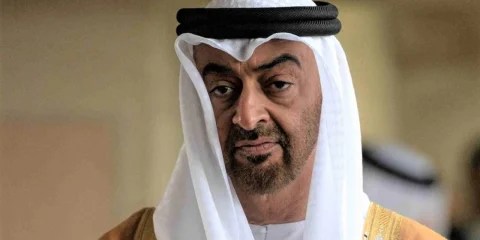
In Kuwait alone—less than 150 kilometres across the Gulf from Iran—the United States maintains a major military hub of approximately 13,500 personnel spread across installations such as Camp Arifjan and Ali Al Salem Air Base. To its south, Saudi Arabia hosts roughly 2,700 U.S. troops, centered at Prince Sultan Air Base in Al Kharj. Elsewhere in the Gulf, every state hosts either a US military presence or provides access and defence cooperation under bilateral agreements: Qatar houses more than 10,000 personnel at CENTCOM’s sprawling forward headquarters at Al Udeid; Bahrain hosts around 9,000 personnel at the headquarters of the US Fifth Fleet; the UAE accommodates approximately 3,500 personnel at Al Dhafra while providing deep-water naval access at Jebel Ali; and Oman offers strategic port and airfield access under bilateral agreements, despite having no large permanent US troop presence.
Beyond the Gulf monarchies, Washington maintains approximately 2,500 troops in Iraq and around 900 in northeastern Syria under Operation Inherent Resolve. To Iran’s northwest, the US operates from Incirlik Air Base in Türkiye— a NATO logistics and intelligence hub too. Until its withdrawal from Afghanistan in 2021, American forces also maintained a major military presence along Iran’s eastern frontier, supported for two decades by extensive supply routes and intelligence cooperation through Pakistan. Although the US lies nearly 10,000 kilometres from Iran, it has constructed an unparalleled regional military architecture of permanent bases, rotational deployments, naval facilities, pre-positioned equipment, access agreements, and security partnerships that stretches from the Eastern Mediterranean across the Gulf to the western Indian Ocean. Combined with the military capabilities of close allies—including Britain, France, and Türkiye—this network almost literally surrounding Iran from all sides. The common thread underpinning this posture has long been the protection of regional partners, the safeguarding of global energy routes, and the defence of US strategic interests.
Yet, this foundational premise has collapsed under the weight of the US-Israeli war on Iran, which has fundamentally transformed the entire regional security landscape. This “war of choice” has exposed how a security arrangement once marketed as an ironclad insurance policy has devolved into a primary strategic liability.
Rather than serving as an effective deterrent, large and static American military installations now act as strategic liability—drawing Iranian retaliatory strikes while denying host states true autonomy or the promised protective shield.
The Gulf states have discovered, at a heavy price, that they are trapped in an impossible paradox: their sovereign territory serves as a staging ground for military operations they were never consulted about—at least that is what they say publically –instantly transforming their critical infrastructure, oil facilities, and urban centers into high-priority targets. Compounding this vulnerability is the stark geopolitical reality that while Washington may eventually pivot away or withdraw—much as it did from Afghanistan—Iran is a permanent neighbour that is going nowhere.
Beyond the immediate threat of missile strikes, the presence of these US installations directly undermines the core national strategies of the Gulf monarchies. Mega-development projects and economic diversification plans—from Saudi Arabia’s Vision 2030 to Dubai’s global trade hubs—rely entirely on an image of absolute regional stability, investor confidence, and open maritime transit. By hosting forward US bases, host nations inadvertently tie their economic futures to Washington’s military posture, creating an environment of perpetual crisis. Furthermore, defending these expansive American footprints forces host militaries to consume their own finite air-defense interceptors and defense budgets to guard US assets rather than securing their own national borders.
At the same time, while almost all Gulf States have, at least publicly, refrained from taking direct offensive action against Iran to avoid total escalation, they recognise that they are already viewed as passive participants in the wider conflict.
Maintaining this precarious balancing act is becoming increasingly difficult against rising domestic anti-war sentiment, as public anger over regional devastation steadily erodes the host governments’ domestic credibility.
For Washington, this massive network of forward-deployed bases has produced a profound strategic paradox. What was designed to project uninhibited American power now ties US freedom of action to the political consent of cautious host nations. When host governments impose strict sovereignty restrictions—refusing permission for US forces to launch offensive sorties or intelligence missions against regional adversaries from their soil—the Pentagon finds its multi-billion-dollar installations functionally sidelined during critical military surges. Instead of providing seamless operational flexibility, these fixed, highly vulnerable outposts transform into costly “imperial entrapment” liabilities: requiring thousands of US troops, high-end missile defense batteries, and constant naval escort deployments simply to protect the bases themselves, rather than executing broader strategic objectives or enabling Washington’s long-sought pivot to the Indo-Pacific. With the conflict between the US and Iran reigniting, Trump is demanding that the Gulf states pay once again to protect the Strait of Hormuz—a vital transit route that never closed until the war was started by Trump, not Iran.
This strategic calculus becomes infinitely more complex when factoring in Israel’s role in the regional security outlook. In recent years, certain Gulf states—most notably the UAE—operated under the premise that normalization and closer security alignment with Israel via the Abraham Accords would yield a net security dividend. Yet, this belief was never shared across the Gulf; nations like Kuwait, Oman, and Saudi Arabia maintained a far more cautious, sceptical stance toward Tel Aviv. The outbreak of the US-Israeli war on Tehran on February 28 utterly shattered any illusion that an Israeli-linked security architecture could bring regional stability. Instead, it exposed deep internal fault lines among the entire region. Reaching a collective, long-term security understanding with Iran was already a formidable challenge; doing so now, in the wake of a devastating conflict that forced Gulf States into the crossfire, is immensely more complicated. Moving forward, no regional framework can hold if it relies on a anti-Tehran pact anchored in Washington and Tel Aviv while ignoring the permanent reality of Iranian geographic power.
Ultimately, the fallout from the US-Israeli war on Iran exposes a fundamental reality that Washington and its regional allies can no longer ignore: the entire Middle Eastern security architecture must be fundamentally re-evaluated.
The core dilemma facing the region is that no collective security arrangement can ever be viable or effective if it seeks to exclude Iran—an indispensable, geographically permanent power armed with increasingly sophisticated offensive, defensive, and asymmetric capabilities.
Moving forward, any stable regional order must not only account for Tehran’s military leverage, but also accommodate its non-negotiable strategic demands. This includes addressing governance and transit rights over the vital Strait of Hormuz—through which one-fifth of global oil flows—and reaching a durable, pragmatic framework on its nuclear program. Regardless of the final outcome of ongoing US-Iran negotiations, the lesson for the Gulf is clear: true security cannot be built on an external garrison model that marginalizes the region’s principal indigenous power.
Türkiye sells S-400 systems to undisclosed Gulf state
Al Mayadeen | July 10, 2026
Türkiye has sold its S-400 air defense systems to an unnamed Gulf country, with the announcement expected to be made on Friday.
Turkish newspaper, Hürriyet journalist Abdulkadir Selvi reported that an informed source told him Ankara finalized the sale of its S-400 systems after a deal was approved overnight on Friday.
He added that the speculated buyers are either the UAE or Qatar, noting that the information will remain unknown until an official statement is made.
Selvi noted that the US assets in the UAE being targeted by retaliatory Iranian strikes during the war on Iran were a cause for wanting an increased air defense presence. He added that the attacks “crippled the UAE’s tourism-based system,” adding that it “has been trying to acquire alternative defense systems” after the Iranian retaliation.
He also brought up the Israeli attack on Qatar last year as a significant reason why Doha may want new air defense systems, as Qatar’s Patriot missile system did not activate during the attack on the Hamas officials in the capital city due to “Israel” being coded as a friendly country.
“Qatar learned from this shock attack that it was unprotected against Israel,” Selvi said.
The Hürriyet journalist reported that regardless of which Gulf state the S-400 goes to, Türkiye seeks to gain freedom from US sanctions from the sale.
Ankara is currently a target of the American sanctions package, Countering America’s Adversaries Through Sanctions Act (CAATSA), which mandates penalties for entities that participate in “significant transactions” with the Russian defense or intelligence sectors.
The sale of the Russian-made S-400 systems could give Türkiye the break it needs to relieve itself of these sanctions that have barred it from the F-35 fighter jet program.
It is worth noting that US President Donald Trump signaled at returning Türkiye to the F-35 fighter jet program after a years-long ban, which caused tears in the relationship between Ankara and Washington.
Red Sea tensions rise as French report claims military base is being built in Somaliland
MEMO | July 7, 2026
A report published by the French newspaper Le Monde says satellite image analysis indicates the gradual construction of a military base in the city of Berbera in the self-declared region of Somaliland.
According to the report, the project is being supported by the United Arab Emirates and is intended to serve the interests of the United States and Israel.
Le Monde said satellite images reviewed by the newspaper showed continued expansion of Berbera Airport since October 2025, including infrastructure development. The newspaper said the work suggests a new military facility is being built at a strategically important location near the southern entrance to the Red Sea.
The report said Berbera has attracted growing interest from regional and international powers because of its location on the Gulf of Aden, close to the Bab el-Mandeb Strait, one of the world’s most important maritime routes.
It linked the reported developments to increasing competition for influence in the Horn of Africa and the Red Sea, amid regional security tensions and efforts to protect international shipping lanes.
According to the newspaper, the report included no official comment from the UAE, the United States or Israel. There has also been no official response from the authorities in Somaliland or the Somali federal government to the claims.
Berbera occupies a strategic position on the Gulf of Aden near the Bab el-Mandeb Strait, through which a significant share of global trade and energy supplies passes between Asia and Europe. Its location has made the area a focus of military and economic competition among regional and international powers.
The UAE has invested in Berbera Port for several years through DP World, which is responsible for developing and operating the port. The UAE previously used facilities in Berbera for logistical and military purposes during its operations in Yemen before announcing a reduction in its military presence there.
‘Unprecedented corruption,’ crypto ventures help Trump net $2.2bn in profits since return to office
The Cradle | July 3, 2026
US President Donald Trump’s income last year soared to more than $2.2 billion, largely due to cryptocurrency holdings and related ventures he himself was able to regulate, according to financial disclosure forms released on 3 July.
In contrast, during his first term in office, the president’s income was primarily derived from his real estate businesses, including hotels, golf courses, and other properties, such as Mar-a-Lago. In 2024, before returning to the White House, he reported making over $600 million.
Last week, Trump claimed his skyrocketing wealth was due to the stock market’s rise. “You know why I’m profiting, because the stock market’s going up,” he told reporters last week.
However, the president’s financial disclosures indicate most of his new wealth has resulted from cryptocurrency and related ventures, which he has helped enable by relaxing rules on crypto markets.
In 2024, Trump launched crypto company World Liberty Financial. A UAE state-linked firm acquired a 49 percent stake in the company for $500 million, shortly before his inauguration as president.
The acquisition provided a substantial early windfall for the Trump family, allowing hundreds of millions of dollars to flow into Trump-controlled entities. Just months later, the US president approved the export of tightly guarded AI chips to the UAE, suggesting a connection between the two deals and a conflict of interest.
Meanwhile, the cryptocurrency coin issued by World Liberty Financial and promoted by Trump to his supporters has crashed in value by around 85 percent since its launch.
The Wall Street Journal (WSJ) reported that Trump made $1 billion on various crypto deals while his supporters lost vast amounts.
Days before returning to the White House, he launched his memecoin, $TRUMP, which reached a market value of nearly $15 billion before plunging 97 percent to about $400 million.
Roughly two-thirds of investors in the president’s memecoin have lost money, WSJ added.
“Since he retook office, he’s making over a billion dollars a year off of crypto, while at the same time his administration is writing the rules of the road for how crypto will be regulated,” Lee Reiners, a Duke University lecturer, told the Washington Post.
“Not only is this an unprecedented level of self-dealing and self-enrichment, the scale is really hard to wrap your head around.”
“It’s corruption on a scale that, to be honest, has few rivals in world history,” said Norm Eisen, who served as ethics advisor to former US president Barack Obama. “That’s because you never had the combination of a president willing to fully monetize the Oval Office combined with a world full of countries and other special interests who are willing to fork over vast sums.”
Trump or people close to him have also reportedly profited from massive, highly suspicious trading spikes in oil futures and stock indexes that occurred just minutes before the president issued major, market-moving announcements on social media regarding the US war on Iran.
Economists, lawmakers, and market analysts have raised concerns about potential insider trading, data leaks, and market manipulation coming from the White House.
Iran, Saudi FMs hold phone talks as Persian Gulf states rethink US ties
Press TV – June 24, 2026
Iranian Foreign Minister Abbas Araghchi and Saudi counterpart Prince Faisal bin Farhan have held a phone call to discuss regional developments, as Persian Gulf Arab states recalibrate their approach toward Tehran in the wake of the US-Israeli war that exposed the limits of American power.
Araghchi on Wednesday briefed the Saudi minister on the latest progress in implementing bilateral agreements and the ongoing negotiations following the US-Iran memorandum of understanding (MoU) signed on June 18.
The two top diplomats underscored the importance of maintaining diplomatic channels, strengthening joint cooperation to support regional stability, and achieving positive and sustainable outcomes.
The call came as French news agency AFP said Saudi Arabia is expected to host talks aimed at repairing relations between Iran and Persian Gulf countries following the US-Israeli war on Iran.
It cited a diplomat familiar with the arrangements as saying Wednesday that a regional summit was being planned in Riyadh and could also include other neighboring countries, but no date had yet been set.
The meetings would be separate from the ongoing negotiations between Iran and the United States, the diplomat added.
CNN, citing a senior Persian Gulf diplomat, reported that leaders are increasingly contemplating a future in which the US plays a much smaller role in the regional security architecture, with a possible framework involving a regional non-aggression pact with Iran.
According to Hasan Alhasan, senior fellow at the International Institute for Strategic Studies, “From the Arab states’ perspective, the Iran war is a disastrous turning point for the regional security order.”
The war, which began on February 28, exposed vulnerabilities in the Persian Gulf states’ security model, which is heavily dependent on the nearly 40,000 US troops stationed in the region and American-made air defense systems.
“The US security guarantee is no longer reliable in the way they thought it was,” one analyst at Chatham House told The New York Times.
Washington’s approach is increasingly perceived as selective and heavily centered on Israel’s security interest.
A classified CIA analysis found that US allies in the Persian Gulf are divided over their approach to Iran. According to the assessment, the United Arab Emirates and Bahrain prefer continued pressure on Tehran, while Saudi Arabia, Qatar, and Kuwait now support negotiations.
Trita Parsi, executive vice president of the Quincy Institute, noted that the UAE and Bahrain “made themselves frontline states against Iran” through the Abraham Accords and “now they’re in too deep and cannot extract themselves out of it”.
The Saudis, Parsi added, “were at the highest levels pushing for this war. They have come to regret it”.
Adding another layer of complexity is a widening gap between Arab governments and Arab public opinion over Iran.
According to a report by The Economist cited by DID Press, growing anger toward Israel and dissatisfaction with US policies have fueled increasing sympathy for Tehran across parts of the Arab world.
Despite sustained efforts by several Arab governments to reinforce anti-Iran narratives, recent developments have altered perceptions among sections of Arab society.
The report identifies two major drivers behind this shift: anger toward Israel, as many Arabs increasingly view Iranian actions against Israel as a legitimate response to regional military operations, and religious and cultural ties, particularly among Shia communities across the Persian Gulf.
The report concludes that sectarian narratives no longer resonate as strongly as in previous years, and that many Arabs increasingly view Iran as more assertive and resilient than several Arab governments.
Qatari Prime Minister Sheikh Mohammed bin Abdulrahman Al Thani traveled to Muscat on Wednesday to initiate talks between Iran, Persian Gulf states, and Iraq on the future operation of the Strait of Hormuz.
The discussions aim to implement a provision of the MoU requiring Iran and Oman to hold talks with other Persian Gulf states on the future management of navigation and maritime services.
Earlier on Wednesday, Oman announced two temporary routes north and south of the existing shipping lane to facilitate safe passage of vessels departing the region, in coordination with the International Maritime Organization.
The Strait of Hormuz, through which roughly 20 percent of global oil and liquefied natural gas normally transits, was heavily disrupted after the United States and Israel launched their war on Iran on February 28.
UK suppressed intel on Sudan genocide to protect UAE ties: Report
Press TV – June 24, 2026
UK authorities have suppressed key intelligence and failed to act on warnings about atrocities in Sudan to preserve diplomatic and economic ties with the United Arab Emirates (UAE), according to testimony presented to lawmakers.
During a hearing of the UK Parliament’s International Development Committee on Tuesday, Nathaniel Raymond, director of Yale University’s Humanitarian Research Lab, said the Foreign, Commonwealth and Development Office (FCDO) ignored repeated warnings before the so-called Rapid Support Forces (RSF) captured El-Fasher in October 2025.
Raymond told lawmakers that the assault was followed by a massacre that claimed at least 60,000 civilian lives.
He said British policymakers placed strategic ties with the UAE above efforts to prevent starvation, displacement, and mass killings in Sudan.
Evidence presented during the hearing included mobile phone tracking data linking Addis Ababa, Abu Dhabi, and RSF-controlled territory.
According to Raymond, the information pointed to a covert weapons supply network supporting the militant group.
While the UAE and Ethiopia have denied supporting the RSF, Raymond said pressure from Abu Dhabi influenced the UK’s response.
He also stated that UK officials asked his research team in May 2024 to release sensitive tracking data publicly because the government was unwilling to challenge the UAE directly.
Raymond described a missed opportunity after the adoption of UN Security Council Resolution 2736, when RSF operations reportedly paused while international reactions were assessed.
“Once the UAE assessed there would be no consequences, the attack resumed,” Raymond told the committee.
Decisions made by successive British governments, including those led by former Prime Ministers Rishi Sunak and Keir Starmer, contributed to a failure to prevent further bloodshed, he said.
A BBC report published in April linked the UAE to a network of Colombian mercenaries known as the “Desert Wolves,” who provided drone and artillery support to the RSF during the battle for El-Fasher.
Conflict Insights Group director Justin Lynch said, “The scale of atrocities and siege in El-Fasher would not have happened without the drone operations the mercenaries provided.”
Satellite imagery analyzed by Yale researchers after the city’s fall showed evidence consistent with mass casualties, while the United Nations later said the violence bore “hallmarks of genocide.”
Which Country Is the Big Loser from the Ramadan War?
By Larry C. Johnson | SONAR21 | June 23, 2026
While the US certainly suffered some reputational damage and significant economic costs from its unprovoked attack on Iran, the United Arab Emirates may really be the big loser. Let’s focus on Dubai.
Think of Dubai as the World’s most expensive adult theme park that has no emergency exit. For decades, Dubai sold itself to the world as what would happen if Las Vegas and Disney World had a child together, raised it on sovereign wealth, and sent it to finishing school in Monaco. The result was a city of genuinely staggering audacity — an indoor ski slope in the desert, a hotel shaped like a sail that awards itself seven stars because five simply wasn’t enough, palm-shaped islands visible from space that are slowly sinking back into the sea from which they were so expensively extracted. It was, by any measure, the greatest theme park ever built for people who found actual theme parks insufficiently gilded and too puritanical.
The supposed genius of the Dubai proposition was always its geographical logic: i.e., it sits at the crossroads of global trade, pumps enough oil to build the infrastructure, and then gradually replace the oil revenue with everything else — tourism, finance, real estate, the inscrutable business of being a place where very wealthy people park very large amounts of money while asking no inconvenient questions. Oh, did I mention money laundering and hookers?
The Burj Khalifa, the world’s tallest building, named after the ruler of Abu Dhabi because Dubai ran out of money halfway through construction and needed a bailout, stands as perhaps the most honest monument in human history: a gleaming advertisement for ambition funded by someone else. The formula worked brilliantly as long as one variable held constant: the Strait of Hormuz remained open. The US and Israeli attack on Iran turned this assumption inside out.
Disney World works because it controls its environment entirely. Inside the berm, reality is suspended. Outside the berm, Florida continues to be Florida, which, as I can testify, is its own form of unreality but in a less curated direction. Dubai’s version of the berm was always the strait — twenty-one miles of water that kept the global economy flowing through the neighborhood and made Dubai’s position as the region’s entrepôt, logistics hub, financial center, and luxury destination not merely plausible but geometrically inevitable.
When Iran mined the strait in March 2026, Dubai discovered that its berm had a gap in it roughly twenty-one miles wide.
The cruise ships left first — or rather, they tried to. Six of them were trapped inside the Gulf like very large, very expensive rubber ducks in a bathtub whose drain had been plugged by a theocracy. Fifteen thousand passengers discovered that the all-inclusive package they had purchased did not, in the fine print, include Iranian mine-clearance operations as an amenity. The ships eventually got out during a brief window in April when Iran and the US simultaneously claimed the strait was open, which gave the ships a brief opening to make a run to safety. The passengers disembarked elsewhere and appear to have decided that the Arabian Gulf cruise experience had delivered sufficient excitement for one lifetime.
Las Vegas, Dubai’s other spiritual progenitor, is built on the foundational promise that geography is irrelevant — that a city in the middle of a desert can become the center of the world through sheer force of neon and human appetite. Dubai took this lesson and applied it at sovereign scale. If Las Vegas could conjure a city from nothing in Nevada, Dubai could conjure a global financial center from nothing in a desert on the edge of a historically significant but economically peripheral body of water.
The difference is that Las Vegas sits in the middle of a continent. Its supply chains are inconvenienced by traffic on I-15, not Iranian frigates. When something goes wrong in Nevada, the problem is human-scale. When something goes wrong in the Strait of Hormuz, the problem is civilizational-scale, which is a somewhat different category of operational risk.
Dubai’s ports — Jebel Ali, the largest in the Middle East — discovered that being the region’s premier logistics hub is an extraordinary competitive advantage right up until the moment the region becomes inaccessible. The container ships stopped coming. The tankers that hadn’t already been stranded inside the Gulf diverted around Africa, adding two weeks to their journeys and entirely bypassing the hub that had been so carefully constructed to serve them. The cargo kept moving; it simply moved around Dubai rather than through it, in the manner of a river that encounters a spectacular dam and quietly reroutes rather than admiring the engineering.
What Dubai is experiencing is the particular agony of a city built for maximum throughput discovering that throughput has somewhere else to be. The restaurants remain excellent. The hotel pools remain temperature-controlled to a degree that can only be described as a philosophical statement about the relationship between mankind and climate. The brunches — Dubai’s most characteristically Dubai institution, a Friday afternoon event that begins at noon, ends somewhere around consciousness, and costs roughly what a semester of community college costs in Ohio — continue to be held, though with fewer attendees from the European finance sector, which is dealing with its own energy crisis and has temporarily reduced its appetite for unlimited wagyu and proximity to other people’s wealth.
The real estate market, which has spent twenty years as a reliable indicator of how much money the world needs to quietly relocate, is experiencing what agents describe as a period of recalibration and what everyone else describes as a crash. Property values in Dubai are denominated in confidence as much as dirhams, and confidence requires that the fundamental premise of Dubai — the crossroads theory, the inevitability of the location — remains legible. A crossroads from which one of the roads has been temporarily mined is a different proposition.
But the Hormuz crisis has stripped away, at least temporarily, the comfortable fiction that Dubai’s position was natural rather than constructed, inevitable rather than contingent. Las Vegas exists because Americans wanted somewhere to gamble without legal consequence. Disney World exists because Walt Disney wanted to control the parking. Dubai exists because the global economy needed a node at a specific geographic location, and someone had the audacity and the capital to build one there.
All three are, at their core, exercises in the proposition that if you build it extravagantly enough, they will come. Two of them don’t have to worry about what happens if someone mines the entrance.
But there also is a dark side to the UAE in general and Dubai in particular — it is a center for money laundering and foreign intelligence activities. A friend, who is a business/energy consultant in the Persian Gulf summarizes the situation as follows:
The UAE now operates as a Zionist/Israeli-linked Gulf security platform with annex-like and fledgling-colony characteristics. Zionist/Israeli and Israel-linked security, cyber, surveillance, defense, and intelligence-adjacent systems have permeated core state capability to the point of effective strategic control over key security and technology layers.
That penetration creates strategic exposure across the UAE military establishment, internal-security architecture, technology stack, logistics system, financial channels, and monetary confidence base.
The money-flow thesis has also changed. Dubai and the broader UAE have long served as high-liquidity routing environments for offshore capital, sanctions-sensitive money, criminal syndicate proceeds, and illicit flows connected to Africa, gold, real estate, trade, luxury assets, and corporate structuring. The war-risk and security-integration shock has damaged that flow. Capital that depends on opacity, stability, and uninterrupted confidence becomes unstable when the host jurisdiction is visibly embedded in a conflict architecture.
The state is assessed as structurally aligned with the US-Israel security architecture and operationally dependent on Israel-linked security and technology capabilities. The exposure is not merely diplomatic. The UAE security apparatus, technology apparatus, military establishment, cyber-defense layer, and monetary confidence system are assessed as deeply permeated by Zionist/Israeli and Israel-linked systems, vendors, intelligence-adjacent relationships, and defense cooperation. Money flows that used the UAE for opacity, liquidity, asset conversion, gold, corporate layering, luxury consumption, trade routing, and real-estate placement are now exposed to war-risk repricing, sanctions scrutiny, intelligence attention, and capital-flight pressure.
So guess whose uncle is a weekly visitor to the UAE carrying bags of cash? If you guessed Volodimir Zelensky you are correct. Zelensky’s uncle, according to my source, deposits the money in local banks. The money is then used to purchase property that it then subsequently sold. The proceeds from that sale are then sent to banks in Israel… All cleaned up. From there, some of the money makes its way back to members of the US Congress as a way of thanking them for their support of Ukraine.
Will the UAE return to its previous garish glory? Perhaps. One immediate consequence of the US/Israeli attack on Iran is that much of the big money stored in the UAE banks decided that Singapore was more secure, which produced a significant capital flight from Dubai. The de facto expulsion of the US from the Persian Gulf, coupled with Chinese and Russian initiatives to create a new security architecture in the Gulf, is causing the Emiratis to reassess their past relationships. It is not clear what path they will choose to follow going forward, but the UAE emirs did send a delegation to Tehran on June 9. Is Dubai considering a future without wealthy foreigners with an appetite for alcohol and prostitutes? Maybe.
Israel used Jordanian airspace to bomb Iran: Report
The Cradle | June 9, 2026
A “significant number” of Israeli airstrikes against Iran were launched from Jordanian airspace, a military intelligence source revealed to Fars News Agency on 9 June.
The security source also said that Jordanian military helicopters assisted Israel by intercepting Iranian drones and missiles headed toward Israeli territory.
The coordination reportedly included operational and intelligence support from several western European nations operating within Jordan.
According to the source, Israeli jets utilized long-range air-to-surface munitions for these attacks in response to Iran’s recent rapid upgrades to its radar and air defense systems.
The report follows Iranian drone and missile strikes on Sunday and Monday targeting seven Israeli military and economic centers in response to repeated ceasefire violations across Lebanon.
The security source further asserted that the volume of successful Iranian missile impacts was “unprecedented,” despite the “extensive censorship” by Israeli authorities.
Jordan had been serving as a “key hub” for US military operations since before the war on Iran was launched, according to earlier reports by the New York Times (NYT).
Satellite images taken just days before the attacks on Iran were launched on 28 February showed a massive increase in the number of US warplanes, including F-35 fighter jets, as well as dozens of cargo planes, at the Muwaffaq Salti Base in central Jordan.
Satellite imagery analyzed during the US-Israeli war on Iran also showed that Iranian retaliatory strikes had destroyed a THAAD missile system and an early warning radar site that had been hosted in Jordanian territory.
Reports of Jordanian involvement come after earlier revelations that the UAE conducted dozens of covert airstrikes against Iran in collaboration with Israel and the US in the opening hours of the war on Iran.
According to the Wall Street Journal (WSJ), these secret operations, which continued past the April ceasefire, targeted Iranian energy infrastructure such as the Asaluyeh petrochemical complex and the Lavan island oil refinery, as well as strategic sites near the Strait of Hormuz.
The outlet, however, describes the UAE strikes as “largely symbolic” compared to the over 20,000 strikes carried out by the US and Israel.
The WSJ report says that Israel also deployed Iron Dome batteries and troops to the UAE, while high-ranking Israeli officials, including Prime Minister Benjamin Netanyahu, the Israeli army commander, and the head of the Mossad, secretly visited the UAE during the war to coordinate attacks and defense strategies.
In Azerbaijan, during the US-Israeli war on Iran, Israel had covertly deployed dozens of elite troops, including Mossad personnel and special operations units, to a secret base close to the Iranian border, sources told CNN on 5 June
These forces conducted drone operations and intelligence-gathering to provide Israel with a strategic “perch” over northern Iran.
Although Azeri officials have rejected these claims, reports suggest the operation was part of a regional network of secret sites, including locations in Somaliland, Iraq, and the UAE, initially intended for rescue missions but later expanded to extend military reach and surveillance.
India-Israel-UAE: An Alliance of Many Anxieties
By Salman Rafi Sheikh – New Eastern Outlook – May 27, 2026
The I2U2 — that much-heralded “West Asian Quad” of India, Israel, the UAE, and the United States — is gathering dust. Launched with fanfare in July 2022 and billed as a transformative framework for regional integration, it has produced little of consequence since its inaugural summit.
Progress stalled through 2024, and its April 2025 revival dialogue in New Delhi was notably described as the first convening of the group in almost two years. Without sustained American engagement, the scaffolding has simply collapsed. What remains, however, is something more durable and more troubling: an informal troika of Israel, the UAE, and India, joined not by shared ambition but by a shared phobia.
Three States, One Obsession
Strip away the diplomatic pleasantries, and the organic glue binding Jerusalem, Abu Dhabi, and New Delhi is strikingly similar: each government perceives political Islam — in its domestic and regional expressions — as a foundational threat to its survival. For the UAE, the enemy has a name: the Muslim Brotherhood. Abu Dhabi under Mohammed bin Zayed has treated Brotherhood-affiliated movements as an existential menace to dynastic stability. The Emirati government’s sweeping crackdown on al-Islah, the Brotherhood’s local affiliate, was driven by the calculation that political Islam of any kind is fundamentally threatening to government security. The UAE formally designated the Muslim Brotherhood a terrorist organisation in 2014, backed the military coup in Egypt, led the 2017 blockade of Qatar, and as recently as January 2025, blacklisted eleven individuals and eight UK-based organisations linked to Brotherhood networks. This is not counterterrorism policy in any conventional sense; it is a preemptive war on political pluralism dressed in security language.
India’s version of the same anxiety plays out along the Hindu-Muslim fault line. Anti-Muslim sentiment has intensified systematically since 2014. India’s 200 million Muslims — the world’s third-largest Muslim population — have faced demolitions of homes, discriminatory citizenship legislation, and a political atmosphere. The BJP government has systematically reframed domestic Muslim political life as a security threat, deploying counterterrorism law against peaceful dissent. If the UAE fears a Brotherhood-style capture of the state, India fears the democratic agency of its own largest minority.
Israel’s specter is Palestine. More precisely, it is the impossibility of indefinitely suppressing Palestinian political self-determination without a cost to legitimacy. For all three governments, the language of “counterterrorism” functions as a tranquilizer: it sedates domestic dissent, silences international criticism, and transforms political opponents into security threats. This shared grammar of repression is the true foundation of the troika.
While tackling these internal and regional threats remains a key imperative, the most recent push to revive the alliance, even without Washington being a formal member, is Iran and the still ongoing Iran war.
From Phobia to Alliance: Iran as the Accelerant
If political Islam is the ideological glue, Iran is what has now hardened this informal troika into something resembling a war coalition. Following the US-Israeli strikes on Iran that began on February 28, 2026, the theoretical alignments of the Abraham Accords era became operational reality. Iran retaliated by targeting Gulf infrastructure, firing some 550 ballistic and cruise missiles and more than 2,200 drones at the UAE, making it the most targeted country in the region, including Israel. In response, Israel did something unprecedented: it deployed an Iron Dome battery, Israeli troops to operate it, and reportedly also its cutting-edge Iron Beam laser defence system and Spectro surveillance technology to Emirati soil. The Financial Times reported that Israeli military personnel on the ground in Gulf states were “a not insignificant number”. Emirati officials, reflecting on who came to their defence, reportedly said: “It was a real eye-opening moment. To see who our real friends are.”
The Abraham Accords, signed in 2020, were partly motivated by a shared perception of the Iranian threat. What the 2026 conflict has done is strip away all residual ambiguity about what that means in practice. The UAE allowed its territory and airspace to be used by Israeli and American forces for strikes on Iran, according to Iranian officials. The Israeli Air Force carried out strikes in southern Iran during the war to neutralize short-range missiles threatening Gulf states. Abu Dhabi and Jerusalem are no longer strategic partners in aspiration; they are military partners in fact. The dream project of dismantling Iran as a regional power, long whispered in the corridors of both capitals, is now an open agenda.
It is in this context that Prime Minister Modi’s May 15, 2026 visit to Abu Dhabi — his eighth trip to the UAE in twelve years — must be read. The visit produced a raft of agreements: $5 billion in Emirati investment pledges, a long-term LPG supply deal, ADNOC access to India’s strategic petroleum reserves, and — most significantly — a formal Framework for the Strategic Defence Partnership covering defence industrial collaboration, cybersecurity, intelligence sharing, maritime security, and joint military exercises. Modi also chose to publicly condemn the Iranian attacks on the UAE and pledged India’s support in maintaining regional peace — a significant departure from the studied neutrality New Delhi had maintained for years. The visit came one day after India had hosted Iranian Foreign Minister Abbas Araghchi, who had openly accused the UAE of being “directly involved” in the US-Israeli war on Iran. The juxtaposition was not accidental; it was a signal about the direction of India’s foreign policy.
Silence Is No Longer a Strategy
For years, India’s position in this triangular relationship was one of studied ambiguity. New Delhi deepened ties with Israel and the UAE while maintaining functional relations with Iran and nominally adhering to the principle of strategic autonomy. That posture is now collapsing under the weight of events.
The contradiction at its heart is Chabahar. In May 2024, India signed a ten-year agreement to operate the Shahid Beheshti terminal, committing $120 million with a further $250 million credit line. This was to be New Delhi’s only viable overland and maritime gateway to Afghanistan and Central Asia that bypasses Pakistan. Iranian Foreign Minister Araghchi has called it a “golden gate” for India’s connectivity ambitions. Yet the US ended its special sanctions waiver for Chabahar in September 2025, and India has been reduced to exploring a temporary transfer of its stake back to Iran to avoid American penalties. Strategic autonomy, it turns out, survives only on American sufferance. Meanwhile, any Indian military technology that reaches the UAE now enters a security ecosystem that includes Israel — meaning India’s new defence partnership with Abu Dhabi is, in practice, an indirect alignment with Tel Aviv.
India now faces a reckoning that its political class has been deferring for years. As the region moves from cold confrontation to hot war, the space for equidistance evaporates. Every arms deal, every investment pact, every public statement condemning Iranian strikes while maintaining silence on Gaza and the West Bank narrows the gap between partnership and complicity. The troika that fear built has a peculiar logic: states drawn together by what they dread at home — Muslim political power in its various forms — will inevitably be pulled toward a shared agenda abroad. For India, the path ahead is less a clear choice than a delicate negotiation — with its own pluralistic traditions, with its new partners in the Gulf and Israel, and with a neighbourhood that offers no easy answers. What happens next will depend not on grand declarations, but on the quiet, unglamorous work of balancing interests without losing sight of the human cost at home.
Salman Rafi Sheikh is a research analyst of international relations and Pakistan’s foreign and domestic affairs.
Featured Video

Racist Seinfeld Dances for Joy as Bibi Unveils His New Map
or go to
Aletho News Archives – Video-Images
TV Drama Review
Japanese drama projects Japan’s wartime atrocities onto Chinese characters

Global Times | October 25, 2026
By portraying Chinese characters as perpetrators of ruthless violence while casting Japanese Self-Defense Forces (SDF) intelligence operatives as defenders, the season 2 of the Japanese drama Vivant has recently drawn criticism from Chinese netizens, who argue that its depiction turns historical reality on its head while ignoring Japan’s wartime atrocities.
The TBS drama series – a spy suspense story in which an alleged unofficial intelligence unit of the SDF operates across the globe — has attracted a passionate fanbase. Its currently airing season 2 opened with a household rating of 18.8 percent, the highest for a TV drama this year, according toa commentary article by Japanese media Toyo Keizai.
What draws attention is the portrayal of the enemies in the series, the article noted. Scenes in which the Chinese organization subjects kidnapped members of the SDF unit to brutal torture are repeated with unrelenting intensity.
It is rare for Japanese TV dramas to explicitly portray a real-life country as the enemy, the article noted.
Japanese Prime Minister Sanae Takaichi also made a reference to the drama, saying that she has been recording Vivant and hopes to binge-watch it over the year-end and New Year holidays, according to Japanese media outlets.
China’s CCTV News report on Sunday revealed that the drama features scenes in which Chinese personnel cut off the fingers of and stab Japanese intelligence operatives in the abdomen. Such acts bear striking similarities to the torture inflicted on Chinese nationals by invading Japanese troops during the World War II.
The drama distorts the truth by attributing these atrocities to modern Chinese characters. Beneath the surface, it subtly glorifies Japan’s cross-border overseas operations, blurs the functional boundaries of the SDF and implicitly promotes an expansionist narrative, per CCTV News. … continue
Blog Roll
 Aletho News
- Up in arms… Koreans reject U.S. empire’s plan to make South Korea the next Ukraine
- Iran, Turkey, Pakistan, Saudi Arabia could advance region-led security framework in Tehran: FM spox
- Netizens condemn Japanese drama for projecting Japan’s wartime atrocities onto Chinese characters
- Racist Seinfeld Dances for Joy as Bibi Unveils His New Map
- A West Bank War for Netanyahu’s Election Campaign, Could It Backfire?
- Yemen denounces European Parliament’s ‘hypocritical’ push to blacklist Ansarullah
- Qalibaf: UAE’s UN bid aims to ‘clear the runway’ for ‘Greater Israel’, whitewash genocide
- Pakistan reopens Iran border after boosting security: Report
- Why are so many Brazilians voting for Flávio Bolsonaro?
- Democrats Put Anti-Russia Agenda Ahead of American Workers
- If Americans Knew
- An error has occurred; the feed is probably down. Try again later.
- No Tricks Zone
- Sudden Stratospheric Warming, Powerful El Niño Combination May Lead To Extreme Europe Cold, Energy Crisis!
- Two New Studies Find Thwaites Glacier Melt Cannot Be Driven By Human Activity Or A Warming Ocean
- E-Cars Reduce CO2 Emissions By Only 41% Compared To Internal Combustion Engine Vehicles
- Predictions Made By Renowned Climate Professor Over Past Decades Have Been Proven To Be Poor
- New Study Suggests Large Regions Of The Pacific Ocean Have Been Cooling For The Last 80 Years
- Germany’s Green Energy Debacle: High Energy Costs Force Kahla Porzellan to Close After 182 Years!
- New Study: 50 Years Of The Most Aggressive ‘Net Zero’ Policies Can Only Affect The Global Climate By 0.03°C
- US September “Heat” Was No Record…Many Records Set Decades Ago
- Latest European Green Energy Debacle; Portugal’s Largest Flagship Solar Park Insolvent!
- Green Energy Debacle: German Expert Professor Fritz Vahrenholt Warns Of Severe Economic And Social Consequences

