IAEA only authorized to monitor, verify Iran’s nuclear work under JCPOA: Envoy
Press TV – December 11, 2020
The International Atomic Energy Agency (IAEA) is authorized to only monitor and verify Iran’s voluntary measures in accordance with the 2015 nuclear agreement, says the Iranian permanent representative to Vienna-based international organizations, stressing that the agency has no right to assess the Iranian nuclear work.
“@iaeaorg sole role is to monitor and verify the voluntary nuclear-related measures as detailed in the JCPOA and to provide regular updates in this regard,” Kazem Gharibabadi said in a post on his Twitter account on Friday, referring to the Joint Comprehensive Plan of Action.
Any assessment or analysis is out of the IAEA’s mandate, he said.
The Iranian diplomat’s tweet came in response to remarks made by the IAEA Director General Rafael Mariano Grossi, who told Sky News that Iran should not follow through on threats to increase uranium enrichment and throw out inspectors.
In the wake of the assassination of top Iranian nuclear scientist Mohsen Fakhrizadeh in late November, the UN nuclear agency chief warned against any further escalation after lawmakers at Iran’s Parliament overwhelmingly endorsed the outlines of a strategic action plan which aims to counteract sanctions imposed on the Iranian nation and safeguard its interests.
“If implemented,” Grossi told Sky News, “these measures would be an even further deviation from the commitments that Iran entered into when it joined the agreement.
On December 1, 251 out of 260 Iranian lawmakers present at the Parliament voted ‘yes’ to the outlines of the draft bill, which will require the Iranian administration to suspend more commitments under the JCPOA.
The plan, among other things, requires the Atomic Energy Organization of Iran (AEOI) to produce at least 120 kg of 20-percent enriched uranium annually and store it inside the country within two months after the adoption of the law.
It also urges the AEOI to start the installation, gas injection, enrichment and storage of nuclear materials up to an appropriate enrichment degree within a period of three months using at least 1,000 IR-2m centrifuges.
France, Germany and Britain, the three European signatories to the JCPOA, said on December 7 that they are worried by the Iranian plan to install additional, advanced uranium-enriching centrifuges at Natanz nuclear facility.
“Iran’s recent announcement to the IAEA that it intends to install an additional three cascades of advanced centrifuges at the Fuel Enrichment Plant in Natanz is contrary to the JCPOA and deeply worrying,” the three governments, dubbed the E3, claimed.
US President Donald Trump unilaterally pulled Washington out of the JCPOA in May 2018, and unleashed the “toughest ever” sanctions against the Islamic Republic in defiance of global criticism.
Since the much-criticized exit, Washington has been attempting to prevent the remaining signatories – Britain, France, China and Russia plus Germany – from abiding by their commitments and thus kill the historic agreement, which is widely viewed as a fruit of international diplomacy.
Iran remained fully compliant with the JCPOA for an entire year, waiting for the co-signatories to fulfill their end of the bargain by offsetting the impacts of American bans on the Iranian economy.
But as the European parties failed to do so, the Islamic Republic moved in May 2019 to suspend its JCPOA commitments under Articles 26 and 36 of the deal that cover Tehran’s legal rights.
White Helmets founder Le Mesurier is now a mainstream saint, but leaked docs raise questions about his widow’s role
By Kit Klarenberg | RT | December 8, 2020
An extraordinary, concerted establishment campaign to rehabilitate the reputation of White Helmets founder James Le Mesurier has unfolded over recent months.
First, in late October, came a 6,000-word hagiography in The Guardian — less than a fortnight later, the BBC transmitted a 15-part radio documentary on his firm, Mayday Rescue.
Emma Winberg, Le Mesurier’s spouse and Mayday’s Chief Impact Officer, played a starring role in both efforts, in the process breaking the public silence she’d rigidly maintained since her husband’s mysterious death in November 2019.
Strangely though, discussion of her professional history was almost entirely absent. The Guardian was slightly more informative on this point than the BBC, sparingly describing Winberg as “a former British diplomat” working for a “communications firm in northern Iraq” when she became romantically involved with Le Mesurier in March 2016, before joining Mayday in January 2017.
‘Some of the funds will go missing’
The communications firm in question was Innovative Communications and Strategy (Incostrat), cofounded by Winberg in November 2014 with military intelligence veteran Paul Tilley, former director of Strategic Communications for the UK Ministry of Defence in the Middle East and North Africa. Like Le Mesurier, he attended Sandhurst Royal Military Academy.
Media references to Incostrat are sparse, although in December 2016 Rania Khalek revealed the company had approached a Middle East journalist and offered them US$17,000 per month to produce pro-opposition propaganda.
Private correspondence between the reporter and Incostrat indicates the company positioned itself as one of “three partners” of the UK Foreign & Commonwealth Office (FCO) “working on media surrounding the Syrian conflict.”
Incostrat’s work was funded by the FCO’s Conflict, Stability and Security Fund (CSSF). In February 2017, a parliamentary report stated CSSF had “substantial allocations” in Syria, amounting to £60 million.
The same report noted there was significant risk the CSSF was “being used as a ‘slush fund’ for projects that…do not collectively meet the needs of UK national security,” and some of the financing it afforded “will go missing or be linked to groups that may carry out human rights abuses.”
‘Using media to create events’
Significant light was shed on Incostrat’s cloak-and-dagger activities in September, when ‘hacktivist’ collective Anonymous dumped a vast number of FCO files on the web, exposing a variety of covert information warfare actions undertaken by the UK government against the Syrian state over many years.
The overriding objective behind all the initiatives was to destabilise the government of Bashar Assad, convince Syrians, Western citizens, foreign governments, and international bodies the Free Syrian Army (FSA) was a legitimate alternative, and flood media the world over with pro-opposition propaganda.
In one document, Incostrat boasts of surreptitiously “initiating events to create media effect” and of “using media to create events.” One example of this dual-strategy saw the company create mock Syrian currency in three denominations, imploring citizens to “be on the right side of history.”
The campaign was intended to ensure international opinion remained arrayed against Assad, at a time “media attention has shifted almost exclusively towards ISIS and some influential voices are calling for co-operation with the Syrian regime to combat ISIS.”
“The notes are due to be smuggled into regime-held parts of Syria once formal clearance has been authorized by [UK government] officials,” the file states. “We will engage the international media to create a story around the event… The message to the regime [is] covert but active resistance continues.”
Another saw Incostrat produce “postcards, posters and reports” to “draw behavioural parallels” between the Assad government and ISIS, and dishonestly further the conspiracy theory that “a latent relationship exists between the two.”
Incostrat also provided “a credible, Arabic-English speaking Syrian spokesperson” to the media to further the campaign’s messaging, securing interviews in “major news outlets” such as Al-Jazeera, Buzzfeed, CNN, The Guardian, New York Times, Times, and Washington Post.
‘Human interest stories’
Another document indicates the company was staffed by veterans of covert Whitehall-funded psyops, noting Incostrat partners previously established a local media platform in Iraq “immediately following the fall of Saddam Hussein,” training “a cadre of journalists” who were “instrumental in reporting on events in Basra.”
The same file also makes clear Incostrat personnel had been providing support to Syrian media platforms and civil society organisations since 2012, before the firm was founded.
In the process, Incostrat operatives played a role in creating eight FM radio stations and six community magazines across the country, developing and managing the Syrian National Coalition’s media office, and helped establish Basma – “a media platform providing human interest stories and campaigns that support [UK government] policy objectives.”
Other files leaked by Anonymous indicate Basma was the primary creation of ARK, a shadowy “conflict transformation and stabilization consultancy” headed by veteran FCO operative Alistair Harris, implying significant overlap between the pair.
Le Mesurier himself worked at ARK 2011 – 2014, and Mayday Rescue was spun out of the company – yet The Guardian’s lengthy elegy alleges Winberg had only been “briefly introduced” to him twice at “garden parties” prior to their formal March 2016 meeting.
Moderate torturers and murderers
As with other FCO contractors operating in Syria, including ARK, Incostrat produced propaganda promoting extremist groups as credible alternatives to the Assad government, and whitewashing their barbarous nature.
One document refers to the firm “providing strategic communications support to the moderate armed opposition.” An FCO tender for the project indicates some of the “moderate” groups to which Incostrat may have provided “strategic communications support” — “the Free Syrian Army, the Supreme Military Council, Revolutionary Forces Syria and… mid-level units such as Syrian Revolutionaries Front, Jaysh al-Islam [and] Harakat al-Hazm.”
The inclusion of Jaysh al-Islam (JAI) on this list is striking, for more reasons than one. While none of the collectives mentioned would adhere even vaguely to any definition of the term ‘moderate’, except perhaps broadly relative to the most murderous ‘rebel’ elements in Syria — with which each group regularly collaborated in any event — JAI was an especially and notoriously brutal fraternity.
For years, it ran the assorted areas it occupied under extremely vicious interpretations of Sharia law, kidnapping, imprisoning, torturing and executing innocent men, women and children for even the mildest infringements of strict Islamist code. Along the way, JAI carried out many atrocities, including parading caged Alawite families in the streets, using hostages as human shields, and attacking Kurdish civilians with chemical weapons.
While the UK government denies providing any backing to JAI, the files released by Anonymous confirm the other groups mentioned by the FCO all did receive Whitehall support of various kinds. Moreover, independent journalists who visited areas the group occupied found JAI worked closely with the White Helmets, which received tens of millions in funding from London.
Other files released by Anonymous indicate ARK reaped vast sums promoting the Helmets at the FCO’s behest, developing “an internationally focused communications campaign to raise global awareness” of the group in order to “keep Syria in the news.”
Along the way, ARK produced a documentary on the Helmets and ran their various social media accounts, including the Facebook page for Idlib City Council, at one time mooted as a potential interim government to replace Bashar Assad. When Al-Nusra overwhelmed the city, numerous Helmets were filmed celebrating the ‘victory’ in its main square.
The linkage between JAI and the Helmets gains an acutely sinister dimension given the former’s primary base of operations was the city of Douma, the site of a highly controversial alleged chemical weapons attack 7th April 2018.
The Helmets were central to Western news reporting in the initial hours and days following the contested strike, its operatives claiming two Syrian Air Force helicopters dropped barrel bombs containing the nerve agent sarin on the city.
Images they provided of cylinders embedded in buildings circulated widely on social networks and media platforms the world over, along with footage of local residents being hosed down in hospitals, children foaming at the mouth, and piles of dead bodies in a housing complex.
Paris, London and Washington claimed to possess secret proof Assad’s forces had attacked the city with chemical weapons, and in response launched a series of military strikes against multiple government sites in Syria 14th April 2018.
In March 2019, the Organization for the Prevention of Chemical Weapons (OPCW) issued a final report on the incident, which concluded there were “reasonable grounds” to believe a chemical weapons attack had occurred in Douma, and “the toxic chemical was likely molecular chlorine.”
However, a number of the organization’s previously suppressed files are now in the public domain — they make clear the report’s findings were directly contrary to the overwhelming majority of evidence collected by investigators who actually visited Douma, which pointed strongly to a staged ‘false flag’ incident.
An illicit affair
The documents imply witness and forensic evidence contradicting the notion a chemical weapons attack occurred in Douma, excluded from the OPCW’s final report on the incident, was collected in Turkey. The BBC’s radio series on Mayday confirmed this evidence was provided to investigators by Le Mesurier and the White Helmets.
While the OPCW website makes no reference to this assistance, not merely in respect of the Douma investigation but its probes of at least three other alleged government chemical weapon attacks in Syria, in June 2018 Mayday’s deep and cohering ties with the organization were exposed by none other than Emma Winberg.
Speaking at an Atlantic Council event alongside Bellingcat founder and chief Eliot Higgins, she described how the Helmets had in 2015 specifically been provided with OPCW-standard training and equipment to collect samples from the scenes of airstrikes for the organization. The ease with which this privileged position could be abused was apparently not considered, or indeed of no concern.
This followed two years in which the group’s status as ‘first responders’ in the Syrian crisis had become ever-more firmly established in the mainstream, thanks in no small part to the endless deluge of footage posted on the group’s social media channels, which was frequently broadcast by Western news platforms subsequently.
In 2014, Winberg said, human rights organisations began “taking an interest” in the footage and reaching out to Mayday directly, seeking witness testimony from Helmets among other things.
She also suggested the attention generated by the group’s video clips was serendipitous, as the helmet-mounted cameras they wore were originally intended to be a “training aid” — it wasn’t until later, allegedly, they thought to publicise the content captured.
Fittingly, Winberg’s brief talk fed into a speech by Higgins, in which he demonstrated how Bellingcat and other media organisations made use of the White Helmets’ footage.
‘How communications influence’
It’s highly implausible the FCO-funded information warfare specialists that trained and promoted the Helmets weren’t well-aware in advance of the propaganda value of imagery from the conflict.
Yet, Winberg’s narrative is even more incredible given ARK, the firm so intimately intertwined with Incostrat and Mayday, extensively tutored and equipped hundreds of Syrians in “camera handling, lighting, sound, interviewing, filming a story,” post-production techniques including “video and sound editing and software, voice-over, scriptwriting,” and “graphics and 2D and 3D animation design and software.”
ARK’s students were also instructed in practical propaganda theory, such as “target audience identification, media and media narrative analysis and monitoring, behavioral identification/understanding, campaign planning, behavioral change, and how communications can influence it,” and more. Such disciplines would no doubt be extremely effective in the staging of a ‘false flag’ attack.
The FCO continued funding Incostrat to the tune of millions after Winberg’s departure, and does so to this day. Cofounder Paul Tilley also left the company at around the same time, and founded IN-2 Comms, which“provides a more tailored product to the public and private sector focussing on specialised communication campaigns.” The firm has likewise reaped vast sums from Whitehall ever since.
One wonders whether the FCO’s extensive network of psyops cutouts played any role in the recent propaganda blitz surrounding Le Mesurier, Winberg, and the Helmets.
The BBC’s Mayday series credits Abdul Kader Habak as having provided “Arabic translation and additional research” to the project. According to his Facebook page, he worked for ARK 2013 – 2019.
Chloe Hadjimatheou, the documentary’s producer and presenter, has previously reported on events in Syria. In 2016, she produced a five-part documentary, Islamic State’s Most Wanted, on citizen activist collective Raqqa is Being Slaughtered Silently.
The group was founded by journalist Naji al-Jerf, who subsequently served as its primary spokesperson — he was also an ARK employee, playing a pivotal role in training and coordinating the firm’s vast network of stringers in Syria, and managing its distribution networks. He was murdered by ISIS operatives for these activities in December 2015.
On 18th November, Winberg announced her retreat from the public eye via Twitter, saying she would be “offline for the foreseeable” in order to “get to work”. It’s not certain what this “work” will entail, but mainstream efforts to deify her husband and obscure the reality of his professional history, the group he founded, and how and why he died, are evidently ongoing.
Kit Klarenberg, an investigative journalist exploring the role of intelligence services in shaping politics and perceptions. Follow Kit on Twitter @Kit Klarenberg
Leaked emails show Anders Aslund, the Atlantic Council’s Russia-basher in chief, tried to solicit funds from Russian billionaires
By Kit Klarenberg | RT | December 2, 2020
Internal Atlantic Council emails reveal the NATO-connected ‘think tank’ aggressively schmoozed the obscenely wealthy owners of Russia’s Alfa Bank, in order to secure a slice of their vast riches.
The communications have been released publicly as a result of the ongoing defamation case brought against Fusion GPS and its founder and chief Glenn Simpson in a Washington, DC court, by Mikhail Fridman, Petr Aven and German Khan, the owners of Alfa Bank. The three allege false allegations against them in the ‘Trump-Russia dossier’, produced for Fusion GPS by former MI6 operative Christopher Steele, damaged their reputation.
The now-notorious and utterly discredited dossier alleged they and the bank maintained a covert communications channel with Donald Trump, and moreover delivered “large amounts of illicit cash” to Vladimir Putin when he was deputy mayor of St. Petersburg in the 1990s.
In July, the trio were awarded damages in a separate action brought against Orbis Intelligence, Steele’s private espionage firm, in London after Judge Mark Warby ruled the dossier’s allegations were “inaccurate or misleading” and the former spy had failed to take reasonable steps to verify the claims.
‘We got nothing’
In May 2016, coincidentally around the same time the Democratic National Committee hired Fusion GPS to investigate Trump, the Atlantic Council caught wind of the fact Alfa Bank’s owners wished to give away the entirety of their fortunes to charitable causes while alive, and saw a prime opportunity for grift.
Writing to the think tank’s top executives, Council ‘senior fellow’ Anders Aslund lustily noted their intention, and respective net worth of Fridman ($15 billion) and Aven ($5 billion).
“This could open an opportunity. To date Fridman has been extremely stingy,” Aslund stated rapaciously. “Rich Burt represents both Fridman and Aven quite intensely. I shall tentatively have dinner with Aven in Moscow Sunday night so I might be able to ask him what he wants. As you remember, we hosted him here in November and got nothing.”
That the November 2015 event left the Council empty-handed was undoubtedly a crushing disappointment for Aslund, given he went to great lengths to be highly accommodating to Aven, letting him pick the time and format of his Council talk, the number of attendees, and more.
“Our preference would be a lunch talk, but please indicate what time that suits you. Do you want a private off the-record meeting with 20-24 people or a bigger public meeting? The choice is yours,” he wrote to Aven.
Aslund added chummily that whenever the billionaire had spare time in Washington, he and his wife Anna were “always happy” to see him. However, there were some organizational problems.
In an email to Council higher-ups, Aslund’s colleague Alison Perry suggests Aven wished to invite “former Russian propaganda minister” Mikhail Lesin to the meeting, to which Aslund initially agreed. However, the Council subsequently learned Lesin was under investigation by the Federal Bureau of Investigation for money laundering, and was forced to “find a polite way” of letting Aven know Lesin was no longer welcome.
The volte face was presumably begrudging in extremis, given Lesin’s purportedly immense wealth – five properties in California alone allegedly owned by companies affiliated with his family were worth a combined US$28 million. In a bizarre twist, the day after the Council event, he was found dead in a Washington, DC hotel room. Authorities concluded he died of blunt-force trauma to the head, induced by falling due to acute alcohol intoxication.
‘Nothing must be reported’
Fast forward to October 15, 2017, and Aslund’s gold-digging scheme was in full swing – he wrote to Council staff stating invitations for a “small, private, off-the-record breakfast” on October 26 with Fridman and Aven needed to be sent to a number of powerful individuals.
Proposed attendees included representatives of the US State Department, National Security Council, Treasury, Congress, Senate, and other influential government-funded think tanks, including the Council on Foreign Relations, Brookings Institute, RAND Corporation, and others. The senior fellow was keen to stress no journalists should be invited.
Aslund’s long-running effort to curry favor with Alfa Bank’s owners is highly ironic given his vociferous promotion of the Steele dossier, which in June 2017 he dubbed “outstanding intelligence.”
In February the next year, he wrote an essay for the Council stating the “reasons to believe Steele are multiple and overwhelming,” and slamming the refusal of the mainstream media to publicize the dossier during the 2016 presidential campaign due to the unverifiable nature of most of its contents.
Claiming news outlets had “confused the profession of journalism with that of prosecution,” Aslund also expressed contempt for the philosophy that “if not everything is proven correct, nothing must be reported” – a rather troubling indictment, given the Council’s ‘anti-fake news’ partnership with Facebook, and claims to be “on the front lines of disinformation.”
“The US media missed the greatest scandal of the 2016 election campaign because they were so stuck in medieval liturgy it rendered them incapable of reporting the truth… The question is not whether the Kremlin helped Trump win the election but whether it can be proved in court and whether it is punishable according to all too arcane US law, which could not even sentence Al Capone for anything but tax evasion,” he fulminated.
Strikingly, the essay has since been “retracted and removed” from the organization’s website.
What claims in the dossier can be verified have since been proven to be total fiction, its contents drunken tittle-tattle provided to Steele by Brookings Institute staffer Igor Danchenko. In interviews with the FBI in February 2017, he expressed dismay this gossip had been used to secure surveillance warrants against individuals connected to the Trump campaign.
Nonetheless, Aslund still views the dossier as “largely credible,” and has even praised the “excellent” and “knowledgeable” Danchenko, who somewhat amazingly was a student of his at Georgetown University.
‘Corrupt politically exposed persons’
Aslund’s fundraising activities are doubly ironic given in 2019 he authored ‘Russia’s Crony Capitalism’, a book documenting the country’s alleged descent from a “market economy to kleptocracy.”
In March this year, he predicted this shift would contribute to Russia’s economic collapse in the very near future. It was at least the fourth occasion Aslund has foretold the country’s impending and unstoppable implosion, having previously – and incorrectly – done so in 1999, 2001, and 2014.
All along, his willingness to personally profit from the very financial activities he condemns has endured untrammeled. In June 2018, Aslund was appointed to the supervisory board of Ukrainian state railway Ukrzaliznytsia – he resigned in September this year.
In explaining his decision, he claimed he was exposed to “excessive” legal risks by not being provided directors’ and officers’ liability insurance, and said many of the board’s decisions hadn’t been implemented by Ukrzaliznytsia’s management.
Principled enough, but there was also the small issue of directors not having been paid since April. Or, at least, not paid enough – earlier this year, President Volodymyr Zelensky capped salaries of public employees as well as members of management and supervisory boards of state-owned companies at 10 times the official minimum salary, about $1,700 a month, from April 1 to the end of quarantine.
In a statement to Interfax, Aslund moaned that while presented as a temporary emergency measure, “it might persist” even longer, an obviously horrifying and unacceptable prospect for the closeted kleptocrat.
“Members of parliament attack foreign members of supervisory boards of state-owned Ukrainian companies for being foreigners and having been paid too much, but we have been paid nothing since April,” he raged bitterly.
The month after his supervisory board appointment, BuzzFeed revealed Aslund was paid to write a paper alleging financial institutions in Latvia, long-lambasted as lairs of criminality and corruption, had made tremendous strides in enforcing anti-money laundering statutes – by the very banks involved. It was commissioned by Sally Painter, a lobbyist for Baltic banks and member of the Council’s board of directors.
The organizations that lined Aslund’s pockets included a subsidiary of ABLV Bank, which at the time was attempting to secure permission to establish an office in the US. The effort was ultimately unsuccessful, as the US Treasury Department’s Financial Crimes Enforcement Network concluded ABLV was a bank of “primary money laundering concern.”
“ABLV executives, shareholders, and employees have institutionalized money laundering… Management permits the bank and its employees to orchestrate and engage in money laundering schemes; solicits high risk shell company activity that enables the bank and its customers to launder funds; maintains inadequate controls over high-risk shell company accounts; and seeks to obstruct enforcement of Latvian anti-money laundering rules in order to protect these business practices,” the Treasury ruled.
Some of this illicit activity, the Treasury alleged, involved transactions for parties involved in North Korea’s procurement and export of ballistic missiles, and money laundering for “corrupt politically exposed persons.” ABLV was accused of funneling billions of dollars “in public corruption and asset-stripping proceeds through shell company accounts,” and failing to mitigate risks stemming from these accounts, “which involved large-scale illicit activity connected to Azerbaijan, Russia, and Ukraine.”
Shortly after the Treasury’s findings were made public, ABLV was forced to close – but Aslund told BuzzFeed he stood by his report, as it was “factually correct.”
The paper was presented at a private Council event in October 2017, the same month he was arranging that “small, private, off-the-record breakfast” with Alfa Bank’s owners.
It was convened despite Aslund’s research not being an official Council publication, and the think tank claiming it was written and published without its input. Perhaps unsurprisingly, no reference to the report or the event can be found on the Council’s website.
Snouts in trough
The email tranche indicates Aslund wasn’t the only Council apparatchik determined to get the think tank’s proverbial mitts in the Alfa Bank till.
In July 2015, Council chief executive Fred Kempe emailed Petr Aven about a fully-fledged partnership between the Council and Letter One, an Alfa Bank affiliate, and suggested there was “a larger role” for him to personally play at the Council.
All the Council’s approaches to Alfa Bank were allegedly unsuccessful, but there’s no shortage of dubious institutions and individuals all too willing to lavishly bankroll the think tank. Its donors currently include the US embassies of UAE and Bahrain, Ukrainian oligarch Victor Pinchuk, defense giant Raytheon, the UK Foreign & Commonwealth Office (FCO), and the US State Department.
From 2006 – 2016, the Council’s annual revenue leaped tenfold, from $2 million to $21 million – a period in which, concurrently and not coincidentally, corporate and state budgets typically reserved for lobbying firms were increasingly directed to think tanks.
Its board of directors comprises well-connected US government veterans Henry Kissinger, Condoleezza Rice, Colin Powell, Michael Hayden, David Petraeus, and many others. The emails related to Alfa Bank also name Council officials Richard Burt, Daniel Fried, John Herbst and Richard Morningstar, all previously US ambassadors to European and/or Eurasian countries.
Such close ties to the US national security state unquestionably allow for very effective, well-targeted lobbying on behalf of its bankrollers indeed. Except Alfa Bank refused to bite.
Kit Klarenberg is an investigative journalist exploring the role of intelligence services in shaping politics and perceptions. Follow Kit on Twitter @Kit Klarenberg
Rich People & Journalists Made Exempt From Having to Enter COVID Quarantine
“High value business travellers” won’t have to self-isolate
By Paul Joseph Watson | Summit News | December 3, 2020
Journalists and rich people defined as “high value business travellers” will be made exempt from having to enter a 2 week COVID quarantine when they return to the UK under new rules announced by the government.
“From 4am on Saturday, people in a number of categories will no longer have to self-isolate upon returning to England, even if they are travelling from a country not on the travel corridors list,” reports Sky News.
Those categories include journalists, “high value business travellers,” performing arts professionals and wealthy sports stars.
Under current rules, anyone returning from a country not on the UK’s “travel corridor” list has to self-isolate at home for 14 days or face escalating fines.
Public Health England said the new measures will not raise the risk of domestic transmission of coronavirus.
The rule change is being pitched as a way to help boost the economy, but many responded by framing it as a classic example of elitist privilege.
“We are being governed by absolute fools, clowns and charlatans. If I’m rich enough to afford Business Class I’m immune to Covid?” asked one Twitter user.
“Ah! One rule for “us” and another for all the “little people”. Shrewd move just when trust and social cohesion is needed,” remarked another.
“What a load of rubbish. You mean those well off don’t need to follow “quarantine measures,” said another.
“There will be some big businesses that are able to take advantage of it,” said Paul Charles, chief executive of travel consultancy The PC Agency, underscoring once again how the rules favor large transnational corporations while small businesses continue to go bust.
Orwellian UK police practice of recording ‘non-crime hate incidents’ that blacklist children for thoughtcrime must end
By Frank Furedi | RT | December 5, 2020
Something has gone seriously wrong in this country, when the police take it upon themselves to intimidate a 14 year-old schoolgirl by making an official record of her innocuous statement in class.
The girl, known only as Miss B, became a target of police interest because she, along with millions of other people, took the view that sex is distinct from gender identity. At a time when it is increasingly verboten to question trans ideology’s claims on the subjectivity of both sex and gender identity, Miss B’s views are too often condemned as hatred.
Miss B, who has indicated that she is ‘frightened about speaking openly on transgender issues’ is – along with her parents – seeking legal recourse and challenging the decision of the police to classify her comment as a non-crime hate incident. Her lawyers’ letter to the College of Policing states that Miss B is ‘concerned about the possibility of having a police record potentially including details of conversations that she has had at school’ and fears ‘this record would impact on her future career prospects.’
What is totally absurd about the predicament Miss B finds herself in, is that she neither demonstrated nor had any intention of demonstrating hostility towards any person. In fact, even the police have not claimed that Miss B hurt the feelings of anyone. She has not done nor said anything hurtful to a single individual. In fact, there is no victim of her action whatsoever, yet still the police involved themselves.
Under existing policing guidelines on hate, you do not need to have done anything remotely hurtful to be made to feel like a criminal. According to these guidelines, officers should make a record of a non-crime hate incident ‘if the victim or any other person perceives that the incident was motivated wholly or partially by hostility, even if it is referred to a partner to respond.’ In this case it is evident that it was the police, or some other busy-body official, who thought Miss B’s comment might be motivated by hostility
What is truly bizarre about these guidelines is that they empower the police to record not only criminal acts but non-criminal acts as well. The Orwellian concept of a non-crime hate incident is an invention of a legal system gone woke.
A non-crime hate incident can be any event that is perceived by someone to be motivated by hostility towards a so-called protected characteristic. ‘Perceived’ means that it is in the eyes of the beholder. As the Operational Guidance points out: “The victim does not have to justify or provide evidence of their belief, and police officers or staff should not directly challenge this perception. Evidence of the hostility is not required for an incident or crime to be recorded as a hate crime or hate incidents.’
This is dangerous territory: there need not be any evidence of hatred for an incident to be registered in the police-recorded hate-crime data. This is an evidence free crime!
All that is required for a statement to be cast into the realm of a non-crime hate incident is for somebody to report it to the police! The force will then automatically record it as a non-crime hate incident. The main motive of recording a statement made by someone like Miss B is to teach her a lesson and to crack down on individuals that hold views that diverge from the official line on gender.
In the current era, the register of recorded non-crime hate incidents plays an important role in the censor’s toolkit. It is a register of dissent designed to shut down free speech.
The main reason why the concept of hate crime is wrong in principle is because by focusing on the emotion of hate it deprives the legal system of objectivity. The meaning of the expression of the emotion, in this case hate, is in the eye of the beholder. That is why police guidelines claim that what makes a crime one of hate is how it is perceived.
Under the existing law, it doesn’t matter what you intended to communicate, what matters is how anyone else interpreted your intentions. It is enough for a policeman to imagine that a 14 year-old child’s statement might have been motivated by hostility for it to be branded a non-crime hate incident. Even though the incident is an essentially imaginary one, the child is punished.
In this case there is only one victim – and it is Miss B.
In our censorious world recording non-crime hate incidents has become a growth industry. During the past five years the police have recorded 120,000 hate incidents. Evidently the policing of speech takes precedence over tackling genuine threats to law and order.
Frank Furedi is an author and social commentator. He is an emeritus professor of sociology at the University of Kent in Canterbury. Author of How Fear Works: The Culture of Fear in the 21st Century. Follow him on Twitter @Furedibyte
Five Burning Questions About the New Covid Vaccine
By Kit Knightly | OffGuardian | December 2, 2020
The United Kingdom government has today announced its approval of the first Covid19 vaccine for general use. 800,000 doses are slated to be released for general use by the end of the week, and has already signed a contract for 40 million more doses (to go along with over 300 million doses of as-yet-unreleased vaccines from other companies).
With the newest phase in the Covid19 roll-out set to begin, it’s time we addressed the five biggest questions about this vaccine, its effectiveness, its safety and whether or not we’ll be forced to use it.
1. Does it work?
Clearly, the company claims it does, and the UK government seems to believe them. The Guardian, in their coverage of the vaccine, claim it has a 95% efficacy rating, but does not provide a source for this or any kind of data at all.
Fortunately, better journalists and researchers are writing for the British Medical Journal, including this piece from Peter Doshi just last week.
To explain where this “95% effective” claim actually comes from:
The Pfizer vaccine trial included nearly 44,000 people. Half getting their vaccine, half getting a placebo. In total, from the 44,000 people, 170 were later recorded as having become ‘infected with Covid19’. 162 of them were in the placebo group, 8 of them in the vaccine group.
The vaccine is therefore credited with preventing 154 cases of Covid19… or 95%.
You don’t need to be a medical researcher or virologist to see how potentially flawed this reasoning is. The entire trial of 44,000 people is deemed a success based on the potentially multi-variant outcome from less than 4% of those involved.
The details of the trial are hard to come by, so we have yet to find out how these 170 people were even diagnosed with “Covid19”. Was it a clinical diagnosis based on symptoms? Or PCR test? Either method would raise serious questions about accuracy.
In short, the answer to “Does it work?” is “we have no idea.”
2. Is it safe?
Potentially more important than the question of efficacy is the question of safety. No one, not even the vaccines most ardent defenders, is denying that this vaccine process has been rushed – vaccines typically take years and years to produce, whereas this one has been hurried on to the market in less than nine months. Some of them have skipped important stages in testing altogether.
Even supposing the short term trials have not shown any side effects, there has simply been no time to do long-term outcome studies. The potential for complications, months or years down the line, certainly exists.
Further, the vaccine is based on new technology – an mRNA vaccine, which injects viral genetic material to generate an immune response. The technology has been in development for years, but this would be the first mRNA vaccine actually put to use.
So, again, the short answer to “is it safe?” is “we don’t know”.
However, the vaccine pushers and manufacturers clearly have doubts about its safety, since they have gone out of their way guarantee they have total legal indemnity from prosecution or civil suits should something go wrong. Not a confidence booster that.
Ask yourself: if Ford or BMW were releasing a new type of car based on “cutting edge technology”, but before you buy one you have to sign a waiver saying you can’t sue the car manufacturers in the event you explode in a fiery ball of death…would you drive that car?
3. What’s in it?
This is a simple one. We don’t know, they won’t say. At least not in anything but the vaguest terms.
4. Who will get it?
First on the docket are the elderly and NHS workers. We don’t know who will be excluded. Immunocompromised people were excluded from the efficacy study, so presumably, they’ll also be excluded from taking the vaccine. If not, that’s a potential disaster waiting to happen (although they have legal protection, so I guess that doesn’t matter).
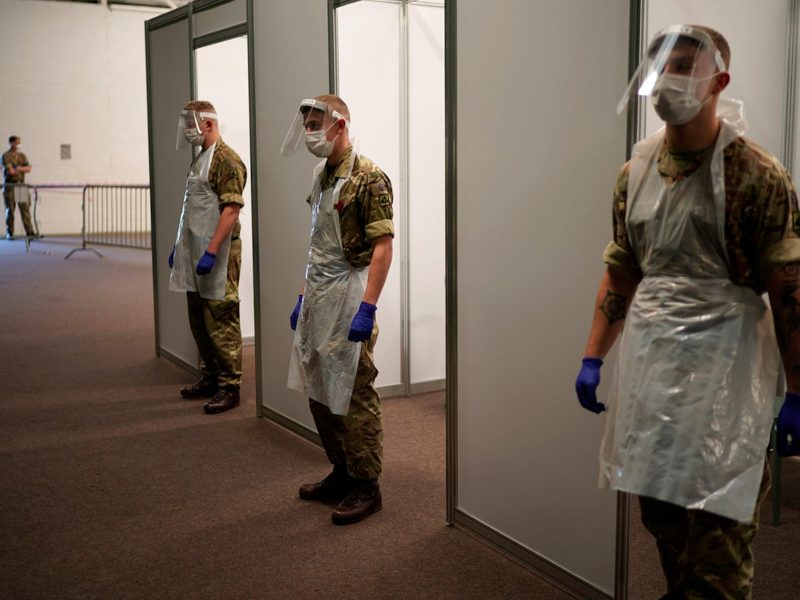
The British military are already busily setting up “mass vaccination centres”. So eventually, of course, almost everyone will be expected to get injected if they want to partake of society in any way at all. Which leads us onto question five…
5. Will it become mandatory?
The question of “mandatory vaccines” has been buzzing around since the earliest stages of the pandemic narrative. The final result will obviously vary country-to-country, but it’s certainly a possibility here in the UK.
A few months ago a group of scholars submitted written evidence to the UK Parliament that mandatory vaccinations would be defensible on a human rights basis, and that there was already legal precedent for this action in UK legislation (specifically, treating mental health patients who may be a danger to themselves).
In the end, and this is purely my speculation, I doubt the vaccine will ever be literally legally mandatory. Parliament will reject the “expert advice” suggesting Covid19 vaccines be forced on people.
This will accomplish two goals at once: a) It will give the government a veneer of “libertarianism”, a thin facade to cover it’s tyrannical nature. And b) It will allow a potential “third wave” of Covid19 to be blamed on “vaccine hesitancy”.
Though it will probably never be literally mandatory, they will certainly make it much easier to function should you get the vaccine.
There’s been much talk of “immunity passports”, meaning digital documents showing your vaccination status which make you exempt from lockdown and social distancing rules.
In the future it’s not hard to see these documents (either physical or digital) being vital to the ability work, socialise, travel, get loans, apply for state benefits or even receive medical treatment.
So, even if not forced to partake of the vaccine, you will likely be bribed, blackmailed or coerced into doing so eventually.
*
To sum up – we don’t know exactly what’s in the vaccine, it might not work, it may not be safe, and we’re probably all going to end up being forced to use it.
Merry Christmas everyone.
The Russian Brexit Plot That Wasn’t
By Paul Robinson | Irrussianality | November 26, 2020
Russian Disinformation. Russian Disinformation. Russian Disinformation. How many time have you heard that over the past four years?
But what about British disinformation?
Much of the current Russia paranoia began with the claims that Donald Trump was recruited by Russian intelligence years ago as a sleeper agent, and then given a leg-up into the presidency of the United States with the help of the GRU. The claims of ‘collusion’ were repeated over and over, and yet at the end of the day none of them could be substantiated. And where did it all start? In the now notorious dossier assembled by former British spook Christopher Steele.
Steele, it has now been revealed, got his information from a guy called Igor Danchenko. He in his turn got a lot of it from a former classmate, Olga Galkina, described as an alcoholic ‘disgruntled PR executive living in Cyprus’, and as such obviously a well-informed source with intimate knowledge of the Kremlin’s innermost secrets.
In short, the Steele dossier was a load of hokum, commissioned by a British Black PR operative and then fabricated by some random Russian émigrés with no access to anything of value. And yet, millions believed it.
And then, we have the story of Brexit. Ever since the 2016 referendum which resulted in Britain leaving the European Union, we have been repeatedly told that the victory of the Leave campaign was made possible by ‘Russian interference’. Most significantly, it was claimed that the Russian government illicitly funded the Leave campaign by funneling money through the campaign’s most significant financial backer, businessman Arron Banks.
Leading the charge against Russia and Banks was journalist Carole Cadwalladr of The Observer (as the Sunday version of The Guardian is known). ‘We know that the Russian government offered money to Arron Banks’, she said. ‘I am not even going to go into the lies that Arron Banks has told about his covert relationship with the Russian government’, she added, ‘I say he lied about his contact with the Russian government. Because he did.’
But it turns out that it was Cadwalladr who had a tricky relationship with the truth. Angered by her assertions, Arron Banks sued her for libel. Three weeks ago, she publicly backed down from one of her accusations. ‘On 22 Oct 2020,’ she said, ‘I tweeted that Arron had been found to have broken the law. I accept he has not. I regret making this false statement, which I have deleted. I undertake not to repeat it. I apologise to Arron for the upset and distress caused.’
This week Cadwalladr went further. The judge in the libel trial ruled that the meaning of her statement that Banks had lied about his relationship with the Russians was that he had lied about taking money from Russia, and that she had intended this as a statement of fact, not a call for further investigation. In the face of this judgement, Cadwalladr withdrew her ‘truth’ defence and has been ordered to pay Banks’ costs relating to this aspect of the case. In this way she in effect conceded that she was not willing to defend as fact the proposition that Russia financed Leave via Banks. While Cadwalladr continues to fight the case using a ‘public interest’ defence, the withdrawal of the truth argument is a dramatic concession.
The Banks story is not the only problematic aspect of Cadwalladr’s reporting. The journalist earned international plaudits and a prestigious Orwell prize for her report on how the British firm Cambridge Analytica supposedly used big data dredged up out of Facebook to help both the Leave campaign and Donald Trump win victories in 2016. This too had a Russian connection. In a 2018 article for The Observer Cadwalladr described how, ‘Aleksandr Kogan, the Cambridge University academic who orchestrated the harvesting of Facebook data, had previously unreported ties a Russian university. … Cambridge Analytica, the data firm he worked with … also attracted interest from a key Russian firm with links to the Kremlin.’
Others jumped on the Russia-Cambridge connection. ‘The Facebook data farmed by Cambridge Analytica was accessed from Russia’, claimed British MP Damien Collins, head of the House of Commons Select Committee for Digital, Culture, Media, and Sport. In this capacity, he then published a report outlining allegations of Russian propaganda and meddling in British affairs, including unsubstantiated insinuations that Russian money had influenced the Brexit campaign via Mr Banks.
And yet, all this was false too. The United Kingdom’s Information Commissioner’s Office (ICO) spent over two years investigating Cambridge Analytica, including its alleged role in the Brexit referendum, the 2016 US presidential election, and its supposed ties to Russian government influence operations. Having completed its investigation, the ICO reported that apart from a single Russian IP address in data connected to Cambridge Analytica, it had found no evidence of Russian involvement with the company. Moreover, it concluded that claims of the company’s enormous influence were ‘hype’, unjustified by the facts.
In other words, just like the Steele dossier, the whole story about Russia influencing the outcome of the Brexit referendum was made-up nonsense.
And yet, it has had an enormous influence. The allegations that Russia ‘interfered’ in Brexit have been repeated again and again – in parliamentary reports, newspaper articles, scholarly journals, books, social media, and so on. Despite their falsehood, they have enjoyed a spread and influence that Russian ‘meddlers’ could only dream of.
Will the peddlers of British disinformation repent? Will they now pen scores of articles admitting that they were wrong? Will they give evidence to parliament denouncing the scourge of false stories about Russia emanating from the British media and MPs?
Of course not. Ms Cadwalladr’s humiliation will get a few lines buried somewhere deep in some newspapers’ inner pages, and will then be forgotten. Meanwhile, the original claims will remain uncorrected in the many documents that repeat them, and the myth of Russian interference in Brexit will trundle on as a basis for denouncing the threat emanating from the East. The damage has been done. Ms Cadwalladr has been discredited, but someone else will soon be found to pick up the torch.
Paul Robinson is a professor at the University of Ottawa. He writes about Russian and Soviet history, military history, and military ethics.
Emerging sanctions-driven EU alliance with Navalny reeks of Western neo-colonial moves which helped destroy Russia in 1990s
By Glenn Diesen | RT | November 30, 2020
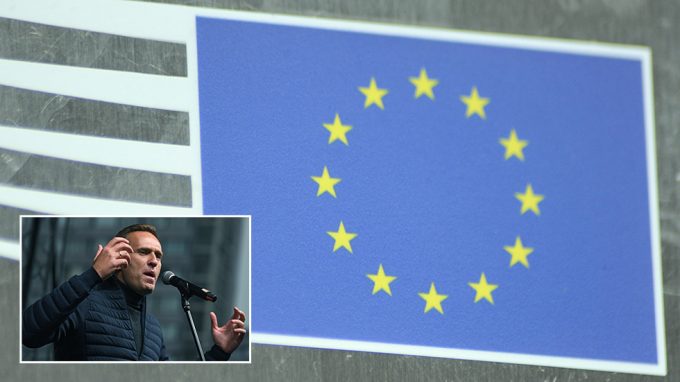
The West’s favorite Russian opposition figure has called for the EU to sanction pro-Kremlin ‘oligarchs’. Alexey Navalny doesn’t appear to be against all ‘oligarchs’ though, just those he feels are supportive of Vladimir Putin.
In a European Parliament hearing last week, the activist argued that the Russian people would welcome punishing the ‘kleptocracy’ that he says has thrived under Putin.
The anti-corruption campaigner was speaking to members of the EU’s Committee of Foreign Affairs during an “exchange of views with representatives of the Russian political opposition.” Despite the title, no members of Russia’s largest opposition parties – the nationalist LDPR, communist KPRF or leftist Fair Russia – were present at the virtual discussion. Instead only pro-Western figures, with almost uniformly similar liberal views, were involved in the event.
They included Vladimir Kara Murza Jr., a lobbyist at the US-government funded Free Russia Foundation, set up to “inform” American policy makers on the country; Vladimir Milov, a former deputy minister of energy, now closely allied to Navalny; and Ilya Yashin, a municipal deputy of the Krasnoselsky district of Moscow. Yashin is the only one of the four who actually holds an elected position.
To be clear, the issue of how many Russian billionaires acquired and spent their wealth is one worth debating, yet this attempt to place Navalny on the side of the Russian people and Putin among a criminal class is simply absurd, given the history.
Putin and the oligarchs
The rise of the 1990s oligarchs is commonly referred to as a “criminal revolution” in Russia. The US-sponsored shock therapy in the post-Soviet period produced disaster privatization where the huge natural resources wealth of Russia ended up in the pockets of a handful of incredibly rich men.
The US was motivated to ensure the legacy of the Soviet Union was permanently dismantled. But the great irony is that extreme socio-economic disparity was the main reason for the Bolshevik Revolution in 1917.
The oligarchs seized control over the economy and incrementally asserted dominance over the media and the political system. Capital flight became an immense problem as the oligarchs transferred the wealth to their new residencies in the West rather than investing the money at home. Soon, this became a national security threat as the oligarchs were courted by the US and UK, which meant that Russia was heading toward a quasi-colonial status.
When Putin came to power, he announced that the primary task was to eliminate the oligarchic class. However, seizing all their assets and redistributing it was deemed too revolutionary, extreme and destabilizing. Instead, Putin argued the oligarchs would be held accountable for their crimes in the 1990s if they did not rescind their influence over politics.
Subsequently, oligarchs supporting the elected government were left alone, while the oligarchs seeking to become an alternative pole of political power were held accountable for their crimes in the 1990s. Russia’s richest oligarch with political aspirations, Mikhail Khodorkovsky, was arrested in 2003 before he could sell a major share of his oil empire to ExxonMobil and Chevron-Texaco. Western powers dutifully provided eventual exile and protection for defiant oligarchs such as Berezovsky and Gusinsky who were valued for their anti-Kremlin stance.
The US and UK were outraged that “their” Russian oligarchs were pushed out of politics, while a large portion of the Russian people was upset that all oligarchs had not been held accountable, given Russia continues to have a great wealth disparity.
Poverty reduced by half during Putin’s first term alone and a large middle class emerged. Credited for bringing Russia up from its knees and escaping external control, Putin has ever since enjoyed approval ratings that other world leaders can only dream about. However, the West never acknowledged that Putin had prevented Russia’s collapse and instead began demonizing the Russian president as an enemy of the Russian people.
Supporting the Russian people?
The notion that Navalny and the EU will collectively support the Russian people is very flawed. In 1917, Germany brought Lenin into Russia to install a more favorable government that would pull the Russians out of the First World War. Germany’s top army commander reported to its Foreign Office that: “Lenin’s entry into Russia was a success. He is working according to your wishes.”
Indeed, the effort to “liberate” another people from their political leadership has remained the modus operandi for almost every disastrous war in the post-Cold War era.
In Russia, the regime change endeavour is an even more absurd proposition as Putin is extremely popular, while the main opposition is the communists, led by Gennady Zyuganov, and behind them the radically nationalist LDPR, under Vladimir Zhirinovsky, another veteran. Navalny is polling at between one and three percent in Russia, while in the West he is hailed as the face of Russia’s opposition.
Former CIA Director John Brennan wrote in October 2020: “Imagine prospects for world peace, prosperity, & security if Joe Biden were President of the United States & Alexei Navalny the President of Russia. We’ll soon be halfway there.” The eagerness to present Navalny as an “opposition leader,” rather than an activist, suggests he is expected to play the same role as the oligarchs that were courted in the 1990s to advance Western interests.
Sanctions?
Sanctions against Russian billionaires in Europe could be beneficial to Russia by reversing some of the capital flight and having their money invested back home. Indeed, the West should have worked with the Russian government to clean up the disastrous privatization process of the 1990s instead of courting proxies.
However, the collective interest of Navalny and the EU is to reinvent their role as supporting the Russian people, while recasting Putin as the protector of the oligarchs. However, the enduring economic sanctions against Russia have only cemented the view of the EU as a belligerent power. Navalny’s reliance on backing from hostile foreign powers, in the absence of significant domestic support, is not a winning strategy.
Furthermore, after it was revealed that the Magnitsky sanctions were based on fallacies and after the Russiagate conspiracy theory collapsed, it would be foolish to advance more sanctions under the preposterous narrative of Navalny’s poisoning.
The West does not have a Putin problem, but a Russia problem
The West tends to promote and anticipate the downfall of Putin with great optimism due to the expectation of a more “pro-Western” alternative akin to Yeltsin. However, the 1990s were a horrific period in Russian history. The much-neglected reality is that the main opposition parties, the communists and the nationalists, advocate much more hawkish policies toward the West than Putin.
Over twenty years ago, Yeltsin tasked Putin with reforming the state’s foreign policy because the entire “pro-Western” platform collapsed when the West decided to create a new Europe without Russia, and cooperation between the West and Russia was recast in a teacher-student format. So what segment of Russian society is the EU reaching out to and does “pro-Western” imply capitulation?
Which demographic of Russians support the containment policies, NATO and EU expansionism toward Russian borders, and again being relegated to a plaything of the West?
Without an answer to these questions, the efforts by the EU to elevate new “opposition leaders” in Russia will be dismissed by most Russians as an effort to weaken Russia and return their nation to the Western vassal it was in the 1990s.
Glenn Diesen is an Associate Professor at the University of South-Eastern Norway and an editor at the Russia in Global Affairs journal. Follow him on Twitter @glenndiesen
Informal British-Turkish-Ukrainian alliance is emerging in the Black Sea
By Paul Antonopoulos | November 30, 2020
Trade agreements between the UK and Turkey are “very close,” Turkish Foreign Minister Mevlüt Çavuşoğlu said during a visit to Britain in July. London’s endeavour to secure post-Brexit trade agreements reflects on the status of its economic relations with Turkey. A UK-Turkey trade agreement is important for both countries, not only commercially, but also geopolitically as it can extend into the Ukraine against Russia, particularly in the Black Sea.
The trade agreement is crucial because the EU’s relationship with Turkey and the UK have deteriorated. Brussels and Ankara clash over the erosion of democratic controls and balances in Turkey, and also because of its increasingly dynamic foreign policy in Libya and the Eastern Mediterranean against Greece and Cyprus. Turkey’s relationship with the U.S. has also intensified, especially since Ankara bought the Russian S-400 missile defense system despite opposition from Washington and NATO. With it appearing imminent that Joe Biden will become the next U.S. President, relations between Washington and Ankara are set to deteriorate further.
This makes the UK one of Turkey’s few remaining friends in the West, and for Ankara a trade deal would signal a close economic and political relationship with a major European power that still wields international influence. For its part, the UK was willing to cultivate a good relationship with Ankara in the context of a “Global Britain” that it wants to build after Brexit.
When it was still a member of the EU, the UK was one of the leading supporters of Turkey’s membership into the bloc. London has also taken a much more discreet stance than other European capitals in condemning President Recep Tayyip Erdoğan for the deteriorating domestic situation. When Turkey launched a military operation in Syria in 2019, the UK was initially reluctant to condemn Ankara unlike other NATO members, just like what happened when Turkey intervened in Libya.
It was always inevitable that a post-Brexit UK would have strengthened relations with Turkey, especially as British Prime Minister Boris Johnson often boasts that his paternal great-grandfather, Ali Kemal, was a former Ottoman Minister of the Interior.
Johnson describes the Gülen movement, once allied to Erdoğan but now considered a terrorist organization by Ankara, as a “cult.” He also supports Turkey’s post-coup purges that resulted in the detainment of over half a million Turkish citizens, not only from the military, but also from education, media, politics and many other sectors.
It appears that Johnson’s post-Brexit “Global Britain” has Turkey as a lynchpin for its renewed international engagement with the world, and this poses immense security risks for Russia, especially in the Black Sea.
Erdoğan was outraged when Canadian Prime Minister Justin Trudeau suspended arms shipments to Turkey because of its involvement in Azerbaijan’s war against Armenia. This was a major blow to the TB2 Bayraktar drones that are highly valued by Erdoğan as he uses them in his military adventures in not only Libya, Syria and Nagorno-Karabakh, but also in the Aegean in espionage acts against so-called NATO ally Greece. He has even set up a drone base in occupied northern Cyprus to oversee the Eastern Mediterranean.
The so-called “domestically produced” Bayraktar drones have been exposed for using parts from nine foreign companies, including a Canadian one. Although Erdoğan was outraged by Trudeau’s decision, he found a British company to replace Canadian parts. Britain’s decision to be involved in the Bayraktar drone program is all the more controversial considering five of the nine foreign companies involved have withdrawn their support because of Turkey’s role in the Second Nagorno-Karabakh War.
Although the growing unofficial alliance for now appears to be in the fields of economics and military technology, alarming reports are emerging that British troops will be stationed in Ukraine’s Mykolaiv Port on the Black Sea.
Ukrainian Foreign Minister Dmytro Kuleba told the BBC that if British troops “land there and stay, we will not mind either. From the first day of the Russian aggression, Britain has been close and provided practical support, and not only militarily.”
Post-Brexit Britain will not weaken its maximum pressure against Russia, and rather it appears to be increasing its campaign. Britain, as a non-Arctic country, is attempting to bully its way into Arctic geopolitics by undermining Russian dominance in the region. However, Britain’s campaign of maximum pressure creates instability on Russia’s vast frontiers, including in Ukraine and the Black Sea.
With this we can see an informal tripartite alliance emerge between the UK, Turkey and Ukraine.
Kiev has formed a venture with Ankara to produce 48 Turkish Bayraktar drones in Ukraine. This also comes as Ukraine’s Ukrspetsexport and Turkey’s Baykar Makina established the Black Sea Shield in 2019 to develop drones, engine technologies, and guided munitions. In fact, Turkey will allow Ukraine to sell Bayraktar drones it produces, which will now contain British parts after several foreign companies withdrew from the drone program. It is not known whether Bayraktar drones can currently be produced because of the mass withdrawal of foreign companies, but we can expect Ukrainian and British companies to eventually fill the voids left behind.
Both Turkey and Ukraine cannot challenge Russian dominance in the Black Sea alone, and it is in their hope that by closely aligning and cooperating that they can tip the balance in their favor, especially if Britain will have a military presence in Mykolaiv Port. Ukraine still does not recognize Russian sovereignty over Crimea, Britain maintains sanctions against Moscow because of the reunification, and Turkey continually alleges that Russia mistreats the Crimean Tatars.
Erdoğan uses Turkish minorities, whether they be in Syria, Greece or Cyprus, to justify interventions and/or involvement in other countries internal affairs. Erdoğan is now using the Tatar minority to force himself into the Crimean issue while simultaneously helping Ukraine arm itself militarily. With Turkish diplomatic and technological support, alongside British diplomatic, technological and perhaps limited military support, Ukraine might be emboldened to engage in a campaign against Crimea or disrupt Russian trade in the Black Sea.
It certainly appears that an informal tripartite alliance is emerging between the UK, Turkey and Ukraine, and it is aimed against Russia in the Black Sea to end the status quo and insert their own security structure in the region on their own terms.
Paul Antonopoulos is an independent geopolitical analyst.
MPs demand Iran restrict IAEA inspections after scientist assassination
Press TV | November 29, 2020
Iranian lawmakers have issued a statement demanding that the country respond to the recent assassination of a senior nuclear scientist near Tehran by restricting the United Nations’ regulatory mandate regarding Iran’s nuclear program.
Members of Majlis (Iran’s Parliament) offered the proposal in a statement that was read out at the legislature on Sunday.
“Such atrocity entails an immediate and regret-inducing response,” they said, stressing that the best means of retaliation is through “the revival of the country’s brilliant nuclear industry by ending its voluntary adherence to the Additional Protocol” and restricting the UN nuclear watchdog’s unprecedented inspection regime.
Iran undertook to adhere to the Additional Protocol of the Nuclear Non-Proliferation Treaty (NPT) as part of its 2015 nuclear agreement with world countries. Under the protocol, the International Atomic Energy Agency (IAEA), the UN nuclear watchdog, is allowed to carry out “more intrusive” inspections of the country’s nuclear work.
Iran’s nuclear activities and the deal, officially known as the Joint Comprehensive Plan of Action (JCPOA), have frequently been the target of sabotage by the United States and the Israeli regime.
The US left the JCPOA in 2018, and its allies in the accord – the UK, France, and Germany – subsequently failed to secure Iran’s interests guaranteed by the deal, under Washington’s pressure.
Two of the most recent acts of sabotage — where the Islamic Republic strongly suspects Israel to have acted with US intelligence – include a July incident at the central Natanz nuclear site that caused material damage to the facility and the Friday assassination of nuclear expert Mohsen Fakhrizadeh.
Fakhrizadeh, the head the Defense Ministry’s Organization of Defensive Innovation and Research, was targeted in a multi-pronged terrorist attack by a number of assailants in Absard city of Tehran Province’s Damavand County.
Qalibaf: Enemies should be made to regret this
Majlis Speaker Mohammad-Baqer Qalibaf also urged a “strong response” to the assassination, saying the country’s enemies would not be made to regret their atrocity in any other way.
A response, he said, has to both avenge the assassination and deter the enemies from repeating such atrocities in the future.
The assassination showed that the adversaries have been frustrated by Iran’s rising power and therefore have resorted to eliminating its scientists, he noted.
The senior parliamentarian, however, expressed certainty that the nation would be able to weather the loss as it has in countless other cases since the 1979 victory of its Islamic Revolution and “pursue the path of its martyrs more strongly than before.”
Featured Video
HE SAVED LIVES. NOW HE FACES PRISON.
or go to
Aletho News Archives – Video-Images
From the Archives
NATO Sanctions and the Coming Global Diesel Fuel Disaster
By F. William Engdahl – New Eastern Outlook – 11.04.2022
Amid the ongoing global inflation crisis, NATO heads of state and mainstream media repeat a mantra that high energy prices are a direct result of Putin’s actions in Ukraine since end of February. The reality is that it is the western sanctions that are responsible. Those sanctions including cutting SWIFT interbank access for key Russian banks and some of the most severe sanctions ever imposed, are hardly having an impact on the military actions in Ukraine. What many overlook is the fact that they are increasingly impacting the economies of the West, especially the EU and USA. A closer look at the state of the global supply of diesel fuel is alarming. But Western sanctions planners at the US Treasury and the EU know fully well what they are doing. And it bodes ill for the world economy.
While most of us rarely think about diesel fuel as anything other than a pollutant, in fact it is essential to the entire world economy in a way few energy sources are. The director general of Fuels Europe, part of the European Petroleum Refiners Association, stated recently, “… there is a clear link between diesel and GDP, because almost everything that goes into and out of a factory goes using diesel.” … continue
Blog Roll
 Aletho News
- Trita Parsi: Middle East Unraveling — Are We on the Path to World War?
- Iran FM meets with US envoy on UN meeting’s sidelines at American side’s insistence: Report
- Qatar PM calls for Gulf security framework with Iran, says war must be ‘wake-up call’
- China condemns US extortion of Iranian airlines, rejects Washington’s ‘illegal’ sanctions threats
- Italy to move military personnel from Taif base after missile strike
- Finland’s Stubb tells European leaders to calm down
- Defeating Russia on battlefield impossible – Fico
- Finland’s Gender Clinic Reversal
- Massachusetts Wants Mental Health Visits, Why Does Government Use ‘Health’ to Enter Our Homes & Families?
- US lawmaker admits American people footing bill for Trump’s failed aggression against Iran
- If Americans Knew
- Sanctions are collective punishment: immoral and self-defeating
- Phosphorus Munitions Fired by Israel Burn Groves, Orchards in Southern Lebanon
- Israel Carries Out New Ceasefire Violations Across Gaza
- AI – Emphasis on the ‘I’: Israel Is Funding AI Chatbot Propaganda
- Israel Blocking Hundreds of Wheelchairs for Injured Children From Entering Gaza
- Israel Is Expanding and Upgrading Compounds for Palestinian Militias in Gaza
- The Palestinian-American Residents of This West Bank Town Are Wondering: Where Is Trump?
- Gaza desperately needs tents, wheelchairs, fuel… and everything else (Israel blocks it all) – Daily Update
- Israeli Attacks in Gaza Kill at Least Seven Palestinians Over Three Days, including Woman and Child
- Trump’s militarization of Washington DC as he pursues Israel’s war against Iran
- No Tricks Zone
- New Study: Earth And Venus Surface Warmth Largely Explained By Convection And Lapse Rate, Not CO2 Or Radiation
- 2025 Nature Paper Claiming Worsening Global Drought Gets RETRACTED …Heavily Flawed
- New Study: ‘Global Drought Shows No Detectable Recent Acceleration Under Climate Warming’
- Economic Masterminds: German Socialists Suggest Taxing Productivity Gains Stemming From Using AI
- The South China Sea Has Not Been Cooperating With The Climate Change Narrative
- Energy Crisis: Germany Enters Heating Season With Historically Low Gas Reserve Fill Levels
- New Study: The Antarctic Ice Sheet Gained Mass From 2020-2024 Due To Staggering Snow And Ice Accumulation
- Study: Ocean Heating Rates From Thousands Of Years Ago ‘Dwarf’ Modern Ocean Heating Rates
- Climate Extremists Target, Attack Large-Scale Power Grid Infrastructure In Germany!
- New Study: Antarctic Ice Melt Has Contributed Less Than 1 Centimeter To Sea Level Rise In The Last 30 Years

