UK readies deployment of Prince of Wales carrier amid war on Iran
Al Mayadeen | March 7, 2026
The United Kingdom is reportedly preparing one of its naval assets for possible deployment to West Asia as Western military pressure on Iran continues to grow following the US-Israeli assault on the country.
According to media reports, the Royal Navy aircraft carrier HMS Prince of Wales is being placed on higher readiness, with its preparation time reduced so that it can be deployed more quickly if ordered by the British government. Crew members have reportedly been warned that the vessel could be sent to the region amid the escalating confrontation triggered by the US and Israeli strikes on Iran.
According to reports, the move does not mean the carrier will necessarily be dispatched immediately. However, raising its readiness would allow the government of Prime Minister Keir Starmer to deploy the warship rapidly should the aggression against Iran escalate further.
Western buildup around Iran
The preparations come as Britain gradually expands its military presence across the region following the US–Israeli assault on Iran that began on February 28.
Since then, London has moved additional forces to the Middle East, including deploying more fighter jets to Qatar and sending helicopters equipped with counter-drone systems to Cyprus.
British forces have also been involved in intercepting drones and missiles across several countries in the region, while the Royal Navy has ordered the destroyer HMS Dragon to the eastern Mediterranean to reinforce security around British bases on the island of Cyprus.
These deployments also follow a drone strike targeting the British air base at RAF Akrotiri, during which British forces identified the drone as a Shahed-type model widely associated with Iranian production. The launch location was not immediately known.
Despite Western attempts to increase their military presence, Iranian officials have repeatedly rejected calls for surrender and warned that any further escalation will be met with additional responses.
Europe not in position to cooperate with US and Israel against Iran
By Ahmed Adel | March 6, 2026
Although the US-Israeli attack on Iran has worsened the crisis in the Middle East, some European countries approved of the operation, such as the United Kingdom, which provided military bases to the Americans, and Germany, which rhetorically supported the offensive through its Chancellor, Friedrich Merz. However, Europe is not cooperating as actively as it was before.
Recent historical experiences, such as the wars in Iraq (2003-2011), Afghanistan (2001-2021), and the military intervention in Libya (2011), have created deep divisions among European countries regarding military actions outside their continent. Moreover, the European Union already dedicates substantial resources to Ukraine in its conflict with Russia. In this context, the economic and military crisis among EU members makes them hesitant to engage in another large-scale armed conflict.
The timing is not very favorable for the Europeans. They are facing an economic crisis mainly caused by energy prices. The EU is attempting to wean off Russian energy without harming itself, but the strategy ultimately failed, and now that there is war in the Middle East, energy prices have spiked even more.
Russian President Vladimir Putin stated on March 4 that Russia could immediately halt the supply of raw materials to European markets, and thus thwarted the EU’s plan to systematically phase out Russian gas. Putin’s words caused psychological trauma to the EU because, instead of a planned embargo on Russian gas for 2027, he suggested that Europe should prepare for an immediate cut.
The Russian president’s warning and ongoing tensions in the Middle East continue to drive up global energy costs. The price increases mirror developments in international energy markets. Oil and gas prices have risen since the war on Iran began, particularly because it has disrupted shipping through the Strait of Hormuz, one of the world’s most important transit routes for oil and natural gas.
Disruptions to shipping and decreased production by several Gulf states have tightened global supply. As a result, the price of Brent crude, the European benchmark oil, rose to around $84 per barrel on March 5, roughly 16% higher than before the conflict started, and close to its highest level since mid-2024.
Additionally, from a military perspective, Europe knows that its weaponry is not capable of conducting a high-intensity war due to a technical shortfall. At the same time, the EU wants to replace the US as Ukraine’s main benefactor, a corrupt state that drains many of the bloc’s resources.
Another reason for Europeans to remain impartial is the growth of the Muslim population in these countries, which also holds electoral influence and the power to sway domestic policy outcomes. The Muslim population in Europe is quite sizable, and European attacks in the Middle East could face internal opposition. Besides the Muslim community, most European citizens would be largely unwilling to fight for the Americans, especially in a scenario where the US might not achieve its objectives.
Europe uses rhetoric to avoid commitment. In the current context of hostilities in the Middle East, European leaders are not demonstrating a unified stance, even though some rhetorically support Washington and Tel Aviv’s initiatives. However, this behavior indicates a lack of European political cohesion.
London is not following Washington’s lead, something that has not occurred often since the Second World War. Germany is showing support, but lacks the power to act. Spain initially contradicted the White House but then quickly announced that a warship would be deployed to Cyprus in response to threats of sanctions from US President Donald Trump. In other words, Europe is divided and fragmented and therefore cannot act effectively at this moment.
Another obstacle is Iran’s warning that if Europeans join the offensive, there will be a fierce response. Because of this, Washington’s traditional Western allies are becoming mere observers in the region, even though they also have bases near the epicenter of the crisis. European bases are at risk if Europe attacks Iran, and it is a risk they are unwilling to take, besides not wanting to lose money in yet another conflict.
Furthermore, the Europeans are not even trying to mediate the conflict to avoid antagonizing Trump.
A new reconfiguration of the Middle East might happen after this conflict ends. The US could become weaker, which might impact its close ties with Gulf countries. Therefore, Europe might seize the opportunity created by its ally to expand its trade relations.
Nonetheless, Europe is not in a position to cooperate with the US and Israel and is acting opportunistically. They are observing Washington weaken politically in the Middle East, probably aiming to occupy spaces in neighboring countries after this war, because there will be new business opportunities.
In this context, Europe’s struggle to achieve political unity at the continental level is due to differing interests among its governments within the EU, as well as to managing its internal issues. Meanwhile, the bloc’s powers tend to exploit the situation to uphold their rhetoric aligned with Western values, while concealing their military weaknesses.
Ahmed Adel is a Cairo-based geopolitics and political economy researcher.
UK Government Secretly Tracked 25 Million People as Potential EV Owners
By Cindy Harper | Reclaim The Net | March 2, 2026
The UK government spent two years tracking 25 million mobile devices to build a picture of who drives electric cars. Not suspects or criminals. Just ordinary people whose browsing history mentioned EVs often enough to flag them as worth following.
The Department for Transport paid telecoms company O2 £600,000 ($809,000) to run the operation. According to the Telegraph, O2 trawled through its customers’ web browsing histories and app records, flagging anyone who visited an EV-related site at least once a month across two or more months.
That pool extended beyond O2’s own customers to include people on Tesco Mobile, GiffGaff, and Virgin Mobile, networks that run on O2’s infrastructure and whose users had no idea their data was being packaged and sold to a government agency.
Once flagged as a “potential EV owner,” your physical movements were traced across the country. London, the North-West, and the East of England received particular attention.
The techniques are standard in serious organized crime investigations. The DfT applied them to people buying environmentally friendly cars.
Andy Palmer, former executive at Nissan and Aston Martin, put it plainly: “I’m told it’s anonymized and aggregated, and that may well satisfy legal thresholds. But legality and legitimacy are not the same thing.” He added: “If you erode public trust in how that data is gathered, you undermine the very transition you are trying to accelerate.”
The idea of “anonymized” data means very little.
The surveillance ran for two years before the DfT quietly admitted defeat in April 2024, conceding that “mobile data cannot directly be used to provide information around charging behaviour or travel time.”
The program ended not because anyone questioned whether mass tracking of innocent people was appropriate, but because the data turned out to be useless for its stated purpose.
Civil servants from the DfT and Treasury were simultaneously exploring new EV taxes to replace fuel duty revenue. The people being surveilled were doing exactly what government policy encouraged them to do.
Conservative MP Sir David Davis drew the obvious conclusion: “It’s an object lesson in why you can’t trust the state with unfettered access to people’s information, because they’ve obviously taken this information without people’s permission with the objective of disadvantaging them, either by tax or other policy matters. If they’ll do it on this, with people who are doing what the government wants in policy terms, namely, pursuing green policies, what on Earth will they do elsewhere?”
The EV surveillance program wasn’t a one-off. During the earlier days of the COVID saga, the government ran a parallel operation, this time tracking people who showed up to get vaccinated.
Researchers funded through the Scientific Pandemic Influenza Group on Behaviors used mobile phone location data covering one in ten British people, without their knowledge or consent, to analyze behavioral changes after vaccination.
From that pool, they selected over 4,200 vaccinated individuals and tracked their movements through call data records, analyzing how far they traveled on vaccination day and whether they went straight home afterward.
The government was monitoring where citizens went after receiving a government-administered medical intervention, and chose not to tell anyone.
Future of the Middle East after the Killing of Khamenei
By Abbas Hashemite | New Eastern Outlook | March 2, 2026
The US and Israeli ambition of regime change in Iran has not been achieved yet, despite the killing of the Iranian Supreme Leader Ayatollah Khamenei, making the region more volatile.
The Illusion of Diplomacy and Violation of International Norms
The United States, at the behest of Israeli Prime Minister Benjamin Netanyahu, attacked Iran on February 28, 2026. Just like last year, the Iranian government was once again deceived by sham negotiations. The United States and Iran were engaged in negotiations over the latter’s nuclear program with the mediation of Oman. The first session of talks was held in Muscat on February 6, 2026. Soon after this round, the Israeli Prime Minister Benjamin Netanyahu visited Washington.
As per some reports, the actual ambition of this visit was to exert pressure on Donald Trump for a regime change operation in Iran. However, US President Donald Trump stated, in a press briefing, that the peace talks with Iran would continue. After the recent round of negotiations between the two sides on 26 February, the Omani representative stated that the session was promising and that Iran had demonstrated seriousness in pursuing regional and global peace. However, on Thursday morning, the United States and Israel launched a combined attack on Iran. Many Iranian leaders and officials were targeted in this attack. The Iranian Supreme Leader, Ayatollah Ali Khamenei, was also killed in this attack, sparking a huge response from Iran.
Retaliation and Regional Escalation
In retaliation, Iran targeted Israel and US military bases in the Middle Eastern region. Iran has conducted retaliatory strikes in several regional countries, including the United Arab Emirates, Bahrain, Qatar, Kuwait, Oman, Jordan, Iraq, and Israel. Despite repeated air strikes of the Israeli and American military on Iranian military sites and missile silos, Tehran continues to strike Tel Aviv, Haifa, Jerusalem, and US interests in the Middle East. Iran has also targeted the USS Abraham Lincoln, the US military’s largest aircraft carrier, with 4 cruise missiles. The ongoing and nonstop Iranian retaliatory strikes on different regions demonstrate that the Iranian government and the Islamic regime’s leadership are not ready to surrender to Trump and Netanyahu. Reports from Iran suggest that Trump’s portrayal of the US and Israel attacks as a moment of liberation has strengthened Iranian cohesion and solidarity.
Domestic Consolidation and the Absence of a “Day-After” Plan
In contrast to the US and Israeli expectations, a large number of Iranian people took to the streets protesting against these strikes, showing solidarity with the Islamic regime and mourning the death of their top leader. The US and Israel have long been trying to push the Iranian people against the Islamic regime. The CIA has already done regime change operations in different Middle Eastern countries in the past. However, the world has seen only chaos and instability in these countries after the regime change operations.
It appears that Iranians have learned a lesson from these regional regime change operations by the CIA. The US and Israeli plan seems to be firing back. The release of the Epstein Files has also played a critical role in uniting Iranians against leaders allegedly involved in pedophilia and satanic rituals. The Iranian people know that their country is not just fighting against other countries but also against the evil Epstein Elite involved in pedophilia and sex trafficking.
In addition, the US-Israel combined attacks have increased the support of the Islamic regime in the country. Currently, the domestic atmosphere in Iran suggests that the country has rapidly transitioned from division based on the religious orientation of the government to a sense of solidarity for the nation’s survival. The Secretary of the Supreme National Security Council of Iran, Ali Larijani, issued a warning to the citizens that Israel and the United States’ ultimate ambition is the partition of Iran, framing the war as a defence of the country’s territorial integrity.
Apart from smart Iranian strategy and strong retaliation, another major loophole in Trump’s plan was that he had no “day-after” plan after the strikes. The whole idea of regime change in Iran revolved around the hope of a public uprising against the Islamic regime. Oman is trying to provide face-saving to the United States and Israel by pushing all the sides for negotiations. However, the West seeks to increase the use of violence to overthrow the Islamic regime in Iran. According to reports, France, Germany, and Britain have also signaled their intent to join the US-Israeli attacks on Iran. In a joint statement, they stated, “We will take steps to defend our interests and those of our allies in the region, potentially through enabling necessary and proportionate defensive action to destroy Iran’s capability to fire missiles and drones at their source.”
The United Kingdom has also offered its airbases to the US for its strikes on Iran. Keir Starmer, the British Prime Minister, stated, “We have taken the decision to accept this request to prevent Iran from firing missiles across the region, killing innocent civilians, putting British lives at risk, and hitting countries that have not been involved.” Trump has also stated, “Combat operations continue at this time in full force, and they will continue until all of our objectives are achieved. We have very strong objectives.” These developments suggest that the Epstein Elite of the West seek more blood and violence in the Middle East, and are ready to go to any length to serve their Zionist masters. Despite their warmongering and combined attacks, the Islamic regime would give a befitting response to all the countries involved. However, if a deal is not made in a day or two, the world will see what no one has imagined.
Аbbas Hashemite is a political observer and research analyst for regional and global geopolitical issues. He is currently working as an independent researcher and journalist.
Glenn Diesen: NATO’s War of Choice – The Sabotage of the Istanbul Negotiations
Glenn Diesen | February 24, 2026
Professor Glenn Diesen outlines the evidence for how the US and UK sabotaged the peace negotiations in Istanbul to use Ukraine as a proxy to weaken Russia. After NATO built a large Ukrainian proxy army to weaken a strategic rival, it was absurd to assume that Ukraine would be allowed to restore its neutrality and make peace with Russia.
Follow Prof. Glenn Diesen:
Substack: https://glenndiesen.substack.com/
X/Twitter: https://x.com/Glenn_Diesen
Patreon: https://www.patreon.com/glenndiesen
Support the research by Prof. Glenn Diesen:
PayPal: https://www.paypal.com/paypalme/glenndiesen
Buy me a Coffee: buymeacoffee.com/gdieseng
Go Fund Me: https://gofund.me/09ea012f
Project Artichoke: 70 Years Ago, CIA Discussed Hiding Mind-Control Drugs in Vaccines
By Michael Nevradakis, Ph.D. | The Defender | February 24, 2026
In the 1950s, the CIA brainstormed ways to secretly perform mind control on humans — including concealing drugs in vaccines and widely consumed food products, a newly unearthed CIA document revealed. The Daily Mail first reported the story on Monday.
The seven-page document, “Special Research for Artichoke,” is dated April 23, 1952. It describes a series of ideas for how to develop chemicals designed to alter human behavior and thought.
The proposals contained in the document were part of the CIA’s top-secret Project Artichoke, which ran from 1951 to 1956, according to the Daily Mail.
The document, declassified in 1983, recently circulated on social media. However, it was not published in the CIA’s online reading room until last year.
“Some of the suggestions are controversial,” the document states. The proposals included administering drugs in secret as part of a “long-range approach to subjects.”
According to the document:
“This study should include chemicals or drugs that can effectively be concealed in common items such as food, water, coca cola, beer, liquor, cigarettes, etc.
“This type of drug should also be capable of use in standard medical treatments such as vaccinations, shots, etc.”
CIA experimented on humans as part of Project Artichoke
The document also included a special field of research for “bacteria, plant cultures, fungi, poisons of various types, etc.,” that are “capable of producing illnesses which in turn would produce high fevers, delirium, etc.”
This included “species of the mushroom” that “produce a certain type of intoxication and mental derangement.”
Also among the proposals was a suggestion to research “diet” or “dietary deficiencies” on prisoners and on people undergoing interrogation, including using “specially canned foods having elements removed.”
The document included proposals for both short-term and long-term use on humans. Drugs deemed most suitable for long-term use would be designed to produce an “agitating effect (producing anxiety, nervousness, tension, etc.) or a depressing effect (creating a feeling of despondency, hopelessness, lethargy, etc.).”
According to The Daily Mail, the CIA experimented on humans as part of Project Artichoke. The experiments often involved “vulnerable subjects, including prisoners, military personnel and psychiatric patients.” The experiments were usually performed “without informed consent.”
According to Ben Tapper, a Nebraska chiropractor who was included in the “Disinformation Dozen” list in 2021 for questioning vaccine safety, the document exposes “a disturbing reality that government agencies have historically explored ways to manipulate human behavior through chemical and biological means, including concepts involving food and medical interventions.”
“This is not speculation or conspiracy, and it should deeply concern every American who values bodily autonomy and informed consent,” Tapper said.
Precursor to the CIA’s MK-Ultra mind control experiments?
The Daily Mail cited CIA documents suggesting that U.S. intelligence agencies were concerned that enemy nations had developed their own mind and behavioral control techniques. This led the agency to prioritize the development of its own methods.
Project Artichoke “served as a precursor” to the MK-Ultra program, which the CIA launched in 1953. That program “broadened mind-altering experiments on a larger scale,” the Daily Mail reported.
Many of the documents related to this type of experimentation were destroyed in 1973, “leaving the full extent of the research and how far it progressed unknown.”
Naomi Wolf, Ph.D., CEO of Daily Clout and author of “The Pfizer Papers: Pfizer’s Crimes Against Humanity,” told The Defender that the documents further confirm a long history of intelligence agency research targeting human thought and behavior.
“Sadly, it’s long been established that our intelligence agencies, and those of our enemies, have sought to alter human consciousness and behavior, often without the subjects’ consent. The existence of MK-Ultra, the clandestine project into which Project Artichoke evolved, is well documented,” Wolf said.
John Leake, vice president of the McCullough Foundation and author of the forthcoming book, “Mind Viruses: America’s Irrational Obsessions,” said, “Researchers have long suspected that the Church Committee’s revelation of the CIA’s notorious MK-Ultra mind control experiments, mostly using LSD, had the effect of obscuring the agency’s much larger Project Artichoke.”
Leake cited evidence suggesting that a 1951 mass poisoning in Pont-Saint-Esprit, France, in which 250 residents experienced severe hallucinations and seven people died, was a Project Artichoke experiment. The outbreak was officially attributed to contaminated bread from a local bakery.
Leake said the 1952 document is “consistent with the suspicion that the CIA was seeking to discover mind control methods for even large populations.”
In 2024, a Reuters investigation revealed that the CIA operated a secret propaganda campaign involving vaccines in the Philippines. The campaign attacked what the agency perceived as China’s “growing influence” in the country by targeting the Chinese-made Sinovac COVID-19 vaccine through the use of phony online accounts spreading “anti-vax” messaging.
Michael Rectenwald, Ph.D., author of “The Great Reset and the Struggle for Liberty: Unraveling the Global Agenda,” said the Project Artichoke revelations “make it clear that the CIA has posed an enormous threat to U.S. citizens, in addition to the horrors it unleashes on non-U.S. target governments and populations.”
Project Artichoke wanted to enlist help from Army’s Chemical Warfare Service
The 1952 Project Artichoke document also included a recommendation to involve the U.S. Army Chemical Warfare Service in the project’s efforts, citing its experience with “exhaustive studies along these lines.”
This proposal bears a resemblance to recent suggestions that COVID-19 — and the response to the pandemic — were coordinated at high levels of government, military and intelligence agencies.
Last year, former pharmaceutical research and development executive Sasha Latypova and retired science writer Debbie Lerman released the “Covid Dossier,” presenting evidence of the “military/intelligence coordination of the Covid biodefense response in the US, UK, Australia, Canada, the Netherlands, Germany, and Italy.”
According to Latypova and Lerman, “Covid was not a public health event” but “a global operation, coordinated through public-private intelligence and military alliances and invoking laws designed for CBRN (chemical, biological, radiological, nuclear) weapons attacks.”
Leake said “it is far from clear” that the Church Committee hearings of 1975 “put a complete end to CIA covert programs.” He cited the possible laboratory development of the SARS-CoV-2 virus as an example.
“The laboratory creation of SARS-CoV-2 with gain-of-function techniques developed at the University of North Carolina-Chapel Hill, and the U.S. military’s involvement in developing and distributing of mRNA COVID-19 vaccines, should … be regarded as possible outgrowths or even continuations of Project Artichoke,” Leake said.
Experts question similarities between Project Artichoke, COVID vaccines
In a Substack post today, epidemiologist Nicolas Hulscher drew a potential connection between Project Artichoke and the development of COVID-19 vaccines. Hulscher cited recent peer-reviewed studies that identified the vaccines’ adverse impact on neurological health and “surging rates of cognitive decline.”
Hulscher wrote:
“Disturbingly, since 2021, over 70% of humanity received a neurotoxic agent masquerading as a ‘vaccine.’ The same goals outlined in the CIA document (vaccines/drugs capable of covertly inducing anxiety, depression, and lethargy) are now being observed in COVID-19 vaccinated populations. …
“… If the CIA was secretly discussing covert methods to alter human behavior in the 1950s, it would be no surprise if similar classified projects emerged in the decades that followed.”
A 2024 paper published in the journal Molecular Psychiatry investigated psychiatric adverse events among over 2 million people in South Korea. The study found that “COVID-19 vaccination increased the risks of depression, anxiety, dissociative, stress-related, and somatoform disorders, and sleep disorders while reducing the risk of schizophrenia and bipolar disorder.”
A 2025 study published in the International Journal of Innovative Research in Medical Science found “alarming safety signals regarding neuropsychiatric conditions following COVID-19 vaccination, compared to the influenza vaccinations and to all other vaccinations combined.”
This included increases in schizophrenia, depression, cognitive decline, delusions, violent behavior, suicidal thoughts and homicidal ideation.
“The fact that mRNA vaccines were designed to cross the blood-brain barrier and inflame the brain — or at least, they were known to do so, during their manufacture and distribution — should give us pause in light of this news,” Wolf said.
Wolf said the latest revelations, “while shocking, provide all the more reason for us to be critical of opaque, coercive or untested vaccination programs, additives in food and water, and toxic or opaque geoengineering programs.”
Tapper said the revelations reinforce “the urgent need to protect individual liberty, medical freedom, and ethical boundaries in science and public health.”
“The lesson here is simple: vigilance is necessary when governments claim authority over the human body and mind,” Tapper said.
This article was originally published by The Defender — Children’s Health Defense’s News & Views Website under Creative Commons license CC BY-NC-ND 4.0. Please consider subscribing to The Defender or donating to Children’s Health Defense.
What is Zionism? And what is anti-Zionism?
By David Miller | Tracking Power | January 25, 2026
I am asked to give definitional answers to this question quite often. So, here, for the record are the key extracts from my witness statement written in August 2023 (some weeks before the launch of Al Aqsa Flood by the Palestinian Resistance ion 7 October of that year.
Glancing over the statement at this distance I am struck by how long and detailed it is – 97 pages – and how, even then I was naive about malevolence of Zionism. If you look below you will see that I refer to Zionism as being inherently genocidal. This was not a popular view then, but it has certainly been more than amply borne out by the events since.
I should note that it was on the basis of my statement and my testimony under cross examination that the Tribunal determined that my anti-Zionist views were worthy of respect in a democratic society which is the legal test for philosophical beliefs to be protected under the Equality Act 2010. The definition of Zionism I have used is thus of greater import than just my own views and beliefs it has been accepted by the court as satisfying the five key elements of the so-called ‘Grainger’ test of which being worthy of respect is the fifth.
For a belief to be protected under Section 10 of the Equality Act, it must:
- Be genuinely held: It cannot be a fictitious or insincere claim.
- Be a belief, not an opinion: It must be more than a viewpoint based on the “present state of information available”.
- Relate to a weighty and substantial aspect of human life and behavior: It must concern significant matters rather than trivial or minor ones.
- Attain a certain level of cogency, seriousness, cohesion, and importance: The belief must be intelligible and internally consistent.
- Be worthy of respect in a democratic society: This has three components
a. The belief must not be akin to Nazism or totalitarianism. It does not have to be a popular or mainstream belief; even beliefs that are shocking or offensive to others may still be worthy of respect. The belief must be consistent with the principles of a pluralist society.
b. Not incompatible with human dignity: It must not dehumanize or degrade others.
c. Not in conflict with the fundamental rights of others: The belief must not seek to destroy the basic freedoms and rights of other individuals.
Here are some key excerpts from my statement including, first of all, a declaration of my anti-racism and then a very short and neutral definition of Zionism, and why I oppose it, which I have italicised. (The statement was in the form of numbered paragraphs which I reproduce here)
_________________________________________________________________
PHILOSOPHICAL BELIEFS
7. I believe it self-evident that racism, imperialism and colonialism are offensive to human dignity and that each of those interconnected phenomena should be opposed. Human beings are all equal and are of equal value. The arrogance and supremacism of racism and racist systems and practices – which assert that it is acceptable for one group of people to dominate others on racial or ethnic lines – can in my view never be tolerated.
8. I believe that Zionism, an ideology that asserts that a state for Jewish people ought to be established and maintained in the territory that formerly comprised the British Mandate of Palestine, is inherently racist, imperialist, and colonial. I consider Zionism to be offensive to human dignity on that basis, and I therefore oppose it.
9. These beliefs, and the work (academic and political) which I have done in consequence of them, are at the heart of the case before the Tribunal. It is because I believe the things I do about Zionism, and because I have been prepared to say them out loud and without apology, that I have lost my job. It is therefore important that I explain in some detail why I believe the things that I do about Zionism, and to be more precise as to what Zionism is, and what I believe about it.
…
24. By the late 1990s, my beliefs in relation to Zionism were fully formed. I have at all times since that date believed Zionism to be a settler-colonial and ethno-nationalist movement that seeks to assert Jewish hegemony and political control over the land of historic Palestine.
…
31. I believe Zionism to be a form of racism because it necessarily calls for the displacement and disenfranchisement of non-Jews in favour of Jews, and it is therefore ideologically bound to lead to the practices of apartheid, ethnic cleansing, and genocide in pursuit of territorial control and expansion. This is not just a matter of historic observation: my belief concerns the nature of Zionism itself. Nor is it of only historic interest. Zionism remains, today, a colonial project which necessitates the oppression of the Palestinian population that remain within the territory that formerly comprised the mandate of Palestine (that is, modern-day Israel and the Occupied Palestinian Territories in the West Bank and Gaza Strip).
32. Crucially, Zionism requires not only the oppression of Palestinians, but also coercion of non-Palestinians who oppose the racist practices of the State of Israel. Zionism has implications that go beyond the territory of Palestine. A central facet of my research has been the identification of a transnational Zionist movement as a key supporting element of the continued ethnic cleansing in Palestine. This movement, and its allied constellation of organisations, seeks to pressure, censor and suppress critics of Israel, which is evident in my case and many others.
33. For example, Israel’s Law of Return, which was passed by the Knesset in 1950, allows Jews from outside of Israel, who have no material or ancestral ties to historic Palestine, to migrate to the State of Israel, at the expense of indigenous Palestinians who were expelled from their homes in the war of 1948 (or since) who are not permitted to return (and whose return was, in fact, prohibited by law in 1952). All of this flows directly from the logic of Zionism.
…
36. Anti-Zionism stands as the antithesis of the racist Zionist movement, calling for an end to the practises of apartheid, ethnic cleansing, and genocide against the Palestinian people, and calling for the liberation and decolonisation of Palestine. As someone who is fervently opposed to racism and colonialism, it is only natural for me to believe in anti-Zionism. Indeed, it is my strong belief in the repudiation of the racist values that Zionism exists to promote that make anti-Zionism an irrevocable part of my personal worldview, identity, and belief system.
…
39. … Zionism is, as I have described, a belief that a Jewish ethno-state should be established in historic Palestine: a land that has at all times since Zionism’s inception had a very substantial non-Jewish population (indeed, when Israel was created in 1948, the non-Jewish population of Palestine was the overwhelming majority of historic Palestine). Zionism is inherently and necessarily racist for that reason, and it is inherently and necessarily settler-colonial in its nature. The racist and colonial logic that sits at the very heart of Zionism necessitates the racist practices that have had, and continue to have, severe consequences for indigenous Palestinians, beginning with the forced expulsion of the majority of the Palestinian population from their homeland in 1948.
40. The idea of a non-racist Zionism is, however, hypothetical: it is outside the realm of actual history and at odds with existing Zionist ideology. Herzl said openly in The Jewish State that the state he wished to conceive was for European colonists and must be created somewhere that is comfortable for their sensibilities rather than a wild expanse of land. He suggested that were a patch of suitable land to be found, for example, “natives” might be put to work draining swamps and killing snakes on behalf of these European colonists with promises of future employment in a land to which they would later be deported.
41. What is at the heart of my anti-Zionist beliefs is an objection to – at least since the coming into prominence of Theodor Herzl’s views – Zionism as an inherently racist movement because of its ideological and practical commitment to settler-colonialism. This necessitates racist practices that have had, and continue to have, severe consequences for indigenous Palestinians.
…
47. There is nothing racist or “anti-Semitic” about anti-Zionism, and the Israeli-state-directed efforts to vilify anti-Zionism as a form of anti-Jewish hatred should be rejected. It is precisely because Zionism – on its own terms, as expressed through its chief ideologues and leaders – is a racist and settler-colonial movement, that so much effort is invested in defending Zionism and even rebranding it as so-called “Jewish self-determination”.
48. To be an anti-Zionist is, in my view, a moral and political duty as an anti-racist, and it has no relation to the “denial” of anyone’s “rights” or “self-determination”. On the other hand, it is Zionism that denies indigenous Palestinians their right to self-determination, among many other of their human rights.
___________________________________________________________________
I await the judgement in the appeal to my victory at the Employment Tribunal. The University of Bristol appealed to the Employment Appeal Tribunal (EAT) and there was a hearing in mid-November last year.
Here is the statement on it from my law firm Rahman Lowe. The judgement is supposed to appear within three months. However, the Judge, Lord Fairley, who is the President of the EAT, said that while he hoped to have the judgement ready within three months, he could not guarantee it. So, we wait.
Britain is once again poisoning peace diplomacy with Russia and fueling war in Europe
Strategic Culture Foundation | February 20, 2026
For discerning observers, there was an obvious attempt this week by Britain to poison a delicate stage in peace negotiations for ending the conflict in Ukraine.
The sabotage effort was as vivid as, well, how should we put it?, as vivid as a brightly colored dart frog from the South American rainforests.
Five European governments signed a joint statement this week that dramatically claimed that Russian opposition figure Sergey Navalny was murdered two years ago in a Siberian prison by poisoning.
The scripted drama and media orchestration always betray a psychological operation intended for public consumption, which warrants the rapid prescription of healthy scepticism as an antidote.
The intergovernmental report claimed that the lethal toxin allegedly used on Navalny was “epibatidine,” which is naturally produced in the skin of the dart frog. Without any evidence, Britain and four other European governments – France, Germany, the Netherlands, and Sweden – asserted that Navalny was murdered by the Russian authorities. Oh, those evil, dastardly Russians… cue the theme music from a James Bond movie!
Moscow rejected the latest claim as “feeblemindedness of fabulists” and condemned the European governments and media for engaging in “necro-propaganda”. Russia claims that Navalny (47) died of natural causes while serving a 19-year prison sentence for extremism and corruption. He was thought to be suffering from congenital ill health and on various medications before he began his penal sentence.
The joint European government statement on Navalny’s alleged poisoning is suspect for several reasons. For a start, it provides no verifiable data on the supposed toxicological analysis or how biomedical samples were obtained two years after Navalny’s death. The timing is also suspicious, coinciding with the Munich Security Conference last weekend and the second anniversary of Navalny’s demise on February 16, 2022, suggesting that the announcement was timed to maximize media attention.
Moreover, this week saw another round of trilateral negotiations between the United States, Ukraine, and Russia on finding a political settlement to the four-year conflict in Ukraine. The talks are at a tricky stage with little traction or trust between Kiev and Moscow.
The exotic frog story seems conveniently loaded to poison the atmosphere in the negotiations.
Tellingly, it is the British government that is the main protagonist in instigating the “necro-propaganda”.
This is true to form. It was the British who confabulated the Novichok poison story about double agent Sergey Skripal in 2018, and the polonium radioactive poisoning of another former Russian spy, Alexander Litvinenko, in a hotel in London in 2006. The Sun tabloid has today dredged up the latter story on the back of the Navalny case. This all speaks of British intel-media orchestration.
In an interview for the BBC state broadcaster, Britain’s Foreign Secretary Yvette Cooper claimed that the alleged poisoning of Navalny showed that the Cold War is not over and that “we need to be ready for Russian aggression continuing towards Europe.”
She said that Europe must impose more sanctions on Russia and supply more weapons to Ukraine. Hardly conducive to negotiations.
It is remarkable, too, how Britain is not a member of the European Union, yet London appears entitled to define foreign relations with Russia for the 27-member bloc.
It is also significant that the Americans did not seem to be involved in creating the latest twist in the Navalny narrative. U.S. Secretary of State Marco Rubio appeared to be blindsided by the development, saying, “We don’t have reason to question it,” but he disclosed that the U.S. had not been involved. “These countries came to that conclusion. They coordinated that… it wasn’t our endeavor. Sometimes countries go out and do their thing based on the intelligence [sic] they gathered.”
This has all the hallmarks of Britain’s endeavor, and to be more accurate, it wasn’t based on factual intelligence. It was based on a concocted black propaganda to demonize Russia and derail the peace diplomacy.
Another significant development was that during the trilateral talks in Geneva, Britain’s National Security Advisor, Jonathan Powell, showed up unexpectedly at the venue in the Intercontinental Hotel, where he held unofficial sideline talks with the Americans and Ukrainians. Powell’s visit was unannounced by the British government. He wasn’t formally invited to attend. Why was a senior British intelligence figure hanging around a venue for private trilateral discussions?
Britain has a malicious record of sabotaging peace diplomacy in Ukraine. In April 2022, just when the Ukrainian and Russian sides had worked out an early end to the conflict that erupted in February, the then British Prime Minister Boris Johnson suddenly intervened to persuade the Kiev regime to fight on, with promises of more NATO weapons. The baleful result has been a four-year war, a slaughterhouse, with over one million Ukrainian soldiers dead and a large number of Russians.
The Trump administration wants to extricate itself from the proxy war in Ukraine against Russia. Washington seems to recognize that the gambit for “strategic defeat” of Russia is a dead-end.
Not so the Europeans, who, for various reasons, are still fixated on prosecuting the proxy war. The European political class seems to be more infected by Russophobia and is incapable of rational thinking or diplomatic engagement with Moscow.
The has-been empire that is Britain is taking a lead role in galvanizing the hostility in Europe towards Russia. It is to that end that London is the main protagonist in the so-called coalition of the willing, along with that other has-been empire, France. The proposal to deploy British and French troops to Ukraine as a “security guarantee” in the event of a peace deal is intended to act as a deal-breaker since Moscow has repeatedly stated that deployment of any NATO troops in Ukraine is unacceptable and non-negotiable.
Britain appears to be taking an increasing role in the covert mentoring of the Ukrainian regime. This week, the British Foreign Office announced the opening of a new embassy office in Lvov, in western Ukraine, which is a stronghold for anti-Russian nationalists and NATO weapons supplies. London said the new office in Lvov was to “expand the UK’s diplomatic [sic] presence in Ukraine as the two countries deepen their relationship.”
Ukraine’s former top military commander, Valery Zalushny, was appointed the ambassador to London in 2024. The “Iron General” is an admirer of Nazi figure Stepan Bandera, and is considered to be a strong contender to replace Vladimir Zelensky, no doubt under British tutelage.
Continuing the war in Europe gives the British state a political purpose and standing among the Europeans. For petty self-aggrandizement, London is exploiting Russophobia.
Concocting propaganda is part of Britain’s toxic agenda. The history of London’s incitement of wars in Europe – not least its sinister role in precipitating World Wars I and II – is consistent with the latest maneuvers to keep fueling the conflict in Ukraine.
Lawyers ask police to investigate Elbit Systems UK for alleged war crimes complicity
MEMO | February 20, 2026
A London-based law firm has urged the Metropolitan Police to investigate the potential complicity of Elbit Systems UK directors in atrocities in the Gaza Strip, Anadolu reports.
The Public Interest Law Centre (PILC), with the support of Campaign Against Arms Trade (CAAT), submitted a detailed complaint Thursday to the Metropolitan Police Counter Terrorism Command.
The complaint said they asked the division to open a criminal investigation into four current and former British directors of Elbit Systems UK for “possible complicity in war crimes, crimes against humanity and genocide in Gaza.”
The complaint is brought on behalf of a Palestinian national living in the UK whose close family members remain in Gaza.
It asked the War Crimes Unit to investigate whether decisions taken by Elbit Systems UK and its UK-based subsidiaries, including the export of drone engines, targeting equipment and other military systems to Israel, may amount to aiding, abetting or otherwise assisting grave breaches of international humanitarian law.
CAAT has long documented Elbit’s role in Israeli military operations and its UK-based subsidiaries.
“Our client has watched from the UK as her community in Gaza was destroyed. She has witnessed her loved ones and countless others subjected to mass killings, displacement, starvation, and devastation on an unimaginable scale,” said PILC.
In the statement, CAAT said Israel’s genocide in Gaza “would not be possible without Elbit Systems.”
“Elbit Systems is Israel’s largest arms producer, and Israel is the single largest market for Elbit’s products. It provides 85% of the combat drones used by the Israeli military,” it noted.
‘Britain’s Index of Repression’ documents 964 incidents of anti-Palestinian crackdown
MEMO | February 18, 2026
A new report by the European Legal Support Centre (ELSC) has documented 964 verified incidents of anti-Palestinian repression across Britain between January 2019 and August 2025, identifying what it describes as a cross-sector pattern of institutional crackdowns on Palestine solidarity.
The findings form part of Britain’s Index of Repression, a searchable national database developed in collaboration with Forensic Architecture and launched today at the Frontline Club in London.
Documented incidents listed in the database include arrests, workplace dismissals, suspensions and event cancellations. The Index, originally launched in Germany in 2025, is now publicly available for Britain and is described as the first accessible database of its kind in the country.
The data indicates a marked escalation in incidents after October 2023, with the publication following what the press briefing describes as a significant post-Gaza rise in recorded cases.
The report identifies a broad range of actors involved in the repression of Palestine solidarity, with law enforcement and state-linked bodies featuring prominently. Police and security personnel were involved in 220 documented incidents, making them the single most frequent actor. Educational institutions were responsible for 192 incidents, while pro-Israel advocacy and lawfare groups were linked to 141 cases. Journalists and media actors were involved in 113 incidents.
The data also shows that repression disproportionately targets those embedded in public institutions and organising spaces. Students, academics and teachers were the most frequently targeted group, accounting for 336 incidents. Activists and organisers followed, with 229 cases. Public and private sector workers together faced 169 incidents, while 71 cases involved artists and cultural workers.
“From smear to sanction”
The report describes a recurring three-stage pattern in how repression unfolds.
It begins with what the authors term “smear and distortion”, accounting for 261 incidents involving censorship, disinformation campaigns and public accusations. These allegations are then taken up by institutions. In 136 cases there were threats of legal action, in 81 cases threats to employment or funding, and in 41 cases demonstration bans or event cancellations. A further 114 incidents involved formal disciplinary sanctions in schools, universities or workplaces.
The final stage involves direct enforcement. The report documents 131 arrests or law enforcement interventions, 111 cases of harassment, doxing or surveillance, and 90 incidents resulting in legal, financial or professional consequences.
The report argues that this architecture of repression is structured around two recurring allegations directed at Palestine solidarity movements: anti-Semitism and support for terrorism. It identifies the highly controversial IHRA Working Definition of Antisemitism and the Terrorism Act 2000 as central enabling instruments.
IHRA has been widely criticised, including by its lead drafter, Kenneth Stern. Stern has warned that the definition has been weaponised against critics of Israel and misused to suppress legitimate political speech.
The notorious legal firm, UK Lawyers for Israel (UKLFI) was mentioned in the report. The study found that UKLFI was involved in 128 incidents leading to institutional repression of Palestine solidarity.
Launch at the Frontline Club
At today’s press conference at the Frontline Club in London, organisers presented sector-by-sector breakdowns, post-October 2023 trends and the first public demonstration of the searchable database developed with Forensic Architecture.
The event included a panel discussion featuring ELSC research staff providing analysis of patterns identified in the data, as well as the first on-camera testimony from an ELSC client describing workplace repression.
UK prosecutors drop aggravated burglary charges against 24 Palestine Action activists
The Cradle | February 18, 2026
The UK’s Crown Prosecution Service (CPS) dropped aggravated burglary charges against 18 of the Filton 24 activists on 18 February, citing a “reconsideration of the sufficiency of the evidence” after earlier acquittals in the same case at Woolwich Crown Court.
At a case management hearing in south London, prosecutor Deanna Heer KC told the court, “The prosecution has reconsidered the sufficiency of the evidence … In light of those verdicts and in respect of all the remaining defendants the prosecution offers no evidence on count one, aggravated burglary.”
The aggravated burglary charge linked to the Elbit factory raid carries a maximum sentence of life imprisonment.
The decision came two weeks after six co-defendants – Charlotte Head, Samuel Corner, Leona Kamio, Fatema Rajwani, Zoe Rogers, and Jordan Devlin — were acquitted of aggravated burglary on 4 February 2026. Jurors had deliberated for more than 36 hours before returning not guilty verdicts on that count.
Heer confirmed the CPS will seek a retrial on other allegations where no verdict was reached.
She told Mr Justice Johnson, “We now confirm the prosecution intention to seek a retrial in respect of all those allegations which no verdict was returned by the jury.”
Those include criminal damage against all defendants, violent disorder against three, and, in Corner’s case, causing grievous bodily harm with intent.
Rajwani, Rogers, and Devlin were cleared of violent disorder, while the jury failed to reach verdicts on that charge for Head, Corner, and Kamio.
None of the six were convicted of any offence, with all except Corner being released on conditional bail after about 18 months in custody.
Corner remains on remand over the unresolved Section 18 grievous bodily harm charge.
The remaining 18 continue to face criminal damage charges, with some also facing violent disorder allegations.
Thirteen defendants have applied for bail, while one, Sean Middlebrough, failed to return to custody while on conditional release in October last year.
Epstein files may contain ‘crimes against humanity’ – UN
RT | February 18, 2026
Abuses carried out by convicted sex offender Jeffrey Epstein could meet the definition of crimes against humanity, the UN has claimed, while demanding accountability for the suspected perpetrators.
The UN Human Rights Council (UNHRC) released a statement in response to the millions of files released by the US government related to criminal investigations into the late financier.
The files reveal instances of “sexual slavery, reproductive violence, enforced disappearance, torture, inhuman and degrading treatment, and femicide,” reads the document penned by a group of independent experts and published on Monday.
“So grave is the scale, nature, systematic character, and transnational reach of these atrocities… that a number of them may reasonably meet the legal threshold of crimes against humanity,” it states.
Epstein, who according to the authorities died by suicide in jail in 2019, moved in circles that included figures from politics, entertainment, and business. He faced criminal investigations in the US over allegations that he operated a system to recruit and sexually exploit young girls.
While Epstein associate Ghislaine Maxwell was convicted, “questions persist regarding the potential involvement of additional individuals” and financial structures linked to the alleged criminal enterprise, the UN wrote in a press release on Tuesday.
The UNHRC has urged the US and other countries to prosecute those implicated in the scandal, stating that “resignations alone” are not enough.
“It is imperative that governments act decisively to hold perpetrators accountable. No one is too wealthy or too powerful to be above the law,” they state.
The release of the Epstein files, totaling over 3.5 million pages, has triggered a wave of resignations across several countries. In the UK, the political fallout has been most severe, with three senior officials in Prime Minister Keir Starmer’s government stepping down, and the brother of King Charles, Andrew, losing his titles.
In the US, a top Wall Street law firm chairman and a prominent New York arts school chair have resigned. In Europe, national security advisers in Slovakia and Norway have stepped down, along with the president of the Swedish UNHCR and a former French culture minister.
Featured Video
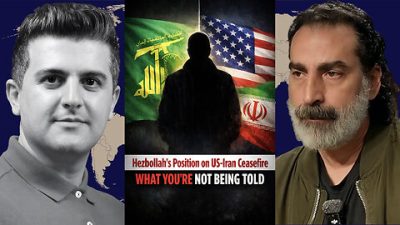
Laith Marouf: Hezbollah’s position on US-Iran ceasefire
or go to
Aletho News Archives – Video-Images
From the Archives
The Dirty Little Secret behind the “Global Terrorism Index”
The Omission of Israeli Terrorism in the Occupied Palestinian Territories
By Karin Brothers | Global Research | December 6, 2014
… The Israeli settlements — all of which are illegal – have been identified as a major impediment to peace. The refusal of a major “global” terrorism report to name the Israeli settlers as one of the groups most responsible for terrorism not only misrepresents a major source of regional violence but exposes the Global Terrorism Index as a propaganda tool that supports a U.S. agenda.
In recent years, governments have been attempting to thwart terrorism by blocking supportive fund-raising. When it comes to Israeli settlements, however, the US and Canada actually encourage fund-raising by giving organizations (such as Christian Friends of Israeli Communities (CFOIC) and the Jewish National Fund) financial support in the form of donor tax-deductions.
Charities which provide funds for the Israeli settlements should be regarded as terror-financing organizations. They should not only lose their tax-deductible status, but they should be banned because they support the violation of international humanitarian law. The terror-financing laws that are being strictly enforced for Muslim charities should be applied to Christian and Jewish charities as well. … Read full article
Blog Roll
 Aletho News
- Ukraine Sea Drone Fired From Libya Hit Russian Tanker in Mediterranean
- IRGC: Iranian forces launched no attacks during ceasefire hours
- Trump Administration Moves To Automate U.S. Military Draft Registration
- Spain orders reopening of Tehran embassy, condemns Israel’s carpet bombing of Lebanon
- Israel faces ‘unsustainable’ strategic crisis following 40-day war against Iran: Analyst
- Iran restricts Hormuz access to 15 vessels per day under ceasefire terms: Report
- The ‘Opposition Party’ Has Done Nothing to Stop the Iran War and Much to Goad Trump Into Continuing It
- Moscow backs Tehran on status of Lebanon in US-Iran deal
- How UK Regulator Ofcom Quietly Bypassed International Law to Police American Speech
- The Black Cube Files: How Former Mossad Operatives Flipped a Nation
- If Americans Knew
- Amnesty: Urgent – Protect Lebanese civilians from brutal escalation in Israeli attacks
- Is The War Against Iran Over?
- Inside the Israeli army’s propaganda wing
- Hundreds of Gaza Amputees Stranded in Legal Limbo
- The gallows law: Israel moves toward executing Palestinian children
- Tucker Carlson: The Path to Peace requires ending ‘special alliance’ with Israel
- This is ceasefire? Israel’s biggest massacre yet in Lebanon, another journalist killed in Gaza – Daily Update
- Tucker Carlson on Israel: This Is the Behavior of an Ally? Really?
- Gazans face a triple crisis: severe shortages of water and bread, healthcare in tatters
- NY Times reports how Netanyahu took the US into Iran War
- No Tricks Zone
- An Inconvenient Tree: Uncovered In Alps… Europe Much Warmer Than Today 6000 Years Ago
- New Study Reports A 60% Slowdown In Greenland’s Ice Loss Rate In The Last Decade
- Low Intensity Tornado Wrecks Major Solar Farm, Creating A Potential Toxic Dump
- New Study Finds Warming Saves Lives…Cold Temperatures 12 Times More Deadly Than Excess Heat
- German Science Blog Accuses PIK Climate Institute Of Hallucinating Climate Tipping Points
- Devastating Assessment Of Comirnaty Vaccine By Former Senior Pfizer Europe Toxicologist
- New Study: CO2 Is ‘Effectively Negligible’ As An Explanatory Climate Change Factor Since 2000
- Former Pfizer Toxicologist Dr. Helmut Sterz Tells Bundestag Hearing Pfizer Vaccine Should Have Never Been Approved
- Energy Expert: Germany’s Nuclear Phaseout Was A “500 Billion Euro Mistake”
- New Research: South Australia’s Mid-Holocene Sea Surface Temperatures Were 4°C Warmer Than Today
 Aletho News