British Labour Party leader Jeremy Corbyn has retained the leadership of the opposition political party after a bruising campaign.
Corbyn, who was initially elected last year, took 62 percent of the vote, beating challenger Owen Smith on Saturday.
Surveys had indicated that Corbyn would easily defeat his challenger as he maintained widespread support of party members attracted by his socialist anti-austerity policies and “authentic” image.
On Wednesday, Corbyn urged for the party to unite behind his leadership. He reminded lawmakers that he has the support of rank-and-file members of the party and warned them not to challenge him again.
“We owe it to the millions of people Labour exists to represent to end the sniping and personal attacks, and work together for all those who depend on the election of a Labour government. Anything else would be destructive self-indulgence,” Corbyn said in a statement.
“All Labour Party members and MPs have a responsibility to work within the democracy of our party and respect the leadership of whoever is elected.”
The 67-year-old socialist and peace campaigner has shown little interest for Britain’s special relationship with the US and is opposed to nuclear weapons, including the costly Trident nuclear missile system that is maintained by the US.
Corbyn also is a critic of Israel and NATO. As member of the Palestine Solidarity Campaign, he invited members of the Hezbollah and Hamas resistance movements in 2009 to parliament where he called them “friends.”
By Jon Vale | The Independent | September 23, 2016
The Campaign Against Anti-semitism (CAA) has filed a formal complaint against Labour leader Jeremy Corbyn.
The group has taken action over a video posted on Mr Corbyn’s official Facebook and Twitter accounts.
In the video, Mr Corbyn’s supporters answer questions on topics they are “tired of hearing” about, which includes whether they promote anti-semitism.
The video has subsequently been deleted from social media.
The CAA said this is the latest in a long of line of incidents where Mr Corbyn and his supporters have failed to address anti-semitism. […]
The letter accuses Mr Corbyn of “committing acts that are grossly detrimental to the party, namely characterising Jewish people as dissembling and dishonest in their reporting of anti-semitism, and by using the influence and prestige of his office to disseminate and normalise that lie”.
It continues: “The allegation that Jews lie and deceive in order to further hidden agendas is an age-old anti-semitic trope.
“It has now been manifestly deployed by Mr Corbyn in his leadership campaign video.” … Full article
Manipulation of public perception has risen to a new level with the emergence of powerful social media. Facebook, Twitter and Google are multibillion dollar corporate giants hugely influencing public understanding. Social media campaigns include paid ‘boosting’ of Facebook posts, paid promotion of Tweets, and biased results from search engines. Marketing and advertising companies use social media to promote their clients. U.S. foreign policy managers hire these companies to influence public perception to support U.S. foreign policy goals. For example, Secretary of State Hillary Clinton made sure that Twitter was primed for street protests in Iran following the 2009 election. She insured that Twitter was ready to spread and manage news of protests following the election and strange killing of a young woman. (p 423, Hard Choices hardback).
The results of media manipulation can be seen in the widespread misunderstanding of the conflict in Syria. One element of propaganda around Syria is the demonization of the Syrian government and leadership. Influenced by the mainstream and much alternative media, most in the West do not know that Bashar al Assad is popular with most Syrians. There were three contestants in the Syrian presidential election of June 2014. Turnout was 73% of the registered voters, with 88% voting for Assad. In Beirut, the streets were clogged with tens of thousands of Syrian refugees marching through the city to vote at the Syrian Embassy. Hundreds of Syrian citizens from the USA and other western countries flew to Syria to vote because Syrian Embassies in Washington and other western capitals were shut down. While John Kerry was condemning the Syrian election as a “farce” before it had even happened, a marketing company known as The Syria Campaign waged a campaign to block knowledge of the Syrian election. Along with demonizing President Assad, they launched a campaign which led to Facebook censoring information about the Syrian election.
The Syria Campaign was created by a larger company named “Purpose”. According to their own website they “incubated” The Syria Campaign.
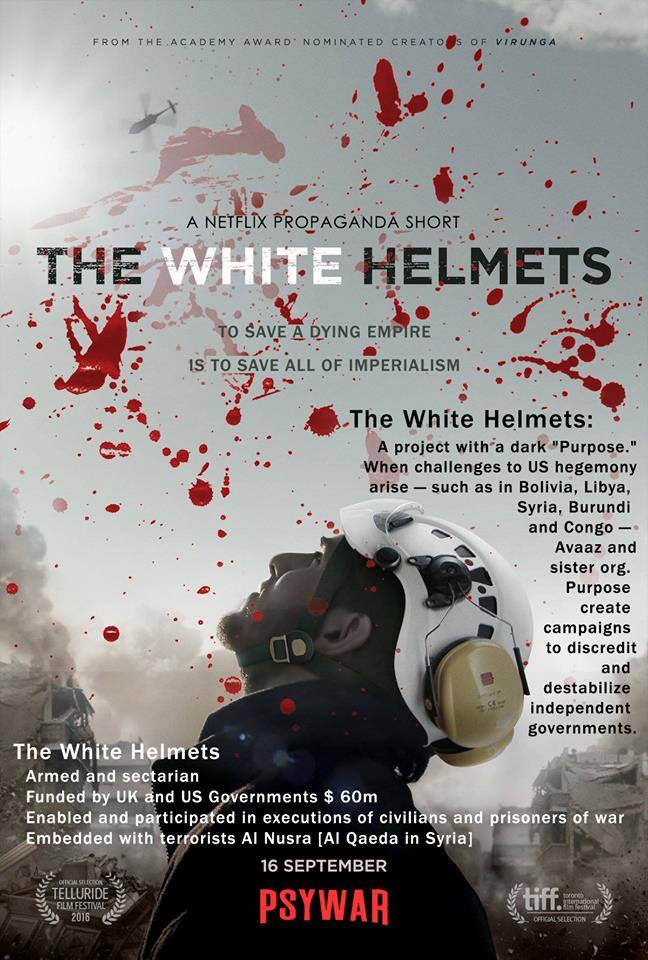
The major achievement of The Syria Campaign has been the branding and promotion of the “White Helmets”. The “White Helmets”, also known as “Syria Civil Defense”, began with a British military contractor, James LeMesurier, giving some rescue training to Syrians in Turkey. Funding was provided by the US and UK. They appropriated the name from a real Syria Civil Defense.
The “White Helmets” are marketed in the West as civilian volunteers doing rescue work. On 22 September 2016 it was announced that the Right Livelihood Award, the so called “Alternative Nobel Prize”, is being given to the US/UK created White Helmets “for their outstanding bravery, compassion and humanitarian engagement in rescuing civilians from the destruction of the Syrian civil war.”
The Right Livelihood organizers may come to regret their selection of the White Helmets because the group is not who they claim to be. In fact, the White Helmets are largely a propaganda tool promoting western intervention against Syria. Unlike a legitimate rescue organization such as the Red Cross or Red Crescent, the “White Helmets” only work in areas controlled by the armed opposition. As shown in this video, the White Helmets pick up the bodies of individuals executed by the terrorists, they claim to be unarmed but are not, and they falsely claim to be neutral. Many of the videos from AlQaeda/terrorist dominated areas of Syria have the “White Helmets” logo because the White Helmets work in alliance with them. This primarily is a media marketing tool to raise public support for continuing the support to the armed opposition as well as the demonization of the Syrian government.
The Rights Livelihood press release says the White Helmets “remain outspoken in calling for an end to hostilities in the country.” That is false. The White Helmets actively call for US/NATO intervention through a “No Fly Zone” which would begin with attacks and destruction of anti-aircraft positions. Taking over the skies above another country is an act of war as confirmed by US General Dempsey. The White Helmets have never criticized or called for the end of funding to extremist organizations including Nusra/AlQaeda. On the contrary, White Helmets is generally embedded with this organization which is defined as “terrorist” by even the USA. That is likely why the head of the White Helmets, Raed Saleh, was denied entry to the USA.
The foreign and marketing company origins of the White Helmets was exposed over one and a half years ago. Since then, Vanessa Beeley has revealed the organization in more depth in articles such as “Who Are the White Helmets?” and “War by Way of Deception“.
Despite these exposes, understanding of the White Helmets is limited. Many liberal and progressive people have uncritically accepted the propaganda and misinformation around Syria. Much of the progressive media has effectively blocked or censored critical examinations amid a flood of propaganda about “barrel bombs” dropped by the ‘brutal dictator” and his “regime”.
In the last week, Netflix started showing a 40 minute documentary movie about the “White Helmets”. It is actually a promotion video. A substantial portion of it takes place in Turkey where we see trainees in hotel rooms making impassioned phone calls to inquire about their family in Syria. The “family values” theme is evident throughout. It’s a good marketing angle, especially effective with females. The political message of the video is also clear: after a bombing attack “It’s the Russians …. they say they are fighting ISIS but they are targeting civilians”. The movie includes video previously promoted by the White Helmets such as the “Miracle Baby” rescue. It’s debatable whether this incident is real or staged. The video includes self promoting proclamations such as “You are real heroes”. While no doubt there are some real rescues in the midst of war, many of the videos purporting to show the heroes at work have an unrealistic and contrived look to them as revealed here.
“Alternative media” in the West has sadly echoed mainstream media regarding the Syria conflict. The result is that many progressive individuals and groups are confused or worse. For example, the activist group CodePink recently issued a media release promoting the Netflix White Helmets propaganda video.
The White Helmets video is produced by Grain Media and Violet Films/Ultra-Violet Consulting. The latter advertises itself as a marketing corporation specializing in social media management, grant writing, crowd building and campaign implementation. The only question is who paid them to produce this video.
There is growing resistance to this manipulation and deception. In response to a petition to give the Nobel Peace Prize to the White Helmets, there is a counter petition at Change.org. The Right Livelihood Awards have just been announced and there will soon be a petition demanding retraction of the award to the White Helmets.
The story of the White Helmets is principally a “feel good” hoax to manipulate public perception about the conflict in Syria and continue the drive for “regime change”. That’s why big money was paid to “Purpose” to “incubate” The Syria Campaign to brand and promote the White Helmets using Facebook, Twitter, etc. That’s why big money was paid to create a self-promotional documentary. The judges at Rights Livelihood were probably influenced by the documentary since critical examination of facts around Syria is so rare. It’s a sad commentary on the media. As Stephen Kinzer recently said,
“Coverage of the Syrian war will be remembered as one of the most shameful episodes in the history of the American press.”
UK Contractor
White Helmets and Nusra
White Helmets After Execution
PurposeIncubation The Syrian Campaign
Rick Sterling is a retired aerospace engineer who now does research/writing on international issues. He can be reached at rsterling1@gmail.com.
As an eye witness to the entire war in Syria, from March 2011 to present, I can state this was no revolution. I am an American citizen living permanently in Syria, which is my husband’s birthplace. I have been here 24 years.
A real revolution would have the support of the people, inside Syria, not Syrians living in Paris and London for the past 40 years. To have a real grassroots uprising, you need the support of the people living inside Syria, who would share your views.
If it had been a real uprising/revolution, the whole process could have taken 3-6 months, because the Army would have followed the will of the people, given the fact the Syrian Army is made up of Syrians of all ethnic and religious sects. The Syrian Army is a true representative of the Syrian population. If the population wanted the goals stated by the ‘protesters’, which was to establish Islamic law in Syria, and to abolish the current secular government, the Army would have eventually followed along, expressing the will of the people.
However, you had a small minority in the Syrian population who were for regime change, but this very small group was backed by USA, UK, NATO, EU, and the Arab Gulf Monarchies. Money talks, as we say in America.
Yes, Syria is home to many Radical Islamic ideology followers, as is UK, USA and Europe. However, their numbers are still in the minority. In a democracy, the majority rule. The Syrian opposition does include non-Islamist political people, mainly communists and other secular thinkers, but those people have never held a gun, and have never advocated violence, destruction or armed revolution. It has been strictly the Radical Islamic ideology followers who have supported armed rebellion. Because their numbers were, and are still, so small comparing to the rest of the 20 million Syrians, they never had a chance to win, and can not win on the ground. Their ‘revolution’ has just been an attack on the unarmed civilian population who do not agree with them.
We are hoping that a peaceful negotiated settlement, with positive changes and reforms, can be made through joint talks between the UN, and both sides of the Syrian conflict. This is our chance for peace.
Finally, this morning Sept 14, 2016 on the BBC they announced a UK Members of Parliament commission, studying the role of the UK in the war in Libya, had concluded the UK role was wrong, shameful and “opportunistic, and for regime change”. Meaning, the UK under PM Cameron should not have participated in the NATO and US attack on Libya, which was not a humanitarian effort, but an ‘opportunistic attack for regime change’, as stated on BBC. This is the same story of Syria. Perhaps in 5 years time, we may watch BBC announcing a UK Parliament commission, studying the UK role in the death and destruction in Syria.
My question to myself, and all others: Why can’t we study these types of decisions BEFORE we commit to destroying lives and countries abroad? I asked this question out-loud at the breakfast table this morning, and my son who is an MBA graduate, answered back, “Mom, because UK always takes their orders from USA, regardless of the consequences”.
That view should be the focus of every UK citizen and politician, on how UK can stand alone, and make decisions in the future which benefit UK, and not follow USA blindly, down a road of regret.
Lilly Martin is an American citizen, living permanently in Syria for 24 years. She is a retired medical professional, and now a homemaker and activist-writer during the Syrian conflict. Her son is the journalist Steven Sahiounie. She lost her home to terrorists in Kessab on March 21, 2014.
Military reports show a list of potentially explosive errors including brake failures, fuel leaks and overheated engines have occurred during operations to move nuclear materials by road through Scotland.
The Ministry of Defence (MoD) reports were published by the Ferret investigative journalism team and add a further 43 incidents to the list of known failures and near misses since 2000, bringing the total to 180.
The new releases cover incidents during road moves of nuclear convoys between January 2013 and July 2016.
One incident, according to the MoD, involved a “minor road traffic collision involving two convoy vehicles” which resulted in “marks to [the] bumper on one vehicle.”
Another happened as a vehicle left an unidentified military base. It describes how the vehicle made “contact with a parked civilian vehicle.”
In November 2014 a warhead carrier broke down due to a “defective interlock,” stopping the convoy.
A second carrier lost power as it was leaving a military installation and had to be returned to base in September 2015.
A convoy had to be delayed in January 2016 because its departure route had mistakenly been planned to coincide with “the end of a local football match with fans leaving ground.”
Scottish National Party (SNP) defense spokesman Brendan O’Hara was particularly scathing about the revelations, telling the Ferret: “This is utterly chilling.”
“One incident involving these deadly cargoes is one more than is acceptable – but 43 in three years is plain shocking,” he said.
“These figures illustrate very starkly that communities are potentially being put at risk because of breakdowns and safety concerns. People are being kept in the dark, and it’s imperative that communities know that they are safe.”
An MoD spokesman defended the military’s record on nuclear convoys.
“All operational and engineering incidents are reported, however minor,” he said.
“In over 50 years of transporting defense nuclear material in the UK, there has never been an incident that has posed any radiation hazard to the public or to the environment.”
“Viva Palestina” is an enduring chant along with “Long Live Palestine” and “Long Live Gaza”, all of which are often used by human rights activists and others who want to show their support and goodwill for the long life and well-being of the state and its people. However, using such slogans and messages of solidarity could soon become a hate crime in Scotland, a nation which has often been praised for its refusal to give unconditional support to Israel and its brutal military occupation of Palestine.
To the astonishment of legal observers and human rights activists, a landmark trial is set to go ahead in Aberdeen after Scottish Palestine Solidarity Campaign (SPSC) member Alister Coutts, 56, was charged with “acting in a racially aggravated manner with intent to cause distress and alarm”. His “crime” was to utter “Viva Palestina” next to the Jericho Cosmetics stall in the city’s Union Square shopping mall.
His arrest, charge and impending court appearance has now fuelled speculation that pro-Israel Zionist groups in Scotland are exerting undue pressure on the authorities to “get tough” with SPSC and other Palestinian-supporting groups. Following an initial crime investigation the police will send a report to the local Procurator Fiscal, who will consider the content and decide whether to take any further action.
While such decisions are said to be taken in the public interest, the disclosure of a host of secret email exchanges between the Crown Office and Procurator Fiscal service on one hand, and Zionist organisations on the other, has alarmed SPSC, which says that they reveal the existence of a “cosy relationship” between the public prosecutor and the pro-Israel lobby in Scotland. The emails came to light after a Freedom of Information request was made to the Crown Office and Procurator Fiscal Service in Edinburgh. SPSC officials are now scrutinising the content of the dossier before making public its findings.
“It is extremely sinister for anyone to be charged with expressing the idea of saying ‘long live’ to a community,” commented SPSC co-founder Mick Napier. “The charge therefore seems to have a patina of wishing harm to the Palestinian people. If so, this is certainly breaking new ground in the Scottish legal system; that by saying ‘Viva Palestina’ you are considered to be attacking someone.”
After Coutts had said “Viva Palestina” a policeman arrived and ordered him to leave the shopping mall, a request which, his defence team will argue, was in itself illegal. As soon as he stepped outside, he was handcuffed, held for seven hours and charged.
“He is now deemed to be a racist for saying Viva Palestina in the vicinity of a cosmetics stall,” Napier pointed out. “In the meantime, we are examining what some might regard as the overly-chummy emails.”
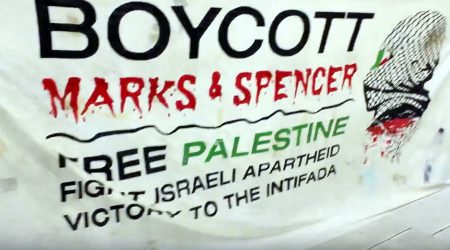
The trial, expected to commence next month, comes amidst the backdrop of a nationwide campaign by SPSC against the Israeli-linked cosmetics firm Jericho SkinCare. The group accuses the firm of using minerals extracted from the Dead Sea on the coast of the illegally-occupied West Bank, which is Palestinian territory. SPSC notes that the extraction and commercialisation of resources from an occupied territory breaches UN conventions and it has launched a boycott campaign against a number of cosmetic firms linked to the practice and is lobbying for them to be removed from Scottish shopping centres.
According to Canadians for Justice and Peace in the Middle East (CJPME), Dead Sea products are linked closely to the commercial viability of Israel’s illegal settlements and are targeted as part of the global boycott movement. The organisation has produced a fact sheet outlining the legal position. Jericho SkinCare’s website states that the company’s products are “based on Dead Sea minerals”.
A Crown Office spokesman said that he was unable to comment on ongoing criminal cases [sic] but added: “The Crown Office and Procurator Fiscal Service corresponds with many community and faith groups, particularly in relation to the impact of hate crime in their communities. All prosecution decisions are taken following an independent and thorough assessment of the available evidence.”
Freshly purged from Labour, CHARLEY ALLAN calls for unity and calm at this weekend’s party conference opening
SO, I’ve been purged. My services to the Labour Party are no longer required. To all intents and purposes, I am an ex-member.
In an email on Wednesday evening, general secretary Iain McNicol informed me that I was in administrative suspension because of “comments you have made on social media, including between 10 April and 8 July 2016.”
I had half expected this. After reading and writing about so many members who had fallen foul of Labour’s retrospective “rudeness rules,” I knew a few of my own tweets might be flagged up — not to mention my weekly column.
It’s surely no coincidence that my ballot was already over three weeks late, despite multiple assurances from Labour that this was due to “admin error” and not because I was on any potential purge list.
Ironically, my re-reissued vote finally arrived by email on Wednesday afternoon, less than three hours before I received my suspension — the democratic equivalent of being dumped by text message.
I quickly discovered online that this was happening to lots of people, in what looks like a last-minute mega-purge for the final week of voting.
Conspiracies sprung up that Electoral Reform Services, which is responsible for this election, was telling Labour how everyone had voted, but the firm denies this — and to be fair most people make it pretty clear who they support online.
But even without the whiff of ballot-fishing, there’s something plain wrong about taking away a vote once it’s already been cast.
Labour’s had plenty of time to decide whether I’m worthy of membership. Disenfranchising me 10 days before the result simply adds insult to injury.
Going from the dates provided, it appears that my crimes include pointing out that Tony Blair had “hijacked” Labour in the past, calling non-specific MPs “traitors” and referring to “apartheid Israel” in both a tweet on April 10 and this column the next day.
While in hindsight I might have overused the T-word, especially on June 28 — aka “Coupsday Tuesday” — my Twitter comrade Angela McEvoy wrote it just once and still found herself suspended at the weekend. And the MPs themselves had taunted us as “Trots, rabble, dogs” for daring to rally around Jeremy Corbyn.
On Israel, I should’ve listened to myself — the piece in question warns: “Maybe I’ll be kicked out of Labour for saying all this.”
But the party’s rulebook makes it clear that members can’t be disciplined for “the mere holding or expression of beliefs or opinions,” so what else is going on?
My offending tweet took issue with former donor Michael Foster’s column that day in the Mail on Sunday, in which he accused Corbyn’s brother Piers of being a racist.
Foster, who failed in his High Court bid to keep Corbyn off the leadership ballot and was recently suspended for his “nazi stormtroopers” attack, objected to Piers tweeting: “Zionists can’t cope with anyone supporting rights for Palestine.”
The former showbiz agent’s logic went: “Try replacing the words ‘Zionists’ and ‘Palestine’ with ‘Blacks’ and ‘White South Africa’.”
OK then — “Blacks can’t cope with anyone supporting rights for White South Africa.”
Apart from not making sense, this inverts the correct analogy. When Jimmy Carter talks about apartheid in the Occupied Territories, he means that Palestinians suffer intolerable institutional discrimination by Israelis, not the other way round.
“White South Africa can’t cope with anyone supporting rights for Blacks” is much closer to the truth, as illustrated by the iconic 1984 photograph of a newly elected Corbyn being arrested in Trafalgar Square.
Maybe it was my hashtag #AntizionismIsNotAntisemitic that caused offence, in which case the piece itself should see me banned for life. Even so, they’ve had five months to let me know I’m not welcome.
In truth, the purge is out of control, but it’s heartwarming to see local Labour comrades — including my MP and councillors — rally round, as well as lovely Corbynistas online, many of whom are victims of the mass cull themselves.
As in other cases, prominent Corbyn-sceptics have shown solidarity in public, putting pressure on Owen “big M” Smith to speak out against the suspensions.
But the man himself seems more interested in tacitly defending the purge by fuelling suspicions that Momentum would be banned under his leadership, despite previous pleas to address its rallies.
“There is nothing comradely about setting up a party within a party,” Smith declared on Friday night, ignoring the Pfizer-funded influence of Blairite faction Progress.
“Momentum in Brighton and Liverpool — some of them exactly the same people as were in Militant all those years ago — organising to deselect a Labour MP,” he complained.
Calling for deselection is the new master-crime, yet everyone conveniently forgets Blair’s “show trials” against sitting left Labour MPs who were replaced by high-profile Progress members.
On Thursday, author Paul Mason was accused of bullying Labour Co-operative MP for Redcar Anna Turley by tweeting “deselect asap” in response to her defence of Tory ex-minister Anna Soubry.
Turley was one of several Smith-supporting MPs who tweeted their glee at Soubry’s spiteful attack on Question Time fellow panelist John McDonnell.
Soubry claimed female Labour MPs were “so frightened, humiliated, almost terrorised by Mr McDonnell and his gang they will leave politics,” adding that the shadow chancellor himself was “a nasty piece of work.”
Turley, who called Unite leader Len McCluskey an “arsehole” on Twitter in July but still has her vote, said Soubry “spoke the truth tonight” — prompting Mason to call for her deselection.
That’s not bullying or abuse, it’s part of the democratic process. If local members want to be represented by a different candidate at the next election, they have every right to make that decision, as does Mason to express his opinion.
What’s happened to the Labour Party — when eye-rolling isn’t allowed during debates, there’s a blanket ban on branch meetings and whole districts are suspended on trumped-up charges?
Loyal lifelong Labour members and supporters have been brought to tears by the smears, while the right’s plan is clearer than ever — provoke chaos at this weekend’s party conference opening.
However the vote goes, Corbynistas have to keep calm on Saturday.
Let’s just say the purge works and Smith steals this election — we would need an instant injunction and then ultimately be at the mercy of the Supreme Court, which wouldn’t look too kindly on a riot.
It’s far more likely that Corbyn will triumph, but his supporters are still outnumbered at conference — and under no circumstances should they be goaded by any angry, bitter and possibly drunk Owenites who don’t care about party unity and are looking to cause trouble.
Any violence in Liverpool, no matter who’s behind it, will be blamed on Momentum — and the right will use this as a pretext to proscribe the group and all its members.
We must also watch out for provocateurs in our own ranks, because spy cops aren’t only interested in trade unionists and environmental activists.
The world is watching and we can’t let Corbyn down.
Seems our politicians, on both sides of the Atlantic, are under instructions to drop the J-word from their vocabulary. I mean J-for-Justice, conspicuously missing from any discussion about Middle East peace and, more specifically, an end to the hell in the Holy Land.
Only the other day at Westminster a parliamentary question was put to the Secretary of State for International Development asking what assessment had been made of the effectiveness and value for money of the UK’s aid assistance to the Palestinian Territories.
It was answered by Rory Stewart who repeated the tired mantra: “The UK remains committed in its support for a negotiated settlement leading to a safe and secure Israel living alongside a viable and sovereign Palestinian state.” Justice doesn’t come into it, and the Palestinians only merit a viable state while we must ensure Israel enjoys the added comfort of safety and security.
Here in the UK Her Majesty’s Opposition – the Labour Party – is still in self-desruct mode waging a civil war instead of doing its official job of holding the Government to account at this critical time. Jeremy Corbyn, elected leader only a year ago and given a rough ride by most of his MPs ever since, is facing a challenge by Owen Smith. The result is due in a few days. In the meantime Smith has been questioned on his views about the Israel-Palestine conflict and claims to be a Friend of Palestine, stating:
I strongly support a viable peace process based on internationally recognised (1967) borders…. I voted to recognise a Palestinian state in 2014 as an essential step towards to realising a two-state solution. I recognise that, ultimately, this can only be achieved by both sides sitting down together, with equal status, negotiating in good faith and making some difficult compromises. Peace is not something that can be imposed on either the Israelis or Palestinians by force or diktat…. I am not convinced that a boycott of goods from Israel would help to achieve a negotiated peace settlement.
OK, but how is “equal status” to be achieved when one party, not noted for its “good faith” and armed to the teeth, has a gun to the other’s head and illegally occupies the land? There can be no peace without justice, Owen. And, in this case, there can be no justice without the enforcement of international law and UN resolutions. The time for negotiation is after Israel withdraws behind the internationally-recognised 1967 (armistice) lines, not before. And until the international community is prepared to force Israel to toe the line BDS is a perfectly peaceful and legitimate means of persuasion by an increasingly disgusted civil society.
Denied their homes
Then there’s the thorny issue of the Right of Return. Both sides claim it – the Jews after being evicted by the Romans in 135AD and the Palestinians after being forced out by Jewish terror and illegal occupation since 1947 (although Israel nowadays pretends most of them left vuluntarily).
Jews can return even if they or their ancestors were never there in the first place, while Palestinians cannot even if they still have the deeds and keys to their properties and even though their right of return is guaranteed by international law and a raft of humanitarian conventions. Palestinians have a claim to citizenship, financial compensation and in some cases their former homes in what is today called Israel. They also claim self-determination, sovereignty over Jerusalem and the right to establish an independent Palestinian state. The Israelis disagree, as this would spoil the exclusive Jewish character of their new state. The world’s solemn guarantee to the Palestinians has so far proved worthless.
It is sensible that any right of return only applies within a reasonably short time after the circumstances causing unjust exile have ceased. Most Jews expelled from Palestine by the Romans chose not to return when the Roman Empire collapsed and it became safe to go back. No civil or biblical law allows them to suddenly claim such a right 1600 years and 70 generations later. Nor does the myth that God gave them the land of Palestine exclusively and in perpetuity wash. So the Israelis have done what Israelis do and written their own special law… and enforced it at the Palestinians’ expense.
But the right of Palestinians forced to flee into one of the numerous refugee camps has not expired. Returning to their homes is key to a just peace but we hear little about it these days. The UN charts the organisation’s high-sounding but always feeble attempts to deal with the many injustices… how, in 1974, the General Assembly reaffirmed the “inalienable rights” of the Palestinian people to “self-determination, national independence and sovereignty, and to return to their lands and homes”… how, the following year, the General Assembly established the Committee on the Exercise of the Inalienable Rights of the Palestinian People… how, in 1983, the International Conference on the Question of Palestine adopted the Geneva Declaration to oppose and reject “the establishment of settlements in the occupied territory and actions taken by Israel to change the status of Jerusalem”.
Article 49 of the Fourth Geneva Convention makes it clear that an occupying power shall not deport or transfer parts of its own civilian population into the territory it occupies. The International Criminal Court, set up in 1998, regards such practice as a war crime. But because Israel, along with Iraq and the US, didn’t sign up to the ICC it has felt free to carry on with its squatter programme.
Let’s not call them settlements. Genuine settlers come in friendship and with consent. But Israeli settlers are mostly hardline religious squatters on stolen land who support their own government’s use of violence against Palestinian civilians. Their settlements are usually fortified colonies with army back-up. They may appear heroic in Israeli eyes but are offensive to the Palestinians and a breach of international understanding of what constitutes acceptable behaviour.
Buying time for more of the same
The chances of Israel doing the decent thing without coercion is vanishingly small. According to historian Benny Morris no mainstream Zionist leader has been able to conceive of future co-existence without a clear physical separation between the two peoples. David Ben-Gurion, Israel’s first prime minister, is reported to have said: “With compulsory transfer we have a vast area (for settlement)… I support compulsory transfer. I don’t see anything immoral in it.”
On another occasion he remarked: “If I were an Arab leader I would never make terms with Israel. We have taken their country. Sure, God promised it to us, but what does that matter to them? Our God is not theirs. We come from Israel, it is true, but 2,000 years ago, and what is that to them? There has been anti-Semitism, the Nazis, Hitler, Auschwitz, but was that their fault? They only see one thing: we have come here and stolen their country.”
General Moshe Dayan, hero of the Six Day War (1967), made it known to Palestinians in the Occupied Territories that “you shall continue to live like dogs, and whoever wishes, may leave, and we shall see where this process will lead.” So heroic.
“When we have settled the land, all the Arabs will be able to do about it will be to scurry around like drugged cockroaches in a bottle.” So said the then chief of staff of the Israeli Defence Force, Rafael Eitan, in 1983.
That’s the kind of mentality the Palestinians are up against.
As things stand Israel has nearly succeeded in its long-term goal of making the Occupation permanent, thanks to the international community’s pathetic failure to force Israel to abandon its evil and unlawful plan. Any proposed solution, says ICAHD (Israeli Committee Against House Demolitions), must now answer these questions:
Will it really end the Occupation, or is it once again merely a subtle cover for control?
Does it offer a just and sustainable peace, or merely an imposed and false quiet?
Does it offer a Palestinian state that is territorially, politically and economically viable, or merely a prison-state?
Does it effectively address the refugee issue?
Does it offer regional security and development?
There is no indication on the ground that Israel is willing to hand back enough land and relinquish enough control for a truly viable Palestinian state to emerge. Quite the opposite. And the US’s latest gift to Israel of $38 billion in military aid allows the Zionists to “forever avoid a meaningful peace deal”, as Grant F Smith says.
So how can a sensible two-state solution be possible? And isn’t all this idle talk of two states and more designed-to-fail negotiations simply designed to buy time for the regime in Tel Aviv to carry on occupying and annexing until they have their ‘Greater Israel’ and provoke Armageddon?
Has Netflix revealed itself to be another deep state conscript? The recent Syria White Helmet promotional movie has caused uproar among people awakened to the US, UK state and intelligence agency involvement in this pseudo ‘first responder’ faux NGO outfit that has infiltrated Syria on behalf of its funders and donors based in the US and NATO neocolonialist “regime change” command centres.
Funded to the tune of over $60 million by the US, UK and EU member states, these mercenaries in beige clothing have a base of operations in Turkey, but appear to operate exclusively in terrorist-held zones in Syria, and can also be seen running ‘mop-up’ operations for Al Nusra Front and other terrorist fighting groups.
The following are a few examples of the comments being left on the Netflix trailer for their White Helmets “documentary”:
“Dear Netflix: STOP SUPPORTING TERRORISTS. The so called White Helmets are a transparent construct of NATO to take over Syria by stealth in the guise of “do gooders”. NO serious journalists who have been to Syria believe they are doing what this film suggests. Only journalists too lazy to think for themselves believe this. NO locals in Syria have seen these white Helmets in their white helmets – except when their very expensive cameras turn up to film them for propaganda.
And shame on any news outlet who has bought any of that footage and bought their story hook line and sinker without investigating their known connections to Al Nusra and Al Qaeda.Syrian men trying to really save children are hindered from doing so by inhumane sanctions and by the White Helmets blocking roads and villages. Local heroes have no supplies, they do not have a 90 million pound budget to get food, and first aid or digging equipment, yet nobody makes a film about these people… the real Syrian people.
Local people say these are mercenaries who wear ordinary clothes, are not Syrian, and are committing atrocities and keeping food and supplies from reaching cities and villages. Paid terrorists loaded with weapons and supplies and a 90 million pound budget from EU and NATO countries who have an obsession with illegally deposing an honestly elected president of a nation state. It is another way to take over a regime… without using bombs.. by stealth, this is a Trojan Horse and these men are not heroes at all but murderers and thieves. ASK THE PEOPLE OF SYRIA. GO TO SYRIA and see for yourself. Do not just use footage made by terrorists and spread it all over the world when it is the opposite of the truth.”
“In Aleppo, the most important thing to remember is that all life is precious”. So precious that the White Helmets are ready to take the dead bodies away after Al-Qaeda executes them, while the camera is still rolling!!”
“When the saint go marching in”, White Helmets are not saints, they are terrorists. When not in front of a camera, they take off their white helmets and strap on their guns.”
“The white helmets are a media blitz project created by the US & UK in which they received monies from the state department & billionaires who made their fortune in the oil and gas industry.”
21WIRE will be bringing you more detailed reports on the Soros funding of the Netflix operation and of course further information on the REAL Syria Civil Defence that journalist Vanessa Beeley has recently met with and interviewed in Syria – in Aleppo, Lattakia, Tartous and the Head Quarters in Damascus.
Here is an excellent alternative to the Netflix official trailer made by Steve Ezzeddine for Hands Off Syria, Sydney. Watch:
For a further reading on the White Helmets and their role in the Dirty War on Syria read 21st Century Wire’s comprehensive compilation of the most important investigations into NATO’s latest fifth column creation: Who are the Syria White Helmets
Iran says it has been paid for selling natural gas from a field that it jointly owns with BP in the North Sea but the payments cannot be accessed due to sanctions.
Ali Kardor, the managing director of the National Iranian Oil Company (NIOC), was quoted by the media as saying that the revenues obtained from selling Iran’s share of the products of Rhum gas field have been deposited into an overseas NIOC account, stressing however that the same account is currently frozen.
Kardor added that Iran is currently negotiating with Britain to unfreeze the account which was established at a British bank before the 1979 Islamic Revolution after Iran and BP signed a deal to jointly invest in Rhum field.
The field started producing 190 million cubic feet of natural gas daily in 2005. However, the British government ordered it shut down in 2010 as a result of sanctions against Iran.
Production from the field resumed in 2013 and is presently supporting about five percent of the gas needs of Britain.
In September 2015, Iran’s Deputy Petroleum Minister for International and Commerce Affairs Amir-Hossein Zamaninia told reporters that UK’s Chargé d’Affaires to Iran Ajay Sharma had told him London would pay Iran its share of revenues from Rhum field after the removal of sanctions against Iran.
Zamaninia also discussed the issue with UK’s trade envoy to Iran and chairman of the British-Iranian Chamber of Commerce Lord Norman Lamont this past April. He told reporters that Britain had pledged to remove the barriers on the way of Iran’s access to revenues made from sales of natural gas from the Rhum gas field.
Israel’s Public Security Minister Gilad Erdan is in London this week meeting British officials hoping to agree on a joint plan to tackle Boycott, Divestment and Sanctions (BDS) activism in the UK.
The Likud politician has recently been made responsible for a new task force launched to tackle the movement, which calls for the boycott of Israeli goods in protest against the illegal settlement of Palestinian land.
“Great Britain is the world center of the anti-Israel BDS campaign,” Erdan claimed ahead of his visit.
BDS supporters “would have no rest” under his watch and should “pay the price” for their actions.
In February, a new law brought in by the Tory government banned public bodies from supporting BDS initiatives, arguing that the actions undermined “community cohesion” and “Britain’s economic and international security.”
The policy was enforced on local authorities without a parliamentary vote.
“I’m going [to Britain] to battle the boycott and delegitimization in every arena, and to discuss with members of the British government – which is also committed to fighting boycotts – ways to strengthen our cooperation against the anti-Semitic boycott campaign,” Erdan told the Jerusalem Post.
“I will meet with government officials and law enforcement in order to form a front of democratic countries against the worldwide threat, which includes targeted action against incitement on the Internet.”
His talks with Communities and Local Government Minister Sajid Javid were condemned by the BDS movement and pro-Palestinian campaigners.
“Mr Erdan’s visit to London raises some serious questions about the UK’s relationship with Israel and its complicity in Israel’s violations of Palestinian rights and international law,” War on Want senior militarism and security campaigner Ryvka Barnard said.
“Erdan’s sinister talk of human rights defenders having to ‘pay the price’ for their actions is a dangerous incitement to violence. The UK government has a serious case to answer when it rolls out the red carpet to someone whose threatening behaviour is endangering the lives of human rights defenders.”
Israel resorting to ‘black ops’ tactics
Veteran Israeli intelligence analyst Yossi Melman has described his country’s efforts to eliminate BDS as something akin to military operations.
Writing for the daily Maariv last weekend, Melman said Erdan’s ministry is leading “defamation campaigns, harassment and threats to the lives of activists” in a way more similar to “black ops” or “special operations” than an intelligence-handling ministry.
Israel’s Public Security and Strategic Affairs Ministry director general Sima Vaknin-Gil has also recently said she wants to “build a community of warriors” to resist campaigns like BDS.
The ministry’s most recent recruitment push has been fully classified, with the role of its 25 new employees hidden from Israeli taxpayers and the international community.
It is also unclear how much of the department’s large budget has been allocated to anti-BDS work.
We normally think of colonizers as large countries, and the colonized as smaller and weaker nations. But this is not always the case. Colonization does not require occupation. It merely requires the subjugation of the colonized. With ambition, superior information and calculation, and the right mindset, smaller nations can (and have in the past) colonized and dominated larger and nominally more powerful countries.
India was successfully colonized by tiny Britain in the 18th century. The vehicle for colonization was the East India Company. It was only after the Indian mutiny that Britain acted directly and sent in troops to establish the British Raj. For the next 200 years India was drained of its wealth, its economy was restructured to support England’s needs and global ambitions, and its people militarized to fight and die on behalf of the British crown. The Indian leaders who remained were willing participants in this venture; those who felt otherwise were destroyed or marginalized.
In a similar vein, Israel today is in the process of colonizing the United States, which is vital to its global projection and exercise of power. The steps Israel is taking are visible to all (as was the case with British designs on India) and yet it is remarkably difficult to connect the dots while such a takeover is in process. Or, to do anything about it.
Colonization does not mean total control of everything
It means total control of what matters. The British were interested in Indian wealth, and a standing army of Indians willing to die for their wars. They couldn’t care less about India’s internal petty politics that did not directly or indirectly impact their mission. An effective “divide and conquer” strategy pit Indians against each other and discouraged any kind of coordinated response, or sedition. The British leveraged their “outsider advantage” to objectively collect data with which to calculate and coordinate which Indian princes to support in battles, and which to connive with. Like pieces on a chessboard, Indian leaders exhausted themselves through internal battles, and were prevailed to seek cover provided by the British. Small amounts of leverage can change outcomes (as the Israeli lobby AIPAC has shown, in its path to dominating Congress and regional/local US politics), and over the years the British were able control and align India to the British crown. Less than 10,000 English controlled colonial India, which at that time had a population of 300 million.
It is instructive to note that while there were relatively few white Englishmen, a class of local “brown sahibs” was developed, to actually run things. This elite class was educated in English ways, and rewarded monetarily and through social stature. Britain was too small a country to ultimately matter by itself, but by leveraging India the English could pursue their global ambitions. India was the “Jewel in the (British) Crown”.
Today, Israel has effective control of US policy in the Mideast, and similar goals. Much has already been written about Israel’s control of Congress. Israel is now edging towards control over the US Executive Branch, with both presidential candidates supported by billionaires whose #1 agenda is Israel (Saban and Adelson). The Supreme Court will be one-third Jewish, and justices have community ties and families. As Israel demonstrated through its successful intimidation of Judge Goldstone, jurists are human and everyone has their price.
Israel’s “occupation force” in the US has long included AIPAC as well as the dense network of community organizations at the State and local levels. Through relationships that have been developed over years and with unlimited funds at their disposal, the “Israel Lobby” ensures that votes go the right way, and that opponents are squashed when Israel demands unity. In 2003 at the onset of George Bush’s Iraq war this occupation force was multiplied through the inclusion of Christian Zionists.
Critics of the Israel Lobby are marginalized by whatever means available, including being called anti-Semitic. The Lobby has been effective in securing massive aid packages for Israel even though Israel’s per-capita GDP exceeds that of several European nations. Israeli insiders permeate the US government, and it is US policy that there be “no light” between the countries so that where Israel is concerned there is no debate. Israel’s top priorities are the top priorities of the US. There are of course instances where this does not happen (such as, Iran) but the direction points to a tighter colonial noose in the years ahead.
The media matters: establishing beliefs and narratives
The colonizer must be a “Sacred Object” above criticism or objective review, and dangerous critics must be either destroyed or marginalized. No Englishman in India spoke of the mother country and its ways with anything other than reverence, even though during periods of the British Raj England was in turmoil. Within England there was a free press and active debate; but this was not permitted in India, about Britain. The only acceptable posture was that of reverence.
Today Israel has a free press, and it is easy to read translations of the Hebrew language press. Israeli commentators compare Netanyahu to Hitler, Israel is called a racist apartheid state based on evidence, and the extreme violence against and ongoing abuse of Palestinians is well documented. But, these same conversations are forbidden in the US. No newspaper would report them, nor are they permitted in polite company. Transgressors are labeled anti-Semitic, whether Jewish or not.
In the US today, boycotts are seen as a permitted non-violent form of free speech. Citizens have the right to boycott whatever they want from wherever they want without risk of penalty. The sole exception is Israel.
Exceptionalism
The British conquests were “for God and country”, and therefore justified. The British were superior, the natives inferior. This setup the moral justification for the mayhem wrought by the British as they colonized Asia and the Mideast. At that time, all men were not born equal, and it took the US Constitution to establish that self-evident fact.
Israel is seeking to revert to those days, by acting as though Arab lives are inferior, and (more recently) promoting Islamophobia to serve their Christian Zionism wing. In 2003, uber Zionist Bernard Lewis posed as “Arab expert” and advised president Bush that the only language Arabs understood was force. This helped to justify the attack on Iraq, as part of a neocon plan to “creatively destroy” the sovereign Arab states in Israel’s neighborhood, to facilitate Israel’s dominance. The Nazis at Nuremberg were shown greater respect than Saddam and his Ba’at leadership, and the contempt for Arabs was in full display.
Today, Israeli Jews are in the process of destroying Palestinian society and erasing Palestinian culture, with impunity. Churches and mosques are both being destroyed, though Israel would prefer to keep the spotlight on mosques, to fan a religious war between Islam on one side, and Christians and Jews on the other.
While the Israeli press records and debates Israel’s bad behavior, Americans are forbidden to publicly debate Israeli behavior critically.
Three Recent Examples:
1/ During the Congressional debate around the Iran deal president Obama had negotiated, Senator Chuck Schumer said he would vote “against”… not because of any independent analysis, but because this is what Netanyahu wanted. In other words, he publicly said that he would follow the Israeli prime ministers’ direction, over that of his own president. Because, as he said, he was “guardian of Israel”.
A sitting US senator proclaimed allegiance to a foreign country, and nobody asked him to resign!
2/ The Israeli Prime Minister addresses the full US Congress to lobby against the Iran nuclear deal. When the deal does go through, Israel demands more US aid! And, is likely to get it. One can try various definitions of “blackmail” to see which one fits.
The US president is impotent in dealing with Israel. The so-called “pro Israel lobby” effectively functions like an agent of Israel. The Israel lobby is playing the role of the East India Company, in Britain’s colonization of India.
3/ The Israel Lobby interferes massively in US foreign policy in the region. The “mainstream” media such as NYT spins events to reflect Israel’s views (bureau chiefs are typically Jewish and resident in Israel). The Iraq war cost $1 trillion+ and cost thousands of US lives, created ISIS, and was pushed by the Lobby. Israel benefits from the distraction.
The colonization of the US by Israel is becoming increasingly explicit. It is now increasingly seen as “normal” to have a double standard: one for Israel, another for the rest of the world. The boycott-Israel movement is an example of that: you can boycott anything or anyone, but not Israel. This is true power, and the face of colonization.
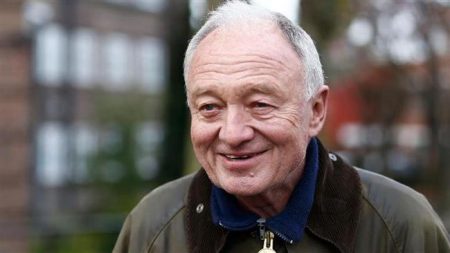
Britain’s Labour Party has come under pressure from a powerful Jewish lobby to expel former London mayor and MP Ken Livingstone, who says Adolf Hitler supported Zionism.
The British Jews organization made the call on Monday, shortly after Livingstone’s interview with the BBC, where he doubled down on his remarks about Hitler’s support for Zionism.
“During the 1930s, Hitler collaborated with the Zionists and supported them because he believed that a solution to his problem — the Jews — was that they should all move to Palestine,” the veteran MP told BBC radio.
Livingstone told the radio show that expelling him would be “very difficult” as he has the evidence needed to back the statement.
The comments revived a controversy from April, where he made the same remarks on the same radio show and was subsequently suspended by party leader Jeremy Corbyn.
“After I did the interview with you and I got suspended, I couldn’t walk down the street for people stopping me and saying ‘we know what you said is true – don’t give in to them,'” Livingstone said. “It’s going to be very difficult for them to expel me from the Labour Party when I’ve got this whole sheaf of documents and papers which shows that what I said was true.”
In its Monday statement, the British Jews blasted Livingstone for attempting to “rewrite history.”
“Every day that Labour does not expel him is a stain on the party,” the lobby’s Board of Deputies Vice President Marie van der Zyl said.
The Israeli regime was illegally established in 1948, when it occupied Palestinian land along with expanses of other Arab territories during full-fledged military operations. The occupied lands also include Lebanon’s Shebaa Farms and Syria’s Golan Heights.
In 1967, it occupied the Palestinian territories of the West Bank, including East Jerusalem al-Quds, and the Gaza Strip. It later annexed the West Bank and East al-Quds in a move never recognized by the international community.
“The creation of the state of Israel was fundamentally wrong, because there had been a Palestinian community there for 2,000 years,” Livingstone told Arabic TV station al-Ghad al-Arabi in May.
The Labour Party has suspended as many as 50 members over allegations of “anti-Semitism” and racism over the past months.
By Professor Roger Watson and Dr. Niall McCrae | The Daily Sceptic | November 15, 2021
As scholars at leading British universities over recent decades, we witnessed the replacement of critical thinking and debate by narrative: facts are discrimination and scientific method is imperialism; truth, instead, is derived from ‘progressive’ values. This educational trend may be a major contributory factor to the ease in which society has been inculcated to the Covid ‘new normal’ of masking, testing, and repeated doses of vaccines for a disease of similar risk to severe influenza.
One doesn’t need much critical reasoning to observe the flawed logic of some vaccination enthusiasts, such as people who respond to experiencing any side effects, however debilitating, by saying “at least I know it’s working”, or, after contracting the disease despite their promised inoculation (over 90% effective, according to initial drug company claims), “I’d have been worse off without the jab.” … continue
This site is provided as a research and reference tool. Although we make every reasonable effort to ensure that the information and data provided at this site are useful, accurate, and current, we cannot guarantee that the information and data provided here will be error-free. By using this site, you assume all responsibility for and risk arising from your use of and reliance upon the contents of this site.
This site and the information available through it do not, and are not intended to constitute legal advice. Should you require legal advice, you should consult your own attorney.
Nothing within this site or linked to by this site constitutes investment advice or medical advice.
Materials accessible from or added to this site by third parties, such as comments posted, are strictly the responsibility of the third party who added such materials or made them accessible and we neither endorse nor undertake to control, monitor, edit or assume responsibility for any such third-party material.
The posting of stories, commentaries, reports, documents and links (embedded or otherwise) on this site does not in any way, shape or form, implied or otherwise, necessarily express or suggest endorsement or support of any of such posted material or parts therein.
The word “alleged” is deemed to occur before the word “fraud.” Since the rule of law still applies. To peasants, at least.
Fair Use
This site contains copyrighted material the use of which has not always been specifically authorized by the copyright owner. We are making such material available in our efforts to advance understanding of environmental, political, human rights, economic, democracy, scientific, and social justice issues, etc. We believe this constitutes a ‘fair use’ of any such copyrighted material as provided for in section 107 of the US Copyright Law. In accordance with Title 17 U.S.C. Section 107, the material on this site is distributed without profit to those who have expressed a prior interest in receiving the included information for research and educational purposes. For more info go to: http://www.law.cornell.edu/uscode/17/107.shtml. If you wish to use copyrighted material from this site for purposes of your own that go beyond ‘fair use’, you must obtain permission from the copyright owner.
DMCA Contact
This is information for anyone that wishes to challenge our “fair use” of copyrighted material.
If you are a legal copyright holder or a designated agent for such and you believe that content residing on or accessible through our website infringes a copyright and falls outside the boundaries of “Fair Use”, please send a notice of infringement by contacting atheonews@gmail.com.
We will respond and take necessary action immediately.
If notice is given of an alleged copyright violation we will act expeditiously to remove or disable access to the material(s) in question.
All 3rd party material posted on this website is copyright the respective owners / authors. Aletho News makes no claim of copyright on such material.