Europe Faces Backlash Over Climate Speech Crackdown Suggestions
By Cindy Harper | Reclaim The Net | July 17, 2025
Tensions over how climate change is discussed, and who gets to control that conversation, are escalating across Europe.
At the European Parliament’s environment committee this week, the European Commission defended its campaign against “climate disinformation,” facing down strong opposition from lawmakers who fear the erosion of free expression.
Meanwhile, in the UK, Labour donor and green energy tycoon Dale Vince added fuel to the fire by publicly calling for criminal penalties against climate skeptics.

Opening the committee session in Brussels, Commission official Emil Andersen attempted to draw a line between belief and verifiable fact: “As citizens of a free society, we are each entitled to our own opinions but not entitled to our own facts.” That assertion quickly ran into fierce resistance, with several parliamentarians warning of state overreach cloaked in scientific authority.
Anja Arndt of Germany’s AfD challenged the prevailing climate consensus and accused the EU of weaponizing disinformation policy. “A front-on attack on freedom of expression, freedom of science, and the truth,” she declared. Her colleague Marc Jongen warned that if the European Commission took it upon itself to decide what constitutes truth, then “we’re on the road to a totalitarian system.”
Those concerns found parallels in the UK. Dale Vince, founder of Ecotricity and a major Labour Party financier, stated that climate skepticism should not only be rebutted but also punished. Writing on X, he said, “I’d make climate denial a criminal offence myself – given the incredible harm that it will cause, even by slowing down progress to net zero.” Rather than promoting dialogue or transparency, Vince called for punitive action against dissenting opinions.
His comments came shortly after Energy Secretary Ed Miliband lashed out at both the Conservatives and Reform UK for resisting rapid decarbonization. “Future generations” would hold them accountable, he said in an interview with The Times.
While many agree on aspects of environmental responsibility, calls to outlaw disagreement threaten to undermine core democratic values. Branding opposing views as dangerous, rather than countering them with argument and evidence, risks transforming public discourse into a one-sided echo chamber.
Inside the European Parliament, skepticism about the Commission’s disinformation push was not confined to the political fringes. Sander Smit of the centre-right European People’s Party expressed concern that Commission-backed “fact-checking” could suppress debate, especially during elections. He argued that this approach might render “a certain type of discussion” impossible.
Others in the chamber took the opposite view. Members of liberal and social democratic groups insisted that denying climate science was not an acceptable position in democratic debate. Gerben-Jan Gerbrandy of the Renew group maintained that accepting climate science was based on evidence, while rejecting it was “precisely” ideological. He urged lawmakers to maintain integrity in public discourse and to form a coalition against climate denial. He also asked the Commission to formally refute what he described as the AfD’s “nonsense,” though no assurance was given.
Germany, UK to deliver long-range weapons to Ukraine under new pact
Al Mayadeen | July 17, 2025
Ukraine is set to receive new long-range weapons systems developed through joint efforts by British and German defense industries, German Chancellor Friedrich Merz announced Thursday. The deliveries are expected to begin within the next few weeks and continue over the coming months.
The statement followed the signing of a new bilateral agreement between Germany and the United Kingdom. Chancellor Merz and UK Prime Minister Keir Starmer formalized what they described as a “historic” treaty focused on friendship and enhanced defense cooperation during a joint appearance in Berlin.
Speaking at a press conference alongside Starmer, Merz stressed the expanded scope of military assistance to Ukraine. “We had a detailed discussion about military support for Ukraine, and this is not only about air defense, but also about Ukraine’s ability to better defend itself with long-range systems. We call this long range fire,” he said during the event, which was broadcast by Germany’s Phoenix TV.
He added that “Ukraine will soon receive significant additional support in this area, including through the industrial cooperation that we have established with Ukraine.”
Arming Ukraine
The delivery of these advanced systems comes in light of a deepening of European defense collaboration in support of Ukraine, amid ongoing hostilities with Russia. The weapons transfer is part of a broader framework outlined in the Kensington Treaty, signed on July 17, 2025, in London, the first post-WWII bilateral defense treaty between the UK and Germany. The pact not only strengthens joint military production but also facilitates financing and technological cooperation with Ukraine’s domestic arms industry.
Germany has already committed approximately €5 billion to support Ukraine’s production of long-range strike capabilities and has lifted previous range restrictions on German-supplied weapons, enabling Kiev to strike targets within Russian territory. British-German collaboration is also laying the foundation for future deep-precision systems with ranges exceeding 2,000 km, designed to ensure sustained deterrence capabilities in Eastern Europe.
These moves reflect a decisive shift in European defense policy amid increasing urgency to counter growing Russian military pressure.
Provocative Escalation
Moscow has responded with sharp warnings. Russian Foreign Minister Sergei Lavrov condemned Germany’s posture, suggesting it reveals the true intentions behind Western support for Kiev.
Kremlin spokesperson Dmitry Peskov criticized the deepening UK-Germany military alignment as a destabilizing factor for European security. Former President Dmitry Medvedev went further, cautioning that continued Western arms deliveries to Ukraine may provoke preemptive Russian strikes.
In a statement reported by TASS, he described the expanding range and sophistication of Western weapons as justification for escalating Russia’s own military posture.
Russian officials argue that this latest escalation marks a direct provocation, framing the treaty and weapons transfer as an existential threat that could draw Europe into broader conflict.
Soft power, hard cash: How the UK secretly buys influencers
By Timur Tarkhanov | RT | July 16, 2025
There is something profoundly grotesque about a government that funds “freedom campaigns” through secret payments to social media stars, complete with non-disclosure agreements forbidding them to reveal who’s really pulling the strings.
Yet that’s precisely what Britain’s Foreign Office has been caught doing. A recent investigation by Declassified UK revealed that the UK government covertly paid dozens of foreign YouTube influencers to promote messages aligned with British foreign policy – under the familiar, pious banners of “democracy support” and “combating disinformation.”
Of course, those slogans sound wholesome enough. Who wouldn’t be in favour of democracy or against lies online? But this framing is the point: it launders raw geopolitical interests into the comforting language of values. In reality, this is simply propaganda. Slick, decentralised, modernised – but propaganda nonetheless.
This covert campaign didn’t happen in a vacuum. It’s merely the latest incarnation of Britain’s longstanding approach to managing inconvenient narratives abroad. During the Cold War, the UK ran the notorious Information Research Department (IRD) from the bowels of the Foreign Office, quietly subsidising global news wires, encouraging friendly academics, even feeding scripts to George Orwell himself. Back then, it was about containing Soviet influence. Today, the rhetorical targets have shifted – “Russian disinformation,” “violent extremism,” “authoritarian propaganda” – but the machinery is strikingly similar.
Only now, it’s all camouflaged beneath glossy behavioural science reports and “evidence-based interventions.” Enter Zinc Network and a clutch of similar contractors. These are the new psy-ops specialists, rebranded for the digital age. Zinc, in particular, has become a darling of the UK Foreign Office, winning multi-million-pound tenders to craft campaigns in Russia’s near abroad, the Balkans, Myanmar and beyond. Their operational blueprint is remarkably consistent: conduct meticulous audience research to understand local grievances, find or build trusted social media voices, funnel them resources and content, and ensure they sign binding agreements not to disclose their British backers.
A few years ago, leaked FCDO documents exposed exactly this approach in the Baltics. There, the British government paid for contractors to develop Russian-language media platforms that would counter Moscow’s narratives – all under the pretext of strengthening independent journalism. They weren’t setting up local BBC World Service equivalents, proudly branded and transparent. They were building subtle, local-looking channels designed to mask their sponsorship. The goal was not to encourage robust pluralistic debate, but to ensure the debate didn’t wander into critiques of NATO or London’s chosen regional allies.
This is the moral sleight-of-hand at the core of such projects: democracy is not the intrinsic end, it’s the vehicle for achieving Western policy objectives. When the UK says it’s “building resilience against disinformation,” it means reinforcing narratives that advance British strategic interests, whether that’s undermining Moscow, insulating Kiev, or keeping critical questions off the table in Tbilisi. Meanwhile, any rival framing is instantly demonised as dangerous foreign meddling – because only some meddling counts, apparently.
It is deeply revealing that the YouTubers enlisted by the Foreign Office were compelled to sign NDAs preventing them from disclosing the ultimate source of their funding. If this were truly about open civic engagement, wouldn’t the UK proudly brand these campaigns? Wouldn’t London stand behind the principles it professes to teach? Instead, it resorts to precisely the covert playbook it decries when wielded by adversaries.
In truth, “disinformation” has become an incredibly convenient term for Western governments. It carries an aura of technical objectivity — as if there’s a universal ledger of truth to consult, rather than a constantly contested arena of competing narratives and interests. Once something is labelled disinformation, it can be suppressed, countered, or ridiculed with minimal scrutiny. It is the modern equivalent of calling ideas subversive or communist in the 1950s.
Likewise, “freedom” in these projects means nothing more than the freedom to align with Britain’s worldview. This is a freedom to be curated, not genuinely chosen. And so local influencers are groomed to shape perceptions, not to foster independent judgment. The fact that these influencers look indigenous to their societies is the whole point – it’s what gives the campaigns a deceptive organic legitimacy. This is why Zinc’s approach hinges on meticulous audience segmentation and iterative testing to find precisely which messages will most effectively shift attitudes. The aim is to secure agreement without debate, to achieve consent without the messy business of authentic local deliberation.
This should worry us. When liberal democracies resort to covert influence, they hollow out their own moral authority. They also undermine public trust at home and abroad. If London can so easily rationalise deception in Tallinn or Tashkent, why not someday in Manchester or Birmingham? Already, parts of the behavioural “nudge” industry that grew out of these foreign adventures have found eager domestic clients in public health and law enforcement.
The biggest casualty in all of this is genuine democratic discourse – the thing that such operations claim to protect. Because what these programmes actually protect is a carefully policed marketplace of ideas, where uncomfortable questions are outflanked by well-funded, astroturfed consensus. And so long as Britain continues to cloak its strategic propaganda efforts in the soft language of freedom and resilience, citizens everywhere will remain less informed, less empowered, and more easily manipulated.
If that’s what modern democracy promotion looks like, maybe we should be honest and call it what it is: camouflage propaganda, draped in the rhetoric of liberty, but designed to ensure populations think exactly what Whitehall wants them to think.
RT journalist interrogated by UK police

RT | July 16, 2025
The head of RT’s Lebanon office, Steve Sweeney, has been detained and interrogated by the British police over his work for the Russian state-funded broadcaster, its editor-in-chief Margarita Simonyan has reported.
In a post on her Telegram channel on Wednesday, she said the British journalist had been apprehended on arrival in his home country. According to Simonyan, the UK authorities told Sweeney they “suspected him of terrorist activities [and] took away all his phones [and] laptop and interrogated at length regarding his work for RT.”
“They asked [the journalist] whether RT management forces him to say what he doesn’t want to say [and] whether instructions are being handed down to him,” RT’s editor-in-chief detailed.
Simonyan also stated that police officers had asked Sweeney whether he has links to the Lebanese Hezbollah Shiite militant group.
She said that after the questioning was finished, British officials let the journalist go, noting that “Steve… plans to continue working for RT.”
Sweeney is a seasoned war-correspondent, who has covered hostilities in Iraq among other conflicts.
Back in February, the Austrian authorities similarly detained independent British journalist Richard Medhurst, known for his pro-Palestinian stance. The apprehension came months after a run-in with the UK police.
Austrian officials told the reporter that he was suspected of “disseminating propaganda [and] encouraging terrorism,” according to Medhurst’s own account of the events. He claimed that the Austrian police might have acted at the behest of their British colleagues.
Last October, the UK police raided the London home of an associate editor of the pro-Palestinian Electronic Intifada website, Asa Winstanley, over “possible offenses” related to his social media posts.
Following the escalation of the Ukraine conflict in February 2022, the UK, the EU and several other Western nations banned RT and prohibited social media platforms from distributing its content, citing the need to combat “misinformation.”
Moscow has argued such actions demonstrate a lack of commitment to free speech and reflect a willingness to suppress narratives that challenge Western viewpoints.
Deal or sanctions: West threaten Iran ahead of August deadline
Al Mayadeen | July 16, 2025
US Secretary of State Marco Rubio, along with the foreign ministers of France, Germany, and the United Kingdom, has agreed to set an end-of-August deadline for reaching a new nuclear agreement with Iran.
The decision, discussed during a joint call on Monday, could trigger a full reimposition of United Nations sanctions if no deal is reached, Axios reported, citing three sources familiar with the matter.
If Iran fails to meet the so-called “deadline,” the European trio plans to activate the “snapback” mechanism, an automatic reinstatement of all UN Security Council sanctions that were lifted under the 2015 nuclear agreement. The mechanism is intended to respond to ‘Iranian noncompliance’ and is set to expire in October.
The move is time-sensitive. The snapback process takes 30 days to complete, and European diplomats are keen to initiate it before Russia assumes the rotating presidency of the UN Security Council this October. Western officials see the snapback as both a diplomatic pressure tool and a contingency plan if ongoing negotiations collapse, as per the report.
Iran, however, maintains there is no legal basis for the snapback and has warned that triggering it could prompt Tehran to withdraw from the Nuclear Non-Proliferation Treaty altogether.
Iranian President Masoud Pezeshkian reiterated on Tuesday his administration’s continued commitment to a peaceful resolution and diplomatic engagement. In a post published Monday night on X, Pezeshkian stated: “To open new horizons, we must take a critical look at the past. What will lead us toward a better future is rebuilding hope, being ready to learn and change, and forging a new path through consensus, empathy, and rational thinking.”
“Politically motivated” UK intelligence report maligns Iran
Press TV – July 10, 2025
Iran has categorically rejected a report by the United Kingdom’s parliament’s intelligence watchdog as “unfounded and politically-motivated,” warning that such a “hostile” move reveals a broader attempt of distortion aimed at maligning the Islamic Republic’s legitimate regional and national interests.
On Thursday, Britain’s Intelligence and Security Committee of Parliament (ISC) alleged that Iran has “significantly increased” its threats within the UK, claiming that Iranian spies have been behind at least 15 attempts to kill or kidnap British-based individuals since 2022.
The accusations drew a swift response from the Iranian Embassy in London, which issued a “categorical rejection of the unfounded, politically motivated and hostile allegations” leveled by the ISC against Tehran.
“The Government of the Islamic Republic of Iran firmly denies all allegations made in these sections and considers them to be baseless, irresponsible, and reflective of a broader pattern of distortion intended to malign Iran’s legitimate regional and national interests. These claims not only lack substantive evidence but also contradict the Islamic Republic of Iran’s principled commitment to international law, sovereign equality, and peaceful coexistence,” the statement stressed.
The embassy also emphasized that not only is the report not grounded in reality and unhelpful in resolving misunderstandings, but it also presents false information to the public and policy-makers, thereby distorting the understanding of the issue and leading to miscalculations.
“The suggestion that Iran engages in or supports acts of physical violence, espionage, or cyber aggression on British soil or against British interests abroad, is wholly rejected. Such accusations are not only defamatory but also dangerous, fueling unnecessary tensions and undermining diplomatic norms,” it further emphasized.
Iran’s Embassy in London also advised the authors of the report to focus on the real roots of the region’s challenges—namely, the grave crimes and illegal aggressions committed by the Israeli regime with the support of its Western allies—instead of making baseless accusations against Iran.
“When western countries turn a blind eye to all the war crimes, genocide, crimes against humanity, and aggression which are certainly violations of international law by the Israeli regime, they inevitably have to open their eyes to genuine reactions against the aggressors,” it added.
The statement also denounced the continued weaponization of baseless intelligence assessments in an attempt to justify hostile policies, urging the UK to “refrain from further disseminating false information that damages bilateral relations and regional stability.”
Ukraine’s New Arms Plan? EU Pays, US Cashes in, NATO Watches
Sputnik – 11.07.2025
US President Donald Trump said NATO, to which Washington also belongs, will pay for American weapons that the alliance will subsequently supply to Ukraine.
Strategic analyst Paolo Raffone (CIPI Foundation, Brussels) explains how Washington’s role is evolving:
“European NATO members may play a role to support the military needs of Ukraine within a framework coordinated by the US that remains the single largest armament contributor.”
He describes a triangulation scheme:
- The US provides military equipment to EU NATO states
- Ukraine buys that equipment from those states
- Purchases are covered by EU funds
“Technically, European NATO members are the sellers — but it ensures the equipment is effectively paid for by Ukraine using EU funds. NATO as an entity would not be directly involved… national governments will do it. At best, NATO will coordinate the scheme.”
Who pays and who supplies?
“UK, France, Germany and Poland are high on the list. However, the idea is that all European NATO members should participate.”
And what can they afford?
“Despite announced increases in spending, EU countries will need years to become effective armament producers… The munitions immediately available depend on US willingness to sell — and EU/Ukraine capacity to pay.”
UK’s F-35 Fleet: Mission-Ready in Theory, Grounded in Reality
Sputnik – 11.07.2025
The UK air force’s F-35 fighter jets are capable of carrying out only a third of the number of missions set by the defense ministry’s target due to a shortage of engineers, spare parts and metal corrosion, a report by the National Audit Office (NAO) showed on Friday.
“The MoD [Ministry of Defense] has not been able to sustainably deliver its targets for aircraft availability, resulting in flying hours that were below its requirements for pilots. In 2024 the UK F-35 fleet had a mission capable rate (defined as the ability of an aircraft to perform at least one of its seven possible required missions) which was approximately half of the MoD’s target. It had a full mission capable rate, (defined as the ability of an F-35 aircraft to perform all its required missions) which was approximately one-third of the MoD’s target,” the report said.
In particular, between October 2024 and January 2025, the F-35 fleet had aircraft “unavailable to perform any missions” as they were undergoing maintenance.
The report concluded that the problems with combat capability were driven by slow maintenance activity and a lack of spare parts, as well as an emerging issue with higher corrosion than expected in maritime environments.
The NAO also found issues with the arsenal of missiles for fighter jets. Due to delays in installation, the F-35s are currently armed only with bombs, which significantly reduces their combat capability and “stealth” capabilities against the enemy.
The UK began purchasing F-35 fighter jets in 2012 and intended to purchase only 138 aircraft. At the moment, agreements already concluded with the United States involve the purchase of 48 aircraft, of which 38 are already in service with the UK air force. In July, UK Prime Minister Keir Starmer’s office announced that London would purchase 12 US F-35 fighter jets capable of carrying nuclear weapons. The new fighters are to be used in the NATO missions.
Ukrainian attacks on civilians in Donbass reflect Kiev’s desperation
By Lucas Leiroz | Strategic Culture Foundation | July 7, 2025
The escalation of Ukrainian attacks on civilian areas in Donbass reveals not only the criminal nature of Kiev’s conduct but also the regime’s growing desperation in the face of the Russian forces’ imminent victory. In a new chapter of this terror strategy, recent bombings hit residential neighborhoods in the cities of Donetsk and Gorlovka, killing innocent civilians, destroying essential infrastructure, and with no military value present at the sites.
According to the Investigative Committee of the Russian Federation, an attack that took place in the Petrovsky district of Donetsk was carried out by Ukrainian armed formations using, apparently, American-made HIMARS rockets. Fragments found at the site point to high-precision cluster missiles, which are currently undergoing technical analysis. The attack targeted a peaceful residential area with no troops or military equipment present, killing four civilians who were in a passenger car as part of a funeral procession. Nearby houses were also hit, causing significant material damage, with the number of victims possibly increasing as investigations continue.
A few days earlier, in the Voroshilovsky district, also in Donetsk, another deliberate attack struck exclusively civilian areas. The Russian investigation states that the missiles used were Storm Shadows – long-range cruise missiles supplied to the Ukrainian army by the United Kingdom. Among the targets were a public market, a bank branch, residential buildings, and even civilian vehicles in transit. One woman died at the scene, and a child was seriously injured. According to eyewitnesses, although air defense systems intercepted some missiles, others managed to hit the urban area.
On the same day, the city of Gorlovka – one of the most important urban centers in the Donetsk People’s Republic – was hit by an aerial assault carried out by Ukrainian explosive drones. One building was completely destroyed, while at least a dozen others suffered varying degrees of structural damage. In addition to residential buildings, healthcare units, pharmacies, and essential service establishments were also affected, demonstrating that the targets chosen were clearly civilian in nature. This pattern of bombardment reinforces the perception that the intention behind these actions is to provoke social disorder and weaken Russian administrative control in the region.
It is noteworthy that this intensification of attacks coincided with the official confirmation of the full retaking of the Lugansk People’s Republic by Russian forces. With the complete withdrawal of Ukrainian troops from the area, a prolonged period of instability has come to an end – a development strongly celebrated by the local population. However, this achievement appears to have triggered a hostile response from Kiev, which began venting its frustration on the population centers of Donetsk, still close to the front lines and thus more vulnerable to such offensives.
Faced with its inability to reverse Russia’s military gains on the battlefield, the Ukrainian government has adopted a tactic of reprisal against civilians – a form of psychological and political pressure aimed at halting the Russian advance through fear and social exhaustion. However, this approach has produced results contrary to Kiev’s expectations. The local communities are increasingly aligned with Moscow’s military efforts, realizing that only the complete defeat of the Kiev regime can ensure lasting peace.
Russia’s response has been both strategic and proportional. Precision strikes have targeted key elements of Kiev’s operational capacity, including logistical depots and command centers, even in areas far from the contact line, such as the Ukrainian capital. These actions undermine the enemy’s war infrastructure and limit its ability to continue offensives against civilian targets.
Ultimately, the facts point to an unavoidable conclusion: the worsening of attacks against the Donbass population is a direct reflection of the Ukrainian government’s military and political weakness. Far from intimidating the residents of the liberated regions, these brutal actions only strengthen their conviction that full liberation – led by Russian forces – is the only viable path to restoring normalcy and security in the region.
Protesters in London defy ban to rally in support of Palestine Action

Palestine Action supporters outside London’s High Court in London, July 4, 2025. (Reuters)
Press TV – July 5, 2025
In a direct challenge to the British government’s new ban, protesters have gathered in central London to show solidarity with the pro-Palestinian campaign group, Palestine Action.
The group, which uses direct action against Israeli weapons factories in the UK and their supply chain, was officially designated a “terrorist organization” after a late-night legal bid to delay the move failed on Friday. The proscription came into force on Saturday.
Under the new legislation, membership of or public support for the group is now a criminal offense in the UK, punishable by up to 14 years in prison.
Protesters on Saturday gathered at Parliament Square, defying a warning from the Metropolitan Police, who said expressing support for the group “is a criminal offence.”
The demonstration, organized by campaign group Defend Our Juries, however, saw protesters holding signs and chanting in support of the pro-Palestine group.
Pictures from the rally showed protesters holding placards reading, “I oppose genocide, I support Palestine Action” in Westminster.
Police had warned that chanting slogans, wearing clothing, or displaying flags and signs in support of the group could lead to arrest under the Terrorism Act.
The Met said more than 20 people have been arrested in London.
In a letter addressed to Home Secretary Yvette Cooper, protesters said that they “refuse to be cowed into silence by your order.”
Palestine Action has focused much of its campaign on Elbit Systems UK, which it accuses of manufacturing and supplying weapons to the Israeli military amid the regime’s genocidal war on Gaza.
In its most recent action, activists stormed Guardtech, a subcontractor the group says provides “essential clean room services” to Instro Precision—a subsidiary of Elbit Systems, Israel’s largest arms producer.
Protesters blocked the company’s only entrance on Wednesday and covered it in red paint, symbolizing the blood shed by the Israeli regime in the Gaza Strip.
Palestine Action says Instro Precision cannot operate without Guardtech’s services, which are used to maintain the controlled environments necessary for producing radar kits and targeting systems.
Reacting to the ban on the group, a spokesperson for Palestine Action said, in a statement, “While London is rushing through Parliament absurd legislation to proscribe Palestine Action, the real terrorism is being committed in Gaza.”
It said that the activist group “affirms that direct action is necessary in the face of Israel’s ongoing crimes against humanity of genocide, apartheid and occupation, and to end British facilitation of those crimes.”
Russia warns of Israeli ‘war party’ seeking to reignite aggression against Iran
Press TV – July 4, 2025
Russia has warned about various Israeli officials’ efforts to trigger the resumption of aggression against Iran.
Foreign Minister Sergei Lavrov made the remarks during a press conference alongside his visiting Saudi counterpart Faisal bin Farhan in Moscow on Friday.
“We sincerely hope that the so-called 12-day war is indeed over,” the Russian top diplomat said.
He was referring to the Israeli regime’s launching attacks against the Islamic Republic’s nuclear, military, and civilian targets on June 13. The assaults claimed the lives of at least 935 Iranians, including senior military officials and nuclear scientists, the latter group being targeted inside their residential buildings.
The Islamic Republic responded with decisive defensive maneuvers and counterstrikes, hitting critically sensitive nuclear, military, and industrial infrastructure across the occupied Palestinian territories. The retaliation forced the regime to request a ceasefire.
Lavrov, however, warned, “We intend to stay vigilant, as the ‘war party’ remains highly active in the Middle East.”
“We keep hearing a variety of statements from some representatives of the Israeli leadership,” he added, suggesting that those officials were persistently agitating for the resumption of aggression against the Islamic Republic.
Iran has, on many occasions since the cessation of the attacks, cautioned that its next reprisal against potential renewed aggression would be of far more intensity and magnitude to the extent that it would take Tel Aviv and its allies by surprise.
‘European states role in war’
Elsewhere in his remarks, Lavrov criticized some European states’ “aggressive” anti-Iranian efforts, which saw them force the International Atomic Energy Agency (IAEA)’s Board of Governors to issue its most recent anti-Iranian resolution.
He pointed out how the European countries “unnecessarily and aggressively pushed through anti-Iranian resolutions, which did nothing to ease tensions or advance negotiations, but instead created a pretext for forceful measures.”
The Israeli regime used the resolution as a pretext to launch the war. The resolution was also used by the United States, the regime’s biggest ally, as a plea to join it in attacking Iran towards the end of the warfare.
“I sincerely hope that European nations will come to recognize their responsibility and their share of the blame,” Lavrov said.
For his part, the Saudi foreign minister also underlined that differences with the Islamic Republic had to be resolved through diplomatic processes.
Featured Video
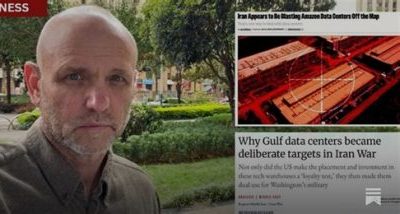
Iran spent $1 million to wipe out $30 billion in data center plans, and take down Amazon in the ME
or go to
Aletho News Archives – Video-Images
From the Archives
Clash of Civilization, Iran Part II
By Jamal Kanj – Intifada-Palestine.com – January 14, 2011
Israel’s survival kit is: perpetuate conflict, insecurity to rationalize collective hate and finally playing victim.
Devoid of conflict, Israel implodes internally; without hate, Zionism loses its justification; and playing eternal victim to continue blackmailing the West. Absence of this holy trinity, Israel ceases to exist. … continue
Blog Roll
 Aletho News
- China Rejects Outside Pressure on Trade Ties After New US Russia Sanctions Bill
- Houthis Keep Advancing as the Red Sea Crisis Deepens
- Iran spent $1 million to wipe out $30 billion in data center plans, and take down Amazon in the ME
- Zionist billionaire pressure to silence Macklemore sparks exodus from Ed Sheeran tour
- House Votes to End Iran War for Third Time
- North Korea Slams US Plan for ‘AUKUS 2.0’ with South Korea and Japan
- Prolonging US-Iran Conflict Not Meeting Interests of Int’l Community – China’s Wang Yi
- EU bans former Zelensky aide from parliament
- NATO-backed Kosovo separatist ‘responsible for war crimes’
- US destroying international space law
- If Americans Knew
- U.S. Makes, Israel Takes: The Real Story of U.S.-Israeli Military Cooperation
- Night raids rise in Palestine
- Tucker Carlson interviews Norman Finkelstein about Gaza
- Groups urge Americans to support Van Hollen legislation on Israel’s killing of Americans & Palestinians
- Trump administration plans to send 40,000 tons of bombs to Israel: report
- Sanctions Target Iran’s Government, But Kill Hospitalized 23-Year-Old Woman
- An alternative view on the book “Israel’s Lobby: America in the Grip of a Foreign Power”
- Ed Sheeran’s band Beoga, other opening acts quit tour after Macklemore was dropped over his pro-Palestinian comments
- The assassination attempt on President Trump in Butler and the various Israeli connections to it
- “We Want That the Whole Land Be Jewish”
- No Tricks Zone
- New Study: ‘Global Drought Shows No Detectable Recent Acceleration Under Climate Warming’
- Economic Masterminds: German Socialists Suggest Taxing Productivity Gains Stemming From Using AI
- The South China Sea Has Not Been Cooperating With The Climate Change Narrative
- Energy Crisis: Germany Enters Heating Season With Historically Low Gas Reserve Fill Levels
- New Study: The Antarctic Ice Sheet Gained Mass From 2020-2024 Due To Staggering Snow And Ice Accumulation
- Study: Ocean Heating Rates From Thousands Of Years Ago ‘Dwarf’ Modern Ocean Heating Rates
- Climate Extremists Target, Attack Large-Scale Power Grid Infrastructure In Germany!
- New Study: Antarctic Ice Melt Has Contributed Less Than 1 Centimeter To Sea Level Rise In The Last 30 Years
- Fear Of Debate: Alarmist German Climate Scientist Calls On Mainstream Media To Discredit Skeptic Voices
- End-Of-August Arctic Sea Ice Extent Hasn’t Fallen In 20 Years, Official Data Show!
 Aletho News