UK rejects payment to Covid-19 jab victims for not being ‘disabled enough’ – Telegraph
RT | August 18, 2024
Almost 14,000 people in Britain have applied for payments from the government for disabilities they claim were caused by Covid-19 vaccines, The Telegraph has reported.
Only 175 people, or less than 2% of those seeking compensation, have so far received a one-off money transfer of £120,000 ($155,300), the paper said in an article on Saturday.
Data obtained by The Telegraph through Freedom of Information requests indicates that those who were eventually reimbursed suffered from conditions such as stroke, heart attack, dangerous blood clots, inflammation of the spinal cord, excessive swelling of the vaccinated limb, and facial paralysis.
Around 97% of the satisfied applications were related to the Oxford-AstraZeneca Covid-19 vaccine, developed by Oxford University and British-Swedish company AstraZeneca, and the rest to the US-made vaccines from Pfizer and Moderna, it said.
The outlet noted that the UK government continued to recommend the AstraZeneca vaccine, despite its use being halted in Germany, Italy, France, and other European countries by March 2021, amid reports of a growing number of blood clotting cases.
Thousands of people have been refused payment due to the government’s medical assessors arguing that there is no concrete proof that their health problems are a result of the vaccines, the report read.
Hundreds of others were turned down due to being “not disabled enough,” it added. Under the rules of the Vaccine Damage Payment Scheme (VDPS), an applicant has to be at least 60% disabled to qualify.
A spokesman for AstraZeneca told The Telegraph that its vaccine “has continuously been shown to have an acceptable safety profile and regulators around the world consistently state that the benefits of vaccination outweigh the risks of extremely rare potential side effects.”
As for the health complications caused by the vaccine, the spokesman said, “our sympathy goes out to anyone who has lost loved ones or reported health problems.”
In May, AstraZeneca, which officially admitted that its vaccines could cause blood clots in certain cases, began the withdrawal of its product worldwide, saying that newer vaccines adapted to the latest coronavirus variants were more effective.
Around 16,000 people have sought payments since the introduction of the VDPS in 1979, with most of the claims related to Covid-19 vaccines. The growing workload resulted in an increase of the staff responsible for handling applications from four people to 80 last year. “We continually review our processes to further develop the way in which we manage claims, and to provide a better service for claimants,” a National Health Service spokesperson said.
Internal crisis shakes Balkan media network run by UK intel, leaked emails show

By Kit Klarenberg and Jovan Milovanović · The Grayzone · August 13, 2024
A prominent propaganda outlet in the Balkans, which is directly overseen by a British government agency that Reuters once labeled “an influential soft-power extension of UK foreign policy,” appears to be on the brink of collapse after a major schism between staff members and leadership.
Leaked emails reviewed by The Grayzone reveal a “deep crisis” has engulfed the Western-created and funded Balkan Investigative Reporting Network (BIRN), which threatens to tear the organization apart. A flagship propaganda platform in the arsenal of multiple Western governments and foundations, it has sought to reshape the restive region in favor of European and US interests, publishing many “products” in service of this goal. Now, the entire information warfare empire seems to be on shaky ground.
The emails, which were leaked in April, reveal that an internal “crisis” has erupted at BIRN. This disaster has largely been pinned on its Regional Director, Milka Domanovic, who oversees the organization’s “portfolio of regional projects.” In the emails, multiple nameless employees accuse her of a wide variety of grave failings, including “neglect of duties” and “inappropriate conduct.” Her alleged incompetence and “mismanagement” purportedly led the EU to demand a grant of 300,000 euros be returned. The authenticity of the emails has been confirmed by BIRN staffers.
A joint email sent by the complainants to the highest echelons of BIRN on April 17 accused Domanovic of encouraging “covert discussions” about staff performances, “pitting them against each other, often using such techniques as shaming them for problems in their absence.” What’s more, they claimed that “sensitive information” which was confidentially shared with higher-ups was “carelessly handled, leading to breaches.” In the document, the organization’s Regional Director stands accused of a “combative and threatening communication style,” and encouraging a workplace environment “rife with gossip”:
“A culture of silence pervades… leaving many of us cowering from the repercussions of voicing genuine concerns or dissent,” the staffers wrote.
Domanovic’s tenure, they say, “has been marred by an authoritarian stance towards colleagues [and] indecision, ineffectiveness, and delays, resulting in a cascade of missed opportunities, funds, and targets.” When issues come to a head, “the blame is often cast upon others,” they continued, adding that Domanovic has “cultivated an environment fraught with paranoia” and engages in “relentless and often pointless scrutiny of the work of many of us.”
The damning charges were leveled by a number of experienced internal sources, who have worked under different BIRN leaders, and claim to have never encountered such issues before. Per the emails, they chose to remain anonymous “due to a legitimate fear of retaliation” by Domanovic, who they claim favored “secrecy, backroom dealings, and a lack of accountability” over “speaking truth to power” internally while in the post.
The group wrote that if they were to reveal their identities, “our careers in BIRN would be over,” a claim which they said was “clearly” validated by the “recent, sudden departures of our colleagues.”
An email sent on April 24 by Domanovic to the group, with the organization’s entire governing “Assembly” cc’ed, suggests their anxieties were well-founded. Boldly declaring that she would not be “responding to an anonymous email,” she nevertheless went on to accuse its authors of working “to cause chaos inside of BIRN.” The Regional Director added that the organization’s board shared her “concerns about anonymous communication.”
“If these emails have indeed come from inside of BIRN, Assembly is deeply disappointed with the judgment of those who chose to air grievances in a way that is potentially damaging to the reputation, the workplace environment and the mission of BIRN.”
Attacking elites when their “incentives are not aligned with [Britain’s] objectives/values”
BIRN’s donor roll is a veritable rogue’s gallery of intelligence cutouts and regional Western embassies. Leaked documents show that British involvement extends well beyond merely funding the outlets, with its foreign intelligence services going as far as training the organization’s operatives, and even directing their activities through the so-called British Council (BC).
Veteran diplomat Harold Beeley described the British Council as one of London’s “principal international propaganda agencies,” alongside the BBC. More recently, Reuters dubbed BC “an influential soft-power extension of UK foreign policy.”
A leaked internal document reveals the British Council took control of BIRN under a Foreign Office project, supposedly aimed at “supporting greater media independence in the Western Balkans.” The state-sponsored operation also claims without any sense of irony that it aims to counter “media capture” in a region where the most well-resourced outlets are sponsored by Western governments.
Under the program’s auspices, journalists throughout the Balkans receive “training and mentoring,” and help “improving their engagement with citizens on issues of public interest; targeting online audiences through social media networks and tools, public outreach campaigns; development of social networks, maintenance of their online profiles, and on-the-job training [to] lead social media campaigns.”
More recently, the British Council mulled the creation of a “cutting edge tool for engaged citizens reporting” which would enable BIRN and other covertly British-backed outlets in the Balkans “to receive and respond on regular basis to leaks” and tips from locals, “pointing to the most pressing issues in local communities.” Notably, Milka Domanovic’s LinkedIn profile reveals that from 2019 – 2022, she was in charge of “research and design” of “the custom ‘engaged citizens reporting tool.’”
In other words, British intelligence effectively attempted to construct a pro-NATO Wikileaks knockoff with Domanovic’s assistance. Elsewhere, the leaked files state the BC project is “about disrupting the status quo, and enabling the media to hold government to account.” Past files from Britain’s Stabilisation Unit made clear that London’s support for news outlets in the Balkans is explicitly aimed at spreading London’s influence, often by advancing regime change.
“In contexts where elite incentives are not aligned with [Britain’s] objectives/values… an approach that seeks to hold elite politicians to account might be needed,” a leaked file notes.
“We can build relationships and alliances with those who share our objectives and values for reform…” it continues. “It is critical that the media have the capacity and freedom to hold political actors to account.”
The newly-leaked BC documents acknowledge the project’s mission was also designed to “challenge political interests” regionally, a prospect which they admit would be “highly contentious” and risk “generating backlash” against its advocates and journalists alike.
As such, the British Council took measures to “ensure that media outlets we work with have proportionate media defence strategies in place as part of our conflict sensitive approach… we will develop security and crisis management responses to ensure the safety, security and wellbeing of all our staff.” BC’s assets were therefore assured of their own protection in the event of blowback brought about by the meddling of their sponsors in London.
The leaked BIRN emails show a ferocious backlash has indeed erupted — but internally, directed towards the organization’s British-groomed chief, Milka Domanovic.
Apparent British government asset heads BIRN
In an email dated from this April 26, anonymous staffers lamented the “dismissive and authoritarian tone” of Domanovic as both “disrespectful and wholly inappropriate for someone occupying this position.” They reminded the Regional Director, and BIRN’s Assembly, that under the organization’s own rules and regulations, “the right to file complaints anonymously is explicitly protected.” In any event, they said they had raised their grievances directly with her “on numerous occasions and in various forums,” to no avail:
“Her continuous misguided conduct and contentious communications continue to try to dismiss and silence legitimate employee concerns… These developments, coupled with the growing anxiety and fear among staff concerning potential retaliation, informal interrogations by the Regional Director about who is ‘behind’ these letters, threats made by [Domanovic] among colleagues she deems ‘trusted’… underscore the urgent need for the Assembly’s immediate intervention, to mitigate the broadening crisis and determine damage control measures.”
It appears no action was taken to address Domanovic’s alleged misconduct. Given her background as a Chevening Scholar, the lack of accountability was unsurprising. Provided by the Foreign Office, these scholarships provide a vital mechanism for projecting British soft power abroad. Many Chevening scholars go on to occupy positions of power in their home countries.
An official BIRN profile of Domanovic states that Chevening placed her at Goldsmiths, University of London. There, she obtained a master’s degree not in journalism, but in “marketing and technology”. This experience reportedly “helped her improve her research and analytical skills, as well as discover new potential for successful media outreach.” While the leaked emails may suggest otherwise, such schooling was no doubt extremely helpful in constructing an “engaged citizens reporting tool” for the British, which she began work on immediately after graduation.
Indeed, another leaked document related to British infiltration of the former Yugoslavia explicitly state that the creation of a “pipeline” of female “defence and diplomacy” journalists in the region, via Chevening, is a core objective for London. It was forecast they would serve as pro-British “influencers in the Western Balkans” for the remainder of their careers. Documents described these media operatives as part of a wider effort to “[bring] female journalists to the forefront of the industry’s consciousness” in the region.
“The programme will include an outreach element with activities undertaken in universities to encourage women to consider journalism as a career. The UK could also lobby [local] media to reserve a percentage of entry-level roles for women. It will challenge gender stereotypes and open a gateway to areas previously occupied mostly by men in a high-visibility industry. It will also improve the perception of the UK with these participants.”
It should therefore come as little surprise that Domanovic, as an alumnus of Britain’s premiere overseas asset grooming operation, was quickly tapped to run BIRN once her Chevening scholarship ended. The privileges extended to her personally — and the significance of her British-directed mission — appear to have translated into near-total immunity from any repercussions for serial incompetence, or any of her other grave transgressions that employees say jeopardized the entire organization.
Rather than addressing staff concerns about her leadership, the BIRN Assembly explicitly sought to expose the whistleblowers, according to Montenegrin outlet Antena M. US-based Assembly member Robert Bierman dismissed their anxieties outright, offering them a personal review of their complaints – but only if they revealed their identities. That message came just three days after Domanovic reportedly warned her accusers of serious repercussions if they continued their remonstrations. Her main concern, she indicated, was stopping “further information leaks.”
BIRN and Domanovic were contacted for comment on the accusations, but have not responded.
Milka Domanovic remained BIRN’s Regional Director as of June 2024. The fate of her accusers is unknown.
Senior UK diplomat resigns over London’s ‘complicity’ in Gaza war crimes
The Cradle | August 17, 2024
Mark Smith, the head of the Africa Programmes and Expertise Department and the UK Foreign, Commonwealth, and Development Office (FCDO), formally resigned on 16 August, citing London’s continued arms sales to Israel.
In a letter titled “FCDO complicity in War Crimes,” Smith – an expert on the legality of UK arms sales – laments ending his long diplomatic career “in the knowledge that this Department may be complicit in War Crimes.”
“As [a] former penholder on the arms exports licensing assessment in [the Middle East and North Africa Department] MENAD, I am a subject matter expert in the domain of armed sales policy. Each day we witness clear and unquestionable examples of War Crimes and breaches of International Humanitarian Law in Gaza perpetrated by the State of Israel,” Smith writes.
“Senior members of the Israeli government and military have expressed open genocidal intent, Israeli soldiers take videos, deliberately burning destroying, and looting civilian property and openly admit to the rape and torture of prisoners,” the letter continues.
He also highlights that Israel’s wholesale destruction of Gaza’s infrastructure, their continued restrictions on the entry of humanitarian aid, plus attacks on ambulances, schools, and hospitals all constitute war crimes.
“There is no justification for the UK’s continued arms sales to Israel yet somehow it continues. I have raised this at every level in the organization including through an official whistle-blowing investigation and received nothing more than ‘thank you we have noted your concerns.’”
Smith also criticizes UK authorities for misrepresenting London’s arms export licensing regimes as “robust and transparent,” saying, “This is the opposite of the truth.”
Although falling well behind Israel’s top suppliers of deadly armament – the US and Germany – the UK granted more than 100 weapon export licenses to Tel Aviv between 7 October and the end of May.
Between 2008 and the end of 2023, London granted export licenses for arms deals to Israel worth 576 million pounds ($740m).
Earlier this month, British news outlets reported that the new Labour government “[appears] to have suspended the processing of arms export licenses for sales to Israel pending the completion of a wider government review into the issue.”
The suspension is reportedly part of a review “of the risk of weapons sales to Israel in light of allegations of breaches of humanitarian law in the Gaza conflict.”
Israel expects US and other allies to help bomb Iran
RT | August 17, 2024
Israel’s Foreign Minister, Israel Katz, has stated that his country expects not only the United States but also its allies, including Britain and France, to assist in offensive operations against Tehran in the event of direct conflict.
Katz made these comments during a meeting with British Foreign Secretary David Lammy and French Foreign Minister Stéphane Séjourne in Jerusalem on Friday, according to a Hebrew-language statement from his office.
”Israel expects France and Britain to publicly clarify to Iran that it is unacceptable for it to attack Israel, and that if Iran attacks, the US-led coalition will join Israel not only in defense but also in an attack against significant targets in Iran,” the statement said, as cited by the Times of Israel.
Katz reiterated in a post on X that he made it “clear” to his colleagues that they should publicly announce their countries “will stand with Israel not only in defense but also in striking targets in Iran.”
The French and British diplomats downplayed these assertions, with Sejourne telling reporters that it would be “inappropriate” to discuss any “retaliation or preparation for an Israeli retaliation” amid diplomatic efforts to negotiate a deal to end the Gaza war. A joint French-British statement following the meeting also made no mention of any anti-Iran coalitions.
“We have urged Iran and its proxies to stand down the ongoing threats of military attack against Israel. We have also stressed to all parties that the spiral of escalating reprisals must end,” they said in their only reference to Tehran.
The meeting in Jerusalem occurred shortly before the latest round of indirect ceasefire talks ended without breakthroughs, though there were promises to return to the negotiating table next week. The war between Israel and Hamas has dragged on for 10 months since the militant group staged a deadly incursion, resulting in approximately 1,100 deaths and around 200 hostages. The massive Israeli response has claimed over 40,000 Palestinian lives, according to Gaza health officials.
The risk of wider conflict in the Middle East was drastically exacerbated by the assassination of Hamas Political Bureau Chief Ismail Haniyeh, who served as the Palestinian armed group’s lead negotiator in indirect talks with Israel. He was killed in Tehran on June 31, hours after attending the inauguration of Iranian President Masoud Pezeshkian. Iran promised to inflict a “harsh punishment” on Israel, which has neither acknowledged nor denied any involvement in the killing.
The US has deployed additional warships and a submarine to the Middle East to protect the Jewish state from potential attacks, but it remains unclear whether Washington has agreed to any plans to bomb Iran.
In April, when Iran fired hundreds of missiles and drones at Israel in retaliation for the bombing of its embassy in Damascus, US fighter jets and warships helped intercept many of the incoming projectiles. However, this was a purely defensive operation, with no direct counterstrike on targets inside Iran.
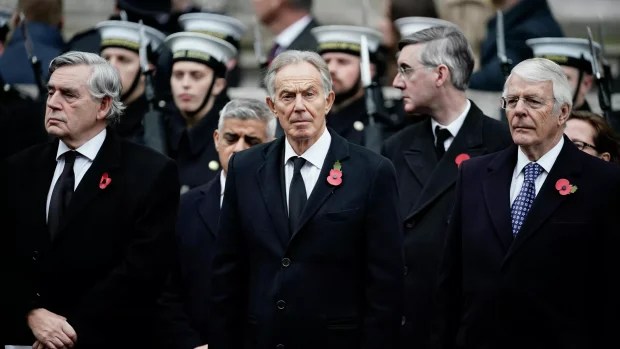
Blair, UK Government Warned Over NATO War Crimes in Belgrade
© Aaron Chown
By John Miles – Sputnik – 16.08.2024
As NATO aggression in the former Yugoslavia fully unmasked the alliance as a tool of Western imperialism, newly-released documents reveal controversial former UK Prime Minister Tony Blair was warned of the possible legal consequences of the bombing of a state-owned broadcaster in Belgrade.
“Twenty five years ago, NATO bombed the main studio of Yugoslavia’s state-owned broadcasting company, Radio-Television Serbia (RTS),” writes the independent outlet Declassified UK. “The attack at 2am on 23 April 1999 came amid Bill Clinton and Tony Blair’s ‘humanitarian intervention’ in Kosovo.”
“16 media workers were killed and 19 injured in the strike on RTS, which remains the single most controversial event in NATO’s 78-day military campaign,” notes journalist John McEvoy.
The UK and allied NATO forces claimed to be acting in the interest of protecting ethnic Albanians as ethnic violence broke out on all sides during the breakup of the former socialist Yugoslav republic. But President Slobodan Milošević remained a conspicuous holdout as newly-independent states deregulated their economies in line with neoliberal economic policy advocated by Western governments.
The United States would back numerous “color revolutions” after the fall of the Eastern Bloc, with wealthy donors like George Soros encouraging and standing to benefit from economic liberalization enforced by Western-led institutions like the International Monetary Fund.
The case of Milošević demonstrates a scenario during which the United States was willing to employ substantial military force to seek regime change, paving the way for NATO aggression in countries like Libya and Afghanistan.
Blair claimed the destruction of the RTS headquarters and other civilian targets was justified in the name of dismantling the “dictatorship” of Milošević. Sixteen media workers were killed during the bombing, which Amnesty International labeled a “war crime.”
“Killing journalists does not stop censorship, it only brings more repression,” claimed the International Federation of Journalists in a statement.
“We do not see how the suppression of news sources can serve any useful purpose,” said European Broadcasting Union president Albert Scharf. “Over and beyond the deaths involved, the EBU is concerned about any attempts to limit the rights of audiences to full news services.”
Declassified files now reveal that UK Prime Minister Tony Blair was warned against the depraved attack at the time by British attorney general John Morris, who questioned how the destruction of the broadcast headquarters was related to NATO’s purported cause in ensuring “relief of humanitarian need in Kosovo.”
The UK and the United States launched the illegal act of aggression in Belgrade without a required UN Security Council resolution, demonstrating the lengths NATO was willing to go to to ensure Western hegemony after the end of the Cold War.
“We are moving towards a situation where our aim will become removing Milosevic,” admitted Blair in a note at the time, revealing that regime change was the ultimate motive of the assault. “Plainly Milosevic will threaten the stability of the region as long as he remains.”
NATO forces would go on to strike a number of other civilian targets including Belgrade’s Hotel Jugoslavija and Montenegro’s main airport, with little apparent concern for the climbing death toll. Thousands were killed or wounded by the end of the campaign while elevated rates of cancer and birth defects are still observed due to NATO’s highly controversial use of depleted uranium.
The UK would become the first of multiple Western countries to recognize the disputed breakaway territory of Kosovo in 2008. Future leader of the territory Hashim Thaci, who played a key role during the NATO aggression via his leadership of the so-called Kosovo Liberation Army, is currently on trial on war crimes charges at The Hague.
The International Criminal Tribunal for the Former Yugoslavia, under intense pressure from the United States, would controversially decide against investigating the bombing of the RTS as a war crime.
UK trained Ukrainian soldiers before Kursk attack – Times
A Ukrainian soldier during training in the UK. © Getty Images / Finnbarr Webster
RT | August 16, 2024
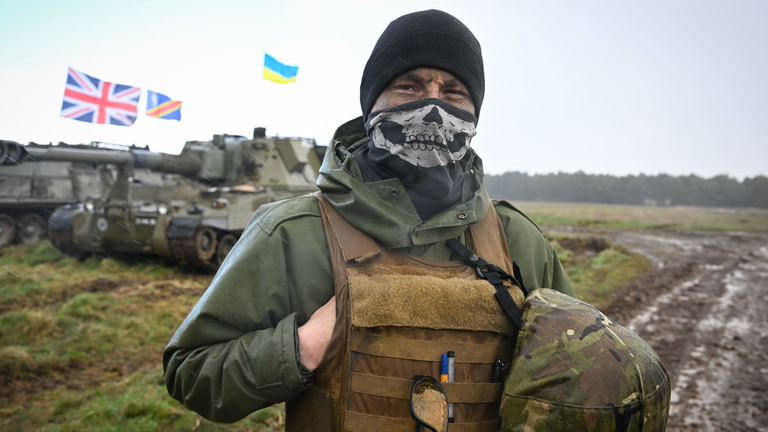
Some of Kiev’s troops underwent training in the UK shortly before the Ukrainian incursion into Russia’s Kursk Region, The Times has reported.
On August 6, Ukrainian forces launched their largest attack on Russian territory since the outbreak of the conflict in February 2022. The advance of Kiev’s troops in Kursk Region was swiftly halted by the Russian military, but they still remain in control of a number of settlements.
Kiev “utilized some of Ukraine’s most battle-hardened fighters” taken from other parts of the front line during the incursion, the British paper said in an article on Friday.
A Ukrainian serviceman, who talked to the Times from a hospital bed after being wounded in clashes in the Russian border town of Sudzha, said his unit had been defending Volchansk in Ukraine’s Kharkov Region when he was told that “today they were going to invade Russia.”
According to the article, the members of this formation were already “specialists in street fighting” after being involved in “some of the bloodiest battles” of the conflict, including the fight for the strategic settlement of Avdeevka in Russia’s Donetsk People’s Republic, which Ukraine lost in February.
But The Times reported that, “a month before they were dispatched into Kursk, some of the unit were sent to England where they underwent a few days of training alongside British soldiers.” The major focus of this training course was “raids on high-rise buildings,” it revealed.
Western officials have voiced their support for the Ukrainian incursion into Kursk Region, but denied any prior knowledge of the operation or involvement in it. However, Mikhail Podoliak, the top adviser to Ukrainian leader, Vladimir Zelensky, claimed earlier this week that “there were discussions between partner forces, just not on the public level,” of the attack on Russian territory.
Adviser to Russian President Vladimir Putin and former Security Council secretary, Nikolay Patrushev, told Izvestia newspaper on Friday that Kiev’s incursion was “planned with the involvement of NATO and Western special services.” It was the US and its allies who “put the criminal junta at the head of Ukraine,” while “NATO countries have supplied Kiev with weapons, military instructors, and continuous intelligence while controlling the actions of neo-Nazis,” Patrushev added.
Russia’s Defense Ministry said on Friday that, since the start of the incursion, Ukraine had lost up to 2,860 servicemen and several hundred units of military hardware, including 41 tanks, 40 APCs, and three US-supplied HIMARS multiple rocket launchers.
Iran: E3 demands are public support for Israeli crimes
Al Mayadeen | August 13, 2024
Iranian Foreign Ministry spokesperson Nasser Kanaani responded to the E3’s (UK, France, Germany) statement on Tuesday, underscoring that Iran is “steadfast and resolute in exercising its right to protect its national security and territorial integrity” and “does not seek permission from any external party.”
In a press statement, Kanaani added that the European Troika’s demand for Iran not to respond to the “Israel’s” and punish it, “a crude demand that lacks any political logic and contradicts international laws and resolutions.”
He emphasized that the European trio’s statement reflects a public endorsement of the Zionist entity’s crimes and regional terrorism. He added that “if the European Trio genuinely seeks to promote peace in the region, it must, at the very least, condemn the Zionist entity’s actions and its genocidal activities in Gaza.”
Kanaani also pointed out that “the indifference of Western countries towards the crimes of the Israeli entity and its ongoing genocide of the defenseless Palestinian people, and the failure to hold it accountable, has encouraged it to escalate its atrocities.”
He explained that “Germany, France, and Britain have not taken any measures to halt the Zionist entity’s ongoing brutal crimes, and international organizations have similarly failed to deter these actions,” stressing that “both the West and the Security Council must take decisive responsibility to stop the severe Israeli atrocities in Gaza.”
On Monday, the leaders of France, Germany, and the United Kingdom issued a joint statement in which they called on Iran and its allies, likely the Ansar Allah movement in Yemen and the Hezbollah Resistance movement in Lebanon, to refrain from taking any actions that would “further escalate regional tensions and jeopardize the opportunity to agree on a ceasefire and the release of hostages.”
The statement held them responsible “for actions that jeopardize this opportunity for peace and stability” while disregarding the actions committed by “Israel”
Specialist UK Police Teams Target “Hate” on Social Media
By Cindy Harper | Reclaim The Net | August 13, 2024
The UK authorities and the media either willing to or feeling pressure to take their cues from the government, continue to assert that the root cause of the serious rioting that hit the country this month is to be found on – social media.
This, in turn, makes for a convenient excuse to ramp up police surveillance of online content. Special police teams are now going through social sites in order to identify those said to have “incited” the riots, and there’s a special name for them – “hate influencers.”
The said teams consist of what reports refer to as “specialized” officers, those investigating serious crimes (i.e., murder and the like) and terrorism, as well as local units whose job is normally to investigate organized crime.
“Other” national-level teams are also mentioned as taking part in scouring the internet, and what they might be doing is suggested by the goal of this exercise being gaining “a clear intelligence picture,” as one article put it, citing the National Police Chiefs’ Council (NPCC).
A statement on the NPCC site said that the search for “online offenders” is being led by regional organized crime units (ROCUs) and that the offense is spreading hate and inciting violence on the internet.
NPCC Chief Constable Chris Haward is quoted as saying that the large number of people taking part in protests and riots “did not mobilize spontaneously.”
“It was the result of dozens of so-called influencers, exploiting the outpouring of grief from the tragic loss of three young girls in Southport,” Haward said, referring to the knife attack that resulted in the three murders.
Still talking about “hate influencers,” Haward added: “They knowingly spread misinformation, stoked the flames of hatred and division, and incited violence from the comfort of their own homes – causing chaos on other people’s doorsteps. (…) Online crimes have real-world consequences and you will be dealt with in the same way as those physically present and inflicting the violence.”
Thus far, the NPCC has said that it is investigating hundreds of leads. The content targeted by law enforcement and intelligence units is reportedly spread across a range of unnamed social sites and platforms, according to the press release.
It is also revealed that “hate influencers” as the British legacy press calls them will not be held responsible simply for using the internet to allegedly incite real-world violence – but also for something separate which the NPCC calls “violence online.”
“A senior investigator” will have the last word on whether any of this can be treated as a crime – and if so, people behind the accounts and/or content will be identified and arrested.
Tyranny in the UK – Can it Happen Here?
By Ron Paul | August 12, 2024
As the UK descends into tyranny, where just re-Tweeting something the government doesn’t like can land a person a multi-year jail sentence, Americans are wondering, “can it happen here?” After all, we have the guarantees of the First Amendment.
But while we shake our heads at UK authorities jailing people for their social media posts this past week, we should not kid ourselves. The answer is that silencing dissent can happen here and it is happening here.
Here are just three recent examples of how the “deep state” or the permanent government is conspiring to restrict political dialogue in the United States.
First is the revelation that former US Representative and former US presidential candidate Tulsi Gabbard has been placed under the bizarrely named “Quiet Skies” program. As reported by journalist Matt Taibbi based on revelations by TSA whistleblowers, this July Gabbard was flagged as a terror threat, and every time she travels her boarding pass is marked so that she is pulled aside for extensive screening. According to the whistleblowers, “Gabbard is unaware she has two Explosive Detection Canine Teams, one Transportation Security Specialist (explosives), one plainclothes TSA Supervisor, and three Federal Air Marshals on every flight she boards.”
As Gabbard herself revealed recently on the Laura Ingraham show, “A few weeks ago, I had the audacity to tell the truth: that Kamala Harris would essentially be a mouthpiece and puppet of the Military Industrial Complex and National Security State. The next day, July 23, they retaliated. Sadly this is what we can expect from the ‘Harris Administration.’”
Next we have the attempted assassination of former president Donald Trump. It seems every day brings a new revelation that calls into question whether the massive failure to protect the Republican presidential candidate was just an “honest mistake.” We know from 1963 what can happen to presidents who cross the “deep state” and we know from Trump’s four years in office how “former” deep state officials can conspire to undermine the presidency with lies like “Russiagate.”
Finally we have the case of Robert F. Kennedy, Jr. Up until the Trump assassination attempt, the Biden/Harris Administration refused to provide the independent presidential candidate with Secret Service protection. RFK, Jr. has consistently and effectively criticized not only the current administration but the “deep state” itself while out on the campaign trail. Even though there were credible threats against him on the campaign trail the Biden/Harris administration refused to budge for months. Why? Did they want to silence him?
The US government learned an important – and dangerous – lesson from Covid: all you have to do to crush political dissent is to use the weight of the government to force the “private” sector to do the censoring for you. It is only a half-step away from forbidding us from expressing our thoughts on a virus to sending us to prison for expressing other thoughts the government does not like. And maybe worse.
There will be a reaction in the UK to the brutality of the Starmer regime. We can only hope for their – and our – sake that the reaction will be a newfound determination by the people that no government should have the authority to shut them up or jail them for their political views. To paraphrase Benjamin Franklin, “free speech, if you can keep it.”
EU Threatens Musk Over “Harmful” Speech Ahead Of Trump Interview

By Cindy Harper | Reclaim The Net | August 12, 2024
On the day of Elon Musk’s interview with President Donald Trump on X, the EU’s top digital official, Thierry Breton, issued a reminder to Musk of his responsibilities under EU law to curb the spread of “harmful content.”
Breton, the pro-censorship internal market commissioner, emphasized the significance of platform moderation in a letter and a post on X, stating, “With great audience comes greater responsibility.”
The European Union, under its censorship law, the Digital Services Act (DSA), mandates that digital platforms stringently monitor online content to shield users from potential “harm.”
This legislation is part of a broader scrutiny of X, which has consistently been targeted by the EU. Breton’s correspondence highlighted that the DSA’s mandates apply uniformly, including to Musk.
The reminder was prompted by concerns over the “risk of amplification of potentially harmful content in the EU,” particularly with Musk’s upcoming interview with Trump and Musk’s own recent remarks concerning the attack on free speech currently being experienced in the UK.
Breton further warned, “My services and I will be extremely vigilant to any evidence that points to breaches of the DSA and will not hesitate to make full use of our toolbox, including by adopting interim measures, should it be warranted to protect EU citizens from serious harm.”
As the European Union persists in the stringent enforcement of its censorship law, the imposition of its regulatory well beyond its borders, notably into the United Kingdom—a nation no longer tethered by EU membership—raises profound concerns about the overreach of censorship under the guise of protection.
The EU’s call for rigorous content moderation, even in territories outside its jurisdiction, smacks of an unsettling desire to extend its influence, stifling discourse and dissent not only within its member states but also in nations that have consciously chosen a different path.
The insistence on such broad and pervasive controls over digital content by an entity like the EU, which should ostensibly champion democratic values, is alarming.
This form of interventionism in the UK, under the pretense of safeguarding EU citizens from “harm,” undermines the very essence of free speech—a cornerstone of democratic societies. By dictating terms and conditions that stretch its authority into non-EU territories, the European Union not only compromises the sovereignty of other nations but also sets a dangerous precedent for global digital governance, where freedom of expression becomes a casualty in the battle against vaguely defined “harmful content.”
Largest UK pension fund divests from Israeli assets worth over $100mn: Report
Press TV – August 9, 2024
Britain’s largest private pension fund has reportedly sold off £80 million ($101 million) in assets linked to Israel as pressure mounts on its members to divest from the occupying regime over its genocidal aggression against the Gaza Strip.
The Financial Times reported on Thursday that the Universities Superannuation Scheme (USS) had “materially” reduced its exposure to Israeli investments in the past six months.
USS started selling down the bond and currency portfolio in March, the report said, citing two people with knowledge of the matter.
“This marks yet another instance in recent months of institutions divesting from Israel’s genocidal regime and complicit companies,” the pro-Palestine Boycott, Divestment and Sanctions (BDS) movement said.
It also renewed its call for pressure on institutions to “divest from Israel’s sinking economy. Investing in it is not only unethical and illegal. It’s now also reckless.”
USS manages investments totalling £79 ($100 billion) and has more than 500,000 members, who are largely higher education sector workers, including lecturers at universities such as Oxford and Cambridge.
Back in May, the University and College Union (UCU) criticized the USS’s “shameful” refusal to review investments in companies linked to Israel’s crimes in Gaza and urged the pension fund to reconsider its position.
Calls have grown worldwide for divestment from Israeli interests since October 7, 2023, when the usurping regime waged its brutal Gaza onslaught.
So far, the Tel Aviv regime has killed at least 39,699 Palestinians, mostly women and children, and injured 91,722 others.
Featured Video

Houthis Keep Advancing as the Red Sea Crisis Deepens
or go to
Aletho News Archives – Video-Images
From the Archives
15 Saudi ‘hijackers’ were CIA agents working for US: Scholar
Press TV – April 13, 2016
Fifteen of the 9/11 “hijackers” from Saudi Arabia were CIA agents working for the United States government, which was seeking to destroy the Middle East for Israel and to double the American military budget, says Dr. Kevin Barrett, an American academic who has been studying the events of 9/11 since late 2003…. continue
Blog Roll
 Aletho News
- Russia Just Struck the Eyes of NATO’s War Machine in Ukraine
- Russia summons UK charge d’affaires over Kiev drone support
- NATO member warns bloc seeking pretext for war with Russia
- Macgregor: We Haven’t Seen the Worst of the Iran War Yet
- ‘We are not like everyone else’ laws that bind other nations do not apply to Israel, says Likud lawmaker
- Report: Saudi Arabia seeks allies’ assistance as missiles deplete amid war on Yemen
- Fuel Crisis Deepens: Pakistan Warns Tanker Attack in Red Sea Would Be an ‘Act of War’
- ‘Bucha massacre’ a false flag orchestrated by UK – Moscow
- China Rejects Outside Pressure on Trade Ties After New US Russia Sanctions Bill
- Houthis Keep Advancing as the Red Sea Crisis Deepens
- If Americans Knew
- An error has occurred; the feed is probably down. Try again later.
- No Tricks Zone
- New Study: ‘Global Drought Shows No Detectable Recent Acceleration Under Climate Warming’
- Economic Masterminds: German Socialists Suggest Taxing Productivity Gains Stemming From Using AI
- The South China Sea Has Not Been Cooperating With The Climate Change Narrative
- Energy Crisis: Germany Enters Heating Season With Historically Low Gas Reserve Fill Levels
- New Study: The Antarctic Ice Sheet Gained Mass From 2020-2024 Due To Staggering Snow And Ice Accumulation
- Study: Ocean Heating Rates From Thousands Of Years Ago ‘Dwarf’ Modern Ocean Heating Rates
- Climate Extremists Target, Attack Large-Scale Power Grid Infrastructure In Germany!
- New Study: Antarctic Ice Melt Has Contributed Less Than 1 Centimeter To Sea Level Rise In The Last 30 Years
- Fear Of Debate: Alarmist German Climate Scientist Calls On Mainstream Media To Discredit Skeptic Voices
- End-Of-August Arctic Sea Ice Extent Hasn’t Fallen In 20 Years, Official Data Show!
 Aletho News