US enlists Cyprus, Jordan, Greece as ‘defensive platforms’ for Israel: Report
The Cradle | August 9, 2024
Washington has enlisted the island nation of Cyprus in its efforts to protect Israel from potential retaliations by Iran and Hezbollah to the recent Israeli attacks on Tehran and Beirut, Lebanese daily Al-Akhbar reported on 9 August.
A US military delegation visited Cyprus this week and held urgent meetings with Cypriot defense and intelligence officials.
“The delegation was accompanied by a logistical, military and security force carrying with it a large amount of equipment, weapons and modern air defense systems, in addition to helicopters,” Al-Akhbar wrote.
Cypriot officials said they had never seen such quantities of weapons before, the report went on to say.
According to the report, the US informed Cyprus that this equipment was “related to tensions in the region” and that the island would serve as “one of the interception platforms against expected attacks from Iran, Yemen and Hezbollah.”
It adds that the UK has reinforced its bases in Cyprus, and has sent experts and air defense equipment to the country.
The UK has two large military bases in Cyprus, which are British sovereign territory and make up 2.5 percent of the island’s area.
Germany has also reportedly expressed an intention to deploy naval forces to Cyprus and to assist in evacuations in case of a large-scale war.
“What further confused Cypriot authorities was the US request for joint military drills with American forces on the island’s land and seas … drills do not happen suddenly, but rather require a program that is prepared at least a year in advance, not 48 hours in advance,” Al-Akhbar said.
“Cypriot officials have been keen to communicate with … the axis of resistance, especially Hezbollah, to convey the message that what is happening ‘is happening against their will, and that they do not want to involve their country in any war.’ They expressed their fear that the island could become an arena for a confrontation with Iran, Hezbollah, and even Ansarallah.”
Yemen’s army and Ansarallah resistance movement is also preparing a response to the Israeli attack on Hodeidah port last month.
The Al-Akhbar report states that these messages are unlikely to change anything in the event of a wide-scale war, given that Cypriot authorities are also coordinating directly with Tel Aviv.
“Opening Cypriot airports and bases to the Israeli enemy to target Lebanon would mean that the Cypriot government is part of the war, and the resistance will deal with it as part of the war,” Hezbollah leader Hassan Nasrallah said in a speech in June, warning Cyprus against taking part in an expanded Israeli war on Lebanon.
Cyprus and Israel have stepped up military cooperation in recent years as part of a joint declaration signed in 2017 and have also carried out several joint military and naval exercises. In 2022, the two states carried out joint military exercises on the island nation’s territory. Cyprus denied Tel Aviv’s declaration at the time that the exercises were meant to simulate war inside Lebanon.
Hebrew newspaper Israel Hayom reported on 11 March this year that Israel is seeking to establish a port in the Cypriot city of Larnaca in case the port of Haifa is closed in a war with Hezbollah.
According to the Al-Akhbar report, Greece and Jordan are also deeply involved in Washington’s defensive plans for Israel.
In April, Jordan played a significant role in intercepting Iranian missiles and drones which targeted Israel in response to its destruction of the Iranian consulate in Damascus and the killing of several of its officials that month.
Israel killed Hamas chief Ismail Haniyeh in Tehran on 31 July, as he was visiting Iran as a diplomatic guest while attending the inauguration of the country’s new president. A day earlier, Israel killed a top Hezbollah commander in the Lebanese capital, targeting him in a residential building while killing several civilians, including children, in the process.
Hezbollah and Iran have both vowed severe retaliations to the illegal attacks.
UK High Court upholds Tory emergency order protecting minors from puberty blockers
By Susan Berry, Ph.D. | CatholicVote | July 29, 2024
A High Court judge in the United Kingdom (UK) ruled Monday that the previous conservative British government’s emergency order safeguarding children and teens from experimental puberty blockers is lawful.
The LGBT activist group TransActual and an unnamed young person brought a challenge to the Tory order issued in May in the wake of the release of a report detailing a comprehensive independent review led by British pediatrician Dr. Hilary Cass.
Cass and her team conducted a systematic examination of studies and guidelines related to the use of puberty blockers and other procedures associated with so-called “gender-affirming care” for children suffering with gender dysphoria.
They concluded the so-called “gender-affirming care” model of medical intervention for young people is based on “remarkably weak evidence.”
“The reality is that we have no good evidence on the long-term outcomes of interventions to manage gender-related distress,” Cass wrote, observing that puberty blockers were found in “multiple studies” to compromise bone density and fertility and lead to other harmful effects. The majority of minors who receive prescriptions for puberty blockers move on to cross-sex hormones, the study also found.
Justice Beverly Lang noted in her decision that she is “satisfied that the decision to make the emergency Order on 29 May 2024, was a rational one”:
Parliament has entrusted the Ministers to exercise the powers in section 62 MA 1968, in the exercise of their discretionary judgment. This decision required a complex and multi-factored predictive assessment, involving the application of clinical judgment and the weighing of competing risks and dangers, with which the Court should be slow to interfere.
Lang also observed, “There was cross-party support for this approach as the then Shadow Secretary of State for Health and Social Care (Mr Wes Streeting) said in response to the Statement: ‘I also welcome what she said about the justifiably cautious and responsible approach she is taking in relation to puberty blockers in the light of the Cass report.’”
The Labour Party’s Streeting said he planned to safeguard children against the controversial drugs “via any means, subject to the outcome of a legal hearing.”
Dr. Jane Orient, executive director of the Association of American Physicians and Surgeons (AAPS), told CatholicVote the High Court’s decision is “very encouraging news.”
“Governments have the right and responsibility to protect citizens from danger and from crime,” Orient observed, adding:
Giving minors drugs that will interfere with their normal development and likely sterilize them is criminal. It is not possible for minors to give informed consent, even if a judge or counselor asserts that they are “mature.” Puberty blockers keep them from becoming mature, and it is deceptive to claim that the effects are reversible. The drugs have a long list of very severe adverse effects, including osteoporosis with frequent fractures.
In a statement reflecting TransActual’s reaction to the High Court’s ruling, the group said it “condemns” the decision and will decide whether to appeal it.
Chay Brown, TransActual’s director for healthcare, called the ruling “disappointing,” noting that it “leans heavily” on what the group calls “the widely discredited Cass review”:
We are seriously concerned about the safety and welfare of young trans people in the UK. Over the last few years, they have come to view the UK medical establishment as paying lip service to their needs; and all too happy to weaponise their very existence in pursuit of a now discredited culture war. It is essential that NHS England and the Department of Health and Social Care now take urgent steps to reverse this perception.
In its statement, the group cited a white paper published in July by Professor Anne Alstott of Yale Law School and Dr. Meredithe McNamara, assistant professor of pediatrics at Yale School of Medicine – both co-founders of Yale’s activist Integrity Project, which tracks and attempts to “correct” and “oppose” efforts to protect children from life-altering transgender medical activists throughout America.
According to the Integrity Project:
Underserved and marginalized people are harmed most by the absence of sound science in law. U.S. states recently have adopted a number of measures based on scientific misinformation, in reproductive health, gender-affirming care and HIV prevention. The Integrity Project acts quickly to correct the scientific record and oppose these harmful measures.
The white paper that attempted to discredit the Cass report is co-authored by other transgender activist medical professionals such as Johanna Olson-Kennedy, M.D., professor of clinical pediatrics at the Keck School of Medicine of the University of Southern California, and Jack Turban, M.D., assistant professor of psychiatry & behavioral sciences at the Philip R. Lee Institute for Health Policy Studies, University of California, San Francisco.
In a May 2018 paper, Olson-Kennedy recommended that girls as young as 13 with gender dysphoria be subjected to top surgeries (elective double mastectomies). Drawing that conclusion only from 136 “completed surveys” at her gender clinic, she and her colleagues determined:
Chest dysphoria was high among presurgical transmasculine youth, and surgical intervention positively affected both minors and young adults. Given these findings, professional guidelines and clinical practice should consider patients for chest surgery based on individual need rather than chronologic age.
Turban was found in January 2022 by the Daily Caller News Foundation (DCNF) to have authored a controversial study at Stanford University that concluded childhood hormone treatment was associated with “favorable mental health outcomes.”
The study was funded by the American Academy of Child & Adolescent Psychiatry (AACAP), which opposes restrictions on gender-affirming care for children. AACAP, in turn, is supported financially by pharmaceutical companies Arbor and Pfizer, both of which manufacture hormonal drugs used for gender transitions, DCNF reported.
“This study is particularly relevant now because many state legislatures are introducing bills that would outlaw this kind of care for transgender youth,” said Turban in the press release about his study. “We are adding to the evidence base that shows why gender-affirming care is beneficial from a mental health perspective.”
Orient underscored in her comments to CatholicVote that “one effect” of hormone drugs to treat gender dysphoria “is to make the recipients life-long patients for a very lucrative industry.”
“Puberty itself is probably the best treatment for ‘gender dysphoria,’” she added. “After experiencing normal puberty, the vast majority of teens will accept their biological sex and escape from the pipeline leading to harmful cross-sex hormones, mutilating surgery, and life-long psychiatric care.”
In the UK, James Esses, co-founder of Thoughtful Therapists and co-ordinator of Declaration for Biological Reality, posted to X that the High Court’s ruling was “seismic.”
“We must never allow children to be irreversibly harmed in the name of an ideology again,” he added.
UK Police Blame Social Media for Unrest
By Didi Rankovic | Reclaim The Net | August 7, 2024
While some observers explain the chaos that has erupted in the UK in the wake of an attack that resulted in the murder of three children as an outburst based on societal issues that have been bubbling beneath the surface for a long time – the National Police Chiefs’ Council (NPCC) sees”disinformation” as the main culprit.
Inaccurate or misleading posts on social media could serve as the trigger for protests and riots, and the NPCC, which is coordinating law enforcement in the UK, is focusing on “silenc(ing) those intent on spreading false news” – suggesting that this institution’s stance is that the unrest has no other meaningful deep underlying causes.
This is clear from the tone NPCC has taken, referring to “so-called protests” and, “criminals pretending to be protesters.” In other words, the crisis is simply down to “criminals” reading “fake news” on social media.
And so, it is disinformation that is “a huge driver” behind the violence, and, “we know a lot of those attending these so-called protests are doing so in direct response to what they’ve read online,” said a report on the NPCC site, quoting its public order lead, B.J. Harrington.
Harrington also revealed that the police acted “swiftly” across the country to make 147 arrests in connection to the clashes – adding that he expects that number to increase.
Regarding posts NPCC considers to be fake news and disinformation, this official noted that “high profile accounts” are to blame for their proliferation.
And, NPCC – but not only – is “working hard” to “silence those intent on spreading false news.”
Harrington said that law enforcement is achieving this together with communities and “our partners” – without naming the latter. But he did inform the public that both police officers and intelligence teams are engaged in identifying people involved.
As soon as the protests, which in places turned violent, erupted, a number of former and current government and intelligence officials immediately blamed “foreign meddling” and “misinformation” for the turn the events took after the fatal Southgate stabbing attack.
Political and Media Elites ‘Turned UK Into Tinderbox’
Sputnik – 06.08.2024
Britain’s cities have been engulfed in riots triggered by a deadly stabbing attack which killed three children and injured ten others in the seaside town of Southport, England. British political analyst and former MEP Nick Griffin told Sputnik what role government policy, and the US Deep State, played in setting the stage for the explosion.
Hundreds of people have been arrested and dozens injured in the ongoing riots across England, Wales and Northern Ireland in the wake of the July 29 stabbing rampage in Southport.
British authorities and media have cast the riots as a misinformation-fueled act of far-right subversion and violence. But while high profile right-wing figures “confrontational” social media posts and messaging have certainly played a role in sparking the disorder, its cause is related to decades of ignoring the will and wishes of ordinary Britons by the country’s political and media class, former MEP Nick Griffin told Sputnik.
“The British people have been extremely patient with successive governments which have imposed a swamping tide of mass immigration on the country, without the slightest democratic mandate or any good or properly explained reason,” Griffin said.
“17.4 million people – the largest democratic mandate in UK electoral history – voted for Brexit, which was a very clear instruction to the political elite to get a grip on our borders and to halt the uninvited transformation of the country into a foreign place,” Griffin said.
“If the political class had listened to that warning and accepted the verdict of the people, the killings in Southport either would not have happened at all (because the killer and his family would have been sent back to now entirely peaceful and safe Rwanda) or would have been seen as a terrible crime which the police and courts alone should deal with,” the ex-lawmaker believes.
“But the political and media elite refused to accept the vote, failed to deliver the secured borders and only increased the contempt they showed for ordinary Brits – especially the white working class. It is this, together with an endless litany of two-tier policing and criminal justice, which make indigenous Brits, and especially the English, feel like second-class citizens in their own country. Frustration and anger over this had turned large parts of the country into a tinderbox, just waiting for a spark,” Griffin said.
The observer, who is the former leader and MEP lawmaker from the right-wing British National Party, says he doesn’t rule out the presence of foreign money and influence in the unrest overwhelming the UK, recalling how in 2008, he was approached by a man “with very good connections in the UK broadcasting media and press” who offered the party “limitless support” if it attacked Islam but dropped its opposition to neocon warmongering overseas, and the BNP’s “hostile position to the international banking cartel.”
“The money offer was repeated a few years ago, with literally a blank check available if the Christian nationalist social media network with which I became involved after leaving the BNP dropped any criticism of Zionism and Israel, stopped criticizing the banking cartel, abortion and the LGBTQ agenda, and concentrated on condemning Muslims and Islam,” Griffin said, emphasizing that that both offers were refused.
The observer believes the offers came from “very wealthy members of the pro-Likud Zionist lobby in America,” and estimates “that the US Deep State finds the highly motivated Zionist lobby to be very useful front for moves which fit its own agenda.”
“It’s similar,” Griffin said, “to the way that George Soros for so long funded all sorts of radical [liberal] leftist causes, leading many critics to focus on his far-left sympathies and even his Jewish heritage. This provided camouflage for the fact that his Open Society Foundation worked extremely closely with the National Endowment for Democracy, which is of course a CIA front. People have been so busy (rightly) condemning Soros that they missed the Deep State involvement altogether.”
In the wake of the mass migration crisis affecting many European countries, Griffin believes the US Deep State may have deliberately helped to create the crisis, “and is now stoking it,” to destabilize its “supposed allies,” just as the US sabotage of the Nord Stream pipeline network ostensibly targeted Russia, but really struck the German economy and the euro, damage to which set back the looming end to the dollar’s hegemony.
“Likewise, destabilizing Britain and EU states with artificially imported and provoked racial conflict is a typical US Deep State trick. It’s using the same CIA playbook as was applied to destroy the former Yugoslavia. As with their coups and other interference, they never care about how many innocent people get hurt,” Griffin summed up.
London police chief attacks journalist’s equipment
RT | August 5, 2024
Britain’s top law enforcement official ripped out a reporter’s microphone after being asked a question about double standards in policing the immigration-related riots across the UK.
Sir Mark Rowley of the Metropolitan Police Service had just left a government meeting in Westminster about handling the unrest when journalists approached him on Monday.
“Are we going to end two-tier policing sir?” a Sky News reporter asked. Rowley responded by destroying his recording equipment and continuing to walk to his car. He took no questions from the press.
Sky News crime correspondent Martin Brunt described Rowley’s actions as a “petulant, childish even” response to a “perfectly legitimate” question.
“It was a storm in a teacup, but perception is everything,” Brunt said, adding that Rowley’s explanation that he had been in a hurry was “mitigation, not a defense.”
Though the Sky reporter could have pressed charges for assault, criminal damage, or misconduct in public office, he reportedly chose to give Rowley a pass.
Dozens of British towns and cities have seen protests and riots since last Monday, when a British teenager of Rwandan descent killed three children and injured ten others in a mass stabbing in Southport, near Liverpool. While the initial outrage was sparked by a rumor misidentifying the perpetrator as Muslim, demonstrations have since grown into a wider backlash against mass immigration, Islam, and the perception that UK authorities are more concerned with suppressing domestic dissent than tackling immigrant crime.
More than 150 people were arrested on Saturday for rioting in Liverpool, Manchester, Stoke, Leeds and other cities. Prime Minister Keir Starmer has vowed that the rioters will “face the full force of the law.”
Whitehall’s crackdown has prompted Reform Party leader Nigel Farage to suggest that there was “the impression of two-tier policing,” in comparison to the 2020 Black Lives Matter riots related to the death of George Floyd in the US.
“There is no two-tier policing. There is policing without fear or favor, exactly as it should be,” Starmer responded. “So that is a non-issue.”
According to Starmer, a “standing army of specialist officers” will be deployed to deal with the riots. “This is not protest – it is pure violence and we will not tolerate attacks on mosques or our Muslim communities,” he added.
The British government has also said it would “hold to account” social media companies that do not remove “disinformation.”
UK Joins US in Deploying Military Forces to Middle East After Israeli Escalation
Sputnik – 03.08.2024
The United Kingdom will deploy additional military personnel in the Middle East amid tensions in the region after the assassination of Hamas political leader Ismail Haniyeh, the country’s government said.
“Military personnel are also in the process of deploying to the region to provide Embassies with operational support to help British nationals,” read a statement from Whitehall.
Meanwhile, the United Kingdom Maritime Trade Operations agency said it had received a report of a distress signal from a vessel proceeding 170 nautical miles (195 miles) southwest of the Yemeni port of Aden.
Israeli Defense Minister Yoav Gallant discussed military cooperation with his UK counterpart John Healey Friday as Western countries seek to protect Israel as it escalates tensions in the Middle East. Iran enjoys the right under international law to launch a retaliatory strike against Tel Aviv after the Zionist state launched an attack on sovereign Iranian territory earlier this week.
The United Kingdom and Israel significantly upgraded relations in 2021 to “strategic partnership” status. The British government has been criticized for its foundational role in unrest in the Levant, which it provoked in 1917 by granting its colonial holdings in Palestine to Zionist settlers. The UK has continued to back Israel diplomatically and militarily, although the modern armed forces of the former colonial power are considered relatively weak.
Earlier this week Hamas confirmed that Haniyeh had been killed in an Israeli attack on his residence in Tehran after he took part in the inauguration of newly elected Iranian President Masoud Pezeshkian. Hamas blamed Israel and the United States for the highly provocative attack on its territory and vowed to retaliate.
Israel has also launched attacks on civilian targets in Yemen and Lebanon this week, killing Hezbollah commander Fuad Shukr.
The Israeli Terrorist State
By Craig Murray | July 31, 2024
It is no longer possible to categorise the nihilistic violence of the Israeli state. It appears to have no objective other than violence and an urge for desolation.
In 24 hours Israel has murdered the man with whom it would need to negotiate hostage release in the short term and political settlement in the long term, and a key figure in its most dangerous potential military enemy which has refrained from full-on war.
In doing so it has violated the territory, indeed the capitals, of two crucial regional states.
Israel has also taken a policy decision that the mass rape of detainees by soldiers – and, somewhat strangely, homosexual rape in particular – is acceptable in war and not to be punished.
Ironically Israel has also underlined its genocidal intent in Gaza by proving that it has the technical ability to carry out targeted attacks, and that the flattening of entire cities with 2,000lb bombs and the massacre of tens of thousands of innocents has been a policy choice.
The western media appears paralysed by this. I have seen virtually no serious comment or analysis. Nor has anybody pointed out the contrast between Israel’s lies about mass rape on October 7 and Israel’s now-admitted policy of tolerating rape of detainees.
The political class seems even more paralysed than the media class. Caught in their commitment to Zionism – basically bought and paid for – they have nothing to say about these incredible events more sensible than Kamala Harris’s zombie-like incantation of “Israel’s right to self-defence”.
The British Foreign Office has failed to produce its promised considered reaction to the ICJ Opinion on the illegality of Israeli occupation, let alone responded sensibly to Israel’s crazed paroxysm of destruction this week.
For me it is now axiomatic that there is no two state solution and that apartheid Israel must be completely dismantled as an entity. I believe that more and more people around the entire globe believe that now.
And if we have to dismantle our own political and media classes to get there, so be it.
Israel’s allies block Security Council statement condemning Tehran attack
The Cradle | August 1, 2024
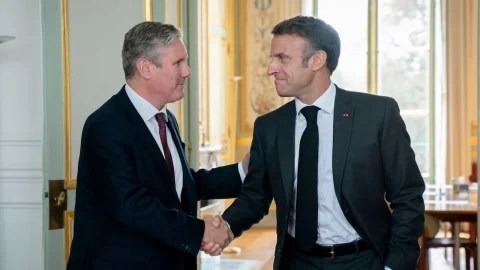
The US, UK, and France blocked a Russian-proposed statement at the UN Security Council (UNSC) condemning the assassination of Hamas politburo chief Ismail Haniyeh in Tehran, Iran’s envoy to the UN Amir Saeid Iravani said on 1 August.
“Russia’s proposed statement condemning Israel’s heinous act was blocked by the US, UK, and France,” Iravani told Russian media following an emergency UNSC meeting on Wednesday night.
“It is now absolutely necessary to hold the occupying [Israeli] regime accountable for the atrocities it committed,” the Iranian diplomat added. “This regime cannot be allowed to escape accountability and consequences for the violations it has committed.”
During the session, Iravani stressed that Tehran “reserves its inherent right to self-defense in accordance with international law” and said that “the responsibility of the United States as a strategic ally and main supporter of the Israeli regime in the region cannot be overlooked in this horrific crime. This act could not [have] occurred without the authorization and intelligence support of the US.”
Permanent UNSC members Russia and China strongly condemned Israel’s attacks on the Iranian and Lebanese capitals, blasting Tel Aviv for once more sabotaging Gaza ceasefire talks and pushing the region to the brink of all-out war.
“China is deeply concerned about the potential for this incident to further destabilize the region,” Fu Cong, China’s permanent representative to the UN, emphasized during the meeting. “China strongly opposes and condemns recent irresponsible actions, including Israel’s attacks on southern Beirut,” he added.
Fu also called on Tel Aviv to cease all military actions in Gaza and appealed to “influential countries” to “put more pressure and work more vigorously … to put out the flames of war in Gaza.”
Russia’s first deputy envoy to the UN, Dmitry Polyansky, also condemned Haniyeh’s killing, calling it an “attempt” to drag Iran into war.
“This provocative attack was carried out while the Hamas leader was in Iran on an official invitation to attend the inauguration ceremony of the President-elect of the Islamic Republic of Iran, Masoud Pezeshkian. Those behind this political assassination had to realize how dangerous the consequences could have been for the entire region,” Polyansky said.
“The misguided practice of targeted liquidations of prominent political and military figures is bringing the Middle East to the brink of a region-wide war,” the Russian diplomat added.
Feda Abdelhady Nasser, the deputy permanent observer of the State of Palestine to the UN, told the gathered diplomats that the global community “has a choice to make” between “peace and security” or letting “Israel drag us all to the abyss.”
“Israel has been the oppressor, tormentor, and murderer of Palestinians for decades, and it is the longstanding destabilizer of our region,” Nasser highlighted.
Lebanon’s Acting Permanent Representative to the UN, Hadi Hashem, contested Israel’s claims that the attack on the Beirut suburb of Dahye this week was an act of “self-defense.”
“Israel’s claim that it seeks to protect the population it occupies is a display of hypocrisy,” Hachem said, adding, “The real goal of Israel is to prolong and escalate the hostilities. And it is ironic that the killer of tens of thousands of children in Gaza sheds tears for the children of the occupied Syrian Golan.”
Similarly, Syria’s UN ambassador, Qusai al-Dahhak, stressed that “Israel is responsible for the crime in Majdal Shams” and noted that the territory is Syrian, accusing Israel of “weaponizing” the attack on the Druze community “to continue its aggression on the states of the region.”
Robert Wood, deputy US ambassador to the UN, called on UNSC members with influence over Iran “to increase pressure on it to stop escalating its proxy conflict against Israel and other actors.”
France and the UK took a similar line, reiterating a call for an “immediate ceasefire” in Gaza and condemning what they said was Iranian support for “destabilizing actors in the region.”
Evidence presented to the Scottish Inquiry
Tragic testimonies ignored by mainstream media
Health Advisory & Recovery Team | July 30, 2024
The Scottish Inquiry has heard repeated testimonies on a wide range of topics, but what has been said in relation to what happened in care homes during lockdown is particularly striking. The stories are those of neglect, abuse, denial of healthcare and repeated misuse of end of life medication resulting in deaths. Witness after witness has given concurring evidence.
These stories have only really reached our attention thanks to the work of an independent citizen journalist (“Dave”) on Twitter and Substack. Neil Oliver has been the only mainstream journalist to have reported on these stories on his show in GB News, including interviews with our two co-chairs, Dr Clare Craig and Dr Jonathan Engler.
Here we publish a summary of the evidence from one woman which manages to encompass almost every aspect of the harm caused in care homes. It is the story of her grandmother who was admitted to a care home for mild dementia in autumn 2020.
“My gran was a very mischievous little old lady who was great fun and very talkative. She used to be a very active person when she was younger and tried to keep that up when she was older but, in her later years, she was less active due to widespread pain, and she was unsteady on her feet.”
After a fall “Social Services then intervened and said that they felt my gran should be in a more regimented type setting.”
“I actually took her to the home and that was very difficult as I just had to hand her over to a care home staff member and leave her as I was not allowed in.”
The staff called her by the wrong name but she didn’t know because she depended on lip reading and they were all masked.
~1st Nov 2020:
Positive test result for covid they called to say “my gran had tested positive but that she was fine and that they would keep us updated.”
2nd Nov 2020:
Granddaughter asked to authorise Do Not Resuscitate:
“My answer first of all was, ‘Well, why are you asking me that, as you said she only had mild Covid?’. My second point was that this was not a decision I would make at the moment as my grandmother was lucid, still talking and it would be a discussion to have with her.”
Despite this, a DNR was put in place without proper authorization.
3rd Nov 2020:
They proposed giving her a “mild sedative” to keep her from removing her nasal cannula. The family agreed, not realising it was Midazolam, which can suppress respiratory function.
“On the 3rd November 2020, about 3 o’clock in the afternoon the care home contacted my mother to explain that her (grandmother’s) oxygen saturation had dropped but that it was generally due to the fact that she had a nasal cannula and that every time she went to the toilet she kept forgetting to put it back in.”
“At this point my grandmother was eating and drinking by herself, moving to the toilet herself, that there was only mild symptoms and that they were giving her the nasal oxygen just as a precaution as her stats were a little low but, with the cannula in, she was fine. Her stats had actually improved from the previous day according to her medical records.”
“I later found out my grandmother was on a full end of life protocol put on place by the doctor “just in case”. I don’t understand why this was administered as we were at no point informed that she was end of life and if we had been then why had we not been called to be with her? The way I look at it is that I think they have looked at her notes and seen the medication from the earlier shift and thought that she was “end of life”. My mum was never told it was Midazolam when the home asked if they could give my gran a mild sedative.”
4th Nov 2020:
Granddaughter received a call at 4:11 am saying her grandmother had deteriorated. When she arrived at 4:30 am, she was told her grandmother had died at 4:20 am and went in.
“there were only three staff members, including one nurse, caring for 26 residents”
“She was stone cold and, in my opinion, she had been dead a lot longer than twenty minutes.”
“There was no cannula or oxygen tank in the room.”
“The funeral was also difficult because of the numbers that were allowed. I think a lot more would have been there in normal times. The people there had masks and there was no singing. My gran had loved music and she liked singing. Years before, my gran had given me full instructions for her funeral and I could only follow some of them. When you can’t fulfil somebody’s dying wishes because of rules, it’s hard. To go there and not be able to hug your mum or your dad or your brother is really difficult.”
It’s shocking to imagine one person experiencing all these horrific events. Now consider the reality: each of these horrors has actually happened to countless individuals. This widespread suffering is even more disturbing.
More dead children. More BBC ‘news’ channelling Israeli propaganda as its own
By Jonathan Cook | July 28, 2024
BBC coverage of the attack on a football pitch in the Golan Heights on Saturday has been intentionally misleading.
The BBC’s evening news entirely ignored the fact that those killed by the blast are a dozen Syrians, not Israeli citizens, and that for decades the surviving Syrian population in the Golan, most of them Druze, has been forced to live unwillingly under an Israeli military occupation.
I suppose mention of this context might complicate the story Israel and the BBC wish to tell – and risk reminding viewers that Israel is a belligerent state occupying not just Palestinian territory but Syrian territory too (not to mention nearby Lebanese territory).
It might suggest to audiences that these various permanent Israeli occupations have been contributing not only to large-scale human rights abuses but to regional tensions as well. That Israel’s acts of aggression against its neighbours might be the cause of “conflict”, rather than, as Israel and the BBC would have us believe, some kind of unusual, pre-emptive form of self-defence.
The BBC, of course, chose to uncritically air comments from a military spokesman for Israel, who blamed Hizbullah for the blast in the Golan.
Daniel Hagari tried to milk the incident for maximum propaganda value, arguing: “This attack shows the true face of Hizbullah, a terrorist organisation that targets and murders children playing soccer.”
Except, as the BBC failed to mention in its report, Israel infamously targeted and murdered four young children from the Bakr family playing football on a beach in Gaza in 2014.
Much more recently, video footage showed Israel striking yet more children playing football at a school in Gaza that was serving as a shelter for families whose homes were destroyed by earlier Israeli bombs.
Doubtless other strikes in Gaza over the past 10 months, so many of them targeting school-shelters, have killed Palestinian children playing football – especially as it is one of the very few ways they can take their mind off the horror all around.
So, should we – and the BBC – not conclude that all these attacks on children playing football make the Israeli military even more of a terrorist organisation than Hizbullah?
Note too the way the western media are so ready to accept unquestioningly Israel’s claim that Hizbullah was responsible for the blast – and dismiss Hizbullah’s denials.
Viewers are discouraged from exercising their memories. Any who do may recall that those same media outlets were only too willing to take on faith Israeli disinformation suggesting that Hamas had hit Gaza’s al-Ahli hospital back in October, even when all the evidence showed it was an Israeli air strike.
(Israel soon went on to destroy all Gaza’s hospitals, effectively eradicating the enclave’s health sector, on the pretext that medical facilities there served as Hamas bases – another patently preposterous claim the western media treated with wide-eyed credulity.)
The BBC next went to Jerusalem to hear from diplomatic editor Paul Adams. He intoned gravely: “This is precisely what we have been worrying about for the past 10 months – that something of this magnitude would occur on the northern border, that would turn what has been a simmering conflict for all of these months into an all-out war.”
So there you have it. Paul Adams and the BBC concede they haven’t been worrying for the past 10 months about the genocide unfolding under their very noses in Gaza, or its consequences.
A genocide of Palestinians, apparently, is not something of significant “magnitude”.
Only now, when Israel can exploit the deaths of Syrians forced to live under its military rule as a pretext to expand its “war”, are we supposed to sit up and take notice. Or so the BBC tells us.
Update:
Facebook instantly removed a post linking to this article – and for reasons that are entirely opaque to me (apart from the fact that it is critical of the BBC and Israel).
Facebook’s warning, threatening that my account may face “more account restrictions”, suggests that I was misleading followers by taking them to a “landing page that impersonates another website”. That is patent nonsense. The link took them to my Substack page.
As I have been warning for some time, social media platforms have been tightening the noose around the necks of independent journalists like me, making our work all but impossible to find. It is only a matter of time before we are disappeared completely.
Substack has been a lifeline, because it connects readers to my work directly – either through email or via Substack’s app – bypassing, at least for the moment, the grip of the social-media billionaires.
If you wish to keep reading my articles, and haven’t already, please sign up to my Substack page.
US Navy Drops Details on Pricey Missiles and Bombs It’s Using Against Yemen’s Warriors
By Ilya Tsukanov – Sputnik – 27.07.2024
The US and Britain have been bombing Houthi-controlled areas of Yemen since January, killing and maiming scores of civilians and targeting hundreds of militia sites but failing to “degrade” the Houthis missile and drone capabilities, or to stop their months-long partial blockade of the Red Sea in support of Palestine.
The US Navy has revealed new details about the weapons systems it has been using in the ongoing US-UK bombing campaign against the Houthis.
According to information shared with the Navy Times, F/A-18 Super Hornet fighter jets aboard the USS Dwight D. Eisenhower, which left the Middle East and steamed home last month after a nine-month long deployment in the Red Sea area, used the AIM-9X infrared-guided heat-seeking missile to target Houthi kamikaze drones.
The AIM-9X is a variant of Raytheon’s widely used AIM-9 Sidewinder short-range air-to-air missile. The weapon has a per unit price of between $430,800 and $472,000, making it between 215 and 236 times the cost of the estimated $2,000-each price of a Houthi attack drone.
The Navy also confirmed the deployment of its Advanced Anti-Radiation Guided Missile, or AARGM, also launched from Super Hornets aircraft, against Houthi air defenses. Produced by Northrup Grumman, these ground attack weapons have a per missile price of $874,000.
The Navy did not provide any details on the Houthi systems targeted by these weapons, The militia’s arsenal is thought to consist mostly of older Soviet-era SAMs and anti-aircraft guns, similarly dated radars, and Yemeni-built copies of Iranian missile and MANPADS designs.
Another weapon used by the Super Hornets in their campaign is the AGM-154 Joint Standoff Weapon – a glide bomb possessed by the US Navy and Air Force and by the air forces of more than half a dozen of Washington’s allies. The Navy said the Raytheon-made missiles being used against the Houthis are the latest, AGM-154C variant, which cost roughly $719,000 each. The Navy did not specify what kinds of targets the munition was used to attack, but the inertial and GPS-guided, terminal infrared homing-equipped weapons are designed for use against both stationary ground targets and moving targets at sea.
Apart from their machinegun-armed speedboats, the Houthis don’t have a navy to speak of, and their naval drones aren’t the fancy, $250,000 apiece, custom-built unmanned vehicles possessed by NATO countries. Instead, the militia has improvised by fitting ordinary speedboats with remote controls, packing them with explosives and launching them toward their enemies, with the total cost of such weapons not exceeding $30,000 (or about 24 times less than the US munitions deployed to dispatch them).
The imbalance in pricing between the Houthis’ guerilla warfare-purposed weapons and the US’s sleek, arms expo showroom-class air-launched missiles and bombs parallels the chasm between the surface-to-air missiles the US Navy has been using and the Yemeni militia’s drones.
In explosive testimony by US air and missile defense officials to Congress in May, Senate Armed Services Subcommittee on Strategic Forces Angus King lambasted the state of affairs in which the US military has been forced to use $4.3 million SM-6 interceptor missiles to take down $20,000 Houthi UAVs.
“In the Red Sea, the Houthis are sending $20,000 drones and we’re shooting them down with missiles that cost $4.3 million. The math doesn’t work on that, gentlemen. It just doesn’t work. What are we thinking?” King asked. The lawmaker urged the Pentagon to urgently ramp up the development of directed energy weapons instead.
US Navy expenditures on their policing mission in the Middle East beginning after October 7 and the start of the Israel-Gaza war have surpassed $1 billion, Navy Secretary Carlos Del Toro told the Senate Appropriations Committee in April.
The US-led operation against the Houthis shows no sign of slowing down, but neither does the militia’s resolve against Washington and its allies. US Central Command announced on Friday that American forces had destroyed six Houthi aerial drones, and three uncrewed surface vessels, off the Yemeni coast. Also Friday, hundreds of thousands Yemenis gathered in the streets of Sanaa and other cities in solidarity with the Houthis’ operations against the US and Israel.
France’s Le Monde newspaper wrote in a piece Friday that Western powers had proven “powerless to halt Houthi attacks,” with Western warships’ presence in the Red Sea and strikes on the militia said to have “failed to deter the rebel militia.”
The glum attitude comes in the wake of reports in US business media last week that CENTCOM chief General Michael Erik Kurilla had written a letter to his boss, Lloyd Austin, and urged Washington to ramp up its economic, diplomatic and military pressure on the Houthis, admitting that the Western coalition’s operations to date had “failed” to stop the militia.
UK Plans to Build New Missiles to Target Russia Linked to Pentagon’s Mad Conventional Strike Scheme
By Ilya Tsukanov – Sputnik – 26.07.2024
Sources told UK media this week that Britain has partnered up with Germany to develop and deploy a new intermediate-range missile designed to target Russia’s nuclear arsenal. Veteran Russian military observer Alexei Leonkov says the plan is inextricably linked to the Pentagon’s highly dangerous Conventional Prompt Strike (CPS) initiative.
UK Defense Secretary John Healey spoke to his German counterpart in Berlin on Wednesday about a plan to jointly develop a new strategic missile with a 3,200 km range, The Times reported on Thursday, citing sources said to be familiar with the idea.
Once developed and fielded, the new missiles would be deployed in Germany, according to the publication, replacing the American ground-based long-range fires that Washington recently announced would be stationed in the Central European country beginning in 2026.
Both the American missiles and the proposed new British-German missile would have been prohibited under the 1988 Intermediate-Range Nuclear Forces (INF) Treaty, which banned the development, production and deployment of ground-based missiles in the 500-5,500 km range. Washington violated the treaty for years, according to Moscow, and unilaterally scrapped the agreement in 2019 and immediately began testing of new long-range weapons after falsely accusing Russia of possessing a ground-based missile system with a range beyond 500 km.
One of The Times’ sources said the US weapons expected to deploy in Europe in two years’ time are meant to “bridge” a gap in European NATO allies’ own capabilities. The source did not clarify what motivated the US to ask its allies to create an entirely new missile instead buying or agreeing to permanently field existing American ones.
A joint declaration from Healey’s talks with his German counterpart, Boris Pistorius, mentioned a commitment to “undertake a long-term, comprehensive cooperation in the field of long-range capabilities” to provide “deep precision strike” potential. The details are reportedly still being worked out, with no additional information made available, besides the new missile’s expected role as a conventional fire designed to destroy enemy tactical nuclear delivery systems.
The Storm Shadow is currently the furthest-reaching conventional missile in Britain’s arsenal. It has a range of about 240 km, and has been deployed extensively by Ukraine in the NATO-Russia proxy war. The Taurus KEPD 350 is Germany’s longest-range missile system, and has a range of up to 500 km. Berlin has refused to send the air-launched weapon to Ukraine, expressing concerns that doing so would make Germany a “party to the war” because German troops would be on the ground training Ukrainians to use the missiles.
A British Defense Ministry spokesperson told The Times that the deepening UK-German defense relationship is currently “in early stages” and that work on “any new programs” has “not yet commenced.”
Europe Joins US’s Dangerous Conventional Prompt Strike Scheme
“The deployment of these missiles, both American and British, is connected to two things,” Alexei Leonkov, editor of Russia’s Arsenal of the Fatherland military affairs and technology magazine, told Sputnik, commenting on The Times piece.
“The first is the global concept, the strategy under which NATO has been restructuring toward since 2002, which is the Conventional Prompt Strike (CPS) concept, whose essence centers around the need to destroy the nuclear potentials of an adversary like Russia or China,” Leonkov said.
Thought up by the Bush administration, CPS envisions the mass deployment of thousands of conventional long-range missiles fired simultaneously in a massive surprise attack to destroy as much of an enemy’s strategic arsenal as possible, decapitate its leadership, and destroy remaining fired nuclear missiles using missile defenses.
The primary danger of the idea stems from the concern that it will make the prospect of a ‘limited’ nuclear war seem more palatable for Pentagon planners, and hence increasing the temptation to launch aggression.
The second reason for the British-German plan to develop a new missile centers around the fact that the Americans “are running late, or perhaps have lost the technologies used to create intercontinental missiles with a range beyond that of the Minuteman-3,” Leonkov argues.
“Why do the Americans want to switch up some of their missiles for European ones? I think that most likely, the missiles they have developed may not have proven entirely successful. Hence they’ve decided to attract a European consortium led by the UK.”
On top of that, as Washington’s strategic competition with China in the Asia-Pacific heats up, the number of missiles available for deployment in Europe may be limited, Leonkov believes.
The defense observer can’t rule out that the new British-German missile project may be focused on the creation of a maneuverable hypersonic vehicle, with Britain’s BAE Systems already working on a number of projects in this direction, and cooperating with US defense companies on their hypersonic projects.
In fact, these new European weapons may be the mystery “developmental hypersonic weapons” that the White House mentioned in its press statement earlier this month when it announced the deployment of new long-range strike systems to Germany from 2026 onward, Leonkov said.
Leonkov is confident that these new missiles’ mission will be to overwhelm Russian air and missile defense capabilities, and that if they are developed and fielded, Europe will become the first priority for a Russian strategic attack.
Recalling the European NATO missile threat which faced Moscow in the 1980s, Leonkov characterized the alliance’s present plans as an attempt to give rise to a Cold War 2.0, only this time far more dangerous.
“Russia today is not in a position where it has a vast security belt in the form of the Warsaw Pact countries that it did during the Cold War. Therefore, decisions will need to be changed radically. It’s clear that it will be necessary to strengthen the country’s anti-missile and anti-aircraft defense, but also take steps so that these missiles never appear on the European continent in the first place, while there is still an opportunity to do so,” the observer stressed.
Specifically, Russia will need to make clear in its nuclear doctrine that the deployment of such missiles in Europe will pose a direct threat, and give itself the right to launch a preemptive strike to eliminate this threat, Leonkov suggested.
Under its existing nuclear doctrine, Russia reserves itself the right to use nuclear weapons only in retaliation to an enemy attack using nuclear arms or other weapons of mass destruction, or in the event of conventional aggression so severe that it puts the existence of the Russian state in jeopardy. In June, President Putin hinted that Russia might revise its nuclear doctrine in response to existing threats.
What the US needs more than anything is “a quick solution that would close the issue for a while,” Leonkov said, referring to the constraints Washington will face in deploying vast numbers of long-range strike systems both to Europe and Asia. Russia’s main goal at this stage will be to “act proactively” to respond to this new threat, the analyst concluded.
Featured Video

Houthis Keep Advancing as the Red Sea Crisis Deepens
or go to
Aletho News Archives – Video-Images
From the Archives
15 Saudi ‘hijackers’ were CIA agents working for US: Scholar
Press TV – April 13, 2016
Fifteen of the 9/11 “hijackers” from Saudi Arabia were CIA agents working for the United States government, which was seeking to destroy the Middle East for Israel and to double the American military budget, says Dr. Kevin Barrett, an American academic who has been studying the events of 9/11 since late 2003…. continue
Blog Roll
 Aletho News
- Russia Just Struck the Eyes of NATO’s War Machine in Ukraine
- Russia summons UK charge d’affaires over Kiev drone support
- NATO member warns bloc seeking pretext for war with Russia
- Macgregor: We Haven’t Seen the Worst of the Iran War Yet
- ‘We are not like everyone else’ laws that bind other nations do not apply to Israel, says Likud lawmaker
- Report: Saudi Arabia seeks allies’ assistance as missiles deplete amid war on Yemen
- Fuel Crisis Deepens: Pakistan Warns Tanker Attack in Red Sea Would Be an ‘Act of War’
- ‘Bucha massacre’ a false flag orchestrated by UK – Moscow
- China Rejects Outside Pressure on Trade Ties After New US Russia Sanctions Bill
- Houthis Keep Advancing as the Red Sea Crisis Deepens
- If Americans Knew
- An error has occurred; the feed is probably down. Try again later.
- No Tricks Zone
- New Study: ‘Global Drought Shows No Detectable Recent Acceleration Under Climate Warming’
- Economic Masterminds: German Socialists Suggest Taxing Productivity Gains Stemming From Using AI
- The South China Sea Has Not Been Cooperating With The Climate Change Narrative
- Energy Crisis: Germany Enters Heating Season With Historically Low Gas Reserve Fill Levels
- New Study: The Antarctic Ice Sheet Gained Mass From 2020-2024 Due To Staggering Snow And Ice Accumulation
- Study: Ocean Heating Rates From Thousands Of Years Ago ‘Dwarf’ Modern Ocean Heating Rates
- Climate Extremists Target, Attack Large-Scale Power Grid Infrastructure In Germany!
- New Study: Antarctic Ice Melt Has Contributed Less Than 1 Centimeter To Sea Level Rise In The Last 30 Years
- Fear Of Debate: Alarmist German Climate Scientist Calls On Mainstream Media To Discredit Skeptic Voices
- End-Of-August Arctic Sea Ice Extent Hasn’t Fallen In 20 Years, Official Data Show!
 Aletho News