US Diplomacy ‘Utterly Failed’ in Ukraine, Washington Should Seek Negotiations – Jeffrey Sachs
Sputnik – 05.04.2024
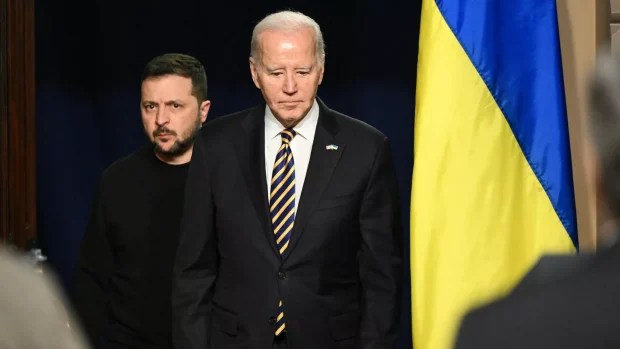
WASHINGTON – US policy in Ukraine has failed and instead of encouraging the country’s NATO membership bid Washington should seek peace negotiations with Russia, world-renowned economics professor Jeffrey Sachs told Sputnik.
While in Brussels, US Secretary of State Antony Blinken said Ukraine would become a member of NATO but did not specify a timeline. He added that the 2024 NATO summit in Washington will help build a bridge for Ukraine to join the alliance.
“Secretary Blinken’s statement is another disaster for Ukraine… American diplomacy has utterly failed and indeed collapsed,” said Sachs, Director of the Center for Sustainable Development at Columbia University. “Secretary Blinken should be sitting down in negotiations with his counterpart Foreign Minister Lavrov rather than reiterating the utterly failed foreign policy that has brought on this war.”
Russian President Vladimir Putin has said that NATO’s expansion to include Ukraine would create a direct national security threat to Russia and that Moscow considers the non-aligned status of Ukraine to be extremely important to put an end to the years-long conflict.
NATO is in state of ‘war psychosis’ and must change course in bid for peace, warns Hungary FM Szijjártó
Mandiner | April 5, 2024
NATO is currently in a state of war psychosis, which poses a serious risk of escalation, and must change its strategy as soon as possible, Minister of Foreign Affairs and Trade Péter Szijjártó warned in Brussels on Thursday.
At a press conference following the NATO-Ukraine Council meeting, Szijjártó said that everything discussed at the meeting confirmed the need for peace as soon as possible, as the situation on the battlefield clearly shows that without a quick diplomatic solution, the number of dead and the destruction will increase dramatically.
“It is clear that hostilities are becoming more active and their consequences more serious, and that to save lives and prevent destruction, all efforts should now be focused on peacemaking,” he warned.
Szijjártó said it was bad news that Hungary’s view is currently only a minority position within NATO and cited an unnamed counterpart at the meeting who said, “The goal is not to find peace but to win the war.”
“This is pretty much the kind of war psychosis that characterizes NATO member states today. The vast majority of speeches today have been about how to increase arms supplies to Ukraine,” he said.
In this context, he pointed out that it is becoming increasingly difficult to assemble arms shipments, partly because a large number of the Allies have now almost completely surrendered the military equipment in their warehouses. Szijjártó recalled that Hungary is currently performing air policing tasks in Slovakia together with the Czech Republic because Bratislava has handed over all its aircraft to Kyiv and the new ones have not yet arrived.
He recalled that it was also said at the meeting that the munitions depots across Europe should be emptied, i.e., all existing equipment should be handed over to Ukraine, and this desperation clearly shows that arms deliveries are becoming increasingly difficult.
Trump warns: “lunatic” Biden could start World War III
By Ahmed Adel | April 5, 2024
Former US leader and current Republican Party presidential candidate Donald Trump warned in Michigan on April 2 that US President Joe Biden could trigger World War III. Trump’s comments come as he surges in the polls while Biden’s policy on Ukraine is continuously scrutinised. The former president also criticised the way his successor handled the nuclear issue, questioned his mental condition, and claimed that other foreign powers respected the US during his presidency.
“This guy has no clue,” the former president said about Biden. “He can’t put two sentences together, and he’s dealing with Putin, and he’s dealing with President Xi, and he’s dealing with Kim Jong-un. All people I know very well. We were under no threat from anybody until this guy got in office. Now they’re talking nuclear all the time. We didn’t talk nuclear.”
Trump recalled that, during his term, he rebuilt “nuclear power” to a level that “no one has” and that, in this context, it was “four safe years.”
“You were safe because they respected your president, and they respected the United States of America. And now you’re not safe. I will tell you we could end up in World War III with this lunatic,” he stressed.
According to a new Wall Street Journal poll published on April 3, Trump leads Biden in six of the seven closest swing states. Although Biden won Wisconsin, Michigan, and Pennsylvania in 2020, Trump now holds a two-point lead in Michigan and a three-point lead in Pennsylvania. Biden also won Georgia, Nevada, and Arizona in the last election, but now the three states have stronger support for Trump, with the former president leading Georgia by three points, Nevada by four points, and Arizona by five points.
In a recent statement to USA Today, Trump spokeswoman Karoline Leavitt said: “There are more than 100 polls showing President Trump crushing Joe Biden, including recent polling that has him leading in every key battleground state and winning independents by double digits.”
The prospect of Trump’s return has triggered an increase in debate among NATO allies about what Europe should do to ensure Washington continues to invest in transatlantic security. The Republican’s possible return also raised concerns among European officials that Trump could withdraw US aid to Ukraine because of comments that he would try to end the war in one day.
Reuters, citing five diplomats, reported on April 2 that NATO boss Jens Stoltenberg has proposed a $107 billion, five-year package of military aid to Ukraine so the Western alliance could have a more direct role in supporting Kiev. The NATO chief said the plan is in part “to shield against winds of political change,” but Trump is foremost on the minds of many, a senior NATO diplomat told the British agency.
The diplomats said that discussions were only at an early stage and that it was still unclear whether the $107 billion would be accepted by all 32 members—since a consensus must be reached—or how it would be financed.
“It goes some way to protecting in case of Trump. But it is impossible to create something Trump-proof,” said another diplomat. “A fund of 100 billion looks very optimistic, knowing how difficult it was to agree on a smaller amount at EU level.”
As part of the proposed package, NATO could also take over the operational functions of the Ukraine Defense Contact Group, which coordinates arms deliveries from around 50 countries to Kiev and is now led by the US. With NATO’s Europe Supreme Allied Commander, General Chris Cavoli, in office, such a move could protect the Group from any political changes after the November US elections.
In effect, NATO recognises that there is a high possibility that Trump could return to the White House and is already preparing for a post-Biden scenario. Biden has supported most initiatives for Ukraine, but as his cognitive decline deepens and his numbers suffer in the polls, a Trump victory would almost certainly result in the retraction of support and force Kiev to negotiate with Moscow.
As Trump highlighted, Biden is a “lunatic” who is fanning the flames of a Third World War. Although it is unlikely the US would escalate with Russia to the extent of World War III for the sake of Ukraine, the former president highlights that global tensions were not as intense as they have been since Biden came to power, and he aims to return to this scenario. This prospect frightens NATO and much of Europe.
Ahmed Adel is a Cairo-based geopolitics and political economy researcher.
Russia and NATO already in ‘direct confrontation’ – Kremlin
RT | April 4, 2024
The current state of relations between Russia and NATO can be described as a “direct confrontation,” Kremlin spokesman Dmitry Peskov has said. He claimed that the US-led military bloc has been a destabilizing force in Europe rather than ensuring the continent’s security.
He made his comment on Thursday, as the bloc marked 75 years since the signing of its founding document, the North Atlantic Treaty.
Since the start of the Ukraine conflict, NATO has provided Kiev with billions worth of military aid and weaponry, as well as sharing intelligence and helping to train Ukrainian troops.
“The bloc itself is already involved in the Ukraine conflict. NATO continues to move towards our borders, expanding its military infrastructure towards our borders… In fact, our relations have now descended to the level of direct confrontation,” Peskov said at a press-briefing.
He stated that the organization had been created as an “instrument of confrontation” in Europe, and is fulfilling its purpose to the detriment of the entire continent.
“NATO continues to fulfill its purpose, which currently, however, in no way contributes to security, predictability and stability on the continent, but on the contrary is a destabilizing factor,” Peskov explained.
Multiple Western leaders have warned that Russia may attack NATO once the Ukraine conflict is over. Moscow has repeatedly dismissed those claims.
Russian President Vladimir Putin said last month that talk of a potential Russian attack on NATO countries is simply propaganda by their governments aimed at scaring their own population to “beat the money out of them.”
Moscow has for years voiced concerns about NATO’s expansion toward its borders, viewing the US-led military bloc’s policies as an existential threat. However, it has also warned that NATO’s more pronounced involvement in the Ukraine conflict, in particular, the possibility of a troop deployment to the front lines, would be seen as an intervention. This, according to an earlier statement by Putin, would take the conflict “one step shy of a full-scale World War III.”
75th Anniversary: NATO Exists to Respond to Conflicts It Caused

NATO military exercise ‘Iron Wolf 2022-II’ at a training range in Pabrade, north of the capital Vilnius, Lithuania.
By Ekaterina Blinova – Sputnik – 04.04.2024
Over the last 30 years, NATO has lost its veneer of a “defensive” alliance, turning into an overtly expansionist and interventionist military bloc, Sputnik’s interlocutors say.
Exactly 75 years ago, the North Atlantic Treaty Organization was founded by the US, Canada, and several Western European nations, with the main aim of deterring and confronting the USSR, their former Second World War ally.
After the Soviet Union’s collapse in December 1991, the conditions for a new inclusive security architecture in Europe and beyond emerged, according to Glenn Diesen, professor of international relations at the University of South-Eastern Norway.
“After the Cold War, we developed the format for a new inclusive security system,” Diesen told Sputnik. “The Charter of Paris for a New Europe in 1990 and the establishment of the Organization for Security and Cooperation in Europe (OSCE) in 1994 were both based on the [1975] Helsinki Accords, and embraced the principles of sovereign equality, indivisible security, and ending the dividing lines in Europe.”
The Helsinki Accords, signed during the Cold War by the US, Soviet Union, and several European countries, led to greater cooperation between Eastern and Western Europe. Even though the agreements weren’t binding, they significantly contributed to the détente between the East and West.
Instead of building on that momentum, the US saw the end of the Cold War as the beginning of its unipolar moment, according to the professor: in 1992, George H.W. Bush proudly declared that the US had “won” the Cold War during his State of the Union address.
“The US also developed a security strategy based on hegemony, which required expanding NATO and thus cancelling the pan-European security architecture,” Diesen said. “NATO therefore transitioned from a status quo power to a revisionist power. NATO required a new purpose, which became ‘out-of-area’ military interventionism and expansionism.”
Overtly Aggressive Military Bloc
The next 30 years saw a string of NATO overseas military campaigns, neither of which has seen a comprehensive resolution, resulting in the creation of hotbeds of instability instead.
“During the 1990s, NATO turned from a conceptually defensive organization into an openly aggressive organization when it entered the Yugoslav wars and waged a massive bombing campaign there,” Gilbert Doctorow, an international relations and Russian affairs analyst, told Sputnik.
“More generally, the United States was at this time preparing NATO to move out of its core geography in Europe and to assist US plans for global domination in the Middle East in the succession of regime change operations and open invasions that the United States planned and led.”
Doctorow highlighted that these “out-of-region NATO operations were one disaster after another, ending in the withdrawal from Afghanistan after participation in a 20-year-long war directed by Washington.”
NATO’s Expansionism Led to Ukraine Conflict
Meanwhile, the alliance’s seven waves of post-Cold War eastward expansion accelerated tensions in Europe, according to Diesen.
“Reviving the bloc approach to security and competing over where to draw the new dividing lines has been the primary source of conflicts in Europe for the past three decades and eventually resulted in the Ukraine war,” Diesen said.
The academic pointed out that “by going along with NATO expansionism, the Europeans allowed their continent to be re-divided and remilitarized, which has predictably doomed Europe to greater irrelevance.” He projected that Europe “will undergo systemic economic decline and become painfully subordinated to the US.”
“We could exit this tragedy by reaching out to Russia to negotiate a new inclusive European security architecture devoted to reducing security competition instead of imposing hegemony,” the professor emphasized.
Is NATO Sustainable?
“NATO exists to respond to the conflicts caused by its own existence,” Diesen explained. “The problem now is that NATO is returning to great power conflicts with the same disastrous approach to security, based on hegemony rather than mitigating security competition.”
Despite the Western mainstream media claims that the North Atlantic Alliance is united like never before amid the Ukrainian conflict, it is in fact not true, according to the professor.
“There are great tensions within NATO that simmer below the surface, and I do not think the hatred of Russia is enough to ensure unity after the war is over,” he said.
“NATO victory in Ukraine is imperative as it had the stated objective of permanently weakening Russia and thus knocking it out from the ranks of great powers. This would revive the unipolar moment and collective hegemony of the West. Once NATO’s defeat is evident the cracks will emerge in the military bloc,” Diesen pointed out.
Doctorow believes that despite all its declared, might the North Atlantic Alliance is on thin ice.
“NATO is in treading water, waiting for the tsunami that will send it to the bottom. That tsunami will either take the shape of a [US presidential candidate Donald] Trump victory in November or it will take the shape of an imminent collapse of the Ukrainian army or both phenomena simultaneously,” the international relations analyst concluded.
US Congresswoman Greene Says CIA Running Conflict Against Russia in Ukraine
Sputnik – 03.04.2024
WASHINGTON – The CIA is directing the conflict against Russia on the ground in Ukraine, US Congresswoman Marjorie Taylor Greene said in an interview with journalist Tucker Carlson.
“To fund a war, to pay for it, to continue it, to advise it, to have our CIA on the ground over there running that war in Ukraine against Russia — nuclear-armed Russia… that is a complete departure from anything that is Christian,” Greene said on Wednesday.
It is contrary to Christian principles to fund wars all over the world, Greene added.
Fighting a “proxy war” in Ukraine against Russia does not protect the US or serve its national security interests, Greene said. People in the US want to see a peace deal between Russia and Ukraine, Greene said.
Officials and media lie every single day by claiming that Russia intends to take over Europe, Greene said. Such a claim contradicts statements made by Russian President Vladimir Putin, Greene said.
In February, US media reported that the CIA created a network of spy bases in Ukraine over the past eight years, including a dozen forward operating bases along the Russian border that engaged in operations against Russia. CIA Director William Burns has personally visited Ukraine at least 10 times since February 2022.
Moscow responds to claims US warned it about possible terrorist attack target

RT | April 3, 2024
Russian Foreign Ministry spokeswoman Maria Zakharova has rejected the Washington Post’s claim that the US alerted Russia that the Crocus City concert hall could be attacked by terrorists two weeks before the tragedy, calling it completely false.
On Tuesday, the Washington Post reported, citing unnamed US officials, that Russian authorities had received an alert with a “high degree of specificity” that the popular venue could be targeted by the terrorists. According to the news outlet, the notice came one day before the US Embassy in Moscow warned Americans on March 7 to stay away from public gatherings for the following 48 hours because of the heightened threat.
Speaking at a press briefing on Wednesday, Zakharova dismissed the report, noting that Moscow had long grown “accustomed to American misinformation” as well as the Western media’s repeated attempts to retract their own assertions.
“I would really like… to receive factual material on this topic from the American side. That is, to whom and when did they give this information?” she added.
In the aftermath of the Crocus City massacre, the White House said that the US had shared data with Moscow about a potential terrorist attack. The head of Russia’s Foreign Intelligence Service (SVR), Sergey Naryshkin, has confirmed this, but noted that “the information was too general and did not allow us to fully identify those who participated in this terrible crime.”
On March 22, a group of armed men stormed the venue, killing at least 144 people, including six children, and injuring over 500 others. The terrorist act was one of the deadliest in Russia since the early 2000s.
Russian law enforcement agencies arrested several suspects in the aftermath of the attack, including four suspected gunmen who were caught fleeing towards Ukraine. Russian President Vladimir Putin has described the alleged culprits as radical Islamists, saying that a “window” was arranged for them on the Ukrainian border.
Moscow has suggested that the Ukrainian intelligence services may have been involved in the attack, a claim vehemently denied in Kiev. The US and its allies have insisted that the attack was orchestrated by Islamic State terrorists.
Meanwhile, Russian Foreign Minister Sergey Lavrov has pointed out that the West has been conspicuously obsessive in attempts to clear Ukraine of any suspicion that it could have been behind the terrorist plot. He has also called for patience until the investigation is over before jumping to any conclusions.
Russia Reiterates Call on Int’l Organizations to Conduct Probe Into Bucha Events
Sputnik – 02.04.2024
Moscow reiterates its call that international organizations conduct an investigation into the events in the city of Bucha and reveal the names of the victims, the time and the reasons for their deaths, Russian Foreign Ministry spokeswoman Maria Zakharova said on Tuesday.
“Once again, we demand that international agencies stop covering up for the Kiev regime and ensure a thorough investigation that will finally reveal the names of the victims, the time and the cause of their death, the signs of the bodies having been moved from one place to another, and the individuals responsible for this terrifying crime by the Kiev authorities,” Zakharova said in a statement released by the Russian Foreign Ministry.
Russia has sent “multiple” requests to international organizations, including to UN Secretary-General Antonio Guterres and UN High Commissioner for Human Rights Volker Tuerk, but they remained unanswered, Zakharova said, adding that this shows that the “organisers of this heinous act have things to hide.”
“The propaganda-driven disinformation campaign in Bucha came as a response to our goodwill gesture to withdraw troops from the Kiev and Chernigov regions which was made in the wake of progress at the Russian-Ukrainian talks in Istanbul on March 28, 2022. Clearly, the goal of this campaign was to disrupt the dialogue between the parties and to launch a package of pre-arranged Western sanctions on Russia at the behest of London,” Zakharova also said.
She added that Kiev intended to distract the international community’s attention “from its own crimes and inconsistencies” of the Bucha “provocation” and to spread a “fake theory” about the civilians allegedly killed by the Russian military among the public in Western countries.
Immediately after the start of Moscow’s special military operation in February 2022, Russia took control of the territory of the Kiev Region, including Bucha, a small city located northwest of Kiev. Following the Russian military withdrawing from the region, Ukrainian authorities accused Russia of numerous killings of civilians in Bucha and surrounding areas.
Moscow has denied its role in the killings of civilians and insists that the footage of the murdered local residents, which was distributed in the Western media, is nothing more than a staged provocation on the part of Ukraine to put pressure on the Western ruling circles in order to achieve their goals in the conflict with Russia.
Update on the Crocus terror attack
By Gilbert Doctorow | April 1, 2024
Day by day, the Russian security officials are expanding upon their claims that Ukraine financed and directed the terror attack on the Crocus City Hall concert venue. Sunday evening’s edition of News of the Week hosted by Dmitry Kiselyov pointed to crypto currency payments and other financial channels which were used by the Ukrainians, as the latest results of interrogations and further arrests have revealed. A substantial success reward is said to have awaited the assailants upon arrival in Kiev.
Meanwhile various Western media outlets including Deutsche Welle tell us the Kremlin has demanded the hand-over of the head of Kiev’s Security Service (SSB), brigadier general Vasyl Malyuk on charges of directing terrorist attacks in Russia. To be sure, Malyuk himself has claimed responsibility for the 2022 bombing of the Kerch (Crimea) bridge. But we may now assume that the Russians have evidence to hold him to account for directing the Crocus City Hall atrocity.
There is speculation in social media that Kiev’s refusal to surrender its terror campaign leaders would allow Russia to declare Ukraine a terrorist state. This would open the possibility for ‘neutralizing’ top Ukrainian officials on justifiable grounds.
However, we need not speculate about what may come next. De facto, Russia’s current offensive against Ukraine has escalated to a new, vastly more threatening level. There are daily punishing aerial bombing and missile attacks on military command centers across Ukraine, on training centers, on concentrations of foreign mercenaries. And then there is a new dimension to the destruction of Ukraine’s electricity network.
In the winter of 2022-2023, all the Western media spoke of Russian attacks on the energy infrastructure, on how Russia was allegedly seeking to impose misery on the Ukrainian civilians by depriving them of heat and light in the midst of freezing cold. But back then the reality was that Russia only struck substations and other distribution points. Such destruction was meant to knock out power for tactical advantage over the Ukrainian armed forces. It was obvious that the substations and other gear could be replaced in a matter of weeks or months. By contrast what is now going on is Russian destruction of power generating stations. Replacing them will be a matter of years, not months.
Very much to the point, the mayor of Kharkiv yesterday remarked to the press that the city’s power supplies have been utterly destroyed. This development corresponds very nicely to the calls that were made on the Evening with Vladimir Solovyov talk show last week for Kharkiv’s inhabitants to be sent packing in their cars headed west ahead of the city being razed to the ground. The intent was to end once and for all the missiles and artillery shells that Kharkiv has been sending daily into the neighboring Belgorod region of Russia to kill civilians in the greatest numbers possible. Kharkiv may not yet be razed, but it certainly is on the way to becoming uninhabitable.
In the face of this massive and undeniable destruction by the Russians both on and off the battlefield, the bravado of Zelensky and his clique is fading. Indeed, the Ukrainian president has finally said publicly that it may be time for peace negotiations.
Let us hope that Russia’s post Crocus viciousness may bring the Ukrainians to their senses and end this awful war.
©Gilbert Doctorow, 2024
Ukrainian counteroffensive ‘biggest debacle in modern military history’ – David Sacks
RT | April 1, 2024
The failure of Ukraine’s 2023 summer counteroffensive against Russia was “easily predictable,” according to US tech entrepreneur and venture capitalist David Sacks, who has suggested that the Washington elite should be held accountable for talking up the doomed operation.
Sacks’ comments came in response to a post on Saturday by Tesla and SpaceX CEO Elon Musk, who condemned the unnecessary loss of life suffered by Kiev’s forces as they attempted to “attack a larger army” that had superior defenses.
The failed Ukrainian counteroffensive was “one of the biggest debacles in the history of modern warfare,” Sacks said in agreement, adding that Kiev’s soldiers and tanks had effectively run “headlong into minefields while Russian artillery rained down on them from heavily fortified positions.”
“This should have been easily predictable,” the former PayPal COO and founder of the Yammer corporate social network stressed.
According to estimates released in March by the Russian Defense Ministry, the Ukrainian military saw over 166,000 casualties during last year’s failed counteroffensive. Kiev’s overall casualties since the outbreak of the conflict with Russia stand at 444,000, the ministry has claimed.
Sacks went on to suggest that US officials such as ex-CIA chief David Petraeus, former House Speaker Nancy Pelosi, and current US Secretary of State Antony Blinken should all be held responsible for encouraging the doomed operation.
“These people are fools who should have no credibility left. But of course the MSM never holds them accountable so we will get more of the same until Ukraine finally collapses,” Sacks surmised.
Musk, meanwhile, has called the counteroffensive “a tragic waste of life for Ukraine,” suggesting that Kiev should not have attacked Russian forces – which had deployed vast minefields and had stronger artillery – while Ukrainian forces lacked armor or air superiority.
“Any fool could have predicted that,” the billionaire said, recalling that one year ago he had recommended that Kiev’s forces entrench and apply all resources to defense.
Musk stated that Kiev would continue to have difficulty holding on to territory, but suggested that Russia was unlikely try to take over the entire country, arguing that it would face “extreme” local resistance in western regions of Ukraine.
He also warned that if the conflict “lasts long enough, Odessa will fall,” and advised Kiev to reach a negotiated settlement with Moscow as soon as possible, before Russia gains more territory and Ukraine loses all access to the Black Sea.
Moscow has stressed that it remains open to meaningful talks with Kiev, and has blamed the lack of a diplomatic breakthrough on the Ukrainian authorities, who refuse to accept the “reality on the ground.”
Russia-NATO relations worse than during Cold War – Moscow
RT | April 1, 2024
The current state of relations between Russia and NATO can be described as “something more than a Cold War,” the head of Moscow’s delegation at the Vienna talks on military security and arms control, Konstantin Gavrilov, has said.
During his interview with RIA Novosti on Monday, Gavrilov was asked to comment on French President Emmanuel Macron’s February statement that he “cannot exclude” the possibility of troops from NATO countries being sent to Ukraine to aid Kiev amid the conflict with Moscow.
“The military strategists in Washington and Brussels should realize: if by lifting the taboo on the potential deployment of the bloc’s servicemen to Ukraine they are trying to test our country’s strength, then we are ready for any turn of events,” he replied.
According to the diplomat, the warnings from US President Joe Biden and some other Western politicians, that if Russia defeats Ukraine it is going to take on NATO states next, are actually aimed “to divert the attention of taxpayers from the senseless pumping of their money into the Ukrainian ‘corruption black hole’ as well as to warm up the public opinion in favor of reviving defense industries in their countries.”
His comment echoed Russian President Vladimir Putin’s statement last week that “the claims that we are going to attack Europe after Ukraine – it is utter nonsense and intimidation of their own population just to beat the money out of them.”
Gavrilov said that during the Cold War, almost all NATO statements began with the evaluation of the possibility of a sudden large-scale attack on the bloc by the USSR and its Eastern European allies. Similar rhetoric is prevalent within the US-led military alliance today, he added.
The diplomat recalled that Russia has been labeled “the most significant and direct threat” in NATO’s Strategic Concept, which was adopted in 2022. “Apparently, now their ideal vision of European security is the borders with our country being wrapped in barbed wire,” he said.
“As a result, Russia-NATO relations can now be characterized as something more than a Cold War,” Gavrilov stressed.
Since fighting between Russia and Ukraine began in February 2022, Moscow has said repeatedly that the US and its NATO allies have become de-facto parties to the conflict through the provision of arms, including advanced weaponry, intelligence-sharing, and the training of Ukrainian troops.
Finland supports open war against Russia
By Lucas Leiroz | April 1, 2024
Apparently, Emmanuel Macron’s stance on the Ukrainian conflict is gaining supporters among European warmongers. In a recent statement, Finnish Foreign Minister Elina Valtonen supported the plan to send troops to Ukraine in the future, if Kiev proves unable to continue fighting. The case is further evidence of how anti-Russian paranoia is reaching worrying levels among European states, leading them to almost engage in open war with Moscow.
According to Valtonen, Macron is assuming a position of “strategic ambiguity” necessary for the current stage of the conflict. This “ambiguity” consists of not making it clear whether or not NATO troops will be sent to Ukraine. The precise time of the possible deployment also remains unknown. Valtonen sees this position as correct, since, according to her, Western countries must deliberate on such a strategic decision, choosing the moment to openly engage in the conflict.
Her view is that the West should avoid self-imposing red lines. She praises Macron for not ruling out direct intervention as this gives the West freedom to decide how and when to act. In an interview to the Financial Times, Valtonen stated that she does not see any need for Western intervention in the conflict for now, but supported the plan to send troops in the near future, if “necessary”. For her, the most important thing is that there are no strategic limits for the West, with NATO countries having maximum freedom to make any decision regarding the conflict.
“Now’s not the time to send boots on the ground, and we are not even willing to discuss it at this stage. But, for the long term, of course we shouldn’t be ruling anything out (…) Why would we, especially not knowing where this war will go and what happens in the future, disclose all our cards? I really wouldn’t know (…) What I liked about two recent announcements of President Macron is that he said that actually why should we impose ourselves red lines when Putin basically has no red lines?”, she told journalists.
As we can see, the Finnish official considers the direct deployment of troops as a Western “card”. She seems not to care – or simply not to understand – the catastrophic consequences of an open conflict between NATO and Russia. This shows, in addition to high bellicosity, a true diplomatic inability, which is particularly worrying since she is the head of Finnish diplomacy.
It is interesting to note how fallacious Valtonen’s speech is. She states that Europeans should not rule out direct intervention because “Putin basically has no red lines.” However, since the beginning of the special military operation, it is Russia, not the West, that has self-imposed strict limits on how to act in Ukraine. Moscow deliberately moderates its military intensity to avoid side effects and civilian casualties. Instead of launching a high-intensity operation for a prolonged period, the Russians prefer a tactic focused on attrition and slow territorial gain, thus reducing damage to the Ukrainian civilian population.
Bombings against Ukrainian critical infrastructure happen rarely, almost always in retaliation for previous terrorist attacks carried out by Kiev on the border. If Russia really didn’t self-impose red lines, there would no longer be any infrastructure in Ukraine and Kiev would have collapsed a long time ago. Moscow clearly sees the conflict as a tragedy and strives to prevent its consequences from being even more serious for innocent people.
On the other hand, the West clearly has no limits when it comes to acting in Ukraine. In the first weeks of the special military operation, NATO countries promised to limit their support to sending money and humanitarian aid. Before long, weapons began to be sent, and then long-range missiles were arriving in Kiev some months later. NATO simply engaged in a proxy all-out war through the neo-Nazi regime – but was quickly defeated.
With the Ukrainians becoming unable to continue fighting and the Western military-industrial complex collapsing in the face of its inability to produce more weapons for Kiev, the West can only choose between retreating or moving towards direct war. Macron, trying to improve his domestic and international image, launched a “PR stunt” talking about sending troops to Ukraine, but showing no real capacity or willingness to take this dangerous step.
The problem is that among Macron’s audience there are European leaders enraged by the anti-Russian paranoia spread by NATO. These leaders have been deceived by the propaganda of their own “allies” and now truly believe that if they do not make “hard decisions” they will be “invaded by Russia” in the future. Finally, it seems that the lack of rationality and strategic sense is leading European countries to make a serious mistake.
You can follow Lucas on X (former Twitter) and Telegram.
Featured Video
Integrity Initiative: UK-funded network framed dissent as Russian disinformation for years
or go to
Aletho News Archives – Video-Images
From the Archives
Why Saudi Ties to 9/11 Mean U.S. Ties to 9/11
By Kevin Ryan | Dig Within | September 27, 2015
Media interest in Saudi Arabian connections to the crimes of 9/11 has centered on calls for the release of the 28 missing pages from the Joint Congressional Inquiry’s report. However, those calls focus on the question of hijacker financing and omit the most interesting links between the 9/11 attacks and Saudi Arabia—links that implicate powerful people in the United States. Here are twenty examples. … continue
Blog Roll
 Aletho News
- EUROPE FEARS RUSSIA’S NEXT MOVE / Ian Proud
- Big tech hands in its DSA censorship reports to the EU
- ‘A Big Victory’ – Palestine Chronicle Wins Two-Year Legal Battle
- IAEA inspectors cannot return to Iran amid US threats: Russia
- Senate Rejects Iran War Powers Resolution Passed By House
- ‘We did not attack Pakistan with drones’: Afghan sources
- Iraqi Resistance faction links arms to sovereignty, questions US exit
- Cannon fodder no more… South Korea rejects Trump’s pressure to join his criminal war on Iran
- Neria Leiter Was A Legitimate Military Target
- Integrity Initiative: UK-funded network framed dissent as Russian disinformation for years
- If Americans Knew
- ‘This is where I live now, the back of a truck’: a day in the life of a grandmother in Gaza
- In UN Speech, Iran’s President Displays Pictures of Children Killed by US, Brings Attention to Israel’s Nuclear Arsenal
- Israel displaces hundreds of Palestinians amid wave of demolitions in West Bank
- Aid, reconstruction, and Israel’s history of obstruction in Gaza
- Trump administration digs an ever-deeper hole of complicity in genocide – Daily Update
- US-Israel $2.8 Billion Arms Deal, 40,000-Bomb Supply Faces New Gaza Complicity Accusations
- Caught on Tape: AIPAC CEO Boasted of Controlling Trump’s National Security Officials
- Why Hamas Attacked Israel in October 2023 – Israeli professor Ilan Pappé
- They see them, then kill them: Israeli quadcopters track, deliberately target civilians in Gaza
- Winter could turn Gaza’s treacherous, war-damaged buildings into deathtraps
- No Tricks Zone
- New Study: Earth And Venus Surface Warmth Largely Explained By Convection And Lapse Rate, Not CO2 Or Radiation
- 2025 Nature Paper Claiming Worsening Global Drought Gets RETRACTED …Heavily Flawed
- New Study: ‘Global Drought Shows No Detectable Recent Acceleration Under Climate Warming’
- Economic Masterminds: German Socialists Suggest Taxing Productivity Gains Stemming From Using AI
- The South China Sea Has Not Been Cooperating With The Climate Change Narrative
- Energy Crisis: Germany Enters Heating Season With Historically Low Gas Reserve Fill Levels
- New Study: The Antarctic Ice Sheet Gained Mass From 2020-2024 Due To Staggering Snow And Ice Accumulation
- Study: Ocean Heating Rates From Thousands Of Years Ago ‘Dwarf’ Modern Ocean Heating Rates
- Climate Extremists Target, Attack Large-Scale Power Grid Infrastructure In Germany!
- New Study: Antarctic Ice Melt Has Contributed Less Than 1 Centimeter To Sea Level Rise In The Last 30 Years

