US has ‘no viable plan’ for Ukraine – senator
RT | April 12, 2024
Kiev cannot win against Moscow because it has run out of men and needs more weapons and ammunition than Washington could possibly provide, US Senator J.D. Vance said on Friday.
Earlier this week, Senate Majority Leader Chuck Schumer argued that “the biggest reason Ukraine is losing the war is because the hard-right in the Congress has paralyzed the US from acting.” The New York Democrat claimed that a small group of Republicans have been holding up a vital $60 billion aid package for Kiev.
In an op-ed published by the New York Times, Vance addressed Schumer’s claim and accused President Joe Biden of having “failed to articulate even basic facts” about what Ukraine needs and the reality on the ground.
“The Biden administration has no viable plan for the Ukrainians to win this war,” Vance argued.
“Ukraine’s challenge is not the GOP; it’s math,” the Ohio Republican wrote. “Ukraine needs more soldiers than it can field, even with draconian conscription policies. And it needs more matériel than the United States can provide.”
Not only is $60 billion a fraction of what Ukraine would need to turn the tide, Americans “lack the capacity to manufacture the amount of weapons Ukraine needs us to supply to win the war,” Vance argued.
He pointed to the fact that the US can make 360,000 shells for 155mm artillery per year, “less than a tenth of what Ukraine says it needs,” and that’s after doubling prewar production capacity.
Vance also took aim at the White House’s messaging that funding Kiev is good for US military industry.
“The notion that we should prolong a bloody and gruesome war because it’s been good for American business is grotesque. We can and should rebuild our industrial base without shipping its products to a foreign conflict,” he wrote.
The US insistence on not negotiating with Russia is “absurd” and Ukrainian President Vladimir Zelensky’s goal of restoring Ukraine’s 1991 borders is “fantastical,” Vance added. He urged Kiev to dig in and hold until some kind of peace can be brokered by Washington.
Earlier this week, however, Zelensky said Ukraine was planning yet another counteroffensive – after the costly failure of last summer’s operation – but needed even more weapons and ammunition from the West.
Ukrainian Defector’s Car Explodes in Moscow, Owner Sustains Minor Injuries – Assistant
Sputnik – 12.04.2024
MOSCOW – A car belonging to Vasily Prozorov, former lieutenant colonel of the Security Service of Ukraine (SBU), has exploded in Moscow while he was inside the vehicle, Prozorov’s assistant told Sputnik on Friday.
Earlier in the day, a source in the city’s emergency services told Sputnik that an unidentified explosive device had gone off on Friday under a Toyota Land Cruiser in northern Moscow, injuring the owner. A criminal case has been opened in connection with the incident, the source added.
“Don’t worry. He is alive and fine. He will continue his work. No matter how hard they tried [to kill him], they failed,” the assistant said, when asked about the circumstances of the incident.
The assistant confirmed that Prozorov was admitted to a medical facility and was receiving treatment.
“He has been injured, but fortunately not severely, so he is now conscious and able to communicate,” the assistant said, adding that Prozorov was waiting for investigators to be questioned in connection with the incident.
Prior to fleeing to Russia, Prozorov worked in the SBU department for the Zaporozhye Region. After the 2014 coup in Ukraine, he moved to Kiev to serve in the so-called Anti-Terrorism Center of the SBU and has been commandeered to the so-called Anti-Terrorist Operation Zone in Donbass several times.
In 2018, Prozorov moved to Russia and has since participated in investigating crimes believed to have been committed by the Ukrainian government. He has recently been working on a documentary about the events of May 2, 2014, in Odessa.
US funds Ukraine outlets that censor and smear pro-peace Americans – report

Brigadier-General Oleksii Hromov, Deputy Chief of the Main Operational Directorate of the General Staff of the Armed Forces of Ukraine (Photo by Vladimir Shtanko/Anadolu Agency)
RT | April 11, 2024
A “sprawling constellation” of supposedly independent organizations and fact-checkers bankrolled by Washington has been behind labeling Americans who disagree with Kiev Russian propagandists, according to an investigation published on Thursday.
Journalist Lee Fang and RealClearInvestigations have looked into outfits such as New Voice of Ukraine, VoxUkraine, Detector Media and others, finding that in many cases they “promoted aggressive messages that stray from traditional journalistic practices” to support the Ukrainian government and “delegitimize its critics,” both at home and abroad.
Americans they have gone after range from economist Jeffrey Sachs and University of Chicago Professor John Mearsheimer to journalists Tucker Carlson and Glenn Greenwald. Some of these outfits have also denounced a factually correct New York Times article about the battle of Avdeevka as a “Russian psyop” and “disinformation.”
The US Agency for International Development (USAID) and the National Endowment for Democracy (NED) have funded scores of Ukrainian organizations. Some of them act as fact-checking partners for Meta’s Facebook, Instagram, and WhatsApp platforms, helping Ukraine censor critics under the guise of fighting “Russian disinformation.”
The London-based Zinc Network has been paid by USAID to “undermine Kremlin information operations” and help Ukraine with its own “strategic communications.”
According to another investigative journalist, Jack Poulson, Zinc’s Open Information Partnership in Ukraine has defined disinformation as “verifiable information which is unbalanced or skewed, amplifies, or exaggerates certain elements for effect, or uses emotive or inflammatory language to achieve effects which fit within existing Kremlin narratives, aims, or activities.”
Asked about the “anti-disinformation” groups in Ukraine targeting Americans, the State Department told Fang and RealClear that it “provides funding to credible independent media organizations to strengthen democracies in the countries we work in around the world.”
“We do not control the editorial content of these organizations,” the State Department insisted. According to documents Fang has reviewed, however, the US government and its contractors have “directly set the agenda” for Ukrainian outlets.
The US is “an active participant” in the information war between Russia and Ukraine, George Beebe, a director with the Quincy Institute for Responsible Statecraft, told Fang. “The US government has been trying to shape perceptions, and it’s very difficult to separate what’s intended for foreign audiences from what seeps into the Anglosphere media,” he added.
Ukrainian President Vladimir Zelensky has accused Russia of influencing US lawmakers and society at large. While he has offered little evidence for his claims, Fang’s investigation has revealed that much of the content generated by US-funded Ukrainian outlets “explicitly targets American foreign policy discourse.”
Zelensky’s New Counteroffensive Will Spell Disaster for Ukraine – Senior Russian MoD Source
Sputnik -11.04.2024
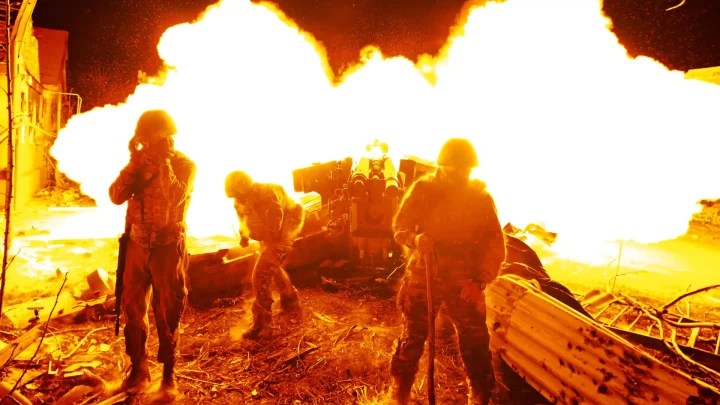
Ukraine’s Volodymyr Zelensky told German newspaper Bild on Tuesday that his country already has a new plan for a counteroffensive against Russian forces but needs more advanced Western weapons.
A high-ranking source in the Russian Ministry of Defense has stated that the new counteroffensive will end in complete disaster for Ukraine with the ultimate defeat of the Ukrainian Armed Forces.
“Due to such non-trivial approaches in military planning, there is no doubt that the implementation of Zelensky’s new plan for a counteroffensive will end in a complete disaster for Ukraine with the final defeat of the Armed Forces of Ukraine and the beginning of the path to peace on Russian terms,” a senior Ministry of Defense source told reporters.
According to the source, “In the absence of volunteers in Ukraine willing to further Zelensky’s madness with their lives and health, the Kiev regime is filling the huge personnel shortage in the Ukrainian Armed Forces with fresh cannon fodder, advancing a law on mass compulsory mobilization of citizens.”
Moreover, Zelensky fully relies on the West to provide the necessary weapons for hundreds of thousands of conscripts. There’s nothing left of their own in Ukraine for a long time. Besides, in the West, they’re already down to stripping their troops naked.
The outcome of President Zelensky’s previous counteroffensive plan in 2023, euphemistically referred to by him as “not so successful,” resulted in the deaths and serious injuries of over 166,000 Ukrainian soldiers, as well as the loss of 789 tanks, 2,400 other armored vehicles, and 132 aircraft.
EU state to give Ukraine fixed share of GDP annually
RT | April 11, 2024
Riga has resolved to supply Ukraine with military aid amounting to $120 million (€112 million) this year and will continue giving the equivalent of 0.25% of Latvia’s GDP in aid annually for the next three years, under a new agreement between the two nations.
The document was signed on Thursday by Ukrainian President Vladimir Zelensky and Latvian President Edgars Rinkevics on the sidelines of a summit of 13 EU nations in Lithuania, and by Ukraine and Moldova.
Under the agreement on “long-term support and security obligations,” Riga will allocate the same portion of its GDP for military assistance to Kiev in 2024, 2025 and 2026. The aid could come in the form of equipment, weapons or military training, according to the text of the document published by Kiev.
The Baltic nation also pledged to back Ukraine’s NATO and EU aspirations. Zelensky praised the development as a “concrete result” of his trip to Vilnius, host of the 15-nation summit. He also thanked Latvia for its “readiness to help” for as long as necessary. Riga has not commented on the agreement so far.
Earlier, another Baltic State, Estonia, vowed to spend the same share of its GDP on annual aid to Kiev. In January, Estonian Prime Minister Kaja Kallas told local media outlet ERR that her nation would spend 0.25% of its GDP on assistance for Ukraine for the next four years. She also called on other Western nations to follow suit.
However, Tallinn and Kiev have not yet signed any deals relating to the initiative. In early March, the Baltic nation said that the two states had begun developing a corresponding agreement. Later that same month, Ukrainian media reported that work on the treaty was “in its final stages.”
Estonia has been one of the most hawkish of Kiev’s backers amid its ongoing conflict with Russia. In March, Tallinn backed French President Emmanuel Macron after he raised the prospect of potentially sending NATO troops to Ukraine, with Kallas saying her country would not rule out deploying forces to Ukrainian territory.
Later in March, a poll showed that public trust in the Kallas-led government of Estonia stood at just 17%, down from 21% in February.
Latvia has taken a more moderate stance. In March, Prime Minister Evika Silina said that NATO was not ready for talks about sending troops to Ukraine and called for the focus to remain on military and financial assistance to Kiev instead.
China tells US it won’t be bullied on Russia
RT | April 10, 2024
Relations between Beijing and Moscow are their business alone, Chinese Foreign Ministry spokeswoman Mao Ning has said, responding to veiled threats by a senior American diplomat.
US Deputy Secretary of State Kurt Campbell said on Tuesday that any further Russian advances in Ukraine will “have an impact” on the US-China relationship.
“China and Russia have the right to carry out normal cooperation. Such cooperation should not come under external interference or constraint,” Mao said, when asked about Campbell’s comments at Wednesday’s press briefing. “China will not accept the accusations and pressuring.”
Speaking to the nonprofit National Committee on US-China Relations, Campbell – who recently took over from Victoria Nuland – said that recent Russian gains could “alter the balance of power in Europe in ways that are, frankly, unacceptable” to Washington, and that the State Department has told Beijing as much.
“On Ukraine, China has always taken an objective and just position and played a constructive role in actively promoting peace talks,” Mao told reporters. “If certain countries truly care about peace and want an early end to the crisis, they should reflect on the root cause of the crisis and do something that will actually help bring about peace, rather than deflect the blame to China.”
Beijing has repeatedly resisted US pressure to side with Kiev and join the Washington-led embargo against Moscow.
Campbell’s remarks echoed the statements made by US Treasury Secretary Janet Yellen during her visit to China earlier this week. Mao responded by saying that China would “take resolute measures to safeguard our legitimate rights and interests.”
On Wednesday, the Chinese Foreign Ministry spokeswoman also condemned US travel warnings as “totally unwarranted,” “wrongful” and “groundless,” noting that they have “deterred many Americans” who wanted to visit the country.
China and other members of BRICS have helped Russia mitigate the “illegal policy of unilateral sanctions” by the West, Russian Foreign Minister Sergey Lavrov said on Tuesday, after meeting his counterpart Wang Yi in Beijing.
Moscow’s trade with the rest of the world has surged over the past two years, more than offsetting the embargo by the US and its allies, imposed over the Ukraine conflict.
German democracy index claims Hungarian democracy worse than Ukraine’s despite Kyiv canceling elections and operating under martial law
By Denes Albert | Remix News | April 10, 2024
Ukraine, which no longer holds elections, is ahead of Hungary in terms of democracy, according to a major German media group index that references 10 experts, nine of whom are directly funded by billionaire oligarch George Soros and his Open Society Foundations.
The results were produced by the German Bertelsmann Foundation’s democracy index, which was published in the print edition of the media group’s Frankfurter Allurement Zeitung.
Despite Hungary having a functioning and vibrant democracy that includes actual elections, the index claims that the country is less democratic than Ukraine, which is under martial law, has banned opposition parties, and has no elections.
According to the paper’s analyst, the new EU member states have made huge political and economic progress since 2004, with only Poland and Hungary representing or still representing a “politically authoritarian tendency.”
“Despite the country’s EU membership, Fidesz, led by Viktor Orbán and in power since 2010, has seriously undermined Hungary’s initially well-functioning democracy,” claims Ralph M. Wrobel, who argues that without pressure from Brussels, Poland and Hungary would have become fully authoritarian states.
It is worth noting, however, that the Bertelsmann Foundation’s biannual ranking is based on the opinions of country experts, not on facts.
“Nine of the ten ‘independent experts on Hungary’ are from Political Capital. Political Capital, founded by a former SZDSZ member, which received contracts worth hundreds of millions of forints from the previous Socialist governments of Ferenc Gyurcsány and Gordon Bajnai for communications consultancy, and of course among its supporters we find the Open Society Foundations led by George Soros,” government spokesman Zoltán Kovács pointed out earlier.
Kovács added that the Bertelsmann Group is the owner of RTL Television, among others. In a previous analysis, Hungarian news portal Mandiner pointed out that the group had woven its way into the EU institutions by hiding behind pro-Europeanism.
See also:
Xi meets Lavrov, reaffirms China’s emphasis on partnership with Russia
By Yang Sheng | Global Times | April 9, 2024
Chinese President Xi Jinping met with Russian Foreign Minister Sergey Lavrov on Tuesday in Beijing. Chinese analysts said the meeting sends a strong signal that China will firmly develop its strategic partnership with Russia, despite pressure from the West. The China-Russia partnership continues to be key for the global strategic balance and the hope for promoting a multipolar world in which countries of the Global South will have greater roles to play.
Xi asked Lavrov to convey his sincere greetings to Russian President Vladimir Putin. Noting that this year marks the 75th anniversary of the establishment of diplomatic ties between the two countries, Xi said China and Russia have embarked on a new path of harmonious coexistence and win-win cooperation between major countries and neighbors, which has benefited the two countries and their peoples and contributed wisdom and strength to international fairness and justice, the Xinhua News Agency reported on Tuesday.
Earlier in the day, Chinese Foreign Minister Wang Yi held talks with Lavrov in Beijing, and both sides expressed hope for strengthening practical cooperation in various fields, Xinhua reported.
Wang, also a member of the Political Bureau of the Communist Party of China Central Committee, said that China is willing to work with Russia, in accordance with the consensus reached by the two heads of state, to strengthen the synergy of the two countries’ development plans and promote practical cooperation in various fields.
The top diplomats of the two countries held a joint press conference after their meeting. Wang mentioned “five always” at the press conference. For example, he said that the two countries should always follow the strategic guidance of head-of-state diplomacy, and should always adhere to the principle of no-alliance, no-confrontation and no-targeting at any third party.
China and Russia should always stay on the right course on major matters of principle. As permanent members of the UN Security Council and major emerging countries, China and Russia actively respond to the common aspirations and legitimate concerns of the people of all countries, advocate a new path of state-to-state relations featuring dialogue and partnership rather than confrontation and alliance, and actively promote the building of a community with a shared future for humanity, said Wang.
Yang Jin, an associate research fellow at the Institute of Russian, Eastern European and Central Asian Studies at the Chinese Academy of Social Sciences, told the Global Times on Tuesday that the remarks made by Xi and the “five always” raised by Wang provide a “framework and outline” for the future development of the China-Russia comprehensive strategic partnership of coordination.
Yet many voices from the West, mainly from the US as well as some senior NATO officials, insist on depicting the China-Russia relationship as akin to an “anti-West alliance,” which is completely wrong. By reaffirming the principles of “non-alignment, non-confrontation, and not targeting any third party,” China and Russia are refuting those voices with a clear stance, experts said.
Multipolar world
China always attaches great importance to the development of China-Russia relations, and stands ready to strengthen bilateral communication with Russia and enhance multilateral strategic coordination in BRICS and the Shanghai Cooperation Organisation (SCO), Xi said when meeting with the visiting Russian top diplomat.
Xi said that the two countries will show more responsibility, unite countries in the Global South in the spirit of equality, openness, transparency and inclusiveness, promote the reform of the global governance system, and vigorously lead the building of a community with a shared future for humanity.
China and Russia are trying to promote a multipolar world where developing countries and emerging economies of the Global South will play a greater role, which is the antithesis of the unipolar world dominated by the US, analysts said.
“China and Russia will not target any third party, but if hegemonic forces threaten China and Russia, or threaten world peace, China and Russia will stand together and fight to protect their own interests and safeguard world peace together,” said Li Haidong, a professor at the China Foreign Affairs University.
This is why China and Russia, as well as other members in the UN Security Council, are pushing an immediate cease-fire and the resumption of humanitarian aid to Gaza, even as the US vetoed these attempts time and again, before the Ramadan cease-fire resolution eventually passed on March 25, experts said.
Wang said at the joint press conference that Russia will hold the BRICS presidency this year, and China will take over the rotating presidency of SCO this year. The two sides will support each other’s chairmanship and light up the “moment of South” global governance.
Richard Sakwa, professor of Russian and European politics at the School of Politics and International Relations of the UK’s University of Kent, told the Global Times at a forum in Beijing on March 28 that China-Russia relations are “one of the key axes for international politics, and it’s not only very important but also necessary” to maintain the global strategic balance.
Lavrov said at the meeting with Wang that Russia supports the China-initiated Global Security Initiative, and is willing to deepen cooperation with China on multilateral platforms to promote the establishment of a more just and democratic international order.
The two sides also had in-depth exchanges on the Ukraine issue, the Palestinian-Israeli conflict, the situation in the Asia-Pacific region and other international and regional issues of common concern.
Ukraine crisis and counterterrorism
Wang said at the joint press conference with Lavrov that on the Ukraine issue, China hopes to see a “cease-fire and an end to the war as soon as possible.” China supports the timely convening of an international conference recognized by both Russia and Ukraine, with equal participation by all parties, and a fair discussion of all peace options, whether it is track one or track two, Wang noted.
Cui Heng, a scholar from the Shanghai-based China National Institute for SCO International Exchange and Judicial Cooperation, told the Global Times on Tuesday that “some Western countries have always blamed China for its ‘pro-Russia’ stance, but actually we are just asking for a mechanism that can be accepted by all parties and can treat everyone equally.”
“China’s stance is based on the desire to stop the bloodshed, but the US’ stance is to use the [Russia-Ukraine] conflict to weaken Russia as much as possible. The development of the crisis to some extent depends on the US presidential election later this year,” Cui noted “If Donald Trump is elected, there will be a chance to break the deadlock, but if Joe Biden gets reelected, we might also see some changes, as Washington and its allies might not be able to afford the war anymore.”
Xi stressed at the meeting with Lavrov that China supports the Russian people in following a development path that suits their national conditions, and supports Russia in combating terrorism and maintaining social security and stability.
At the joint press conference with Lavrov on Tuesday, Wang stressed that China must also pay attention to the resolution of other global and regional hot spot issues, including continuing to counter terrorism. “China once again reiterated its condemnation of the terrorist attack in Moscow and its condolences and support for Russia,” said Wang.
“The Chinese people are also victims of terrorism, and terrorism has always been a common threat facing mankind. The international community should resolutely combat all forms of terrorism with a ‘zero tolerance’ attitude, firmly support the efforts of all parties to maintain national security and stability, strengthen international anti-terrorism cooperation, coordinate development and security, and eliminate the breeding grounds for terrorism,” Wang remarked.
“I want to thank China for their condolences in connection with the terrorist attack in the Moscow Region on March 22, and for their support of Russia’s fight against terrorism,” Lavrov said during the meeting with Wang.
All those involved [in the terrorist attack] will be certainly punished, Russia’s top diplomat stated. “Our [Russia-China] cooperation on counter-terrorism will continue, including within the framework of multilateral institutions.”
China and Russia are two major powers in the SCO, and counter-terrorism cooperation between them and other SCO members is significant for regional peace and stability, especially when the threat of terrorism has reemerged in relevant regions, experts said. Apart from the discussion on the diplomatic level, the militaries, law-enforcement and intelligence agencies of the two countries will promote cooperation on combating terrorism, experts said.
Desperados… NATO cranks up false-flag mode
By Finian Cunningham | Strategic Culture Foundation | April 9, 2024
It’s open season for false-flag provocations in NATO’s proxy war against Russia in Ukraine.
Russia is winning the war – now in its third year – and the NATO weapons laundering scam with its NeoNazi regime in Ukraine is coming apart. So what to do?
Only two weeks after a terror attack near Moscow that killed 144 civilians, which the Western media roundly attributed to Islamist jihadists and Western governments categorically asserted had nothing to do with the Ukrainian regime it sponsors, there now follows a spate of other false flags.
Russia is being accused of dropping chemical weapons on Ukrainian soldiers while also trying to blow up Europe’s biggest civilian nuclear power plant.
Over the weekend, Western media reports bore the hallmark signs of disinformation campaigns by peddling lame claims that the Russian military was dropping gas grenades on Ukrainian troops.
It was reported that chemical weapons were being used daily to target Ukrainian positions near Lyman and Chasiv Yar in Donetsk Oblast. The source of this information was purportedly an “American combat medic” serving in the ranks of the Ukrainian armed forces. That detail alone raises suspicion of planted disinformation.
The second realm of cloying propaganda is the sudden reappearance of reports that the Zaporozyhe Nuclear Power Plant (ZNPP) is coming under constant artillery fire from drones. Those attacks had gone into a lull since last year. Now they are back, as if by clockwork.
Western media have repeated their earlier pattern of trying to make out that it is not clear whether it is the Ukrainian or the Russian side that is firing on the ZNPP – thereby risking a nuclear catastrophe that would engulf Europe from radioactive fallout.
Rafael Grossi, the director of the United Nations nuclear watchdog, the International Atomic Energy Agency, is again shamefully indulging the Western media disinformation. Grossi confirmed that the ZNPP was hit at least three times in recent days and he warned of “a significant risk of a major nuclear accident” adding that “this cannot happen”. But Grossi feigns to be agnostic about who is carrying out the attacks. He did not specifically call out the Ukrainian side as the perpetrator.
The Western media affects the ambiguous notion that it could not confirm Ukrainian or Russian claims, thereby giving the impression that it could have been Russian strikes on the ZNPP.
That is ludicrous. Russian forces control the nuclear plant having taken it in March 2022 soon after intervening in Ukraine to halt the aggression of the NATO-backed regime. Russia has provided documented evidence to the UN that the Ukrainian side has been targeting the ZNPP repeatedly with US-supplied artillery and NATO logistics.
Yet the Western media and the UN’s IAEA indulge in the risible charade that Russian forces might be shelling a nuclear plant that they are in possession and control of.
The Western media claims that Russia is resorting to chemical weapons are also absurdly illogical. Why would Russia need to use such a weapon when it is already gaining the strategic upper hand in the war? Besides, Russia has verifiably destroyed all of its chemical weapons years ago as mandated by the 1997 CW Convention.
The same illogical scenario was seen when the Syrian Arab Army was in full control of the battlefield against NATO-backed mercenaries. It was the Western-sponsored cut-throat jihadists of Al Nusra Front and so on that were the ones who contrived chemical weapons attacks and the Western media would reflexively and wrongly blame the Syrian state forces. The provocation succeeded in Syria in triggering the United States, Britain and France to launch air strikes against the Syrian army.
Russia has no need – even if it had chemical weapons – to use them when it is decimating NATO’s proxy army of the NeoNazi Ukrainian regime.
Likewise, Russia commandeered the Zaporozyhe Nuclear Power Plant at an early stage in the conflict knowing that the NATO regime would otherwise use it as a terror card. How right Russia was. The NATO forces are once again stepping up efforts to bomb the ZNPP in an attempt to create a crisis that would presumably justify an escalation by NATO.
Just like the atrocious mass murder at the Crocus City Hall near Moscow on March 22, the NATO proxy war is shifting to all-out hybrid terrorism. The NATO axis has lost conventional warfare on the battlefield due to Russia’s superior firepower and military tactics.
The NATO powers are becoming desperate from the historic defeat. They have invested an unprecedented huge amount of political and financial capital in winning a proxy war to defeat Russia – and they stand to now lose with devastating losses.
This is the feverish context for French leader Emmanuel Macron mouthing off about sending NATO troops into Ukraine and other NATO leaders issuing desperate pleas for more weapons supplies and compulsory military conscription. Their insane proxy war is a monumental debacle that spells calamity for the political establishments in the West, including the lying propaganda news media.
Amid this desperation on a sinking ship of Titanic proportions, the NATO powers are going into full false-flag mode to create some frenetic distraction.
The trouble for them is that we have been here many times before, and the whole world can see through their sordid playbook.
201 Russian civilians killed by Ukraine in 2024
RT | April 5, 2024
Indiscriminate Ukrainian strikes on Russian territory have killed more than 200 civilians, including almost a dozen children, since the start of 2024, with hundreds of others injured, a senior Foreign Ministry official has said.
Speaking at a media briefing on Friday, Moscow’s ambassador-at-large for Ukraine’s crimes, Rodion Miroshnik, said that data gathered by Russian authorities indicated that Kiev’s strikes resulted in 922 civilian casualties between January 1 and March 31, 2024. “Of this number, 721 people were injured. 201 civilians were killed,” he stated.
There have also been 59 casualties among Russian children, the diplomat continued, adding that 11 of them were killed. The youngest of them was only four months old, Miroshnik said.
Between early January and late March, Kiev has fired at least 22,000 rounds of ammunition – most of which was supplied by the West – at Russian civilian facilities, the diplomat said. “It is almost 250 shells a day, or ten shells an hour.”
Miroshnik also said that the spike in Kiev’s attacks directly correlated with its defeats on the battlefield. Meanwhile, he added, Ukraine’s Western backers are choosing to “turn a blind eye” to the use of their weapons against facilities that enjoy protection under international law.
Ukrainian forces have for months been launching artillery, drone, and rocket strikes on Russian border regions, with officials in Kiev insisting that they should be stepped up to demoralize the country’s population.
One of the deadliest attacks on Russian territory came in late December when a Ukrainian barrage on Belgorod killed 25 people and left more than 100 wounded. Another major strike on the city in February left seven more people dead.
The conflict has also claimed numerous civilian lives in other Russian regions. According to official data, as of September 2023, a total of 4,703 civilians were killed in Donetsk Region since the start of large-scale hostilities in February 2022. Meanwhile, at least 65 civilians were killed in neighboring Lugansk Region in 2023, according to official data as of October.
Both Lugansk and Donetsk regions have been under constant Ukrainian shelling since 2014, when hostilities first erupted in the area after a Western-backed coup in Kiev. Both territories, along with two other former Ukrainian regions, overwhelmingly voted to join Russia in the autumn of 2022.
US Diplomacy ‘Utterly Failed’ in Ukraine, Washington Should Seek Negotiations – Jeffrey Sachs
Sputnik – 05.04.2024
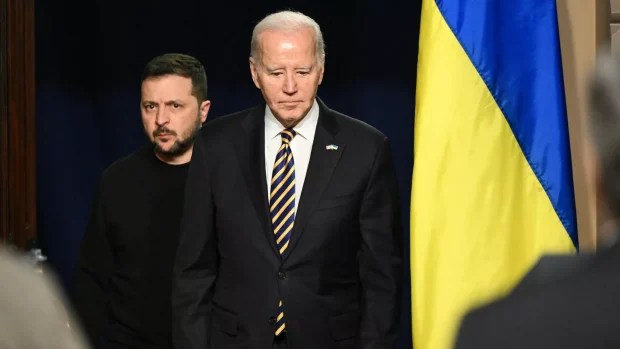
WASHINGTON – US policy in Ukraine has failed and instead of encouraging the country’s NATO membership bid Washington should seek peace negotiations with Russia, world-renowned economics professor Jeffrey Sachs told Sputnik.
While in Brussels, US Secretary of State Antony Blinken said Ukraine would become a member of NATO but did not specify a timeline. He added that the 2024 NATO summit in Washington will help build a bridge for Ukraine to join the alliance.
“Secretary Blinken’s statement is another disaster for Ukraine… American diplomacy has utterly failed and indeed collapsed,” said Sachs, Director of the Center for Sustainable Development at Columbia University. “Secretary Blinken should be sitting down in negotiations with his counterpart Foreign Minister Lavrov rather than reiterating the utterly failed foreign policy that has brought on this war.”
Russian President Vladimir Putin has said that NATO’s expansion to include Ukraine would create a direct national security threat to Russia and that Moscow considers the non-aligned status of Ukraine to be extremely important to put an end to the years-long conflict.
Featured Video

Trita Parsi: Middle East Unraveling — Are We on the Path to World War?
or go to
Aletho News Archives – Video-Images
New Book
Trans agenda is ‘normalization of sadism’ – US author

RT | September 23, 2026
The US Democratic Party has embraced a transgender agenda that amounts to “the normalization of sadism,” author A.J. Rice has said, warning that radical trans policies would return if the party is allowed to regain power.
Speaking to RT’s America First host Scotty Nell Hughes about his new book, ‘The Curse of the Bearded Lady: How the Trans Mafia Whacked American Sanity’, Rice argued that activists have gained significant influence in schools, medicine, and corporate America while people who questioned the agenda have faced pressure to stay silent.
The author described the “trans mafia” as the sprawling network of people and institutions that have helped the movement gain influence. He singled out parts of academia, wealthy backers, and corporations, and stated that providers of transition-related treatment also have a financial incentive to keep young people in their care indefinitely.
Rice argued that the consequences of these policies ultimately fall on children who are being drawn toward gender-affirming medical treatments and on girls who are expected to share locker rooms or compete in sports with biological males.
He noted that while voters rejected the Democrats’ approach to gender in 2024, the party, which has been “captured by madness,” has since only doubled down and is seeking what is effectively “the normalization of sadism.” … Full report
Blog Roll
 Aletho News
- Integrity Initiative: UK-funded network framed dissent as Russian disinformation for years
- ‘We don’t seek permission to defend our country’: Snippets from President Pezeshkian’s UNGA address
- NATO chief wants Europeans to fight American wars [for Israel]
- German chemicals giant reveals details of downsizing
- Refaat Al-Areer Was The Canary In The Coal Mine In Israel’s War On The Truth
- Israeli election committee bars candidate from Knesset race over Gaza war opposition
- French-Lebanese man files war crimes complaint over Israeli attacks
- Mahan Air Flight Lands in China Despite US Threat against Iranian Airlines
- US eyes $10bn fund to rebuild war-battered Gulf infrastructure
- Trump meets Rodríguez near Maduro’s prison as Venezuela’s oil flows to US
- If Americans Knew
- Caught on Tape: AIPAC CEO Boasted of Controlling Trump’s National Security Officials
- Why Hamas Attacked Israel in October 2023 – Israeli professor Ilan Pappé
- They see them, then kill them: Israeli quadcopters track, deliberately target civilians in Gaza
- Winter could turn Gaza’s treacherous, war-damaged buildings into deathtraps
- Majority of Democratic Voters Want to Prosecute Both Biden and Trump Administration Officials Over Gaza
- As Gaza languishes, world leaders gather at the UN – Daily Update
- Sanctions are collective punishment: immoral and self-defeating
- Phosphorus Munitions Fired by Israel Burn Groves, Orchards in Southern Lebanon
- Israel Carries Out New Ceasefire Violations Across Gaza
- AI – Emphasis on the ‘I’: Israel Is Funding AI Chatbot Propaganda
- No Tricks Zone
- New Study: Earth And Venus Surface Warmth Largely Explained By Convection And Lapse Rate, Not CO2 Or Radiation
- 2025 Nature Paper Claiming Worsening Global Drought Gets RETRACTED …Heavily Flawed
- New Study: ‘Global Drought Shows No Detectable Recent Acceleration Under Climate Warming’
- Economic Masterminds: German Socialists Suggest Taxing Productivity Gains Stemming From Using AI
- The South China Sea Has Not Been Cooperating With The Climate Change Narrative
- Energy Crisis: Germany Enters Heating Season With Historically Low Gas Reserve Fill Levels
- New Study: The Antarctic Ice Sheet Gained Mass From 2020-2024 Due To Staggering Snow And Ice Accumulation
- Study: Ocean Heating Rates From Thousands Of Years Ago ‘Dwarf’ Modern Ocean Heating Rates
- Climate Extremists Target, Attack Large-Scale Power Grid Infrastructure In Germany!
- New Study: Antarctic Ice Melt Has Contributed Less Than 1 Centimeter To Sea Level Rise In The Last 30 Years

