‘Novorossiya’ rising from ashes like phoenix
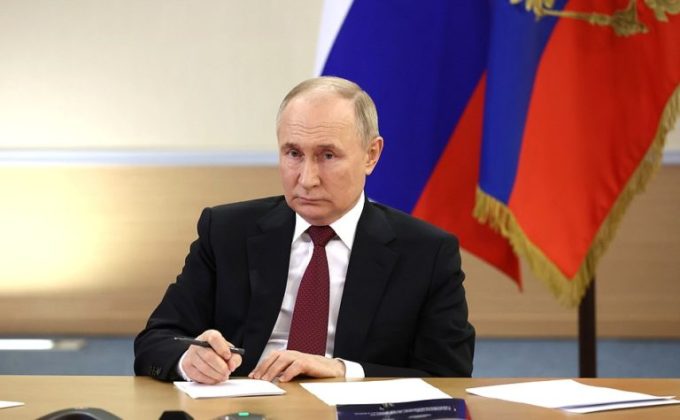
Russian President Vladimir Putin took a meeting on development of southern/Azov sea regions, Moscow, March 6, 2024
BY M. K. BHADRAKUMAR | INDIAN PUNCHLINE | MARCH 10, 2024
The Russian President Vladimir Putin’s meeting on Wednesday in Moscow with top officials of economic ministries and leaders of the southern and Azov sea regions — ‘Novorossiya’ historically — signifies a significant initiative in the Kremlin’s geo-strategy, with global ramifications, as the conflict in Ukraine meanders toward a new phase.
What lends poignancy to the occasion at once is that Putin is beating swords into ploughshares at a juncture when the US and its allies are sounding bugles. Indeed, one way of looking at Wednesday’s meeting is that it is a riposte to the fanciful conjecture 10 days earlier by French President Emmanuel Macron that European armies might march into Ukraine to push back Russians.
Putin signalled something profound — that war cries to defeat Russia is already time past. With the capture of the strategic town of Avdiivka and the rapid advance further west since then, cities like Pokrovsk, Kostyantynivka and Kramatorsk are now facing a fast-approaching front line, littered with signs of an approaching Russian army.
As the Russian forces gain more momentum in the Donetsk region, the question of where they will stop is becoming increasingly difficult to answer. There is much unfinished business still. A big concentration of Russian military facing Kharkov is ominous. Odessa is also in Russian sights.
The progress of Russian operations may seem ponderous. In the past month, Russian forces gained only around 100 square kilometres of Ukrainian territory (according to Belfer Centre’s latest Russia-Ukraine War Report Card) but then, in a war of attrition, the tipping point comes most unexpectedly, and before one catches their breath, it’s all over. The Wall Street Journal wrote that Ukraine has few remaining military strongholds in Donbass, which means that with each Russian advance, Ukraine must retreat to often underprepared positions.
A New York Times report on Thursday titled Mutual Frustrations Arise in U.S.-Ukraine Alliance ended on a sombre note citing Western officials and military experts that “a cascading collapse along the front is a real possibility this year.”
President Joe Biden was conspicuously taciturn in passing judgement on the war in his State of the Union Address at the US Congress on Thursday, except to warn the Kremlin rhetorically that “(we) will not walk away. We will not bow down.” The cryptic remark could mean anything, but he did acknowledge that “Overseas, Putin of Russia is on the march…”
Importantly, Biden put in cast iron his past commitment not to send troops to participate in the war in Ukraine. And his focus was on the Bipartisan National Security Bill in the pipeline that would resume large-scale military aid to Ukraine whose future is now even more uncertain what with Donald Trump’s unstoppable surge as the candidate of the Republican Party.
The fear that the US is walking away from the war is gut-wrenching for Europeans. The French President Emmanuel Macron’s remark last week on Monday on the dispatch of Western ground troops to Ukraine was reflective of belligerence and bravado that often accompanies frustration. Earlier this week, Macron urged Ukraine’s allies not to be “cowardly” in supporting Kiev to fight Russian forces; on Thursday, he went further at a meeting with party leaders to advocate a “no limits” approach to counter Russia.
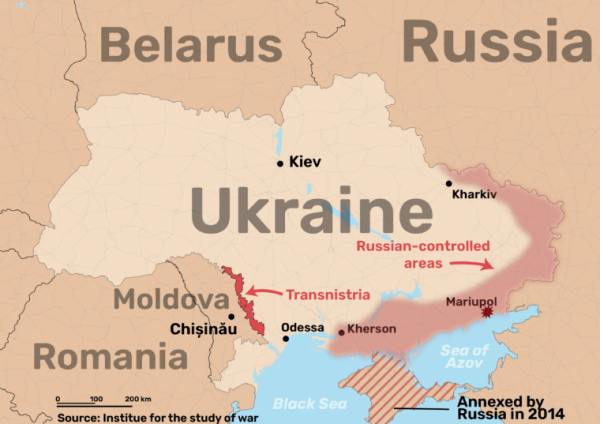
But there is a big picture, too. On Thursday, Macron met with Moldovan President Maia Sandu, pledging France’s “unwavering support” for her ex-Soviet country as tensions mount between Chisinau and pro-Russian separatists in the breakaway province of Transnistria. During the Macron-Sandu meeting, the two signed a bilateral defence deal, as well as an “economic roadmap,” although no details were provided.
The timing of France’s defence deal with Moldova, which follows a security pact with Ukraine last month, hints at geopolitical considerations to get a toehold in that vital region — where Dniester River rising on the north side of the Carpathian Mountains and flowing south and east for 1350 kms drains into the Black Sea near Odessa — to challenge the rise of Novorossiya, which is in the throes of renewal and regeneration.
For more than three decades, Transnistria has been considered a possible flash point for a conflict. The endgame in Ukraine has a domino effect on Moldavia, which, encouraged by the West, step by step, is strategically defying Russia to “erase” its influence, and move into the EU and NATO camp. Russia has been watching closely but patience is wearing thin.
Sandu is a semi-finished American product — an ethnic Romanian who got transformed as a graduate of John F. Kennedy School of Government at Harvard and had a stint in the World Bank and was pitchforked into the top rungs of Moldavian politics, eventually as the pro-European candidate in the Moldovian president election in 2016.
Sandu has the same genetic make-up as another colourful figure in the post-Soviet space whom the US groomed for “regime change” in Tbilisi — Mikheil Saakashvili who was the president of Georgia for two consecutive terms from 2004 to 2013 following a colour revolution stage-managed from Washington. The strategic calculus both in Georgia and Moldova basically aims at NATO’s expansion into the Black Sea which has been historically a Russian sphere of influence.
Therefore, Macron’s recent remarks on western combat deployment in Ukraine must be understood properly. He is by no means spiting the Biden Administration — nor is Germany differing from him — as he pushes the envelope and hopes to salvage victory out of the jaws of NATO’s defeat in Ukraine. The Biden administration will be quietly pleased with Macron’s tantrums against the Russian windmill in the regions of Novorossiya and the Black Sea.
The startling disclosure recently of the discussion between two German generals regarding the logistical complexity of lethally destroying the Crimean Bridge shows that Berlin is very much part of the Ukraine project despite the fault lines in the Franco-German axis.
France tasted blood in pushing a similar strategy in Armenia, which has virtually moved out of the Russian orbit and is jettisoning CSTO membership while seeking EU and NATO membership. Its focus will be to evict Russian military presence in Transnistria.
Reacting to the West’s thickening plot in Moldova, Transnistria has sought protection from Moscow. There is a big population of ethnic Russians in that region. The response from the Kremlin has been positive and swift. Shades of Donbass!
At Wednesday’s meeting in the Kremlin on the economic and infrastructure development in the new territories, Putin stressed the modernisation of the Azov-Black Sea road modernisation plans. He said, “we have big plans to develop roads in the Azov-Black Sea region.”
Of course, infrastructure development and strengthening of transportation networks will be an important template of Russia’s counter-strategy. Moscow is not waiting for a conclusive end to the conflict in Ukraine for the integration of the new territories into its economy from a long term perspective.
The crux of the matter, in geopolitical terms, is that Novorossiya is rising from the ashes like the phoenix and becoming, as Catherine the Great envisaged, Russia’s most important all-weather gateway to the world market connecting its vast untold mineral resources and huge agricultural potential. George Soros knows it; Wall Street knows it; Biden knows it. For France and Germany too, it is invaluable as a resource base if it is to ever regain its economic dynamism.
But in immediate terms, the challenge lies in the politico-military sphere — that “Russia cannot be allowed to win in Ukraine,” as Russia’s First Deputy Permanent Representative to the United Nations Dmitry Polyansky summed up. Russia has requested a Security Council meeting on Ukraine for March 22. Polyansky said Russia will expose the diabolical plots of France, Germany and the US.
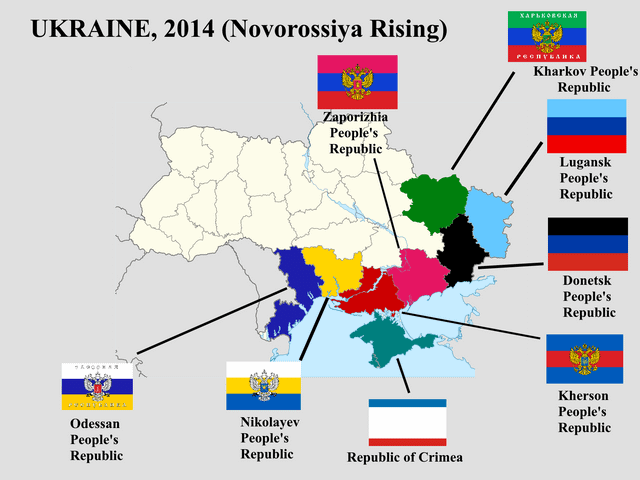
‘Novorossiya’: The alternate reality of Ukraine
What the Western Press Didn’t Say About the Leaked Luftwaffe Conversation
By Eduardo Vasco | Strategic Culture Foundation | March 8, 2024
On March 1, the editor-in-chief of the Rossiya Segodnya group, journalist Margarita Simonyan, revealed, on her Telegram channel, a 38-minute audio in which officers from the German Air Force (Luftwaffe) discussed the possibility of sending missiles long-range Taurus to Ukraine and whether they would be able to reach the Crimean bridge in the Kerch Strait, which connects the peninsula to the mainland and is Russian territory.
The Russian press, naturally, made much of the revelation. This forced the mainstream Western media – especially German ones – to report the leak. But whoever thought that a miracle would happen, that is, that the Western press would finally raise the issue of NATO’s military threats against Russia… well, those people are simply very naive.
The Western mass media, as always, tried to manipulate the news and hide the main issue.
The New York Times, The Washington Post, BBC, The Guardian, Die Welt and Der Spiegel published 39 articles on the topic on their respective websites between the time the news was revealed and the evening of March 6th (when I write these lines).
The two North American newspapers did not want to highlight the matter. The Post published two reports and the Times only one. The three expressed concern about the fragility of German intelligence security systems in the face of Russian espionage.
The Europeans, as has been the case for some time, carried much more propaganda against Russia. The BBC published four articles, all referring to the failure to protect Luftwaffe communications. The Guardian published five articles. The majority warns of the Germans’ failure and treats the Russians as great, threatening villains. However, it is necessary to make an honorable mention of Simon Jenkins’ column, the only one who was allowed to say that the leaked conversations demonstrate that NATO is threatening Russia with an escalation in the conflict.
As we all know, this drop of water in the middle of the ocean has no chance of counterbalancing the flood of war propaganda and fake news from the British press against Russia. Newspaper owners only allow freedom of expression when it is harmless – and try to isolate minimally independent opinions.
Now let’s talk about German newspaper coverage. Die Welt published 18 pieces about the leak scandal, and treated it as such. Of course, the main reason for the scandal was – for German war propagandists – the interception and dissemination of the conversation, not its content.
The entire reportage of Die Welt revolves around failures in the security system of the German armed forces and Russian espionage. The possibility of Olaf Scholz sending the Taurus to Zelensky is briefly discussed and it is even stated that Germany is putting its Western allies in danger by allowing the interception of conversations that may mention confidential and compromising information – such as the participation of British soldiers in Ukraine, as mentioned in the conversation in question.
A single Die Welt report presents a “dissident” opinion, which is not “Russian propaganda”: the brief speech of a member of the AfD – who, however, is branded a Russian agent by the German state and its agents, such as the press.
The article signed by Pavel Lokshin has the following title: “Kremlin is using Taurus leaks to threaten war against Germany”. Of course, it was the Russians who considered blowing up a bridge in German territory, right?
In turn, Der Spiegel, in its nine articles on the case, reproduces the same speech as Die Welt about the failures in German security and the danger of Russian espionage. It also disqualifies the Kremlin’s claims that the conversation is clear proof of NATO’s direct involvement in the war in Ukraine and how much this threatens Russian national security.
Christina Hebel’s analysis is the only piece in these two German outlets that takes the accusations of the Russian government and German involvement in the war more seriously, but it would be an exaggeration to say that this publication would be in the sphere of journalism.
In short, the coverage of these newspapers – and the coverage of other mass media outlets in the West is no different – is absolutely biased and manipulated. In fact, as always happens, they reverse roles: Germany, which threatened to blow up a bridge in Russia, is the victim, while Russia is the villain!
If at least one of these newspapers really were a journalistic tool, and not a propaganda tool, it should publish an article with a title like “German officers considered blowing up bridge in Russia” or “Audios reveal discussion of attack on Russia with German weapons”.
After all, which is more serious: the leak of the audio by Russian intelligence or the discussion among senior German officials about a military attack on Russia? No honest person would choose the first option. But we are not dealing with honest people when we talk about “journalism” in Europe and the United States.
I can’t help but wonder: what if it were the other way around? What if a conversation between Russian officials discussing the explosion of a bridge in Germany had been revealed? Would Western press coverage also treat the leak as something more serious than threats of military attack?
Of course not! If it were Russia considering attacking Germany, there would not be 39 articles in these vehicles, but rather 3,900. Russia would be portrayed as a threat to human civilization (more so than it is portrayed today), chaos would be wreaked in German and Western society, and the drums of war against Russia would be beaten at the top of their lungs. Meetings would be urgently called at the UN Security Council, unilateral sanctions would increase absurdly, all the lackey governments of the USA and the European Union would speak out publicly condemning Vladimir Putin’s madness.
They are real hypocrites. Against Russia, anything goes.
And, although the majority of these media outlets are private, they all act as government bodies, under the strict control of their respective States, as true spokespeople for those in power. But Russia is the one who controls the press, Russia is the one spreading propaganda and Russia is the one disinforming, right?
The leaked audio proves that the war in Ukraine is not a war between Russia and Ukraine, but rather a war between Russia and NATO. The Western press strengthens this claim by propagandizing war against Russia and encouraging attacks against Russia.
The press, according to Western discourse, would be a protector of the public interest against the discretion of those in power. That’s idle talk. The press, in fact, even private companies, are tools of these same rulers to control and oppress the governed.
A growing number of Germans oppose the shipment of weapons to Ukraine and Germany’s participation in a war against Russia, but they are systematically deceived and betrayed by their government and the mass media.
The ICC: A Tool of Western Aggression
By Christopher Black – New Eastern Outlook – 09.03.2024
The new charges made by the International Criminal Court against two Russian military officers, Sergey Kobylash, commander of the Russian Aerospace Forces’ Long-Range Aviation, and Russian Black Sea Fleet Commander Viktor Sokolov, reinforces the role of the ICC as a tool of Western propaganda and aggression and makes a mockery of its claimed role as an international court.
Mr. Khan, the latest iteration of ICC prosecutor, is a British lawyer who apparently never learned about the role of justice when he attended law school. His March 5th statement claims that the ICC has jurisdiction over Ukraine and Russia and that the officers charged directed attacks on civilian infrastructure, all of which is false. His political bias is established with the following statement,
“In our application for these warrants, my Office again underlined that these acts were carried out in the context of the acts of aggression committed by Russian military forces against the sovereignty and territorial integrity of Ukraine, which began in 2014.”
That statement is a bald-faced lie. It was not Russia that committed aggression against Ukraine in 2014. It was the United States, Britain, Canada, Germany, France and the other NATO allies who committed aggression against Ukraine and its people by staging a coup d’état in 2014; overthrowing the elected government and installing in its place a NATO puppet regime riddled with Nazis. That alone should shock the world. Yet in the West, nothing is said about it. Many do not even know it took place. The facts have been suppressed and distorted by the propaganda they concocted to cover their crime of aggression, so they have labelled the brave resistance to the NATO-Nazi coup by the citizens of Ukraine located in the eastern provinces, as “Russian” aggression. Only a charlatan, having regard of all the facts, could come to that conclusion. It is the war begun by the Kiev regime against the Ukrainian people that Russia was finally forced to step in order to stop it.
But Mr. Khan seems undismayed that he will be labelled a charlatan, since this is the second set of charges he has filed against Russians, the first set being against President Putin and Maria Lvova-Belova, Russian Ombudswoman for Children’s Rights, some months ago.
The rapidity with which Mr. Khan has acted against Russia stands in stark contrast to the complete refusal by the ICC to lay charges against Israeli leaders and military officers for the genocide they are committing against the Palestinian people in the occupied territories, despite the fact on November 17, 2023 Mr. Khan, on receipt of referrals from South Africa and other states that Israel was committing war crimes, and crimes against humanity in the Occupied territories, as far back as 2006, stated that his office was investigating the matter. Yet, despite the International Court of Justice ruling that there is plausible evidence that Israel is committing genocide, despite the referrals from other nation states since then, as well as many individual complaints by world citizens and groups demanding charges be laid, he has done absolutely nothing. In effect, by his refusal to charge Israel leaders and officials, he aids and abets their actions by granting them immunity from prosecution.
Yet, in the case of Russia, over which the ICC has no jurisdiction, he acts with the utmost speed, ever ready to please his masters in the West, who need something, anything to pull the wool over the eyes of their citizens in the face of the great defeat they are suffering in their war against Russia in Ukraine. He is always ready to oblige them.
The fundamental problem of the ICC is that it is not a world court. It only claims to be, while representing the interests of the nations that promoted it, even the USA, which refuses to subject its citizens to its jurisdiction. It is a “court” to be used for western interests, no other. It was not created by a world government. It was created by a treaty drafted by representatives of a group of nations referred to as the Assembly of States Parties. The process of drafting the treaty was long and complex; however, it is necessary to point out that it is recognised that no single nation could purport to create such a court claiming to have international jurisdiction, and what a single nation cannot do, no group of nations, however composed, has the authority to create such an entity either.
The claim of the ICC to universal jurisdiction is a consequence of its ability to assume jurisdiction even in matters concerning individuals who are citizens of nation states that are not parties to the treaty. We have seen this with the charges laid against Russians for crimes allegedly committed in Ukraine. Neither Russia nor Ukraine is a Party to the Treaty of Rome, and therefore the ICC has no jurisdiction over the citizens of either state. However, the Ukrainian government, established by the NATO coup-d’état of 2014, invoked the Acceptance of Jurisdiction clause in the ICC Statute to afford the ICC with jurisdiction over Russia. Article 12 of the Statute states,
“Article 12
Preconditions to the exercise of jurisdiction
3. If the acceptance of a State, which is not a Party to this Statute, is required under paragraph 2, that State may, by declaration lodged with the Registrar, accept the exercise of jurisdiction by the Court with respect to the crime in question. The accepting State shall cooperate with the Court without any delay or exception in accordance with Part 9.”
This has two effects. Firstly, the phrase “crime in question” means that, in the case of Ukraine, for example, the ICC accepted a letter from the regime installed by the coup-d’état, granting the ICC limited jurisdiction-only over the alleged crime that was referred to the ICC by Ukraine. The crimes of Ukraine in the conflict, committed for ten years against the peoples of the Donbass and against civilians in Russia, are conveniently ignored. The Kiev regime states the ICC has no jurisdiction to consider them, and the ICC accepts this farce.
The result of accepting a letter of limited jurisdiction, that is a letter purporting to grant jurisdiction to the ICC over Russian “crimes,” while refusing to grant the ICC jurisdiction over Ukrainian crimes, is the selective prosecution of citizens of one state while granting immunity from prosecution of the other state. This is a legal and moral absurdity. The very idea of justice, in the sense of equality before the law, is negated, but more, it affords the Ukrainian regime an immunity from prosecution which provides encouragement to commit further crimes of its own on its claimed territories and in Russia. Once again, as in the Israeli case, we see that the ICC is acting as an enabler of war crimes instead of bringing to justice those committing them.
On May 21, 2023, the Russians charged the prosecutor and judges of the ICC for crimes involved in the issuance of the ICC warrants against Russians. The Russian Investigative Committee stated that,
“The ICC prosecutor is charged under part 2 of article 299, part 1 of article 30, and part of article 360 of the Russian Criminal Court (criminal prosecution of a person known to be innocent, as well as preparation for an attack on a representative of a foreign state enjoying international protection in order to complicate international relations). The judge is charged under part 2 of article 301, part 1 of article 30, and part 2 of article 360 of the Russian Criminal Court (knowingly illegal detention and preparation for an attack on a representative of a foreign state enjoying international protection in order to complicate international relations).”
“Both have been put on a wanted list.”
We can expect further charges to be laid against Mr. Khan and the judges concerned.
Christopher Black is an international criminal lawyer based in Toronto. He is known for a number of high-profile war crimes cases and recently published his novel Beneath the Clouds. He writes essays on international law, politics and world events.
The special military operation, Avdeyevka, and Gaza
By Yuriy Zinin – New Eastern Outlook – 09.03.2024
The name Avdeyevka, which is known to few in the Arab world, has featured prominently in the Middle Eastern media in recent weeks. Media commentators have examined the battle to liberate this city, its significance, and discussed the opinions of political analysts and observers on the future course of military operations in the conflict, including its international impact.
A number of military observers quoted in the media have referred to this event as “a turning point in the course of the war,” similar in significance to the conquest of Bakhmut by Russian forces last year, with both cities being of similar strategic and symbolic value.
For example, Rizk Al-Hawalda, a retired brigadier general and military expert from Jordan, believes that the capture of Avdeyevka will allow Russian forces to further strengthen their position in Ukraine, and increase their combat capability to defend the territories under their control. For the Ukrainian forces, however, the capture means that their ability to retake what they have lost has been thwarted, leaving them to face the fact that this land has now become Russian territory, and that this loss is irreversible.
Other authors believe that the capture of this city will allow Russian forces to control the space around Donetsk and create logistical corridors to expand the scope of their operations.
The Egyptian Al Qahera News edition sees the capture of Avdeyevka as an “important victory” achieved by Russian troops just before the second anniversary of the start of the special military operation. They outnumber the enemy on the battlefield, both in terms of troop numbers and equipment, giving them an advantage when attacking Ukrainian formations, which are short on weapons and soldiers amid cracks in the West’s military support for Kiev.
These changes are also evident in the range of media responses from the Middle East. In general, they adopt a balanced tone when discussing the results of fighting after two years of the special military operation, and the political and economic consequences of the combat.
For example, the influential Saudi newspaper Al-Sharq Al-Awsat opines that Washington and its allies have miscalculated. It is referring to the West’s imposition of anti-Russian sanctions, its attempts to undermine Russia’s economy, deprive it of revenues from hydrocarbon exports, and isolate it in the international arena, etc.
Russian President Vladimir Putin’s calculations, it suggests, are based on common sense and are absolutely correct. He has carefully avoided the traps laid out for him and been able, with skill and step by step, to dismantle the economic blockade declared against his country, and the authors also admire the undeniable victories of Russian troops on the military frontlines.
A number of other Arab publications take a similar line. A review of the events in Ukraine, as they see it, teaches a number of lessons. One is that a state’s policy should not be based on promises of support from outside, and should be founded first and foremost on its own interests. Now, the West’s promises of support have failed. The former media rhetoric that Ukraine is bulwark for Europe is on the wane.
Europeans are suffering from interruptions to the supply of Russian gas, supply chain disruption, inflation and interest rate hikes, etc. The European countries see resolving their own economic crises as their priority, and do not wish to suffer because of Ukraine. In short, the credibility of the Western coalition supporting Ukraine has fallen, and, as the present author notes, it looks as if Ukraine will have to go into the third year of the war alone.
Significantly, such assessments are increasingly being reflected in public opinion in the Middle East. Recently, Akhbar Al Aan, a leading news platform in Dubai (UAE) conducted a poll among its readers about Western military aid for Ukraine. To the question: would this help rescue Kiev, 85% of respondents answered “no” and just 15% answered “yes”.
Today, a number of political observers in the Middle East are drawing parallels between the conflict in Ukraine and the war in Gaza and reaching their own conclusions. In particular, they note the similarity of behavior styles of the leaders of the two countries: Volodymyr Zelensky and Benjamin Netanyahu. They conclude that both are characterized by a pathological desire to deny reality and are stubbornly following their chosen courses, despite the obvious failures of their strategies….
Ukrainian President Volodymyr Zelensky showed no sympathy for the Palestinian victims of the war in Gaza. He did not hesitate for a second, but supported the Israeli war machine, Akhbar Al Aan claims.
Other authors criticize the “blindness” of those countries that oppose Russia’s “invasion” of Ukraine but are unable to see what Israel has been doing in the Gaza Strip since October 2023.
In their view, one of the lessons of the Gaza conflict involves the issue of trust in the West. It promotes and continues to proclaim its values and principles as universal, applying to all people regardless of religion, race or nationality. But these trumpeted values have not been applied in Gaza.
Many political observers share this view. The disillusionment with Western values that has emerged in the current Israeli-Palestinian conflict in the Gaza Strip has left a deep wound in the hearts and minds of Arab elites who had placed their hopes in an engagement with Western civilization. This will push the Arab nations’ Islamic civilization, and the civilization of the Global South in general, further away from the West, Arab media commentators predict.
Yuri Zinin, senior researcher at the Center for Middle East and Africa Studies at the Moscow State Institute of International Relations (MGIMO).
Zelensky critic claims Spain ignoring ‘assassination attempt’
RT | March 7, 2024
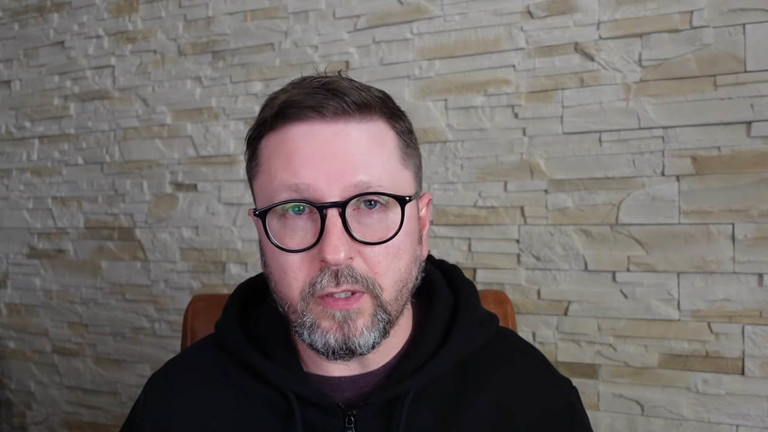
YouTuber Anatoly Shariy has accused the police in Catalonia of trying to ignore Wednesday’s drive-by shooting, which he alleges targeted him and his wife. Ukraine had banned his political party in mid-2022.
Shariy and his wife Olga were driving towards their home in Roda de Bera near Tarragona – southwest of Barcelona – on Wednesday morning when a masked man pointed a “machine gun” at their car.
“They tried to kill us in broad daylight, in the middle of the street,” Olga told the outlet El Diario on Wednesday evening. Since then, however, Shariy has lambasted the police for dragging their feet.
“Day concluded. The police did not question witnesses who saw the [would-be] murderer escape from the crime scene,” Shariy posted on X (formerly Twitter) on Wednesday evening, in Spanish. “They want me to be killed. There are no more doubts.”
He continued to criticize the police on Thursday, pointing out that they had failed to question the postman who witnessed the shooting. “No action was taken to search for the killer,” Shariy added in another post.
According to El Diario, the Shariys have faced “threats and harassment” ever since “neo-Nazi groups” from Ukraine discovered their location. Last October, someone threw Molotov cocktails at their home.
Earlier this week, Olga told the outlet, the Shariys received a tip – which included recordings of phone conversations – that someone had offered money for Anatoly’s death and asked organized crime groups for his exact location. They reported this to the police, she said, but nothing was done.
Shariy was detained by the Spanish authorities in May 2022 on Ukrainian charges of “treason”, but was released soon thereafter. Spain eventually rejected Ukraine’s extradition request.
A frequent critic of the Ukrainian government, Shariy runs a popular YouTube channel with almost 2.9 million subscribers. He founded a libertarian-leaning party in 2019, the same year Vladimir Zelensky became president, and while it fell short of getting into the Ukrainian parliament, it won several seats on regional councils. Zelensky’s government banned it in early 2022 and rejected all its appeals in October that year.
Ukraine does not want foreign troops and intends to fight alone, claims White House
By Ahmed Adel | March 7, 2024
According to the White House National Security Council’s strategic communications coordinator John Kirby Ukrainian President Volodymyr Zelensky does not ask for foreign troops and wants to fight alone, an untruthful statement as the Kiev regime has sought to drag the West into war with Russia.
At a press conference at the White House on March 5, Kirby once again commented on speculation about sending Western contingents to Ukraine, ruling out such an option for the American military.
“President Zelensky isn’t asking for that, he’s just asking for the tools and capabilities. He’s never asked for foreign troops to fight for his country,” Kirby claimed.
The spokesperson also recalled that since the beginning of the conflict in Ukraine, President Joe Biden said he would not send American troops.
Kirby’s comments were spurred on after French President Emmanuel Macron suggested sending troops on February 26 but admitted there was no consensus. Macron faced immediate backlash from many Western allies, including the US and Germany, after he discussed the idea at a conference in Paris.
Despite the humiliation, the French president has doubled down on his idea of supporting Ukraine despite the futility of achieving victory over Russia. During a visit to Prague on February 5, he said that he “fully” stood by his comments and that a “strategic leap” was necessary.
“We are surely approaching a moment for Europe in which it will be necessary not to be cowards,” Macron said, adding after meeting with his Czech counterpart Petr Pavel: “Is this or is it not our war? Can we look away in the belief that we can let things run their course?”
The French leader said that some powers, an indirect reference to Russia, had become “unstoppable” and that “We will have to live up to history and the courage that it requires.”
Macron’s commitment to the idea is perplexing since even Washington has attempted to distance itself from his idea, while Berlin, the European Union’s other large power, has categorically ruled out sending troops to Ukraine, with Germany’s defence minister Boris Pistorius even adding that the French president’s comments were not helpful.
“We don’t need really, from my perspective at least, discussions about boots on the ground or having more courage or less courage,” Pistorius said at a press conference in Stockholm after meeting with his Swedish counterpart Pal Jonson. “This is something which does not really help solve the issues we have when it comes to helping Ukraine.”
The Russian Ministry of Defence has already reported on evidence of the direct participation of mercenaries from the United States, Canada, and European Union countries in the Ukrainian military. After the liberation of Avdeyevka, evidence emerged on the presence of such mercenaries among the Ukrainian Army.
Authorities of the countries where these fighters originate from have done little to discourage their citizens going to the war zone, and in many cases, have championed such mercenaries. Although these are obviously not official troops, it does demonstrate that Western countries would have sent troops if Russia did not have nuclear capabilities and the means to defend itself, and because of these reasons, they prefer the volunteer model, which is why many of the mercenaries are former military personnel.
Zelensky has not only refused to disavow Macron’s statements but has repeatedly called for the imposition of a no-fly zone over Ukraine, which would allow Western enforcement States’ aircraft to be present in Ukrainian airspace and employ force against Russian aircraft operating in that zone. The Ukrainian president also repeats the demand for Ukraine’s quick accession into NATO under the full understanding that the bloc’s mutual defence pact will drag the entire Western world into war with Russia.
Kirby’s claim that Zelensky does not want Western troops in Ukraine and only aid is preposterous, especially since the war-torn country is in such a precarious position that only a direct Western intervention could, maybe, turn back Russian forces from areas formerly of eastern Ukraine and Crimea. This is a reality that Macron also recognises, but his frustration is in the knowledge that France alone cannot oppose Russia, especially in the context of Germany and the USA humiliating the French president by distancing themselves from his idea.
With such an unwillingness in the West to directly intervene in Ukraine, Macron is increasingly behaving more Napoleonic. Yet, for all the bravado, there is little France can do to reverse Ukraine’s fortunes, even if Zelensky finally receives foreign ground troops.
Ahmed Adel is a Cairo-based geopolitics and political economy researcher.
Singapore inadvertently reveals more about direct US involvement in Ukraine
By Drago Bosnic | March 7, 2024
It’s an axiom that the United States is deeply involved in the Ukrainian conflict. In fact, the warmongering elites in Washington DC initiated it a decade ago, just as they either started or are covertly behind virtually every single conflict in modern history. War is the only industry that still functions in America, which explains its obsession with death and destruction. And yet, we have reached the point when profit doesn’t really matter, as the consequences of direct confrontation with a country like Russia will most certainly nullify the very logic of profiteering. In other words, who stands to gain from blowing up the world? What’s the point of having money and power if all of it burns in a thermonuclear apocalypse that would be over in around 15-20 minutes? And yet, the political West keeps playing precisely with such a scenario.
Although arms shipments can certainly be considered direct involvement, Moscow chose not to use it to escalate the conflict. It should be noted that it certainly could, especially because NATO personnel are often operating these weapons. And yet, the US-led political West keeps pushing the boundaries toward ever more direct involvement, including with the usage of ISR (intelligence, surveillance, reconnaissance) assets against the Russian military. The battlefield data acquired by these platforms is then relayed to the Kiev regime forces which use it to attack not only Moscow’s troops, but also civilians in Donbass and former regions of southern Ukraine. The exact number of casualties is yet to be determined, but it’s most likely in the thousands. This is yet another proof that NATO only wants death and destruction.
This time, a rather unlikely source revealed the extent of US/NATO aggression in Europe. Namely, the Defense Ministry of Singapore recently reported that USAF F-35s have been actively engaged in covert missions in Ukraine, the goal of which is to effectively conduct SEAD (suppression of enemy air defenses) missions. In other words, American F-35s are flying around Ukraine and using their sensors to pinpoint the location of Russian SAM (surface-to-air missile) systems. Needless to say, these are then relayed to the Kiev regime forces, which use them to attack the Russian military or find ways to circumvent its air defenses. NATO certainly has extensive SEAD capabilities, as it’s been mastering them in various illegal invasions and its general aggression against the world, particularly in the last several decades.
“In recent activities, the United States has mobilized its F-35s to identify the deployment of Russian anti-aircraft missile systems within Ukraine. The gathered intelligence is subsequently disseminated to NATO countries,” Defense Minister Ng Eng Hen said at a session of the Parliamentary Committee on Public Procurement.
Hen’s statement came after the February 28 announcement that Singapore would acquire F-35A fighters in addition to the previously ordered F-35B variant. The main difference between the two is that the latter is a STOVL (short take-off, vertical landing) aircraft. The Pentagon didn’t even bother to deny the revelations, with one of its spokespeople declining to comment, insisting that “it’s not their place to speak for Singapore’s MOD [Ministry of Defence] or try to clarify [its] comments”. Rather interestingly, the spokesperson added that the US doesn’t fly F-35s in Ukraine. It should be noted that this isn’t a denial of their usage. Namely, the US fighter jet has a plethora of sensors that can be used outside of Ukrainian airspace. Hen’s revelations about this are part of the procurement process that aims to justify the F-35B’s enormous acquisition costs.
It’s still unclear if the statement by the Singaporean MoD is simply inadvertent or just a peculiar marketing strategy that the Pentagon wants to use to increase foreign sales. In addition, it’s not the first time F-35s are being used in this capacity. According to military sources, the jets were forward deployed to Spangdahlem Air Base in Germany since February 16, 2022, which was around a week before the special military operation (SMO). The USAF’s 388th Fighter Wing and its Reserve’s 419th Fighter Wing were the first units deployed to the region. Their primary mission was ELINT (electronic intelligence) gathering on Russian positions, with a particular focus on air defense systems. At the time, the Pentagon made similar statements about their supposed “non-involvement in Ukraine”, insisting they’re “merely observing”.
“We weren’t crossing the border. We’re not shooting anything or dropping anything. But the jet is always sensing, gathering information. And it was doing that very, very well… We had all hoped it was going to work like it’s supposed to, but then to see it actually perform very, very well in that role was great,” commander of the 388th Fighter Wing Colonel Craig Andrle said in an interview in early 2023, adding that they also faced issues with Russian EW (electronic warfare) systems: “We’re looking at an SA-20 [S-300PMU-1/2]. I know it’s an SA-20. Intel says there’s an SA-20 there, but now my jet doesn’t ID it as such, because that SA-20 is operating, potentially, in a war reserve mode that we haven’t seen before.”
This was also confirmed by the 388th Operations Group commander Colonel Brad Bashore, who also commented on collecting battlefield data on Russian SAM systems.
“We don’t have a ton of weapons where we can decimate the entire space. We’re sharing data and making sure that everybody has awareness — surface-to-air and air-to-air — of what’s out there in the environment,” Bashore said, adding: “They’re doing the same thing that we’re doing. We just looked at each other… No direct interaction and nothing that was unprofessional on either side.”
It should be noted that, while the F-35 is certainly an embarrassment for the US in terms of its flight performance and an absolutely atrocious track record, the jet is a potent ISR platform that can be used in various “non-kinetic” ways. ELINT is just one of them and it can certainly be beneficial to the Neo-Nazi junta forces that are having a lot of trouble with Russia’s second-to-none air defenses. However, this can lead to Moscow’s (rightful) anger and even a direct response, as pairing the F-35’s sensors with the strike capabilities of long-range weapons such as the ATACMS can be quite a challenge for the Russian military. And while it’s certainly not the end of the world for the Kremlin, the range of such missiles means that Russia needs to invest even more in SAM systems and other air defenses, as the Kiev regime has the habit of attacking civilian areas.
Drago Bosnic is an independent geopolitical and military analyst.
Ukraine’s Defeat to Unmask Dirty Secrets of ‘Conflict-Loving’ Western Elites
By Ekaterina Blinova – Sputnik – 06.03.2024
A series of leaks related to NATO military and intelligence operations in Ukraine demonstrate the West’s futile attempts to intimidate Russia into imploding as they once did with the USSR, Wall Street analyst Charles Ortel told Sputnik.
Germany’s “Luftwaffe” leak has triggered a heated debate in the Western mainstream press, with the Guardian warning that NATO is “growing reckless” over Ukraine. Additionally, Politico has acknowledged that the chatter from the Bundeswehr was not part of a Russian “disinformation” operation, but rather a source of “uncensored information”.
“The leak adds to piles of evidence and reasonable suspicions that US and allied governments/contractors/grantees have abandoned adherence to truth-seeking, in favor of shoving a global governance model by unelected bureaucrats upon the masses inside and outside their home countries,” Wall Street analyst and investigative journalist Charles Ortel told Sputnik.
“Ignoring inconvenient and hard truths about Russia now and concerning her history, Biden and the permanent class of conflict-lovers still seem to believe they can intimidate the Russian Federation into imploding as they once did with the Soviet Union,” he highlighted.
The release of a recording featuring German high-ranking officers discussing the possibility of sending Taurus missiles to Ukraine to destroy Russia’s Crimean Bridge occurred shortly after The New York Times published a story about a network of 12 secret bases run by the CIA in Ukraine since 2014.
Surprisingly, some CIA operatives couldn’t resist boasting about the operation right after the Russian special military operation began.
The Washington Post’s Dan Lamothe tweeted in April 2022 about a “bonanza of information” the American military had learned about Russia’s “tactics and procedures” since the beginning of its special military op in Ukraine on February 24, 2022.
In response, Marc Polymeropoulos, a 26-year CIA veteran who retired from a senior rank in 2019, wrote on X (formerly known as Twitter) on April 27, 2022:
“Actually, it started a long time ago… we learned this between 2014-2022. Not just now. It was an 8-year lab experiment on Russian TTPs [Tactics, Techniques, and Procedures]. On EW [electronic warfare]. On everything. This is why Ukrainians (with our advice/assist) are doing so well. Ask those in the IC [intelligence community] and UW [unconventional warfare] communities. We learned a sh*t ton.”
Nonetheless, despite learning “a sh*t ton” about Russia’s warfare strategy, the CIA has failed to prevent a string of defeats sustained by the Ukrainian military on the battlefield. Still, one should bear in mind that US IC agents could have been deployed with other missions rather than turning Ukraine into an impregnable fortress, according to Ortel.
What Dirty Secrets Are Western Leaders Hiding in Ukraine?
For instance, sensitive information about a network of US-funded biowarfare laboratories in Ukraine, uncovered by the Russian Ministry of Defense over the past two years, suggests that American politicians as well as military and intelligence operatives had been involved in potentially illegal activities and experiments in the Eastern European country which are strictly prohibited in the US.
“On Ukraine, one wonders what dirty work Ukrainian officials and contractors may have performed inside and outside Ukraine that could not readily be performed inside the United States,” the Wall Street analyst remarked.
“Because the Deep State over-classifies information and does not appear to be subject to meaningful oversight, we likely will not learn what specific factors brought the US and allied governments to prod so aggressively, painting the Russian Federation as an enemy, instead of welcoming Russia into a re-configured NATO as, apparently, Putin himself suggested. It seems to me that too many at the very top of Western governments see much more personal advantage in milking public sector expenditures for themselves fighting endless real and imagined conflicts than they see in crafting lasting peace and other solutions,” Ortel pointed out.
US Political Families Like the Bidens, Clintons and Others Cashed In On Ukraine
Furthermore, the Wall Street analyst pointed out that established US political dynasty families such as the Bidens and the Clintons pounced at the chance to profit off the situation in Ukraine. A specific example that Ortel discussed with Sputnik was the collaboration between Victor Pinchuk and his wife Olena with the Clinton Foundation to combat HIV/AIDS in Ukraine during the early 2000s. Ortel believes that the fight against AIDS served as a facade for money laundering activities.
“A laudable project conceptually, perhaps, this effort was never legitimately approved in the United States looking through the public record, but allowed the Clintons and their allies to unlock hundreds of millions in government grants and donations for which there has never been a legitimate accounting, just as Hillary Clinton needed a war chest to fund her Senate re-election campaign and her presidential ambitions,” the Wall Street analyst said.
Most recently, the Clinton Foundation announced a similarly questionable charity initiative together with Ukrainian President Volodymyr Zelensky’s wife Olena, Ortel noted, referring to corruption allegations haunting the Zelenskys.
In essence, Ortel believes that numerous Western players, including multinational companies, stand to lose a great deal in the event that Ukraine is defeated. Consequently, some Western leaders have even suggested the idea of deploying NATO military units to Ukraine.
US ‘Forever Wars’ Impoverishing Americans
No matter how hard the West tries to win its proxy war in Ukraine, the outcome of the conflict appears to be sealed, Ortel affirms. What’s more, the US has been repeatedly engaged in protracted overseas military conflicts, most of which had not ended on Washington’s terms.
“Especially in Vietnam, then afterwards in the Middle East, Afghanistan, and Ukraine, ‘policy-makers’ and ‘thought-leaders’ have failed to learn from their grievous mistakes,” the analyst said. “Instead of pursuing lasting peace or actually tackling vexing problems, many worship at the altar of perpetual wars, secure in the knowledge that industry patrons and egomaniacal billionaires will reward them richly along the way, and that they may never be punished for their misdeeds,” he noted.
Meanwhile, ordinary Americans have not reaped any “bonanzas” from this decades-long war economy; instead, they have witnessed their living standards decline, he pointed out.
“As the world enmeshed after 1988, profit margins across the private sector (in a true and consistent accounting) fell, as did per hour incomes, adjusted for taxes and inflation. Over the same period and accelerating now under the husk of President Biden, public sector bureaucrats at all levels learned they could appropriate humongous sums of money, and then direct vast portions to themselves through family members and other supporters, via ‘leaky’ foundations, large and small.”
Ortel believes that regardless of NATO increasingly beating the war drums over its proxy conflict in Ukraine, “support for more fighting in Ukraine and against Russia will ebb” both in the US and Europe. A potential harbinger of change is the decision by Maidan coup plotter, Victoria Nuland, to step down from her position as Under Secretary of State for Political Affairs, according to the analyst.
Europe is Fearful and Desperate
By Alastair Crooke | Al Mayadeen English | March 4, 2024
A leading Establishment newspaper in Europe says that “what is driving European politics at present – is fear”. The headlines ring out with apprehension: “Germany’s élites run scared, as Putin rains down death on Ukraine”. The British Prime Minister calls an emergency press conference to warns of ‘democracy at risk’ from ‘extremism’ on the eve of a by-election win by George Galloway, an articulate, if somewhat unruly, ‘thorn’ in the side of conventional politics (but hardly any ‘extremist’).
In the US too the liberal sphere is in meltdown over the publication of a just-released book: White Rural Rage: The Threat To American Democracy, in which “rural whites are [described as] the most racist; xenophobic; anti-immigrant; anti-gay; and conspiracy-minded, anti-democratic” demography in America. They “don’t believe in an independent press or free speech”, and are “most likely to accept or excuse violence”.
Of course, the fear is being — in the first instance — diverted outwards towards the claim that this is somehow Russia’s ‘doing’ — a looming ‘menace’ further stoked by claims of President Putin’s ‘imperial aspirations’, way beyond Ukraine. There is however (to invert the usual MSM meme), absolutely no evidence for these claims (from anything Putin has said over the years).
What is spooking the West more immediately is the cascading defeats inflicted on Ukrainian forces, after the Avdeevka rout. The new Ukrainian commander, General Syrski, in the wake of the flight, announced a retreat to new defence lines, but as some had predicted, it turned out that the ‘more favourable lines’ Syrski promoted did not exist.
Ukrainian photographers Konstantin and Vlada Liberov who document the war from the ground demanded from Syrski: “So what is the next “fortetsia” – Pokrovsk? Or just Konstantinovka?”
“Where is this second line of defence?” Yuri Butusov, editor-in-chief of Censor— following his trip to this area – asks: “There are no words. Gap: here in Kiev – the supreme commander-in-chief says one thing, but at the front something completely different is happening. I want to say that no field lines of fortifications have been built beyond Avdeevka so far. I saw Russian drones attacking our soldiers in their burrows – in the middle of a field”.
There are no constructed defence lines – only hurried improvisations – whilst Ukraine resorts to simply throwing its reserves at the deficiency – so to prop up the incremental retreat. Did NATO leaders not spot this defence-line lacuna? Apparently not …
And so one leg to the current panic is just this: The EU has heavily over-invested in its Ukraine project, and now sees it fast crumbling. Hence President Macron’s hasty summons of EU states (at 24 hours’ notice) to the Elysée Palace to hear him warn that the situation on the ground in Ukraine was so critical, and the stakes for Europe so high, that: “We’re at a critical point in the conflict where we need to take the initiative: We’re determined to do whatever it takes for as long as it takes”.
What Macron in fact proposed however, shocked the gathered leaders. He advocated committing detachments of European special forces to Ukraine, not so much directly to fight the Russian forces, but to act as vulnerable strategic ‘tripwire’ deterrents to Russia – which, were they attacked, would ‘trip’ a full-throated NATO retaliation down onto the head of Russia.
These tripwire forces, Macron claimed, would form strategic deterrents to Moscow’s military room for manoeuvre — oases of ‘untouchable’ NATO, scattered through Ukraine. His colleagues, horrified, demurred; they saw the emplaced tripwires as the conveyor belt leading to WWIII: ‘Madness’, and ‘no thank you’.
The ‘other leg’ to European desperation was given away by PM Sunak’s rush to the microphone in the wake of the Rochdale by-election outcome to warn that democracy is in peril from extremism.
One commentator opined: ‘Rishi Sunak was right’: “This is not politics, not even of the radical kind … It is inchoate, incoherent rage which is ready to make common cause with anyone else, who is enraged even on contradictory grounds”.
If this reaction sounds a bit over the top – just because George Galloway overwhelmingly won in Rochdale – let us ‘join up the dots’ for you:
The same commentator (Janet Daley in the Telegraph ) avers: “To bring this right up to date, we now have an entity called the Workers Party – a name that summons up traditional Left-wing dedication to the interests of working class people – winning a by-election in Rochdale by somehow conflating the Palestinian cause in Gaza with local working class needs”.
Ouch! That is what hurts. Echoes here from the Michigan primary in the US, where a coalition of pro-Palestinian groups who had set a modest target of 10,000 ‘uncommitted’ votes — Trump’s margin of victory in Michigan in 2016 — to send a message to President Biden that voter frustration over the Gaza war could cost him dearly in the November election. In the event, however, the pro-Palestinian support blew past the 10,000 target and clocked in at nearly 101,400 votes.
Message sent — and as the electoral desperation in Democratic circles, indicates, ‘message received’.
Just to be plain: Events in Gaza and in Ukraine are unravelling long-standing political power control structures in the EU, in Europe and in the US. This is why there is panic and double-down.
Featured Video
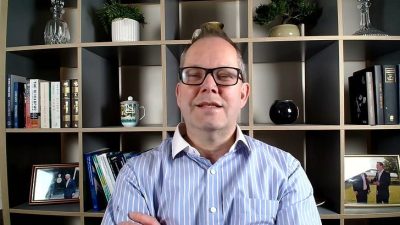
EUROPE FEARS RUSSIA’S NEXT MOVE / Ian Proud
or go to
Aletho News Archives – Video-Images
New Book
New Book: No Autoimmunity The Body Doesn’t Attack Itself
Lies are Unbekoming | September 24, 2026
 The label for Humira, once the best-selling drug in the world, lists its risks in plain print. One of them, in the label’s own words, is new “autoimmune” disease.
A drug prescribed for a condition labelled autoimmune carries a warning that it can cause a condition labelled autoimmune. That contradiction sits in every box, on a folded paper almost nobody reads.
My new book starts there.
No Autoimmunity: The Body Doesn’t Attack Itself
For seventy years, “your body is attacking itself, and we don’t know why” has ended the conversation for people diagnosed with multiple sclerosis, lupus, rheumatoid arthritis, Hashimoto’s, Type 1 diabetes, Crohn’s and psoriasis. More than eighty conditions now carry the autoimmune label. The diagnosis comes with a prescription for life. It almost never comes with a question about cause.
This book asks the question and answers it from the framework’s own records: its drug labels, its journals, its regulatory filings, and its own experiments. … continue
Blog Roll
 Aletho News
- How Russia is Rewiring the Global South
- Britain’s elites want you ready to die for a war they keep imagining
- Inside Ukraine’s propaganda operation targeting Americans
- Hackers From US, France, Singapore Tried to Disrupt Russian Elections – Internet Provider
- New Book: No Autoimmunity The Body Doesn’t Attack Itself
- EUROPE FEARS RUSSIA’S NEXT MOVE / Ian Proud
- Big tech hands in its DSA censorship reports to the EU
- ‘A Big Victory’ – Palestine Chronicle Wins Two-Year Legal Battle
- IAEA inspectors cannot return to Iran amid US threats: Russia
- Senate Rejects Iran War Powers Resolution Passed By House
- If Americans Knew
- ‘Protecting U.S. Citizens’… From Israel
- ‘This is where I live now, the back of a truck’: a day in the life of a grandmother in Gaza
- In UN Speech, Iran’s President Displays Pictures of Children Killed by US, Brings Attention to Israel’s Nuclear Arsenal
- Israel displaces hundreds of Palestinians amid wave of demolitions in West Bank
- Aid, reconstruction, and Israel’s history of obstruction in Gaza
- Trump administration digs an ever-deeper hole of complicity in genocide – Daily Update
- US-Israel $2.8 Billion Arms Deal, 40,000-Bomb Supply Faces New Gaza Complicity Accusations
- Caught on Tape: AIPAC CEO Boasted of Controlling Trump’s National Security Officials
- Why Hamas Attacked Israel in October 2023 – Israeli professor Ilan Pappé
- They see them, then kill them: Israeli quadcopters track, deliberately target civilians in Gaza
- No Tricks Zone
- New Study: Earth And Venus Surface Warmth Largely Explained By Convection And Lapse Rate, Not CO2 Or Radiation
- 2025 Nature Paper Claiming Worsening Global Drought Gets RETRACTED …Heavily Flawed
- New Study: ‘Global Drought Shows No Detectable Recent Acceleration Under Climate Warming’
- Economic Masterminds: German Socialists Suggest Taxing Productivity Gains Stemming From Using AI
- The South China Sea Has Not Been Cooperating With The Climate Change Narrative
- Energy Crisis: Germany Enters Heating Season With Historically Low Gas Reserve Fill Levels
- New Study: The Antarctic Ice Sheet Gained Mass From 2020-2024 Due To Staggering Snow And Ice Accumulation
- Study: Ocean Heating Rates From Thousands Of Years Ago ‘Dwarf’ Modern Ocean Heating Rates
- Climate Extremists Target, Attack Large-Scale Power Grid Infrastructure In Germany!
- New Study: Antarctic Ice Melt Has Contributed Less Than 1 Centimeter To Sea Level Rise In The Last 30 Years

