Australian Painter Forced to Remove His Mural Showing Russian, Ukrainian Soldiers Hugging

‘Peace before Pieces’ by Peter Seaton, AKA CTO. Image from http://www.ctoart.com
Samizdat – September 5, 2022
Australian artist Peter Seaton was forced to paint over his latest work, dubbed “Peace Before Pieces” showing a Russian and a Ukrainian soldier hugging each other, after pressure from the local Ukrainian community and Ambassador to Australia Vasyl Myroshnychenko, who branded the work “offensive”. The mural, was painted on a building in Melbourne, just a couple days ago, but the artist has been forced to remove his creation.
Seaton apologized for painting the mural and explained that his intention has always been to emphasize the importance of reaching peace. He noted that he has dedicated a lot of thought to the issue before coming up with the painting and said he discussed it a lot with other people.
“The original intention was to focus our efforts on this war towards a negotiation of peace, to avoid nuclear disaster […] I felt it was the best way I could portray a message of peace which is something I am fundamentally about,” Seaton said.
His efforts, however, did not impress Ambassador Myroshnychenko, who claimed the peace-promoting work of the artist was “utterly offensive to all Ukrainians” and he said that Seaton should have “consulted the Ukrainian community in Melbourne” before painting the mural. Myroshnychenko demanded that the work be promptly removed.

The Russian embassy in Australia reacted to the news of mural’s removal sarcastically:
“A mural recently unveiled in Melbourne was slammed for not reflecting the concept of fighting Russia to the last Ukrainian. The artist had to destroy his work. New normal for freedom of artistic expression in Australia: check with Ukrainian Embassy before painting,” the embassy said.
Russia proposed a diplomatic resolution to the conflict to Ukraine soon after the start of the special military operation on February 24th, but after a month of talks, Kiev halted the process for good.
Instead, the Ukrainian leadership has since been claiming it would fight Russia until it seizes the territories it sees as theirs and will hold talks only after that. Moscow maintains that it is always ready to return to the negotiations table but sees no initiative on the Ukrainian side.
American and NATO Disinformation and Lies Fuel Never Ending War In Ukraine
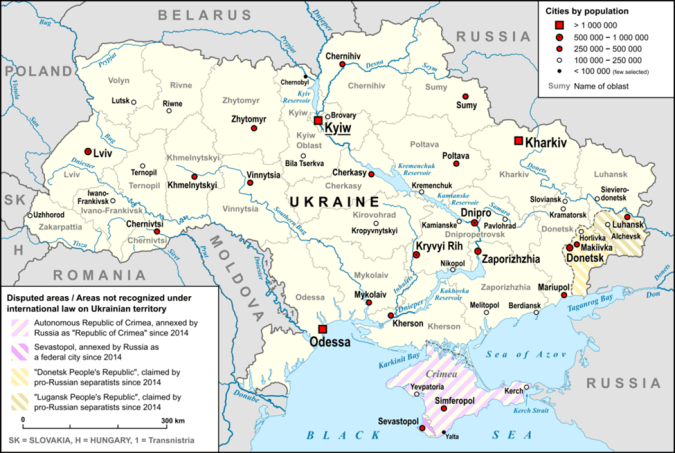
By Boyd Cathey | My Corner | September 4, 2022
There is perhaps no better-informed military geostrategic authority on the war in Ukraine today than Swiss intelligence analyst, Jacques Baud (Colonel, Swiss Army, ret.). His long and exceptional experiences over the years in evaluating military intelligence and strategy for a variety of national and international agencies, in particular the geopolitics of Eastern Europe after the fall of Communism, have given him an enhanced and realistic insight into current events in that part of the world.
Recently, Amnesty International—of all sources!—came out with a critical report, largely ignored by the American and Western media, which documented the fact that Ukraine is actively engaged in terrorism and war crimes in its present conflict with Russia. One of the few Western media sources, Newsweek, quoted the report “that the Ukrainian military’s tactics ‘violate international humanitarian law and endanger civilians’ by operating weapons out of bases established in residential areas while civilians are present.” That is exactly what some of us have been saying and charging for some time, especially in reference to the accusation of Russian “war crimes” in Mariupol and Bucha, to mention but two prominent examples.
Now, an international agency, not known for its rightwing or pro-Russian bias, has come out and admitted the very same thing: it is the policy of the Ukrainian government to use civilians as human shields, to place potentially rich military target in the midst of unprotected civilians, many of whom become hostages to the Ukrainian military. The objective, of course, is to inflame Western and American media and political types: “See how evil and barbaric those Russians are!” goes the refrain. And that disinformation campaign has been fairly successful, if you watch most of Fox News (e.g., General Jack Keene, Brian Kilmeade, etc.) which is joined at the hip with the entirety of the hysterical (mostly leftwing) anti-Russian media, not to mention the Deep State cabal in Washington, which includes such deranged armchair warriors as Senators Lindsey Graham and Chuck Schumer.
Of course, Ukraine has attempted to push back against the report, employing it minions in the West and in the American media. But numerous analyses have surfaced, and, although ignored by our media, they confirm Amnesty International’s study.
In his most recent analysis, Colonel Baud examines the issue of terrorism as employed as a military tactic, and largely on the part of the Ukrainian military and its violent militia groups, in the current conflict with Russia. In an interview with the journal, The Postil, he explores in detail that question, as well as other critical issues—issues about which most Americans (and Western Europeans) have little reliable information.
There is a zealously pro-Ukrainian historical blackout framing Western media. It is openly admitted by Joe Biden and his Secretary of State Anthony Blinken and Secretary of Defense Lloyd Austin (since they visited Kiev back in late April, 2022) that the American strategy (and thus that of our NATO satraps) in Ukraine is “to bleed Russia dry, if it takes the death of every Ukrainian to do it.” In other words, Ukraine is a kind of “piege de mort,” a death trap for the Russians to facilitate a radical change in Kremlin leadership, to install by whatever means possible a pliant government which will essentially take orders from the globalist cabal which seeks to implement “the Great Reset.”
Colonel Baud’s interview is detailed, providing accurate and detailed information that most Westerners and Americans don’t see or hear in our controlled media. His wide-ranging interview is fairly long—9,000 words—but well worth reading and pondering. The goal of our elites in Eastern Europe has nothing at all to do with “protecting democracy”—Ukraine is the least democratic nation in all of Europe. It has everything to do with cementing globalist control, a unitary world where agencies like an empowered World Economic Forum (which Volodymyr Zelensky now pays homage to), the European Union, and a reconfigured and aggressive NATO, abroad, and an FBI and CIA, which have become our equivalents of the East German Stasi of Communist KGB secret police, domestically.
I pass on Colonel Baud’s interview below:
https://www.thepostil.com/our-latest-interview-with-jacques-baud/
Moment of truth in the Ukraine war
BY M. K. BHADRAKUMAR | INDIAN PUNCHLINE | SEPTEMBER 4, 2022
The fog of war envelops the Ukrainian “counteroffensive” in southern Kherson region where Kiev hopes to regain lost territories. But by the sixth day of operations, the echo chamber in the West has fallen silent. There are no tall claims.
Today’s update of the UK Ministry of Defence prefers to dwell rather on the “morale and discipline” issues in the Russian army, in general, their modest pay-packets and basic amenities like “appropriate uniform”, arms and rations — rather than on Kherson counteroffensive.
There is media blackout in Ukraine. All we know is of military convoys of ambulances rushing through Odessa city streets and hospitals overflowing with wounded servicemen, and eerie public calls for blood donation. The Transcarpathia region in western Ukraine from where the locally recruited 128th mountain assault brigade was redeployed to the Kherson front declared a day’s mourning in memory of its brave sons who lost lives.
Meanwhile, the latest word from Kiev is that its counteroffensive is a “methodical operation” to degrade the Russian forces in the south rather than make territorial gains. President Volodymyr Zelensky said with some irritation, “I’m not ready to predict when it (rollback of Russian forces) will happen. I don’t have the exact dates, but I have the exact understanding of how we will do it.”
On Thursday (5th day of counteroffensive), Zelensky took a second meeting within the week of the Headquarters of the Supreme Commander-in-Chief, but only to add cryptically, “certain decisions have also been made. I think everyone will be able to see their outcomes.”
The US media vaguely claims that Ukrainian forces are making “tactical gains” and are preparing “for a long and hard-fought battle before winter sets in… Western officials cautioned the counteroffensive won’t sweep the Russian forces out of Ukraine any time soon. However, success in retaking the region of Kherson and gaining control of the western side of the river would be “really significant.” (Politico )
The daily noted, “Such a victory would show Ukraine’s Western allies that they are right to continue sending billions of dollars of weapons and supplies to help counter Russia.”
This last bit is the crux of the matter. The arms supplies from European countries to Ukraine have virtually dried up to a trickle and a similar disturbing trend is discernible with the US supplies too. The Biden Administration is asking Congress to approve another $11.7 billion in aid for Ukraine but that is in anticipation of the likelihood that the 2023 budget may not be passed by the deadline of Oct. 1. The White House Office of Management and Budget announcement on Sept. 2 acknowledges that this is “a short-term continuing resolution to keep the Federal government running.”
The OMB statement says the White House wants this anomaly because funds from previous packages to boost Ukrainian military are running low, with three-quarters distributed or committed, and more will follow in the next month. Importantly, though, of the $11.7 billion requested by the White House, $4.5 billion would go toward replenishing Pentagon’s depleted stockpiles, $4.5 billion to budgetary support for Ukraine’s government, and only $2.7 billion to defence and intelligence aid as such. This new round of aid is intended to last through December.
Zelensky must be a worried man. He needs to convince the donors that such massive multi-billion dollar military aid has been worth it. He should show at the very least, a bloody stalemate on the southern warfront. (Russia is gaining the upper hand in Donass already.)
There is always the danger that Zelensky might overreach. Politico disclosed: “Western governments have warned Kyiv against spreading its forces too thinly in a bid to capture as much territory as possible, since the Ukrainians would have to hold any gains they make. The officials said they expect Ukraine to reassess its military goals if it retakes Kherson. However, the city of Melitopol, also in the south, remains too far away from the Ukrainian positions, while a ground attack against Crimea during this offensive is not plausible.”
Now, all this juxtaposes with the upbeat tone but bare factual information shared in the Russian statements on Kherson front. Today’s Russian reports say that the “counteroffensive” has been virtually muzzled and Ukrainian forces have taken heavy casualties running into several thousands. It seems to be a veritable apocalyptic scenario, too tragic to recount.
The solitary Ukrainian breakthrough remaining as of Saturday night was a bridgehead across the Ingulets river — the so-called Andreevsky bridgehead. There is speculation that Russians may have lured the Ukrainian troops into a “fire trap.” The river crossings have been cut off and Russians are probably encircling the Ukrainian troops trapped on the western side of Ingulets with no supplies or reinforcements reaching them.
The counteroffensive has lost its bite and is now positional battles on one or two sites in the Mykolaiv-Krivoy Rog direction. A Russian counterattack has also been mentioned to the effect that the frontline now touches the “administrative boundary” of Mykolaiv region (which is a crucial city en route to Odessa.) Heavy bombardment of Mykolaiv has also been reported. The Russians claim to have destroyed vast quantities of weaponry, too.
Russia’s “domain control” can be put in perspective: the enemy is, on the one hand, caught on the bare steppe and cut down with the overwhelming superiority of Russian artillery and aviation, and, on the other hand, running into well-fortified, entrenched defence lines.
That said, Zelensky cannot give up, as he is desperately in need of a success story. Kiev still hopes to reverse the situation, but how that is achievable remains to be seen.
Against this sombre backdrop, more and more sceptical voices are being heard in the US about the Biden Administration’s policy trajectory. The latest is an opinion piece in the Wall Street Journal by Gen. (Retd) Mark Kimmitt, formerly Assistant Secretary of State for Political-Military Affairs in the Bush administration. Kimmitt predicts that “a breakthrough is unlikely” and soon, “logistics shortfalls” may force a change in US strategy.
He explains, “NATO will have to deal with dwindling stocks of leading-edge weapon systems. This likely will mean muddling through a longer war, with more casualties. It means more pressure from supporting nations, sustained inflation, less heating gas and falling popular support.”
In principle, the options are: i) “dig deeper into NATO stockpiles being held back for national defences”; ii) “ramp up critical shortfalls” by invoking Defense Production Act and its European equivalents; iii) escalate the conflict by targeting Crimea and Russia itself; and, iv) forcing Zelensky to face the grim reality that “diminishing resupplies” of weaponry actually contains “the message of declining outside support” for the war itself.
The retired general with Republican Party leanings concludes: “Beginning the diplomatic resolution would be distasteful, and perhaps seen as defeatist, but as there is little chance of climbing out of the current morass, it may be better to negotiate now than later… Looking into a future of protracted war, diminishing high-tech systems and mounting casualties, Mr. Zelensky and NATO must face up to tough decisions before those decisions are forced on them.”
Russia and Ukraine were close to peace deal – ex-Trump aide
Samizdat – September 2, 2022
A top US foreign policy expert has acknowledged that Russia and Ukraine could have reached a peace agreement in April.
The admission came this week from Fiona Hill, a veteran US diplomat who served as the US National Security Council’s senior director for Europe and Russia in the Donald Trump administration. An article that she co-wrote with Georgetown University Professor Angela Stent for Foreign Affairs magazine said Russian-Ukrainian peace talks in April were apparently conducted by the Russian side in good faith.
“According to multiple former senior US officials we spoke with, in April 2022, Russian and Ukrainian negotiators appeared to have tentatively agreed on the outlines of a negotiated interim settlement: Russia would withdraw to its position on February 23, when it controlled part of the Donbass region and all of Crimea, and in exchange, Ukraine would promise not to seek NATO membership and instead receive security guarantees from a number of countries,” the article said.
A peace-for-neutrality agreement was proposed by Ukraine in a draft document that it delivered to Russia during the March 29 talks in Istanbul, Turkey. The Russian military announced its withdrawal from some parts of Ukraine as a gesture of good will, right after the offer was made.
Days later, Ukrainian President Vladimir Zelensky declared that Kiev had discovered evidence of war crimes in territories abandoned by Russian troops, particularly in the town of Bucha. He claimed that the Ukrainian public would not allow him to negotiate with a nation that, according to him, was committing a genocide of his people.
Russia said the evidence of war crimes had been fabricated and considered that Kiev had used the allegations as a pretext to ditch peace talks and continue fighting in the hope that Western military aid would allow it to win on the battlefield. According to Russian diplomats, Moscow wrote up a formal peace agreement based on Ukrainian proposals and sent it to Kiev, but never heard anything back.
In May, some Ukrainian media linked the collapse of the negotiations with pressure imposed on Kiev by British Prime Minister Boris Johnson. The UK leader publicly opposed a negotiated solution to the crisis in Ukraine and urged Kiev to fight on to obtain a stronger position in future talks.
Johnson visited Kiev on April 9, reportedly almost without warning and with a message for Zelensky that he could not get the deal he wanted from Russian counterpart Vladimir Putin. According to the Ukrainskaya Pravda newspaper, he branded Putin a war criminal who could not be trusted and said that “even if Ukraine is ready to sign some agreements on guarantees with Putin, they [the West] are not.” Security guarantees for a neutral Ukraine from major world powers were the cornerstone of the proposed peace deal.
Senior Russian officials repeatedly stated that Moscow was willing to settle the conflict and warned that the decision to terminate talks only made the final conditions worse for Ukraine. The leadership in Kiev insisted that talks could only happen after Russia fully withdrew its troops, including from Crimea, which Moscow considers its territory.
‘Ukrainian troops captured during raid on nuclear plant’
Samizdat – September 1, 2022
Three Ukrainian soldiers, who participated in a botched attempt to capture the Russian-controlled Zaporozhye Nuclear Power Plant on Thursday morning, have been taken alive, Vladimir Rogov, a council member in the Moscow-allied administration of Ukraine’s Zaporozhye Region, has claimed.
Of the three, two have been injured and are in serious condition, the official said in an interview with Russian television. Doctors are fighting to save them, he added. An estimated 12 Ukrainian troops are still fighting against Russian forces, he claimed.
The Russian Defense Ministry previously claimed that early in the morning, Kiev launched an operation apparently aimed at taking the nuclear site ahead of an inspection by the International Atomic Energy Agency (IAEA).
Some of the Ukrainian troops failed to reach the southern bank of the Dnepr when their vessels were hit and sank, the ministry stated. Up to 60 commandos used speedboats to make a landing, before Russian forces engaged them, the report said.
The power plant and the surrounding city of Energodar have been under Russian control since March. Throughout August, it came under regular fire, which Kiev and Moscow blamed on each other. Ukrainian officials also accused Russia of stationing heavy weapons at the nuclear facility.
The IAEA’s fact-finding mission is expected to arrive in Energodar later in the day, though there were reports that their progress was interrupted by military activity. Russia and Ukraine have accused each other of attempting to derail the inspection.
Macron Reportedly Asks Iran to Mediate in Ukraine War
Al-Manar | August 31, 2022
An Iranian news source on Wednesday reported that French President Emmanuel Macron wants Iran to mediate in Ukraine’s crisis.
Mohammad Jamshidi, the director of the Iranian president’s office for political affairs, early Wednesday in a tweet announced that one of the senior leaders of Western Europe had requested the Iranian President to help mediate the war in Europe.
After a series of consultations, a peace initiative was sent to Moscow along with an important message by the Iranian Foreign Minister Hussein Amir-Abdollahian, Jamshidi added.
After Jamshidi posted the tweet, ISNA News Agency reported that the senior European official who requested the mediation of the President of Iran is Emmanuel Macron, the President of France.
Amir-Abdollahian, who left for Moscow on Tuesday night to meet with Lavrov, held a meeting with the Russian Minister of Foreign Affairs on Wednesday.
Iranian Foreign Minister before his departure to Moscow said that trying to solve the crisis in Ukraine is the main purpose of his visit.
The main purpose of the trip to Moscow is to try to solve the crisis in Ukraine based on the request made from the Islamic Republic of Iran, he said, adding that some Western parties want Tehran to play an active role in this regard.
Hungary to Ask Europe to Stop Escalation of Ukrainian Crisis, Foreign Minister Says
Samizdat – 30.08.2022
BUDAPEST – Hungarian Foreign Minister Peter Szijjarto stated on Tuesday that he will ask Europe to stop any actions that escalate the crisis in Ukraine.
“A the meeting of the EU foreign ministers today I will ask that we finally reject the proposals that entail the threat of further escalation… and that we focus on establishing peace in Europe,” Szijjarto said ahead of the informal ministerial meeting in Prague.
According to the minister, if there is no peace in Ukraine in the near future, the consequences of this conflict will be even more tragic, with more people becoming refugees, and Europe facing an unprecedented crisis. The question of Europe’s energy supply will become even more serious, Szijjarto said.
Earlier, Russia sent a note to NATO countries over arms supplies to Ukraine. Russian Foreign Minister Sergei Lavrov stressed that any cargo that contains weapons for Ukraine will become a legitimate target for Russia. The Russian Foreign Ministry said that NATO countries were “playing with fire” by supplying weapons to Ukraine. Russian presidential spokesman Dmitry Peskov noted that pumping Ukraine with weapons from the West does not contribute to the success of Russian-Ukrainian negotiations and will only have a negative effect.
A Death in Moscow
Was the car bomb intended to send a message or to escalate the conflict?

BY PHILIP GIRALDI • UNZ REVIEW • AUGUST 30, 2022
The horrific car bombing in Moscow that killed twenty-nine year old Darya Dugina last week raises many questions about the motives of the Ukrainian regime and its supporters that sent an assassin to murder a prominent Russian civilian who has no overt role in the government of Prime Minister Vladimir Putin. It should be assumed that the target of the attack was Darya’s father, the philosopher and sociologist Aleksandr Dugin, who has been predictably denigrated by western media outlets like the Washington Post, which refers to Dugin as “Putin’s brain” or “Putin’s Rasputin” while the New York Times lamely calls him a “Russian ultranationalist.”
Dugin, to be sure, is a powerful media figure well known in Europe who is a strong supporter of the Kremlin’s military initiative against Ukraine which is currently playing out. It appears that he has never even met Putin, which means that I have met Putin more than he has, let alone advised him, and he is generally viewed as a marginal figure in his own country. To be sure, he is known for his fiery rhetoric and hawkish anti-Western and anti-American stance, envisioning as he does Russia serving “as a serious bulwark against the ubiquitous spread of the Western liberal model on the planet.” President Vladimir Putin’s August 16th speech to foreign dignitaries at the Moscow Conference on International Security would seem to confirm that the Russian leader generally at least shares Dugin’s perspective. Putin said that “The situation in the world is changing dynamically and the outlines of a multipolar world order are taking shape. An increasing number of countries and peoples are choosing a path of free and sovereign development based on their own distinct identity, traditions and values.”
Dugin, like Putin, is a genuine conservative in cultural terms and would reasonably be described as a Russian nationalist, believing as he does that Russia and its traditional values should be cherished rather that cast away in pursuit of the currently fashionable globalism. He, also like Putin, is protective of the Russian Orthodox Church, which makes him an anachronism or worse from the viewpoint of the cancel culture currently rampaging in the west.
I had the privilege of participating in a conference in 2018 in the Iranian city of Mashhad with Dugin and got to know him somewhat. He is a distinguished intellectual, a prolific writer and speaker, and a true son of Holy Russia. That he looks backwards at Russian history to select the cultural trends and tendencies to inspire him should be a positive example of a possible course to pursue for the many conservatives worldwide who have been appalled at what is being done to western civilization at the hands of the wreckers who are now in control of so many nations.
The Russian Federal Security Service (FSB) has used surveillance camera footage and other resources to reconstruct what likely took place in the car bombing. First of all, the Dugins had no special security. Aleksandr Dugin led a life in the open, as did his daughter. They would both go to cultural and folk events and speak, often freely meeting with supporters, which is what they were doing on the day of the bombing as honored guests at a “Tradition” festival near Moscow. Aleksandr had no reason to believe that some government might seriously want to assassinate him, even though it is known that he was on the Ukrainian government’s notorious Myrotvorets Enemies of Ukraine “hit list” for alleged supporters of the Russian intervention, which even includes prominent antiwar “Pink Floyd” musician Roger Waters. The names on the list are blocked on the actual group website, but there are reportedly more than 200,000 entries on it, including many prominent Americans. Curiously, the Myrotvorets site has on the home page upper right-hand corner the addresses of the originators of the site, which are Langley Virginia, home of the CIA, and Warsaw Poland. Dugin was clearly wrong if he assumed the list was all just a bit of political theater.
According to the Russian police, a 42-year-old woman named Natalya Vovk, who also uses the surname Shaban, reportedly a member of the Ukrainian National Guard’s Azov Battalion, departed Ukraine on July 23rd in a vehicle with false Donbas plates, the region currently under Russian control. She drove into Russia together with her 12 year-old daughter Sophia Shaban as cover, changed the plates to those of Kremlin ally Kazakhstan, and then proceeded to rent an apartment in the building in Moscow where Darya lived. According to one report, Darya would often drive her father to meetings as he did not like to drive, but in this case, he switched to another car. Vovk, who may have had an accomplice who helped her obtain a fake Kazakh passport and may have aided in constructing the bomb, planted the device under the Dugin car and detonated it by remote control before fleeing to Estonia after again changing her car license plates to Ukrainian. It is to be presumed that Vovk was on a mission planned and authorized by Ukrainian intelligence (SBU).
No western government has denounced the assassination. The Ukrainian government has denied being behind the attack, though there have been reported celebrations in Kiev and elsewhere. Dugina was reportedly declared “liquidated” on the Myrotvorets site. The Washington Post has predictably editorialized its view that no one should believe anything that the Russians are reporting about the assassination, though one might more reasonably trust the Kremlin than the US Capital’s leading source of media disinformation. Likewise, the British media quickly jumped into the fray, suggesting that it was the Russians themselves, either a dissident group or agents sent by Putin, who did the foul deed. Even the Pope was on the receiving end after he described Darya Dugina as an “innocent victim.” Andrii Yurash, Ukraine’s ambassador to the Holy See, tweeted that the Pope’s words were “disappointing…how (is it) possible to mention one of ideologists of (Russian) imperialism as innocent victim? She was killed by Russians.” But, to be sure, unless additional information appears, there is nothing in the Russian government reconstruction of events that appears to be a fabrication as it is largely supported by surveillance camera video clips and photos of those involved.
There remain, however, two major questions that have not been answered or even addressed at this point. The first is motive and the second relates to which other countries might have been involved in the planning and execution of the bombing. And there is a back story that might contribute to a better understanding of what exactly took place and why. Dugin, for all his brilliant academic credentials and lack of any Russian government position, is regarded as actively hostile to the interests of the United States, possibly because of his support of the attack on Ukraine, and has been both sanctioned and become a person of interest for American law enforcement and intelligence agencies. Darya was also sanctioned.
By “person of interest” I mean that the national security agencies have applied their information collection resources to monitor where Dugin goes, whom he is in contact with, and to learn what are the various groups that he is involved with. That information would all by itself be suggestive in terms of the apparent plan to assassinate Dugin by car bomb, but it also fits in neatly with several other connections. First of all, the actual capabilities of the Ukrainian intelligence services are not clearly understood, but it is well known within the US intelligence community that the CIA, MI-6 and Mossad are all in Ukraine actively engaged in training and advising their local counterparts. The bombing in Moscow required considerable sophistication as it used prior intelligence, multiple license plates and presumably also identity documents when borders were crossed, something the Ukrainians acting alone might not have been able to accomplish.
So did the United States, Britain, and/or the Israelis know what their Ukrainian counterparts were planning? More than that, did they collude in the operation or provide intelligence that made it possible? NATO member Estonia’s apparent cooperation in aiding the exfiltration of Vovk rather suggests a broadly based intelligence operation. The Israelis in particular are adept at that type of cross border targeted assassination operation, having used similar tactics to kill Iranian scientists and technicians. And they might have also had a secondary motive in targeting Dugin over his criticisms of the Jewish role in the terror that followed the Bolshevik revolution as well as its enormous overrepresentation both in the current Russian oligarchy as well as in the new American and globalist elite. Interestingly, Putin has also angered the Israeli government by his criticism of the recent lethal attacks on the Palestinians and by his closure of the Jewish Agency for Israel which arranges the emigration of Jews from Russia to the Jewish state.
If foreign intelligence services were involved, that also would imply that the respective governments might have approved of the assassination attempt, which could suggest a motive beyond just warning Russia that its apologists could be killed even in Moscow at any time. Ukrainian President Volodymyr Zelensky has pressured his “allies” to get more involved in the fighting in his country, beyond the provision of billions of dollars and weapons. The killing of Dugin might have been seen as a possible provocative move to encourage Moscow to over-react in response, leading to still more western involvement, perhaps to include NATO and other allied troops appearing on the battlefields to confront Putin directly. To be sure, one is not encouraged by statements coming out of the mouths of western leaders and NATO revealing that the real objective of the fighting is to weaken Russia and possibly bring about regime change, which increases the likelihood that Moscow will take a hard line in its reaction. Nor was it exactly encouraging to hear a befuddled President Joe Biden’s calling Putin a “war criminal” and Moscow’s intervention a “genocide” while also committing the US to endure whatever it takes for as long as it takes to make sure that Ukraine “wins” the war, which is a virtual promise to escalate the conflict.
It is also ironic that the US Congress is toying with the idea of declaring Russia a “state sponsor of terrorism” when it is Washington-ally Ukraine that is in fact using terror. It might seem inconceivable that anyone would plot to assassinate a prominent Russian in order to further escalate a conflict that is already edging perilously close to a nuclear exchange, but there you have it. If Zelensky and his neocon advisers set the trap to deepen the involvement of Washington in their war, Biden should have recognized the folly and backed completely out of the conflict. But there is little chance of that, unfortunately. When it comes to Russia, the hawks are both bipartisan and firmly in control.
Philip M. Giraldi, Ph.D., is Executive Director of the Council for the National Interest, a 501(c)3 tax deductible educational foundation (Federal ID Number #52-1739023) that seeks a more interests-based U.S. foreign policy in the Middle East. Website is councilforthenationalinterest.org, address is P.O. Box 2157, Purcellville VA 20134 and its email is inform@cnionline.org.
Germany wants EU unanimity rule scrapped
Samizdat | August 29, 2022
German Chancellor Olaf Scholz on Monday called on EU members to abandon the right to veto in favor of majority voting in a number of key areas. Such a move could facilitate the bloc’s future expansion.
Speaking at the Charles University in Prague, Scholz argued that changing voting practices may help to grow the EU, given that currently any bloc member can veto the accession of a candidate country. He also suggested introducing majority voting on a number of pressing matters, including sanctions and human rights.
“Where unanimity is required today, the risk of an individual country using its veto and preventing all the others from forging ahead increases with each additional member state,” the German chancellor said.
According to Scholz, “the principle of unanimity only works for as long as the pressure to act is low,” citing the example of Russia’s military offensive in Ukraine, which has challenged the way the EU approaches policymaking.
The German leader also wants the EU to switch to majority voting in areas such as taxation and foreign policy, adding that he knows “full well that this would also have repercussions for Germany.”
Scholz noted that Berlin supports enlargement of the EU, adding that he believes that the western Balkan countries, as well as Ukraine, Moldova, and Georgia would eventually join the bloc and that this will inevitably bring more differences among members.
Kiev shelling damages roof of nuclear reactor fuel storage
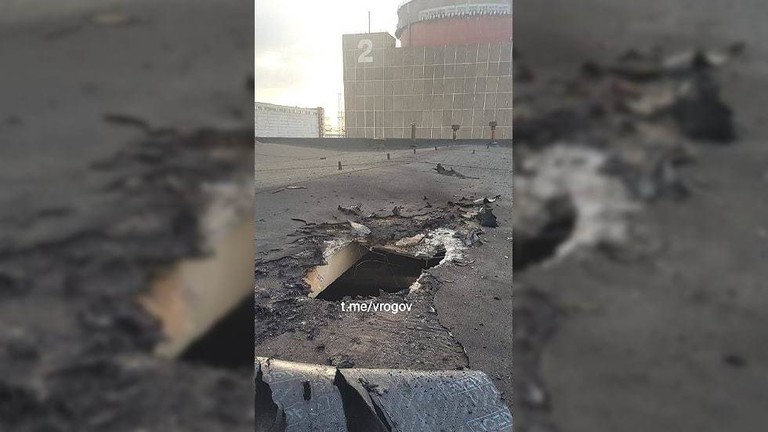
The damaged roof of the nuclear reactor fuel storage at the Zaporozhye nuclear power plant. © Telegram / vrogov
Samizdat – August 29, 2022
A Ukrainian strike has hit a reactor fuel storage at the Russian-controlled Zaporozhye nuclear power plant, local authorities said on Monday.
The roof of the building has been damaged as a result of the attack, Vladimir Rogov, the spokesman for Zaporozhye Region’s administration, said on Telegram.
He also posted a photo of a hole in the roof that was supposedly caused by the strike.
The affected storage facility holds fresh nuclear fuel for the reactors of the plant, which is the largest in Europe.
Russia said earlier that a Ukrainian drone targeting the nuclear facility had been shot down.
Moscow has repeatedly accused Kiev’s forces of targeting the Zaporozhye nuclear power plant – which has been under Russian control since March, but operated by Ukrainian staff – with artillery and ‘kamikaze’ drones.
It warned that those attacks could trigger a disaster that would eclipse the 1986 Chernobyl incident. Radioactive material could potentially reach Poland, Slovakia, Romania, Moldova, Belarus, and even Germany in a worst-case scenario.
Ukraine, meanwhile, has claimed that the Russian forces have turned the nuclear plant into a military base and that they’ve been shelling the facility themselves to pin the blame on Kiev.
Russia has repeatedly denied those accusation and urged for international inspectors to visit the site to assess the situation for themselves.
Earlier on Monday, International Atomic Energy Agency head Rafael Grossi announced that such a mission will take pace after all, with IAEA specialists expected to arrive at the Zaporozhye plant this week.
Shelling of Energodar by Ukrainian Troops Leaves Nine Injured
Samizdat – 28.08.2022
The shelling of the city of Energodar in the Zaporozhye region has left nine people injured, two of whom are in serious condition, the head of the regional military-civil administration Yevgeny Balitsky said.
On Sunday, the city authorities said that four artillery strikes had been carried out by Ukrainian troops, targeting Energodar’s residential district. Vladimir Rogov, a member of the main council of the regional military-civil administration, said on Telegram after the strikes that seven people were injured in the shelling.
“Today, at about 22.00 [19:00 GMT on Sunday], artillery strikes were inflicted on the residential area of the fifth microdistrict of Energodar by Ukrainian armed formations. …At the moment, nine victims, two of whom are in serious condition, are in intensive care: the man has a complex leg injury, the woman has a chest injury, pneumothorax [collapsed lung]. Doctors are fighting for their lives,” Balitsky said on Telegram.
He specified that Ukrainian troops had made three targeted hits on residential buildings and there is a kindergarten in one of the buildings’ courtyards.
Balitsky said that about 40 parked cars were damaged by shrapnel, 25 got burned down, and window frames and windows were broken in many apartments.
According to the head of the regional military-civil administration, work of special commissions for assessing and eliminating the consequences of the Ukrainian troops’ shelling has begun and Zaporozhye authorities will provide assistance and support to all those affected.
The Russian Defense Ministry said on Sunday that the Zaporozhye nuclear power plant (ZNPP) had been shelled again by Ukrainian troops. Three shells fell in the area of a special building of the ZNPP, which stores new TVEL nuclear fuel and solid radioactive waste. One shell fell next to the ZNPP’s sixth power unit, and five others landed opposite a pumping station, which provides cooling for one of the reactors.
Hungary Says There Are EU Countries That Silently Oppose Anti-Russian Sanctions
Samizdat – 28.08.2022
Hungarian Minister of Foreign Affairs and Trade Peter Szijjarto has stated that Budapest is not alone in its reluctance to slap sanctions on Russian energy exporters, but that other countries, who are under the influence of the “liberal mainstream,” don’t dare to pursue policies based on their own interests.
Speaking at the TRANZIT public forum in Tihany, Hungary on Saturday, Szijjarto said that he would like to clarify that his country is “not even willing to negotiate any further sanctions” pertaining to the oil and gas sector.
“And I want to say that we are not alone in this,” the top Hungarian diplomat stressed, recalling an episode during a recent EU ministerial meeting, which focused on “the issue of limiting oil from Russia.”
According to Szijjarto, during the gathering, “several colleagues” approached him and said, “Peter, you are against it [sanctions on Russian oil exports], right? We are with you.”
“Those who tell the truth are under such amazing pressure from the liberal mainstream that if there is no political stability of a certain level and, as a result, political courage in the country, they simply do not dare to act in their own interests,” the Hungarian foreign minister pointed out.
During the speech, Szijjarto also gave his thoughts on how long Europe will hinge on Russian oil and gas. He argued that “as long as gas cannot be transported by train or in a backpack, Europe will not be able to get rid of dependence on Russian energy resources.”
Last month, Hungarian Prime Minister Viktor Orban insisted that while the sanctions had failed to destabilize Moscow, “Europe is in trouble, economically and politically, and four governments have become victims: UK, Bulgarian, Italian and Estonian.”
“People will face a sharp increase in prices. And the better part of the world deliberately did not support us as well — China, India, Brazil, South Africa, the Arab world, Africa — everybody is aloof from this [Ukraine] conflict, they are interested in their own affairs,” Orban added.
Also in July, Russian President Vladimir Putin admitted that sanctions damage the country’s economy and many risks still remain, but that these restrictive measures inflict more damage on those who imposed them.
Sanctions against Russia were slapped by the US and its allies in late February, shortly after Moscow launched its special operation to demilitarize and de-Nazify Ukraine. In the wake of the West’s anti-Russian restrictive measures, inflation skyrocketed in many Western countries, driving energy prices there to record numbers.
Featured Video

AIDS Inc. by Gary Null (2007)
or go to
Aletho News Archives – Video-Images
From the Archives
Clash of Civilization, Iran Part II
By Jamal Kanj – Intifada-Palestine.com – January 14, 2011
Israel’s survival kit is: perpetuate conflict, insecurity to rationalize collective hate and finally playing victim.
Devoid of conflict, Israel implodes internally; without hate, Zionism loses its justification; and playing eternal victim to continue blackmailing the West. Absence of this holy trinity, Israel ceases to exist.
From its inception, the house of Zion has mastered exploiting adversarial powers to advance Israel’s cause. For instance, their influence over the Democratic Party in the US began with President Truman’s bid for 2nd term election in 1948.
Responding to strong opposition from Secretary of State General George Marshall and Department experts urging against recognition of Israel, President Truman replied: “I’m sorry gentlemen but I have to answer to hundreds of thousands [Jewish voters] who are anxious for the success of Zionism. I do not have hundreds of thousands of [voting] Arabs among my constituents”
Zionists influence over liberal American politics was matched with the doctrinal school of Conservative theoreticians aligning the Republican Party’s platform with Israel’s objectives. The Neoconservative Zionists, coined Zioncons, invented the “Clash of Civilization” concept to fight Israel’s wars. … continue
Blog Roll
 Aletho News
- Merck Virologists Admitted to Falsely Certifying Vaccine Efficacy
- Mandatory Folic Acid for every man, woman & child
- Pro-Palestine protesters arrested outside UK’s ruling Labour Conference in Liverpool
- Mauritius denies landing permit to flight from Israel, forcing cancellation: Tour operator
- Israeli finance minister calls for genocidal war on West Bank, annexation of south Lebanon
- 12 Things Your Psychiatrist Was Trained Not to Tell You
- From Unipolar Universalism to Multipolar Civilizational Distinctiveness
- RSF military group defects, joins Sudanese army: State media
- Ireland goalkeeper refuses to play ‘Israel’ as squad weighs boycott
- China pushes back against US on Cuba, Iran
- If Americans Knew
- Israel forces Gazans to live in constant peril – Daily Update
- Deconstructing Netanyahu’s pants-on-fire UN rant – Daily Update
- Trump betrayed voters with his campaign lies and prioritized a foreign country once he took office
- Netanyahu calls Israel’s war in Gaza ‘opposite of genocide’ in UN speech to near-empty hall
- Settler Kidnappings: Torture, Sexual Abuse and Terrorisation of Palestinian Abductees as Israel Deepens Annexation of West Bank
- Gaza winter nears as 162,000 tents become unusable, raising fears of humanitarian crisis
- Netanyahu says, “It’s the opposite of genocide”; UN says Gaza economy is world’s ‘most severe crisis on record’ – Daily Update
- Israel’s US-Backed Assault on Gaza Has Created the ‘World’s Most Severe Economic Crisis on Record’: UN
- ‘Protecting U.S. Citizens’… From Israel
- ‘This is where I live now, the back of a truck’: a day in the life of a grandmother in Gaza
- No Tricks Zone
- New Study: Earth And Venus Surface Warmth Largely Explained By Convection And Lapse Rate, Not CO2 Or Radiation
- 2025 Nature Paper Claiming Worsening Global Drought Gets RETRACTED …Heavily Flawed
- New Study: ‘Global Drought Shows No Detectable Recent Acceleration Under Climate Warming’
- Economic Masterminds: German Socialists Suggest Taxing Productivity Gains Stemming From Using AI
- The South China Sea Has Not Been Cooperating With The Climate Change Narrative
- Energy Crisis: Germany Enters Heating Season With Historically Low Gas Reserve Fill Levels
- New Study: The Antarctic Ice Sheet Gained Mass From 2020-2024 Due To Staggering Snow And Ice Accumulation
- Study: Ocean Heating Rates From Thousands Of Years Ago ‘Dwarf’ Modern Ocean Heating Rates
- Climate Extremists Target, Attack Large-Scale Power Grid Infrastructure In Germany!
- New Study: Antarctic Ice Melt Has Contributed Less Than 1 Centimeter To Sea Level Rise In The Last 30 Years

