Russian forces encircle thousands as Ukrainian troops begin surrender
Samizdat – June 24, 2022
Up to 2,000 Ukrainian troops, nationalists and foreign fighters have been surrounded by the Russian forces and the Donbass militias, Moscow revealed on Friday. The forces were encircled in two neighboring towns in the Lugansk People’s Republic.
Four Ukrainian battalions. as well as an artillery unit are among those trapped, Russia’s Defense Ministry announced. The encircled forces also include around 120 fighters from the notorious Ukrainian ‘Right Sector,’ a neo-Nazi group of up to 80 foreign fighters, according to the ministry.
The troops have been surrounded in the towns of Gorskoye and Zolotoye, located south of the major cities of Severodonetsk and Lisichansk, which have recently become one of the major targets for both sides amid the continued fighting for the territory of the Donetsk and Lugansk People’s Republics.
The Russian military has also claimed that the surrounded units have lost over 60% of their strength. According to the defense ministry, 41 Ukrainian soldiers encircled in the area have surrendered. The Defense Ministry has also published a video supposedly showing the surrendered soldiers.
The head of the Ukrainian Gorskoye military administration, Aleksey Babchenko, confirmed to the Ukrainian media on Friday that the town has been fully seized by the Russian forces and the Donbass militias.
Sergey Gaidai, who Ukraine calls the head of the “Lugansk Oblast,” has also said on Telegram that the Ukrainian forces might soon retreat from Lisichansk since their defensive positions had been destroyed by the Russian forces and there is “little sense” in staying.
The Russian Air Force has also successfully hit a Ukrainian artillery battery equipped with the US-made M777 howitzers in the Kharkov region. Earlier, Washington vowed to supply 90 such artillery pieces to Kiev, according to a May report by the New York Times.
The news comes just days after the Russian military claimed to have killed hundreds of Ukrainian troops in a strike on a shipbuilding plant in the Ukrainian port of Nikolaev. Last week, the defense ministry also claimed to have killed scores of Ukrainian officers after striking a compound where a meeting of commanders of several Ukrainian units was taking place.
The UK is Doing Its Best to Stir a Food Crisis While Pinning the Blame on Russia
By Ekaterina Blunova – Samizdat – 24.06.2022
Russia’s special operation in Ukraine may cause a two-year global food crisis even if the standoff ends tomorrow, The Telegraph claims, citing Western officials. They insist that exporting grain “trapped” in Ukraine is the remedy, while remaining mute about West’s sanctions paralyzing larger food exports from Russia to third-world countries.
“We are very clear that this grain crisis is urgent, that it needs to be solved within the next month otherwise we could see devastating consequences,” UK Foreign Secretary Liz Truss told the press on June 23.
The ongoing conflict has disrupted production, “causing global food prices to soar to record levels,” claims The Telegraph. In particular, wheat prices increased to an average of 56.2% in May, 2022 above their value last year, according to the UN Food and Agriculture Organization (FAO).
The newspaper’s source says that the British officials see current efforts to move Ukrainian grain over land and road as “far below” what is needed. They insist that the commodity needs to be exported by sea, accusing Russia of blocking Ukraine’s food supplies from leaving Ukraine’s Black Sea ports. According to UK Prime Minister Boris Johnson, Moscow was trying to hold the world “ransom.”
The newspaper also cites “newly declassified US intelligence” claiming that the Russian navy “has been given orders to lay mines” in Odessa and Ochakov and “mined” the Dnieper River “as part of its blockade of Ukrainian grain exports.” According to BoJo, the UK is helping Ukraine “at a technical level to help demine Odessa.”
Western Press Remain Mute About Russia’s Black Sea Corridors
Russia denounced the US and the UK claims, stressing that the Ukrainian military mined their own ports during the retreat. Furthermore, Ukraine continues to stampede Russo-Turkish efforts to demine the area and ensure the safe passage of ships from the country’s territorial waters.
On June 2, Russia’s Permanent Representative to the UN Vasily Nebenzya made it clear that Russia is ready to provide safe corridors for Ukrainian ships carrying 20 million tons of grain if Kiev demines the water area surrounding its ports.
In late May, the Russian Ministry of Defense announced that the Russian Navy had created safe zones in the Black and Azov Seas for ships leaving Ukraine along humanitarian corridors. The corridors with a length of 139 miles and 3 miles wide are operating daily from 8:00 am to 7:00 pm (GMT+3) in the Black Sea for vessels stationed in the ports of Kherson, Nikolaev, Chernomorsk, Ochakov, Odessa and Yuzhny.
Nevertheless, the Kiev authorities “continue to do everything possible to evade interaction with representatives of foreign states and ship-owning companies in resolving the issue of ensuring the safe exit of blocked ships,” according to the MoD.
Turkey, which has worked with Russia in demining the Black Sea and providing safe passage to vessels, echoes Moscow’s concerns. Turkish Foreign Minister Cavusoglu told Anadolu Agency last month that the two major obstacles hindering grain exports are mines placed by the Ukrainian military in the Odessa water area as well as Western sanctions slapped on Russian ships in terms of insurance and the provision of services at international ports.
Ukraine’s Role in Food Crisis Largely Overestimated
The Western press is shying away from discussing how anti-Russian sanctions, imposed on the country’s trade, finance, transportation and crucial agricultural commodities have backfired on the global food market sending prices high.
Senegalese President and African Union chief Macky Sall raised the alarm earlier this month over Western restrictions preventing Russia’s grain and fertilizers exports to Africa.
“Sanctions against Russia have aggravated the situation with the supply of grains and fertilizers to African countries. We no longer have access to them, and this poses a serious threat to food security on the continent,” Sall warned on 3 June during an official visit to Russia.
Together Ukraine and Russia produce about a third of the wheat traded in global markets, according to the Washington-based International Food Policy Research Institute (IFPRI). Still, Russia is the world’s largest exporter of wheat, providing more than 17% of all wheat sold in the global market while Ukraine’s share amounts to roughly 10%.
For comparison’s sake, Russia exported 44.64 million tons of wheat in 2018, while Ukraine provided the global market with 16.91 tons of the commodity the same year, according to FAO.
Ukraine’s role as a food commodity exporter is deliberately overestimated by the West, Russian President Vladimir Putin said in a June interview with Rossiya-1.
“The world produces about 800 million tons of grain and wheat per year. Now we are told that Ukraine is ready to export 20 million tons. 20 million tons compared to the 800 million tons the world makes is 2.5% of that figure. But if we proceed from the fact that wheat makes up only 20% of the total food supply (and this is the reality, these are not our figures but those of the UN) this means that these 20 million tons of Ukrainian wheat make up 0.5 percent,” the Russian president told the broadcaster.
Putin dismissed claims that Russia was supposedly trying to block the export of Ukrainian grain, calling the allegations a “bluff.” The Russian president stressed there were no obstacles to the export of grain from Ukraine. He stressed that ships carrying wheat could enter the Black Sea any time if Kiev clears ports of mines. World wheat prices have fallen by 10% after Putin signaled Russia’s readiness to ensure the transport of grain from Ukrainian ports.
G7 & NATO to Double Down on Further Isolating Russia
While the British government continues to castigate Russia’s special operation for the unfolding global food crisis, the British prime minister is calling for Europe to step up military aid to Ukraine.
In particular, BoJo came up with a new plan offering Ukraine a training campaign for its military personnel and urging Western leaders to provide “constant funding and technical help” to Ukraine to ensure Kiev’s longstanding resistance to Russia.
BoJo is expected to push France and Germany to strengthen their support for Ukraine during the G7 summit next week, “as he fears that [Ukrainian President] Volodymyr Zelensky could be bounced into agreeing a ‘s***y’ peace deal [with Russia],” according to the Telegraph.
For its part, Reuters projects that next week G7 and NATO leaders will work to “increase pressure” on Russia over its special operation in Ukraine, while seeking to further isolate the country from the global economy.
Microsoft Says Russian Media Popular in US, Ukraine Despite Efforts to Reduce Traffic
Samizdat – 23.06.2022
In a move to punish Russia for launching a military operation with a goal to “denazify and demilitarize” Ukraine, Western countries have tried their hardest to target Russian media outlets by reducing their traffic and blocking their social media channels. However, it seems the efforts have proven to be fruitless.
Content produced by sanctioned Russian media outlets Sputnik and RT is still in high demand in the United States and Ukraine despite efforts to curb viewer traffic, Microsoft said.
“Even after all efforts to reduce traffic to Sputniknews and RT.com, consumption of Russian propaganda is still higher than before the war (~60MM per month in the US, on par with the WSJ),” the company said on Wednesday.
Since January 2022, there has been a significant increase in traffic to Russian media websites in the US, according to the report. The peak of Russian media content consumption activity occurred on February 24, when it spiked 82%, Microsoft added.
Sputnik’s International News website boasts more than 40 million hits from January to May 2022. After scoring 5.3 million hits during January, Sputnik’s website exceeded 13 million views in March. Sputnik International’s US-based audience increased from 29% of its entire audience in March to 41.5% in April and 42.9% in May.
The situation in Ukraine has been similar, with the consumption of content Microsoft designated as “Russian propaganda” having grown by 216% since the last week of February, hitting a peak on March 2, the report said. It began to decline afterwards but still remains at a level higher than before the start of Russia’s military operation in Ukraine, Microsoft noted.
On February 24, Russia launched a military operation in Ukraine after the breakaway republics of Donetsk and Lugansk appealed for help in defending themselves against Ukrainian forces. In response to Russia’s operation, Western countries have rolled out a comprehensive sanctions campaign against Moscow, which includes airspace closures and restrictive measures targeting numerous Russian officials and entities, news media and financial institutions.
Most African countries support Russia
By Lucas Leiroz | June 22, 2022
Apparently, Volodymir Zelensky’s popularity in Ukraine is very low. The Ukrainian leader called for a virtual diplomatic meeting with African heads of state, but the event failed completely. Almost all African leaders declined to participate, hampering Zelensky’s plans to make the meeting a pro-Kiev propaganda stage. Meanwhile, the Russian government’s popularity is growing in Africa, where citizens take the streets in support for the special military operation in Ukraine and ask for Russian help in combating terrorism.
On June 20, the Ukrainian president met with representatives of the African Union in order to discuss matters concerning the current conflict situation in Eastern Europe and the role of Africa on the world arena. Of the fifty-five heads of state invited to the meeting, only four attended. The other countries sent only diplomats or ministers, with the heads of state and government not willing to attend, even with the meeting being virtual.
The heads of state who attended the meeting were Macky Sall of Senegal, Alassane Ouattara of Côte d’Ivoire, Mohammed el-Menfi, President of the Libyan Council, and Denis Sassou Nguesso of Congo. It is important to note that Sall is the current president of the African Union, which is why his presence was essential for the event to take place. Therefore, his attendance does not necessarily mean an expression of his real desire – even more considering his recent conversations with Russian President Vladimir Putin and the effort to increase Russia-Africa cooperation.
The virtual meeting was operated in secret, behind closed doors. According to official sources, Zelensky reiterated the Ukrainian position on the conflict, calling the Russian operation an unjustified “aggression”. He also commented on the current food crisis affecting Africa as a result of the conflict’s impact on the grain market. According to Zelensky, the African continent is Russia’s “hostage” because food shortages would be the result of such “aggression” and would only end when Russia decided to retreat.
Commenting on the event, Macky Sall took the most neutral and impartial stance possible, demonstrating that the Africa Union did not adhere to Zelensky’s appeals, but was concerned only with African states’ interests and the proper functioning of international law.
“Africa remains committed to respecting the rules of international law, the peaceful resolution of conflicts and the freedom of trade”, he said in a publication in his Twitter account.
It is interesting to note how Zelensky’s attempt to convince African leaders to adhere to the Kiev-Western narrative absolutely failed. Not only did most African heads of state refuse to listen to the Ukrainian leader, but there was no adherence to the pro-Kiev speech on the part of those who attended the conference. For the African Union, the meeting was just a diplomatic formality, with no real gains or changes in position – which reveals that Zelensky’s plans did not work as expected.
This failure, however, was predictable for any realistic analyst. For African leaders, it is really hard to believe the fallacious narrative that Ukraine is a simple “victim” of an “unjustified aggression”. African countries are used to centuries of Western interventionism and violence and the peoples of this continent react to this with strong distrust of everything that Western nations support. As Zelensky is the ally of the US and Europe, he will likely be viewed with suspicion by countries that suffer so much from Western colonialist mentality and praxis.
In addition, there are other factors that need to be mentioned. Zelensky’s arguments that the food crisis is caused exclusively by Russia are no longer able to convince public opinion and state authorities. It is evident that, more than the conflict itself, the crisis has been caused by the sanctions against Russia, which motivates emerging countries to be enthusiastic about the end of these sanctions. Also, there are many reports that Kiev is exporting grain to the US and Europe in exchange for weapons, which is unacceptable.
Furthermore, there has recently been a strong wave of popular support for the operation in Ukraine from citizens of several African countries, especially in the regions most affected by terrorism. After the abandonment that Africa has suffered from the West in terms of security policies and defense cooperation, seeking Russian support has become the greatest hope for the members of the African Union, which is why recently there have been popular demonstrations in support of all Moscow’s actions, alongside requests for help to solve Africa’s internal problems.
In fact, in international relations, nothing matters more than cooperation. Zelensky will not be able to garner African support if he does not show interest or conditions to cooperate with Africa. Kiev currently has nothing to offer African countries, as it is economically broken and militarily virtually neutralized. On the other hand, Russia shows itself as a pillar for African food security and as a hope against terrorism in the continent. It is absolutely expected that in this context the African Union will decline its ties with Kiev and seek to approach the side that offers the best opportunities for cooperation.
Lucas Leiroz is a researcher in Social Sciences at the Rural Federal University of Rio de Janeiro; geopolitical consultant.
Explain It to Me, Please
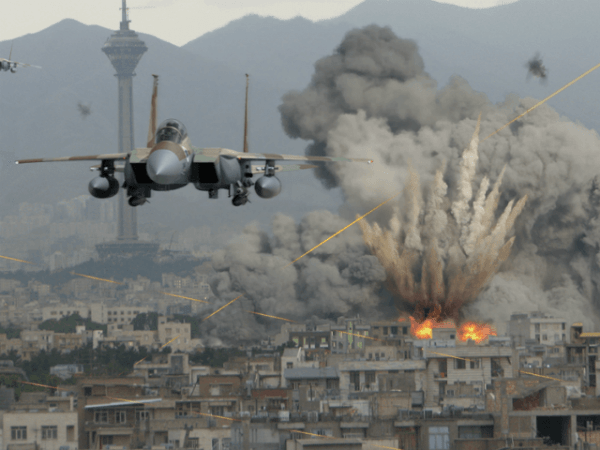
If you want a war with Iran, Russia, China and Venezuela tell me why and how it would benefit Americans
BY PHILIP GIRALDI • UNZ REVIEW • JUNE 21, 2022
So Honest Joe Biden is now going to give another $1.2 billion to the Ukrainians on top of the sixty or so billion that is already in the pipeline, but who’s counting, particularly as Congress refused to approve having an inspector general to monitor whose pockets will be lined. The money will be printed up without any collateral or “borrowed” and the American taxpayer will somehow have to bear the burden of this latest folly that is ipso facto driving much of the world into recession. And it will no doubt be blamed on Vladimir Putin, a process that is already well under way from president mumbles. But you have to wonder why no one has told Joe that the whole exercise in pushing much of the world towards a catastrophic war is a fool’s errand. But then again, the clowns that the president has surrounded himself with might not be very big on speaking the truth even if they know what that means.
Having followed the Ukraine problem since the United States and its poodles refused to negotiate seriously with Vladimir Putin in the real world, I have had to wonder what is wrong with Washington. We have had the ignorant and impulsive Donald Trump supported by a cast of characters that included the mentally unstable Mike Pompeo and John Bolton followed by Biden with the usual bunch of Democratic Party rejects. By that I mean deep thinkers about social issues who would not be able to run a hot dog stand if that were what they were forced to do to make a living. But they are real good at shouting “freedom” and “democracy” whenever questioned concerning their motives.
Indeed, opinion polls suggest that there is a great deal of unrest among middle and working class Americans who see a reversion to Jimmy Carter era financial instability, at that time caused by the oil embargo. Well, there is a new energy embargo in place brought about by the Biden Administration’s desire to wage proxy war to “weaken” Russia. Analysts predict that the costs for all forms of energy will double in the next several months and surging energy costs will impact the prices of other essentials, including food. Given all that, the fundamental issue plaguing both Democrats and Republicans is their inability to actually explain to the American people why the country’s foreign and national security policy always seems to be on the boil, searching for enemies and also creating them when they do not exist, even when the results are damaging to the interests of actual Americans.
That a serious discussion of why the United States needs to have a military that costs as much as the next nine nations in that ranking combined is long overdue and rarely addressed outside the alternative media. The 2023 military budget has been increased from this year’s, totaling $858 billion, and, if one includes the constantly growing largesse to Ukraine, approaching a hitherto unimaginable trillion dollars. The military budget has become a major driver of the country’s unsustainable deficits. The deaths of millions of people directly and indirectly in the wars started in 9/11 aside, the wars of choice have cost an estimated $8 trillion.
The Constitution of the United States makes it clear that a national army was only acceptable to the Founders when it was dedicated to defending the country from foreign threats. Do Americans really believe that bearing the burden of having something like 1,000 military bases scattered around the world really makes them safer? The recent rapid collapse of the security situation in Afghanistan suggests that having such bases turns soldiers and bureaucrats into potential hostages and is therefore a liability. One might also suggest that the insecurity currently prevailing in the country can in large part be attributed to the government’s depiction of numerous “threats” in order to justify both the commitment and the expense.
So where does all the money go? And what are the threats? Starting with a war that the United States is de facto though not de jure involved in, Ukraine, what was the Russian threat that demanded Washington’s intervention? Well, if one discards the nonsense of a “rules based international order” or a plucky little democracy Ukraine fighting valiantly against the Russian bear, Moscow did not threaten the United States in any way before the missiles starting flying. Putin sought to negotiate a settlement with Ukraine based on a number of perceived existential Russian national security interests, all of which were negotiable, but the US and its friends were uninterested in compromise while also plying the corrupt Zelensky regime with weapons, money and political support. The final result is a conflict that will likely only end when the last Ukrainian is dead and it includes the possibility that a misstep by the United States and Russia could lead to a nuclear holocaust. To put it succinctly, what is going on does not enhance US national security, nor does it benefit Americans economically.
And then there is China. Biden let the cat out of the bag on his recent trip to the Far East. He stated that the United States would defend Taiwan if China were to attempt to annex it. In saying that, Biden demonstrated that he does not understand the strategic ambiguity that the US and the Chinese have preferred over the past fifty years as an alternative to war. The White House for its part quickly issued a correction to the Biden statement, explaining that it was not true that Washington is obligated to defend Taiwan. Some uber hawkish congressmen have apparently found the Biden gaffe appealing and are promoting a firm US commitment to defend Taiwan, coupled with a $4.5 billion military assistance package, of course.
At the same time, some officials in the Pentagon and the usual gaggle of congressmen also keep warning about the over the horizon threat from China as an excuse to boost defense spending. Most recently, there was alarm over Chinese participation in a meeting in May in Fiji to consider a China-Pacific Islands free trade pact! In reality, the only serious current threat from China is as an economic competitor. A trade war with China would be a disaster for the US economy, which is heavily dependent on Chinese manufactured goods, but Beijing, with its relatively small military budget, does not pose a physical threat to the United States.
And let’s not ignore Iran which has been hammered by economic sanctions and also through the covert killing of its officials and scientists. The US/Israeli war on Iran has also spilled over into neighboring Syria, where Washington actually has troops on the ground occupying the country’s oil producing region and stealing the oil. Iran’s possible expansion of its nuclear program to produce a weapon was effectively impeded through monitoring connected to a multilateral 2015 agreement called the Joint Comprehensive Plan of Action (JCPOA) but Donald Trump, unwisely and acting against actual American interests, withdrew from it. Joe Biden has been warned by Israel not to re-enter the agreement, so he will no doubt comply with Prime Minister Naftali Bennett’s determination to have Washington continue to apply “extreme pressure” on the Islamic Republic. Does either Iran or its ally Syria threaten the United States in any way? No. Their crime is that they are in the same neighborhood as the Jewish state, which finds the US government easy to manipulate into acting against its own interests.
Finally, in America’s own hemisphere there is Venezuela, which has been elevated to the status of Washington’s most hated nation in the region. Venezuelans have been subjected to increasingly punitive US sanctions, including some new ones just last week, which hurt the poorer citizens disproportionately but have not brought about regime change. Why the animosity? Because the country’s leader Nicolas Maduro is still in power in spite of a US assertion that the country’s opposition leader Juan Guaido should rightfully and legitimately be in charge after a possibly fraudulent election in 2018. The latest therapy applied by the United States on Caracas consisted of blocking the country as well as Nicaragua and Cuba from participating in the recent meeting of the Ninth Summit of the Americas which was held in Los Angeles. A State Department spokesman explained that the move was due to the three countries “lacking democratic governances.” Mexican President Lopez Obrador protested against the move and removed himself from his country’s delegation, saying “There can’t be a Summit of the Americas if not all countries of the American continent are taking part.” The despicable US Senator Robert Menendez of the Senate Foreign Relations Committee then felt compelled to add his two cents, criticizing the Mexican president and warning that his “decision to stand with dictators and despots” would hurt US-Mexico relations. So where was the threat from Venezuela (and Cuba and Nicaragua) and why is the US involved at all? Beats me.
What all of this means is that there is absolutely no standard of genuine national security that motivates the US’s completely illegal aggression in many parts of the world. What occurs may be linked to a desire to dominate or a madness sometimes described as “exceptionalism” and/or “leadership of the free world,” neither of which has anything to do with actual security. And the American people are paying the price both in terms of decline in standards of living due to the upheaval created in Ukraine and elsewhere as well as a completely understandable loss of faith in the US system of government. By all means, let us shrink the US military until it is responsive to actual identifiable threats. Let’s elect a president who will follow the sage advice of President John Quincy Adams, who declared that “Americans should not go abroad to slay dragons they do not understand in the name of spreading democracy.” At this point, one can only imagine an America that is at peace with itself and with what it represents while also being considered a friend to the rest of the world.
Philip M. Giraldi, Ph.D., is Executive Director of the Council for the National Interest, a 501(c)3 tax deductible educational foundation (Federal ID Number #52-1739023) that seeks a more interests-based U.S. foreign policy in the Middle East. Website is councilforthenationalinterest.org, address is P.O. Box 2157, Purcellville VA 20134 and its email is inform@cnionline.org.
Ukraine Bans Main Opposition Party, Seizes All Its Assets
‘Beacon of democracy’ cracks down on dissent
By Paul Joseph Watson | Summit News | June 21, 2022
Ukrainian authorities have banned the country’s main opposition party and seized all its assets, once again undermining the narrative that President Zelensky is presiding over a beacon of democracy.
The country’s Ministry of Justice announced the move via Facebook, revealing that the Opposition Platform — For Life had been shut down and its assets, money and property transferred to the state.
The party had previously had its operations suspended in March after it was accused of being complicit with Russia and being “anti-Ukrainian.”
The ban means that Zelensky’s main political opposition has been eliminated. The OPPL was the second largest party in the country and its popularity surpassed that of Zelensky’s Servant of the People party last year.
Its leader Viktor Medvedchuk, who claims he is merely looking out for the interests of the Ukrainian people by seeking better relations with Russia, was placed under house arrest last month.
The announcement said the party was suspected of acting to “undermine the sovereignty” of Ukraine, with authorities have already banned 10 other political opposition parties for the same reason.
Last month, President Zelensky signed a bill into law that gave the green light to ban any party that challenged the government’s policy on the Russian invasion, empowering courts to seize assets without the right to appeal.
While opposition parties are being obliterated, Ukrainians who engage in dissent are also being rounded up and arrested by armed men from the Ukraine Security Service.
As we previously highlighted, Ukraine is also attempting to extradite and imprison citizens who live in other European countries if they criticize Zelensky.
Meanwhile, President Zelensky is still being hailed by western legacy media outlets as a valiant defender of democracy in contrast to the brutal autocratic dictators who control Russia.
What a joke.
AP accompanies Zelensky’s SBU thugs as they kidnap Ukrainians who speak out against the regime. This is an obvious propaganda piece designed to normalize crushing dissent. Imagine how they act when cameras aren’t on. https://t.co/8YjRbQXDqT pic.twitter.com/o55SwvhvIH
— Dan Cohen (@dancohen3000) April 30, 2022
Russia reveals number of victims from drilling rig strikes
Samizdat | June 20, 2022
Three people were injured and seven missing following a suspected Ukrainian attack on drilling rigs off the coast of Crimea, the head of the Russian region, Sergey Aksyonov, revealed on Monday.
Earlier, he said that three missile strikes hit three separate rigs owned by Chernomorneftegaz, a company that develops offshore oil and gas fields.
“So far, 94 people have been evacuated. 15 servicemen remain guarding the operating drilling platforms. Unfortunately, information on 3 wounded and 7 missing has been confirmed,” Aksyonov said in a statement.
He stressed that the search operation will continue and the regional government will contact the families and friends of the missing and injured.
Meanwhile, the Russian Investigative Committee has opened a criminal case in relation to the shelling.
According to the committee’s statement, “the military personnel of the Armed Forces of Ukraine targeted the platform of the gas production tower <…> using weapons with high damaging properties.”
Last Friday, the Ukrainian presidential representative for Crimea, Tamila Tasheva, said that Ukraine is now relying on military means when it comes to what she called “returning” Crimea. She explained that the Russian military offensive had prompted Kiev to largely leave behind its diplomatic strategy for the peninsula’s “deoccupation.”
Tasheva’s remarks came a day after Ukraine’s Defense Minister Alexey Reznikov said that Kiev, using US-supplied weapons, is going to “liberate” all land lost to Russia, including Crimea. Prior to that, Ukrainian President Volodymyr Zelensky vowed to “liberate” Crimea and the Donetsk (DPR) and Lugansk (LPR) People’s Republics, which are recognized by Russia as independent states.
Ukrainian troops have been losing territory to Russia and allied forces in Donbass, even as Western nations supply more sophisticated weapons to Kiev. Several Ukrainian officials have stated that the pledge to not use foreign weapons to attack targets in Russia does not apply to Crimea, which Kiev considers part of its territory. Major General Dmitry Marchenko said last week that the bridge connecting the peninsula with mainland Russia is “absolutely our number one target.”
Russia attacked the neighboring state in late February, following Ukraine’s failure to implement the terms of the Minsk agreements, first signed in 2014, and Moscow’s eventual recognition of the Donbass republics of Donetsk and Lugansk. The German- and French-brokered protocols were designed to give the breakaway regions special status within the Ukrainian state.
The Kremlin has since demanded that Ukraine officially declare itself a neutral country that will never join the US-led NATO military bloc. Kiev insists the Russian offensive was completely unprovoked and has denied claims it was planning to retake the two republics by force.
Casualties reported after strike at Russian drilling platforms in Crimea
Samizdat | June 20, 2022
Suspected Ukrainian attacks targeted drilling rigs off the coast of Crimea in the Black Sea on Monday morning, the head of the Russian region, Sergey Aksyonov, said in a statement. He added that the rigs were manned by 12 workers, five of whom have been rescued so far, including three with injuries.
Aksyonov did not disclose the exact locations of the facilities, but said they were owned by Chernomorneftegaz, a company that develops offshore gas and oil fields. Its ownership has been disputed by Ukrainian energy giant Naftogaz since 2014, when it was nationalized after Crimea voted to re-join Russia.
The head of Crimea later said that three missile strikes hit three separate rigs. Aksyonov said a total of 109 people were in the area at the time of the attacks and that the evacuation of the workers was underway.
The attack targeted offshore rigs located about 71km from the Ukrainian port of Odessa, Olga Kovitidi, who represents Crimea in the upper chamber of the Russian parliament, told RIA Novosti.
Some Ukrainian media reported that earlier in the day, dozens of missiles hit Snake Island, a small islet off the Ukrainian coast, which has been controlled by Russia for months. Ukrainian MP Aleksey Goncharenko claimed that some of the missiles hit the gas rigs instead of the island.
Ukrainian troops have been slowly losing territory to Russia and allied forces in Donbass, even as Western nations supply more sophisticated weapons to Kiev. Several Ukrainian officials have stated that the pledge to not use foreign weapons to attack targets in Russia does not apply to Crimea, which Kiev considers part of its territory. Major General Dmitry Marchenko said last week that the bridge connecting the peninsula with mainland Russia is “absolutely our number one target.”
This month, Kiev reported deploying US-made Harpoon anti-ship missiles as part of its coastal defense systems. Last week, Kiev claimed it had attacked a Russian military tugboat with two of these missiles.
Weapons shipped to Ukraine being sold in black markets
By Uriel Araujo | June 20, 2022
The same way sanctions are not working and are backfiring, Western massive arms transfers to Kiev have been a disaster, from anyone’s perspective. In an interview to US “National Defense”, Ukrainian Army Brigadier General Volodymyr Karpenko has admitted his country lost almost 50% of all weaponry and equipment it received. Some of it got destroyed, but that is not the whole story.
Russian Channel One reported on how the Ukrainian military abandons weapons as they retreat. The abandoned US-made Javelins and German anti-tank mines were filmed. Moreover, weaponry sent to Ukraine is ending up in black markets and is being sold in the so-called darknet and deep web platforms. There, one can buy Javellin anti-tank systems for about $ 30,000 or British NLAW systems for half the price. There is a demand for that, of course. Terrorists and criminal gangs are the buyers.
This situation has alarmed the Interpol and other international and European bodies. Already on May 28, Europol director Catherine De Bolle voiced her concerns about the war increasing the inpourring of arms into the continent’s black markets. Such weapons could reach political players in the Middle East involved in local conflicts, and spread all over the region, even reaching currently unstable locations such as Somalia, Sudan, Yemen, and Egypt. Arms shipments to Bosnia, Kosovo and Albania are in fact being investigated and such can aggravate the security problem in the Balkans – and in the Sahel also.
The so-called Islamic State or ISIS, the terrorist organization also known as the Daesh, is reorganizing itself this time in the Sahel, according to Victoria Nuland herself (the US Under Secretary of State for Political Affairs), who has stated so in May. There are reports that criminal groups in Albania and Kosovo are selling arms to ISIS.
Russian Foreign Ministry Spokesperson Maria Zakharova stated on June 9 that “arms shipment to Ukraine will lead to the emergence of an arms black market, especially in Western Europe.” Interpol Secretary General Jurgen Stock has voiced similar concerns about Africa and the Balkans becoming the destination of Western arms supplied to Kiev, as reported by Le Figaro news. He said: “The wide availability of weapons during the current conflict will lead to the proliferation of illicit weapons in the post-conflict phase.” Actually, this is already happening, as seen in the dark web.
It is a well known fact that the Ukrainian armed forces are incredibly corrupt. Ukraine has long been believed to be one of the major arms trafficking markets in Europe. It has also emerged as an import transit destination for drugs such as heroin. It has the third highest criminality score of 33 countries in Europe. In today’s world, illict trade plays a major role in the financing of terrorist and extremist networks globally.
In November last year a club in Kiev was the target of a homophobic terrorist attack. It was stormed by masked men and later an explosive device was thrown at the building. Centuria, a Ukrainian paramilitary group with links to the Azov Regiment (formerly known as the Azov Battalion) seems to be behind the crime. No one was killed, but this ultra-nationalist group already patrols Ukraine’s cities. With the war, the migration crisis and the black market, Europe could see armed groups and terrorist attacks such as these spreading to its capitals.
In 2019 a senior Daesh leader, Al-Bara Shishani, was arrested in Ukraine and Azov leaders are known to sympathize with the group, even adopting some of its tactics. As early as 2015, collaboration between Islamic radicals and Ukrainian militias has been reported.
In December 2021, before the current crisis, I wrote that should a war ensue, Ukraine would be defeated by Russia (for a number of reasons), but far-right Ukrainian groups – aided and armed by NATO and possibly by Turkish ultra-nationalist networks – could remain active in sabotage and terrorism operations, thus turning the “post-conflict” phase into a long nightmarish “frozen conflict” scenario of counter-insurgency and irregular warfare.
Amid the humanitarian catastrophe, I wrote, the European continent should expect an increase in terrorism and crime amid an increasing migration crisis. Of course most of the refugees are law-abiding families escaping the tragedy of war, but paramilitary men and extremists can make their way into Western Europe too – and Ukrainian Neo-Nazism has been largely white-washed. European far-right militias already cooperate with Ukraine’s nationalists, and the country is already a new hub for far-right activity. Isaac Kfir, a Charles Sturt University Professor and part of the International Institute for Justice and the Rule of Law advisory board, has warned that Ukraine has the potential to become “the Syria of the extreme right”.
In the same way US-led Western policies – directly or indirectly – aided both the Al-Qaeda and the Daesh, there is every reason to believe that in a few years Europe will be haunted by a new kind of far-right terror reminiscent of the infamous Gladio Operation, when Washington funded European far-right groups as a secret anti-Soviet army during the Cold War.
One can only wonder why European leaders would be so ready to accept these risks. This is the true reason countries such as Germany, Greece, Hungary, and even Israel have at times been reluctant to further arm Kiev or to allow weapons transit. It appears that from an American perspective Europe itself is but another US proxy.
Uriel Araujo is a researcher with a focus on international and ethnic conflicts.
West at inflection point in Ukraine war
BY M. K. BHADRAKUMAR | INDIAN PUNCHLINE | JUNE 19, 2022
Henry Kissinger predicted some three weeks ago that the Ukraine war was dangerously close to becoming a war against Russia. That was a prescient remark. The NATO Secretary-General Jens Stoltenberg in a weekend interview told Germany’s Bild am Sonntag newspaper that in the alliance’s estimation, the Ukraine war could wage for years.
“We must prepare for the fact that it could take years. We must not let up in supporting Ukraine. Even if the costs are high, not only for military support, also because of rising energy and food prices,” Stoltenberg said. He added that the supply of state-of-the-art weaponry to Ukrainian troops would increase the chance of liberating the Donbass region from Russian control.
The remark signifies a deeper NATO involvement in the war based on the belief not only that Russia can be defeated in Ukraine (“erase Russia”) but the cost shouldn’t matter. The NATO chiefs traditionally take the cue from Washington, and Stoltenberg was speaking just a fortnight before the alliance’s Madrid summit.
Curiously, UK Prime Minister Boris Johnson in an op-ed for London’s Sunday Times after a surprise visit to Kiev on Friday virtually complemented Stoltenberg’s words, stressing the need to avoid “Ukraine fatigue.” Johnson noted that with Russian forces gaining ground “inch by inch” it was vital for Ukraine’s friends to demonstrate their long-term support, which meant ensuring “Ukraine receives weapons, equipment, ammunition and training more rapidly than the invader”.
Johnson outlined “four vital steps to recruit time to Ukraine’s cause.” First, he said, “we must ensure that Ukraine receives weapons, equipment, ammunition and training more rapidly than the invader, and build up its capacity to use our help.” Second, “we must help preserve the viability of the Ukrainian state.”
Third, “We need a long-term effort to develop the alternative overland routes” for Ukraine so that its economy “continues to function.” Fourth, crucially, the Russian blockade of Odessa and other Ukrainian ports must be lifted and “we will keep supplying the weapons needed to protect them.”
Johnson admitted that all this requires “a determined effort … lasting for months and years.” But the imperative to strengthen President Zelensky’s capacity to wage the war is also vital for “protecting our own security as much as Ukraine’s.” Stoltenberg and Johnson spoke up after the EU executive recommended that Ukraine should be officially recognised as a candidate to join the bloc (which is expected to be endorsed at a summit set for June 23-24.)
Meanwhile, Russian forces are steadily marking tactical successes in the region of Donbass and in the stabilisation of the frontline in other sectors. The most intense fighting is ongoing in the Severodonetsk-Lysichansk area and around Slavyansk, but the situation is also tense in the Kharkiv region and in Mykolaiv and Kherson Regions in the south.
The Russian forces are pounding the military infrastructure and equipment gatherings of Ukrainian forces. As per Russian MOD, in the five-day period between June 13-17 alone, according to the Russian version, it appears that 1800 Ukrainian soldiers have been killed and 291 pieces of military equipment and 69 objects of military infrastructure were destroyed.
A defeat in Donbass will be catastrophic for Zelensky, as the destruction of its best military units deployed there virtually leaves the southern regions as low-hanging fruit for Russian forces. For NATO too, its international standing will be seriously eroded. On Friday, two US war veterans detained on Donetsk frontline were put on display on Russian TV appealing to their families for help. More such visuals can be expected in the coming days.
Johnson wrote alarmingly that the Putin Doctrine arrogates to Russia an eternal right to “take back” any territory ever inhabited by Slavs and this “would permit the conquest of vast expanses of Europe, including Nato allies.” This is hyperbole. To take their eastern and southern territories back, the Ukrainians will indeed have to wage a long war but they also will critically depend on enormous military, financial and economic assistance from Europe. On the other hand, European unity is fragile and there is “fatigue” setting in.
There is no coherent vision about the ultimate NATO objective, either. Ukraine is a black hole unworthy of a Marshall Plan. Unsurprisingly, there is great circumspection on the part of Germany to waste its resources over Ukraine.
Finally, the deepening economic crisis in the West — high inflation and cost of living and growing likelihood of recession — is at the gates like wolves howling in a winter wonderland. The European public no longer becomes sentimental at the sight of Ukrainian refugees. The alibi that Putin is responsible for all this won’t fly.
Fundamentally, the Western economies are facing a systemic crisis. The complacency that the reserve-currency-based US economy is impervious to ballooning debt; that the petrodollar system compels the entire world to purchase dollars to finance their needs; that the flood of cheap Chinese consumer goods and cheap energy from Russia and Gulf States would keep inflation at bay; that interest rate hikes will cure structural inflation; and, above all, that the consequences of taking a trade-war hammer to a complex network system in the world economy can be managed — these notions stand exposed.
When the money printing presses whirred in Europe and America, no one felt uneasy about the structural flaws in the system. In a haze of ideological bluster, the Biden Administration and its junior partner in Brussels didn’t pay any due diligence before sanctioning Russia and its energy and resources. Europe is much worse off than America. Inflation in Europe is well into double digits. A European sovereign debt crisis may already have begun.
The accelerating inflationary crisis threatens the standing of western politicians, as they will encounter real popular anger once inflation eats away at the middle class and high energy prices gut business profits.
How to arrest the unfolding slow burn political debacle for both Europe and the US? The logical way is to force Zelensky to go to the negotiating table and discuss a settlement. The narrative of continuing the attrition against Russian forces for the coming months, to inflict hurt on Russia, does not help European politicians. Mariupol, Kherson and Zaporizhzhia have fallen. Donbass might also, soon. What’s the next red line? Odessa?
Paradoxically, the long war in Ukraine could only work to Russia’s advantage. President Putin’s speech at the SPIEF at St. Petersburg on Friday shows how thoroughly Moscow studied the western financial and economic system and identified its structural contradictions. Putin is adept at using the weight and strength of his opponents to his own advantage rather than opposing blow directly to blow. The West’s overextension can ultimately be its undoing.
That’s where the actual inflection point lies today — whether the structural contradictions in the western economies have matured into disorder. Putin sees the West’s future as bleak, hit simultaneously by the blowback from its own imposition of sanctions, and the resultant spike in commodity prices, but lacking agility to deflect the blows due to institutional rigidities.
The big question today is at what point Russia retaliates against the countries who are involved in the gun-running business in Ukraine if they accelerate on that path. The air strikes by Russian jets last Thursday on the militant terror groups harboured in the US garrison at Al-Tanf on the Syrian-Iraqi border may well have carried a message.
Running on empty
By Carl Friedrich | Free West Media | June 18, 2022
You have to repeat this over and over again for the simpletons in our politics – almost everyone – and for the dumb morons and notorious liars in the media: Russia has been fighting in the Russia-friendly part of Ukraine, i.e. in the Donbass, quite considerately for weeks now, because it doesn’t want to kill its own friends and destroy their land and property, which is about to be taken over.
The anti-Russian Zelensky junta in Kiev, on the other hand, for whom the Donbass is enemy territory, shoots and bombs everything without hesitation, destroying to their heart’s content, ruthlessly killing civilians there as hostages and their own compatriots, who are also “Ukrainians” in the Donbass, and then blames everything on Russia. And the western press repeats this fake news…
Thus, on June 13, the Tagesschau reported on the shelling of Donetsk, and stupidly and insidiously blamed the Russians for this fact and did not correct it. But why would the Russians shoot at themselves? Of course, the fact that Zelensky shot at a maternity clinic in Donetsk was not on state television.
Mariupol is also repeating itself. There, more than 2 000 Nazi Azov mercenaries were stuck in the bunkers of the Azov steel before they were arrested and taken away by the Russians as prisoners of war and war criminals. Some have received death sentences. And now similar numbers of extremists are sitting in the bunkers of the Azot chemical plant in the besieged eastern Ukrainian city of Severodonetsk with hundreds of civilians they have taken hostage, hoping that they can escape under the protection of the hostages, because they are threatened with the same scenario from Russia. It is as clear as day that the Russians will let the civilian hostages go at any time.
Even with the reduction of gas delivery volumes through the Nord Stream 1 Baltic Sea pipeline to Germany by 40 percent, only half are reported. There are delays in repair work by Siemens, Gazprom announced. A gas compressor unit was not returned in time from repairs but that is rarely reported in the German media. Instead, the accusation is that Russia is using this as an excuse to blackmail Germany. But Siemens Energy confirmed on Tuesday that it would not be able to deliver gas turbines to Gazprom. Why?
For technical reasons, this could only be done in Montreal, Siemens Energy said on Tuesday. But then the Canadian sanctions came into play.
“Against this background, we had informed the Canadian and German governments and are working on a viable solution,” a company spokeswoman told Reuters news agency. And Spiegel Online reported on Tuesday that the German government was trying to get an exemption from the sanctions from the Canadian government. It’s so obvious, but some media outlets persist with the fake news.
Following the curtailment of gas supplies by the Russian Gazprom Group, Federal Minister of Economics Robert Habeck has once again called on people to save energy.
In a video distributed on Twitter on Wednesday evening, the Green politician thanked the population and the companies for their efforts so far. At the same time, Habeck appealed with regard to saving energy: “Now is the time to do it. Every kilowatt hour helps in this situation.”
He said the situation was serious, but it did not endanger the security of supply in Germany. Habeck warned, “We have to be vigilant. We must continue to work in a concentrated manner. Above all, we must not allow ourselves to be divided. Because that is what Putin is up to.”
But who manoeuvred Germany into this ridiculous situation in the first place? Certainly not Putin! The sanctions seem to be backfiring quite spectacularly, while Germany pretends to be surprised that Russia is reacting.
Chancellor Scholz’s visit, who is currently in Kiev chumming up with the chief cokehead together with President Macron, saw Zelenski taking advantage of the arrival of his “democracy” supporters to dissolve one of the main opposition parties on the same day.
At the St. Petersburg International Economic Forum, President Putin was lucid about how the simpletons in the EU and US got themselves into this mess: “The sanctions regime was built on the fraudulent assumption that Russia is not economically sovereign. It appears that, planning their economic Blitzkrieg, they believed in their own propaganda about Russia’s backwardness.”
Featured Video
New positive ivermectin evidence
or go to
Aletho News Archives – Video-Images
From the Archives
Fanatical Followers of the Covid Regime: A Jim Jones-Style Cult?
By Professor Roger Watson and Dr. Niall McCrae | The Daily Sceptic | November 15, 2021
As scholars at leading British universities over recent decades, we witnessed the replacement of critical thinking and debate by narrative: facts are discrimination and scientific method is imperialism; truth, instead, is derived from ‘progressive’ values. This educational trend may be a major contributory factor to the ease in which society has been inculcated to the Covid ‘new normal’ of masking, testing, and repeated doses of vaccines for a disease of similar risk to severe influenza.
One doesn’t need much critical reasoning to observe the flawed logic of some vaccination enthusiasts, such as people who respond to experiencing any side effects, however debilitating, by saying “at least I know it’s working”, or, after contracting the disease despite their promised inoculation (over 90% effective, according to initial drug company claims), “I’d have been worse off without the jab.” … continue
Blog Roll
 Aletho News
- The Rise And… Rise Of ‘Color Revolutions’
- The Coming GOP Bloodbath?
- Arctic Scare Stories Melt Away
- Wrong, Euronews: Climate Change Has Not Created a Food, Energy, and Economic “Meta-Crisis”
- New positive ivermectin evidence
- Met Office Caught Fabricating Daily Temperature Record Claims
- Merck Virologists Admitted to Falsely Certifying Vaccine Efficacy
- Mandatory Folic Acid for every man, woman & child
- Pro-Palestine protesters arrested outside UK’s ruling Labour Conference in Liverpool
- Mauritius denies landing permit to flight from Israel, forcing cancellation: Tour operator
- If Americans Knew
- CNN Chief Int’l Correspondent Clarissa Ward on Journalists in Gaza
- Democratic Party Consultants Surround Troy Jackson with Pro-Israel Donors
- Christian Leader Responds To Netanyahu’s Claims Regarding Palestinian Christians
- In Gaza, ‘Whoever Survives the Bombing Won’t Survive the Rubble’
- Israel kills more Palestinians, amid push to resettle Gaza – Daily Update
- Israel forces Gazans to live in constant peril – Daily Update
- Deconstructing Netanyahu’s pants-on-fire UN rant – Daily Update
- Trump betrayed voters with his campaign lies and prioritized a foreign country once he took office
- Netanyahu calls Israel’s war in Gaza ‘opposite of genocide’ in UN speech to near-empty hall
- Settler Kidnappings: Torture, Sexual Abuse and Terrorisation of Palestinian Abductees as Israel Deepens Annexation of West Bank
- No Tricks Zone
- New Study: Earth And Venus Surface Warmth Largely Explained By Convection And Lapse Rate, Not CO2 Or Radiation
- 2025 Nature Paper Claiming Worsening Global Drought Gets RETRACTED …Heavily Flawed
- New Study: ‘Global Drought Shows No Detectable Recent Acceleration Under Climate Warming’
- Economic Masterminds: German Socialists Suggest Taxing Productivity Gains Stemming From Using AI
- The South China Sea Has Not Been Cooperating With The Climate Change Narrative
- Energy Crisis: Germany Enters Heating Season With Historically Low Gas Reserve Fill Levels
- New Study: The Antarctic Ice Sheet Gained Mass From 2020-2024 Due To Staggering Snow And Ice Accumulation
- Study: Ocean Heating Rates From Thousands Of Years Ago ‘Dwarf’ Modern Ocean Heating Rates
- Climate Extremists Target, Attack Large-Scale Power Grid Infrastructure In Germany!
- New Study: Antarctic Ice Melt Has Contributed Less Than 1 Centimeter To Sea Level Rise In The Last 30 Years

