Irina Slav: “From arrogance to insanity: the EU path”
By Robert Bradley Jr. | Master Resource | May 26, 2022
Irina Slav is a voice speaking truth to power. Her posts and opinion pieces at OilPrice.com deserve reading and study.
One of her recent posts called out the perilous double-down-on-failure approach of the EU (and UK) on energy policy. It says much about the sorry state of energy thinking that environmentalists greenwash and complain about energy companies greenwashing. Climate alarmists/forced energy transformationists treat good news as bad in their religious compunction to rail against modern living and prosperity.
Her article follows.
The feeling of being right about something should be a pleasant one. Unless you’re right about something rather unpleasant. I tend to have the latter kind of experiences and the latest instance was this week, when media reported that the EU was planning to substantially facilitate the construction of more wind and solar farms, to the point of removing the requirement for an environmental impact assessment for projects.
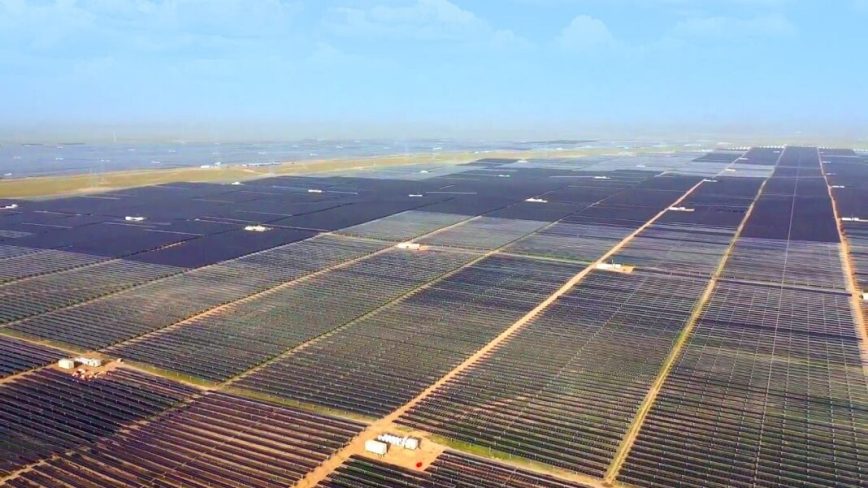
This unleashed a flood of images that to some might be illustrations of our species’ progress but to me are images of environmental devastation. In case anyone thinks I’m being melodramatic, here’s a fact: you can’t build solar installations just anywhere. Land needs to be cleared and flattened for them, including forests, should they happen to be in the way. Same for wind mills but on a much, I believe, smaller scale.
Of course, the EU has tied its pants with the stipulation that only projects proposed for designated “go-to” areas will be spared the trouble of environmental impact assessments. It’s a completely worthless stipulation, however, since governments would rush to designate go-to area after go-to area whether out of a genuine if misplaced belief that renewables will save the world or pure, primal greed.
Here’s an FT quote I instantly fell in love with: ““Lengthy and complex administrative procedures are a key barrier for investments in renewables and their related infrastructure,” according to the draft. The plans could “result in the occasional killing or disturbance of birds and other protected species”, it added.”
It might also result in the disturbance of agricultural land and sensitive ecosystems because all ecosystems are sensitive and if you really get going building gigawatts of solar power, you will disturb them because, quite simply, everywhere is an ecosystem. And this plan comes from the same EU that has been fining Bulgaria (with reason, I’m sure and I’m not being sarcastic for a change) for violating environmental protection regulations.
So, the EU has since last September been suffering the consequences of a too fast buildout in renewable capacity, rooted in the arrogant assumption that it only takes a few million solar panels and wind turbines to save the planet from the effects of centuries of human activity.
Now, the bloc plans to accelerate this buildout even more because, of course, it never acknowledged the role that too-fast buildout had on its energy troubles. On the contrary, the overwhelming sentiment appears to be that European countries are not building wind and solar capacity fast enough.
The EU will also accelerate the acceleration even further because now Brussels has set its sights on completely quitting all sorts of fossil fuel imports from Russia by 2027. This would cost the bloc the modest sum of 195 billion euro, or 32.5 billion euro per year until 2027, on top of all other investments in renewable energy. The goal: to source 45% of its energy from renewable installations by 2030. Given the track record of wind and solar, this is, of course, totally feasible.
Meanwhile, European economies are panting under growing inflation weight, dumped on them by the same people who are now urging the accelerated ramp-up of wind and solar. At a time when all commodity prices are soaring. At a time of various material and equipment shortages.
Doing the same thing and expecting different results has been said to be the definition of insanity and the EU is acting like an excellent example of this definition. It refuses to acknowledge that the results of its actions in energy so far have been less than positive, so to speak. Except on the level of emissions. Those are falling, so that’s a win for the EU narrative (and for our lungs, if we’re talking about fine particulate matter). On the security and affordability front, however, things couldn’t be different-er.
In the UK, the FT reported this week, some households are being forced to take out loans in order to be able to pay their electricity bills. Meanwhile, the government is raising its 2030 renewable capacity target to 50 GW for offshore wind alone while Chancellor Sunak is berating the oil industry for not investing enough at home. As one reader would say, this reads like a soap opera script, and a bad one, at that.
The UK is not the EU but the energy policies of the two are remarkably identical. In the EU, as in the UK, member states are providing direct financial support to their citizens and businesses to help them cope with higher electricity prices. Those would be the same prices that are high precisely because of these governments’ energy policies. And even with that help, a lot of people are struggling with their bills.
At the same time, these same governments are providing direct financial support to wind and solar developers, while charging their citizens extra for the renewable power in their supply mix (Note: This is an extrapolation, based on the existence of renewable power surcharges in Bulgaria and Germany.). And they are planning to build more of the renewable power capacity that citizens pay more for the privilege of using to heat their homes and cook their food.
In other words, EU governments are paying aid to their citizens for excessive electricity prices while at the same time charging these same citizens more for the renewable electricity they want to produce more of. The aid will end, sooner rather than later. The surcharges are not going anywhere.
The outlook for European energy prices meanwhile remains quite grim. According to economists polled by the Wall Street Journal, energy prices in the EU will remain high and even rise further in the coming months thanks to Western sanctions on Russia that are reducing the availability of Russian oil for Europe.
The sanctions have also started reducing the availability of gas for Europe, first because of Poland’s and Bulgaria’s refusal to pay in rubles for gas deliveries and as of this week because the Ukraine decided to move the entry point of Russian gas into the country from one place to another, because the first one is controlled by Russian forces.
Gazprom said that was technologically impossible (for capacity reasons), so the Ukraine is turning the tap — which is one of the taps for Europe — off. According to the Ukrainian side, that channel accounts for a third of all Russian gas transited through the Ukraine to Europe. For context, in 2021, the total amount of Russian gas shipped to Europe via its eastern neighbour totalled 41.6 billion cu m.
Soon after this, Moscow sanctioned a host of Gazprom subsidiaries in Europe, cutting off their access to gas, in response to EU sanctions. Gas prices jumped further, as usual, and Brussels’ resolve to shake off the hydrocarbon chains tying it to Russia probably hardened. We might be about to hear about another revision of renewable targets for 2030, with the appropriate price tag, of course.
In all fairness, in this particular context of energy insecurity, the argument for local energy production from whatever you have handy, be it coal, nuclear, or wind and solar, makes a lot of sense. In fact, the “local supply = energy security” argument has always been the strongest pragmatic one in favour of wind and solar.
The problem is in details such as costs, energy density and, as always, reliability. But nobody in Brussels and national capitals seems to care about petty details. The political EU is firmly in “Whatever it takes” mode and we’re all footing the bill.
The “green energy world” is in a pickle. Only government intervention and deficit spending is holding the artificial boom afloat. And just imagine all of the good things that the same dedication of resources could have created if they had gone for goods and services that consumers wanted. That is a story for another day.
Lavrov: Recent Sanctions Unlikely to Be Lifted, This Is What US Is Telling Allies Behind Closed Doors
Samizdat | May 29, 2022
Russian Foreign Minister Sergey Lavrov says that the latest Western sanctions against Russia were prepared long ago and are unlikely to be lifted.
“The speed with which they were introduced and their volume indicate that they were not created overnight, they were being prepared for quite a while. It is unlikely that these sanctions will be lifted,” Lavrov said in an interview with French broadcaster TF1.
“At least, the US, not publicly but during contacts with its allies, says that when all this [the crisis in Ukraine] is over the sanctions will remain anyway,” Lavrov added.
Lavrov noted that in the wake of these revelations, it’s clear the West’s main priority isn’t defending the Ukrainian regime, which he described as a mere “bargaining chip,” but about curbing Russia’s development. According to the diplomat, the US considers Russia an obstacle to its goal of establishing a unipolar world – a vision “which Washington proclaimed with the submissive consent of Europe.”
According to him, the West was also indifferent to the fact that Ukraine publicly refused to comply with the UN Security Council resolution urging the implementation of the Minsk Accords signed by France and Germany.
At the same time, Lavrov noted that liberating Donbass remains a top priority.
Russia launched a military operation last month with the stated goal of putting an end to war crimes committed by Ukrainian troops against civilians during an eight-year offensive against Donbass. President Vladimir Putin said that for eight years, people in Donbass have been subjected to what he called a “genocide” by the Kiev regime.
Poland Wants Billions From Brussels to Support Ukrainian Refugees
Samizdat – 28.05.2022
Over 3.6 million Ukrainians, equivalent to nearly 10 percent of Ukraine’s population, have fled to Poland in recent months, with millions more making their way to Russia, Romania, Germany, Hungary, Moldova, the Czech Republic, and other nations to escape the crisis in their home country.
Poland will need billions of additional euros from the European Union to help support the millions of Ukrainian refugees in the country, Deputy Minister of the Interior Pawel Szefernaker has indicated.
“From the very start we said that the aid we provide costs in the billions, not millions of euros. The European Union’s aid for countries which help refugees should also be counted in the billions – just as it was in the case of Turkey or Greece between 2015-2016”, Szefernaker said, speaking to the Polish Press Agency (PAP) on Saturday.
The official, who is tasked with coordinating Poland’s response to the refugee crisis, complained that the European Commission has yet to transfer any funds to assist the Polish government via its Recovery Assistance for Cohesion and the Territories of Europe (REACT-EU) programme. The fund was topped up with 3.4 billion euros to help members absorb Ukrainian refugees in April by the European Parliament, and is expected to be allocated to EU countries bordering Ukraine, as well as those whose refugee intake is greater than one percent of their total population.
PAP says Warsaw is expected to receive a 144.6 million euro payout from a 400 million euro tranche of funding allocated to five countries, including Poland, Romania, Hungary, Slovakia, and the Czech Republic for refugee assistance. However, even that money has not yet been delivered, with an EC spokesperson saying the European Commission will discuss subsidy agreements with Warsaw “in the coming weeks.”
Szefernaker suggested a separate, new fund needs to be established by the EU to deal with the financial burden. “The measures referred to by the European Commission are not additional measures. These are resources shifted from various other funds that were already in the European Union’s budget”, he said.
The official noted that 95 percent of the remaining funds given to Poland by Brussels were committed to various other investments, and could not be redirected to help refugees.
Over 42 billion euros were earmarked for Poland from the bloc’s REACT cash pile last year, but was frozen over the Polish government’s intransigence on “LGBT-free” zones – municipalities where LGBT “propaganda” marches and other events are banned.
Poland has long been a net beneficiary when it comes to contributions to the EU budget, getting billions more euros than it pays into the bloc, which is funded mainly by Germany, France, Italy, and, until 2020, Britain.
Poland spent years battling Brussels in the mid-late 2010s over EU demands that the country take in refugees from Syria, Libya, Afghanistan, and other countries turned into failed states by US and NATO interventions, with the European Commission finally dropping its “refugee quotas” initiative in 2020 amid Polish, Hungarian, and Czech intransigence.
When the Ukraine crisis exploded in February, Warsaw rushed to accept millions of Ukrainians with open arms, on top of millions more already working and living in the country. Since the 2014 Euromaidan coup, over two million Ukrainians have taken up roles in sectors of the Polish economy, ranging from construction and agriculture to logistics and housework, with Polish businessmen valuing them as a source of cheap but skilled labour.
US infiltrated post-Soviet states with biolabs – Russia
Samizdat | May 26, 2022
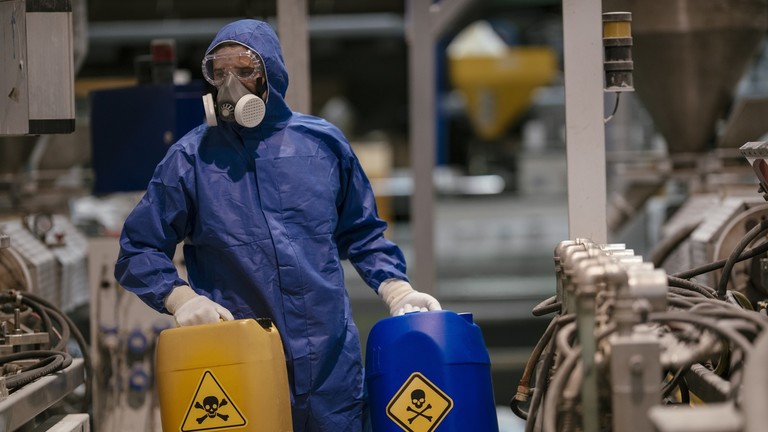
In the 1990s, post-Soviet nations were weak and inexperienced while the US had the guile and resources to find footholds in them, Russian Foreign Minister Sergey Lavrov told RT Arabic. Washington took advantage of that, establishing a webwork of biolabs that Russia believes to be conducting military research, he explained in an interview.
The collapse of the USSR left in its wake nations that were poor and in desperate need of even the most basic necessities, which left them open for the US to exploit, Lavrov said.
“Our Western partners then, so to speak, vigorously scrambled. They offered their services in every aspect and infiltrated every area of the newly-independent states. They sent advisers. And now we are experiencing what came as a result of those times,” the minister said.
In particular, the diplomat was referring to US-funded labs that many post-Soviet states host in their territory. Operating under the umbrella of the Pentagon’s Defense Threat Reduction Agency, they conduct biological research.
Washington says the network is benign and serves to detect and identify emerging pathogens that may pose a threat to humanity. But some nations, including Russia, believe them to be clandestine bioweapons research facilities.
Evidence of the labs’ true nature was uncovered by the Russian military during its offensive in Ukraine, Lavrov said, adding that Moscow will not allow the issue to slide.
“The experiments they conduct in those labs. We have long suspected that they are not peaceful and harmless,” he said.
“The samples of pathogens that were stored [at Ukrainian labs], the paperwork showed clearly the military character of the experiments. And the documents made it clear that there are dozens of these labs in Ukraine,” he added.
Moscow wants to update the Biological Weapons Convention, a 1972 international treaty that bans any research, stockpiling and use of such weapons and which both Russia and the US signed. The agreement has a major flaw in lacking a verification mechanism, similar to what the International Atomic Energy Agency or the Organization for the Prohibition of Chemical Weapons use to ensure compliance in their areas of non-proliferation.
The US has been stonewalling a proposal to establish such a mechanism for over two decades, since 2001, Lavrov stressed. “Now it has become clear to us why they took this position while creating military biological laboratories throughout the world over all these years,” he said.
Ukraine threatens “something could happen” to oil pipeline serving EU member Hungary
Samizdat | May 26, 2022
Ukraine has “a wonderful lever of pressure” on Hungary via the Druzhba – which translates to ‘Friendship’ – oil pipeline, Ukrainian energy minister adviser Lana Zerkal claimed on Thursday.
Speaking during an online discussion at the Kiev Security Forum, Zerkal criticized the policy of the Hungarian government, which is blocking a sixth round of EU sanctions, one which would ban Russian oil. The Western countries have been imposing harsh restrictions since late February, when Moscow launched its military attack on Ukraine.
In Zerkal’s opinion, Hungary is using the Russian military offensive as an instrument to achieve its own goals and thinks that now it “can demand anything” from the EU.
“Ukraine has a wonderful lever of pressure in its hands – it’s the Druzhba oil pipeline,” Zerkal said, adding that “something could happen” with Hungary’s separate line of Druzhba.
“And, in my opinion, it would be very appropriate if something happened to it. But, again, it is in the hands of the government and the president to make decisions on political issues, to decide if we really want to talk to [Hungarian President Viktor] Orban in a language that he understands and that he imposes on the EU, or if we are not ready for that yet,” Zerkal stressed.
Zerkal later took to Facebook to clarify “her humble opinion” that “caused a diplomatic scandal,” saying “facts are a stubborn thing.”
“But, to calm the situation, it is worth specifying that the official position of the Ministry of Energy of Ukraine on this matter is unchanged. Ukraine is a reliable transporter of energy carriers to Europe,” she stressed.
While Zerkal’s words have already started to spread through Hungarian media, Budapest is yet to comment on the issue.
In a letter to European Council President Charles Michel, seen by the Financial Times, Orban reportedly told the EU that a bloc-wide ban on Russian oil would cause serious problems for his country’s economy and thus “urgent investments” from Brussels were needed.
Hungary is almost entirely dependent on Russia for its gas imports and relies on Moscow for more than half of its imported oil. The country gets 65% of its oil through the Druzhba pipeline from Russia. Addressing possible sanctions against Russia’s oil, Hungarian Foreign Minister Peter Szijjarto previously said that Budapest would back a ban on maritime shipments, but not on deliveries through pipelines.
Despite the lack of consensus within the EU, German Economy Minister Robert Habeck said on Monday that the bloc’s 27 member states “will reach a breakthrough within days” on an embargo. Any decision on EU sanctions must be made unanimously.
Ukraine has been consistently calling on the European countries to stop buying Russian energy resources, claiming that by doing so they are financing Moscow’s military offensive.
Russian President Vladimir Putin has accused European leaders of committing economic “suicide” by attempting to give up Russian energy.
Ukraine to get just 15% of $40-bln US aid, but must return entire sum, Duma speaker says
TASS | May 24, 2022
Russia’s State Duma Speaker Vyacheslav Volodin took to his Telegram channel to highlight that the US and its partners do not plan to provide real assistance to Ukraine.
Ukraine will only get 15% of the $40 billion promised by the US, he said.
“Washington and Brussels do not really intend to help Ukraine, or solve its economic and social issues. They only need Ukraine to fight Russia till the last Ukrainian,” Volodin said.
According to the recent aid to Ukraine legislation signed by President Joe Biden, 35% of the $40 billion is going to finance the US Armed Forces, he explained. Meanwhile, 45.2% of that amount is set to be spent on other countries, not Ukraine, while another 4.8% will be earmarked to support refugees, and restore the US diplomatic mission in Ukraine. “Ukraine will only receive 15% of the allotted sum,” the speaker revealed.
But Ukrainians will have to pay off the whole sum, he said. The US is aware that Kiev will not be able to service the debt in the future. “That is why they are seizing Ukraine’s last reserves, including grain, which is what we are seeing right now”.
Sen. Cruz, Gen. Milley, Zelensky Say Ukraine Is Vital to National Security
By Kyle Anzalone and Will Porter | The Libertarian Institute | May 23, 2022
As the costs of supporting Ukraine’s war effort soar well beyond $50 billion, high-level officials are seeking to sell Americans on even more military spending, with senators, generals and the Ukrainian president himself each insisting aid to Kiev is vital to American interests, amid rampant inflation, mounting shortages and monumental public debt in the US.
In a statement justifying a recent vote to send another $40 billion in assistance to Ukraine, Republican Senator Ted Cruz argued the move was essential not only for the security of the US, but to ward off a Chinese attack on Taiwan as well.
“If Putin wins in Ukraine, it will confirm for Xi that he can confidently invade Taiwan,” he said, referring to the Russian and Chinese heads of state.
“The reason we should support our Ukrainian allies is because it protects American national security, it keeps America safer, and it prevents our enemies from getting stronger, from threatening the safety and security of Americans, and from driving up the cost, the economic damage, to Americans,” Cruz added.
Following repeated appeals for additional Western arms, Ukrainian President Volodymyr Zelensky is now warning that American troops may have to face down the Russians if they are not stopped in Ukraine, adopting a version of the ‘fight them over there…’ slogan popular during the US War on Terror.
“If we fall, if we don’t hold the line, Russia will proceed, attacking the Baltic states – Estonia, Lithuania, Latvia… The US military will have to go to Lithuania, Latvia and Estonia, according to the fifth article, and they will have to fight there and die there,” he said in an interview with Axios on Monday, citing NATO’s Article 5 collective defense provision.
During his West Point commencement speech over the weekend, Chairman of the Joint Chiefs of Staff Mark Milley echoed similar sentiments regarding Ukraine, all while predicting that future wars would be fought against ‘great powers’ like Russia and China.
In a further callback to the Cold War, the top US military officer asserted that such powers would only be encouraged if acts of “aggression” are not met with a serious response.
“Yet again in Ukraine, we are learning the lesson that aggression left unanswered only emboldens the aggressor,” he said.
The three statements somewhat resemble the Cold War-era ‘domino theory,’ which contended that the presence of Communism in one country would quickly spread into neighboring states – a key public rationale behind US intervention in Vietnam. However, former Defense Secretary Robert McNamara acknowledged in 1995 that the theory did not play out as predicted, stating, “I think we were wrong. I do not believe that Vietnam was that important to the Communists. I don’t believe that its loss would have led – it didn’t lead – to Communist control of Asia.”
What it means that Hillary Clinton did it
By David Zukerman | American Thinker | May 22, 2022
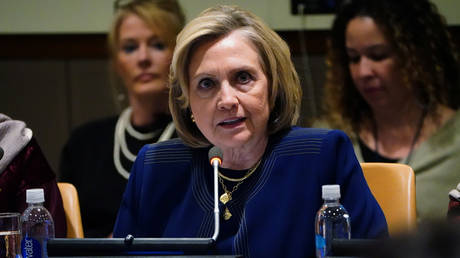
The Wall Street Journal ran a scathing editorial on May 20, called “Hillary Clinton Did It“.
This editorial began: “The Russia-Trump collusion narrative of 2016 was a dirty trick for the ages — and now we know it came from the top — candidate Hillary Rodham Clinton.” The editorial quickly explained: “That was the testimony Friday by 2016 Clinton campaign manager Robby Mook in federal court [in Washington, D.C.], and while this news is hardly a surprise, it’s still bracing to find her fingertips on the political weapon.” (Also not surprisingly, The May 20 print edition of The New York Times did not include a story on Mook’s testimony.)
Mook’s testimony was heard at the trial of attorney Michael Sussman, charged with lying to the FBI in calling to their attention a story that Donald J. Trump, by means of connections with Russia’s Alfa Bank, was colluding with Russian President Vladimir Putin.
The lie at issue was not the false claim about a Trump-Alfa connection, but the charge that Sussman brought this matter to the FBI as a good citizen, and not as a representative of the Clinton campaign.
As the Journal editorial noted: “Prosecutors say [Sussman] was working for the Clinton campaign.” The editorial pointed out, “Mr. Mook said Mrs. Clinton was asked about the plan [to call attention to the Trump-Alfa ties] and approved it. A story on the Trump-Alfa Bank allegations thus appeared in Slate, a left-leaning online publication.”
After that, the Journal explained how the Clinton campaign used the self-generated news of the investigation and the initial Slate article that came of it, both of which they had planted, as the basis for making tweet after tweet to the press about the Slate report to churn up mass coverage about it in the press and convince the public that the investigation was about something serious.
The concluding paragraphs of the editorial are worth quoting in full:
In short, the Clinton campaign created the Trump-Alfa allegation, fed it to a credulous press that failed to confirm the allegations but ran with them anyway, then promoted the story as if it was legitimate news. The campaign also delivered the claims to the FBI, giving journalists another excuse to portray the accusations as serious and perhaps true.
Most of the press will ignore this news, but the Russia-Trump narrative that Mrs. Clinton sanctioned did enormous harm to the country. It disgraced the FBI, humiliated the press, and sent the country on a three-year investigation to nowhere. Vladimir Putin never came close to doing as much disinformation damage.
The harm done to the United States by the perfidy of the Clintonistas cannot be overemphasized. That “three-year investigation to nowhere” represented the Clinton-Obama attempted takeover of the government. (Call it the COAT campaign.) With congressional Republicans unwilling to prevent the COAT campaign, the Trump administration was blocked from putting U.S.-Russia relations on a rational, mutually beneficial footing, to the point that, under the present Senate leadership, the specter of war with Russia is no longer an unthinkable thought. The COAT campaign succeeded in keeping the Ukraine pot boiling, with the water first heated by Obama’s stirring up of anti-Russian feelings in Ukraine, leading to the Maidan revolution that ousted the legitimately elected president of Ukraine, Viktor Yanukovych.
EU president accuses Russia of energy ‘blackmail’
Samizdat | May 24, 2022
European Commission President Ursula von der Leyen on Tuesday accused Russia of “blackmailing” the EU with its oil and gas exports. However, the bloc is in the process of voluntarily cutting itself off from these energy resources, and Moscow has blamed global food shortages on Western sanctions.
Speaking at the World Economic Forum’s annual meeting in Davos, Switzerland, von der Leyen said the EU would “accelerate” its transition to green energy “because of Russia’s blackmailing us with fossil fuels.”
Yet hours before she spoke, German Economy Minister Robert Habeck announced that the EU’s 27 member states would “reach a breakthrough within days” to ban Russian oil imports, upon which many EU states depend. Germany, for example, relies on Russia for around a quarter of its imported oil, while the bloc as a whole sources 27% of its oil from Russia.
Von der Leyen has also promised to reduce the EU’s reliance on Russian gas by 66% this year and eliminate it entirely by 2027, as part of a green energy plan announced last week. At present, 40% of the EU’s gas comes from Russia.
Since the start of its military operation in Ukraine in February, and throughout waves of successive EU and US sanctions, Russia has continued to sell its oil and gas to the EU. Moscow has demanded, however, that importers buy its gas in rubles. More than half of Gazprom’s foreign clients have already opened ruble accounts with the Russian energy giant, according to Deputy Prime Minister Alexander Novak.
Von der Leyen also accused Russia of using “food exports as a form of blackmail,” by allegedly blocking grain shipments out of Ukraine and refusing to export its own supply.
However, Kremlin spokesman Dmitry Peskov said on Monday that the West’s economic sanctions are responsible for rising global food prices, and that Ukraine is free to export its crop through Poland. Peskov also accused Ukrainian naval forces of mining the Black Sea, making shipments “virtually impossible.”
Is the US conspiring to sink Russian Black Sea fleet ships?
By Drago Bosnic | May 24, 2022
On 20 May, in an exclusive for Reuters, the US government announced it would be providing advanced anti-ship and land-attack missiles to the Kiev regime, in yet another major escalatory move aiming to prolong the conflict and make it as bloody as possible for both sides. While some might dismiss such statements as simply being a part of the information, or more precisely, disinformation war, they should be taken extremely seriously, as it certainly wouldn’t be the first time the political West, with the US at its helm, delivered advanced weapons to the Kiev regime. To make matters worse, an adviser employed by the Ukrainian Ministry of Internal Affairs, Anton Gerashchenko, stated that the US will be “sinking Russian ships in the Black Sea.” His exact (now deleted) tweet stated:
“The US is preparing a plan to destroy the [Russian] Black Sea Fleet. The effective work of the Ukrainians on [Russian] warships convinced [the US] to prepare a plan to unblock the [Ukrainian] ports. Deliveries of powerful anti-ship weapons are being discussed.”
The Ukrainian official was referring to the aforementioned Reuters report on the US plan to provide the regime with the old “Harpoon” anti-ship missiles, as well as the newer and more advanced NSM (Naval Strike Missile), which can be used both as an anti-ship or land-attack weapon. The “Harpoon” is a subsonic, all-weather, over-the-horizon, anti-ship missile developed and manufactured by Boeing Defense, Space & Security (historically McDonnell Douglas) with a range of up to 220-250 km (depending on the source), costing around $1.5 million apiece. The NSM, also a subsonic missile, has a dual, anti-ship and land-attack capability. The missile’s exact range is classified, but it can go as far as 200 km or more, depending on the flight profile. It costs up to $2.2 million per unit.
Three State Department officials and two Congressional sources told Reuters that the White House was still working on the details for providing the Kiev regime with these advanced weapons. According to the sources, logistical issues and “the possibility the US would have to remove a launcher from one of its ships to send to Ukraine are current obstacles to completing the transfer”. Rather disturbingly, when responding to a question from Newsweek, the State Department did not deny it was working on a plan to target the Russian Black Sea fleet. “As the conflict is changing, so too is our military assistance to deliver the critical capabilities Ukraine needs for today’s fight as Russia’s forces engage in a renewed offensive in eastern Ukraine,” a spokesperson said.
However, the US DoD (Department of Defense) did issue a denial of the controversial claims made by the Ukrainian Internal Ministry’s official. “I can tell you definitively that that’s not true,” Pentagon spokesman John Kirby told reporters last Thursday. Still, the Pentagon’s denial refers only to the Ukrainian official’s claim the US was going to enable Ukraine to sink the Black Sea fleet and did not apply to the proposed anti-ship missiles transfer, which further adds to the confusion regarding this very serious issue.
It also remains unclear how Ukraine would be able to target Russian ships by itself. The US and NATO would either need to provide Ukraine with the necessary ISR (intelligence, surveillance and reconnaissance) capabilities or, worse yet, directly provide ISR information on the location and possible movement of Russian Black Sea fleet ships, which the Kremlin might see as an act of war. The US government, including US President Joe Biden, and the military continue to give controversial and ambiguous statements, oftentimes denying what was clearly stated by their colleagues, which greatly contributes to the atmosphere of distrust and exponentially increases the likelihood of an uncontrollable escalation.
Gerashchenko’s claims that the attack would help to open up Ukraine’s ports are both false and misplaced, as the Kiev regime was the party which released hundreds of sea mines, many of which drifted apart as far as the Bosphorus, over 600 km to the south of Odessa. Russia currently controls the Black Sea and maintains a blockade. However, the blockade is not aimed against civilian shipping, but possible major NATO arms deliveries to the Kiev regime forces. The United Nations has called for an easing of restrictions in the Black Sea to allow food exports from Ukraine to help alleviate global food shortages.
Russia offered a diplomatic solution. Last Thursday, the Russian government proposed lifting the blockage in exchange for the removal of sanctions. The Russian Foreign Ministry stated the problem clearly goes beyond the military blockade and includes Western sanctions which are restricting fertilizer exports. “You have to not only appeal to the Russian Federation but also look deeply at the whole complex of reasons that caused the current food crisis. [Sanctions] interfere with normal free trade, encompassing food products including wheat, fertilizers and others,” Deputy Foreign Minister Andrey Rudenko said.
Drago Bosnic is an independent geopolitical and military analyst.
Ukraine on the verge of debt collapse
By Lucas Leiroz | May 23, 2022
In recent months, many Western countries have offered financial assistance to Kiev, with billions of dollars and euros being sent to assist in the purchase of weapons and military equipment to be used against Russian forces. For the Western media, such aid is a “humanitarian effort”, and for Ukrainian propaganda it is an “example of cooperation between Ukraine and the West”. But none of this is real. It is just simple business. Kiev is taking loans it will have to pay back in the future. And, certainly, payment will only be possible at the expense of a major inflationary crisis.
One of the largest global risk analysis agencies, Moody’s Corporation, recently issued a report in which it downgraded Ukraine’s credit score from Caa2 to Caa3, which corresponds to “poor” or “high risk”. At the same time, the agency’s perspective on the credit situation in Ukraine changed from “under review” to “negative”, with expectations of significant deterioration in the short term.
Among the justifications for such classification, the agency emphasized the widespread debt situation that the country is currently in. Loans recently taken by Kiev from Western countries as a result of the military conflict have now reached a highly worrying level, which precludes the existence of any optimistic expectation of rapid economic and social recovery. The company predicts that Kiev’s debt will jump from 49% of the national GDP – last year’s rate – to 90% in 2022, forming an absolutely catastrophic scenario in the coming months.
In fact, Western loans are acting as an important form of aid in the immediate purchase of military material, which allows Ukraine to continue fighting for an extended period of time, despite the zero chances of victory. The problem, however, is that the constant taking of loans is creating an unsustainable debt for the Ukrainian economy, which will result in default.
This scenario aggravates a series of previous factors that were already harming the country’s economy. Ukraine was already in debt for almost half of its GDP before Moscow launched the special operation. Now, with the general costs of the current conflict, there are already estimates by the World Bank in economic losses around 45% of the country’s GDP. Furthermore, with the current situation, the Ukrainian government has lost a considerable part of its tax revenue. Adding all this to the current loans, there really does not seem to be any good expectations in the economic area in Ukraine, regardless of the outcome of the military conflict.
Recently, the G7 announced a new aid program for Ukraine, which includes several billion-dollar packages sent by each of its members. The public objective of the measure, this time, is to “save” the Ukrainian economy, not just to encourage militarization. However, the practice of offering loans is maintained on a large scale. Donations to Kiev, although existing, are few and of low value – as, for example, the recently announced German donation of one billion euros. In general, loans remain the norm, both for immediate aid and for long-term macroeconomic recovery planning. Obviously, the propaganda effect of this is immense, both for Zelensky and his allies. But the seriousness of the real situation cannot be ignored by analysts: Ukraine will not have enough money to pay for all this.
If Russia ended its special operation today, the result would be a Ukraine militarily defeated, politically disorganized and economically indebted, dependent on constant Western aid – which would result in new debts, in an endless cycle. The best way to handle the situation is through a formal surrender on the part of Zelensky, accepting the peace conditions demanded by Moscow, and initiating negotiations for the restructuring of the country. With a neutral and demilitarized Ukraine, there would be possibilities for cooperation with both Russia and the West for economic reconstruction. But, apparently, this is not the desire of the Ukrainian president and his team.
The most likely scenario is that Russia will be forced at some point to increase the intensity of the operation to achieve its objectives of neutralization, demilitarization, and sovereignty for Donbass, which will make Kiev leave the conflict in a much more disadvantageous situation and much more economically dependent on the West. Post-special operation Ukraine will only be able to pay off its debt in the long term, after successive renegotiations, and through a large tax rise and inflationary crisis, with the final consumer being punished for the mistakes made by the Kiev Junta.
In the same way that the UK only paid off its debts to the US for reconstruction after WWII in the 2000s, Kiev will face long times of debt in the coming decades. And this may be even worse if this “aid” – which only benefits Western creditors themselves – is not cut now.
Lucas Leiroz is a researcher in Social Sciences at the Rural Federal University of Rio de Janeiro; geopolitical consultant.
Looming food crisis caused by Anti-Russia sanctions, not Moscow’s actions: Kremlin
Samizdat | May 23, 2022
Sanctions imposed on Moscow are the real cause of a looming global food crisis, not Russia’s actions, Kremlin spokesman Dmitry Peskov told journalists on Monday.
He said that Russian President Vladimir Putin agreed with UN Secretary General Antonio Guterres’ opinion that there was a risk of global hunger.
“That is true. But when it comes to grain, the president said that the imposed sanctions and restrictions led to the collapse that we are now witnessing,” Peskov revealed.
The US, the UK, the EU and many other countries imposed hard-hitting sanctions on Russia in response to its military operation in Ukraine. In Guterres’ view, Russia’s offensive in the neighboring country has added to the problems that were already affecting the situation on the food market, namely climate change and the Covid-19 pandemic. Guterres pointed out that Moscow should stop blocking the export of food from Ukrainian ports but at the same time made it clear that fertilizers and food products from Russia should be allowed to reach the world markets without obstacles.
Peskov noted that both Russia and Ukraine have always been reliable grain exporters and that Moscow in no way prevents Kiev from exporting grain to Poland by rail. He also emphasized that as the Poles send trains with weapons to Kiev, “No one prevents them from exporting grain back on the same trains.”
In regard to maritime transportation, the Kremlin spokesman accused the Ukrainian forces of planting naval mines in the Black Sea. According to Peskov, such actions made trade and shipping “virtually impossible” and special measures needed to be taken in order to resume navigation.
“And when it comes to the alternative routes, again, we are not the source of the problem which is causing the threat of world hunger. The sources of this problem are those who imposed sanctions, and the sanctions themselves,” Peskov claimed.
Also on Monday, Russian Deputy Foreign Minister Andrey Rudenko said that allegations that Moscow was blocking the export of Ukrainian grain in the Black Sea ports, thereby leading to the deficit on the grain market, were “nothing more than speculation.”
“All restrictive measures that were introduced against Russian exports should be canceled,” Rudenko said.
Earlier this month, Deputy Chairman of the Security Council Dmitry Medvedev stressed that Russia would not export food to the detriment of its own population. Referring to the anti-Russia sanctions, the former Russian president also said that the West could blame its own “cosmic cretinism” for the looming food crisis.
As Russia and Ukraine are major wheat suppliers, accounting for some 30% of global exports, prices have significantly grown since the launch of the Russian military attack and the subsequent sanctions imposed on Moscow.
The fact that Russia, Ukraine, and Belarus are leaders in the production of fertilizers also aggravates the situation on the global food market – something that was mentioned by both Guterres and Medvedev.
Featured Video

New positive ivermectin evidence
or go to
Aletho News Archives – Video-Images
From the Archives
Fanatical Followers of the Covid Regime: A Jim Jones-Style Cult?
By Professor Roger Watson and Dr. Niall McCrae | The Daily Sceptic | November 15, 2021
As scholars at leading British universities over recent decades, we witnessed the replacement of critical thinking and debate by narrative: facts are discrimination and scientific method is imperialism; truth, instead, is derived from ‘progressive’ values. This educational trend may be a major contributory factor to the ease in which society has been inculcated to the Covid ‘new normal’ of masking, testing, and repeated doses of vaccines for a disease of similar risk to severe influenza.
One doesn’t need much critical reasoning to observe the flawed logic of some vaccination enthusiasts, such as people who respond to experiencing any side effects, however debilitating, by saying “at least I know it’s working”, or, after contracting the disease despite their promised inoculation (over 90% effective, according to initial drug company claims), “I’d have been worse off without the jab.” … continue
Blog Roll
 Aletho News
- ‘Grave, alarming’: Iran mission on Trump’s UNGA ‘annihilation’ threats
- Najaf airport to reopen to Iranian flights within 24 hours: Ambassador
- From ‘How Will This End For Iran’ to ‘When America Walks Away’: A tale of two Economist covers
- Tehran blasts ‘baseless’ speculation linking Iran to alleged bomb plot at UK air base
- The Rise And… Rise Of ‘Color Revolutions’
- The Coming GOP Bloodbath?
- Arctic Scare Stories Melt Away
- Wrong, Euronews: Climate Change Has Not Created a Food, Energy, and Economic “Meta-Crisis”
- New positive ivermectin evidence
- Met Office Caught Fabricating Daily Temperature Record Claims
- If Americans Knew
- Netanyahu Asked UAE Leader to Deny Report on Oct. 7 Warning in Secret Visit, Sources Say
- CNN Chief Int’l Correspondent Clarissa Ward on Journalists in Gaza
- Democratic Party Consultants Surround Troy Jackson with Pro-Israel Donors
- Christian Leader Responds To Netanyahu’s Claims Regarding Palestinian Christians
- In Gaza, ‘Whoever Survives the Bombing Won’t Survive the Rubble’
- Israel kills more Palestinians, amid push to resettle Gaza – Daily Update
- Israel forces Gazans to live in constant peril – Daily Update
- Deconstructing Netanyahu’s pants-on-fire UN rant – Daily Update
- Trump betrayed voters with his campaign lies and prioritized a foreign country once he took office
- Netanyahu calls Israel’s war in Gaza ‘opposite of genocide’ in UN speech to near-empty hall
- No Tricks Zone
- New Study: Earth And Venus Surface Warmth Largely Explained By Convection And Lapse Rate, Not CO2 Or Radiation
- 2025 Nature Paper Claiming Worsening Global Drought Gets RETRACTED …Heavily Flawed
- New Study: ‘Global Drought Shows No Detectable Recent Acceleration Under Climate Warming’
- Economic Masterminds: German Socialists Suggest Taxing Productivity Gains Stemming From Using AI
- The South China Sea Has Not Been Cooperating With The Climate Change Narrative
- Energy Crisis: Germany Enters Heating Season With Historically Low Gas Reserve Fill Levels
- New Study: The Antarctic Ice Sheet Gained Mass From 2020-2024 Due To Staggering Snow And Ice Accumulation
- Study: Ocean Heating Rates From Thousands Of Years Ago ‘Dwarf’ Modern Ocean Heating Rates
- Climate Extremists Target, Attack Large-Scale Power Grid Infrastructure In Germany!
- New Study: Antarctic Ice Melt Has Contributed Less Than 1 Centimeter To Sea Level Rise In The Last 30 Years

