Asian fault lines of Biden’s war on Russia
BY M. K. BHADRAKUMAR | INDIAN PUNCHLINE | APRIL 11, 2022
The tremors of the United States’ tensions with Russia playing out in Europe are being felt in different ways already in Asia. The hypothesis of Ukraine being in Europe and the conflict being all about European security is delusional.
From Kazakhstan to Myanmar, from Solomon Islands to the Kuril Islands, from North Korea to Cambodia, from China to India, Pakistan and Afghanistan, the fault lines are appearing.
To be sure, extra-regional powers had a hand in the failed colour revolution recently to overthrow the established government in Kazakhstan, a hotly contested geopolitical landmass two-thirds the size of India, bordering both China and Russia, Washington’s sworn adversaries. Thanks to swift Russian intervention, supported by China, a regime change was averted.
Equally, the Anglo-American project to embroil Myanmar, bordering China, in an armed insurgency has floundered for want of a sanctuary in India’s northeastern region and due to the perceived congruence of interests among the surrounding countries in Myanmar’s stability.
In comparison, the North Korean fault line has aggravated. North Korea moves on its own timetable and has probably decided that the Ukraine crisis offers useful cover while it ramps up its testing program. Pyongyang explicitly supports Russia’s special operation in Ukraine, commenting that “the basic cause of the Ukraine incident lies in the high-handedness and arbitrariness of the United States, which has ignored Russia’s legitimate calls for security guarantees and only sought a global hegemony and military dominance while clinging to its sanctions campaigns.”
North Korea’s objective is to enhance its security and leverage by increasing the quality and quantity of its deterrent capabilities and strengthening its bargaining position.
On another plane, the Ukraine crisis injected a new urgency into the US efforts to cultivate new Asian partners. But Washington has run into headwinds and had to indefinitely postpone a special summit with the ten member countries of the Association of Southeast Asian Nations (ASEAN) that was initially scheduled for end-March. No new date has been proposed, although the US had hyped up the summit as “a top priority.”
Showing some ire, Washington has since sanctioned Cambodia, currently the ASEAN Chair. Clearly, the southeast Asian countries are chary of taking sides between the US and China or of voicing criticism against Russia.
Perhaps, the most direct fallout of the Ukraine crisis in Asia so far is the sharp deterioration in Japan’s ties with Russia. It is an unwarranted development insofar as Tokyo simply did a cut and paste job, copying all the US sanctions against Russia (including against President Putin). Prime Minister Kishida wantonly destroyed what his predecessor Shinzo Abe had carefully cultivated as a cordial, friendly relationship.
Japan now openly refers to Russian “occupation” of the Kuril Islands — something it hasn’t been doing in the past. Moscow retaliated by designating Japan as an “unfriendly” country. Yet, analysts were estimating until recently that Russia and Japan had congruent interests in blocking China’s Arctic ambitions and were, therefore, moving toward solving their dispute over the Kurils.
Suffice to say, Kishida’s motivations in an abrupt turnaround to make Kurils a potential flashpoint in relations with Russia are, to say the least, to be traced to the broader US strategy to isolate Russia.
Meanwhile, a contrarian development has also appeared in China’s challenge to the US’ Island Chain strategy in the Western Pacific by negotiating a new security deal with Solomon Islands. This game-changing development may have extensive consequences and is dangerously interwoven with the Taiwan issue. Biden is reportedly dispatching a top White House official to Solomon Islands to scuttle the deal with China.
The Biden administration is now doubling down on India to roll back its ties with Russia as well. That becomes a fault line in the US-Indian strategic partnership. What must be particularly galling for Washington is the likelihood of India pursuing its trade and economic cooperation with Russia in local currencies. Indeed, China and India have taken a somewhat similar stance on the Ukraine crisis.
Given the size of the Chinese economy and the high potential of growth for the Indian economy, their inclination to bypass the dollar would be a trend-setter for other countries. Russia, hit by Western sanctions, has called on the BRICS group of emerging economies to extend the use of national currencies and integrate payment systems.
Suffice to say, the “weaponised dollar” and the West’s abrasive move to freeze Russia’s reserves sends a chill down the spine of most developing countries. Nepal caved in to ratify the Millennium Challenge Corporation agreement following threat by a middle ranking US official!
There is no conceivable reason why the NATO should become the provider of security for the Asian region. That is why Afghanistan’s future is of crucial importance. Without doubt, the regime change in Pakistan is partly at least related to Afghanistan. The Russian Foreign Ministry has disclosed certain details of the US interference in Pakistan’s internal affairs and its pressure on former Prime Minister Imran Khan.
But time will show how realistic are Washington’s expectations of inducting Pakistan into the US orbit and making it a surrogate to leverage the Taliban regime in Afghanistan. Russia and China are making sure that the door remains closed to NATO’s return to Afghanistan. They have undercut Washington’s recent efforts to co-opt the Taliban leadership in Kabul. (See my blog US pips regional states at race for Kabul.)
The message out of the recent Foreign Ministers’ Meeting on the Afghan Issue Among the Neighbouring Countries of Afghanistan in Tunxi, China, is that in that country’s transition from chaos to order, the regional states hope to undertake a lead role. Thus, the regional states have incrementally marked their distance from the West’s exceptionalism and are instead adopting a persuasive track through constructive engagement. The joint statement issued at Tunxi reflects this new thinking.
The developments over Afghanistan provide a signpost that any attempt at imposing Western dominance over Asia will be resisted by the regional states. Most Asian countries have had bitter experiences with colonialism in their history. (See my blog India’s dilemma over West vs. Russia)
Although the American analysts underplay it, the fact remains that the conflict in Ukraine is bound to impact the “Asian Century” very significantly. The US is determined to transform NATO as the global security organisation that will act beyond the purview of the United Nations to enforce the West’s “rules-based order.”
The West’s desperate push to weaken Russia and tilt the global strategic balance in the US’ favour aims to clear the pathway leading to a unipolar world order in the 21st century. In a recent interview, Hal Brands, Henry Kissinger distinguished professor of global affairs at Johns Hopkins, put across the US strategy behind the war in Ukraine as very logical:
“Well, there’s long been a debate in the United States over whether we should prioritise competing with Russia or China or treat them as co-equals. And that debate has flared up again in the context of this war. I think what the war indicates, though, is that the best way of putting pressure on China, which is the more dangerous and the more powerful of the two rivals, is actually to ensure that Russia is defeated, that it does not achieve its objectives in this war, because that will result in a weaker Russia, one that is less capable of putting pressure on the United States and its allies in Europe and thus less useful as a strategic partner for Beijing.
“The United States simply can’t avoid the reality that it has to contain both Russia and China simultaneously.”
NATO member-supplied S-300 launchers obliterated – Russia
Samizdat | April 11, 2022
Russian forces have destroyed foreign-supplied S-300 anti-aircraft launchers in a number of precision strikes on Ukraine, the Defense Ministry, in Moscow, claimed on Monday. Days earlier, Slovakia reported the donation of a battery of old Soviet-made S-300 air defense missiles to Kiev.
In its regular briefing on the ongoing military action in Ukraine, the Russian Defense Ministry reported hitting a hangar “on the southern outskirts of the city of Dnepropetrovsk,” where “equipment from an S-300 battery supplied to the Ukrainian regime by one of the European nations” was hidden.
The barrage of sea-launched Kalibr missiles destroyed four S-300 launchers and as many as 25 Ukrainian troops in the Sunday strike, ministry spokesman Major General Igor Konashenkov claimed. He used the old name of the city, which Ukrainian authorities renamed Dnepro in 2016 to distance it from the Soviet period of the country’s history.
The Russian official also reported destroying an S-300 targeting radar in a separate overnight precision airstrike near Uspenovka. The general didn’t specify which of the multiple villages of that name in Ukraine he was referring to, and didn’t say whether the radar was part of the battery supplied by the foreign nation.
Last Friday, Slovakia announced that it had donated its only S-300 battery to Ukraine. The weapon system was part of the NATO member’s legacy from the Warsaw Pact days, when it formed part of Czechoslovakia. It was not clear how many vehicles were sent to Ukraine. A regular S-300 battery can have as few as four and as many as 12 launchers using a single radar to identify targets, and is controlled by a single command post.
Prime Minister Eduard Heger assured citizens that the country’s national security would not be compromised since “allies” agreed to boost its air defense in return. US President Joe Biden said his country would provide an American Patriot missile battery as a replacement and thanked Bratislava for agreeing to give the S-300 to Kiev. Elements of the Patriot system started arriving in Slovakia three weeks ago, according to its defense minister.
Responding to Russian claims on Twitter, Prime Minister Heger called them a “hoax” and “Russian propaganda.” The statement was apparently based on a denial that Slovakia received from Kiev.
Washington reportedly wanted another NATO member, Turkey, to strike a similar deal with Ukraine and send it a Russian-supplied S-400, which is more advanced than the S-300. Ankara rejected the idea, saying the system would remain in its possession. In 2020, the US imposed sanctions on Turkey for buying the S-400s from Russia under a deal signed in 2017.
Mexican president updates position on Ukraine conflict

Samizdat | April 10, 2022
Mexican President Andres Manuel Lopez Obrador has denounced “Russia’s invasion of Ukraine” after weeks of trying to remain neutral on the conflict. However, he managed to do so while reminding the world that some of Moscow’s fiercest critics have previously invaded his own country.
“We do not accept Russia’s invasion of Ukraine because we have suffered from invasions,” Lopez Obrador said on Saturday in a video message. Mexico has at various times been on the receiving end of invasions by the US, France and Spain.
Lopez Obrador issued his video statement to be included in Saturday’s ‘Stand Up for Ukraine’ fundraising event, a campaign that organizers claim seeks to raise money for humanitarian relief to Ukrainian refugees. The Mexican president declined Canadian Prime Minister Justin Trudeau’s invitation to attend the event, but he agreed to release a statement speaking out against the “Russian invasion.”
Lopez Obrador’s comments likely weren’t as pointed as some of his critics would have liked. He stopped short of accusing Russia of war crimes, as Trudeau and US President Joe Biden have done, and he gave no indication that Mexico would join in imposing sanctions against Moscow. He spoke more in generalities about his opposition to war, rather than condemning specific actions by Russia.
“We are in favor of a peaceful solution to the conflict between Russia and Ukraine,” he said. “Peace must be reached so that neither the people of Ukraine nor the people of Russia nor any other nation in the world continues to suffer from such absurdity because wars are disgraceful and must never be sought.”
Lopez Obrador’s comments come amid political turmoil at home. He faces a vote on Sunday over whether he should stay in office for the three years remaining on his term – the first such referendum in Mexico’s history. He called for the vote himself in order to confirm democratic support for his policies, a move that opponents criticized as a costly political stunt.
The Ukrainian Conflict Is a U.S./NATO Proxy War, but One Which Russia Is Poised to Win Decisively – Scott Ritter
By Finian Cunningham – Strategic Culture Foundation – April 9, 2022
Scott Ritter is a former U.S. Marine Corps intelligence officer who has gained international respect for his independence and integrity as a commentator on conflicts and foreign relations.
Question: Do you think that Russia has a just cause in launching its “special military operation” in Ukraine on February 24?
Scott Ritter: I believe Russia has articulated a cognizable claim of preemptive collective self-defense under Article 51 of the UN Charter. The threat posed by NATO expansion, and Ukraine’s eight-year bombardment of the civilians of the Donbass fall under this umbrella.
Question: Do you think Russia has legitimate concerns about the Pentagon sponsoring biological weapons programs in laboratories in Ukraine?
Scott Ritter: The Pentagon denies any biological weapons program, but admits biological research programs on Ukrainian soil. Documents captured by Russia have allegedly uncovered the existence of programs the components of which could be construed as having offensive biological warfare applications. The U.S. should be required to explain the purpose of these programs.
Question: What do you make of allegations in Western media that Russian troops committed war crimes in Bucha and other Ukrainian cities? It is claimed that Russian forces summarily executed civilians.
Scott Ritter: All claims of war crimes must be thoroughly investigated, including Ukrainian allegations that Russia killed Ukrainian civilians in Bucha. However, the data available about the Bucha incident does not sustain the Ukrainian claims, and as such, the media should refrain from echoing these claims as fact until a proper investigation of the evidence is conducted, either by the media, or unbiased authorities.
Question: Do you think the alleged Russian bombing of a hospital and an art theater in Mariupol were false-flag provocations?
Scott Ritter: Both locations are available for detailed forensic examination that would either confirm or refute Ukrainian allegations that these locations were struck by Russian aerial bombs. Other data, such as the existence of any NATO radar data that would put Russian aircraft over these two locations at the time of the alleged attack, should be collected. A detailed forensic examination of each site would go a long way in proving or disproving the Ukrainian claims through the collection of weapons fragments and the evaluation of environmental samples which would show the chemical composition of any explosive used, thereby allowing a better idea of what weapon or explosive was used to destroy the sites.
Question: Western governments and mainstream media have denigrated Russian objectives to “demilitarize and deNazify” Ukraine. The West says Russia has invented or grossly exaggerated these problems as a pretext for invasion. Do you think this Western denialism is because it doesn’t want to acknowledge that Russia may indeed have legitimate concerns, and secondly that to acknowledge would mean admitting that the West is part of the problem in the current war?
Scott Ritter: The irony is that the West had thoroughly documented the extent of the Nazi ideology in Ukraine’s civil, political, and military structures during and after the 2014 Maidan coup. This documented reality was deliberately obscured by the same sources that had previously documented its existence once the Russian invasion occurred. To acknowledge the existence of this odious ideology by NATO would require NATO to acknowledge the role it played in training and equipping Azov regiment personnel since 2015. The Russian documentation of its ongoing de-Nazification effort in Ukraine is a source of continual embarrassment to NATO, as it exposes the scope and scale of NATO’s role in empowering the militarization of Nazi ideology in Ukraine.
Question: For about four months before the Russian intervention in Ukraine, the Biden administration was asserting non-stop that Moscow was planning an invasion. Do you think this is a case of great intelligence on the part of Washington or the culmination of provocation by Washington resulting in Russian military action in Ukraine?
Scott Ritter: We now know that the U.S. intelligence community under the Biden administration is committed to a policy of haphazardly “declassifying” intelligence for the purpose of shaping public opinion (so-called “getting ahead of the story”). There is no evidence that the intelligence regarding potential Russian military action was based upon anything other than politicized speculation derived from a crude analysis of Russian military dispositions void of any context. Any genuine intelligence assessment regarding the timing of any Russian military action would have incorporated the domestic political imperative of getting Duma [Russian parliamentary] approval for the deployment of Russian forces outside the borders of Russia, which carries with it the requirement of a cognizable justification for this military action under the UN Charter. This required political steps such as Donetsk and Lugansk declaring independence, and then petitioning the Russian parliament to recognize this independence, so that Russia could legitimately invoke Article 51. None of these factors was knowable when the Biden administration was issuing its warnings of imminent attack, thereby certifying the “intelligence” as being derived from fact-free speculation, and not intelligence at all.
Question: The Western media are reporting that the Russian military operation in Ukraine is floundering because it has not over-run Ukraine entirely. As a military expert, how do you see the Russian operation proceeding?
Scott Ritter: Russia is fighting a very difficult campaign hampered by its own constraint designed to limit civilian casualties and damage to infrastructure and the fact that Ukraine possesses a very well-trained military that is well led and equipped. Russia deployed some 200,000 troops in support of this operation. They are facing some 600,000 Ukrainian forces. The first phase of the Russian operation was designed to shape the battlefield to Russia’s advantage while diminishing the size and capacity of the Ukrainian ability to wage large-scale conflict. The second phase is focused on destroying the main Ukrainian force concentration in eastern Ukraine. Russia is well on its way to accomplishing this task.
Question: Do you see danger from Ukraine being turned into a proxy war by the United States and NATO partners against Russia in a way that attempts to repeat the West’s covert war in Syria or the Afghanistan war (1979-89) with the Soviet Union? There are reports of foreign legions being sent to Ukraine via NATO countries. Do you think there is a Western plan to embroil Russia in a proxy war that is aimed at sapping Russia politically, economically, and militarily?
Scott Ritter: The Ukrainian conflict is a proxy war, but one which Russia is poised to win decisively. While there appears to be a NATO/western plan to embroil Russia in a “new Afghanistan”, I don’t see any risk of this conflict dragging on for more than a few more weeks at the most before Russia accomplishes a strategic victory over Ukraine.
Question: There is an arrogant assumption among Western governments that they can impose crippling economic sanctions on Russia in a similar way to what they did on Iran, Venezuela, and North Korea among others. But would you agree that if Russia begins to impose its own counter-sanctions by restricting oil and gas exports then the Western states may end up reaping a whirlwind that is devastating to their societies?
Scott Ritter: Russia was warned well in advance about the scope and scale of U.S.-led sanctions that would be imposed if Russia were to invade Ukraine. Russia has prepared its own counter-sanction strategy which will not only defeat the Western sanctions but further strengthen Russia’s economy by decoupling it from the West and Western control/influence. We see evidence of the effectiveness of this counter-campaign as the Russian ruble is strengthened, the Russian stock market enjoys positive traction, and Europe and the U.S. flounder economically. The West has sown the wind in sanctioning Russia; Russia will not reap the whirlwind.
oscow denies the claims, as have other independent analysts who point to evidence that the incident was a false-flag provocation perpetrated by NATO-backed Ukrainian Nazi regiments to undermine Russia internationally and bolster Western objectives. It is a foreboding sign of the times that Ritter should be banned for daring to question dubious narratives. (He was later reinstated following a public outcry against censorship.)
Scott Ritter is a critical commentator on U.S. conflicts and foreign relations. He is a former Marine Corps intelligence officer who served in the Soviet Union implementing nuclear arms control treaties, in the Persian Gulf during Operation Desert Storm, and as a UN inspector in Iraq (1991-98) overseeing the disarmament of weapons of mass destruction. He is the author of Scorpion King: America’s Suicidal Embrace of Nuclear Weapons from FDR to Trump (Clarity Press, 2020).
Ukraine ‘seizes foreign ships’
Samizdat | April 10, 2022
The Donetsk People’s Republic (DPR) said on Sunday that Ukrainian fighters seized two foreign ships in the Azov Sea port of Mariupol and are holding their crews hostage.
DPR forces backed by Russia have been fighting with Ukrainians for control of the port since late February. Mariupol is part of the Donetsk region and has been controlled by Ukrainian forces since 2014.
According to DPR military spokesman Eduard Basurin, “a group of retreating Ukrainian nationalists” from the Azov Battalion boarded two foreign ships, the Lady Augusta and the Tsarevna.
Basurin said the fighters are firing mortars, grenade launchers, and small arms from the vessels while “holding the crews hostage.” He added that DPR forces and Russian troops are trying to rescue the trapped sailors, and that it is unclear if there are any casualties among the crews.
According to tracking website vesselfinder.com, the Lady Augusta is a Jamaican-flagged cargo ship, and the Tsarevna is a Maltese-flagged bulk carrier.
Bulgarian Prime Minister Kiril Petkov announced this week that security officials were dispatched to Mariupol to rescue the country’s sailors stranded on the Tsarevna. The PM said the group was in contact with both Russian and Ukrainian commanders.
World food prices hit new high – UN
Samizdat | April 10, 2022
Global food prices surged to a historic high last month on grain and edible oil supply woes brought about by the conflict in Ukraine, the UN Food and Agriculture Organization (FAO) said on Friday.
“World food commodity prices made a significant leap in March to reach their highest levels ever, as war in the Black Sea region spread shocks through markets for staple grains and vegetable oils,” the FAO said in a statement.
The FAO’s food price index rose by 12.6% to a record 159.3 points in March against February’s high of 141.4 points, “making a giant leap to a new highest level since its inception in 1990.” The index represents a measure of the monthly change in international prices of a basket of food commodities.
The current surge includes new all-time highs for vegetable oils, cereals, and meats, the agency said, noting that prices of sugar and dairy products “also rose significantly.”
The FAO also recently warned that food and feed prices could further jump by up to 20% as a result of the Russian-Ukrainian conflict and lead to a surge in global malnourishment.
Russia and Ukraine are the globe’s largest exporters of wheat, corn, barley, and sunflower oil. Ukrainian exports have been stalled, and sanctions placed on Russia may affect its own deliveries as Black Sea ports used to ship grain remain blocked. Industry analysts fear the planting season in Ukraine may also be affected by the current crisis.
The situation could lead to famine and food rioting in poor countries, especially in Africa, the head of the World Trade Organization (WTO), Ngozi Okonjo-Iweala, warned earlier this month. She specified that food imports from the Black Sea region were crucial for the survival of 35 African nations.
Meanwhile, the FAO also lowered the projection of global wheat production in 2022 to 784 million tons from last month’s forecast of 790 million, citing the possibility that at least 20% of Ukraine’s winter crop area would not be harvested. It also cut its forecast of global cereals trade in the current marketing year due to disruptions in Black Sea exports. The agency noted, however, that larger exports from India, the EU, Argentina and the US could somewhat offset the trend.
Russia accuses Ukraine of ‘barbarism’ as UK provides $130 million in additional weapons
Samizdat | April 9, 2022
The Russian Foreign Ministry has called on Western nations to stop supplying Ukraine’s armed forces with weapons in the wake of a missile attack on a train station in the city of Kramatorsk that killed dozens of civilians on Friday.
The ministry has requested that the international community “make an unbiased assessment” of the actions of the Ukrainian forces and “stop supplying them with weapons, as well as urge Kiev to abandon unacceptable fighting methods.”
Earlier, Moscow accused the Ukrainians of being behind the attack that has claimed the lives of 50 people, including five children, according to the latest assessments provided by both sides. Western leaders have accepted Kiev’s position that Russia is to blame.
Kramatorsk is a city in the northern part of the Donetsk region and is claimed by the Donetsk People’s Republic as part of its territory. When hostilities broke out in eastern Ukraine in the wake of the 2014 Maidan, the city remained under Kiev’s control.
The Ukrainian army employs Tochka-U ballistic missiles, similar to the one that hit the central train station in Kramatorsk, the Foreign Ministry added, repeating the claims made earlier by the Russian Defense Ministry.
The Russian military also said earlier that it had pinpointed the location from which the missile had allegedly been launched. According to defense officials, it came from the town of Dobropole, which is located southwest of Kramatorsk and has been under the control of Ukrainian forces.
The Foreign Ministry has denounced the attack as a “barbaric act of aggression” and said that it only proves Russia had been right to launch its military operation to protect the two Donbass republics it had earlier recognized. The attack on Kramatorsk also closely resembles another missile strike that killed 17 people in the city of Donetsk in mid-March, it has added.
“We are convinced that the Kiev authorities will not escape justice,” the ministry’s statement said.
Kiev has accused Russia of being behind the strike in Kramatorsk, claiming it was a deliberate attack on civilians fleeing the conflict. President Volodymyr Zelensky has called it another example of Russia’s “evil” that “knows no boundaries.”
Some Ukrainian officials had initially claimed the station was hit by a Russian Iskander missile. However, images of a fragment of a Tochka-U were taken at the scene and later surfaced on social media.
Certain Western nations have already pledged more military support to Ukraine in the wake of the Kramatorsk attack. UK Prime Minister Boris Johnson announced on Friday that London would send Ukraine additional military aid worth $130 million, including more Starstreak anti-aircraft missiles and 800 anti-tank missiles.
Ukraine to use POWs for false flag op – Russia
Samizdat | April 9, 2022
The Russian Defense Ministry claimed on Saturday that Ukraine will use the bodies of captured Russian soldiers to manipulate Western reporters in Irpin, a town near Kiev. Ukraine previously accused Moscow of killing hundreds of civilians in the area around the capital, which Russia denies.
Defense Ministry spokesman Major General Igor Konashenkov said Kiev is “preparing another provocation with the goal of accusing Russia of mass killings of civilians.”
Konashenkov claimed that Security Service of Ukraine (SBU) officials are planning to take the bodies of people who “died from Ukrainian artillery” from a morgue to the basement of one of the buildings on the eastern outskirts of Irpin.
“The SBU will then stage the ‘neutralization’ of a ‘Russian reconnaissance unit’ at the Pushcha-Vodytsia forest, which will [according to Kiev] arrive in Irpin to ‘kill the witnesses of Russia’s war crimes.’”
The spokesman claimed that the Ukrainian forces will present the “bodies of captured Russian soldiers, who had been tortured and killed by nationalists” as “evidence” to the Western media.
Ukraine earlier accused Russian troops of killing more than 400 civilians in Bucha, also near the capital. EU officials and foreign reporters were shown what Kiev said were mass graves and bodies of people shot execution style. Moscow has denied any involvement in the deaths, insisting that the killings happened after its forces retreated from the area late last month.
Earlier, Moscow launched an investigation after several videos which emerged online, purportedly showing Ukrainian fighters torturing and executing Russian soldiers. Kiev claimed the videos were staged and said that its soldiers do not violate the rules of war.
Landmines and disinformation for me, but not for thee
By Kelley Beaucar Vlahos | Responsible Statecraft | April 8, 2022
Two stories snuck below the radar this week: the U.S. admitted to deploying what up until now has been deplorable and downright wretched “disinformation” in the Ukraine crisis. Furthermore, the Chairman of the Joint Chiefs boasted about the effective use of landmines against the Russians — a week after headlines conflated their use by the Russians with civilian atrocities.
First, the disinfo. This week the leading lights of our mainstream media sat on a stage and lectured Americans in front of a banner reading “Disinformation and the Erosion of Democracy.” They must’ve been too busy to give this stunner from NBC News the treatment it deserves:
It was an attention-grabbing assertion that made headlines around the world: U.S. officials said they had indications suggesting Russia might be preparing to use chemical agents in Ukraine.
President Joe Biden later said it publicly. But three U.S. officials told NBC News this week there is no evidence Russia has brought any chemical weapons near Ukraine. They said the U.S. released the information to deter Russia from using the banned munitions.
It’s one of a string of examples of the Biden administration’s breaking with recent precedent by deploying declassified intelligence as part of an information war against Russia. The administration has done so even when the intelligence wasn’t rock solid, officials said, to keep Russian President Vladimir Putin off balance. …
…“It doesn’t have to be solid intelligence when we talk about it,” a U.S. official said. “It’s more important to get out ahead of them — Putin specifically — before they do something. It’s preventative. We don’t always want to wait until the intelligence is 100 percent certainty that they are going to do something. We want to get out ahead to stop them.”
Headlined as a “break from the past” — truly? — the piece is actually a glowing tribute to the administration’s gambit to throw Putin off his game. The only break from the past here is near-past. Aside from the self-serving gasbaggery coming from the aforementioned stage at the University of Chicago this week, the mainstream media has been screeching about disinformation in a sort of trance-like mantra for more than four years. Most recently it has been used to smear critics of a more escalatory policy in Ukraine. Now, according to this NBC News report, it is:
“the most amazing display of intelligence as an instrument of state power that I have seen or that I’ve heard of since the Cuban Missile Crisis,” said Tim Weiner, the author of a 2006 history of the CIA and 2020’s “The Folly and the Glory,” a look at the U.S.-Russia rivalry over decades. “It has certainly blunted and defused the disinformation weaponry of the Kremlin.”
Get it? The U.S. must use “good” disinformation to combat the “bad” disinformation by the Russians. Just like we engage in “good” military invasions (Iraq, Libya) to overthrow the “bad” guys (Hussein, Qaddafi).
Which brings us to landmines. The U.S. never signed the international ban on landmines, which have a pesky habit of lying around for decades after wars and blowing civilians’ limbs off. We know this. But as always, the Americans want it both ways, pointing to their “desperate” use by bad guys, like the Russians, as akin to atrocities. Like these headlines last week, here and here.
But then it turns out the Ukrainians are using them too, but their use is “effective” and “strategic” and important to the mission. Here’s Joint Chiefs Chair, Gen. Mark Milley, testifying yesterday.
“Land mines are being effectively used by the Ukrainian forces to shape the avenues of approach by Russian armored forces, which puts them into engagement areas and makes them vulnerable to the 60,000 anti-tank weapons systems that we’re providing to the Ukrainians,” Milley said. “That’s one of the reasons why you see column after column of Russian vehicles that are destroyed.”
This reminds us of course of the incident earlier in the invasion when Linda Greenfield, our UN ambassador, tried to rip the Russians for what appeared to be cluster munitions in their convoys marching toward Kyiv. Her statement had to be edited, however, because the U.S. still has such weapons — which too leave little bomblets behind that tend to kill and main unsuspecting civilians — in its own arsenal.
Like the contradictions in Greenfield’s story, Milley’s will no doubt be met by mainstream crickets, too. These threads just don’t fit the proscribed narrative, which at its worst, promulgates a “fine for me, but not for thee” hypocrisy.
Russia comments on details of deadly missile strike in Kramatorsk
Samizdat | April 8, 2022
The Tochka U ballistic missile, which reportedly killed dozens of civilians in the Ukrainian city of Kramatorsk on Friday, came from a town under the control of Ukrainian forces, the Russian Defense Ministry claims.
The missile came from the town of Dobropole, around 45km southwest of the city, Moscow stated.
The deadly strike hit the main train station in Kramatorsk when an estimated 4,000 people were waiting for evacuation trains there. The latest casualty count by the city administration said 39 people were killed in the incident and 87 were injured.
Kramatorsk is a city in the northern part of the Donetsk region, and is claimed by the Donetsk People’s Republic as part of its territory. When hostilities broke out in eastern Ukraine in the wake of the 2014 Maidan coup, the city remained under Kiev’s control.
Kiev accused Russia of hitting the station, claiming civilians were targeted deliberately with the intent to kill. President Volodymyr Zelensky said it serves as the latest example that Russia is “evil that knows no boundaries.”
Initial claims from Ukrainian officials said an Iskander missile was used, but images of a Tochka U tail part taken at the scene later flooded social media. Kramatorsk Mayor Aleksandr Goncharenko said missile debris was found 40 meters from where most of the damage was done.
The Russian Defense Ministry denied any responsibility for the attack. It said that Ukrainian troops must have targeted the station to disrupt the evacuation and keep civilians in the city so that they could be used as human shields during an upcoming fight for it.
The ministry claimed that Kiev is the only party in the Ukraine conflict that uses outdated Soviet-made Tochka U missiles. It said that pro-Ukraine accounts on social media claim that Russia has them as well, but the images presented as evidence were taken in Belarus, which does have some Tochka U systems in its arsenal.
Evidence of Pandemic and Bioweapon Cover-Ups
By Dr. Joseph Mercola | April 7, 2022
As evidence of a potential bioweapons cover-up has started emerging, a company called Metabiota is gaining prominence. The links between Metabiota and several key players in the COVID pandemic and/or the Ukraine labs story are manifold, so there’s no really simple way to unravel it in a logical sequence. That said, let’s start with what Metabiota does and the connections of its founder, and expand from there.
Metabiota’s Mission
Metabiota’s mission is to make the world more resilient to epidemics by providing “data, analytics, advice and training to prepare for global health threats and mitigate their impacts.”1
Through data analysis, they help “decision makers across government and industry” to estimate and mitigate pandemic risks. But they also claim to support “sustainable development,” which seems to have little to do with pandemic risk management.
That term, “sustainable development,” is one promoted by Klaus Schwab, founder of the World Economic Forum (WEF). It’s part and parcel of Schwab’s plan for a global Great Reset and transhumanist revolution (aka, the Fourth Industrial Revolution).
It’s not surprising, then, to find out that the founder of Metabiota, Nathan Wolfe, not only has close ties to the WEF, but is also a rising star there. He’s a WEF Young Global Leader graduate and was awarded the WEF’s Technology Pioneer award in 2021.
Metabiota and the Search for Pandemic Viruses
Metabiota was a core partner of a United States Agency for International Development’s (USAID) Pandemic Threat Program called PREDICT, which sought to identify viruses with pandemic potential.
Contractors funded through this program have included the EcoHealth Alliance, headed by Peter Daszak. The PREDICT program, directed by Dennis Carroll, appears to have served as a proof of concept for the Global Virome Project that Carroll founded.
According to a recent investigation by U.S. Right to Know (USRTK),2 Carroll appears to have diverted government funds from the PREDICT program while he was still running it, to fund this personal side project, which was set up with the intention to collect, identify and catalogue 1 million viruses from wildlife in an effort to predict which ones might cause a human epidemic.
Metabiota’s Funding
Metabiota receives funding from several interconnected organizations and agencies, including:3
•Pilot Growth Management, cofounded by Neil Callahan. Callahan is also a cofounder of Rosemont Seneca Technology Partners, and he sits on Metabiota’s board of advisers
•The Global Virome Project, which reportedly paid (or was planning to pay) Metabiota $341,000 to conduct a cost-benefit analysis4
•In-Q-Tel, a CIA venture capital firm that specializes in high-tech investments that support or benefit the intelligence capacity of U.S. intelligence agencies
•The U.S. Department of Defense’s Threat Reduction Agency (DTRA).5 Specifically, in 2014, DTRA awarded Metabiota $18.4 million in federal contracts for scientific and technical consulting services to the DTRA’s labs in Ukraine and Georgia6
By outsourcing work to private companies, DTRA is able to circumvent Congressional oversight. Russia is now accusing the U.S. of funding secret and illegal bioweapons research in these Ukraine labs, and claims this was the real reason behind its invasion
•Rosemont Seneca,7 an investment fund co-managed by Hunter Biden.8 If Russia’s accusations turn out to be true, this tie may prove deeply problematic for the White House, as this means the Biden family was more or less directly involved in the funding of that research
Wolfe has also received more than $20 million in research grants from Google, the NIH and the Bill & Melinda Gates Foundation, just to name a few, and was a friend of now-deceased Jeffrey Epstein. In his 2012 book, “The Viral Storm,” Wolfe thanked friends for their support, including Epstein and Boris Nikolic. Nikolic, a biotech venture capitalist, was named “back-up executor” in Epstein’s will.9
Epstein, who besides being a convicted pedophile and accused child sex trafficker, had a robust interest in eugenics. It’s now well-known that he dreamed of creating a “superhuman” race of his own by impregnating dozens of women at a time at his New Mexico ranch.10 Epstein also managed to secure meetings with Bill Gates,11 whose family history is also marked by an interest in eugenics and population control.
Metabiota’s Founder Tied to Suspect in COVID Pandemic
In addition to having close ties to the WEF and its Great Reset agenda, Wolfe, the founder of Metabiota, has also served on the EcoHealth Alliance’s editorial board since 2004. In 2017, he even co-wrote a study on coronaviruses in bats together with EcoHealth Alliance president, Peter Daszak.
As you may recall, EcoHealth Alliance, a nonprofit organization focused on pandemic prevention, worked closely with the Wuhan Institute of Virology (WIV) in China, where SARS-CoV-2 is suspected of having originated.12
Daszak — who received funding for coronavirus research from the National Institute of Allergy and Infectious Diseases (NIAID), led by Dr. Anthony Fauci, and the U.S. State Department13 — subcontracted some of that work to Shi Zheng-li at the WIV. He was also the coauthor on research projects at the WIV.
Once rumors of SARS-CoV-2 being man-made first began, Daszak played a central role in the plot to obscure the lab origin by crafting a scientific statement condemning such inquiries as “conspiracy theory.”14,15 This manufactured “consensus” was then relied on by the media to counter anyone presenting theories and evidence to the contrary.
This, despite the fact that he, in 2015, warned that a global pandemic might occur from a laboratory incident — and that “the risks were greater with the sort of virus manipulation research being carried out in Wuhan”!16
In 2021, two investigations into the origins of the COVID pandemic were opened, one by the World Health Organization17 and another by The Lancet,18 and Daszak somehow managed to end up on both of these committees, despite having openly and repeatedly dismissed the possibility of the pandemic being the result of a lab leak.19
Editor’s note: The WHO reference has been scrubbed from both the agency’s website and internet archives, but several news stories like this one from NPR,20 published after the investigation was launched, are still live and accessible.
Interestingly, one of EcoHealth Alliance’s policy advisers is a former Fort Detrick commander named David Franz. Fort Detrick is the principal U.S. government-run “biodefense” facility, although Franz himself has publicly admitted that “in biology … everything is dual use — the people, the facilities and the equipment.”21
Metabiota and the DTRA
In late May 2016, Metabiota hired Andrew C. Weber,22 a member of the Council on Foreign Relations, to head up its Global Partnerships.23 Between 2009 and 2014, Weber served as assistant secretary of defense for Nuclear, Chemical and Biological Defense under then-president Obama.
Weber is credited with creating the Defense Threat Reduction Agency (DTRA) — a combat support agency within the U.S. DoD, specializing in countering weapons of mass destruction, including biological weapons24,25 — and as mentioned earlier, the DTRA has reportedly funded Metabiota to operate U.S.-funded biological research labs in Ukraine.
The DTRA has also issued a number of grants to the EcoHealth Alliance, totaling at least $37.5 million,26,27 including a 2017 grant for $6.5 million to “understand the risk of bat-borne zoonotic disease emergence in Western Asia.”28
According to a December 2020 report by The Defender,29 EcoHealth Alliance had tried to hide most of the Pentagon funding that it had received between 2013 and 2020, most of which came from the DTRA.
Metabiota’s Bungled Ebola Response
In 2016, CBS News published a scathing critique of Metabiota’s response to the 2014 Ebola epidemic in West Africa.30 Metabiota had been hired by the WHO and the local government of Sierra Leone to monitor the spread of the epidemic, but according to an investigation by The Associated Press, “some of the company’s actions made an already chaotic situation worse.”
In a July 17, 2014, email obtained by AP, Dr. Eric Bertherat, medical officer at the WHO’s Department of Epidemic and Pandemic Alert and Response, complained about misdiagnoses and “total confusion” at the small laboratory Metabiota shared with Tulane University in Kenema, Sierra Leone.
According to Bertherat, there was “no tracking of the samples” and “absolutely no control on what is being done.” “This is a situation that WHO can no longer endorse,” he wrote. Similarly, Sylvia Blyden, special executive assistant to the president of Sierra Leone, told AP Metabiota’s response was a disaster:31
“’They messed up the entire region,’ she said. She called Metabiota’s attempt to claim credit for its Ebola work ‘an insult for the memories of thousands of Africans who have died.’”
U.S. health official Austin Demby, who evaluated Metabiota’s and Tulane’s lab work at the request of the U.S. Centers for Disease Control and Prevention and the government of Sierra Leone, was also critical.
In one email, Demby noted used needles were left out and there was no ultraviolet light for decontamination. The space was also too small to safely process blood samples. “The cross-contamination potential is huge and quite frankly unacceptable,” he wrote.
Anja Wolz, an emergency coordinator with Doctors Without Borders, told AP she witnessed Metabiota workers entering homes of suspected Ebola patients without protective gear, and leaving high-risk areas without performing any kind of decontamination procedure. She also accused Metabiota of miscalculating the severity of the outbreak, while insisting that they had the situation under control when clearly, they didn’t.
Tulane microbiology professor Bob Garry was also critical of Metabiota’s choice to have Dr. Jean-Paul Gonzalez run the operation, as Gonzalez, in 1994, had accidentally gotten infected with a rare hemorrhagic fever while working in a Yale University lab.
He failed to notify anyone about the exposure for more than a week, a delay that put more than 100 other people at risk. Gonzalez was ordered to take a remedial safety course, but according to Garry, such carelessness was a red flag, and he didn’t think Gonzalez was the right man to teach Sierra Leoneans about Ebola.
“Do you really want the person who infected himself with hemorrhagic fever going around explaining to people how to be safe?” Garry asked in an email to a Metabiota media representative. Wolfe defended his company, saying there was no evidence they’d done anything wrong. Some of the problems he blamed on misunderstandings, and others on commercial rivalry.
Lab Accident ‘Most Likely,’ yet Least Probed Cause of COVID
In a March 28, 2022, report,32 U.S. Right to Know (USRTK) revealed the contents of a 2020 State Department memo33 obtained by the group. USRTK writes:34
“‘Origin of the outbreak: The Wuhan labs remained the most likely but least probed,’ reads the topline. The memo is written as a BLUF — ‘bottom line up front’ — a style of communication used in the military. The identity of the author or authors is unknown …
‘BLUF: There is no direct, smoking gun evidence to prove that a leak from Wuhan labs caused the pandemic, but there is circumstantial evidence to suggest such is the case,’ the memo reads. Apparently drafted in spring 2020, the memo details circumstantial evidence for the ‘lab leak’ theory — the idea that COVID-19 originated at one of the labs in Wuhan, China, the pandemic’s epicenter.
The memo raises concerns about the ‘massive amount’ of research on novel coronaviruses apparently conducted at the Wuhan Institute of Virology and the nearby Wuhan Center for Disease Control lab … The memo also flags biosafety lapses at both labs, calling the Wuhan Institute of Virology’s ‘management of deadly viruses and virus-carrying lab animals … appallingly poor and negligent.’
The memo provides an extraordinary window into behind-the-scenes concerns about a lab accident among U.S. foreign policy leaders, even as this line of inquiry was deemed a conspiracy theory by international virologists, some of whom had undisclosed conflicts of interest.
The memo also calls into question these virologists’ impartiality. Shi Zhengli, a Wuhan Institute of Virology coronavirus researcher nicknamed the ‘Bat Woman,’ has forged wide-reaching international collaborations, including with prestigious Western virologists, the memo notes.
‘Suspicion lingers that Shi holds an important and powerful position in the field in China and has extensive cooperation with many [international] virologists who might be doing her a favor,’ it reads …
The memo laments that ‘the most logical place to investigate the virus origin has been completely sealed off from inquiry by the [Chinese Communist Party]’ … The memo even suggests that other hypotheses may have served as a distraction from a probe of the city’s extensive research on novel coronaviruses. ‘All other theories are likely to be a decoy to prevent an inquiry [into] the WCDC and WIV,’ it states …
The memo cites a 2015 paper35 coauthored by Shi titled ‘A SARS-like cluster of circulating bat coronaviruses shows potential for human emergence’ that described creating a ‘chimera,’ or engineered virus, with the spike protein of a coronavirus from a Chinese horseshoe bat.
Editors at Nature Medicine added a note in March 2020 cautioning that the article was ‘being used as the basis for unverified theories that the novel coronavirus causing COVID-19 was engineered’ … But the memo shows that the State Department indeed considered the paper relevant to the pandemic’s origins.”
NIH Retracted Gene Sequence at WIV Researcher’s Request
While we’ve yet to obtain bulletproof evidence that SARS-CoV-2 was developed as a bioweapon, there’s plenty of circumstantial evidence that points in that direction. Disturbingly, as time goes on, more and more of this circumstantial evidence seems to highlight the United States’ involvement. If one proverbial finger is pointing at China, four others are pointing back at us.
This is profoundly bad news, but it really ought to strengthen our resolve to get to the bottom of it. None of us are safe until the mad scientists responsible for this pandemic are brought to justice. It doesn’t matter who they are. In all likelihood, we’ll find that blame cannot be pinned on a single nation. At bare minimum, the U.S. and China appear to be covering for each other.
As just one example, there are the deletions of information that have occurred both at the National Institutes of Health and the WIV, either at the other’s request, or as what appears to be a favor.
As reported by Just the News,36 NIH deleted a genetic sequencing submission of SARS-CoV-2 from its Sequence Read Archive (SRA) at the request of a researcher at the WIV. Emails37 obtained via FOIA request to the NIH by Empower Oversight show a WIV researcher who had submitted two genetic sequences to the SRA, one in March 2020, and a second in June 2020, asked to have the last one retracted.
NIH initially stated that it would be better to edit or replace the submission rather than retracting it, but the researcher insisted it be removed, which they did. To be fair, the NIH also states it has retracted at least eight SRA submissions in total, most from American researchers, at their request. However, emails also show the NIH directed reporters on how to provide more favorable and less sensationalized coverage of the deletion of the Chinese sequence. Just the News writes:38
“[Empower Oversight] says one of the most disconcerting elements of the emails is evidence showing the NIH has refused to participate in a transparent process to examine data on the deleted sequences.
‘Most importantly, why has NIH refused to examine archival copies of deleted sequences in an open scientific process to determine whether any of that information might be able to shed light on the origins of the COVID-19 pandemic?’ the group asked.
However, that argument was dismissed by NIH official Steve Sherry. Although sequences are never fully deleted, according to the agency, Sherry told a researcher who asked for transparency, ‘As you know, when data sets are withdrawn from the database, that status does not permit use for further analyses.’”
WIV Deleted Mentions of US Collaborators
The WIV has also deleted information in what appears to be an effort to shield the NIH. Shortly after Fauci testified in a Senate hearing in March 2021,39 the WIV quietly deleted all mentions of its collaboration with Fauci’s NIAID, the NIH and other American research partners from its website. As reported May 15, 2021, by The National Pulse :40
“March 21st, 2021, the lab’s website listed six U.S.-based research partners: University of Alabama, University of North Texas, EcoHealth Alliance, Harvard University, the National Institutes of Health (NIH), the United States, and the National Wildlife Federation.41
One day later, the page was revised to contain just two research partners — EcoHealth Alliance and the University of Alabama.42 By March 23rd, EcoHealth Alliance was the sole partner remaining.43
EcoHealth Alliance is run by long-standing Chinese Communist Party-partner Dr. Peter Daszak, who National Pulse Editor-in-Chief Raheem Kassam has repeatedly claimed will be the first ‘fall guy’ of the Wuhan lab debacle …
Beyond establishing a working relationship between the NIH and the Wuhan Institute of Virology, now-deleted posts44 from the site also detail studies bearing the hallmarks of gain-of-function research conducted with the Wuhan-based lab.”
Indeed, a now-deleted WIV web page titled “Will SARS Come Back?” stated that:45
“Prof. Zhengli Shi and Xingyi Ge from WIV, in cooperation with researchers from University of North Carolina, Harvard Medical School, Bellinzona Institute of Microbiology … examine the disease potential of a SARS-like virus, SHC014-CoV, which is currently circulating in Chinese horseshoe bat populations.
Using the SARS-CoV reverse genetics system, the scientists generated and characterized a chimeric virus expressing the spike of bat coronavirus SHC014 in a mouse-adapted SARS-CoV backbone.
The results indicate that group 2b viruses encoding the SHC014 spike in a wild-type backbone can efficiently use multiple orthologs of the SARS receptor human angiotensin converting enzyme II (ACE2), replicate efficiently in primary human airway cells and achieve in vitro titers equivalent to epidemic strains of SARS-CoV.
Evaluation of available SARS-based immune-therapeutic and prophylactic modalities revealed poor efficacy; both monoclonal antibody and vaccine approaches failed to neutralize and protect from infection with CoVs using the novel spike protein.
On the basis of these findings, they synthetically re-derived an infectious full-length SHC014 recombinant virus and demonstrate robust viral replication both in vitro and in vivo …”
The WIV’s deletions of American research partners from its website (with the exception of EcoHealth Alliance), and its deletion of the article discussing genetic research on the SARS virus only served to strengthen suspicions of a cover-up. At the time, the most surprising thing about it was that they were covering up American involvement and not just their own.
Are We the Bad Guys?
https://twitter.com/MaajidNawaz/status/1496800671739174913
Alas, as noted by Maajid Nawaz,46 a former Islamist revolutionary who became an anti-extremism activist, if it turns out that the U.S. did in fact engage in illegal bioweapons development in Ukraine, it might just turn out that we’re the bad guys here. He writes, in part:47
“On the 24th February 2022, the very day of Russia’s invasion, some of us were already worried about the prospect of biological weapons laboratories existing in Ukraine …
The existence of bio-weapons labs on Ukraine’s border with Russia has since been confirmed by both Russia and the US (I say both because the Ukrainian government is essentially serving as a US proxy). The only remaining question is around what we were doing in those laboratories.
It is no longer in doubt that we funded bio-weapons research in the Wuhan lab in China, from where it is now believed that COVID most likely leaked from. So were we doing the same in Ukraine too? Russia has certainly made the allegation …
The official representative of the Russian Ministry of Defense, Major General Igor Konashenkov stated48 ‘In the course of a special military operation, the facts of an emergency cleansing by the Kiev regime of traces of a military biological program being implemented in Ukraine, funded by the US Department of Defense, were uncovered.’
With this, he released this document drop49 alleging … that these papers substantiated their case. If Russia’s allegations hold up, the US and her proxy Ukrainian regime would be in violation of the first article of the UN Convention on the Prohibition of Bacteriological (Biological) and Toxin Weapons.50
Russia’s announcement appears to have forced America’s hand to admit that such bio labs do indeed exist. US Undersecretary of State Victoria Nuland framed this admission by stating that these labs were for defensive research only.
Under Secretary Nuland however continued to make the case that such labs would be dangerous if they fell into Russian hands, without apparently noticing the contradiction inherent in her position that such labs are only dangerous because they can be weaponized …
Matching Russian precision strikes to a map of bio lab locations inside Ukraine certainly does suggest that Putin’s ‘special military operation’ appears to be targeting some of these dangerous labs.”
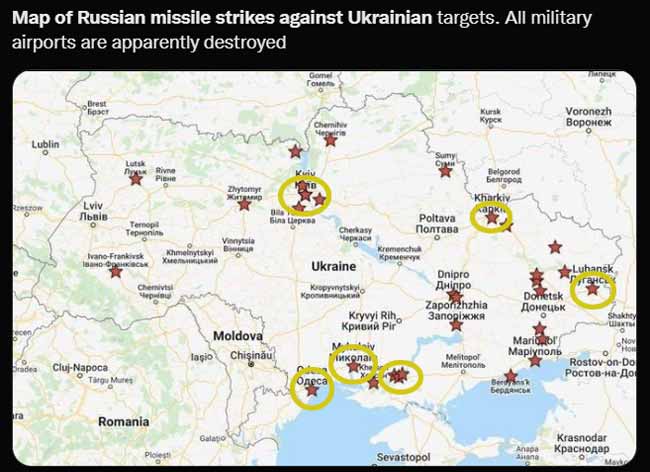
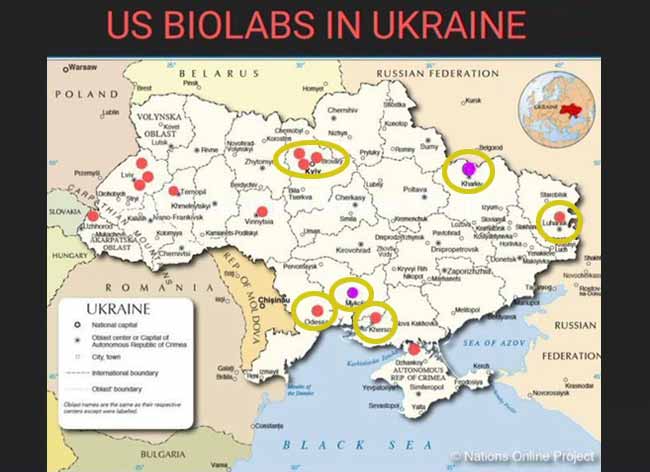
Indeed, Nawaz highlights a 2021 Ukrainian petition51,52 to president Zelensky, asking for a) the immediate closure of “American bio-laboratories in the territory of Ukraine,” b) an investigation into the activities of those labs, and c) an investigation into potential Ukrainian participation in the creation of SARS-CoV-2.
In other words, at least some Ukrainians, by 2021, were wondering whether the U.S. labs in their country might have been involved in the creation of this pandemic.
Denouncements Ring Hollow
Not surprisingly, the U.S. State Department took a hard line, denouncing all allegations with the statement that “The United States does not have chemical and biological weapons labs in Ukraine.”53 In another statement,54 the State Department “clarified” that the labs were for “biodefense,” not biological weapons, thus semantically cleansing their criminal activities.
The problem with that is that there’s no hard line between biodefense and bioweapons research. As admitted by EcoHealth Alliance’s policy advisor and former Fort Detrick commander David Franz, it’s all “dual use — the people, the facilities and the equipment.”55 Biodefense implies biowarfare, as it involves the creation of more dangerous pathogens for the alleged purpose of finding treatments against them.
Bioweapons expert Francis Boyle, who drafted the Biological Weapons Anti-Terrorism Act of 1989, has also pointed out that most BSL-4 labs are dual use: “They first develop the offensive biological warfare agent and then they develop the supposed vaccine.”56 And then, there’s the weapons proliferation agreement57 between the U.S. and Ukraine, signed at the end of August 2005.
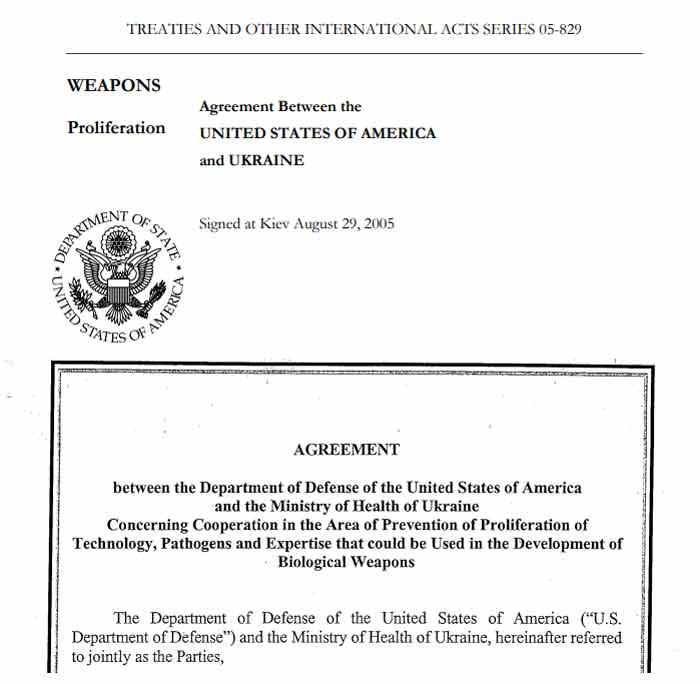
Incidentally, former President Barrack Obama spearheaded the project to construct these Ukrainian labs back in 2005, when he was still a senator and, curiously, the online announcement of his involvement in this project has also been deleted from the web.58
According to this agreement, the U.S. Department of Defense will assist the Ministry of Health in Ukraine, at no cost, to prevent “proliferation of technology, pathogens and expertise” found in a number of Ukraine labs, that “could be used in the development of biological weapons.”
The Burning Question of Intent
So, the agreement itself clarifies that they’re working on pathogens that COULD be used as biological weapons, and Nuland’s stated concerns back this up. The only question remaining then is one of intention. What’s the intended use of these pathogens? Defense? Or offense? And is there really a difference?
As noted by Nawaz, the U.S. clinging to the defense of “biodefense” and anti-bioweapons proliferation is “the equivalent of denying that Einstein’s discovery of splitting the atom to generate energy is not also something that could be used to make nuclear weapons. After the COVID outbreak, the notion that bio labs can be weaponized should simply be presumed as a rule.”
Also, consider the network of players reviewed earlier. The Ukrainian-American collaboration to study pathogens capable of weaponization is run by the DTRA, which funds Metabiota, which is run by a WEF leader with close personal ties to the one person — Daszak — suspected of being a key player in the creation of SARS-CoV-2, a go-between of the NIH and the WIV, and a central force in the cover-up of the lab leak theory.
Interestingly, Metabiota is also financially backed by Hunter Biden’s investment company, and let’s not forget that young Biden also collected a six-figure salary from a Ukrainian gas company for doing literally nothing, other than supplying his “powerful name.”59
Circumstantial or not, it just doesn’t look good. And, by now, it should be crystal clear that any lab doing defensive work is equally capable of churning out offensive weapons. Debating that point is just silly, as it all boils down to semantics.
According to Bulgarian journalist Dilyana Gaytandzhieva, Metabiota is a key player in the Ukrainian labs. David Horowitz, a political writer, has noted that Metabiota is “a company that tracks the trajectory of outbreaks and sells pandemic insurance, but also seems to have its hand in the actual labs that … might be the source of some of these outbreaks.”60
In other words, could it be that Metabiota has been producing biological agents under diplomatic cover and then selling pandemic insurance and pandemic trackers to “help countries get ahead of what they are putting out”?61
Nawaz asks, “was ensuring that a ‘next pandemic’ doesn’t occur by taking out these bio labs, what Putin had in mind by his phrase ‘special military operation’?”62 At this point, it seems a valid question.
Sources and References
- 1 Metabiota.com
- 2 USRTK March 16, 2022
- 3, 5, 9 The Daily Expose March 20, 2022
- 4 Disinformation Chronicle Substack March 22, 2022
- 6, 60 Medicalexperiments.news March 31, 2022
- 7 Rosemont Seneca Investments
- 8 Rosemont Seneca Team
- 10 New York Times July 31, 2019
- 11 New York Times October 12, 2019
- 12, 16 Daily Mail January 9, 2021
- 13 Independent Science News March 24, 2021
- 14 USRTK November 18, 2020
- 15 GM Watch November 19, 2020
- 17 WHO.int Origins of the SARS-CoV-2 Virus
- 18 The Lancet October 10, 2020; 396(10257): 1102-1124
- 19 GM Watch September 23, 2020
- 20 NPR. WHO Launches a New Group to Study the Origins of the Coronavirus. October 13, 2021
- 21, 29, 55 The Defender December 18, 2020
- 22 D60.darpa.mil Andrew Weber bio
- 23 Twitter Alexis Baden-Mayer March 28, 2022
- 24 DTRA.mil
- 25 History of DTRA 1998-2008
- 26 Daily Caller June 7, 2021
- 27 USA Spending Project Grant to EcoHealth August 2019
- 28 USA Spending Project Grant to EcoHealth October 2017
- 30, 31 CBS News March 7, 2016
- 32, 34 USRTK March 28, 2022
- 33 State Department Memo
- 35 Nature Medicine 2015; 21: 1508-1513
- 36, 38 Just the News March 29, 2022
- 37 FOIA emails from the NIH
- 39 MSNBC March 19, 2021
- 40 National Pulse May 15, 2021
- 41 Web Archive WIV research partners March 21, 2021
- 42 Web Archive WIV research partners March 22, 2021
- 43 Web Archive WIV research partners March 23, 2021
- 44, 45 Web Archive WIV Will SARS Come Back? December 4, 2015
- 46, 47, 53, 59, 61, 62 Maajid Nawaz Substack March 14, 2022
- 48 CDN Substack
- 49 Exposing the Darkness Substack March 6, 2022
- 50 UN Convention on the Prohibition of Bacteriological (Biological) and Toxin Weapons
- 51 National File March 11, 2022
- 52 Petition on Ukraine’s government website
- 54 WSWS.org March 11, 2022
- 56 Mercola interview with Francis Boyle published March 8, 2020
- 57 Agreement Between the United States and Ukraine August 29, 2005
- 58 Web Archive Bioprepwatch.com June 18, 2010
Featured Video

New positive ivermectin evidence
or go to
Aletho News Archives – Video-Images
From the Archives
Fanatical Followers of the Covid Regime: A Jim Jones-Style Cult?
By Professor Roger Watson and Dr. Niall McCrae | The Daily Sceptic | November 15, 2021
As scholars at leading British universities over recent decades, we witnessed the replacement of critical thinking and debate by narrative: facts are discrimination and scientific method is imperialism; truth, instead, is derived from ‘progressive’ values. This educational trend may be a major contributory factor to the ease in which society has been inculcated to the Covid ‘new normal’ of masking, testing, and repeated doses of vaccines for a disease of similar risk to severe influenza.
One doesn’t need much critical reasoning to observe the flawed logic of some vaccination enthusiasts, such as people who respond to experiencing any side effects, however debilitating, by saying “at least I know it’s working”, or, after contracting the disease despite their promised inoculation (over 90% effective, according to initial drug company claims), “I’d have been worse off without the jab.” … continue
Blog Roll
 Aletho News
- EU Council Advances Chat Control 2.0 Scanning Proposal
- Ex-Greek MEP files complaint against Israeli spyware firm over alleged Pegasus surveillance
- Troubling ideas throughout the Torah, Talmud, Mishneh Torah and Tanya
- ‘Grave, alarming’: Iran mission on Trump’s UNGA ‘annihilation’ threats
- Najaf airport to reopen to Iranian flights within 24 hours: Ambassador
- From ‘How Will This End For Iran’ to ‘When America Walks Away’: A tale of two Economist covers
- Tehran blasts ‘baseless’ speculation linking Iran to alleged bomb plot at UK air base
- The Rise And… Rise Of ‘Color Revolutions’
- The Coming GOP Bloodbath?
- Arctic Scare Stories Melt Away
- If Americans Knew
- Netanyahu Asked UAE Leader to Deny Report on Oct. 7 Warning in Secret Visit, Sources Say
- CNN Chief Int’l Correspondent Clarissa Ward on Journalists in Gaza
- Democratic Party Consultants Surround Troy Jackson with Pro-Israel Donors
- Christian Leader Responds To Netanyahu’s Claims Regarding Palestinian Christians
- In Gaza, ‘Whoever Survives the Bombing Won’t Survive the Rubble’
- Israel kills more Palestinians, amid push to resettle Gaza – Daily Update
- Israel forces Gazans to live in constant peril – Daily Update
- Deconstructing Netanyahu’s pants-on-fire UN rant – Daily Update
- Trump betrayed voters with his campaign lies and prioritized a foreign country once he took office
- Netanyahu calls Israel’s war in Gaza ‘opposite of genocide’ in UN speech to near-empty hall
- No Tricks Zone
- New Study: Earth And Venus Surface Warmth Largely Explained By Convection And Lapse Rate, Not CO2 Or Radiation
- 2025 Nature Paper Claiming Worsening Global Drought Gets RETRACTED …Heavily Flawed
- New Study: ‘Global Drought Shows No Detectable Recent Acceleration Under Climate Warming’
- Economic Masterminds: German Socialists Suggest Taxing Productivity Gains Stemming From Using AI
- The South China Sea Has Not Been Cooperating With The Climate Change Narrative
- Energy Crisis: Germany Enters Heating Season With Historically Low Gas Reserve Fill Levels
- New Study: The Antarctic Ice Sheet Gained Mass From 2020-2024 Due To Staggering Snow And Ice Accumulation
- Study: Ocean Heating Rates From Thousands Of Years Ago ‘Dwarf’ Modern Ocean Heating Rates
- Climate Extremists Target, Attack Large-Scale Power Grid Infrastructure In Germany!
- New Study: Antarctic Ice Melt Has Contributed Less Than 1 Centimeter To Sea Level Rise In The Last 30 Years

