UN Venezuela Report Omits US Human Rights Violations
By Leonardo Flores | MintPress News | October 2, 2020
On September 23, María Eugenia Russián, president of Fundalatin, Venezuela’s oldest human rights organization, testified to the UN Human Rights Council (UNHRC) and decried an attempt by a UNHRC fact-finding mission to erase people who were “lynched, burned alive, decapitated and murdered by extremist sectors of the Venezuelan opposition.” This fact-finding mission had published a report a week earlier that generated sensationalist headlines of “crimes against humanity” and painted a bleak picture of the situation in Venezuela.
However, the 400+ page report has been found to contain serious flaws and omissions, leading to charges that it politicizes human rights – a position backed by the Venezuelan government. But it’s not just Venezuela that has taken issue with the report: Argentina’s ambassador to the Organization of American States denounced it as “biased” and noted that “human rights are not an instrument for taking political positions.”
A parallel mission and attack on multilateralism
Moreover, even the formation of the fact-finding mission is suspect. Since 2017, Venezuela has been working with a different UN institution, the Office of the High Commissioner for Human Rights (OHCHR), to strengthen its capacity to guarantee human rights. This cooperation has led to technical agreements and to visits by the OHCHR to Venezuela.
Yet despite – or perhaps because – of this cooperation, the Lima Group, an ad hoc group of nations dedicated to regime change in Venezuela, maneuvered in the UN Human Rights Council to establish a parallel mission outside of the purview of the OHCHR. In the September 2019 debate prior to the founding of this mission, Russián said that it “seeks to thwart the advances between the Office of the High Commissioner and the Venezuelan state, hindering and duplicating its efforts.” She also made a prescient comment: “[the mission] will generate major headlines but will not contribute to resolving the situation.”
Several Venezuelan human rights organizations, including the Venezuelan Association of Jurists (AVJ), denounced the formation of the mission and the subsequent report as an attack on multilateralism. The AVJ notes that according to UN General Assembly Resolution 60/251, “the promotion and protection of human rights should be based on the principles of cooperation and genuine dialogue and aimed at strengthening the capacity of Member States.”
Neither of these principles were adhered to in the report, which means that the fact-finding mission violated the United Nation’s own guidelines. This contrasts severely with the latest update on Venezuela from the OHCHR, which notes that technical cooperation between Venezuela and the UN has led to progress in investigating 93 alleged cases of extrajudicial killings or excessive use of force, as well as the pardoning of 110 prisoners.
Flawed methodology, biased sources and egregious omissions
The first thing to note about the report is that the authors are all from countries that support Guaidó. One of them, Francisco Cox, has close ties to the Chilean Foreign Minister (Chile is one of the Latin American countries leading the charge against Venezuela). In an interview with journalist Anya Parampil, Chilean analyst Esteban Silva noted that Cox “is part of an operation against the government of Venezuela.”
Venezuelan human rights organization Sures considers that the report “lacks academic rigor” as the mission did not step foot in Venezuela “and as such never had direct access to the sources it consulted, including the victims, government officials and official records.” Lending credence to the claim of a lack of rigor is the fact that more than 50% of the report’s sources were links to social and digital media, while just 5% were NGOs.
Misión Verdad, an independent group of Venezuelan investigative journalists and analysts, wrote an exposé of the sources used in the report and found that one of these NGOs, COFAVIC (Committee of Relatives of Victims of the Caracazo), receives USAID funds and has ties to Human Rights Watch, which supports regime change and the brutal US sanctions. None of the NGOs the fact-finding mission contacted even mentioned the case of Orlando Figuera, a young Black man burned alive by anti-government protestors, which has arguably been the most infamous violation of human rights in Venezuela in recent years.
If the report were interested in balance, it would have cited or contacted Venezuelan human rights groups that document right-wing violence at protests and the devastating effects of U.S. sanctions. Five such organizations were contacted for this article: Fundalatin, AJV, Sures, Género con Clase (Gender with Class), and the Committee of Victims of the Guarimba and Ongoing Coup (guarimba is the term used for violent opposition protests in 2013, 2014 and 2017). None of them ever heard from the “independent” mission.
While victims like Figuera are ignored, another detailed critique by Misión Verdad documents the repeated “whitewashing” of political actors linked to violence by presenting them as victims. As analyst Joe Emersberger notes, the report’s treatment of opposition figure Leopoldo López ignores the leading role he has played in destabilizing Venezuela since 2002. López’s regime change strategy in 2014, ‘La Salida’, sparked opposition violence that resulted in the decapitation of Elvis Durán; he was riding a motorcycle down a street booby trapped by protestors with barbed wire. López’s name appears 61 times in the report; Durán’s does not appear at all.
As tragic as it is that a UN mission would engage in the erasure of victims of human rights violations perpetrated by government opponents, these are not even the most glaring omissions in the report. There are two ongoing mass violations of the human rights of all Venezuelans: the violent destabilization of the country by foreign and domestic actors, and the brutal U.S. sanctions. For Gisela Jiménez of Género con Clase, an organization that focuses on the rights of women and sexual diversity, currently the biggest challenge to the rights of Venezuelans is “the threat to the right to live in peace.” Russián of Fundalatin dates the biggest violation of human rights to March 2015, when then-President Obama characterized Venezuela as an “unusual and extraordinary threat” to the United States. Since then, she notes, ”the Venezuelan people have been subjected to violations of their right to health and even the right to life, due to the embargo and the obstruction of imports of medicine, food and supplies.”
The report in the context of a hybrid war
Beyond the bias and politicization of the report, what perhaps damns it most is how it is being used. The omissions on the impact of coups and sanctions enable regime change operatives such as Elliott Abrams, U.S. special representative for Iran and Venezuela, to cite the report as evidence of crimes against humanity while, in the same breath, threatening to cut off Venezuela’s diesel supplies, which has drawn widespread condemnation from NGOs across the political spectrum for the devastating effect it would have on the Venezuelan people.
The report was similarly used by Senators Marco Rubio and Ben Cardin, who referenced it in a letter to the European Union in which they expressed “deep concern” over EU talks with the Maduro government and urged the EU to not monitor Venezuela’s parliamentary elections. This blatant attempt at interfering in and attempting to delegitimize Venezuela’s elections went uncovered by mainstream media, which focused all of their attention on the UNHCR report.
Furthermore, the timing of the report was also suspect, coming just a week before the 2020 UN General Assembly. Its purpose in this regard is clear: to add fuel to the fire in Venezuela and to shift the spotlight from U.S. allies with their own human rights issues. The timely release allowed Colombian president Duque and Chilean president Piñera to cite it and Venezuela in their general assembly speeches. In Colombia, 64 massacres have taken place this year alone, while the Piñera government in Chile was almost brought down by his government’s excessive use of force against peaceful protestors. Yet it was Venezuelan opposition figure Juan Guaidó who made the headlines, invoking the report while calling on the international community to exercise its “responsibility to protect” in a YouTube webinar on the sidelines of the General Assembly. The responsibility to protect is a doctrine used as the justification for military aggressions against Libya and Syria, among others.
The fact-finding mission has produced a document that is currently being employed in the furtherance of sanctions, electoral interference and threats of war. To put it another way, the UNHCR report on the human rights of Venezuelans will likely lead to even more suffering for Venezuelans. In the words of Fundalatin President Russián, the threat to the human rights of Venezuelans “becomes graver because of the behavior by powerful states, who in the name of human rights, seek a foreign military intervention in Venezuela.”
The UN Ignores NGO’s Warnings About Mandated Vaccines
Planetary Association for Clean Energy, Inc. | August 20, 2020
Planetary Association for Clean Energy, Inc. is an NGO in Special Consultative status with the Economic and Social Council of the United Nations (ECOSOC) New York / Geneva / Vienna / Addis Ababa

Vaccine Mandates Violate the Right to Informed Consent
On 11 March 2020, the World Health Organization (WHO) declared pandemic status for COVID-19, the disease caused by severe acute respiratory syndrome 2 (SARS-CoV-2). Governments responded by implementing unprecedented “lockdown” measures globally with no clear exit strategy apart from the stated goal of rapidly developing a vaccine. Concurrently, advocates of this hypothetical solution have called for lawmakers to make COVID-19 vaccinations compulsory.
However, compulsory vaccination violates the right to informed consent, one of the most fundamental ethics in medicine and a human right recognized under international law, including the United Nations International Covenant on Civil and Political Rights of 1966, the Universal Declaration on Bioethics and Human Rights of 2005, the Convention on the Rights of Persons with Disabilities and its Optional Protocol of 2006 and under internationally recognized agreements such as the Council for International Organizations of Medical Sciences International Ethical Guidelines for Biomedical Research Involving Human Subjects of 2002, and the World Medical Association Declaration Of Helsinki of 1964, revised in 2013.
The United Nations (UN) and WHO are legally obligated to uphold the right to informed consent yet have instead been complicit in violating it.
For example, the United Nations Children’s Fund (UNICEF) praised the Maldives government for passing a law in November 2019 that effectively outlawed the exercise of the right to informed consent by threatening parents with prosecution for non-compliance with public vaccine policy.
In January 2020, two articles in The BMJ (formerly British Medical Journal ) revealed that the WHO had been sponsoring a malaria vaccine trial that included 720,000 children in three African countries without having ensured that the prior informed consent of the parents had been obtained. Most egregiously, parents had not been informed that earlier trials had found the vaccine to be associated with an increased risk of childhood mortality, particularly among girls.
WHO also promotes the diphtheria, tetanus, and whole-cell pertussis (DTP) vaccine in global vaccination campaigns, despite the best available scientific evidence showing it to be associated with an increased rate of childhood mortality. While the vaccine may protect against the target diseases, it appears to detrimentally affect the immune system in a way that makes children more vulnerable to other diseases. This “non-specific effect” has been found to be true for non-live vaccine generally
WHO is aware of the evidence, but has dismissed it on the grounds that it comes from observational studies, which are prone to selection bias. However, WHO accepts the findings of observational studies showing beneficial non-specific effects of measles vaccination.
Additionally, the members of the WHO committee tasked with reviewing the evidence had conflicts of interest, including three having ties to GlaxoSmithKline (GSK), one of the manufacturers of DTP vaccines and the manufacturer of the experimental malaria vaccine.
WHO also receives funding from vaccine manufacturers, including GSK, Sanofi, and Merck. The single largest source of funding for WHO presently is the Bill and Melinda Gates Foundation, which promotes vaccines while holding investments in vaccine manufacturers including GSK, Sanofi, and Merck.
The public is repeatedly assured by public health officials and the media that “vaccines are safe and effective”, but in the absence of randomized placebo-controlled trials comparing long-term health outcomes, including mortality, between vaccinated and unvaccinated individuals, that statement is not justifiable. Vaccines do not undergo such trials before licensing. Nor are whole vaccine schedules studied for safety. With respect to the routine childhood vaccine schedule recommended by the United States of America (US) Centers for Disease Control and Prevention (CDC), the Institute of Medicine in 2013 observed that “studies designed to examine the long-term effects of the cumulative number of vaccines or other aspects of the immunization schedule have not been conducted.”
There are many legitimate concerns about vaccines in addition to their non-specific effects. Policymakers do not consider the opportunity costs of vaccination, such as the superiority of immunity acquired naturally compared to that conferred by vaccination.
For example, studies have found that having a flu shot annually could increase the risk of infection with novel influenza strains, as well as with non-influenza viruses, in part due to the lost opportunity to acquire the cross-protective, cell-mediated immunity conferred by infection.
A complementary hypothesis is the phenomenon of “original antigenic sin”, whereby the first experience of the immune system with an antigen determines future responses. Priming the immune system with antigen components of the influenza vaccine could potentially cause a mismatched antibody response to strains that the vaccine is not designed to protect against, thereby increasing the risk of infection as compared to an immune response in which naive T and B cells are instructed to fight off the infecting virus.
This phenomenon might help explain an increased risk of serious dengue infection among Filipino children who received the dengue vaccine and who had not already experienced a prior infection. This finding led the Philippines to the withdrawal of the vaccine, which the government had implemented into its childhood schedule upon the recommendation of WHO, despite earlier data having indicated that the vaccine might cause precisely that outcome.
A related hypothesis is that of “antibody dependent enhancement” (ADE), whereby vaccine-induced antibodies, instead of protecting the individual from subsequent infection, enhance the infection and thereby increase the risk of severe disease.
Attempts to develop a vaccine for severe acute respiratory syndrome coronavirus (SARS) were impeded by this phenomenon, whereby vaccinated animals were found to be at increased risk of viral infection. This past experience has raised concerns about the potential for ADE with vaccines under development for SARS-CoV-2.
As another example of opportunity cost, surviving measles is associated with a reduced rate of all-cause mortality in children, and this survival benefit appears to more than offset measles deaths in populations with a low mortality rate from acute measles infection.
Additionally, measles infection has been observed to cause regression of cancer in children and has been associated with a decreased risk of numerous diseases later in life, including degenerative bone disease, certain tumours, Parkinson’s disease, allergic disease, chronic lymphoid leukaemia, both non-Hodgkin lymphoma and Hodgkin lymphoma, and cardiovascular disease.
Other infections have also been associated with health benefits, such as a reduced risk of leukaemia among children who experience Haemophilus influenzae type b infection during early childhood.
There is also the potential for mass vaccination to put evolutionary pressure on pathogens, as has been seen with the diphtheria, tetanus and acellular pertussis (DTaP) vaccine, and the emergence of pertussis strains lacking pertactin, a key antigen component of the vaccine. According to CDC, such strains “may have a selective advantage in infecting DTaPvaccinated persons.”
Population effects of vaccination must be considered in addition to their effects on individuals. Data suggest that the varicella (chicken pox) vaccine has not been cost-effective but has rather increased health care costs due to the inferiority of vaccine-conferred immunity. This is because mass vaccination appears to have shifted the risk burden away from children, in whom it is generally a benign illness, and onto adolescents and adults, who are at greater risk of complications. Due to the loss of immunologic boosting from repeated exposures, elderly people who had chicken pox as children are at greater risk of shingles. But rather than reconsider existing recommendations, policymakers respond to this problem by recommending a shingles vaccine for the elderly
In the US, many parents are concerned that manufacturers of vaccines recommended by CDC for routine use in childhood enjoy legal immunity from injury lawsuits because this represents a disincentive to pharmaceutical companies in terms of developing safer and more effective means of disease prevention. The Vaccine Injury Compensation Program (VICP) of the US government effectively shifts the financial burden for vaccine injuries away from the industry and onto taxpaying consumers.
Another major problem is that policymakers treat vaccination as a one-size-fits-all solution to disease prevention, when the science is unequivocal in establishing that a risk-benefit analysis must be carried out for each vaccine and each individual. Not everyone is at the same risk from the target disease, and not everyone is at the same risk of harm from the vaccine.
For example, children with a mitochondrial disorder may be at increased risk of vaccine injury. In one case adjudicated under the VICP, the US government acknowledged that vaccinations can cause brain damage manifesting as symptoms of autism.
In a 2018 interview, the director of the CDC Immunization Safety Office acknowledged the possibility that vaccines could cause autism in genetically susceptible children but stated that it was “hard to predict who those children might be.”
Legislators do not have the specialized knowledge required to conduct the necessary risk/benefit analysis of the individual. Only the individual, or in the case of a child, the parents, possess that knowledge.
All vaccines carry risks. Compulsory vaccination constitutes a gross violation of the right to informed consent. Governments urgently need to orient health policies towards protecting rather than violating this human right.
Download original report here…
Moscow Slams US’ Statement on Restoration of Iran Sanctions as ‘Theatrical Performance’
Sputnik – 20.09.2020
MOSCOW – The United States’ claim that the UN sanctions on Iran were restored is misleading as the UN Security Council (UNSC) took no steps leading to the restoration of restrictions, the Russian Foreign Ministry said in a statement on Sunday.
“The US continues to mislead the international community by speculating that the UN Security Council conducted some sort of procedures to restore the effect of UNSC resolutions on Iran sanctions, which were cancelled after the signing of the 2015 Joint Comprehensive Plan of Action (JCPOA)”, the official statement from Russia read.
“The facts are that the UN Security Council did not take any action that would lead to the restoration of old sanctions against Iran. All that Washington does is nothing more than a theatrical performance staged in order to subordinate the Security Council to its policy of ‘maximum pressure’ on Iran and turn this authoritative body into its handy tool,” the statement continued.
Moscow further urged Washington to “have enough courage to face the truth and stop speaking on behalf of the UN Security Council”.
Earlier in the day, US Secretary of State Mike Pompeo welcomed “the return of virtually all previously terminated UN sanctions on the Islamic Republic of Iran” under the snapback mechanism of UN Security Council Resolution 2231.
As stressed in the statement, Resolution 2231 has remained intact and all of its provisions, therefore, must be implemented “in the initially agreed mode and volume on the basis of reciprocity among all states”.
Tehran slams as ‘baseless’ UN report of Iran’s arms shipments to Yemen
Press TV – September 11, 2020
Iran’s Foreign Ministry has slammed as “baseless” a report published by the United Nation’s Office of the High Commissioner for Human Rights (OHCHR) alleging Tehran has been sending arms to war-torn Yemen.
“Placing Iran’s name next to those supplying weapons to the Saudi coalition against Yemen is completely wrong,” Foreign Ministry spokesman Saeed Khatibzadeh said in a statement on Thursday.
The spokesperson said while Iran’s name has only been mentioned once in the report, “it also neglects Iran’s pivotal role and assistance in seeking to achieve a political solution to the conflict in Yemen”.
Since March 2015, Saudi Arabia has been waging a war on Yemen with the help of its regional allies and largely assisted by Western-supplied weapons which have been indiscriminately used against Yemeni civilians.
Despite numerous bids to stop arms sales, top Western arms suppliers such as the United States, Britain, Canada, France and Germany have pushed through with lethal weapons shipments to the oil-rich kingdom.
Khatibzadeh said that the OHCHR’s claim of Iran supplying weapons to Yemen amid the Saudi war comes as Western states are openly conducting their sales, “with related figures being published and available”.
“While some of these countries have periodically halted or limited arms to Riyadh due to pressure from human rights groups, the bitter reality is that the lucrative arms trade has persuaded them to ignore their international and moral obligations,” he said.
“They have forgotten that their weapons have been used to kill the Yemenis and destroy the country’s infrastructure. We are consequently seeing the largest humanitarian crisis due to the actions of the Saudi coalition and its arms suppliers,” the Foreign Ministry spokesman added.
Khatibzadeh stressed that while there is no clear evidence about Iranian arms shipments to Yemen, a Saudi-imposed blockade has even stopped Iranian humanitarian aid from reaching the country.
An estimated 100,000 people have so far lost their lives in the Saudi war.
The Saudi war has had a large impact on Yemen’s infrastructure, impairing the impoverished Arab country’s weak industrial, agricultural and medical sectors.
UN: Saudi Arabia, UAE used cluster bombs in Yemen
MEMO | September 1, 2020
UN reports revealed that the Saudi-UAE coalition has recently used internationally banned weapons in its military operations in the Hudaydah Governorate, western Yemen.
The United Nations report expressed the organisation’s “concern” after it revealed the use of cluster bombs by the Saudi-Emirati coalition in Yemen in one of the air strikes that targeted the Hudaydah Governorate.
The head of the United Nations mission to support the Hudaydah agreement, Abhijit Guha, said in a statement that he is concerned about the repeated air strikes in the Al-Arj area between the city of Hudaydah and the port of Salif between 16-23 August, according to the Yemeni Al-Mahrah Post website.
Guha, who chairs the redeployment committee, indicated that the heavy fighting that broke out around Hudaydah city on Thursday morning, is of “special concern”, in addition to “reports of the use of cluster weapons during one of these air strikes.” Guha called on the parties to the conflict in Yemen to “desist from any measures that harm the implementation of Al-Hudaydah agreement that was reached in Stockholm on 13 December 2018.”
The UN official urged the parties to the conflict in Yemen to “refrain from any other activities that put the lives of civilians in the governorate in danger.” The Houthi group, through an official source in Hudaydah, accused the Saudi-Emirati coalition of using a cluster bomb on 23 August, on a farm in the Al-Arj area, Bajil District.
U.S. Isolated From Double-Think & Arrogance on ‘Snapback’ Sanctions Against Iran
Strategic Culture Foundation | August 22, 2020
More than two years ago, in May 2018, the Trump administration unilaterally walked away from the international nuclear accord with Iran signed by the five permanent members of the UN Security Council plus Germany. President Trump derided the deal as the “worst ever” and proceeded to re-impose crippling U.S. sanctions on Iran.
This week the United States announced it intends broadening sanctions to those previously imposed by the United Nations. Those UN sanctions were lifted after the nuclear deal was signed in July 2015 and subsequently endorsed by the UN Security Council under Resolution 2231. Washington wants to reimpose the UN sanctions by claiming that Iran is in “non-compliance” of the nuclear accord, formally known as the Joint Comprehensive Plan of Action (JCPOA). Washington’s claims of Iran’s “non-compliance” are baseless.
The U.S. is asserting that it is entitled to trigger the reimposition of UN sanctions by invoking a “snapback” mechanism incorporated into the JCPOA, which permits signatories to lodge a complaint if they register credible, non-compliance by another party.
Washington’s double-think is astounding. It unilaterally repudiated an international accord, and by doing so was in breach of a UNSC resolution, yet Washington now wants to use this same accord to enforce multilateral sanctions against Iran. The American position is preposterous, yet it is proposing to proceed in absurd mental gymnastics with an apparently straight face. The seeming lack of awareness of its own glaring illogicality is an illustration of the consummate conceit that defines Washington’s policy.
To accuse Iran of “non-compliance” in a treaty that Washington has trashed is the height of hubris. Furthermore, the wielding of extra-territorial sanctions against any nation that defies U.S. sanctions against Iran is tantamount to aggression. Nations that are trying to uphold the JCPOA are threatened with American sanctions under the diktat from Washington to abandon an international treaty.
The Trump administration’s policy of “maximum pressure” against Iran is really a policy of “maximum aggression”. The callousness of Washington’s criminality is testified by its refusal to shelve its sanctions against Iran at a time of global pandemic. Appeals from the UN chief Antonio Guterres have been coldly rebuffed.
Washington’s conduct is that of a rogue state which has no shame nor legal semblance. And yet as its maximum aggression policy fails in its objectives to destroy the JCPOA and incite regime change in Iran, Washington is now turning to the multilateral forum of the UN in order to pursue its felonious aims. That’s a measure of the moral torpor that characterizes the regime in Washington.
Nevertheless, one consolation is that the U.S. is finding itself more and more isolated from its irrational and insatiable tyranny.
Last week, a U.S. draft resolution to extend an arms embargo on Iran was dealt a humiliating defeat at the UN Security Council. That embargo is due to expire as a result of the JCPOA which Iran has been in full compliance with, as verified by multiple UN inspections of its nuclear program for solely civilian purposes. Infuriated by the embarrassing snub to its presumed global power, the Trump administration doubled down this week by demanding the re-imposition of UN sanctions as part of a snapback mechanism, a mechanism that the Americans forfeited when their president crashed out of the deal in 2018.
U.S. Secretary of State Mike Pompeo – whose brain size seems to have an inverse relationship to his expanding waist measurement – this week served notice of 30 days on the international community for the reimposition of UN sanctions on Iran. It is unfathomable how the U.S. intends to proceed with such a process given its void of legal competence from no longer being a participant in the JCPOA. In double-think wonderland fashion, the U.S. somehow maintains that it still is a participant.
In any case, the American posturing this week was roundly rejected by all signatories to the JCPOA, including significantly Washington’s allies among the so-called E3 of Britain, France and Germany.
Russia and China denounced the U.S. proposal as “illegitimate”. Moscow lambasted Washington’s “reckless actions” and noted that the U.S. side has been “blatantly violating UNSC Resolution 2231 since May 2018” with “its policy course aimed at destroying the JCPOA.”
Unabashed, the intemperate and pugnacious Pompeo lashed out at European allies for “siding with the ayatollahs” and warned Russia and China of more sanctions, accusing them of “disinformation”.
The fiasco over the nuclear deal and Washington’s arrant delinquency is but one facet of a much bigger picture. Namely, the flagrant disregard for international laws and norms by the United States which views itself as “exceptional” and above the law, unlike all other nations. There has always been a distinctive element of double-think and hypocrisy in the historic conduct of the United States, especially when it comes to its presumed right to wage genocidal wars and subversions against other nations with impunity.
However, what the fiasco over U.S. demands for sanctions on Iran shows is the extreme culmination of its arrogance and increasingly the isolation that inevitably goes with such deviancy. Washington’s rampant and deranged arrogance is now rightly seen as a global danger to peace and security.
US is willing to dismantle the UN Security Council to put pressure on Iran
By Scott Ritter | RT | August 21, 2020
In a world where American exceptionalism and unilateralism has become common currency, the brazenness of Secretary of State Pompeo’s bid to impose “snap back” inspections of Iran takes the cake. Moreover, it’s doomed to fail.
When it comes to Iran and the Iran nuclear deal (formally known as the Joint Comprehensive Plan of Action, or JCPOA), President Trump has been singularly focused on one outcome–to bring the Islamic Republic back to the negotiation table for the purpose of producing a “better deal” than the one done by his predecessor, Barack Obama, in July 2015. For the former New York realtor and reality television star-turned Chief Executive, it does not get any simpler than that–he is, after all, the consummate (if self-proclaimed) “deal maker.” How the deal is made, and even what constitutes the deal, is less important than the deal itself. This goal dominated his thinking about Iran as a candidate and continues to do so as President.
The precipitous decision to withdraw from the JCPOA in May 2018 was driven more by the perceived need to begin shaping the diplomatic battlefield in support of a new negotiation than any legitimate national security concerns. Trump’s goal all along has been to compel Iran, through the implementation of economic sanctions combined with political isolation, to scrap the Obama-era JCPOA and sit down with the new American “deal maker” to craft a “big deal” that would make everyone happy.
America versus the world
The problem from the start, however, was that the United States was alone with its displeasure over how the deal was being implemented. Among the other parties to the JCPOA (France, Great Britain, Germany, the EU, Russia, China and Iran), the agreement was proving its viability by preventing Iran from engaging in any “breakout” actions that could result in Iran obtaining enough fissile material from its centrifuge-based uranium enrichment program to build a nuclear device. Trump, however, had latched on to the so-called “sunset clauses” of the JCPOA, which lifted restrictions on Iran’s use of centrifuges after a period of several years, allowing Iran to blow-past the hypothetical calculations regarding nuclear “breakout,” and thereby mooting the fundamental purpose of the JCPOA to begin with.
The US decision to unilaterally withdraw from the JCPOA has proven to be an unmitigated policy disaster, one that has empowered Iran, Russia and China as the “aggrieved parties,” and driven a wedge between the US and its European allies. Rather than admit defeat and help restore the status quo by re-entering the JCPOA, the Trump administration has instead opted to double down, threatening to reimpose UN sanctions which had been suspended upon Iran’s entry into the JCPOA via procedural mechanisms contained in the body of that agreement calling for the “snap back” of sanctions if any party is dissatisfied with the compliance of another. The real purpose of the US gambit to reimpose “snap back” inspections wasn’t any malfeasance on the part of Iran’s nuclear program, but rather a desire to prevent the automatic lifting of an arms embargo that had been spelled out in the body of the JCPOA. This embargo was scheduled to automatically terminate come October 2020.
The US sought to pressure the Security Council into passing a resolution which would permanently extend this embargo. Both Russia and China had promised to veto, so the resolution’s defeat was inevitable. The goal in pushing for it, however, was to persuade at least nine other members of the 15-member body to vote in favor, thereby providing the US with the moral high ground when approaching the Security Council about re-imposing “snap back” sanctions. Most of the other members of the Security Council, recognizing that if they intervened to reverse a clause mandated by the JCPOA, they would put Iran’s continued participation in the agreement at risk, instead abstained from voting on the resolution. Only the Dominican Republic sided with the US; Russia and China, as expected, cast their vetoes.
Trump’s deal or no deal
Having failed to secure the moral high ground, the US could have admitted defeat and regrouped, trying to find another, less controversial way forward. But the US policy of “maximum pressure” brooks no such weakness, especially when Donald Trump has bragged that he will secure a new deal with Iran within four weeks of his being re-elected. To even have a shot at this, the US would need to not only maintain the existing unilateral sanctions regime it is enforcing on Iran, but also increase the pressure, something that could only be done by re-imposing UN sanctions via the “snap back” mechanism of the JCPOA.
If the US were to succeed in “snapping back” UN sanctions, the JCPOA would be dead in the water, as there would be no way Iran would continue to comply with an agreement which no longer delivers on its promises. The other parties to the JCPOA understand this and indicated their unwillingness to go along with the US scheme. Moreover, these nations believe that by having withdrawn from the JCPOA, the US was no longer a “participant” to that agreement, and as such, had no jurisdictional or legal authority to initiate the “snap back” provisions.
On August 20, Secretary of State Mike Pompeo, ignoring the warnings from the other JCPOA parties, met with the President of the Security Council for the purpose of delivering a letter announcing that the US was activating the “snap back” procedures, and that in 30 days it would be calling for a vote on the matter by the Security Council. Almost immediately the US actions were condemned by the other parties of the JCPOA, with France, Great Britain and Germany calling the US move “incompatible with our current efforts to support the JCPOA”, and both Russia and China terming the effort “illegal.”
Tearing down UNSC is an acceptable outcome for the US
The Trump administration, faced with this united opposition, has shown no indication it is willing to back down. The UN Security Council is navigating uncharted waters, having never been confronted with a challenge of this nature in its entire 75-year history. There is every reason to believe that the US will submit a resolution for consideration following the expiration of the 30-day notification period, and then veto it itself, thereby triggering the automatic “snap back” of UN sanctions. There is also every reason to believe that the Security Council will seek to block the US through various procedural formalities designed not to formally recognize the US demands, and thereby preventing the submission of any resolution.
A likely outcome will be that the Security Council fails to recognize the US submission of a resolution, followed by the US refusing to recognize the Security Council’s ability to prevent such a resolution from being submitted. The US will seek to submit the resolution, then immediately veto it, and claim that the “snap back” has been accomplished. The rest of the Security Council will reject this action, and deem the JCPOA to be in play, free of UN sanctions. The US will then sanction any party which fails to comply with the UN sanctions.
If this were in fact to occur, it would mean the functional death of the UN Security Council, an outcome many in the Trump administration appear willing to live with. Faced with the inevitability of this outcome, some members–especially the French, Germans and Brits–may be compelled to reexamine their position on the lifting of the arms embargo, seeking a compromise solution that salvages the JCPOA while denying Iran access to Russian and Chinese armaments. This may be the goal of the US all along. If so, it is an extremely dangerous one that is based on a false predicate, namely that there is a combination of economic and diplomatic pressure that can be placed on Iran to compel it to renegotiate the JCPOA. Simply put, there is not, and for the Trump administration to proceed as if there is only endangers regional and international peace and security.
Scott Ritter is a former US Marine Corps intelligence officer and author of ‘SCORPION KING: America’s Suicidal Embrace of Nuclear Weapons from FDR to Trump.’ He served in the Soviet Union as an inspector implementing the INF Treaty, in General Schwarzkopf’s staff during the Gulf War, and from 1991-1998 as a UN weapons inspector. Follow him on Twitter @RealScottRitter
Iran “snapback” sanctions is a pantomime. Spectacle to watch is Trump-Putin summit.
By M. K. BHADRAKUMAR | Indian Punchline | August 21, 2020
As expected, the Trump Administration delivered letters on Thursday to both the UN Secretary-General Antonio Guterres and to the president of the Security Council Dian Triansyah Djani notifying them that the United States is initiating the restoration of virtually all UN sanctions on Iran lifted under UN Security Council Resolution 2231.
This process, if successful, could lead to those sanctions coming back into effect 30 days from August 20. Explaining the move, US Secretary of State Mike Pompeo stated at the UN Headquarters in New York at a press conference that the US “will never allow (Iran) to freely buy and sell planes, tanks, missiles, and other kinds of conventional weapons. These UN sanctions will continue the arms embargo… also reimpose accountability for other forms of Iranian malign activity…
“Iran will be again prohibited from ballistic missile testing. Iran will be back under sanctions for ongoing nuclear activities – such as the enrichment of nuclear material – that could be applied to a nuclear weapons program,” Pompeo added.
In essence, the US has triggered the “snapback” process notifying the security council that Iran is breaching the JCPOA (2015 Iran nuclear deal), whereupon, the council’s members or its president must introduce a resolution to continue the suspension of the UN embargoes under 2231.
The battle lines are drawn. An overwhelming majority of UN SC members are opposed to the US move. A US resolution last week seeking extension of the UN arms embargo on Iran met with crushing defeat with only the Dominican Republic supporting it. In a scathing criticism, New York Times wrote that the US has “largely isolated itself from the world order.”
On Thursday, UK, France and Germany issued a joint statement questioning the US’ credentials to make such a move, saying, inter alia, “The U.S. ceased to be a participant to the JCPOA following their withdrawal from the deal on 8 May, 2018… We cannot therefore support this action which is incompatible with our current efforts to support the JCPOA.”
Politico in a dispatch from Berlin wrote that the US move has left European allies in “an awkward position … For now, the European strategy is to play for time. If Pompeo triggers the snapback, they’re likely to look for ways to delay a final decision until after the November 3 presidential election in the hope Joe Biden would reverse Trump’s course.” Russia and China have explicitly rejected the US move, too. On Thursday, Russia sought an “open debate” at the Security Council, but the US promptly shot it down.
Of course, the UN SC’s rotating presidency — held by Indonesia through August — could simply ignore the US notification of Iran’s noncompliance with the JCPOA. (But Pompeo said he’s “confident” the notification won’t be ignored.) If the US pushes ahead and imposes its will, Russia and China may proceed to defy the “snapback” sanctions.
Tehran has warned that it will strongly react to “snapback” sanctions. A range of options remain open to Iran, including exit from Nuclear Non-Proliferation Treaty. Tehran remains defiant: on Thursday, it unveiled a new ballistic missile (named after Gen. Qassem Soleimani) and another cruise missile.
Indeed, a confrontation that irreparably damages the standing of the UN SC is in no one’s interest. President Trump himself did some kite-flying recently that he could get a deal with Iran within four weeks if re-elected. On Tuesday, Trump’s son-in-law and senior advisor Jared Kushner appealed through Voice of America to Iranian President Hassan Rouhani to engage with Washington. “For President Rouhani, I would say it’s time for the region to move forward. Let’s stop being stuck in conflicts of the past. It’s time for people to get together and to make peace.”
Trump seems open to shifting course after November. Despite the failure of his “maximum pressure” approach, Trump wants a deal with Iran that outdoes Obama. Which means that after the election, freed from Jewish donors and conservative Evangelicals, a shift could be more likely on his part than a continuation of the status quo.
This is where President Vladimir Putin’s proposal of August 14 on the holding of an online summit of the five permanent members of the UN Security Council, Germany and Iran soon to focus on the JCPOA implementation issues — to “set out steps to avoid confrontation and tensions in the UN Security Council” — comes into play.
Trump has rejected Putin’s proposal “for the time being” with a hint he may revisit it after November. On Wednesday, Kremlin spokesman Dmitry Peskov also hinted that all is not lost. Peskov said: “Indeed, the US rejection does not allow us to gather in this format as it was proposed from the start.
“However, it does not mean that the dialogue with the other states is halted on the Iranian issue. This dialogue for the sake of viability of the JCPOA and for the sake of settlement will definitely be continued.”
Indeed, much is happening elsewhere on the template of Russian-American relations. The NBC News disclosed on August 16 quoting “four people familiar with the subject” that Trump has told aides he’d like to hold an in-person meeting with Putin before the November election.
The Administration officials have since “explored various times and locations” for a summit, including potentially next month in New York.
The report added, “The goal of a summit would be for the two leaders to announce progress towards a new nuclear arms control agreement … One option under consideration is for the two leaders to sign a blueprint for a way forward in negotiations on extending New START.” This was almost exactly what I had predicted. (See US snapback sanctions on Iran not easily done, Asia Times)
A Russian-American confrontation over Iran — with all its ramifications for international security — is not on Trump or Putin’s calculus. Trump lost a great deal of time through his first term to improve relations with Russia but being a consummate deal maker, he hasn’t given up hope.
Nor has Putin. An agreement to renew START is one offer from Trump that Putin cannot afford to spurn, something he’s been keenly seeking, as it could open pathway for a resumption of arms control talks that would not only strengthen strategic balance and make US-Russia relations more predictable but enhance Russia’s global standing.
Furthermore, Trump at this point in time also hopes to win over Russia and isolate China. Putin, being a realist, would know the contradictions in US domestic politics that might stymie Trump’s belated effects to cap and rollback the slide in US-Russian relations. Equally, Putin believes in the raison d’être of Sino-Russian entente, which is a strategic choice and necessity for Moscow — as unfolding events in Minsk only underscore.
Suffice to say, Putin will stick to his pragmatic foreign-policy trajectory that prioritises Russia’s national interests. He’ll accept Trump’s invitation to a summit.
In such a complex backdrop of shifting moods in big-power politics, it is neither in American nor Russian interest to get entangled just now in acrimonious confrontation at the horseshoe table in the UN Hqs in New York while preparations have begun for a likely Trump-Putin summit.
The moment is at hand for Putin to step in as mediator to navigate the US-Iran standoff to calmer waters — perhaps, even bring the two implacable adversaries to the negotiating table. In the current US election cycle, this can only work to Trump’s advantage.
Snapback sanctions on Iran isn’t open-and-shut case
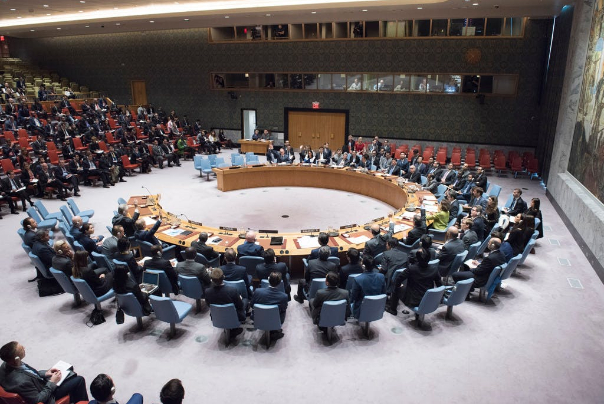
The UN Security Council resoundingly defeated a US resolution to indefinitely extend UN arms embargo on Iran, with only Dominican Republic endorsing the American move, New York, August 14, 2020
By M. K. BHADRAKUMAR | Indian Punchline | August 16, 2020
The Iran nuclear issue moves to centerstage of international security with US President Donald Trump’s remarks Saturday that Washington “will be doing a snapback” against Iran — announcing Washington’s intention to push for restoration of all pre-2015 UN sanctions against Iran. Trump added, “You will be watching it next week.”
Also, Trump apparently poured cold water on Russian President Vladimir Putin’s proposal Friday for a video summit of the veto-holding permanent members of the UN Security Council plus Germany and Iran (that were the original signatories of the JCPOA) to discuss the 2015 Iran nuclear deal and Persian Gulf security issues. He saw no urgency. Trump vaguely hinted that he would revisit the subject “after November”.
Clearly, the optics of the “snapback” sanctions is that Washington is hanging tough and the “maximum pressure” approach is further tightening.
But having said that, Trump ultimately considers himself to be the consummate deal maker — and is strategising an approach of calibrated brinkmanship.
For a start, he hopes to extract out of Russia and China some sort of self-restraint that at least until the US elections are over in November, they wouldn’t provide Iran with military technology. On the other hand, by side-stepping Putin’s proposal — which effectively resuscitates the dispute resolution mechanism of the “6+1” format of the original signatories of the JCPOA — Trump avoids any controversies in the US domestic politics in the run-up to the November election where his “maximum pressure” approach embellishes his strongman image.
Of course, Moscow has a dubious history of heeding such US expectations in the past — when it delayed the delivery of S-300 missiles to Iran for several years due to US and Israeli pressure, forcing Tehran to sue Moscow for compensation. But circumstances have changed. US-Russia relations are tense, while Russia and Iran are partners in regional security.
Equally, Russia and China have worked in tandem on the diplomatic plane and over the JCPOA, Beijing has adopted a line which upfront rejects the Trump administration’s locus standii to invoke snapback sanctions. Again, China-Iran relations have matured and the two countries are expected to conclude in a conceivable future a 25-year $400 billion comprehensive strategic partnership agreement.
Significantly, Putin’s statement on Friday underscored Moscow’s convergence with Tehran and reiterated Moscow’s rejection of Washington’s “maximum pressure” approach against Iran. The following elements of Putin’s statement are to be noted:
- “Iran faces groundless accusations.”
- “Resolutions are being drafted (by Washington) with a view to dismantling decisions that had been unanimously adopted by the Security Council.”
- “Russia maintains its unwavering commitment to the JCPOA.”
- Russia’s Collective Security Concept for the Persian Gulf Region (which Iran welcomed and US ignored) “outlines concrete and effective paths to unravelling the tangle of concerns” in Persian Gulf region.
- “There is no place for blackmail or dictate in this (Gulf) region, no matter the source. Unilateral approaches will not help bring about solutions.”
- There is imperative need to build an inclusive security architecture in the Persian Gulf.
Indeed, Trump is playing his cards close to his chest. The US move on “snapback” sanctions will come up for a decision before the rotating presidency of the UN Security Council, which will be called upon to take a view on the admissibility of the American contention that although Trump publicly repudiated the JCPOA, since it did not formally intimate the same to the UN SC, it still enjoys the prerogative to act under the security council’s Resolution 2231 that provided an international legal basis for the “snapback” clause.
Indonesia chairs the presidency through August and Jakarta and Tehran enjoy friendly relations. The next in line for September is Niger, which may be susceptible to US pressure. By October, Russia’s turn comes to chair the presidency. How far Washington will push the envelope through the August-September period remains to be seen.
Without doubt, a UN sanctions snapback could have predictable consequences for any form of trade with Iran, as it demands from member states to exercise caution when transacting with Iranian financial institutions, and permits countries to inspect vessels or aircraft suspected of carrying cargo in violation of UN sanctions provisions on Iran in national or international waters. Russia and China may decide to take advantage of the new Iranian market for their weapons exports. China’s stance has been exceptionally strong. Of course, all bets are off if Iran carries through its threats of a withdrawal from the Nuclear Non-Proliferation Treaty in the case of UN sanctions reimposition.
In sum, instead of focusing on sanctions snapback, the issue of critical importance in the coming weeks will be the ability of the E3 (France, UK and Germany) — and potentially Russia and China — to take advantage of the time available to engage with the US on the sidelines.
The key to unlocking the current dispute lies largely in Washington, which is insisting on a resolution of the current impasse and on limiting Iranian nuclear activities. Washington in turn will have to offer some incentives to Iran. And those incentives need to be worked out through creative negotiation, as they devolve upon the existing unilateral US sanctions regime on Iran. The good part is that none of the JCPOA protagonists stands to gain out of the snapback sanctions.
Arguably, Trump is applying “maximum pressure” on other JCPOA countries by threatening snapback sanctions, while keeping an open mind on Putin’s proposal to discuss all issues in a “6+1” format once the November election is out of the way. It is a fair assumption that Moscow anticipated Trump’s response on the above lines.
After all, Iran figured in the last phone conversation in late July between Trump and Putin a fortnight ago and Putin’s latest proposal followed up that discussion. Iran was kept in the loop, too. (Interestingly, following the visit by Iran’s FM Javad Zarif to Moscow in late July, Tehran Times newspaper had commented that a “possible revival of diplomatic initiatives between Iran and the US” under Putin’s mediation was to be expected.)
Moscow is yet to react to Trump’s “Probably-not” remark of Saturday apropos the Putin proposal. But the Tass report took note that “Washington will probably want to wait until presidential elections in the country end.” Beijing and Paris have so far voiced support for Putin’s proposal, while London and Berlin are watching from the sidelines.
As for Tehran, it is still savouring the sweet taste of the defeat of the US resolution at the UN Security Council on Friday to extend an arms embargo on Iran that is due to expire in October. (here and here ) In the final analysis, however, Tehran’s choice will be to directly negotiate with Washington.
Israel’s collective punishment of Palestinians illegal and an affront to justice: UN expert
Office of the High Commissioner for Human Rights (OHCHR)
GENEVA (17 July 2020) – A UN human rights expert has called on Israel to immediately stop all actions amounting to collective punishment of the Palestinian people, with millions of innocent harmed daily and nothing achieved but deeper tensions and an atmosphere conducive to further violence.
“It is an affront to justice and the rule of law to see that such methods continue to be used in the 21st century and that Palestinians collectively continue to be punished for the actions of a few,” said Michael Lynk, the Special Rapporteur on the situation of human rights in the Palestinian Territory occupied since 1967. “These practices entail serious violations against Palestinians including the right to life, freedom of movement, health, adequate shelter and adequate standard of living.”
In his report to the 44th session of the Human Rights Council, Lynk said Israel’s strategy to control the Palestinian population violates a foundational rule of virtually every modern legal system: Only the guilty can be punished for their acts, and only after a fair process. The innocent can never be made to be punished for the deeds of others.
“The extent of the devastating impact of Israel’s collective punishment policy can be most strikingly seen in its ongoing 13-year-old closure of Gaza, which now suffers from a completely collapsed economy, devastated infrastructure and a barely functioning social service system,” the Special Rapporteur said.
“While Israel’s justification for imposing the closure on Gaza was to contain Hamas and ensure Israel’s security, the actual impact of the closure has been the destruction of Gaza’s economy, causing immeasurable suffering to its two million inhabitants,” the Rapporteur said. “Collective punishment has been clearly forbidden under international humanitarian law through Article 33 of the Fourth Geneva Convention. No exceptions are permitted.”
The Special Rapporteur’s new report also criticised Israel’s continued policy to punitively demolish Palestinian homes. “Since 1967, Israel has destroyed more than 2,000 Palestinian homes, designed to punish Palestinian families for acts some of their members may have committed, but they themselves did not,” he said. “This practice is in clear violation of Article 53 of the Fourth Geneva Convention.”
Lynk said it was disheartening that the demolition of Palestinian homes is still viewed by the Israeli political and legal leadership, including the Israeli High Court, as a permissible deterrent. “In fact, these demolitions only further contribute to an atmosphere of hate and vengeance, as the Israeli security leadership has itself acknowledged.”
Israel’s list of compromised officials suggests their guilt of war crimes
By Ramona Wadi | MEMO | July 21, 2020
The International Criminal Court (ICC) has adjourned without issuing its ruling on whether Israeli officials will be tried for war crimes against the Palestinian people since 2014, when Gaza was destroyed during “Operation Protective Edge”. With an extended timeframe until the ruling is due, Israel now has additional time to prepare for any eventual action taken by The Hague. It has apparently already drawn up a list of officials who might be liable to be prosecuted for war crimes.
According to Haaretz, the list contains the names of 200-300 Israeli officials, most probably including Prime Minister Benjamin Netanyahu and Defence Minister Benny Gantz. The list has been drawn up in utmost secrecy, not least because, as Haaretz points out, “The court is likely to view a list of names as an official Israeli admission of these officials’ involvement in the incidents under investigation.” The existence of the list alone is likely to be viewed as such.
However, what needs to change at an international level is the endorsement of Israel’s security narrative. The ICC’s clear mention of war crimes, as opposed to alleged war crimes – the latter being a phrase which many human rights organisations have used and through which Israeli impunity has also been cultivated – should prompt a new reckoning of Israel’s standing and its state violence.
During that 2014 military offensive against the Palestinians in Gaza, the international community was quick to promote “Israel’s right to defend itself” even as Palestinian civilians were being slaughtered. So far, the UN has never considered Palestinians as anything other than a statistical detail supporting its purported humanitarian endeavours.
The fact of the matter is that Israel is a colonial entity, but this has been eliminated from international diplomatic discourse, to the detriment of the Palestinian people. Hence the discrepancies when speaking of Israel’s perpetual violations against the Palestinians; by refusing to include the colonial-settler context, the international community eliminates the foundations of what have now been described clearly as war crimes by the ICC.
The list itself suggests guilt, admitted more or less openly by the very fact of its compilation. While the criminal investigations are down to the competence of the ICC, it rests with the international community to see them through to their conclusion, rather than simply parroting Israel’s excuses for its violence. The planned annexation of the occupied West Bank is a case in point. Israeli officials are concerned that implementing the annexation plans will be detrimental to Israel, especially given that settlement expansion is being considered as the strongest evidence of war crimes. The international community, however, has still failed to unite against the possibility of additional war crimes being committed against the Palestinian people, and limited its response to repeated statements that annexation is against international law.
Israel has never, ever, heeded such statements. The possibility of ICC investigations, however, is exposing the fact that Israel knows it has committed war crimes and is preparing to shield the perpetrators from international prosecution. If the UN is truly concerned with safeguarding human rights, it should seize the opportunity to refrain from further endorsement and dissemination of Israel’s security and “self-defence” narrative, which itself violates international law. It should adopt a strong stance against Israel and its annexation plan, and stand by the ICC’s clear admission that colonial expansion is a war crime. The UN, however, cannot do so without taking into account its own complicity in maintaining Israel’s colonial violence, hence the absence of a consistent human rights narrative which would support a possible criminal investigation at an international level.
Featured Video

The Most Important Bet You’ve Never Heard Of
or go to
Aletho News Archives – Video-Images
From the Archives
Wars for Israel: A reminder of who’s giving the marching orders
By Damian Lataan | February 7, 2012
As the West prepares to march off to yet another war in the Middle East, we should perhaps remind ourselves of who is giving the West their marching orders.
In February 2003, just weeks before the US and their allies launched their attack on Iraq and her peoples, a delegation of US congressmen, together with the US Ambassador to the United Nations, John Bolton, a well known pro-Zionist and neoconservative war-hawk, were in Israel at the invitation of the Israeli government then led by Israeli Prime Minister Ariel Sharon.
Addressing the congressmen, Sharon told them ‘that Iran, Libya and Syria should be stripped of weapons of mass destruction after Iraq’. Later, Sharon told John Bolton ‘that Israel was concerned about the security threat posed by Iran, and stressed that it was important to deal with Iran even while American attention was focused on Iraq’. … continue
Blog Roll
 Aletho News
- UAE rejects report claiming it is ready to join war on Iran to reopen Hormuz
- A New Resistance Front: How Does Syria Factor into the Regional War?
- Gulf states weigh pipeline expansion plans, hoping to bypass Hormuz
- Iran sets up ‘tollbooth’ system in Strait of Hormuz
- Wave 90: IRGC strikes US-linked industrial sites in Gulf
- Iran Says US-Israeli Claims of Its Military Strength Are Wrong
- Trump’s April Fools’ Address to the nation
- The Most Important Bet You’ve Never Heard Of
- The killing of three Indonesian soldiers in Lebanon should remind Jakarta that Israel does not want peace
- Defeated and delusional: Netanyahu’s remarks reveal $80bn war failure, says analyst
- If Americans Knew
- ‘War crime’: Global condemnation as Israeli ministers celebrate death penalty law targeting Palestinian prisoners
- 7 Ways Israel Is Turning Lebanon Into Gaza
- World’s Leading Football Bodies Under Fire Over Israel Policies
- Experts warn of possible use of nukes against Iran
- Israeli invasion of Lebanon could be worse than 1982, warn European officials
- Passover: Liberation and collective punishment
- Trump says the quiet part out loud: (Israel’s) war on Iran > Americans’ health – Daily Update
- Gaza families reunite years after babies evacuated amid Israel’s war
- International Rescue Committee warns Gaza’s children face grave protection risks
- Iran’s Alleged 47-Year War on America: Debunking the 1,050 American Deaths Canard
- No Tricks Zone
- Low Intensity Tornado Wrecks Major Solar Farm, Creating A Potential Toxic Dump
- New Study Finds Warming Saves Lives…Cold Temperatures 12 Times More Deadly Than Excess Heat
- German Science Blog Accuses PIK Climate Institute Of Hallucinating Climate Tipping Points
- Devastating Assessment Of Comirnaty Vaccine By Former Senior Pfizer Europe Toxicologist
- New Study: CO2 Is ‘Effectively Negligible’ As An Explanatory Climate Change Factor Since 2000
- Former Pfizer Toxicologist Dr. Helmut Sterz Tells Bundestag Hearing Pfizer Vaccine Should Have Never Been Approved
- Energy Expert: Germany’s Nuclear Phaseout Was A “500 Billion Euro Mistake”
- New Research: South Australia’s Mid-Holocene Sea Surface Temperatures Were 4°C Warmer Than Today
- Storing Green Energy To Last Germany 10 Days Would Require A 60-Million Tonne Battery
- New Studies: UK Sea Levels Were 4 Meters Higher Than Today During The Mid-Holocene
 Aletho News