Awkwardest and Most Authoritative Ever Comments on Drones
By David Swanson | War is a Crime | October 17, 2013
The comments come from Malala and the U.N. respectively.
President Obama invited Malala Yousafzai, a 16-year-old Pakistani advocate for girls’ education, to meet with his family. And she promptly explained that what he is doing works against her agenda and fuels terrorism.
Malala is a victim of violence in Pakistan, having been attacked by religious fanatics opposed to her work. But Obama may not have expected her to speak up against other forms of violence in her country.
Malala recounted: “I also expressed my concerns that drone attacks are fueling terrorism. Innocent victims are killed in these acts, and they lead to resentment among the Pakistani people. If we refocus efforts on education, it will make a big impact.”
President Obama may also have not expected most people to notice or care. The corporate media have virtually ignored this part of a widely-reported meeting.
It’s up to us to surprise everyone with the depth of our interest and concern. Almost 100,000 have thus far signed a petition to ban weaponized drones, soon to be delivered to the U.N., the I.C.C., the State Department, the White House, Congress, and embassies.
The United Nations has released a report on “armed drones and the right to life” (PDF). The report begins by noting that, as of now, weaponized drones are legal:
“Although drones are not illegal weapons, they can make it easier for States to deploy deadly and targeted force on the territories of other States. As such, they risk undermining the protection of life in the immediate and longer terms. If the right to life is to be secured, it is imperative that the limitations posed by international law on the use of force are not weakened by broad justifications of drone strikes.”
Drones, the U.N. Special Rapporteur reports, risk making war the normal state of affairs:
“Peace should be the norm, yet such scenarios risk making its derogation the rule by privileging force over long-term peaceful alternatives. . . . Given that drones greatly reduce or eliminate the number of casualties on the side using them, the domestic constraints — political and otherwise — may be less restrictive than with the deployment of other types of armed force. This effect is enhanced by the relative ease with which the details about drone targeting can be withheld from the public eye and the potentially restraining influence of public concern. Such dynamics call for a heightened level of vigilance by the international community concerning the use of drones.”
The U.N. Charter and this report seek to make war an exceptional state of affairs. This is a very difficult, and a morally depraved thing to attempt with an institution that deserves total abolition. War does not work as a tool with which to eliminate war. But, even within that framework, the U.N. finds that drones create extra-legal war:
“An outer layer of protection for the right to life is the prohibition on the resort to force by one State against another, again subject to a narrowly construed set of exceptions. The protection of State sovereignty and of territorial integrity, which onoccasion presents a barrier to the protection of human rights, here can constitute an important component of the protection of people against deadly force, especially with the advent of armed drones.”
The strongest excuse for war is the claim of defense against an actual attack. The next best thing is to pretend an attack is imminent. The Obama Administration has famously redefined “imminent” to mean eventual or theoretical — that is, they’ve stripped the word of all meaning. (See the “white paper” PDF.) The U.N. doesn’t buy it:
“The view that mere past involvement in planning attacks is sufficient to render an individual targetable even where there is no evidence of a specific and immediate attack distorts the requirements established in international human rights law.”
U.S. lawyers at Congressional hearings have tended to maintain that drone killing is legal if and only if it’s part of a war. The U.N. report also distinguishes between two supposedly different standards of law depending on whether a drone murder is separate from or part of a war. Disappointingly, the U.N. believes that some drone strikes can be legal and others not:
“Insofar as the term ‘signature strikes’ refers to targeting without sufficient information to make the necessary determination, it is clearly unlawful. . . . Where one drone attack is followed up by another in order to target those who are wounded and hors de combat or medical personnel, it constitutes a war crime in armed conflict and a violation of the right to life, whether or not in armed conflict. Strikes on others confirmed to be civilians who are directly participating in hostilities or having a continuous combat function at the time of the follow-up strike could be lawful if the other international humanitarian law rules are respected.”
The complex mumbo-jumbo of multiple legal standards for multiple scenarios, complete with calculations of necessity and distinction and proportionality and collateral damage, mars this report and any attempt to create enforceable action out of it. But the report does, tentatively, find one little category of drone murders illegal that encompasses many, if not all, U.S. drone murders — namely, those where the victim might have been captured rather than killed:
“Recent debates have asked whether international humanitarian law requires that a party to an armed conflict under certain circumstances consider the capture of an otherwise lawful target (i.e. a combatant in the traditional sense or a civilian directly participating in hostilities) rather than targeting with force. In its Interpretive Guidance, ICRC states that it would defy basic notions of humanity to kill an adversary or to refrain from giving him or her an opportunity to surrender where there manifestly is no necessity for the use of lethal force.”
Pathetically, the report finds that if a government is going to pretend that murdering someone abroad is “self-defense” the action must be reported to the U.N. — thereby making it sooooo much better.
A second UN report (PDF) goes further, citing findings that U.S. drones have killed hundreds of civilians, but failing to call for prosecutions of these crimes. That is to say, the first report, above, which does not list specific U.S. drone murders of civilians, discusses the need for prosecutions. But this second report just asks for “a detailed public explanation.”
The fact that an insane killing spree is counter-productive, as pointed out to Obama by Malala, in case he hadn’t heard all his own experts, is not enough to end the madness. Ultimately we must recognize the illegality of all killing and all war. In the meantime, prior to the U.N.’s debate on this on the 25th, we can add our names to the growing movement to ban weaponized drones at http://BanWeaponizedDrones.org.
Related article
Japanese Sovereignty Should Not Be Violated
Eve’s Thoughts | October 12, 2013
Petitioning the American government and the United Nations to take over the Fukushima clean-up would be morally wrong and a political folly.
The argument goes that since TEPCO and the Japanese government have shown themselves incompetent and untrustworthy in their information policies regarding the Fukushima disaster, now the international community and especially the United States government should step in and take over.
However, looking at the US’s own track record in giving comprehensive and accurate information about its nuclear accidents and the failure of its nuclear industry to even implement the most basic safety precautions would actually be letting the fox guard the hen house. It wasn’t just the Three Mile Island disaster. In reality 56 of the 99 globally recorded reactor accidents occurred in the United States. And charging a US dominated UN organization with the task would not be any better. This would be similar to what happened with the fake swine-flu scare, where the Big-Pharma dominated WHO licensed Pharma corporations which before had been caught red-handed at contaminating ordinary flu-vaccines with live bird-flu viruses to produce anti-swine-flu vaccines.
Demanding an American take-over of the clean-up efforts at Fukushima would also imply that the Japanese, after a catastrophe like this happening to one of their nuclear installations, are incapable of cleaning up the mess themselves; that everything is fine and dandy with western — and especially American — nuclear facilities, since Americans and other westerners via the western dominated UN must step in to rescue the Japanese.
Nothing could be further from the truth.
In the Al Jazeera documentary “Danger Zone: Ageing US Nuclear Reactors” the decrepit state of many American nuclear reactors and the corrupt relationship of the industry with its supposedly regulating government agency is shown in terrifying detail. Vital infrastructure at nuclear sites is often in a state of corrosion or are even falling apart. And still these reactors are getting their licenses renewed. Like in Japan, many reactors were built in earthquake-prone areas and to the same design as the Fukushima reactors and to standards that do not allow them to withstand major earthquakes beyond 7.2 on the Richter scale.
The money that has to be expended to repair and renew the infrastructure would make the reactors financially no longer viable. This means that the industry would have to shut down a large part of its reactors and the US government regulating agency therefore looks the other way rather than having to risk a shut-down.
This insane attitude endangers the American people and the rest of humanity just as much as a possible further melt-down at Fukushima.
While the Japanese government might have lots of reasons for not informing their own population of the severe danger they are in at the moment, especially the people of Tokyo, it has all the reasons in the world for the best and most carefully deliberated actions to clean up the fuel-pool at the Fukushima reactor 4.
The people who will be most effected by a further melt-down are the people of northern Japan, including the political and economic elites themselves. Once the nuclear clouds reach the rest of the northern hemisphere their impact will be far more diluted.
Japan is a highly developed country, has a population of 127 million people with many highly educated technicians, engineers and scientists in the nuclear field. The Japanese government already has consulted with foreign nuclear experts and without doubt they will do so in the future. There is no reason to believe that an American dominated international group of experts could do a better or more competent job than a Japanese dominated one. The Japanese people have the most to lose and would therefore be the most intent to avert a further nuclear catastrophe.
Japanese workers are already risking their lives every single day in the clean-up efforts motivated not by money but by wanting to protect their families and their fellow citizens. Those who will start the dangerous work in November will be no less motivated.
While the energy corporation TEPCO might be too cash-strapped to carry the enormous costs of the operation, the argument that the Japanese government could not carry them either does not hold any water at all.
While America is the greatest debtor nation on the planet, Japan is next to China as the second greatest creditor nation. It holds about 6% of the American debts in its central bank. Cashing in on those debts and using this money would certainly cover whatever astronomic costs might be incurred by the clean-up.
There is no necessity whatsoever to violate Japanese sovereignty over the Fukushima clean-up attempts.
To do so would create a dangerous precedent that would allow American and UN interference in a quasi take-over of every country that has suffered natural or man-made disasters.
It also would be a dangerous re-writing of international law and one more increase of power for the un-elected corporate elites which rule America and have enormous influence on most of the UN organizations.
Yes, we should have more transparency of information. Different from what the governments of our nations think, the general population has indeed a right to the truth and is quite capable of processing truthful information in a productive manner. One thing that would emerge out of it would be more pressure on governments all over the world to shut down or at least phase out their nations’ nuclear reactors and replace this dangerous form of energy-production with a better, less poisonous and destructive one.
Related article
- Japan Shuts Down Its Last Running Nuclear Reactor (inhabitat.com)
Israel seeks 2nd seat in the UN Security Council
MEMO | October 4, 2013
On Thursday, Israel’s Ambassador to the UN, Ron Prosor, said that his country plans to compete for one of the non-permanent seats on the Security Council for 2019-20. According to Prosor, Israel is trying hard to win this. “It should have happened a long time ago,” he claimed.
To win a seat in the Security Council, Israel must win a two-thirds majority in the UN General Assembly, which has 193 members. The five regional groups nominate the candidates, but they are elected by the General Assembly.
Prosor said that Israel would compete against Germany and Belgium for the two seats reserved for Western European and other countries. Israel should be in the group with Asian and Pacific Ocean countries, along with the other countries in the Middle East, but Muslim-majority countries prevented its inclusion. In 2000, Israel agreed to join the West European and other countries group temporarily. The group includes the United States and in 2004 Israel’s membership was made permanent.
UN diplomats said that it will not be easy for Israel to win the seat as most of the UN member states are part of the Non-Aligned Movement and are either lukewarm or openly hostile towards it.
Related article
Sudan calls to condemn American “denial” of visa to president Bashir
Sudan Tribune | September 27, 2013
KHARTOUM/WASHINGTON – Sudan’s foreign minister has called on the United Nations General Assembly to condemn the United States “denial of entry visa” to the Sudanese president Omer Al Bashir, as the foreign ministry in Khartoum summoned the American chargé d’affaires to protest the delay on the same day.
“It is with deep regret I inform you of the refusal by the authorities of the United States to give an entry visa to president Omer Al Bashir and his delegation”, said minister Ali Karti, in a speech on Friday before the Assembly general.
The Sudanese top diplomat described Washington’s position as “a very serious precedent in the history of the United Nations”, adding “it requires a firm position be taken on this matter” by all the UN membership.
He also called on the Secretary General Ban Ki-moon to react against “this denial of legitimate right” and to protect the rights of the member states under the agreement signed with the host country.
U.S. State Department officials said recently that Bashir’s visa demand is “pending” stressing that there are different considerations to be taken into account on this regard.
“There are a lot of considerations going into this request, including the outstanding warrant against him (Al-Bashir)” further said Marie Harf, State Department deputy spokesperson on Friday 20 September.
Al-Bashir is wanted by the International Criminal Court which issued two arrest warrants against him for war crimes and genocide in Darfur.
Rights groups said they would legally seek his arrest if he arrives on American soil, and also the ICC urged the American administration to cooperate with the court and to arrest him.
SUDAN SUMMONS U.S. CHARGÉ D’AFFAIRES
In Khartoum, the foreign affairs ministry summoned the American chargé d’affaires on Friday to formally protest against delaying the issuance of the entry visa for president Bashir to participate in the meetings of the 68th session of the UNGA.
In a statement released on Friday, the foreign ministry said that Ambassador Joseph Stafford was summoned to officially protest the “U.S. administration’s procrastination” in issuing a visa to the Sudanese president.
Ambassador Abdalmahmood Abdalhaleem, deputy undersecretary of the foreign ministry told Stafford that the non-issuance of the visa “so far disrupted the vital national interests of the Sudan”.
Bashir had to take part in a meeting of the African Union Peace and Security Council on the relations between Sudan and South Sudan, he also wanted to deliver a speech to the UNGA.
Venezuelan President Denied Travel through US Airspace
RT | September 19, 2013
Venezuelan Foreign Minister Elias Jaua told media that an aircraft carrying President Nicolas Maduro was denied a path over Puerto Rico’s airspace.
President Maduro’s flight, which was to depart for China, was forced to find an alternate flight path according to Jaua, who denounced the act as “an act of aggression.”
“We have received the information from American officials that we have been denied travel over its airspace,” Jaua said, speaking to reporters during an official meeting with his South African counterpart.
“We denounce this as yet another aggression on the part of North American imperialism against the government of the Bolivarian Republic,” he added.
“No one can deny airspace to a plane carrying a president on an international state visit.”
There is “no valid argument” for denying travel through American airspace, Jaua said, adding that he expected the US to rectify the situation.
President Maduro was due to arrive in Beijing this weekend for bilateral talks with the Chinese government. Jaua was adamant that the Venezuelan leader would reach his destination, regardless of any perceived interference.
Though the US has yet to issue an official response, the latest incident will likely add to already strained relations between the two countries.
In July, the Venezuelan president announced that his government was halting attempts to improve relations with the US. The move was in response to comments made by the newly appointed US Ambassador to the UN, Samantha Power, who told a Senate committee that her new role would include challenging the “crackdown on civil society” abroad, including in Venezuela.
Relations under former President Chavez had been acrimonious, as he had long held suspicions that the US had actively intervened on behalf of an attempted coup in 2002. Since his election in April, President Maduro has often made pointed criticisms at alleged US interference in Venezuelan affairs.
Bolivian President Evo Morales, whose own plane was grounded this summer allegedly due to suspicions by US authorities that the aircraft was transporting whistleblower Edward Snowden, said that ALBA bloc nations should consider a boycott of the upcoming UN General Assembly in New York as a response.
“We cannot accept that the US carries on with politics of intimidation and the prohibition of flights by presidents,” said Morales, adding that the latest incident “demonstrates the country’s predisposition to humiliate other governments” and commit crimes against other nations.
Dispute over visas ahead of UN summit
The Venezuelan President also spoke of attempts by the US to set “conditions” on a visa issued to General Wilmer Barrientos, one of Maduro’s ministers who is slated to attend meetings during the UN General Assembly next week.
“They want to put conditions, if we decide to go to New York… They don’t want to give a visa to my minister,” said Maduro. “Do we want to go as tourists? We’re going to the United Nations. You’re obligated to give visas to all the delegation.”
Appearing via the television network TeleSUR on Thursday, Maduro indicated that he had directed his foreign minister, Elías Jaua, and Venezuela’s Ambassador to the UN, Samuel Moncada, to “activate all mechanisms” in reference to the visa dispute.
“US, you are not the UN’s owner. The UN will have to move out of New York,” remarked Maduro.
He warned that if he has to take “measures” against the government of the US, he would be prepared to take “the most drastic measures necessary” to ensure Venezuelan sovereignty.
Surveillance at the United Nations
By Danny O’Brien and Katitza Rodriguez | EFF | September 17, 2013
The surveillance scandal has now reached the United Nation’s Human Rights Council, which opened its 24th session last week to a volley of questions about privacy and spying, many of them targeted at the United States and United Kingdom. (That’s perhaps not surprising, since U.N. representatives were among those listed as being monitored by the NSA and GCHQ).
The opening statement by the eminent South African human rights lawyer Navi Pillay (now the U.N.’s High Commissioner for Human Rights) warned of the “broad scope of national security surveillance in countries, including the United States and United Kingdom,” and urged all countries to “ensure that adequate safeguards are in place to prevent security agency overreach and to protect the right to privacy and other human rights.” On September 13, the German Ambassador Schumacher delivered a joint statement on behalf of Austria, Germany, Liechtenstein, Norway, Switzerland and Hungary expressing their concern about the consequences of “surveillance, decryption and mass data collection.”
One part of the potential solution to those concerns will be officially launched this Friday in a Human Rights Council side-meeting on digital privacy hosted by these same concerned countries: the International Principles on the Application of Human Rights to Communications Surveillance.
For over a year, EFF has been working with other civil liberties groups to develop these principles that spell out how existing human rights law applies to modern digital surveillance. The 13 Principles — which have been signed by 258 organizations across the world— also provide a benchmark that people around the world can use to evaluate and push for changes in their own surveillance laws. For this 24th session, EFF has joined RSF and APC in a joint written submission to the HRC, advocating for these checks and balances.
The Human Rights Council isn’t the only diplomatic venue at the United Nations where complaints about the United States’ surveillance practices are being heard. The Human Rights Committee is also set to scrutinize the United States on its compliance with Article 17 (right to privacy) of the International Coventant on Civil and Political Rights. The United States’ written response to Human Rights Committee has already laid out its diplomatic response in favor of the Patriot and FISA provisions. It notably dodges the key question that is emerging from other countries regarding these programs: if the U.S. government cannot rein in its domestic surveillance program, riven as it is with constitutional and statutory problems, just how much worse are the controls on the surveillance of non-US persons?
More directly relevant to the diplomatic community is a connected question: how can the United States accuse, with a straight face, other countries of undermining “Internet Freedom” through the use of malware and mass spying, when it seems that there are precious few internal limits to what its own security services are permitted to do in the same arena?
This is not just a matter of the United States’ international reputation. The greatest risk to the Internet in the international arena right now lies in the formation of an unholy alliance between countries who are already seeking excuses to spy and censor the net and those, like the United States, who have previously argued against such practices, but are now having to defend their own surveillance excesses with similar language.
Without promising substantive reform at home, the U.S. and the U.K. risk alienating their own allies at the United Nations, while granting a carte blanche for other countries to pursue a repressive Internet agenda abroad. The Western countries implicated in the NSA scandal should grab onto the full set of principles as a liferaft: a way that they can show a commitment to transparency and proportionality in a way that obliges other countries to follow the same standards. Otherwise, the U.S. and the U.K. will be seen as having started a race to the bottom of privacy standards: a race too many other countries will be happy to join.
Featured Video
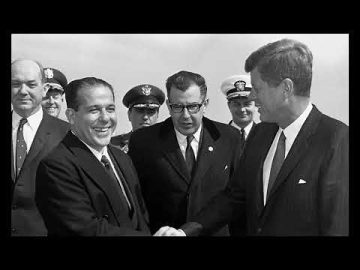
The 1964 Coup in Brazil
or go to
Aletho News Archives – Video-Images
Free Book
Vicious

Lies are Unbekoming | January 25, 2026
The waiting room is clean. The receptionist is polite. The forms ask reasonable questions. Nothing in the physical environment suggests danger. The magazines are current. The hand sanitizer dispenser works. Someone has chosen calming colors for the walls.
A pregnant woman sits in a chair designed for her comfort. She has been told to be here. Not ordered—no one orders. Recommended. Strongly recommended. Everyone does this. Her mother did this. Her friends did this. The women in her prenatal group compare notes about their appointments the way they compare notes about nursery furniture. Which provider did you choose? What tests have you had? The questions assume the answers. The answers assume the questions.
She will be offered things today. Offered is the word used. The offers will come with information sheets that list risks and benefits in tabular form. She will sign consent documents. Everything will be voluntary in the legal sense. No one will hold her down. No one will threaten her. She will choose, and her choices will feel like choices, and she will leave feeling she has done the responsible thing.
What she will not feel is the weight of what has been arranged before she arrived. … continue
Blog Roll
Recent Comments
seversonebcfb985d9 on French court jails pro-Palesti… eddieb on Fourteen Incredible Facts Abou… Bill Francis on European leaders’ shift in the… seversonebcfb985d9 on Villains of Judea: Philip Esfo… loongtip on Report warns that ‘Jewish terr… Craig Nelms on New study shows that toxic gas… loongtip on A Funny Thing Happened on the… loongtip on EU free trade pact on hold as… John Edward Kendrick on Regime Change In Iran Is The F… Bill Francis on Australia Passes New Hate Spee… seversonebcfb985d9 on Australia Passes New Hate Spee… Bill Francis on Britain’s AI Policing Plan Tur…


 Aletho News
- Vicious
- Germany to build 10GW of baseload gas plants (disguised as “future” hydrogen plants)
- French court jails pro-Palestine activist and mother over Gaza genocide speech
- Shot, amputated, and imprisoned: Palestinian man seeks to rebuild life after being maimed and tortured by Israeli forces
- Building Disney Land on the Moon More Likely than Kushner’s Gaza Plan
- U.S. Funds Continue to Flow to Ecuadorian Groups Despite Trump-Era Suspension
- A pro-EU regime is moving to suppress this proud nation. Will they be able to withstand it?
- US-Russia Arms Control May Face ‘Very Dark Period’ – Scott Ritter
- Israel moves to restrict Palestinian re-entry to Gaza, ‘encourage outflow’: Report
- Trump aims to create new UN and own it, Brazil’s Lula warns
- If Americans Knew
- Israeli drone strike kills two children collecting firewood in Gaza – Not a ceasefire Day 107
- Another Gaza baby freezes to death on Netanyahu’s watch – Not a ceasefire Day 106
- Oppose Israel’s Abuses While You Still Can
- UNRWA Heads Tell Ha’aretz: ‘We Don’t Radicalize Palestinians – Their Lived Existence Does’
- Plans Call for “New Rafah” Built in Israel’s Image — Without Palestinians
- Posing as priest, reporter is spat at many times, highlighting anti-Christian sentiment in Israel
- Leaked Documents: “Planned Community” in Rafah Would Force Palestinians Into Israeli Panopticon
- ‘Permits of Humiliation’: How Israel Strangles Christian Education in Jerusalem
- “The world sees death, destruction and injustice – and they see dollar signs” – Not a ceasefire Day 105
- War criminal Netanyahu kills 11 in Gaza, joins Board of Peace – Not a ceasefire Day 104
- No Tricks Zone
- Germany’s Natural Gas Crisis Escalates … One Storage Site Near Empty …Government Silent
- Polar Colding…Antarctica Saw Its Coldest October In 44 Years!
- New Study: Sea Levels Rose 20 Times The Modern Rate During The Roman Warm Period
- As German Gas Storage Dips Dangerously Low…Shortage Hardly Avoidable
- New Study: Brazil’s Relative Sea Level Was 2+ Meters Higher And SSTs 3-4°C Warmer 6000 Years Ago
- Philosopher Schopenhauer: Climate Science Certainty Stems From Stupidity, Ignorance
- New Study: Species Extinction Rates Declining Since 1980 – ‘Climate Change Is Not An Important Threat’
- Denmark Places Climate Protection Above Animal Welfare, Poisoning And Culling Cows
- New Study: Greenland Was 3-7°C Warmer And Far Less Glaciated Than Today 6000-8000 Years Ago
- German Media Report That Current Frigid Weather Can Be Explained By Arctic Warming!
 Aletho News