Daniel Davis: China & Russia Will Defend Iran
Glenn Diesen | February 26, 2026
Lt. Col. Daniel Davis is a 4x combat veteran, the recipient of the Ridenhour Prize for Truth-Telling, and is the host of the Daniel Davis Deep Dive YouTube channel. Lt. Col. Davis discusses why diplomacy in Iran has failed, how there is no off-ramp, and why this war will likely be a disaster.
Daniel Davis Deep Dive: https://www.youtube.com/@DanielDavisDeepDive/videos
Follow Prof. Glenn Diesen:
- Substack: https://glenndiesen.substack.com/
- X/Twitter: https://x.com/Glenn_Diesen
- Patreon: https://www.patreon.com/glenndiesen
Support the research by Prof. Glenn Diesen:
- PayPal: https://www.paypal.com/paypalme/glenndiesen
- Buy me a Coffee: buymeacoffee.com/gdieseng
- Go Fund Me: https://gofund.me/09ea012f
The US’ self-directed ‘China nuclear threat’ will only be a waste of effort: Global Times editorial
Global Times | February 27, 2026
On Wednesday, US Secretary of State Marco Rubio again touched upon China in terms of nuclear weapons negotiations, claiming that any nuclear arms treaty must include China. In the same few days, CNN published an “exclusive report,” citing so-called intelligence sources, to hype up the so-called “Chinese nuclear test.” These coordinated efforts are just a carefully orchestrated show by Washington. Earlier this month, Christopher Yeaw, assistant secretary for the Bureau of Arms Control and Nonproliferation at the US Department of State, disclosed a so-called “breaking news,” claiming that China conducted nuclear testing in 2020, causing a stir in international public opinion. Since then, the “China nuclear threat” rhetoric, directed by Washington, has been launched.
With high-ranking officials making statements, the so-called “insiders” disclosing information to the media, and a number of mainstream media outlets echoing the sentiment, Washington’s elaborate efforts are clearly driven by self-interest. The intention is obvious: Simultaneously with Yeaw’s alleged “Chinese nuclear test” revelations, he also conveniently stated that the US will return to testing on an “equal basis.” This timing coincides with the expiration of the New START Treaty between the US and Russia, a time when the US faces immense international pressure. Clearly, hyping up the “Chinese nuclear threat” is a two-pronged approach: It allows the US to deflect responsibility for deliberately delaying or even abandoning US-Russia nuclear negotiations, while simultaneously providing a fig leaf for its shady ambition to resume nuclear testing.
Washington’s close monitoring of China’s nuclear development is no secret. Take last year as an example. The Arms Control Treaty Compliance Report published in April focused solely on Russia’s suspected supercritical tests, while the Report to Congress on Military and Security Developments Involving the People’s Republic of China released in December detailed the so-called ‘China’s nuclear arsenal expansion and missile deployments,’ making no mention of so-called nuclear tests. It’s worth noting that these reports, in order to prove the so-called “China threat,” gathered various rumors from different sources. If there were truly “concrete information,” would Washington have kept it hidden from 2020 until now? Why didn’t it disclose it in official reports, but instead waited until the expiration of the New START Treaty between the US and Russia to release it? Moreover, global seismic networks, including the US Geological Survey under the Department of the Interior, did not record any abnormal seismic events at that time.
But this blame-shifting spectacle isn’t merely friction between China and the US. The US possesses more than 5,000 nuclear warheads, a considerable number of which are deployed in a ready-to-launch posture. It also stations tactical nuclear weapons in six NATO countries capable of conducting nuclear strikes. Under such circumstances, how could China engage in so-called “equal negotiations”? As the country with a vast nuclear arsenal and the greatest impact on global strategic balance, the US should shoulder special and primary responsibility for nuclear disarmament and demonstrate genuine sincerity. The reality, however, is that Washington not only shows no intention of reducing its arsenal, but is accelerating nuclear expansion. Should Washington fail to restrain its nuclear ambitions, the consequences for the world would be disastrous.
Facts indicate that the US itself has become the greatest hidden danger to global nuclear security. It has withdrawn from multiple international arms control agreements, while continuing to modernize its nuclear arsenal, develop new nuclear weapons, expand the scope of nuclear strike capabilities, and even lower the threshold for nuclear use. By introducing nuclear deterrence into regional conflicts, it has seriously undermined the stability of the global nuclear security architecture. More ironically, while frequently accusing other countries of “developing nuclear capabilities,” the US simultaneously engages in nuclear deterrence cooperation with its allies, transfers nuclear technology, and deploys nuclear equipment abroad. The double standard is evident.
It is the strong expectation of the international community that the US assumes its due responsibility as a major power in safeguarding global nuclear security. What Washington should do first is stop shifting blame. It should immediately resume strategic stability dialogue with Russia and discuss follow-up arrangements to the New Strategic Arms Reduction Treaty. In addition, AUKUS, which has raised concerns about nuclear proliferation, should be halted, and Washington should exercise restraint over its “close ally” Tokyo’s increasingly swelling nuclear ambitions. The waste contamination left behind by dozens of US nuclear tests in the South Pacific also urgently requires remediation. In the nuclear issue, Washington has many pressing responsibilities to fulfill, rather than “finding faults” with China.
Nuclear arms control is a shared security issue for all humanity. Safeguarding it requires major powers to take proactive responsibility. During the Conference on Disarmament in Geneva, China said it is willing to maintain communication with all parties and exchange views on the work of the Conference and on the Review Conference of the Parties to the Treaty on the Non-Proliferation of Nuclear Weapons. China has long participated in and supported a range of arms control, disarmament, and non-proliferation mechanisms – actions and contributions that are visible to the international community. Washington’s elaborate scheme, full of hidden motives, lacks both persuasiveness and credibility, and will ultimately be a waste of effort. Hopefully, it could do something genuinely meaningful that contributes to world peace and security.
US university cancels Palestine conference citing sanctions concerns
Al Mayadeen | February 26, 2026
The University of Southern Maine has withdrawn permission to use a campus venue for a conference centered on Palestine, just days before it was scheduled to begin, triggering a dispute over sanctions law and First Amendment protections.
The event, titled “Consequence of Palestine,” had drawn more than 300 registrants and was organized by the Maine Coalition for Palestine, Maine Voices for Palestinian Rights, and the university’s department of criminology and sociology. It was expected to feature virtual remarks by Francesca Albanese, the United Nations special rapporteur for the occupied Palestinian territories, who has been under US sanctions since last year.
University officials said the decision was based on federal sanctions law. Samantha Warren, chief external and governmental affairs officer for the University of Maine system, told The Guardian in an email that “hosting a conference that is being actively promoted as including a speaker sanctioned by the US government would put our public university in violation of federal law”. She said organizers should have obtained authorization from the Treasury Department before proceeding.
Sanctions regulations prohibit US entities from providing “any goods or services” to individuals designated under sanctions regimes. Violations can carry severe penalties, including heavy fines and potential prison time. However, legal scholars argue that the scope of what constitutes a “service” remains ambiguous.
Campus rights clash
In December, the Treasury Department’s Office of Foreign Assets Control (OFAC) clarified in correspondence with the Middle East Studies Association that “no authorization” was required to include Albanese in an academic event, provided that she did not receive payment, reimbursement, or “training or assistance”. That clarification emerged after concerns were raised about the impact of sanctions on academic exchange.
Xiangnong Wang, a staff attorney at the Knight First Amendment Institute who had sought clarification from OFAC, said the cancellation reflects broader concerns about the chilling impact of sanctions on constitutionally protected speech. “It’s very concerning that sanctions continue to have such a broad deterrent effect on speech that is undoubtedly protected by the First Amendment,” he said.
Organizers said they were caught off guard by the abrupt cancellation. Abigail Fuller, a sociology professor involved in planning the conference, stressed the constitutional implications of the decision. “We’re a public university; the university system is subject to First Amendment laws,” she said. “We feel we have a very, very strong case that they are suppressing our free speech.”
According to organizers, they attempted to clarify that federal guidance did not require special permission to include Albanese. They even proposed removing her from the program in an effort to preserve the event. They were subsequently told there was insufficient time for administrators to evaluate the conference’s “risk”.
Speech under pressure
The dispute comes amid reports that Republican lawmakers had written to the system’s chancellor requesting “information on steps the university is taking to ensure the safety and well-being of its Jewish students”. Organizers believe such political pressure contributed to the reversal and said administrators had also expressed concern about possible federal funding consequences.
Albanese was sanctioned last July, with US authorities accusing her of “unabashed antisemitism, expressed support for terrorism, and open contempt for the United States, Israel, and the West”. She has previously rejected those allegations and criticized the move as politically motivated, describing the United States as “a country of contradictions, full of ideals and principles and still, plotting against democratic values”.
The Treasury Department did not immediately respond to requests for comment on the university’s interpretation of sanctions law.
Despite losing access to their campus venue, conference organizers say they are seeking an alternative location and are exploring possible legal action. Fateh Azzam, a member of the Maine Coalition for Palestine, said canceling the conference outright was not an option.
“That would mean that they have effectively silenced an open and public debate on the issues,” he said. “This controversy will probably bring in more people.”
Senate Majority Leader: Any War with Iran Should Result in Regime Change
By Kyle Anzalone | The Libertarian Institute | February 26, 2026
Senate Majority Leader John Thune said that any strikes on Iran should be aimed at causing regime change in Tehran.
“In my view, if you’re going to do something there, you better well make it about getting new leadership and regime change,” the Senator said on Thursday. “If you’re going to take some sort of action, I think you want to achieve a result that actually brings about the transformational change that I think we want in the region.”
Thune is among several Senators who have argued that Tehran is historically weak, and President Donald Trump should order an attack on Iran to cause regime change. “The Ayatollah lost to Israel in the 12-day war. They are weaker. The regime is weaker than it ever has been. And what I’ve urged the president, do not miss this opportunity,” Cruz told CNBC host Joe Kernen on Wednesday. “If the Ayatollah is removed from power, it will make America much safer.”
Trump is threatening to attack Iran if Tehran does not agree to a deal that severely restricts its civilian nuclear program in exchange for minimal sanctions relief.
While Senators and administration officials have asserted that the US must attack Iran to prevent Tehran from obtaining a nuclear weapon, the Islamic Republic does not have a nuclear weapons program and is not currently enriching uranium.
“The President, I don’t think, to my knowledge, has made any decisions, but I think they’re gaming out what contingencies might look like and what’s in our national security interests.” Thune added, “Of course, first and foremost is to prevent them from having a nuclear capability but there are also other threats that they represent in the region.”
Iraqi Resistance warns of action if US forces remain
Al Mayadeen | February 26, 2026
Iraqi Resistance factions have issued a firm warning to Washington, declaring that continued US military presence on Iraqi soil will not go unanswered.
In a statement released Wednesday, the Iraqi Resistance Coordination Committee, an umbrella body bringing together six anti-terror formations, said it stands ready to act if the United States refuses to end the “ongoing occupation” and persistent interference in national affairs.
The committee accused Washington of failing to respect its obligations under its agreement with Baghdad, which provides for the withdrawal of all foreign forces from Iraq. Despite repeated official declarations that the US combat mission ended years ago, Resistance groups argue that foreign troops remain entrenched under different titles.
“The US actions in Iraq ‘leave us with no choice but to assume our legal and moral responsibilities in taking positions befitting the dignity of our people and their legitimate right to end the occupation, if American forces insist on maintaining their presence and imposing their will on the country,” the statement said.
The coalition also charged that US forces continue to violate Iraqi airspace and undermine the country’s stability, describing such conduct as a “blatant violation” of national sovereignty and dignity.
Advisory mission pretext
While Washington claims that approximately 2,500 American troops remain only in an “advice and assist” capacity following the declared end of combat operations in December 2021, resistance factions view this designation as cosmetic. They argue that the continued deployment, however limited in scale, preserves military infrastructure, intelligence networks, and rapid-response capabilities that entrench US influence rather than end it.
From their perspective, the counter-ISIS mandate increasingly functions as a framework that justifies a long-term strategic foothold in a country central to regional power balances. Even a reduced presence, they contend, enables Washington to retain leverage over Iraqi decision-making while projecting influence across neighboring theaters.
Beyond the security dimension, the Resistance Coordination Committee pointed to direct American meddling in Iraq’s political process, saying that Washington effectively determines which Iraqi political figures may assume senior government positions.
Maliki pressure campaign
The reference was widely understood as relating to Nouri al-Maliki, whose potential return to the premiership has faced US opposition. Washington threatened sanctions on Iraqi individuals and institutions should Maliki take office. Recent reports indicate that the United States has given Iraq’s largest parliamentary bloc until February 27 to withdraw his candidacy, despite Maliki’s insistence that he will not step aside.
For Resistance factions, such moves are examples of direct political coercion, reinforcing their claim that Iraq’s sovereignty remains constrained more than two decades after the US-led invasion of 2003, a war launched on the now-discredited allegation that Baghdad possessed weapons of mass destruction.
China, Russia slam US threat, force against Iran ahead of talks
Al Mayadeen | February 26, 2026
China on Thursday called for restraint and dialogue between the United States and Iran, as Washington continues a significant military buildup in the Persian Gulf ahead of renewed diplomatic talks.
Speaking in Beijing, Chinese Foreign Ministry spokeswoman Mao Ning said China was “closely following developments in Iran” amid rising regional tensions.
“China advocates the resolution of issues through political and diplomatic channels and opposes the use of threat or force in international affairs,” Mao told reporters when asked whether Beijing would join Moscow in backing Tehran against what was described as potential US aggression.
Mao emphasized the longstanding ties between the two countries, stating that the “Chinese and Iranian people are traditionally friendly.” She added that China supports the Iranian government and people in safeguarding their “legitimate rights, interests, and national stability.”
Reiterating Beijing’s position, Mao stressed the importance of de-escalation. “We hope all sides exercise restraint and solve disputes through dialogue,” she said, adding that China is ready to continue playing a “constructive role as a responsible major country.”
Russia blames US ‘irresponsible escalation of regional tensions’
Likewise, Russian Foreign Ministry spokeswoman Maria Zakharova said that Moscow sees the constant threats against Iran, as well as the irresponsible escalation of regional tensions by the United States.
“We see constant threats against Tehran and saber-rattling, intimidation, and Washington’s irresponsible escalation of regional tensions,” Zakharova said during a briefing.
Moscow and Tehran are developing mutually beneficial cooperation, despite Washington’s escalation of regional tensions, the Russian spokesperson added.
US build-up escalates significantly
Amid these developments, US military buildup in the Middle East has expanded significantly, with Washington assembling 16 warships, about 40,000 troops, and at least seven air wings in the region, the Financial Times reported, citing rising US-Iran tensions.
US President Donald Trump said on February 19 that he will decide within 10 to 15 days whether to pursue diplomacy with Iran or take military action, Axios reported. Speaking in Washington, he said the coming days would be decisive for US policy. “Now we may have to take it a step further, or we may not,” Trump said, adding, “Maybe we are going to make a deal [with Iran].”
The United States had already maintained five air wings, command units of roughly 70 aircraft each, at bases in Jordan, Kuwait, Qatar, Saudi Arabia, and the United Arab Emirates. It has since added two more aboard the aircraft carriers USS Abraham Lincoln and USS Gerald R. Ford, reinforcing what Trump described as a “massive armada” of 16 vessels and expanding Washington’s operational reach.
The overall US troop presence in the region now stands at around 40,000 personnel. Citing data from Tel Aviv University, the Financial Times reported that Jordan’s Muwaffaq Salti military base hosts at least 66 fighter jets, including 18 F-35s, 17 F-15s, and eight A-10s, along with EA-18 electronic warfare aircraft and transport planes. Satellite data also show an increase in fighter jets at a Saudi air base, reflecting the broader expansion of the US air footprint across Jordan and the Gulf.
US fears Iran war will ‘deplete’ air defenses stretched thin by Ukraine, Israel: Report
The Cradle | February 26, 2026
Military officials and lawmakers in Washington have warned that a prolonged war with Iran could stretch US military stockpiles of air defense interceptor missiles “to the brink and make the country more vulnerable,” POLITICO reported on 26 February.
“Gen. Dan Caine, the Joint Chiefs of Staff chair, has raised concerns about the military’s shortage of air defense interceptors since January,” POLITICO wrote, citing a person familiar with the matter.
“But the fears have magnified in recent weeks as the Pentagon amassed the largest military buildup in the Middle East since the Iraq War,” the magazine added.
Since returning to the White House a year ago, US President Donald Trump has won praise from Israelis while supporting the genocide in Gaza and overseeing a massive expansion of US military operations, including in Venezuela, Yemen, and Nigeria.
Crucially, Trump ordered US warplanes to join Israel’s 12-day war on Iran to bomb Tehran’s nuclear sites in June 2025.
Interceptor missiles were used not only to protect US forces from Iranian and Yemeni counterattacks but also to protect Israel from Iran’s barrages of ballistic missiles and drones.
During these operations, US forces “burned through” significant numbers of Standard Missile-3s, Terminal High Altitude Area Defense (THAAD) interceptors, and Patriot missiles, POLITICO observed.
Since then, the Pentagon has been unable to replenish its interceptor stocks due to the complexity and slow pace of their production.
Six current and former US officials and members of Congress told POLITICO of their widespread worries that a sustained war with Iran could deplete remaining US air defenses and “leave tens of thousands of American troops in the region unprotected against Tehran’s missile salvos.”
An Israeli intelligence official stated on Thursday that the US only has the capacity to sustain four or five days of intense aerial assault on Iran, the Times of Israel wrote, citing the Financial Times (FT).
Israel is pushing for a major war, claiming that limited US strikes on Iran could only “embolden the regime,” the Times of Israel added.
Since January, President Trump has assembled what he called an “armada” of US naval ships with accompanying war planes in the region in preparation for a possible renewed attack on the Islamic Republic.
Analysts have suggested that Iran will retaliate much more strongly in the event of a second war, including against US bases in the Gulf, leading to a much longer and more devastating war than last June.
“Do we have enough interceptors to sustain a retaliation?” said the person familiar with the talks. “We don’t have a discretely focused objective. Is it regime change or is it [just] ballistic missiles?”
A US military spokesperson responded to the POLITICO report by saying its weapons stockpiles are sufficient.
“The Department of War has everything it needs to execute any mission at the time and place of the president’s choosing and on any timeline,” said spokesperson Sean Parnell.
However, some US lawmakers say that the defense industry is not producing enough Lockheed Martin-built Patriot interceptors or RTX’s Tomahawk long-range missiles, nor quickly enough.
“There have been urgent calls for reforms in procurement, but the net result is that we are seemingly unable to meet all of the needs for defense production – for Ukraine, for our partners in the Middle East,” said Richard Blumenthal, a Democratic congressman.
“It may be problematic to think about moving Patriot missile interceptor systems from the Middle East because now we’re going to have to protect our embassies, not to mention our bases,” he added.
The Center for Strategic and International Studies (CSIS), a Washington think tank, estimated the US had used up to 20 percent of the Standard Missile-3 interceptors and between 20 and 50 percent of its THAAD missiles.
North Korea Open to Rapprochement If US Respects Its Nuclear Status – Kim Jong-un
Sputnik – 26.02.2026
North Korean leader Kim Jong-un said that Pyongyang has no reason not to pursue rapprochement with the United States if Washington abandons hostility and respects North Korea’s nuclear status.
“If the US respects the present position of our [nuclear] state specified in the Constitution of the DPRK and withdraws its hostile policy toward the DPRK, there is no reason why we cannot get on well with the US,” Kim was quoted by KCNA as saying at a military parade commemorating the Ninth Congress of the Workers’ Party of Korea (WPK).
He added that over the past five years, the WPK has permanently enshrined the country’s status as a nuclear state, signaling to adversaries that until the world completely changes, Pyongyang will under no circumstances abandon nuclear weapons.
Kim said that further expanding and strengthening the state’s nuclear armed forces, the core of the armed forces in implementing war deterrence and war-fighting strategy, and consistently exercising the right of a nuclear state, represents the party’s unwavering will.
“We have a long-term plan to strengthen the national nuclear force on an annual basis in the future and will concentrate on increasing the number of nuclear weapons and expanding the means and space for nuclear operation,” the leader said.
Kim added that Pyongyang intends to modernize strike capabilities and nuclear weapons control systems, enhance nuclear force combat readiness through exercises, and improve nuclear crisis response systems. He also prioritized equipping the country’s naval forces with nuclear weapons as part of efforts to strengthen the military.
“The DPRK’s position as the nuclear weapons state plays an important role in deterring the potential threat of its enemies and maintaining regional stability, and the state nuclear force is a basic guarantee and powerful security device reliably ensuring the country’s security, interests and rights to development,” the leader said.
Kim added that the expansion and strengthening of aggressive US-led blocs in the Asia-Pacific region and their military actions, which exceed limits, are creating an unusual situation that seriously threatens security on the Korean Peninsula and in the region.
Islamic Jihad: Trump’s peace board is a “theatrical stunt detached from reality”
Palestinian Information Center – February 25, 2026
BEIRUT – Mohamed al-Hindi, Islamic Jihad’s deputy secretary-general, has described the US-led Board of Peace as nothing more than a “theatrical stunt,” saying it is detached from the reality on the ground.
In an interview with Al Jazeera Mubasher satellite channel on Wednesday, Hindi stressed that the board’s recent meeting “has not brought about any change in the course of the Israeli war on the Gaza Strip or in the scale of Israel’s ongoing violations against Palestinians.”
Hindi affirmed that this peace council was founded on a “formula of absolute American dominance and full security for Israel, while denying the Palestinian people the right to shape their own future.”
“The Palestinian role in this framework is purely symbolic, confined to technocratic committees handling Gaza’s municipal affairs without any sovereignty or political power,” Hindi said.
“The proposed vision fully embraces Israel’s stance, linking Gaza’s reconstruction to resistance groups surrendering their weapons, without any serious discussion of an Israeli withdrawal or accountability for ceasefire violations,” the Islamic Jihad official added.
He underscored that his Movement never trusted the US administrations under president Donald Trump or his predecessor Joe Biden, citing America’s unwavering pro-Israel bias.
He said that the Palestinian acceptance of prior understandings over Gaza aimed solely to put an end to Israel’s relentless massacres against civilians.
The Head Of A CIA Cutout Admits To Meddling In Iran To Fuel Unrest
The Dissident | February 24, 2026
At a recent House Appropriations Committee hearing, Damon Wilson, the current president of the National Endowment for Democracy, the notorious cutout of the CIA’s regime change arm, which has previously helped fund coups around the world, admitted to meddling in Iran and helping to fuel both the women’s life freedom protests in 2022 and the recent protests in Iran.
Wilson boasted that the U.S. government-funded organization helped spread the story of a woman being killed for not wearing a headscarf in Iran that sparked the women’s life freedom protests in 2022, even admitting that the story would not have spread across Iran without the NED.
Wilson admitted, in response to the question, “Are you doing anything in Iran and can you tell us what that is?”, “This has been a huge priority for the endowment. Iran has been- since I arrived at the endowment- our fastest growing program. It’s now one of our largest programs globally that involves both direct partners, Iranian groups as well as our core institutes. If you think about the impact of our work in Iran, the reason the women life freedom movement began with the the simple act of a young woman who didn’t fully cover her her head with a headscarf, that story … could have been lost in a regional as a regional story in Iran, but NED Partners helped cover that story, get it out to the world, and get it back into Iran.”
He also admitted in reference to the most recent protests in Iran, that the organization has helped smuggle Starlink terminals into Iran and spread propaganda that helped spark the pro-regime change protests.
Damon Wilson boasted, “the endowment has been making investments over years that have ensured that there have been secure communications, including Starlinks, other means, file casting that allowed information to go both in and out of the country at a time when the regime tried to hide its brutal crackdown” adding, “Part of what we see manifesting is a response that our partners have helped tell the Iranian people the story that the regime has squandered their own resources on supporting proxies throughout the Middle East to the point where they cannot manage their own water supplies for Tehran. And these stories have not just emerged, they are ones that have been covered, documented, and shared with the Iranian people consistently through our work.”
He added, “we’ve been investing in communication tools over the years that allow for information to be sent into Iran even when internet connectivity is blocked. We specifically began supporting the deployment, the operation of about 200 Starlinks early on.”
Damon Wilson boasted that the NED has spread stories that the Iranian government has “squandered their own resources” and “cannot manage their own water supplies for Tehran”, issues that have, in large part, been caused by U.S. sanctions.
Previously U.S. Treasury Secretary Scott Bessent has boasted that U.S. sanctions helped spark the protests in Iran saying, “What we can do at treasury, and what we have done, is created a dollar shortage in the country, at a speech at the Economic club in New York in March I outlined the strategy, it came to a swift -and I would say grand- culmination in December when one of the largest banks in Iran went under, there was a run in the bank, the central bank had to print money, the Iranian currency went into freefall, inflation exploded and hence we have seen the Iranian people out on the street.”
While Scott Bessent boasts that U.S. sanctions led to “Iranian people out on the street”, Damon Wilson is boasting that the NED has flooded Iran with anti-government messaging while people are suffering worsening conditions from the U.S. sanctions, in order to further destabilize Iran and further the ultimate goal of regime change.
Iran warns Trump against decisions based on false information
Press TV – February 25, 2026
Iran’s Parliament speaker Mohammad Baqer Qalibaf has warned US President Donald Trump against making decisions based on false information, emphasizing that Iran has never sought, does not seek, and will never seek nuclear weapons.
Speaking at a meeting with economic activists in the Iranian Parliament on Wednesday, Qalibaf reacted to Trump’s latest remarks over Iran’s peaceful nuclear activities.
During his State of the Union address in congress, Trump once again claimed that he would not allow what he called the world’s leading sponsor of terrorism to obtain a nuclear weapon.
Qalibaf said, “In a previous interview I gave to CNN, I told the US president not to make incorrect analyses based on false information, and then make wrong decisions.”
He stated that Iran has “never sought, does not seek, and will never seek nuclear weapons,” adding that despite these assurances, the United States continues “to act with threats.”
He criticized US claims during the 12-day war, including reports that the city of Mashhad had fallen, and condemned foreign interference and misinformation by anti-Iranian elements and Israel which orchestrated attempted coups during the riots.
Qalibaf also noted that Trump directly intervened in the recent diturbances, citing his statement on the 12th day of the 12-day war promising US assistance.
He dismissed US and Israeli accounts of casualties reporting 32,000 deaths in latest foreign-backed riots, calling them false and misleading.
He said the real perpetrators were past terrorists responsible for over 17,000 targeted killings in Iran, including the deaths of high-ranking officials such as the president, prime minister, judiciary chief, parliament members, and military commanders.
The parliament speaker also referred to a recent statement by US special envoy to West Asia, Steve Witkoff, who said Trump is “curious” as to why Iran has not “capitulated” to US demands.
“The reason the Iranian people do not fear or submit,” Qalibaf said, “is because you do not understand them. Even during the 12-day war, while the fifth and sixth rounds of negotiations were underway, Trump attacked us from behind the negotiation table, along with Israel, and faced a humiliating defeat.”
Qalibaf emphasized that all options regarding the United States remain on the table, including both dignified diplomacy and a deterrent defense.
He added that if the diplomatic table respects Iranian dignity and mutual interests, Iran will engage, noting that the third round of negotiations is scheduled for tomorrow.
The remarks come as Iran and the US held a second round of indirect nuclear negotiations at the Omani consulate general in the Swiss city of Geneva on February 17.
As in the previous round in the Omani capital of Muscat, the agenda of the talks focused primarily on the nuclear issue and the lifting of illegal US sanctions.
The US maintains that Iran must cease its nuclear program, whereas Tehran asserts that it is not pursuing nuclear weapons and says it is entitled to peaceful nuclear energy.
Washington began its war rhetoric against Iran after recent economic protests in the country, which were hijacked by foreign spy agencies and turned violent.
Since then, the US president has kept threatening military action against Iran, deploying two carrier groups and dozens of fighter jets, bombers, and refueling aircraft to regional waters near Iran.
Featured Video
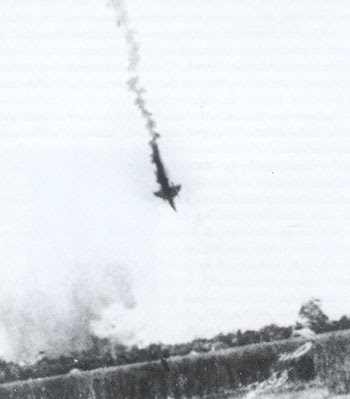
The Failed Air War Over Vietnam
or go to
Aletho News Archives – Video-Images
From the Archives
USS Liberty Massacre: A Pivotal Moment in the Hostile Takeover of America
By Kevin Barrett | Crescent | Dhu al-Qa’dah 24, 1445
In corporate America, hostile takeovers are commonplace. They occur when an aggressor—a larger corporation or rich individuals—seizes control of a smaller corporation without asking permission.
What few recognize is that the United States itself has been subjected to a hostile takeover. Since the aggressor, the illegitimate settler colony known as “Israel,” is much smaller than the US, the takeover has necessarily been surreptitious.
As of June, 2024, Israel’s gradual takeover of the US has become obvious and undeniable—a proverbial “elephant in the living room.” … continue
Blog Roll
 Aletho News
- Leaders Condemn Ansarallah Attack on Saudi Arabia While Ignoring Illegal War Against Yemen
- Leaked: Britain’s Covert Iraqi Psyops Network
- Yemeni Armed Forces Warn Airlines Against Using Saudi Airports, Exempt Mecca and Medina
- Iran security chief says powers greater than US tried to conquer Iran but ended in ‘dustbin of history’
- Europe’s mounting social chaos… chickens coming home to roost for proxy war against Russia
- US-Russia Diesel Deal Becomes Massive Defeat for Ukraine
- Hormuz and the Looming Economic Catastrophe
- Dhubab offensive, media blitz and the rapid unraveling of Saudi-backed coalition’s new gambit
- Putin Conveys to Trump Iran’s Vision on Possible Conflict Resolution – Kremlin
- The Search for Truth: Charlie Kirk’s Assassination One Year Later
- If Americans Knew
- For three years, Israel has killed a child in Gaza every 71 minutes – Daily Update
- Israeli forces kill another child in Gaza – Daily Update
- Gaza ceasefire exists in name only, say more than 100 organizations
- Nearly 2 Million in Gaza Need Urgent Shelter Assistance as Winter Looms: IOM Chief Warns
- Suppressing Palestinian resistance: US charity under fire for AI monitoring of Gaza classrooms
- Thousands Are Held in Israeli Torture Camps. This Is What Happens Inside
- Israel puts Gaza’s sick, injured, newborn in peril – Daily Update
- Report claimed Mark Levin used by Israeli government to influence Trump
- Over 2,000 Gazans have died awaiting medical evacuation amid Israel’s continued siege
- How a U.S. Diplomat Suppressed and Altered Reports Critical of Israel
- No Tricks Zone
- Germany’s Green Energy Debacle: High Energy Costs Force Kahla Porzellan to Close After 182 Years!
- New Study: 50 Years Of The Most Aggressive ‘Net Zero’ Policies Can Only Affect The Global Climate By 0.03°C
- US September “Heat” Was No Record…Many Records Set Decades Ago
- Latest European Green Energy Debacle; Portugal’s Largest Flagship Solar Park Insolvent!
- Green Energy Debacle: German Expert Professor Fritz Vahrenholt Warns Of Severe Economic And Social Consequences
- Two More Paleo Reconstructions Affirm Meters-Higher Sea Levels Across Ireland, Brazil 7000-6000 Years Ago
- New Study: Earth And Venus Surface Warmth Largely Explained By Convection And Lapse Rate, Not CO2 Or Radiation
- 2025 Nature Paper Claiming Worsening Global Drought Gets RETRACTED …Heavily Flawed
- New Study: ‘Global Drought Shows No Detectable Recent Acceleration Under Climate Warming’
- Economic Masterminds: German Socialists Suggest Taxing Productivity Gains Stemming From Using AI

