Is Donald Trump guilty of money laundering? If you ask most Democrats and anti-Trump Republicans, they fervently believe that he has been moving money for Russian mobsters for more than twenty years and that an investigation of this will bring Trump’s Presidency to an end. Don’t count on it. Although there is clear evidence of Trump’s past relationship with Russian/American mobsters, knowing someone or collaborating on a business deal is not proof of money laundering. I have spent three decades investigating money laundering cases (I helped develop the civil money laundering case against Philip Morris—click here) and it is clear to me that those who are earnestly accusing Trump of such a crime do not understand what constitutes money laundering.
Apart from not understanding how to make a money laundering case, the anti-Trumpers have failed to grasp another key element to the narrative that Trump was a puppet to the Russians—one of his longtime Russian business associates, Felix Sater, was an FBI informant during the entire time that Robert Mueller was FBI Director. Since Sater was a fully signed up FBI informant or asset, he was in a unique and powerful position to implicate Trump. But none of the “evidence” uncovered or planted by Sater ever produced an indictment of Donald Trump. With the benefit of hindsight it appears that the FBI, relying on Sater, used Trump and his organization as bait to go after Russian mobsters.
Beginning in 2003, Trump engaged in multiple real estate deals with the Bayrock Group, a firm founded and run by Soviet emigres, who reportedly had close ties to the Russian government and Russian organized crime. In 2004, Trump negotiated with the Deputy Mayor of Moscow over a potential real estate development. In the mid-2000s, Trump partnered with wealthy Russian-Canadian businessmen to develop real estate in Toronto. And in 2006, Trump contracted with the Russian Standard Corporation, a Moscow-based entity that owns and operates the Miss Russia beauty pageant, to allow the winner of the pageant to compete in Trump’s Miss Universe pageant, an action that had not been taken since at least 2002. In 2008, Trump sold a Palm Beach, Florida mansion to a Russian oligarch for a $54 million profit. In 2013, Trump established a business relationship with Russian oligarch Aras Agalarov, a close ally of Putin, to bring the Miss Universe pageant to Russia and work on plans to develop a Trump-branded project in Moscow. . . .
As Trump, Jr. explained, the Trump Organization “s[aw] a lot of money pouring in from Russia,” and “Russians make up a pretty disproportionate cross-section of our assets.” And Trump’s son Eric Trump has reportedly stated that substantial funding for Trump’s golf courses comes from Russian investors.
I do not know who was advising the DNC on this complaint, but it is clear that the drafter or drafters do not have a clue about money laundering. Money laundering is very easy to define:
The act of disguising the source or true nature of money obtained through illegal means.
The key element is the phrase, “illegal means.” If you are going to be charged as a participant or accessory in a money laundering case, you must be handling or receiving money that came from a criminal activity, such as trafficking in drugs, arms or people. So here’s the critical question with respect to Donald Trump and money laundering—what was the predicate crime?
In the world of real estate, the money laundering component is always in the financing. That is, you want to trade the bad money for good bank money by using the property as the chattel to do it. But when this is done as part of a money laundering scheme, it almost always involves the financing of major building projects. Someone with dirty money is not going to waste time purchasing individual condos or homes as their primary means of cleaning the money. When the dirty money comes from activities like drug trafficking, the amount of cash generated is enormous. You need big money projects to launder large quantities of cash.
Given Donald Trump’s extensive and controversial real estate ventures over the last thirty years, which have involved several Russians, it is understandable why those opposed to Trump seize on these transactions as evidence of “money laundering.” Unfortunately, the journalists who have tried to make the case that Donald Trump was “laundering” money for the Russian mob, have failed to provide actual evidence of such activity. Instead, they have relied on innuendo and guilt by association.
Yes, it is true that Russians with ties to organized crime purchased condos in Trump Towers in New York City. But there is no evidence that the sales of these condos were an organized, structured transaction. Individual Russians, acting in person or through shell companies, purchasing a condo is not proof of criminal activity. The fact that those who have made such purchases have not been arrested or indicted undermines the claim that their mere presence in a Trump building is proof of criminal activity.
As Shakespeare wrote, “Ay, there’s the rub.” Association with unsavory characters is not a criminal offense. While it is quite true that Trump associated with several Russians with links to organized crime it is also true that Trump has never been indicted or charged with such criminal activity. Is he really that good in hiding his trail?
One of the loudest voices claiming that Trump is in bed with the Russians is Craig Unger. Craig was known as a good reporter at one point in his life, but I think his work on Trump is both shoddy and incomplete. To be fair, Craig is not the only one claiming Trump is facilitating Russian money laundering. Other prominent journalists, including Richard Behar, Tom Burgis of the Financial Times and John Harwood of CNBC, also have echoed Unger’s thesis.
All four focus much of their reporting on a Russian born American “mobster”, Felix Sater, to implicate Trump as a Russian money laundering chump. The following snippet from an interview Unger did with Vox about his book, House of Trump, House of Putin is representative of how Sater is used as some sort of proof that Trump is part of a money laundering scheme:
Bayrock was a real estate development company located on the 24th floor of Trump Tower. The founder was a guy named Tevfik Arif and the managing director was Felix Sater, a man with numerous ties to Russian oligarchs and Russian intelligence. Bayrock proceeded to partner with Trump in 2005 and helped him develop a new business model, which he desperately needed.
Recall that Trump was $4 billion in debt after his Atlantic City casinos went bankrupt. He couldn’t get a bank loan from anywhere in the West, and Bayrock comes in and Trump partners with other people as well, but Bayrock essentially has a new model that says, “You don’t have to raise any money. You don’t have to do any of the real estate development. We just want to franchise your name, we’ll give you 18 to 25 percent royalties, and we’ll effectively do all the work. And if the Trump Organization gets involved in the management of these buildings, they’ll get extra fees for that.”
It was a fabulously lucrative deal for Trump, and the Bayrock associates — Sater in particular — were operating out of Trump Tower and constantly flying back and forth to Russia. And in the book, I detail several channels through which various people at Bayrock have close ties to the Kremlin, and I talk about Sater flying back and forth to Moscow even as late as 2016, hoping to build the Trump Tower there.
Tom Burgis, writing in the Financial Times, provides additional details on the relationship between Sater and Trump and implies something nefarious, perhaps even illegal, was afoot:
As work on Trump Soho got under way in 2007, the partnership between Mr Trump and Bayrock was gathering momentum. Another tower, in Fort Lauderdale, was rising. A 2008 Bayrock presentation includes a picture of Mr Trump grinning beside Mr Arif and names him as a referee. Bayrock had its office on the 24th floor of Trump Tower and calls the Trump Organization a “strategic partner”.
The same presentation says Bayrock was one of the backers of the redevelopment of the 101-year-old Hotel du Parc on the shores of Lake Geneva, owned by Swiss Development Group, a Geneva-based company. In May this year, Nicolas Bourg, a Belgian businessman who says he worked with Viktor Khrapunov’s son Ilyas on US real estate deals, claimed in a separate dispute that Swiss Development Group was “owned and controlled by Ilyas and his family and used to conceal the movement and investment of his family’s money”.
All of this sounds pretty bad on the surface until you examine what Sater actually did. Messrs. Unger and Burgis neglected to analyze the critical fact that Felix Sater was an FBI informant since 1998. If Trump was taking dirty money or engaged in criminal activity with Russians then he was doing it with Felix Sater, who was under the control of the FBI. Felix Sater was proposing deals and making contacts with Russian criminals overseas and this activity surely was known by the FBI. If there was any suspicion on the part of the FBI that Trump was taking bad money, they would have recorded such activity in detail and he would have been indicted. Instead of running around in an orange jump suit, Donald Trump ran for President.
Given Sater’s relationship with the FBI, one needs to look at Trump’s relationship with Russians, especially those facilitated by Sater, in a different light. Put simply, were Trump’s real estate deals being used as bait to attract targets of interest for the FBI. Was Trump a witting cooperator with the FBI or unwitting?
We do know that Sater was trying to put together real estate deals overseas while serving as a FBI informant and working from Trump Tower in New York City. This was reported in a March 2017 Los Angeles Times piece:
Working from a 24th-floor office in Manhattan’s Trump Tower, Felix Sater spent years trying to line up lucrative deals in the United States, Russia and elsewhere in Europe with Donald Trump’s real estate organization.
For much of that time, according to court records and U.S. officials, Sater also worked as a confidential informant for the FBI, and — he says — U.S. intelligence.
“I was building Trump Towers by day and hunting Bin Laden by night,” Sater, now 50, told the Los Angeles Times in a phone interview from New York.
As managing director of Bayrock Group LLC, a real estate development firm, the Russian-born businessman met Trump in 2003, court records show, when Trump was looking to expand his business and branding organization around the globe.
Why are the anti-Trump forces failing to grasp the import of Sater and his role as an FBI informant as undermining the claim that Trump was conspiring with the Russians? Sater’s role with the FBI has been widely reported:
There is no question that Sater led a double life during the years he worked with the Trump Organization.
In 1998, Sater pleaded guilty to a federal charge of racketeering for his role in a Mafia-linked $40-million stock fraud scheme. He quickly cut a deal, agreeing to become a secret FBI informant in hopes of getting a lenient sentence.
Court records were sealed to protect Sater’s identity, so his role in the fraud case stayed secret for a decade while he was at Bayrock. After a court hearing in 2009, he was fined $25,000 but was not sent to prison or ordered to pay restitution.
Along with press reports regarding Sater’s role with the FBI, we have Sater’s attorney, in a letter sent to Judge Leo Glasser of the Eastern District of NY on 1 September 2005, telling the court that:
. . . Mr. Sater has been involed in on-going cooperation activities with law enforcement agents, and has provided truthful and credible information on a wide variety of criminal activities, some of which has already led to criminal prosecution of others.
Even Obama’s Attorney General, Loretta Lynch, provided Sater cover :
At his sentencing hearing, several FBI officials vouched for Sater’s help. He got his biggest endorsement in January 2015 when Loretta Lynch was asked at her Senate confirmation hearing for U.S. attorney general why court records had been sealed in the fraud case.
If Trump was the target of the FBI, then fair observers must concede that the Bureau has failed during an 18 year period to obtain any incriminating information about Trump and his business practices. Had the FBI been successful, Trump surely would have already been indicted by now in the Southern District of New York and charged with criminal conduct.
Sater’s status as an FBI informant is not an honorary position. It is not a job that entitles the informant to regular social chats with an FBI agent. It is a job that puts the informant in the position of having to help the FBI make criminal cases, including entrapping folks willing to engage in illegal acts. The FBI website describes the informant role:
The courts have recognized that the government’s use of informants is lawful and often essential to the effectiveness of properly authorized law enforcement investigations. However, use of informants to assist in the investigation of criminal activity may involve an element of deception, intrusion into the privacy of individuals, or cooperation with persons whose reliability and motivation may be open to question. Although it is legally permissible for the FBI to use informants in its investigations, special care is taken to carefully evaluate and closely supervise their use so the rights of individuals under investigation are not infringed. The FBI can only use informants consistent with specific guidelines issued by the attorney general that control the use of informants.
And who was in charge of the FBI during all of the time that Sater was a signed up FBI snitch? You got it—Robert Mueller. Let us just stick with the facts—during Mueller’s term (2001 thru 2013) the FBI did not make or bring a case of money laundering against Donald Trump. Yet, during this period, Felix Sater, a fully signed up and operating FBI informant, was trying to cobble together real estate deals with Russians of questionable character. Trump and his organization were not implicated in any of this activity in a way that led the FBI to seek an indictment against them.
Many House Democrats are convinced that there is untapped evidence implicating Trump in a variety of money laundering schemes. But their belief, in my view, is based on a fundamental ignorance about money laundering and financial crimes in general. Tax avoidance, for example, is not money laundering. Highly publicized real estate deals are not the kind of cleaning operation that genuine money launderers embrace. Why? Those kind of deals come with scrutiny and the last thing that criminals with dirty money want is a high profile and public attention.
If you hate Trump and are betting that the Democrat investigative tsunami will bring Trump down, I have a word of advice—don’t bet your house. Donald Trump may be guilty of boorish behavior and brash comments, but the evidence of laundering money for the Russians is not there.
GAZA – Head of Hamas’s political bureau Ismail Haneyya has affirmed that his Movement will not allow the deal of the century to be implemented and will use armed resistance to prevent it.
Haneyya made his remarks in a televised speech during the 32nd Islamic Unity Conference that kicked off on Saturday in Tehran.
“We want to build a strong and strategic alliance that brings together all the forces to face the challenges surrounding the Palestinian cause,” Haneyya said.
He stressed that the Palestinian people have open options to defend their holy sites and stand like “an impenetrable dam” against any attempt to liquidate the Palestinian cause.
The Hamas official also underlined that all forms of resistance would remain his Movement’s strategic choice.
“We have one compass pointing towards the liberation of the land and the establishment of the Palestinian state, and every party sharing this goal with us is our ally,” he added.
He called on the organizers of the conference to adopt an Islamic strategy to confront Israeli schemes, strengthen the Palestinians’ steadfastness in Jerusalem and protect the Aqsa Mosque against Judaization.
The “Resistance” – the loose affiliation of liberals, progressives and neo-conservatives dedicated to opposing Donald Trump – is NOT a grass-roots movement. They don’t speak for the everyman or the poor or the oppressed. They are a distraction, nothing more. A parlor game. The face to Trump’s heel.
The Resistance is the voice of the Deep State – Pro-war, pro-globalisation, pro-Imperialism. It just hides its true face behind a mask of “progressive values”. They prove this with their own actions – opposing Trump’s moves toward peace with North Korea and finding common ground with Russia.
In fact, though the resistance lives to criticize the Trump administration, they have been notably quiet – even in favour of – three key issues: The bombing of Syria, the tearing up of the INF treaty and the prosecution of Julian Assange.
They tell us, in clear voices, who they are and what they want and millions of people refuse to listen. So totally brain-washed by the “Orange Man Bad” hysteria, that they will side with anyone hitting the same talking points, spouting the right buzzwords, using the same hashtags.
… and Robert Mueller receives a glowing write-up in the Guardian, being praised as “America’s straightest arrow”.
The painful prose paints a blurry picture of Mueller. Slapping ounces of vaseline onto the lens of reality. It praises his hair and his clothes and his 35 dollar watch. It declares him a soldier “forged in combat”, regaling us with tales of the bravery of Mueller’s marine regiment – “The Magnificent Bastards”.
Vietnam is reduced to a movie set – nothing but a backdrop for Mueller’s courage under fire. He won a bronze star, you know. Apparently while “The Magnificent Bastards” strode around the Vietnamese jungle, burning villages down and watching the napalm fall from the sky, a couple of angry farmers shot back and Mueller was wounded.
Taking a bullet in the leg from a terrified peasant who just wants you to sod off out of his country will always win you medals, but it shouldn’t.
Voluntarily signing on to enforce Imperial foreign policy in a war of conquest will always have the media paint you as a hero, but it shouldn’t.
What flaws the author does ascribe to Mueller are those we all happily admit to having ourselves. He’s a “micromanager” and he’s “too tough”.
Yes, and I’m sure he works himself too hard and doesn’t suffer fools gladly and always speaks his mind as well.
Read the column if you want, but I’d suggest not eating for a few hours first. A more nauseating panegyric I have not witnessed, at least since Barack Obama left office.
Far more telling than what it does say… is what it does not say. It mentions Mueller’s role as head of the FBI during the launch of the “war on terror”, but doesn’t go into any of the abuse of human rights that accompanied (and still accompanies) the increasingly authoritarian powers granted to US intelligence agencies by the Patriot Act.
Let’s be clear: Mueller’s FBI was complicit in rendition, torture, Gitmo. All of it.
Given that, it’s rather unsurprising that the article doesn’t mention the word “Iraq” once. A breath-taking omission, considering Mueller’s testimony in front of congress played a key role in spreading the lie of Saddam Hussein’s weapons of mass destruction”:
It doesn’t matter how many Vietnamese peasants took pot-shots at him, it doesn’t matter how tidy his hair is, or how cheap his watch. It doesn’t matter if he looks like Cooper or speaks like Eastwood or walks like Wayne. He is a proven liar – a man culpable in the greatest crime of the 21st century. He is, and always will be, a servant of the Deep State.
A proven liar. A proven killer. An Imperialist. A criminal.
Is this the stuff of which political heroes should be made?
Only in “the Resistance”.
Obviously, Trump’s administration is dangerous – it still stokes warlike approaches to Iran and Russia. It has directly threatened Venezuela and Cuba. But you can’t fight the right-hand of the Deep State by clasping the left. They all join in the middle. They’re the same monster.
Anti-Trumpers, all over the world, need to take a good look at WHO they’re fighting alongside, and ask themselves WHAT they are fighting for.
Kit Knightly is co-editor of OffGuardian. The Guardian banned him from commenting. Twice. He used to write for fun, but now he’s forced to out of a near-permanent sense of outrage.
The Trump administration is making a determined effort to engage with Turkey, which used to be the anchor sheet of American regional strategies in the Middle East for several decades. Without a robust partnership with Turkey, US policies remain ineffectual on several regional fronts – ranging from the Black Sea and Eastern Mediterranean to post-conflict Syria, Iran oil sanctions and Gulf security — and even Khashoggi affair.
Turkey has a long list of grievances – real, feigned or imaginary. But President Trump senses that Turkish president Erdogan prioritizes two core issues – demand that a) Washington should extradite his arch political rival Islamist preacher Fetullah Gulen (who he alleges plotted the failed coup against him in 2016); and, b) that the so-called Halkbank case in a Manhattan court should be wound up.
Trump has lately signaled that he is acting on both issues. Gulen is a tough call for Trump insofar as he has been an “asset” of the CIA. The Halkbank file may be relatively easy to handle.
(Fetullah Gulen’s ‘retreat center’ in Pennsylvania)
In turn, Erdogan is holding the trump card in the Khashoggi affair, which has potential to undermine the US’ grand Middle East strategies. A top Saudi establishment commentator Abdulrahman Al-Rashed wrote in the Saudi daily Asharq Al-Awsat, “Turkey has been using the (Khashoggi) crime to push Trump to make concessions to release a convicted Turkish banker or hand over an opposition figure in exchange of stopping its campaign against Saudi Arabia.” Clearly, Trump expects Erdogan to stop fueling the Khashoggi affair.
However, the Turkish-American engagement has a much bigger backdrop — Syrian conflict. How far the tango over Khashoggi helped US to address the Syrian situation is hard to tell, but American diplomacy has a way of juggling several balls. In particular, the Pentagon’s alliance with Syrian Kurdish groups worries Turkey and Erdogan has been threatening to move against them.
Now, the US has come up with an innovative idea to work with Turkish military apropos any terrorist threats from Syria. Two days ago, US defence Secretary James Mattis unveiled the idea with disarming simplicity during an interaction with the media:
“Turkey is a NATO ally and they have legitimate concerns about terror threats… from Assad’s Syria… And Turkey has a lot of reasons for concerns, being the NATO country with a border right along Syria. And we don’t dismiss any of their concerns. We are putting in OPs up in northern Syria, this is the change now, okay? We are putting in observation posts in several locations up along the Syria border — northern Syria border because we want to be the people who call the Turks and warn them if we see something coming out of an area that we’re operating in. This is closely collaborated – we are consulting closely with Turkey, military and State Department. Both were consulting with them.”
“We are going to track any threat that we can spot going up into Turkey. That means we will be talking to Turkish military across the border. They will be very clearly marked locations day and night so that the Turks know where they’re at.”
Meanwhile, Voice of America also reported on November 22 that “a large military convoy from an Arab country was deployed last week to the eastern Syrian province of Deir el-Zour” in the region under US control.
Prima facie, the US is pre-empting any excuse by Turkey to attack the Kurdish groups by offering a CBM. But the bottom line is that the US is marking as its exclusive preserve a vast swathe of territory in Syria’s northeastern region — roughly one-third of entire Syria — which is rich in hydrocarbon reserves and water resources, and it expects Turkey to respect the ground reality.
(Who controls what in Syria.)
Without doubt, an entity is being carved out of Syria that is beyond the reach of Damascus, with the Arab Forces providing the “steel frame” for internal security and acting as deterrent against any Turkish attacks against the Kurdish militia, while the US monitors the border region with Turkey.
Mattis claimed that Turkey is on board. But Turkey strongly supports Syria’s unity. Turkish Defence Minister Hulusi Akar has openly voiced disquiet over the US move to set up observation posts on Turkish-Syrian border. Akar disclosed that Turkey conveyed its “discomfort” to the Pentagon:
“We have stated that the observation points to be established by the US troops on the Syrian border will have a very negative impact… and in the course of our discussions we expressed that it could lead to a perception that US soldiers are somehow protecting terrorist YPG (Syrian Kurdish) members and shield them.”
Equally, could an Arab force’s – most likely Saudi and Emirati troops – deployment (just when the war is ending) have been without prior consultation between Washington and Ankara? The point is, Turkey has troubled relations with both Saudi Arabia and the UAE and will resent their deployment of troops to its border regions with Syria.
In sum, the US’ newfound role as the gatekeeper of the Turkish-Syrian border means the Pentagon is creating new facts on the ground, which signals a long-term US occupation of northern Syria. There are serious implications for Syria’s unity and territorial integrity. Indeed, the last thing that Turkey wants is an independent entity along its border with Syria where the Kurds enjoy autonomy. Turkey has a congruence of interests with Russia and Iran in this regard.
The situation in Syria is that of a frozen conflict, following the agreements made between Russia, Turkey and Syria on the demilitarized zone created around Idlib. Except for some sporadic terrorist attacks, the truce seems to be holding up over the last few weeks, even though it has become clear to everyone what the next step is for the province.
The Syrian Arab Army (SAA) has been busy eradicating Daesh in the southern part of Syria in recent weeks, concentrating its efforts on securing all areas that have been liberated from terrorist control but which still remain vulnerable to sporadic attacks, as occurred in Sweida at the end of July 2018. In that incident, there were dozens of victims and numerous abductees who remained in the hands of Daesh for months. This caused the Syrian population in neighbouring areas to clamor for protection, forcing the SAA to undertake an anti-terrorist campaign that has been ongoing since August.
This effort by the SAA has slowed down in part due to subsequent events, with an agreement reached between Erdogan and Putin to create a demilitarized zone in the province of Idlib. From October 15, an area spanning 20 kilometres and guarded by Turkish and Russian troops guarantees a separation between the SAA and terrorist groups in the province.
Russian and Syrian efforts have been moving in two very specific directions over the last few weeks. While Moscow supplies Damascus with new equipment in preparation for the future advance on Idlib, Putin and his entourage continue diplomatic efforts to draw more of Syria’s enemies closer to the Russia-Iran-Syria axis. The meeting that brought about the demilitarized zone included Macron and Merkel, the Europeans having evidently come to terms with the impossibility of overthrowing the legitimate government of Syria. Macron and Merkel were offered a way out of the Syrian conflict, decoupling themselves from the belligerent stance of the United States, Israel and Saudi Arabia. The intention is to usher Paris and Berlin towards the same direction Qatar, Turkey and Jordan have been progressively gravitating. Certainly, these are not countries to be considered friends of Damascus. Rather, they are parties with whom a constructive dialogue needs to be entered into in order to advance common diplomatic interests.
Moscow has often found it possible to reach an agreement or start unpublicized negotiations with each of these parties. Erdogan seems to have preferred an agreement with Putin rather than waiting for the liberation of Idlib by the SAA, thus being able to postpone the natural conclusion of the war that will find him sitting at the table defeated. At the same time, Erdogan wants to concentrate on the Kurds in order to secure the border between Syria and Turkey controlled by the Syrian Democratic Forces (SDF), and to prevent any partition of Syrian territory that would favor other parties. Jordan has even reopened the border crossings with Syria, appearing to be the first country in opposition to Damascus that is now taking practical steps to mend fences.
The case of the participation of the two European countries at the summit with Erdogan and Putin is more complex. The rift between Washington and the other European capitals is wide and well documented, even more so after the events in Paris commemorating the end of the First World War. Macron and Trump seem to be diverging further in terms of policy and ideology, while Trump and Merkel have always had their differences. Trump’s choices in the Middle East, in the wake of the destructive actions of Israel and Saudi Arabia, marked a profound point of difference and mistrust with the European allies. Macron and Merkel have a huge problem dealing with refugees flowing from areas in North Africa and the Middle East destroyed by US-led wars. The prospect of working with Erdogan, and indirectly with Damascus, to bring back hundreds of thousands of refugees currently in France and especially Germany, seems to have been Putin’s winning argument during the talks in Istanbul.
This slow diplomatic approach has been accelerated as a result of Israel’s downing of a Russian electronic-surveillance aircraft. The need to avoid a direct conflict between Moscow and Tel Aviv allowed the Russian missile forces to deploy to Syria an advanced model of the S-300 in addition to the existing S-300/400 systems on the ground. The presence of these advanced systems, and Moscow’s threats to use them, together with American concerns over the possibility of an F-35 being shot down by Soviet systems dating from the 1970s, forced the Zionist entity to halt its attacks on Syria.
This situation has helped to create a frozen conflict in the country. Together with the agreement of Idlib, this gives the SAA plenty of time to rest, regroup, and receive supplies needed for future campaigns.
The current truce is a strategic pause that has all the appearance of what has happened in the past in the provinces of Homs and Aleppo. The need to free Idlib from terrorists goes hand in hand with the promise of Assad and the government of Damascus to liberate every inch of Syria from terrorists. The diplomatic efforts of Moscow serve to prepare the ground for what will happen in the coming months, with the SAA set to advance on Idlib. In this sense, the deployment of advanced systems in Syria serves as a deterrent against possible responses from countries like Israel and the United States, anxious to defend their jihadists, but continuing to have minimal influence on the ground.
Russia and Syria’s moves therefore seem to be in preparation for the battle for Idlib, to be the longest and most difficult yet. The liberation of the province is inevitable but requires all the necessary political, diplomatic and military preparation in order to ensure success and limit potential escalation. As is often the case, Moscow and her allies approach complex issues with simple and pragmatic solutions, even offering exit strategies to their (geo)political opponents, which contrasts with their demonstrated tendency to rush heedlessly towards war.
The United States continues to brandish its military power all round the globe and has recently been concentrating on confronting Russia and China. Its policy and deployments were explained by the US Air Force Secretary in September when she declared that Washington felt threatened because “Less than a week ago Russia began the largest exercise on Russian soil in four decades… with more than 300,000 troops and 1000 aircraft.
On the other side of the world, China’s first aircraft carrier was declared combat ready this year, and promptly sailed into the Pacific to conduct flight operations.”
The absurdity of that statement escaped fitting comment by the West’s mainstream media, which also considers it astonishing that Russia should carry out a military exercise in its own territory following the massive build-up by the US-NATO military alliance along its borders. As pointed out on November 15 by Russia’s Foreign Ministry, this expansion can be seen “along the entire stretch of land connecting the Baltic Sea and the Black Sea. Since October, vast operational resources have been concentrated in the Baltic Region and the north of Europe, due to a series of major international exercises. They are being deployed in addition to NATO regiments already present in the countries of the eastern flank. Those regions have never seen such a military presence since the end of the World War II”.
And it is growing.
Foreign Policy in Focusobserves that “In all NATO countries in Eastern Europe, the US Air Force is investing multimillion-dollar sums in the expansion of its air bases, with more than $50 million pouring into a base in Hungary, more than $60 million allocated to the modernization of two air force bases in Romania, and two bases in Slovakia that will be upgraded with more than $100 million, besides various base upgrades in other countries in the region.”
In October President Putin said that “Russia doesn’t threaten anyone and has strictly adhered to its obligations in the sphere of international security and arms control,” but made it clear there would be decisive action if an attack takes place, and “the aggressor should know that retaliation is inevitable, and he will be destroyed.” Russia has “precision hypersonic weapons” exemplified by the Kinzhal missile and a new system, the Avangard, that will enter service in the next few months.
His outlook and approach are echoed by China’s leader, President Xi Jinping, who reminded those attending the Asia-Pacific Economic Cooperation summit in Papua New Guinea on November 17 that “History has shown that confrontation, whether in the form of a cold war, a hot war or a trade war, produces no winners.”
In early 2018 President Xi said plainly that China “will forge a powerful military that is ready to respond to the call, to fight and to win a war,” and in October, following Washington’s increasing military activity in and around the South China Sea, the President told his armed forces to “concentrate preparations for fighting a war”, which is as blunt a warning to Washington as might be expected in the circumstances, in which the US is deliberately provoking China by its widely-publicised support for Taiwan. This has gone so far as for the Defence Minister Wei Fenghe to announce that Beijing would never give up “one single piece” of its territory. He warned that “repeated challenges” to China’s stance on Taiwan would lead to military action.
What China and Russia are saying is plain, blunt and unambiguous : stay out of our territory; stop prodding our borders and cease your coat-trailing provocation.
Philippines President Rodrigo Duterte is an unpleasant person, but on November 17 he put things in perspective in his region. When questioned about US Navy operations in the South China Sea he asked in turn “Why do you have to create frictions that will prompt a response from China?”
One of the more ridiculous observations by the US Air Force Secretary concerned the commissioning of China’s first aircraft carrier. In tones of hushed horror she revealed that it “was declared combat ready this year, and promptly sailed into the Pacific to conduct flight operations.”
What upsets the US military is the fact that China now has an aircraft carrier that can defend the country from beyond its shores, unlike America’s eleven enormous aircraft carriers which sail round the world’s oceans in order to impose Washington’s will. At the moment there are two carrier groups in the Philippines Sea, ready to move into the South China Sea to conduct more provocative operations.
The Air Force Secretary added to absurdity by declaring that “now all of Southeast Asia is within reach of China’s long-range bombers” — presumably considering it irrelevant that in October, in the latest of a series of provocative operations, two nuclear-capable USAF B-52 bombers from Barksdale Air Force Base, Louisiana, overflew the South China Sea. As reported in the Air Force Times “the flights were in support of US Indo-Pacific Command’s Continuous Bomber Presence, a mission focused on deterring regional challengers.”
Regional challengers? Just who is challenging whom with a “continuous bomber presence”?
Like Russia, China has had to develop advanced weapons to counter the menace patrolling and probing its borders, and these could be employed effectively in the event of US confrontation getting out of hand.
A CNN headline in October was “US Navy proposing major show of force to warn China” and it indicated that the “Pacific Fleet has drawn up a classified proposal to carry out a global show of force as a warning to China and to demonstrate the US is prepared to deter and counter their military actions . . . The plan suggests sailing ships and flying aircraft near China’s territorial waters in the South China Sea and Taiwan Strait in freedom of navigation operations to demonstrate the right of free passage in international waters. The proposal means US ships and aircraft would operate close to Chinese forces.”
If Washington is insane enough to go ahead with this deliberately confrontational fandango, there could be serious consequences. Chinese warships could manoeuvre to bar US Navy vessels from coming with 12 nautical miles of one of its islands in the South China Sea, and if there were attempts by the US to penetrate that barrier, there could well be a serious incident. Should this involve damage to a Chinese ship, Beijing would not stand idly by and would respond appropriately. Given its inventory of weapons, especially its advanced torpedoes, this could involve destruction of one of the US Navy’s carriers.
There are similar possibilities in the north. CNN noted that “Currently the aircraft carrier USS Harry S Truman is taking the unexpected step of operating in the North Sea — sending a signal to Russia that US military forces can extend their reach to that area.” But if US warships behave aggressively it can be expected that Russia will counter such behaviour most forcefully.
In October the Commander of US Naval Forces Europe, Admiral James Foggo, told the US Naval Institute that “it would be important to have a greater naval presence in Europe than the US has had in the last two or three decades, and that this year’s presence by the Harry S Truman Carrier Strike Group and the Iwo Jima Amphibious Ready Group were part of the effort to boost presence to reassure allies and to keep an eye on Russian activity. With the Truman Strike Group now back in the region — spending time in Iceland and the North Sea ahead of Trident Juncture [the November 2018 anti-Russia US-NATO exercise based on Norway] — ‘that sends a very strong message that the United States will operate anywhere, either unilaterally or in collaboration with our NATO partners and allies. And like I said, nobody in the world can come close to a US nuclear-powered aircraft carrier in terms of firepower, dwell and endurance,’ he said.”
Foggo’s diatribe ended with the juvenile but still dangerous pronouncement that “And those guys and gals out on that carrier and the Marines are doing a fantastic job. So we’re keeping the adversaries back on their heels. They don’t know where we’re going next and that’s a good thing. And we’re working more with allies and partners because we have that additional capability. Right now I have — I think, at last count — 495,000 tons of grey-hulled shipping operating in the theatre. And that’s great. I love it.”
This type of trigger-happy immature belligerence is official warning of US policy as regards Russia and China, and it is not surprising that both nations are countering Washington’s confrontation.
Washington’s rhetoric regarding Iran paints the picture of an evil nation hellbent on destroying the world. In reality, it appears that Tehran would prefer dialogue with its rivals, which is unacceptable to the US.
Tuesday’s White House Statement from President Trump on “Standing with Saudi Arabia” was an outright condemnation of Iran and a total free pass for Saudi Arabia.
Iran is to blame for almost every issue in the Middle East, including the war in Yemen, according to the statement. The US-made and supplied bombs raining down on Yemeni school buses, with some 85,000 children dying in the process, is simply because of Iran. Not only is Iran responsible for the bloodshed in Yemen, Tehran has further helped “dictator Bashar Assad” in Syria kill “millions of his own citizens.” The official death toll of the Syrian war is under one million, and certainly the various jihadist groups, including Islamic State (IS), share responsibility for that figure.
“The Iranians” have also killed many Americans and other innocent people throughout the Middle East. Iran not only shouts “Death to America” and “Death to Israel” but it is also considered “the world’s leading sponsor of terror.”
It is curious enough that firstly, in a statement about Saudi Arabia, the term “world’s leading sponsor of terror” is not gifted to the prime sponsors of Al-Qaeda and IS. Secondly, the fact that Trump himself put that term in inverted commas seems to suggest that even he doesn’t quite believe that one to be true.
Remember, Saudi Arabia is the country that Trump, before becoming president, once accused of masterminding the 9/11 attacks. I wasn’t aware of this until reading the statement, but according to the White House, Saudi Arabia would gladly withdraw from Yemen if the Iranians would agree to leave. That’s right, Iran’s non-presence in Yemen must be removed in order for Saudi Arabia to cease blowing up children, hospitals, factories, food trucks, schools, agricultural land, strategic ports, and relinquish its complete stranglehold over the country.
If you were naive enough to take the White House statement at face value, you would surely think that Iran has much to answer for. Iran is, after all, public enemy number one and has been for some time. Conversely, Saudi Arabia has been a longstanding ally of the United States, a faithfully serving client state, and it should be protected at all costs especially if there is to be any hope at pushing back against Iran as it yells “Death to America” and “Death to Israel.”
But what if Iran was, despite all of its flaws, not interested in fighting a war with Saudi Arabia? What if we dug a little bit deeper and asked ourselves: is there another way of dealing with the “threat” that Iran poses?
In January this year, Iran’s Foreign Minister Mohammad Javad Zarif wrote an article that was published in the Financial Times which laid out the country’s proposed framework for bringing stability to the Middle East. The article was widely ignored by the rest of the world, even though its implications were potentially life-saving.
“The objective of a strong region — as opposed to a quest for hegemony and the exclusion of other actors — is rooted in recognising the need to respect the interest of all stakeholders,” Zarif wrote. “Any domineering effort by one country is not only inappropriate but essentially impossible: those who insist on following that path create instability. The arms race in our region is an instance of this kind of destructive rivalry: siphoning vital resources into the coffers of arms manufacturers has contributed nothing to achieving peace and security. Militarism has only served to fuel disastrous adventurism.”
Zarif states that the usual modes of forming alliances have become “obsolete” and suggests that security networking to address issues is a much better practice. He proposes that instead of ignoring conflicts of interests, the countries in the region should accept their differences.
“The rules of this new order are straightforward: common standards, most significantly the purposes and principles of the UN Charter, such as sovereign equality of states; refraining from the threat or use of force; peaceful resolution of conflicts; respect for the territorial integrity of states; non-intervention in the domestic affairs of states; and respect for self-determination within states,” Zarif adds.
Zarif recommends opening up dialogue and blames a “dialogue deficit” for instability throughout the region. Such a dialogue, he argues, could help other nations understand that all parties have “similar concerns, fears, aspirations and hopes.” His eventual vision is that these countries will eventually adopt a “non-aggression pact.”
Now, Zarif did not explicitly state who he was talking about in this proposed path to peace and stability. But what if his intention was to work with Saudi Arabia, is this not something that should be talked about, particularly by the US commander-in-chief when releasing statements stoking the fire of an already volatile region while pitting two major regional players against each other?
In October last year, Zarif was quoted as saying that Tehran is willing and ready for rapprochement with the Kingdom of Saudi Arabia, adding that he does not believe the two countries should have the type of relationship they have right now.
In December last year, Iran’s president Hassan Rouhani further intimated that Tehran is willing to resume ties with Saudi Arabia if it halted its military campaign in Yemen and severed its ties with Israel.
“We don’t have any problem with the country that is our neighbor and unfortunately speaks a lot and speaks irrationally. Saudi Arabia, as our neighbor, should stop bombing Yemen from tomorrow, stop bowing to Israel, stand straight and rely on its nation,” Rouhani said.
In March this year, Zarif then took his ambiguous article one step further and openly said that Iran is willing to resolve its differences with Saudi Arabia’s as part of Tehran’s desire for stability in the region. As Zarif notes, this is not the first time Iran has reached out to the kingdom, yet the Saudis continue to reject Iran’s proposed dialogue.
In August of this year, Zarif further stated that Iran wants to restore relations with Saudi Arabia as well as the United Arab Emirates (UAE) and Bahrain. Surprisingly, Saudi Arabia had just allowed the entry of an Iranian diplomat to head Iran’s interests in the Kingdom, a rare move since diplomatic ties had been cut almost two years prior.
Just last month, Zarif again called for Saudi Arabia’s cooperation to push back against the “repeated insults” made by the US president at the time.
“This is the reward of the illusion that security could be achieved through external support,” Zarif said. “We extend our hands to our neighbours, saying: let’s build a strong region to stop this arrogant pride.”
I could be wrong, but in its totality, it does appear that Iran is proposing a framework where Middle Eastern countries settle their disputes between themselves without outside interference, whereby the US would be left out completely. Such a suggestion is in itself a form of hubris so unacceptable to Washington that the proposal itself makes the country ripe for a targeted regime change operation. Despite this, Iran has been quite open about its blueprint for a new outlook to the Middle East.
“We don’t need foreigners to guarantee the security of our region,” Iran’s president said earlier this year.
“When it comes to regional security arrangements, we are ready to talk to our neighbours and friends, without the presence of foreigners,” he added. “We are, have been and always will be good neighbours.” Yes – even Saudi Arabia.
In August, UN experts went even further and said that Iran might be willing to play a “constructive role” in ending the war in Yemen, something Iran has said it has been wanting to do for years by working with Saudi Arabia.
Conversely, the Saudis and their US counterparts are not so willing to take the Iranians up on their offer.The Saudis always want to “fight the Iranians to the last American,” according to former Secretary of Defence Robert Gates. The Saudis have even openly abandoned the Palestinian cause in an attempt to cosy up to Israel and create a US-backed alliance that can confront Iran in the region. The Saudi Crown Prince also compared Iran’s supreme leader to Adolf Hitler, a brazen statement for a man who executes journalists and unarmed children with complete impunity. The kingdom continues to openly work with Al-Qaeda linked groups to prolong the fighting in Yemen, all because its anti-Iran hysteria cannot falter from its position.
A détente between Riyadh and Tehran appears to be a far cry away from happening any time soon, but we cannot continue to pretend we haven’t noticed the opportunity that continues to present itself, particularly from the Iranian side. Whether an Iran-Saudi relationship is a positive step or a disastrous one is an important question to ask; but we should at least consider it as an option if it can avoid a potential and unnecessary war between two regional powers, as well as its potential to diffuse an already devastating war which continues to kill thousands of people completely needlessly.
Fifty-five years ago, on November 22, 1963, John F. Kennedy was assassinated. Although there has been a great deal written about this event over the years, I want to draw attention to one exceptionally important article, originally delivered as a talk on November 20, 1998. Vincent Salandria gave this talk in Dallas at the invitation of the Coalition on Political Assassinations. (See Sources.)
Salandria had been a high school teacher at the time of the assassination (he later became a lawyer) and was one of the first people in the US to write essays expressing dissent from the government narrative of lone gunman Lee Harvey Oswald, maverick leftist.
In his 1998 talk Salandria went through over a dozen of the famous obstacles to the government story—the grassy knoll witnesses, the “magic bullet,” the testimony of the doctors at Parkland Hospital, and so on—but he did not let himself get sidetracked into detailed debates on any of these. By 1998 he had already seen, and participated in, 35 years of such debates. He had long ago concluded that, “the national security state at the very highest level of its power killed President John F. Kennedy for his efforts at seeking to develop a modus vivendi with the Soviets and with socialist Cuba.”
In 1998 he felt it was time to warn researchers about the danger of wasting time in “false debates,” where the essential facts had clearly been established and the wrangling served only the purposes of the assassins. Rather than repeat the debates, Salandria decided in 1998 to outline his basic approach. I will call this the Salandria Approach. I draw attention to it because I believe it helps us find our feet when we tackle not only the JFK killing but many of the killings in the 21st century’s War on Terror.
Here are Salandria’s words:
I began to sift through the myriad facts regarding the assassination which our government and the US media offered us. What I did was to examine the data in a different fashion from the approach adopted by our news media. I chose to assess how an innocent civilian-controlled US government would have reacted to those data. I also envisioned how a guilty US national security state which may have gained control of and may have become semi-autonomous to the civilian US governmental structure would have reacted to the data of the assassination.”
He adds that,
only a guilty government seeking to serve the interests of the assassins would consistently resort to accepting one improbable conclusion after another while rejecting a long series of probable conclusions.”
Let us take two cases from Salandria’s list of over one dozen in order to see what he was getting at.
The Grassy Knoll
Dozens of witnesses thought there were shots from an extended grassy rise, containing several structures, situated west of the famous Texas School Book Depository Building. Salandria, refusing to get drawn into the familiar debate, says:
Let us assume arguendo [for the sake of argument] that all of the eyewitnesses who had concluded that shots were fired from the grassy knoll were dead wrong. But an innocent government could not and would not at that time have concluded that these good citizens were wrong and would not have immediately rushed to declare a far-fetched single assassin theory as fact.”
Note that Salandria’s emphasis is not on the details of the grassy knoll discussion but on the method the government followed in its investigation. And he is right, both about the immediate claim that Oswald acted alone— presented, as he explains, by a government representative on November 22 itself—and about the identical statement presented later by the Warren Commission.
In both cases the claim flew in the face of the eyewitness evidence. For example, despite the fact that there are references to dozens of witnesses to shots from the grassy knoll in the 26 volumes of evidence appended to the Warren Report, the Commission itself displayed little interest in them. And when the Commission dismissed every single one of the grassy knoll witnesses to protect its lone gunman theory it did so without bothering to make a sustained argument.
It chose instead to play a credibility game. It pronounced:
No credible evidence suggests that the shots were fired from the railroad bridge over the Triple Underpass, the nearby railroad yards or any place other than the Texas School Book Depository Building” Warren Report, p. 61
In other words, the Commission decided to gather together into one great agglomeration the credibility of its seven well dressed and high-ranking white men associated with government and use this to crush the credibility of the “good citizens” who were present in the Plaza and witnessed, with their senses, the unfolding of events.
It was a breathtaking move. But in what way could it be said to characterize an innocent government? How could any serious investigator pretend to solve an evidential problem by playing a credibility game? Standard practice in a homicide investigation would be to find all witnesses, to interview them, and to record their statements impartially, making sure to ask each one of them where they thought the shots came from and why they reached their conclusion. How would the opinions of congressmen, spies and the like possibly be relevant to the case when these gentlemen declined to offer adequate counter-evidence or to give a serious argument to support their peculiar conclusion?
Readers who have never had the opportunity to see and hear for themselves the good citizens in question may benefit from Mark Lane’s documentary:
Well, where, in such a case, does the Salandria Approach lead us? We have no choice but to conclude that the Warren Commission’s investigation was not what we would expect from “an innocent civilian-controlled US government.”
It was more characteristic of “a guilty government seeking to serve the interests of the assassins.” There was a predetermined perpetrator and an insistence on the guilt of this perpetrator, while evidence suggestive of a conspiracy was systematically ignored, distorted or suppressed.
Suppose we were to apply the Salandria Approach to events of the 21st century–to the eyewitnesses at the World Trade Center on September 11, 2001, for example? We have over 150 witnesses who reported that they saw, heard or felt explosions at the time of the beginning of destruction of the Twin Towers. (See Sources for assertions in this and the following paragraph.)
Their testimony constitutes very significant support for the theory that the Trade Center was blown up and did not undergo collapse from structural failure caused by airplane collision. We are not simply talking about loud sounds here. We are talking about sounds that experienced firefighters suspected were caused by bombs. We are talking about patterns of explosions seen pulverizing the buildings. We are talking, in some cases, about witnesses who say these explosions threw them through the air. Now, avoiding the debates about the details of this testimony, let us follow Salandria and ask: What did the government’s 9/11 Commission do with these eyewitness accounts, all of which were in its possession?
The answer is that it called for no comprehensive search for eyewitnesses (neither did the FBI, as far as I can discover), nor did it have such witnesses asked the appropriate questions. It devoted to these witnesses a single line in the roughly 585 pages of its Report. And that single line is both dismissive and extremely misleading.
What about the National Institute of Standards and Technology, assigned by government the task of looking in detail at the destruction of the Trade Center and sorting out the reasons for its destruction? In the thousands of pages of its reports on the Twin Towers we find not a single mention of the explosion witnesses. Despite NIST’s pride in its interviewing techniques, and despite its access to all the relevant information, it somehow missed over 150 witnesses. It made no attempt to find them, to sort out their testimony, or to discover how their words might illumine the mystery of the so-called “collapses.”
We should recall that the efforts of the 9/11 Commission and NIST were mere follow-through. A strenuous attempt to promote the structural failure hypothesis was begun on the very day of September 11, 2001, in the absence of serious evidence in its favour and in bold contradiction to what large numbers of witnesses were saying. (Sources)
When we adopt the Salandria Approach we must, to paraphrase Salandria, conclude that, “an innocent government could not and would not at that time have concluded that these good citizens were wrong and would not have immediately rushed to declare a far-fetched [structural failure] theory as fact.”
The Magic Bullet
In his essay Salandria explains the absurdity of the single bullet (“magic bullet”) theory, according to which one bullet passed entirely through the president’s body and then caused all of Governor Connally’s wounds, emerging after its adventure in near-pristine condition. This bullet evidently had no difficulty changing direction in mid-air, nor did it balk at losing mass in Connally’s body and then regaining this mass at the end of its journey. Salandria concludes:
“our Cold War government in the context of the assassination had declared a moratorium on the science of physics.”
Remember: the issue before us is not merely he single bullet theory itself but the behavior of government representatives in investigating this hypothesis. So it is in those moments when we read the Warren Commission transcripts and watch counsel Arlen Specter leading and pressuring witnesses into accepting the single bullet theory that we realize we are seeing the handiwork of a guilty state.
Now, what might we find if we were to apply the Salandria Approach to the destruction of the World Trade Center? To restrict ourselves, for the sake of this discussion, to World Trade 7, what would the approach of an innocent government to this building destruction look like? Would we not expect a thorough search for eyewitnesses?
Would not all of the recoverable steel be preserved carefully and made accessible to civilian experts? Would there not be a serious attempt to explain evidence of corrosion and vaporization of the steel? Would there not be the most rigorous examination of the Trade Center dust, searching for evidence that would allow ascertainment of temperatures reached during the building’s destruction and searching as well for residue of explosives and incendiaries?
Would there not be frank astonishment at the fact that the descent of this 47-storey building, not hit by a plane, began rapidly, symmetrically, and at free fall acceleration? Would not physicists openly debate this astounding event, troubled by the fact that the vertical columns of this well constructed steel-framed high-rise offered no resistance whatsoever when, for mysterious reasons, the collapse began?
Surely an innocent government sincerely probing for the truth would not choose, instead of taking the path outlined above, to construct a computer simulation that, even with manipulation, could not replicate the historical event clearly preserved on video? Surely investigators would not bring the simulation to an abrupt end before it was able to represent total collapse, and surely they would not refuse to release the complete data set used in their simulation, claiming it might compromise national security? (Sources)
When we ask these questions and contemplate the answers we see at once what game NIST has been playing in its account of World Trade 7. In the 21st century there is, perhaps, no more obvious demonstration that the US government, for the sake of its War on Terror, has “declared a moratorium on the science of physics.”
There is an entire organization, Architects & Engineers for 9/11 Truth, which has taken as its task for over a decade the pointing out of such violations of the laws of physics in the US government’s account of the September 11, 2001 crime. The organization is to be praised for its creativity and persistence. Yet the false debate continues, and the intelligentsia continues to insist that the Emperor is well dressed, thank you very much.
Political Implications of Grassy Knolls and Magic Bullets
There is something I have always found arresting about the grassy knoll, and my concerns extend to the suppressed witnesses of September 11. In both cases we have ordinary folks—people like ourselves—who are, supposedly, citizens of a democracy. They are also, as far as we can tell, of sound mind and body, able to perceive with their senses and assess with their minds. Yet, all of a sudden, when their bodies and minds tell them something that conflicts with a government dictum, they are considered by government of no more political competence than cattle. I find it hard to think of a greater insult to these “good citizens” and to the notion of democracy, and I find it hard to think of a more brash assertion of the principle of authority.
This is why witnesses from the grassy knoll and the World Trade Center should be at the centre of the current debate about state deception and its relation to democracy.
As for magic bullets in Dealey Plaza and the mysterious collapse of World Trade 7, they are, I suggest, of comparable political importance to the abused witnesses. We face a collection of gentlemen in suits and ties (seven gentlemen in the Warren Commission and ten in the 9/11 Commission) telling us that their stories are more potent than the laws of the universe. How poor must be our self-confidence that we can put up with this guff? How defective must be our educational systems if they produce citizens who accept this?
Here we are, then, at the 55th anniversary of the murder of a president who was moving away from Cold War thinking and entering a different path. As we reflect on the direction in which his assassins have steered the United States of America, to the detriment of all of us, US citizens and otherwise, let us reflect on Salandria’s words:
By coming to understand the true answer to the historical question of who killed President Kennedy and why, we will have developed a delicate and precisely accurate prism through which we can examine how power works in this militarized country. By understanding the nature of this monumental crime, we will become equipped to organize the struggle through which we can make this country a civilian republic in more than name only.”
Graeme MacQueen is the former director of the Centre for Peace Studies at McMaster University. He is a member of the 9/11 Consensus Panel, former co-editor of the Journal of 9/11 Studies, and an organizer of the 2011 Toronto Hearings, the results of which have been published in book form as The 9/11 Toronto Report. He is a Research Associate of the Centre for Research on Globalization (CRG).
Sources
The Salandria essay that is the basis of my article, “The JFK Assassination: A False Mystery Concealing State Crimes,” can be found here.
3. The list of 156 eyewitnesses to explosions in the Twin Towers can be found here. A discussion of the method used to arrive at the list as well as the treatment of these witnesses by the 9/11 Commission and NIST can be found in my article, “Eyewitness Evidence of Explosions in the Twin Towers” in The 9/11 Toronto Report, ed. James Gourley, International Center for 9/11 Studies, 2012.
For a discussion of Kennedy’s turn away from the Cold War see James Douglass’s brilliant JFK and the Unspeakable: Why He Died and Why It Matters (New York: Simon and Schuster, 2008).
A recent report alleges that British MI6 operatives fear that releasing the ‘Russiagate’ wiretap warrant on Donald Trump surrogate Carter Page in full will jeopardize intel-gathering and set a dangerous precedent for the future.
British spies have “genuine concerns” that the publication of the unredacted version of the FBI’s request to surveil Page will expose valuable sources, the Telegraphreported on Wednesday, citing interviews with a “dozen” UK and US officials.
The FBI suspected that Donald Trump’s foreign policy adviser, Carter Page, was being recruited by Moscow amid the 2016 US presidential campaign. The agency filed a request to wiretap him under the Foreign Intelligence Surveillance Act (FISA). The request was approved by the court, and later renewed three times, even after Page quit Trump’s team.
Upon assuming the presidency, Trump pressured the Department of Justice to make the FISA request public. The released document was heavily redacted, with entire pages blacked out. It revealed that the FBI’s reasoning to spy on Gates was partially based on the notorious ‘Steele Dossier’, an unverified anti-Trump memo compiled by former MI6 agent Christopher Steele and sponsored by the Hillary Clinton campaign.
Convinced that the FBI “misled” the court, President Trump ordered in September to declassify 21 redacted pages of the wiretap request, then allowed the DOJ to delay the procedure.
In opposition to Trump, people within spy agencies in both Washington and London agree that the complete document should never be released, the Telegraph reported.
“It boils down to the exposure of people”, an unnamed US intelligence official told the paper. “We don’t want to reveal sources and methods.”
His colleague was quoted by the outlet as saying that Britain worries about setting a “precedent” which will discourage people from sharing information in the future.
The paper doesn’t specify whether MI6 had taken concrete steps to prevent the Carter Page FISA application from being released. Trump and his allies suggested that the fact that the document referred to the Steele Dossier indicated that the Trump campaign was surveilled with political motives in minds. Page himself, who denied ties with Moscow, told RT last month that “various political actors” in Washington had “put in a lot of false information” about him.
Some people close to Trump suspect that once the document is released in full, it will not only portray the US secret services in a bad light, but will hurt London as well. Speaking to the Telegraph, an unnamed former top adviser to Trump stated: “You know the Brits are up to their neck.”
“I think that stuff is going to implicate MI5 and MI6 in a bunch of activities they don’t want to be implicated in,” he was quoted as saying.
It turns out that Christopher Steele, the former MI6 spy tasked with creating an opposition research dossier on then-candidate Donald Trump using “Kremlin sources,” actually had terrible intelligence on Russian matters, reports The Hill’s John Solomon.
In a business matter unrelated to the dossier, Steele boasted in a Feb. 8, 2016 email to a potential private-sector client that Russian President Vladimir Putin might be losing his grip on power.
“I also don’t believe any Russian client or associate will admit to a Western business contact that PUTIN has been weakened or is on the way out, as the intel suggests, out of fear of being branded an oppositionist,” Steele cautioned the recipient. “We shall see but I hope you find them informative/useful anyway.” –The Hill
Steele was very hush-hush to the prospective client of his firm, Orbis Business Intelligence, writing “All are sensitive source, of course, and need handling accordingly with anyone Russian or Ukrainian.”
Not only was Steele’s information dead wrong, it flew in the face of CIA intelligence indicating that Putin was in fact gaining power.
… more than two-and-a-half years later, Steele’s intelligence seems debunked in retrospect.
Putin is firmly entrenched in power and, in the summer and fall of 2016, he pulled off one of his most daring feats against the Western world with his meddling in the U.S. presidential election.
Yet, even more alarming at the time was the fact that Steele’s reporting in February 2016 flew in the face of the CIA’s own assessment of Moscow, ironically given that exact same month to Congress in the agency’s annual global threats assessment. –The Hill
On Feb. 9, 2016 – just one day after Steele sent the email, the CIA declared that Putin was pursuing a “more assertive foreign policy approach,” as well as a Western disinformation campaign since his popularity at home was soaring.
“President Vladimir Putin has sustained his popular approval at or near record highs for nearly two years after illegally annexing Crimea,” the CIA reported, suggesting that protests in 2016 over the weakening Russian economy could be tamped down using “repressive tactics.”
In other words, Steele’s Russian intel was crap.
When it came to the wildly salacious and unproven “Trump-Russia dossier,” meanwhile, the icing on this particular cow-pie has to be that Steele’s “Kremlin” sources – described in Vanity Fair as “a senior Russian Foreign Ministry figure” and “a former top level intelligence officer still active in the Kremlin – was instead a former intelligence figure in Washington D.C.
In notes between Steele’s former employer, Glenn Simpson of Fusion GPS, and the former #4 official at the Justice Department, Bruce Ohr, Ohr writes “Much of the collection about the Trump campaign ties to Russia comes from a former Russian intelligence officer (? not entirely clear) who lives in the US,” quoting Simpson.
In other words, Steele’s intelligence was hearsay collected a continent away from Moscow. –The Hill
What makes this particularly troubling is that the FBI relied on Steele’s Trump-Russia dossier, which they struggled to verify, in order to justify surveiling the Trump campaign.
Steele’s correspondence with the business associate is the latest piece of evidence suggesting the former British spy may not have been as well-versed or -sourced in Russian intelligence as he was portrayed when the FBI used his now-infamous anti-Trump dossier to support a request for a Foreign Intelligence Surveillance Act (FISA) warrant against Trump campaign adviser Carter Page.
Both the DOJ’s inspector general and multiple committees in Congress are investigating whether the FBI properly handled the Trump-Russia collusion case or whether it fell prey to political pressure and shoddy investigative work, as congressional Republicans and President Trump himself claim.
The FBI has an obligation to submit only verified information to support a FISA warrant. –The Hill
No wonder Steele is afraid to come to the United States and testify in front of lawmakers!
Washington’s attempt to “isolate Putin’s Russia” has failed and had the opposite effect.
On the fifth anniversary of the onset of the Ukrainian crisis, in November 2013, and of Washington “punishing” Russia by attempting to “isolate” it in world affairs — a policy first declared by President Barack Obama in 2014 and continued ever since, primarily through economic sanctions — Cohen discusses the following points:
1. During the preceding Cold War with the Soviet Union, no attempt was made to “isolate” Russia abroad; instead, the goal was to “contain” it within its “bloc” of Eastern European nations and compete with it in what was called the “Third World.”
2. The notion of “isolating” a country of Russia’s size, Eurasian location, resources, and long history as a great power is vainglorious folly. It reflects the paucity and poverty of foreign thinking in Washington in recent decades, not the least in the US Congress and mainstream media.
3. Consider the actual results. Russia is hardly isolated. Since 2014, Moscow has arguably been the most active diplomatic capital of all great powers today. It has forged expanding military, political, or economic partnerships with, for example, China, Iran, Turkey, Syria, Saudi Arabia, India, and several other East Asian nations, even, despite EU sanctions, with several European governments. Still more, Moscow is the architect and prime convener of three important peace negotiations under way today: those involving Syria, Serbia-Kosovo, and even Afghanistan. Put differently, can any other national leaders in the 21st century match the diplomatic records of Russian President Vladimir Putin or of his Foreign Minister Sergei Lavrov? Certainly not former US Presidents George W. Bush or Obama or soon-to-depart German Chancellor Angela Merkel. Nor any British or French leader.
4. Much is made of Putin’s purportedly malign “nationalism” in this regard. But this is an uninformed or hypocritical explanation. Consider French President Emmanuel Macron, who recently reproached Trump for his declared nationalism. The same Macron who has sought to suggest (rather implausibly) that he is a second coming of Charles de Gaulle, who himself was a great and professed nationalist leader of the 20th century, from his resistance to the Nazi occupation and founding of the Fifth Republic to his refusal to put the French military under NATO command. Nationalism, that is, by whatever name, has long been a major political force in most countries, whether in liberal enlightened or reactionary right-wing forms. Russia and the United States are not exceptions.
5. Putin’s success in restoring Russia’s role in world affairs is usually ascribed to his “aggressive” policies, but it is better understood as a realization of what is characterized in Moscow as the “philosophy of Russian foreign policy” since Putin became leader in 2000. It has three professed tenets. The first goal of foreign policy is to protect Russia’s “sovereignty,” which is said to have been lost in the disastrous post-Soviet 1990s. The second is a kind of Russia-first nationalism or patriotism: to enhance the well-being of the citizens of the Russian Federation. The third is ecumenical: to partner with any government that wants to partner with Russia. This “philosophy” is, of course, non- or un-Soviet, which was heavily ideological, at least in its professed ideology and goals.
6. Considering Washington’s inability to “isolate Russia,” considering Russia’s diplomatic successes in recent years, and considering the bitter fruits of US militarized and regime-change foreign policies (which long pre-date President Trump), perhaps it’s time for Washington to learn from Moscow rather than demand that Moscow conform to Washington’s thinking about—and behavior in—world affairs. If not, Washington is more likely to continue to isolate itself.
Stephen F. Cohen is a professor emeritus of Russian studies and politics at New York University and Princeton University and a contributing editor of The Nation.
It is rare that Thanksgiving falls on a significant date, as it does this year, November 22, the date President Kennedy was assassinated in 1963. When we gather to give thanks, we should remember the extraordinarily courageous John F. Kennedy and the absent presence of a man whose death, dark and bloody as it was, is a sign of hope in these dark times.
For if John Kennedy had not had the spiritual conscience to secretly carry-on a back channel letter correspondence with the courageous Nikita Khrushchev, facilitated by Pope John XXIII, we very well might not be here, having been incinerated in a nuclear holocaust.
As then, so today, do we desperately need such a meeting of minds as the U.S. continually pushes Russia into a defensive posture that makes a nuclear confrontation so much more likely.
A true war hero twice over, John Kennedy risked his life to save his men in World War II, and then, after a radical turn toward peace-making in the last year of his life, he died in his own country at the hands of his domestic enemies as a soldier in a non-violent struggle for peace and reconciliation for all people across the world.
Hope? Not because he was assassinated, but why he was assassinated.
We know who killed him: the national security state, led by the CIA, killed him, not Lee Harvey Oswald. It was a coup d’état purposely conducted in plain sight to send a message that every president since has heeded: Your job is to make war and threaten nuclear annihilation for the Deep State elites. Follow orders or else. And they have followed.
If you find my assertion about the CIA audacious and absurd, first read James Douglass’s JFK and the Unspeakable: Why He Died and Why It Matters, a book widely regarded as the best book on the assassination and its meaning. Read it very closely and slowly. Check all his sources, read his endnotes, and analyze his logic. Approach his meticulous research as if you agreed with Gandhi’s saying that truth is God and God is truth. Try to refute Douglass. You will be stymied.
Then read David Talbot’s The Devil’s Chessboard: Allen Dulles, the CIA, and the Rise of America’s Secret Government for further clarification. You will come away from these two books profoundly shaken to your core. Be a truth-seeker, if you are not one already.
Or if you prefer, call me a “conspiracy theorist,” as the CIA wants, since it was the Agency that produced CIA Dispatch # 1035-960. “Most Americans,” writes Professor Lance deHaven-Smith of Florida State University, “will be shocked to learn that the conspiracy theory label was popularized as a pejorative term by the Central Intelligence Agency (CIA) in a propaganda campaign initiated in 1967.”
This program was aimed at critics of the Warren Commission. The CIA requested that its own people and corporate media accomplices, including all its many journalist assets, besmirch the good names of anyone who dared to point out the absurdities in the government claim that Lee Harvey Oswald, a man working for the CIA as a fall guy, could have killed Kennedy.
So be careful how you use the term, if you don’t want to be working with the assassins to silence their critics.
But my intention here is not to debate the obvious. In a season of thanksgiving and hope, I want to remind you to remember and honor JFK. Because he knew the horror of war and grasped the systemic evil of its proponents within his own government, John Kennedy grew out of the war machine – in James Douglass’s words in JFK and the Unspeakable, when he was assassinated, JFK “was turning, Teshuvah, ‘turning,’ the rabbinic word for repentance,” against war and toward peace as his actions in the last year of his life make crystal clear. As a result, the unspeakable deep-state forces murdered him. He knew they would, but as a man of great courage, he knew he must follow the words of Abraham Lincoln dear to his heart: “I know there is a God – and I see a storm coming. If he has a place for me, I believe that I am ready.”
Hope comes from facing the truth, not from fleeing from it. The Trappist monk, Thomas Merton, called our denial of the truth about JFK and his turn toward peace that led to his murder by forces within his own government, the “unspeakable”: “the void that gets into the language of public and official declarations at the very moment when they are pronounced, and makes them ring dead with the hollowness of the abyss.”
We are living in that abyss today. But we can still speak; we can refuse to be silenced. And in speaking up we will find hope.
Jim Douglass asks: “How can we take hope from a peacemaking president’s assassination by his own national security state?”
He answers: “The story of why John Kennedy died encircles the earth. Because JFK chose peace on earth at the height of the Cold War, he was executed. But he turned toward peace, in spite of the consequences to himself, humanity is still alive and struggling. That is hopeful, especially if we understand what he went through and what he has given us as his vision.”
His life’s story is the story of the courage to change radically and turn toward truth and peace-making no matter what the cost.
We should all raise our glasses in a Thanksgiving toast to John Kennedy. In his story is ours; the hope he bequeathed to us through his courageous death is one of hope for life. Our gratitude to JFK must follow with our commitment to oppose the killers in our own government who want to silence us all, now and forevermore.
Part One, The Record, treats the history of garlic as evidence. From the clay garlic bulb placed in an Egyptian grave nearly six thousand years ago, through the Ebers Papyrus, through Hippocrates, Dioscorides, Pliny and Galen, the Arab physicians under Avicenna, the medieval herbals, Culpeper, and the plague years, to the last era in which Western physicians prescribed garlic as a matter of course, which ran from 1850 to 1945. It closes with the living traditions that never stopped using it, and with the folklore of charms, vampires and the evil eye.
Part Two, The Chemistry and the Evidence, sets out what is known about why a clove has no smell until it is cut, and why the order of crush, rest and heat changes the medicine. It then reads the clinical evidence against the historical record — bacteria, blood and vessels, cancer epidemiology, metals and fatigue — and names the trials that went against garlic as directly as the trials that went for it, including the 2007 Stanford trial funded by the US National Institutes of Health which found that raw garlic, garlic powder and aged garlic extract moved LDL cholesterol no more than placebo did. It then turns to onion, garlic’s closest relative, and reads the newer evidence published since 2015, before closing with the whole of the record through the terrain lens.
Part Three, Why Medicine Set It Aside, asks the question directly. One chapter contrasts the pharmaceutical model of isolating a single active compound with the folk model of combining whole plants, and reports what the garlic evidence says about which model works better. One chapter examines the economics of research on a plant that cannot be patented. One chapter — Fire Cider — tells the story of a folk preparation whose name was taken into a United States trademark by a Massachusetts company in 2012, and won back by three herbalists in 2014 who documented forty years of prior use through Rosemary Gladstar and her students into the older tradition.
Part Four, Garlic in Practice, is the working manual — the kitchen pharmacy, traditional uses by body system, a full chapter on safety and interactions, and a complaint-by-complaint practical guide. The book closes with The Trial That Was Never Run — a one-chapter reading of the whole evidential architecture.
At the back: two appendices (a traditional list of uses, and a preparation quick-reference), a full bibliography, and a live index.
This site is provided as a research and reference tool. Although we make every reasonable effort to ensure that the information and data provided at this site are useful, accurate, and current, we cannot guarantee that the information and data provided here will be error-free. By using this site, you assume all responsibility for and risk arising from your use of and reliance upon the contents of this site.
This site and the information available through it do not, and are not intended to constitute legal advice. Should you require legal advice, you should consult your own attorney.
Nothing within this site or linked to by this site constitutes investment advice or medical advice.
Materials accessible from or added to this site by third parties, such as comments posted, are strictly the responsibility of the third party who added such materials or made them accessible and we neither endorse nor undertake to control, monitor, edit or assume responsibility for any such third-party material.
The posting of stories, commentaries, reports, documents and links (embedded or otherwise) on this site does not in any way, shape or form, implied or otherwise, necessarily express or suggest endorsement or support of any of such posted material or parts therein.
The word “alleged” is deemed to occur before the word “fraud.” Since the rule of law still applies. To peasants, at least.
Fair Use
This site contains copyrighted material the use of which has not always been specifically authorized by the copyright owner. We are making such material available in our efforts to advance understanding of environmental, political, human rights, economic, democracy, scientific, and social justice issues, etc. We believe this constitutes a ‘fair use’ of any such copyrighted material as provided for in section 107 of the US Copyright Law. In accordance with Title 17 U.S.C. Section 107, the material on this site is distributed without profit to those who have expressed a prior interest in receiving the included information for research and educational purposes. For more info go to: http://www.law.cornell.edu/uscode/17/107.shtml. If you wish to use copyrighted material from this site for purposes of your own that go beyond ‘fair use’, you must obtain permission from the copyright owner.
DMCA Contact
This is information for anyone that wishes to challenge our “fair use” of copyrighted material.
If you are a legal copyright holder or a designated agent for such and you believe that content residing on or accessible through our website infringes a copyright and falls outside the boundaries of “Fair Use”, please send a notice of infringement by contacting atheonews@gmail.com.
We will respond and take necessary action immediately.
If notice is given of an alleged copyright violation we will act expeditiously to remove or disable access to the material(s) in question.
All 3rd party material posted on this website is copyright the respective owners / authors. Aletho News makes no claim of copyright on such material.
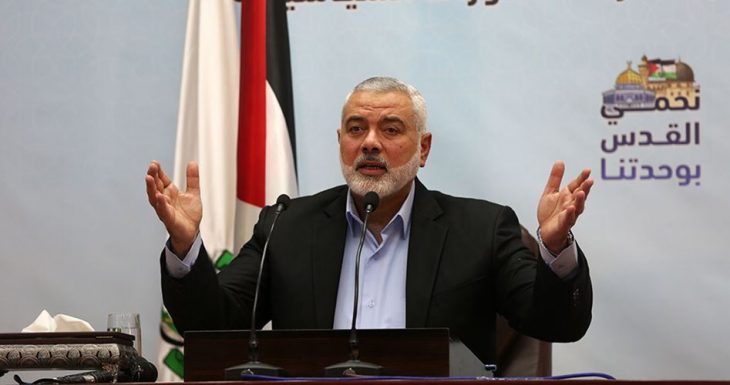
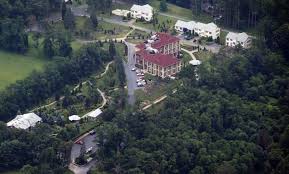
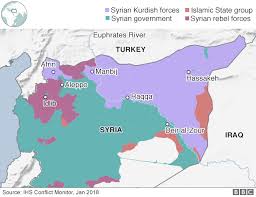

 Part One, The Record, treats the history of garlic as evidence. From the clay garlic bulb placed in an Egyptian grave nearly six thousand years ago, through the Ebers Papyrus, through Hippocrates, Dioscorides, Pliny and Galen, the Arab physicians under Avicenna, the medieval herbals, Culpeper, and the plague years, to the last era in which Western physicians prescribed garlic as a matter of course, which ran from 1850 to 1945. It closes with the living traditions that never stopped using it, and with the folklore of charms, vampires and the evil eye.


