MOSCOW – Regular US anti-Russian sanctions are routine, the Russian Foreign Ministry said in a statement on 21 November.
“Washington continues to impose sanctions on Russia at an increasing rate. Their recent expansion has become the 11th in the last three and a half months, and is increasingly becoming a routine,” the ministry said.
The ministry noted that the main reasons for the introduction of sanctions lay in the internal political discord in the United States when each of the parties sought to “earn points” by any means.
“Attempts to accuse [some states] of supplying oil to Syria, whose armed forces have been fighting terrorist aggression for eight years, look like a statement of support for terrorists and at the same time a desire to prevent the restoration of a devastated country, many of whose inhabitants are deprived of light and heat. Is that what the US wants?” the statement read.
The ministry stressed that by trying to put pressure on Russia, Washington had repeatedly demonstrated its inability to force Moscow to change its independent line in the international relations.
The statement has been voiced a day after the United States announced the introduction of new sanctions against Syria, Iran and Russia. The reason for the restrictive measures was alleged secret supplies of Iranian oil to Damascus with the “assistance” of the Russian side.
This is the last package of sanctions against Russia that have been introduced by the United States for several years, blaming Moscow for meddling other countries’ elections and poisoning people, with all the accusations denied by Russian officials.
The United States claims that an illegal scheme is in place to support Syrian President Bashar Assad and provide financial assistance to Hezbollah and Hamas.
US Secretary of State Mike Pompeo has promised severe consequences for anyone who is supplying oil to Syria or trying to circumvent US sanctions against Iran.
“Today’s US Treasury’s action targeting the Russia-Iran oil scheme to prop up [Syrian President Bashar] Assad, and finance Hizballah & Hamas, sends a clear message: there are grave consequences for anyone shipping oil to Syria, or trying to evade U.S. sanctions on the Islamic Republic’s terrorist activities,” Pompeo wrote on Twitter on Tuesday.
He added that Iran’s spiritual leader, Ayatollah Ali Khamenei, “should decide if spending the Iranian people’s money on the Iranian people is more important than inventing schemes to fund Assad, Hizballah, Hamas, and other terrorists”.
On Tuesday, Washington added six individuals and three organisations to its sanctions list claimed by the Treasury to be involved in oil shipments to the Syrian government, among them the Russian companies Global Vision Group and Promsyryeimport, and the latter company’s first deputy director Andrei Dogayev.
The list also features two Iraqi nationals, a Lebanese, a Syrian and an Iraqi,as well as the Iranian-registered Tadbir Kish Medical and Pharmaceutical Company.
According to the US Treasury Department, the Global Vision Group and Syrian citizen Mohammed Amer Alshviki, who, according to Washington, is the company’s owner, allegedly play a key role in a scheme for petroleum shipments to Syria and financial transfers to the Quds Force special unit of Iran’s Revolutionary Guards Corps.
Shortly before that, US Special Representative for Syria James Jeffrey stated that the recently imposed second batch of US sanctions against Iran are aimed at forcing Tehran to reduce its ‘presence’ in Syria.
Russia and Iran are yet to comment on these accusations and sanctions.
Manlio Dinucci in this carefully documented Pandora TV production focuses on US-NATO military deployment in Italy and around the World in what might described as “Global NATO”.
Manlio Dinucci, distinguished Italian author, geopolitical analyst and geographer is a Research Associate of the Centre for Research on Globalization CRG).
The article may not involve the employment of sleazy sources with an ax to grind, but it does stretch the findings of the Center for Strategic and International Studies (CSIS), a think tank that is deeply integrated with the military-industrial complex and plays an instrumental role in US media coverage on Korea.
“Controversy is raging,” South Korea’s progressive Hankyoreh newspaper declared on Wednesday about the Times report, which it called “riddled with holes and errors.”
Sanger’s story, which appeared on Monday underneath the ominous headline “In North Korea, Missile Bases Suggest a Great Deception,” focused on a new study from CSIS’s “Beyond Parallel” project about the Sakkanmol Missile Operating Base, one of 13 North Korean missile sites, out of a total of 20, that it has identified and analyzed from overhead imagery provided by Digital Globe, a private satellite contractor.
None of the 20 sites has been officially acknowledged by Pyongyang, but the network is “long known to American intelligence agencies,” wrote Sanger.
Sakkanmol, according to CSIS, “is an undeclared operational missile base for short-range ballistic missiles” a little over 50 miles (85 kilometers) north of the border and therefore “one of the closest to the demilitarized zone (DMZ) and Seoul.” Pyongyang’s highly publicized decommissioning last summer of the Sohae satellite launch facility “obscures the military threat to U.S. forces and South Korea from this and other undeclared ballistic missile bases.”
Its authors added a huge caveat at the end: “Some of the information used in the preparation of this study may eventually prove to be incomplete or incorrect.”
But the Times ignored the warning and took the report several steps further. According to Sanger, that analysis of the missile base shows that North Korea is “moving ahead with its ballistic missile program” despite pledges made by Kim Jong-Un to President Trump at their Singapore summit on June 12 to eliminate his nuclear and missile programs if the United States ends its “hostile policy” and agrees to forge a new relationship with North Korea.
The “new commercial satellite images” of the undeclared missile sites, Sanger concluded darkly, suggest that North Korea “has been engaged in a great deception.”
While North Korea has offered to dismantle a major launching site, he asserted, it continues “to make improvements at more than a dozen others that would bolster launches of conventional and nuclear warheads.” That finding “contradicts Mr. Trump’s assertion that his landmark diplomacy is leading to the elimination” of the North’s nuclear weapons and missiles, Sanger concluded.
The implication was that North Korea, by continuing to build missiles after the Singapore summit, is lying to the United States and is therefore untrustworthy as a negotiating partner—and that Trump, by proclaiming that he has neutralized Kim’s threats, has been deceived. The Times-CSIS report was immediately picked up by major media outlets and repeated almost verbatim on NBC Nightly News and NPR, with little additional reporting.
A leading Democrat, Senator Edward Markey of Massachusetts, seized on the report to argue that President Trump is “getting played” by North Korea. “We cannot have another summit with North Korea—not with President Trump, not with the Secretary of State—unless and until the Kim regime takes concrete, tangible actions to halt and roll back its nuclear weapons and ballistic missile programs,” he said in the statement.
But even a cursory analysis of the imagery should have raised questions. On Monday night, a Korean news outlet pointed out that all the photos analyzed in the CSIS report are dated March 29, 2018—almost two and a half months before Trump and Kim met in Singapore on June 12.
The dates make Sanger’s claim that North Korea is “moving ahead” on missile production after its pledges to Trump laughable; indeed, they make his story look like a serious attempt to deceive the American public about the real progress that has been made in ending the standoff.
In fact, as discussion swirled on Twitter, it became clear that Sanger was exaggerating the report. Arms-control experts immediately questioned his assertions, arguing that he had ignored the fact that North Korea and the United States have yet to sign any agreement under which the North would give up its nuclear weapons and missiles. And in the absence of an agreement, it’s status quo for both North Korea and the United States.
North Korea’s missile program “is NOT deception,” Vipin Narang, an associate professor of political science at MIT, posted soon after the story was published. Narang, who writes occasionally for the Times editorial page on North Korea, pointed out that Kim Jong-un has never offered to stop producing ballistic missiles and in fact had ordered more to be produced in January 2018.
“Unless and until there is a deal” with Trump, he wrote, “Kim would be a fool to eliminate and stop improving [them].… So the characterization of ‘deception’ is highly misleading. There’s no deal to violate.” (Like other US analysts, Narang did not question the CSIS report itself, calling it “excellent.”)
The CSIS report was denounced by the government of South Korean President Moon Jae-in as “nothing new,” and Kim Eui-kyeom, its chief spokesperson, took particular exception to the Times’ use of the term “deception.” To his credit, Sanger acknowledged the criticism and quoted the statement in full.
President Donald Trump has said Washington intends to remain a steadfast partner of Saudi Arabia to ensure interests of the United States, Israel and regional partners.
Trump said that it is possible that Saudi Crown Prince Mohammad bin Salman had knowledge of the assassination of Saudi dissident journalist Jamal Khashoggi, according to a statement issued by the White House on Tuesday.
Trump said that “King Salman and Crown Prince Mohammad bin Salman vigorously deny any knowledge of the planning or execution of the murder of Mr. Khashoggi. Our intelligence agencies continue to assess all information, but it could very well be that the Crown Prince had knowledge of this tragic event – maybe he did and maybe he didn’t!”
“That being said, we may never know all of the facts surrounding the murder of Mr. Jamal Khashoggi. In any case, our relationship is with the Kingdom of Saudi Arabia,” the US president insisted. “They have been a great ally in our very important fight against Iran.”
“The United States intends to remain a steadfast partner of Saudi Arabia to ensure the interests of our country, Israel and all other partners in the region. It is our paramount goal to fully eliminate the threat of terrorism throughout the world!” he added.
He mentioned that Saudi Arabia had “agreed to spend and invest $450 billion in the United States. This is a record amount of money. It will create hundreds of thousands of jobs, tremendous economic development, and much additional wealth for the United States.”
“Of the $450 billion, $110 billion will be spent on the purchase of military equipment from Boeing, Lockheed Martin, Raytheon and many other great U.S. defense contractors. If we foolishly cancel these contracts, Russia and China would be the enormous beneficiaries – and very happy to acquire all of this newfound business. It would be a wonderful gift to them directly from the United States!” he pointed out.
He acknowledged that the “crime against Jamal Khashoggi was a terrible one, and one that our country does not condone,” but implied that due to the murder of a journalist Washington cannot cancel such lucrative business deals with the kingdom.
Some US senators have called on Trump to cancel arms deals with Saudi Arabia as a punishment over the murder of Khashoggi — a US resident who was killed in the Saudi consulate in Istanbul on October 2 after being lured into the mission for some standard paperwork.
While mounting evidence released by Turkey and even the CIA point to bin Salman’s role in the murder, Trump had resisted calls inside Washington to hold him responsible.
In an attempt to ease the criticism, the US Treasury Department imposed economic sanctions on 17 Saudis involved in the murder on Thursday.
The sanctions came after the Saudi public prosecutor announced that five officials faced a possible death sentence in the case but exonerated bin Salman, also known as MBS.
The Pentagon has finally completed its first ever audit and the results are as many of us expected. After spending nearly a billion dollars to find out what has happened to trillions in unaccounted-for spending, the long look through the books has concluded that only ten percent of all Pentagon agencies pass muster. I am surprised any of them did.
Even the Pentagon is not surprised by the failure of the audit. “We failed the audit. But we never expected to pass it,” said Deputy Secretary of Defense Patrick Shanahan. Can we imagine any large US company subject to the prying eyes of the IRS being so unfazed by the discovery that its books have been so mis-handled?
As with all government programs, but especially when it comes to military spending, the failure of a program never leads to calls for funding reductions. The Pentagon’s failure to properly account for the trillions of taxpayer dollars shoveled in year after year only means, they say, that we need to send more money! Already they are claiming that with more resources – meaning money – they can fix some of the problems identified by the audit.
If you subsidize something you get much more of it, and in this case we are subsidizing Pentagon incompetence. Expect much more of it.
Outgoing chairman of the House Armed Services Committee, Rep. Mac Thornberry, warned against concluding that this mis-handling trillions of dollars should make us hesitant to continue sending trillions more to the Pentagon. The failed audit “should not be used as an excuse for arbitrary cuts that reverse the progress we have begun on rebuilding our strength and readiness,” he said.
The neocons concur. Writing in the Free Beacon, editor Matthew Continetti (who happens to be Bill Kristol’s son-in-law) warns that now is “the wrong time to cut defense.”
But I agree with the young neoconservative Continetti. I would never support cutting a penny of defense. However the Pentagon’s lost trillions have nothing to do with defense. That is money propping up the high lifestyles of those connected to the military-industrial complex.
Continetti and the neocons love to throw out bogeymen like China and Russia as excuses for more military spending, but in fact they are hardly objective observers. Look at how much the military contractors spend funding the neocon publications and neocon think tanks telling us that we need more military spending! All this money is stolen from the productive economy and diverted to enrich neocon cheerleaders at our expense.
Of course the real problem with the Pentagon and military spending in general is not waste, fraud, and abuse. It is not ten thousand dollar toilet seats or coffee mugs. The problem with military spending is the philosophy that drives it. If the US strategy is to maintain a global military empire, there will never be enough spending. Because there is never enough to control every corner of the globe. But if we are to return to a well-defended republic, military spending could easily be reduced by 75 percent while keeping us completely safe. The choice is ours!
After prolonged hibernation, the Astana Process on Syrian peace is kinetic, with the troika of ‘guarantor’ states – Russia, Turkey and Iran – set to hold a round of talks in the Kazakh capital on November 28-29. Delegations of the Syrian government and the opposition are also expected to attend. A renewed effort is commencing to create traction for the UN-sponsored negotiations in Geneva.
Much water has flown down the Euphrates since the 9th round of the Astana Process took place in May. Six months is a long time in politics – especially in Middle East politics. But, paradoxically, while Middle Eastern politics is in turmoil, the prospects for peace in Syria may have improved. The setting for tomorrow’s meet – it’s unclear at what level the event will take place – has become largely favorable. At least 10 major reasons can be attributed.
One, Syria is witnessing a period of relative calm. There has been no major fighting for months. Two, Syrian-Jordanian border had reopened and nothing of a feared flare-up happened in the Golan Heights. Three, the Russian-Turkish understanding on Idlib is holding. Four, Israel has been effectively ‘defanged’ (thanks to deployment of Russian S-300 ABM system to Syria). Five, Russia and Iran intend to retain their military footprints in Syria for a foreseeable future, while on the contrary, the US lacks the political will or the military capability to impact the strategic calculations of Moscow, Tehran, Damascus or Ankara.
Six, importantly, Turkey has become an implicit ally of Russia and Iran and is inching closer and closer to a political deal that leaves President Bashar Al-Assad in power. Seven, Russia, Turkey, and Iran are in the lead in shaping the Syria policy, with clear strategic goals and, even more so, the means to achieve them.
Eight, on the other hand, a growing determination on the part of Russia, Iran, and Turkey is discernible to freeze out the United States from any role in shaping Syria’s geo-strategic future. Although the three countries would have tactical differences between them, broadly, Turkey will accommodate Russia and Iran so long as it has a free hand to check the Kurdish forces threatening its security. Significantly, the announcement on the rebooting of the Astana Process comes after the visit by Russian President Vladimir Putin to Turkey on November 19.
Nine, the crisis in Turkish-American relations not only persists but may even deepen in the period ahead. Finally, the Trump administration’s calculations that its re-imposition of sanctions against Iran will either force Iran out of Syria or, better yet, produce a veritable collapse of the Iranian government are turning out to be a mere pipe dream. In fact, the opposite has happened.
Iran is intensifying its coordination with Russia and Turkey, and is creating firewalls to protect its strategic gains in Syria. Again, it is clear by now that the US cannot count on the new government in Baghdad to act against Iranian interests.
Similarly, the widening cracks in the US-Saudi alliance in the downstream of the Khashoggi murder all but means an overall Saudi disengagement from the Syrian conflict. The UAE has already begun mending fences with the Syrian government, which would only have been possible with Saudi approval. (See my blog UAE, Saudi sense convergence with Syria.)
Suffice to say, the so-called Syrian opposition is finding itself rudderless. Their erstwhile mentors – US, Turkey, Saudi Arabia, UAE – have either reached a dead end or have turned to new priorities in their self-interests accepting the defeat in the Syrian conflict.
Meanwhile, the appointment of Norwegian diplomat Geir Pederson as the UN Secretary-General’s new special envoy for Syria becomes a positive factor. Russia has warmly noted that “we know him as an experienced and unbiased diplomat.” Pederson’s predecessor Staffan de Mistura was widely perceived as a sidekick of the US. Clearly, the Astana Process is not wasting time by kickstarting the work on a Syrian settlement even as Perdersen moves in.
Depending on what criteria one uses, there are between 200 and 600 groups in the United States that wholly or in part are dedicated to furthering the interests of Israel. The organizations are both Jewish, like the Zionist Organization of America, and Christian Zionist to include John Hagee’s Christians United for Israel, but the funding of the Israel Lobby and both its political and media access comes overwhelmingly from Jewish supporters and advocates.
Many of the groups are registered with the Internal Revenue Service for tax purposes as 501(c)3 “educational” or “charitable” foundations, which enables them to solicit tax exempt donations. One might dispute whether promoting Israeli interests in the United States is actually educational, but as of right now the Department of the Treasury believes it can be so construed, protected by the First Amendment.
But there is a more serious consideration in terms of the actual relationships that many of the groups enjoy with the Israeli government. To be sure, many of them boast on their promotional literature and websites about their relationships with the Benjamin Netanyahu and his cabinet, so the issue of dual loyalty or, worse, acting as actual Israeli government agents must be considered.
There is a legal remedy to hostile foreigners acting against American interests and that is the Foreign Agents Registration Act of 1938 (FARA). Originally intended to identify and monitor agents of Nazi Germany propagandizing in the United States, it has since been applied to individuals and groups linked to other nations. Most recently, it was used against Russian news agencies RT America and Sputnik, which were forced to register. It is also being considered for Qatar based al-Jazeera.
FARA requires identified agents to be transparent in terms of their funding and contacts while also being publicly identified as representing the interests of a foreign nation. They must report to the Department of Justice every contact they have with congressmen or other government officials. The text of the Act defines a foreign agent as
“any person who acts as an agent, representative, employee, or servant, or any person who acts in any other capacity at the order, request, or under the direction or control, of a foreign principal or of a person any of whose activities are directly or indirectly supervised, directed, controlled, financed, or subsidized in whole or in major part by a foreign principal, and who directly or through any other person— (i) engages within the United States in political activities for or in the interests of such foreign principal; (ii) acts within the United States as a public relations counsel, publicity agent, information-service employee or political consultant for or in the interests of such foreign principal; (iii) within the United States solicits, collects, disburses, or dispenses contributions, loans, money, or other things of value for or in the interest of such foreign principal; or (iv) within the United States represents the interests of such foreign principal before any agency or official of the Government of the United States.”
In spite of language that would presumably cover many of the hundreds of Jewish organizations acting for Israel, FARA has never been used to compel registration of any such groups or individuals even when it was public knowledge that they were working closely with the Israeli government to coordinate positions and promote other Israeli interests. That failure is at a minimum a tribute to Jewish power in the United States, but it is also due to the fact that the organizations are funded from within the United States by wealthy American Jews, not by Israel, which is the argument sometimes inaccurately made by the groups themselves to demonstrate that they are not being directed by the Israeli government.
The difficulty in proving that one is directed by a foreign government has been definitively resolved regarding one group the Foundation for the Defense of Democracies (FDD), which has become the leading neoconservative bastion seeking a war with Iran, Israel’s bête noir. The recent al-Jazeera expose on the activities of the Israeli lobbies in both Britain and the United States, which I wrote about last week, included a surreptitiously filmed conversation with Sima Vaknin-Gil, a former Israeli intelligence officer who now heads the Ministry of Strategic Affairs, which is tasked with countering what is perceived to be anti-Israeli activity worldwide. The Ministry is particularly focused on the non-violent Boycott, Divestment and Sanctions movement (BDS), which is increasingly active in both the United States and Europe.
Vaknin-Gil was discussing his activities with Tony Kleinfeld, an undercover investigative reporter who was secretly recording and filming his encounters with various members of the Israel Lobby as well as of the Israeli government. Vaknin-Gil provided explicit confirmation that the FDD works directly with the Israeli government, making it an Israeli agent by the definition of FARA.
For those who are unfamiliar with FDD, it is probably currently the most prominent neocon organization though it nevertheless claims to be a non-partisan “research group.” It focuses on foreign policy and security issues by “Fighting Terrorism and Promoting Freedom,” as it informs us on its website masthead. It works to “defend free nations against their enemies,” which frequently means in practice anyone whom Israel considers to be hostile, most particularly Iran. FDD’s Leadership Council has featured former CIA Director James Woolsey, Senator Joe Lieberman, and Bill Kristol. Its Executive Director is Canadian import Mark Dubowitz, who is obsessed with Iran. Its advisors and experts are mostly Jewish and most of its funding comes from Jewish oligarchs.
FDD’s auditorium has become a preferred venue for senior officials of the Trump Administration to go and make hardline speeches, just as the American Enterprise Institute was under George W. Bush. Mike Pence, Mike Pompeo, John Bolton and Nikki Haley have all spoken there recently, frequently focusing on Iran and the threat that it allegedly constitutes.
FDD aside, Vaknin-Gil also confirmed that there were other groups in the United States doing the same sorts of things on behalf of Israel. He said “We have FDD. We have others working on this,” elaborating that FDD is “working on” projects for Israel including “data gathering, information analysis, working on activist organizations, money trail.”
So Vaknin-Gil was admitting that FDD and others were working as Israeli proxies, collecting information on U.S. citizens, spying on legal organizations, and both planning and executing disinformation at Israeli direction. Kleinfeld also spoke with a Jonathan Schanzer, a senior official in FDD, who filled in a bit more of what the foundation is up to in terms of discrediting groups in the U.S. that support the BDS movement.
Schanzer admitted “BDS has taken everybody by surprise” before complaining that the Jewish response has been “a complete mess. I don’t think that anybody’s doing a good job. We’re not even doing a good job.” He then complained that attempts to discredit Palestinian groups by linking them to terrorist groups had failed, as also had the use of the label anti-Semitism. “Personally I think anti-Semitism as a smear is not what it used to be.”
So, when will the Justice Department move on FDD now that its true colors have been exposed by al-Jazeera? The group must be required to register if justice be done, but will it? Its principal partner in crime the American Israel Public Affairs Committee (AIPAC) has avoided registering for more than sixty years by claiming that it is an American organization working to educate the U.S. public about the all the good things connected to Israel. Even though it meets regularly with Israeli government officials, it claims not to be representing Israeli interests. But just as in the case of FDD, it is time to require AIPAC to register as what it really is: a foreign agent. As a registered agent, it will still be able to exercise First Amendment rights to defend Israel but it would not be able to be involved in lobbying on Capitol Hill and directing money to politicians who are described as pro-Israeli, as it does now. Its finances will be transparent and it will be perceived as an official advocate for Israel, not as an educational resource for what is happening in the Middle East. Hopefully, when AIPAC stops throwing money around, the politicians and media types will find another place to roost.
To be sure the lovefest for Israel in government extends far beyond FDD and AIPAC. It can be found in many dark corners. National Security Advisor John Bolton recently received the “Defender of Israel” award from the Zionist Organization of America. And one might suggest that the U.S. United Nations delegation, headed by Ambassador Nikki Haley, is directed by the Israeli government, particularly given events of last Friday whereby the U.S. voted against a motion condemning Israel’s continued illegal occupation of the Syrian Golan Heights, thereby recognizing for the first time Israel’s sovereignty over the area. Whether Haley was speaking for herself or for the administration was characteristically unclear, but it hardly matters. Nikki Haley might be referred to as a useful idiot, as Lenin put it, but her consistent pattern of extreme loyalty in defense of Israel marks her out as being particularly beholden to the Jewish state, which will no doubt arrange to richly reward her through some position in financial services for which she is totally unqualified when she leaves her post in January. And then she will be well funded to run for president in 2020. Having Haley in charge, one might just as well vote for Benjamin Netanyahu.
Philip M. Giraldi, Ph.D., is Executive Director of the Council for the National Interest, a 501(c)3 tax deductible educational foundation that seeks a more interests-based U.S. foreign policy in the Middle East. Website is www.councilforthenationalinterest.org, address is P.O. Box 2157, Purcellville VA 20134 and its email is inform@cnionline.org.
For a generation, big box stores have swept across America, using predatory pricing and other dirty tricks to kill the independent retail sector; they used their corporate lobbying muscle to tempt cities and towns into handing out massive corporate welfare checks to lure them to town, and now, with the help of hustling contingency lawyers, they are promulgating a property-tax scam called “the dark store theory” that is cutting their taxes in half or more, with further reductions every year, and no end in sight.
The “dark store theory” holds that property taxes on thriving, super-profitable big box stores should not be based on how much the property sold for, plus the capital investment, minus depreciation — instead, these stores should be valued based on the selling price of nearby failed big-box stores that have been sold at knock-down prices.
Big box stores used their generous municipal subsidies to overbuild across American towns, creating a glut that resulted in widespread closures after the financial crisis. Because big box stores are so terribly built — shoddy construction, weird layouts, and not even enough freight docks to use as a warehouse — the shuttered stores sell for a tiny fraction of their book value.
But even though the big boxes are shuttering their stores like crazy, the remaining stores are still profitable — thanks to the over-investment in big box stores during the rampup phase, all the local retail that might have competed with the remaining stores has collapsed. That leaves locals with no choice but to drive longer distances to the remaining stores to shop, meaning that the predatory mega-retailers now get to spend less to do the same business.
Entrepreneurial corporate lawyer/consultants like Detroit’s Michael Shapiro (who is credited with inventing “dark store theory”) and Minnesota’s Robert Hill have made a fortune for themselves and for big box stores by filing costly court challenges to the stores’ tax assessments, arguing that their property taxes should be based on the price of the abandoned, unsuccessful nearby stores, not on the standard formula of sale price plus improvements minus depreciation.
These lawyers seek reductions of fifty percent or more on property tax bills, and return year after year to drive those bills even lower. The small towns they hit — who often can’t afford to litigate against multinational, private-equity-backed retail giants — roll over.
Towns that have granted these tax concessions are going broke. Ste St Marie, MI has slashed city pensions; Escanaba, MI has cut its library hours; and so on. Meanwhile, town residents and small businesses are facing rising tax bills as their cities seek to close the gap left by the sweetheart treatment the big boxes are getting.
Wisconsinites in 24 towns voted to end “dark store theory” tax treatments in ballot initiatives in this month’s elections. But that’s only a few towns in one states, and meanwhile the epidemic rages on.
Still, it’s going to be tough: Don Millis, a prominent tax attorney who represents retailers and a lobbyist for the Wisconsin Manufacturers and Commerce, the top advocacy group for big business in these parts, sits on the legislative committee assigned to review the issue.
Other states have proposed legal fixes, too, but in Indiana, the one state that managed to pass anti-dark store theory legislation in 2015, lobbying pressure led to its weakening the year after it was passed. The state tax board has continued to sympathize with retailers, who keep launching appeals.
If Wisconsin managed to change its laws, Hill told me, lawyers like him would just redouble their efforts. “That’s when we’ll grab the pitchforks and get the Constitution involved,” he said.
“Colonel” Edward Mandell House is on his way to meet with King George V, who ascended to the throne after Edward VII’s death in 1910. Accompanying him is Edward Grey, British foreign secretary and acolyte of the Milner Group. The two speak “of the probability of an ocean liner being sunk” and House informs Grey that “if this were done, a flame of indignation would sweep across America, which would in itself probably carry us into the war.”
An hour later, at Buckingham Palace, King George V inquires about an even more specific event.
“We fell to talking, strangely enough, of the probability of Germany sinking a trans-Atlantic liner, . . . He said, ‘Suppose they should sink the Lusitania with American passengers on board. . . .’”
And, by a remarkable coincidence, at 2:00 that afternoon, just hours after these conversations took place, that is precisely what happened.
The Lusitania, one of the largest passenger liners in the world, is en route from New York to Liverpool when it is struck by a torpedo from a German U-boat. She sinks to the bottom in minutes, killing 1,198 passengers and crew, including 128 Americans. The disaster—portrayed as a brazen, unexpected attack on an innocent passenger liner—helps to shift public opinion about the war in the US. To the average American, the war suddenly doesn’t feel like a strictly European concern.
Every aspect of the story was, as we now know, a deception. The Lusitania was not an innocent passenger liner but an armed merchant cruiser officially listed by the British Admiralty as an auxiliary war ship. It was outfitted with extra armour, designed to carry twelve six-inch guns, and equipped with shell racks for holding ammunition. On its trans-Atlantic voyage the ship was carrying “war materiel”—specifically, more than 4 million .303 rifle bullets and tons of munitions, including shells, powder, fuses and gun cotton—“in unrefrigerated cargo holds that were dubiously marked cheese, butter and oysters.” This secret manifest was officially denied by the British government for generation after generation but in 2014—a full 99 years after the event—internal government documents were finally released in which the government admitted the deception.
And, most remarkably of all, by Edward Mandell House’s own account both Edward Grey and King George V himself were discussing the sinking of the Lusitania just hours before the event took place.
It’s a story that provides a window into the secret society’s years-long campaign to draw the United States into World War I. But in order to understand this story, we have to meet Edward Mandell House and the other Milner Group co-conspirators in America.
Strange as it might seem, there were no shortage of such co-conspirators in the US. Some, like the members of the influential Pilgrims Society, founded in 1902 for the “encouragement of Anglo-American good fellowship”—shared Rhodes’ vision of a united Anglo-American world empire; others were simply lured by the promise of money. But whatever their motivation, those sympathetic to the cause of the Round Table included some of the wealthiest and most powerful people in the United States at the time.
Many of these figures were to be found at the heart of Wall Street, in the banking and financial institutions revolving around J.P. Morgan and Company. John Pierpont Morgan, or “Pierpont” as he preferred to be called, was the nucleus of turn-of-the-century America’s banking sector. Getting his start in London in 1857 at his father’s merchant banking firm, the young Pierpont returned to New York in 1858 and embarked on one of the most remarkable careers in the history of the world.
Making his money financing the American robber barons of the late 19th century—from Vanderbilt’s railroads to Adolph Simon Ochs’ purchase of TheNew York Times to the buyout of Carnegie Steel—Morgan amassed a financial empire that, by the 1890s, wielded more power than the United States Treasury itself. He teamed up with his close allies, the House of Rothschild, to bail out the US government during a gold shortage in 1895 and eased the Panic of 1907 (which he helped to precipitate) by locking 120 of the country’s most prestigious bankers in his library and forcing them to reach a deal on a $25 million loan to keep the banking system afloat.
As we saw in “Century of Enslavement: The History of the Federal Reserve,” Morgan and his associates were only too happy to use the banking crises they helped to create to galvanize public opinion toward the creation of a central bank. . . so long as that central bank was owned and directed by Wall Street, of course.
But their initial plan, the Aldrich Plan, was immediately recognized as a Wall Street ploy. Morgan and his fellow bankers were going to have to find a suitable cover to get their act through Congress, including, preferably, a President with sufficient progressive cover to give the new “Federal Reserve Act” an air of legitimacy. And they found their ideal candidate in the politically unknown President of Princeton University, Woodrow Wilson, a man who they were about to rocket straight into the White House with the help of their point man and Round Table co-conspirator, Edward Mandell House.
GROVE: Woodrow Wilson was an obscure professor at Princeton University who from reading all that I’ve read about him wasn’t the smartest guy but he was smart enough to pick up when other people had good ideas and then he bumps into this guy named Colonel House.
Colonel House, he grew up in Beaumont, Texas, and Colonel House’s dad was like a Rhett Butler type of smuggler privateer pirate during the Confederate war with the Union. So Colonel House: first of all, he’s not a colonel. It’s just like a title he gave himself to make him seem more than he was. But he did come from a politically connected family in the south that were doing business with the British during the Civil War. So Colonel house in the early 1900’s makes Woodrow Wilson his protege and Colonel house himself is being puppeted by a few people and the layers of the Anglo-American establishment above him and so we are left with the public persona of Woodrow Wilson. And here he is.
And he’s got this, you know, this whole new Federal Reserve System that’s going to come in during his administration which was also kind of a precursor to getting America into the war because it changed our financial dependency from being self-reliant and printing our own debt-free money to being indentured to international bankers who charged us as they print money out of thin air and charged future generations for it.
The election of Woodrow Wilson once again shows how power operates behind the scenes to subvert the popular vote and the will of the public. Knowing that the stuffy and politically unknown Wilson would have little chance of being elected over the more popular and affable William Howard Taft, Morgan and his banking allies bankrolled Teddy Roosevelt on a 3rd party ticket to split the Republican vote. The strategy worked and the banker’s real choice, Woodrow Wilson, came to power with just forty-two percent of the popular vote.
With Wilson in office and Colonel House directing his actions, Morgan and his conspirators get their wish. 1913 saw the passage of both the federal income tax and the Federal Reserve Act, thus consolidating Wall Street’s control over the economy. World War One, brewing in Europe just eight months after the creation of the Federal Reserve, was to be the first full test of that power.
But difficult as it had been for the Round Table to coax the British Empire out of its “splendid isolation” from the continent and into the web of alliances that precipitated the war, it would be that much harder for their American fellow travelers to coax the United States out of its own isolationist stance. Although the Spanish-American War had seen the advent of American imperialism, the thought of the US getting involved in “that European war” was still far from the minds of the average American.
“There is nothing reasonable in such a war as that for which Europe has been making ready, and it would be folly for this country to sacrifice itself to the frenzy of dynastic policies and the clash of ancient hatreds which is urging the Old World to its destruction.”
The Sun was by no means unique in its assessment. A vote taken among 367 newspapers throughout the United States in November of 1914 found just 105 pro-Ally and 20 pro-German papers, with the vast majority—242 of them—remaining firmly neutral and recommending that Uncle Sam stay out of the conflict.
Once again, just as they did in Britain, the cabal was going to have to leverage its control of the press and key governmental positions to begin to shape public perception and instill pro-war sentiment. And once again, the full resources of these motivated co-conspirators were brought to bear on the task.
One of the first shells in this barrage of propaganda to penetrate the American consciousness was the “Rape of Belgium,” a catalogue of scarcely believable atrocities allegedly committed by the German forces in their invasion and occupation of Belgium at the start of the war. In a manner that was to become the norm in 20th century propaganda, the stories had a kernel of truth; there is no doubt that there were atrocities committed and civilians murdered by German forces in Belgium. But the propaganda that was spun from those kernels of truth was so over-the-top in its attempts to portray the Germans as inhuman brutes that it serves as a perfect example of war propaganda.
RICHARD GROVE: The American population at that time had a lot of German people in it. Thirty to fifty percent of the population had relations back to Germany, so there had to be this very clever propaganda campaign. It’s known today as “babies on bayonets.” So if you have no interest in World War I but you think it’s interesting to study propaganda so you don’t get fooled again, then type it into your favorite search engine: “babies on bayonets, World War I.” You’ll see hundreds of different posters where the Germans are bayonetting babies and it brings about emotions and it doesn’t give you the details of anything. And emotions drive wars, not facts. Facts are left out and deleted all the time in order to create wars, so I think that putting facts back in might help prevent wars. But I do know that they like to drive people on emotion. The babies on bayonets getting America into World War one, that’s a key part of it.
GERRY DOCHERTY: Children who had their arms chopped off. Nuns that were raped. Shocking things, genuinely shocking things. The Canadian officer who was nailed at Andrew’s cross on a church door and left there to bleed to death. These were the great myths peddled in order to defame and bring down the the whole image of any justification for German action and try and influence America into war.
DOCHERTY: That’s not to say that there weren’t atrocities on both sides. War is an atrocious event and there are always victims. Absolutely. And I offer no justification for it. But the lies, the unnecessary abuse of propaganda.
Even when in Britain they decided that they would put together the definitive volume of evidence to present it to the world, the person they asked to do this just so happened to have been former British ambassador to the United States, a man called Bryce you who was very well-liked in the States. And his evidence was published and put forward and there were screeds of stories after stories. But then later it was discovered that in fact the people who took the evidence hadn’t been allowed to speak to any of the Belgians directly but in fact what they were doing is they were listening to a middleman or agents who who had supposedly taken these stories.
And when one of the official committee said “Hold on, can I speak to someone directly?” “No.” “No?” He resigned. He wouldn’t allow his name to be put forward with the [official report]. And that’s the extent to which this is false history. It’s not even even acceptable to call it fake news. It’s just disgusting.
The campaign had its intended effect. Horrified by the stories emerging from Belgium—stories picked up and amplified by the members of the roundtable in the British press, including the influential Times and the lurid Daily Mail, run by Milner ally Lord Northcliffe—American public opinion began to shift away from viewing the war as a European squabble about an assassinated archduke and toward viewing the war as a struggle against the evil Germans and their “sins against civilization.”
The culmination of this propaganda campaign was the release of the “Report of the Committee on Alleged German Outrages,” better known as “The Bryce Report,” compiled for “His Britannic Majesty’s Government” and presided over by Viscount James Bryce, who, not coincidentally, was the former British Ambassador to America and a personal friend of Woodrow Wilson. The report was a sham, based on 1,200 depositions collected by examiners who “had no authority to administer an oath.” The committee, which was not allowed to speak to a single witness itself, was tasked merely with sifting through this material and deciding what should be included in the final report. Unsurprisingly, the very real atrocities that the Germans had committed in Belgium—the burning of Louvain, Andenne and Dinant, for example—were overshadowed by the sensationalist (and completely unverifiable) stories of babies on bayonets and other acts of villainy.
The report itself, concluding that the Germans had systematically and premeditatedly broken the “rules and usages of war” was published on May 12, 1915, just five days after the sinking of TheLusitania. Directly between these two events, on May 9, 1915, Colonel House—the man who Wilson called his “second personality” and his “independent self”—wrote a telegram, which the President dutifully read to his cabinet and was picked up by newspapers across the country.
“America has come to the parting of the ways, when she must determine whether she stands for civilized or uncivilized warfare. We can no longer remain neutral spectators. Our action in this crisis will determine the part we will play when peace is made, and how far we may influence a settlement for the lasting good of humanity. We are being weighed in the balance, and our position amongst nations is being assessed by mankind.”
But despite this all-out propaganda assault, the American public was still largely against entering the war. It was in this context that the same group of Wall Street financiers who had maneuvered Wilson into the White House presided over the 1916 presidential election, one that the country knew would decisively conclude America’s neutrality in the war or its decision to send forces to engage in European combat for the first time in history.
The bankers left nothing to chance. Wilson, who would predictably follow House’s lead on all matters including war, was still their preferred candidate, but his competitor, Charles Evan Hughes, was no less of a Wall Street man. Hughes’ roots were as a Wall Street lawyer; his firm represented the New York, Westchester, and Boston Railroad Company for J.P. Morgan and Company and the Baptist Bible class that he led boasted many wealthy and influential members, including John D. Rockefeller, Jr.
The affable Hughes was stiff competition for the wooden and charmless Wilson, but such was the importance of American neutrality that “He Kept Us Out of War” actually became the central slogan of the campaign that saw Wilson return to the White House.
DOCHERTY: And then, of course, came the famous election of 1916. Wilson wasn’t popular, but Wilson, simply—he had no kind of public persona which warmed people. On the contrary, he was a cold fish. He had dubious links with several of those who are powerful in Wall Street. But his propaganda for the election was “He Kept Us Out of War.” “He was a man, vote for Wilson, he kept us out of war.” And then having promised that he would continue to keep America out of war, and in fact of course within months America was was thrown into the war by its own government.
“He Kept Us Out of War.” But just as in the British election of 1906—which saw the British public overwhelmingly voting for Henry Campbell-Bannerman’s Liberal Party and their platform of peace only to get the Milnerites in the cabinet entering secret agreements to bring about war—so, too, was the American public duped at the ballot box in 1916.
In fact, in the fall of 1915, over one year before the election even took place, Wilson’s string-puller, Edward Mandell House, was engaged in a secret negotiation with Edward Grey, the Milnerite heading Britain’s foreign office. That negotiation—long hidden from the public but finally revealed when House’s papers were published in 1928—shows the lengths to which Grey and House were willing to go to draw America into the war on the side of the Allies and against the Germans.
On October 17, 1915, House drafted a letter to Grey which he called “one of the most important letters I ever wrote.” Before sending it, he split it into two separate, coded messages, to ensure it would not be readable if it were intercepted. In it, he laid out a plan to steer the US into war with Germany under the false pretense of a “peace conference.”
Dear Sir Edward :
. . . In my opinion, it would be a world-wide calamity if the war should continue to a point where the Allies could not, with the aid of the United States, bring about a peace along the lines you and I have so often discussed.
It is in my mind that, after conferring with your Government, I should proceed to Berlin and tell them that it was the President’s purpose to intervene and stop this destructive war, provided the weight of the United States thrown on the side that accepted our proposal could do it.
I would not let Berlin know, of course, of any understanding had with the Allies, but would rather lead them to think our proposal would be rejected by the Allies. This might induce Berlin to accept the proposal, but, if they did not do so, it would nevertheless be the purpose to intervene. . . .
Perhaps realizing the gravity of what was being proposed, Woodrow Wilson, the man who would later be elected for his ability to keep America out of war, merely added the word “probably” to House’s assurance that America would join the war.
The negotiations for this plan continued throughout the fall of 1915 and winter of 1916. In the end, the British government balked at the proposal because the thought that the Germans might actually accept peace—even a peace of disarmament brokered by the US—was not enough. They wanted to crush Germany completely and nothing less than total defeat would be sufficient. Another pretense would have to be manufactured to embroil the US in the war.
When, on the morning of May 7, 1915, House assured Grey and King George that the sinking of the Lusitania would cause “a flame of indignation [to] sweep across America,” he was correct. When he said it would “probably carry us into war,” he was mistaken. But in the end it was the naval issue that eventually became the pretext for America’s entry into war.
The history books of the period, following the familiar pattern of downplaying Allied provocations and focusing only on the German reactions, highlight the German policy of unrestricted submarine warfare which led to the downing of the Lusitania. The practice, which called for German U-boats to attack merchant ships on sight, was in contravention of the international rules of the sea at the time, and was widely abhorred as barbaric. But the policy was not instituted out of any insane blood lust on the part of the Kaiser; it was in response to Britain’s own policy of breaking international rules of the sea.
At the outbreak of war in 1914 the British had used their position of naval superiority to begin a blockade of Germany. That campaign, described as “one of the largest and most complex undertakings attempted by either side during the First World War,” involved the declaration of the whole of the North Sea as a war zone. As a so-called “distant blockade,” involving the indiscriminate mining of an entire region of the high seas, the practice was in direct violation of the Declaration of Paris of 1856. The indiscriminate nature of the blockade—declaring the most basic of supplies, like cotton, and even food itself to be “contraband”—was a violation of the Declaration of London of 1909.
More to the point, as an attempt to starve an entire country into submission, it was a crime against humanity. Eventually reduced to a starvation diet of 1,000 calories a day, tuberculosis, rickets, edema and other maladies began to prey on those Germans who did not succumb to hunger. By the end of the war the National Health Office in Berlin calculated that 763,000 people had died as a direct result of the blockade. Perversely, the blockade did not end with the war. In fact, with Germany’s Baltic coast now effectively added to the blockade, the starvation actually continued and even intensified into 1919.
Faced with protestations from the Austrian ambassador about the illegality of the British blockade, Colonel House, now America’s de facto president, merely observed: “He forgets to add that England is not exercising her power in an objectionable way, for it is controlled by a democracy.”
This double standard was not the exception but the rule when it came to those in America’s East coast establishment who were hungry to see the US join the Allies on the battlefields of Europe. As historian and author Ralph Raico explained in a 1983 lecture, it was these double standards that led directly to America’s entry into the war.
RALPH RAICO: The Wilson administration now takes the position which will ultimately lead to war. The German government is to be held strictly accountable for the death of any Americans on the high seas regardless of circumstances.
The Germans say, “Well let’s see if we can live with this. As long as you’re willing to put pressure on the British to have them modify their violations of international law—that is, they’re placing food on the list of contraband materials, which had never been done before. The British ,as you know, take your merchant ships off the high seas on the way to Rotterdam because they say anything that goes to Rotterdam is going to go to Germany, so they take American ships off the high seas. The British have put cotton—cotton!—on the list of contraband, confiscating these materials. They interfere with letters going to the continent because they think there’s military intelligence possibly involved. The British are imposing in many ways on Americans, so if you hold them responsible, we’ll behave ourselves as far as submarines go.”
This was not to be the case and the attitude of the Americans towards British violations of neutral rights were quite different. One reason is that the American ambassador to London, Walter Hines Page, was an extreme Anglophile. One time, for instance, he gets a message that the British have to stop interfering with American mail shipments to neutral ports, and the American ambassador goes to the British Foreign Minister Edward grey and says, “Look at the message I’ve just got from Washington. Let’s get together and try to answer this. This was his attitude. The British were never to help or were never held to the same standard as the Germans.
At home, Theodore Roosevelt, who in previous years had been a great friend of the kaiser’s and a great admirer of Germany, now says we have to get into this war right away. Besides that there’s a campaign for preparedness for building up the American army, the American Navy, drilling American citizens in combat techniques. There’s a kind of hysteria, really, that travels over the country considering that there’s—at this time certainly no chance—no chance of some kind of immediate threat to the United States.
And people like Roosevelt and Wilson begin talking in a very unfortunate way. Wilson says, for instance, “in America we have too many hyphenated Americans”—of course he meant German-Americans, Irish-Americans—”and these people are not totally loyal to our country.” Already scapegoats are being looked for and public opinion is being roused.
And this diplomatic negotiation, the exchange of memos goes on for the next few years. In January of 1917, the Americans are not having been able to budge the British in the least on any British violation of American rights; the British blockade intensifying; the Germans really feeling hunger in a very literal sense, especially the people on the on the home front; the Kaiser is persuaded by his Admirals and Generals to begin unrestricted submarine warfare around the British Isles.
The American position by this time had solidified, had become a totally rigid one, and when all is said and done when you go through all of the back-and-forth memoranda and notes and principles established, the United States went to war against Germany in 1917 for the right of Americans to travel in armed belligerent merchant ships carrying munitions through war zones. Wilson’s position was that even in that case the Germans simply had no right to attack the ship as long as there are Americans on the ship. Shall I repeat that? Armed belligerent—that is to say, English—armed English merchant ships carrying munitions could not be fired upon by the Germans as long as there were American citizens on board. And it was for the right of Americans to go into the war zone on such vessels that we finally went to war.
After months of deliberations and with the situation on the home front becoming increasingly desperate, the German military commanders decided to resume their unrestricted submarine warfare in 1917. As expected, US merchant ships were sunk, including four ships in late March alone. On April 2, 1917, Woodrow Wilson made his historic speech calling for Congress to declare war on Germany and commit US troops to European battlefields for the first time.
The speech, made over one hundred years ago by and for a world that has long since passed away, still resonates with us today. Embedded within it is the rhetoric of warfare that has been employed by president after president, prime minister after prime minister, in country after country and war after war right down to the current day. From it comes many of the phrases that we still recognize today as the language of lofty ideals and noble causes that always accompany the most bloody and ignoble wars.
With a profound sense of the solemn and even tragical character of the step I am taking and of the grave responsibilities which it involves, but in unhesitating obedience to what I deem my constitutional duty, I advise that the Congress declare the recent course of the Imperial German Government to be in fact nothing less than war against the government and people of the United States.
[…]
The world must be made safe for democracy. Its peace must be planted upon the tested foundations of political liberty. We have no selfish ends to serve. We desire no conquest, no dominion. We seek no indemnities for ourselves, no material compensation for the sacrifices we shall freely make. We are but one of the champions of the rights of mankind. We shall be satisfied when those rights have been made as secure as the faith and the freedom of nations can make them.
Four days later, on April 6, 1917, the US Congress issued a formal declaration of war against the Imperial German Government.
NARRATOR: Inside the White House, President Woodrow Wilson conferred with advisers and signed the proclamation of war against Germany. [. . .] everywhere there was cheering and waving of flags. Hindsight or cynicism might make us smile at the thought that this war was sometimes called That Great Adventure. Never again would we see our entry into a major conflict excite so many to such heights of elation. Naive? Probably. But here was a generation of young men not yet saturated by the paralyzing variety of self analysis and the mock sciences. They believed!
All along the Western front, the Allies rejoiced. The Yanks were coming.
House, the Milner Group, the Pilgrims, the Wall Street financiers and all of those who had worked so diligently for so many years to bring Uncle Sam into war had got their wish. And before the war was over, millions more casualties would pile up. Carnage the likes of which the world had never seen before had been fully unleashed.
The trenches and the shelling. The no man’s land and the rivers of blood. The starvation and the destruction. The carving up of empires and the eradication of an entire generation of young men.
Why? What was it all for? What did it accomplish? What was the point?
To this day, over 100 years later, we still look back on the horrors of that “Great War” with confusion. For so long we have been told non-answers about incompetent generals and ignorant politicians. “It’s the senselessness of war,” the teachers of this fraudulent and partial history have told us with a shrug.
But, now that the players who worked to set the stage for this carnage have been unmasked, these questions can finally be answered.
A new template is forming in the geopolitics of the Asia-Pacific – Russo-Japanese concord. The two regional powers with a troubled history are moving in the direction of concluding a peace treaty that could formally end their World War 2 hostilities and open a new page in their relations.
The negotiations are being handled at the highest level of leadership and, therefore, every single meeting between Russian President Vladimir Putin and Japanese Prime Minister Shinzo Abe is invested with high importance. Both statesmen are known to be ardent supporters of a robust partnership between their countries.
The conclusion of a peace treaty is a pre-requisite to put the relationship on a higher trajectory and to realize its full potential. But both nations are also riding a wave of nationalism and when territorial concessions are involved, feelings run high.
Abe also has tryst with destiny insofar as he hopes to garner the historical legacy of getting back from Russia, the territories, which the former Soviet Union had occupied in the final period of World War 2 when Japan was staring at defeat.
Putin understands that an obdurate Russian stance on Kuril islands is impossible for any Japanese leader to accept. On the other hand, he also cannot ignore the Russian public opinion against territorial concessions. Besides, what complicates matters is that Japan is the US’ number one ally in Northeast Asia and Russia is apprehensive that any formula to settle the territorial dispute – which will have to be based on the joint declaration issued by Japan and the Soviet Union in 1956 (which re-established diplomatic relations and stipulated the return of two of the Kuril islands Habomai and Shikotan after the conclusion of a peace treaty) may lead to an American military presence in a region where Russia has several highly sensitive bases.
Last September, Putin had made a novel offer of signing a peace treaty unconditionally by end-2018, but Abe found it unacceptable. Having said that, Abe acknowledged that Putin’s words showed a desire for peace treaty.
The Kremlin spokesman refused to comment but in a nuanced response made it a point to “confirm that Tokyo’s alliance obligations (with the US) are important as far as peace treaty talks go.”
It is hard to tell whether the ongoing Putin-Abe diplomacy is also a tango being staged by the two statesmen who have a shared interest in expediting a peace treaty, but who are also having to negotiate with each other and safeguard national interests as well as carry their respective domestic audiences along at the same time.
It is entirely conceivable that the two statesmen may even have set a timeline. In fact, Putin and Abe are meeting again in Argentina during the G20 in end-November. Tass reported today that Abe will also be visiting Russia in January. The accelerating diplomacy could well have something to do with Putin’s proposed visit to Japan in June to attend the G20 at Osaka. Don’t be surprised if Abe hopes to meet Putin on a full-fledged state visit in June.
Quite obviously, Russo-Japanese relations are deepening and what seemed an intractable territorial dispute may lend itself to resolution. One possibility could be that Japan regains sovereignty over the Habomai Islands and Shikotan, and the two islands might be turned into special economic zones.
Clearly, the US is the elephant in the room. Under the framework of the Japan-US Security Treaty, American troops in Japan can be stationed on Habomai and Shikotan if the two are handed over to Japan. Therefore, Abe’s proposal (that such a thing will not happen) also implies his willingness to maintain a diplomatic distance from the US.
Indeed, it could not have escaped Putin’s attention that there are incipient trends in Abe’s policies lately suggesting a degree of ‘detachment’ from the US – as apparent, for instance, from Abe’s moves to actively improve relations with China and sequestering it from the deterioration of Sino-American relations. The fact of the matter is that Japan is increasingly uncertain about the US intentions.
Having said that, Japan is still dependent on the security treaty with the US. Trust the US to interfere with the conclusion of a Japan-Russia Peace Treaty, given the long-term implications it would have for the American military presence in Northeast Asia.
On the other hand, a peace treaty would completely transform Russo-Japanese relations, which would also impact the Russia-Japan-China triangle. To be sure, a full-bodied partnership with Russia will vastly expand the strategic space for Japan to recalibrate its relations with both the US and China.
All signs are that Abe is working on a grand design. For a start, he has to contend with domestic opinion. Abe’s big re-election as head of the Liberal Democratic Party in September (with 82% support) has put him on track to become Japan’s longest serving prime minister and to pursue his vision of Japan over the next three years in power (in what will be his last term in office), as well as to focus on the kind of legacy he will leave behind. Read a fine piece here by Japanese scholar Tomohiko Satake at the National Institute of Defence Studies, Tokyo – Should Japan continue to support the US-led international order?
The right would like us to believe that the inequality we see in the United States, and increasingly in other countries, is a natural outcome of market processes. Unfortunately, many on the left seem to largely share this view, with the proviso that they would like the government to alter market outcomes, either with tax and transfer policy, or with interventions like a higher minimum wage.
While redistributive tax and transfer policies are desirable, as is a decent minimum wage, it is an incredible mistake to not recognize that the upward redistribution of the last four decades was brought about by conscious policy, not any sort of natural process of globalization and technology. Not recognizing this fact is an enormous mistake from both the standpoint of policy and politics.
From the policy standpoint, we give up a huge amount by not examining the policies that have caused before-tax income to be redistributed upward. As a practical matter, it is much easier to prevent all the money from going to the top in the first place than trying to tax it back after the fact.
On the political side, we should never have our argument be that somehow the big problem is that the Bill Gates of the world were too successful. The big problem is that we have badly structured the rules of the market so that we gave Bill Gates too much money. With different rules, he would not be one of the world’s richest people even if he had worked just as hard.
Since we’re on the topic of Bill Gates, patent and copyright rules are a good place to start. For some reason, it is difficult to get people to accept an obvious truth: there is a huge amount of money at stake with these rules. By my calculations, patent and copyright monopolies could well direct more than $1 trillion a year, a sum that is more than 60 percent of after-tax corporate profits.
The most visible place where these government-granted monopolies have a large effect is with prescription drugs. We will spend close to $440 billion (2.2 percent of GDP) this year on prescription drugs. If these drugs were sold in a free market without patents or related protections they would likely sell for less than $80 billion. The difference of $360 billion is roughly five times annual spending on SNAP.
The basic story here is that drugs are almost invariably cheap to manufacture. Like aspirin, the vast majority of drugs would sell for $10 or $15 per prescription. It is only because the government gives drug companies patent monopolies that drugs are expensive. We now have an absurd debate where the people who want to bring down drug prices are accused of interfering in the market. That is 180 degrees at odds with reality. The people who want to keep prices high want to maximize the value of their government-granted monopolies.
In this case, the effect of changes in policy is easy to see. In 1980, Congress passed the Bayh–Dole Act which made it possible for companies to get patent rights to government-sponsored research. As a result, spending on prescription drugs, which had hovered near 0.4 percent of GDP for two decades, began to explode.
We can argue the merits of the Bayh–Dole Act. Surely it did increase private spending on research and led to the development of new drugs, but the fact that we give more money to drug companies because of this intervention in the market is not debatable. This is a huge amount of money, with enormous consequences for public health, as well as income distribution, but almost no economists ever raise the issue.
The same story applies to patent and copyrights more generally. How much profit would Microsoft make if anyone anywhere in the world could make tens of millions of computers with Windows software and not even send them a thank you note? How much money would Disney make if all its movies could be instantly transmitted over the web and shown everywhere without them getting a penny?
We could tell the same story about medical equipment. Imagine the latest medical scanning device selling for tens of thousands of dollars instead of millions. Companies that make fertilizers, pesticides, and genetically modified seeds, all depend in a very fundamental way on their government-granted patent monopolies.
Patent and copyright monopolies do serve the purpose of providing incentives to innovate and do creative work. But there are other possible mechanisms for funding, the $37 billion a year the government gives to the National Institutes of Health is one obvious example (see Rigged, Chapter 5 for a fuller discussion [it’s free]). Even if we do decide that patent and copyright monopolies are the best mechanism, we can always make them shorter and weaker, reversing the course of longer and stronger that we have pursued over the last four decades.
This simple and undeniable point (we can alter the rules on patents and copyrights) is almost completely absent from debates on inequality, with very few exceptions. (Joe Stiglitz raises this issue frequently, see also The Captured Economy, by Brink Lindsey and Steve Teles.) These rules are very much at the heart of the upward redistribution of the last four decades.
It is not only the Bill Gates and other tech billionaires who owe their enormous wealth to these government-granted monopolies, the whole idea of an economy that places a high demand on computer, math, and other technical skills depends on our rules on patents and copyrights. With weaker rules, the demand for computer scientists and bioengineers would be much less, as would their pay.
It is incredible that so many economists and policy-types who work on inequality could somehow manage to avoid discussing intellectual property rules. We can speculate on the reasons for this neglect.
In some cases, liberal funders owe their wealth to these government-granted monopolies and are not interested in calling them into question. We once had a program officer at the Gates Foundation tell us unambiguously that they don’t talk about patents because of the source of wealth of their funder.
Thinking about how policy led to upward redistribution can also be upsetting to many liberals’ worldview. Many view themselves as people who have done well in the market economy but feel that they should share some of what they have earned with the less fortunate. The argument that they didn’t just happen to do well, but had the benefit of government policy designed to give them money (and to take it from the less fortunate), very fundamentally changes the picture.
Apart from these motives, there is the obvious truth that inertia is an incredibly powerful force in policy debates. As the saying goes, intellectuals have a hard time dealing with new ideas.
In any case, progressives miss a huge part of the story of upward redistribution when they fail to discuss rules on intellectual property. The importance of these rules is virtually certain to increase in coming years. Economists and policy-types who ignore them are not doing their jobs. I know I keep beating on this point, but it’s important. I will have more pieces in future weeks on other ways the government structures the market to hand more money to the rich, but patent and copyright monopolies are so big and so obvious, that it is incredible that they are not the center of discussions of inequality.
Part One, The Record, treats the history of garlic as evidence. From the clay garlic bulb placed in an Egyptian grave nearly six thousand years ago, through the Ebers Papyrus, through Hippocrates, Dioscorides, Pliny and Galen, the Arab physicians under Avicenna, the medieval herbals, Culpeper, and the plague years, to the last era in which Western physicians prescribed garlic as a matter of course, which ran from 1850 to 1945. It closes with the living traditions that never stopped using it, and with the folklore of charms, vampires and the evil eye.
Part Two, The Chemistry and the Evidence, sets out what is known about why a clove has no smell until it is cut, and why the order of crush, rest and heat changes the medicine. It then reads the clinical evidence against the historical record — bacteria, blood and vessels, cancer epidemiology, metals and fatigue — and names the trials that went against garlic as directly as the trials that went for it, including the 2007 Stanford trial funded by the US National Institutes of Health which found that raw garlic, garlic powder and aged garlic extract moved LDL cholesterol no more than placebo did. It then turns to onion, garlic’s closest relative, and reads the newer evidence published since 2015, before closing with the whole of the record through the terrain lens.
Part Three, Why Medicine Set It Aside, asks the question directly. One chapter contrasts the pharmaceutical model of isolating a single active compound with the folk model of combining whole plants, and reports what the garlic evidence says about which model works better. One chapter examines the economics of research on a plant that cannot be patented. One chapter — Fire Cider — tells the story of a folk preparation whose name was taken into a United States trademark by a Massachusetts company in 2012, and won back by three herbalists in 2014 who documented forty years of prior use through Rosemary Gladstar and her students into the older tradition.
Part Four, Garlic in Practice, is the working manual — the kitchen pharmacy, traditional uses by body system, a full chapter on safety and interactions, and a complaint-by-complaint practical guide. The book closes with The Trial That Was Never Run — a one-chapter reading of the whole evidential architecture.
At the back: two appendices (a traditional list of uses, and a preparation quick-reference), a full bibliography, and a live index.
This site is provided as a research and reference tool. Although we make every reasonable effort to ensure that the information and data provided at this site are useful, accurate, and current, we cannot guarantee that the information and data provided here will be error-free. By using this site, you assume all responsibility for and risk arising from your use of and reliance upon the contents of this site.
This site and the information available through it do not, and are not intended to constitute legal advice. Should you require legal advice, you should consult your own attorney.
Nothing within this site or linked to by this site constitutes investment advice or medical advice.
Materials accessible from or added to this site by third parties, such as comments posted, are strictly the responsibility of the third party who added such materials or made them accessible and we neither endorse nor undertake to control, monitor, edit or assume responsibility for any such third-party material.
The posting of stories, commentaries, reports, documents and links (embedded or otherwise) on this site does not in any way, shape or form, implied or otherwise, necessarily express or suggest endorsement or support of any of such posted material or parts therein.
The word “alleged” is deemed to occur before the word “fraud.” Since the rule of law still applies. To peasants, at least.
Fair Use
This site contains copyrighted material the use of which has not always been specifically authorized by the copyright owner. We are making such material available in our efforts to advance understanding of environmental, political, human rights, economic, democracy, scientific, and social justice issues, etc. We believe this constitutes a ‘fair use’ of any such copyrighted material as provided for in section 107 of the US Copyright Law. In accordance with Title 17 U.S.C. Section 107, the material on this site is distributed without profit to those who have expressed a prior interest in receiving the included information for research and educational purposes. For more info go to: http://www.law.cornell.edu/uscode/17/107.shtml. If you wish to use copyrighted material from this site for purposes of your own that go beyond ‘fair use’, you must obtain permission from the copyright owner.
DMCA Contact
This is information for anyone that wishes to challenge our “fair use” of copyrighted material.
If you are a legal copyright holder or a designated agent for such and you believe that content residing on or accessible through our website infringes a copyright and falls outside the boundaries of “Fair Use”, please send a notice of infringement by contacting atheonews@gmail.com.
We will respond and take necessary action immediately.
If notice is given of an alleged copyright violation we will act expeditiously to remove or disable access to the material(s) in question.
All 3rd party material posted on this website is copyright the respective owners / authors. Aletho News makes no claim of copyright on such material.
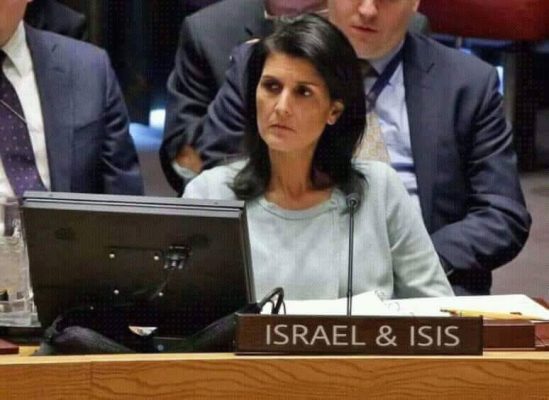
 Part One, The Record, treats the history of garlic as evidence. From the clay garlic bulb placed in an Egyptian grave nearly six thousand years ago, through the Ebers Papyrus, through Hippocrates, Dioscorides, Pliny and Galen, the Arab physicians under Avicenna, the medieval herbals, Culpeper, and the plague years, to the last era in which Western physicians prescribed garlic as a matter of course, which ran from 1850 to 1945. It closes with the living traditions that never stopped using it, and with the folklore of charms, vampires and the evil eye.


