US Supreme Court Takes Case That Could End Internet Censorship, Expand First Amendment
By Carmine Sabia | Citizen Truth | October 17, 2018
After the recent purge of over 800 independent media outlets on Facebook, the Supreme Court is now hearing a case that could have ramifications for any future attempts at similar purges.
The United States Supreme Court has agreed to take a case that could change free speech on the Internet forever.
Manhattan Community Access Corp. v. Halleck, No. 17-702, the case that it has agreed to take, will decide if the private operator of a public access network is considered a state actor, CNBC reported.
The case could affect how companies like Facebook, Twitter, Instagram, Google and YouTube are governed. If the Court were to issue a far-reaching ruling it could subject such companies to First Amendment lawsuits and force them to allow a much broader scope of free speech from its users.
The Court decided to take the case on Friday and it is the first case that was taken after Justice Brett Kavanaugh joined the Court.
DeeDee Halleck and Jesus Melendez claimed that they were fired from Manhattan Neighborhood Network for speaking critically of the network. And, though the case does not involve the Internet giants, it could create a ruling that expands the First Amendment beyond the government.
“We stand at a moment when the very issue at the heart of this case — the interplay between private entities, nontraditional media, and the First Amendment — has been playing out in the courts, in other branches of government, and in the media itself,” the attorneys from MNN wrote in their letter to the Court asking it to take the case.
The Court could either rule in MNN’s favor, rule against it in a narrow scope that does not affect other companies, or it could rule in a broad manner that would prevent the abilities of private networks and Internet companies to limit or censor speech on their platforms.
Censorship, Free Speech or Enforcing Company Policy
It comes at a time when Facebook has purged around 800 independent media pages in one day. The media outlets ranged the spectrum from far left to far right and many that either had no political affiliation or were not extreme in their politics. Facebook claimed that the pages were engaged in “inauthentic behavior” and as a private company it does not have to answer to anyone regarding how it enforces its terms of service.
ACLU attorney Vera Eidelman said Facebook, as a private company, can enforce their terms however it sees fit, but that could result in serious free speech consequences.
“Drawing the line between ‘real’ and ‘inauthentic’ views is a difficult enterprise that could put everything from important political parody to genuine but outlandish views on the chopping block,” Eidelman said. “It could also chill individuals who only feel safe speaking out anonymously or pseudonymously.”
The MNN case could change that and force Facebook, and other companies, to protect users First Amendment rights.
The People ‘Stopping Election Interference’ Are the Ones Who Are Actually Rigging the Election
By Daisy Luther | Organic Prepper | October 15, 2018
Last week, Mark Zuckerberg made the media rounds to give a rather shady explanation of why Facebook suddenly closed hundreds of incredibly popular pages in what’s being called The Alternative Media Purge. Zuckerberg accused the closed pages, many of which had millions of fans, of spreading “political spam.”
Ironically, many of the pages that were shut down had absolutely nothing to do with politics or elections, unless you include the fact that they recommended skipping the entire circus. None of these pages were accused of being “the Russians,” who were the scapegoat of the last surprise presidential election results. A couple of the things that many of the pages did have in common, incidentally, were an anti-war outlook and a police watchdog mentality.
But as far as making the election more resistant to interference, the result of the Alternative Media Purge is the diametric opposite. People will now only get one side of the story.
The alternative media changed everything during the last presidential election.
When Donald Trump announced his candidacy for president, much of the world snickered. Who was this reality television star to take on part of the Clinton Empire? There was no way, people scoffed, that Trump could possibly win.
It’s a proven fact that Hillary Clinton was in cahoots with the mainstream media throughout her candidacy. And the reason it’s proven is that organizations like Wikileaks released the evidence of it in a series of emails with her campaign manager and people like Donna Brazile of CNN. Brazile finally publicly admitted that she’d done so and that it was her “job to make all our Democratic candidates look good.”
The alternative media jumped on this story, as well as many other questionable emails that were divulged by Wikileaks, while the mainstream pretended that none of this was happening. And the mainstream did very little to cover the Democratic National Convention, during which the nomination was stolen from Bernie Sanders, who – if we’re being honest – probably would have had a much better chance of beating Trump than the notoriously unlikable Clinton. Here’s my coverage of it at the time.
The alternative media, never a fan of the goings-on in Clintonland, from the Haiti scandal all the way back to the “suicide” of Vince Foster in Arkansas, jumped on these stories as well as stories about her debatable health.
The fact that we had a robust alternative media at the time meant that these stories were heard. At the same time, the mainstream media was busy painting Donald Trump as a neo-Nazi fascist who hated minorities and would nuke somebody the day he got into office.
Now, imagine there had been no alternative media during that election.
If we hadn’t have had an alternative media telling other stories – enough stories that people were able to get a fuller picture of who both of these candidates really were – things might have turned out entirely differently. And while that would be all right with any number of people who loathe Donald Trump, would it have been a “fair” election?
Let’s look back even further at the candidacy of Congressman Ron Paul back in 2012. Dr. Paul was an incredible candidate with a glowing political resume, but he didn’t get the time of day. There was a media blackout on his candidacy and finally, he was forced to withdraw from the race. Many of us were budding alternative journalists at that time learned a valuable lesson during that election – what we were doing was important. There needed to be an option instead of letting the mainstream media present the only options and information to people.
By the time the 2016 election rolled around, those disappointed in how Dr. Paul was treated were determined that it would not happen again. That a candidate with a background full of sordid scandals would not get through an election cycle unscathed, painted as a glowing Madonna who would save us all.
So… during the fierce battle between Clinton and Trump, both sides of the story were told and told loudly.
Alternative journalists engaged the power of social media to connect with people who wanted to know more and they did it to such a degree that everything changed. Clinton, originally the front-runner, was suddenly in the fight of her life against a candidate that most people had considered a joke.
And that’s when everyone started blaming the Russians.
In a shocking article, the Washington Post printed a long list of websites that they claimed were run by “the Russians.” Many of these sites were run by folks I know personally who are decidedly not Russians, but simply bloggers who wanted to share the truth as they identified it. (This article was removed from WaPo – I’m guessing due to threats about legal action by many of the site owners accused of working for Russia.)
Although investigation after investigation has been undertaken, there’s still no proof that Russia tampered with the election, nor that they colluded with Donald Trump.
Years later, the Washington Post sticks to their story with headlines like “Without the Russians, Trump Wouldn’t Have Won.” In the piece, they admitted that there isn’t any official proof and they cited Buzzfeed.
While the intelligence agencies are silent on the impact of Russia’s attack, outside experts who have examined the Kremlin campaign — which included stealing and sharing Democratic Party emails, spreading propaganda online and hacking state voter rolls — have concluded that it did affect an extremely close election decided by fewer than 80,000 votes in three states. Clint Watts, a former FBI agent, writes in his recent book, “Messing with the Enemy,” that “Russia absolutely influenced the U.S. presidential election,” especially in Michigan and Wisconsin, where Trump’s winning margin was less than 1 percent in each state.
We still don’t know the full extent of the Russian interference, but we know its propaganda reached 126 million people via Facebook alone. A BuzzFeed analysis found that fake news stories on Facebook generated more social engagement in the last three months of the campaign than did legitimate articles: The “20 top-performing false election stories from hoax sites and hyperpartisan blogs generated 8,711,000 shares, reactions, and comments on Facebook.” Almost all of this “fake news” was either started or spread by Russian bots, including claims that the pope had endorsed Trump and that Hillary Clinton had sold weapons to the Islamic State. (source)
Buzzfeed ? Isn’t that where you go to take a quiz to find out what kind of potato you are?
That leads us to Facebook’s potential election interference
Last week, as I mentioned, hundreds of Facebook pages were shut down without warning. Many of these sites also lost their Twitter accounts on the same day. This is reminiscent of last month’s attack on Alex Jones.
Anyone who disagrees with the establishment is being abruptly silenced.
Zuckerberg and friends are saying that this is so that we can be sure we don’t have election interference in the midterms… but what they’re really doing is interfering in the elections themselves.
They’ve gloated about everything from “featuring Facebook pages that spread disinformation less prominently so that fewer people potentially see them” to [purging] “559 politically oriented pages and 251 accounts, all of American origin, for consistently breaking its rules against “spam and coordinated inauthentic behavior.”
The pages which have been removed or shadowbanned have run the gamut of political philosophies, but the fact is, people like Mark Zuckerberg, the folks at Google, and Jack Dorsey of Twitter are deciding which information gets to be seen. They’re deciding whether something is “disinformation” or truth. They’re deciding if people who have spent years building a following get to still reach the people who opted to follow them.
Because Facebook reaches more than 2 billion people each day, this is a problem of epic proportions.
I believe that it is Facebook itself that is tampering with the election by manipulating what they want people to see. If the alternative media changed everything in the 2016 election due to the availability of more information, Facebook will change future elections due to their manipulation of the information users are allowed to see.
If you are conservative or antiwar or anti-overreaching-government or libertarian, you’re now persona non grata. Even if you aren’t in the minority, you’ll be made to feel like you are in the giant echo chamber of “approved media.” If you support a different candidate than Big Tech, prepare to be marginalized, silenced, and ignored. That holds true whether you opt for anyone other than their “choice.” They WILL control the outcome of the presidential election the next time around.
If you really want to see what election interference looks like, you’re getting a live demonstration right now.
The US Meddles In Syria’s Constitutional Reform Process By Threatening Sanctions
By Andrew KORYBKO – Oriental Review – 18/10/2018
The US is threatening to further sanction Syria if Damascus doesn’t make progress in America’s preferred direction during the ongoing constitutional reform process.
The US special representative for Syria James Jeffrey conveyed this intention on the sidelines of the UN General Assembly after his country and a handful of others called upon Staffan de Mistura to report back to them by the end of this month about which of the 50 people he’s supposed to select to participate in Syria’s constitutional committee.
Prior agreements on the creation of this important political mechanism stipulate that the delegates will be chosen from members of the pro-government, domestic opposition, and external opposition factions, and while this is admittedly an ultra-sensitive process, the US and its allies feel that Syria has been dragging its heels on it for far too long and that’s why they want to crank up the pressure on Damascus by threatening more sanctions against it.
The elephant in the room is the issue of so-called “decentralization”, which appears to be the only pragmatic political solution for dealing with the Kurdish-controlled agriculturally and energy-rich northeastern third of the country that’s reported to host around 20 American bases but which President Assad has sworn will return to the central fold by one way or another.
This is becoming ever less realistic to achieve as Russia signaled that it won’t engage in the nuclear brinkmanship that would be needed for supporting Syria’s otherwise futile efforts to evict the US and make this happen, hence why a “compromise” is the only peaceful way for resolving this issue. The US also knows that its Russian, Chinese, and Iranian rivals lack the money needed for rebuilding the liberated areas of Syria, which is why it’s weaponizing reconstruction aid for political purposes.
Pressing home the point of what he wants to see achieved, Jeffrey also hinted at imposing a “no-fly zone” over the Kurdish-controlled northeast and replicating the state of affairs that prevailed in Iraqi Kurdistan from 1991-2003 during which time the US carried out occasional airstrikes to prevent the central government from reasserting its sovereignty in this region. Since the de-facto “partition” of Syria is already a fait accompli at this point, the next goal of the US and its allies is to compete with its rivals over the reconstruction of their respective “spheres of influence” in the country.
Despite it being comparatively easier for the geographically smaller, less populated, and more resource-rich northeast to recover a lot quicker than the rest of Syria, the US hopes that this can serve as a “demonstration effect” for the rest of the country and subsequently be manipulated through infowars and perception management tactics to somehow “delegitimize” the predictably slower efforts of Damascus and its allies in this regard.
The post presented is the partial transcript of the CONTEXT COUNTDOWN radio program on Sputnik News, aired on Friday Oct 12, 2018
US Will Walk Out of Nuke Treaty Again if Iran Agrees to New Deal – Scholar
Sputnik – 17.10.2018
Six months after Donald Trump announced the US withdrawal from the 2015 nuclear deal with Iran, Washington is proposing to sign a new agreement with Tehran.
The US is ready to give “a whole lot” to sign a new treaty with Iran that would take into account all of Washington’s concerns, including Tehran’s missile program, the US Special Representative for Iran Brian Hook said.
It is not the first time that Washington has invited Iran to conclude a new treaty since it walked out of the 2015 nuclear deal with Tehran.
Tehran insists that it won’t ink a new agreement with the US after Washington’s mistake of withdrawing from the Joint Comprehensive Plan of Action (JCPOA).
In his address to the 73rd session of the UN General Assembly in September, Iranian President Hassan Rouhani said that Tehran would agree to negotiate with the US but only if Washington changed its attitude towards the Islamic Republic.
In an interview with Sputnik Persian, Iranian political observer Ali Reza Rezakhah and a Tehran University expert in US affairs, Mohammad Marandi, spoke about the terms on which Tehran would be ready to sign a new accord with Washington.
According to Dr. Rezakhah, signing a new a new agreement with the US made no sense as Washington’s departure from the JCPOA showed everyone that it can’t be trusted.
“Statements alone are not enough, because the US has repeatedly declared its intention of concluding a new treaty with Iran. Singing a new treaty with the United States makes no sense. This is logical too because one can conclude a new agreement only with someone who fulfills his obligations. This means that we need to be confident about what the United States is saying,” Reza Rezakhah said.
He added that there weren’t any guarantees that the US would fulfill its obligations under a new treaty.
“It unilaterally withdrew from the JCPOA treaty, violating all its international obligations. Neither Iran nor any other country can agree to sign a treaty with the United States, since they (the United States) do not honor their obligations. When speaking at the UN General Assembly, President Hassan Rouhani stated that Iran is ready to negotiate, provided that the United States takes the first step by adhering to the JCPOA.”
Mohammad Marandi flatly ruled out any new agreement with the US.
“It will not happen. Iran will not sign a new agreement with the United States or re-negotiate with it. With the JCPOA in place, what new agreement can we talk about? If the Americans do not understand this, then they know the Iranians even worse than we could have imagined.”
According to him, by violating the JCPOA the US proved that it can’t live up to its commitments.
“Tomorrow we will conclude an agreement with the United States, and they will walk out of it again. This defies logic,” Dr. Marandi argued.
“Even if Iran agrees to negotiate (a new agreement), the United States will take this as a sign of its pressure having worked and will ramp it up even more,” Marandi continued.
Iran would agree to negotiate with the US only if Washington returns to the JCPOA and negotiates within its framework,” Mohammad Marandi concluded.
In May, President Donald Trump said he was withdrawing the US from the 2015 nuclear agreement with Tehran and promised to impose the “highest level” of sanctions on the country’s energy petrochemical and financial sectors despite objections from Europe as well as Russia and China — the other parties to the deal, known as the Joint Comprehensive Plan of Action (JCPOA).
Washington has also warned countries to stop buying Iranian oil starting from November 4 and threatened to use sanctions against those who do not.
The first wave of US sanctions on Iran took effect on August 6, targeting the country’s automotive sector, trade in gold, and other vital metals.
The remaining sanctions will come into effect on November 4, targeting Tehran’s energy sector, petroleum-based transactions, and transactions with Iran’s Central Bank.
American mercenary boasts of role in ‘targeted assassination program’ in Yemen
RT | October 17, 2018
A Hungarian-Israeli security contractor based in the US, Abraham Golan, has claimed he ran a targeted assassination program in Yemen as part of the Saudi-led coalition currently waging a proxy war against Iran-backed Houthis.
The US is supplying weapons, intelligence, and other support to the coalition, but Golan’s account, as told to BuzzFeed, reads like something out of a spy thriller.
Golan claims the United Arab Emirates (UAE), part of the coalition, hired his mercenary company, Spear Operations Group, to kill specific enemies, including Anssaf Ali Mayo, leader of the Yemeni political party Al-Islah, which the UAE considers a terrorist group. The Mayo assassination was ultimately unsuccessful – Mayo disappeared from Yemeni politics for a while, and the Spear crew even thought he was dead, but he is currently serving in the Yemeni government, alive and well.
The botched assassination of December 29, 2015 is seen by observers from both sides as the opening salvo in a “targeted campaign,” which former UN investigator Gregory Johnsen says eventually took out 25 to 30 members of Al-Islah and other clerics.
Golan claims responsibility for several of the high-profile assassinations in Yemen, though he refuses to share which ones. Not because of remorse – he’s a mercenary, after all – but because his business inhabits a legal gray area, and perhaps because he doesn’t want his professional secrets getting out. Golan is trying to sell his business model to the US military.
Experts have cast doubt on the idea that the US, which essentially armed and trained the UAE’s military from the ground up, didn’t know the UAE had hired Americans to conduct assassinations in a war in which the US is deeply involved. The CIA claimed ignorance of the matter, but one agency official – after categorically denying the government would allow such a thing – confirmed the story, himself shocked that American mercenaries had been allowed to operate “almost like a murder squad.”
The US does enjoy a privileged place within UAE military circles, having sold the Arab nation $27 billion in arms and defense services since 2009. While the US theoretically bars mercenaries from participating in combat, it hires them to do everything else in the military, and one man’s security detail is another man’s firefight.
Private contractors are supposed to be regulated by the State Department, which claims it has never permitted mercenaries to work for another government, and US law forbids any who would “conspire to kill, kidnap, [or] maim” a foreign citizen. But the publication cites multiple sources who claim Spear mercenaries were given military rank by the UAE, providing them legal cover for their actions (US citizens are allowed to serve in foreign militaries, with some exceptions).
BuzzFeed was admittedly unable to verify much of Golan’s biography, which allegedly includes a stint in the French Foreign Legion and friendships with notorious figures like former Mossad head Danny Yatom and Serbian militant Arkan. A CIA acquaintance calls him “prone to exaggeration.” The details of his story – “target cards” handed out with names, photographs, even phone numbers; a Jolly-Roger-esque company flag – are Hollywoodesque.
Golan supposedly offered the UAE his company’s services as targeted assassins, explicitly tasked to “disrupt and destruct” Al-Islah. On top of $1.5 million a month, they would receive kill bonuses and train UAE soldiers. He claims to have declined missions targeting individuals outside the party, but those claims are unverified, and his partner admits that some targets may have simply been enemies of the UAE’s ruling family.
However much truth there may be to Golan’s tale, it illuminates the consequences of War on Terror mission creep – an overabundance of highly-trained special forces, lax oversight regarding war crimes and international law, an increasingly privatized fighting force, and the notion that enemy combatants are anyone a government deems them to be mean Spear’s business model could strike US commanders’ fancy after all.
Diplomatic Deadlock: Can U.S.-North Korea Talks Survive Maximum Pressure?
By Gregory Elich | Counterpunch | October 16, 2018
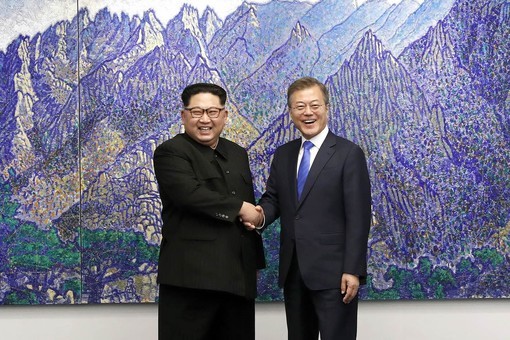
South Korean President Moon Jae-in’s meeting with North Korean Chairman Kim Jong-un on September 18-20 culminated in the signing of the Pyongyang Declaration, which marked a significant advance towards peace and heralded a welcome warming in relations. Since that time, however, contradictions within the Trump administration’s North Korea policy threaten to forestall further progress and test the patience of its South Korean ally.
Among the measures outlined in the Pyongyang Declaration, the two sides agreed to “expand the cessation of military hostility in regions of confrontation such as the DMZ,” with the goal of removing the danger of war “across the entire Korean Peninsula.” [1] North and South Korea quickly moved to begin to implement the plan, shutting down some border guard posts and initiating the removal of landmines from the Joint Security Area. Plans are also afoot to establish a no-fly zone over the DMZ, and communication procedures are being established to prevent armed clashes.
The Democratic People’s Republic of Korea (DPRK, the formal name for North Korea) committed to dismantling its missile launch platform and test site “under the observation of experts from relevant countries.” North Korea promised that it would “take additional measures, such as the permanent dismantlement of the nuclear facilities in Yongbyon, as the United States takes corresponding measures in accordance with the spirit of the June 12 U.S.-DPRK Joint Statement.” [2]
For a majority of Koreans on both sides of the border and in the diaspora, the Pyongyang Declaration was an encouraging development on the path to peace and reconciliation. The mood in Washington, though, was far from celebratory.
Livid over South Korean plans to establish a no-fly zone and demilitarize the inter-Korean border, U.S. Secretary of State Mike Pompeo phoned South Korean Foreign Minister Kang Kyung-wha before the Moon-Kim summit and harangued her, accusing her of not knowing what she was doing. Korean media suggest that Pompeo used foul language in expressing his displeasure to Kang. Pompeo was particularly upset at not being briefed beforehand. A second call to Kang later in the day was more conciliatory, after Pompeo had learned that the South Korean government had informed U.S. officials, but no one within the Trump administration had bothered to notify him. [3]
Alarmed at the prospect of an improvement in relations between the two Koreas, as soon as the summit was over the U.S. Treasury Department emailed several South Korean banks and warned them not to engage in business with North Korea. It also conducted conference calls with Korean banks on two consecutive days to drive home its point. The Treasury Department said it was aware of inter-Korean discussions on plans for joint economic projects and asked the banks if they had any plans to proceed. It emphasized that U.S. and UN sanctions remain in force, and warned that the banks risked incurring secondary sanctions. [4]
South Korean Foreign Minister Kang Hyung-wha fed American fears that its South Korean ally was not behaving in a sufficiently subservient manner when she told the National Assembly that a review of the sanctions that former president Lee Myung-bak had imposed on North Korea “is underway.” She noted that since the majority of the sanctions overlapped with those of the UN, this would not necessarily mean a “substantive” change was in the cards, and this was a matter “to be reviewed in comprehensive consideration of South-North relations.” [5]
As mild and conditional as Kang’s remarks were, Washington’s reaction was swift and insulting. “They won’t do that without our approval,” Trump said. “They do nothing without our approval.” Trump’s blunt language was revealing. In Washington’s mindset, the alliance with South Korea is a master-servant relationship. Although many Koreans were rightly offended at the language dismissing South Korean sovereignty, the government’s response was overly obsequious. Unification Minister Cho Myoung-gyon was quick to correct the impression left by Kang’s remarks, promising that “no detailed review has been made,” and asserted that his government’s position is that it is too early to discuss easing sanctions. [6]
At the same time, Moon sought to assuage worries in Washington that the threat of peace on the Korean Peninsula would not mean an end to the U.S.-South Korean military relationship. “I will further strengthen the Republic of Korea Navy so that it may go beyond the Korean Peninsula and contribute to peace in Northeast Asia and the entire world,” he announced at an international naval review at Jeju Island. [7] Moon’s meaning was clear: South Korea can be counted on to meet U.S. expectations that it play a more significant role in U.S. military operations outside of the Korean Peninsula.
The current impasse in U.S.-North Korea negotiations is due entirely to Washington’s expectation that North Korea complete nuclear disarmament in exchange for nothing more than vague promises of future improved relations. North Korea experienced the annihilation of all of its towns and cities by U.S. bombers during the Korean War and in the decades since then the U.S. has regularly conducted military exercises rehearsing a repeat attack. The fate of Yugoslavia, Iraq, and Libya presented North Korea with the vivid object lesson that a small nation relying on conventional forces alone is virtually defenseless against the world’s foremost military power.
By the time it announced a freeze on nuclear weapons and ballistic missile testing, North Korea had nearly completed development of its nuclear weapons program, lacking only final testing of a reentry vehicle. By placing his nuclear weapons program on the table, Kim Jong-un is engaging in a sort of high-wire act in international relations without the benefit of a safety net. He is gambling that reciprocal measures by the United States will ensure his nation’s security, negating the need for a nuclear deterrent. In that context, the Washington establishment could not be more mistaken in its firm belief that North Korean disarmament is achievable through sanctions alone. North Korea has security concerns that must be taken into consideration.
We are often told that North Korea’s failure to provide the United States with a complete list of its nuclear materials and facilities is proof that it is “not serious” about nuclear disarmament. Unmentioned is that once North Korea produces such a list, U.S. military planners would be able to plot the bombing coordinates of each facility. From a North Korean perspective, this step is suitable for a later stage in negotiations, during which the United States is providing compensating security assurances. It is an unreasonable upfront demand.
The standard narrative in the U.S. media is that the mere act of talking with North Korea is an excessive concession and it is now up to the DPRK to unilaterally disarm. A report by CNN in the days leading up to the Singapore Summit between President Trump and Chairman Kim Jong-un was a typical expression of that mindset. The report claimed that Kim Jong-un would “achieve the longstanding dream of his family dynasty – a face-to-face meeting with a sitting U.S. president.” [8] The not so subtle implication was that basking in the glorious presence of a U.S. leader is reward enough for anyone. This, CNN’s headline misinforms us, is Kim’s “ultimate aim.” That such wrong-headed concepts persist in the U.S. media and Washington think tanks is indicative of the narrow and willfully blind perspective that also infects the Trump administration.
After the Pyongyang summit, Moon Jae-in travelled to the United States to act as an intermediary in hopes of getting negotiations back on track. Combat in the Korean War came to a halt with the signing of an armistice agreement in 1953, and the original plan to follow that up with a peace treaty never materialized. The DPRK regards the long overdue signing of a peace treaty as one leg in a comprehensive security arrangement; perhaps not the most reliable component, in that a treaty would do nothing to deter the United States from launching an attack if it chose to do so. Nevertheless, the entire Washington establishment is adamantly opposed to a peace treaty, fearing that it might encourage the Korean people to demand the closure of U.S. bases and put at risk an important geostrategic position in the military encirclement of China. The fear is without basis, because nowhere is the presence of U.S. bases predicated on the wishes of the people in host nations. For that matter, Moon has offered repeated assurances that U.S. forces are in Korea to stay.
Kim suggested to Moon that if the United States were willing to adopt a corresponding measure, North Korea would shut down its Yongbyon nuclear facility. It was a significant proposal, which all too predictably met with a dismissive response from Washington. “Nothing can happen in the absence of denuclearization,” U.S. State Department spokeswoman Heather Nauert declared. “Denuclearization has to come first.” [9]
Moon is keen on trying to change that narrative so that progress can resume. “It all comes down to whether the U.S. is ready to provide corresponding measures in a swift way,” he said in an interview on Fox News. “The U.S. promised to end hostile relations with North Korea to provide security guarantees and work toward new U.S.-North Korea relations – these actions need to be taken in parallel.” [10]
But when it came to specifics, Moon suggested essentially meaningless measures, such as a political declaration on the end of the Korean War rather than a peace treaty, the provision of humanitarian aid, and art performance exchanges. [11] “When we are talking about corresponding measures, it doesn’t necessarily mean relaxing economic sanctions,” Moon added. Worse yet, the White House issued a statement after the meeting, announcing that “the two leaders agreed on the importance of maintaining vigorous enforcement of existing sanctions.” [12]
The emptiness of Moon’s suggestions, coupled with the unfortunate call for maintaining strong sanctions on North Korea, could be interpreted as a tacit admission that nothing more can be expected from the Trump administration. Moon may be hoping that in the interests of peace, North Korea will settle for nearly worthless diplomatic trinkets. Or perhaps he is hoping that any concession from the United States, no matter how minor, would establish a starting point from which something more substantial could develop.
However, in discussions with Moon, Chairman Kim was quite clear about what he is looking for from the United States. Quite rationally, the corresponding measures he is seeking for nuclear disarmament are security guarantees and progress towards normalization of relations. [13]
Speaking at the United Nations General Assembly on September 29, DPRK Foreign Minister Ri Yong-ho announced that his government’s commitment to the Singapore Declaration signed by Trump and Kim “is unwavering.” However, denuclearization “should also be realized along with building a peace regime under the principle of simultaneous actions, step-by-step, starting with what we can do and giving priority to trust-building.” Ri noted that the U.S. reliance on “coercive methods” is “lethal to trust-building.” [14]
It appears to have eluded general attention that even if the Trump administration agrees to reciprocate, there is a decided imbalance in actions. North Korea would abandon its nuclear deterrent, the only solid assurance it currently has against attack. For its part, the United States would not relinquish anything. Agreeing to an objective statement of fact, that combat in the Korean War ended decades ago, imposes no obligations on the United States. Aside from that, corresponding measures from the U.S. side would entail reducing and eventually eliminating the amount of punishment it inflicts on the North Korean people. The United States loses nothing in dropping sanctions and no longer pressuring other nations to isolate the DPRK. Meanwhile, the U.S. military would remain firmly ensconced on the Korean Peninsula in close proximity to China, and efforts would continue to integrate the South Korean military in U.S. strategic planning.
The Trump administration has yet to concede a need to offer North Korea anything in exchange for disarmament. What it has provided instead is to pile more sanctions on the beleaguered North Korean people. “Maximum pressure” must continue, we are repeatedly told, to encourage North Korea to negotiate. Somehow the point seems to be missed that North Korea is negotiating. Moreover, it is not the DPRK that has been recalcitrant in recent years. Throughout the eight years of the Obama administration and Trump’s first year, North Korea regularly reached out to the United States and asked for negotiations, only to be rebuffed each time. If the rationale for maintaining sanctions is to encourage cooperation and dialogue, then the more appropriate target for sanctions would appear to be the United States. It was only Kim Jong-un’s major unilateral concessions this year, backed by Moon Jae-in’s openness to dialogue, that brought about a diplomatic opening.
The Trump administration is ratcheting up pressure on North Korea. The U.S. Department of Treasury regularly adds new sanctions on North Korea, and early this month a U.S. official visited Singapore, Vietnam, and Thailand to emphasize the importance of the “DPRK pressure campaign” and “the need for full implementation” of UN sanctions. [15]
The Trump administration’s “maximum pressure” campaign even extends to shutting down humanitarian projects. UN sanctions on the DPRK aim at imposing near-total economic isolation and dislocation, inevitably producing severe hardship for ordinary citizens. Humanitarian organizations provide the only external support to partially offset the deprivation imposed by sanctions.
Applications from several NGOs to visit North Korea have been repeatedly turned down by the U.S. State Department. “The denials are pretty much across the board,” revealed one source. “It really is unthinkable… and very, very disturbing.” Behind-the-scenes pressure from the U.S. government was a factor in the Global Fund deciding to shut down its healthcare programs in North Korea. A statement issued by Keith Luse, executive director of the National Committee on North Korea, observed, “It has become clear that the Trump administration regards the provision of humanitarian assistance to the North Korean people as a legitimate target for its maximum pressure campaign. Indeed, a line has been crossed.” [16]
South Korean Health Minister Park Neung-hoo told the National Assembly that the United States was preventing his nation from supplying medical aid to the DPRK. Although his ministry wished to provide medicine, “We are only at a preparatory stage due to various international restrictions.” Later in the session, concerned that his remarks may be construed as being critical of the U.S., he asked to have his remarks deleted from the record and pointed out that the U.S. “is blocking not just medical aid, but generally everything.” [17]
Opposition to Washington’s intransigence on sanctions is starting to stiffen. Chinese and Russian foreign ministers quarreled with Pompeo at the UN Security Council on September 27, as they advocated a gradual easing of sanctions while denuclearization proceeds. Russian Foreign Minister Sergei Lavrov proposed that the UN permit exemptions on joint economic projects with the DPRK, to send a positive signal. “Negotiations are a two-way street,” he pointed out, adding that tightening sanctions while the situation is improving is illogical. [18] With veto authority in the UN Security Council, however, the U.S. is in a position to ignore Chinese and Russian pleas for reasonableness.
North Korean, Chinese, and Russian foreign ministry officials met in Moscow on October 9, to coordinate policy on denuclearization. The three sides issued a joint press release which stated that issues on the Korean Peninsula should be resolved in a peaceful and diplomatic manner. Denuclearization “should be of a step-by-step and synchronized character and accompanied by reciprocal steps of the involved states.” Along those lines, “the UN Security Council should start in due time revising the sanctions against North Korea,” the statement declared. [19]
In an apparent and welcome challenge to Washington’s maximum pressure campaign, South and North Korea agreed on October 15 to reconnect rail and road links between the two nations. Onsite rail surveys are scheduled to take place around the end of the month, and groundbreaking ceremonies are planned for about a month later. [20] The Trump administration wasted little time in making its displeasure known, and that same day a State Department spokesperson reiterated the position that “improvement in relations between North and South Korea cannot advance separately from resolving North Korea’s nuclear program.” Sanctions will remain in place until nuclear disarmament has been completed. “We expect all member states to fully implement UN sanctions.” [21]
Last August the commander of U.S. Forces Korea, acting in his role as head of the UN Command, blocked an inter-Korean joint rail inspection project. The State Department spokesperson’s message clearly indicated that Washington’s position had not shifted in the meantime, and the U.S. would not allow the two Koreas to carry out the agreement they had signed with each other.
Seeking to shore up what it perceived as wavering support for its policy of unremitting opposition to genuine diplomacy, and in the light of Moon’s visit to France to seek support for his more flexible approach, Washington announced that it would dispatch envoy Stephen Biegun to France, Belgium, and Russia to discuss relations with North Korea. [22]
The October 15 inter-Korean agreement may prove to be a test case for South Korea. Is it willing to behave as a sovereign nation and act in its interests, or will it cave in once again to Washington’s demands? The enormous economic power of the United States, however, gives it the ability to impose harsh discipline if a small nation such as South Korea fails to take orders.
Following Mike Pompeo’s recent trip to Pyongyang, diplomacy of a sort has returned to the agenda, and a summit between Kim and Trump is anticipated to occur by the end of the year. The essential sticking point remains unresolved, however. Washington perceives talks as a surrender mechanism, whereas the DPRK is looking for normal diplomatic give-and-take. There is no bridging the two concepts. The conventional view of diplomacy in Washington is that cooperation is a sign of weakness, and results can be produced through punishment alone. It is to be hoped that in time the Trump administration will come to recognize the futility of that approach and heed the advice of its international partners and seize the diplomatic opening offered by the two Koreas. The United States has nothing to lose from engaging in genuine diplomacy, and the peoples of Northeast Asia much to gain.
[1] “[Full Text] Pyongyang Declaration,” Korea Times, September 19, 2018.
[2] “[Full Text] Pyongyang Declaration,” Korea Times, September 19, 2018.
[3] Yoo Kang-moon and Kim Ji-eun, “S. Korean Foreign Minister Admits Pompeo Expressed Displeasure with Inter-Korean Military Agreement,” Hankyoreh, October 11, 2018.
“South Korea Says Pompeo Complained About Inter-Korean Military Pact,” Reuters, October 10, 2018.
Oh Young-jin, “Did Pompeo Curse Minister Kang?” Korea Times, October 11, 2018.
Kim Jin-myung, “Pompeo ‘Protested Against Seoul’s Agreements with N.Korea’,” Chosun Ilbo, October 11, 2018.
[4] “U.S. Calls on S. Korean Banks to Comply with Sanctions on N. Korea, Yonhap, October 12, 2018.
“US Urges S.Korean Banks to Obey Sanctions on N. Korea,” Menafn, October 13, 2018.
“US Treasury Asks S. Korean Banks to Follow UN Sanctions Just After Pyongyang Summit,” Hankyoreh, October 13, 2018.
“Unusual Warning,” Korea Herald, October 14, 2018.
[5] Lee Chi-dong, “Minister: S. Korea Mulls Lifting Sanctions on N. Korea,” Yonhap, October 10, 2018.
[6] “Unification Minister Says Seoul Not Considering Lifting N. Korea Sanctions,” Yonhap, October 11, 2018.
[7] “Moon Says Two Koreas Will Reach Complete Disarmament,” Yonhap, October 11, 2018.
[8] Ben Westcott, “Why Meeting a US President is the Ultimate Aim of the Kim Family,” CNN, June 7, 2018.
[9] “U.S. Dismisses N. Korea’s Conditional Offer to Dismantle Nuclear Site,” Yonhap, September 21, 2018.
[10] Kim Bo-eun, “Korean War May be Declared Over This Year,” Korea Times, September 26, 2018.
[11] Kang Jin-kyu, “Moon Says U.S. Has ‘Nothing to Lose’ from Talks,” JoongAng Ilbo, September 26, 2018.
[12] “Readout of President Donald J. Trump’s Meeting with President Moon Jae-in of the Republic of Korea,” Whitehouse.gov, September 24, 2018.
[13] “Moon, Trump to Coordinate 2nd U.S.-N.K. Summit: White House,” Yonhap, September 25, 2018.
[14] “N. Korea Says ‘No Way’ It Will Denuclearize Without Trust in U.S.,” Yonhap, September 30, 2018.
[15] Hamish Macdonald, “U.S. Official to Discuss Continued Pressure on North Korea in Southeast Asia,” NK News, October 9, 2018.
Media Note, “Assistant Secretary Christopher A. Ford Travels to Singapore, Vietnam, and Thailand,” U.S. Department of State, October 8, 2018.
[16] Keith Luse, “”Maximum Pressure Could End U.S. Humanitarian Assistance to North Koreans,” The National Committee on North Korea, October 11, 2018.
Chad O’Carroll, “U.S. NGOs Being Blocked from Humanitarian Work in N. Korea, Sources Say,” NK News, Ocvtober 12, 2018.
[17] Kim So-hyun, “US Blocking Medical Aid to North Korea: Health Minister,” Korea Herald, October 12, 2018.
[18] Jessica Donati, “U.S., Russia Clash at U.N. as Lavrov Calls for Easing of North Korea Sanctions,” Wall Street Journal, September 27, 2018.
“Moscow Urges Lifting of Unilateral Sanctions Against North Korea,” September 27, 2018.
“China and Russia Call for Easing of North Korea Sanctions,” Channel News Asia, September 27, 2018.
[19] “Russia, China, North Korea Call for Review of Sanctions Against Pyongyang,” TASS, October 10, 2018.
“Joint Press Release of DPRK-Russia-China Negotiations Made Public,” KCNA, October 11, 2018.
[20] Hyonhee Shin, “North, South Korea Agree to Reconnect Roads, Rail Amid U.S. Concern Over Easing Sanctions,” Reuters, October 15, 2018.
Jung Min-kyung, “Koreas Agree to Start Railway, Road Work by Dec.,” Korea Herald, October 15, 2018.
“Koreas to Break Ground for Railway, Road Connection Late Nov. or Early Dec.,” Yonhap, October 15, 2018.
[21] “U.S. Calls for Sanctions Implementation Following Inter-Korean Agreement,” Yonhap, October 16, 2018.
[22] Matthew Pennington, “US Envoy for North Korea to Hold Talks in Russia, France, Belgium,” Associated Press, October 15, 2018.
Why Liberal Jews in Israel and the US have made Lara Alqasem a Cause Celebre
By Jonathan Cook | The National | October 15, 2018
An American student of Palestinian descent detained in Israel’s airport for nearly a fortnight has become an unexpected cause celebre. Lara Alqasem was refused entry under legislation passed last year against boycott activists, and Israeli courts are now deciding whether allowing her to study human rights at an Israeli university threatens public order.
Usually those held at the border are swiftly deported, but Ms Alqasem appealed against the decision, becoming in the process an improbable “prisoner of conscience” for the boycott cause.
The Israeli government, led by strategic affairs minister Gilad Erdan, claims that the 22-year-old is a leader of the growing international boycott, divestment and sanctions (BDS) movement. Activists like Ms Alqasem, he argues, demonise Israel.
Two lower courts have already ruled against the student. Israel’s supreme court has postponed her deportation until Wednesday while it reconsiders the evidence. But refusing to go quietly, Ms Alqasem is attracting increasing international attention to her plight.
So far Israeli officials have shown only that Ms Alqasem once belonged to a small Palestinian solidarity group at a Florida university that backed boycotting a hummus company over its donations to the Israeli army.
Under pressure, Ms Alqasem has disavowed a boycott of Israel, citing as proof her decision to enroll in a masters programme in Hebrew University in Jerusalem.
Given the blanket hostility in Israel to the boycott movement, Ms Alqasem has found a surprisingly wide array of allies in her legal struggle.
Members of the small Zionist-left Meretz party visited her and demanded she be allowed to attend the course, which began on Sunday.
Ami Ayalon, a retired head of the Shin Bet, the secret police that oversees security checks at Israel’s borders, warned that the agency was now “a problem for democracy” in repeatedly denying foreigners entry.
Vice-chancellors of eight Israeli universities sent a letter of protest to the government and 500 academics at Hebrew University submitted a petition decrying Ms Alqasem’s incarceration.
The solidarity has been unprecedented – and perplexing.
Israeli officials control entry not only to Israel but also to the occupied Palestinian territories. For decades, foreigners with Arab-sounding names – like Ms Alqasem – have been routinely harassed or turned back at the borders, with barely a peep from most on the Israeli left.
And over the same period, Israel has stripped many thousands of Palestinians from the occupied territories of the right to return to their homeland after living abroad. These abuses, too, have rarely troubled consciences in Israel.
So what makes Ms Alqasem’s case different? The answer confers little credit on liberal Israelis.
Israel’s universities are worried that the academic boycott has highlighted their long-term complicity in Israel’s occupation and is gradually eroding their international standing. Joint research projects with foreign universities are in jeopardy, as is their lucrative income from programmes they wish to expand for overseas students.
The universities want to co-opt Ms Alqasem as a poster girl for academic freedom in Israel.
They hope she will provide cover for their guilty secret: that they have stood by, or actively assisted, as Israel made a mockery of academic freedom for Palestinians under occupation. Research shows that Israel’s universities have strong ties to the nation’s military, which regularly attacks Palestinian places of learning and limits Palestinians’ freedom to study by enforcing strict movement restrictions.
Jewish liberals in Israel and the US, meanwhile, are concerned at the entrenchment of the Israeli far-right’s rule. In recent weeks, a wave of Israeli and American Jewish activists have been detained and questioned at the border over their politics.
Those liberals desperately need to draw a red line, halting the expansion of racial profiling into political forms of profiling that undermine their own status. If the courts uphold the fundamental rights of Ms Alqasem, their own rights will be more secure too.
That was why progressive Jewish leaders in the US added their own voices last week, signing a petition calling for Ms Alqasem to be allowed to study in Israel.
But the case has shone a light not only on the self-interested opportunism of Israeli liberals but also on the hypocrisy of leaders of progressive American Jewish communities.
Ms Alqasem was identified as a boycott activist via a McCarthyite website called Canary Mission, which has murky ties to the Israeli government.
Since it launched in 2014 under the slogan “If you’re racist, the world should know”, the site has built an online database profiling thousands of US academics and students, including Jewish ones, critical of Israel.
Its aim is to terrify US academia into silence on Israel. The site explicitly threatens to send letters to prospective employers accusing its targets – those who show solidarity with Palestinians – of being antisemitic.
Until recently, this blacklist had passed largely unremarked outside pro-Palestinian circles. But since its role in helping Israeli officials bar Jewish and non-Jewish activists became clear, interest in its provenance has grown.
This month the Forward, an American Jewish publication, unmasked several of Canary Mission’s major donors. They include the communal funds of Jewish federations representing liberal communities in San Francisco and Los Angeles.
The trail leads back to a shadowy registered charity in Israel called Megamot Shalom, which aims to “protect the image of the state of Israel”.
Simone Zimmerman, an American Jewish peace activist who was detained at the border by Israeli officials in August, lamented that the American Jewish establishment’s secret support for Canary Mission “reeks of hypocrisy and betrayal”.
Supposedly liberal Jewish institutions in Israel and the US wish to be seen battling racism and aiding good causes, including the rights of a Palestinian-American student after she repudiated a boycott of Israel.
But covertly they support and finance projects intended to silence criticism of Israel and enforce the oppression of Palestinians they say they want to help.
Ms Alqasem has been turned into a pawn in the struggle between Jewish liberals and Israeli ultra-nationalists. Israel’s continuing violations of the wider rights of Palestinians – to enter and freely move around their homeland, and to receive an education – are simply not part of the discussion.
American Pravda: The ADL in American Society
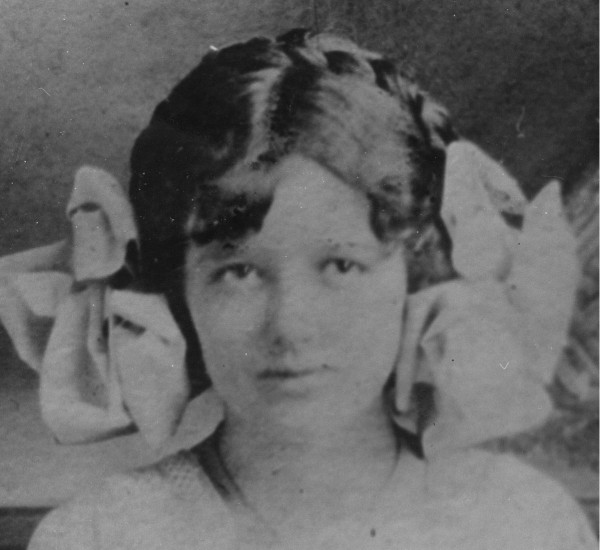
13-year-old Mary Phagan, the girl raped and murdered by Leo Frank, the founding hero of the ADL
By Ron Unz • Unz Review • October 15, 2018
In our modern era, there are surely few organizations that so terrify powerful Americans as the Anti-Defamation League (ADL) of B’nai B’rith, a central organ of the organized Jewish community.
Mel Gibson had long been one of the most popular stars in Hollywood and his 2004 film The Passion of the Christ became among the most profitable in world history, yet the ADL and its allies destroyed his career, and he eventually donated millions of dollars to Jewish groups in desperate hopes of regaining some of his public standing. When the ADL criticized a cartoon that had appeared in one of his newspapers, media titan Rupert Murdoch provided his personal apology to that organization, and the editors of The Economist quickly retracted a different cartoon once it came under ADL fire. Billionaire Tom Perkins, a famed Silicon Valley venture capitalist, was forced to issue a heartfelt apology after coming under ADL criticism for his choice of words in a Wall Street Journal column. These were all proud, powerful individuals, and they must have deeply resented being forced to seek such abject public forgiveness, but they did so nonetheless. The total list of ADL supplicants over the years is a very long one.
Given the fearsome reputation of the ADL and its notorious hair-trigger activists, there was a widespread belief that my small webzine would be completely annihilated when I first launched my recent series of controversial articles in early June by praising the works of historian David Irving, long demonized by the ADL. Yet absolutely nothing happened.
During the next three months my subsequent articles directly challenged nearly every hot-button issue normally so fiercely defended by the ADL and its lackies, so much so that a friendly journalist soon described me as the “Kamikaze from California.” Yet despite my 90,000 words of text and the 13,000 comments I had attracted, the continuing silence of the ADL was absolutely deafening. Meanwhile, my articles were read more than half a million times, with the following being a list of the most provocative pieces:
- The Remarkable Historiography of David Irving
June 4, 2018 • 1,700 Words • 570 Comments - American Pravda: The JFK Assassination, Part II – Who Did It?
June 25, 2018 • 8,000 Words • 985 Comments - American Pravda: Oddities of the Jewish Religion
July 16, 2018 • 7,800 Words • 1,637 Comments - American Pravda: The Bolshevik Revolution and Its Aftermath
July 23, 2018 • 6,900 Words • 913 Comments - American Pravda: The Nature of Anti-Semitism
July 30, 2018 • 5,500 Words • 666 Comments - American Pravda: Jews and Nazis
August 6, 2018 • 6,800 Words • 554 Comments - American Pravda: Holocaust Denial
August 27, 2018 • 17,600 Words • 2,323 Comments - American Pravda: 9/11 Conspiracy Theories
September 10, 2018 • 11,000 Words • 2,355 Comments
When divine wrath fails to smite the heretic and terrifying enforcers of official dogma seem to have suddenly lost their taste for battle, others gradually begin to take notice and may grow emboldened. Eventually leading pro-Russian and Libertarian websites such as Russia Insider and LewRockwell began republishing some of my most controversial American Pravda articles, thus bringing my factual claims to the attention of broader audiences. After the conclusion of the my series, I began directly ridiculing my strangely timorous ADL opponents, publishing a short column entitled “Has the ADL Gone Into Hiding?” which led the redoubtable Paul Craig Roberts to describe me as “the bravest man I know.”
Apparently the combination of all these factors at long last grew too worrisome for the ADL, and stirring from their secret hiding place, its activists have now finally released a short and rather milquetoast response to my material, one which hardly much impresses me. A few days ago, they Tweeted out their column, together with a photo of their new nemesis.
California businessman Ron Unz has long been funding anti-Israel activists. Now, he’s embracing hardcore #antiSemitism, denying the Holocaust & claiming Jews run the media & worship Satan. Learn more from our experts: https://t.co/KnngID3YCh
— ADL (@ADL_National) October 8, 2018
The ADL may boast an annual budget of $60 million and have many hundreds of full-time employees, but its research skills seem sorely lacking. I discovered that they opened their rebuke by denouncing me as a notorious “anti-immigrant activist.” This seems an extremely odd claim given that I have published perhaps a quarter-million words on that contentious topic over the last twenty-five years, nearly all of it online and fully searchable, and my views have never been characterized in that fashion. To cite just one example, my article “California and the End of White America” appeared as a 1999 cover-story in Commentary, the flagship publication of The American Jewish Committee, and surely anyone reading it would be greatly puzzled by the ADL’s description. Indeed, just a few years earlier, I had been a top featured speaker at the October 1994 pro-immigrant protest in downtown Los Angeles, a 70,000 strong political rally that was the largest such gathering in American history to that date.

Over the years, my political activities have been the subject of many thousands of articles in the mainstream media, including a half-dozen front-page stories in the New York Times, and these would provide a similar picture, as did the New Republic cover story chronicling my California successes. Moreover, my views on immigrants haven’t changed all that much over the years as demonstrated by my more recent articles such as “The Myth of Hispanic Crime,” “Immigration, Republicans, and the End of White America” and “A Grand Bargain on Immigration?” Perhaps the intrepid ADL investigators should acquaint themselves with a powerful new technological tool called “Google.”
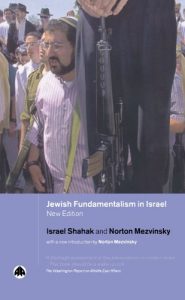
I was equally unimpressed that they so hotly denounced me for substantially relying upon the writings of Israel Shahak, whom they characterized as viciously “anti-Semitic.” As I had repeatedly emphasized, my own total lack of Aramaic and Hebrew necessarily forces me to rely upon the research of others, and the late Prof. Shahak, an award-winning Israeli academic, certainly seems a fine source to use. After all, famed linguist Noam Chomsky had lauded Shahak’s works for their “outstanding scholarship,” and numerous of our other most prominent public intellectuals such as Christopher Hitchens, Edward Said, and Gore Vidal had been similarly lavish in their praise. Furthermore, one of Shahak’s co-authors was Norton Mezvinsky, a prominent American academic specializing in Middle Eastern history, himself hardly an obscure figure given that both his brother and sister-in-law served in Congress and his nephew later married Chelsea Clinton. And as far as I’m aware almost none of Shahak’s explicit claims about the Talmud or traditional Judaism have ever been directly challenged, while the online availability of his first book allows those so interested to conveniently read it and decide for themselves.

The ADL similarly denounced me for taking seriously the theories of Ariel Toeff, another Israeli academic. But Prof. Toeff, son of the Chief Rabbi of Rome, certainly ranks as one of the world’s leading scholarly authorities on Medieval Jewry, and working together with his graduate students and other colleagues, he had devoted many years of effort to the research study in question, drawing upon extensive primary and secondary sources produced in eight different languages. I found his 500 page book quite persuasive, as did Israeli journalist Israel Shamir, and I have seen no credible rebuttals.
Now the work of all these prominent academics and intellectuals may not necessarily be correct, and perhaps I am mistaken in accepting their factual claims. But I would need to see something far more weighty than a casual dismissal in a few paragraphs contained within an anonymous ADL column, whose author for all I know might have been some ignorant young intern.
Those glaring flaws aside, most of the ADL’s remaining catalogue of my numerous heretical positions seemed reasonably accurate, though obviously presented in a somewhat hostile and derogatory fashion and sorely lacking any links to my original pieces. But even this desultory listing of my mortal transgressions was woefully incomplete, with the ADL strangely failing to include mention of some of my most controversial claims.

For example, the authors excluded all reference to my discussion of the thoroughly documented Nazi-Zionist economic partnership of the 1930s, which played such a crucial role in laying the basis for the State of Israel. And the ADL similarly avoided mentioning the nearly 20,000 words I had allocated to discussing the very considerable evidence that the Israeli Mossad had played a central role in both the JFK Assassination and the 9/11 Attacks. Surely this must be one of the few times that the ADL has deliberately avoided leveling the charge of “conspiracy theorist” against an opponent whom they might have so easily slurred in that fashion. Perhaps they felt the evidence I provided was too strong for them to effectively challenge.
The worrisome incompetence of ADL researchers becomes particularly alarming when we consider that over the last couple of years that organization has been elevated into a content gatekeeping role at America’s largest Internet companies, helping to determine what may or may not be said on the most important Social Media platforms such as Facebook, YouTube, and Twitter.
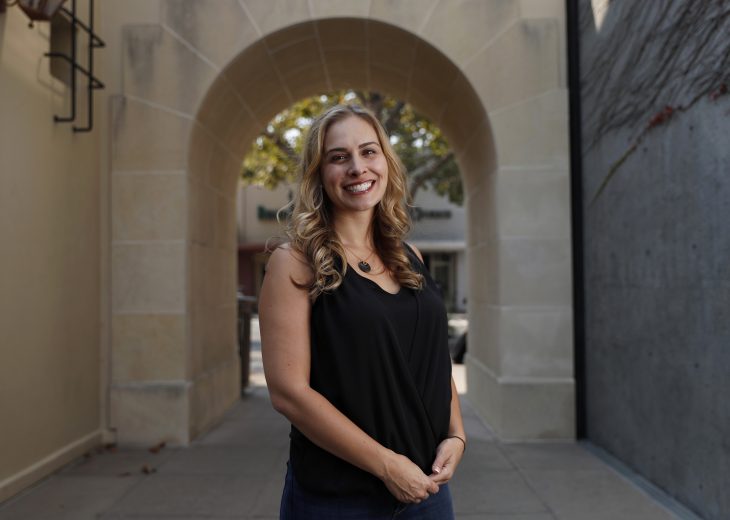
Brittan Heller, director of technology and society for the Anti-Defamation League, photographed in Palo Alto, Calif., on August 27, 2018. (Nhat V. Meyer/Bay Area News Group)
My local paper is the San Jose Mercury News and a couple of weeks ago it published a major profile interview with Brittan Heller, the ADL Director tasked with policing “hate speech” across the America-dominated portions of the Internet. She seemed like a perfectly pleasant young woman in her mid-thirties, a Stanford English major and a graduate of Yale Law, now living in Silicon Valley with her husband and her two cats, Luna and Stella. She emphasizes her own experience as a victim of cyber-harassment from a fellow college student whose romantic overtures she rejected and the later expertise she had gained as a Nazi-hunter for the U.S. government. But does that resume really provide her with the god-like knowledge suitable for overriding our traditional First Amendment rights and determining which views and which individuals should be allowed access to some two billion readers worldwide?
There is also a far more serious aspect to the situation. The choice of the ADL as the primary ideological overseer of America’s Internet may seem natural and appropriate to politically-ignorant Americans, a category that unfortunately includes the technology executives leading the companies involved. But this reflects the remarkable cowardice and dishonesty of the American media from which all these individuals derive their knowledge of our world. The true recent history of the ADL is a remarkably sordid and disreputable tale.
In January 1993, the San Francisco Police Department reported that it had recently raided the Northern California headquarters of the ADL based upon information provided by the FBI. The SFPD discovered that the organization had been keeping intelligence files on more than 600 civic organizations and 10,000 individuals, overwhelmingly of a liberal orientation, with the SFPD inspector estimating that 75% of the material had been illegally obtained, much of it by secret payments to police officials. This was merely the tip of the iceberg in what clearly amounted to the largest domestic spying operation by any private organization in American history, and according to some sources, ADL agents across the country had targeted over 1,000 political, religious, labor, and civil rights organizations, with the New York headquarters of the ADL maintaining active dossiers on more than a million Americans.
Not long afterward, an ACLU official who had previously held a high-ranking position with the ADL revealed in an interview that his organization had been the actual source of the highly controversial 1960s surveillance on Martin Luther King, Jr., which it had then provided to FBI Director J. Edgar Hoover. For many years Hoover had been furiously denounced in the national media headlines for his use of tapes and other secret information on King’s activities, but when a local San Francisco newspaper revealed that an ADL spying operation had actually been the source of all that sordid material, the bombshell revelation was totally ignored in the national media and only reported by fringe organizations, so that today almost no Americans are aware of that fact.
I am not aware of any other private organization in American history that has been involved in even a sliver of such illegal domestic espionage activity, which appears to have been directed against almost all groups and prominent individuals—Left, Right, and Center—suspected of being insufficiently aligned with Jewish and Israeli interests. Some of the illegal material found in ADL possession even raised dark suspicions that it had played a role in domestic terrorist attacks and political assassinations directed against foreign leaders. I am no legal expert, but given the massive scale of such illegal ADL activities, I wonder whether a plausible case might have been made to prosecute the entire organization under RICO statutes and sentence all of its leaders to long prison terms.
Instead, the resulting government charges were quickly settled with merely a trivial fine and a legal slap on the wrist, demonstrating the near-total impunity provided by massive Jewish political power in modern American society.
In effect, the ADL seems to have long operated as our country’s privatized secret political police, monitoring and enforcing its ideological doctrines on behalf of Jewish groups much as the Stasi did for the Communist rulers of East Germany. Given such a long history of criminal activity, allowing the ADL to extend its oversight to our largest Social Media platforms amounts to appointing the Mafia to supervise the FBI and the NSA, or taking a very large step towards implementing George Orwell’s Ministry of Truth on behalf of Jewish interests.
In his 1981 memoirs, the far right Classics scholar Revilo P. Oliver characterized the ADL as “the formidable organization of Jewish cowboys who ride herd on their American cattle” and this seems a reasonably apt description to me.
Although I had long recognized the power and influence of the ADL, a leading Jewish-activist organization whose leaders were so regularly quoted in my newspapers, until rather recently I had only the vaguest notions of its origins. I’m sure I’d heard the story mentioned at some points, but the account had never stuck in my mind.
Then perhaps a year or two ago, I happened to come across some discussion of the ADL’s 2013 centenary celebration, in which the leadership reaffirmed the principles of its 1913 founding. The initial impetus had been the vain national effort to save the life of Leo Frank, a young Jew unjustly accused of murder and eventually lynched. Not long before, Frank’s name and story would have been equally vague in my mind, with the man half-remembered from my introductory history textbooks as a notorious early KKK victim in the fiercely anti-Semitic Deep South of the early twentieth century. However, not long before seeing that piece on the ADL I’d read Albert Lindemann’s highly-regarded study The Jew Accused, and his short chapter on the notorious Frank case had completely exploded all my preconceptions.
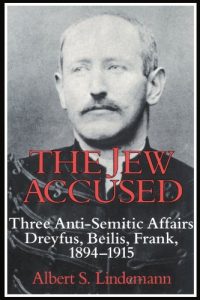
First, Lindemann demonstrated that there was no evidence of any anti-Semitism behind Frank’s arrest and conviction, with Jews constituting a highly-valued element of the affluent Atlanta society of the day, and no references to Frank’s Jewish background, negative or otherwise, appearing in the media prior to the trial. Indeed, five of the Grand Jurors who voted to indict Frank for murder were themselves Jewish, and none of them ever voiced regret over their decision. In general, support for Frank seems to have been strongest among Jews from New York and other distant parts of the country and weakest among the Atlanta Jews with best knowledge of the local situation.
Furthermore, although Lindemann followed the secondary sources he relied upon in declaring that Frank was clearly innocent of the charges of rape and murder, the facts he recounted led me to the opposite conclusion, seeming to suggest strong evidence of Frank’s guilt. When I much more recently read Lindemann’s longer and more comprehensive historical study of anti-Semitism, Esau’s Tears, I noticed that his abbreviated treatment of the Frank case no longer made any claim of innocence, perhaps indicating that the author himself might have also had second thoughts about the weight of the evidence.
Based on this material, I voiced that opinion in my recent article on historical anti-Semitism, but my conclusions were necessarily quite tentative since they relied upon Lindermann’s summary of the information provided in the secondary sources he had used, and I had the impression that virtually all those who had closely investigated the Frank case had concluded that Frank was innocent. But after my piece appeared, someone pointed me to a 2016 book from an unexpected source arguing for Frank’s guilt. Now that I have ordered and read that volume, my understanding of the Frank case and its historical significance has been entirely transformed.
Mainstream publishers may often reject books that too sharply conflict with reigning dogma and sales of such works are unlikely to justify the extensive research required to produce the manuscript. Furthermore, both authors and publishers may face widespread vilification from a hostile media for taking such positions. For these reasons, those who publish such controversial material will often be acting from deep ideological motives rather than merely seeking professional advancement or monetary gain. As an example, it took a zealous Trotskyite leftist such as Lenni Brunner to brave the risk of widespread vilification and invest the time and effort to produce his remarkable study of the crucial Nazi-Zionist partnership of the 1930s. And for similar reasons, we should not be totally surprised that the leading book arguing for the guilt of Leo Frank appeared as a volume in the series on the pernicious aspects of Jewish-Black historical relations produced by Louis Farrakhan’s Nation of Islam (NOI), nor that the text lacked any identified author.
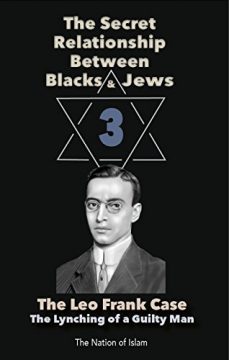
Anonymous works published by heavily-demonized religious-political movements naturally engender considerable caution, but once I began reading the 500 pages of The Leo Frank Case: The Lynching of a Guilty Man I was greatly impressed by the quality of the historical analysis. I think I have only very rarely encountered a research monograph on a controversial historical event that provided such an enormous wealth of carefully-argued analysis backed by such copious evidence. The authors seemed to display complete command of the major secondary literature of the last one hundred years while drawing very heavily upon the primary sources, including court records, personal correspondence, and contemporaneous publications, with the overwhelming majority of the 1200 footnotes referencing newspaper and magazine articles of that era. The case made for Frank’s guilt seemed absolutely overwhelming.
The basic outline of events is not disputed. In 1913 Georgia, a 13-year-old pencil company worker named Mary Phagan was last seen alive visiting the office of factory manager Leo Frank on a Saturday morning to collect her weekly paycheck, while her raped and murdered body was found in the basement early the next morning and Frank eventually arrested for the crime. As the wealthy young president of the Atlanta chapter of B’nai B’rith, Frank ranked as one of the most prominent Jewish men in the South, and great resources were deployed in his legal defense, but after the longest and most expensive trial in state history, he was quickly convicted and sentenced to death.
The facts of the case against Frank eventually became a remarkable tangle of complex and often conflicting evidence and eyewitness testimony, with sworn statements regularly being retracted and then counter-retracted. But the crucial point that the NOI authors emphasize for properly deciphering this confusing situation is the enormous scale of the financial resources that were deployed on Frank’s behalf, both prior to the trial and afterward, with virtually all of the funds coming from Jewish sources. Currency conversions are hardly precise, but relative to the American family incomes of the time, the total expenditures by Frank supporters may have been as high as $25 million in present-day dollars, quite possibly more than any other homicide defense in American history before or after, and an almost unimaginable sum for the impoverished Deep South of that period. Years later, a leading donor privately admitted that much of this money was spent on perjury and similar falsifications, something which is very readily apparent to anyone who closely studies the case. When we consider this vast ocean of pro-Frank funding and the sordid means for which it was often deployed, the details of the case become far less mysterious. There exists a mountain of demonstrably fabricated evidence and false testimony in favor of Frank, and no sign of anything similar on the other side.
The police initially suspected the black night watchman who found the girl’s body, and he was quickly arrested and harshly interrogated. Soon afterward, a bloody shirt was found at his home, and Frank made several statements that seemed to implicate his employee in the crime. At one point, this black suspect may have come close to being summarily lynched by a mob, which would have closed the case. But he stuck to his story of innocence with remarkable composure, in sharp contrast to Frank’s extremely nervous and suspicious behavior, and the police soon shifted their scrutiny toward the latter, culminating in his arrest. All researchers now recognize that the night watchman was entirely innocent, and the material against him planted.
The evidence against Frank steadily mounted. He was the last man known to have seen the young victim and he repeatedly changed important aspects of his story. Numerous former female employees reported his long history of sexually aggressive behavior toward them, especially directed towards the murdered girl herself. At the time of the murder, Frank claimed to have been working alone in his office, but a witness who went there reported he had been nowhere to be found. A vast amount of circumstantial evidence implicated Frank.
A black Frank family servant soon came forward with sworn testimony that Frank had confessed the murder to his wife on the morning after the killing, and this claim seemed supported by the latter’s strange refusal to visit her husband in jail for the first two weeks after the day of his arrest.
Two separate firms of experienced private detectives were hired by Frank’s lavishly-funded partisans, and the agents of both eventually came to the reluctant conclusion that Frank was guilty as charged.
As the investigation moved forward, a major break occurred as a certain Jim Conley, Frank’s black janitor, came forward and confessed to having been Frank’s accomplice in concealing the crime. At the trial he testified that Frank had regularly enlisted him as a lookout during his numerous sexual liaisons with his female employees, and after murdering Phagan, had then offered him a huge sum of money to help remove and hide the body in the basement so that the crime could be pinned upon someone else. But with the legal noose tightening around Frank, Conley had begun to fear that he might be made the new scapegoat, and went to the authorities in order to save his own neck. Despite Conley’s damning accusations, Frank repeatedly refused to confront him in the presence of the police, which was widely seen as further proof of Frank’s guilt.
By the time of the trial itself, all sides were agreed that the murderer was either Frank, the wealthy Jewish businessman, or Conley, the semi-literate black janitor with a first-grade education and a long history of public drunkenness and petty crime. Frank’s lawyers exploited this comparison to the fullest, emphasizing Frank’s Jewish background as evidence for his innocence and indulging in the crudest sort of racial invective against his black accuser, whom they claimed was obviously the true rapist and murderer due to his bestial nature.
Those attorneys were the best that money could buy and the lead counsel was known as the one of the most skilled courtroom interrogators in the South. But although he subjected Conley to a grueling sixteen hours of intense cross-examination over three days, the latter never wavered in the major details of his extremely vivid story, which deeply impressed the local media and the jury. Meanwhile, Frank refused to take the stand at his own trial, thereby avoiding any public cross-examination of his often changing account.
Two notes written in crude black English had been discovered alongside Phagan’s body, and everyone soon agreed that these were written by the murderer in hopes of misdirecting suspicion. So they were either written by a semi-literate black such as Conley or by an educated white attempting to imitate that style, and to my mind, the spelling and choice of words strongly suggests the latter, thereby implicating Frank.
Taking a broader overview, the theory advanced by Frank’s legion of posthumous advocates seems to defy rationality. These journalists and scholars uniformly argue that Conley, a semi-literate black menial, had brutally raped and murdered a young white girl, and the legal authorities soon became aware of this fact, but conspired to set him free by supporting a complex and risky scheme to instead frame an innocent white businessman. Can we really believe that the police officials and prosecutors of a city in the Old South would have violated their oath of office in order to knowingly protect a black rapist and killer from legal punishment and thereby turn him loose upon their city streets, presumably to prey on future young white girls? This implausible reconstruction is particularly bizarre in that nearly all its advocates across the decades have been the staunchest of Jewish liberals, who endlessly condemned the horrific racism of the Southern authorities of that era, but then unaccountably chose to make a special exception in this one particular case.
In many respects, the more important part of the Frank case began after his conviction and death sentence when many of America’s wealthiest and most influential Jewish leaders began mobilizing to save him from the hangman. They soon established the ADL as a new vehicle for that purpose and succeeded in making the Frank murder case one of the most famous in American history to that date.
Although his role was largely concealed at the time, the most important new backer whom Frank attracted was Albert Lasker of Chicago, the unchallenged monarch of American consumer advertising, which constituted the life’s blood of all of our mainstream newspapers and magazines. Not only did he ultimately provide the lion’s share of the funds for Frank’s defense, but he focused his energies upon shaping the media coverage surrounding the case. Given his dominant business influence in that sector, we should not be surprised that a huge wave of unremitting pro-Frank propaganda soon began appearing across the country in both local and national publications, extending to most of America’s most popular and highly-regarded media outlets, with scarcely a single word told on the other side of the story. This even included all of Atlanta’s own leading newspapers, which suddenly reversed their previous positions and became convinced of Frank’s innocence.
Lasker also enlisted other powerful Jewish figures in the Frank cause, including New York Times owner Adolph Ochs, American Jewish Committee president Louis Marshall, and leading Wall Street financier Jacob Schiff. The Times, in particular, began devoting enormous coverage to this previously-obscure Georgia murder case, and many of its articles were widely republished elsewhere. The NOI authors highlight this extraordinary national media attention: “The Black janitor whose testimony became central to Leo Frank’s conviction became the most quoted Black person in American history up to that time. More of his words appeared in print in the New York Times than those of W.E.B. Du Bois, Marcus Garvey, and Booker T. Washington—combined.”
Back a century ago just as today, our media creates our reality, and with Frank’s innocence being proclaimed nationwide in near-unanimous fashion, a long list of prominent public figures were soon persuaded to demand a new trial for the convicted murderer, including Thomas Edison, Henry Ford, and Jane Addams.
Ironically enough, Lasker himself plunged himself into this crusade despite apparently having very mixed personal feelings about man whose cause he was championing. His later biography reveals that upon his first personal meeting with Frank, he perceived him as “a pervert” and a “disgusting” individual, so much so that he even hoped that after he managed to free Frank, the latter would quickly perish in some accident. Furthermore, in his private correspondence he freely admitted that a large fraction of the massive funding that he and numerous other wealthy Jews from across the country were providing had been spent on perjured testimony and there are also strong hints that he explored bribing various judges. Given these facts, Lasker and Frank’s other major backers were clearly guilty of serious felonies, and could have received lengthy prison terms for their illegal conduct.
With the New York Times and the rest of the liberal Northern media now providing such massive coverage of the case, Frank’s defense team was forced to abandon the racially-inflammatory rhetoric aimed at his black accuser which had previously been the centerpiece of their trial strategy. Instead, they began concocting a tale of rampant local anti-Semitism, previously unnoticed by all observers, and adopted it as a major grounds for their appeal of the verdict.
The unprincipled legal methods pursued by Frank’s backers is illustrated by a single example. Georgia law normally required that a defendant be present in court to hear the reading of the verdict, but given the popular emotions in the case, the judge suggested that this provision be waived, and the prosecution assented only if the defense lawyers promised not to use this small irregularity as grounds for appeal. But after Frank was convicted, AJC President Marshall and his other backers orchestrated numerous unsuccessful state and federal appeals on exactly this minor technicality, merely hiring other lawyers to file the motion.
For almost two years, the nearly limitless funds deployed by Frank’s supporters covered the costs of thirteen separate appeals on the state and federal levels, including to the U.S. Supreme Court, while the national media was used to endlessly vilify Georgia’s system of justice in the harshest possible terms. Naturally, this soon generated a local reaction, and during this period outraged Georgians began denouncing the wealthy Jews who were spending such enormous sums to subvert their local criminal justice system.
One of the very few journalists willing to oppose Frank’s position was Georgia publisher Tom Watson, a populist firebrand, and in one of his editorials he reasonably declared “We cannot have… one law for the Jew, and another for the Gentile” while he also lamented that “It is a bad state of affairs when the idea gets abroad that the law is too weak to punish a man who has plenty of money.” A former Georgia governor indignantly inquired “Are we to understand that anybody except a Jew can be punished for a crime.” The clear facts indicate that there was indeed a massive miscarriage of justice in Frank’s case, but virtually all of it occurred in Frank’s favor.
All appeals were ultimately rejected and Frank’s execution date for the rape and murder of the young girl finally drew near. But just days before he was scheduled to leave office, Georgia’s outgoing governor commuted Frank’s sentence, provoking an enormous storm of popular protest, especially since he was the legal partner of Frank’s chief defense lawyer, an obvious conflict of interest. Given the enormous funds that Frank’s national supporters had been deploying on his behalf and the widespread past admissions of bribery in the case, there are obviously dark suspicions about what had prompted such a remarkably unpopular decision, which soon forced the former governor to exile himself from the state. A few weeks later, a group of Georgia citizens stormed Frank’s prison farm, abducting and hanging him, with Frank becoming the first and only Jew lynched in American history.
Naturally, Frank’s killing was roundly denounced in the national media that had long promoted his cause. But even in those quarters, there may have been a significant difference between public and private sentiments. No newspaper in country had more strongly championed Frank’s innocence than the New York Times of Adolph Ochs. Yet according to the personal diary of one of the Times editors, Ochs privately despised Frank, and perhaps even greeted his lynching with a sense of relief. No effort was ever made by any of Frank’s wealthy supporters to bring any of the lynching party to justice.
Although I have now come to regard the NOI volume as the most persuasive and definitive text on the Frank case, I naturally considered conflicting works before coming to this conclusion.
For nearly a half-century, the leading scholarly account of the incident had probably been Leonard Dinnerstein’s book The Leo Frank Case, first published in 1966, and Dinnerstein, a University of Arizona professor specializing in Jewish history, entirely supported Frank’s innocence. But although the work won a national award, carries glowing blurbs from several prestigious publications, and has surely graced the reading lists of endless college courses, I was not at all impressed. Among other things, the book appears to be the original source of some of the most lurid examples of alleged anti-Semitic public outbursts that apparently have no basis in reality and seem to have been simply fabricated by the author given his lack of any citations; the NOI authors note these stories have been quietly abandoned by all recent researchers. Even leaving aside such likely falsifications, which were widely cited by later writers and heavily contaminated the historical record, I found the short Dinnerstein work rather paltry and even pitiful when compared to that of its NOI counterpart.
A far longer and more substantial recent work was Steve Oney’s 2003 And the Dead Shall Rise, which runs nearly 750 pages and won the National Jewish Book Award, the Southern Book Critics Circle Prize, and the American Bar Association’s Silver Gavel, probably establishing itself as today’s canonical text on the historical incident. Oney had been a longtime Atlanta journalist and I was favorably impressed by his narrative skill, along with the numerous fascinating vignettes he provided to illustrate the Southern history of that general era. He also seemed a cautious researcher, drawing heavily upon the primary sources and avoiding much of the falsified history of the last century, while not entirely suppressing the massive evidence of bribery and perjury employed by the Frank forces.
But although Oney does mention much of this information, he strangely fails to connect the dots. For example, although he occasionally mentions some of the funds spent on Frank’s behalf, he never attempts to convert them into present-day equivalents, leaving a naive reader to assume that such trivial amounts could not possibly have been used to pervert the course of justice. Furthermore, his entire book is written in chronological narrative form, with no footnotes provided in the text, and a large portion of the content being entirely extraneous to any attempt to determine Frank’s guilt or innocence, contrasting very sharply with the more scholarly style of the NOI authors.
To my mind, a central element of the Frank case was the massive financial temptations being offered by Frank’s Jewish backers, and the huge number of Atlanta citizens, both high and low, who apparently shifted their positions on Frank’s guilt in eager hopes of capturing some of that largess. But although this obvious theme was heavily emphasized in the NOI book, Oney seems to mostly avoid this obvious factor, perhaps even for personal reasons. Print publications have suffered massive cutbacks in recent years and I noticed on the book flap that although Oney is described as a longtime Atlanta journalist, he had subsequently relocated to Los Angeles. Once I checked, I immediately discovered that Oney’s book had became the basis for an independent film entitled The People v. Leo Frank, and I wonder whether his hopes of capturing a sliver of Hollywood’s vast lucre may not have encouraged him to so strongly suggest Frank’s innocence. Would an account of Leo Frank as rapist and murderer ever be likely to reach the silver screen? The quiet influence of financial considerations today is no different today than they were a century ago, and this factor must be taken into account when evaluating historical events.
The NOI authors devote nearly all of their lengthy book to a careful analysis of the Frank case provided in suitably dispassionate form, but a sense of their justifiable outrage does occasionally poke through. In the years prior to Frank’s killing, many thousands of black men throughout the South had been lynched, often based on a slender thread of suspicion, with few of these incidents receiving more than a few sentences of coverage in a local newspaper, and large numbers of whites had also perished in similar circumstances. Meanwhile, Frank had received benefit of the longest trial in modern Southern history, backed by the finest trial lawyers that money could buy, and based on overwhelming evidence had been sentenced to death for the rape and murder of a young girl. But when Frank’s legal verdict was carried out by extra-judicial means, he immediately became the most famous lynching victim in American history, perhaps even attracting more media attention than all those thousands of other cases combined. Jewish money and Jewish media established him as a Jewish martyr who thereby effectively usurped the victimhood of the enormous number of innocent blacks who were killed both before and after him, none of whom were ever even recognized as individuals.
As Prof. Shahak has effectively demonstrated, traditional Talmudic Judaism regarded all non-Jews as being sub-human, with their lives possessing no value. Given that Frank’s backers were all followers of Reform Judaism, it seems quite unlikely that they followed this doctrine or were even aware of its existence. But religious traditions of a thousand years standing can easily become embedded within a culture, and such unrecognized cultural sentiments may have easily shaped their reaction to Frank’s legal predicament.
Influential historical accounts of the Frank case and its aftermath have contained lurid tales of the rampant public anti-Semitism visited upon Atlanta’s Jewish community in the wake of the trial, even claiming that a substantial portion of the population was forced to flee as a consequence. However, a careful examination of the primary source evidence, including the contemporaneous newspaper coverage, provides absolutely no evidence of this, and it appears to be entirely fictional.
The NOI authors note that prior to Frank’s trial American history had been virtually devoid of any evidence of significant anti-Semitism, with the previous most notable incident being the case of an extremely wealthy Jewish financier who was refused service at a fancy resort hotel. But by totally distorting the Frank case and focusing such massive national media coverage on the case, Jewish leaders around the country succeeded in fabricating a powerful ideological narrative despite its lack of reality, perhaps intending it to serve as a bonding experience to foster Jewish community cohesion.
As a further example of the widely promoted but apparently fraudulent history, the Jewish writers who have overwhelmingly dominated accounts of the Frank case have frequently claimed that it sparked the revival of the Ku Klux Klan soon afterward, with the group of citizens responsible for Frank’s 1915 lynching supposedly serving as the inspiration for William Simmons’ reestablishment of that organization a couple of years later. But there seems no evidence for this. Indeed, Simmons strongly emphasized the philo-Semitic nature of his new organization, which attracted considerable Jewish membership.
The primary factor behind the rebirth of the KKK was almost certainly D.W. Griffith’s overwhelmingly popular landmark 1917 film Birth of a Nation, which glorified the Klan of the Reconstruction Era. Given that the American film industry was so overwhelmingly Jewish at the time and the film’s financial backers and leading Southern distributors came from that same background, it could be plausibly argued that the Jewish contribution to the creation of the 1920s Klan was a very crucial one, while the revenue from the film’s distribution throughout the South actually financed Sam Goldwyn’s creation of MGM, Hollywood’s leading studio.
In their introduction, the NOI authors make the fascinating point that the larger historical meaning of the Frank case in American racial history has been entirely lost. Prior to that trial, it was unprecedented for Southern courts to allow black testimony against a white man, let alone against a wealthy man being tried on serious charges; but the horrific nature of the crime and Conley’s role as the sole witness required a break from that longstanding tradition. Thus, the authors argue not unreasonably, that the Frank case may have been as important to the history of black progress in America as such landmark legal verdicts as Plessy vs. Ferguson or Brown vs. Board. But since almost the entire historical narrative has been produced by fervent Jewish advocates, these facts have been completely obscured and the case entirely misrepresented as an example of anti-Semitic persecution and public murder.
Let us now summarize what seems to be the solidly established factual history of the Frank case, quite different than the traditional narrative. There is not the slightest evidence that Frank’s Jewish background was a factor behind his arrest and conviction, nor the death sentence he received. The case set a remarkable precedent in Southern courtroom history with the testimony of a black man playing a central role in a white man’s conviction. From the earliest stages of the murder investigation, Frank and his allies continually attempted to implicate a series of different innocent blacks by planting false evidence and using bribes to solicit perjured testimony, while the exceptionally harsh racial rhetoric that Frank and his attorneys directed towards those blacks was presumably intended to provoke their public lynching. Yet despite all these attempts by the Frank forces to play upon the notorious racial sentiments of the white Southerners of that era, the latter saw through these schemes and Frank was the one sentenced to hang for his rape and murder of that young girl.
Now suppose that all the facts of this famous case were exactly unchanged except that Frank had been a white Gentile. Surely the trial would be ranked as one of the greatest racial turning points in American history, perhaps even overshadowing Brown v. Board because of the extent of popular sentiment, and it would have been given a central place in all our modern textbooks. Meanwhile, Frank, his lawyers, and his heavy financial backers would probably be cast as among the vilest racial villains in all of American history for their repeated attempts to foment the lynching of various innocent blacks so that a wealthy white rapist and murderer could walk free. But because Frank was Jewish rather than Christian, this remarkable history has been completely inverted for over one hundred years by our Jewish-dominated media and historiography.
These are the important consequences that derive from control of the narrative and the flow of information, which allows murderers to be transmuted into martyrs and villains into heroes. The ADL was founded just over a century ago with the central goal of preventing a Jewish rapist and killer from being held legally accountable for his crimes, and over the decades, it eventually metastasized into a secret political police force not entirely dissimilar to the widely despised East German Stasi, but with its central goal seeming to be the maintenance of overwhelming Jewish control in a society that is 98% non-Jewish.
We should ask ourselves whether it is appropriate for an organization with such origins and such recent history to be granted enormous influence over the distribution of information across our Internet.
Khashoggi Was No Critic of Saudi Regime
By As`ad AbuKhalil | Consortium News | October 15, 2018
The disappearance of Jamal Khashoggi, the Saudi journalist, in the Saudi consulate in Istanbul last week has generated huge international publicity, but unsurprisingly, little in Saudi-controlled, Arab media. The Washington Post, for whom Khashoggi wrote, and other Western media, have kept the story alive, increasing the pressure on Riyadh to explain its role in the affair.
It’s been odd to read about Khashoggi in Western media. David Hirst in The Guardian claimed Khashoggi merely cared about absolutes such as “truth, democracy, and freedom”. Human Rights Watch’s director described him as representing “outspoken and critical journalism.”
But did he pursue those absolutes while working for Saudi princes?
Khashoggi was a loyal member of the Saudi propaganda apparatus. There is no journalism allowed in the kingdom: there have been courageous Saudi women and men who attempted to crack the wall of rigid political conformity and were persecuted and punished for their views. Khashoggi was not among them.
Some writers suffered while Khashoggi was their boss at Al-Watan newspaper. Khashoggi—contrary to what is being written—was never punished by the regime, except lightly two years ago, when Saudi Crown Prince Mohammed bin Salman (MbS) banned him from tweeting and writing for Al-Hayat, the London-based, pan-Arab newspaper owned by Saudi Prince Khalid bin Sultan.
By historical contrast, Nasir As-Sa`id was a courageous secular Arab Nationalist writer who fled the kingdom in 1956 and settled in Cairo, and then Beirut. He authored a massive (though tabloid-like) volume about the history of the House of Saud. He was unrelenting in his attacks against the Saudi royal family.
For this, the Saudi regime paid a corrupt PLO leader in Beirut (Abu Az-Za`im, tied to Jordanian intelligence) to get rid of As-Sa`id. He kidnapped As-Sa`id from a crowded Beirut street in 1979 and delivered him to the Saudi embassy there. He was presumably tortured and killed (some say his body was tossed from a plane over the “empty quarter” desert in Saudi Arabia). Such is the track record of the regime.
Finding the Right Prince
Khashoggi was an ambitious young reporter who knew that to rise in Saudi journalism you don’t need professionalism, courage, or ethics. In Saudi Arabia, you need to attach yourself to the right prince. Early on, Khashoggi became close to two of them: Prince Turki Al-Faysal (who headed Saudi intelligence) and his brother, Prince Khalid Al-Faysal, who owned Al-Watan (The Motherland) where Khashoggi had his first (Arabic) editing job.
Khashoggi distinguished himself with an eagerness to please and an uncanny ability to adjust his views to those of the prevailing government. In the era of anti-Communism and the promotion of fanatical jihad in Afghanistan and elsewhere, Khashoggi was a true believer. He fought with Osama bin Laden and promoted the cause of the Mujahideen.
The Washington Post‘s David Ignatius and others want to embellish this by implying that he was an “embedded” reporter—as if bin Laden’s army would invite independent journalists to report on their war efforts. The entire project of covering the Afghan Mujahideen and promoting them in the Saudi press was the work of the chief of Saudi intelligence, Prince Turki, Khashoggi’s principal patron-prince.
Western media coverage of Khashoggi’s career (by people who don’t know Arabic) presents a picture far from reality. They portray a courageous investigative journalist upsetting the Saudi regime. Nothing is further from the truth: there is no journalism in Saudi Arabia; there is only crude and naked propaganda.
Editors are trusted individuals who have demonstrated long-time loyalty. Khashoggi admitted to an Arab reporter last year in an interview from Istanbul that in Saudi Arabia he had been both editor and censor. Editors of Saudi regime papers (mouthpieces of princes and kings) enforce government rules and eliminate objectionable material.
Khashoggi never spoke out for Saudis in distress. He ran into trouble in two stints as Al-Watan editor because of articles he published by other writers, not by himself, that were mildly critical of the conservative religious establishment—which he at times supported. He was relocated to another government media job— to shield him from the religious authorities.
Khashoggi was the go-to man for Western journalists covering the kingdom, appointed to do so by the regime. He may have been pleasant in conversation with reporters but he never questioned the royal legitimacy. And that goes for his brief one-year stint in Washington writing for the Post.
A Reactionary
Khashoggi was a reactionary: he supported all monarchies and sultanates in the region and contended they were “reformable.” To him, only the secular republics, in tense relations with the Saudis, such as Iraq, Syria and Libya, defied reform and needed to be overthrown. He favored Islamization of Arab politics along Muslim Brotherhood lines.
Khashoggi’s vision was an “Arab uprising” led by the Saudi regime. In his Arabic writings he backed MbS’s “reforms” and even his “war on corruption,” derided in the region and beyond. He thought that MbS’s arrests of the princes in the Ritz were legitimate (though he mildly criticized them in a Post column) even as his last sponsoring prince, Al-Walid bin Talal, was locked up in the luxury hotel. Khashoggi even wanted to be an advisor to MbS, who did not trust him and turned him down.
Writing in the Post (with an Arabic version) Khashoggi came across as a liberal Democrat favoring democracy and reform. But he didn’t challenge Saudi regime legitimacy or Western Mideast policy. Mainstream journalists were enamored with him. They saw him as an agreeable Arab who didn’t criticize their coverage of the region, but praised it, considering the mainstream U.S. press the epitome of professional journalism. Khashoggi was essentially a token Arab writing for a paper with a regrettable record of misrepresenting Arabs.
In Arabic, his Islamist sympathies with Turkey and the Muslim Brotherhood (Ikhwan) were unmistakable. Forgotten or little known in the West is that during the Cold War the Saudis sponsored, funded, and nurtured the Muslim Brotherhood as a weapon against the progressive, secular camp led by Egypt’s Gamal Abdel Nasser. Ikhwan controlled the Saudi educational system raising Saudi students to admire the Brotherhood. But Sep. 11 changed the Saudi calculus: the rulers wanted a scapegoat for their role in sponsoring Islamist fanaticism and the Ikhwan was the perfect target. That made Khashoggi suspect too.
Hints Against Him
Recent articles in the Saudi press hinted that the regime might move against him. He had lost his patrons but the notion that Khashoggi was about to launch an Arab opposition party was not credible. The real crime was that Khashoggi was backed alone by Ikhwan supporters, namely the Qatari regime and the Turkish government.
A writer in Okaz, a daily in Jeddah, accused him of meeting with the Emir of Qatar at the Four Seasons Hotel in New York and of having ties to “regional and international intelligence services.” If true it may have sealed his fate. Qatar is now the number one enemy of the Saudi regime—arguably worse than Iran.
Khashoggi was treated as a defector and one isn’t allowed to defect from the Saudi Establishment. The last senior defections were back in 1962, when Prince Talal and Prince Badr joined Nasser’s Arab nationalist movement in Egypt.
Khashoggi had to be punished in a way that would send shivers down the spine of other would-be defectors.
As’ad AbuKhalil is a Lebanese-American professor of political science at California State University, Stanislaus. He is the author of the Historical Dictionary of Lebanon (1998), Bin Laden, Islam and America’s New “War on Terrorism” (2002), and The Battle for Saudi Arabia (2004). He also runs the popular blog The Angry Arab News Service.
Featured Video

Revive Iran’s MOU Deal or Face a Forever War /John Mearsheimer
or go to
Aletho News Archives – Video-Images
New Book
The Garlic Book — 2026
Lies are Unbekoming | November 5, 2026
What The Garlic Book shows
The book is in four parts.
 Part One, The Record, treats the history of garlic as evidence. From the clay garlic bulb placed in an Egyptian grave nearly six thousand years ago, through the Ebers Papyrus, through Hippocrates, Dioscorides, Pliny and Galen, the Arab physicians under Avicenna, the medieval herbals, Culpeper, and the plague years, to the last era in which Western physicians prescribed garlic as a matter of course, which ran from 1850 to 1945. It closes with the living traditions that never stopped using it, and with the folklore of charms, vampires and the evil eye.
Part Two, The Chemistry and the Evidence, sets out what is known about why a clove has no smell until it is cut, and why the order of crush, rest and heat changes the medicine. It then reads the clinical evidence against the historical record — bacteria, blood and vessels, cancer epidemiology, metals and fatigue — and names the trials that went against garlic as directly as the trials that went for it, including the 2007 Stanford trial funded by the US National Institutes of Health which found that raw garlic, garlic powder and aged garlic extract moved LDL cholesterol no more than placebo did. It then turns to onion, garlic’s closest relative, and reads the newer evidence published since 2015, before closing with the whole of the record through the terrain lens.
Part Three, Why Medicine Set It Aside, asks the question directly. One chapter contrasts the pharmaceutical model of isolating a single active compound with the folk model of combining whole plants, and reports what the garlic evidence says about which model works better. One chapter examines the economics of research on a plant that cannot be patented. One chapter — Fire Cider — tells the story of a folk preparation whose name was taken into a United States trademark by a Massachusetts company in 2012, and won back by three herbalists in 2014 who documented forty years of prior use through Rosemary Gladstar and her students into the older tradition.
Part Four, Garlic in Practice, is the working manual — the kitchen pharmacy, traditional uses by body system, a full chapter on safety and interactions, and a complaint-by-complaint practical guide. The book closes with The Trial That Was Never Run — a one-chapter reading of the whole evidential architecture.
At the back: two appendices (a traditional list of uses, and a preparation quick-reference), a full bibliography, and a live index.
Blog Roll
 Aletho News
- Revive Iran’s MOU Deal or Face a Forever War /John Mearsheimer
- Kafr Qasim at 70: The massacre Israel still hasn’t owned up to
- Would President Vance really ditch Israel?
- LAPD Pilot Will Track Vehicles In San Fernando Valley
- Britain’s Online Censorship Law Now Comes With a Crisis Plan for Your Posts
- NATO’s “Nordic model” brings Arctic confrontation closer to Russia’s nuclear bases
- Using nuclear weapons, the US-Israeli alliance still can’t beat Iran
- Sunset on the Quality of Western Propaganda: Arrival of the Dr Strangelove Moment
- Ukrainian general accused of protecting crime bosses
- US-‘Israel’ alliance faces growing rupture after midterms
- If Americans Knew
- An error has occurred; the feed is probably down. Try again later.
- No Tricks Zone
- New Study: The Net Fossil Fuel Contribution To Rising Atmospheric CO2 Has Been Zero For 500 Years
- Germany’s Green Energy Transition Becoming Increasingly Expensive…Another 6 Trillion Euros!
- Sudden Stratospheric Warming, Powerful El Niño Combination May Lead To Extreme Europe Cold, Energy Crisis!
- Two New Studies Find Thwaites Glacier Melt Cannot Be Driven By Human Activity Or A Warming Ocean
- E-Cars Reduce CO2 Emissions By Only 41% Compared To Internal Combustion Engine Vehicles
- Predictions Made By Renowned Climate Professor Over Past Decades Have Been Proven To Be Poor
- New Study Suggests Large Regions Of The Pacific Ocean Have Been Cooling For The Last 80 Years
- Germany’s Green Energy Debacle: High Energy Costs Force Kahla Porzellan to Close After 182 Years!
- New Study: 50 Years Of The Most Aggressive ‘Net Zero’ Policies Can Only Affect The Global Climate By 0.03°C
- US September “Heat” Was No Record…Many Records Set Decades Ago

