Azov Sea Flashpoint: Russia, Ukraine Teetering on the Brink of War
By Peter KORZUN | Strategic Culture Foundation | 16.09.2018
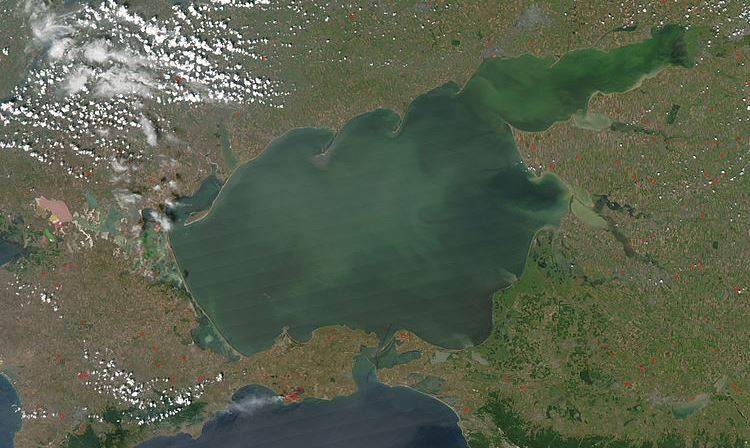
Ukraine has increased its military presence in the Azov Sea region. Ukraine’s National Security and Defense Council met on Sept. 7 and agreed to take a variety of steps to boost the country’s combat capabilities in the area, including the creation of a missile-equipped naval infantry group to counter potential amphibious attacks and naval shore bombardments. Ukraine’s Gurza-M-class armored artillery boats have been brought in to boost the naval component of the forces deployed in the region.
Russia and Ukraine enjoy free use of the Sea of Azov under the 2003 “Agreement between the Russian Federation and the Ukraine on cooperation in the use of the sea of Azov and the strait of Kerch.” The document is in place but it does not specify any precise border. The parties agree that the Sea of Azov and the Strait of Kerch are the internal waters of both Ukraine and Russia.
Talks have dragged on for a long time but have failed to produce a solution. Ukraine does not want to recognize Russia’s rights, which are based on the fact that Crimea has joined the Russian Federation. Moreover, Ukrainian authorities insist on their right to detain any ship traveling to or from Crimea without Kiev’s permission.
Ukraine is calling for the imposition of international sanctions against Russian Black Sea ports, due to what it calls the “blockade” of the Sea of Azov. It has already imposed punitive measures unilaterally. Tensions have heightened since March, when ships were detained and searched. On March 24, Ukrainian border guards stopped the Russian-flagged, Crimean-registered Nord fishing vessel in the Sea of Azov. The ship was hijacked. The crew members reported being interrogated and abused by Ukrainian authorities who held them accountable under domestic laws, not recognizing the crew as Russian citizens. The detained sailors were finally set free to return to Crimea without passports. Ukraine violated a number of international agreements and this marked the beginning of a campaign of provocative actions that has been waged ever since. Last month, the Russian Mekhanik Pogodin tanker was detained in the Ukrainian port of Kherson. Russia compared the move to the activities of Somali pirates.
The US is taking sides in order to ratchet up the tensions. The State Department has taken a deliberately provocative stance, urging Ukraine toward confrontation. Without bothering to study the details, it simply puts the blame on Russia as usual for anything that goes wrong. Washington is goading Ukraine into seeking a military solution, including such unrealistic but dangerous ideas as using the warships of NATO’s standing force to protect its shipping lanes, mining the Azov Sea, or using fast-moving attack vessels to encircle a large Russian naval asset from all directions like a wolf pack. This tactic was invented by German Admiral Karl Dönitz during WWII, when “wolf packs” of U-boats were used to attack capital ships. The very fact that such ideas have been generated and are floating around shows how unwise it is to abet Ukraine by throwing unconditional support behind it.
Stephen Blank of the American Foreign Policy Council, a leading US expert on Russia, believes that the US administration “should send anti-ship missiles available from or through the US-AGM-84 Harpoon Block II, AGM-158C LRASM A, and the Norwegian Naval Strike Missile” as well as “a viable launch platform and a targeting system, particularly a radar.” The author thinks this should be done right now, without delay. His article was published on Sept. 7 by the Atlantic Council, the prestigious think tank that advises the State Department and enjoys great influence among those who shape US foreign policy. In another article, Mr. Blanc calls for supplying Ukraine with platforms — older ships that have been decommissioned or are about to retire. Last month, Mykola Bielieskov, the Deputy Executive Director at the Institute of World Policy, called for fast-track shipments to Ukraine of the Harpoon Block II ER+ anti-ship missile, enabling it to attack Russian vessels. The idea of providing Ukraine with Island-class coast guard ships is under consideration by the US government. On Sept. 1, Kurt Volker, US Special Representative for Ukraine Negotiations, stated that the US administration “is ready to expand arms supplies to Ukraine in order to build up the country’s naval and air defense forces.”
The powers that be have failed to keep their promises and improve the lives of ordinary people in Ukraine. The presidential election will be held in March 2019. A threatening Russian bogeyman is needed to explain away the failures. The country’s economy and finances are in the doldrums and corruption is staggering. None of the problems have been solved and the West is getting tired of Ukraine. The fairy tale about Moscow’s “aggressive foreign policy” comes in handy right when the Ukrainian rulers need a scapegoat.
Nobody needs an armed conflict in the Azov Sea region. A number of countries are interested in protecting the right of free passage, enabling vessels to arrive at their destination ports without risk or delay. The region does not have to be a flashpoint. Russia and Ukraine could sit down at a round table to discuss controversial issues, as the 2003 agreement stipulates the parties should do in order to settle their disputes, should they have any, but that’s not what the State Department is calling for. The only option the US administration is considering is that of providing Ukraine with arms to fight Russia and then egging Kiev on to escalate the tensions. And those are already dangerously running high. A spark can ignite a big fire at any time if the problem is not addressed in a positive way without saber rattling. It’s a pity the US is playing such a destructive role. The time is right for Russian and Ukrainian experts and officials to set their differences aside and start talking to find a peaceful solution to this urgent problem.
Narrative Collapse: Mueller Probe Reveals Manafort Was Lobbying Against Russia
By Chris Menahan – InformationLiberation – September 15, 2018
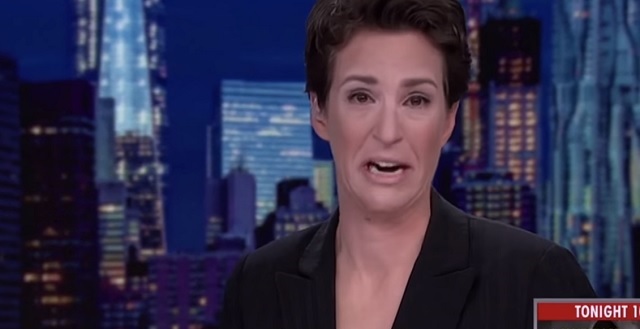
Paul Manafort was lobbying against Russian interests in Ukraine — not for them as Rachel Maddow and others have been claiming for months — according to new documents released from special counsel Robert Mueller’s investigation.
According to records produced by Mueller himself, the nature of the work Manafort did in Ukraine (lobbying *against* Russia’s interests) is the polar opposite of how it’s been portrayed in US media. The level of narrative manipulation here is a astounding https://t.co/fxbqQSCvhy
— Michael Tracey (@mtracey) September 14, 2018
The Real News’ Aaron Maté broke it all down Friday on Twitter:
Mueller includes emails/documents showing Manafort briefing colleagues and clients — including the “pro-Russian” President Yanukovych — of his efforts to push “Engage Ukraine,” Manafort’s strategy for Ukraine integration with EU, to ensure Ukraine does not “fall to Russia”: pic.twitter.com/3XzQheZDS1
— Aaron Maté (@aaronjmate) September 14, 2018
Here is Manafort briefing Yanukovych directly on his efforts that “gained considerable ground in enhancing [Ukraine’s] relationship with” the US, having “adopted issues of importance to USG” and “objectives which are in alignment with the West.”: pic.twitter.com/jb5dir0lUz
— Aaron Maté (@aaronjmate) September 14, 2018
Here is Manafort noting that his team worked with Obama White House officials on the National Security Council on releasing a “very favorable” statement, and also briefed “key members” of the US government, bipartisan lawmakers and Obama officials: pic.twitter.com/zrd703ckWA
— Aaron Maté (@aaronjmate) September 14, 2018
Maté wrote Friday in The Nation :
It is often speculated that Manafort’s Ukraine stint is relevant to a Trump-Russia conspiracy plot because, the theory goes, he served Kremlin interests during his time there. The opposite is the case, as Manafort’s former partner-turned-prosecution-witness, Rick Gates, reaffirmed during trial. Gates testified that Manafort pushed his client, then–Ukrainian President Viktor Yanukovych, to align with the European Union and away from Russia. According to Gates, Manafort was paid lucratively to craft a policy known as “Engage Ukraine,” which “became the strategy for helping Ukraine enter the European Union.” Given that the tug-of-war between Russia and the EU (with US backing) over Ukraine sparked a full-blown international crisis and a new Cold War, Manafort’s strategy would be an odd one for a supposed Kremlin stooge.
Putting aside Manafort’s record in Ukraine, there have been attempts to tie him to a potential Russia conspiracy via his financial debts to Russian tycoon Oleg Deripaska. During the campaign, Manafort wrote to an associate about leveraging his position in the Trump camp in order to “get whole” with Deripaska, even suggesting that he offer “private briefings.” Could this have been, pundits suggest, where a collusion plot was hatched?
Deripaska denies ever having been offered private briefings by Manafort. Another impediment to tying Deripaska to a Trump-Russia collusion plot is that Deripaska has connections to the figure arguably most responsible for the allegations of collusion. Christopher Steele, the former British intelligence agent whose DNC-funded “dossier” alleged a longstanding Trump-Kremlin conspiracy, has served as an intermediary for contacts between Deripaska and US officials. Deripaska even has a link to Mueller and the federal agency he once headed. In 2009, when Mueller was in charge of the FBI, Deripaska ponied up millions of dollars for a secret effort to rescue a captured CIA operative, Robert Levinson, in Iran. In return, the FBI–with the encouragement of Steele–helped secure a visa for Deripaska, who had been banned from the United States for alleged ties to Russian organized crime. In short, Deripaska’s various contacts make plain that Manafort’s financial ties to him, illicit or not, do not necessarily lead to a Kremlin conspiracy.
Most critically, Mueller has yet to allege one. Prosecutors openly acknowledged before Manafort’s first trial that the case had nothing to do with “evidence or argument concerning collusion with the Russian government,” while the judge in Manafort’s upcoming second trial notes that the collusion investigation is “wholly irrelevant to the charges in this case.”
The same could be said for all of the other charges in the Mueller investigation to date.
No doubt Rachel Maddow, Chris Hayes and the rest of the fake news media will be issuing formal retractions any day now!
Before I show you what Gates said, I want to demonstrate why I’ve argued that pundits like @Maddow have become straight-up propagandists on this issue. Here is Maddow last night saying that Gates’ testimony *substantiates* the Manafort-Russia tie: pic.twitter.com/GMmuFq3eKt
— Aaron Maté (@aaronjmate) August 8, 2018
… Any day now, I’m sure!
Despite US Opposition, Joint Liaison Office Opens On Shared Korean Border
By Tyler Durden – Zero Hedge – 09/15/2018
On Friday an unprecedented development occurred that could put the Korean peninsula on a permanent trajectory of stability should talks between the North and South continue their positive direction, and which signals an intensification of diplomacy between the two.
South Korea has opened a new liaison office in the North Korean city of Gaeseong (or alternately Kaesong), which is to allow for 24-hour communication between the two sides for first time since war. The office is located inside an industrial park — and Gaeseong is just inside the North’s side of the border.
It’s being described as allowing “around-the-clock” communication between rival officials on either side the military demarcation line, and could avoid the potential for future misunderstandings or provocations, and further comes amidst a parallel diplomatic push by the United States and its allies for complete North Korean denuclearization.
When the proposal was being finalized this summer, however, the US was opposed to the plan, with the State Department last month saying progress between the two Koreas must occur “in lockstep” with talks on the north’s denuclearization.
According to Bloomberg:
The Aug. 20 announcement of the office’s establishment had raised concerns in the U.S. about whether it would violate sanctions meant to penalize Pyongyang over its nuclear arsenal. But on Thursday, the United Nations Command said it had approved South Korean vehicles and personnel to cross the border into North Korea and begin constructing a communications center at the Gaeseong complex.
Meanwhile the United Nations welcomed the development, with UNC commander Vincent Brooks saying in a statement that communication between two sides is “a way to prevent incidents or crises.”
About 50 South Korean officials crossed into the North to attend the opening ceremony, where South Korean Unification Minister Cho Myoung-gyon told ceremony attendees, “A new chapter in history is starting here today,” and added, “It is a symbol of peace made jointly by South and North Korea.”
The two sides agreed to open the office during the prior historic April summit between South Korean President Moon Jae-in and North Korean leader Kim Jong Un, with the two again set to meet in Pyongyang next week. And meanwhile the White House is reportedly working toward plans for another meeting between President Trump and the North Korean leader.
But even though outlets like the New York Times reported the joint liaison’s office as a positive step in relations, much of the reporting this week has failed to recall that Washington firmly opposed it.
After Cutting All UNWRA Humanitarian Aid, US to Award Israel with $3.3B/Year in Military Aid
By Whitney Webb | Mint Press News | September 14, 2018
WASHINGTON — A massive spending bill, which would deliver $3.3 billion dollars in military aid to Israel over the next year, passed the House on Wednesday under cover of a media blackout. The U.S. Senate had passed a different version of the same bill in early August, a vote that also went largely unreported.
Now, after the House’s passage of a slightly altered version of the Senate’s spending bill, officially titled the “Ileana Ros-Lehtinen United States-Israel Security Assistance Authorization Act of 2018,” all that remains is for the two chambers of Congress to reconcile their versions before the product is sent to President Trump’s desk to be signed into law. According to Skopos Labs, the bill now has a 90 percent chance of being enacted. If enacted, the bill will be the largest aid package in American history.
As MintPress previously reported, $3.3 billion was supposed to be the annual limit for U.S. military aid to Israel. However, the figure is actually set to be higher this year as a result of Congress’ recent passage of a massive $716 billion defense bill that provides an additional $550 million in U.S. aid for Israeli missile defense systems. That defense bill also authorizes an additional $1 billion for U.S. weapons stockpiles in Israel.
Furthermore, the $3.3 billion in annual aid is set to continue for the next decade based on the current text of the bill and the 2016 Memorandum of Understanding between Israel and the Obama administration — totaling over $38 billion over the next decade when accounting for annual military aid and annual aid given specifically to fund Israeli missile defense.
That startling figure roughly equates to $23,000 for every Jewish family living in Israel.
In addition to the massive sum the legislation would give to the Israeli military, the bill would also mandate that NASA closely cooperate with the Israel Space Agency (ISA), despite the latter’s history of espionage targeting NASA.
The massive amount of aid the U.S. government is set to give to Israel comes amid Israel’s unprecedented crackdown on unarmed protesters in the Gaza Strip and a looming Israeli military operation aimed at “conquering” the Palestinian enclave. The aid package’s imminent package is also set to coincide with efforts to annex the vast majority of Palestine’s West Bank, which has been militarily occupied by Israel since 1967.
As MintPress noted in a previous report, such grave violations of human rights would normally prevent the U.S. government from providing aid to Israel, given that the Leahy Laws enable the U.S. to withhold military assistance from units and individuals in foreign security forces if they have committed a gross violation of human rights.
However, the U.S. government – particularly under the rabidly pro-Israel administration of President Trump, which just last week cut all funding for Palestinian humanitarian relief through UNRWA – has consistently shown that it is willing to bend the rules for Israel.
Congress waves the Israeli flag
The $3.3 billion military aid package was only one of the bills passed by the House that is set to benefit Israel. Another bill, which has also been largely overlooked by the media, would seek to create a special government envoy tasked with monitoring “anti-Semitism” and criticism of Israel worldwide.
According to the text of the bill – officially titled the “Special Envoy to Monitor and Combat Anti-Semitism Act of 2017” – the envoy would “serve as the primary advisor to, and coordinate efforts across, the United States government relating to monitoring and combating anti-Semitism and anti-Semitic incitement that occur in foreign countries,” and have the rank of ambassador. Only two members of the House voted against the bill: Rep. Justin Amash (R-MI) and Rep. Jerry McNerney (D-CA).
While an effort to combat “anti-Semitism” is a noble cause, the recent endorsement of a controversial definition of the term by Congress, which defines certain criticisms of the state of Israel as anti-Semitic, makes it likely that any envoy appointed to this position would be focused on clamping down on domestic and international criticisms of the Israeli government.
Given the potential dangers that such a position could pose to free speech, not just in the U.S. but abroad, it is surprising that this bill’s passage by an overwhelming majority received next to no media attention. Yet, in light of the media blackout also surrounding the imminent approval of the U.S.’ massive aid package to the Israeli military, it is perhaps not so surprising.
Whitney Webb is a staff writer for MintPress News and a contributor to Ben Swann’s Truth in Media. Her work has appeared on Global Research, the Ron Paul Institute and 21st Century Wire, among others. She has also made radio and TV appearances on RT and Sputnik. She currently lives with her family in southern Chile.
Kristen Iversen – Full Body Burden – Growing Up in the Nuclear Shadow of Rocky Flats
argusfest – June 20, 2012
This talk was filmed at the Tattered Cover Bookstore in Denver, Colorado on June, 19, 2012.
Kristen Iversen shared excerpts from her new book “Full Body Burden: Growing Up in the Nuclear Shadow of Rocky Flats”.
Here are some quotes about her book…
 “In this powerful work of research and personal testimony, Iversen chronicles the story of America’s willfully blinkered relationship to the nuclear weapons industry . . . masterful use of the present tense, conveying tremendous suspense and impressive control of the material.” Publishers Weekly starred review
“Superbly crafted tale of Cold War America’s dark underside . . . exquisitely researched.” Kirkus starred review
“Iversen has crafted a chilling, brilliantly written cautionary tale about the dangers of blind trust . . . Full Body Burden is both an engrossing memoir and a powerful piece of investigative journalism.” Bookpage
“Full Body Burden is one of the most important stories of the nuclear era—as personal and powerful as Silkwood, told with the suspense and narrative drive of The Hot Zone. With unflinching honesty, Kristen Iversen has written an intimate and deeply human memoir that shows why we should all be concerned about nuclear safety, and the dangers of ignoring science in the name of national security. Rocky Flats needs to be part of the same nuclear discussion as Three Mile Island, Chernobyl, and Fukushima. So does Full Body Burden. It’s an essential and unforgettable book that should be talked about in schools and book clubs, online and in the White House.
–REBECCA SKLOOT, author of The Immortal Life of Henrietta Lacks
“This terrifyingly brilliant book – as perfectly crafted and meticulously assembled as the nuclear bomb triggers that lie at its core – is a savage indictment of the American strategic weapons industry, both haunting in its power, and yet wonderfully, charmingly human as a memoir of growing up in the Atomic Age.”
–SIMON WINCHESTER, author of The Professor and the Madman and Atlantic
“News stories come and go. It takes a book of this exceptional caliber to focus our attention and marshal our collective commitment to preventing future nuclear horrors.”
–Booklist
Her website is: http://www.kristeniversen.com/
The Bluffer’s Guide to Bombing Syria
The Dirty Dozen: 12 lies they tell you to anaesthetise you for the upcoming bombing of Syria
By Peter Ford | 21st Century Wire | September 14, 2018
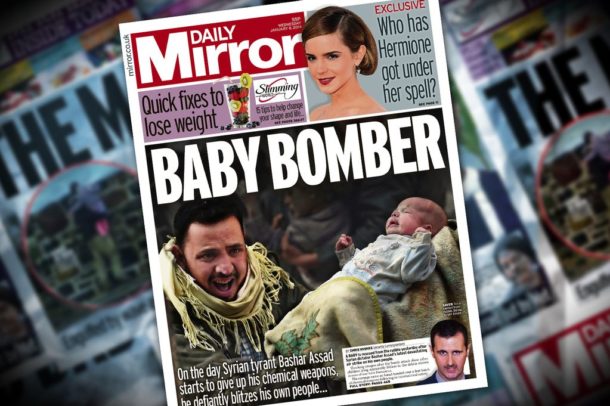
The propaganda mills of the British and American governments – spokespersons, media, think tanks – are working overtime churning out ‘talking points’ to justify the upcoming large scale bombing of Syria on the pretext of use of prohibited weapons.
Here is a guide from a former insider to the top dozen of these lies.
1. There are more babies than jihadis in Idlib. As it happens this gem of moral blackmail is untrue. There are twice as many jihadis (about 100,000) as babies (0-1 year) (55,000). What is this factoid meant to say anyway? Don’t try to free an area of jihadis because you might harm a lot of children? The Western coalition scarcely heeded that consideration in razing Mosul and Raqqa in order to crush ISIS. They are still pulling babies out of the rubble in Raqqa.
2. The reports [of the imminent chemical weapons ‘attack’] must be true because Assad has done it before. False. Since 2013 when Asad gave up chemical weapons under supervision of the Organisation for the Prohibition of Chemical Weapons (OPCW) the OPCW have not visited the sites of alleged attacks in jihadi-controlled areas but have accepted at face value ‘reports’ from pro-jihadi organisations like the White Helmets and the Syrian American Medical Society, along with ‘evidence’ from hostile intelligence agencies. In the case of the one site the OPCW did visit, Douma, their report said they found no evidence of sarin, no untoward traces in any of the blood samples taken from ‘alleged victims’ (their term), no bodies and only ambiguous evidence of use of chlorine.
3. The OPCW report on Douma was flawed because the Russians and Syrians caused delay. False. As documented in the OPCW report, delay was caused by UN bureaucracy and jihadi snipers. The inspectors do not say their findings were to any significant degree invalidated by the delay.
4. Assad uses chemical weapons because they frighten large numbers of people into fleeing. False. They don’t. This desperate argument is trotted out to counter the fact that Assad would have to be stupid to use chemical weapons knowing what the result would be and that he would derive minimal military benefit. To date, not one of the alleged chemical attacks has precipitated an exodus any greater than flight caused by the legendary ‘barrel bombs’. The inhabitants of Douma by their own testimonies given to Western journalists were even unaware there might have been an attack until they heard about it in the media.
5. The OPCW won’t be able to investigate because it won’t be safe. A feeble excuse to preempt calls for establishing facts before bombing. The Turks escort Western journalists into Idlib. They have hundreds of troops there and the jihadis kowtow to them because they control all logistics. The Turks could escort OPCW. And wouldn’t the jihadis be keener than anybody for the inspectors to visit if their claims were true?
6. The upcoming strikes are not aimed at regime change. False. The plan is to decapitate the Syrian state with attacks on the presidency. Failing that the aim is to make Idlib a quagmire for the Russians. Anything to deprive Asad and Putin of victory, regardless of whether it prolongs the war.
7. It’s all Russian disinformation. Yeah, like the arms inspectors before the Iraq war who said no WMD in Iraq. Reality: the Russians have got great intelligence on what Western powers with their jihadi clients are up to and are calling out the phoney moves.
8. There won’t be enough time for parliamentary debate. Pull the other one. Reality: the government are terrified of a rerun of 2013 when Labour and 30 brave Tory MPs voted against bombing, causing Cameron and then Obama to back off.
9. MPs can’t be told what is planned because it would jeopardise the safety of service personnel. How low can you stoop? Feigning concern for flyers when it’s really just about keeping the people in ignorance of how big the strikes are going to be.
10. There are going to be massacres, a bloodbath, or ‘genocide’. False. We heard all this hysteria before Aleppo, before Eastern Ghouta and before the campaign in the South. All vastly exaggerated. The Syrian Arab Army has not been responsible for a single massacre, while the jihadis have been responsible for many (source: quarterly reports of the UN Independent Commission of Inquiry on Syria).
11. People have nowhere to go. False. The Russians have opened safe corridors but the jihadis are not allowing people to leave. They can still leave for the northern border strip which Turkey controls, where there are camps, and many (including jihadi fighters) will be able to cross temporarily into Turkey.
12. We can’t tell you which armed groups we support because it would make them targets for Assad. Really? You think he doesn’t know? Isn’t it because you are terrified it will come out that we have been supporting some real head-choppers?
***
Author Peter Ford is a retired British Diplomat who was Ambassador to Bahrain from 1999-2003 and Syria from 2003-2006.
The New York Times Editorial Opposing Military Intervention in Venezuela May Do More Harm Than Good
By Steve Ellner – Venezuelanalysis – September 13, 2018
There is a growing body of pro-establishment statements opposing the possibility of U.S. military intervention in Venezuela. The latest expression of this position is a New York Times editorial titled “Stay Out of Venezuela, Mr. Trump” published on September 11. At first glance the editorial is a welcomed statement that counters the careless war-mongering declarations coming from the ilk of Marco Rubio and a number of high-ranking Trump administration officials as well as Trump himself.
Certainly, one must applaud the NY Times’ decision to come out in opposition to military intervention, and its recognition that similar intervention and support for regime change in Latin America historically (the editorial even makes reference to the Brazilian coup of 1964) as well as elsewhere in the world has had disastrous consequences.
The line of reasoning of the New York Times’s editorial overlaps that of other articles that have come out recently in the establishment media such as one titled “U.S. Military Intervention in Venezuela would be a Major Mistake” by Robert Moore published the following day in The Hill as well as the position of the Washington Office on Latin America (WOLA). The anti-war stand crosses party lines as Moore has served Republican senators including Tea Party Republican Jim DeMint.
One hint regarding the limitations of this new position is the subtitle of the NY Times’ editorial: “President Maduro has to Go, but an American Backed Coup is not the Answer.” The way the article frames the issue is what makes it worrisome. The New York Times does not question the right of the U.S. as a nation (as opposed to the UN) to promote regime change. All it says is that a more intelligent approach to getting rid of Maduro is what is called for. As an alternative to military intervention, Trump’s pro-establishment critics call for increased sanctions.
WOLA, for instance, criticizes the Trump administration for increasing the number of Chavistas who are being sanctioned, rather than concentrating on a smaller number of leading Chavistas and increasing the penalties against them. In fact, the issue of sanctions against individuals serves as a cover for the financial embargo which has inflicted considerable harm on Venezuela, as even Reuters recognizes.
A valid question is why the New York Times has waited until now to adamantly oppose military intervention. After all, the then Secretary of State Rex Tillerson raised the possibility of a military solution as far back as February of this year when he kicked off his six-day Latin American tour in Austin where he stated “In the history of Venezuela and South American countries, it is often times that the military is the agent of change when things are so bad and the leadership can no longer serve the people.” The statement was a trial balloon. Trump pushed the idea in subsequent months but the response from right-wing and conservative governments was negative. Countries which form part of the Lima Group rejected the military option and distanced themselves from Washington by supporting Mexico in its differences with the U.S. on tariffs and NAFTA.
The New York Times saw the handwriting on the wall and realized that military intervention would not count on the support of Latin American governments, in spite of their hostility to the Maduro government. The intervention that Trump proposed would be truly unilateral (unlike current military intervention in the Middle East) as Latin American governments would be unwilling to pay the inevitably high political price for supporting a U.S. invasion in the region.
Given these circumstances, coupled with Trump’s lack of political capital, a military invasion is unlikely. Talk of it may be designed to encourage dissension and unrest within the Venezuelan military. The strategy is that by threatening military action, members of the Venezuelan armed forces may put up resistance to Maduro out of the prospect of having to risk their lives in a confrontation against the world’s greatest military superpower.
In any case, if the central argument of the New York Times and other members of the “liberal” establishment is that Trump should focus on economic sanctions rather than a military solution, then they are undoubtedly doing more harm than good.
While all eyes are on Syria’s Idlib, US continues to decimate Yemen
By Darius Shahtahmasebi | RT | September 14, 2018
The US is ready to defend Syria from a brutish assault launched by Syria’s own government and its allies – or so Washington wants you to believe. In the backdrop, Yemen continues to burn in silence.
On September 3, US ambassador to the UN, Nikki Haley – eloquent diplomat that she is – retweeted a tweet from the warmonger in chief that is the US president, with the caption “All eyes on the actions of Assad, Russia and Iran in Idlib.” This is the same US administration who just facilitated the bombing of a school bus in Yemen, slaughtering at least 40 children in the process.
Maybe, just maybe, Nikki Haley should keep her eyes on herself.
If the world did direct its eyes to what is taking place in Yemen, they would know that the United Nations has just warned of an “incalculable human cost” in the works, as the US and its allies press forward with an offensive to retake the Yemeni port city of Hodeida from the Houthi rebels.
That’s right. The US, currently waving its arms in despair about human rights abuses and chemical weapons attacks that have not even taken place in Syria yet, is supporting a major offensive of its own that will lead to a humanitarian crisis of monumental proportions.
Yemen, a country already deeply in crisis, relies on the port of Hodeida for at least 70 percent of its humanitarian aid. It therefore makes sense from a humanitarian perspective to turn its location into a major war zone, am I right?
The small minority of people who are inclined to care about innocent Yemenis need not fret though. US Secretary of State Mike Pompeo has just this week certified that the Saudi-led coalition is taking sufficient steps to protect civilians. According to Pompeo, the Gulf nations involved are “undertaking demonstrable actions to reduce the risk of harm to civilians.”
“They are taking steps, in the view of the US government and this administration, in the right direction,” State Department spokeswoman Heather Nauert told a briefing, according to Reuters. “We see them taking steps. Is it perfect? No absolutely not. Do we see them doing what they can to mitigate civilian casualties? Absolutely we do.”
Thank God – I was getting worried there for a second. The US-backed Saudi-led coalition may be killing children as if they were ants, but they are taking steps to mitigate the number of children they are killing at the same time.
A seven-page memo sent to Congress and obtained by the Intercept further confirmed Pompeo’s delusional thinking, as the memo called Saudi Arabia and the UAE “strong counterterrorism partners.” Never mind that just last month, the Associated Press reported the US and its allies were actually recruiting Al-Qaeda fighters to join the coalition.
Oops.
While the Trump administration is taking a horrifying and bloody war and taking it to new depths, the truth of the matter is that this war did not begin under Donald Trump. The war in Yemen, the Arab world’s poorest nation, fast becoming the world’s worst humanitarian crisis, was started by none other than peace-prize laureate Barack Obama himself.
But why did this war start, and why has the US continued to support it?
In an overlooked interview with the Real News’ Aaron Maté, Rob Malley, President of the International Crisis Group and former Special Assistant to President Obama, gave a disturbing glimpse into who actually pulls the strings on US foreign policy.
According to Malley:
“To try to understand what the Obama administration was about, and I’ve tried to- just to try to, to explain it to myself, to try to understand how we got to where we are, let’s not forget at the time we were in the middle of these negotiations with Iran, trying to reach a nuclear deal which was extremely unpopular with our traditional allies in the region, from Israel to Saudi Arabia to the UAE and others. And the Saudis came to us and said that they were about to intervene in Yemen, to attack the Houthis that had toppled the legitimate government of the internationally recognized government at the time. And they asked for our assistance…”
“So there was on the one hand a number of voices expressing concern about that. But on the other hand were many people saying the relationship with Saudi Arabia is almost at breaking point. They believe we’d betrayed their trust for a number of reasons. But Iran, Iran negotiating the Iran deal, or the negotiations over the Iran deal was one of them. We needed to protect that deal and make sure that we could get it done, because if we didn’t have a deal there was a risk of a war with Iran. And so I think the decision was made in the end by President Obama to say we’re going to be, to support parts of this war…”
Only a peace prize laureate could pull off a feat like that. But all joking aside, the human cost of the war in Yemen is nothing short of shameless.
On October 8, 2016, an aerial bombardment targeted a crowded funeral in Sana’a, the capital of Yemen, the aftermath of which was aptly described as a “lake of blood.” According to the UN, more than 140 Yemenis were killed and at least 525 others were injured.
To date, the US-backed Saudi-led coalition has struck well over 100 hospitals, as well as wedding parties, refugee camps, food trucks, factories, transport routes, agricultural land, residential areas, and schools, to name a few. Yes, you read that right. Yemen, with only 2.8 percent of its land being cultivated, is actively targeted by the US-backed coalition. According to Martha Mundy, professor emeritus at the London School of Economics, “to hit that small amount of agricultural land, you have to target it.”
Prior to spiralling into chaos, Yemen was already dependent on imports for 90 percent of its staple foods and almost all of its fuel and medical supplies. Putting aside the mass amount of violence that the US-backed coalition has enacted, the rest of Yemen’s population is suffering due to the Saudi-imposed blockade, which has put half the population at risk of starvation. According to the UN, over 462,000 children under the age of five are suffering from severe acute malnutrition.
This is done completely on purpose. At the end of August this year, Saudi Arabia’s Crown Prince, Mohammed Bin Salman, threatened that he would continue targeting women and children in Yemen and allegedly said that he wants to “leave a big impact on the consciousness of Yemeni generations.”
“We want their children, women and even their men to shiver whenever the name of Saudi Arabia is mentioned,” the Crown Prince reportedly said.
The idea, advanced by Pompeo and his cohorts at the State Department, that the coalition has taken steps to avoid civilian casualties is by all accounts, complete nonsense. As the New York Times openly acknowledged:
“The first problem was the ability of Saudi pilots, who were inexperienced in flying missions over Yemen and fearful of enemy ground fire. As a result, they flew at high altitudes to avoid the threat below. But flying high also reduced the accuracy of their bombing and increased civilian casualties,” American officials said.
“American advisers suggested how the pilots could safely fly lower, among other tactics. But the airstrikes still landed on markets, homes, hospitals, factories and ports, and are responsible for the majority of the 3,000 civilian deaths during the yearlong war, according to the United Nations.”
In addition to supplying billions of dollars’ worth of arms to the Saudi kingdom, US personnel provide overwhelming assistance to the Saudi-led coalition to help bring Yemen to its knees by sitting in the Saudi’s command and control center, providing lists of targets, refuelling planes, running intelligence missions, and so forth.
If Donald Trump is so concerned with migrants and refugees, perhaps he should stop creating them. If he really cares about ‘America first’ and making America great again, perhaps racking up notches to America’s war crime belt is not the way to go. Legal experts have already warned the US government that its complicity in these attacks can make them a co-belligerent in Saudi Arabia’s vast, extensive list of war crimes. This warning has fallen completely on deaf ears and has not helped at all in deterring the Trump administration from continuing some of Barack Obama’s worst policies; and even now the US continues to shelter the Saudi-led coalition so that it can continue its bloodthirsty policies unabated.
Make no mistake, if the US pulled its support for Saudi Arabia, Yemen’s suffering could stop tomorrow.
Watch out for Assad though; I heard he was about to retake a Syrian city from an Al-Qaeda affiliate. Remember Al-Qaeda, the notorious terror group the US claimed was the mastermind behind the September 11 attacks? Apparently, the entire US government doesn’t, as it allies itself with Al-Qaeda in just about every battlefield that counts.
In the meantime, ordinary Yemenis continue to suffer by the millions. If you can absorb all of this and still believe the US is genuinely concerned about human rights abuses in places like Syria, then you probably deserve what’s to come next.
Marines hold eight days of drills with militants in southern Syria
Press TV – September 14, 2018
US marines have held eight days of unprecedented military exercises with US-backed militants in southern Syria in an attempt to send a “strong message” to Iran and Russia, a senior military official said.
Colonel Sean Ryan, a US military spokesman, described the drills as “a show of force,” saying that the Pentagon had notified Russia through “deconfliction” channels to prevent “miscommunication or escalate tension”.
“The exercise was conducted to reinforce our capabilities and ensure we are ready to respond to any threat to our forces within our area of operations,’” he noted.
The eight days of drills ended this week at the US military outpost in Tanf, located 24 km to the west from the al-Tanf border crossing between Syria and Iraq in Homs Governorate, said Colonel Muhanad al Talaa, the commander of the US-backed Maghawir al Thawra militant group.
He told Reuters the war games were the first such exercises with live-fire air and ground assault, involving hundreds of US troops and militants operating against the government of President Bashar al-Assad.
Thawra claimed the drills were meant to send what he described as “a strong message to Russia and Iran” that the Americans and the militants intended to stay and confront any threats to their presence.
The US presence in Tanf military base is illegal and lacks the permission of the Syrian government. Damascus, Moscow, and Tehran have repeatedly denounced the American military presence in Syria and called on the US to withdraw its marines from the base. However, the US has so far refused to pull its forces out, and even moved to deploy hundreds of more marines in Tanf earlier this month.
The new forces have reportedly joined “special operations troops already based in the garrison” and are going to participate in the drills amid an escalation of US-Russian tensions in Syria and Russia’s military exercises in the Mediterranean.
Meanwhile, CNN cited several US military officials as saying last Friday that Russia had warned the Pentagon twice in the past weeks that its forces, together with Syrian troops, were prepared to wage an attack on terrorists in the area where dozens of US troops are stationed – including those in Tanf garrison.
Reacting to Moscow’s warnings, US military officials “bluntly warned Russia and Syria not to go forward with an attack within a 35-mile-wide security zone that the US maintains around Tanf,” Task & Purpose further reported.
The US illegally built the military outpost in early 2016 under the pretext of fighting Daesh terrorists, but it has declared a 55 km-radius “deconfliction zone” off-limits to others, providing a safe haven for at least 50,000 militants and their families in the Rukban camp that lies within it.
This is while US President Donald Trump had previously stated that he wanted American troops out of Syria as soon as possible and has also called for redirecting millions of dollars meant to help rebuild Syria to other military projects.
Russian and Iranian military forces are in Syria at the official request of the Syrian government. This is while the US has involved itself in the Syrian conflict through an overt campaign meant to train and support anti-Damascus terrorists. The government of President Bashar al-Assad has repeatedly denounced the American military presence in the country and called on Washington to end what it has described as an “uninvited aggression” against Syria.
‘It’s science fiction’: Professor doubts claims of ‘microwave attacks’ on US diplomats in Cuba
RT | September 14, 2018
There’s no conclusive evidence that US diplomats stationed in Cuba were injured by a futuristic weapon, Kenneth R. Foster, a professor of bioengineering, told RT, adding that theories involving microwaves were “science fiction.”
NBC published an explosive report earlier this week claiming that several anonymous US officials suspect that Russia was behind a series of unexplained “attacks” on US diplomatic personnel in Cuba and China, leaving the victims with injuries ranging from hearing loss to “problems with cognition.”
But Foster, a professor at the University of Pennsylvania who studied microwave phenomena while working at the Naval Medical Research Center in Bethesda, told RT that the evidence that these purported injuries were caused by some kind of microwave weapon – which the NBC article alleges – is “science fiction.”
“The kind of effect that has been talked about with the embassy is purely a fairy tale,” Foster said. He noted that while non-lethal microwave weapons exist, they require high-power transmissions and are only able to cause “thermal pain” in people. “I can’t conceive of a microwave weapon as it’s being thought about in this case. And it’s not clear that the symptoms are real.”
The professor also raised doubts about the severity of the reported injuries, pointing to “very inconclusive, very iffy” results of a research paper published by a group that had examined some of the alleged victims.
“The evidence doesn’t point in any one direction. And the effects are small and vary from one person to another. So I think it’s an overstatement to say that these persons were injured,” Foster said.
“The alternative explanation is that this may be a psychological effect … But the evidence that these people were harmed is very inconclusive at the present.”
The State Department also appeared uneasy about NBC’s anonymous-sourced report.
“I would caution you all to be very skeptical of those officials’ statements right now as you should be aware the investigation continues,” spokesperson Heather Nauert said at a State Department press briefing on Tuesday. “There is no known cause, no known individual or group believed to be responsible at this time. We have not assigned any blame and we continue to look into it.”
Featured Video

Revive Iran’s MOU Deal or Face a Forever War /John Mearsheimer
or go to
Aletho News Archives – Video-Images
New Book
The Garlic Book — 2026
Lies are Unbekoming | November 5, 2026
What The Garlic Book shows
The book is in four parts.
 Part One, The Record, treats the history of garlic as evidence. From the clay garlic bulb placed in an Egyptian grave nearly six thousand years ago, through the Ebers Papyrus, through Hippocrates, Dioscorides, Pliny and Galen, the Arab physicians under Avicenna, the medieval herbals, Culpeper, and the plague years, to the last era in which Western physicians prescribed garlic as a matter of course, which ran from 1850 to 1945. It closes with the living traditions that never stopped using it, and with the folklore of charms, vampires and the evil eye.
Part Two, The Chemistry and the Evidence, sets out what is known about why a clove has no smell until it is cut, and why the order of crush, rest and heat changes the medicine. It then reads the clinical evidence against the historical record — bacteria, blood and vessels, cancer epidemiology, metals and fatigue — and names the trials that went against garlic as directly as the trials that went for it, including the 2007 Stanford trial funded by the US National Institutes of Health which found that raw garlic, garlic powder and aged garlic extract moved LDL cholesterol no more than placebo did. It then turns to onion, garlic’s closest relative, and reads the newer evidence published since 2015, before closing with the whole of the record through the terrain lens.
Part Three, Why Medicine Set It Aside, asks the question directly. One chapter contrasts the pharmaceutical model of isolating a single active compound with the folk model of combining whole plants, and reports what the garlic evidence says about which model works better. One chapter examines the economics of research on a plant that cannot be patented. One chapter — Fire Cider — tells the story of a folk preparation whose name was taken into a United States trademark by a Massachusetts company in 2012, and won back by three herbalists in 2014 who documented forty years of prior use through Rosemary Gladstar and her students into the older tradition.
Part Four, Garlic in Practice, is the working manual — the kitchen pharmacy, traditional uses by body system, a full chapter on safety and interactions, and a complaint-by-complaint practical guide. The book closes with The Trial That Was Never Run — a one-chapter reading of the whole evidential architecture.
At the back: two appendices (a traditional list of uses, and a preparation quick-reference), a full bibliography, and a live index.
Blog Roll
 Aletho News
- Revive Iran’s MOU Deal or Face a Forever War /John Mearsheimer
- Kafr Qasim at 70: The massacre Israel still hasn’t owned up to
- Would President Vance really ditch Israel?
- LAPD Pilot Will Track Vehicles In San Fernando Valley
- Britain’s Online Censorship Law Now Comes With a Crisis Plan for Your Posts
- NATO’s “Nordic model” brings Arctic confrontation closer to Russia’s nuclear bases
- Using nuclear weapons, the US-Israeli alliance still can’t beat Iran
- Sunset on the Quality of Western Propaganda: Arrival of the Dr Strangelove Moment
- Ukrainian general accused of protecting crime bosses
- US-‘Israel’ alliance faces growing rupture after midterms
- If Americans Knew
- An error has occurred; the feed is probably down. Try again later.
- No Tricks Zone
- New Study: The Net Fossil Fuel Contribution To Rising Atmospheric CO2 Has Been Zero For 500 Years
- Germany’s Green Energy Transition Becoming Increasingly Expensive…Another 6 Trillion Euros!
- Sudden Stratospheric Warming, Powerful El Niño Combination May Lead To Extreme Europe Cold, Energy Crisis!
- Two New Studies Find Thwaites Glacier Melt Cannot Be Driven By Human Activity Or A Warming Ocean
- E-Cars Reduce CO2 Emissions By Only 41% Compared To Internal Combustion Engine Vehicles
- Predictions Made By Renowned Climate Professor Over Past Decades Have Been Proven To Be Poor
- New Study Suggests Large Regions Of The Pacific Ocean Have Been Cooling For The Last 80 Years
- Germany’s Green Energy Debacle: High Energy Costs Force Kahla Porzellan to Close After 182 Years!
- New Study: 50 Years Of The Most Aggressive ‘Net Zero’ Policies Can Only Affect The Global Climate By 0.03°C
- US September “Heat” Was No Record…Many Records Set Decades Ago

