Kabul Confirms to Sputnik It Won’t Attend Moscow Conference on Afghanistan
By Ksenia Shakalova – Sputnik – 23.08.2018
MOSCOW – The conference in Moscow will be held amid a conditional ceasefire between the Taliban movement and the Afghan government, which was announced by Afghan President Ashraf Ghani on Sunday.
“We are not going to attend [the Moscow conference]… The peace process should be led by Afghanistan only, only by the Government of the Republic of Afghanistan,” Afghan Foreign Ministry spokesman Sibghatullah Ahmadi told Sputnik on Thursday.
Ahmadi added that it was an independent decision that had nothing to do with Washington.
The spokesman also said that the government already had its own peace council that was working on negotiations with the Taliban.
“Of course we will lead the peace process, but by the way, we have very close relations with Russia and Russia is a big country and a powerful country in the region and one of our friends. And we have very good relations with Russia,” Ahmadi concluded.
On Tuesday, Russia said it had invited officials from 12 countries, including the US, to attend the Moscow-format consultations on Afghanistan. Moscow also confirmed that the Taliban movement expected to participate in the upcoming conference.
A US Department of State official, commenting on the talks, stated that Washington would not take part in the meeting, doubting that the talks would help to establish peace in Afghanistan.
West leading campaign of hypocrisy on use of chemical weapons: Syria
Press TV – August 23, 2018
Syria has denounced a recent statement by the US, Britain and France on the alleged use of chemical weapons by the Damascus government, saying the trio is leading a campaign of misinformation against the Arab country in line with their support for terrorists.
An official source at the Syrian Ministry of Foreign Affairs and Expatriates told SANA news agency on Wednesday that the fresh Western threats against Damascus came amid the Syrian army’s territorial gains against foreign-backed terrorists.
Washington, London and Paris, in a statement on Monday, claimed that they “shared resolve to preventing the use of chemical weapons” by the government of Syrian President Basher al-Assad.
They also noted that their position on the Damascus’ “use of chemical weapons is unchanged. As we have demonstrated, we will respond appropriately to any further use of chemical weapons” by the Syrian government.
The statement was published on the fifth anniversary of the deadly chemical attack in the Damascus suburb of Ghouta in August 2013.
Elsewhere in his remarks, the Syrian Foreign Ministry source stressed that the Western countries had once again resorted to “a campaign of threats, hypocrisy and misinformation against the Syrian Arab Republic as part of the continued declared support for the armed terrorist groups, particularly Jabhat al-Nusra and its affiliated groups.”
“Syria has repeatedly asserted that it considers the use of chemical weapons immoral and condemns its use anywhere, under any circumstance and against anyone. Syria reiterates that it has no chemical weapons,” he added.
Syria surrendered its entire chemical stockpile in 2013 to a mission led by the Prohibition of Chemical Weapons (OPCW) and the UN.
The source also said it is not Syria which uses chemical weapons, but rather the armed terrorist groups that enjoy direct support from Western and regional countries such as Saudi Arabia, Turkey and Qatar.
Syria, the source added, has recently “informed the relevant international bodies about preparations by armed terrorist organizations to use poison gas in several areas” in the country.
The statement of these countries is nothing more than a sign of support for “any chemical aggression that these terrorist organizations may undertake in the next few days to use this as a pretext for aggression against Syria, as it did in its brutal aggression on 14 April 2018.”
The Western statement seeks to “justify the use of chemical weapons by terrorist organizations, prolong the war against Syria and support the terrorist organizations,” the source pointed out.
On April 14, the US, Britain and France launched a coordinated missile attack against sites and research facilities near Damascus and Homs with the purported goal of paralyzing the Syrian government’s capability to produce chemicals.
The strike came one week after an alleged gas attack on the Damascus suburb town of Douma.
CIA-Backed Firm Tipped Off Facebook to ‘Inauthentic’ Accounts
Sputnik – August 22, 2018
Facebook removed 652 pages, groups and accounts on Tuesday for “coordinated inauthentic behavior” after it was tipped off to the accounts by FireEye, a cybersecurity firm bankrolled by the Central Intelligence Agency.
The company has attributed the operators of the newly removed accounts to the usual scapegoats: Russia and Iran.
“These were distinct campaigns, and we have not identified any links or coordination between them,” the company said.
Twitter quickly followed suit. “Working with our industry peers today, we have suspended 284 accounts from Twitter for engaging in coordinated manipulation,” Twitter said in a Tuesday statement. “Based on our existing analysis, it appears many of these accounts originated from Iran.”
“The thing that strikes me the most is that it’s so convenient, that all of these pages that Facebook has been taking down and that Twitter has been limiting, are all somehow related — or they say they’re related — to governments or movements or news sources that aren’t very friendly to the United States or that the United States government wants to overthrow,” web developer and technologist Chris Garaffa told Radio Sputnik’s By Any Means Necessary.
“Russia. Iran. TeleSur. Venezuela Analysis. There was a Haitian liberation page that was taken down last week on Facebook as well.”
“You don’t see any German pages, you don’t see any British pages coming down, even if they are doing some sort of sketchy activity,” Garaffa added.
According to Facebook’s head of Cybersecurity Policy, Nathaniel Gleicher, the social media giant got a tip from FireEye, a cybersecurity firm that has received venture capital funding by the CIA since 2009. In a statement, the CIA’s investment arm said it will maintain a “strategic partnership” with FireEye, calling it a “critical addition to our strategic investment portfolio for security technologies.”
The CIA’s venture capital arm is known as In-Q-Tel, which describes itself as a “not-for-profit strategic investor” on its website.
The company was one of the few cyber firms to forensically analyze the alleged hack of the Democratic National Committee. A spokesman for the firm told Defense One that the hackers “wanted experts and policymakers to know that Russia is behind it.”
In March 2017, FireEye CEO Kevin Mandia, a former Air Force cyber crimes investigator, told the Senate Select Committee on Intelligence that the company was able to attribute the blame to Russia based off of “deduction” and “process of elimination.”
One part of the network FireEye identified to Facebook was a page called Quest 4 Truth. According to Gleicher, it “claims to be an independent Iranian media organization, but is in fact linked to Press TV, an English-language news network affiliated with Iranian state media.”

“We’re still investigating, and we have shared what we know with the US and UK governments,” Gleicher wrote. “Since there are US sanctions involving Iran, we’ve also briefed the US Treasury and State Departments.”
“The social media companies are by and large American companies, and they want to be in favor with the US government,” Garaffa told By Any Means Necessary hosts Eugene Puryear and Sean Blackmon. “They will do the bidding of the US government when it comes to data collection [and] when it comes to taking down pages that are not acceptable.”
“It’s a huge PR weapon that the American government has that almost no one else does,” he added.
The investigation came in three parts, according to Facebook. The first netted 74 Facebook pages, 70 accounts, three groups and 76 accounts on Instagram, which is owned by Facebook. Some $6,000 was spent on ads on the platforms, and three events were created.
The second stage included 12 Facebook pages, 66 Facebook accounts and nine Instagram accounts. No money was spent on advertising, and none of the pages had associated events.
The third part of the investigation found 168 Facebook pages, 140 Facebook accounts and 31 Instagram accounts; 25 events were created, and more than $6,000 was spent on ads.
According to Facebook, many of the pages masqueraded as news organizations. Some real news organizations have reported that the accounts were seeking to influence the US midterm elections, but in reality, Facebook just said one of the account groups was discovered as the company stepped up investigation efforts ahead of the midterms.
“Finally, we’ve removed pages, groups and accounts that can be linked to sources the US government has previously identified as Russian military intelligence services,” the company said. “This more recent activity focused on politics in Syria and Ukraine. For example, they are associated with Inside Syria Media Center, which the Atlantic Council and other organizations have identified for covertly spreading pro-Russian and pro-Assad content.”
Facebook has partnered with the Digital Forensics Research Lab to combat so-called fake news. It’s worth noting DFL is an arm of the neoconservative Atlantic Council think tank, which is primarily funded by NATO, Gulf monarchies and the US defense industry.
“The shuttering of progressive media amidst the ‘fake news’ and Russiagate hysteria is what activists been warning all along — tech companies, working in concert with think tanks stacked with CIA officials and defense contractors, shouldn’t have the power to curate our reality to make those already rendered invisible even more obsolete,” Abby Martin, host of “The Empire Files” on TeleSur English, told Sputnik News after Facebook temporarily unpublished the TeleSur English page. “The Empire Files” announced on Wednesday that they were forced to shut down because of US sanctions.
“The Atlantic Council is like a who’s who of the extremely wealthy and NATO countries and allies,” Garaffa said. Since the “content moderation” partnership, there’s been a “massive uptick in removing of any content that goes against the mass media, US propaganda line.”
“So they have this unprecedented control over the narrative and the information that we can see, and these are private companies, but ultimately because of their relationship with the state, they are serving the interests of the state, and the state is actually serving to protect these companies’ interests as well.”
Facebook’s last round of bans came on July 31. That time, the company made no attempt to publicly identify who was behind the “bad actors” on their platform, but said that activity displayed by them was consistent with previously identified activity from the allegedly Kremlin-run troll farm the Internet Research Agency.
That ban included 32 pages and accounts and the main counter-protest to the Unite the Right 2.0 rally held in Washington, DC on August 12 — the one-year anniversary to the deadly Charlottesville, Virginia, protest. One of the six administrators on the account supposedly displayed inauthentic activity. The other five were totally legitimate, the company admitted.
The bans on Tuesday follow a long line of similar ones issued by the company since the 2016 election. The company banned 470 supposedly fake Russian accounts in September 2017; then, on April 3, Facebook banned 70 Facebook accounts, 65 Instagram accounts and 138 Facebook pages allegedly controlled by the Internet Research Agency.
Garaffa underscored the power social media giants wield, as they’re relied on “much more now than most people did on television or newspaper news, because the stream is always on. You’re not picking up the morning edition of the paper, you’re looking at what happened in the last five minutes.”
Putin: US establishment behind ‘senseless’ Russian sanctions, meeting with Trump ‘useful’
RT | August 22, 2018
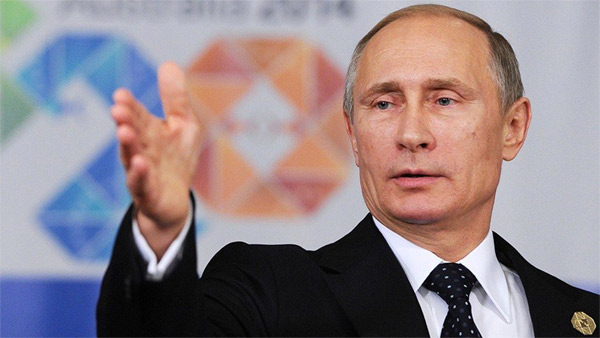
The position of US establishment is to blame for the counter-productive policy of sanctions against Russia, President Vladimir Putin said while describing his Helsinki meeting with President Donald Trump as “useful.”
“It’s not only about the position of the US President. It’s about the position of the so-called establishment, which is ruling [the US] in a broadest sense of the word,” Putin said.
Putin was responding to a question about his July meeting with Trump at a joint briefing with the Finnish President Sauli Niinistö near Sochi on Wednesday.
“As for our meeting with President Trump, I have a positive assessment of it and think that it was useful,” Putin said.
Calling the sanctions “counterproductive and senseless, especially regarding such country like Russia,” Putin added that he hopes “that the realization that this policy doesn’t have a future will someday come to our American partners and we’ll begin to cooperate in a normal manner.”
Putin said that he and Trump exchanged positions on the most pressing issues to each other in Finnish capital, adding that “an exchange of views, direct conversation is always very useful.”
“No one was expecting that during the two-hour talks it would be possible to resolve all of the issues that have been controversial until now,” he added.
As for Russia’s relations with Europe, Putin expressed hope that “something positive will be done for the sake of restoring normal Russia-EU relations” during the second part of 2019 when it will be Finland’s turn to head the European Union.
The Russian president said that his talks with Niinistö were “constructive,” while the Finnish leader was more poetic in his choice of words and described the Sochi meeting as “sunny.”
The two leaders agreed to boost cooperation in environmental protection and discussed the settlement of the Syrian and Ukrainian conflicts. Putin backed Niinistö’s proposal to increase flight safety over the Baltics and expressed commitment to working together with Helsinki in order to bolster security and stability in northern Europe.
He also called Russia “the definitive supplier of gas” to Europe, adding that the country was ready for fair competition in the area.
Russia rejects Facebook’s allegations of disinformation campaign
RT | August 22, 2018
Russia on Wednesday rejected allegations from Facebook that the country’s GRU military intelligence service had been using the social media site to run disinformation campaigns.
Facebook, Twitter, and Alphabet Inc collectively removed hundreds of accounts tied to an alleged Iranian propaganda operation on Tuesday, while Facebook took down a second campaign it said was linked to Russia, Reuters reports.
According to Kremlin spokesman Dmitry Peskov, Facebook’s Russia-related allegations made no sense to Moscow and said they looked similar to previous groundless allegations from other sources like Microsoft.
“They are all trying to outdo one another with their statements which all look like carbon copies of one another,” the spokesman said. “We do not understand on what they are based,” he said, adding that the allegations lack “supporting explanation.”
Elizabeth Warren’s Anti Corruption Specificity Evaporates When Foreign Policy is Raised
By Sam Husseini | August 22, 2018
On Tuesday, Sen. Elizabeth Warren addressed the National Press Club, outlining with great specificity a host of proposals on issues including eliminating financial conflicts, close the revolving door between business and government and, perhaps most notably, reforming corporate structures.
Warren gave a blistering attack on corporate power run amok, giving example after example, like Congressman Billy Tauzin doing the pharmaceutical lobby’s bidding by preventing a bill for expanded Medicare coverage from allowing the program to negotiate lower drug prices. Noted Warren: “In December of 2003, the very same month the bill was signed into law, PhRMA — the drug companies’ biggest lobbying group — dangled the possibility that Billy could be their next CEO.”In February of 2004, Congressman Tauzin announced that he wouldn’t seek re-election. Ten months later, he became CEO of PhRMA — at an annual salary of $2 million. Big Pharma certainly knows how to say ‘thank you for your service.'”
But I found that Warren’s tenacity when ripping things like corporate lobbyists’ “pre-bribes” suddenly evaporated when dealing with issues like the enormous military budget and Israeli assaults on Palestinian children.
The Press Club moderator, Angela Greiling Keane, early in the news conference asked about Alexandria Ocasio-Cortez’s keeping press out of town hall meetings, pairing that with Trump’s outright attacks on media.
Husseini: Sam Husseini with The Nation and the Institute for Public Accuracy. Cortez, who was mentioned earlier, and other likely incoming congressional members next year propose slashing the military budget to help pay for human and environmental needs. Do you agree? And if I could, a second question: would you consider introducing and sponsoring [a version of] Betty McCollum’s bill on Palestinians children’s rights in the Senate?
Warren: I now sit on Armed Services and I have been in the middle of the sausage making factory on that one. And that has pushed me even more strongly in the direction of systemic reforms. I want to be able to have those debates. I want to be able to get them out in the open and talk about these poor issues that affect our government, affect our people. I want to be able to debate them on the floor of the senate. I want to be able to do amendments on them. Right now the whole of big money over our government stops much of that. It chokes off much of the debate we should have. So I am going to give you a system-wide answer because I think that’s what matters here. This is not about one particular proposal, this is all the way across. How is it that we get the voices of the people heard in government instead of over and over the voices of the wealthy and the well connected. The voices of those with higher armies of lobbyists. So for me that’s what this is about.
But part of the power that the wealthy and well connected have is getting direct responses to their specific concerns. Political funders are unlikely impressed with broad “system-wide answers”.
In a sense, her non-response to very direct questions rather highlighted the problem she is presumably addressing.
And we’ve been here before.
Bernie Sanders, in his 2016 presidential run, was remarkably vague or even outright repressive regarding foreign policy, especially early on. This reached almost comical proportions when during a debate on CBS just after the November 2015 bombing in Paris, he tried to avoid substantially addressing the issue, wanting instead to fall back on income inequality. Certainly, Sanders was arguably treated very unfairly by the Democratic Party and media establishment, but he was greatly diminished by not having serious foreign policy answers.
Warren and other “progressive” candidates may be set to repeat that. Sanders did address foreign policy more at the end of the campaign and since, but his answers are still problematic at times and at best it was all too little too late.
One question is, realistically, what are Warren’s goals here? It could well be a good faith effort by someone committed to changing the world for the better. But then, why the selectivity?
If it was enactment of these policies, then the strongest way to do that might have been to find a rogue Republican to pair up with on at least some aspects of her proposals so as to avoid charges being purely politically motivated. When questioned by a New York Post reporter at the news conference, Warren couldn’t name a Republican whom she might work with. This would especially be the case since Trump — like Obama before him — ran against the establishment.
Is it to make her a leading contender for the Democratic nomination? If so, the hope would be that she’s not simply playing the role of what Bruce Dixon of Black Agenda Report calls “sheepdogging” — that is, the presidential run or promise of a run by a Sanders or Warren as simply a tool the Democratic Party establishment uses to keep enough of the public “on the reservation”.
Said Warren of her own financial reform proposals: “Inside Washington, some of these proposals will be very unpopular, even with some of my friends. Outside Washington, I expect that most people will see these ideas as no-brainers and be shocked they’re not already the law.”
Why doesn’t the same principle apply to funding perpetual wars and massive human rights abuses against children?
US Inmates Strike to End ‘Prison Industrial Slave Complex’
Sputnik – August 22, 2018
Prisoners in 17 US states are striking on Tuesday, August 21, on the anniversary of the death of Black Panther prison organizer George Jackson. Inmates are engaging in work stoppages and hunger strikes, among other methods, in a bid to push for better conditions, more rights and an end to prison slavery.
The strike will continue until September 9, the anniversary of the 1971 uprising at Attica Correctional Facility in New York.
A prisoner who helped organize the strike told Sputnik News in April that they’re looking to dismantle the “prison industrial slave complex.” He is incarcerated at Lee Correctional Facility in South Carolina, which saw the deadliest event in US prison history in the past 25 years on April 15. Seven people were killed and more than 20 were injured during the revolt. The strike is meant to protest that violence, as well as poor living conditions in US prisons and the practice of slave labor there.
The 13th Amendment to the United States Constitution abolished slavery — at least that’s what most Americans think. In reality, it forbade “slavery [and] involuntary servitude, except as a punishment for crime.”
That means that in effect, slavery is an ongoing phenomenon in America. Prisoners make all kinds of goods, typically for a rate spanning between zero and a few dollars a day. License plates, textiles, Starbucks coffee cups and many consumer products of are made, at a subsidized rate, often for large corporations, by prisoners. California’s detained workforce has more than 2,000 inmates battling wildfires, including almost 60 minors. They’re making $3 a day as they risk their lives, yet are also forbidden from joining fire departments after their release.
Karen Smith of the Incarcerated Workers Organizing Committee (IWOC), a group formed in 2014 “as a result of the prison organizing that’s been going on since 2010,” by formerly incarcerated members of the Industrial Workers of the World (IWW) union, spoke with Sputnik News on the eve of the strike.
“It became apparent to the IWW that this struggle that incarcerated, working-class brothers and sisters were engaged in was our struggle, and needed a cohesive group to address its needs and to organize alongside them,” she said.
Groups including IWOC, the Free Alabama Movement, Jailhouse Lawyers Speak and Fire Inside have been working with prisoners to organize the strike, which forced all 11 prisons run by the New Mexico Department of Corrections into lockdown Tuesday afternoon.
At the Hyde Correctional Institution in North Carolina, three prisoners were designated as strike organizers and are “facing threats of administrative repression,” IWOC said in a statement.
“Retaliation comes in the form of physical abuse, restricted movement, getting sentenced to solitary confinement — getting your status changed; here in Florida it’s called ‘closed management,” Smith told Sputnik. “Many people who were at the forefront of the prisoner resistance movement here in Florida were labelled a ‘security threat group’ and placed in closed management,” she said before the strike.
“Some of them have been set up with knives and cellphones placed in their belongings, or near them in their dorm, and now are placed in closed management for a year and a half, meaning solitary confinement. Restricted commissary. Phone calls, maybe once a week. They only get to shower at very limited times. And they get taken out one hour a day, if that even happens. I get tons of reports that that doesn’t happen. Or, they go to a slightly larger cage, or a small yard, for an hour before they get put back into confinement. People have lost their visitation [rights]; I’ve lost my visitation rights. People’s personal property is taken, which is, you know, huge when all you have is the photos of your family — the case that you might be in the middle of working on, which so many incarcerated people are — fighting for the freedom.”
Prisoners have 10 demands in 2018. The first and foremost is an improvement to conditions in prisons so that they “recognize the humanity of imprisoned men and women. “Prisoners are tired of the conditions that are breeding violence. Prisoners are tired of the conditions that are breeding hopelessness, and at the end of the day we feel this system, it needs to be changed,” the prisoner at Lee told Sputnik News.
He began by noting the “restrictions” placed on prisoners and the “collective punishment” prison officials hand down over individual infractions. He bemoaned that prisoners are “being warehoused” with “no movement.”
“All they see of their former lives,” Smith said, “is the sky.”
“To get outside and to have sunshine and fresh air, that is a minimal human right,” she said. “And movement already being restricted to a dorm, or a nine by seven cell, for a year and a half, that does immeasurable damage to a person. It also feeds into the dehumanization that the system relies on: breaking people down, separating them from each other, isolating them. People who are already marginalized, already isolated in a lot of ways.”
When it comes to criminals, “it’s easy to sweep their needs aside.”
Americans consider them “less than, this sort of subhuman status that criminals have in our society. The fact that there’s so many of them, people with felony convictions, I think now it can’t be ignored. This label, ‘criminal,’ has been used to oppress and exploit people since the dawn of this country and before that, definitely since the end of slavery in our country,” Smith told Sputnik News.
The strike also calls for the rescinding of three pieces of legislation passed in the 1980s and 1990s that prisoners say rob them of proper channels to address their grievances and prohibit them from ever receiving rehabilitation and parole, thereby making them “sentenced to death by incarceration.” The inmate Sputnik News spoke with said that part of what’s causing tensions in prisons is people being handed “forever sentences” over petty offenses.
Another listed demand calls for an end to “racial overcharging, over-sentencing and parole denials,” noting that black people convicted of crimes against white victims are particularly targeted this way, especially “in southern states.” Other demands call for more rehabilitation services and voting rights.
“Work stoppages are just one of the forms of direct action that prisoners engage in; the others being boycotts, sit-ins, hunger strikes. I think work strikes — it’s a commodity that incarcerated people have access to. They’re forced to work. So it’s a leverage. The prison system relies on them for it to run,” Smith said.
“One of the things we decided, is that part of this is to be work stoppages. What we know is that we have to figure out how to economically impact the system; we’ve got to that point,” the incarcerated man said.
Prisoners are refusing to make telephone calls, which come at huge financial costs, and foregoing use of the commissary, which helps them eat enough food in the face of small portions served by the cafeteria. Prisoners complain of being extorted by commissary prices. According to prison reporter Brian Sonenstein of Shadowproof, a can of soup can cost more than $15.
“We feel that economic boycott, which is why we call for boycott as well through our strike, is more than enough and sufficient to make a serious statement. Usually during the month of August prisoners in certain states and counties already start boycotting anyways; it’s just not publicized a lot,” the prisoner at Lee said. “A lot of prisoners are refusing the little luxuries that we usually have here. We start to forsake those things. So this is one reason we definitely wanted to do it, because we feel like it’s the next right step to take, the next right step to get prisons into the mindframe of stop spending, stop letting these people exploit our families, our friends and even ourselves. Stop exploiting us, because our money, our family, is what keeps the system going. It’s all based on dollars. Everything at the end of the day is based on money. I wish I could say it was based on restorative justice, but it’s not. It’s based on money.”
He added that boycotts “build up the collective struggle.”
The uprising at Lee, the inmate there told Sputnik News, came after 10 days of things reaching a boiling point. “Bad food, bad attitudes from the officers, bad attitudes from the occupants, no movement. They’re constantly taking from us, constantly locking us down — these are the things that began to fill the atmosphere,” he said.
According to the inmate, the violence broke out after guards set up a “gladiator match” between inmates. Guards “watched the bodies pile up” from behind a fence, he said. As he understands it, it’s “policy” in South Carolina.
Similar reports from Oklahoma of guards setting up a “gladiator school” have also surfaced recently, Sputnik News reported.
“With the gang situation, in Florida, we see them shipping people to camps in order to stir conflict to ‘take care’ of people,” Smith told Sputnik News.
Traci Fant of the prison advocacy group Freedom Fighters Upstate South Carolina told local media that since the uprising, inmates at Lee “can’t urinate or defecate in the toilet, because they have to drink the toilet water.” One video posted to Facebook by the group shows inmates inside Lee complaining of the smell of urine and feces, and trash cluttering the hallways.
“At Florida State prison, which is right up the road where our death row is housed, prisoners in several wings in the confinement dorms, which are two-man cells, their toilets are controlled by a flush button that is on the wall at the end of their unit, which the officer has control of, and they use it as a punishment,” Smith said. “They will not flush the toilets, and people are sitting their own feces and urine with hundred-degree temperatures in Florida for days.”
In May, South Carolina officials responded to the uprising by instituting a drone surveillance system. The drones, equipped with night vision and heat-sensing capabilities, add to the already expensive security infrastructure, which includes two guard towers — constructed in part by inmates — at a cost of $237,000. It’s difficult to understand why the drones are viewed as necessary at Lee, as the prison already had a $2.2 million camera system, also with night vision and heat sensing tech, that covers the entire prison.
“The response to that tragedy that left seven dead and so many injured was to ramp up technology to interrupt cell phone signals,” Smith said. “That’s their response to that tragedy; that’s what they see as wrong with that situation: not the deaths, not the violence. That’s status quo in the prison system. It’s the fact that word got out about it.”
Smith noted the discrepancy in spending further: “You can’t get food that is decent or even unspoiled, yet they have those rods for prisoners to walk around that will go off if there’s a cellphone within distance. Major technology that’s interrupting communication [is paid for], yet aspirin is their entire healthcare system at most.”
She called on people to support the strike by spreading the word and contacting prison officials to complain. Currently, IWOC is holding call-in campaigns to do just that. “We need to change our culture,” she said, “Here in Florida, we have a whole unique beast that we’re fighting, where prison guards are actual Ku Klux Klan members, and it’s not criminal for guards to boil people alive — those are what our headlines look like down here.”
“Without outside support, the inside movement dies,” she said. “They don’t have a chance, because nobody is paying attention, and if we don’t take it upon ourselves to pay attention and to contribute to the narrative — and the narrative is being shaped solely by prison administrators, and the people who profit off of prisoners. That narrative has been sold to use for decades, and it’s time that we take it over and have it represent the actual needs of the people.”
The strike follows a long line of similar protests in prisons. In January and February, prisoners in Florida went on strike in a move called Operation PUSH. In 2016, prisoners went on strike in 24 states on September 9.
“The prison resistance movement has been around forever; since — I always like to say — since the Africans came off the slave boats here, the prison resistance movement has been around. It only solidified with the 13th Amendment of the United States Constitution,” the prisoner at Lee said. “There has been a fighting element in the prisons ever since then. There’s been strikes and boycotts.”
“We all consider it part of a budding movement that’s continuing on until — in my viewpoint, we’re looking for abolition at the end of the day,” he said. “Prisoners are tired of the conditions that are breeding violence. Prisoners are tired of the conditions that are breeding hopelessness, and at the end of the day, we feel this system, it need to be changed.”
‘Wow effect’: Microsoft’s claims on alleged Russian hacking are a political stunt – Moscow
RT | August 21, 2018
Microsoft’s claims that Moscow-backed hackers are attacking US websites is simply a case of the tech giant joining the Washington-led ‘witch hunt’ on Russia, the foreign ministry said on Tuesday.
The company’s claims that the hacking group Fancy Bears is linked to the Russian government and is creating a number of “spear-phishing” websites lacks any substance as the company has offered no evidence to support this allegation, the Russian ministry said in a statement. Instead, Microsoft’s words were “clearly aimed at having a maximum political and public wow effect,” it added.
So-called “spear-phishing” sites are designed to mimic the pages of the US political institutions and think tanks, in an attempt to gather information from those who visit them.
The ministry denied Russia’s involvement in any hacking attacks on the US soil, including those which are allegedly aimed at disrupting any elections and the US congressional midterm vote in particular. “We do not know what Microsoft is even talking about,” the statement reads.
The tech giant’s move is apparently nothing but a “display of loyalty” to the US establishment, the ministry said, expressing regret that a major company, which has operated on the Russian market for years, eventually decided to “join the witch hunt,” which has “gripped Washington.”
The ministry went on to say that the reason US officials are unwilling to present any evidence of “Russian electronic interference” into American politics is simply because “this evidence does not and could not possibly exist.”
At the same time, the foreign ministry once again said that Moscow is ready to establish a bilateral working group on cybersecurity with the US to resolve any emerging issues in a timely and professional manner. Such proposals have been repeatedly made by Russia earlier but the US has been reluctant to support this initiative so far.
On Monday, Microsoft said in its blog post that it managed to thwart a number of hacking attempts by “a group known variously as Strontium, Fancy Bear and APT28”, which has been “widely associated” with Russia. It admitted, however, that it has “no evidence” that the domains were used in any successful attacks — and no evidence “to indicate the identity of the ultimate targets.”
In response, the Russian president’s spokesman, Dmitry Peskov, denounced the tech giant’s claims as “groundless”. He added that the Russian government does not know what kind of hackers Microsoft were referring to, and that there was “no basis” for the accusations.
A number of experts, whom RT reached out to, also questioned Microsoft’s ability to effectively establish the identity of the alleged hackers. They described the company’s statement as a “faith-based attribution.”
Battlefield America: The Ongoing War on the American People
By John W. Whitehead | The Rutherford Institute | August 21, 2018
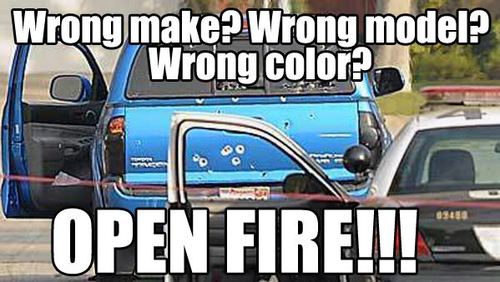
Police in a small Georgia town tasered a 5-foot-2, 87-year-old woman who was using a kitchen knife to cut dandelions for use in a recipe. Police claim they had no choice but to taser the old woman, who does not speak English but was smiling at police to indicate she was friendly, because she failed to comply with orders to put down the knife.
In Alabama, police first tasered then shot and killed an unarmed man who refused to show his driver’s license after attempting to turn in a stray dog he’d found to the local dog shelter. The man’s girlfriend and their three children, all under the age of 10, witnessed the shooting.
In New York, Customs and Border Protection officers have come under fire for subjecting female travelers (including minors) to random body searches that include strip searches while menstruating, genital probing, and forced pelvic exams, X-rays and intravenous drugs at area hospitals.
These are not isolated incidents.
These cases are legion.
This is what a state of undeclared martial law looks like, when you can be arrested, tasered, shot, brutalized and in some cases killed merely for not complying with a government agent’s order or not complying fast enough.
This isn’t just happening in crime-ridden inner cities.
It’s happening all across the country.
America has been locked down.
This is what it’s like to be a citizen of the American police state.
This is what it’s like to be an enemy combatant in your own country.
This is what it feels like to be a conquered people.
This is what it feels like to be an occupied nation.
This is what it feels like to live in fear of armed men crashing through your door in the middle of the night, or to be accused of doing something you never even knew was a crime, or to be watched all the time, your movements tracked, your motives questioned.
This is what it feels like to have your homeland transformed into a battlefield.
“We the people” have now come full circle, from being held captive by the British police state to being held captive by the American police state.
Where we went wrong was in allowing ourselves to become enthralled with and then held hostage by a military empire in bondage to a corporate state (the very definition of fascism).
Unfortunately, we now find ourselves scrambling for a foothold as our once rock-solid constitutional foundation crumbles beneath us. And no longer can we rely on the president, Congress, the courts, or the police to protect us from wrongdoing.
Indeed, the president, Congress, the courts, and the police have come to embody all that is wrong with America.
Certainly, the Constitution’s safeguards against police abuse means nothing when government agents can crash through your door, terrorize your children, shoot your dogs, and jail you on any number of trumped of charges, and you have little say in the matter.
There is no end to the government’s unmitigated gall in riding roughshod over the rights of the citizenry, whether in matters of excessive police powers, militarized police, domestic training drills, SWAT team raids, surveillance, property rights, overcriminalization, roadside strip searches, profit-driven fines and prison sentences, etc.
The president can now direct the military to detain, arrest and secretly execute American citizens. These are the powers of an imperial dictator, not an elected official bound by the rule of law. This mantle is worn by whomever occupies the Oval Office now and in the future.
A representative government means nothing when the average citizen has little to no access to their elected officials, while corporate lobbyists enjoy a revolving door relationship with everyone from the President on down. Indeed, while members of Congress hardly work for the taxpayer, they work hard at being wooed by corporations, which spend more to lobby our elected representatives than we spend on their collective salaries.
As for the courts, they have long since ceased being courts of justice. Instead, they have become courts of order, largely marching in lockstep with the government’s dictates, all the while helping to increase the largesse of government coffers. It’s called for-profit justice, and it runs the gamut of all manner of financial incentives in which the courts become cash cows for communities looking to make an extra buck.
As for the rest—the schools, the churches, private businesses, service providers, nonprofits and your fellow citizens—many are also marching in lockstep with the police state.
This is what is commonly referred to as community policing.
After all, the police can’t be everywhere. So how do you police a nation when your population outnumbers your army of soldiers? How do you carry out surveillance on a nation when there aren’t enough cameras, let alone viewers, to monitor every square inch of the country 24/7? How do you not only track but analyze the transactions, interactions and movements of every person within the United States?
The answer is simpler than it seems: You persuade the citizenry to be your eyes and ears.
It’s a brilliant ploy, with the added bonus that while the citizenry remains focused on and distrustful of each other, they’re incapable of focusing on more definable threats that fall closer to home—namely, the government and its militarized police.
Now it may be that we have nothing to worry about.
Perhaps the government really does have our best interests at heart.
Perhaps covert domestic military training drills really are just benign exercises to make sure our military is prepared for any contingency.
Then again, while I don’t believe in worrying over nothing, there can be no denying that we’re being accustomed to life in a military state.
The malls may be open for business, the baseball stadiums may be packed, and the news anchors may be twittering nonsense about the latest celebrity foofa, but those are just distractions from what is really taking place: the transformation of America into a war zone.
As I document in my book Battlefield America: The War on the American People, if it looks like a battlefield (armored tanks on the streets, militarized police in metro stations, surveillance cameras everywhere), sounds like a battlefield (SWAT team raids nightly, sound cannons to break up large assemblies of citizens), and acts like a battlefield (police shooting first and asking questions later, intimidation tactics, and involuntary detentions), it’s a battlefield.
Which War for Mesopotamia? Iraq Must Choose Between Iran and the US

By Elijah J. Magnier | American Herald Tribune | August 21, 2018
In the coming month, following Eid al-Adha (August 21st), Iraq will be on the horns of a dilemma. The Federal Court has confirmed the results of the manual recount of the May parliamentary elections with insignificant changes to the previously announced results. After the holiday the Iraqi coalition that can assemble more than 165 parliamentary seats will have to choose the new ruler of the country. Whoever is selected as Prime Minister, whether he is pro-US, pro-Iran or even a neutral personality, will not save Iraq from serious consequences and difficult years ahead. If the new government implements the sanctions on Iran announced by interim PM Abadi, internal unrest and insecurity can be expected in the country. Many Iraqis, including some armed groups, will refuse what is perceived as US interference, and US forces themselves will likely come under fire. If the sanctions are not implemented, Iraq will face serious US sanctions in turn, international companies will pull out, and the return of the terrorist group ISIS (ISIL, Daesh) cannot be excluded. Any decision will certainly have a major effect on the economy of Mesopotamia, and perhaps even on its security.
The Iraqi government is normally formed following an agreement between one or more groups with the largest number of MPs, with several Iraqi parties (Shia, Sunni, Kurds and other minorities) holding a smaller representation in the Parliament joining in. The largest coalition is then eligible to select the future Prime Minister within one month of forming a governing coalition. Members of the coalition decide amongst themselves the distribution of power and posts including not only that of Prime Minister, but also Speaker, President and all the other key positions (Vice-Presidents, vice ministers, and the various ministerial positions in the government).
The latest formation to be officially announced is the coalition of Sayroon (Moqtada al-Sadr), al-Nasr (Haidar Abadi), al-Hikma (Ammar al-Hakim) and al-Wataniya (Saleh al—Mutkaq). These groups are still far from reaching the number of MPs necessary to form a government. And this means Iraq risks waiting for several months before seeing a new Prime Minister take power.
The Iraq-Iran borders run for 1,458 km from Shatt al-Arab in the Persian Gulf to Kuh e-Dalanper. Long borders and the large commercial and trade exchange between the two countries (over $12 billion per year) impose a special strategic relationship between Tehran and Baghdad. Moreover, the volume of religious tourism (for pilgrims visiting Imam Reda in Iran and many other shrines of prophets and Imams in Iraq) imposes itself on the countries’ leaders despite political differences. Although the majority in Iraq and Iran are Shia, religious ties do not inhibit the political independence of Iraqi Shia, who are Arabs; their patriotic interests prevail over any shared religious identity.
The Marjaiya in Najaf, led by the highest religious authority in Mesopotamia (and the whole of the Shia world), the Iranian national Grand Ayatollah Sayyed Ali al-Sistani, does not tolerate Iranian interference in Iraqi politics. Some analysts attribute this refusal to differences between the rival theological schools of Najaf (Iraq) and Qom (Iran), but other factors are more important, notably the Marjaiya’s desire for independence and Iran’s heavy hand in dealing with Iraqis. The Marjaiya in Iraq stood firm against Iran’s choice of Prime Minister in 2014, refusing to renew Nuri al-Maliki’s tenure, although the constitution gave him the legal right to become the leader of Iraq since he sat at the head of the largest Parliamentary coalition.
Al-Maliki was called by some “the Shia dictator of Iraq;” he refused to share strategic decision-making with his government and the parties who had helped him remain in power, as had been agreed before his second nomination by all Shia groups. Al-Malki was wrongly accused of being responsible for the emergence of ISIS and its occupation of a third of Iraq in 2014. In fact, neighbouring countries Turkey and Saudi Arabia, and also the leader of Kurdistan Masood Barzani who called ISIS a “Sunni revolution,” supported the group with the aim of partitioning Iraq into three states. In 2014, the US decided to watch ISIS expand and was very slow to intervene in support of the government of Baghdad, unlike Iran who offered arms and advisors to both Baghdad and Kurdistan. The US intervened only when ISIS didn’t stop at the limits of Kurdistan and headed for the oil-rich city of Kirkuk.
I was in Baghdad and Najaf at the time when the Iranian General Qassem Soleimani tried hard to impose first al-Maliki and then the ex-Premier Ibrahim al-Jaafari, but without success. It was not a religious but a political conflict, in which Sayyed Sistani stood firm in opposing Iranian efforts to decide the leadership of the country.
Iraq finds itself in a bind due to the US sanctions on Iran. Any Prime Minister who accepts the unilateral sanctions on Iran will be vilified as an American puppet and will face opposition from both pro- and anti-Iran forces and political groups in Mesopotamia. In fact, the US’s unwise political move of announcing that it is staying in the country “as long as needed,” despite the request of Baghdad that it reduces the number of its 5000 servicemen in the country, is a direct challenge to all Iraqis. It is interpreted by the people in the street I spoke to, and by decision-makers in both Baghdad and Najaf, as an expression of the US will to impose a Prime Minister by force, notably Haidar Abadi.
Iraq finds itself in a bind due to the US sanctions on Iran. Any Prime Minister who accepts the unilateral sanctions on Iran will be vilified as an American puppet and will face opposition from both pro- and anti-Iran forces and political groups in Mesopotamia.
The Iranian leadership needs to sit still, watching from afar the Iraqi internal reaction to the US decision to impose Abadi for a second term before reacting through its domestic allies.
Sources in the Iraqi government say “the Prime Minister ad interim tried to convince political leaders to accept the presence of the US forces in Iraq till an undisclosed date.” Iraqis understand this to mean that there is an agreement between Abadi – eager to stay in power for the second term – and the US – eager to see Abadi remain in power to stand against Iran – that US forces will stay in Iraq even if ISIS no longer controls any city or village in Iraq (vestiges of ISIS remain as insurgents, and outlaws in hiding.)
Both Abadi and the US forces seem unaware of the presence of a strong popular movement among the population. These forces fought against ISIS for over four years and are ready to fight a long insurgency war against the US forces in Iraq, without even asking for Iran’s support, help or guidance. There are many groups who fought against ISIS and among the ranks of the Popular Mobilisation Units (PMU) but returned to their own parties once the war ended and refused to be integrated within the Ministries of Defence or Interior.
The wrong-headed US policy (and not only in Iraq) is even calling for a coalition between Sayyed Moqtada al-Sadr and Haidar Abadi to form a coalition with the largest number of MPs, sufficient to select a new Prime Minister. Some analysts go even further, asking Washington to invite Moqtada al-Sadr to the White House to keep Iraq away from Iran. They seem not to realize that Sayyed Moqtada will be at the head of the first group called upon to fight the US forces in Iraq if these decide to stay longer in Mesopotamia and to impose a leader of Iraq. Moreover, Abadi is incapable of controlling Moqtada who did not hesitate to send his horde to the “Green Zone”, invading various ministries to “pull Abadi’s ears” and call him back in line. Moreover, Moqtada locked the Vice Speaker, a member of the al-Sadr group, and other members of his inner circle in a lavatory at al-Hannnah (Moqtada’s HQ) in Najaf for two days.
Sources within Sayyed Moqtada’s inner circle told me:
“Sayyed Moqtada rejects the implementation of any sanctions against Iran agreed by Abadi and will not accept a new Prime Minister riding into the green zone on a US tank”.
Other forces in Iraq are said to be “watching closely the US forces movement in all the military bases in Iraq”. “If they have bad intentions (to stay in the country) we shall intervene to convince these forces to leave”, said a high-ranking Iraqi source within the popular armed forces-who fought against ISIS over most of the Iraqi territory.
No Iraqi official has explained to the people the advantages and disadvantages of implementing the US unilateral sanctions on Iran. No one has explained what are the risks, what would be the reaction to the US steps and what would be Plan B, if any. Who would compensate the enormous damage to Iraq’s economy that will follow, whether sanctions are accepted or rejected? Iraqis have suffered for more than 11 years of US sanctions during Saddam Hussein’s era and may not be willing to go through this again. But it is their choice, not that of a single person, Abadi–who in fact did not win a majority during the parliamentary election in any Iraqi province.
In Iraq, there is no political consensus over strategic decisions: the unilateral decision on Iran sanctions taken by interim Prime Minister Haidar Abadi needs parliamentary approval so that the representative of the Iraqi people can assume responsibility for taking the country into an unknown future. The Iraqi Foreign Ministry has rejected Abadi’s unilateral decision, and so did most Iraqi political groups with Ministers in the government. The Iraqi Vice President Nouri al-Maliki, Abadi’s Da’wa party, and many others rejected the Prime Minister’s action against Iran and in favor of the US. Many said overtly that “Iraq will certainly not be part of the US plan to hit Iran.”
The Shia groups are not in harmony – many reject Abadi for a second term. Nor are the Sunni groups agreed on a new Speaker (Anbar Governor Mohammad al-Halbusi versus the vice President Usama al-Nujeifi). The Kurds are waiting to see who will form the largest coalition before joining in and imposing their conditions because they will be the ones who tip the political balance for or against Abadi.
The bras de fer between Iran and the US is playing out over the entire Middle East and particularly in Syria, Lebanon, and Iraq. Today, the Iranian General Qassem Soleimani and the US Special Presidential envoy Brett MacGurk are both visiting all Iraqi officials and heads of groups to attempt to influence the Iraqi decisions. It is crucial for both Iran and the US to see a Premier on their side and both seem indifferent to the consequences for the Iraqis of the choice of one side or the other.
It is not so much a question of having a leader with vision but a leader ready to assume almost impossible responsibilities. A choice of wars is knocking at the door of Mesopotamia: another war in Iraq (against the US forces) or an economic war (against Iran.)
Senior Political Risk Analyst, Elijah J. Magnier, is a veteran war correspondent with over 35 years’ experience covering Europe, Africa & the Middle East.
Featured Video

Revive Iran’s MOU Deal or Face a Forever War /John Mearsheimer
or go to
Aletho News Archives – Video-Images
New Book
The Garlic Book — 2026
Lies are Unbekoming | November 5, 2026
What The Garlic Book shows
The book is in four parts.
 Part One, The Record, treats the history of garlic as evidence. From the clay garlic bulb placed in an Egyptian grave nearly six thousand years ago, through the Ebers Papyrus, through Hippocrates, Dioscorides, Pliny and Galen, the Arab physicians under Avicenna, the medieval herbals, Culpeper, and the plague years, to the last era in which Western physicians prescribed garlic as a matter of course, which ran from 1850 to 1945. It closes with the living traditions that never stopped using it, and with the folklore of charms, vampires and the evil eye.
Part Two, The Chemistry and the Evidence, sets out what is known about why a clove has no smell until it is cut, and why the order of crush, rest and heat changes the medicine. It then reads the clinical evidence against the historical record — bacteria, blood and vessels, cancer epidemiology, metals and fatigue — and names the trials that went against garlic as directly as the trials that went for it, including the 2007 Stanford trial funded by the US National Institutes of Health which found that raw garlic, garlic powder and aged garlic extract moved LDL cholesterol no more than placebo did. It then turns to onion, garlic’s closest relative, and reads the newer evidence published since 2015, before closing with the whole of the record through the terrain lens.
Part Three, Why Medicine Set It Aside, asks the question directly. One chapter contrasts the pharmaceutical model of isolating a single active compound with the folk model of combining whole plants, and reports what the garlic evidence says about which model works better. One chapter examines the economics of research on a plant that cannot be patented. One chapter — Fire Cider — tells the story of a folk preparation whose name was taken into a United States trademark by a Massachusetts company in 2012, and won back by three herbalists in 2014 who documented forty years of prior use through Rosemary Gladstar and her students into the older tradition.
Part Four, Garlic in Practice, is the working manual — the kitchen pharmacy, traditional uses by body system, a full chapter on safety and interactions, and a complaint-by-complaint practical guide. The book closes with The Trial That Was Never Run — a one-chapter reading of the whole evidential architecture.
At the back: two appendices (a traditional list of uses, and a preparation quick-reference), a full bibliography, and a live index.
Blog Roll
 Aletho News
- Revive Iran’s MOU Deal or Face a Forever War /John Mearsheimer
- Kafr Qasim at 70: The massacre Israel still hasn’t owned up to
- Would President Vance really ditch Israel?
- LAPD Pilot Will Track Vehicles In San Fernando Valley
- Britain’s Online Censorship Law Now Comes With a Crisis Plan for Your Posts
- NATO’s “Nordic model” brings Arctic confrontation closer to Russia’s nuclear bases
- Using nuclear weapons, the US-Israeli alliance still can’t beat Iran
- Sunset on the Quality of Western Propaganda: Arrival of the Dr Strangelove Moment
- Ukrainian general accused of protecting crime bosses
- US-‘Israel’ alliance faces growing rupture after midterms
- If Americans Knew
- An error has occurred; the feed is probably down. Try again later.
- No Tricks Zone
- New Study: The Net Fossil Fuel Contribution To Rising Atmospheric CO2 Has Been Zero For 500 Years
- Germany’s Green Energy Transition Becoming Increasingly Expensive…Another 6 Trillion Euros!
- Sudden Stratospheric Warming, Powerful El Niño Combination May Lead To Extreme Europe Cold, Energy Crisis!
- Two New Studies Find Thwaites Glacier Melt Cannot Be Driven By Human Activity Or A Warming Ocean
- E-Cars Reduce CO2 Emissions By Only 41% Compared To Internal Combustion Engine Vehicles
- Predictions Made By Renowned Climate Professor Over Past Decades Have Been Proven To Be Poor
- New Study Suggests Large Regions Of The Pacific Ocean Have Been Cooling For The Last 80 Years
- Germany’s Green Energy Debacle: High Energy Costs Force Kahla Porzellan to Close After 182 Years!
- New Study: 50 Years Of The Most Aggressive ‘Net Zero’ Policies Can Only Affect The Global Climate By 0.03°C
- US September “Heat” Was No Record…Many Records Set Decades Ago

