False Western Narratives have Deepened Russia-West Estrangement
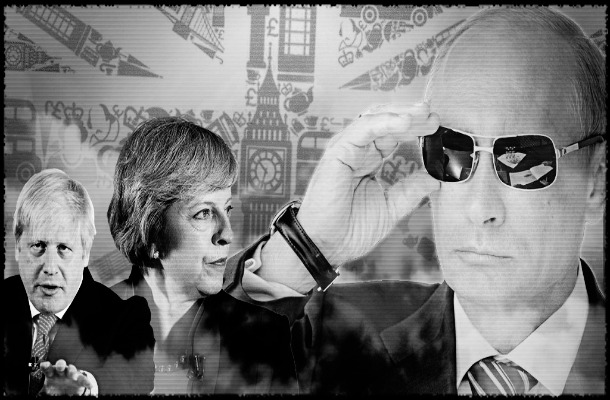
Literally No Evidence is Behind the Skripal Poisoning.
By Tony Kevin | 21st Century Wire | August 17, 2018
We have a situation now in which two major world governments, UK and Russia, both nuclear powers and permanent members of the UNSC, are upholding entirely opposed and contradictory narratives on two issues – the alleged Salisbury/Amesbury Novichuk poisonings, and the alleged nerve gas attacks by Assad Government forces on 7 April in Douma, Syria (on basis of false White Helmets-staged evidence). The latter allegation led to a US/UK bombing attack on Syrian Air Force bases.
On both issues, the US and French governments – also UNSC members and nuclear powers – have in solidarity supported UK government- sourced narratives , though in the former case there has been no UK judicial process, and in the latter case OPCW inspectors have found no physical evidence of use of nerve agents in Douma, and nor do local people’s accounts support the allegations.
In the Salisbury case, OPCW technical reports made public in Moscow on 14 April by Russian Foreign Minister Lavrov, detailing results of the Skripal samples analysis by the OPCW Spiez Laboratory in Switzerland, support a finding that the Skripals were probably poisoned temporarily with non- lethal BZ toxin , found in the Skripal samples, and that quantities of Novichok ( A- 234) lethal toxin had twice been added to the samples before they passed from British Govt to OPCW custody, in two clumsy attempts some weeks apart to create a false Novichok chemical trail. Lavrov commented, in strong language for him, that the fact Spiez Lab found these two doses of A-234 in the samples “appears to be utterly suspicious.”
Nevertheless, two days later on 16 April, the OPCW Executive Council , under Western pressure, decided unprecedentedly not to release the full reports of the samples testing by the four OPCW laboratories in Switzerland, thereby casting serious doubt on the professional reputation of OPCW. See here and here.
The second document contained a manifestly untrue statement by Mr Marc-Michael Blum, the Head of the OPCW Laboratory and leader of the technical assistance team that was deployed to the United Kingdom, that:
“The Labs were able to confirm the identity of the chemical (Novichok, or A -234) by applying existing, well-established procedures. *** There was no other chemical that was identified by the Labs ***. The precursor of BZ that is referred to in the public statements, commonly known as 3Q, was contained in the control sample prepared by the OPCW Lab in accordance with the existing quality control procedures. Otherwise it has nothing to do with the samples collected by the OPCW Team in Salisbury. This chemical was reported back to the OPCW by the two designated labs and the findings are duly reflected in the report.”
This is simply laughable. The OPCW defence was that Britain had requested a very restricted test looking only for Novichok, and that it was therefore correct procedure for OPCW to withhold publication of the full laboratory results. So there is no official confirmation or denial of Lavrov’s statement that the Spiez Lab had found that A-234 had twice been improperly added to the Skripal samples. And a blatant lie was told on BZ.
Lavrov on 14 April had stood just short of accusing the UK government of concealing evidence and tampering with samples. But his imputation was very clear. Clearly he was appealing to Britain and the OPCW to do the right thing on 16 April. They did not do so. His words, recorded on the Russian MFA website, went unreported in the West. They are the essential basis of the Russian counter-narrative.
On the alleged use of CW in Douma, an alleged child victim Hassan Diab testified in The Hague three weeks later on 27 April that he had never been gassed, but he had been cruelly used in a White Helmets staged propaganda film.
Then, much later, the OPCW reported on 6 July their inspectors’ findings that they had not found any organophosphorous nerve agents or their degradation products in Douma.
These are facts. But it appears that facts no longer matter. In the UNSC, the weight of numbers is with the three Western permanent members and their allies. China has been circumspect on the issue, saying almost nothing except calling for proper procedures to be followed in OPCW.
Russia and China continue to have rights of veto on any future UNSC resolution that might try to condemn Russia for allegedly behaving as an international outlaw in these two contested matters.
Is there any legal way Russia could be expelled from the UNSC over either or both of these sets of allegations? America and Britain seem hell-bent now on portraying Russia as an international criminal, but surely this should carry no credibility now with the majority of the UNGA membership outside the compliant NATO/EU/Australia grouping.
There seems no way in which the facts of Salisbury/Amesbury can be publicly established, as long as the UK Government continues to suppress and tamper with evidence, and as long as its Western allies and the OPCW Executive continue to give to the UK Government cover and support. Only the election of a Corbyn Labour Government might offer prospect of change, because Corbyn is a decent man who would refuse to sustain a UK government lie.
Russia will continue to press for consular access to their citizens the Skripals. They cannot let the issue be forgotten. So it will go on being a cause of major Russia-UK tension and bad blood, as the histories of the two series of events recede into mythology and contested narratives, and as distracting myths and legends accumulate around Salisbury-Amesbury.
Now, the US government is resorting with increasing recklessness to unilateral sanctions outside the UN system, announcing two tranches of increasingly severe sanctions against Russia, in August and November, unless Russia admits its crimes and promises not to repeat them. Russia has of course rejected these demands out of hand, as internationally illegal and without any justification.
If the US pursues this course it will lead to further distancing between the US and Russian economies. As Lavrov points out, many other countries will draw their own conclusions about the US’s reliability as an economic partner and reserve currency.
The most likely medium-term scenario is continued simmering anger and resentment on both sides, encouraging further polarisation of a ‘3 versus 2’ situation in UNSC. But I don’t see how Russia could be expelled or suspended from the UNSC.
The current situation suits Western Russia-hating elites. It is in their interest to delay and impede any moves to Russia-West detente, keeping tensions high but at a level just short of war, and keeping Trump on a tight leash for as long as he remains US President. So far, sadly, it is all working out according to this plan.
***
Feature image taken from John Laurit’s blog.
Tony Kevin, former Australian diplomat and author of ‘Return to Moscow’ (2017, UWA Publishing)
What Do The Winners In Syria Want?
ORIENTAL REVIEW – 17/08/2018
After the liberation of the provinces of Daraa and Quneitra, the Syrian civil war entered a new phase. The available land that was up for grabs by any new liberator — without the need for negotiations with outside actors — was shrinking (one section of the desert under ISIL control does not count – it will soon be cleared out). Only Idlib is left, which is controlled (albeit only in spots and to a limited extent) by Turkey, as well as the environs of al-Tanf and the Kurdish regions located within the American protectorate. And their liberation must be preceded by diplomatic agreements with the protector states.
Decentralization without the Kurds
Negotiations with Turkey took place in Sochi at the very end of July. Those were conducted by Russia and Iran, because Damascus and Ankara have officially severed their diplomatic ties. The Syrian authorities emphasize that the territory of Idlib will eventually be returned to Damascus’s jurisdiction.
No one’s arguing with that. Turkey is not planning on an eternal occupation of Syrian territory, because any benefits from that would be completely outweighed by the financial, PR, and potential military costs Ankara would incur. At some point, the Turkish troops will be forced to quit Syria. But Erdogan has no desire to pull out for free and is demanding a number of conditions be met in return.
These conditions are obvious yet at the same time contradictory. On one hand, Ankara wants to maintain its leverage over post-war Syria, so it is pressing for the local communities (some of which in northwestern and western Syria hold pro-Turkish sentiments) to be granted more rights and powers. On the other hand, the Turks do not want those rights and powers to be extended to the Syrian Kurds, whom Erdogan currently views as one of te biggest threats to Turkey’s national security.
At present it is not possible to meet Turkey’s demands – the constitutional committee is just now getting down to work, and no one understands how to exclude the Kurds from the decentralization process anyway. And ultimately the Iranians are not particularly eager to yield any zones of influence to the Turks — it is clear to everyone that for the foreseeable future, Tehran and Ankara will very likely be competing for the upper hand in the Middle East. In turn, the Turkish authorities are threatening that if Moscow and Tehran give Damascus the green light to conduct a military operation in Idlib without taking Ankara’s interests into account, then Turkey will abandon its attempts to find a resolution under the auspices of the Astana negotiations and could potentially resume military and political assistance to the militants, which might even include sending aid in the form of the Turkish army.
The weak link
As a result, a compromise was apparently reached in Sochi. Damascus, Tehran, and Moscow agreed to temporarily postpone the offensive in Idlib and give Turkey some latitude to handle the threats posed by certain terrorist groups in the region (for example, Hay’at Tahrir al-Sham, which is the latest reincarnation of the al-Nusra Front). In order to do battle against them, the Turks have already established a coalition of militants under Ankara’s control.
However, this compromise is not likely to last long. First of all, because Turkey has thus far been conspicuously unable to cope with the situation (as can be seen, for example, in the regular drone attacks on the Hmeimim air base that originate in Idlib), and there is no guarantee that the situation will change. Second, Damascus is already engaged in a dialog with the Kurds (who have finally become firmly convinced that the Americans will continue to sell them out to the Turks) over the idea of reconciling in exchange for the promise of decentralization. In this, the interests of Damascus and Ankara are partially aligned – the Kurds will not be granted any broad autonomy – but the Syrian authorities are prepared to concede some extremely limited autonomy. And if the Turks object, then – faced with the choice between compromising with the Kurds vs. satisfying the Turks, the Syrians are likely to choose the Kurds.
The Kurds will be chosen because — and this is the third reason — Turkey is the weakest link in the Syrian “triumvirate.” The end of the civil war is not far off, and if Iran and Russia are seeing their own positions strengthening as that day draws nearer, Turkey, on the other hand, is growing weaker. This is being expedited by the rapidly unraveling relationship between Erdogan and the West, as a result of which the Turkish president has been left in a state of semi-isolation, and he cannot afford to damage his relations with Moscow and Tehran as well. Therefore, it is possible that once the desert enclave and the concentration of troops near Idlib have been cleared out in the autumn, the Syrian army will find some pretext for an offensive in the rebel province, and Turkey will remain on the sidelines. The best Ankara can hope for is to have some minor concessions granted.
Syria without Iran?
As for the US — it played no role in the talks in Sochi. “We are sorry that our American colleagues chose to absent themselves from the work aimed at achieving a long-term political settlement in Syria,” noted Alexander Lavrentiev, Russia’s special envoy to Syria. “We remain confident that mutually acceptable solutions can only be worked out through an open dialog.”
However those can also be worked out through a “closed” dialog, which is something that is held regularly (including during the meeting between Putin and Trump). Washington’s position is easy to understand. Donald Trump is ready to pull American troops out of the environs of al-Tanf (in southern Syria), because now that Syrian troops have liberated Deir ez-Zor and the province of Daraa, that base of operations is no longer needed. Trump is also prepared to entertain the possibility of abandoning support for the Syrian Kurds, because they are ill-suited for their role as a force to hold Iran in check and are also creating a host of problems with the Turks.
The only question is — what does Washington want in return? Some media outlets have been circulating the idea that the US and its partner Israel are demanding Iran’s complete withdrawal from Syria. But everyone is well aware that this is unrealistic — the losers cannot order the winner to admit defeat. So it will most likely be an issue of the Iranians having to accept responsibility for pulling their troops and military bases out of the area near the Golan Heights, and Russia having to be responsible for ensuring that Tehran abides by this condition.
So far the negotiations seem to be in their early stages, and one of the key obstacles is the uncertainty of the US and Israel that the Russians will be able to shoulder the responsibility for Iran’s compliance with its obligations once the US troops have been gone from Syria for one, two, or three years. The West believes that Russia’s continued presence in Syria will be on shaky ground, since Iran regards the country as its own domain and will push for outside forces to leave, even friendly ones.
Moscow partially shares this concern (despite being on friendly terms with Tehran), and that is precisely why it is trying to do all it can to use diplomacy to resolve the issue with the Turks themselves, while also pulling Europe into the process of returning the Syrian refugees and restoring the country’s infrastructure. After all, the more outside actors there are in Syria, the less chance that the Iranian leaders in that country will become an undesirable dominating force (which would inevitably happen otherwise). And it makes it even more likely that the process of national reconciliation — which will take more than just a year or two — will culminate in not just an end to the civil confrontation, but also in the long-term peaceful coexistence of the varied peoples and religious sects within Syria.
Totally Irrusianal
By Paul Edwards | CounterPunch | August 17, 2018
Enough with accusations. Let’s assume the worst. Or maybe you think of it as the best. Let’s stipulate that Trump, never mind how, is the helpless tool of evil Putin. Putin posted social media attack rants to sow confusion and doubt in American minds about their country, and ordered the DNC hacking to expose and discredit Hillary on Wikileaks and get his puppet elected. What follows? What was his grand purpose, the endgame?
So, as President, Trump was Putin’s abject slave. What did Putin want? Diplomatic relations. Trump expelled a hundred Russian diplomats. He demanded sanctions against Russia be dropped. Trump added more. He ordered Trump to stay in the Iran deal. Trump dumped it. He directed Trump to de-fund Kiev’s neo-Nazi regime and drop demands to give up Crimea. Trump said no. He told Trump to cut the military budget. Trump increased it. He insisted Trump get out of Syria. Trump refused and had to be forced out. At Helsinki, he may even have asked Trump for–gasp!–a nuclear arms control deal. Trump demurred. No go, Vlad, said the slave.
One would have to say that, to date, Putin’s having Trump by the plums has produced no great triumphs. How can that be? What slavery is this? Either you have leverage or you don’t; you can exert pressure or you can’t.
Ah, but one bonehead military braintruster has revealed that it’s all about undermining America’s “moral authority” in the world. That, you see, is Putin’s truly diabolical desire. Never mind all the oppositional policies and antagonistic acts by Trump; they are but clever cover for a far more sinister plot by the fiend Putin to diminish our cherished respect in the world mind.
One might have thought our grotesquely vicious blood-and-horror shows in Afghanistan, Iraq, Libya and Syria would have sufficed to render our “moral authority” moot for Putin since we no longer have any, but not so.
There is evidently no limit to his malevolent passion to see America become the most hated nation on earth, and he wants it done–the gods know how!–faster than we’re doing it ourselves. That being so, one might suspect his evil meddling reaches far back to Clinton, the Bushes, and Obama, but that’ s not how the story goes. What Putin wants Trump to do is to eliminate non-existent admiration and respect, a tough order indeed.
For the sake of rigorous inquiry, let’s set aside the poor performance Putin is getting despite his deathgrip on his victim, and speculate about what
Vlad Teufelsdreck might ideally hope for with a slave who honored his obligations better. If you’ve followed me so far, his goal seems clear.
He wants to recreate a Russian Empire and rule the world. This may not be obvious from his actual behavior but we need not be fooled by mere evidence. After subverting, disarming and occupying the U.S.–having asked Xi and China to hang tight while he conquers his moral authority-impaired foes–he will then turn on China, just as Hitler did on…
Can you go on with this line of bullshit? Can anyone? Taking an honest look at the wild goat’s nest of irrationality and deceit behind the claim that Putin has any hold of any kind whatever on Trump, and then parsing the implications of that idea, the infantile fatuity, the mind-numbing idiocy of the whole sham has to slam one like a hi-balling train.
An assertion of fact is, in logic, a premise, which is a proposition supporting a conclusion. The assertion that Trump is Putin’s puppet supports the conclusion that Trump must obey his will, which, QED, is howlingly absurd.
Clintonista Corporate Democrats, obdurate in hara-kiri mode, have gone all in to attack Trump with this baseless fantasy rather than blister him for the glaring evils he has actually perpetrated. That would be damned awkward for them as many of their big donors are just fine with the looney fiats of the Imperial Pagliacco. And, their ploy has failed. Trump’s riding them out.
They’ve embraced the Goldwater mantra, “Better Dead Than Red”, and are stoking the fires of the gullible for a face-off with Russia. Gearing up for that Big One would be a jackpot for the War Machine. It could gouge out a far fatter hunk of budget than they’ve gotten beating up defenseless little nations and it’d be fat city right up to the point where Russia, generations ahead of Aunt Sam in weaponry, tore The Empire a great big new one.
If this desperate madness persists, we may yet have both Trump and war. It may be as Kafka reflected: “There is infinite hope… but not for us.”
Assessing US Marines Deployment to Norway: No Big Deal or Serious Threat to Russia?
By Arkady SAVITSKY | Strategic Culture Foundation | 17.08.2018
Norway has abandoned its traditional policy of “no foreign forces on our national soil.” On Aug. 15, the Norwegian defense ministry reported that the US will more than double (from 330 to more than 700) the number of Marines stationed in that country, in line with plans first outlined in June. The deployments to Norway are expected to last at least five years, compared with the former posting that ran for six months after the initial contingent arrived in 2017 and was then extended last June. A new military base at Setermoen will accommodate the US personnel this fall. The United States has expressed interest in building infrastructure to host up to four US fighter jets at a base 65 kilometers south of Oslo, as part of the European Reassurance Initiative (ERI).
The reinforcement comes ahead of a large-scale exercise dubbed Trident Juncture 18 — the biggest NATO maneuver in decades, involving 40,000 soldiers, 130 aircraft, and 70 vessels from more than 30 nations. That training event will be held from October to November in central and eastern Norway, the North Atlantic, and the Baltic Sea. Iceland, Sweden, and Finland will also take part.
According to the Norwegian government, the sole purpose of the American military presence is for training, there is no escalation involved in this whatsoever, and Russia has nothing to worry about. Foreign Minister Ine Eriksen Soereide previously told reporters that this decision did not constitute the establishment of a permanent US base in Norway and was not targeted at Russia.
Moscow issued a warning about the consequences such a move will entail. Are Russia’s concerns justified? After all, 700 soldiers are not a big deal for such a large country. They’ll finish their training, pick up some skiing skills, and leave. Is there really anything to worry about? Perhaps a more in-depth examination can provide an answer to this question.
The US Marines Corps is a service designed mainly for offensive operations. They are training to fight Russia under certain weather conditions. Once it has begun, such training becomes a routine part of the operational cycle. Whether you call it rotational or permanent, they’ll be there for years, ready to attack. It’s not just a few hundred servicemen, it’s an expeditionary force. They are in Norway to make sure that everything is in place to ensure a rapid reinforcement in order to launch offensive operations that include air support right upon arrival.
The cooperation between the US and Norway includes the exchange of intelligence, the purchase of weapons — including 52 F-35 aircraft and five Boeing P-8 Poseidon maritime patrol aircraft (MPA) — the use of Norwegian air bases, and the storage of military equipment in line with the Marine Corps Prepositioning Program-Norway (MCPP-N), which has been in effect since 2005. Actually, that project is a revival of a Cold War program that was launched in 1981 to preposition military equipment. Norway pays half of the program costs. Since 2014, it has been adjusted to meet the needs of the US Marine Corps. Their stockpiles have enough gear, vehicles, and ammunition to equip a force of more than 4,600 troops. According to the plans, there should be enough equipment and ammunition stored up to sustain a Marine Expeditionary Brigade (MEB) during combat. A MAB can consist of 8,000 to 16,000 Marines, or even more.
And it’s not just Norway. In May, US Marines from the 4th Tank Battalion withdrew tanks and weapons from storage caves in Norway to bring them to Finland during the Arrow 18 training exercise. That equipment was used in their maneuvers alongside the Finnish army. The US Marines in Norway could also be transported to Sweden. Such a scenario played out during the Swedish Aurora 17 exercise. As one can see, the Marines’ deployment in Norway is essential for providing US forces access from northern Scandinavia to the Baltic theater of operations.
Norway is part of an intelligence and missile-defense effort. The high-powered radar Globus 3 in Vardo is an example. The radar in Svalbard (above the Arctic Circle) is installed in violation of a 1925 treaty, which states that Svalbard has a demilitarized status. It can be used for missile-defense purposes. The US Poseidon MPA from Andøya monitor Russian submarine movements. In June, the US, UK, and Norway agreed to create a trilateral coalition on the basis of those planes that will conduct joint operations in the North Atlantic near Russia’s Northern Fleet naval bases.
The F-35 Lightnings purchased from the US are to be based in Ørland in southern Norway. They are nuclear-capable planes. The training provided by the American military to the Norwegian pilots is a violation of the 1968 Non-Proliferation Treaty (NPT) , which prohibits the transfer of nuclear weapons from nuclear-weapon states to other states. According to the treaty, non-nuclear-weapon states are not to receive nuclear weapons. Russia will never be sure the Norwegian F-35s aren’t carrying nuclear weapons.
The setting is important. The transformation of Norway into the tip of the knife for an attack on Russia is taking place amidst the speedy militarization of other Scandinavian countries, the Baltic states, and Poland. According to the Russian Defense Ministry, NATO has tripled its military presence on Russia’s western borders over the past five years, forcing Moscow to take retaliatory steps. The Norwegian government’s decision to extend and expand the Marines’ presence is part of NATO’s vigorous war preparations, making Norway a state on the front lines and the prime target for the Russian military.
US violated international law over Russian diplomatic missions, Moscow tells Washington
RT | August 17, 2018
Washington has violated international law with respect to Russian diplomatic missions in the US, the Russian Foreign Ministry said in a protest note filed to DC.
The ministry expressed “protest at the continued violation of international law by the US with regard to” Russian diplomatic missions and consulates in the US, according to a statement on its website.
The complaint concerns Russian diplomatic properties in Washington DC, San Francisco, and Seattle, as well as in the states of Maryland and New York.Moscow said that the “negative consequences” undermine not only US-Russian relations, but also “the principles of the sovereignty of states and international cooperation.”
Moscow said that it has a right to take “additional countermeasures” against US diplomatic property on Russian soil if the US “continues violations” against its facilities.
In a separate statement, also released on Friday, the Foreign Ministry urged the UN Secretary-General to look into the matter. The relevant letter to Antonio Guterres was sent on May 18, the ministry said.
The diplomatic spat between Moscow and Washington dates back to December 2016, when on New Year’s Eve, the outgoing Obama administration expelled Russian diplomats and closed two Russian diplomatic compounds in New York and Maryland.
Russia did not immediately retaliate as the new Trump administration was taking office. However, the downward trend in US-Russia ties persisted and, in the summer of 2017, Washington slapped a new round of sanctions on Moscow, which retaliated by ordering the US diplomatic mission to downsize.
In response, the US took new hostile action, shutting the Russian Consulate-General in San Francisco, as well as the country’s trade missions in Washington and New York.
In May this year, US authorities removed the Russian flag from the diplomatic compound in Seattle. The Russian embassy condemned this “unacceptable treatment” of the national symbol.
Baghdad grapples with ‘curse’ of US sanctions on Iran
By Omar al-Jaffal | Asia Times | August 17, 2018
Iraqi Prime Minister Haider al-Abadi has raised the level of uncertainty over how Iraq will handle long-expected US sanctions on Iran.
In the span of less than a week, Abadi went from pledging to abide by the sanctions the day after they were imposed, to backtracking on his statement.
“I said yes, we will abide … but abide when it comes to dollar transactions,” Abadi told reporters Monday. The confusion for Iraqi citizens and political parties is even greater for the Central Bank of Iraq.
“Dealing in dollars with Iran has been banned for a very long time,” the bank’s director general of financial operations, Mahmoud Dagher, told the media. “Neither the bank nor the banking system deals with Iran in dollars when it comes to foreign trade.”
Iran is not only a neighbor to Iraq, with a land border of more than 1,000 kilometers. It dominates the Iraqi market and political scene.
Prime Minister Abadi’s vocal opposition to the US sanctions stems from this hegemony, especially as he is seeking a second term in office. His coalition placed third in the May parliamentary elections and he will need Tehran’s support moving forward.
Politically, Iran has influence on a large number of Shiite parties in the government and parliament. Some of these parties have announced they will mount a “break the siege” campaign to counter the US sanctions on Iran.
Militarily, Tehran supports and trains dozens of militias in Iraq, and these groups sharply criticized Abadi over his initial acquiescence to the sanctions. The United States also holds major influence in the military and economic spheres.
As in the past, Abadi is walking a tightrope between Tehran and Washington, both of which have their share of clout in green lighting the next prime minister.
Iranian dairy, Iranian cars
Where there is political and military influence in Iraq, there is economic reverberation.
Hamid Hosseini, the secretary-general of the Iran-Iraq Chamber of Commerce, said in December that “Iraq, for Iran, equals the markets of three continents: Europe, America and Africa.”
Iranian goods account for about 17% of the Iraqi market, making it the second largest destination for exports after Turkey in this respect. Iranian exports to Iraq have risen exponentially over the past decade.
Before US sanctions were reimposed, Iran said it was seeking to control a quarter of the Iraqi market and increase the volume of trade from $13 billion in 2017 to $20 billion in the coming years.
In the markets of central and southern Iraq, one can clearly observe how Iranian goods dominate shop shelves and how dairy products occupy a large place in the refrigerators.
On the streets, the Iranian-made SAIPA and Samand cars are too many to count. The cheap, poor-quality vehicles have not only entered Iraq by highway — they are assembled at factories in the heart of the country.
Iraq’s power plants are heavily reliant on diesel and gas to operate, and in this regard, Tehran has an agreement to export diesel and about 25 million cubic meters of gas per day to Iraqi power plants.
Even so, Iraq continues to suffer from major power shortages, which this summer prompted major waves of protests as temperature hovered around 50 degrees Celsius. The Iraqi government since 2005 has been compelled to conclude successive deals with Iran to ease the shortfall, importing 1,500 to 2,500 megawatts of electricity per year.
For Iraq, Iranian religious tourism is a major source of income.
Each year, about three million Iranian pilgrims flock to the shrines of the descendants of the the Prophet Mohammad in the provinces of central and southern Iraq.
Baghdad charges a $40 visa fee per tourist, but Abadi’s government quickly announced it would reduce that amount for pilgrims as sanctions on Tehran came into effect.
Iranian goods are often the source of ridicule in Iraq for their lack of quality. But they are hugely popular in the central and southern provinces of the country, as a much more affordable option than goods made in Turkey. Not to mention the foodstuffs Iraqis depend on for their daily diet.
For much of the population, those low prices make a major difference in the household budget, especially with the rise of unemployment and poverty following the price of oil – the key export on which Baghdad relies to conduct about 97% of its economic activities.
Iran’s trade surplus with the Iraqi private sector is more than $7 billion.
Against this backdrop, the Iraqi government appears at a loss, with scant plans in place to deal with the first package of US sanctions against Iran, which is light compared to the second round coming in November.
Dr. Mohammed Saleh, an economic adviser to the prime minister, says Iraq faces a dilemma in the coming period.
“Given the closed border with Syria and the dangerous situation [on the border] with Jordan, for Iraq only Turkey remains” to compensate for the shortage in Iranian goods when the second tranche of US sanctions comes into force. “But also [Turkey] is in a vague position as a result of the US sanctions,” he added, with a note of desperation.
“Iraq will have to comply with the US sanctions on Iran and it will have to compensate for the loss of Iranian goods by producing some of them,” Saleh told Asia Times, adding that this goes especially for the gas sector.
“We will also have to revive the manufacturing of oil products by reactivating refineries suspended from work. The same goes for agriculture, if Iraq can persuade the Turkish side to up Iraq’s water quotas.”
Asked whether Iraq had immediate plans to implement what he had referred to, he said: “Unfortunately, so far there are no actual plans on the ground,” stressing that Iraq was still reeling from the war against ISIS and the failure to form a government after the latest elections.
Made in Iraq?
Falah al-Rubaie, professor of economics at the Faculty of Management and Economics at Mustansiriya University in Baghdad, said the sanctions should be seen as an opportunity for Iraq. An opportunity to reconsider its economic policy in the fields of industry and agriculture, and to start competing with Iranian goods through local production.
“Iraq has the space to activate such a policy,” Rubaie told Asia Times. “But such a decision requires political will and belief in achieving development.”
He said Iraq’s economic predicament was not for a lack of strategies. “There have been more than 16 strategies developed by successive governments related to industry, agriculture, trade and others sectors, in addition to the existence of four development plans since 2003.
“All these plans sit on the shelf because of the confusion of political decision-makers and many of them are linked to Iran politically, which facilitates the import of their products at the expense of Iraqi development plans.
“The absence of development and the return to oil revenue is what Iraqi politicians have been doing since 2003 in order to secure their personal benefits at the expense of the country’s interest,” Rubaie added.
Up till now, Iraq has not faced major issues with Tehran or Washington over the latest US sanctions.
“Trade between the two countries (Iraq and Iran) is proceeding normally,” said Nasir Behrouz, Iran’s trade adviser in Baghdad. “The import and export process with Iraq continues at all ports.
“Iran is determined to expand its presence in the Iraqi market to suit the interests of the two countries,” Behrouz was quoted as saying by the official IRNA news agency.
The US, for its part, has not flagged any sanctions violations by Iraq to date, despite alarmist reports in the local press.
The US embassy in Baghdad issued a statement of clarification after State Department spokesperson Heather Nauret warned Tuesday that Washington would “continue to hold countries accountable for any violations.”
The embassy said Nauret’s statement had been misinterpreted and stated categorically that there was “no breach of sanctions” by Iraq in dealing with Iran.
The economic adviser to PM Abadi described the sanctions against Iran as “the curse” and said that the second round was an impending disaster that Iran must redress.
He did not say whether Iraq would be able to tackle this curse and find a substitute for Iranian imports.
US Senate Intel Chairman to Former CIA Chief: Put Up or Shut Up About Collusion

Sputnik – 17.08.2018
Senate Intelligence Committee Chairman Richard Burr (R-NC) had some choice words for security credential-deprived former CIA Director John Brennan. In a statement on Thursday, Burr essentially told Brennan to put up or shut up on the topic of Trump-Russia collusion.
“Russian denials are, in a word, hogwash,” Brennan wrote on Thursday in the New York Times’ opinion section. “Mr. Trump’s claims of no collusion are, in a word, hogwash.”
The former top brass at the CIA had his security clearance revoked by President Trump on Wednesday over what the White House called “risks posed by his erratic conduct and behavior.”
Burr fired back swiftly, saying, “Director Brennan’s recent statements purport to know as fact that the Trump campaign colluded with a foreign power.” If Brennan “has some other personal knowledge of or evidence of collusion, it should be disclosed to the Special Counsel, not The New York Times,” he said.
Burr wondered whether the former chief spy’s assertion was based on intelligence he received while still working at the CIA. If so, “Why didn’t he include it in the Intelligence Community Assessment released in 2017?” the senator wondered.
Moreover, would leaking intelligence assessments not constitute disclosure of classified information pertaining to an ongoing investigation, one must wonder?
On the other hand, if Brennan got the supposed information after leaving the CIA, “it constitutes an intelligence breach,” Burr wrote.
Lastly, Burr addressed the possibility that Brennan had no inside information at all. “If, however, Director Brennan’s statement is purely political and based on conjecture, the president has full authority to revoke his security clearance as head of the Executive Branch,” the chairman concluded.
The CIA once spied on the Senate Intelligence Committee “at the behest of” Brennan, according to the New York Times. Brennan had previously said that those claiming the CIA had hacked the committee “will be proved wrong” Brennan told the Council on Foreign Relations. Burr has sat on the committee since 2007 and has chaired it since 2015.
Almost all of the former director’s 51 tweets are about Trump — or in response to a Trump policy — or Special Counsel Robert Mueller’s investigation.
Italy’s NATO Racket… A Bridge Too Far
By Finian CUNNINGHAM | Strategic Culture Foundation | 16.08.2018
The catastrophic bridge collapse in Italy this week has prompted a public outcry over the country’s crumbling infrastructure and how it is putting lives at risk. But the question the public in Italy and across Europe should be asking is: why are their governments spending extra tens of billions of dollars on NATO militarism, while neglecting vital civilian infrastructure?
When the iconic Morandi motorway viaduct came crashing down this week over the city of Genoa – with a death toll so far of 39 people – the consensus among Italian news media and members of the public is that the bridge was a disaster waiting to happen.
Nearly 200 meters of the motorway flyover section spanning a river, houses and an industrial area collapsed while dozens of cars and trucks were passing. Shocked witnesses described the scene as “apocalyptic” as vehicles plunged 40 meters along with concrete and iron girding to the ground below.
Lack of due maintenance has been blamed for why the bridge collapsed. Weather conditions at the time were reportedly torrential rain storms and lightning. But those conditions can hardly explain why a whole motorway viaduct wobbled and crashed.
The Morandi Bridge was built 51 years ago in 1967. Two years ago, an engineering professor from Genoa University warned that the viaduct needed to be totally replaced as its structure had seriously deteriorated. There seems little doubt that the disaster could have been avoided if proper action had been taken by the authorities rather than carrying out piecemeal repair jobs over the years.
Italian media reports say the latest is the fifth bridge collapse in the country over the past five years, as cited by the BBC.
Now the Italian government is calling for a nationwide survey of roads, tunnels, bridges and viaducts to assess public safety amid fears that other infrastructure facilities are prone to deadly failure.
What should be a matter of urgent public demand is why Italy is increasing its national spending on military upgrades and procurements instead of civilian amenities. As with all European members of the NATO alliance, Italy is being pressured by the United States to ramp up its military expenditure. US President Donald Trump has made the NATO budget a priority, haranguing European states to increase their military spending to a level of 2 per cent of Gross Domestic Product (GDP). Trump has even since doubled that figure to 4 per cent.
Washington’s demand on European allies predates Trump. At a NATO summit in 2015, when Barack Obama was president, all members of the military alliance then acceded to US pressure for greater allocation of budgets to hit the 2 per cent target. The alleged threat of Russian aggression has been cited over and over as the main reason for boosting NATO.
Figures show that Italy, as with other European countries, has sharply increased its annual military spending every year since the 2015 summit. The upward trend reverses a decade-long decline. Currently, Italy spends about $28 billion annually on military. That equates to only about 1.15 per cent of GDP, way below the US-demanded target of 2 per cent of GDP.
But the disturbing thing is that Italy’s defense minister Elisabetta Trenta reportedly gave assurances to Trump’s national security advisor John Bolton that her government was committed to hitting its NATO target in the coming years. On current figures that translates roughly into a doubling of Italy’s annual military budget.
Meanwhile, the Italian public have had to endure years of economic austerity from cutbacks in social spending and civilian infrastructure.
Rome’s new coalition government comprising the League and Five Star Movement has called for a reversal in austerity policies and has vowed to increase public investment. Its leaders, like deputy prime minister Matteo Salvini, have also at times expressed a lukewarm view of NATO.
After this week’s bridge disaster, the populist coalition government has renewed its calls for more investment in public services.
Nevertheless, why then is Italy’s defense minister giving assurances that the country will adhere to Washington’s demands for increasing its NATO budget? Minister Trenta, who belongs to the Five Star Movement, says her government remains committed to buying up to 90 units of the US new-generation F35 fighter jet.
Aggregate figures show that Italy spent nearly $300 billion over the past decade on military. The previous decade’s outlay was even higher in constant dollar terms, before the financial crash in 2008. And yet the Italian government – despite its populist appeal – is planning to allocate even more resources to military over the coming years in order to meet Washington’s ultimatum for the NATO 2 per cent of GDP target. A target figure that seems wholly arbitrary and abhorrent in the light of so many urgent social needs and neglected public infrastructure.
If Italian motorway bridges are collapsing now, the future for public safety looks even bleaker when more of the country’s economy is diverted to satisfy US-led NATO demands.
Moreover, this dilemma is not confined to Italy. All European members of NATO are being railroaded by Washington to significantly expand their military budgets. President Trump has lambasted European states as “free loaders” cadging off “American protection”. Trump has singled out Germany for harassment to boost its military budget. After all the hectoring, the Europeans seem to be responding too. At the annual NATO summit held last month in Brussels, the Norwegian secretary-general Jens Stoltenberg boasted that non-US members had increased their national military budgets by an aggregate $40 billion in one year alone.
A cruel irony is that last year NATO planners complained that Europe’s infrastructure of roads, tunnels and bridges needed significant upgrades to facilitate mass-transport of military forces in case of a war with Russia. The implication was that European governments would have to increase their national spending on civilian transport networks specifically to facilitate NATO military requirements.
That is tantamount to a parasite craving for more blood from its host. Already European infrastructure is in disrepair largely because of economic austerity enforced by disproportionate spending on NATO militarism. At a time when public need for social investment is acute, European governments are obeying orders from Washington to plough more financial resources into subsidizing the American military-industrial complex. All this madcap, irrational expenditure is supposedly to keep European citizens safe from Russian threats.
All too evidently, however, the biggest threat to European citizens is the way Washington and its NATO racket is bleeding Europe of financial resources – resources which instead should be spent on building safe roads, bridges and other infrastructure.
US ‘Concerned’ With ‘Abnormal’ Russian Satellite
Sputnik – August 16, 2018
The US is raising hue and cry about a Russian satellite exhibiting what it considers “abnormal” behavior, heavily implying it is a weapon of some sort. However, the US has repeatedly rejected out of hand attempts to prevent a space arms race via an international treaty and is developing its own hypersonic weapons capable of reaching space.
“We are concerned with what appears to be very abnormal behavior by a declared ‘space apparatus inspector,'” US Assistant Secretary of State for Arms Control, Verification and Compliance Yleem Poblete said Tuesday at a UN conference on disarmament in Geneva, Switzerland. “Its behavior on-orbit was inconsistent with anything seen before from on-orbit inspection or space situational awareness capabilities, including other Russian inspection satellite activities.”
The only certainty we have is that this system has been “placed in orbit,'” the diplomat noted, lamenting, “We don’t know for certain what it is, and there is no way to verify it.”
What’s bizarre is that the US, despite noting that “it is difficult to determine an object’s true purpose simply by observing it on orbit” and that “we have no means of differentiating many objects’ behaviors from that of a weapon,” derives from this lack of information the conclusion that the satellite must be some kind of threat.
Of course, Russia and China have been trying to convince the US and other UN member states to agree to a binding treaty that would head off the imminent space arms race. In 2014, the US rejected the draft Treaty on Prevention of the Placement of Weapons in Outer Space and of the Threat or Use of Force Against Outer Space Objects (PPWT).
“Based on the drafting of the treaty language by Russia, there is nothing in the proposed PPWT that would prohibit this sort of activity or the developing, testing or stockpiling of anti-satellite weapons capabilities, so long as it doesn’t damage another object in space,” Poblete noted.
That is why “responsible nations should be considering the practical implementation of voluntary transparency and confidence-building measures and developing norms of responsible behavior for outer space activities, rather than pursuing a protracted and contentious legally binding treaty,” she said.
However, the United States has not proposed any amendments to that draft treaty, noted Alexander Deyneko, a senior Russian diplomat in Geneva, Reuters reported Tuesday.
“We are seeing that the American side are raising their serious concerns about Russia, so you would think they ought to be the first to support the Russian initiative. They should be active in working to develop a treaty that would 100 percent satisfy the security interests of the American people,” he said.
“But they have not made this constructive contribution.”
So in other words, the Americans are angry that the Russians have an object in space they don’t know everything about, and the cause of their ignorance is their own lack of interest in reaching a workable treaty governing weapons in outer space, based on dubious claims about the impossibility of verification. Conclusion? Must be another scary Russian weapon!
Russia launched a “small space apparatus” from the Plesetsk Cosmodrome in June 2017 to be used for “examining the condition of a Russian satellite,” the Russian Ministry of Defense announced last August.
“In the longer term, a research experiment will be carried out to use the space apparatus for examining the outward appearance of that satellite,” the ministry said, noting that it will be “a space platform capable of carrying different payloads.”
The ministry clarified in October that the satellite had been coupled to a larger satellite, Kosmos-2519; it then conducted tests of “controlling the maneuvering defense satellite, ground, and orbital communication systems,” and “methods involving ballistic estimates and new software were employed,” before the smaller satellite returned to Kosmos-2519.
“The space forces proved their ability to ensure the satellite’s automatic undocking from the platform, the remote control of its flight, and the activation of the satellite payload, including surveillance hardware, data transfer to Earth and data processing,” the statement, published in Izvestiya, said.
Meanwhile, as the US raises the alarm over the Russian Defense Ministry “working on creating a mobile attack anti-satellite system” and “no less than six new major offensive weapon systems,” it ignores the fact that it has long since developed most of these capabilities on its own and recently authorized a defense spending bill that allocates nearly half a billion dollars toward a hypersonic missile.
As far back as 2008, the US successfully tested an SM-3 missile for use as a satellite interceptor, blasting a US satellite that was 133 miles up, Business Insider reported.
Further, the 2019 National Defense Authorization Act (NDAA), signed into law on Monday, gives defense contractor Lockheed Martin $480 million to develop a missile that can travel at mach 5 or faster, a contract that follows a previous one in April for $930 million to develop a different prototype, Sputnik reported.
Trump’s sanctions on Iran dig deeper grave for US forces in Afghanistan
By Finian Cunningham | RT | August 16, 2018
The dramatic, and seemingly unstoppable, surge of Taliban offensives across Afghanistan is proof that the US is fast becoming the latest foreign power to succumb to failure in a land known for for being the “graveyard of empires”.
But unlike past empires defeated in Afghanistan, the US stands out as singularly contributing to its own ill-fate through excessive blundering and its legacy of criminal duplicity.
In particular, Washington’s obsession with confronting neighboring Iran and plotting regime change in Tehran could well be the tipping point in Afghanistan. The point, that is, where the US tips itself into a strategic, military grave it has been digging in Afghanistan over the past two decades.
After 17 years of US military occupation costing the US taxpayer trillions of dollars, the Taliban insurgents seem to be able to launch spectacular attacks at will against the Washington-backed government in Kabul. By any measure, that portends a historic defeat for Washington’s imperial ambitions. And not just in Afghanistan.
Over the past week, a strategic city, Ghazni, only 150 kms south from the capital was under Taliban occupation for several days before the militants appeared to make a tactical retreat to surrounding areas.
Then in the capital, Kabul, on Thursday, the Taliban mounted a gun battle on a military-intelligence training base, as if to underline the ineffectualness of US-backed security forces. A military intelligence base caught in a surprise attack?
Further north, in Faryab province, an Afghan National Army base was reportedly over-run by militants with the apparent loss of 30 troops and the remaining 70 captured. Provincial elders said the base was easily captured by the Taliban because it lacked reinforcements, ammunition and food. So much for US support.
Recall that Afghanistan was supposed to be the “Soviet Union’s Vietnam”. That was how US planners like Zbigniew Brzezinski gleefully referred to Afghanistan and their nefarious scheme to inflict on the Soviets what the US had ignominiously suffered in Vietnam only a few years earlier. In 1979, Soviet troops were lured into the Central Asian country to prop up an allied government in Kabul coming under attack from US-backed tribal fighters, the Mujahideen.
Like British imperial troops a century before, the Soviets suffered defeat in the rugged mountains of Afghanistan at the hands of fearless fighters.
Of course, the Soviets were not just up against Afghans. The CIA had weaponized the Mujahideen with Stinger anti-aircraft missiles and other sophisticated munitions. Along with Britain’s MI6, the Saudis and Pakistani military intelligence, the Afghan insurgents were turned into a jihadist army which later evolved into the Al Qaeda terror network.
The irony is, however, that the “Soviet Vietnam” has now turned into another US quagmire – an American Vietnam redux.
Following the September 11 terror attacks in 2001 on New York City and Washington DC, the George W Bush administration rushed into Afghanistan in an act of revenge against Al Qaeda – the very organization that the Americans had earlier helped create.
Nearly 17 years later, the US military is still bogged down in Afghanistan with no viable exit plan in sight. The war is officially America’s longest war, surpassing the duration of the Vietnam War (1964-75).
Although US casualties are much less than was incurred in Southeast Asia, the financial cost of Afghanistan to the US economy is crippling, estimated to be up to $5 trillion, along with the Iraq war. That’s a quarter of the US total national debt of $21 trillion.
US military operations were officially supposed to end in 2014 during the Obama administration. When Donald Trump ran for the presidency in 2016, one of his winning pledges to voters was to scale back US wars. Last year, however, Trump acceded to Pentagon advice to revamp military involvement in Afghanistan, albeit under the guise of “training and support” for local forces.
As this past week’s audacious attacks by the Taliban demonstrates, the US-backed government forces are fighting a losing war. Vast areas of the country are outside of their control. Even the capital appears vulnerable to heavily-mounted raids.
Moreover, the situation can only get worse for the US and its Afghan surrogates.
What may be a decisive factor is the Trump administration’s criminal policy of aggression towards neighboring Iran. In myopic fashion, Washington’s desire to squeeze Iran with “crushing” economic sanctions is liable to rebound, by significantly worsening the security conditions in Afghanistan for US-backed forces.
That’s because as the US imposes tougher sanctions on Iran, following Trump’s abandonment of the international nuclear treaty in May this year, the deteriorating Iranian economy will have a direct deleterious impact on Afghanistan. Thousands of migrant Afghan workers rely on Iran for employment. Their salary remittances are reportedly a major lifeline for families back in Afghanistan.
With the Iranian economy already faltering under US sanctions, droves of unemployed expatriate Afghan workers can be expected to pack up and leave, cutting off the remittances that sustain much of Afghanistan’s economy.
A further impact from Washington’s sanctions on Iran is that landlocked Afghanistan will not be able to avail of Iranian sea ports for imports and exports. Trump is threatening secondary sanctions on any country continuing to do business with Iran. Unless, the US gives Afghanistan a waiver, it will be cut off from commercial ties with Iran and its trading routes to the Indian Ocean.
So, as the US-imposed economic pressure on Iran intensifies through ratcheting up of sanctions – Washington wants a total oil embargo by November – the inevitable result will be worsening social conditions in Afghanistan for the general population there. That lamentable outcome, it is reasonable to assume, will only boost popular support for the Taliban, making the US-backed Afghan forces even more insecure and ineffectual in their operations.
A third factor is that Iran could exercise a more malicious option by increasing military support covertly to the Taliban. Iran is reckoned to have developed a formidable arsenal of advanced missile technology. This week, for example, Tehran showcased a new radar-evading ballistic missile.
Given that the Americans are trying to destroy the Iranian government through vicious economic measures, it would not be at all surprising if Tehran fought back by supplying the Taliban fighters with devastating fire power to hit US forces.
Thus, by running a sanctions vendetta against Iran in the calculation that the economic pain might elicit social unrest and regime change, Washington is likely to end up inflicting serious blowback on its military campaign in Afghanistan.
America’s longest overseas war could turn out to be its most ignominious and wasteful. That’s saying something given the dozens of dirty wars that the US has engaged in over the past century. The repercussions for US global standing cannot be underestimated.
It not only ran a nearly two-decade war in Afghanistan, which was arguably illegal from the very outset, resulted in tens of thousands of casualties and was financially ruinous for the US economy, but the supposed almighty US power will have been defeated in the graveyard of empires largely by its own criminality, stupidity and arrogance.
Finian Cunningham (born 1963) has written extensively on international affairs, with articles published in several languages. Originally from Belfast, Northern Ireland, he is a Master’s graduate in Agricultural Chemistry and worked as a scientific editor for the Royal Society of Chemistry, Cambridge, England, before pursuing a career in newspaper journalism. For over 20 years he worked as an editor and writer in major news media organizations, including The Mirror, Irish Times and Independent. Now a freelance journalist based in East Africa, his columns appear on RT, Sputnik, Strategic Culture Foundation and Press TV.
Rand Paul Claims Ex-CIA Director Has Been Monetizing His Security Clearance
Sputnik – 16.08.2018
WASHINGTON – US Senator Rand Paul said in a statement on Wednesday that he urged President Donald Trump to revoke the security clearance of former CIA Director John Brennan.
“I applaud President Trump for his revoking of John Brennan’s security clearance,” Paul said in the press release on Wednesday. “I urged the President to do this.”
Paul, who filibustered Brennan’s nomination to lead the CIA in 2013, said Brennan has shredded constitutional rights, lied to Congress and has been monetizing and making partisan political use of his security clearance since ending his directorship at the CIA.
Earlier on Wednesday, Trump announced in a statement that he revoked Brennan’s security clearance as part of the president’s constitutional responsibility to protect the nation’s classified information.
Trump also said that security clearances of other Obama administration officials were under review, including of former National Security Adviser Susan Rice, former Deputy US Attorney General Sally Yates and former Director of National Intelligence James Clapper.
The statement pointed out that Brennan’s behavior has been unprofessional, and the former CIA director has been using his status to make a series of unfounded and outrageous allegations, wild outbursts on the internet and television about the Trump administration.
Featured Video

Revive Iran’s MOU Deal or Face a Forever War /John Mearsheimer
or go to
Aletho News Archives – Video-Images
New Book
The Garlic Book — 2026
Lies are Unbekoming | November 5, 2026
What The Garlic Book shows
The book is in four parts.
 Part One, The Record, treats the history of garlic as evidence. From the clay garlic bulb placed in an Egyptian grave nearly six thousand years ago, through the Ebers Papyrus, through Hippocrates, Dioscorides, Pliny and Galen, the Arab physicians under Avicenna, the medieval herbals, Culpeper, and the plague years, to the last era in which Western physicians prescribed garlic as a matter of course, which ran from 1850 to 1945. It closes with the living traditions that never stopped using it, and with the folklore of charms, vampires and the evil eye.
Part Two, The Chemistry and the Evidence, sets out what is known about why a clove has no smell until it is cut, and why the order of crush, rest and heat changes the medicine. It then reads the clinical evidence against the historical record — bacteria, blood and vessels, cancer epidemiology, metals and fatigue — and names the trials that went against garlic as directly as the trials that went for it, including the 2007 Stanford trial funded by the US National Institutes of Health which found that raw garlic, garlic powder and aged garlic extract moved LDL cholesterol no more than placebo did. It then turns to onion, garlic’s closest relative, and reads the newer evidence published since 2015, before closing with the whole of the record through the terrain lens.
Part Three, Why Medicine Set It Aside, asks the question directly. One chapter contrasts the pharmaceutical model of isolating a single active compound with the folk model of combining whole plants, and reports what the garlic evidence says about which model works better. One chapter examines the economics of research on a plant that cannot be patented. One chapter — Fire Cider — tells the story of a folk preparation whose name was taken into a United States trademark by a Massachusetts company in 2012, and won back by three herbalists in 2014 who documented forty years of prior use through Rosemary Gladstar and her students into the older tradition.
Part Four, Garlic in Practice, is the working manual — the kitchen pharmacy, traditional uses by body system, a full chapter on safety and interactions, and a complaint-by-complaint practical guide. The book closes with The Trial That Was Never Run — a one-chapter reading of the whole evidential architecture.
At the back: two appendices (a traditional list of uses, and a preparation quick-reference), a full bibliography, and a live index.
Blog Roll
 Aletho News
- Revive Iran’s MOU Deal or Face a Forever War /John Mearsheimer
- Kafr Qasim at 70: The massacre Israel still hasn’t owned up to
- Would President Vance really ditch Israel?
- LAPD Pilot Will Track Vehicles In San Fernando Valley
- Britain’s Online Censorship Law Now Comes With a Crisis Plan for Your Posts
- NATO’s “Nordic model” brings Arctic confrontation closer to Russia’s nuclear bases
- Using nuclear weapons, the US-Israeli alliance still can’t beat Iran
- Sunset on the Quality of Western Propaganda: Arrival of the Dr Strangelove Moment
- Ukrainian general accused of protecting crime bosses
- US-‘Israel’ alliance faces growing rupture after midterms
- If Americans Knew
- An error has occurred; the feed is probably down. Try again later.
- No Tricks Zone
- New Study: The Net Fossil Fuel Contribution To Rising Atmospheric CO2 Has Been Zero For 500 Years
- Germany’s Green Energy Transition Becoming Increasingly Expensive…Another 6 Trillion Euros!
- Sudden Stratospheric Warming, Powerful El Niño Combination May Lead To Extreme Europe Cold, Energy Crisis!
- Two New Studies Find Thwaites Glacier Melt Cannot Be Driven By Human Activity Or A Warming Ocean
- E-Cars Reduce CO2 Emissions By Only 41% Compared To Internal Combustion Engine Vehicles
- Predictions Made By Renowned Climate Professor Over Past Decades Have Been Proven To Be Poor
- New Study Suggests Large Regions Of The Pacific Ocean Have Been Cooling For The Last 80 Years
- Germany’s Green Energy Debacle: High Energy Costs Force Kahla Porzellan to Close After 182 Years!
- New Study: 50 Years Of The Most Aggressive ‘Net Zero’ Policies Can Only Affect The Global Climate By 0.03°C
- US September “Heat” Was No Record…Many Records Set Decades Ago

