Bahrain admits US Patriot missile hit residential area, injured dozens
Al Mayadeen | March 21, 2026
Bahrain’s government has admitted that a US Patriot air defense system was involved in the March 9 interception over the Sitra residential area that left dozens of civilians injured, Reuters reported.
This admission directly refutes the account offered by US Central Command, which had attributed the casualties to an Iranian drone strike.
In a statement to Reuters, a Bahraini government spokesperson said the Patriot system intercepted an Iranian drone, insisting that the operation “prevented a drone strike and saved lives.”
CENTCOM had previously maintained that an Iranian drone directly struck a residential neighbourhood. Bahrain’s admission that a Patriot missile was involved now places both accounts in open contradiction with the footage and with each other.
Video published by Drop Site News shows an air-defense interceptor descending following a failed interception attempt, with an impact occurring off-camera shortly afterward. The images strongly suggest it was the interceptor, not an Iranian drone, that struck the residential area, injuring 32 civilians, including children, with four reported in critical condition.
Whose lives were being saved?
The Iranian missiles and drones at issue were directed at US military bases in Bahrain, installations that a significant portion of the Bahraini population regards as an occupying presence, which secures the authoritarian order and is complicit in the genocide in Gaza and the war waged on Iran and Lebanon.
Had those bases not existed on Bahraini soil, no Iranian missile would have targeted Bahrain, and no Bahraini civilian in Sitra would have been injured. The only lives the Patriot system could plausibly claim to have saved were those inside the bases themselves, the very presence most Bahrainis have long demanded be ended.
Death penalty for documenting the damage
Rather than launching an independent inquiry into how a US missile system came to strike a residential neighbourhood, Bahraini authorities have moved to prosecute those who documented the aftermath.
The kingdom’s Public Prosecution is seeking the death penalty for several citizens charged with photographing locations where photography is allegedly prohibited, in what prosecutors framed as “high betrayal”.
During court proceedings, they described the situation as “brutal Iranian aggression” and called for “maximum penalties, without the slightest mercy,” specifying that this meant capital punishment.
162 arrested, crackdown still ongoing
According to the Prisoners Affairs Authority in Bahrain, 162 citizens, including men and women, have been detained since the onset of the US-Israeli war on Iran, with only five released as of March 18.
Detentions have targeted citizens who filmed Iranian strikes on US military bases in the region, individuals who publicly expressed solidarity with those operations, as well as citizens who participated in peaceful protests denouncing the war and the assassination of martyred Iranian Leader Sayyed Ali Khamenei.
The Prisoners’ Affairs Authority warned that the documented figure almost certainly undercounts the actual number of arrests, as raids and detention operations were still ongoing at the time of reporting.
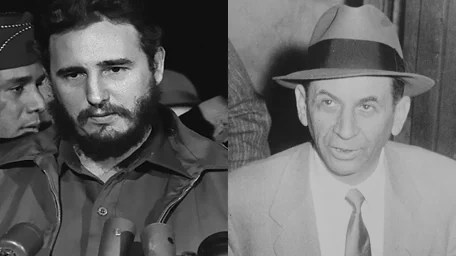
Fidel Castro’s War on Jewish Mobster Meyer Lansky
How a Jewish gangster helped build—and then lost—Cuba’s Sin City
José Niño Unfiltered | March 21, 2026
For more than two decades, Meyer Lansky built what he believed would be his permanent kingdom in the Caribbean. The Jewish gangster from New York’s Lower East Side had transformed Havana into the gambling capital of the Western Hemisphere, a glittering playground where American tourists could indulge every vice under the protection of a dictator on the mob’s payroll. Then came Fidel Castro, a young Catholic revolutionary from the Cuban countryside who would destroy everything Lansky had built in a matter of weeks.
Their conflict was never personal. The two men likely never met or spoke. But the collision between Lansky’s criminal empire and Castro’s revolutionary movement would reshape Cuba, spawn assassination plots that entangled the CIA, and leave a trail of consequences that echoes into the present day.
More than half a century later, as Washington once again toys with the idea of remaking Cuba’s political order, the ghost of Meyer Lansky’s Havana hangs over every discussion of regime change: the dream of turning the island back into a glittering casino colony has never fully died.
Meyer Lansky entered the world as Maier Suchowljansky on July 4, 1902, in Grodno, a city in the Russian Empire that now belongs to Belarus. His family was part of the vast population of Eastern European Jews who migrated to America in the early 20th century. In 1911, Lansky emigrated with his mother and brother Jacob through the port of Odessa, joining his father Max, who had arrived two years earlier and settled first in Brownsville, Brooklyn. The family later moved to the Lower East Side of Manhattan, where Max worked in the garment industry and young Meyer grew up among the crowded tenements where Yiddish filled the streets and opportunity meant whatever you could grab with your own hands.
Young Meyer found his opportunities in crime. By 1918 he and his friend Benjamin “Bugsy” Siegel were running floating dice games on the streets. They graduated to auto theft, then burglary, and when Prohibition arrived, they plunged into the liquor smuggling trade that would make fortunes for a generation of gangsters. Lansky also befriended Charles “Lucky” Luciano, an Italian immigrant who would become one of the most powerful mob bosses in American history.
The three young men rose together. Lansky and Siegel developed a squad of killers for hire that became the prototype for Murder, Inc. Lansky allegedly persuaded Luciano to arrange the 1931 assassination of mob boss Joe “The Boss” Masseria, a murder that consolidated power and helped establish the National Crime Syndicate between 1932 and 1934.
What set Lansky apart from the gunmen and enforcers around him was his financial chops. He became known as the “Mob’s Accountant,” the man who used Swiss bank accounts and shell companies to launder the Mafia’s wealth and hide it from federal investigators. He oversaw the syndicate’s finances as its unofficial banker and was instrumental in shifting the mob’s focus from bootlegging to gambling after Prohibition ended in 1933. His gambling operations stretched from Florida to New Orleans to Las Vegas.
But Lansky’s grandest ambition lay 90 miles off the coast of Florida.
Building the Havana Empire
Lansky’s relationship with Cuba began in 1933, the same year Prohibition ended, and a young military strongman named Fulgencio Batista seized control of the island nation. Lansky pitched Batista a proposal to open Mafia-owned casinos and nightclubs in Havana. The arrangement was straightforward. Batista and his inner circle would receive regular payments from the mob, and in return the gangsters could operate without interference from Cuban authorities.
By 1938, Lansky had been formally invited to help clean up and professionalize Havana’s gambling operations, which had been plagued by fixed races and crooked dealers. He was the fixer, the man who could make the casinos run honestly enough to keep the tourists coming back.
The landmark event came in December 1946 with what became known as the Havana Conference. More than 20 mob bosses from across the United States gathered at the Hotel Nacional de Cuba for a meeting organized by Lansky on Luciano’s orders. The expansion of mob operations in Cuba sat at the top of the agenda. Lansky then visited Batista, who was temporarily out of power and living in Florida, and urged him to return to Cuba to fulfill their grand plans.
Batista obliged. He returned to power through a military coup in 1952, and the arrangement with the mob became even more lucrative. The Batista-Lansky Alliance, included a deal where Batista agreed to match dollar for dollar any hotel investment over one million dollars, with each project automatically including a casino license. Casino hotels were exempted from Cuban taxes.
Lansky owned or held financial interests in at least three major gambling operations. The crown jewel was the Habana Riviera, which opened in December 1957 as the largest Mafia-owned hotel casino outside Las Vegas. It featured 440 rooms that were booked solid for its first winter season. Cuban development banks subsidized half of the $14 million construction cost.
But Lansky did not build this empire alone.
The Inner Circle
Jake Lansky, Meyer’s brother, served as his most trusted man on the ground in Cuba. Jake managed the casino at the Hotel Nacional, Cuba’s most prestigious hotel. By spring 1957, it was reportedly bringing in as much cash as the biggest casinos in Las Vegas.
Joseph “Doc” Stacher was a lifelong Lansky associate dating back to their youth in Newark, New Jersey. Born Gdale Oistaczer in Letychiv, in what is now Ukraine, Stacher was also Jewish and had risen through the criminal ranks alongside Lansky. He operated as the official bribe paymaster to Batista, managing the corrupt payments that kept the dictator and his inner circle cooperative.
Norman “Roughhouse” Rothman was another mobster deeply embedded in the Havana gambling scene. He was a close associate of Santo Trafficante Jr. and operated casinos in Havana, most notably the Sans Souci. Cuba’s slot machine concessions were controlled by Roberto Fernandez y Miranda, Batista’s brother-in-law and army general, who held them as a personal fief.
Ed Levinson, a longtime Lansky associate, ran illegal gambling operations from the Midwest to Kentucky. In Cuba, Levinson’s name appeared on the casino license for the Habana Riviera itself. Lansky kept his own name listed only as the hotel’s kitchen director while Levinson served as the official licensee.
Dino Cellini, though Italian-American rather than Jewish, worked hand in glove with the Lansky operation. He served as casino manager at the Habana Riviera before being replaced by Frank Erickson, and was later detained alongside Jake Lansky at the Tiscornia immigration camp after Castro took power.
The operation also included powerful Italian-American mobsters. Santo Trafficante Jr., the Tampa crime family boss, openly operated the Sans Souci nightclub and the Casino Internacional at the Hotel Nacional. He was also suspected of having behind-the-scenes interests in the Habana Riviera, the Tropicana Club, the Sevilla-Biltmore, the Capri Hotel Casino, the Commodoro, the Deauville, and the Havana Hilton.
The Revolutionary in the Mountains
While Lansky counted his profits in Havana’s glittering casinos, a revolutionary movement was gathering strength in the mountains of eastern Cuba.
Fidel Castro came from a background that could not have been more different from Lansky’s. Born on August 13, 1926, near Birán in Oriente Province, Castro was the son of a prosperous Spanish immigrant landowner. He was raised Catholic and educated at Jesuit schools in Santiago de Cuba and Havana, including the prestigious Colegio de Belén. He studied law at the University of Havana beginning in 1945, earned his degree in 1950, and briefly practiced as a lawyer before turning fully to revolutionary politics. Where Lansky had clawed his way up from immigrant poverty through criminal enterprise, Castro came from rural privilege and channeled his ambitions into armed struggle against the Batista regime.
Castro’s 26th of July Movement directly targeted the Mafia’s presence in its propaganda. In 1958, the revolutionaries denounced the mobsters in radio broadcasts from their guerrilla redoubt in the Sierra Maestra, accusing them of turning Havana into a center of commercialized vice through gambling, prostitution, and drugs. The casinos, the brothels, the drugs, the corruption that enriched Batista and his American gangster partners would all be swept away when the revolution triumphed.
The Fall
On December 31, 1958, Batista’s army was defeated at the Battle of Santa Clara. That night, Batista fled the country for the Dominican Republic, abandoning his gangster partners along with everything else. Lansky left Cuba on January 7, 1959, the day before Castro marched into Havana.
What happened next was a settling of accounts that played out in the streets of Havana. On January 1, 1959, citizens took to the streets after hearing news of Batista’s flight, ransacking casinos, smashing slot machines, and dragging gambling equipment into the streets to be burned. To many Cubans, the American-owned hotels symbolized a corrupting foreign influence. At the Riviera, Lansky’s crown jewel, campesinos (peasants) reportedly brought a truckload of pigs into the lobby. Castro vowed to “clean out all the gamblers.” The revolutionary government eventually nationalized the Riviera and all other Mafia-owned properties, though the final nationalization of hotel casinos did not come until October 1960. Some casinos briefly re-opened on February 19, 1959, after casino workers who depended on tourism jobs marched to the presidential palace demanding their livelihoods back, but tourists stopped coming. Lansky, who told many associates that Cuba had ruined him financially, looked to other outposts in the Caribbean and South America.
Not everyone fled immediately. Jake Lansky and Dino Cellini were arrested by Cuban authorities in May 1959 and detained at the Tiscornia immigration camp outside Havana, the same facility where Santo Trafficante Jr. was also being held. According to the House Select Committee on Assassinations, U.S. Commissioner of Narcotics Harry J. Anslinger had sent a list of suspected drug traffickers to Cuban authorities that included both Jake Lansky and Cellini. Jake Lansky and Cellini were detained for approximately 25 days before being released; Trafficante was held until August. All eventually left Cuba.
By October 1960, Castro formally nationalized all hotel casinos on the island and outlawed gambling entirely.
Revenge and Assassination Plots
Lansky did not merely accept his losses. He actively sought to use the U.S. government and its intelligence apparatus to reclaim his Cuban empire.
According to Doc Stacher, Lansky “indicated to the CIA that some of his people who were still on the island might assassinate Castro” and was “quite prepared to finance the operation himself.”
This was not Lansky’s first collaborative effort with American intelligence. During World War II, he had served as a key intermediary in Operation Underworld, a classified program in which the U.S. Navy’s Office of Naval Intelligence enlisted the Mafia to counter Axis sabotage on the northeastern seaboard. That wartime relationship established a precedent for cooperation between organized crime and the U.S. government.
In August 1960, according to a report by Salon, Lansky struck a deal with exiled Cuban politician Manuel Antonio Varona, offering him several million dollars to form a Cuban government-in-exile to replace Castro. Lansky also promised to arrange a public relations campaign to polish Varona’s image, with the single-minded objective of reopening the Mafia’s casinos, hotels, and nightclubs in a post-Castro Cuba.
Around the same time, the CIA formally recruited mobsters with deep ties to the Havana gambling operations into plots to eliminate Castro. In September 1960, the agency enlisted Chicago Mob operative Johnny Rosselli through former FBI agent Robert Maheu. Rosselli brought in Chicago boss Sam Giancana and Tampa boss Santo Trafficante Jr. The CIA created poison pills to be slipped into Castro’s food, but the attempts failed. The CIA-Mafia assassination partnership was scuttled in early 1963, though the CIA continued plotting against Castro through other means.
Norman Rothman’s trajectory after the revolution was particularly dramatic. Before the revolution succeeded, Rothman had actually been running guns to Castro’s rebels alongside Joe Merola and the Mannarino brothers of Pittsburgh. Sam Mannarino had reasoned that if Castro won, the mobsters who helped arm him would be in the driver’s seat for Cuba’s gambling industry. Rothman advised Mannarino to place his bets on Castro, predicting he would allow the casinos to remain under Mafia control. When that calculation proved disastrously wrong, the scheme unraveled. The weapons in question, 317 guns, had been stolen from a National Guard armory in Canton, Ohio. A plane carrying 121 of the stolen weapons was captured at Morgantown, West Virginia on November 4, 1958. Rothman was convicted on February 4, 1960, along with five co-defendants, for possession, receiving, transportation, and exportation of firearms stolen from the United States government.
Lansky also explored contingency plans in case Cuba could not be recovered. He traveled to the Dominican Republic in 1958 to meet with dictator Rafael Trujillo about potentially relocating the entire Havana operation there. None of these schemes succeeded.
The Final Years
Lansky spent his final years living quietly in Miami Beach. In 1970, facing federal tax evasion charges, he fled to Israel, hoping to claim citizenship under the Law of Return. But after two years, Israel rejected his bid for permanent residency due to his criminal record and deported him back to the United States, where he was arrested at Miami International Airport.
He was acquitted of the tax evasion charges, in part because the government’s main witness lacked credibility, and other indictments were abandoned due to his chronic ill health. He died on January 15, 1983, at age 80 from lung cancer. Despite nearly half a century of involvement in organized crime, the most serious conviction he ever received was for illegal gambling in 1953, which resulted in only a brief jail term.
Despite a lifetime running one of the world’s most profitable criminal enterprises, a granddaughter later claimed he left behind just $57,000 in cash. The FBI believed he had hidden at least $300 million in offshore bank accounts, but this money was never recovered. His heirs later filed a compensation claim against Cuba for the Riviera with the U.S. Foreign Claims Settlement Commission, valuing the property at $70 million.
The mob never returned to Cuba. The casinos that Lansky built were nationalized, and gambling was outlawed entirely. The slot machines that crowds smashed in the streets on New Year’s Day 1959 were never replaced. The Habana Riviera still stands on the Malecón waterfront, declared a National Monument in 2012 and now managed by the Spanish chain Iberostar, still maintaining its original 1950s style. Staff members still refer to it as “el hotel de Meyer Lansky.”
Fidel Castro outlived Meyer Lansky by more than three decades, dying in 2016 at age 90. The revolutionary who had vowed to clean out all the gamblers kept that promise, at least regarding the foreign mobsters who had turned Havana into their personal playground.
The confrontation between these two men, the Jewish gangster from the Lower East Side and the Catholic revolutionary from Oriente Province, ended decisively in Castro’s favor.
Castro’s revolution did what no rival gangster or corrupt strongman ever managed: it toppled the dictatorship that shielded Lansky’s operations and erased his Havana casino empire almost overnight. In the name of sovereignty, the new regime shut down the glittering hotels and gambling halls that had turned Cuba into a playground for American tourists, mafiosi, and intelligence services alike.
But the pressures now bearing down on Cuba suggest that history’s wheel is turning back toward Lansky’s original blueprint. A successful regime change engineered from abroad would not simply “liberate” the island; it would open prime waterfront real estate and tourist infrastructure to the same forces of vice, speculation, and foreign ownership that once made Havana the mob’s favorite casino.
The danger is that Cuba’s next great transformation would replace revolutionary austerity not with genuine self‑determination, but with a return to what Lansky always wanted. Namely, a Caribbean Macau where the house is global finance, the chips are Cuban sovereignty, and the people of the island are once again reduced to serving drinks on someone else’s casino floor.
US Trying to Oust Russia From All Energy Markets – Lavrov
Sputnik – March 21, 2026
MOSCOW – Moscow does not currently see any US commitment to respecting Russia’s interests, with Washington attempting to push Moscow out of all energy markets, Russian Foreign Minister Sergey Lavrov said on Saturday.
“We are being pushed out of all global energy markets. Eventually, only our own territory will remain. The Americans will come to us and say they are for cooperation with us. But if we are willing to implement mutually beneficial projects on our territory and provide the Americans with what they are interested in, taking their interests into account, then they should also consider ours. We do not see this yet,” Lavrov told a Russian TV program.
He added that the US “has welcomed and welcomes Russia’s marginalization in European energy markets,” which, he said, was an open claim to energy dominance worldwide.
“This is an unusual situation – a return to a time when there were no frameworks for international relations. It was stated clearly that the interests of the US take precedence over any international agreements,” the minister said.’
The severe consequences of US and Israeli actions in the Middle East will be felt for a very long time to come, Lavrov also said.
“Despite all the outward signs of a farce, and I think many people understand that these are present, the consequences of what our American colleagues are doing, in this case together with the Israelis, are extremely severe. They will continue to have repercussions for a very long time,” Lavrov told the Russian TV program.
Role reversal – “divide & conquer” used against the west
Ashes of Pompeii | March 21, 2026
For centuries, the strategy of “divide and conquer” has been a cornerstone of Western geopolitical power. The British Empire mastered the art of ruling vast territories with minimal forces by exploiting internal divisions, setting local leaders against one another, leveraging ethnic tensions, and securing cooperation through selective incentives (aka bribes). The United States later employed similar tactics, from Cold War interventions to coalition-building in Iraq and Southeast Asia. The principle remains consistent: fracture opposition to maintain advantage.
Today, we are witnessing a role reversal in real time. Iran, long subjected to Western pressure and sanctions, is employing a parallel strategy regarding the Strait of Hormuz. Much of the west is not entirely enamoured of Trump’s Iran strategy but is afraid to openly challenge America. The closing of the Strait is economically catastrophic for most US allies and they are caught between a rock and a hard place – a vindictive Trump demanding support to open the Strait, and economic hardship.
In steps Iran with its own “divide and conquer” strategy, now reportedly negotiating with individual Asian and European countries a sort of Hormuz toll to allow tankers from these allied countries to pass through. And of course, they would each be required to not support the the US Navy if it attempts to open Hormuz. These discussions would be regarding tolls, security guarantees, and bilateral arrangements that would circumvent a collective response.
This approach carries significant strategic implications. If key U.S. allies secure individual agreements ensuring their energy shipments, the incentive to support a unified, potentially confrontational effort to keep Hormuz open is dead in the water.. Why risk escalation when a separate deal preserves economic interests? This dynamic could gradually erode the cohesion of Western alliances. Imagine Japan, Korea or Germany putting their national interests ahead of America’s! Unthinkable just a few weeks ago.
Iran’s maneuvering reflects a calculated understanding of coalition politics. By offering tailored terms, Tehran exploits the very real economic dependencies that different nations have on Persian Gulf oil flows. A country like Japan, facing immediate energy shortfalls, may prioritize short-term access over long-term strategic solidarity.
The irony is substantive, not merely rhetorical: a regional power taking advantage of a strategy historically used to extend Western influence, now being adapted to counter that same influence. Traditional western asymmetric power dynamics being used against the west.
If Iran successfully institutionalizes a system of bilateral tolls or passage agreements, it could reshape regional power structures and perhaps challenge the precedent of freedom of navigation under international law. However, this development also exposes the conditional nature of the “rules-based order” itself. When international norms align with western strategic interests, they are vigorously defended; when they become inconvenient, exceptions are quietly made. The interesting aspect here, is that for once, the exception is used against the USA.
In the end, this is power politics, plain and simple. Iran is using the tools available to it, geography, energy dependence, and diplomatic patience, to turn a strategic vulnerability into leverage. The West built much of its influence by splitting opponents; now it faces the same tactic applied in reverse. One would expect that states would always seek national advantage where they find it, but that has often not been the case for “junior” members of the western alliance in the last 30 or 40 years.
This is just another step towards a multipolar world where the west is seeing its own playbook used against it, where alliances and coalitions may be less static, and where national interest may be considered more important than following the diktats of a hegemon or a bloc leader.
Turn around is fair play and America and the west will need to get used to the idea that other countries, here Iran, can both play hardball and use divide and conquer strategies.
I am not sure Donald Trump will quite understand the significance of this moment.
Iran signals upper hand as the US-Israeli war reaches third week
Al Mayadeen | March 21, 2026
Iran is signaling that it is winning and has the power to impose a settlement on Washington that would cement Tehran’s influence over Middle East energy resources for decades, according to a report by the Wall Street Journal. The WSJ notes that Iranian officials appear to see time as working in their favor, suggesting they are not in a rush to end hostilities.
Despite repeated US and Israeli claims of successfully targeting missile launchers and stockpiles, the WSJ reported that Iran has retained the capacity to fire dozens of ballistic missiles and a large number of drones daily across the region.
In fact, the rate of attacks has increased in recent days compared with 10 days ago. Iranian strikes reportedly inflicted severe damage this week on US-linked energy infrastructure in Qatar, Saudi Arabia, Kuwait, Bahrain, and the United Arab Emirates, while Iran’s own oil exports continued to flourish.
The WSJ added that shipping through the Strait of Hormuz remains contingent on Iranian permission, and that rising oil and gas prices are exerting pressure on the US administration to end the war.
Low-cost, high-impact disruptions
The Wall Street Journal cited analyst Dina Esfandiary, who said that Iran has learned it can inflict large-scale disruption at relatively low cost.
“The Iranians aren’t ready to end the war because they have learned an important lesson: They can, comparatively easily and cheaply, cause a lot of damage and disruption. They now want the whole world to learn that lesson, too,” she told the newspaper.
Iranian leaders appear to be leveraging this capability to set conditions for a ceasefire. As cited by WSJ, Esmail Rezaei, spokesman for the Iranian Parliament’s foreign affairs and defense committee, stated after a recent meeting with military commanders that any talks with the US are currently off the agenda, as Tehran “focuses on punishing the aggressors.” Foreign Minister Abbas Araghchi, has described Iran’s position in the war as comparable to Vietnam for the US.
The Wall Street Journal notes that Iran’s demands for ending the war reportedly include massive reparations from the US and its allies and the removal of American military forces from the region.
Iranian officials have also suggested transforming the Strait of Hormuz, a strategic international waterway, into an Iranian-controlled passage where ships would pay fees to transit.
Expediency Council member Mohammad Mokhber, advisor to the supreme leader on economic affairs, told Mehr News Agency that Iran intends to “turn its position from a sanctioned country to an enhanced power in the region and the world.”
US officials, experts, express doubt despite the facts
US officials and military experts, the WSJ reports, have expressed skepticism about the feasibility of such an arrangement, highlighting the difficulty of US decision-makers coming to terms with the demands at this stage.
Former White House special envoy Jason Greenblatt commented, “President Trump will never let them win. They don’t understand how far he’s willing to go.”
The WSJ also cited retired US Air Force Lt. Gen. David Deptula, who said that reopening the Strait of Hormuz would require careful intelligence and surveillance, but claimed that this could be achieved within weeks.
“It’s not something that is going to happen overnight, but over time the Strait of Hormuz will be open back to the levels of shipping that we saw before this conflict broke out. The Iranians are not going to end up with control over the strait, we are,” he claimed, according to the Wall Street Journal, revealing that a battle may be ahead for control of the strait.
Additional perspectives reported by the WSJ include Sanam Vakil of Chatham House, who described leaving Iran in control of the strait as “a categorical failure for the United States and President Trump,” and Robin Mills of Qamar Energy, who said that even if temporary control were granted to Iran, it would likely provoke renewed military or diplomatic action.
Airlines Suffer Losses Estimated at $53Bln Due to Middle East Conflict
Sputnik – 21.03.2026
On February 28, the United States and Israel began striking targets in Iran, including in Tehran, causing damage and civilian casualties. Iran has carried out retaliatory strikes on Israeli territory, as well as on US military targets in the Middle East.
The damage caused by US and Israeli aggression against Iran amounted to approximately $53 billion for the 20 largest publicly traded airlines, the Financial Times reported, based on its own calculations.
Airline executives are warning of the consequences caused by the sustained rise in oil prices, disruptions at Gulf airports, and a potential hit to global demand, the Financial Times added.
In the coming months, passengers planning trips on routes that are not related to the Middle East will face a sharp rise in ticket prices as airlines try to protect their revenues, the newspaper reported.
Have you heard the latest joke about Trump and Iran?
By Martin Jay | Strategic Culture Foundation | March 21, 2026
What’s the difference between Vietnam and the Iran War? Answer: Trump had an exit strategy for Vietnam.
How much collective responsibility can the West take for the shitstorm it is in now, otherwise known as ’The Iran War’? Many would like to blame most of it on Trump for being a manchild and just going ahead with the most madcap military venture NATO countries have ever known, against all the expert advice, and ending up with a regime which is even more hardcore for having a bomb, world energy prices soaring and causing chaos due to Iran choking the Straits of Hormuz, and the entire relationship between Washington and its allies in the region reduced to a handful of dust?
The reality is that Trump took the decision to go to war not based on one issue alone. Left-wing commentators in the U.S. would like us to think it was to distract the media away from the latest revelations of the DOJ and the Epstein files, which had a tome of evidence accusing him of having inappropriate relations with a 13-year-old girl. But there were other reasons which pushed him over the line. Top of that list is surely that Netanyahu was blackmailing him, threatening to release recordings of his phone calls with Epstein where they talk about young girls. Add to that, it was probably pointed out to him that he was not going to keep both houses when the midterms come unless a considerable amount of Jewish American money was pumped into his campaign.
But it isn’t just Trump that has got us all into this mess that we’re in. For decades, the EU allowed Israel to ratchet up their brutal occupation of Palestinians and in the process to dehumanize them, leading to the climax of the Gaza genocide. This gave an unrealistic sense of impunity, almost akin to a divine intervention to religious fanatics who already believed that they were the chosen people and that they had a right to murder those beneath them and steal their property. Look at the reaction of western governments and in particular the EU when the events of October 7th unfolded and how they supported any response at all from Israel. In fact, just look at how any UK government minister reacted to the start of the Iran War, which, if we didn’t know better, might have thought it was started by Iran.
Trump is isolated now not for his rank stupidity, or his delusional views about who he is and what America is. He is isolated by EU leaders as none of them want to be part of a new Vietnam War scenario which goes on for years and only produces body bags — only to keep a U.S. president from looking like a total fuckwit in front of his own people.
Yes, the reality is that the vast majority of Americans don’t really understand what Trump just did in Iran. Even today, something like 80 percent of Republicans polled agree with his decision to begin a conflict with Iran, while Democrats are in the other camp altogether, perhaps better informed of Trump’s rationale behind going ahead with the plan.
Most likely the plan had been on the table for months and each time a military expert pointed out the harsh realities of it bringing blowback on a global level, affecting not only pump prices rocketing but just about everything else over the longer term, they were ignored or swapped for a sycophant in a uniform who just nodded like a demented parcel shelf toy dog until he had a whole room full of them. Does the American public understand just how self-indulgent Trump has been and that he has now created for himself a new threat, like a magician pulling a pigeon out of his hat? While the so-called ’threat’ from Iran goes from being a vague, opaque notion which most people don’t even believe, to being something quite real and lucid to the point that, ironically, Trump can now present it to the gullible public and hope they don’t notice that he manufactured it all by himself.
Yet it is remarkable how detached Europeans are from Trump and his plans. What an extraordinary example of how diplomacy is entirely dead and not worth the paper it’s written on, when EU ambassadors had no clue about these meetings and what came out of them. Shouldn’t EU leaders have stepped in at some point and warned him he was playing with fire and that the only certainty was that the West was guaranteed to be the burn victim? What about our intelligence services? It is inconceivable they didn’t know what was coming? Did they not tip off their own governments? Likely they did and that London, Paris and Berlin simply did nothing, such is the non-existent special relationship between Old Europe and Washington. Even Britain.
Transatlantic relations between the U.S. and EU countries is never going to be the same again if something can’t be done to get a dialogue going. Sure, Trump may pull the U.S. out of NATO just out of spite, like a fuming four-year-old who’s just lost his ball to an angry neighbour, but other, bigger relations are probably burnt forever. Washington’s relations with Israel can never go back to the Master (Israel) Slave (U.S.) set-up. And America’s relations with Gulf Arab countries is going to be hard to put back on an even keel when Arab leaders can see how fake they were in the first place.
Trump’s childish revelation recently that he couldn’t have imagined Iran hitting the GCC countries feels like a seven-year-old boy trying to explain to a room full of adults that he didn’t realise that borrowing his friend’s go-kart would result in so much damage as no one told him the jalopy would go so fast down a hill. The EU has a similar idiot in power, though. Kaja Kallas, a name which conjures up a 1980s underarm deodorant or a Greek ferry company, is blessed by at least not looking as stupid as she really is. This daughter of an Estonian communist politician, who was happy to live the high life under the Soviets, seems to be almost entirely brain dead when she gets on the podium or in front of the six microphones (all of EU TV networks who are actually paid cash to broadcast her moronic ramblings) and harps on about Russia getting more money now from oil sales. It’s literally like watching someone in a mental institution who hasn’t taken their medication talking to the mirror with a toothbrush as a mic and trying to sound clever.
But it’s no joke how the West got to where it is with Iran, when these same buffoons for decades have been encouraging Israel to expand its ideas and, red in tooth and claw, reach a point today where they are either starving people so as to ethnically cleanse Gaza or simply bombing women and children in their tents — or taking over part of Lebanon, a decades-old fantasy which didn’t end well in 1982 when they tried it before.
So the Trump joke is less funny when you see it in the light of who led him to where he is and what his inconsistent messages are to EU leaders. He is stuck in the past and tends to be someone trying to correct or duplicate U.S. foreign policy. Of course, he lacks élan, though, which is also part of the problem with such leaders. In the early 70s, when Nixon wanted to devalue the dollar but retain its power around the world, EU leaders were horrified. Apparently, he simply said to them: “It’s our dollar, but it’s your problem.”
Trump signals possible wind-down of aggression against Iran despite unresolved Hormuz crisis
Press TV – March 21, 2026
US President Donald Trump has indicated he is considering scaling back the underway unprovoked aggression towards Iran, even as the crisis surrounding the Strait of Hormuz remains unresolved.
In a post on his Truth Social platform on Friday, Trump claimed the United States was close to achieving the military goals sought by the aggression.
“We are getting very close to meeting our objectives as we consider winding down our great Military efforts in the Middle East.”
He listed, what he called, degrading Iran’s missile capability and industrial base, and protecting US allies in the region.
The remarks flew in the face of the Islamic Republic’s robust underway retaliation, codenamed Operation True Promise 4, that keeps taking larger portions of hostile targets under the country’s firepower.
US military positions throughout the region, including in Qatar, Bahrain, the United Arab Emirates, Kuwait, Saudi Arabia, and Jordan, have been subjected to sustained counterstrikes.
The retaliation has also struck sensitive and strategic locations across the occupied territories, including those lying in Tel Aviv, the holy occupied city of al-Quds, Haifa, Be’er Sheva, considered a technological hub, and the Negev Desert.
On the issue of the strategic Strait of Hormuz, which Iran has closed to enemy vessels as well as ships belonging to those cooperating with the adversaries since the onset of the aggression, Trump suggested the US might step back from direct responsibility.
“The Hormuz Strait will have to be guarded and policed, as necessary, by other Nations who use it — The United States does not.”
Commenting on the remarks, American outlet Axios acknowledged that efforts to reopen the strait have proven difficult.
It cited Trump’s advisors as pointing to his frustration due to limited allied support, despite his alleging military victory.
The US has sought to form a coalition to secure the strait, asking NATO allies and others to contribute naval and air assets. Most have declined to commit forces, and some have only backed a political statement supporting the effort.
Trump has retorted to allies over their reluctance, calling NATO countries “cowards” and saying that without US backing, NATO is “a paper tiger.”
Meanwhile, disruptions to global oil flows continue to drive up energy prices.
The American Fantasy of Iranian Surrender
By Salman Rafi Sheikh – New Eastern Outlook – March 21, 2026
What if the state that claims global military supremacy is now confronting a conflict it cannot win on its own terms?
President Trump’s repeated assertions that the US could defeat Iran and force it to surrender are now colliding with battlefield realities and geopolitical fissures that suggest otherwise. The very premise of a quick and decisive US victory is unravelling in real time, raising profound questions about American strategy, alliance cohesion, and power in a multipolar age.
The Illusion of Swift Victory in Tehran
President Trump’s pronouncements on Iran have been starkly ambitious. On multiple occasions he has touted rapid success and overwhelming military might in confronting Tehran — insisting that the US does not need British help to prevail and that Iranian forces will be “hit very hard.” Yet these claims increasingly look detached from both strategic reality and on‑the‑ground dynamics.
The US military doctrine has traditionally relied on superior air power and technological edge to achieve rapid dominance. In early March 2026, the Pentagon publicly stated that operations against Iran’s missile, air, and naval capabilities were underway, though officials stopped short of conceding a quick end to the campaign. But the timeline Trump once floated — nominally four to five weeks — has already blurred into ambiguity, with the White House acknowledging potential extensions and evolving objectives primarily because of the failure to achieve quick objectives. They thought that the assassination of Iran’s Supreme Leader would cause the regime to fall. That did not happen, forcing the US and Israel to rethink the nature and the duration of the campaign.
The expectation that air campaigns alone could cripple Iran’s military infrastructure — or compel unconditional political submission — misreads Tehran’s defensive resilience and strategic depth. A recent classified report from the US National Intelligence Council found that even large‑scale US use of force is unlikely to dismantle Iran’s entrenched political and military leadership. That insight undercuts the notion that a blitz of strikes can replace the complex sociopolitical calculus of regime transformation. The council’s document, drafted late last month, builds on work by the C.I.A. that assessed that a complete change of government was unlikely even if Ayatollah Ali Khamenei, the supreme leader, was killed in a US-led military operation.
Iran’s responses have also defied Washington’s expectations. Despite extensive targeting, Iranian forces have not capitulated; they have continued missile and drone strikes on US and allied targets across the Gulf region. Rather than collapse, Tehran appears to be adapting, leveraging both conventional responses and strategic signaling to blunt American efforts and maintain a posture of deterrence. Reports in the Western media show significant Iranian success in repeatedly targeting US military bases. Taken together, these developments erode the core of the Trump administration’s confidence in quick, decisive military outcomes, thus setting the stage for a campaign that may extend far beyond initial projections without achieving strategic objectives. As such, President Trump has now stopped threatening “certain death” to Iran and its people.
Eroding Alliances and Strategic Overreach
A second blow to US fantasies is the fraying of Western and regional support that Trump and his advisers presumed would form the backbone of sustained operations. Trump’s suggestion that the US does not need British assistance belies deeper tensions within the transatlantic alliance over legal responsibility, operational strategy, and political backing for war.
Across Europe, capitals are deeply divided over the US-led escalation. Spain has resisted aligning its military fully with Washington’s campaign, and the US leadership has grappled with legal and planning complications related to base access, epitomizing a broader transatlantic unease over the wisdom and legitimacy of war with Iran. These disagreements have reduced the coherence of NATO‑era cooperation, complicating US expectations for collective action.
The US’ handling of Gulf states has also strained ties with regional partners. Officials in several Gulf kingdoms privately expressed frustration at the lack of prior notification before strikes on Iranian territory and at US reliance on Gulf air defenses to intercept Iranian missiles with limited American support. This undercuts longstanding assumptions about the reliability of regional alignments and may incentivize some states to hedge their security calculations.
Domestically, American public opinion is also shifting in ways that undermine unilateralist ambitions. Polling suggests historically weak support for the operation against Iran, with a significant portion of the public expressing opposition and frustration at the perceived readiness of U.S. forces to engage in protracted conflict. This internal division complicates political sustainment of a drawn‑out campaign, particularly given the toll of casualties and financial costs that would accrue over time. Collectively, these fissures — within alliances, among regional partners, and on the home front — highlight the weakening of America’s hegemonic posture and raise questions about its ability to marshal durable coalitions in pursuit of major strategic objectives.
A Crisis of America’s Own Making
The deeper problem is not Iran’s resilience or the alliance falling apart; it is the strategic trap Washington has walked into. According to testimony before Congress, Pentagon officials repeatedly warned that Tehran posed no imminent threat of attacking the US directly. Yet the Trump administration chose to escalate, interpreting cautious intelligence as justification for preemptive strikes and forceful posturing. The result is a war the US did not need to fight, at a cost that will reverberate far beyond the battlefield.
This miscalculation is more than a tactical error; it is a strategic misstep that is reshaping global perceptions of American power. Allies are questioning Washington’s judgment, adversaries are emboldened, and the credibility of US deterrence is being tested. The costs are not just measured in military engagements or financial outlays; they are being paid in influence, alliances, and leverage in other regions of the world. The campaign against Iran is eroding the very hegemonic posture the US has relied on since the end of the Cold War.
The longer the conflict drags on, the more entrenched this erosion becomes. The US now faces a geopolitical deadlock of its own making: a situation where victory is unlikely, withdrawal risks loss of prestige, and every subsequent action is constrained by the consequences of a war initiated without necessity. What started as an assertion of American strength may ultimately be remembered as a cautionary tale of overreach, misreading intelligence, and underestimating both the limits of force and the resilience of regional actors.
In short, the crisis is not just in Iran. Rather, it is in Washington itself. A nation confident in its global supremacy has stumbled into a conflict that threatens to unravel the assumptions underpinning that supremacy, leaving the US not just challenged militarily, but on a path to strategic downfall.
Salman Rafi Sheikh, research analyst of international relations and Pakistan’s foreign and domestic affair
Follow new articles on our Telegram channel
US sends more Marines to Middle East as Trump hints at wind-down; contradiction reflects face-saving bid to unsustainable war
By Li Yawei | Global Times | March 21, 2026
The US-Israeli strikes on Iran have entered their fourth week, with Washington’s operations against Iran veering into contradictory directions. While US President Donald Trump has publicly said his intention is to gradually “wind down” military operations, media reports say that the US Department of Defense has made comprehensive preparations for the potential deployment of ground forces inside Iranian territory. A Chinese expert says that the US is currently putting on a show of toughness, yet its real intent is to bring this unsustainable war to a face-saving end.
The US is “getting very close to meeting our objectives as we consider winding down our great Military efforts in the Middle East,” Trump said in a Truth Social post late Friday.
Yet the Pentagon’s planned actions stand in stark opposition to President Trump’s claim of phasing out military operations.
US military officials said that about 2,500 additional Marines aboard three warships are heading to the Middle East, the New York Times (NYT) reported.
The Marines, who will deploy next month, are from the 11th Marine Expeditionary Unit based at Camp Pendleton, California, and the U.S.S. Boxer amphibious ready group, per the NYT.
The US actually has come to realize that it has overcommitted and overextended itself in this war, which is increasingly detrimental to its own interests, Li Weijian, a vice president of the Chinese Association of Middle East Studies, told the Global Times on Saturday.
Yet it is unwilling to acknowledge the reality of its situation or its inability to prevail, and seeks to preserve its dignity by deploying troops, Li added.
It is by no means the first time that the US has struck a defiant tone in regard to this war. Trump told reporters on Friday that he is not interested in a ceasefire with Iran, CNBC reported. “We could have dialogue, but I don’t want to do a ceasefire,” Trump said from the White House South Lawn before departing for Florida. “You know you don’t do a ceasefire when you’re literally obliterating the other side.”
Additionally, CBS News reported that the Trump administration has been strategizing methods and options to secure or extract Iran’s nuclear materials, according to multiple people briefed on the discussions.
The timing of any such operation — if President Trump were to order it — remained unclear Friday night, per CBS News.
Such tactics of the US are intended to send a clear message to Iran that “it is not incapable of responding to the situation,” Li said, adding that the reality is that the US has already expended far too much.
Iranian strikes on military bases used by the US in the Middle East caused about $800m in damage in the first two weeks of the war, a new analysis shows, BBC News reported on Saturday.
A significant portion of the damage was caused by a strike on a US radar for a THAAD missile defence system at an air base in Jordan, per the report.
The US is also seeking to draw more countries into this conflict. Trump said Friday that “it would be nice” if Japan, China and other countries that are highly dependent on energy imports from the Middle East join his efforts to protect shipping in the Strait of Hormuz, the Mainichi reported on Saturday.
Trump also assailed NATO allies on Friday over their lack of support for the US-Israel war against Iran, calling the longtime US allies “cowards,” Reuters reported.
Unwilling to concede defeat and unable to make an outright withdrawal, the US, amid mounting pressure, has sought to leverage the influence of other countries to pressure Iran into making concessions, according to Li.
The US ought to recognize that the war it has waged against Iran together with Israel is inherently unjust, that its isolation is no accident, and that it must bear the consequences for all of this, Li added.
Featured Video
Total War – Attacking Nuclear Plants, Desalination & Infrastructure
or go to
Aletho News Archives – Video-Images
From the Archives
Strike on Israel Shows US Bases Near Iran Are ‘Achilles Heel’
By Svetlana Ekimenko – Sputnik – 14.04.2024
Fears of a greater Middle East escalation were triggered after Iran launched a massive drone and missile attack against Israel, aided by Hezbollah and the Yemeni Houthis. Iran said the attack was in response to Israel’s bombing of the Iranian consulate in Damascus, Syria, which killed seven members of the elite Revolutionary Guard Corps.
Iran’s massive retaliatory attack on Israel from its own territory is a sign that the conflict could “escalate out of control.”
Michael Maloof, a former senior security analyst in the office of the US secretary of defense, told Sputnik that the first ever direct Iranian attack on Israel set a dangerous precedent.
“My concern is that this could easily escalate into something not only between Iran and Israel, but beyond the Middle East region,” he said.
Iran’s assault, which it stated was an act of “self-defense” after the Israeli strike on its consulate in Damascus, was originally intended to be a “limited” one, said Maloof.
Iran first sent in “swarms of drones with lights on as a sign of psychological warfare,” but sending in cruise and ballistic missiles by Tehran was a “distinct escalation,” said Maloof.
The scale of Iran’s attack on Israel suggests that Tehran was sending a message, demonstrating that it possesses “extraordinary capabilities,” said Maloof. … continue
Blog Roll
 Aletho News
- Pakistan PM backs Iran’s right to self-defense amid tensions
- Hungary blasts ‘fake’ EU accusation
- SAFE Debt Trap: Poland’s €43.7 Billion Bet on Unipolar Illusion
- War on Iran threatens global Gulf capital flows: FT analysis
- Mossad De Facto Admits To Inciting Riots In Iran
- Tehran: World grown thoroughly exhausted with US-Israeli ‘false flag storylines’
- Trump ‘stuck between a rock and a hard place’, lacks Iran war strategy: Ex-CIA chief
- Trump’s bombardment of fake news so far is working quite well. But where is it heading?
- Iran to Mine Sea Lanes in Persian Gulf in Case of Attack – Defense Council
- Barak blasts Netanyahu: ‘Stop lying – you can’t destroy Iran’s nuclear, missile capabilities’
- If Americans Knew
- From Sde Teiman, the truth about Israel’s military justice system has been set free
- Child denied life-saving bone marrow transplant by Israel ‘because he is from Gaza’
- Raffi Berg: BBC Middle East Editor Exposed as CIA, Mossad Collaborator
- Jerusalem Archbishop Rebukes Netanyahu’s Statements on Christianity
- US to embed Palantir AI across entire military: Report
- Israeli-US war on Iran to drag on “a few more weeks” – Not a ceasefire Day 164
- Lebanon deaths top 1,200; Palantir AI to be embedded across US military – Not a ceasefire Day 163
- Israel’s assassination game: Take all pragmatists off the board
- Food shortages return to Gaza as Israel tightens aid restrictions under the cover of its war on Iran
- Trump demands trillions in payments from Gulf countries, billions from Harvard – Not a ceasefire Day 162
- No Tricks Zone
- New Study: CO2 Is ‘Effectively Negligible’ As An Explanatory Climate Change Factor Since 2000
- Former Pfizer Toxicologist Dr. Helmut Sterz Tells Bundestag Hearing Pfizer Vaccine Should Have Never Been Approved
- Energy Expert: Germany’s Nuclear Phaseout Was A “500 Billion Euro Mistake”
- New Research: South Australia’s Mid-Holocene Sea Surface Temperatures Were 4°C Warmer Than Today
- Storing Green Energy To Last Germany 10 Days Would Require A 60-Million Tonne Battery
- New Studies: UK Sea Levels Were 4 Meters Higher Than Today During The Mid-Holocene
- Destructive Green New Deal: German Energy And Metal Group Warns Of Drastic Crisis
- New Study Documents A 20-Year Pause In Arctic Sea Ice Decline – Driven By Internal Variability
- Wake-up Call: Survey Shows Majority Of Germans Now Favor Postponing Climate Targets!
- Televised! Leading German Political Candidate Tells Schoolchildren CO2 Makes Sun Hotter!
 Aletho News