SCO leaders sign Bishkek Declaration against ‘western unilateralism’
The Eurasian bloc condemned the US war on Iran as Washington widens secondary sanctions on Tehran’s trading partners
The Cradle | September 1, 2026
Leaders of the Shanghai Cooperation Organization (SCO) adopted the Bishkek Declaration on 1 September, marking the organization’s 25th anniversary and setting out a joint position on West Asia, global security, and economic cooperation.
The 10-member Eurasian bloc used the anniversary text to press for a “representative, democratic, and equitable multipolar world order,” rejecting bloc-based and confrontational approaches to international affairs.
Member states opposed unilateral coercive measures, such as banking restrictions, asset freezes, and secondary sanctions on third-country firms, that contradict the UN Charter and World Trade Organization (WTO) rules. They also condemned the unlimited buildup of global missile defense systems, calling attempts to secure one state at the expense of others unacceptable.
The declaration reiterated the bloc’s condemnation of the unprovoked US-Israeli attacks on Iranian territory, which have stretched on for 6 months and caused significant economic damage and disruption to global energy and shipping markets.
Member states called the attacks a violation of international law and the UN Charter that created “serious risks to international peace, security and stability.”
On Palestine, the declaration stated that a comprehensive and just settlement of the Palestinian question is the only possible route to peace and stability in the region.
Member states committed to expanding the use of national currencies in mutual settlements and backed reforms of the International Monetary Fund (IMF) and the World Bank to increase developing-country representation.
The declaration noted progress toward establishing an SCO Development Bank during Kyrgyzstan’s chairmanship, with leaders also supporting Iran’s expedited entry into the SCO Interbank Consortium.
Eight of the 10 SCO member states – Belarus, Iran, Kazakhstan, Kyrgyzstan, Pakistan, Russia, Tajikistan, and Uzbekistan – reaffirmed support for China’s Belt and Road Initiative (BRI), while India declined to join the statement.
Chinese President Xi Jinping called on members to build “universal security” and prevent external interference in the internal affairs of states.
Meeting Russian President Vladimir Putin on the sidelines, Xi said unpredictability in the international situation had risen sharply and that Beijing was ready to work with Moscow to advance a multipolar order and reform of global governance.
Putin told the summit that national currencies now account for more than 98 percent of Russia’s trade payments with SCO partners, and named expanded intra-bloc trade as a priority.
Kyrgyz President Sadyr Japarov opened the meeting, saying member states account for over 40 percent of the world’s population and about a quarter of global GDP, and that the organization had grown from a border security mechanism into a global actor.
The summit convened six months into the US war on Iran, and four and a half years into the war in Ukraine, with Washington also pursuing trade disputes with China and India, and threatening to impose secondary sanctions on any country or company trading with Tehran.
Beijing, the main purchaser of Iranian crude, said it would firmly defend its interests.
EU surrenders sovereignty to US coercion, becomes accessory to economic terrorism: Iran FM spokesman
Press TV – August 31, 2026
The European Union has surrendered its sovereignty, laws, values and ethics to American coercion and turned itself into an accessory to Washington’s lawless economic war against Iran, Foreign Ministry spokesman Esmaeil Baghaei has said.
In a statement posted on his official X account on Monday night, Baghaei pointed to the EU’s own Blocking Statute, which prohibits European operators from complying with extraterritorial laws of third countries and treats such measures as contrary to international law.
“How, then, can the Union now support the most predatory and unlawful unilateral coercive measures against Iran?” he asked.
Baghaei contrasted today’s posture with 1996, when the EU resolved to act independently in defense of its sovereignty against the American sanctions regime and adopted the Blocking Statute.
“Today it has become an accessory to Washington’s lawless conduct,” he said.
The Union’s endorsement of America’s unlawful economic war constitutes a grave violation of international law, the spokesman added. Every EU member state will be held accountable for the consequences of its contribution to this wrongful act.
“The European Union cannot endorse Washington’s economic terrorism against Iran while claiming to seek de-escalation and regional stability. The two positions are mutually exclusive,” Baghaei stated. “This irresponsible stance is evidence of the EU’s moral decay and political incompetence.”
Iranian officials have repeatedly described US secondary sanctions and naval blockade measures as economic terrorism and a violation of the UN Charter’s principles of sovereign equality.
Tehran has long maintained that Europe’s failure to enforce its own Blocking Statute against Washington’s extraterritorial dictates exposes the gap between Brussels’ rhetoric on a rules-based order and its actual conduct.
The statement comes as the Islamic Republic continues to reject any attempt to impose terms of settlement through coercion and insists that the only viable path out of the current crisis is a return by the United States to the commitments it signed in the Islamabad Memorandum of Understanding.
The Islamabad MoU, brokered with Pakistani mediation and signed in June, provided for an immediate halt to military operations, the lifting of the US naval blockade, Iranian arrangements for the Strait of Hormuz, a path toward sanctions relief, and a $300 billion reconstruction framework.
However, the US violated the deal by conducting deadly aerial assaults on Iran and imposing a naval blockade of the country.
Pakistan had previously played a pivotal role in securing the April 8 ceasefire that brought an end to the 40-day criminal US-Israeli aggression against Iran.
Washington sanctions regime reaches its breaking point
By Samuel Geddes | Al Mayadeen | September 1, 2026
Trump’s desperate bid to crush Iran’s economy without military escalation places the US’ sanctions regime against Iran, Russia, China and all its other adversaries at existential risk.
So far, 2026 has been the most sobering year in living memory for the American self-image. Having at long last achieved the war against Tehran that has been sought since 1979, the Washington establishment is confronted not with the Islamic Republic’s collapse but its solidification.
Far from regaining its unquestioned dominion over the Persian Gulf region, it must now accept perpetual management by Tehran of the most critical waterway on Earth, or else face a global economic calamity. Instead of weakening Iranian leverage, the US-Israeli aggression has magnified it exponentially, needlessly handing it a level of global power and influence undreamt of in the more than five centuries of the Western world’s dominance.
As the administration flails ahead of the midterms and the imminent exhaustion of the Strategic Petroleum Reserve, which cushioned the true magnitude of the energy shock, it is soon to witness yet another previously unchallenged instrument of its power vaporize alongside its dwindling munitions stocks. That instrument is its economic sanctions policy.
This week ushered in the so-called “Operation Economic Outcast”, through which Washington hopes to throttle every avenue of economic contact between Iran and the outside world. Announced by the hapless Treasury Secretary Scott Bessent, who, along with his bemusement at the rising price of oil in response to the US’ actions, is also contending with the failure of the naval blockade of Iran’s southern coast, which has still not caused either Tehran’s collapse or capitulation. By switching back to tactics of blunt economic coercion, the Trump administration signaled an unprecedented escalation in the intensity of its secondary sanctions policy, namely that any company or state engaging in economic activity of any kind with Iran will share in its exclusion from the economic and financial system underpinned by the US dollar.
This threat, in addition to being levelled against regional and small-to-medium-sized economic partners of the Islamic Republic, is also explicitly aimed at China and Russia. In its desperation to force Iranian submission, Washington is escalating the war to the level of global economic blackmail, including against its only near-peer economy and potential challenger. Even Bessent, by his own admission, acknowledged that actual imposition of such sanctions would “blow up” the global financial system.
In addition to threatening every state that engages in any way with the Iranian economy, the Trump administration has, at “Israel’s” encouragement, also taken to the idea of imposing a total land blockade as well. This would require strong-arming systemically important regional actors such as Turkey, Iraq and Pakistan into sacrificing their own natural economic ties with their neighbor, to achieve the objectives of the very foreign power that has thrown their economic present and future into chaos.
Before the so-called “Economic D-Day” was even launched, Beijing called Trump and Bessent’s bluffs, assuring that any US sanctions against entities facilitating Chinese-Iranian exchange would trigger “all necessary measures” in response. The effects of increasing Chinese-US decoupling, the accumulating poison of the US tariff war against the rest of the world and now the apparent collapse of the North American economic bloc (formerly NAFTA), leave Washington in no position to incur the true costs of such retaliation, let alone the simultaneous countersanctions from the likes of Russia, Turkey, India, Pakistan and any other country that depends more on the reopening of the Strait of Hormuz than on trade with the US.
Neither are the Iranians anywhere near as bereft of economic weapons of their own, certainly not in comparison to the first Trump administration’s economic strangulation. Tehran has correctly greeted the US economic campaign as the desperate gamble that it is- and met it with an ultimatum of its own: that any participating state in this economic siege will be treated as an enemy.
Trump may believe that the US’ relative lesser exposure to the Strait gives him some sort of leverage. In fact, for the majority of states in the world whose economies run in whole or part due to the 20 percent of oil and natural gas, 30 percent of industrial helium, 40 percent of sulfur and 50 percent of fertilizer inputs that annually transit Hormuz, this reality gives them far more reason to accommodate the Islamic Republic than to join Washington and Tel-Aviv’s attempts to bring it to its knees.
This stunning level of economic hubris, if acted upon, will either fail and demonstrate the economic limits of US power along with those of its military, or it will succeed and split the globe into separate economic world-systems. Like almost every gambit of this unhinged presidency, success would be more damaging than failure. Washington will have so antagonized even its closest partners that whatever remains of the “global economy” centered around the Dollar will be very much less than “global” in its scope, compared to the parallel world economy its hostility will have birthed through sheer obstinate stupidity.
New US ‘precision’ missiles responsible for multiple civilian deaths in Iran – report
RT | September 1, 2026
The US killed multiple civilians in southern Iran using new “precision” missiles with a wide damage radius, conflict monitoring group Airwars has found. Tehran has repeatedly accused Washington of war crimes since the US and Israel launched a war on Iran which has killed up to 3,000 civilians.
In an investigation published on Monday, the London-based watchdog examined three February 28 strikes in the city of Lamerd that killed at least 21 civilians, including seven children. It concluded that the weapons used were likely Lockheed Martin’s Precision Strike Missiles (PrSM), which made their combat debut during the opening phase of the US-Israeli war on Iran.
The PrSM is designed to explode above the ground, spraying tens of thousands of dense tungsten pellets in all directions rather than relying primarily on the blast itself.
Airwars found that civilians were killed at least 50 meters from the estimated detonation points, while damage extended as far as 150 meters. The three missiles exploded over two residential neighborhoods and a sports center.
Among those killed was a two-year-old girl struck while playing outside her home around 50 meters from one blast. Another strike over a sports hall killed seven civilians, most of them children.
No military personnel were reported killed, and Airwars found no evidence that military infrastructure had been hit. A nearby Islamic Revolutionary Guard Corps compound appeared undamaged.
The Associated Press separately reviewed the evidence and consulted six weapons experts, including two former military officials, who also assessed that PrSMs were responsible for the strikes.
“You would be hard-pressed to find a reason to use the PrSM in a densely populated area,” former US Army adviser Michael Meier told AP.
US Central Command has acknowledged deploying PrSMs against Iran, describing their use as a “historic first,” but has denied firing any weapons at Lamerd. It has instead suggested that an Iranian cruise missile was to blame, although weapons experts cited by AP and Airwars disputed that assessment.
The PrSM had only recently completed its prototype phase and had not completed operational testing before its combat debut in Iran. A US Army official later said a deployed unit exhausted its entire stock of the missiles early in the war. Washington has since committed billions of dollars to expanding production.
Tehran has repeatedly accused Washington of war crimes over strikes on civilian areas. The Lamerd attack came on the same day as the US bombing of an elementary school in Minab, which killed 175 people, most of them children.
The Airwars findings come as direct US-Iran hostilities resumed over the weekend after a month-long lull. Washington struck Iran’s Larak Island on Sunday, prompting Tehran to launch missiles and drones at US military facilities in Jordan.
US President Donald Trump has since threatened another round of attacks, saying Washington would “hit Iran hard.”
Economy will withstand US sanctions, Iran Central Bank governor says
Al Mayadeen| September 1, 2026
Claims suggesting Iran is heading toward an economic collapse are unfounded, said the Governor of the Central Bank of Iran, Abdolnaser Hemmati, on Tuesday, stressing that the country’s economic system continues to operate robustly despite new sanctions imposed by its adversaries every week.
Hemmati said Iran’s collection of its foreign-currency receivables remains ongoing and that its resources continue to flow, alongside domestic reserves. He added that Iran has financial resources whose details cannot be disclosed, noting that the Central Bank is fully prepared to inject $2 billion in foreign currency into the market.
In a message addressed to US President Donald Trump, Hemmati said, “I say to Trump: Iran has enough foreign-currency reserves”.
Regarding developments in the foreign-exchange market, the Central Bank governor said conditions in the currency market would stabilize in the coming period, attributing the recent rise in exchange rates more to psychological warfare than to underlying economic factors.
US economic pressure fails
This comes after the United States announced “Operation Economic Outcast” earlier this week as part of its campaign to isolate Iran economically. The US Treasury has described the initiative as an effort to target Iran’s financial links and pressure foreign entities conducting business with Tehran.
The sanctions, like previous packages aimed at choking Iran economically, have evidently failed. Chinese refiners are still importing about 1.2 million barrels of Iranian oil a day this year, a figure barely below last year’s pace.
Real volumes could be higher, since ships carrying Iranian crude have gotten better at avoiding detection. Meanwhile, The Wall Street Journal (WSJ) revealed that Iranian commercial and financial activity continues across Dubai despite Washington’s push to sharply restrict Tehran’s access to regional markets and financial networks.
According to the newspaper, Iranian banks, airlines, restaurants, and businesses remain active in the United Arab Emirates.
At one Bank Melli branch in Dubai’s old city, around a dozen tellers were continuing to serve Farsi-speaking customers, according to the report. Employees said they had received no instructions ordering the branch to cease operations. “We put our trust in God on what happens next,” an Iranian bank employee said.
Trump Censorship Machine Loses Again in Court
By James Bovard | Mises Wire | August 31, 2026
The Trump administration’s crusade to crush campus criticism took another wallop on Friday in a California courtroom. Federal judge Noël Wise ruled that the Trump administration’s “ideological-deportation policy” brazenly violated the US Constitution.
The Stanford Daily—one of the best-known college student newspapers in the nation—sued the Trump administration for changing its “immigration policy and pattern of enforcement, namely by arresting, detaining, and deporting students with F-1 visas when those students use their freedom of speech to express opinions that the government does not like.” It asserted that the Trump administration’s “actions have specifically impacted Stanford Daily by decreasing the quantity and diversity of opinion pieces The Stanford Daily is able to publish on the conflict between Israel and Palestine.” Foreign students who had written on the issue requested that their previous articles be deleted, and other foreign students were no longer willing to comment on hot issues.
The Trump administration claims unlimited discretion to silence foreign students by deporting those whose opinions it disapproves of. Judge Wise wrote, “The language of the [First] Amendment makes clear that it is not the government that gives freedom of speech to the people. Instead, that freedom is imbued in the people. . . . It is not the government’s to take.” This is a notion that conservatives instinctively understand when it comes to the Second Amendment and the right of self-defense. But many people fail to recognize the same right for freedom of speech. Conor Fitzpatrick—the chief supervising attorney at the Foundation for Individual Rights and Expression (FIRE)—which represented the student newspaper, declared, “Today’s ruling proves that free speech isn’t a privilege, but the inalienable right of every man, woman, and child.” FIRE president Greg Lukianoff clarified the scope of the ruling:
This ruling does NOT say the government must admit anyone, issue anyone a visa, or grant anyone citizenship. It says that once a person is lawfully here, the government cannot deport them because they engaged in protected speech. The government cannot tell a legal immigrant: An American is free to say this, but if you say it, you’re out.
George Porteous—Editor in Chief of Stanford Daily—hailed the decision: “The reporters in our newsroom shouldn’t have to fear that writing a story will result in their deportation. Today’s victory means they won’t have to.” But it remains to be seen whether this latest judicial rebuff slows the Trump censorship juggernaut.
When former president Donald Trump was campaigning to get elected as president in 2024, he openly promised at a campaign event, “One thing I do is, any student that protests, I throw them out of the country. You know, there are a lot of foreign students. As soon as they hear that, they’re going to behave.” This was a linchpin of the promise on Trump’s campaign website to “make our college campuses safe and patriotic again.”
Trump presumed that non-citizens have zero right to free speech and his appointees have enforced that policy with an iron fist. On March 25, 2025, masked ICE agents seized Rumeysa Ozturk—a Turkish graduate student—off the streets outside Boston. Ozturk was locked up for 45 days and her student visa covertly canceled because she co-authored an op-ed criticizing Tufts University for failing to divest from Israel in response to the genocide in Gaza. Secretary of State Marco Rubio vilified her as a “lunatic” and implied that the feds had ample evidence of her crimes and abuses. Rubio later justified targeting Ozturk because she met the standard of “people that are supportive of movements that run counter to the foreign policy of the United States.” (Ironically, a large majority of Americans now oppose Trump’s foreign policy regarding his war on Iran). A leak to the Washington Post revealed that the feds had nothing on her—except that op-ed. Federal Judge William Sessions ordered Ozturk released because her arrest “potentially chills the speech of the millions and millions of people in this country who are not citizens.” But that was the whole point.
Last September, in a case similar to the Stanford Daily case, federal judge William Young ruled that the Trump’s administration’s implementation of the Executive Orders (on foreign students),
. . . was targeted intentionally at specific viewpoints in order to chill speech. The evidence presented at trial included the Public Officials’ many public statements suggesting that they wished to staunch public protest related to Israel’s treatment of Palestinians, including the President’s campaign promise that he would put an end to the student protests on this issue by kicking out protestors.
A Trump Executive Order interpreted “support” for terrorists “to be centered on core First Amendment speech and expressive conduct, such as attending public protests, leading such protests, or even publishing op-eds.” Judge Young declared that he “saw virtually no evidence that anyone along the way [any Trump official] seriously questioned whether pure political speech in support of Palestine or against Israel could be construed as support for terrorism.” Instead, that was the self-evident truth driving the crackdown.
The Stanford Daily case vivified how far the Trump administration will go to snuff dissent. A New York Times headline captured the essence of the case: “Judge Rules Trump Unlawfully Targeted Foreign Students Who Criticized Israel.” If a foreign student engaged in violence at a protest, that would be sufficient to deport them regardless of their opinions. But the Trump administration cast a far wider net, relying heavily on a list of 5,000 foreign students provided by the Canary Mission, which, according to Wikipedia, is “an Israel-based anonymously-run doxing website established in 2014 that publishes the personal information of students, professors, and organizations that it describes as anti-Israel or antisemitic.”
Judge Wise’s decision included stunning examples of how far the Trump administration stretched its definition of terrorist support or antisemitism to justify deporting aliens. John Armstrong—the chief of the Department of State’s Bureau of Consular Affairs—carried out Secretary Rubio’s crackdown on non-citizens. During legal proceedings, Armstrong was asked if a “statement calling for limiting military aid to Israel could be covered” (i.e., sufficient to deport). He answered, “[i]n my opinion, yes.” When did foreign aid become sacred?
Judge Wise concluded her 90-page ruling by declaring that the strength of American democracy,
. . . is diminished when members of our society—citizens and noncitizens alike—must self-censor and “behave” or suffer the government’s retaliation. In March 2025, that retaliation was directed at those engaged in pro-Palestine and anti-Israel speech. In September 2025, caught in the government’s net were people critical of Charlie Kirk. In May 2026, it potentially included “weighing in on a peace deal that’s being negotiated” in Iran regarding the Strait of Hormuz. Tomorrow, or perhaps even today, targets may include anyone in the United States who exercises their freedom of speech to simply express opinions the government does not like.
That warning reverberates as the Trump administration further decimates the privacy of Americans returning from abroad, claiming the right to seize and copy all the contents on their cell phones. The Trump administration proposed that foreign visitors will have to surrender their social media passwords before getting a visa to visit here. How long will it be until the same policy is imposed on American citizens?
Judge Wise declared, “Free speech, including the freedom to criticize the government and its leaders, is not a sign of our democracy’s fragility. It is evidence of its strength.” But is that “strength” increasingly a mirage in the United States? And how many other illegal actions has the Trump administration taken to suppress dissent that Americans have not yet heard about?
Final question: Is the Trump administration seeking to vindicate every leftist stereotype about conservatives and Republicans being intolerant authoritarians?
James Bovard is an American libertarian author and lecturer whose political commentary targets examples of waste, failures, corruption, cronyism and abuses of power in government. He is a USA Today columnist and is a frequent contributor to The Hill.
Trump Claims 100k Protestors Killed /Suliaman Ahmed & Lt Col Daniel Davis
Daniel Davis / Deep Dive – August 31, 2026
YouTube’s Account Enforcement Practices Face Possible FTC Lawsuit
By Dan Frieth | Reclaim The Net | August 31, 2026
The US Federal Trade Commission (FTC) is investigating YouTube’s (Google’s) controversial moderation and account-enforcement policies, a probe that is now in its final stages, according to a report from Bloomberg.
The agency is reportedly considering a potential lawsuit, but no decision has been made. YouTube has not been accused of wrongdoing, and the inquiry may end without enforcement action.
The FTC’s inquiry, which began in 2025, is said to be looking into whether the video giant’s suspension of accounts and removal of content, as well as the way it informs users about these decisions, violates consumer protection laws.
The agency is also reportedly examining whether YouTube broke its own rules when it took down content or reduced its visibility.
Another question the FTC is reportedly trying to answer is if YouTube’s publicly available community guidelines are in line with how content is actually treated on the platform.
In other words, the probe may be looking into the difference between what YouTube says it does, and what it actually does, regarding content policing and censorship.
If the FTC decides to sue Google, it would test whether YouTube’s published rules and its actual enforcement practices diverged in ways that violated consumer-protection law.
But even if the FTC were to find that YouTube had in fact violated consumer-protection laws, the case would not necessarily be about restoring content or accounts that were taken down or giving a particular group of users the right to remain on the platform.
Rather, it would be about making sure that YouTube’s public rules and the way it enforces those rules are in sync. But this could give the government leverage to influence how YouTube does its content policing.
YouTube already has complete control over who can publish on the platform, what content is allowed to stay up, what is made less visible and which creators are allowed to reach their audiences and earn money.
This would not necessarily be good news for free speech on YouTube, as the changes could go either way – the company could be forced to censor more, or less, or censor differently.
The reported YouTube probe is separate from a public inquiry the FTC launched in February 2025. That inquiry asked for information about how social media and video platforms engage in censorship.
This request for information sought public comment on how platforms deny or degrade access to content or users based on speech or affiliations, including through bans, shadow bans, and demonetization, as well as “opaque or unpredictable” procedures, limited notice, and weak appeals.
The public was also asked to comment on whether this type of conduct may violate platforms’ own policies or users’ reasonable expectations, and whether it may constitute unfair or deceptive acts or practices, unfair methods of competition, or other forms of consumer harm.
Araghchi accuses Netanyahu of deceiving US over war on Iran
Al Mayadeen | August 31, 2026
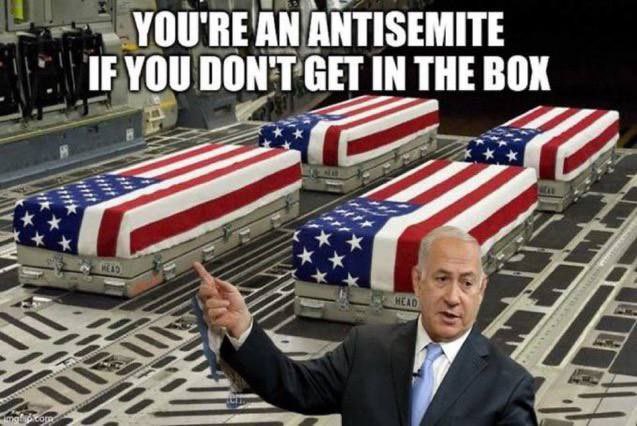
Iranian Foreign Minister Abbas Araghchi has accused Israeli Prime Minister Benjamin Netanyahu of practicing deception and duplicity, describing him as a “serpent.”
Araghchi stated that Netanyahu openly boasts in Hebrew about having deceived the US administration and pushed it into waging a war on Iran on behalf of “Israel”.
In a post on X, the Iranian foreign minister also pointed to Netanyahu’s contempt toward Washington, noting that “Netanyahu explicitly laughs about how he ‘influenced’ America through 1,000 hours of airtime on U.S. networks”.
Araghchi added, highlighting what he called a stark contradiction in Netanyahu’s positions: “In English, he praises POTUS’ leadership.”
Araghchi’s statement comes as concerns within the “America First” wing of the Republican Party are rising regarding Israeli Prime Minister Benjamin Netanyahu’s efforts to influence President Trump to deepen the war against Iran, as Politico revealed in July 2026.
The report, published ahead of a meeting between Trump and Netanyahu at the White House, noted that the Israeli leader had reportedly sold the president on starting the war with Iran during a previous in-person meeting.
Former White House chief strategist Steve Bannon expressed strong opposition to the meeting, stating that “Netanyahu has had twice as many visits to the White House in 18 months as Churchill had in all of World War II, with every one of them a disaster for America First.”
The report noted that these concerns come at a time when new polling indicates that a growing segment of the president’s base no longer believes the war is worth its economic costs, with Republicans increasingly resigned to the war continuing through the November midterm elections.
Curt Mills, executive director of The American Conservative magazine, described the meeting as “DEFCON 1” and said Netanyahu would “argue for the essential logic of escalation” during the talks.
Arab states call US sanctions on Iran unrealistic: Report
Press TV – August 31, 2026
Leaders of the Arab Persian Gulf states have reportedly told Washington that sanctions imposed on Iran by the US Treasury Secretary are “unrealistic” and difficult for the countries to accommodate, citing their geographic proximity and close ties with Iran.
Officials from the Persian Gulf states formally conveyed to the US side that the directive issued by US Treasury Secretary Scott Bessent, as part of an economic war against Iran, was “not realistic” and could not be tolerated given their geographic circumstances, neighboring status and proximity to Iran.
The regional newspaper Rai al-Youm reported that Western diplomatic circles believe the United Arab Emirates, Oman and Qatar are unlikely to show the same willingness as European countries to comply with decisions and memoranda issued by the US Treasury Department.
According to the report, some foreign governments, including Qatar, may not adhere to US threats of economic sanctions, viewing them as unrealistic and evidence of the continued escalation of tensions in the region.
Such measures, the report said, could also undermine efforts to pursue scenarios aimed at reducing regional tensions.
US Treasury Secretary Scott Bessent announced the new “economic terrorism” campaign, absurdly comparing it to the D-Day Normandy landings of World War II.
Bessent claimed the measures target Iran’s financial networks worldwide and warned that no partner is beyond Washington’s reach.
He said the Trump administration has identified entities dealing with Iran and will impose deadlines for them to cut ties or face exclusion from the US dollar system.
China, Russia and Pakistan have also opposed US threats of sanctions against countries trading with Iran.
Abdolamir Rabihavi, director general of the West Asia Office of Iran’s Trade Promotion Organization, said Iran’s trading partners had largely disregarded the announcement of new US sanctions and that trade with these countries was continuing.
Rabihavi said expanding trade with neighboring countries as well as major Eastern economies could provide an opportunity to strengthen Iran’s foreign trade.
“One should not be overly influenced by unprofessional remarks by US officials, as many countries need Iranian goods and the country’s products are competitive in target markets in terms of quality and price,” he said.
The official said trade was a two-way, mutually beneficial relationship, noting that just as Iran seeks markets for its goods, its trading partners are also looking for suitable suppliers to meet their needs, and Iran can supply part of those requirements.
Rabihavi also stressed the need to diversify Iran’s export markets, saying Africa, with around 50 countries and a population of nearly 1.5 billion, represents an important and relatively underdeveloped market for Iranian exports of goods and services.
Alongside African countries, Rabihavi said, Central Asian states could also provide suitable markets for Iranian goods, particularly given their existing capacities and the opportunities offered by free-trade agreements, which Iran should seriously seek to utilize.
WHAT REALLY HAPPENED TO LINDSAY CLANCY?
The HighWire with Del Bigtree | August 27, 2026
The Lindsay Clancy trial has ignited a national debate over postpartum mental health and criminal responsibility. Clinical psychologist Dr. Roger McFillin joins Del to examine a major part of her medical history and expose the darker side of modern psychiatry—and the devastating consequences its practices are having on millions of patients around the world.
Featured Video

Trita Parsi: Israel Set a Trap for Total War in the Region
or go to
Aletho News Archives – Video-Images
From the Archive
Zionism’s Violent Legacy
By Donald Neff | Washington Report On Middle East Affairs | January 1996
On January 4, 1948, Jewish terrorists drove a truck loaded with explosives into the center of the all Arab city of Jaffa and detonated it, killing 26 and wounding around 100 Palestinian men, women and children.[1] The attack was the work of the Irgun Zvai Leumi – the “National Military Organization,” also known by the Hebrew letters Etzel – the largest Jewish terrorist group in Palestine. The Irgun was headed by Revisionist Zionist Menachem Begin and had been killing and maiming Arabs, Britons and even Jews for the previous ten years in its efforts to establish a Jewish state.
This terror campaign meant that at the core of Revisionist Zionism there existed a philosophical embrace of violence. … continue
Blog Roll
 Aletho News
- Trita Parsi: Israel Set a Trap for Total War in the Region
- Trump’s Iran war is on an Israeli leash
- Saudi oil boss issues global supply warning
- Riyadh Says Its Oil System Is Intact. The Numbers Say Otherwise.
- Trump and Netanyahu Want to “Finish the Job” on Iran
- US ‘one-sided dictation’ not Iran’s beliefs makes rational talks impossible: Baghaei
- Iran’s Next Strike May Not Explode. It Could Shut You Down /Col Doug Macgregor
- Iran: US political targets legitimate if assassinations return
- Iraq shuts key border crossing with Iran under US pressure: Report
- Undersea Internet cables could be targeted in retaliation for attacks on Iran: IRGC deputy chief
- If Americans Knew
- The Israel Lobby’s Changing Fortunes
- AIPAC has become such a political liability that it’s shifting to a more “nimble” approach to buying politicians
- At least 160 Israeli settler attacks in 2 weeks
- Will Gaza’s Ancient Christian Community Disappear Forever?
- Israel’s vision of regional security rests on keeping Arab states weak
- Heidi Levine recounts how Palestinian youths helped save her in settler attack
- DAILY UPDATE: Latest essential news on Palestine, Israel, & region
- Trump’s Intensifying Sabotage of the ICC, for Israel’s Sake
- Israeli military detain US and UK volunteers in West Bank including Democratic NY politician Brad Lander
- Americans at National Conservatism Conference held in Israel this year criticize Israel
- No Tricks Zone
- E-Cars Reduce CO2 Emissions By Only 41% Compared To Internal Combustion Engine Vehicles
- Predictions Made By Renowned Climate Professor Over Past Decades Have Been Proven To Be Poor
- New Study Suggests Large Regions Of The Pacific Ocean Have Been Cooling For The Last 80 Years
- Germany’s Green Energy Debacle: High Energy Costs Force Kahla Porzellan to Close After 182 Years!
- New Study: 50 Years Of The Most Aggressive ‘Net Zero’ Policies Can Only Affect The Global Climate By 0.03°C
- US September “Heat” Was No Record…Many Records Set Decades Ago
- Latest European Green Energy Debacle; Portugal’s Largest Flagship Solar Park Insolvent!
- Green Energy Debacle: German Expert Professor Fritz Vahrenholt Warns Of Severe Economic And Social Consequences
- Two More Paleo Reconstructions Affirm Meters-Higher Sea Levels Across Ireland, Brazil 7000-6000 Years Ago
- New Study: Earth And Venus Surface Warmth Largely Explained By Convection And Lapse Rate, Not CO2 Or Radiation

